Photographer’s Workflow   

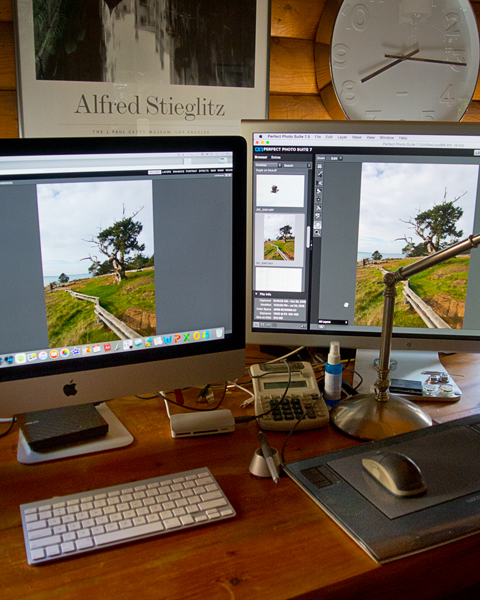
WorkStation

This week there was quite a discussion in my shop about the selection of software for producing quality images. Today photographers are clicking camera shutters more than compared to just a few short years ago when photography was ruled by film. Exposing four or five 36-exposure rolls while on vacation, or at a family event, was pretty much the norm instead of the 600, or 1600, captures filling memory cards today.

We each talked about our personal workflow for editing images. The following is some of what I added regarding my own workflow, and some of the programs I use to speed things up.

When I get home with images in my camera the first thing I do is remove the memory card, insert it in the card reader attached to my computer, and begin
the process of downloading. I am usually excited with anticipation about the 
images I have just captured and I want to see them right away.

I begin with a program called Photo Mechanic from Camerabits.com. Photo Mechanic is a fast and easy way to 
work with and manage groups of photos.  I open up a screen full of pictures, select those I want to keep, batch-rename them, and move them to a 
new folder.  The process is very fast and in a short while I can go through and review what I have just photographed.

I don’t leave my image files waiting very long before I start to work on them. 
I am always excited; I hate waiting, and I enjoy working on my pictures. Years ago I would be in my photo lab, with the stereo turned up, happily developing, and printing enlargements in a darkened room only illuminated with red and amber 
lights.

Nowadays I am still happily “developing”, but with the music coming from bigger speakers in my living room and I am sitting in a comfortable chair
instead of standing on a rubber mat in my basement darkroom.  There are no wet trays; there are no coloured lights, just a couple of big, bright computer displays with colourful 
pictures.

I then start the process of enhancing images and for that I employ several programs. Of course there is the ever-familiar Photoshop, however, depending on how I decide to fine tune my images I might choose to use the feature packed Perfect Suite program from Ononesoftware.com. Perfect Suite is a photo editor that works as either a standalone application, or plug-in editor, to Adobe Photoshop that includes some pretty exciting tools.

For years photographers have used graduated filters to cope with the contrasts of bright sky, and low light foregrounds with deep shadows, or bright highlights, when photographing landscapes. Although I don’t recommend getting rid of those filters yet, there is a program that may save lots of time usually spent in Photoshop lightening 
and darkening those landscape pictures. It is called Photomatix from HDRsoftware.com. Photomatix combines more than one exposure of a single subject that is exposed from the darkest shadow to the brightest highlights by creating an HDR (High Dynamic Range) image.

Finally, I will reach into a powerful and fun collection of fine-tuning programs from Niksoftware.com’s easy to use image editor that allows me to compare and make different adjustments quickly.

Most of my images are pretty good when I finish them in Photoshop. However, in my continual quest to speed up my post-processing of images, reduce my time behind the computer, and still produce quality images I find that combining these five programs fits my workflow perfectly.

I know that new cameras and lenses are what most photographers lust after, but I think if you are trying to justify expensive equipment purchases to your spouse, partner, or banker, it might be easier if you are already making show stopping, eye-catching pictures. Check the programs I have mentioned (always try their trial copies first) and see if they are for you.
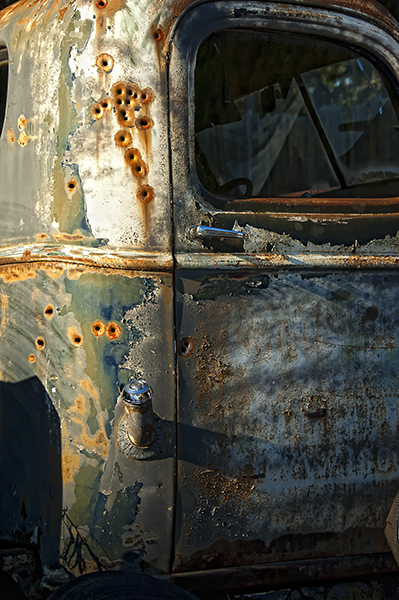


Getting Close 

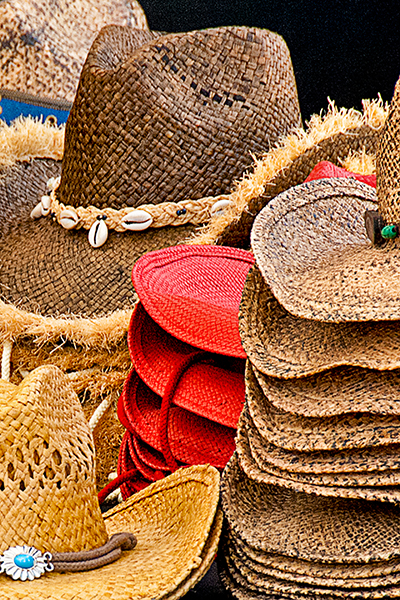
Cowboy hats Not eaxctly bullet proof

Ford V8

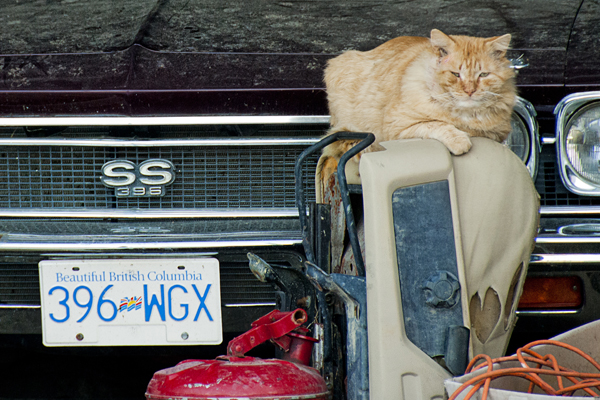
c. Cat & Car

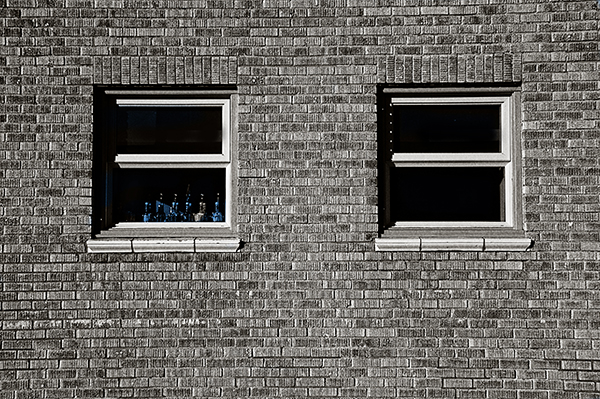
Blue bottles

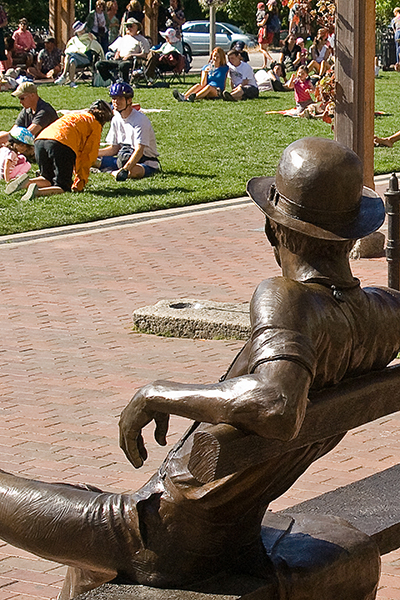
People watching Ocean Tree

Watching the Rodeo


There is an old saying in photography that goes, “ If your photographs aren’t good enough, it’s probably because you aren’t close enough”.

I remember saying this to a young photographer, who became somewhat alarmed and responded, “You mean I should stop using my wide angle and shoot with a telephoto instead?” However, that isn’t what that long time photography quote is about.

What that means is that a photograph should be about something. That the photographer should discard, crop out, or, when making the original capture, move in close enough so that those elements visible in the image are the only things that relate to the photograph.

When I was just a young photographer I would question other photographers who I felt were successful at their craft for ideas that would make my photographs better, and I remember the following advice by a working photojournalist.

He talked about pre-visualizing a photograph (a term Ansel Adams and Minor White coined regarding the importance of imagining in your mind’s eye what you want the final print to reveal about a subject), and continued that a photographer should follow the rules of composition with all the elements in the scene, and finally told me I should always think about stepping closer to “tighten up” the image.

His advice came from a time period when very few photographers were using mutifocal or “zoom” lenses. In that time period quality glass and sharp images depended on fixed focal length lenses, or the more modern term is “prime” lens.

I will not go into a discussion of prime versus zoom lenses. Some people enjoy arguing about equipment, and they will pull out charts and make lots of tests to prove their point of view. Personally, I select a lens with which I am comfortable with and that I think will help me do the best job for the work at hand.

Getting closer changes the perspective and builds a relationship between the foreground and background. With a wide-angle or 50mm lens, the elements in the foreground become more important, and with telephoto’s 200mm and longer, they become less important and, as in a scenic taken with, say a 100mm, everything seems to have equal importance.

Teach yourself to look at the many features inside your composition. Start with the centre of interest or main subject, decide what in that composition relates to that centre of interest and then step closer to remove areas and features that have no relationship or interfere with whatever you want your viewer to concentrate upon.

Pre-visualise what you want to say visually and get closer to remove everything that doesn’t relate to the composition.

I remember reading an article written by a photographer I really enjoy, Ron Bigelow, www.ronbigelow.com. In an article he discussed his experience shooting with another photographer. However it was his summary that made me stop and think,   “I couldn’t help thinking of some of the extraordinary images that I have seen from various large format photographers. It was obvious to me that much of what I admired in their images had nothing to do with the very high resolution that their equipment produced. Rather, it had everything to do with the time that they put into each image. The observing, thinking, and preparation that occurred before they fired their first shot.”

Portraiture and the Photographer’s Use of Light

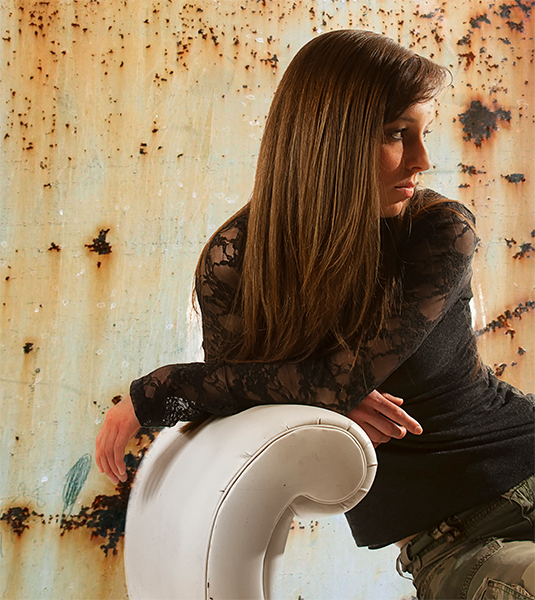
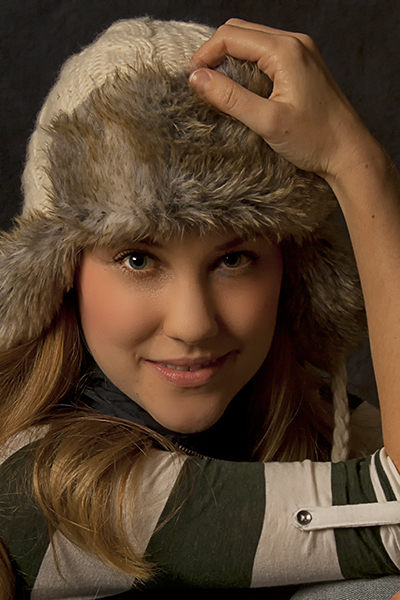
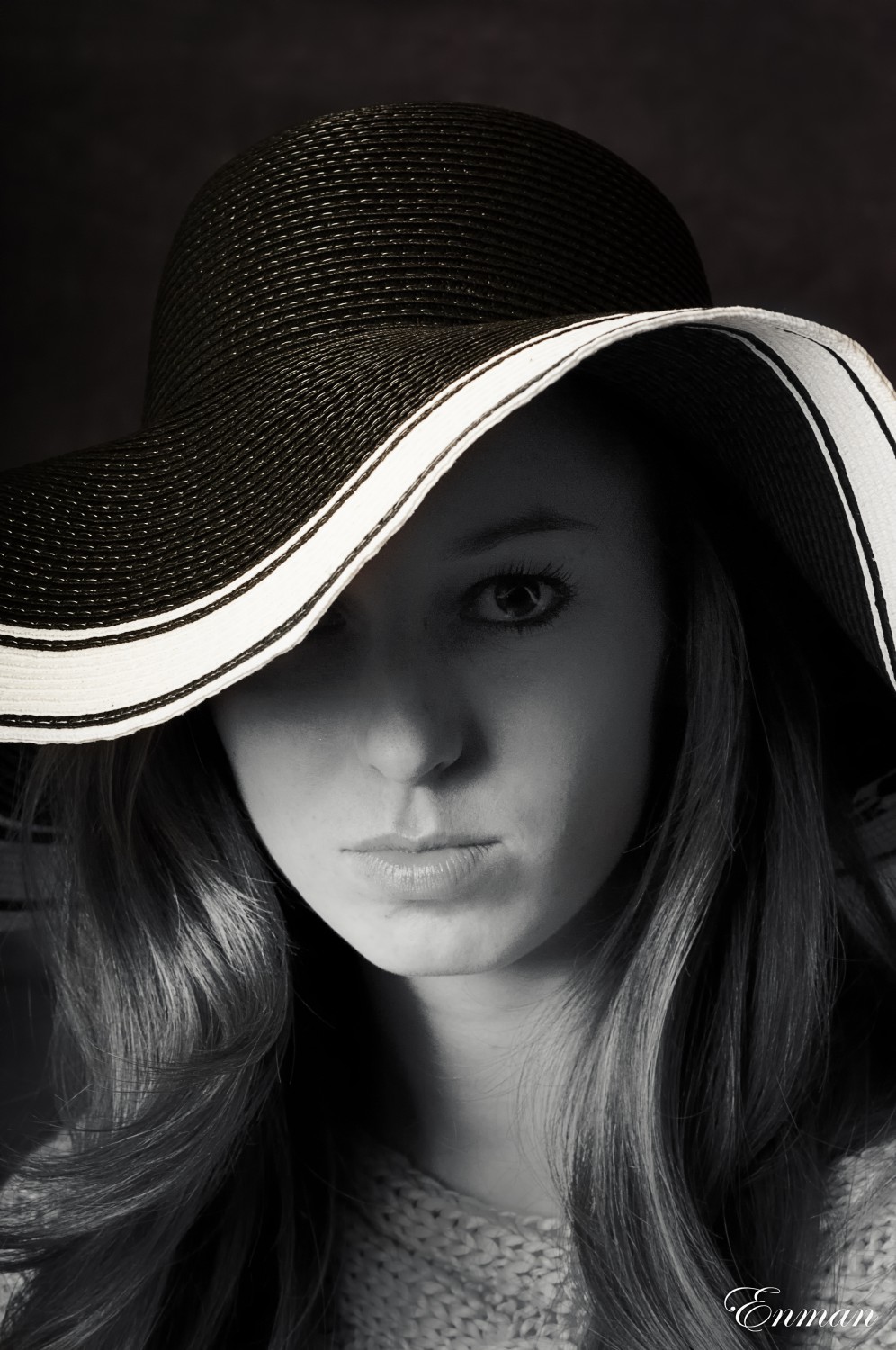
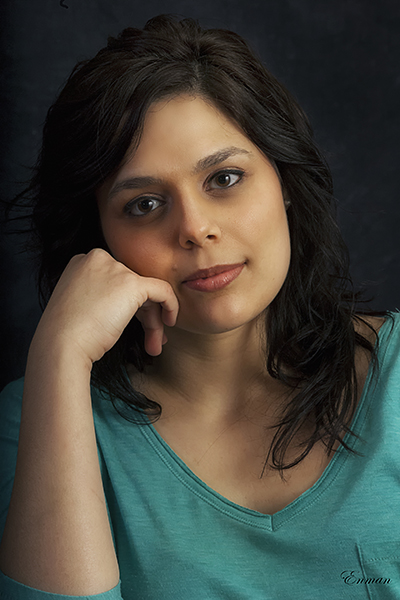
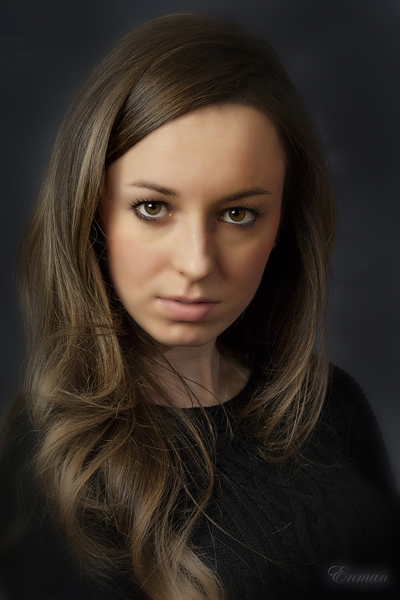
Monica aDemetra 3aMollyStephanie b6. BaileaStephanie a7. MonicaDemetraMonica  a


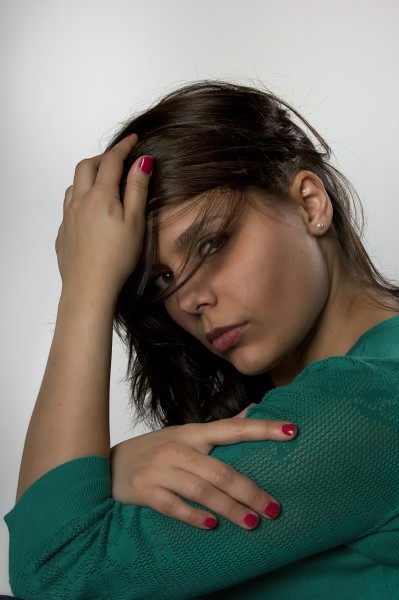
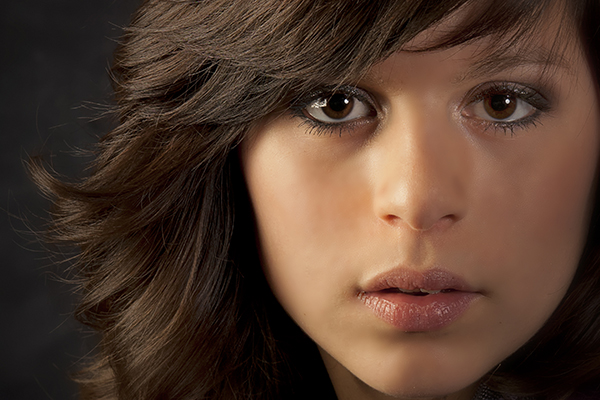
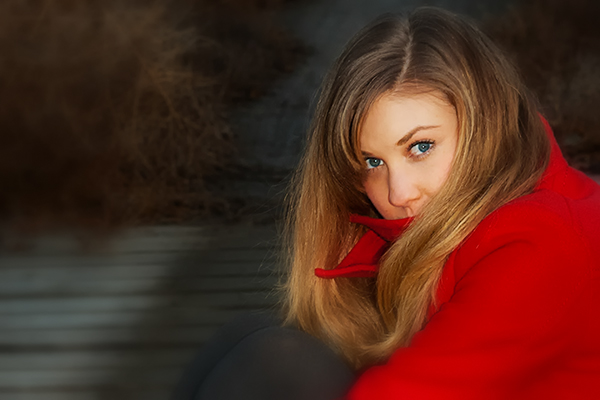
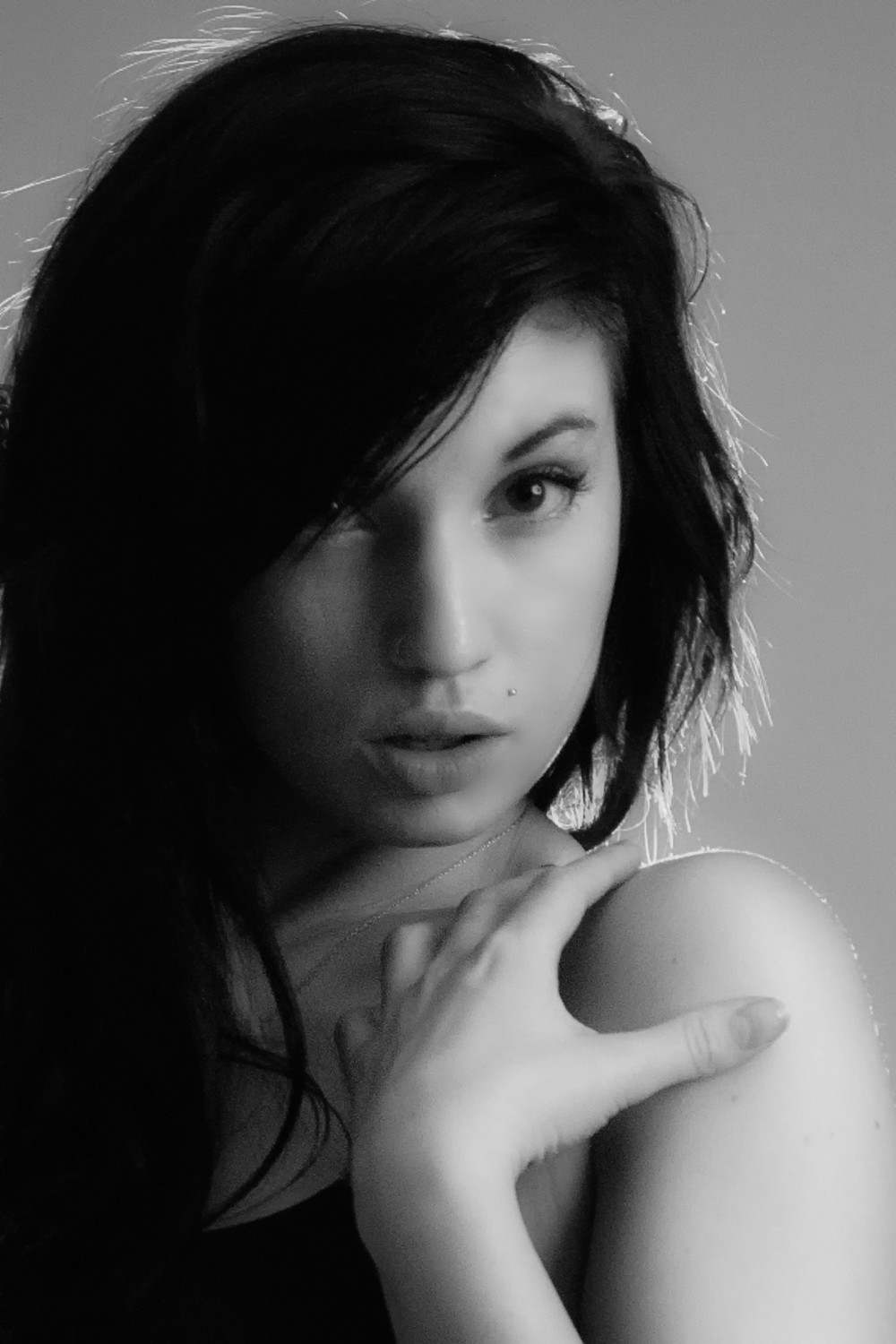
Photographer and author Frank Criccho states, “ The success of a photographic portrait depends as much on the photographer’s artistic and creative use of lighting techniques as it does on his or her skill with the camera.”

In an opposing remark during a recent conversation, a photographer told me that he didn’t have to worry about getting a flash for portrait photography and doubted he ever would, because he could just use a higher ISO, shoot multiple bursts, and fix everything in PhotoShop.

I don’t think that he is totally wrong, but his statement certainly demonstrates a lack of the basic understanding of how light impacts a subject’s face and how light can make the subject look younger, or older, or more glamorous, or down right unappealing.

I think in the race to purchase the latest hi-tech photographic marvel many photographers tend to forget about how lighting affects their subjects.

In my opinion, the goal for portrait photographers should always be to make the subject look his or her best, and provide an image that is flattering, and allows the person you are photographing to have a photo that impresses viewers.

One could say the responsibility lies with photographers, and not the subject, as to how good they look. Yes, I know in reality that isn’t the truth, but in my experience when one makes a bad photo of someone they will blame you, not themselves, if one makes a good photo they will thank you for capturing reality.

Many photographers just excitedly snap away without examining their subject, or posing them. Relying on luck and their subject’s talent to make that pleasing portrait, and pay little attention to how the light is making that person look.

Light and how a photographer uses it is very important. Too much contrast or side lighting shows lines and blemishes, whereas, on-camera flash, or bright, direct sunlight gives a flat, dimensionless, uninspired look.

To use the words of world-renowned photographer and writer, Joe Marvullo, “It is your ultimate decision, however, to determine what is “real” about that person and how to portray it in the photograph. You must successfully translate a distinct human personality in three-dimensional form into a two dimensional representation. This recorded image must come to life on it’s own. You, as an artist, must capture the “essence” of your subjects – their persona.”

Modern on-camera flashes are excellent if used correctly and creatively. Photographers can diffuse, bounce, and move the light off to the right or left, higher or lower, and modify that light using umbrellas, reflectors or softboxes to soften and control the direction and intensity.

I believe photography is all about the light. The lazy photographer just worries about exposure, where as the imaginative photographer pays attention, experiments, and practices creating portraits using light that are more than just documents of some person.  And as Marvullo suggests it is up to you, the artist, to capture the “essence” of your subject’s personality.


Two Photographers Are More Fun Than One

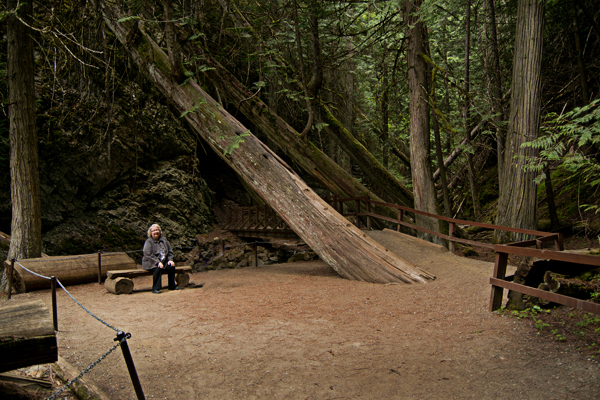
Linda

Linda


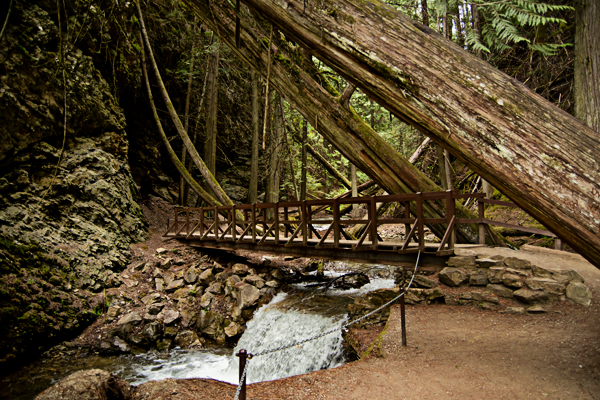
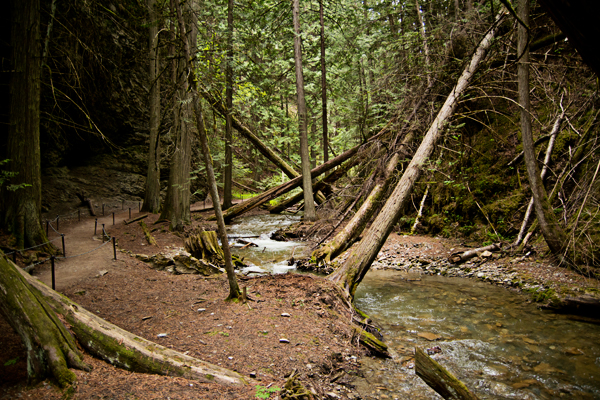
Fallen Cedars by John

By John


Fallen Cedars by Linda

By Linda

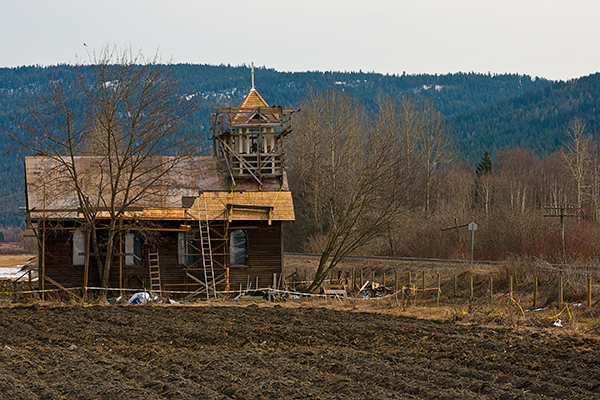
Notch hill church. Linda

By Linda

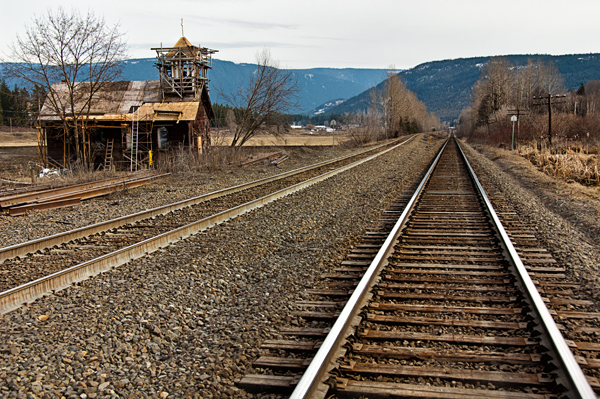
The train goes by

By John

This week I talked with a fellow that grumbled about how his wife complains about waiting for him when he wants to stop to take a pictures. I suggested that he find a way to get his wife involved in his hobby. After he left I remembered the following article I wrote back in August of 2011. For those who may have missed it, I thought I’d post it again.

I received a most encouraging email from a reader: “In talking to you I noted that you and your wife both are into photography, so I proposed giving my wife a DSLR and get her into shooting her own pictures. She was a little hesitant to the idea saying she did not have the “artist’s eye”. However, I printed out your blogs on ‘What Makes a Good Photograph’.

After reading it she commented that “each person has their own take on what makes a good picture”, and the short of it is, she is willing to take up photography with me”.

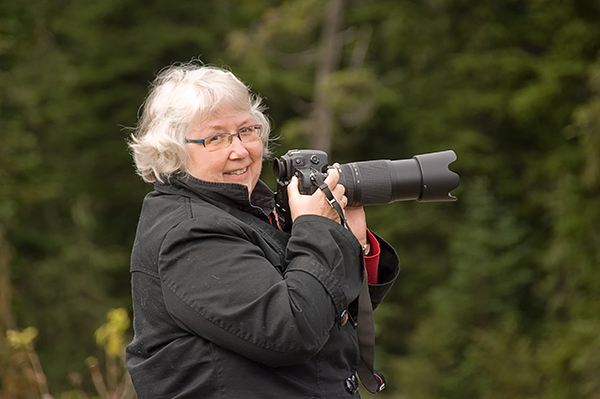
Personally, I think much of my enjoyment of photography would be missing if my wife, Linda, was not also a photographer, and it is great that we both enjoy this exciting medium and can share the experience of making photographs.

My advice to any photographers that are interested in getting their spouse involved in photography is as follows.

Match the equipment. I mean with regard to cameras, both DSLR (digital single lens reflex) cameras should operate in much the same way. The models can be a few years apart, but should be the same brand and the controls should operate similarly and if two of the latest models are affordable, so much the better.

Don’t be cheap with lenses for your spouse. If it isn’t good enough for you, it isn’t good enough for the most important person in your life. Just as you would select a lens for the subject and the way you like to shoot, your spouse should select lenses for his or her preferences. I know your mother told you to share, but my recommendation is don’t share. That just leaves someone behind. If you both like long telephoto lenses, get two.

I can remember the exact moment I thought about the concept of equality. I was in Yellowstone National Park in Wyoming waiting for Old Faithful geyser to erupt. While I waited I noticed a man and woman with their tripods setting up closer than me. I could see that he had a large, professional looking camera and she had a tiny, almost toy like camera. I knew that his photographs would be good and hers not so good. It didn’t matter if she was the better photographer or had the better eye, his pictures would be better, and I wondered why would she even try.

Shop for accessories together. Each photographer has his or her preferences and should make equipment choices for the subjects they like to shoot.

Education is always a good idea. Attend a photography class or workshop. Search for them on line or check local camera shops. Take turns going to photography classes or take part in the same workshop. One of my wife’s and my most memorable vacations was when we both attended a weeklong wilderness photography workshop on Mt. Rainier. In my opinion we may have got more out of that class than the other participants because we were able to share information and experiences.

Gently critique each other’s photography. Don’t just store pictures away on the computer. Sit in front to the computer display together and decide which photographs work and which that don’t, delete all the failures, and make a combined presentation of all the successful images to show your friends and family.

One photographer in the family is cool, but two photographers, in my opinion, are much better. If you want your partner to have the same excitement about photography as you do, don’t be stingy with the compliments. And if your spouse is fortunate enough to make a better picture of that waterfall or running deer than you, be sure to tell them.

A Photo Trip to Margaret Falls

Linda at Margaret Falls

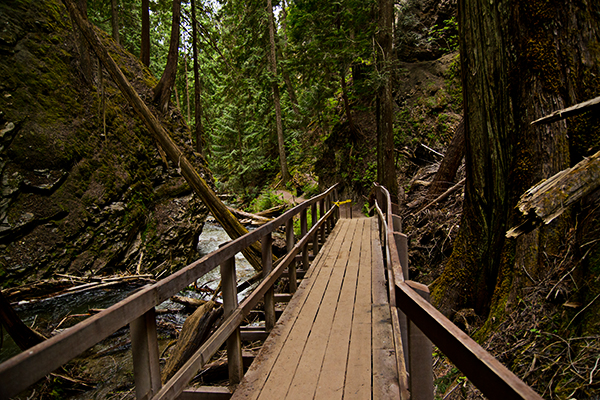
First bridge

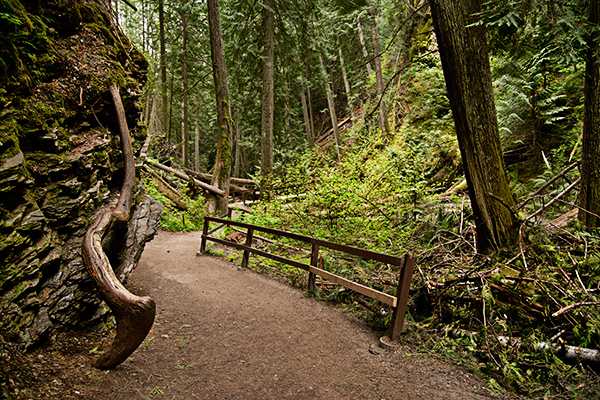
Along the path

Reinecker Creek

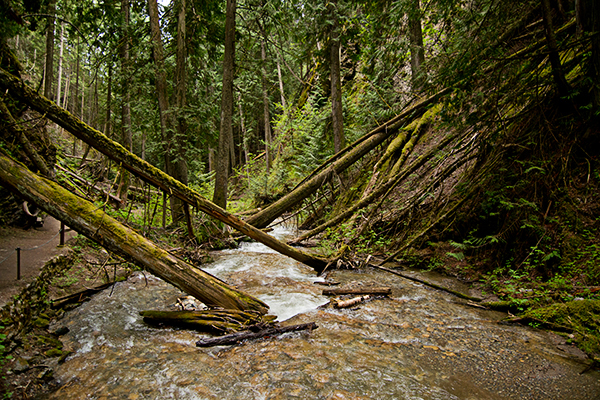
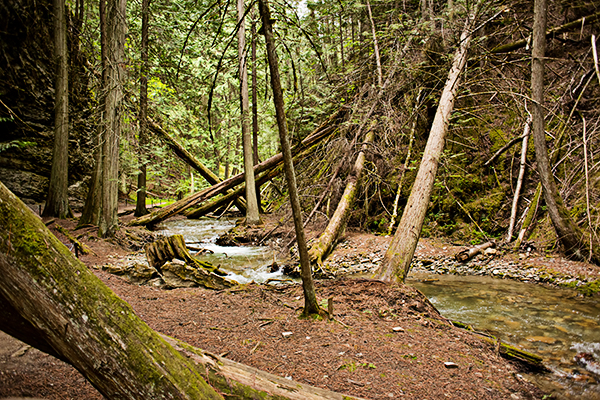
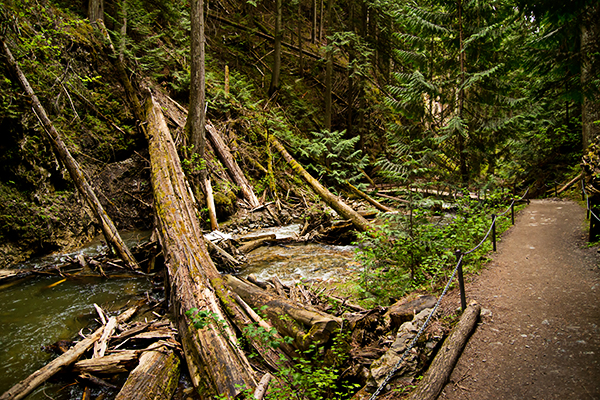
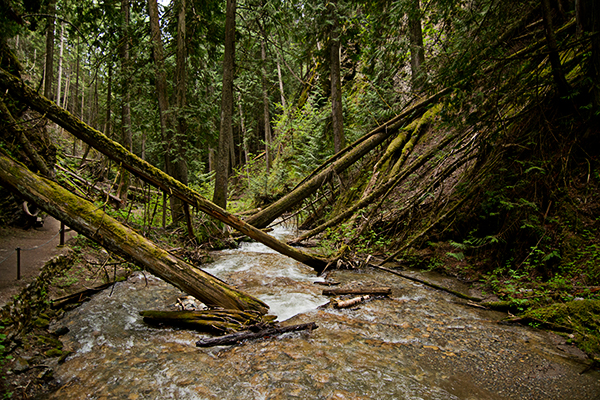
Fallen Cedars

Crooked tree


Bridge to Margaret Falls

Margaret Falls, British Columbia (B)

I have spent the last few days slowly dismantling an old shed I built over 20 years ago. I will say that I enjoyed building that ramshackle structure that has served as a goat barn, a chicken coup, and lastly for storing stuff I didn’t know what to do with. The process of destruction hasn’t been going all that quickly because I have been finding any excuse to delay my work taking it apart and I suppose that’s why when my wife mentioned it would be pleasant to go to Margaret Falls I didn’t hesitate to put our cameras in the car and head out for an easy drive.

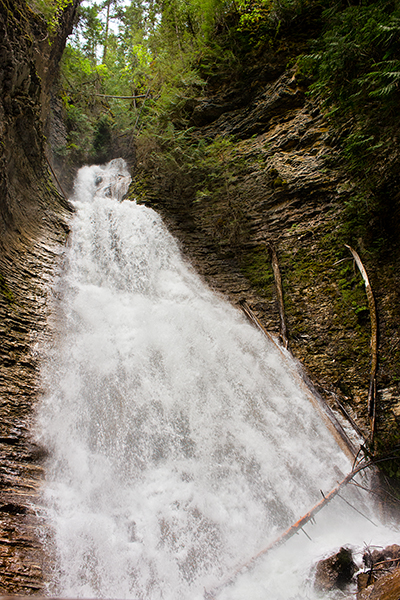
Margaret Falls is a 200 feet high cascade that drops into Reinecker Creek on the edge of Shuswap Lake’s Herald Provincial Park. Local lore says the falls gets its name from the first white woman to see them. I also have been told it was called Reinecker Falls. But I wonder what that place was called by those that went there long before the white settlers.

It is the place, and not the waterfall that draws tourists and photographers to make the short trek through that moss covered, old-growth cedar forest nestled in a narrow gorge.

Reinecker Creek falls down a sheer rock face and into the narrow chasm creating a wonderland for those that walk along the beautiful gulley filled with large trees and looming cliffs above.

Before one is even aware of the unique ecosystem, there is the envelopment of a waft cool, damp air that on a hot July day will be a startling difference in temperature. Knowing that we included jackets with our camera gear.

Over the years Linda and I have spent many hours wandering along paths with cameras and tripods, but this time the wind was picking up and we could see large, dark clouds looming. So we just brought our cameras in case we had to make a quick getaway. I do not remember how many times I have taken pictures along that cool walkway up to the falls, or all the different camera formats I have used. I have been there in every season of the year, rain or snow, and I have even photographed a wedding there.

For this visit Linda used a 24mm prime and I used my 24-85mm zoom. Wide angle is a must for that narrow canyon.

The overcast day really wasn’t a bother because our modern full-frame cameras can easily handle 1600 ISO and depending on our subject’s location we could choose either 125th or 250th of a second shutterspeed an still keep our aperture small enough to get reasonable depth-of-field.

One rarely has the trail to Margaret Falls to themselves. To achieve scenic photography photographers have to be patient. However, this outing was petty good. Our only interruption was a guy on his mountain bicycle that turned around and left when he realized there were people on the trail. And we met some people that told us they were celebrating their 70th reunion. They gently ambled up the path to the waterfalls, extended their arms for cell phone snaps and then left, giving us all the time we needed to compose our pictures. I did have a good time, but, as free as I was to wander around with my camera and 24-85mm lens, I missed having my tripod. We have decided to return in a week or two packing tripods and neutral density filters prepared and spend a bit more time.

I always look forward to comments. Thanks, John


The Vancouver Camera Show and Swap meet 2015

Linda at the SwapMeet

Linda at our table

Camera Swap find

A good find at the Swap meet

Camera Swap Meet

Check out this Leica

Vancouver Swap meet 2

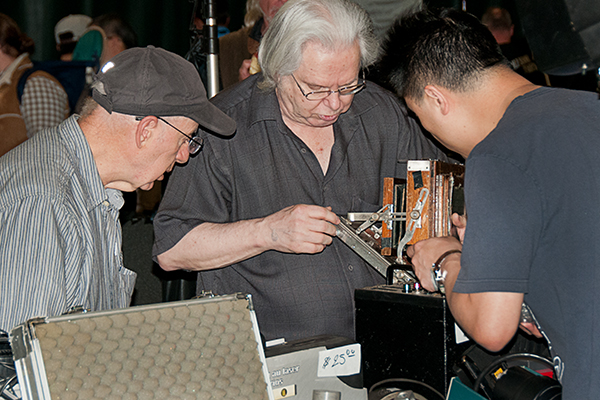
Lets assemble this 4X5 camera 

Ziggy Rhode

The Swap Meet organizer, Ziggy Rhode selling a Hasselblad

Vancouver Swap Meet 1

Wow, a nice twin lens at the Vancouver swap.


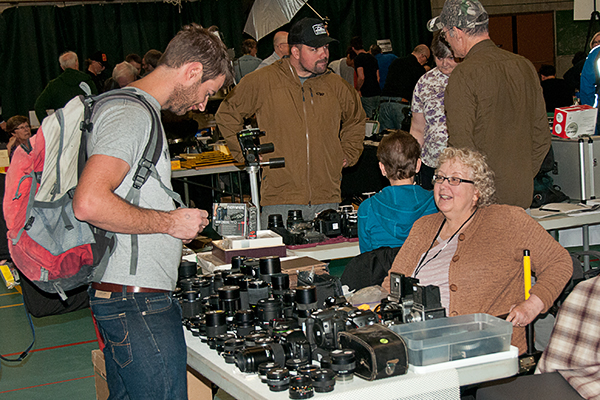
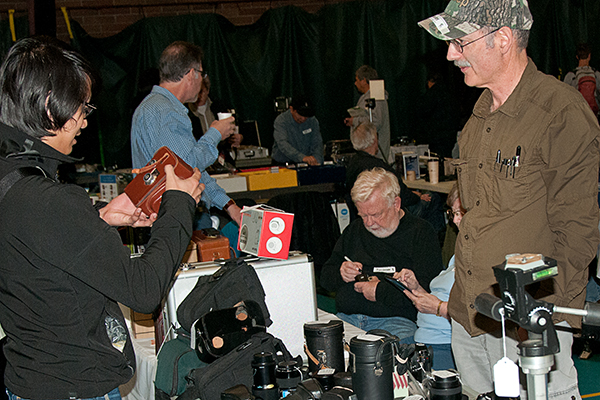
The Western Canada Photographic Historic Association hosts Vancouver, British Columbia’s, original camera show and swap meet each year. This long-running show has now reached its 39th year, and makes the claim of being the largest in Canada with I believe approximately 120 tables, and I have no doubt well over 1,000 people walked through the doors this year.

I can’t remember exactly when we (my wife and I) had our first table there, maybe some time late 1990s. Since then each year we join an always-interesting diversity of photographers in a large, photographic equipment packed hall in Burnaby, BC, who are eager to exchange information and ideas, and, of course, are looking for great deals on all kinds of camera equipment.

Each year we make the three and a half hour drive from Kamloops the day before and lodge overnight and eagerly join other vendors the next day at 7:30AM to setup. The early morning scene is so much fun as we interact with others busily arranging equipment on tables before the show even begins. When I arrived I was happy to see people I have known for years. Better put, I was happy to see people I have known for only one day a year for about 20 years.

For me it is always a rush to organize my table quickly so I am ready for the swap meet’s early bird shoppers who pay a premium to begin shopping at 9am. That group of shoppers isn’t so much into browsing as they are searching for specific pieces, and they will walk quickly by a vendor’s table unless they spy that item.

At the 10am regular admission I always am glad to get a chance to sit for a moment (only a moment) after the hour of non-stop showing, demonstrating, explaining, and, of course, bargaining with savvy photographers.

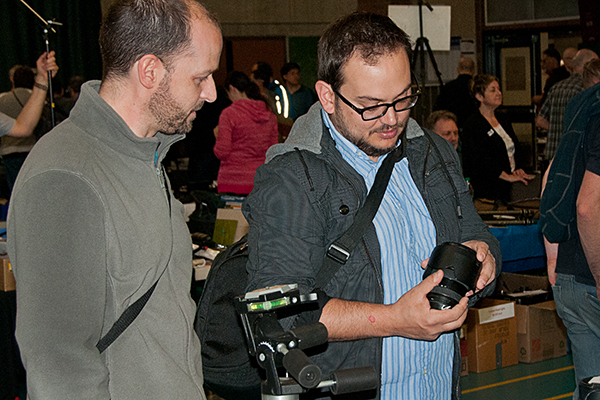
Spending a day surrounded by a huge selection of cameras and other photography equipment is exhilarating, and getting a chance to talk with other photographers about their different interests is invigorating. Even after all these years I always learn something.

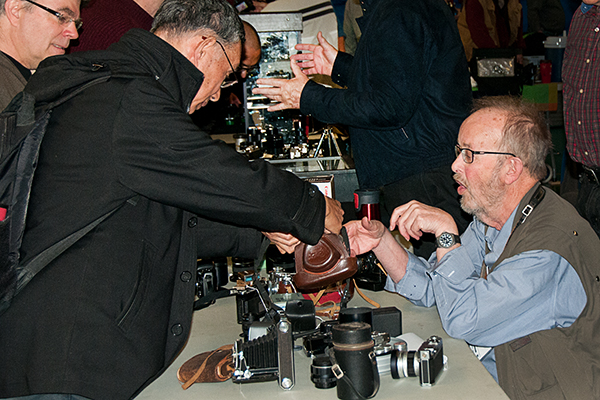
As I have mentioned before when I have written about this exciting event, one will find photographers of every age, from experienced elders to young people accompanied by patient parents. This congregation includes all kinds of lifestyles, interests, and photographic specialties. There are those that are dedicated to film, historic cameras, and processes of the past, walking alongside others that carry the latest and brightest in modern technology.

Other than actually pointing a camera at some inspiring subject, a gathering like the Vancouver Swap is a superb way to meet and exchange information with other photographers, and look at and check out the many kinds of photographic equipment that would not be so easily available anywhere else.

I had a great time with the photographers I met this year and the depending on who joined me at my table, the conversations always changed. My day of selling was a success, as it was for most of the dealers I talked to at the end of the day. And I even had some time to purchase another lens for myself, which is always nice.

I always look forward to any comments. Thank you, John


The Best Camera for Outdoor and Wildlife Photography

Outdoor camera

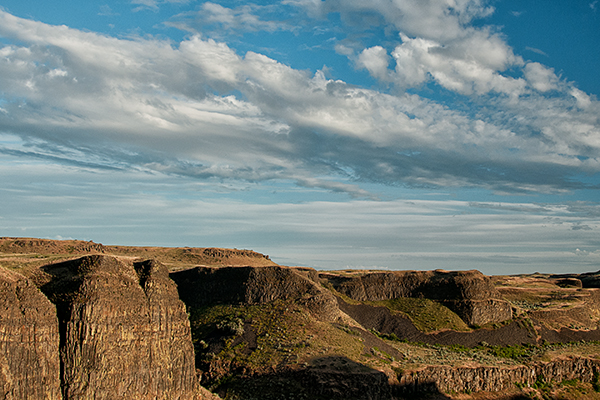
Washington Landscape

Eagle

Landscape Photographer

Digital technology has been around long enough that I occasionally forget there are many people that have never used anything but small-sensored point and shoot digicams. I recently talked with an amateur photographer who was planning to discard his well-used point-and-shoot camera hoping that a DSLR would help him take better pictures. No, that’s not exactly right. He believed like so many others that a better camera would make him a better photographer. Actually, his question was, “What would be the best camera for outdoors and wildlife photography?” He is an outdoorsman and “needed the whole meal deal,” although I am not sure what he actually meant by that. Perhaps he wanted one camera that would be capable of doing everything.

What should be my advice to an aspiring wildlife photographer? I could give him my personal perspective, and I could suggest he search out wildlife and scenic photographer sites online to make his own decisions.

I will summarize what I got from a check of advice from avid wildlife photographers. Wildlife photography is harder on a camera than any other type of photography. Most of the time photographers will need to push the limits of their cameras. And, photographing wildlife will demand speed, resolution, and a well-built, quality camera, and, therefore, the best cameras for wildlife photos are usually the most expensive ones.

The photographer then should begin by looking at cameras that are durable, and capable of taking some bumping around, and be sturdy enough to take some abuse from the weather. And because the photographer would be shooting in all types of lighting conditions, especially low light, early in the morning, or at the end of the day, I would recommend looking at, and expecting to pay more for models capable of higher ISO.

Unlike a tiny digicam the photographer will need to concern him/herself with the lens, as well as with the camera. Personally, I would save my money on the camera and spend it on a quality lens. A saying I have heard over and over ever since I have been in this medium is that “it’s all about the glass,” referring to the lens. A photographer, like any craftsperson, needs the correct tools.

Then there is the discussion of full frame versus crop-sensor cameras when one is deciding on which is the best DSLR. Hmm…I think that’s a can of worms best left for later. There are enough confusing choices to keep a photographer awake at night with topics like which camera manufacturer, which model, and which lens. And I suppose there are also the possibilities with the new host of lightweight, mirror-less cameras making their way into photographer’s bags.

I plan on spending some time helping this about-to-be wildlife/scenic photographer make his own choice about his camera equipment. I would rather not be one of those that advise a particular manufacturer. That choice should be the photographer’s.

If we were able to ask Ansel Adams, one of the most famous scenic photographers, for his thoughts, he would say, “The single most important component of a camera is twelve inches behind it.”

I know that does not assist with the decision of what camera that photographer should get, but it does let him know that whatever he gets, he will absolutely need to spend time learning how to use it.

I always enjoy comments. Thank you, John

10 Suggestions for Successful People Photography.


Constable Mike Moyer

Constable Mike Moyer.

Actor

Professional Actor

Actor 2

Professional Actor


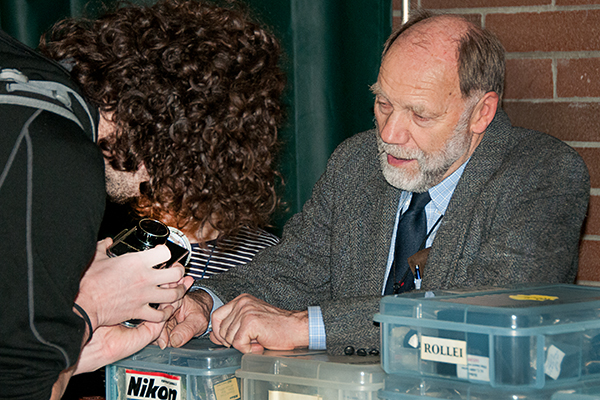
I had an interesting discussion with another photographer over coffee this morning. He had brought his memory card with several different pictures and as we talked about his shots he asked, “What is your favorite photography subject?”

Like many other photographers, what I like best changes with whatever I’m currently photographing, and I enjoy photographing just about everything. But in truth most of my subjects in the past 40 years have been people. My reply was, “I enjoy photographing people.”

I’ve been employed doing many types of photography since I began earning my living as a photographer in the 1970’s. And I have worked as a photographer for all types of organizations photographing all types of subjects. However, most of the time I have photographed people.  I think most photography is of people.  We take pictures of our family, of friends, and of people at celebrations and other events.

His next question was, “how do you make a photograph that is more than just the usual snap shot?”

Here are my 10 suggestions that contribute to successful people photographs.

  1. When you take pictures of people look at them and pay attention to their appearance to ensure they look their best.  Don’t just rapidly take a photo and realize later that you should have had your subject adjust something, e.g., a necklace, glasses, a collar, or especially, that tie.
  2. Do three-quarter poses of single subjects. By that I mean turn their body so that they view the camera from over their shoulder.  Choose interesting and flattering angles or points of view. Avoid straight on or “up the nose” headshots.
  3. Focus on the subject’s eyes. When we talk to people we make eye contact. There is a greater chance of your subject liking the photo if their eyes are sharp and not closed or looking away. Ensure that subjects smile.  In my experience when subjects say they want a serious photo without a smile they appear sour or unhappy in the final photo. Do one of each as a compromise.
  4. Select an appropriate lens. Avoid short focal length lenses. On a full frame camera my favorite is 105mm. However, with crop-frame cameras I don’t mind 70mm. Longer focal length lenses create a flattering perspective.
  5. For portraits, an aperture of f/4 or wider will soften the background and make your subject stand out, but for group photos use an aperture of at least f/8 or smaller to increase the zone of focus (depth of field).
  6. Look at the background behind your subject especially when doing outdoor portraitures.  You don’t want the photo to appear to have something growing out of your subject’s head or to have objects in your photograph that are distracting.
  7. Pay attention to uncomplimentary shadows created by the sun, your flash, or other light sources.
  8. Get things ready first. Contemplate the poses before you photograph your subject. The best way to bore your subject and loose the moment is to make them wait.
  9. Tighten up the shot. Get rid of unwanted elements in the photograph that do nothing for it. If there is more than one person make them get close together.
  10. Talk to your subjects. The most successful portrait photographers are those who talk to and relate to their subjects.  We are dealing with people and we communicate by talking. Don’t hide behind the camera.

And as always be positive about the photograph you are about to make. Get excited. Your excitement will be contagious and affect those around you.
I appreciate comments. Thanks, John
My website is at http://www.enmanscamera.com

Rainy Day Photography

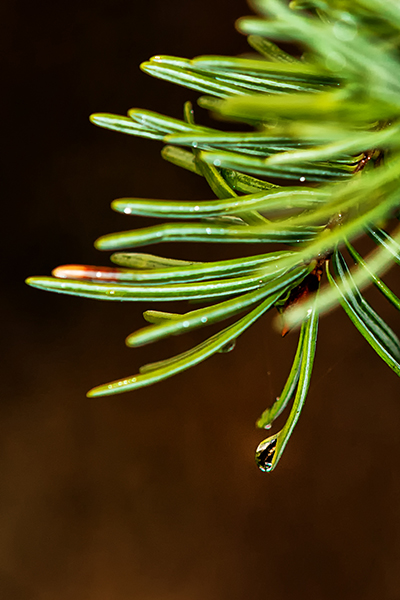
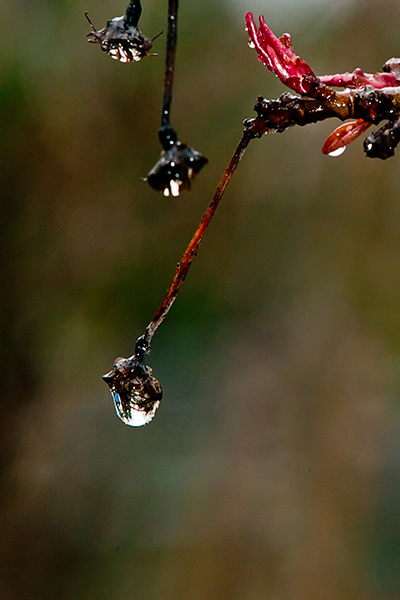
Last drop

Wet fir tree

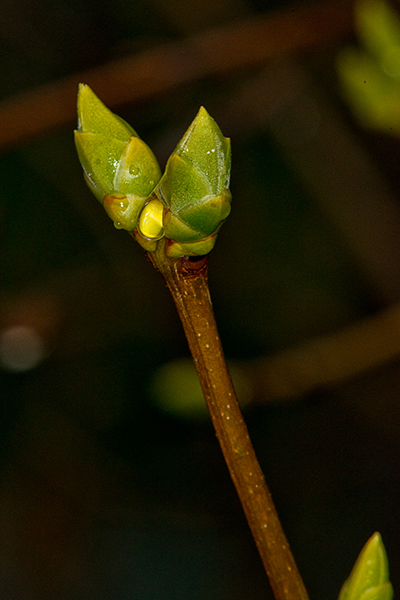
Spring bud

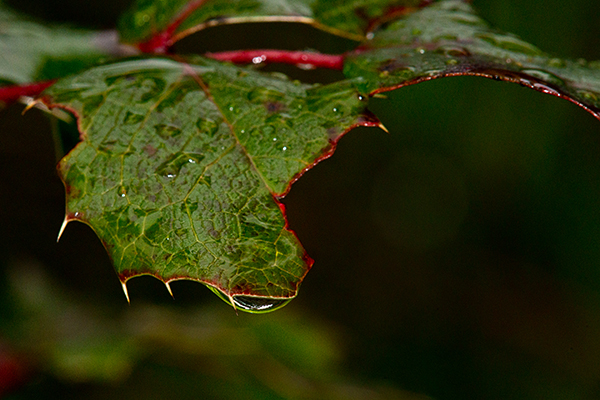
Oregon grape

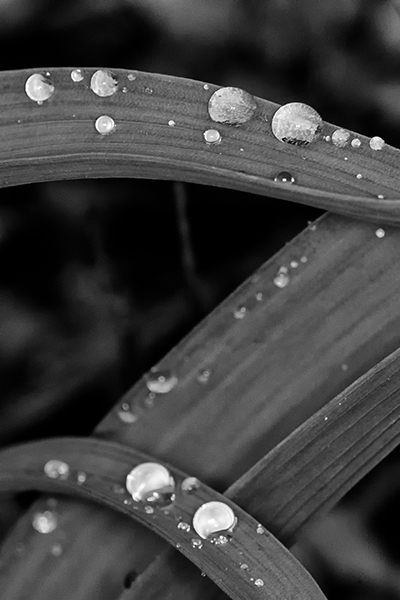
Rain drops

Reflection

Too many springs

Monday was another day of rain. It is spring here in the hills of Pritchard, earlier than usual, but it is spring and rainy days go with spring.

Rain doesn’t bother me much and had I thought about getting my camera and going for a drive up into the hills to see what I could find. However, as I walked through my wife’s garden on my way to the car I noticed all the drops of water hanging from branches and those leaves that made it through winter. The wet and foggy hills would have been interesting, but all those droplets were just waiting to be photographed.

How does one prepare to do photography in the rain? Put on a hat with a brim if, like me, you wear glasses. I also like rubber boots. Bring an old tea towel in your pocket to wipe the rain off your camera, and you are ready. Oh, and remember to keep the camera lens pointed down.

When the garden is dry I would usually put a couple of flashes on light stands, and add umbrellas so I can control the direction and quality of light. But when it is raining I prefer using my ring flash.

A ring flash fits tightly around the front of my 200mm macro lens and is perfect for building reflections on the droplets of water that were clinging to branches and sparse foliage that I wandered around photographing.

I expect many photographers prefer waiting out the rain and the unappetizing low, flat light on rainy days. I can understand that. Rain is such a hassle, and getting wet is uncomfortable. Nevertheless, that flat light, slight breeze, and wet conditions forced me to approach my subjects differently and I like that challenge.

In the low light of a rainy day we don’t think about light in the same way as we do on a sunny day. Everything is usually about colour, and how to deal with the contrast, especially on a bright spring day.

When the light is low one needs to see tonality and shape, and raindrops are a challenging element to add. In this instance there was also a slight, intermittent breeze.

I chose a setting that without a flash everything would be underexposed. That means I would only see my subjects when they were properly exposed and a flash is the best way to do that. Using my camera’s manual mode I selected 1/250th of a second and I kept my aperture at f/11 so I would have as much depth of field as possible when and if a branch shook back and forth in the breeze. I also switched my flash to a manual mode. The flash power would always be the same putting out the same amount of light. I then could control exactly how much light I wanted for each location.

I could have increased my ISO and shutterspeed if I had decided to only use natural light, but then everything would have been flat and it would have been hard to get a sparkle in the raindrops.

I know it can be disappointing to see those gray clouds on your day off when you had made plans to be out shooting. However, keep a positive attitude, remember you don’t have to go far, and with a bit of creative thinking and preparation you’ll be out having fun making photos, even in wet weather.

I always look forward to everyone’s comments. Thanks, John

Studio Portraiture Workshop

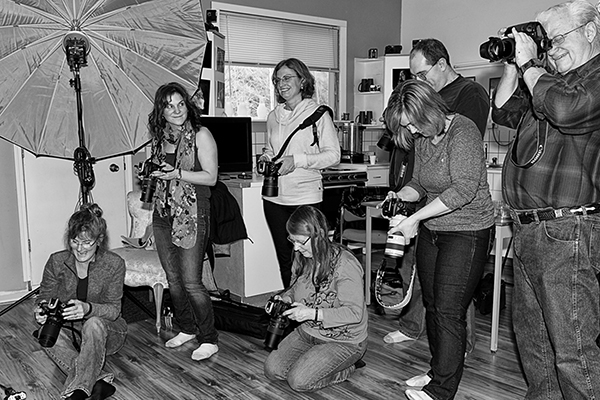
Class Portrait 1  Class 2

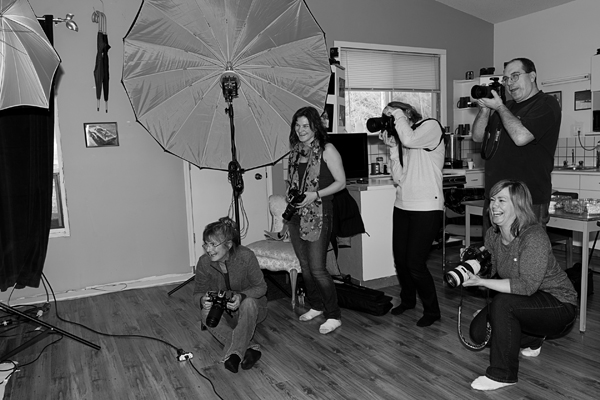
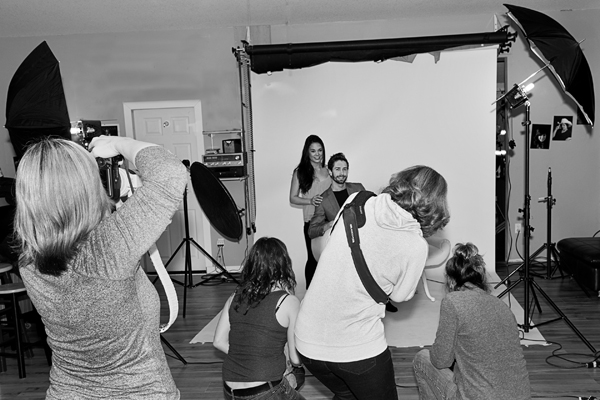
This past Sunday I lead the first day of a two-day workshop discussing posing and lighting. I hadn’t planned on undertaking any workshops this early in the year, but I had been getting requests from several excited photographers who are out there getting ready for spring and summer portrait sessions.

I finally made the decision to proceed when my friend Dave Monsees, owner of the Versatile Photography Studio near Kamloops, mentioned that photographers renting his studio told him they needed help in lighting couples. They lamented that most tutorials available were only about photographing one person.

I am sure if they browsed the internet they would have found what they were looking for, but working with live models is a lot more fun than reading articles and looking at pictures, so I hired two up-and-coming local models that fit that request perfectly.

In previous posts I have stated how I enjoy the enlivened interaction that happens when students of photography participate in active learning. So when I started getting requests that I offer  another session I crossed my fingers and hoped for an early spring, booked that large local studio, and hired two models.

During a workshop my job is to present information on the subject, and keep things going. I don’t like to be a demonstrator on stage and I rarely pick up a camera during the workshops I lead, unless it is to take a snapshot or two of photographers in action. And besides, when I finally let the workshop participants apply what we had discussed, there wasn’t room for me anyway.

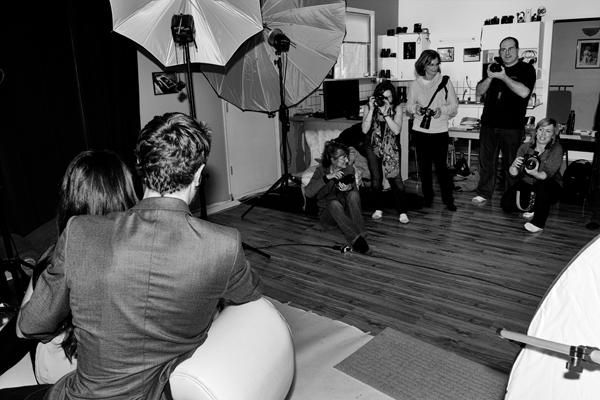
The workshop dealt with modifying and placing light. We employed one, then two, and then three lights; and modified the light first with umbrellas, then changed to a softbox and reflector to create shadow, and, of course, that classic and compelling “Rembrandt lighting” effect.

This was an advanced workshop and I limited participation to seven photographers. As with all my workshops, my main goal is to help participants gain an understanding of how to use light. I want them to consider the “quality” of light instead of the “quantity” of light. I lecture to them that they should use light to “flatter” their subjects as opposed to only “illuminating” them.

I think that studying the mechanics of lighting includes two additional aspects, which are (1) experience, and (2) the willingness to step beyond lazily pointing a camera in a light filled room or out in the sunshine. Posing a model, or in our case, two models, seems to me to be more about engaging with the subject and being comfortable with telling someone how you want them to look. I once heard a photographer say that he never posed people because he thought is was rude to tell adults what to do. I can’t comment on that fellow’s work, maybe he was really lucky, but I expect there were lots of missed shots. I suppose he would disagree, or just plain ignore the words of award winning Dallas, Texas photographer, Caroline Mueller when she says, “What I look for in pictures (that) I take: eyes, hands, head tilt, body language, background, and use of space.”

I believe those photographers that are successful at portrait photography don’t hide behind their camera, but they start with a plan and are good at engaging, explaining, and demonstrating what their vision for the session is.

Now I am really looking forward to next Sunday. The few images I have seen so far are great and I am certain spending another day (this time with speedlights out-of-doors in the failing afternoon light) helping and watching each photographer’s progress is going to be a lot of fun.

class 3  class 4


Thanks in advance for your comments, John

My website is at www.enmanscamera.com