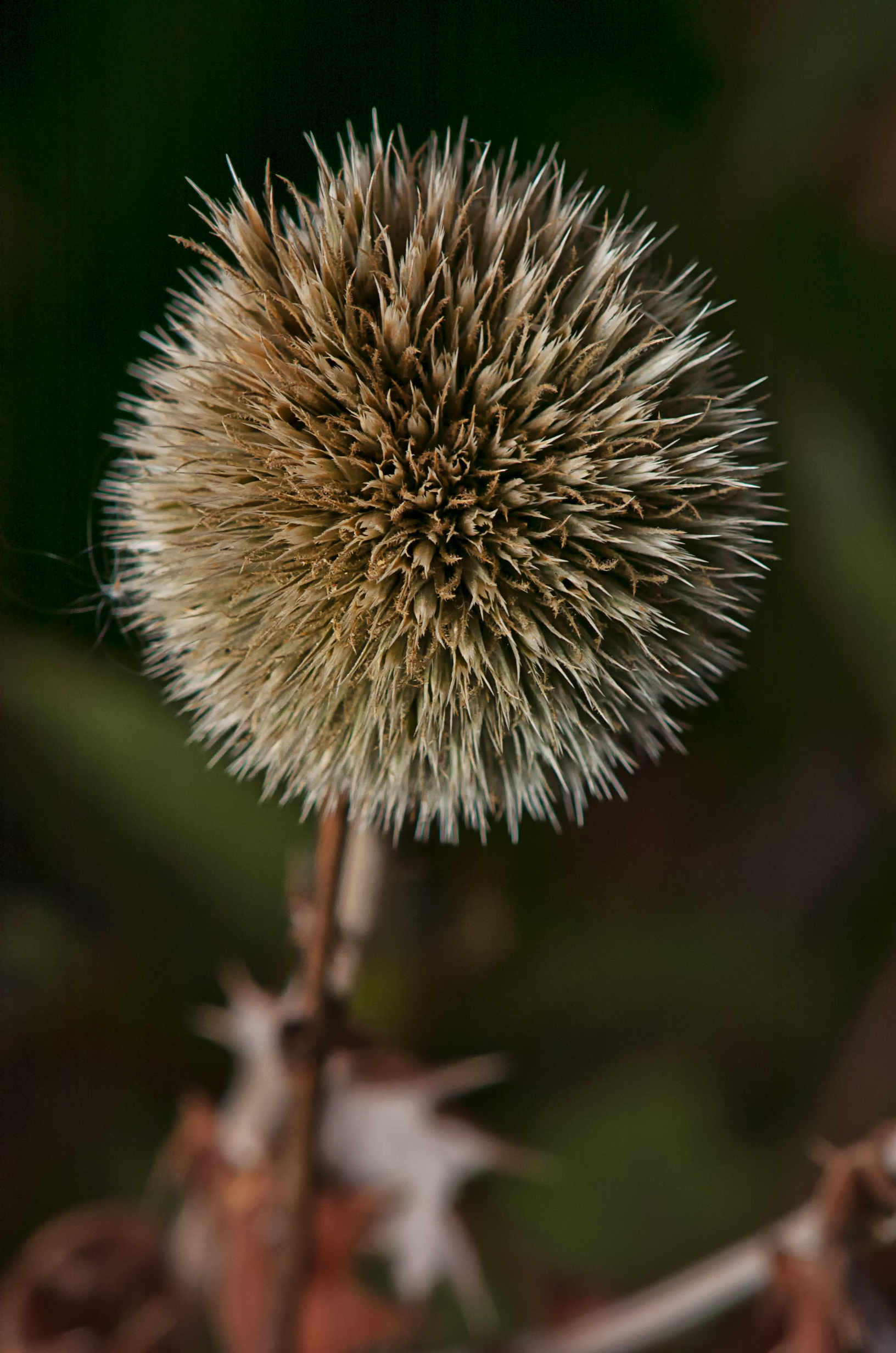
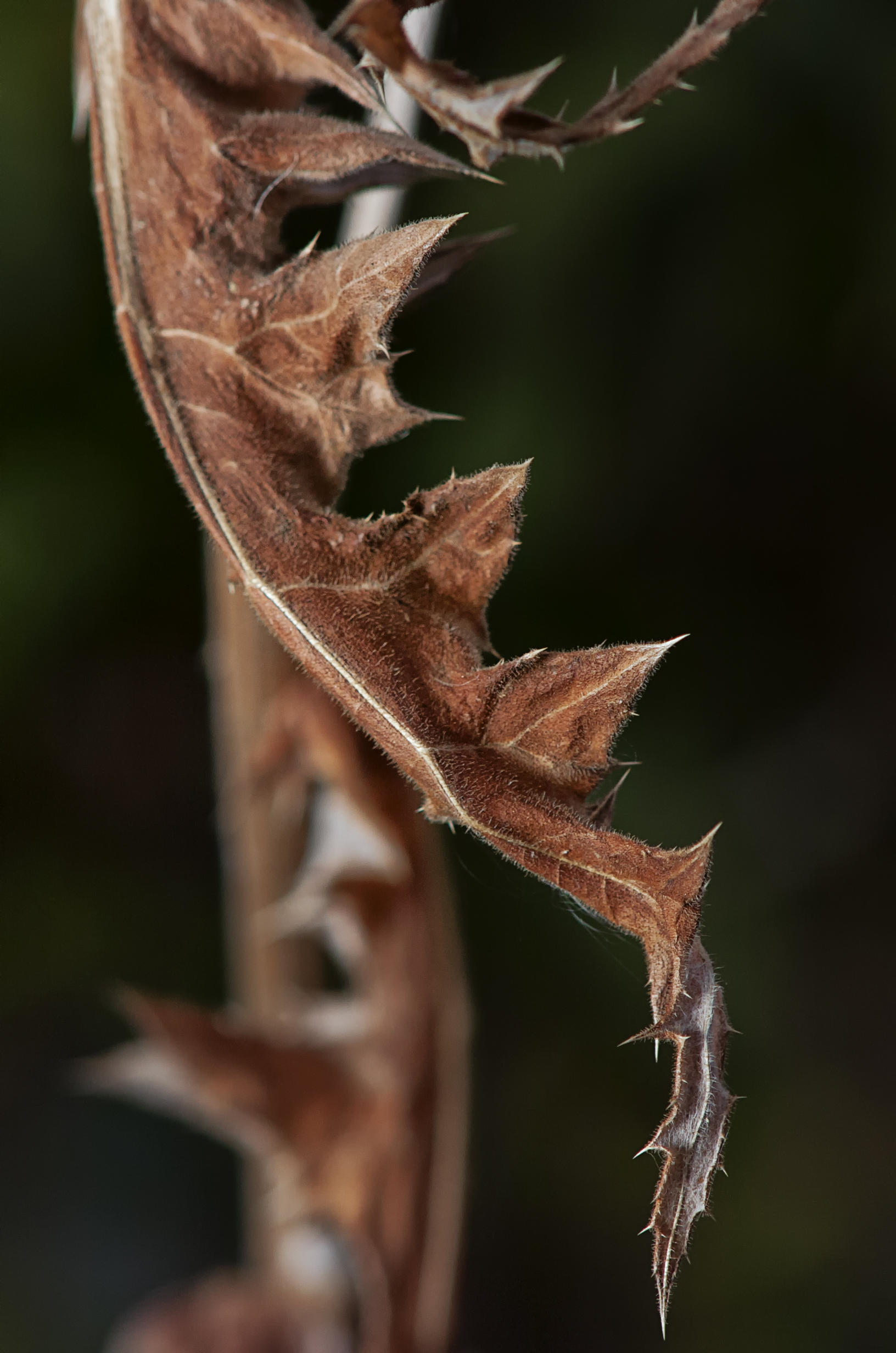
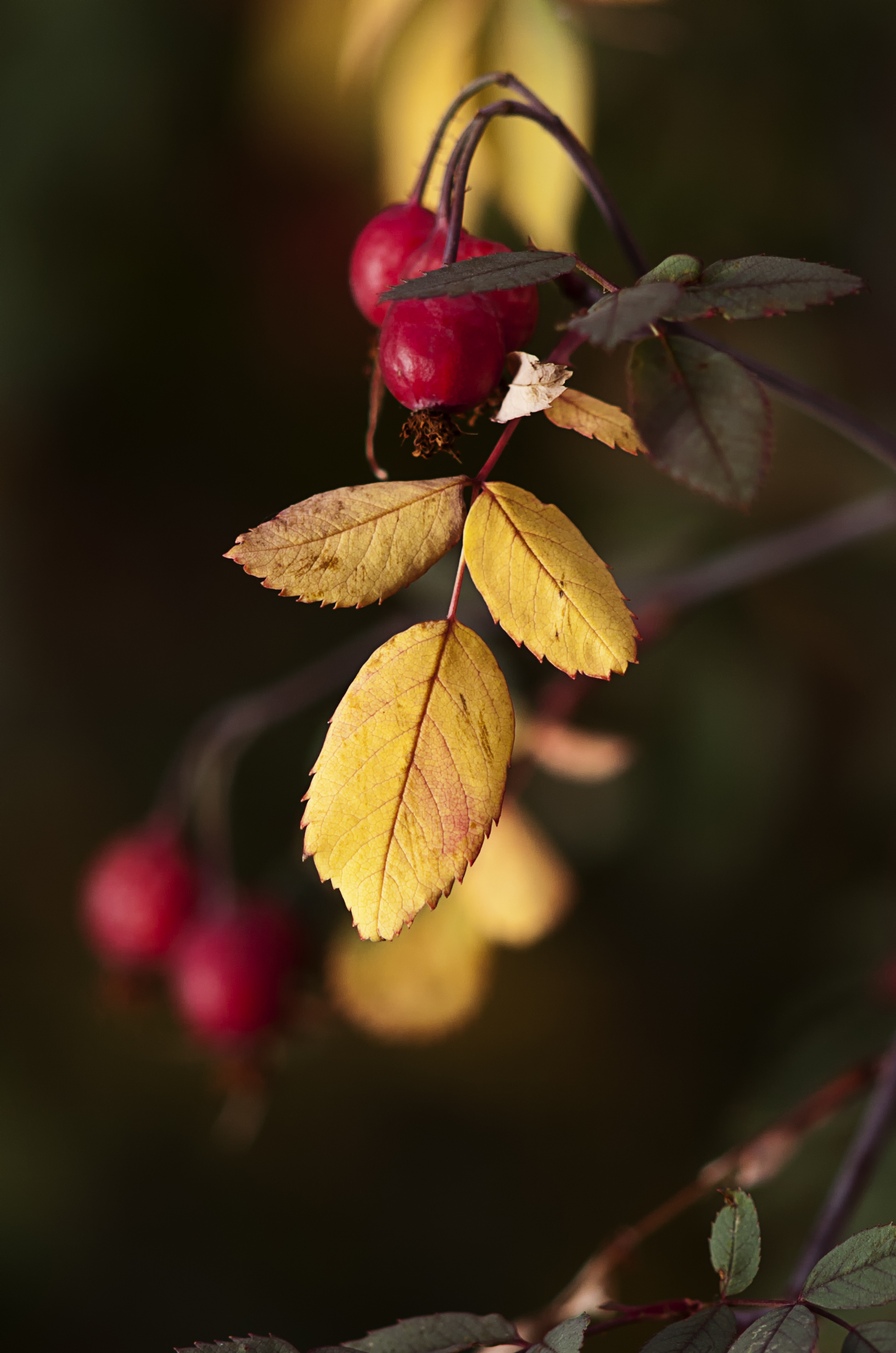
The Autumn Garden for Photographers


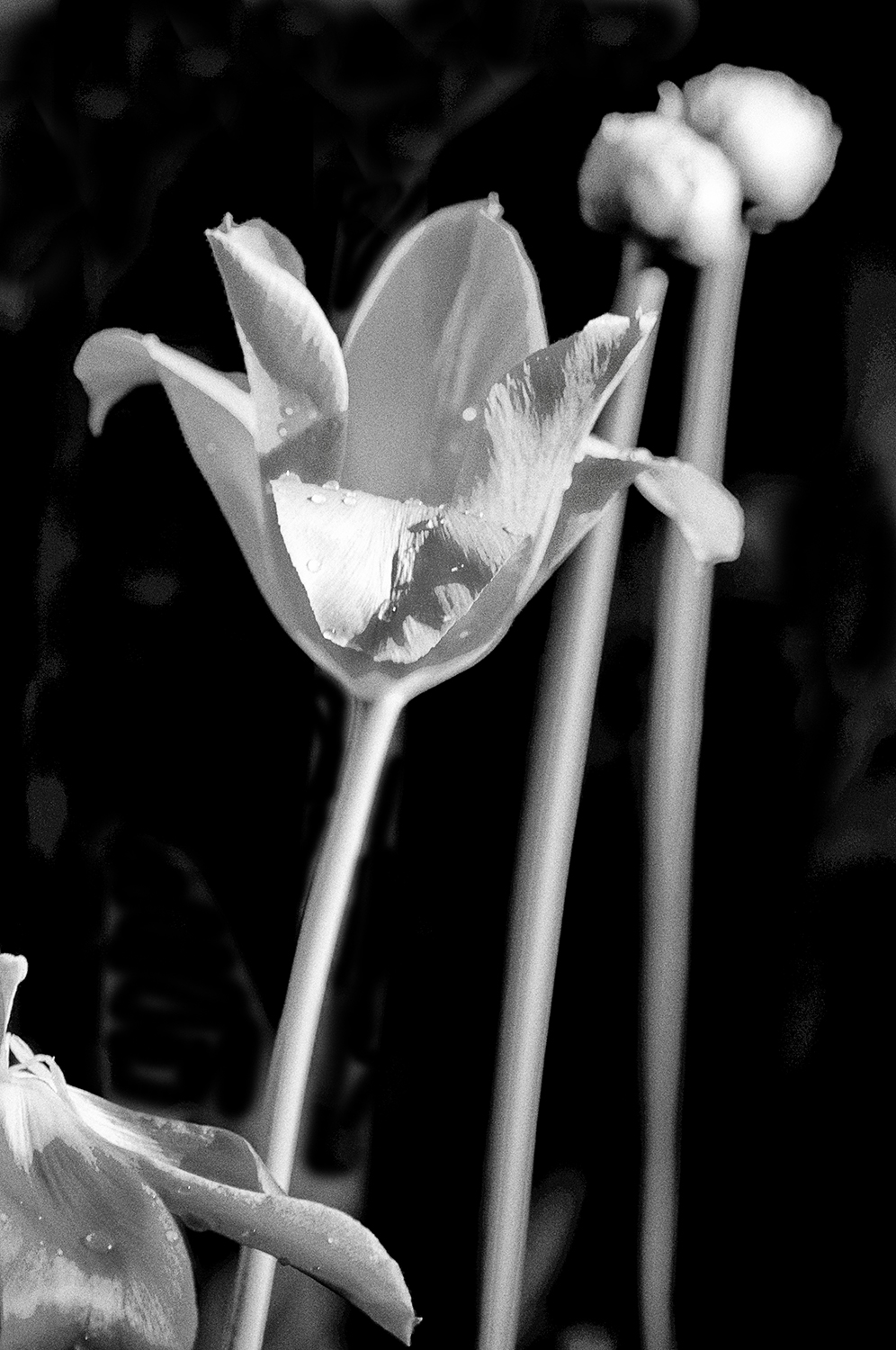
For the past week I have been looking at my wife’s garden as I walk the path from our front door to the car on my way out.  Her garden plants are dry; actually, crackling dry might be a better way to describe the plant life here in British Columbia’s interior after another summer season with very little precipitation.  She explains that she has a “dry garden,” and that she doesn’t water the garden, only for new plants when necessary.  Plants are selected that have the best chance of survival given the conditions. Parts of the garden are crispy dry, or have gone dormant, and offer a unique opportunity for photography before fall rains soften the landscape.

The nights are now getting cooler and the days aren’t as blistering hot as they have been for the past month and the plants that still have leaves that haven’t shriveled and fallen to the ground are beginning to change colour.

Most of the books that discuss garden photography recommend photographing plants in the morning when everything is fresh. Of course, spring is the most popular season for flower photography; and, I doubt those presenting their photographs to garden or photography clubs include photographs of lifeless plants. However, for this dedicated photographer, the combination of very dry, withered leaves and those with just enough life left to change colour are intriguing. As I have in the past I’ll admit that, unlike my wife, I can name few of the many of the flowers growing in our garden. To me, I look for colour and shape and how they fit in the environment.

My regular readers are already aware that I venture into our garden on rainy days and when it’s snowing. I enjoy photographing our garden in any season, and its dry condition is an invitation not a deterrent. So, this morning when I got up to a bright, clear, 9 degree autumn day, I thought I shouldn’t wait any longer and walked around our garden slowly looking for the flowers I would photograph later when the sun began to drop in the sky.

I waited for what I’ll call the “quiet light” at days end. I like that light that lasts for a very short time before dark when there is still light enough to see details, but not bright enough create highlights. As much as I like to use it, I can’t claim the term “quiet light”. That goes to photographer John Sexton and is described in his wonderful book of black and white photographs titled, “Quiet Light”. A protégé of Ansel Adams, Sexton and his collection of black and white photographs that he calls “an exploration of the natural environment” is inspiring; and it’s him, and photographers like him, that make me want to search out the unusual in the natural environment that would normally be ignored.

I wandered around with my tripod, a stand-mounted wireless flash pushed into a 30-inch diffuser, and a 200mm macro lens on my camera, and worked at picking out interesting shapes to photograph. The subdued light was perfect. I could place the camera on the tripod, focus on some intriguing-shaped plant, then direct the diffused flash from different positions to open up the flat-light conditions.

It’s easy to move the flash closer or further away to change the way the light effects a subject, or release the shutter several times while opening or closing the aperture.  The outcome would be different versions. Some would have shadows depending on the position of the light while others would or wouldn’t have a dark background depending on the exposure.

I didn’t spend a long time because the light didn’t last long, but I released my shutter at least a hundred times photographing different plants, trying to be as creative as possible and get the exposure and the angle just right. I had a good time and expect I’ll be at it again before everything changes again.

I appreciate all your comments, Thanks

My website is at www.enmanscamera.com
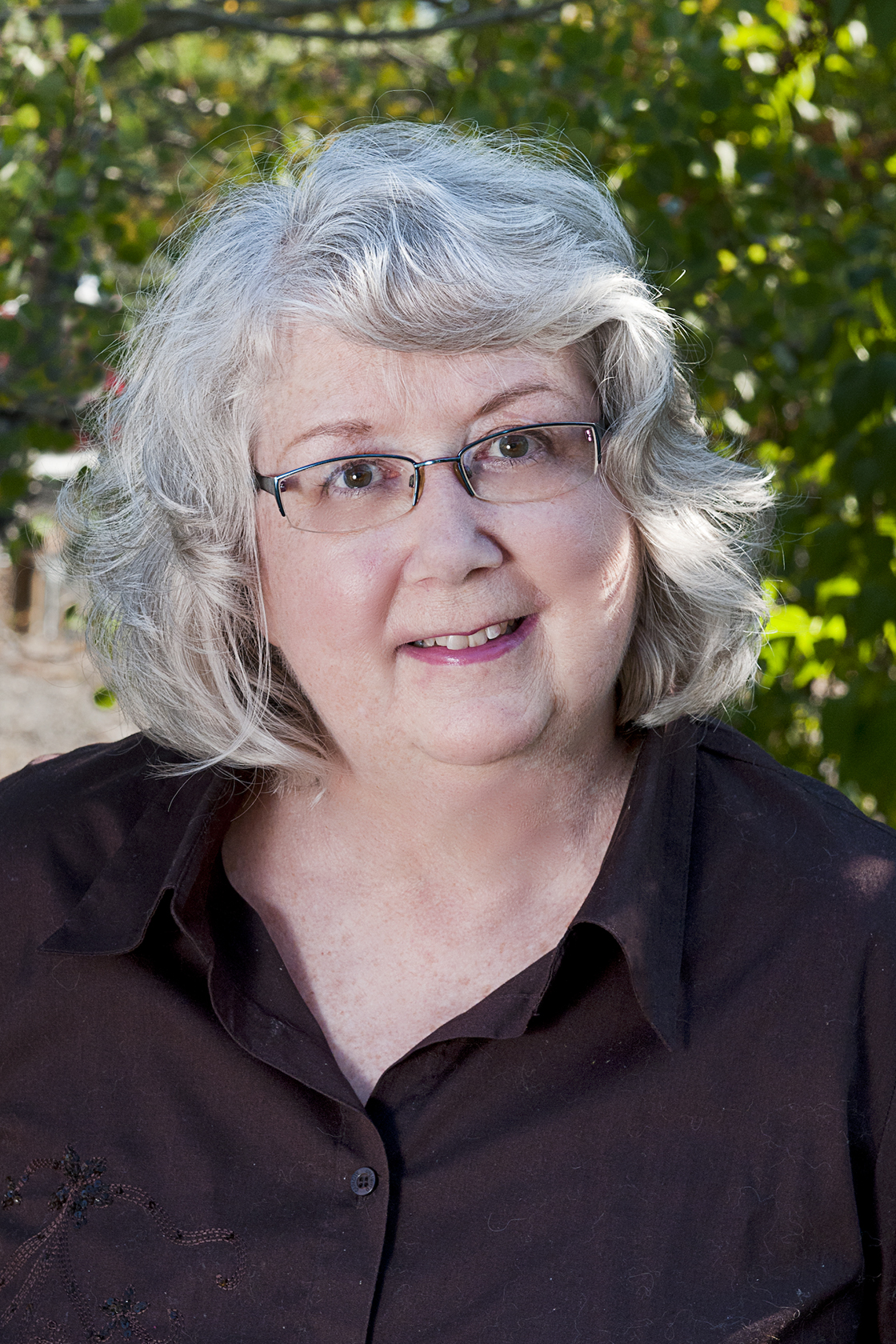
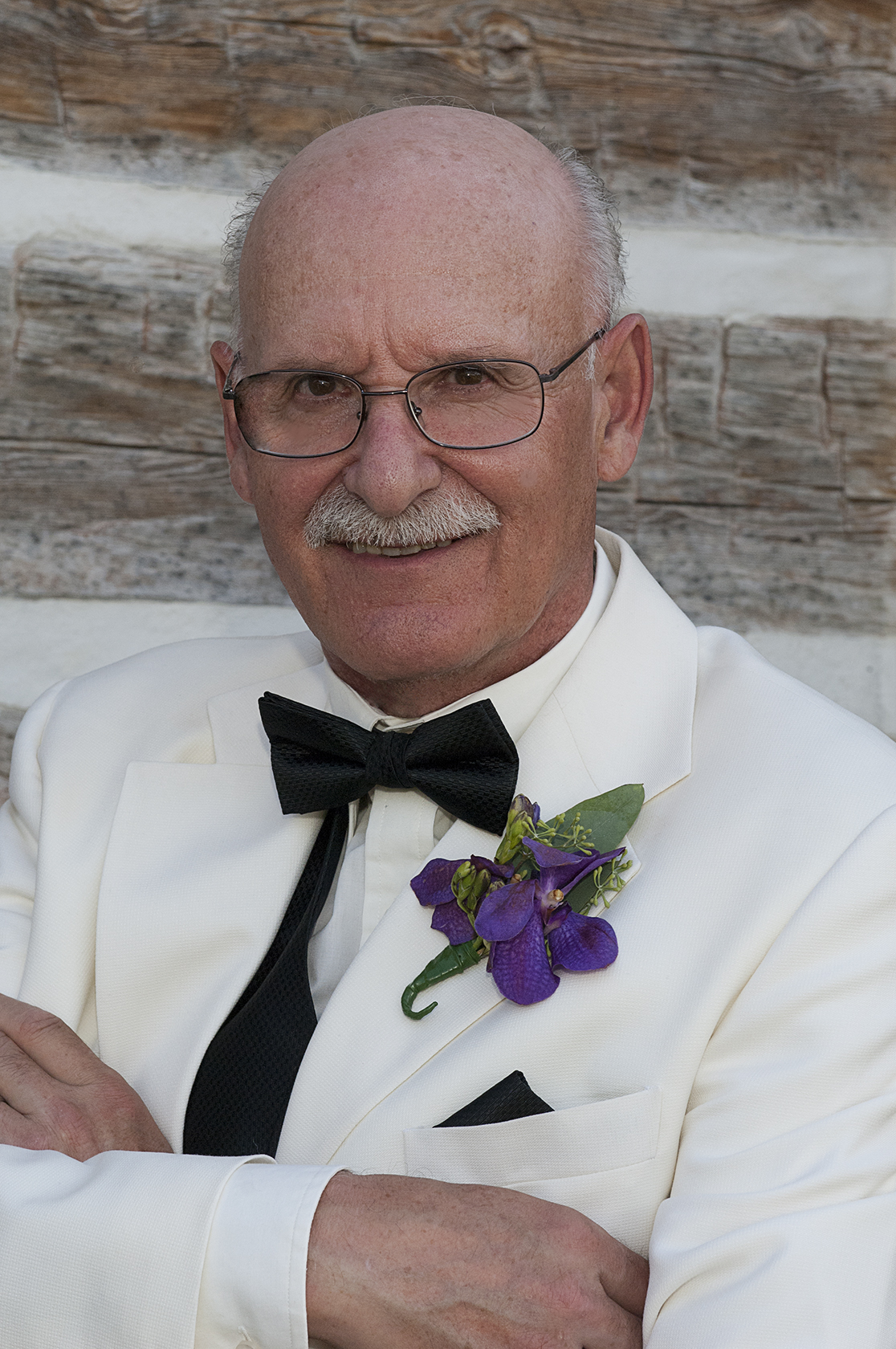
Photographing Portraits of Seniors

There was a time in photography when the word “seniors” meant people near or over 50 years in age.  Today photographers refer to senior portraits as high school graduation photos. But it is those in the aging demographic that don’t get much attention during discussions on photography that I want to write about this time.

When one does a search about portrait techniques or checks published books on portraiture I doubt there will be much, if anything at all, about photographing people whose faces are starting to, or have already, aged.  After all, our society is obsessed with youthful beauty and we don’t want to be reminded about aging. Despite that, baby-boomers make up a large segment of our population and they will still want portraits by photographers.

Attend a class, or buy a book, on how-to portrait techniques, and you’ll find it’s all about angles of light with discussions about off camera directional light to create drama and dimension to a subject’s face with highlights and shadow.

Shadow on the smooth face of some 18-year-old can be flattering and sexy, but when a sidelight creates deep shadows on a face that has a few more years of life it is anything but flattering, and certainly won’t be sexy on most.

Lighting manuals instruct us not to use a flash from the camera’s position, and are critical of straight-on flash. However, using a diffused flash straight-on reduces shadows and wrinkles, and a soft, direct light makes it easy to reduce any age lines easily during postproduction.

Retouching, or postproduction as it seems to be called now, has always been part of the process with those that do portrait photography, especially with seniors. I can remember hours with magnifying lenses, fine tipped brushes, mixing dyes and reprinting for final photographs. Now, I have computer programs to remove blemishes, creases, and bags under eyes. I brighten eyes, and sometimes whiten teeth, and always make sure there isn’t loose skin under the chin, or on someone’s neck.

Some of this I have done for years, only now I do it more, and it is a lot easier to retouch with computers and digital cameras. I know there are many photographers that say with misguided pride they do everything in the camera. In my opinion, that’s all right for sports and wildlife photography, but it would never do with a portrait client, they deserve more.

My advice for those photographing seniors is to take the time to choose a flattering perspective that hopefully shows some of their personality, and remember senior portraiture requires direct diffused light, retouching, and more relaxed poses than when they were young. Don’t choose low or awkward angles and tell your subject what you are doing. Remember these senior clients have been having their picture taken for a long time and in my experience are helpful in producing their own photograph.

My website is at www.enmanscamera.com

Camera Manual and the Basics of Photography.

I was photographing an outdoor event on a hot, bright day a short time ago when another photographer walked up to me complaining that most shots were not turning out as hoped. This happened again at a wedding I was photographing last weekend. The guest had a perfectly good camera, but criticized it, and said he wished he had a better one because the backlighted couple we were photographing were being recorded as silhouettes.

Ending up with faulty photographs from time to time isn’t unusual, although not as much nowadays as when film was used. However, I think most faults occur because photographers haven’t taken the time to learn how their cameras work, and have a poor basic understanding of photography and techniques.

With digital technology it’s easy to determine what is going wrong by checking the camera’s LCD and the histogram. I doubt that either of those complaining photographers I talked to used the LCD for anything but reviewing pictures. They probably hadn’t gone through the camera’s menu and set it for the conditions under which they would shoot. Both had selected the auto, or program mode, and to add light to the bright, backlit environment were only using the camera’s tiny pop-up flash. They would have been much more successful if they had a mounted a hotshoe flash on their cameras and selected the “M” mode. I expect they will be relying on their images being saved by technicians at the local photo lab or hoping for some friend with PhotoShop wizardry.

I continually meet photographers that complain about how various big photo labs are failing to make their prints the way they think they should be. They rely on their camera’s preset programs, and I expect are of the belief that if the camera they have been using doesn’t make good pictures then they should change and upgrade to the manufacturer’s latest offering to make it so.

When I arrive at a location to photograph I immediately start making tests. I keep my camera in the manual exposure mode so I can quickly change the ISO, shutter, or the aperture to suit my shooting.  I continue to do that throughout the entire session, checking the histogram frequently, and leaving nothing to chance by lazily relying on the camera’s pre-programmed modes.

I begin by contemplating about the subject and its environment.  What is the background and how will that affect the subject? What is in the foreground that will interfere with that subject?   If one considers depth of field a decision must be made about how much will be “in focus”.  Sometimes in a portrait that includes a landscape, I’ll want everything from the foreground to the far-off distance to be crystal clear, and at other times I’ll want the background to be “out of focus”; whichever I select requires its own aperture setting.

What is the lighting like and will its direction be flattering on the subject? The sun and its direction are always very important when photographing people. I prefer to have it coming from behind my subject and like to use a flash for “fill” lighting to remove shadows and silhouettes.

I can do all this because I have taken the time to learn the basics of photography, and I have also taken the time to learn how my camera works. I don’t think either of those photographers that complained to me had done that. I expect they just got themselves ready for the event, grabbed their camera on the way out the door without reviewing their manual beforehand, recalled that the digital camera has a “P”, or auto mode, and believed the camera would make everything they photographed perfect.

Photographers using film used to say that it was all in the negative; that a properly exposed and developed negative gave the best possibilities of a fine quality print.  I still agree with that principle, only now it isn’t an image about to be developed on the negative, but an image about to be processed on the sensor.

I always appreciate comments, Thanks in advance.

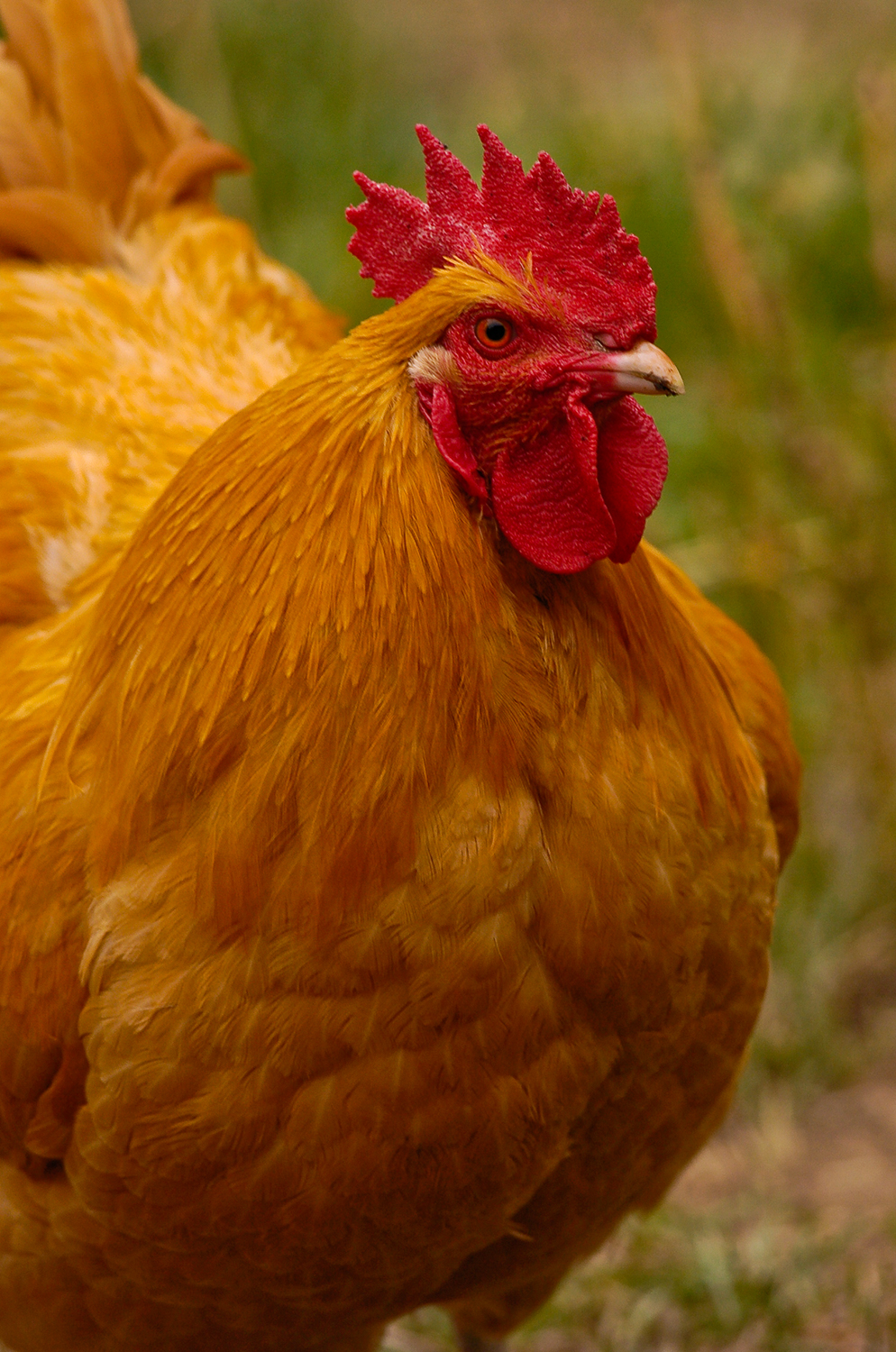
Eulogy for Chuck the Rooster

This past week Chuck the rooster died. I don’t think my neighbors will feel too sad because, if that rooster was anything it was a loud talker. I called it talking and everyone else called it crowing. But, to me he seemed like he had something to say and anyway I am going to miss him and his point of view.

Why would I write a eulogy for a silly bird? It should go something like, “Chuck kept the hens together, crowed lots, and then he died.” Surely a rooster isn’t worth more words of praise than that. He had a good pedigree; he was a Buff Orpington rooster with striking colouring and handsome spurs.

In May I wrote an article titled “Pets make Great Photography Models”.  In that I wrote, “Got a new camera or lens? Want to try out that studio lighting technique? Or just bored and want someone ever ready and able to pose for a photograph? Call the dog, or coax the cat. I can’t even begin to count the pictures I have taken of the horses, dogs, cats, parakeets, hamsters, chickens, fish, and frogs I have taken in my life”.

Those pets never complained when the pictures didn’t work out, and even waited for another blast of the flash without blinking. And I continued saying that Chuck, my rooster that guards the hens, doesn’t seem too interested in standing still for his portrait.

So, other than not having Chuck to keep a bunch of chickens on the straight and narrow, I’ll miss having an ever ready, constantly moving subject to practice my photography on. That rooster never stood still for long. He was always guarding, herding, searching for interesting stuff on the ground, then telling us all about what he found, flapping a lot and was always running around.

Sometimes I would set the lenses I wanted to try out on the rickety old wooden picnic table that sits in the back meadow and then open the gate to the chicken pen so Chuck and the girls could get out. They always want to get out, and eyeing my wife’s flower garden would clumsily run out and across the unmowed field grass with Chuck guarding the perimeter like some soldier on patrol.  I would sit, crouch, and lay in the tall grass, making exposure after exposure until they trundled past and into the overhanging bushes of the garden. In retrospect I should have been more serious about the pictures I took, and now I wish I had kept more of that silly old bird. But I seem to only have one or two stashed on my hard-drive.  Anyway, who wants a picture of a chicken hanging on their wall?

I tested cameras, lenses, flashes, and my ability to light with flash outdoors, stop movement and focus properly on quick moving subjects. I would walk out in the yard, find Chuck and the chickens, try something out, dump the images from my memory card to the computer, check them out, make a decision about what I wanted to try next, then delete them and go out and start again.

I couldn’t have thought of a better photographic test subject. Yep, that rooster never stopped moving and I am going to miss our time together.

My website is www.enmanscamera.com

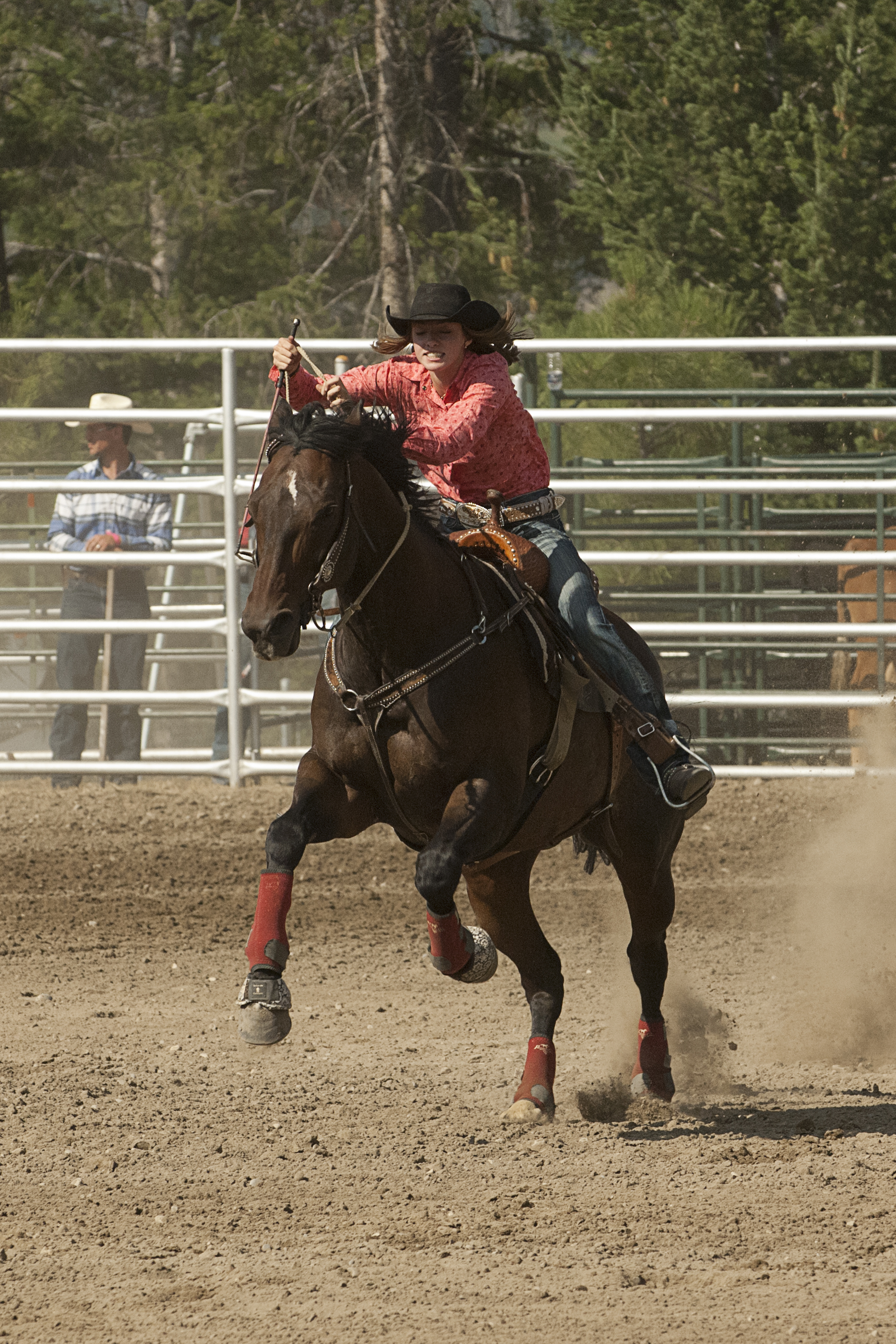
Grab your camera and go to the Rodeo

                                                                                                    I had finally reached Olympic games overdose. I enjoyed watching the Olympics, but in British Columbia, Olympics coverage was everywhere. Every radio station, television network, newspaper, and conversation had something about what was happening and I couldn’t get away from it. However, now they are over and I expect many (ok, I guess I’m included in this) might be going through some sort of withdrawal.


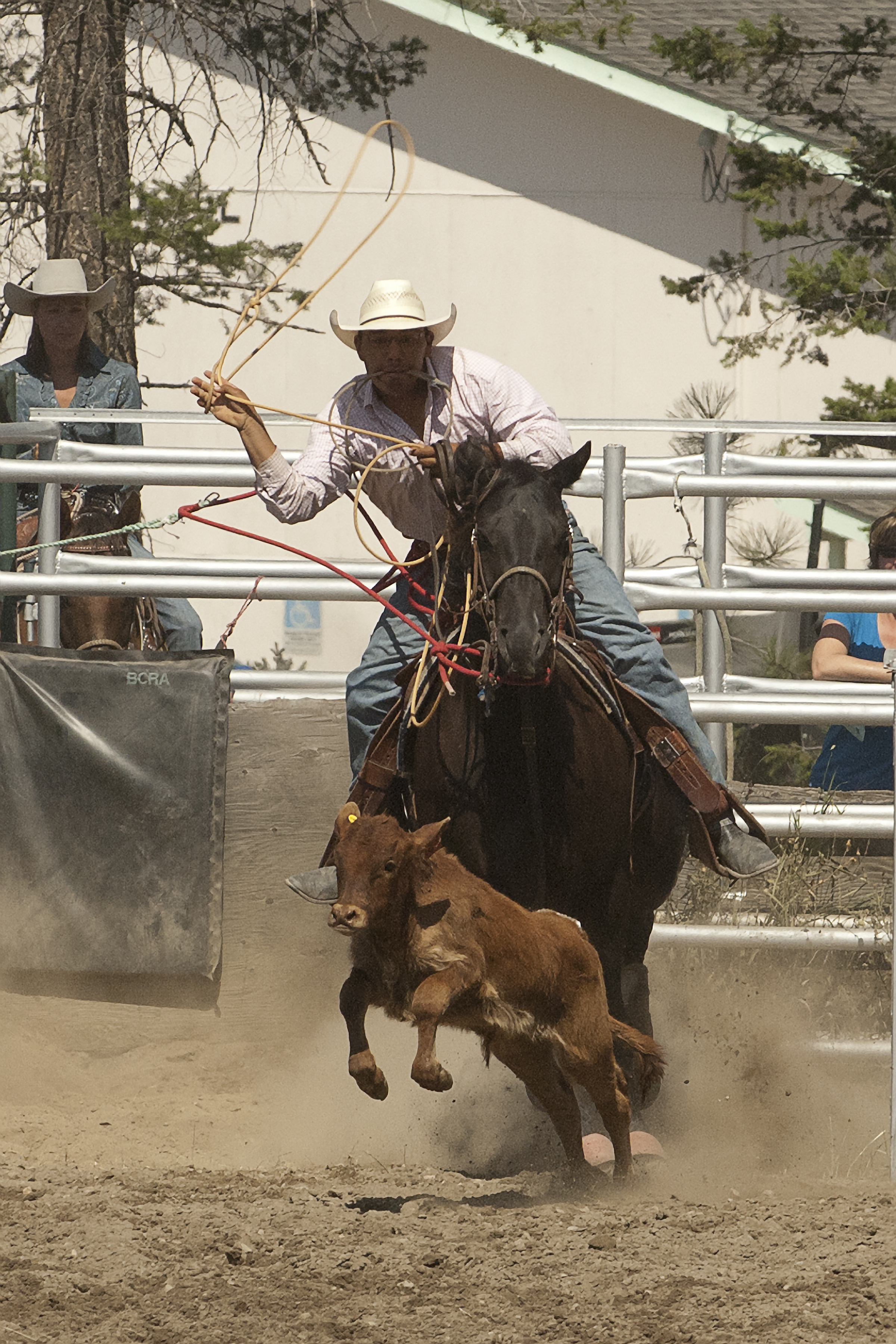
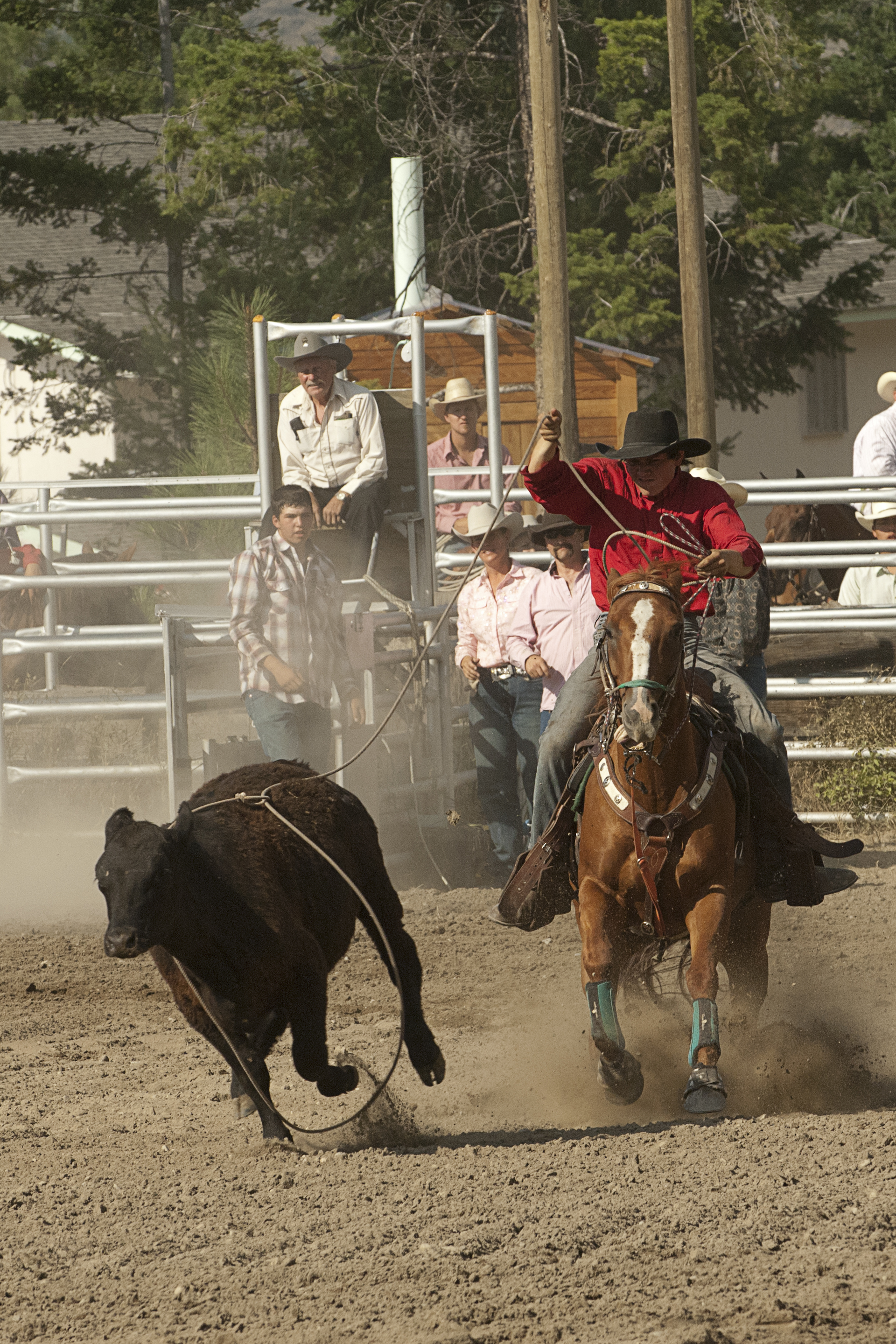
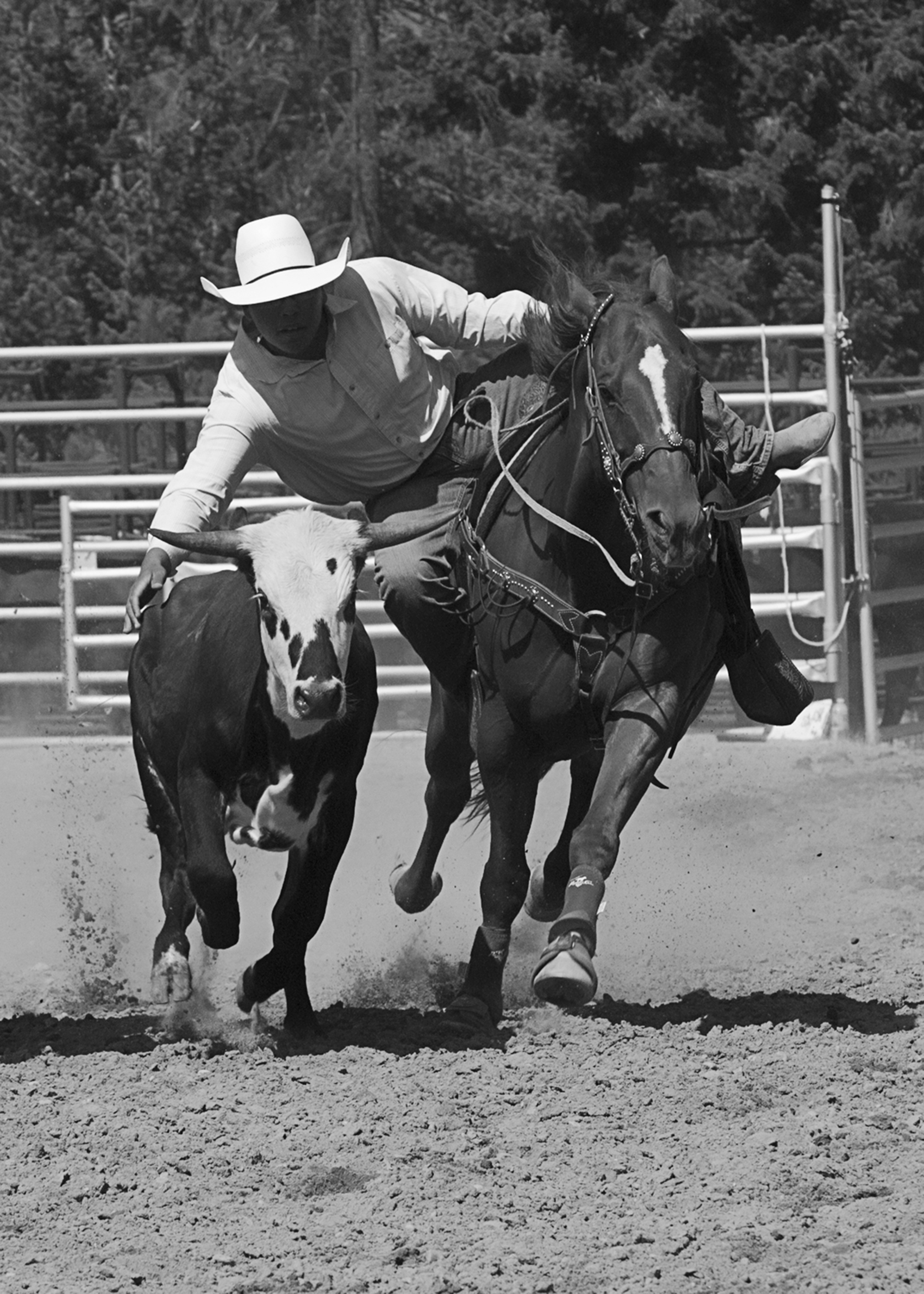
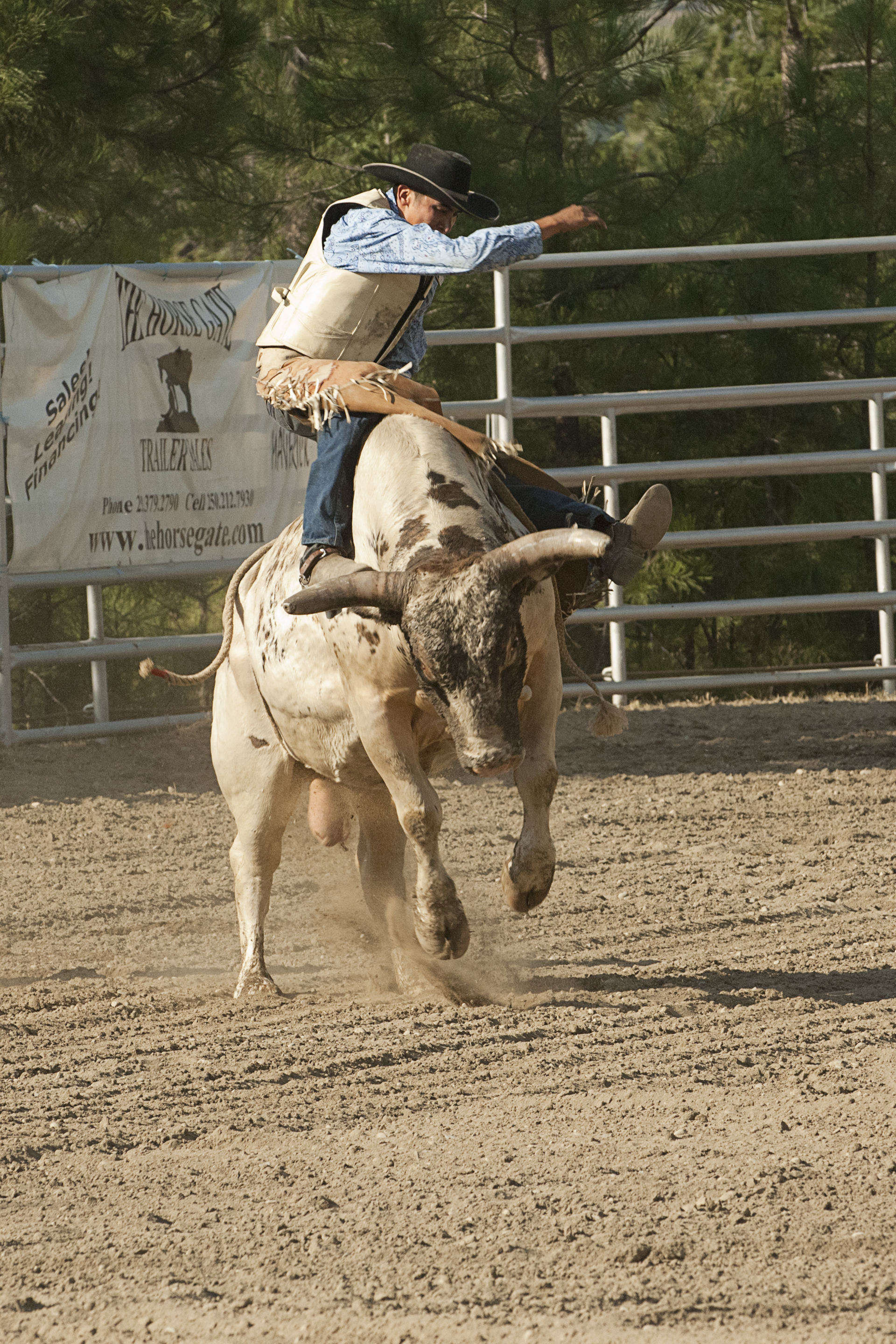
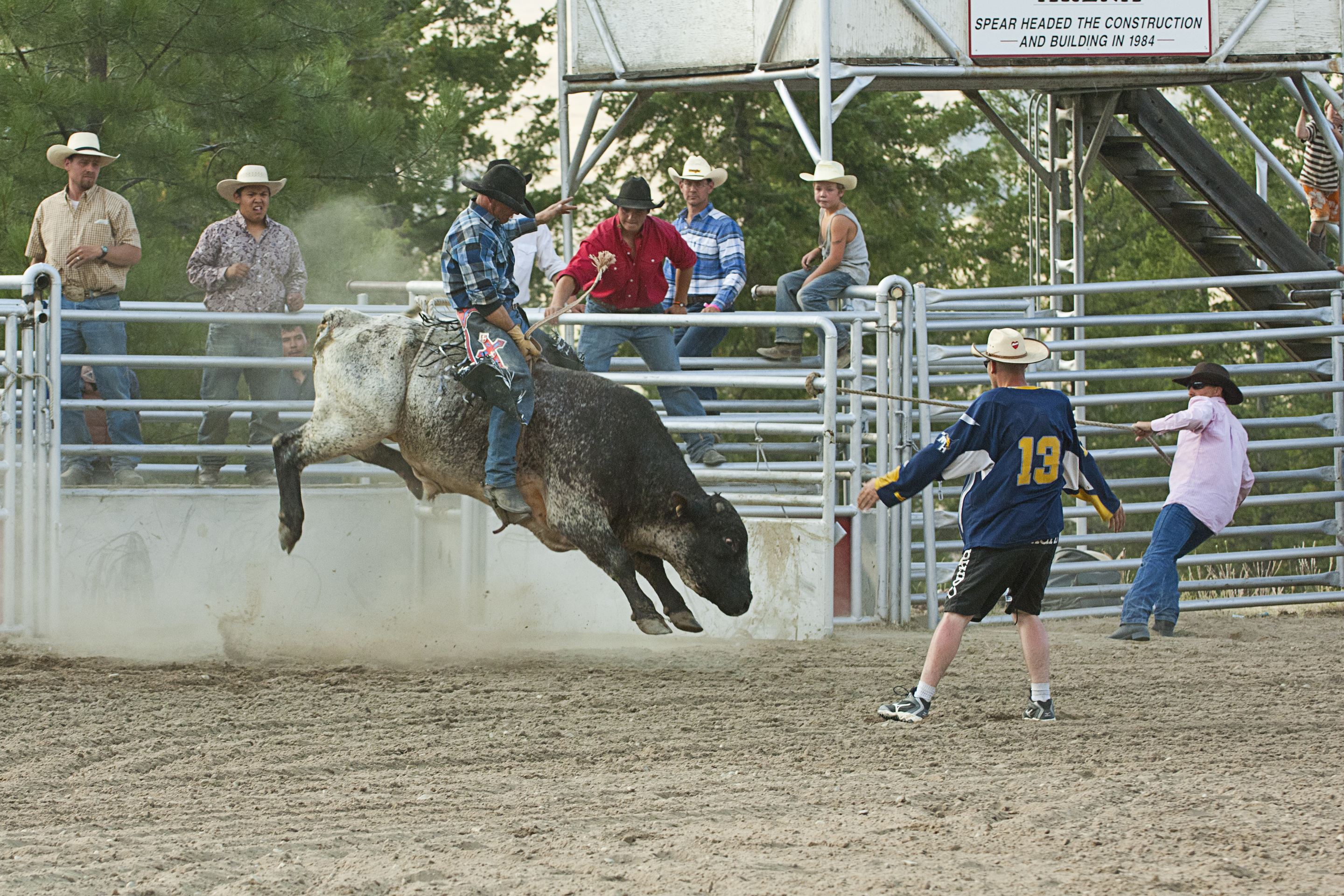
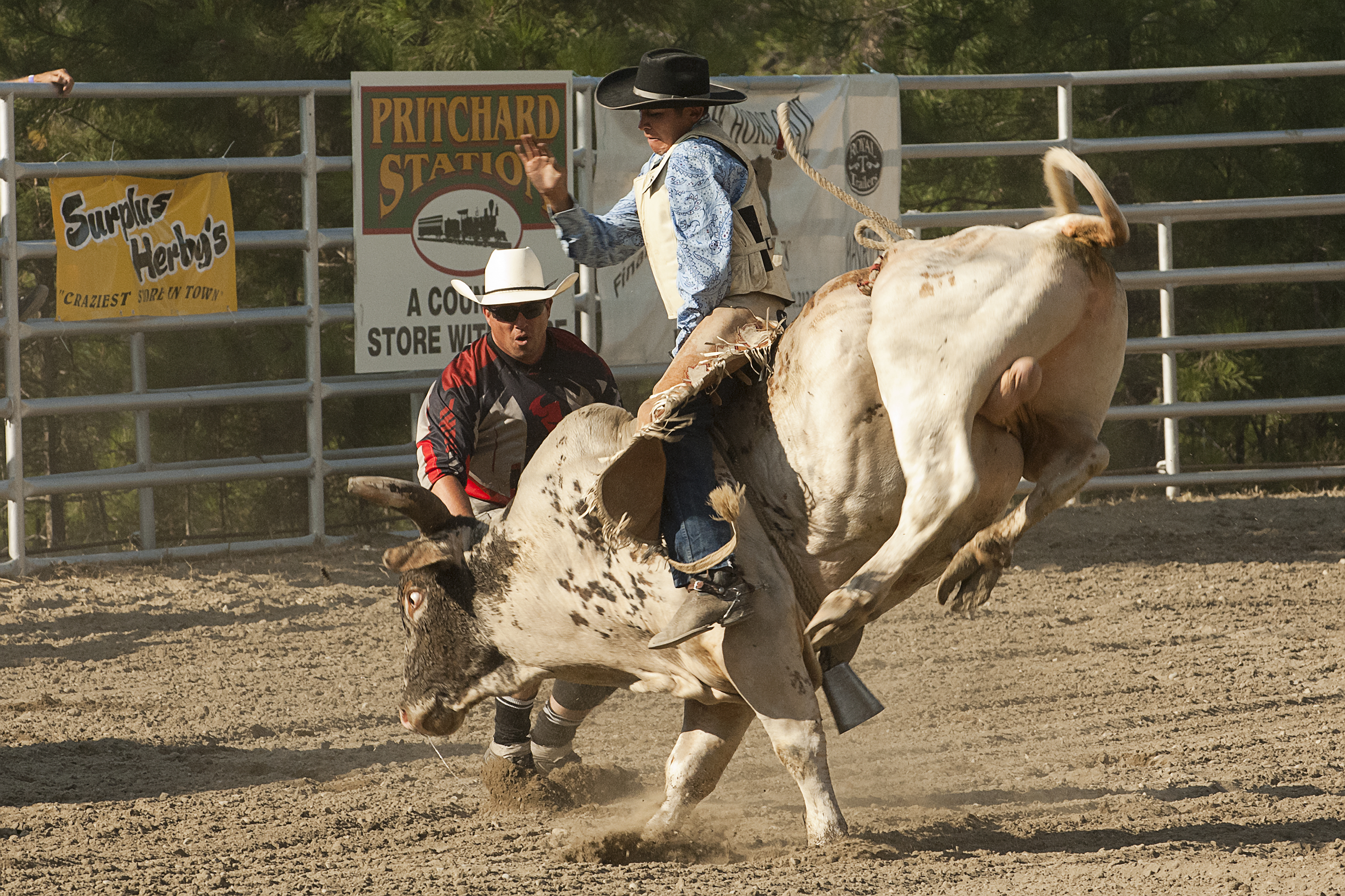
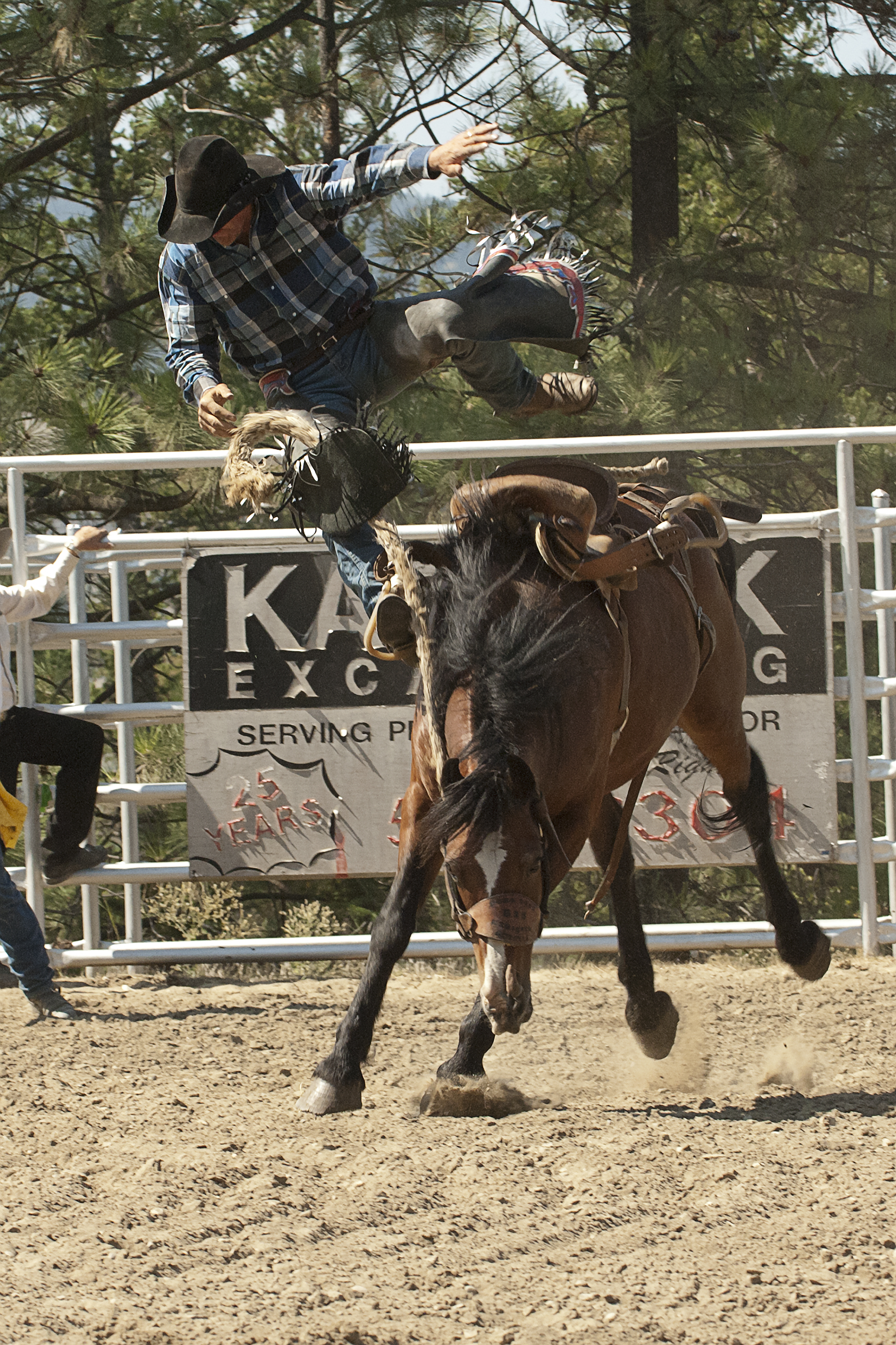
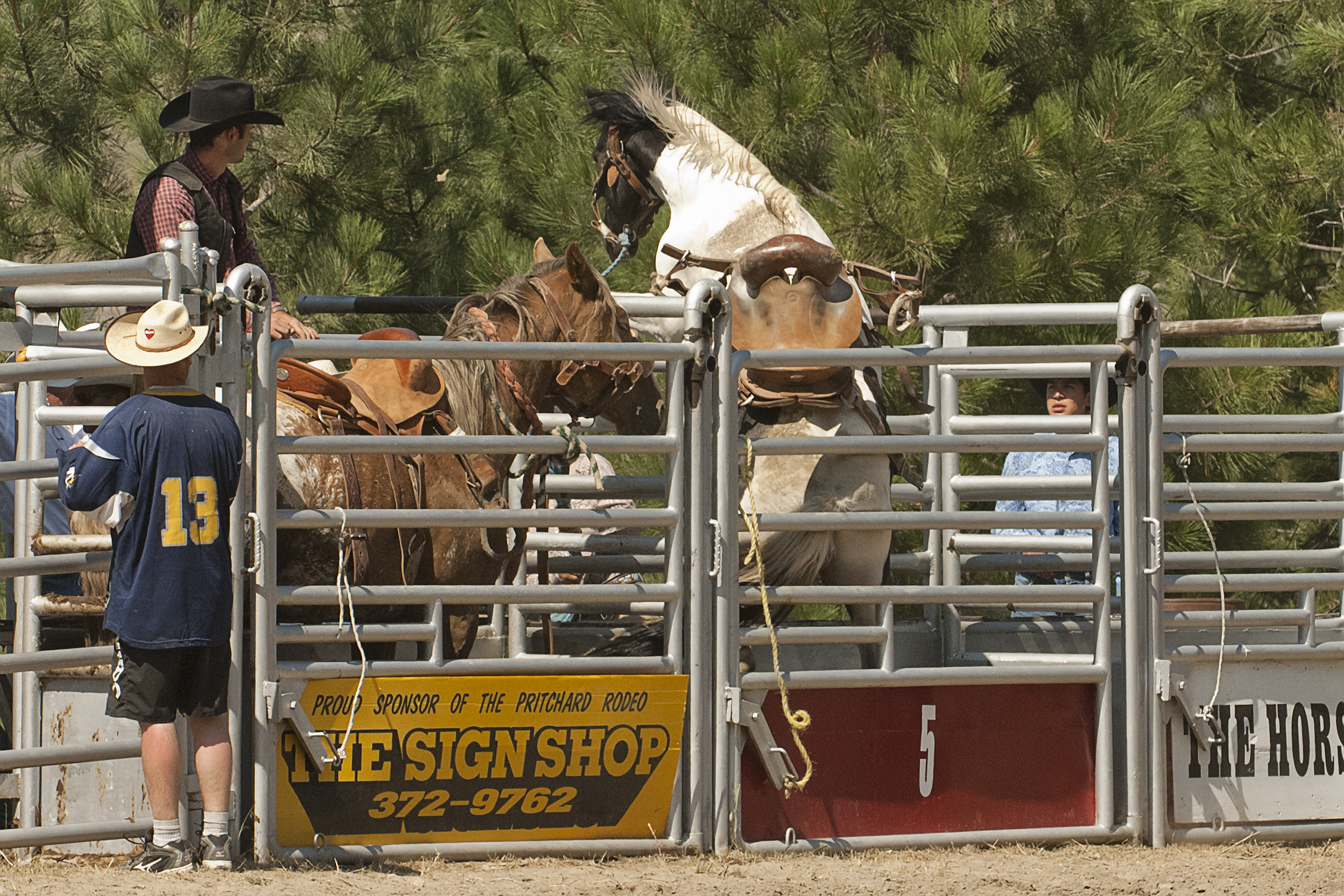
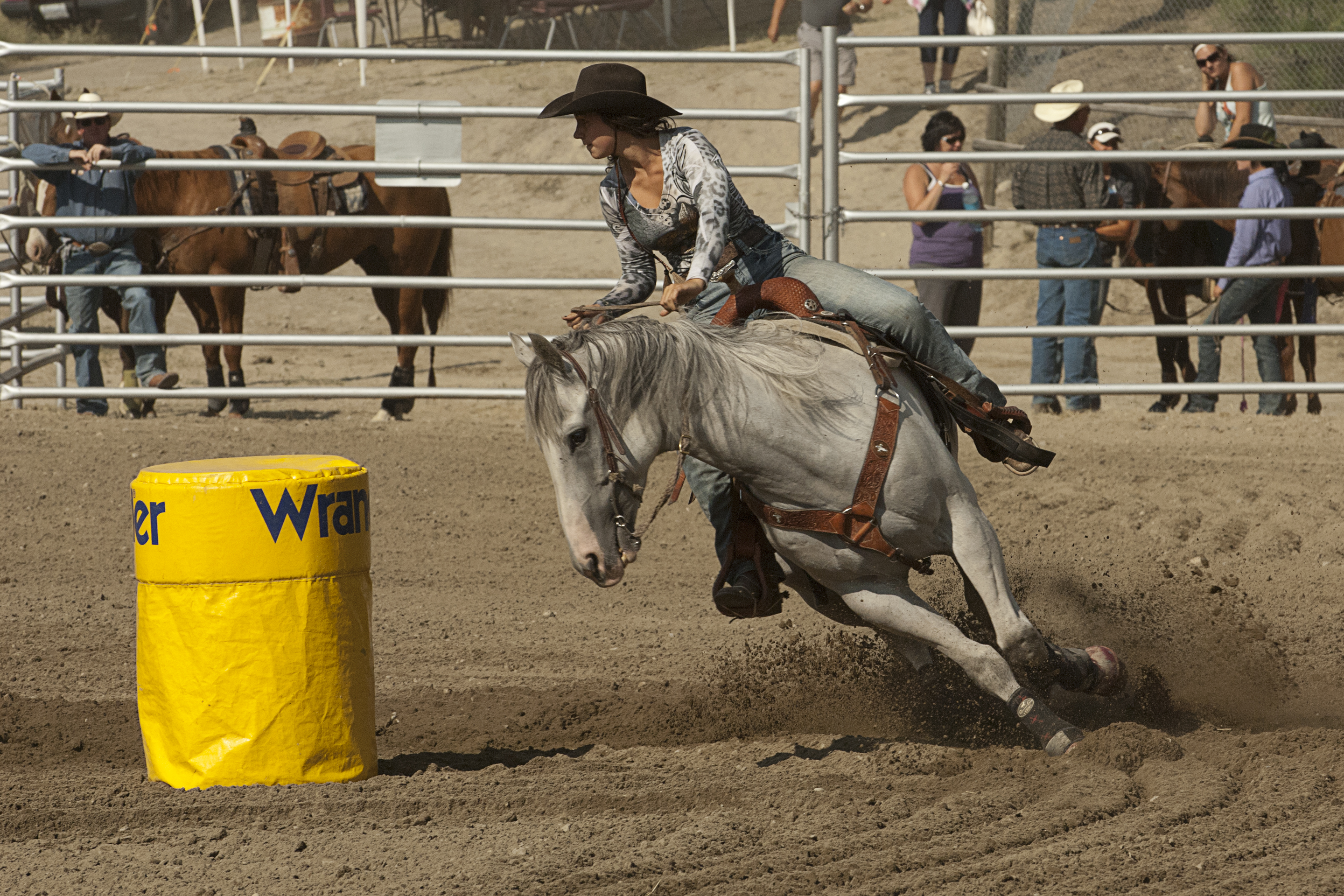
Well, for those who enjoyed watching and applauding athletes at their best I found a great way to get out of that withdrawal, however, they just need to be willing to get up off the couch and leave the comfort of their air-conditioned home.  Happening right now all over North America there is that time-honored tradition of the western Rodeo. Each year I look forward to the annual Prichard Rodeo. There are others all over BC that are worth attending, but I’m lucky because, “just down the road apiece” from my country home is the Pritchard Rodeo grounds.

As I strolled down the dirt lane to the bleachers, concessions, and rodeo arena, I looked around and could see some of my neighbors lounging in the fenced off beer garden, and others with their children waiting in the shaded bleachers. Then, of course, I checked out the photographers standing at the railing readying their equipment.  The first friendly face was local news photojournalist Hugo Yuen; we exchanged greetings, talked a bit before he left to get some of the participant names. He had a list to cover for his paper, so he was shooting fast and leaving.

I wandered on, watching photographers positioning themselves along the railing, I wanted to see what cameras they were using, and waved at the arena manager, Don Swift, as he readied participants and turned to see professional rodeo photographer Bernie Hudyma striding towards me. I knew I would see him there. He’s a good photographer and I always like to hear what he has to say. I’m sure many of the rodeo participants were also glad to see him arena side because of the pictures he will have waiting for them.


For those that haven’t yet photographed a rodeo, I’ll begin with the words, “Grab your hat and camera and do it!” You will have fun and get enjoyable pictures to share with friends and relatives.

Here one can see drama, explosive action, anticipation, heartbreak, defeat, excitement, athletic prowess, both male and female physical excellence, teamwork, sportsmanship and, of course, triumph. Then there isn’t, in my opinion, anything much better than attending a rodeo. And for those of us that are dedicated photographers, the action of a rodeo is the perfect way to spend the day.

My advice for first-timers is to get a DSLR. Little point and shoot cameras are great for taking pictures of family groups, and subjects moving slowly in one direction, but you won’t find much of that at the rodeo. When you shoot with the DSLR take the camera off the “P” mode and select  “A”, or  “S” mode if you own a Nikon, or on a Canon select AV or TV. Aperture priority means the photographer selects the aperture and the camera chooses the shutter speed. In shutter priority, it is the other way around, the photographer selects the shutter speed and the camera controls the aperture.

Fast moving, quick changing, rodeo subjects jump into the sky, quickly increase or close the distance from where the action began and, of course, constantly change the exposure by bouncing in and out of bright sun and deep shade.  While following the constantly changing scenarios it all happens very fast, and all one really needs is to control one part of the exposure equation.  Whether that is the shutter or the aperture really depends on what is important.

For example, when I am photographing the directional motion of horse racing or drag racing I prefer shutter priority. When at the rodeo I want more depth of field. That’s the field of focus in front of and behind my subject. Those horses and bulls move fast and I don’t want one moving out of my area of sharpness before I can refocus.

I suggest a zoom lens that goes to at least 200mm. Most modern lenses focus fast enough, following the action, and setting the focus takes a bit of practice, but there is lots of time to experiment at a rodeo, so just shoot and shoot and shoot. As I wrote, if you haven’t yet photographed a rodeo, grab your hat and camera and do it! Find a rodeo near your home and have fun.

My website is at www.enmanscamera.com
Pictures Shot in the Bright Hot Sun


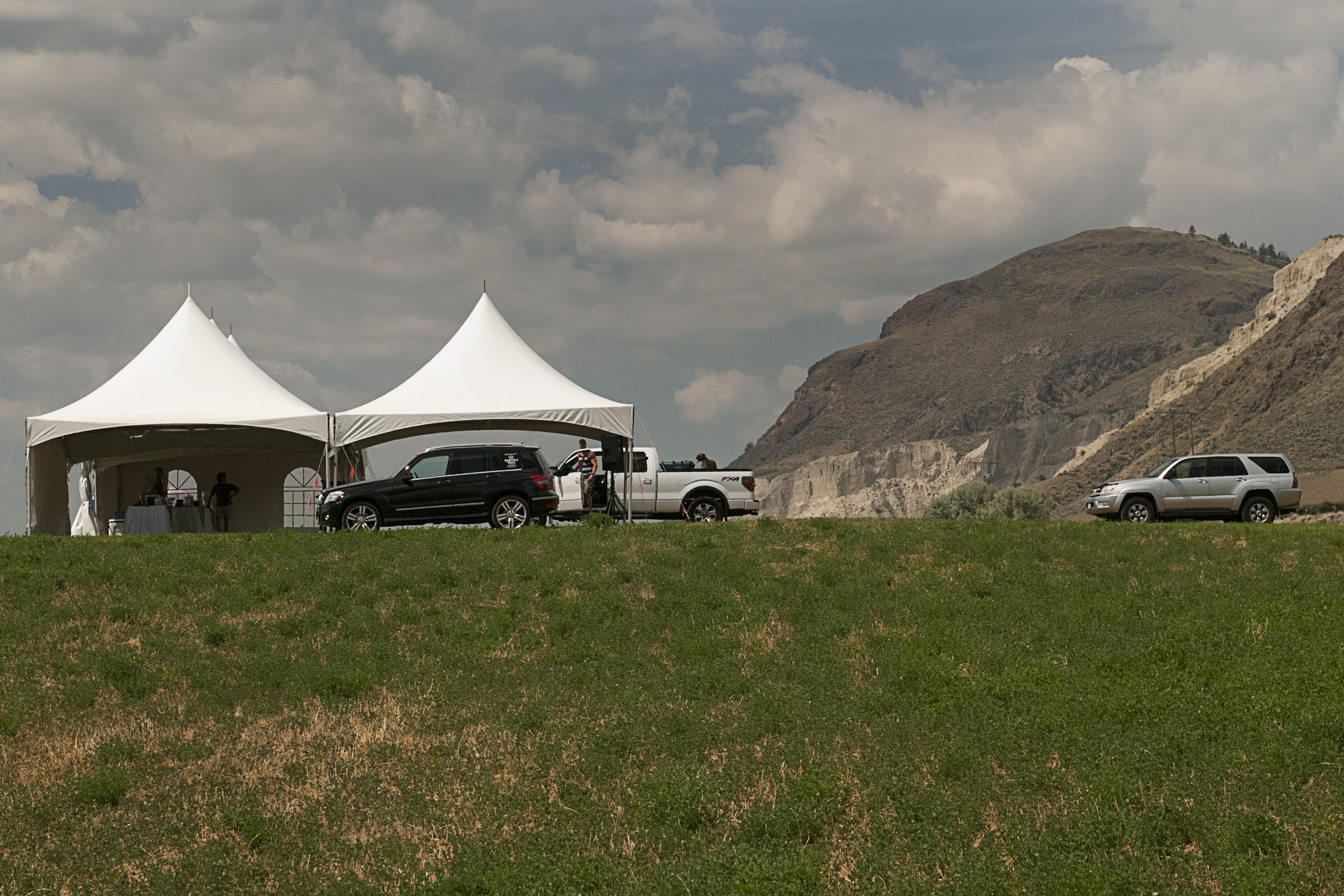
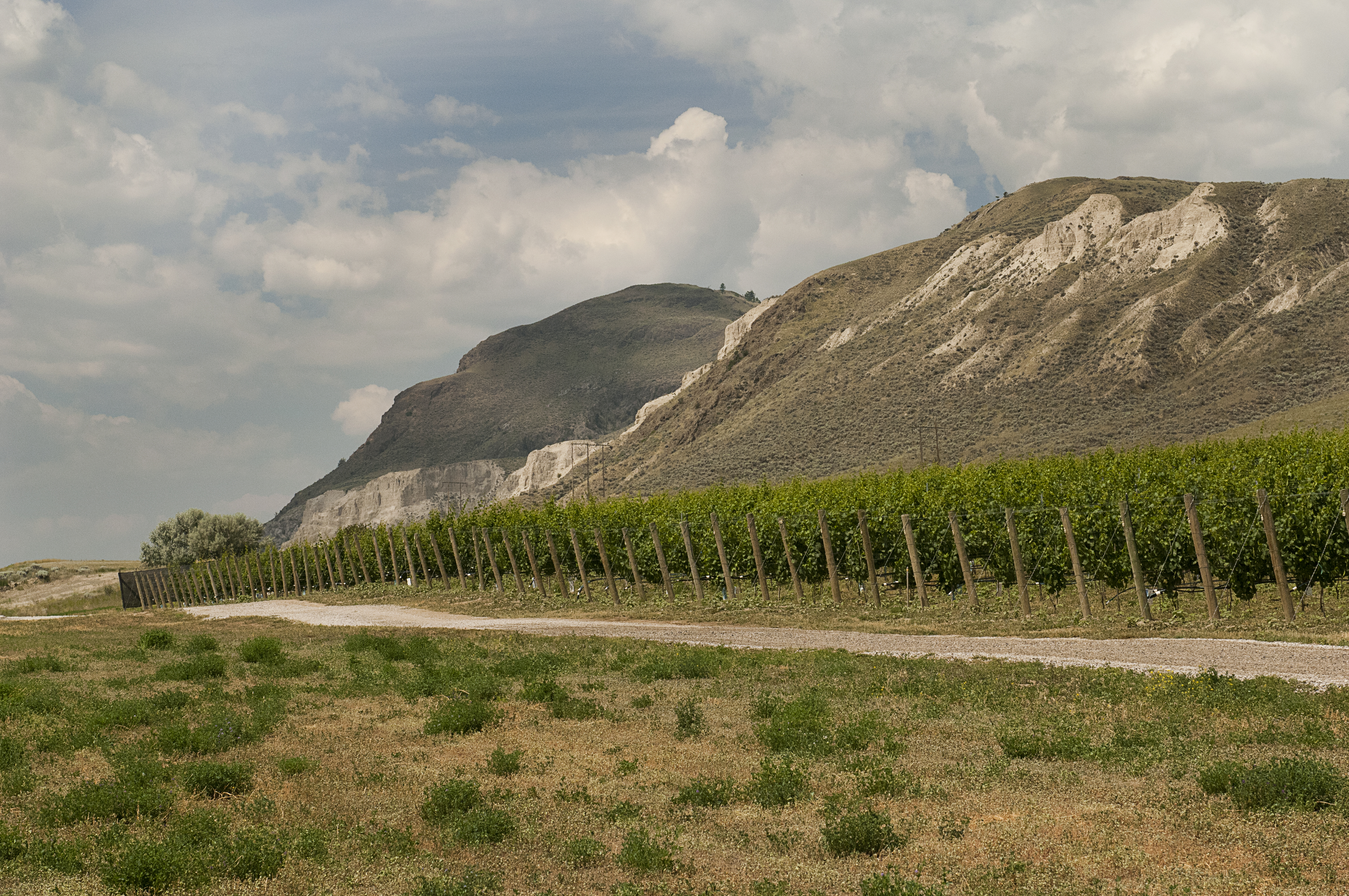
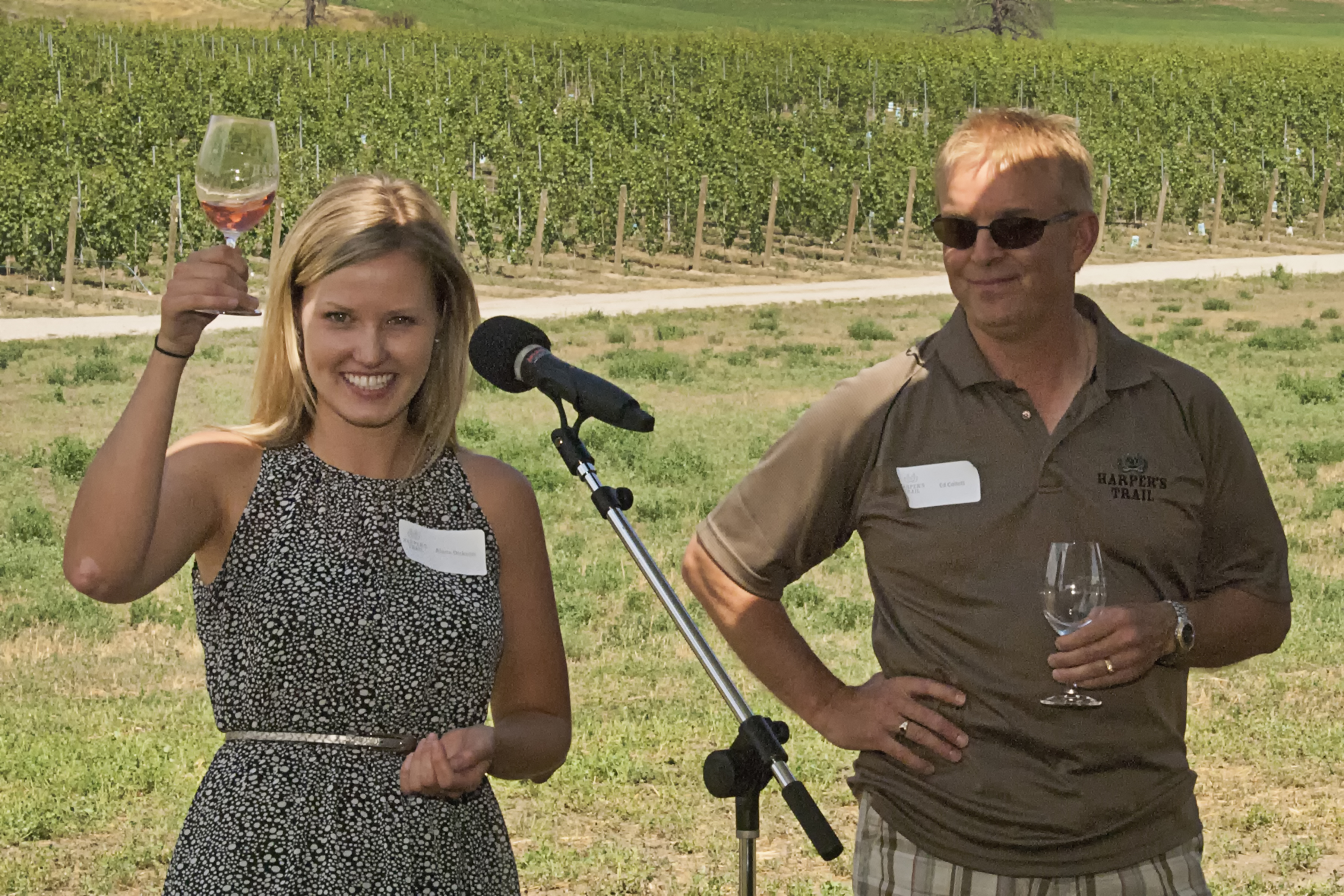
Bright sun and clear sky might be great for some scenic photographers, but it can cause many problems when photographing people.  My assignment this week was to photograph an event that began at 2:30 under almost clear skies, and where even in the shade the temperature hovered in the mid-30 degrees celsius. The location was on a south-facing, treeless, hill top with a sprawling vineyard in the background.

The event, other than a large group shot of all the guests, was held under five large, white tents, and my goal was to balance my flash and exposure to lighten up my subjects without glare, or shadows, and properly expose the field’s sun-drenched background.

The contrast in light from shadows to highlights on a very sunny day can be too extreme for a camera’s sensor to capture. I always look for open shade, or place the sun behind my subjects and use a flash.

I meter for the mid tones like the grass, or, in this case, large open field, and underexpose about two stops, then balance the overall image using my flash. My flash sits on a bracket and the flash is attached to my camera with a wire so I can remove the flash and hold it at different angles if I need to. I did notice people wielding point and shoot digital and a couple photographers with DSLRs trying to use their pop-up flashes, but I am sure they were disappointed with their results on that sunny day as the extremes from black to white are just too much for digital sensors.

Fortunately, photographers can load images into PhotoShop and no matter if they are JPG or RAW files can be optimized using Adobe RAW – an amazing application that gives additional control over exposure, shadow, and highlight detail. Adobe RAW can even help with those not-so-well focused images.  I use that program to polish my images and make them all that they can be which is much better than settling for photographs mass corrected at a big box lab.

After selecting the best images I correct the white balance and colour using Photoshop.  I make the photo look pretty much the way they appear through the camera and the images taken in the bright sun now have lots of detail.

Another program I regularly use (and think is amazing) is by Nik Software Inc. and is called Viveza.   Viveza allows selective control of light and colour. With that program I can maintain the colour and tonality while changing the background and blending the effect exactly.  All this isn’t much different than I used to do in my old film darkroom except now it is more precise, the process can be duplicated, and overall everything is easier.   Between the two programs I am able, without spending too much time in post-production, to provide my clients with polished and balanced images that do not show the harsh environmental realities of that day.

Sure, sunny clear days please us all and when planning an outdoor event we prefer that to rain, but for photographers the sun and harsh unflattering shadows on people’s faces isn’t the best outcome. My advice is not to approach this type of photography the same way as a scenic and to begin with test shots and constantly pay attention to the exposure and absolutely use a fill flash for the best outcome.

My website at www.enmanscamera.com

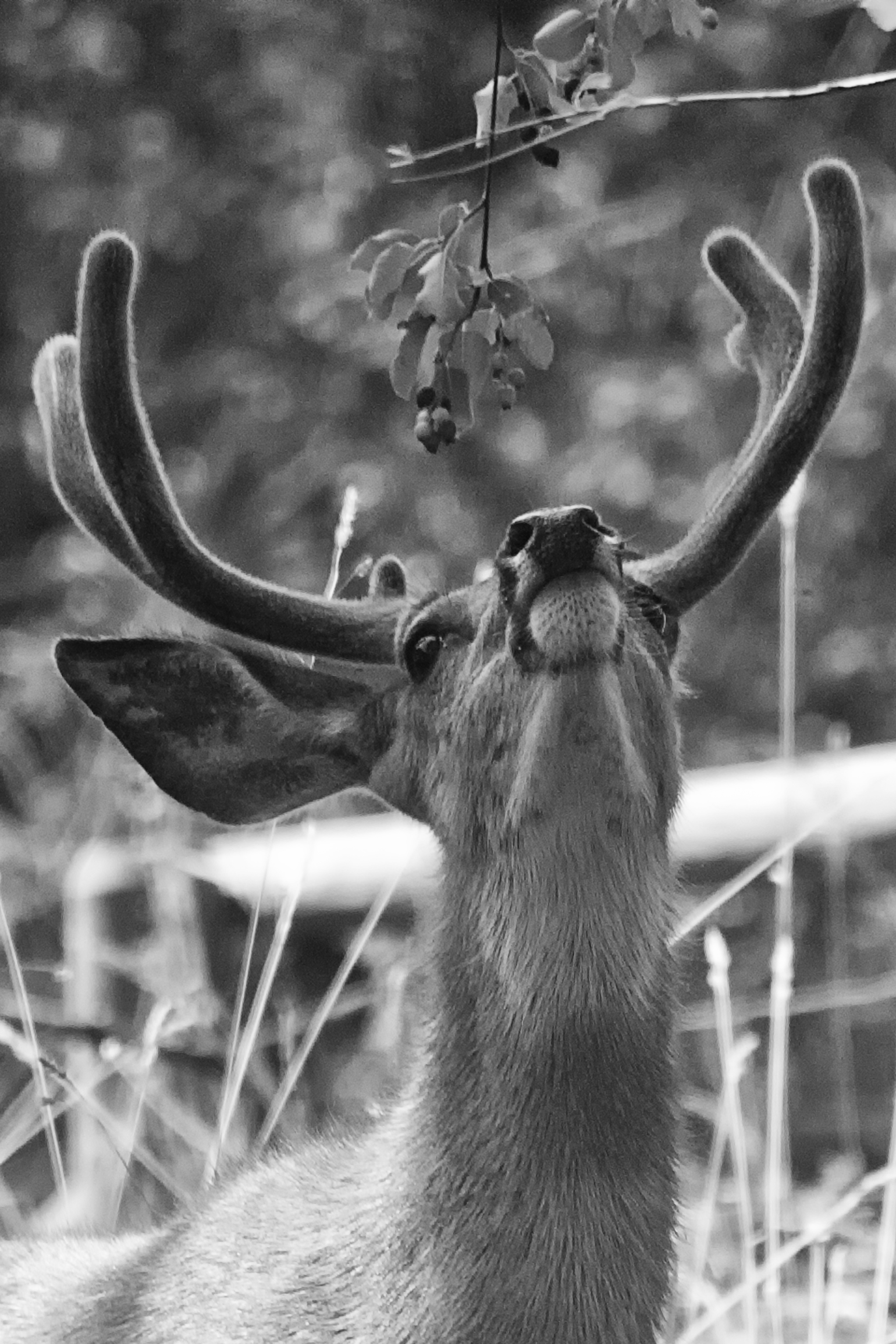
Liking Black and White Photographs


My last article entitled, “Wandering City Streets with my Camera” included both colour and black and white images and elicited the following remark from reader, Timothy Schultz, who said, “I don’t usually like black and white photos, but they were used very effectively here.”

Black and white photography has always been a favorite of mine, and I am pleased that some readers agree that sometimes the use of black and white is effective.

During my years of involvement with photography I have seen changes in the kind of photography people are doing. When I first started making pictures as a child it was all about economics – B&W prints were cheaper than colour prints.  After that one-hour photo labs appeared in shopping center parking lots, department stores, and finally in malls, and colour prints became inexpensive and the mainstay for photographers.

I have always liked black and white and much of the time prefer the mood it evokes.  Since the introduction of digital image making and programs like PhotoShop and NIK software’s Silver Efex the need to carry a dedicated camera and to commit space for a custom-built lab has disappeared.  Now all that is necessary is learning how to effectively use the correct program.

Colour is reality, and black and white seems a bit “arty”, or as I wrote, “mood evoking”.  I have never produced an album of wedding photographs without including some black and white prints and when I ask the couple if they are OK with that, I always hear, “Oh, we love black and white. Yes, please”.

People comment that a black and white portrait speaks about a person’s personality.  I am not sure about that, but I do like, and sometimes prefer, black and white, depending on whether the subject is a person, an animal, or a building, and what I am trying to illustrate with the photograph.  And, I “previsualize” how those colours are going to work as shades of gray while I am composing the photograph.

I’ll mention here that famous photographer Ansel Adams introduced the idea of, and the word, previsualization. It is a term he used to describe the importance of imagining, in one’s mind’s eye, what the final print reveals about a subject.

We see everything in colour, and in the modern world of digital photographic technology that’s what is captured.  Then, we visualize and translate those images into black and white images using post-production technology.  I really do like B&W pictures and sometimes miss those singular times in my darkened room, where I would produce my B&W photos by hand in open trays of chemicals.  However, technology has changed and there are many options that now allow photographers to produce higher quality B&Ws.

I read an on-line discussion entitled, “Why Black and White Photography” by Robert Bruce Duncan. In it he wrote, “black and white has an inherent dignity”.  His opinion is thought provoking.  Perhaps we do see and interpret more in a B&W photograph. Duncan goes on to say that he thinks few colour landscape photographers have matched the black and white work of photography greats like Ansel Adams, Edward Weston, Paul Strand, Margaret Bourke-White, and Imogene Cunningham, for example. And on portraiture he says, “it’s more than arguable that black and white is at it’s best for people photography…From early portraits by Julia Margaret Cameron, and later, Steiglitz and Steichen….(and) the photographers who documented America during the depression, to a whole slew of great Hollywood glamour photographers…and all the masters that made Life magazine perhaps the best periodical of its era.”

I am intrigued with Duncan’s words, I could mention some famous colour landscape photographers, but I’ll leave them to readers to search out. I believe both colour and B&W has its place.  As I wrote, sometimes I prefer black and white depending on the person, animal, or building, and what I am trying to say with the photograph. I pick and choose what image I think will work best in black and white and that depends upon the subject, the circumstance, the light, and, of course, the colour.

My website is at www.enmanscamera.com
This photographer’s thoughts on photography as art.

I didn’t include an image this time because I couldn’t think of what would fit with my philosophical   musing.

Wikipedia, the free, on-line encyclopedia states that, Fine art photography refers to photographs that are created to fulfill the creative vision of the artist. Fine art photography stands in contrast to photojournalism and commercial photography. Photojournalistic photography can be defined as photography that provides visual support for stories, mainly in the print media. Commercial photography’s main focus is to sell a product or service”.

Photography as art has changed over the years since the beginnings of photography in the mid 1800s, and in my opinion, with the dramatic escalation in photography and the making of photographs since digital technology became the mainstay, photography as art interests more and more people.

By the middle of the nineteenth century photographers felt their art should be held in the same exalted status that painters claimed for theirs. Their contention was that it was the photographer, not the camera that made the picture. The goal was, and still may be, to convince not only the art community, but also the community-at-large that photography should be treated as art. Then, as now, the discussion was about whether the different aspects of photography, commercial, photojournalistic, or those created only as personal creative vision should be considered art.

Presently, that art may be nothing more than a screensaver on one’s computer display. Some photographers do go further and it is not unusual to see a personal photograph, or that of a friend’s, framed and hanging on the walls of one’s home.

I have always been interested in art photography and over the years studied the history of when photography started being included as art in major exhibitions as well as what is currently being accepted as art in the medium of photography.  The Wikipedia definition is interesting because it separates what it declares as fine art photography from photojournalism and commercial photography.

The question photographers can ask is, whether their photographs only work as “visual support”, are produced to “sell a product” or as a creative vision?  Do many photographers wander around documenting the world around them and hope to be lucky enough to have final images that fit into one of those categories? I often wonder about that. However, I personally have come to think that definitions as to categories have changed. Maybe it is the way modern viewers see and use photography.  That quickly-snapped portrait of a favorite pet displayed in the owner’s home is cherished enough to be included as art along with the rest of the owner’s sometimes expensive art collection even though some scholars of the arts may disagree.

Remember, even in this technology charged time when making photographs is more popular than I think any other pastime, photographers are still contending with critics that hold that only painting and sculpture are real art.  For me the lines have become blurred, and I see photography as an artistic medium equal to others, although I am not altogether comfortable in categorizing any photographer’s work.  The camera is a tool that helps photographers be creative and photographers only need to decide on their own particular style, and what, as Wikipedia states, is “created to fulfill the creative vision of the artist”.

In my opinion, what that “creative vision” is should be entirely up to the photographer and the audience for whom the image is produced.

My website is at www.enmanscamera.com
Modifying light and keeping photograph’s exposure believable.

A few weeks ago I wrote about modifying light instead of using the direct light from a camera mounted flash.  This is a topic I have discussed many times in my years writing for different publications as I strive to persuade photographers to add flash to their portrait photography.

It seems my comments are having some success because since my blog of May 5thth I have had more than one photographer tell me they had started using light modifiers like “shoot through” and reflector umbrellas. That is a good thing, however, I’m now receiving questions like, “Now that I’m bouncing and softening the light, how come the background doesn’t look right?”

Like any photograph, inside or outside, a photographer needs to take into account how all elements in the image are exposed. That’s the reason I prefer using the manual mode on my camera. It makes it easy to set the exposure where I want to make that subject look like it fits into the environment.

Here is an example that might help readers.  A week ago I photographed a couple in a wide field alongside the South Thompson River. They wanted the white, silt cliffs that jutted up from the grassy flatlands to be visible behind them. The sun (when it poked through the clouds) was bright and cast unflattering shadows on their faces.

My goal was to have the correct exposure for the cliffs, the sky, and, of course, my subjects.  It was slightly breezy; therefore, my wife held onto a stand with a 33” umbrella and wireless flash I used to provide a fill light that would get rid of unsightly shadows on my subjects.

Indoors or out, I always start with the shutter speed. If I need it to be faster I bump up the ISO. Usually I try for 100 ISO, but sometimes I need a higher shutter speed and a wider aperture and that’s when I adjust my ISO.

I first decided what exposure would give me a nice sky and scenic white cliffs. In this instance I metered the exposure and then underexposed by two stops to give me a bit of a darker appearing landscape. Then as my subjects were positioning themselves I fired the wireless flash from different positions until I saw that the light on their faces appeared in the way I wanted it.

My exposure and flash modes were both set to manual. Using manual exposure gave me consistent control over the ambient light. To find the proper exposure for the flash I just moved it closer till I was satisfied with what I saw in my camera’s LCD.   I had balanced the light. There was a nice dark sky, the white cliffs were shining and had defining shadows. My subjects were separated from the slightly darker ambient light without any shadows at all on their faces.

The ambient light kept changing quickly as clouds moved in and a storm approached so I switched from manual flash to TTL flash, and because of troubling wind removed the umbrella from the stand, and instead used a small diffuser cup on the flash to modify its light.

With the camera in manual mode, the shutter, aperture, ISO, distance of the light to the subject, and power of our light source, all controls flash exposure. Things change with the incorporation of TTL flash.  Used together, the TTL camera and flash controls and calculates the flash exposure, and adjusts the power of the flash to deliver and determine the correct flash exposure regardless of the photographer’s choice of shutter, aperture, ISO, and subject distance.

How a portrait looks does have a lot to do with how the subject(s) are posed, but I think light and how it is applied is just as important. Using flash, on or off camera, to modify light gives a photographer more control than just using the sun, or relying on a high ISO. In addition photographers must also experiment and learn how to balance the background, or ambient light, with that flash.

The location really does not matter, whether inside or out, as long as there is enough ambient light to expose the subject. Pose the subject in front of a window or on the lawn. Then add enough light from another source to achieve the final goal of having the background, the foreground, and the subject exposures all together appear to be balanced and not looking artificial.

http://www.enmanscamera.com


The Vancouver Camera Swap Meet for Photographers

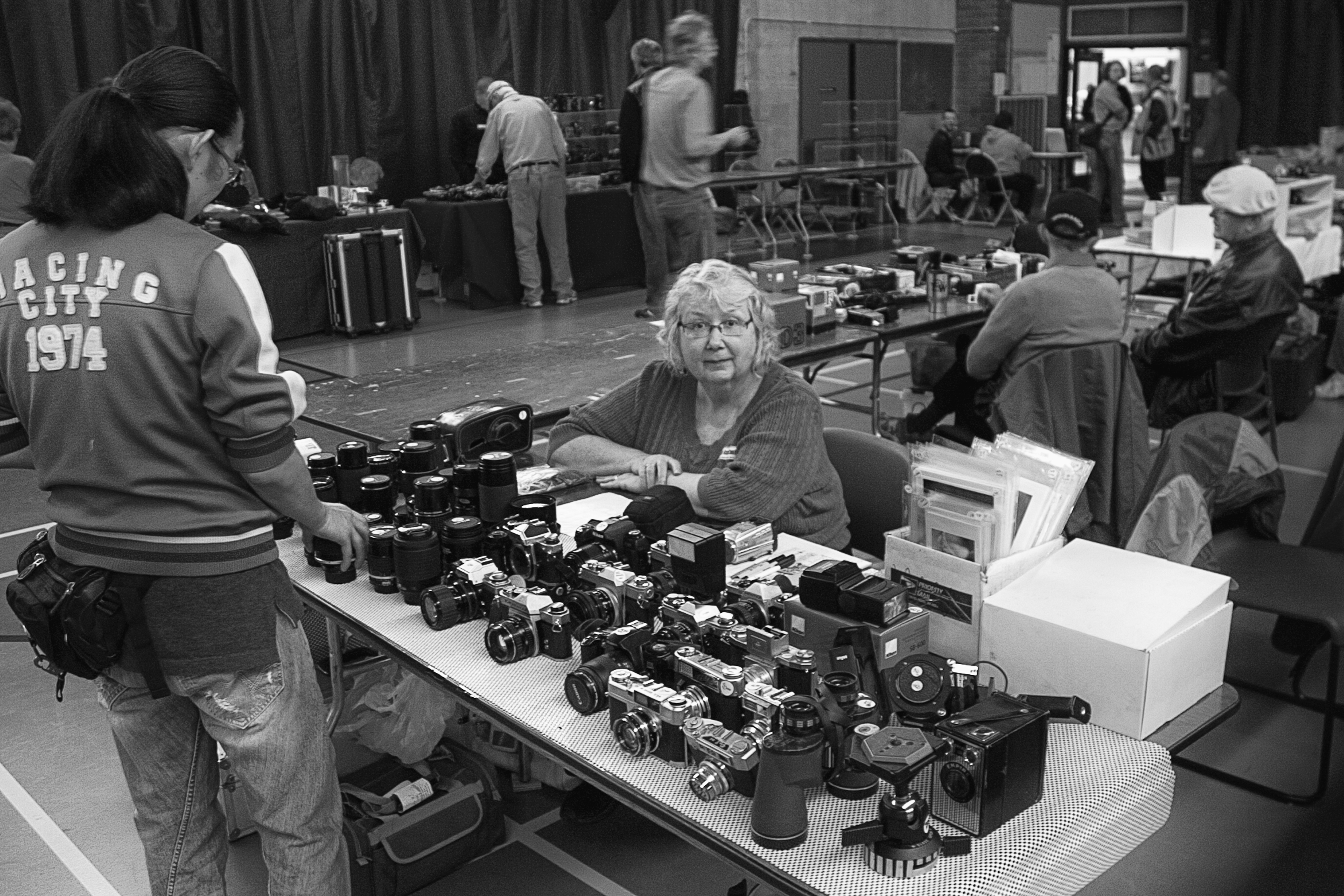
Every year at this time I attend one of my favorite events, the Vancouver Camera Show and Swap Meet. It was held again this past weekend and the Vancouver Camera Swap meet welcomed both vendors and buyers for a very enjoyable day.  Put on by the Western Canada Photographic Historic Association, and organized by Siggi and Brigitte Rohde, this long-running show has now reached its 36th year and makes the claim of being the largest (and maybe the best) in Canada with well over 1,000 people walking through the doors of the Cameron Recreation Centre (adjacent to Lougheed mall) where it was held.

A large photography and sale like the Vancouver Swap meet brings out an amazing diversity of photographers and what could be better then spending a day surrounded by a vast array of cameras, photography equipment, and talking with other photographers? I’ve been attending over 20 years and for me it’s a great place to sell photography equipment, and it’s a fun day of meeting old friends and making new acquaintances.

My wife and I drove from Kamloops the day before and stayed overnight so I would be fresh for an early start the next day.  As I entered, there is a buzz from other vendors busy setting up, talking, buying, and selling to each other.  I greeted lots of people I have known for years, and then prepared my table to be ready for the swap meets’ early bird shoppers who pay a premium to shop exclusively starting at 9am.  By 10am with the regular admission I was busy showing, demonstrating, explaining, and, of course, bargaining with photographers looking for whatever desirous item they had spotted and hoping for a deal that was just as sweet.

Every year I go wondering what the latest trends are, or what is popular with photographers I will meet there. This year I noticed a change in those I am accustomed to seeing. Many long time sellers and attendees I have known from previous years were absent and were replaced by a much younger crowd. The easy answer might be, like me, they are growing older. But I think it also might have to do with photography’s changing times, and for those that want to hang on to the “good old days”, so that modern technology and how young photographers are using it might be quite unnerving. In previous years I could expect to be accosted by aging “experts” that shuffled up to my table. They usually weren’t there to buy anything, and mostly were only there to show sellers and buyers how much they know, and how much experience they had. This year most of those I have become familiar with over the years were noticeably absent and, in spite of how exasperating some were, I missed them.

Young photographers stopping by my table introduced (for me anyway) a new way of doing photography. I had brought many older, manual-focusing lenses expecting there might be some individuals keen about “retro” equipment and interested in using older cameras from the 1970s and early 1980s, but that didn’t seem to be so this year. This year photographer’s would lay adaptors for different lenses on the table and try different manual lenses with each. They were using modern digital SLR cameras and the adapters allowed them to use the old lenses. And where I would have chosen a focal-length lens like 70mm or longer and stood back to take a portrait, these innovative photographers were selecting 28mm and 50mm lenses, and then moving in very close for portraits of each other when they tested out the lenses.  Photography is certainly not a static medium and is constantly changing.

In my opinion, an occasion like the Vancouver Swap is a perfect place to meet other photographers, learn what others are doing, and of course find excellent deals on many kinds of photographic equipment. Whether buying, selling, or just having a good time with other photographers, other than actually taking pictures, I couldn’t recommend a better way to spend one’s time.

www.enmanscamera.com
Follow me by selecting the “follow” button at top left.