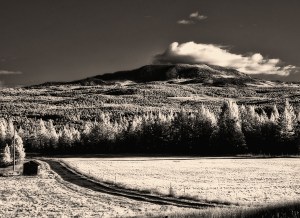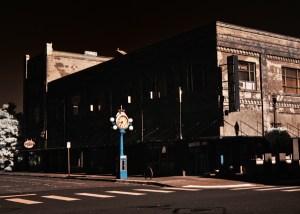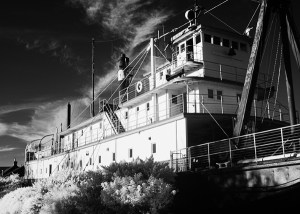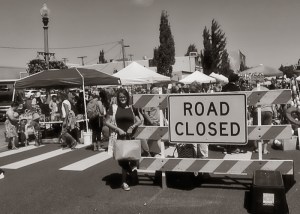
The Black and White Photograph  


Today my friend Jo McAvany showed me a book of black and white portraits she had made for a client.

Black and White has always been my favourite photographic medium so, of course, I was really pleased to see that she was willing to take the step away from what most local photographers are doing and create the portrait collection in black and white.

Photojournalist Ted Grant, who is regarded as Canada’s premier living photographer wrote,

“When you photograph people in color, you photograph their clothes. But when you photograph people in black and white, you photograph their souls!”

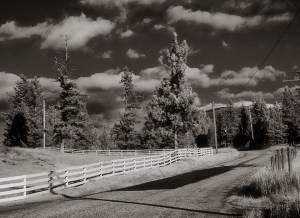
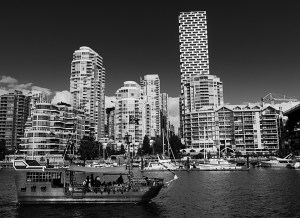
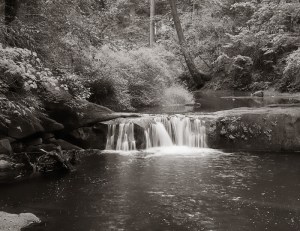
Black and white photographs (in my opinion) seem to create moods and convey an almost tactile quality.

A black and white photograph depends on its ability to communicate, it doesn’t need to rely on eye-catching colours for its’ visual presentation. Those B&W images that stand the test of time combine attention to subtle changes in light, composition, and perspective. I think a B&W image stretches our creativity and forces us to visualize our world in different terms. I remember a photographer once saying that he believed shooting in B&W refined one’s way of seeing. And I heartily agree.

In spite of the many modern photographers that don’t bother with anything more than just accepting what comes out of their camera, black and white photography is far from being left behind in the past and with the current processing software, updates in high quality printers, and the latest in printing papers, black and white image-making will continue to be an option for a host of serious creative photographers.

Those photographers that are good at black and white photography learn to exploit the differences in tonal elements in a scene and present viewers with successful B&W portrayals that make excellent use of shapes, textures, light and shadow, and the loss of those original colours becomes irrelevant.

For those that haven’t tried monochrome (another word applied to B&W) image making, I will mention that it is easier than ever. Most digital cameras have a black and white mode available in the menu. However, I would suggest trying one of the many great programs available on the Internet that can be downloaded to test for free. Who knows, you might, like I do, really like black and white photography.

Readers by now must know how much I like quotes from famous photographers. So I’ll finish this up with some words from a turn of the century fashion and commercial photographer, Paul Outerbridge who wrote, “One very important difference between color and monochromatic photography is this: in black and white you suggest; in color you state. Much can be implied by suggestion, but statement demands certainty… absolute certainty.”
Photographing Christmas lights    

I have always liked Christmas. I won’t go as far as saying that it’s my favourite time for year. Gosh, anytime time of year that I get to point my camera at something is my favourite time.

Christmas is special. I like the music. (Don’t ride in my car or visit me at my home if you expect any other kind of music till January 2nd) I also like the festive spirit of those people that remember this is a time of caring, giving and friendship. And, of course, I really like Christmas lights.

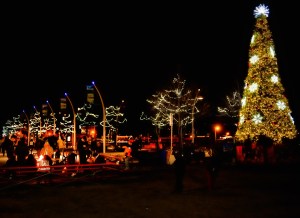
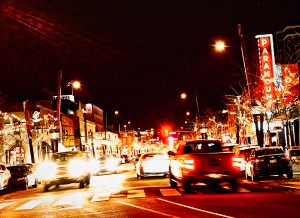
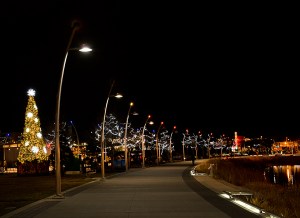
My last article was about using my ultra-wide lens Saturday morning to photograph the Tree of Hope, but the night before found Jo and I wandering in the cold photographing the city lights.

Jo used a 28-300mm and I used my 24-70mm and we both carried tripods. I think the lowest ISO I used was 800. Jo said she kept hers set at 100 ISO most of the time.

There were the usual strings of lights along the city streets, but it was the cheerful holiday lit Okanagan Lake waterfront that we wanted to photograph.

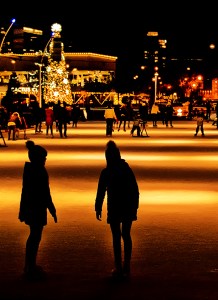
Kelowna goes all out and even has a skating rink that is open till 11PM and this year there was a big fire at one end for people to gather around.

Everything was perfect for two prowling photographers hunting for interesting and creative photos. I was hoping for snow. I like how the white covering reflects light at night.

We were ready for the cold and the snow and we even went shopping when we first arrived in Kelowna for a pair of insulated boots that Jo got for an early Christmas present.

What a fun overnight trip we had. We checked in to our downtown hotel, went Xmas shopping, had dinner at my favourite Kelowna restaurant (That plays blues music as you eat) were out till 9:30ish photographing the lights and got up early the next morning to photograph the 250,000 bulb Christmas tree.

As Jo and I drove home after that exhilarating time we talked about how we each found our own personal views of the lights. Would that be Perspective?

Photographing in low light or after dark helps to slow us down. One employs a tripod and most of the shutterspeeds are slow.

I think those photos that visually work usually take some forethought.

I’ll end this with a quote by American photographer Elliott Erwitt that I have used many times before because it fits so well, “To me, photography is an art of observation. It’s about finding something interesting in an ordinary place… I’ve found it has little to do with the things you see and everything to do with the way you see them.”


Got new camera and its infrared  

When I first made photographs with infrared back in the early 1970s my choices were between purchasing black and white print IR film or colour IR slide film.

I tried the colour slide film, but at that time I wasn’t a fan of colour photographs and to make a reasonable print from a slide meant waiting a week or so for the film to get processed, (special handling also) then selecting an image for printing, sending it away again for an internegative copy to be made and then a final print enlargement. The whole process was not only costly, but time consuming.

As I have written before, Infrared film was a hassle. But nevertheless, I enjoyed the final images and shot IR black and white film for years.

When I became aware of digital infrared conversions I had my 6 MP Nikon D100 camera converted after I had been using it hard for some years. I purchased that camera in 2001 and expected it would, like a film camera, last forever. However, in this past year it began having problems keeping the data that I thought was being written to the memory card and I decided to start looking for another camera.

I answered an ad I found on eBay and bought a newer model. So that well used 2001- 6MP infrared camera has now been changed to a 2010, 16MP infrared camera.

Since I that first DSLR a lot has happened in the world of digital infrared. When I had that D100 altered there wasn’t much difference in IR filter availability. However, now I spent time deciding what the final IR effect was that I wanted.

I could stay with just black and white as I was used or choose any of several filters that are from total IR blocking to those allowing some visible light to show through.

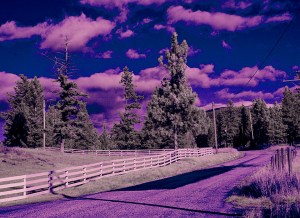
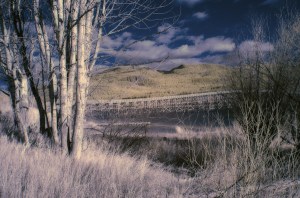
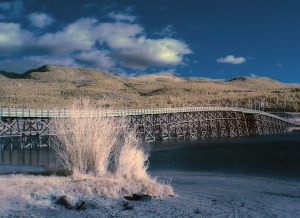
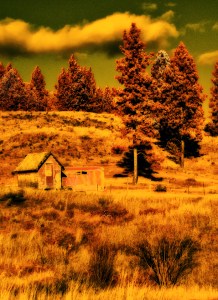
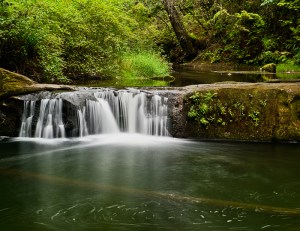
I chose a filter called “super colour”. Now instead of only the black and white tones I get 4 color tones: Red, Yellow, Blue and Cyan.

With the super colour filter recording four colour tones of data I was pleased to not only have what is called “faux colours”, deep yellows, blues and muted red to work with, but when I convert a Super Color image to b&w I have many tones grey and black.

With my old camera all I needed to do was to go to Photoshop and change my blue channel and red channels, then turn the image to black and white. I like B&W, but as with my normal DSLR that starts with colour and then gets changed to B&W I decided to take the chance that I would like extra data the Super Color conversion offers.

Although this conversion isn’t as forgiving in flat, overcast light as my old camera and that somewhat limits the times I can get really good RAW images without needing to go to Photoshop or one of the other programs I have installed on my computer.

On a sunny day the pictures are stunning. Many are good enough to just stay as they are.

I am planning my yearly trek to photograph Christmas lights. That’s less than a month away and I am hoping there will be snow and at least on mostly sunny day along the waterfront and city streets so I can get some good infrared photographs when I first get there.

I want it all, snowy streets and just cold enough so I can photograph people ice skating at night, and clear enough so I can get silhouettes of the buildings in the early morning and, of course, some good infrared photos during the day

Long exposure workshop at Chase Falls                               

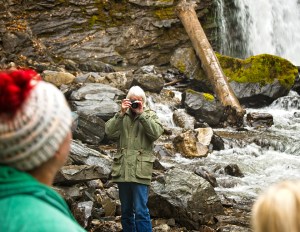
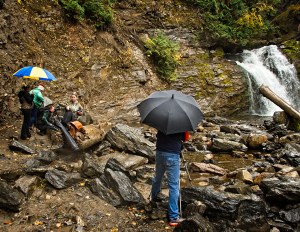
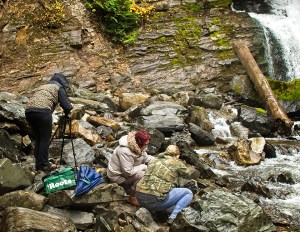
Two weekends ago Jo and I hosted a long exposure workshop at the nearby Chase Falls.                  In the rain I might add.

After returning from Vancouver my photo partner Jo McAvany posted some of the long exposure night photographs she took of the Vancouver lights. Those images garnered quite a bit of interest and Jo was fielding questions from more than one local photographer about how she made them.

We decided to pick a date and offer a workshop that would allow participants to try long shutterspeed photography and also to use neutral density filters.

I like my classes to be strong learning experiences and as with all that teach I included handouts, and this time I also included a set of six ND filters for each photographer to use. All they had to bring was their camera with a fully charged battery, their favourite lens, and a tripod.

We chose the Chase waterfall because it was close, easy to get to and, this time of year, extremely safe if one has good enough balance to climb through and over the big rocks.

What we weren’t expecting was a rainy day… fortunately some of the photographers in attendance had the forethought to bring umbrellas. I also had two that I always keep in the trunk of my car and I brought a few towels that I handed out to wipe the rain off cameras.

Jo began the day when everyone was gathered at the parking lot, while I was passing out filters and handouts, by telling people that after our trip to Vancouver she has absolutely become hooked on long exposures, and I have no doubt that we now have a few more dedicated converts.

Most photographers understand their shutter, but using shutterpeeds longer than 1/30th of a second, and adding ND filters is often new territory.

The rain was only a slight inconvenience as the excited group started seeing their results of the waterfall. The light on that wet rainy day was, as I had hoped, perfect at the falls. Rainy days are usually like that.

We worked as teams in the rain. With one partner holding the umbrella keeping the camera, lens and filter dry as the other set up the tripod and camera at each location.

It was a great day for learning something new. Yep, I am sure there are now a few more photographers that have Jo’s passion for long exposures.

I am looking forward to the trip we are planning to Kelowna in December to photograph the Christmas lights. I think we may go a bit early so we can do some long exposures near the marina along Okanagan Lake. I’ll finish with this great quote I found by German artist Dieter Appelt.

“A snapshot steals life that it cannot return. A long exposure creates a form that never existed.”
 

Photography at the Bloedel conservatory


The Vancouver used camera sale was last weekend and I always attend.

This time I thought it would be fun to go a day early to do some night photos of the city.

We had chosen the locations that we wanted to go at day’s end. But we would have a whole day to do photography and the first daunting question we faced was, what to do with our morning?

Jo was looking at “places to visit” as we sat at a seafood restaurant the evening we arrived. It was overcast and raining so we decided stay out of the weather. She found an advertisement for the Bloedel Floral Conservatory. The info said that the conservatory is “a lush, domed tropical paradise at the top of Queen Elizabeth Park — the highest point in the city of Vancouver”.

The next morning we ate breakfast at our hotel, (I always try to find hotels that include breakfast) jumped in my car and followed the GPS through Vancouver’s busy traffic to what I assumed would be just a big garden overlooking the city.

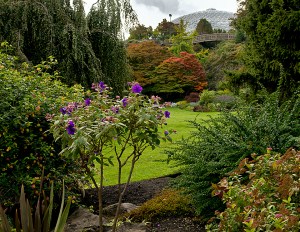
We arrived at Queen Elisabeth Park, that park was so much more than what I thought, wandered around the photographing the city below, the narrow winding paths, the beautiful ponds, fountains, and rock bridges that were spread out around the grounds. What a photogenic place.

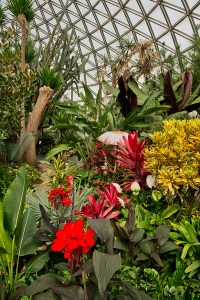
What I had missed reading in the advert was, “Bloedel Floral Conservatory is a conservatory and aviary at the top of Queen Elizabeth Park.” So after nearly an hour wandering the grounds we walked over to the large dome that sat at the top of the park, paid the admission and entered into “the lush, domed tropical paradise” described in the advertisement.

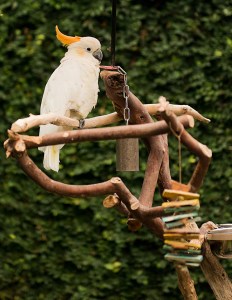
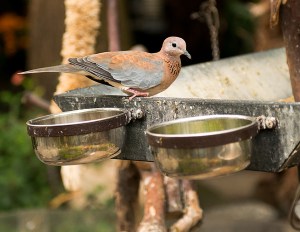
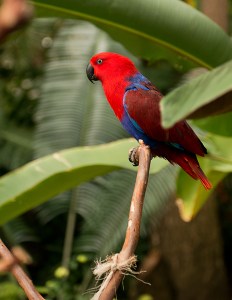
There were birds everywhere in the exotic greenhouse. Flying high in the air, zooming past our heads and hopping everywhere at our feet. Then I saw a colourful parrot, and then another and another and another.

We photographed the plants, colourful small birds, and big parrots in the humid dome.

I had fun talking with other photographers and people sitting with their dogs as we roamed around the park. I am pretty sure we were at the park for over three hours.

How had I missed that place in all my visits to Vancouver? It seemed to be made for those of us that like to carrying cameras.

That was part one of our October Vancouver adventure. We were yet to photograph the crowds of Granville Island, take long night exposures of the lights across the bay and spend Sunday at the Vancouver Camera Sale and Swap.

Photographing the seafront


Last week I wrote about photographing the waterfalls at Whatcom Park. I also mentioned that Jo and I took some time after spending most of the day at the park to visit the waterfront.

When one lives in the British Columbia’s dry mountainous interior a trip to the ocean is always stimulating. Sure we have a big wide river where I live, but there are no large ocean going ships, big fishing boats or air that smells of saltwater. Oh, and Jo doesn’t get to spend time wandering the beach looking for seashells.

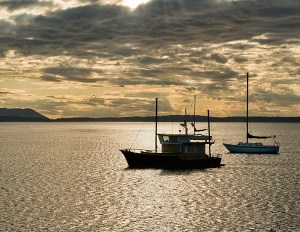
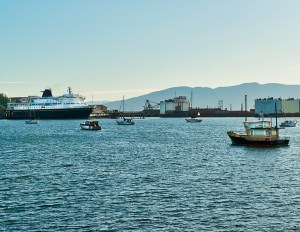
The coast along the large city of Bellingham is well built up with marinas, people packed piers and buildings of all sorts that makes it perfect for someone meandering with a camera that wants to experience the city’s seafront.

We drove around a lot trying to find places on the map. Some of the streets began with one name and suddenly change to another, and Google maps seemed to be for another planet. However, my “car-rule” is to always stop when something looks like it should be photographed. The driving isn’t as important as the picture.

I used my 24-70mm for everything and Jo stayed with the 28-300mm. There is always the temptation to carry every lens you own, but I think it’s best and easier when one is visiting a new place to stick with just one lens.

When we arrived we chanced on an area that was in the process of being redone. There are old brick buildings and some tall metal structures that look like they must have been for some kind of storage still standing, but it was obvious that the large area was under some kind of massive renovation.

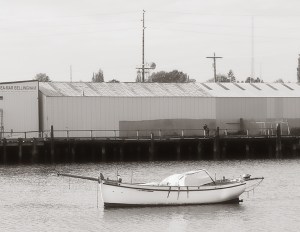
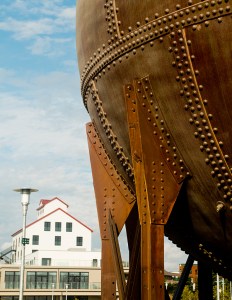
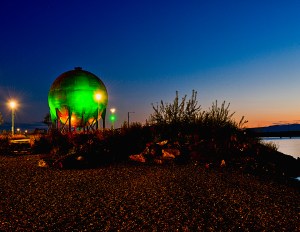
I met a fellow from Idaho who told me that part of the coast park renovation will include a bicycle park and some of the old brick buildings will be for retail and some for art. He walked with me as I photographed a sailboat moored near some buildings, the remnants of a pier and a strange giant metal ball that he said was once a storage tank that is now a sculpture called the Acid Ball.

After leaving the waterfalls we eventually found the long metal pier that extends along Bellingham Bay that was packed with photo opportunities. Men and women with long poles catching crabs, kids jumping off it into the ocean, boats of all kinds, people that I’ll bet were from all over the world, and also, to Jo’s delight, a small sandy beach to hunt seashells.

It is fun visiting places with the goal in mind to take photographs. I suppose now days most people have their tiny cell phones to grab memories with, but in my opinion, having a DSLR with different focal length lenses, a tripod, and an assortment of filters and the knowledge serious photographers have to have to use all that equipment is a prescription to get creative.

Bellingham was a grand photographic adventure that I might just repeat some day. That park was an exciting find and photographing the coast was a pleasant way to spend our last afternoon and night in that busy city.


Photography trip to Whatcom Falls Park.    


When most of us that live in British Columbia think of Bellingham Washington it’s usually about the shopping. Bellingham is the closest major US city that we can drive to for better prices on just about everything. Filling up our cars, buying clothing, food and dairy products to name a few items are still less expensive than here in Canada.

Some years ago I stopped overnight on my way back from my annual sojourn to the Anacortes Shipwreck festival and while out to supper I noticed a flyer with the words “Things to do in Bellingham”. Browsing through I noticed it mentioned a place called Whatcom Falls Park.

There are lots of waterfalls in British Columbia so that shouldn’t have been a big deal. However, what grabbed my attention was a picture of a stone bridge with a waterfall behind it. I have always been intrigued with the many stone structures built in the 1930s by the WPA (Work Projects Administration). I remember my father pointing out stone bridges and walls along mountain highways and talking about how the government employed men needing work during the Great Depression.

I have wanted to go back to Bellingham for an overnighter so I could have plenty of time to photograph that wonderful stone bridge and the park’s waterfalls. When I mentioned to my friend Jo that I wanted to go there this summer her excited response “Lets go” was all I needed.

I booked two nights at a hotel that included breakfast and we headed off to cross the border to Bellingham to photograph Whatcom Park and the city’s waterfront.

We had a lazy morning and arrived around 9:30 to an almost empty park and were so excited that we ran down the wide dirt walkway to the bridge. Gosh, what a beautiful place.

The park was only a fifteen-minute drive from our hotel and we were surprised to find that the stone bridge and falls that were only a couple minutes walk from the parking lot.

We photographed from the bridge then climbed down the well-worn trails under the bridge so we could take photographs at the base of the falls.

Creatively photographing waterfalls is pretty easy and the long exposures that are popular with water are no big deal.   All one needs is a good camera, a sturdy tripod, and some ND filters. I shot with my trusty 24-70mm and Jo used both a 28-300mm and 14-24mm.

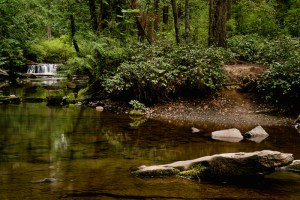
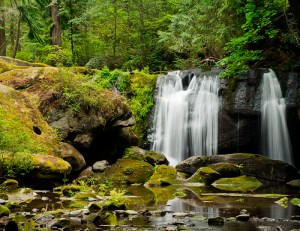
There were two waterfalls, the large and impressive one near the stone bridge and a smaller more intimate one just up the creek a bit. We photographed both of them trying different exposures and filters.

My favourites are square filters that I hold in front of the lens as I make the time exposure. I prefer to hold the filter and slightly shake it up and down so any marks on them won’t be visible.

We stayed at the park way past noon and sat in my car talking for a while before leaving to check out the coast.

What a fun way to spend a weekend.

The best word I could use to describe how that colourful park seemed is “magical”.

I didn’t want to disturb anything and even though there were sounds of happy people coming from all around, everything became quiet when I looked through my camera.

I found this quote by American photographer Diane Arbus that perfectly describes the way Jo and I felt as we each pushed the shutter.

“Taking pictures is like tiptoeing into the kitchen late at night and stealing Oreo cookies.”

Try something different from the usual vacation photos.  


I hadn’t picked up my infrared camera since spring, and it was a last minute addition when I was loading the car for my trip to the Washington coast.

Now as I sort through the pictures I took on my short four-day junket I am glad I did.

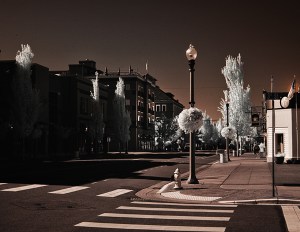
The low, late afternoon coastal light is great for infrared. The trees become an iridescent white, the sky a deep black and anything painted a light colour glows.

I suppose most of the pictures one takes on vacation are little more than documents of the places visited and end up filed away in hopes that future generations will eventually find the volumes of unmarked computer files and excitedly relive the experience.

Somehow I doubt that actually happens very much.

Just as the closet full of boxed slides from the film generation will likely be discarded when age forces them to downsize, I expect the terabytes of image files stored on memory cards, cell phones and the illusive cloud will follow a similar fate.

I don’t have an answer to that, I guess what will be will be. However, modern digital technology at least allows us to be a bit more creative with the images that come out of our cameras. I don’t know if the memories they retain will last any longer than I will when I am just dusty ashes in some old jar, but what the heck, if anyone does take the time to look through the volumes of photographs I leave I am sure they won’t be bored because very few of my vacation photos fit easily under the heading, “document”.

My vacations, for many years have centered around my interest in photography. My wife used to call them “photo vacations” because everywhere we visited and everything we did when traveling revolved around taking the time to get creative with our cameras.

Now with modern digital technology that creative photography is not only “during the excursion” but goes on for many enjoyable hours at the computer when all the gear has been put away at home and the trip is only memories.

Enter infrared.

Infrared files are waiting to be manipulated. In my opinion the need to preserve or enhance the beauty of what was experienced on one’s latest adventure doesn’t apply. Infrared is a different light and different statement about the world we experience.

Infrared creates a completely different feeling for me. When I discussed my infrared photos last May I wrote that when I see a black and white photograph it makes me think about how a subject looks in a particular light and the mood it creates.

Infrared makes me think about the light first and then includes the subject.

The pictures one makes with an IR camera are always an exploration, a discovery, and are very different from the usual vacation photos.

A photographer’s holiday at the Shipwreck festival      


Each year the month of July brings two of my favourite photography events.

The first is the Pritchard Rodeo and the second is the Anacortes Shipwreck Festival. Gosh, what an exciting month July is for photography.

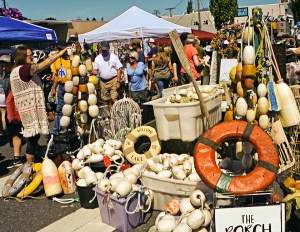
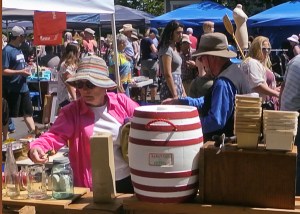
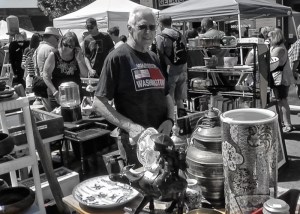
The preceding week had been cool and a bit rainy on the Washington coast, but when we reached the festival my friend Jo and I were met with a warm day that had just enough clouds in the sky to make it comfortable to walk around the 9 block street market filled with 400 interesting booths.

We had arrived in the town of Anacortes at the tip of Fidalgo Island after a pleasant drive the day before the annual Shipwreck Festival.

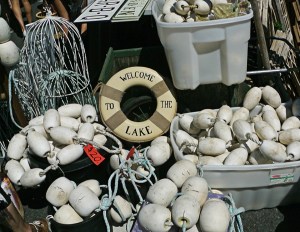
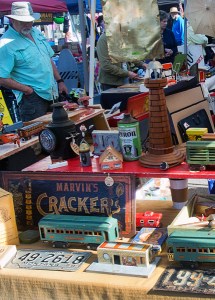
The locals say that the Shipwreck Festival began thirty-eight years ago when fishermen sold their used gear on the town’s main street. Since then the event has evolved into a giant garage sale/flea market that includes vendors that seem to be from as far away as Mexico.

Last year I wrote, “Whew, what a day. We saw, we touched, we photographed, and we talked to people from 9AM to 3PM. Then we stepped into a popular Commercial Avenue Alehouse called the Brown Lantern for a late lunch and I gladly got to rest my tired legs. I am sure Jo will recommend the crab and corn chowder she ate and I agree that both my food and the two beers I drank were the refuelling I needed.”

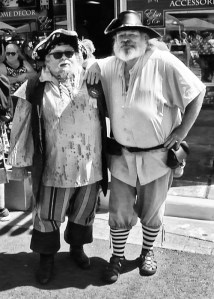
Well I can write that again this year, we again got to see, touch and even purchase unusual treasures, and I had a fun time photographing people on the crowded street.

Jo got to have that bowl of the crab & corn chowder she had been dreaming about since last July and I enjoyed two very dark beers while I rested my old legs. Then just as last year we were off for another look around and a few more pictures of the crowded street of happy bargain hunters.

I do like the treasure shopping as much as anyone, but watching the people and photographing everything on that island is what brings me back each year.

I have tried different cameras. When I first came in mid-1990s I used a Nikon F3 film camera. Then when digital arrived I used several different DSLRs until last year when I changed to a tiny Nikon 1 mirrorless.

What I like about the (recently discontinued) little interchangeable lens camera is it’s small size and quick focusing. I carry it in an old army bag that allows me to pull it out fast for street photos without getting attention from those around me.

The Nikon 1 doesn’t have the large higher quality sensors of the big and more expensive mirrorless cameras like the Fuji or Sony, but like any other tool that one might select for a specific job the little Nikon is great for the internet or even 8X10 prints.

This was the kind of vacation trip that I like, wandering the Shipwreck festival looking for treasures, (I bought a handmade flit blade knife) doing photography on the crowded avenue, meeting new people and getting to eat fresh seafood at local restaurants. All less than a day’s drive to from the very different environment where I live.

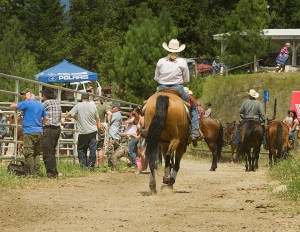
Photographing the 2019 Pritchard Rodeo  


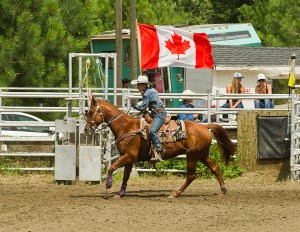
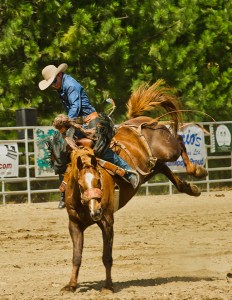
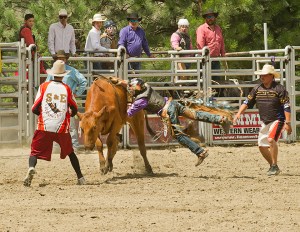
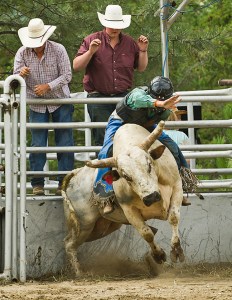
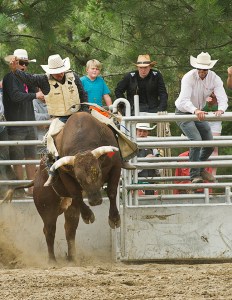
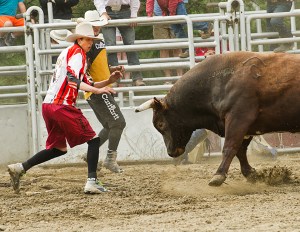
Jo and I were comfortably positioned along the rail at 1PM ready for the first bronco-riding event. I had my camera set at ISO400 so I could get reasonable depth of field and be able to use the Shutter Priority Mode with a 1/500th of a second to stop the action.

Both of us were using 70-200mm lenses. There are longer focal lengths available and I was asked this week if I ever tried my 150-600mm. I haven’t used that lens at a rodeo, but I did shoot some years ago with a 150-500. It was pretty good and brought the action so darned close. But the rodeo grounds aren’t that big and I like the 70-200mm. It’s light, not that big, handholdable and delivers great quality.

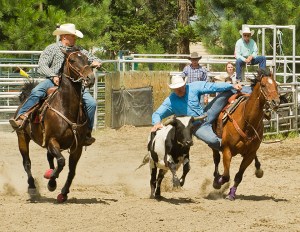
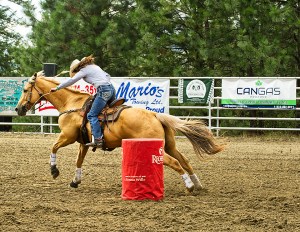
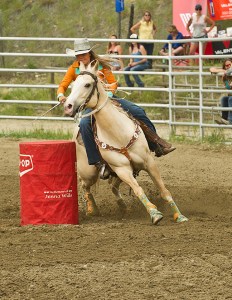
I have mentioned before that I like photographing any kind of action and especially the rodeo that is only a few minutes drive from my home in Pritchard. I always look forward to standing there along side other photographers that, like me, enjoy capturing the fast moving test of wills between animals and riders. Photographing any action filled competition is fun and there’s always lots of action at a rodeo.

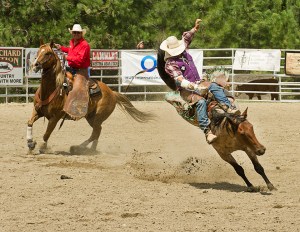
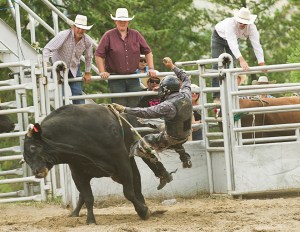
My favourite events are the bronc and bull riders. I like the fast moving explosive action that moves uncontrollably across the arena.

I always try to get that first moment, especially with the bull riders. There is so much happening when the gate is opened and bull, rider, and all the faces behind those two show the excitement. I continue to follow the activity to capture that perfect moment that shows the athletic prowess of the rider. However, I must admit my favourite photos are those that show the rider getting thrown through the air. Sure I feel for them and never like it when someone looses or gets hurt, but it’s that explosive moment when everything in moving at it’s own speed, in its own direction, that tells the exciting and dangerous story for me.

This hometown rodeo is darned convenient and really accessible without restrictions placed on ringside photographers, and it’s easy for participants to get quality photographs of themselves that can be made into wall prints just by asking any one of the many people with a camera standing along the rail.

For those new to rodeos or even photographing action, put a rodeo on your bucket list to attend, it’s a friendly and an easy place to practice and experiment.