Copying Photographs   


Violet Walch copy

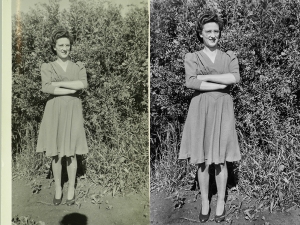
This week I noticed some pictures that were posted on a Facebook page. They were old, family pictures that were low quality, which I thought were more from the poor copying techniques of the person who posted the photos than a problem with Facebook, and I am sure the person that added them to her FB page in spite of the shoddy reproductions thought she couldn’t do better. Seeing those poor quality images reminded me of an article that I wrote about copying old photos some time ago, and wanted to remind readers how to do this.

In the article, I had been asked if I could make quality copies of old photographs that a family wanted to use for a book of genealogy they planned on publishing. They required image files with enough quality for good enlargements, and reproduction, and had tried to copy several images using inexpensive home scanners meant for documents (not photographs), and thus far were only able to produce pictures that lacked detail.

I recall they told me they also tried copying the photographs with their little digicams, but that exercise resulted in bright, white reflection spots from it’s flash that obscured features giving them unacceptable results.  A camera with an on-camera flash will produce glare on reflective surfaces, and inexpensive document scanners rarely produce good facial identification of old family photos that have languished in boxes for years. The result was much the same as those old, family photos I saw on Facebook.

When I copy photographs I lay the photographs flat and mount my camera on a copy stand that I have had for years, (a sturdy tripod would also do nicely) and use a small level to make sure the camera lens and the photographs are parallel. I use two photographic umbrellas to diffuse the flash. If I didn’t have the umbrellas I could also get reasonable results by placing some translucent material in front of the flashes, or by bouncing the light off large, white cards.  Two umbrellas allow me to balance the light. Then I make a test shot to check the exposure for reflection. In any case, the light needs to softly and broadly, not sharply, expose the old photograph’s surface.

The wonder of digital technology is that it allows a photographer to quickly review the image and retake it if needed. I also recommend taking several shots at different apertures.  And, of course using the camera’s Manual Mode. I prefer working with slightly under exposed image files. That way I can bring the detail up in postproduction without loosing the highlights in the original photographs.

If the next question readers ask is, “What kind of camera?” my answer will be that it depends on what is the desired outcome. If the final image is going to be a print, or something that is to be big enough to identify a person in the background, the file needs to be reasonably large. I prefer a DSLR, but for a small website image, a digicam that will accept an off-camera flash will do just fine.

If there isn’t access to an off-camera flash then wait for the opportunity to photograph the picture on a “flat” overcast or cloudy day.

The final step for me is PhotoShop, (there are several other programs that will also work) which I use to colour balance (and change a sometimes faded old photograph), and then go on to use for cropping, increasing contrast, and sharpening.

One could purchase an expensive scanner that takes up more room on the desk. But photographers that have already invested in their camera and have lenses that work perfectly well, (which I think are faster to use than a scanner) are perfectly capable of producing very high quality final images.
Bridge Lake Workshop Wireless Off-Camera Flash              

OffCamera Workshop 1

OffCamera Workshop 2

OffCamera Workshop3

OffCamera Workshop4

OffCamera Workshop5

OffCamera Workshop7

OffCamera Workshop8

OffCamera Workshop9

OffCamera Workshop10

OffCamera Workshop11


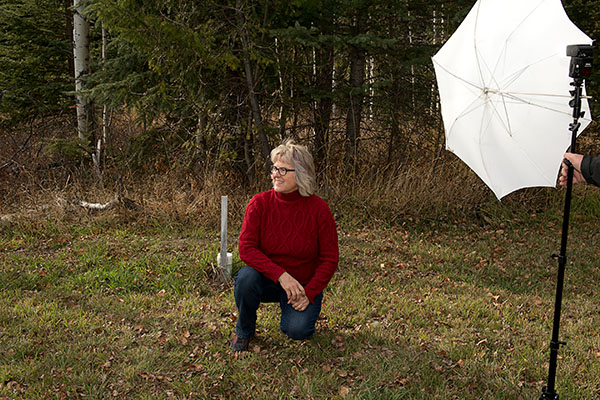
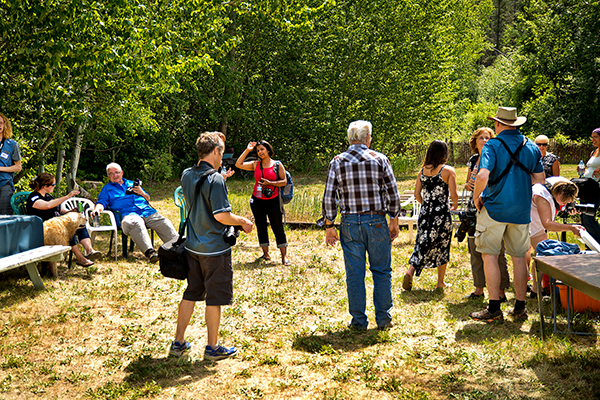
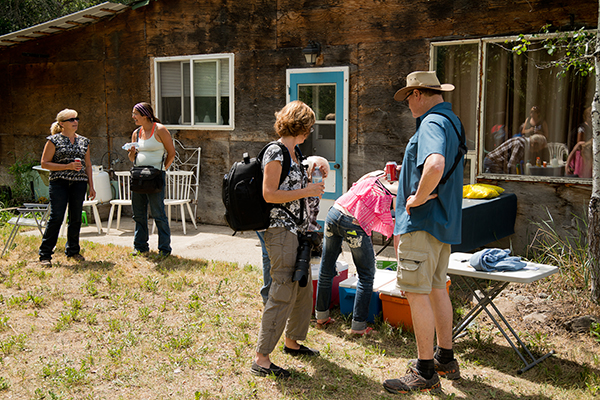
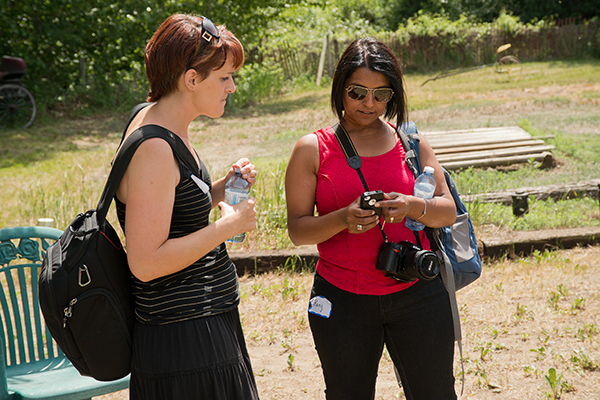
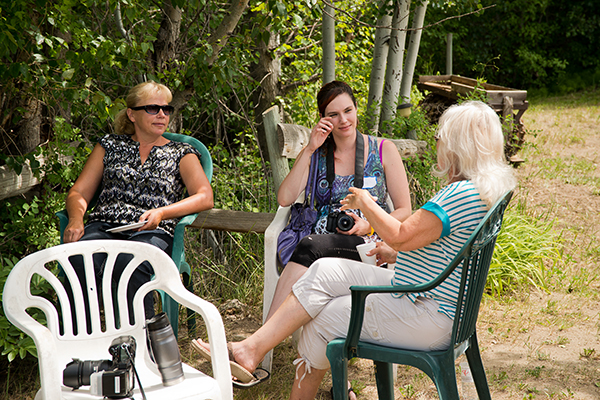
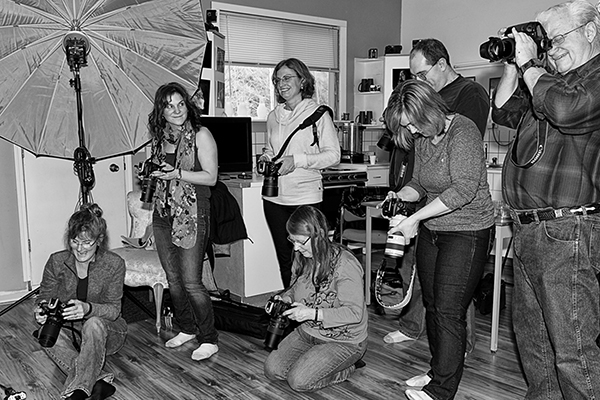
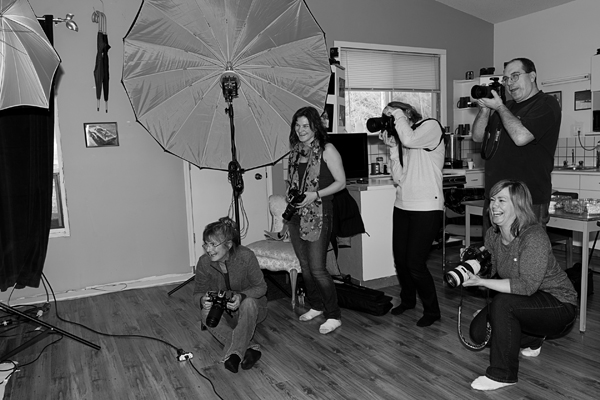
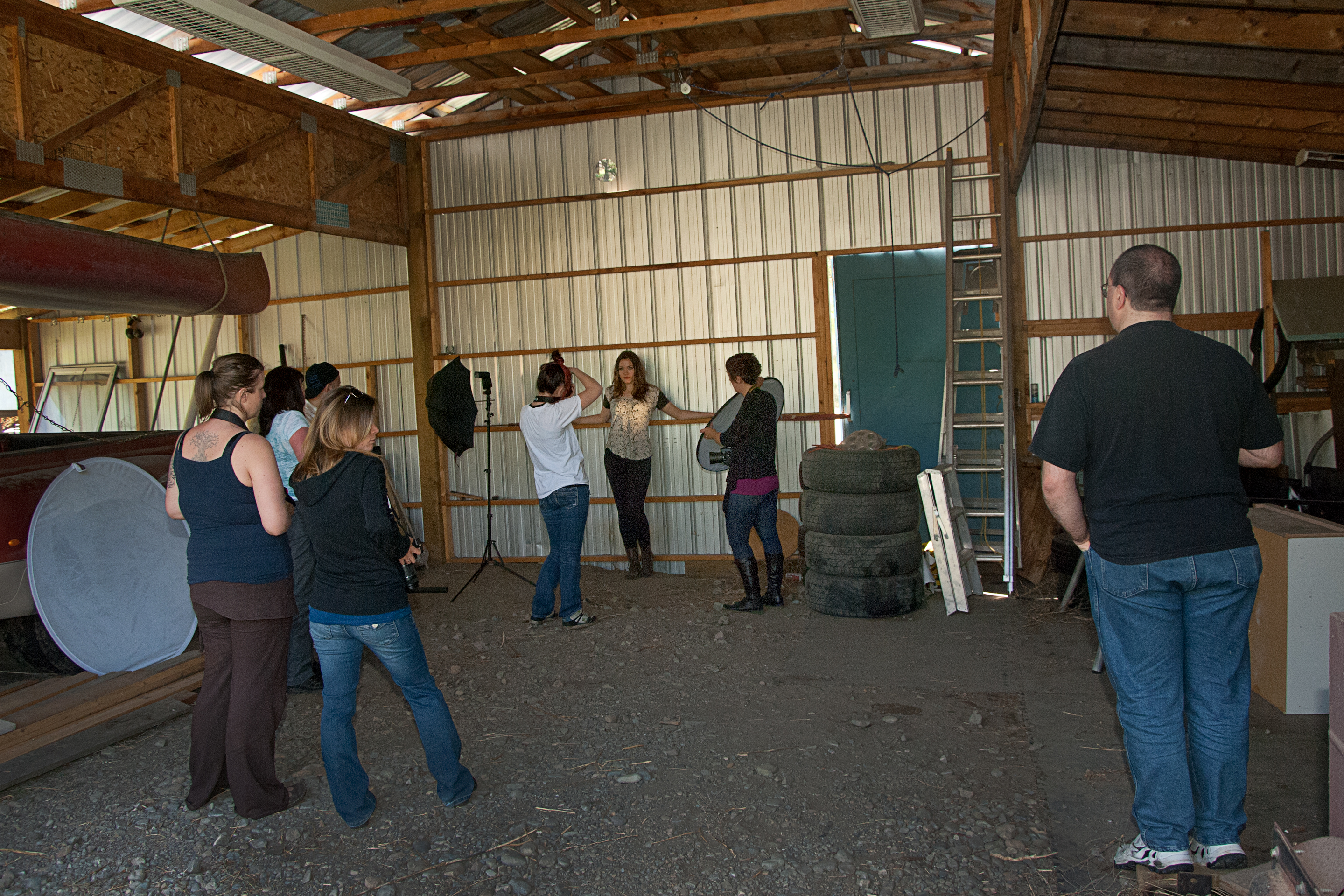
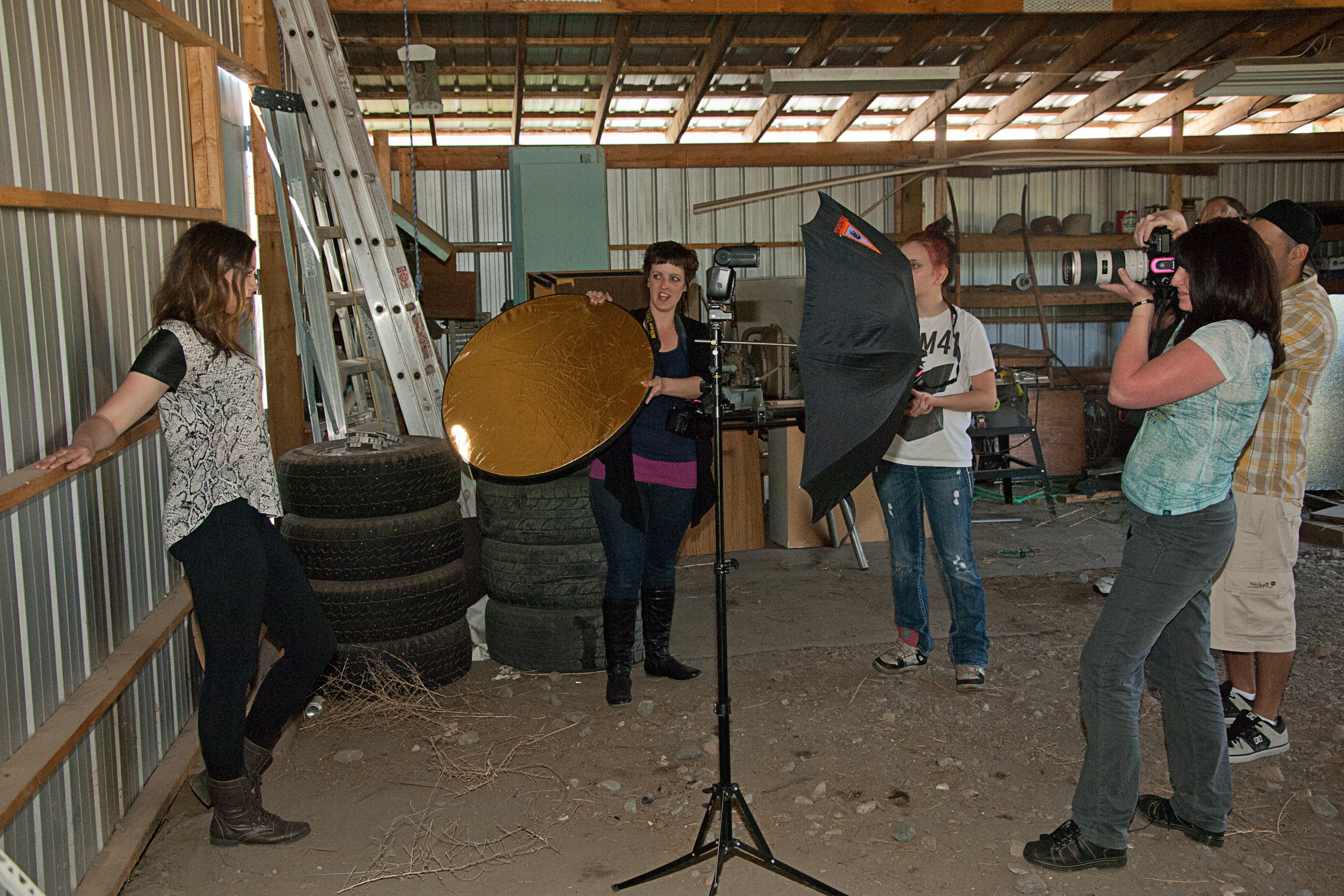
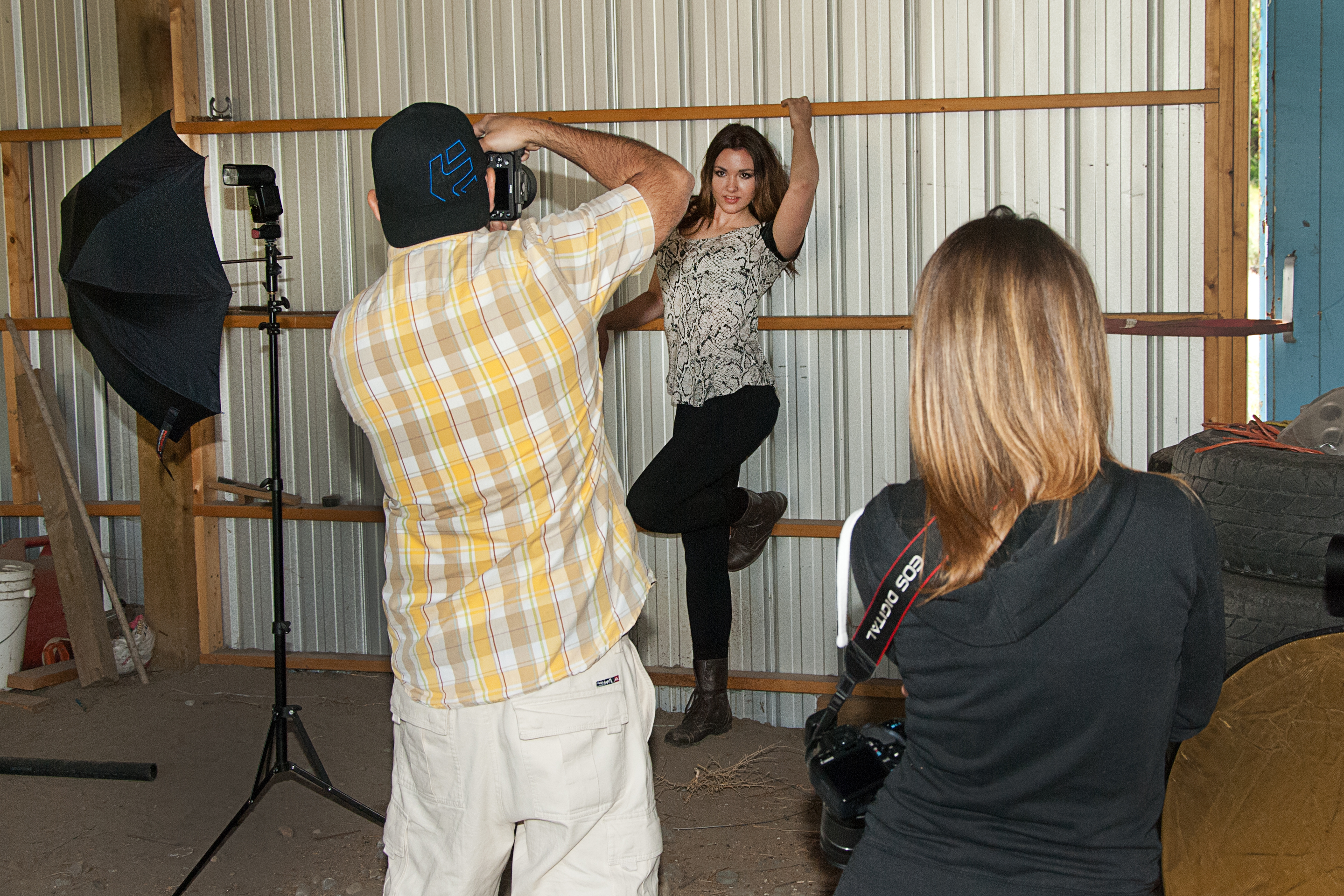
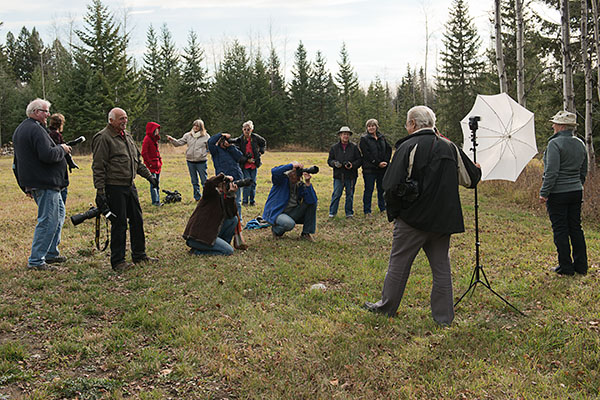
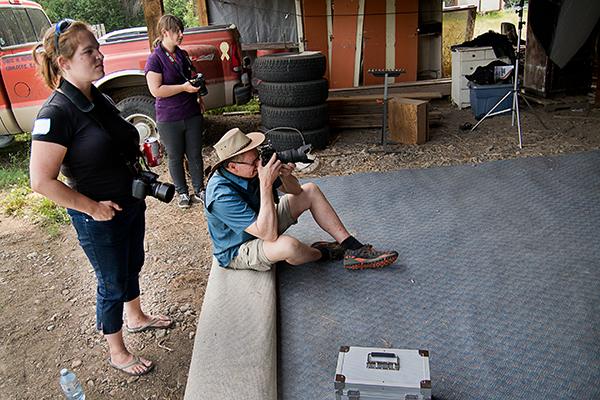
Last Sunday saw me making the scenic two-hour drive north to join the Bridge Lake Photography Group. I have been following that creative and talented group of photographers, (www.bridgelakephotogroup.com) since a long time friend, Derek Chambers, got in touch with me about a year ago. On Sunday I led a full day workshop for them about using off-camera speedlights indoors and out-of-doors.

There is so much that I want to tell photographers when they first attempt to use flash as a tool to create better photos instead of the flash being an uncontrollable device photographers perch on the top of the camera when it’s too dark in a room to take a photo.

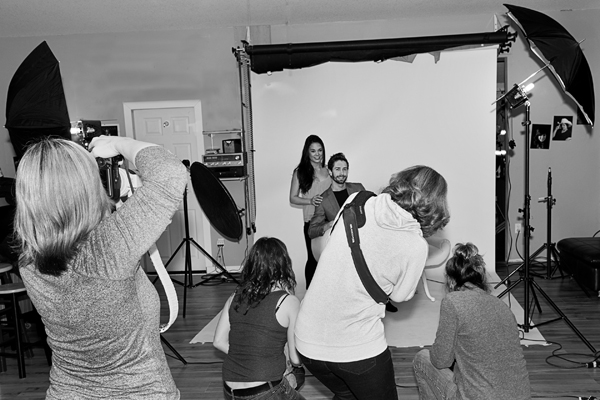
In my opening presentation I had to hold myself back as I sometimes realize I am talking too fast. But I get excited and I really want to move from lecturing in front of students, and go to the studio setup where the learners, not me, are center stage. That’s where my fun, and, assuredly, the participants’ fun begin.

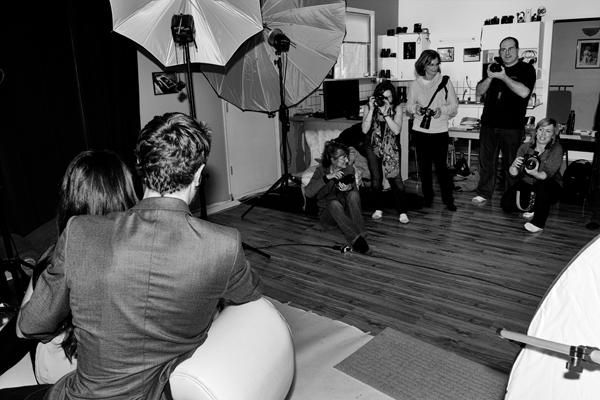
I always enjoy the enlivened interaction that occurs when a student of flash photography takes that first shot with one of the flash set ups. Usually, no one ever wants to be first. Everything is strange. The flash that usually is attached to their camera is now attached to a softbox or an umbrella. I always have to prod and coax the students to begin, but I can hardly wait for the first “oohs and aahs” that happen when they see the results of their first photos.

My job is to present information on the subject, and keep things going. I don’t like to be a demonstrator on stage and rarely pick up a camera during the workshops I lead. That is left to the participants, and watching them learn is the fun part for me. After everyone crowds around that first volunteer’s camera and sees the picture it is all I can do to hold them back.

Our ever-patient model was overwhelmed as she tried to pose for everyone at the same time. She pleaded, “Where do I look?”   I laughed and loudly said to that excited scrum of photographers, “If you want her to look at you yell, ’Me! Me! Me!’”

We spent the morning shooting in the inside studio. For that session I had the flashes set to manual mode so their output would always have the same power. That is the easiest way. If more light is wanted on the subject move the flash forward. Less? Move the flash away.

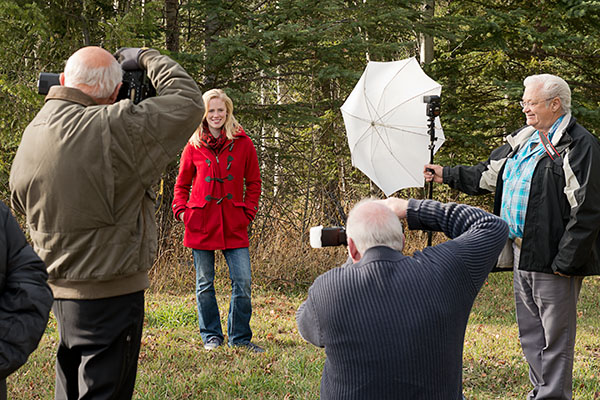
After lunch we moved outside and I set up one flash with a shoot-through umbrella, however, this time the flash was set to TTL mode. When using flash in an indoor studio one synchronizes the camera’s shutterspeed to the studio flash, and uses the aperture to determine the exposure of the light reflecting off a subject. Progressing, however, to an out-of-doors situation with TTL a photographer must balance the natural, ambient light with the off-camera flash; and using flash effectively is more about creating and controlling shadows than about filling them.

We walked out into the bright day and our model had barely reached a location in the meadow before 15 excited photographers got down to business. By then they weren’t at all shy about getting shoulder to shoulder in the process of experimenting, exploring, and learning about outdoor lighting.

I just received an email from Chambers saying, “You’ve definitely added a whole new dimension to our photographic adventures. Thanks a lot.” Gosh, a whole new dimension to their photographic adventures. That is one of the best “thank you’s” I have ever received.
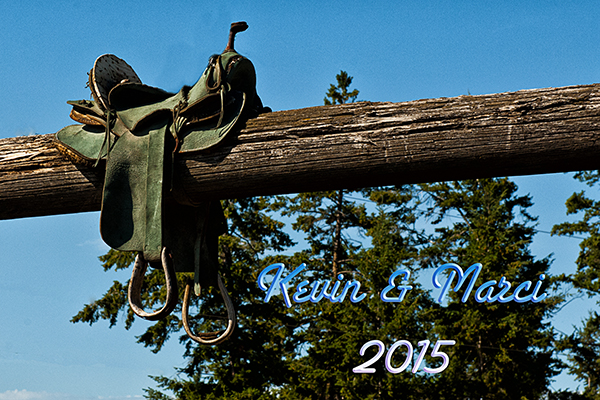
A Country Wedding.


Wedding

Wedding ride 2

Guest wagon

Kevin & Marci

Me too

Marcie's wedding

Country dancing

Just Married


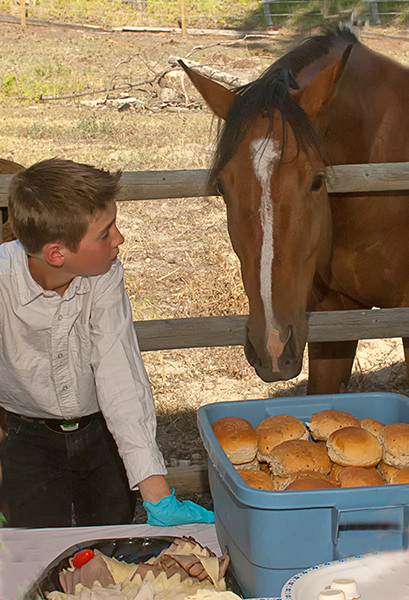
My friend and neighbor, Kevin, called to tell me that he was getting married and asked if I would photograph his wedding.

Although I am pretty much retired, without hesitation I said yes, only asking the date. He continued, “It will be western casual and at our place”. With that I thought, “Well, of course,” and hanging up the phone I turned to my wife and said, “Kevin and Marci are getting married at the end of the month, I hope it’s an overcast day.”

Who knew British Columbia would be having such a record breaking, rainless, hot summer that steadily got hotter and hotter. So by the time Kevin and Marci greeted their guests who waited in large shade tents under a cloudless blue sky the temperature had reached 40 degrees Celsius.

I kicked up dust as I walked into the large coral glad of two things. The first was that my wife made me put on sunscreen and the second, was that high-speed flash sync had been invented.

I remembered the limiting days of film and the one-power-fits-all flashes with which we struggled. On a sunny day we’d load our camera with 50 ISO film, shoot at a high-sync of 1/60th or 1/80th per second depending on the camera and hope the flash didn’t blast the detail out of the wedding dress. On torturous bright days, like the one I was preparing to photograph my friends under, I’d use my favourite flash diffuser, a functional white handkerchief that served to reduce the flash and, when needed, wipe off the salty sweat that made my eyes sting.

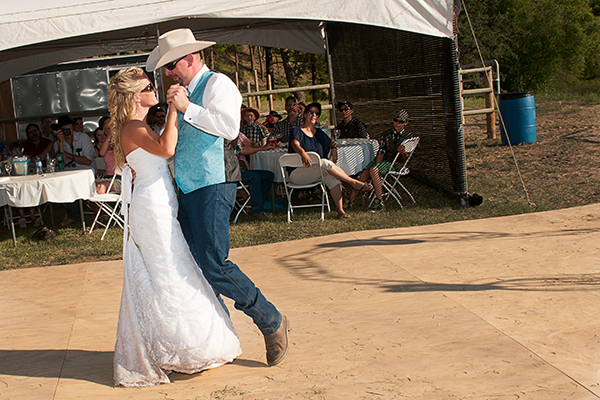
I made my way to the plywood dance floor and took a of couple test shots using the DJ as my model. My goal was to slightly underexpose the background. I really don’t like those pictures of people standing in an overexposed environment.

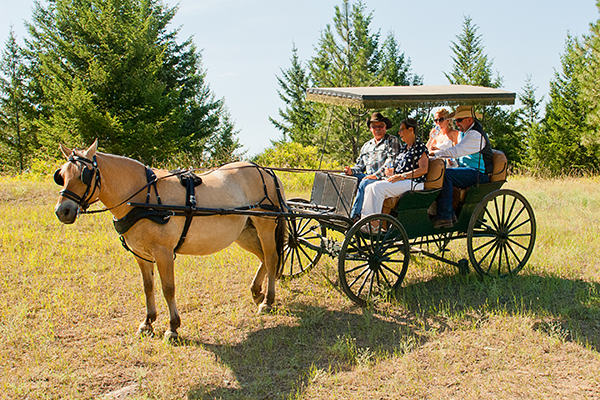
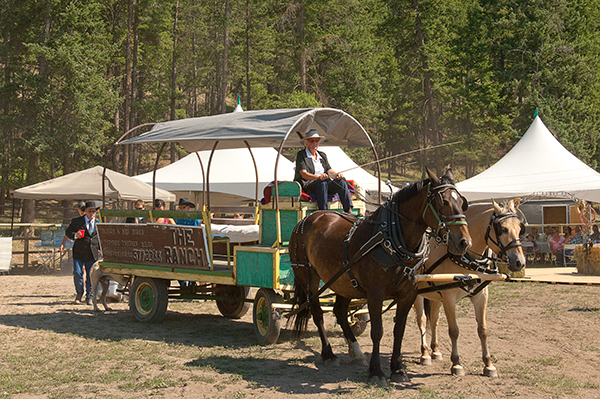
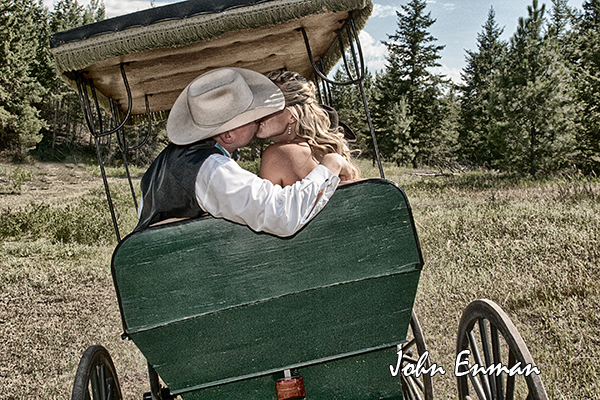
After the ceremony we joined the newly married couple in horse drawn wagons brought over by neighbours, Ellen and Steve from The Ranch, and traveled through the trees to another location where family and guests patiently stood waiting for me to take group pictures. Then we all, bottled water in hand, loaded back in the wagons for the waiting wedding feast.

I wrote that Kevin told me the wedding would be western casual. I don’t know if the ties, vests, and dark, western-cut jacket that the groom, best man, and father of the bride wore were casual attire, but the hats and boots were western, and I will mention that most of the guests were wearing cowboy boots and hats, and boot-cut jeans were the norm.

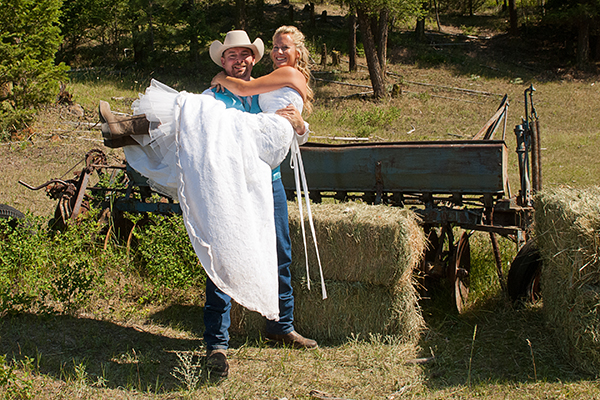
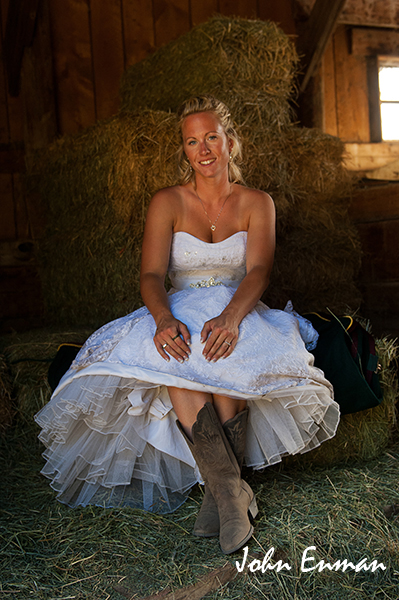
As everyone enjoyed a meal under the shade of the large tents I snuck away to set up a portrait studio in the barn. My lighting was two speedlight flashes positioned behind a six-foot diameter shoot-through umbrella. I like the wide, undirected, soft light a shoot through umbrella delivers, and a large shoot-through like the one I employed in the narrow walkway between horse stalls in the barn gave a flattering light that allowed me to quickly and easily pose the bride and groom.

Then it was back to the dance floor for the first dance. And I worked my way around capturing photo after photo of Kevin and Marci as they showed everyone how country music should be danced to, then I stepped back so as not to block the many pictures being made by guests holding their cell phones at arm’s length for that perfect shot that I am sure was quickly posted on some social media site.

In spite of the heat I had a great time. And I am certain everyone enjoyed the day. I left before sun down, but later Marci told me things were hopping till around 2AM.

Since then I have seen more than one over-exposed, wedding pictures from at other events displayed with misplaced pride, and read photographer’s complaints about shooting under the bright sun, and working in the heat. My advice for them is to under expose, to use a flash, and not to forget sunscreen.


Portraiture and the Photographer’s Use of Light

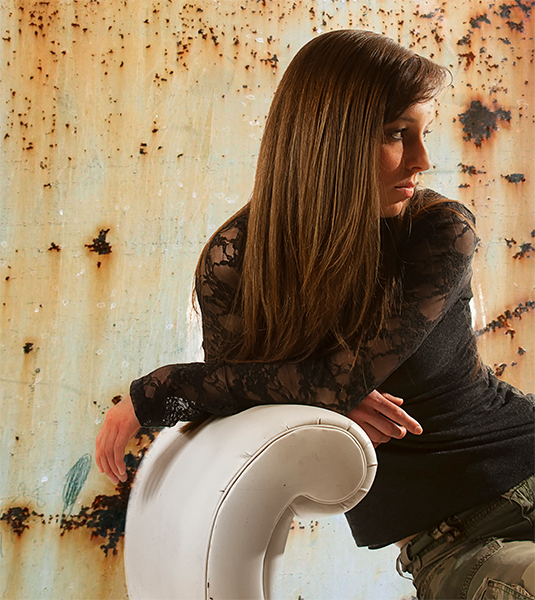
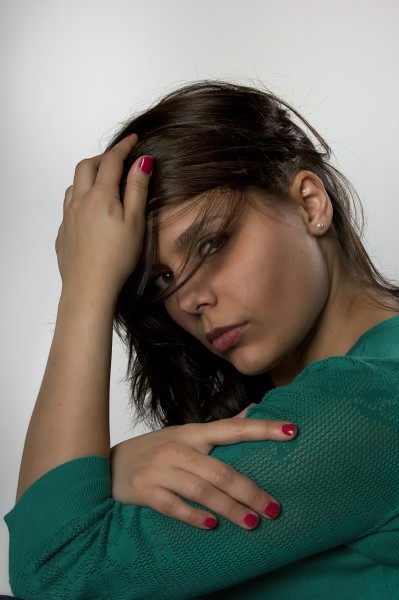
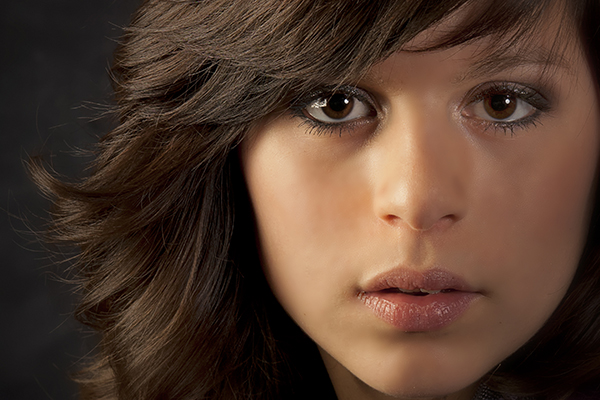
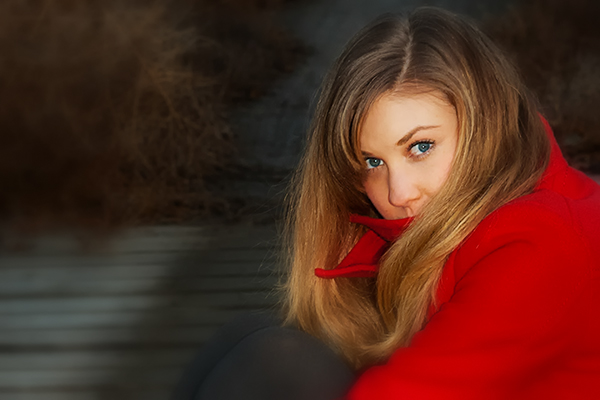
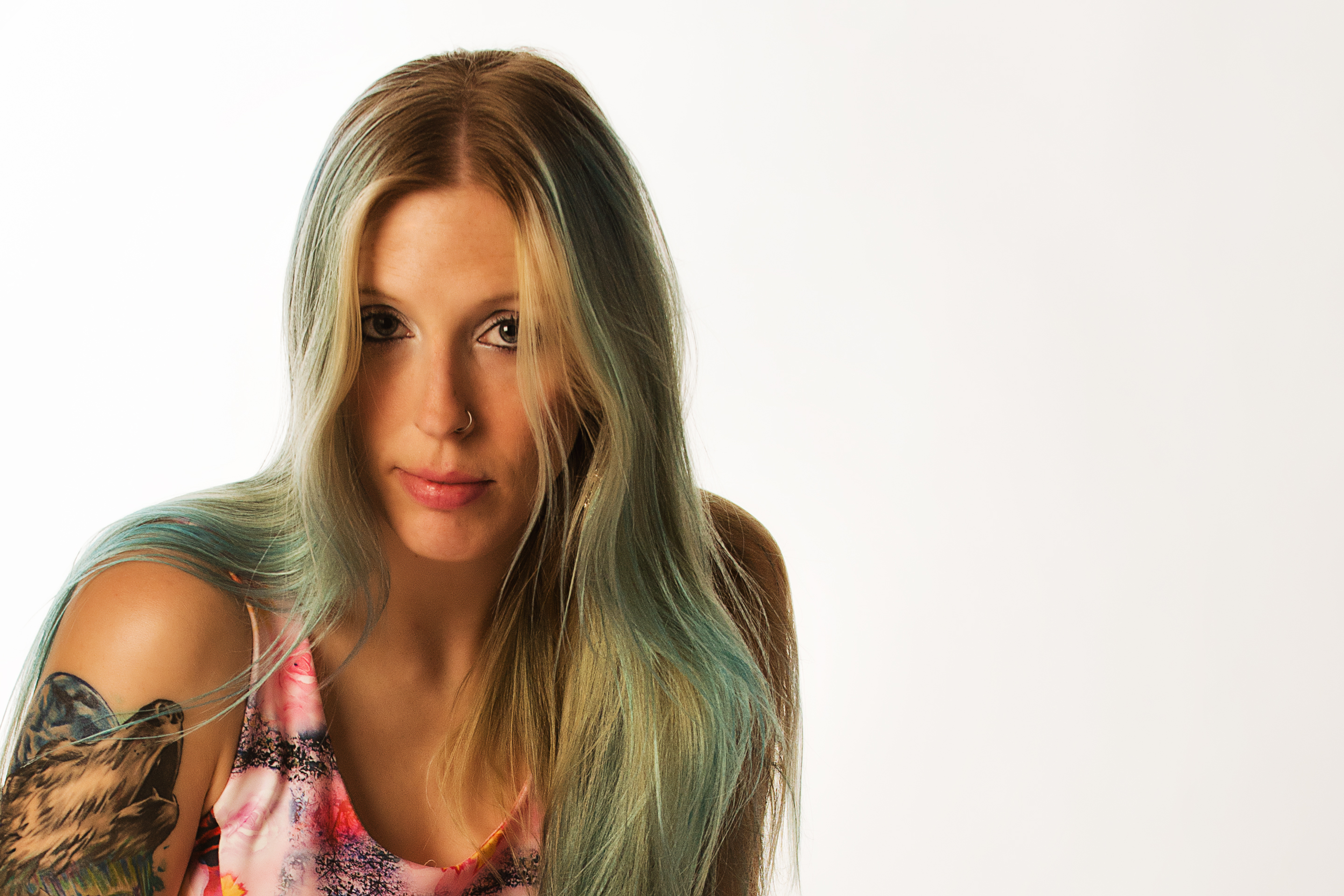
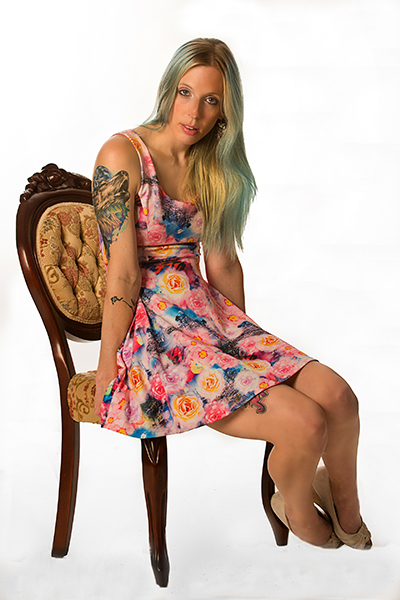
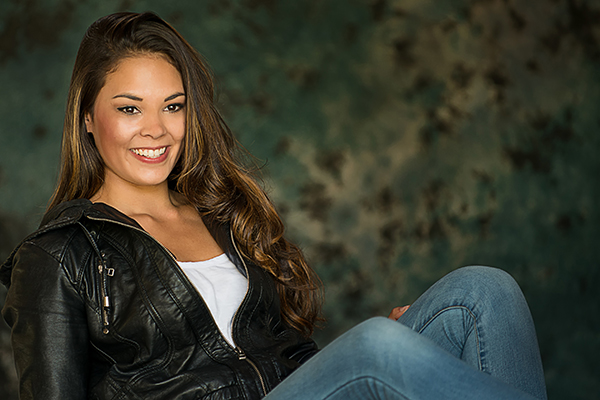
Monica aDemetra 3aMollyStephanie b6. BaileaStephanie a7. MonicaDemetraMonica  a


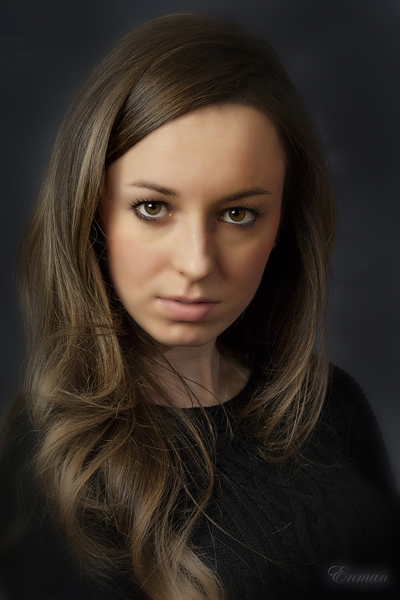
Photographer and author Frank Criccho states, “ The success of a photographic portrait depends as much on the photographer’s artistic and creative use of lighting techniques as it does on his or her skill with the camera.”

In an opposing remark during a recent conversation, a photographer told me that he didn’t have to worry about getting a flash for portrait photography and doubted he ever would, because he could just use a higher ISO, shoot multiple bursts, and fix everything in PhotoShop.

I don’t think that he is totally wrong, but his statement certainly demonstrates a lack of the basic understanding of how light impacts a subject’s face and how light can make the subject look younger, or older, or more glamorous, or down right unappealing.

I think in the race to purchase the latest hi-tech photographic marvel many photographers tend to forget about how lighting affects their subjects.

In my opinion, the goal for portrait photographers should always be to make the subject look his or her best, and provide an image that is flattering, and allows the person you are photographing to have a photo that impresses viewers.

One could say the responsibility lies with photographers, and not the subject, as to how good they look. Yes, I know in reality that isn’t the truth, but in my experience when one makes a bad photo of someone they will blame you, not themselves, if one makes a good photo they will thank you for capturing reality.

Many photographers just excitedly snap away without examining their subject, or posing them. Relying on luck and their subject’s talent to make that pleasing portrait, and pay little attention to how the light is making that person look.

Light and how a photographer uses it is very important. Too much contrast or side lighting shows lines and blemishes, whereas, on-camera flash, or bright, direct sunlight gives a flat, dimensionless, uninspired look.

To use the words of world-renowned photographer and writer, Joe Marvullo, “It is your ultimate decision, however, to determine what is “real” about that person and how to portray it in the photograph. You must successfully translate a distinct human personality in three-dimensional form into a two dimensional representation. This recorded image must come to life on it’s own. You, as an artist, must capture the “essence” of your subjects – their persona.”

Modern on-camera flashes are excellent if used correctly and creatively. Photographers can diffuse, bounce, and move the light off to the right or left, higher or lower, and modify that light using umbrellas, reflectors or softboxes to soften and control the direction and intensity.

I believe photography is all about the light. The lazy photographer just worries about exposure, where as the imaginative photographer pays attention, experiments, and practices creating portraits using light that are more than just documents of some person.  And as Marvullo suggests it is up to you, the artist, to capture the “essence” of your subject’s personality.


Open House Versatile Photography Studio

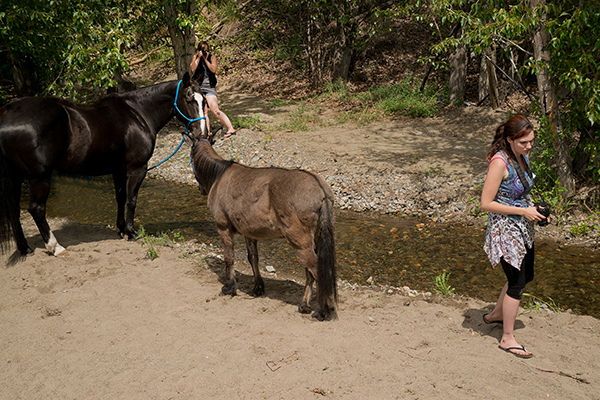
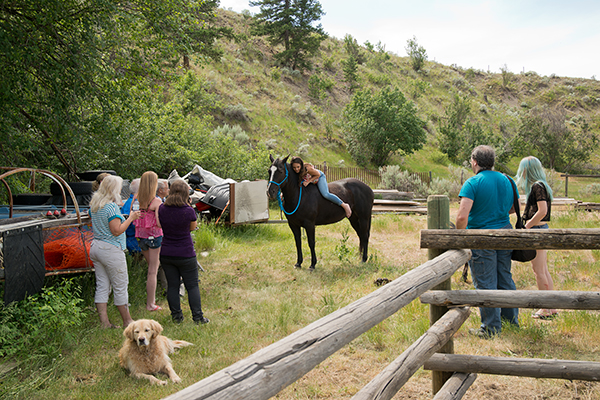
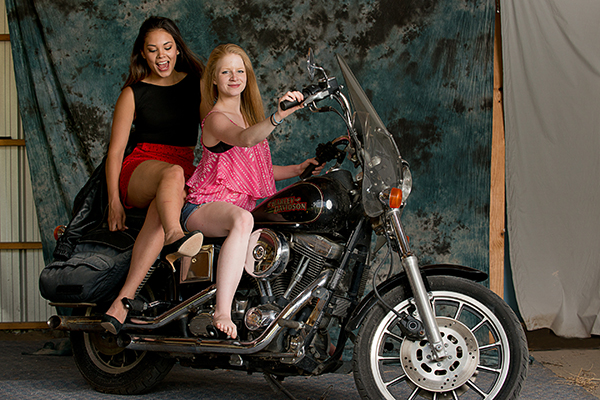
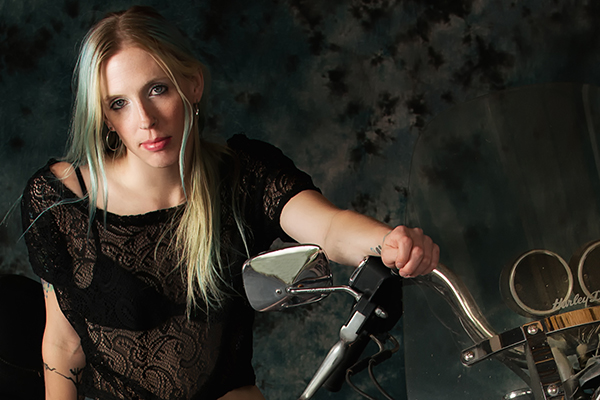
Guests arriveGuests 2Guests 3Guests 4AshleyAshley in Studio Horses at the creekHorse portraitsMonique on the horseThree with MoniqueMonique and dogOpen StudioFun on the HarleyAshley on HarleyMoniqueShy-lynRoasting hotdogs

I was invited to attend a photographer’s open house at a local studio last Sunday. The owners, Dave and Cynthia Monsees, hosted the event and invited photographers of all levels to attend. On their Facebook page they had posted “Versatile Studio took delivery of some new equipment this week. Two new 300-watt strobes arrived along with a 60-inch Octobox that is going to be interesting to use. We now have a 480-watt battery powered strobe complete with a 24-inch soft box for use anywhere on the site. More changes are happening outside of the Studio as we continue to grow.”

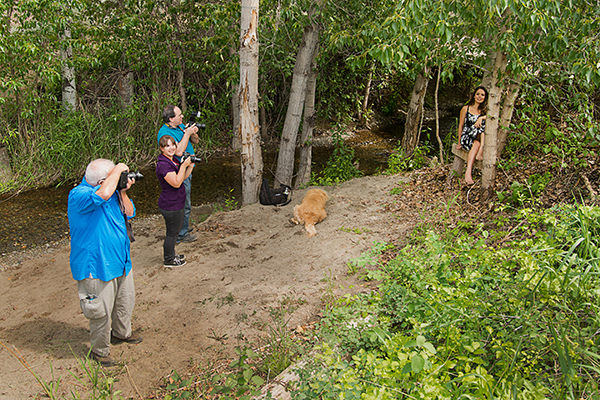
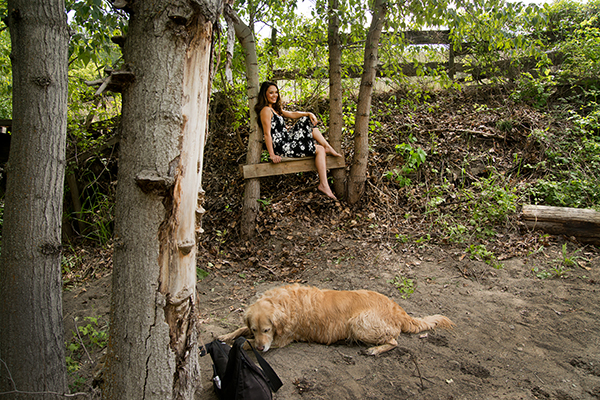
Versatile Studio is probably one of the best-equipped rental studios in the British Columbia interior, with a wide array of lighting equipment for use in the studio or on the studio grounds. As well as the indoor location, Versatile Studio facilities include a large open-sided barn equipped with backdrop and electricity for lighting equipment, a mowed meadow complete with an antique buggy and old farm implements, an old Cadillac resting in a field, and the real favourite, a tree lined stream with a sandy beach.

I joined several others to include a local photographer’s group called Coffee n’ Click, several members of the Kamloops Photo Arts Club, and other serious photographers, and I was pleased when Dave told me that twenty-five signed his guestbook. I wish I had thought to get a group photo.

The day started at 10am with refreshments. After a short welcome everyone split up and the excitement began. Several chose to use the studio and I decided to set up high key lighting for Ashley, one of the three models volunteering that day. The other models were Monica and Shy-lyn.

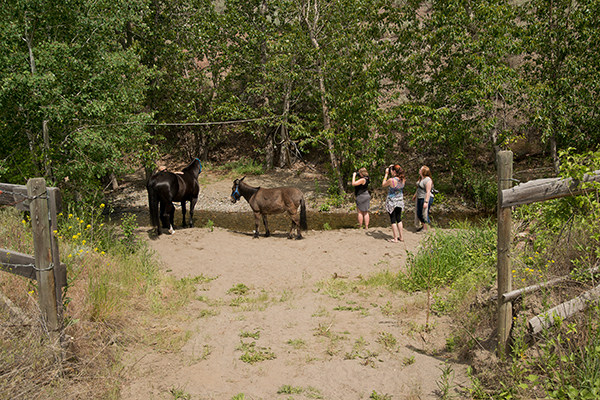
Several photographers walked to the meadow where a neighbor had brought over her horse and a donkey for models to pose on. Another group chose go down to the stream to take pictures.

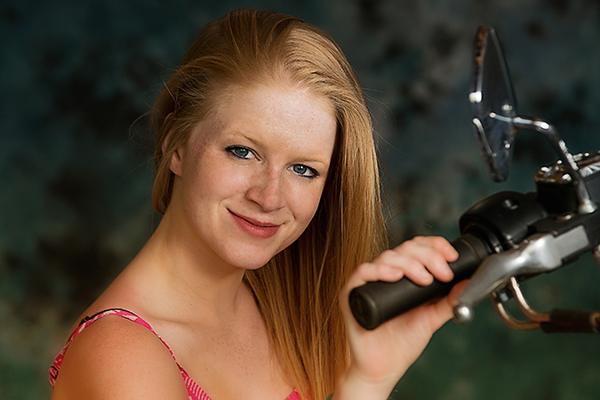
I didn’t stay long in the studio. There were so many excited people competing for the model’s attention that after a couple quick portraits I moved on. A Harley Davidson motorcycle had also been loaned to the studio and I rolled it into position in front of a painted backdrop that hung in the open barn, where I tried out the new battery operated, wireless 480w studio light with a 60-inch Octabox, and added a large gold reflector I had brought from my store. The results were great.

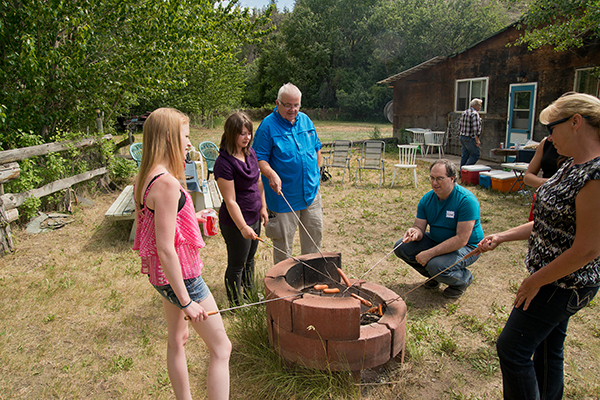
The day was fun, most photographers barely stopped for lunch and before I knew it people were roasting hotdogs over an open fire and it was 4pm. I enjoy events like this where one can interact with other photographers are just having fun doing photography. Usually I use that studio as a place of work where I lead workshops on studio lighting, but on this day I didn’t have to be “on” and was able to relax and talk to other photographers.

This week the Kamloops Photographer’s Facebook page was filled with photographs from the open house. I am pretty confident that everyone had a great time at Versatile Studio’s event.

I always look forward to your comments. Thanks, John


10 Suggestions for Successful People Photography.


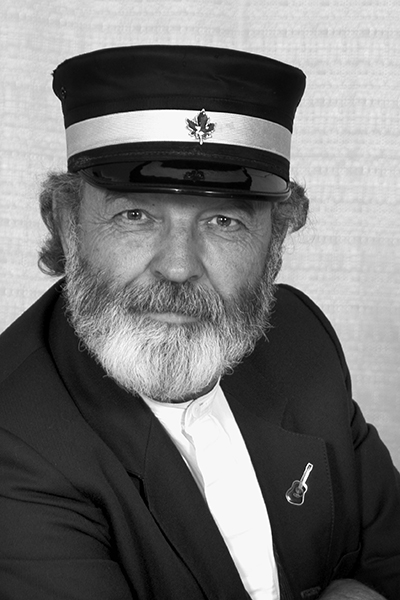
Constable Mike Moyer

Constable Mike Moyer.

Actor

Professional Actor

Actor 2

Professional Actor


I had an interesting discussion with another photographer over coffee this morning. He had brought his memory card with several different pictures and as we talked about his shots he asked, “What is your favorite photography subject?”

Like many other photographers, what I like best changes with whatever I’m currently photographing, and I enjoy photographing just about everything. But in truth most of my subjects in the past 40 years have been people. My reply was, “I enjoy photographing people.”

I’ve been employed doing many types of photography since I began earning my living as a photographer in the 1970’s. And I have worked as a photographer for all types of organizations photographing all types of subjects. However, most of the time I have photographed people.  I think most photography is of people.  We take pictures of our family, of friends, and of people at celebrations and other events.

His next question was, “how do you make a photograph that is more than just the usual snap shot?”

Here are my 10 suggestions that contribute to successful people photographs.

  1. When you take pictures of people look at them and pay attention to their appearance to ensure they look their best.  Don’t just rapidly take a photo and realize later that you should have had your subject adjust something, e.g., a necklace, glasses, a collar, or especially, that tie.
  2. Do three-quarter poses of single subjects. By that I mean turn their body so that they view the camera from over their shoulder.  Choose interesting and flattering angles or points of view. Avoid straight on or “up the nose” headshots.
  3. Focus on the subject’s eyes. When we talk to people we make eye contact. There is a greater chance of your subject liking the photo if their eyes are sharp and not closed or looking away. Ensure that subjects smile.  In my experience when subjects say they want a serious photo without a smile they appear sour or unhappy in the final photo. Do one of each as a compromise.
  4. Select an appropriate lens. Avoid short focal length lenses. On a full frame camera my favorite is 105mm. However, with crop-frame cameras I don’t mind 70mm. Longer focal length lenses create a flattering perspective.
  5. For portraits, an aperture of f/4 or wider will soften the background and make your subject stand out, but for group photos use an aperture of at least f/8 or smaller to increase the zone of focus (depth of field).
  6. Look at the background behind your subject especially when doing outdoor portraitures.  You don’t want the photo to appear to have something growing out of your subject’s head or to have objects in your photograph that are distracting.
  7. Pay attention to uncomplimentary shadows created by the sun, your flash, or other light sources.
  8. Get things ready first. Contemplate the poses before you photograph your subject. The best way to bore your subject and loose the moment is to make them wait.
  9. Tighten up the shot. Get rid of unwanted elements in the photograph that do nothing for it. If there is more than one person make them get close together.
  10. Talk to your subjects. The most successful portrait photographers are those who talk to and relate to their subjects.  We are dealing with people and we communicate by talking. Don’t hide behind the camera.

And as always be positive about the photograph you are about to make. Get excited. Your excitement will be contagious and affect those around you.

I appreciate comments. Thanks, John

My website is at http://www.enmanscamera.com

Studio Portraiture Workshop

Class Portrait 1  Class 2

This past Sunday I lead the first day of a two-day workshop discussing posing and lighting. I hadn’t planned on undertaking any workshops this early in the year, but I had been getting requests from several excited photographers who are out there getting ready for spring and summer portrait sessions.

I finally made the decision to proceed when my friend Dave Monsees, owner of the Versatile Photography Studio near Kamloops, mentioned that photographers renting his studio told him they needed help in lighting couples. They lamented that most tutorials available were only about photographing one person.

I am sure if they browsed the internet they would have found what they were looking for, but working with live models is a lot more fun than reading articles and looking at pictures, so I hired two up-and-coming local models that fit that request perfectly.

In previous posts I have stated how I enjoy the enlivened interaction that happens when students of photography participate in active learning. So when I started getting requests that I offer  another session I crossed my fingers and hoped for an early spring, booked that large local studio, and hired two models.

During a workshop my job is to present information on the subject, and keep things going. I don’t like to be a demonstrator on stage and I rarely pick up a camera during the workshops I lead, unless it is to take a snapshot or two of photographers in action. And besides, when I finally let the workshop participants apply what we had discussed, there wasn’t room for me anyway.

The workshop dealt with modifying and placing light. We employed one, then two, and then three lights; and modified the light first with umbrellas, then changed to a softbox and reflector to create shadow, and, of course, that classic and compelling “Rembrandt lighting” effect.

This was an advanced workshop and I limited participation to seven photographers. As with all my workshops, my main goal is to help participants gain an understanding of how to use light. I want them to consider the “quality” of light instead of the “quantity” of light. I lecture to them that they should use light to “flatter” their subjects as opposed to only “illuminating” them.

I think that studying the mechanics of lighting includes two additional aspects, which are (1) experience, and (2) the willingness to step beyond lazily pointing a camera in a light filled room or out in the sunshine. Posing a model, or in our case, two models, seems to me to be more about engaging with the subject and being comfortable with telling someone how you want them to look. I once heard a photographer say that he never posed people because he thought is was rude to tell adults what to do. I can’t comment on that fellow’s work, maybe he was really lucky, but I expect there were lots of missed shots. I suppose he would disagree, or just plain ignore the words of award winning Dallas, Texas photographer, Caroline Mueller when she says, “What I look for in pictures (that) I take: eyes, hands, head tilt, body language, background, and use of space.”

I believe those photographers that are successful at portrait photography don’t hide behind their camera, but they start with a plan and are good at engaging, explaining, and demonstrating what their vision for the session is.

Now I am really looking forward to next Sunday. The few images I have seen so far are great and I am certain spending another day (this time with speedlights out-of-doors in the failing afternoon light) helping and watching each photographer’s progress is going to be a lot of fun.

class 3  class 4


Thanks in advance for your comments, John

My website is at www.enmanscamera.com

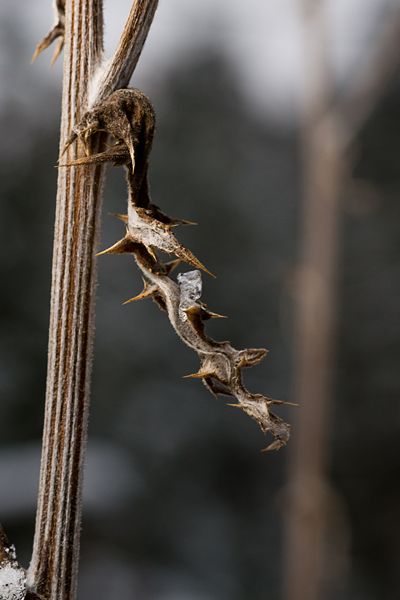
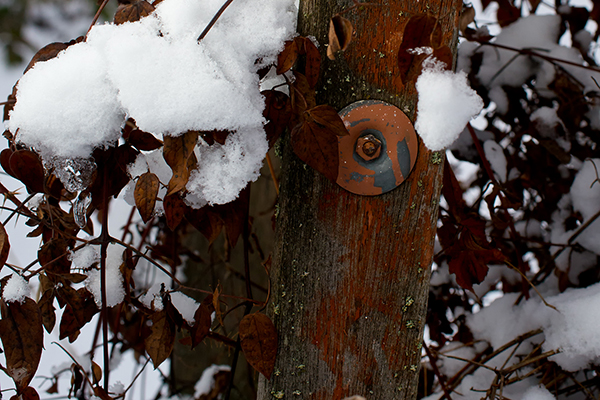
Photographing the Winter Garden

Outdoor lighting kit  Clematis

Erigron  Erigron b

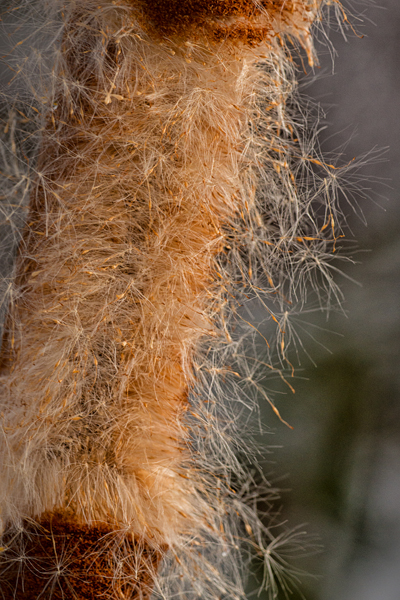
Winter blown bullrush

Step Ladder


Sunday was one of those “let’s see how many small jobs I can do” days. One would think there is no chance of being bored on a day like that, but I finally decided it was time to relax and sat down with a glass of wine, and enjoyed lunch with my wife and listened to some jazz.

As I made my way from one chore to another I kept looking at the snow in the garden and wondering if there was an opportunity waiting to make a photo or two, but I pushed along thinking “maybe later”.   However, as I started on my second glass of wine I complained that the outside light was gray and flat and that maybe I should just forget it. Could that have been the wine talking, or that I am just lazy?

Ever one to keep me on my toes, my wife, Linda, reminded me of a lecture we once attended by Canadian photographer, and author, Sherman Hines. (I recommend readers check him out) As she remembered Hines had said something like; “there is always something to photograph when the weather is poor, look for the small stuff”. There was the challenge. I left the room to get my camera.

The snow was getting wet on the plus 1 degree C afternoon so I decide to leave my tripod behind and mounted my wife’s 70-180mm AF macro on my camera. That unique, fun to use lens is the only true zoom Micro (macro) lens ever made by Nikon. And I get to borrow it anytime, well, almost anytime.

I got my camera and put together my lighting for what would be an excursion to search out the intimate features poking through the snow in my wife’s garden.

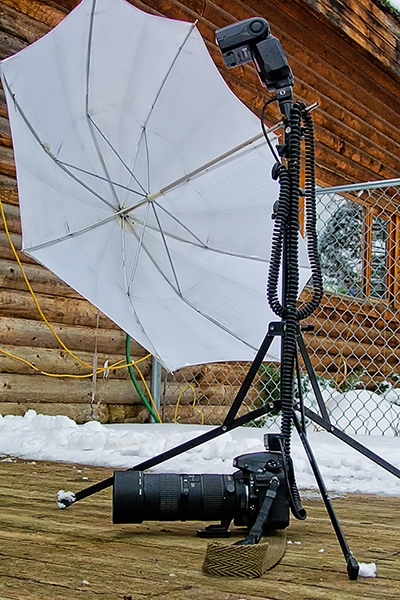
I attached a flash on a stand and chose a shoot-through umbrella. I could have connected a wireless sender and receiver, but I decided to use a TTL camera-to-flash cord that would allow the camera’s computer to direct the flash to provide the correct exposure for the close-up kind of subjects I would be photographing.

Although I had complained about the limited light on the heavy overcast day, I knew it would be perfect for my sojourn through the garden. I could easily meter the ambient light, then under expose slightly so the flash would become the main light instead of the hazy sun. The modified light from a shoot-through umbrella is even across the image with a gradual transition from highlights to midtones to shadows, or a soft light.

I stuck the stand through the snow and easily positioned the flash. And unlike a snowless landscape, the snow kept the stand steady no matter the angle. All I had to do was choose an angle and release the shutter. That particular zoom lens allows for a constant macro at every focal length. It was pretty neat and easy.

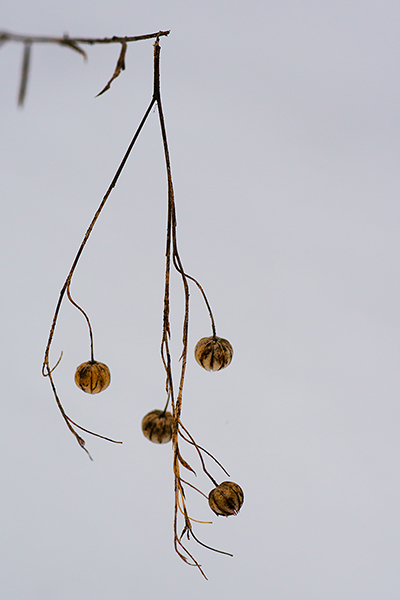
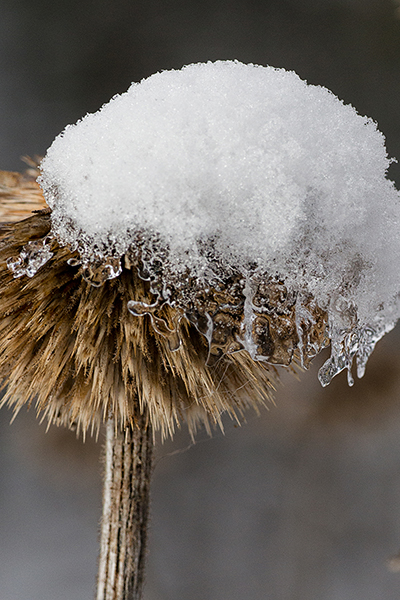
I choose to photograph that garden in every season. I know there are many photographers that only take pictures of plants when they are in bloom and prefer colourful representations. However, spring, summer, fall, winter, snow, rain, sunny, or overcast, I find that our garden is filled with ever changing subjects that always offer something new and I expect that Sherman Hines surely would approve. My advise to photographers that think they must wait for inspiring weather before their next garden safari, is to take Mr. Hines’ advice, because there is always something to photograph when the weather is poor, just get up close and look for the small stuff.

I enjoy everyone’s comments. Thanks, John

My website is at www.enmanscamera.com


When Do I Like Photographing Flowers?

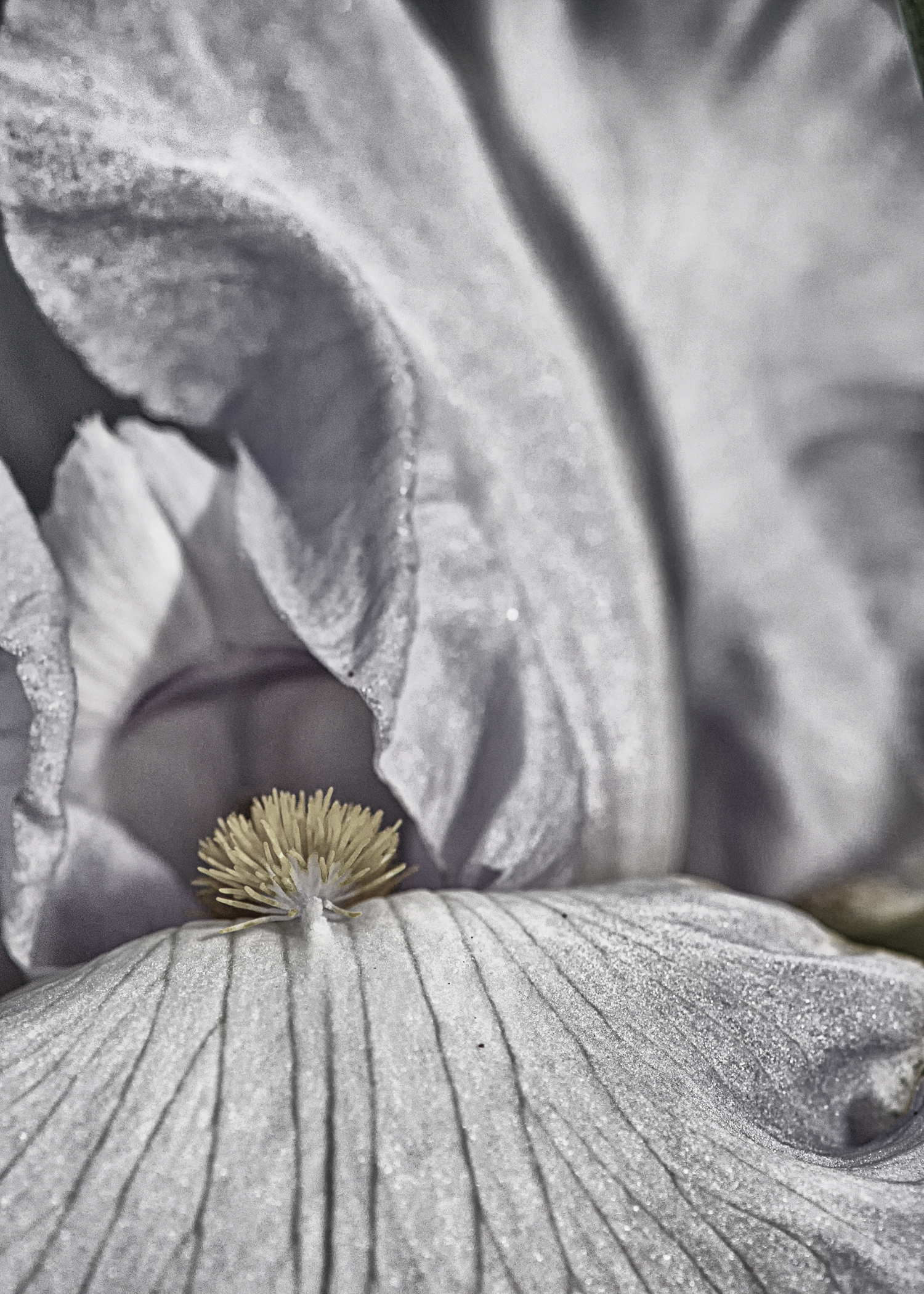
Iris sculpture

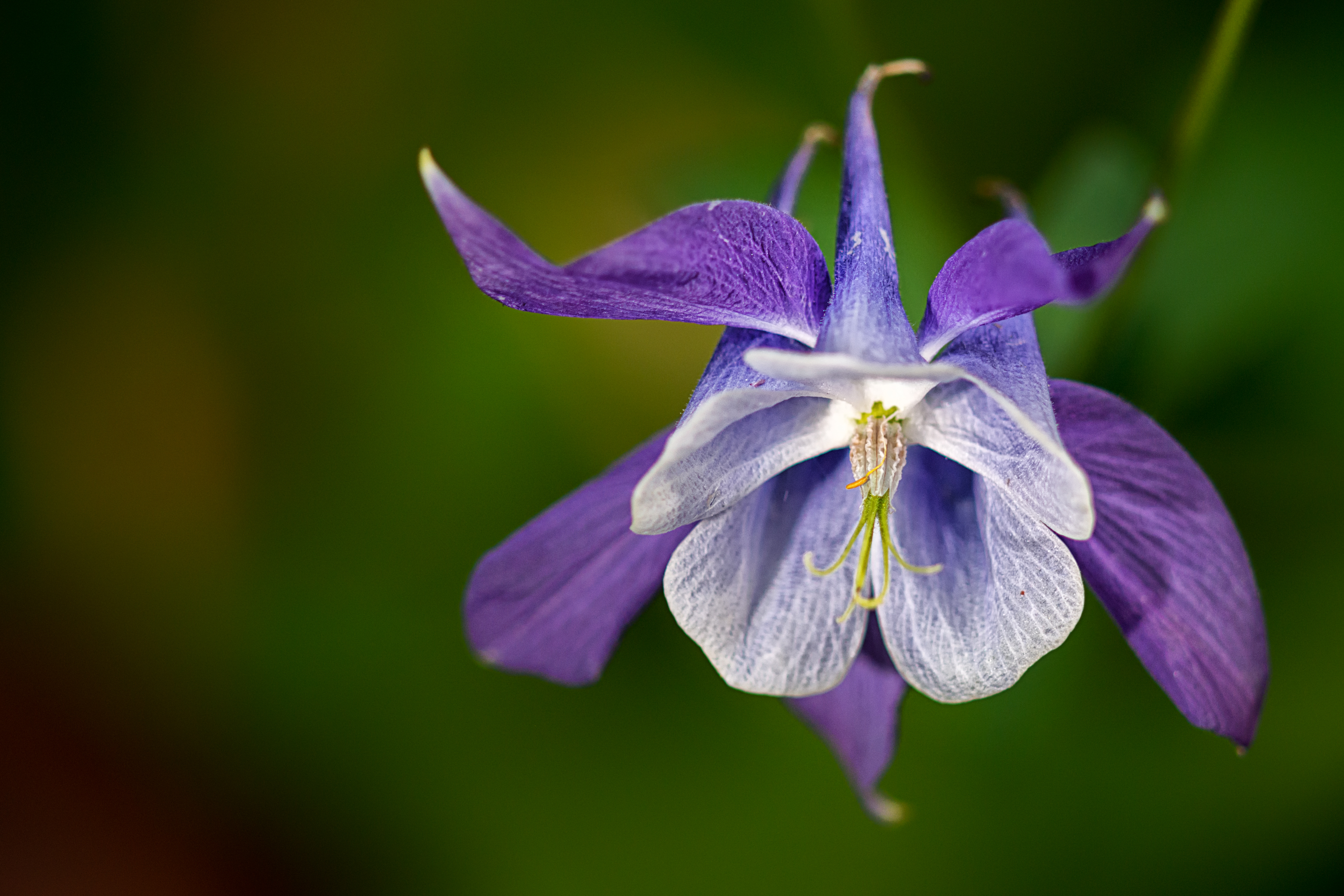
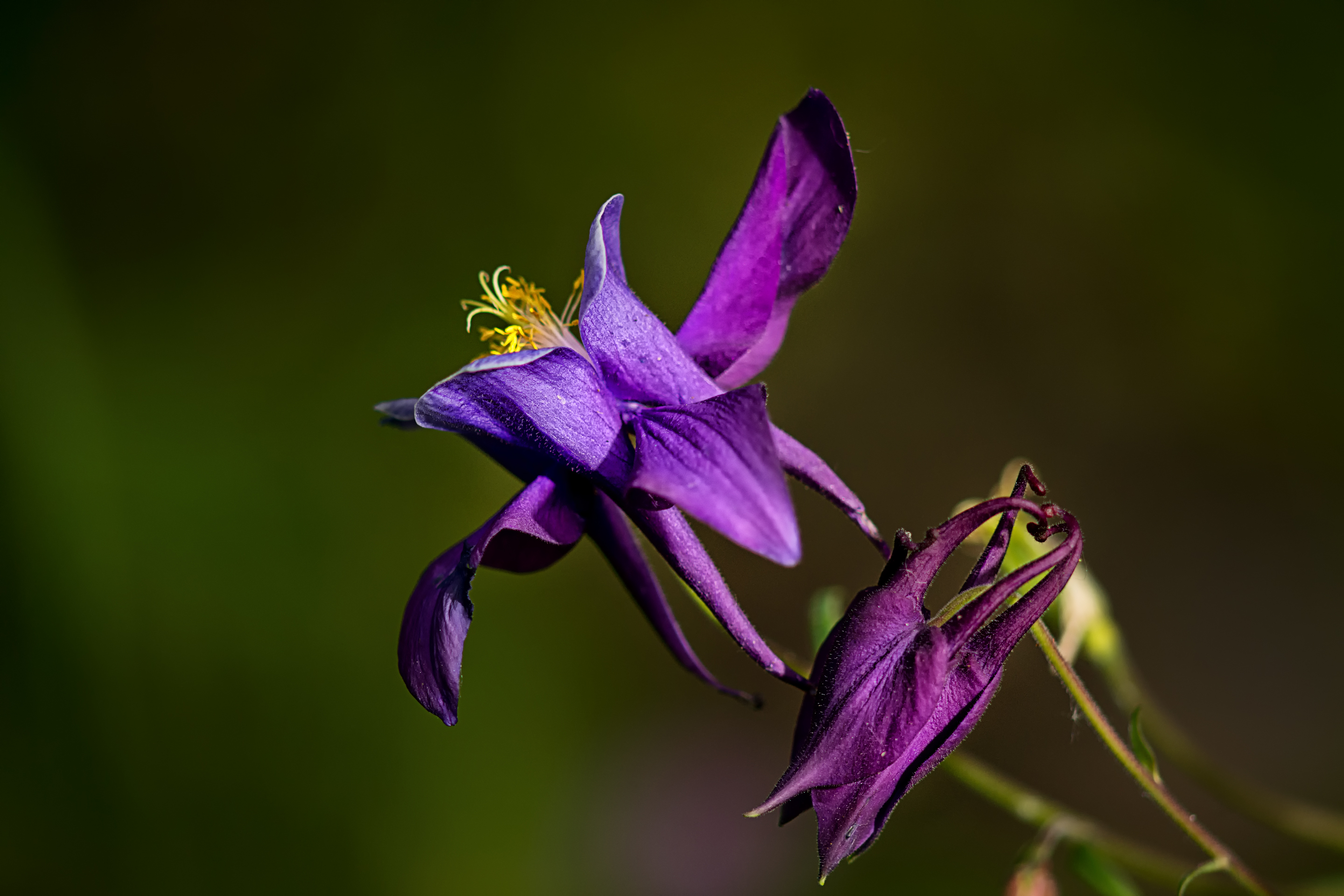
Columbine bloom


Columbine


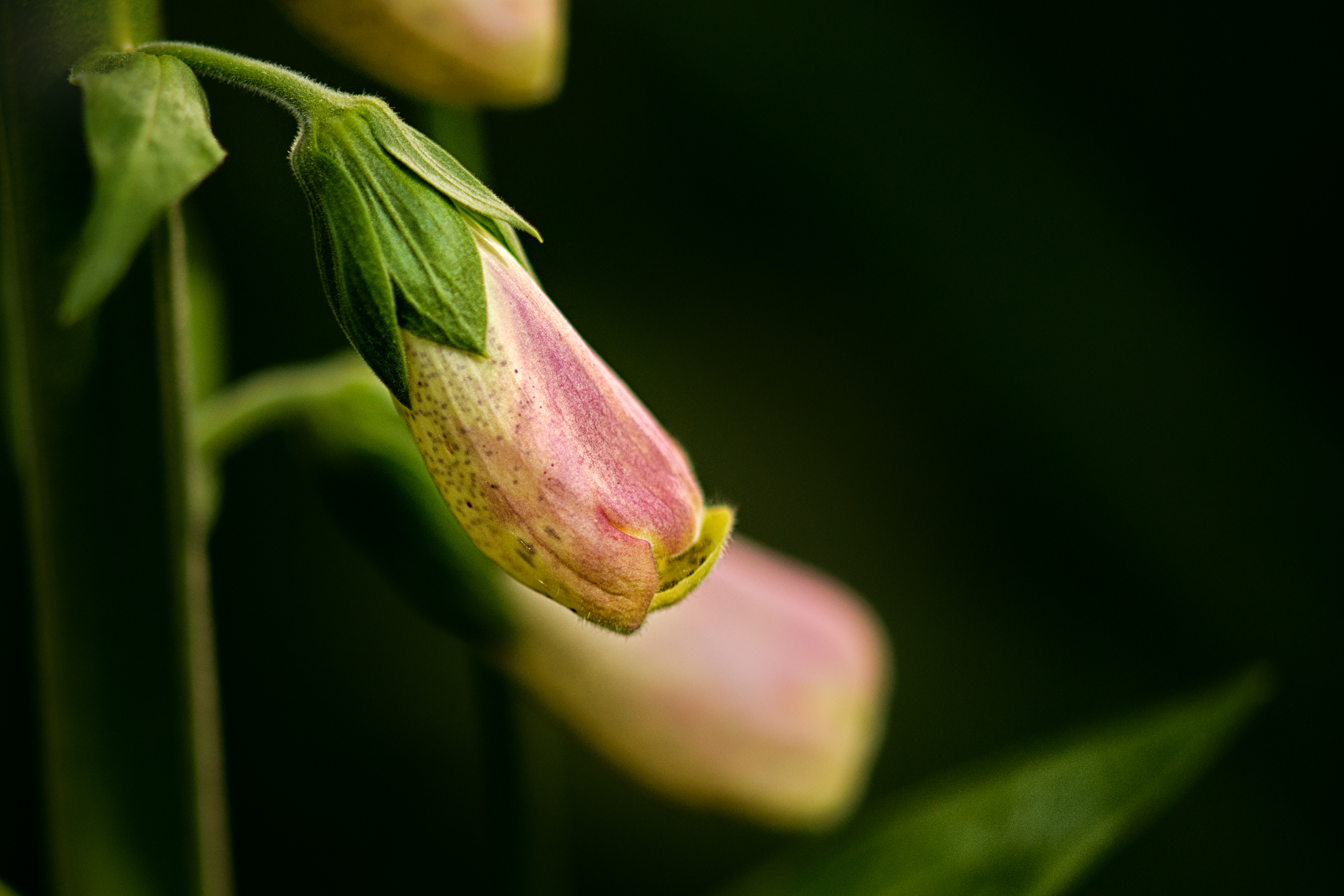
Foxglove


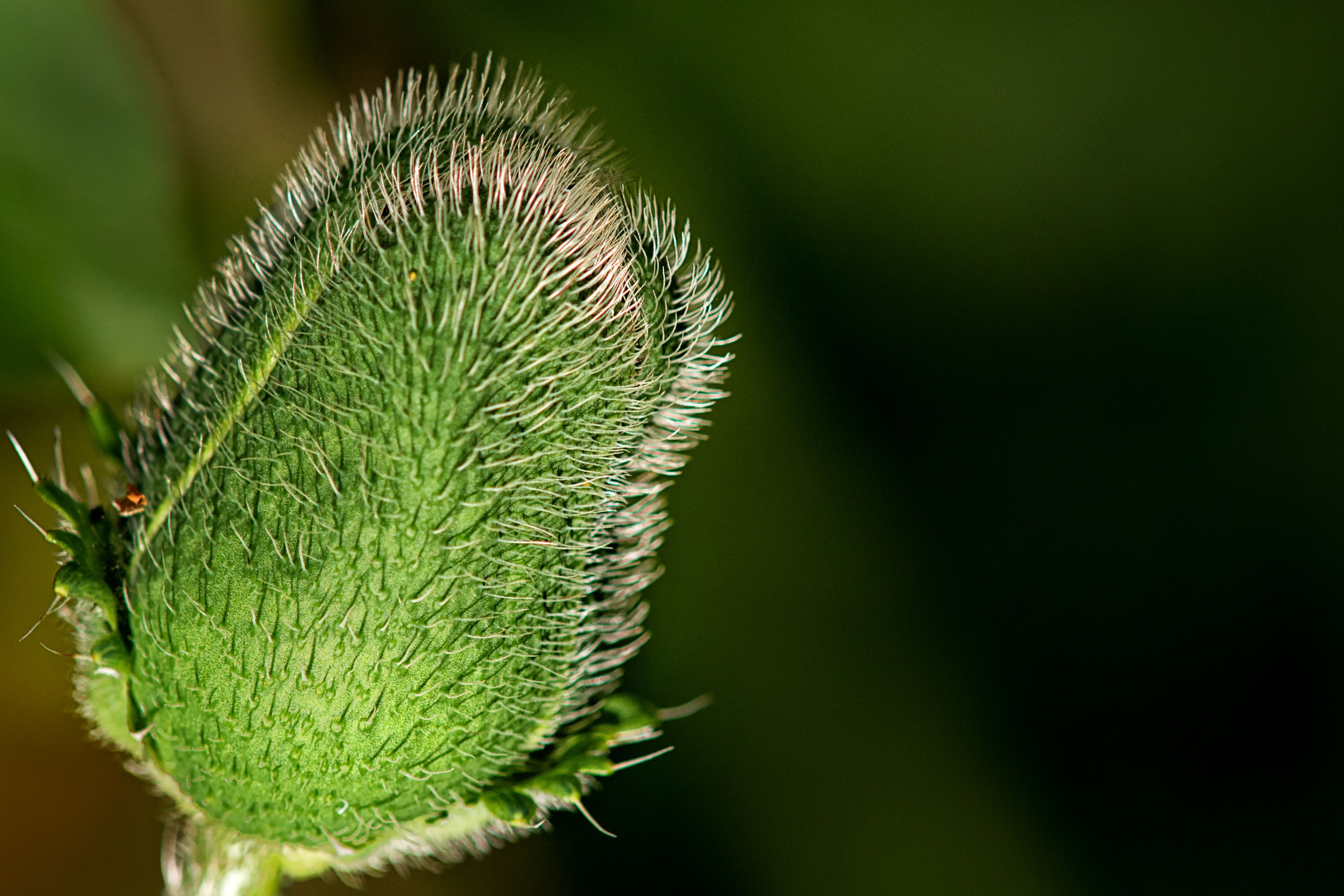
Poppy bud


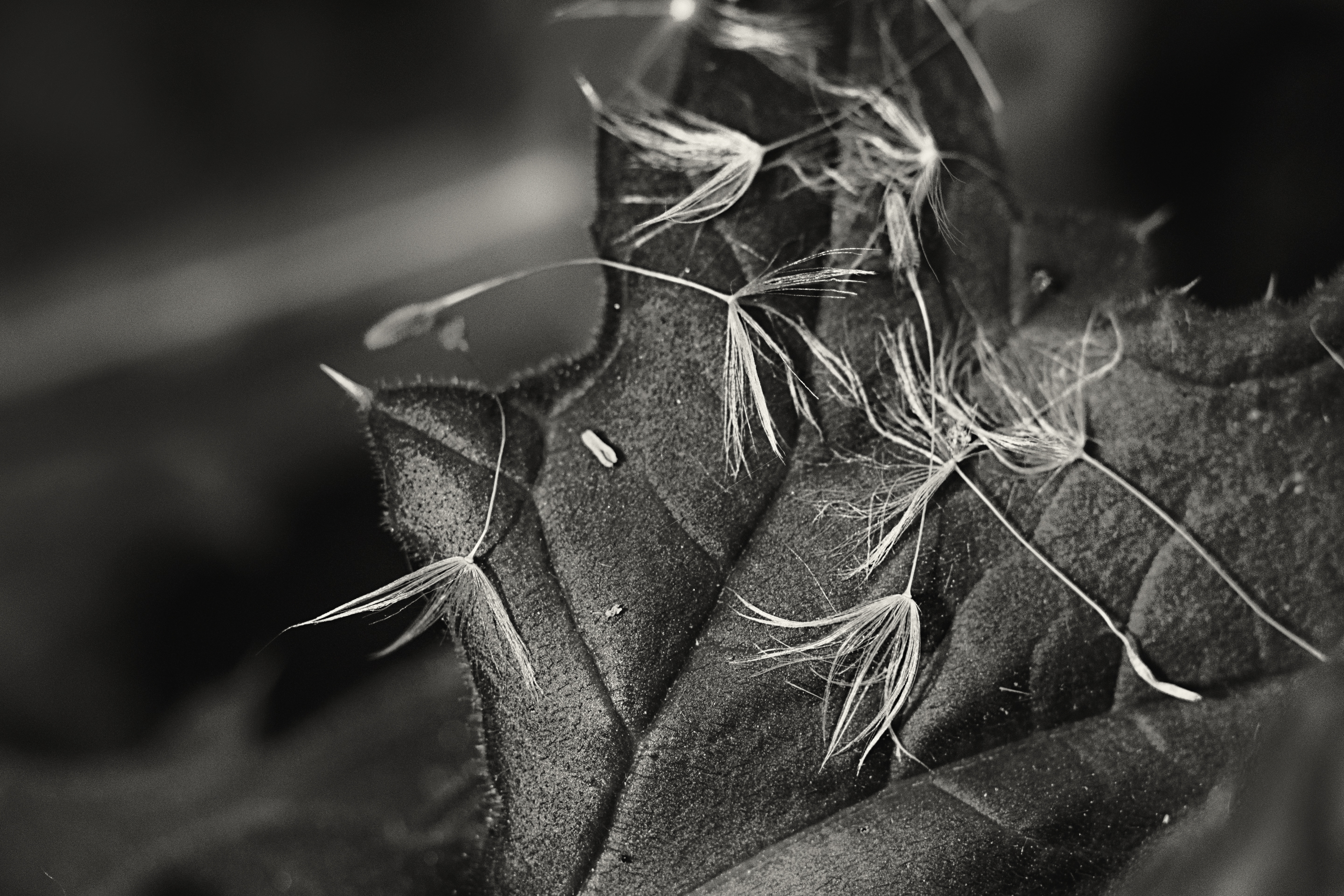
Dandelions seeds & Oregon grape

When I am bored, stressed, or just want to get away from crap that sometimes happens, I grab my tripod, camera, and flash, and head out to my wife’s garden.

I admit that I am not really a flower kind of person and plant names are more my wife’s interest than mine, although, I do try to document her sprawling garden as creatively as I can throughout the seasons.

Somehow pointing a camera at some colourful plant is calming, and wandering through a garden of differing shapes and tones offering photographic opportunities gives me a different experience than any other subject.

Unlike photographing people, animals, scenics, sports or almost any other subject, garden plants just wait to be looked at. One doesn’t have to cajole, creep, or climb, and it’s not necessary to get in a vehicle to search for some secluded or exotic location. Most of us can find a welcoming garden close by that is, in most cases, easily accessible.

The result of 30 years of my wife’s effort has put me in a fortunate position of having about a half-acre of garden right out our front door. However, even if I lived in a city and only had four or five potted plants, I still would have a place in which to get lost.

The past month has been busy keeping me constantly on the go. So when my wife and I went to the car to drive to a mid morning appointment, the doggone thing just stopped working, and I was confronted with another stressful problem. To make a long story short, I was (I’ll use nice words here) very irritated as I watched it disappear down our rural road, chained to the bed of a tow truck.

I stormed around for a while. Then as the bright afternoon sun began dipping into the mountains and the light started to fade I looked around. I had walked back into our yard and was standing hidden from the road in my wife’s garden. Everything was bathed in what photographer John Sexton called “quiet light”.

“It is light that reveals, light that obscures, light that communicates. It is light [that] I listen to. The light late in the day has a distinct quality, as it fades toward the darkness of evening. After sunset there is a gentle leaving of the light, the air begins to still, and a quiet descends. I see magic in the quiet light of dusk…”

As I wrote in the beginning, I was “stressed and just wanted to get away from the crap that happens” So I returned to the house, I grabbed my tripod, camera, and flash, and started looking at the plant shapes waiting in the garden.

Sexton had continued by saying, “I feel quiet, yet intense energy in the natural elements of our habitat. A sense of magic prevails. A sense of mystery – It is a time for contemplation, for listening – a time for making photographs.”

I immediately began to calm down. I wonder if it was the act of setting up a tripod and attaching the camera. Maybe it was figuring out the exposure and balancing the fading light with my flash. It might have been choosing an interesting plant and searching for a creative angle. Or it just might have been all of those together that stole my attention and allowed me to redirect my energies.

Another of my favorite photographers, Robert Mapplethorpe wrote, “With photography, you zero in; you put a lot of energy into short moments, and then you go on to the next thing.” I guess so.

I expect capturing an expression on someone’s face, photographing an exotic scenic or some sporting event, will get more raves from friends than a picture of some delicate flower. But none of those help to relax me and sometimes even trouble me more. So, next time I am, as I was this week, confronted with problems or just feeling pressure. You’ll know where to find me. And maybe it’ll work for some readers, whether it’s in their garden, a public park, or even on the side of the road; there are plenty of photos for the taking.

I enjoy all comments. Thanks, John

My website is at www.enmanscamera.com

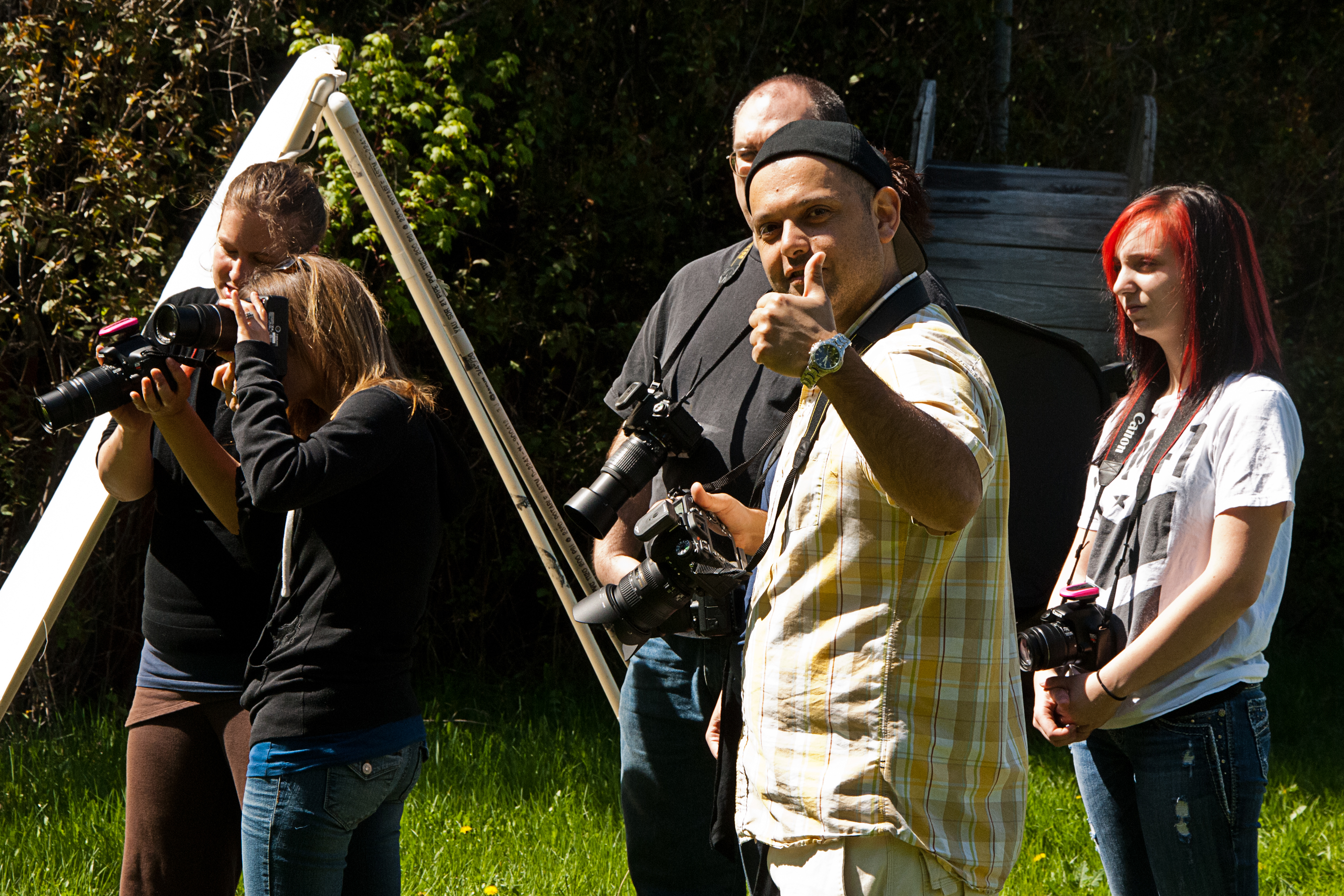
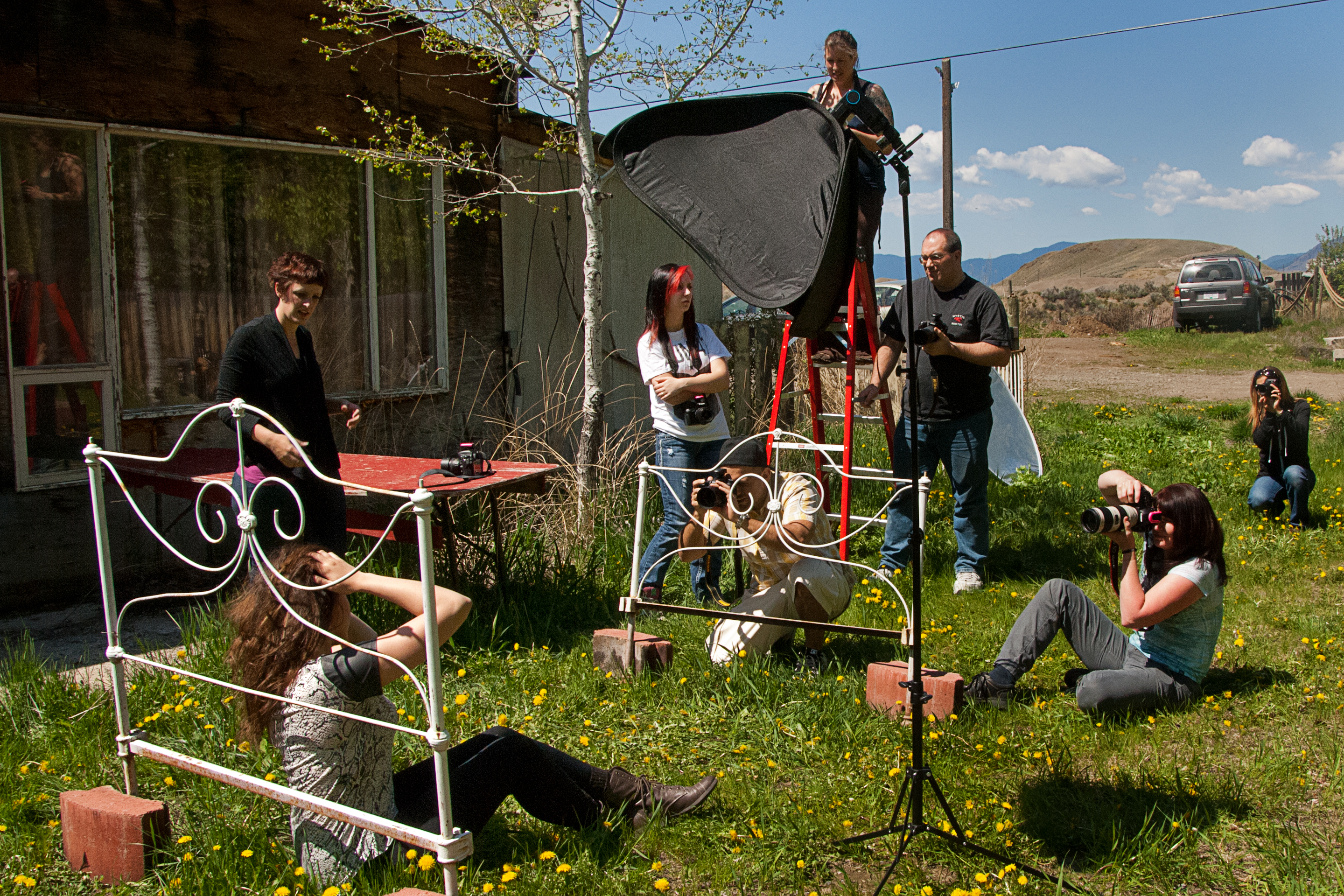
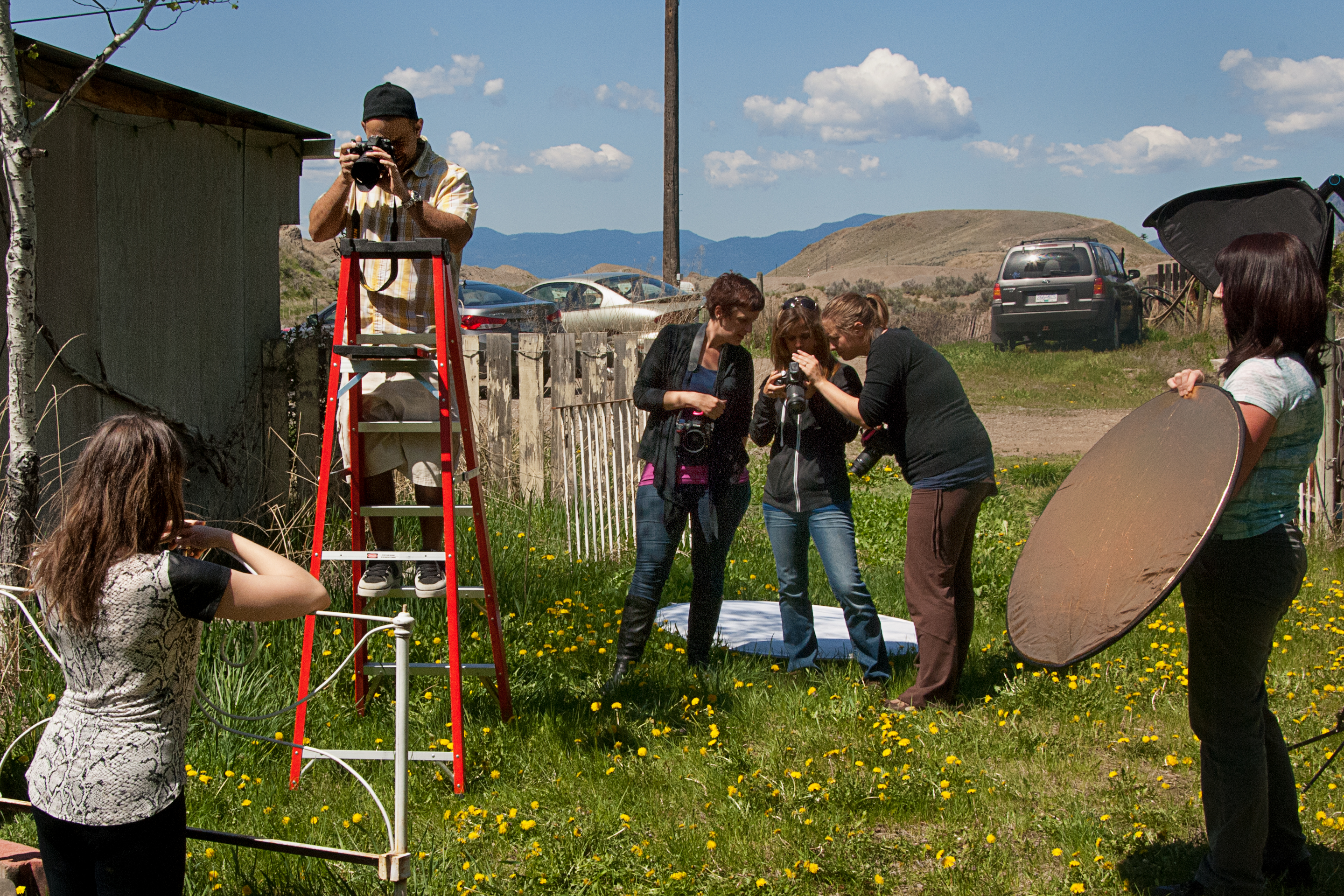
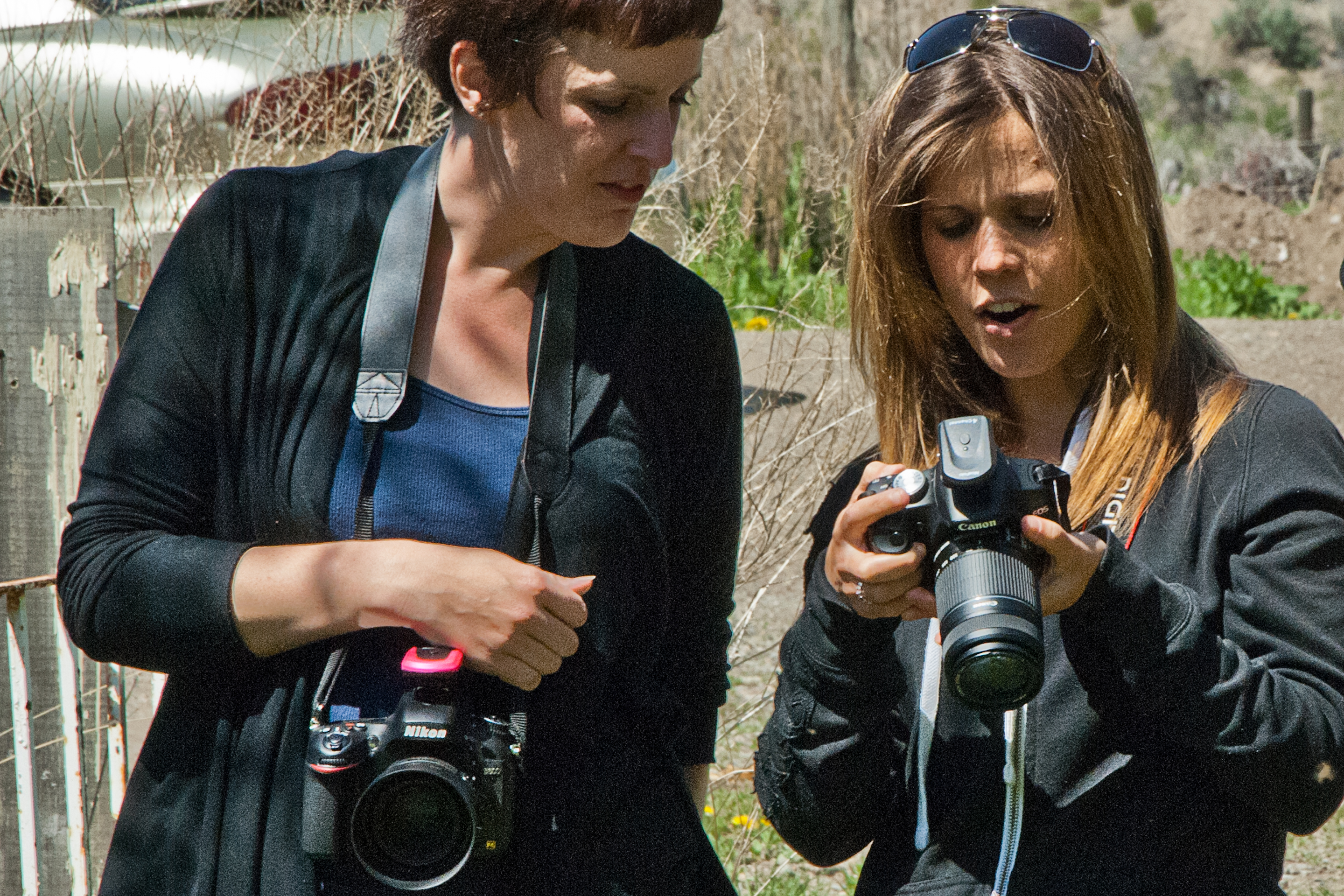
One more outdoor lighting workshop.

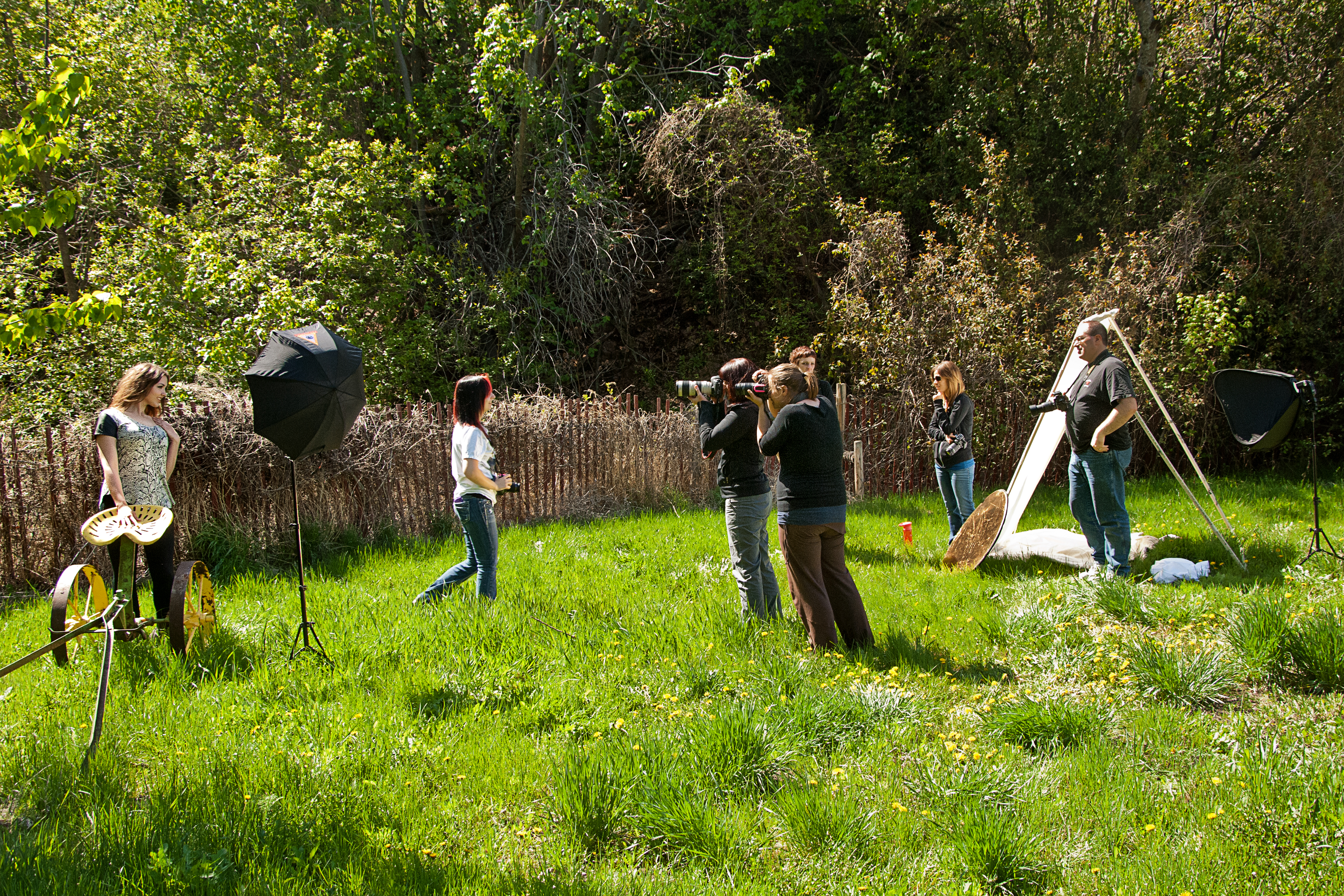
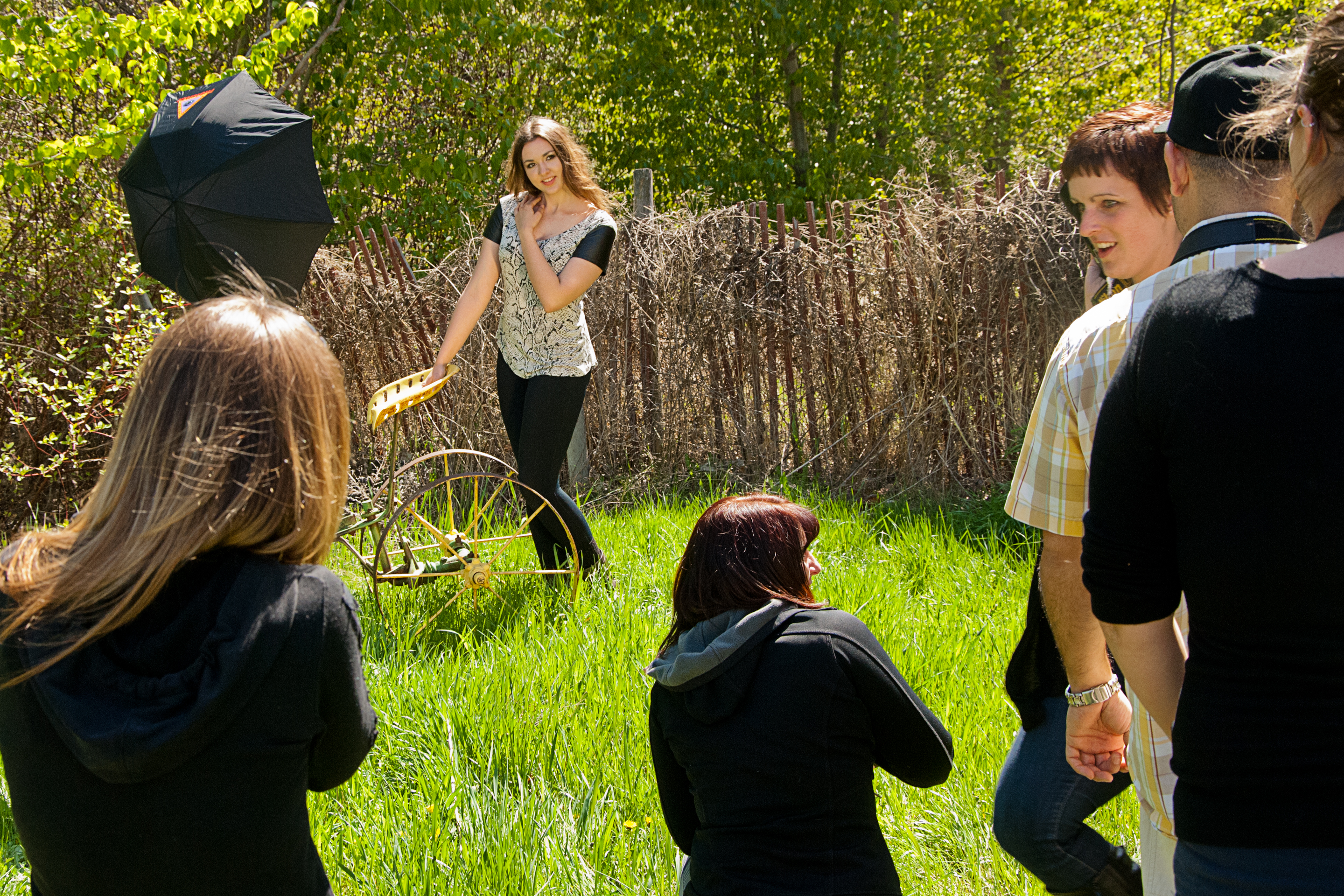
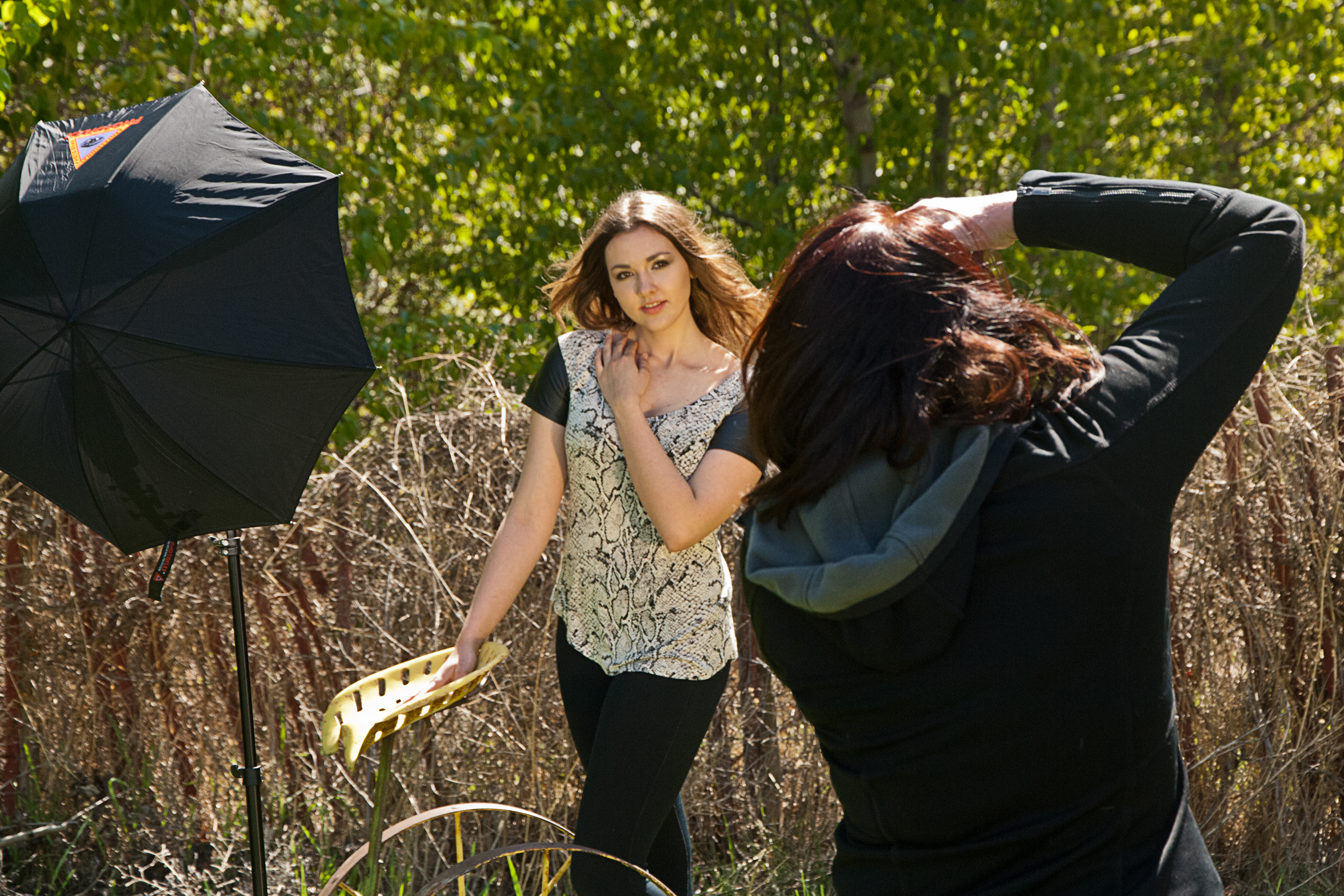
A. An outdoor studio  B. Workshop participants  C. Adding light  D. Outdoor shooting  E. Softbox by the buggy  F. Thumbs up  G. Outdoor with softbox  H. Ladder and reflector  I. Got it.  J. Portraits in the barn  K. Gold reflector  L. Umbrella in the barn

I’ll begin with a quote from an interview with American photographer, and author of the Strobist.com lighting blog, David Hobby. “…You hear a photographer say, “I’m a strictly available light photographer, I’m a purist…”. What “I hear is, “I’m scared of using light so I’m going to do this instead.”…. Well, for me lighting was a way to start to create interesting pictures in a way that I could do it…”

 I wish I had read that interview with Mr. Hobby before I began my series of workshops on off-camera flash. I would have started every class with his quote. With that, I thought I would let readers know about the last day of what became an enjoyable and successful day for everyone, the photographers, our model Danya, and me.

Unlike the last session’s stormy overcast weather, the day this time was warm, sunny, and we didn’t have to contend with a cold, constant breeze. However, I couldn’t have asked for two better learning environments. An overcast day demands different lighting techniques than those that accompany a bright, cloudless day, and all I had to do was present the participants with opportunities specific to each so they could begin experimenting, and learning how to effectively use off-camera flash.

In the first session I introduced the ten participating photographers to basic outdoor portrait photography, and off-camera flash techniques that would help them transform their outdoor portraits into something special.

This time I continued by putting together different lighting setups. In the meadow, I erected a backdrop, and placed a 4×6 foot light diffusion panel with a wireless flash to one side. The second set up was a lean-to that used a 4×6 light diffusion panel. For the third set up, I placed in the barn a softbox and a bare flash on stands. I also left extra wireless flashes on stands and a few reflectors outside the studio, ready for photographers to use when they wanted to select their own location.

My goal was to give participants plenty of options as they put into practice what they had learned about adding flash to natural light.

We positioned the 10×12 foot backdrop, made out of an old painter’s drop cloth, so it blocked the sun and swathed our model in diffused light, and then fired a flash through a diffusion panel placed on the left.

The lean-to was constructed with a diffusion panel on one side. It softened the sunlight, giving a subject a diffused glow that could easily be manipulated with a reflector or flash.

The softbox was perfect for the open shade in the barn. The large metal-sided barn gave lots of room and an interesting patterned backdrop. In that location the softbox, a flash and umbrella, and a reflector were used.

I always use a flash when I am photographing people, inside or out. I can’t control the lights in a large room, or the sun shining on my subject from 93 million miles away. Participants discovered how to control the light they added from small off-camera flashes in the natural ambient light, and by the end of the workshop were using flash effectively, and learning about creating and controlling shadows rather than just filling them.

We live in a time when cameras can almost see in the dark, and the art of adding light to a scene is under-appreciated. Those photographers ready and willing to turn down that ISO dial and learn about off-camera flash are beginning a journey of discovery that will remind them that photography is all about light. And I expect they might finally ask themselves, why not try to have the most perfect light possible…and instead of waiting for that perfect light, learn to control that light by adding flash to make the best of the situation.

I really appreciate comments. Thanks, John

My website is at www.enmanscamera.com