The Photographic Composer’s Score and Performance

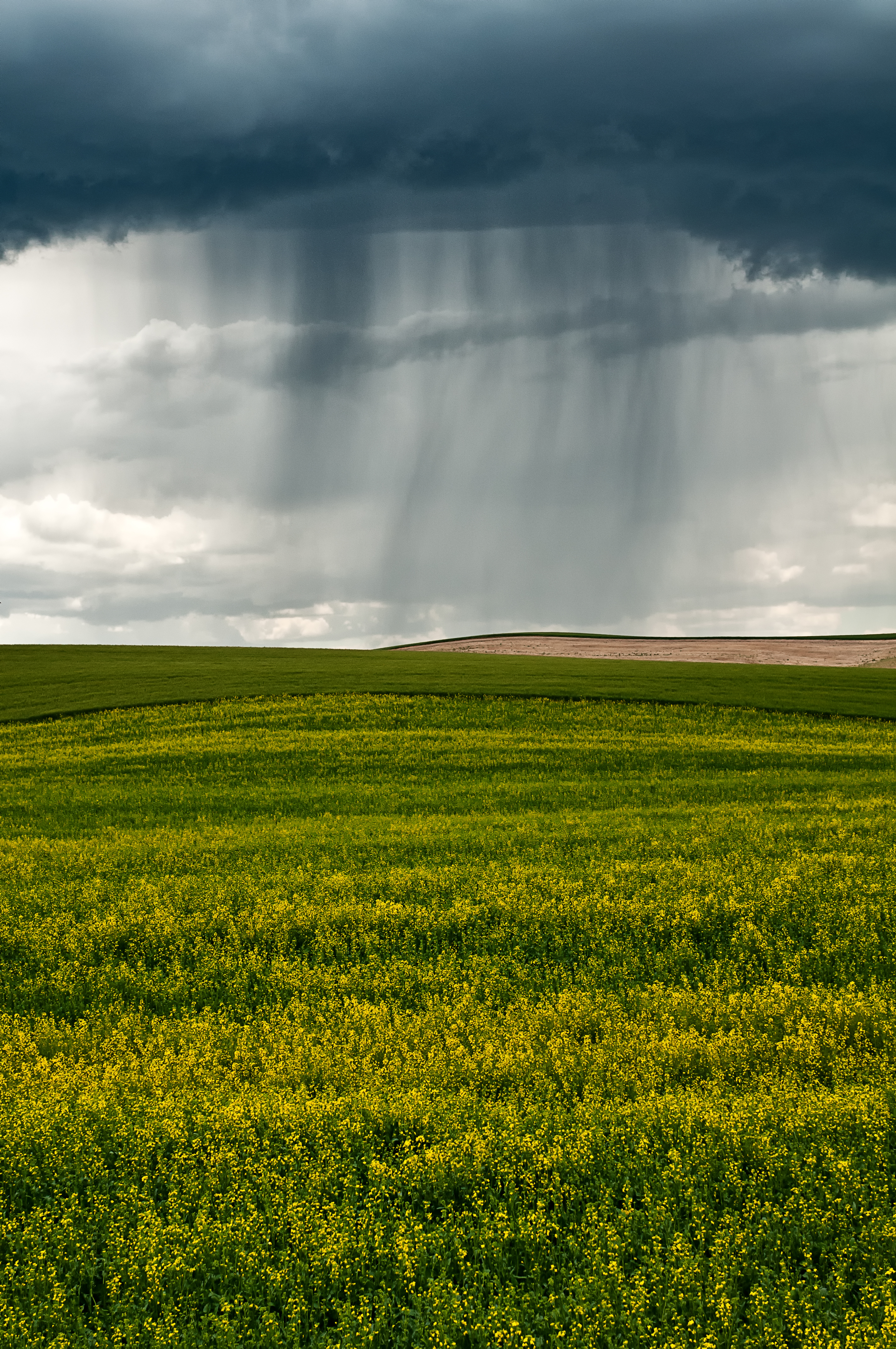
Spring storm

A storm o the prairie
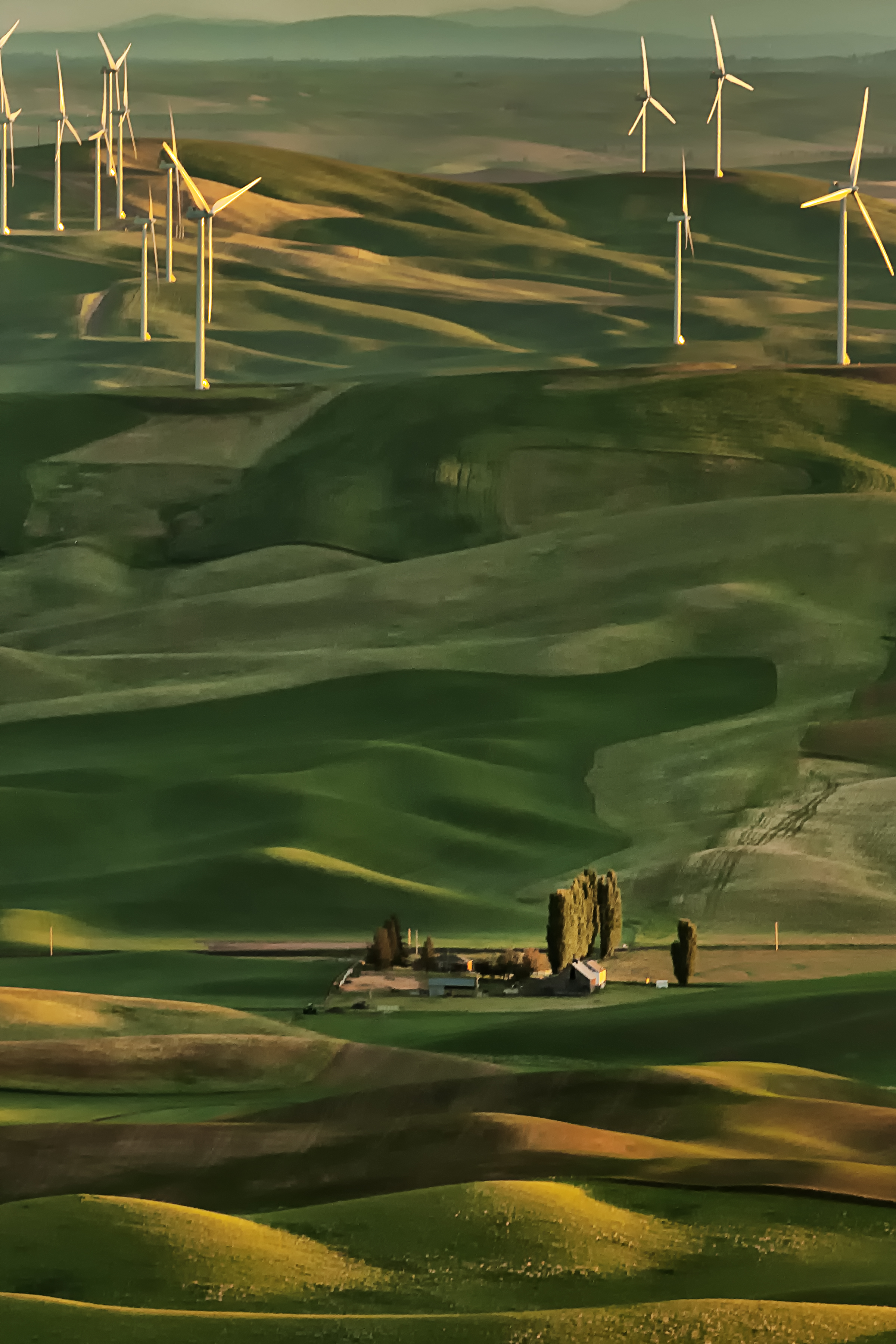
 

Wind power

Windpower

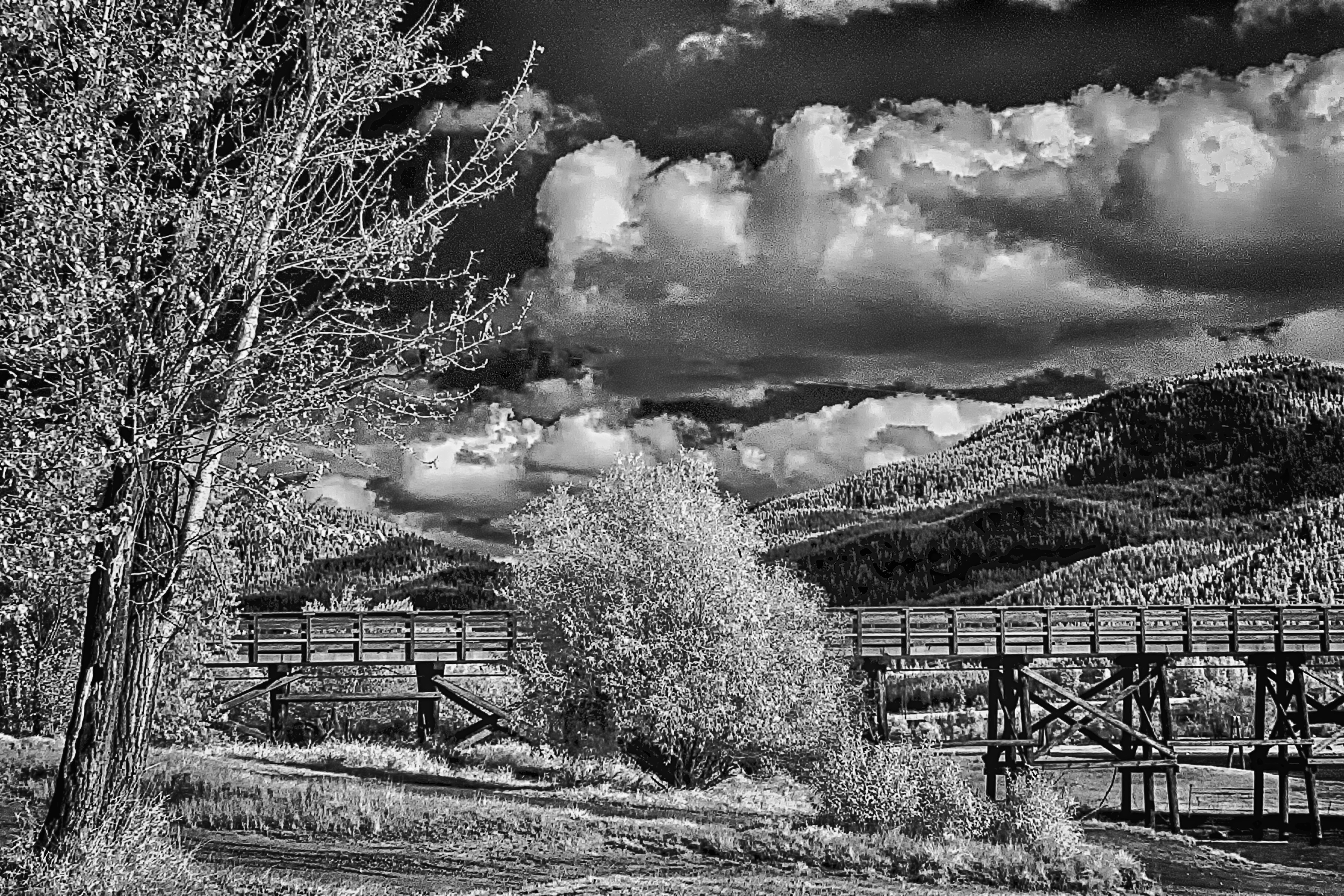
October Infrared

October walk in Infrared

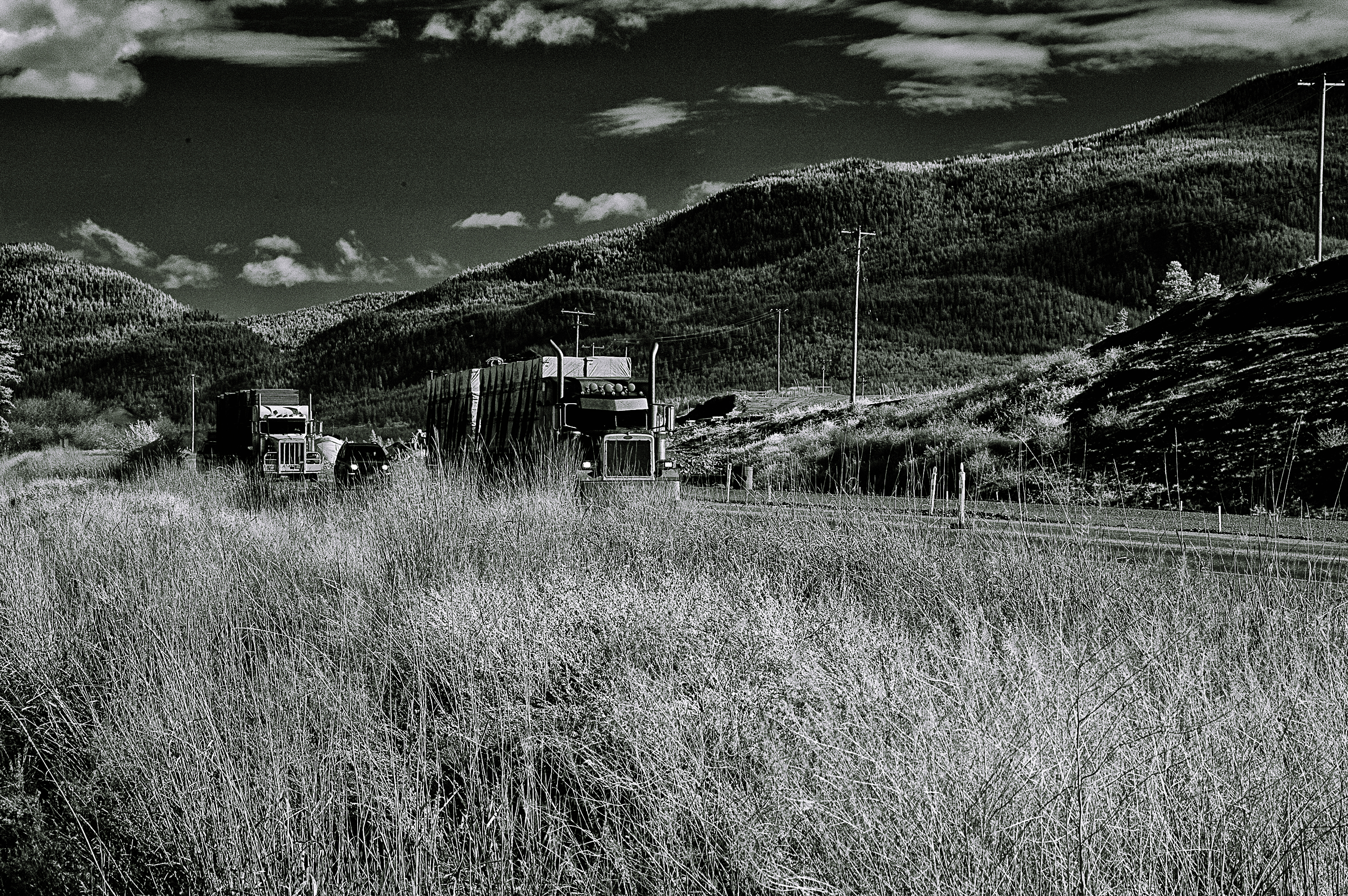
Trans Canada trucking

Trans Canada Highway – Infrared

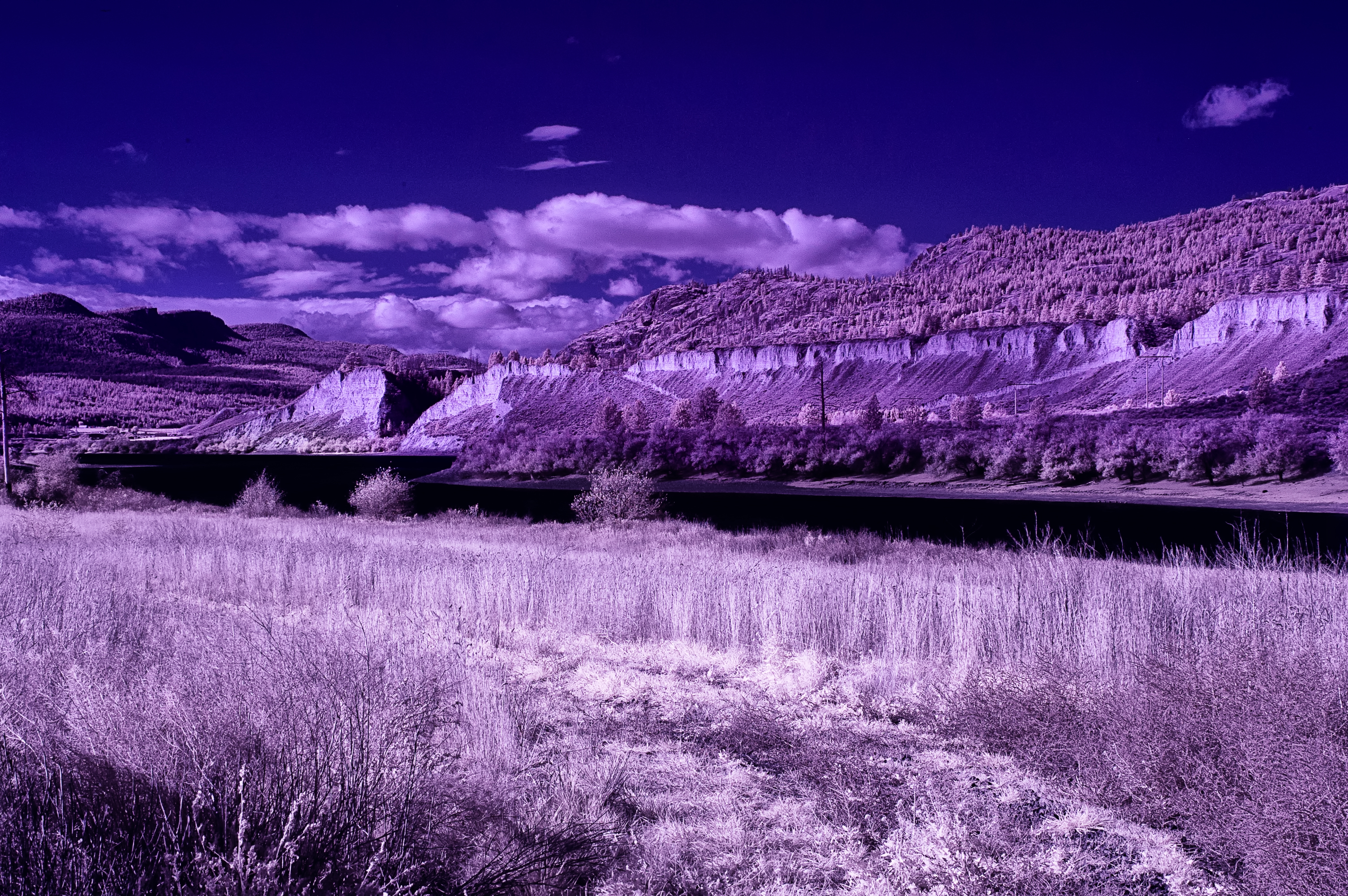
River bluffs

Infrared of Thompson River


I taught photography in the 1980s and 90s for the University College of the Cariboo (now Thompson River University) when the only way to make a photograph was using film.

In my lectures I informed students that as well as learning about their cameras, they must become proficient in negative development and printmaking. I would emphasize that those serious about the medium of photography would come to realize that what they did with the camera and the negative it produced was only the beginning, and that it was their final print that would set them apart as a photographer. And I would quote famous photographer Ansel Adams, “The negative is comparable to the composer’s score and the print…its performance…”

Film has now been discarded by most serious photographers, although I expect artists will use film creatively for years to come, nevertheless, even with advancing photographic digital technology Adams’ words from the past are still significant.

The digital camera isn’t making a picture in the sense of light permanently imprinting itself with different intensities on a chemically sensitized surface like film. Instead there are sensors and in-camera computers processing light from thousands of photosites that are transferred to computers as data files for conversion into countless pictorial possibilities. I have become, more than ever, of the opinion that like the negative, the RAW image file, is now the “score” to Ansel Adams – the photographic print.

I know there are those that haven’t bothered to move their camera selector off JPG (Joint Photographic Group). However, choosing JPG files means those images are pre-processed in-camera and the photographer loses control. I prefer shooting RAW (not an acronym like JPG, RAW is unprocessed data) and choosing RAW is like having the negative Mr. Adams discussed, affording us total control over those data files or, more importantly, allowing a personal vision of how the final photograph will look.

A young photographer that came into my shop last week got me thinking about this when, with some kind of misplaced pride, he announced he would never use PhotoShop on any of his pictures because he was only into true reality. Although I didn’t comment, I thought about the manufacturer’s presets that were applied in-camera to his image files, the sensor’s dynamic range of only about five stops from black to white and the very limited number of colour spaces his tiny JPG files gave him.

Some years ago I attended a print-making lecture during which one of the speakers said in the past he would get up early and drive to some scenic location hoping to capture an impressive sunrise, after which he would package up his film and send it to the lab and leave all decisions to an unknown technician’s personal vision. However, now he shoots RAW and transfers his image files to his computer and the decision has become his to control how his photograph will be processed for viewing.

As in the days when I processed and altered negatives in special chemicals and manipulated prints by adding and subtracting light, I now use computer programs to process my RAW images in my quest to perfect my vision of each. And I expect the same thing is true now as it was with my students all those years ago, that what they do with the camera is only the beginning, and to repeat Ansel Adams, “The negative is comparable to the composer’s score and the print (is) its performance…”

I look forward to all comments. Thanks, John

My website is at www.enmanscamera.com
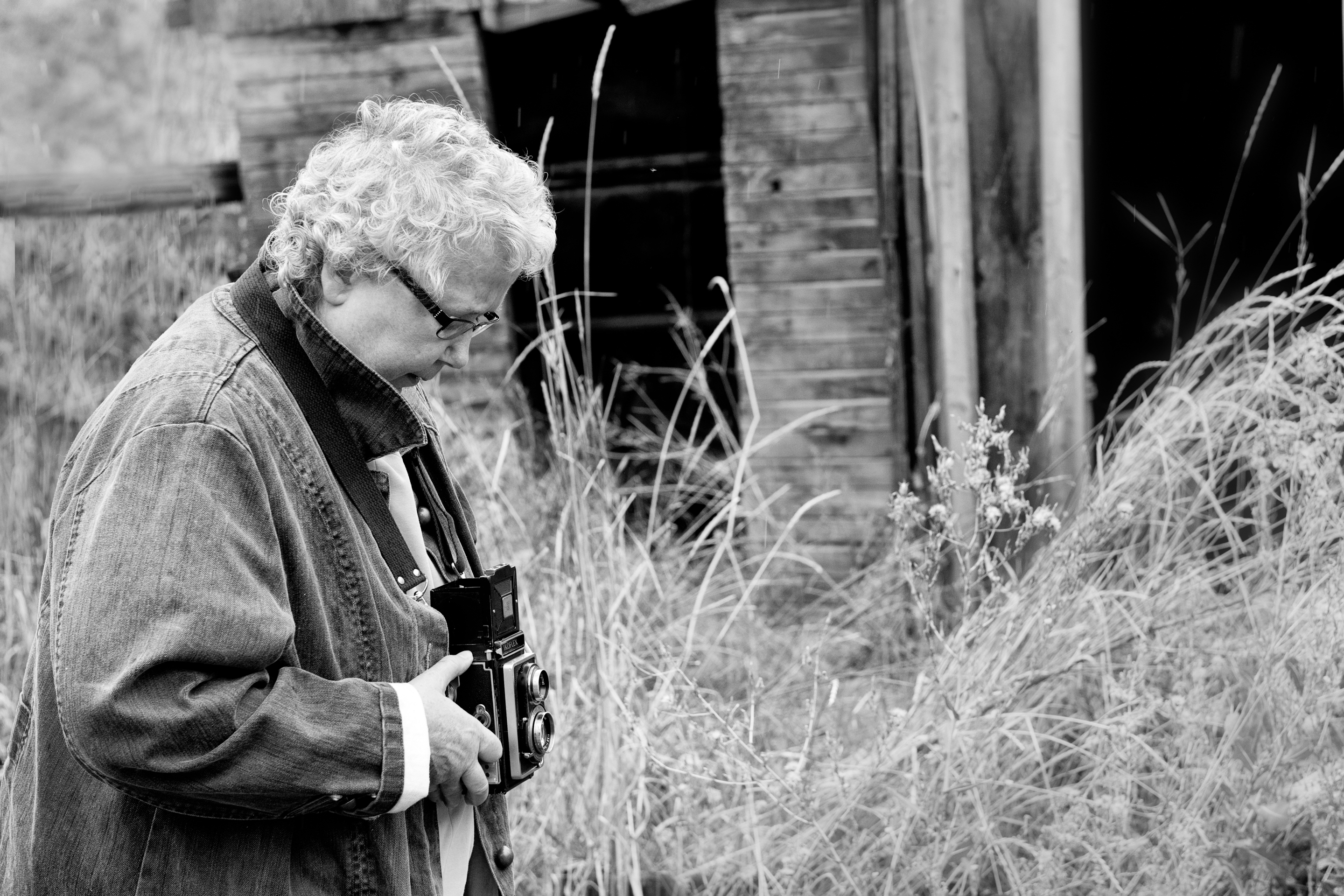
Revisiting Film and Twin Lens Camera

Using a Ikonoflex TTL camera

Photographic film is a strip of transparent material coated on one side with light-sensitive silver halide crystals called emulsion. The emulsion gradually darkens when exposed to light forming an image when light passes through the lens to reach it, creating a latent image in the light sensitive emulsion. This is then chemically developed as a negative image, and eventually printed as a positive image seen as a photograph.

Using film was a time consuming, and for many, an imperfect way to document the world. Nevertheless, for nearly two hundred years photographers have persevered and in spite of sometimes days, weeks, or even months between the initial exposure and the final print, learned to minimize the errors and present exciting examples of the craft, or art, to an appreciating public.

The good thing about shooting film is how it forces one to learn what each part of the camera is for before making a photo. Mistakes can get pretty expensive with a film camera so this forces photographers to learn quickly.

After about 30 years of earning a living using film I embraced the technological change to digital and had no intention or ever handling another roll of film. So when my wife informed me she was planning to get a medium format film camera and was going to begin shooting film I must admit to mixed feelings.

However, my wife’s reasons had little to do with film and more to do with finding a way to slow down the process of image making. She talked about getting more involved in the act of photography than the process of taking a picture. I knew exactly what she meant; many modern photographers seem to be more about the technology of photography, and instead of studying a subject for that perfect shot, will take the machine gun approach. And when asked why they released the shutter 300 times on their subject the answer is, “to be sure I got it”.

Linda will be limited to 12 exposures in her lightweight, German made, Ikoflex camera with a waist level finder. We’re all guilty of getting a little bit snap happy with our cameras, and taking loads of useless photos of nothing in particular just because we can. That’s not really an option with film (unless there’s more money then sense); one doesn’t thoughtlessly take a bunch of photos and transfer them to a computer.

There is the requirement for a decision making process before releasing the shutter – it can’t just be of anything. The added pressure of not wanting to waste money and time on film and developing forces a photographer to become much more careful in considering how to make the photo before releasing the shutter.

I welcome readers comments. Thanks, John

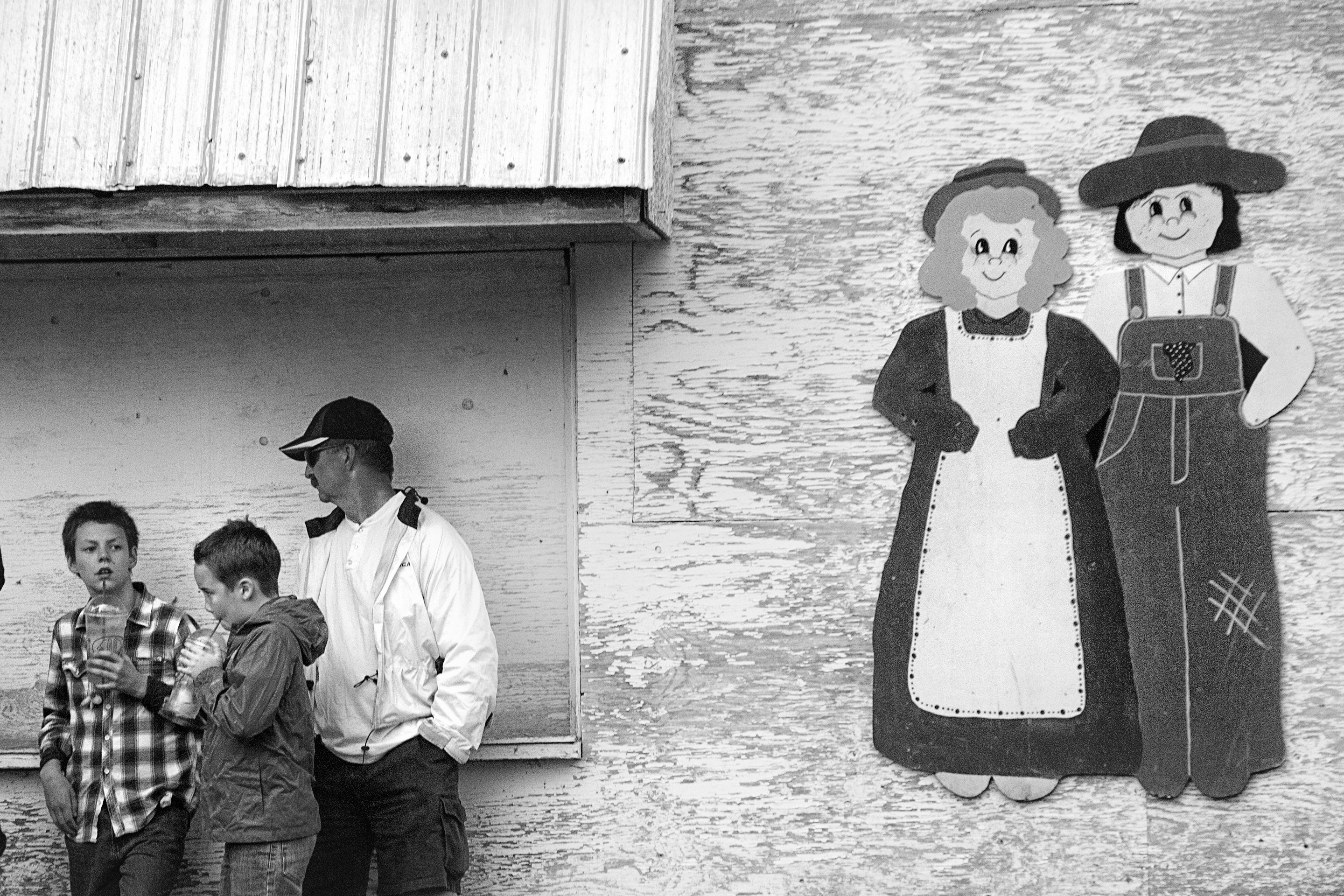
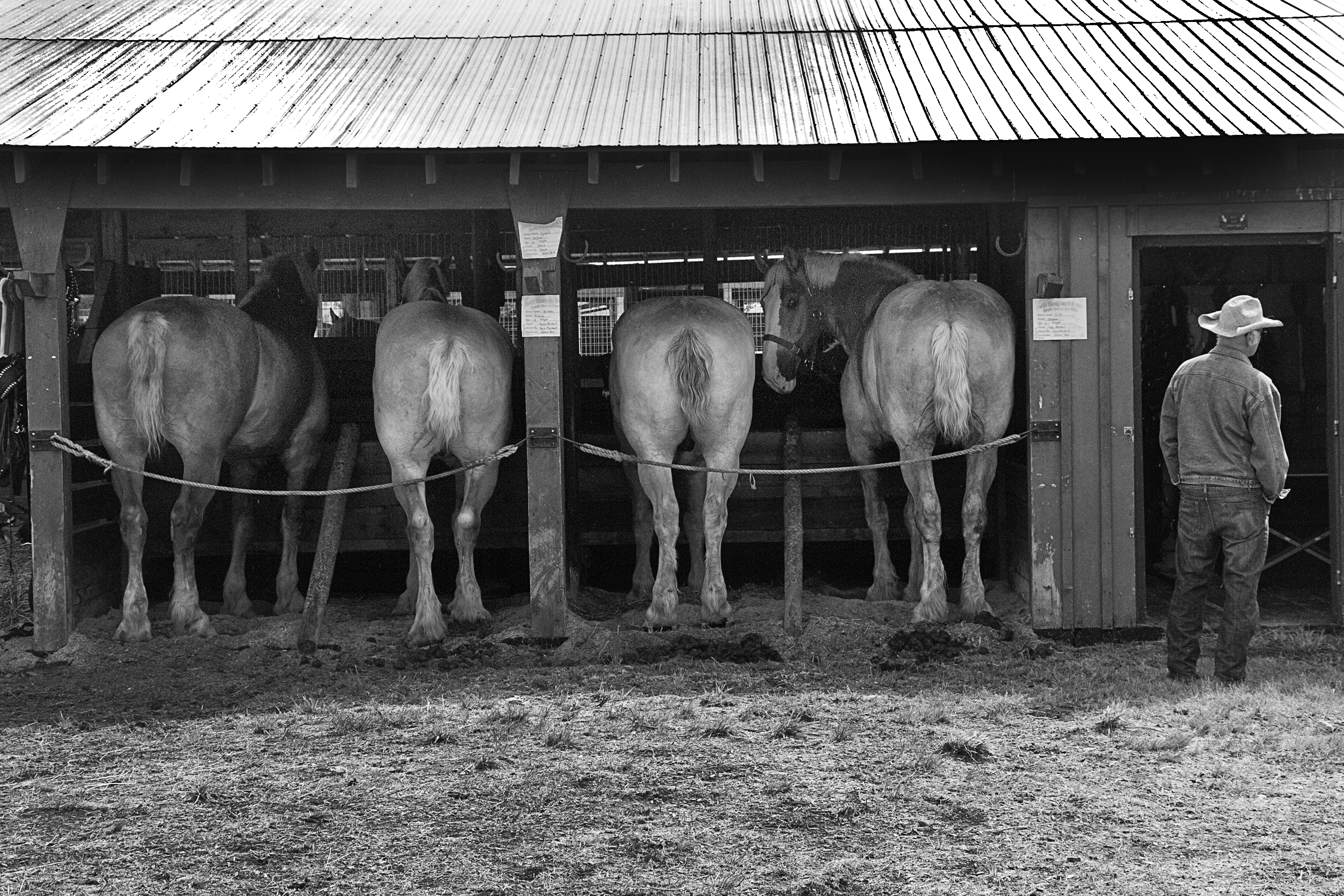
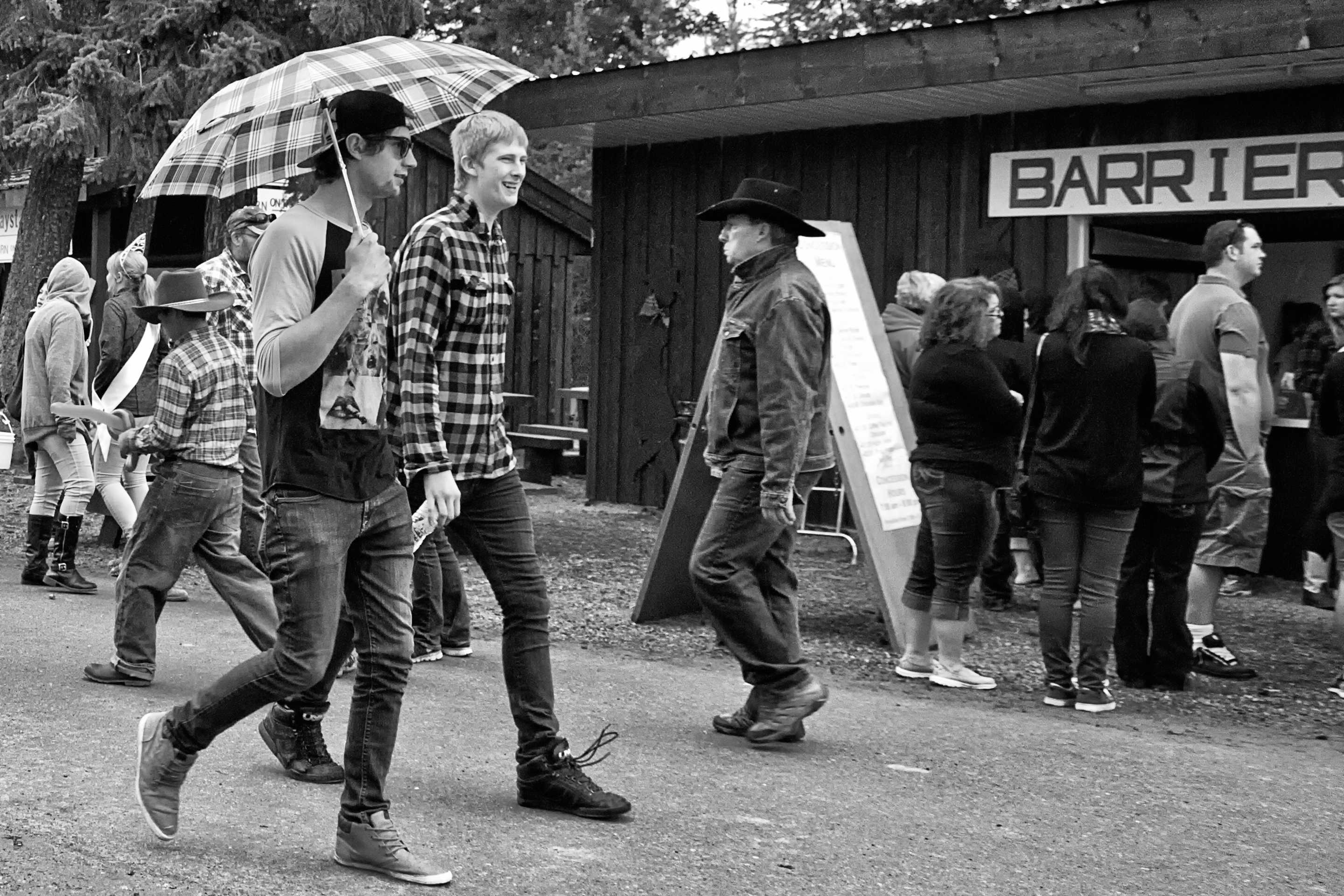
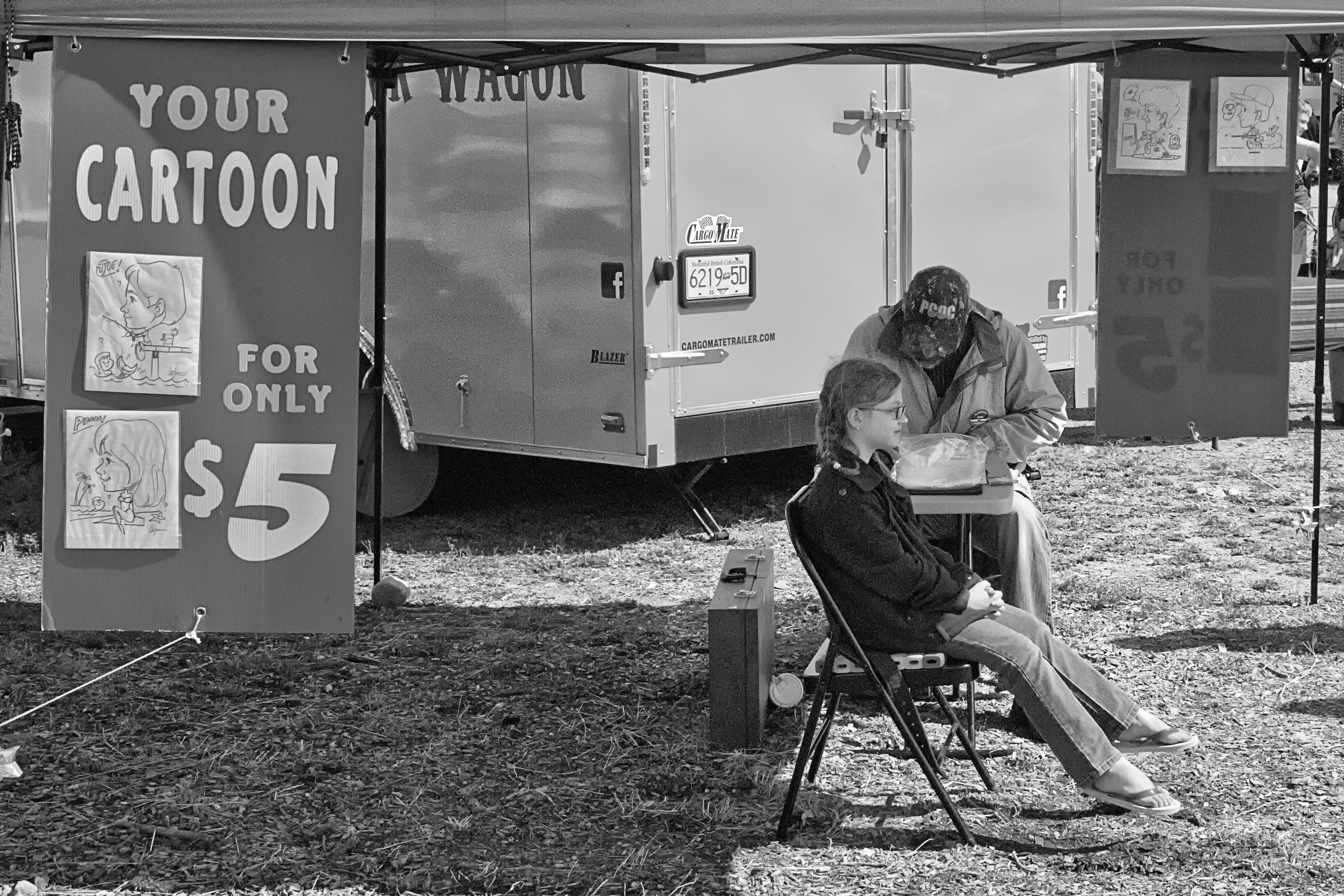
Street Style Photography at the Fall Fair

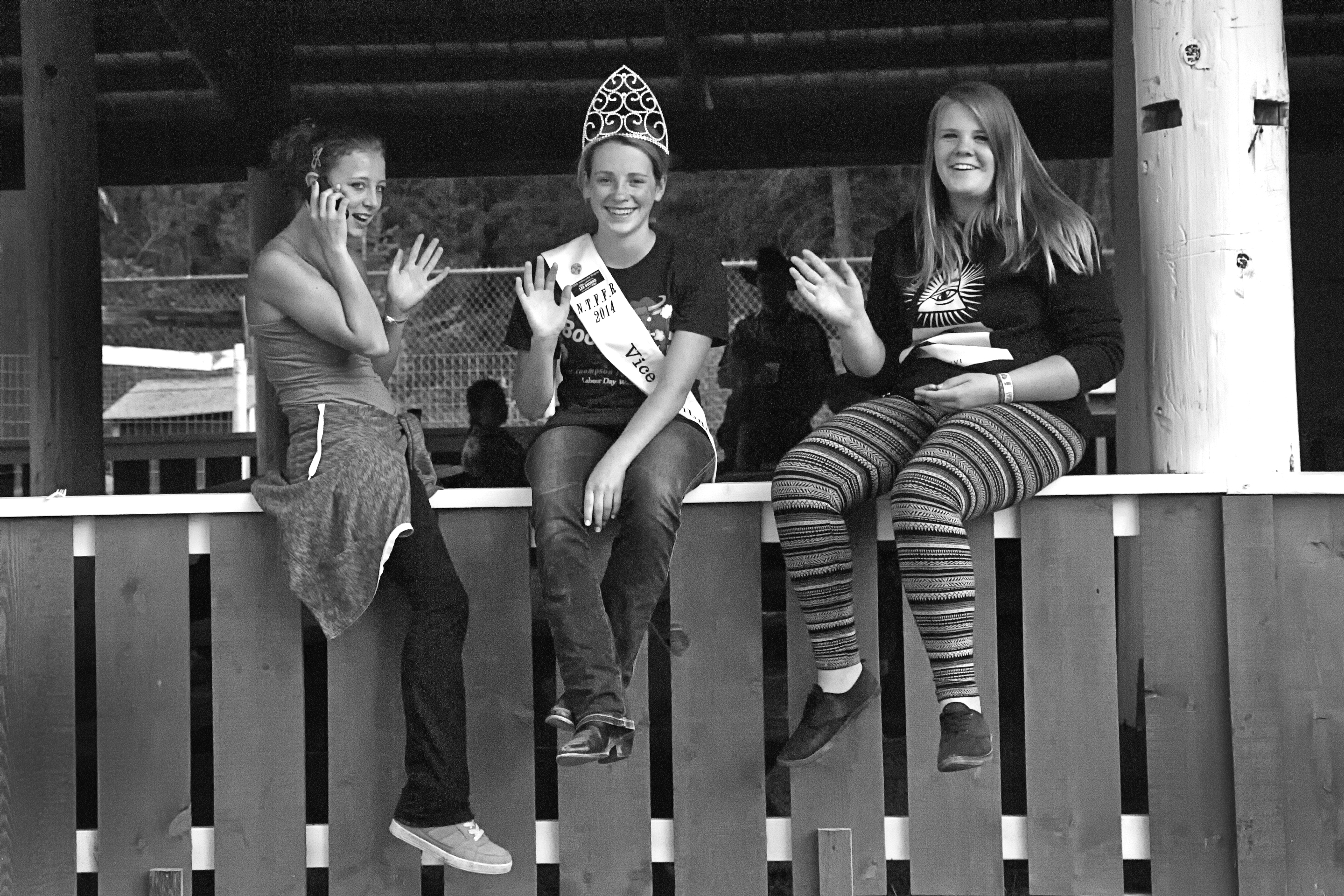
Royalty and Attendants

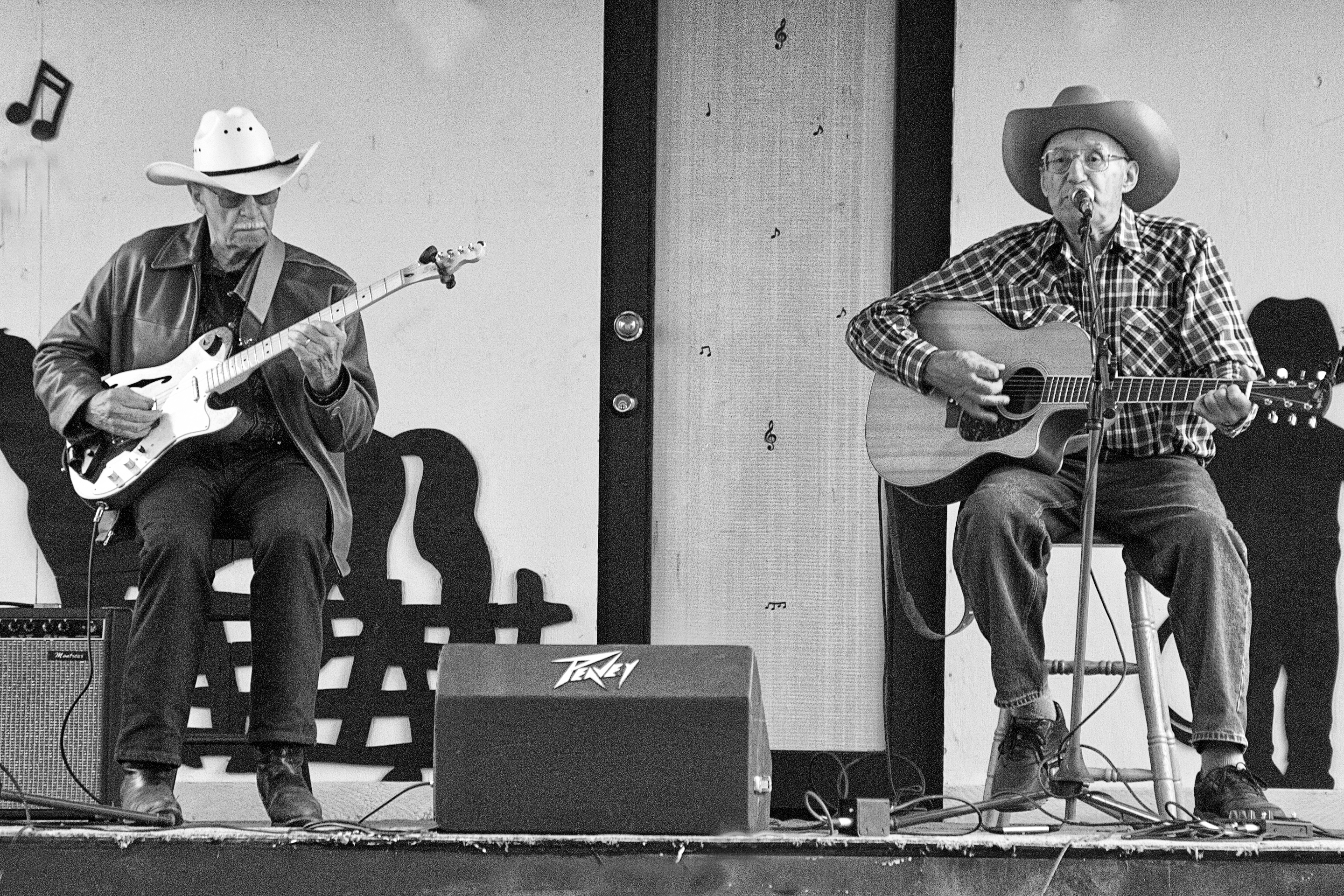
Country singers

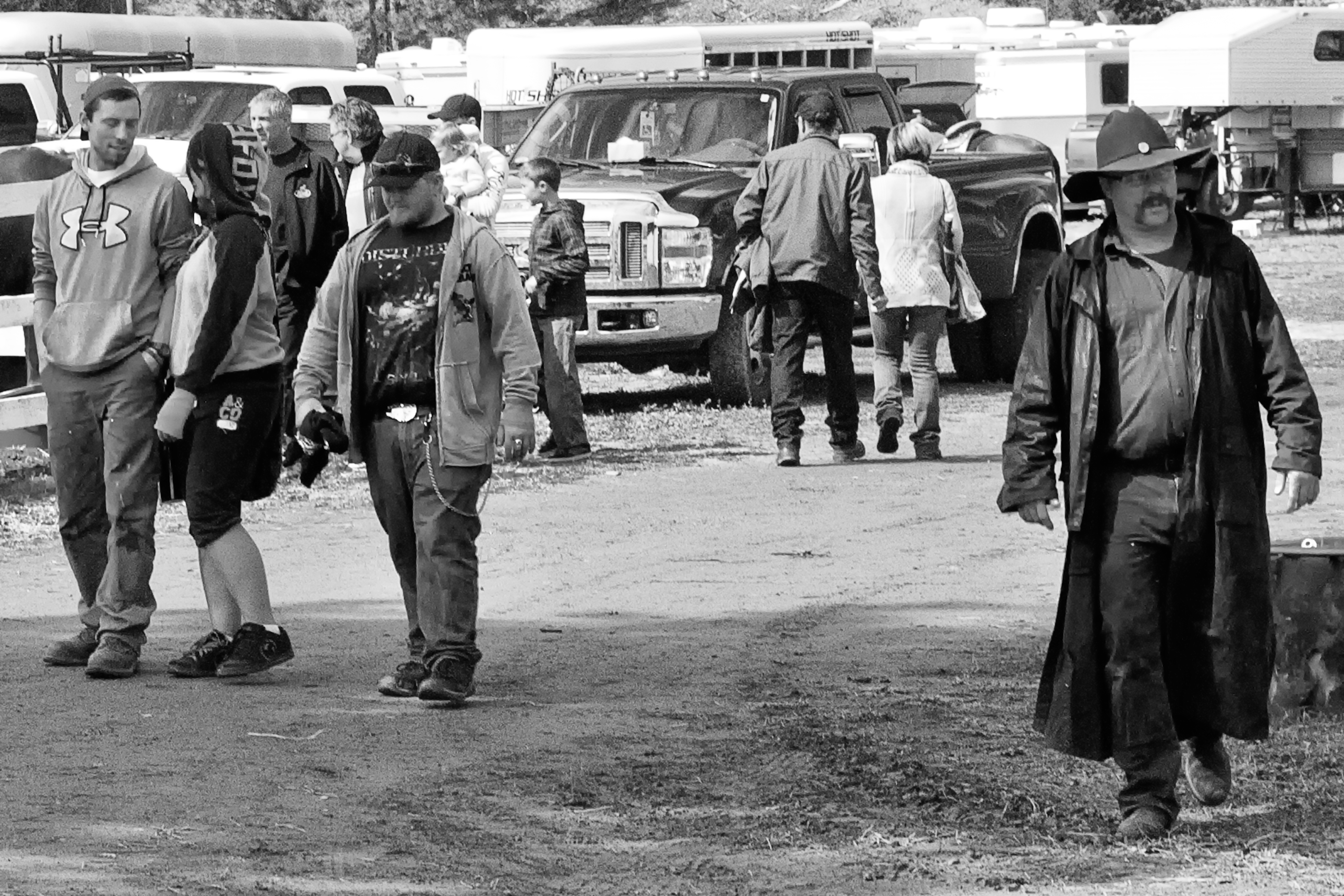
Cowboy in slicker

Mobile staff

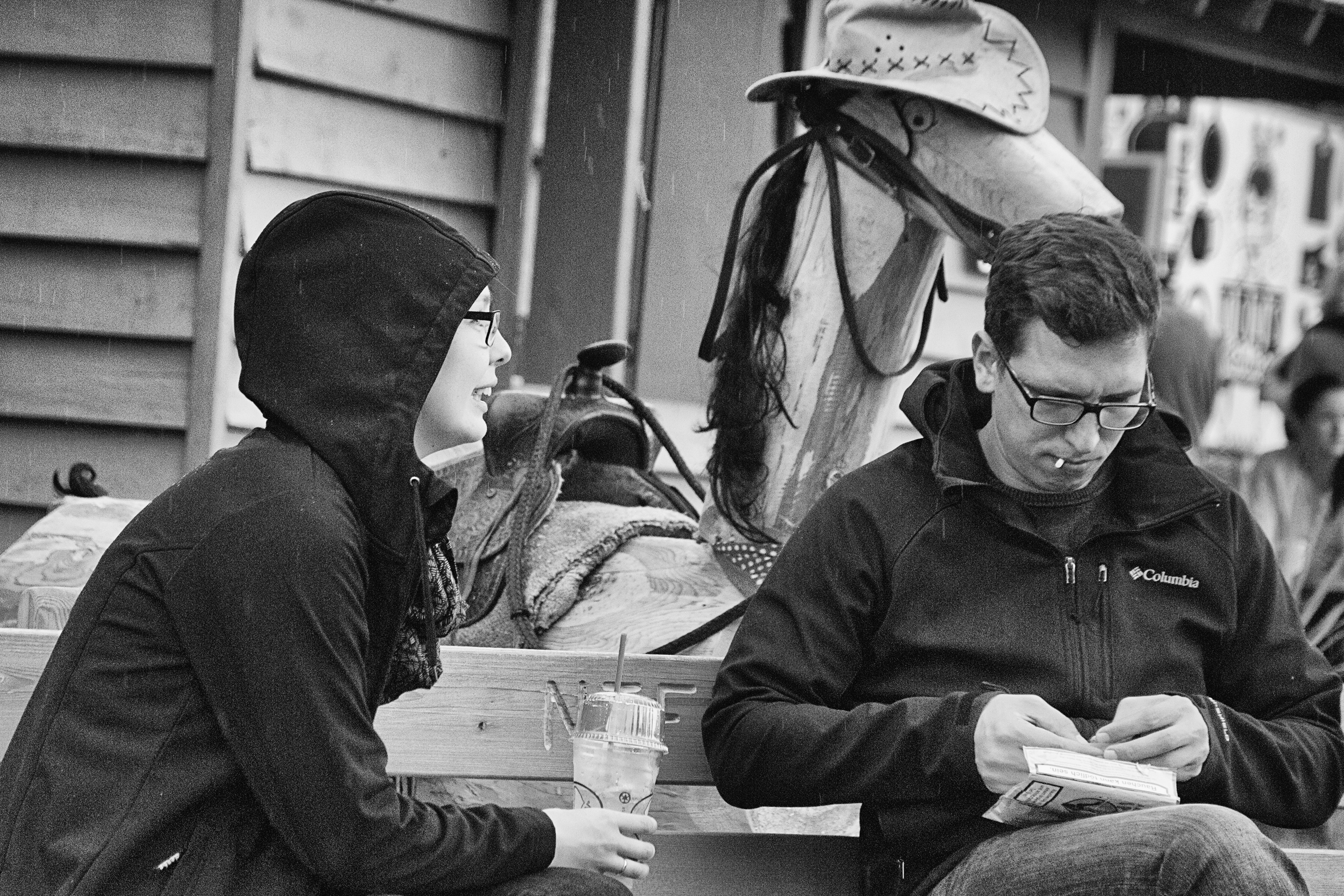
Wooden Horse listening

Waiting against the wall

Clydsdales

Umbrella guy

Your cartoon

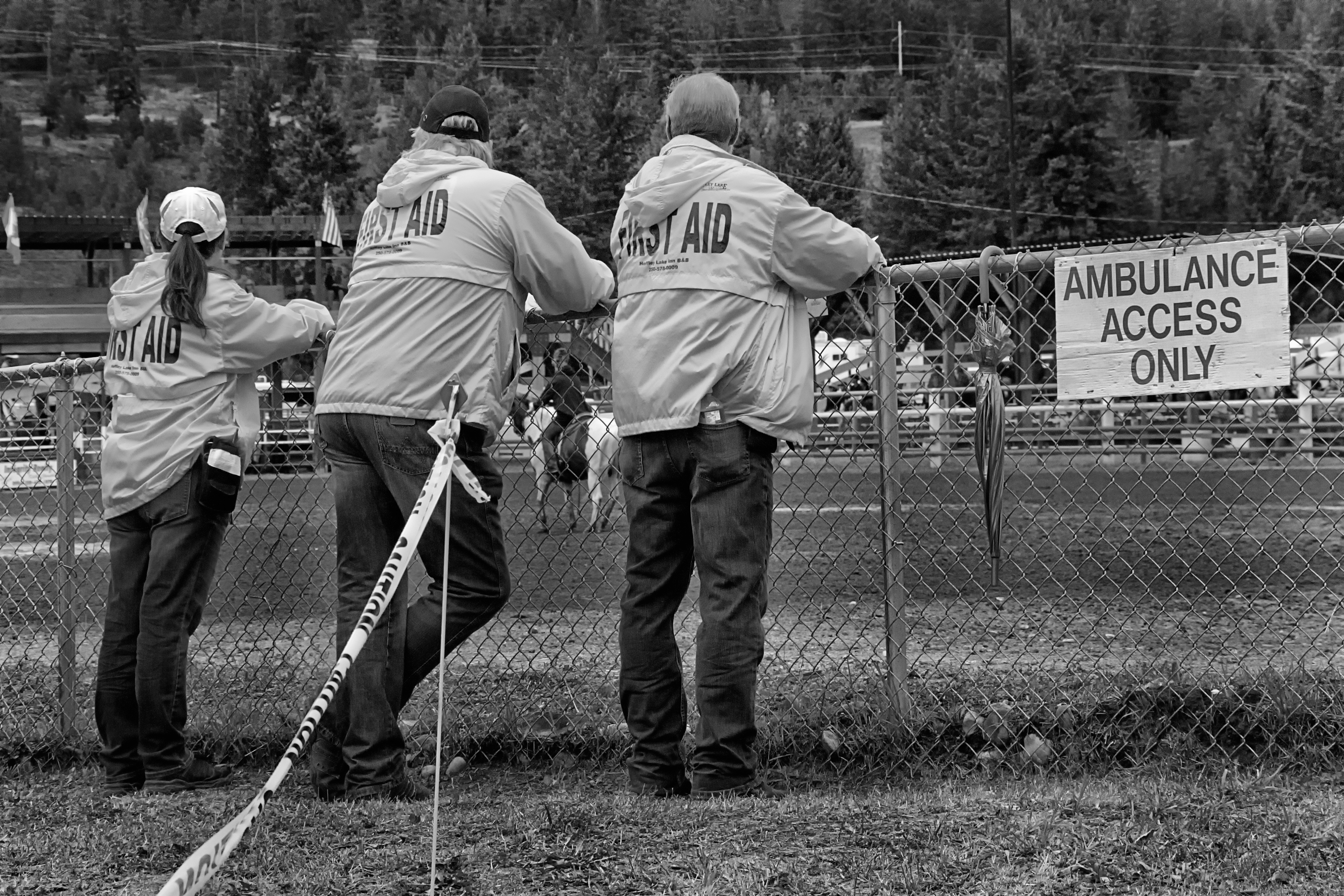
First Aid

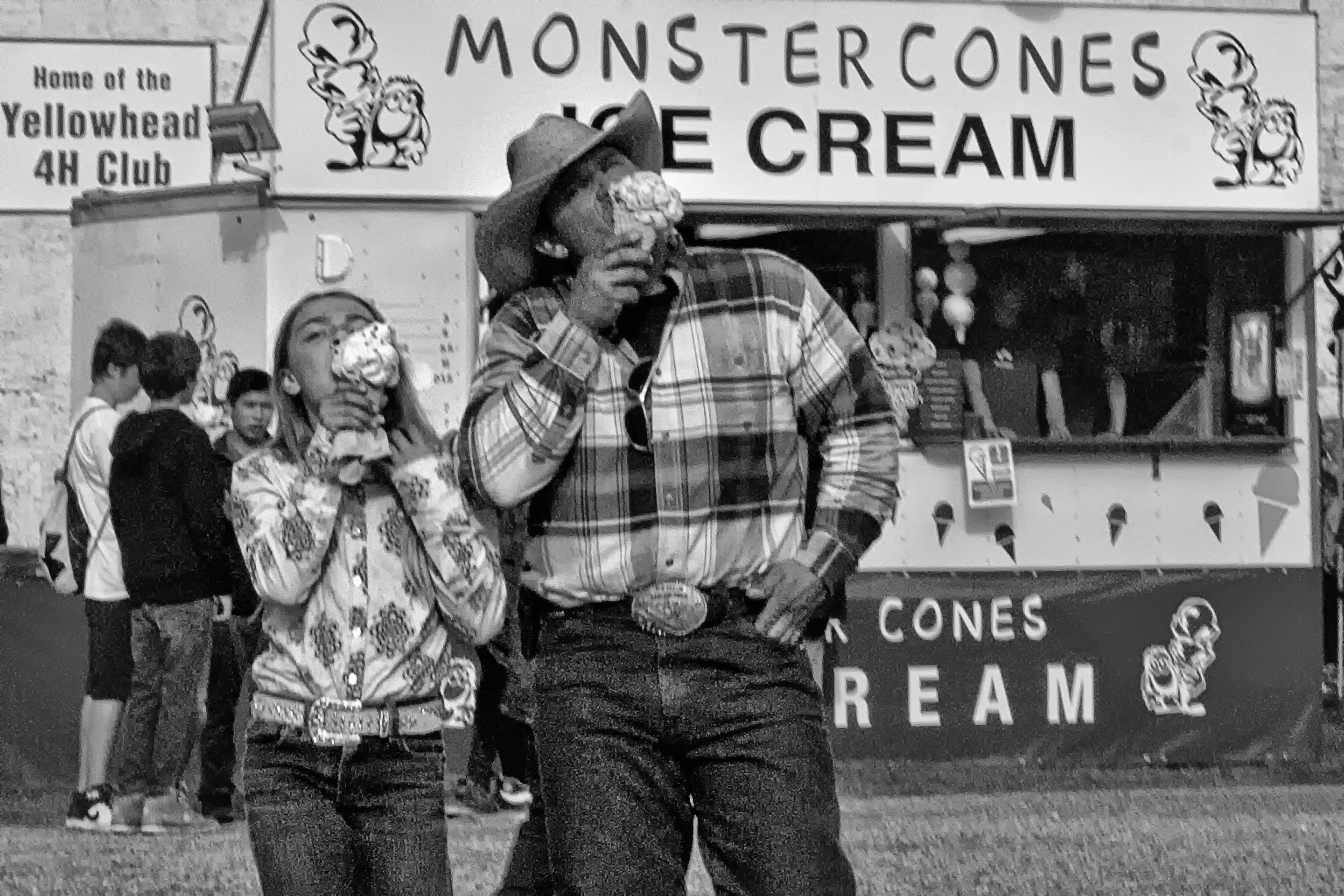
Monster Cones

“Every year when summer comes around

They stretch a banner ‘cross the main street in town

You can feel somethin’s happenin’ in the air…”

“County fair, county fair,

Everybody in town’ll be there

So come on, hey we’re goin’ down there…”

Bruce Springsteen – Country Fair


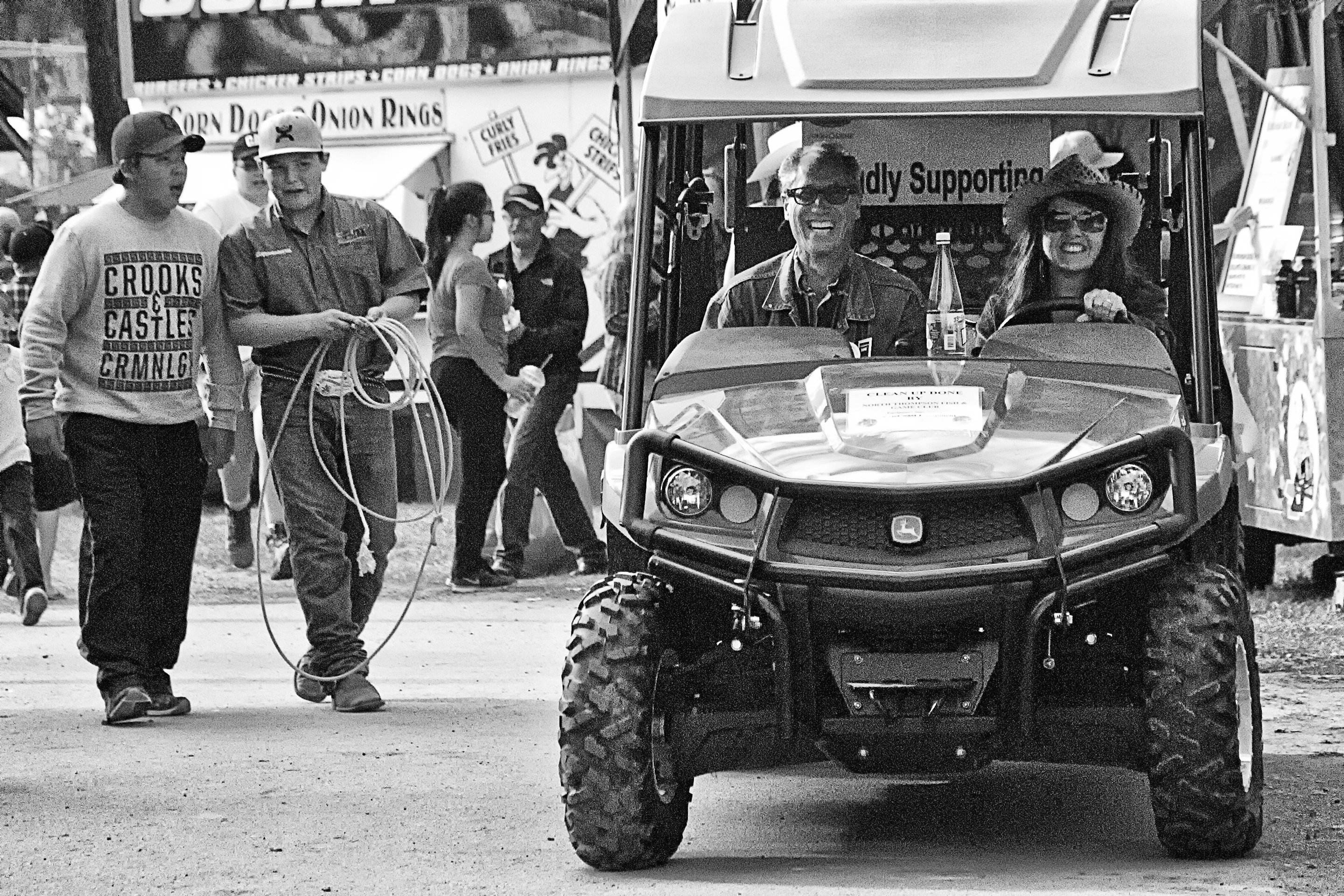
Where I live in British Columbia, the months of August and September see communities’ large and small hosting end of summer fairs. This year, same as last, I drove north to the small town of Barriere, parked my car, gave the smiling lady at the gate a couple bucks and strolled into the excitement of the Barriere Fall Fair packed with exhibits of local produce, poultry, livestock, all sorts of arts and crafts, lots of outdoor shows that included a rodeo, trick riders, several different horse competitions, an action packed midway with amusement rides, challenges for the children like wall climbing, and even a motorized bull that quickly dislodged even the most athletic of riders. There were all sorts of people selling cowboy hats, clothing, jewelry and too much more to list here. And one lady almost accosted me, demanding I try out her boot wax and leather preservative. (I will say my boots never looked better.)

Oh, and the food. The inviting and punishing, yep, that’s the word I am going to use for the smell of all kinds of mouthwatering foods that one confronts as far away as the entrance gate. Enticing everyone to make the next stop at one of the food venders.

The picture making possibilities immediately assaults those of us with cameras. What to photograph? Well, it’s all exciting.

Last year I spent most of my time photographing the rodeo, but after discussions and encouragement from the many photographers I have met online that excel in street photography, I decided to dedicate my time this year to photographing the people I saw wandering or performing in the midway.

I have written before about my admiration of those that are proficient at wandering city streets creating stories with the way they photograph the people. Readers will recall I discussed my frustration last summer in Anacortes, Washington when I tried using a DSLR with a big 24-70mm lens mounted on it. People saw me coming with that big package and when I got close enough to grab a picture they almost leaned towards me to see what I was photographing. No chance of being inconspicuous or assuming stealth mode.

This time I brought a cropped frame DSLR and 105mm lens and extended my camera strap so I could point and shoot from the hip as I released the shutter. I think I can hear the laughing coming from some of those more skilled and experienced at this type of photography than I. Yep, I had little control over what I was aiming at. I did get some viewable shots, but I also got lots of images that showed the top of people’s heads and a great quantity of sky. How did those gunslingers in the old west hit their target?

Maybe I need to put some beer cans on a fence rail and practice like I saw actor Alan Ladd do in a movie I watched last week. Or better yet, I have a friend with one of those exciting little Fuji 100 cameras. I wonder if I took beer cans (full) over to his house instead of putting them on the fence, I could convince, or bribe, him to lend that camera to me next time I want to try.

I searched online for some street photography tips. Here are a few I could find.

  1. Use a wide-angle lens.
  2. Get close.
  3. Look for juxtaposition.
  4. Focus on the essential.
  5. Look for the light and shadows
  6. Look at the foreground and the background.
  7. Tell a story.

Street photography, whether at an event like a country fair, in a bustling city, or on some quiet back lane, is about photographing society around us. Some photographers’ shoot for the challenge, and some wander the city as a release of stress from everyday existence, and others because of their need to make some statement about the world in which they live. I wonder at the “Decisive Moment” of prolific French photographer Henri Cartier-Bresson, or the journalistic style of Leica toting Robert Doisneau, or the harsh images of marginalized people by Diane Arbus. They, and many others have left us with their own styles of street photography that affect each viewer on an emotional level.

I look forward to any comments. Thanks, John

Judging Barriere 4H Photography

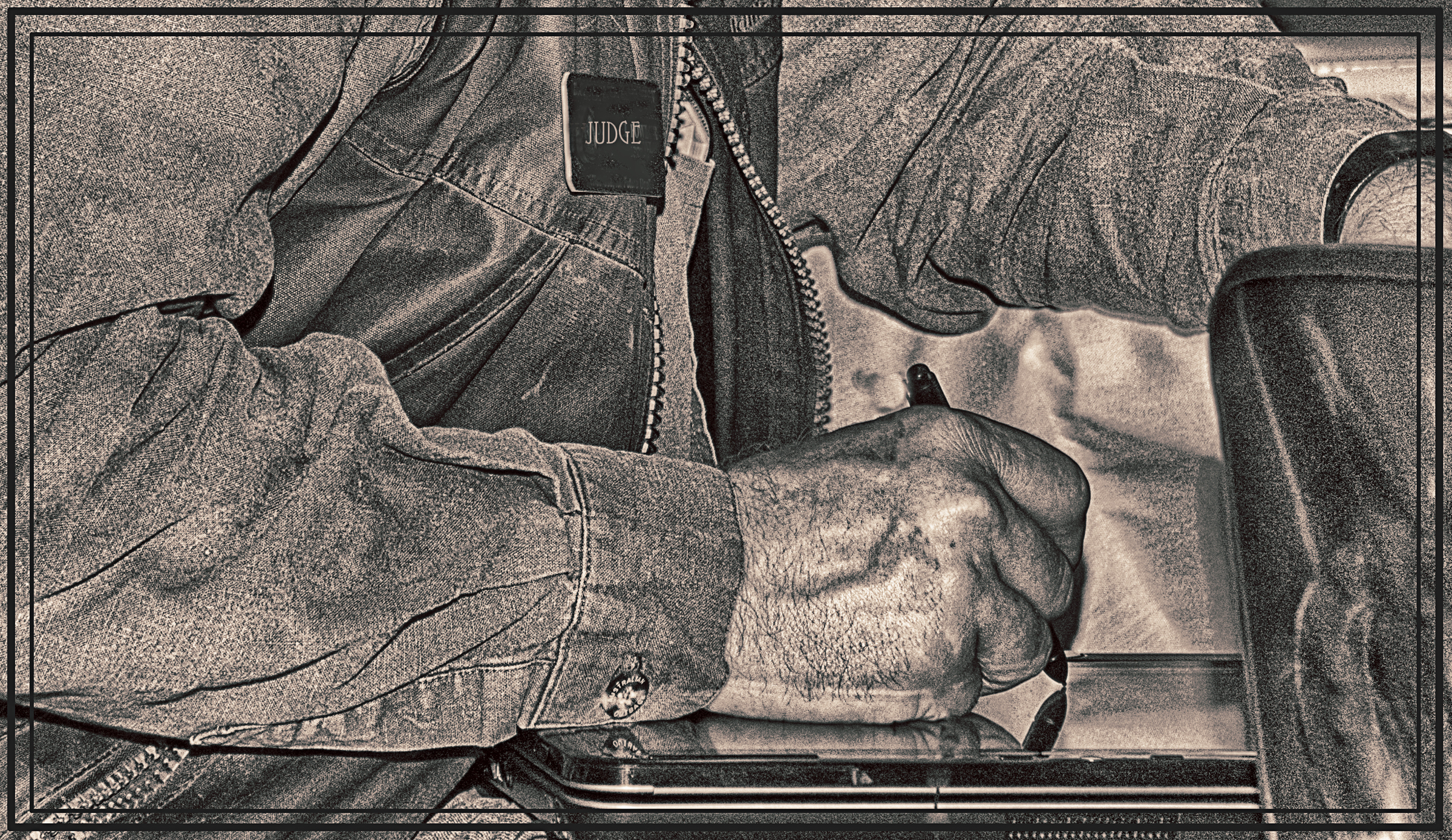
The Judge

On the Sunday of the September long weekend I spent an enjoyable day judging the Barriere 4H club members photography presentations at the North Thompson Fall Fair.

Although I have taken on the role of judge many times before, I am still slightly uncomfortable in a formal critique. Just looking at a photograph and discussing it, even placing a grade on it, as I did for years as a college instructor, is easier because everyone is competing with themselves. But when choosing a first, second, and third place is a competition about who is better, one has to work very hard not to be influenced by personal feelings, taste, and opinions on the subject.

Most photographers seem to think a photographic “critique” means “to find fault with.” I don’t think that’s right. When one critiques another’s photograph they should be analyzing its strengths and successes. What doesn’t work is important and should be part of the discussion, but the main concern is what works, not, what doesn’t work.

This was my first time with the 4H club. Photography in this instance was set apart from the other events at the North Thompson Fall Fair that included animal husbandry, and the judging was, in my opinion, more about the young member’s personal development in photography and how well they could adhere to the guidelines than how good their individual photographs were. Although unusual, the process was interesting, and I think valuable.

I will say that the quality of the photography was surprising for such young individuals. I was able to pick out specific interests and strengths in each of the young photographers. Yes, like all photographers, I expect those that are serious about the medium will undergo growth as they become more experienced with their cameras, and experiment with the medium of photography in general.

What is a good photograph?

“Life” magazine, “Time” magazine, and “People” magazine photographer, John Loengard, said, “It is not important if photographs are “good.” It’s important that they are interesting”.

Anyone who wants to take better pictures should focus on the fundamentals, and a successful photographer must have an understanding of composition and lighting because what is important for the viewer is how the photographer composes (or arranges) the image, and how the light is captured, both which sets the images apart.

William Reedy, in his book, “Impact Photography for Advertising” writes about how the successful photographer must, “…stop the eye…(and)…set the mood…” I have liked that quote for years. And I am pleased to say that there were some of those young 4H photographers that were able to accomplish that and I hope I get to see their again photography in the future.

Thoughts on Street Photography

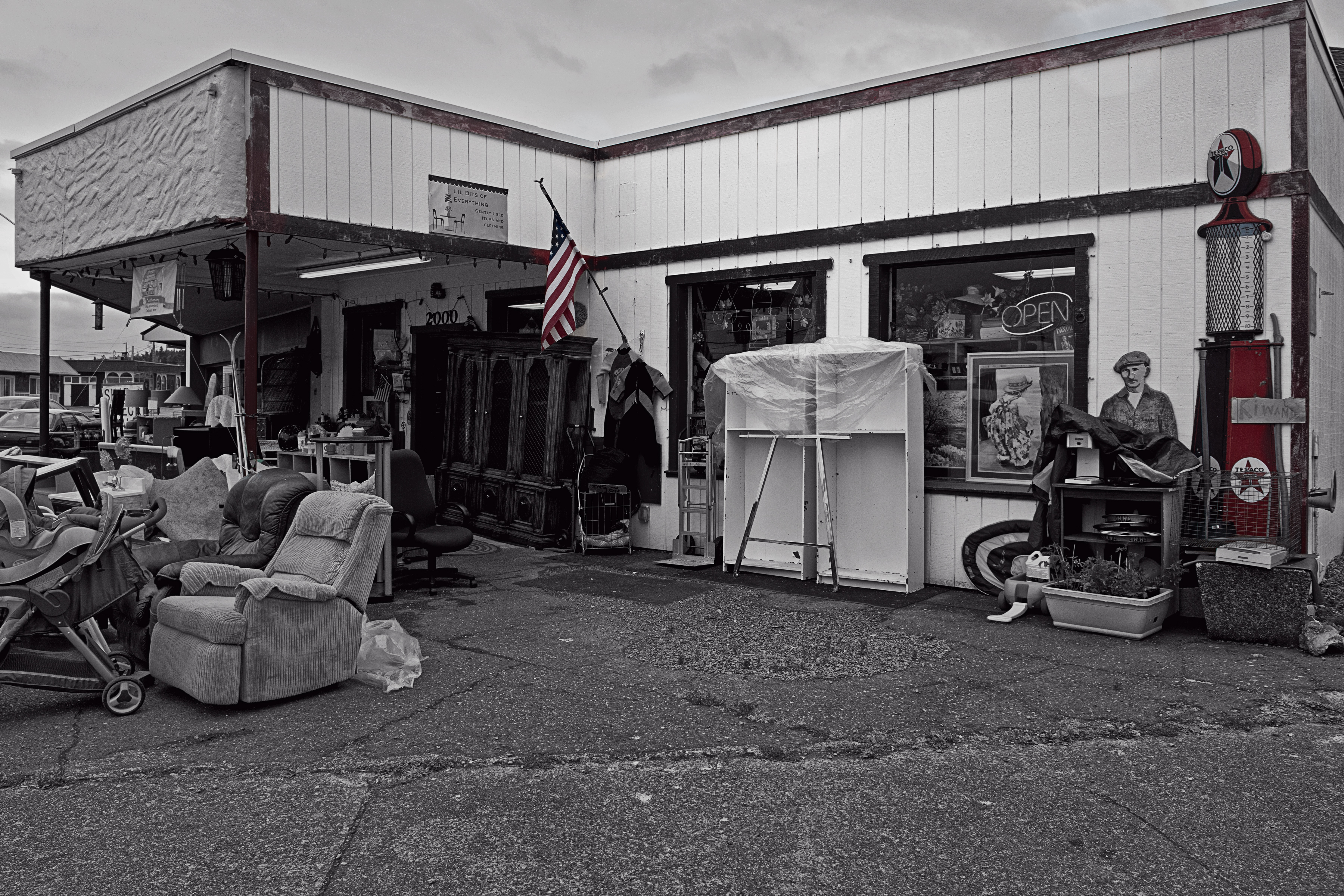
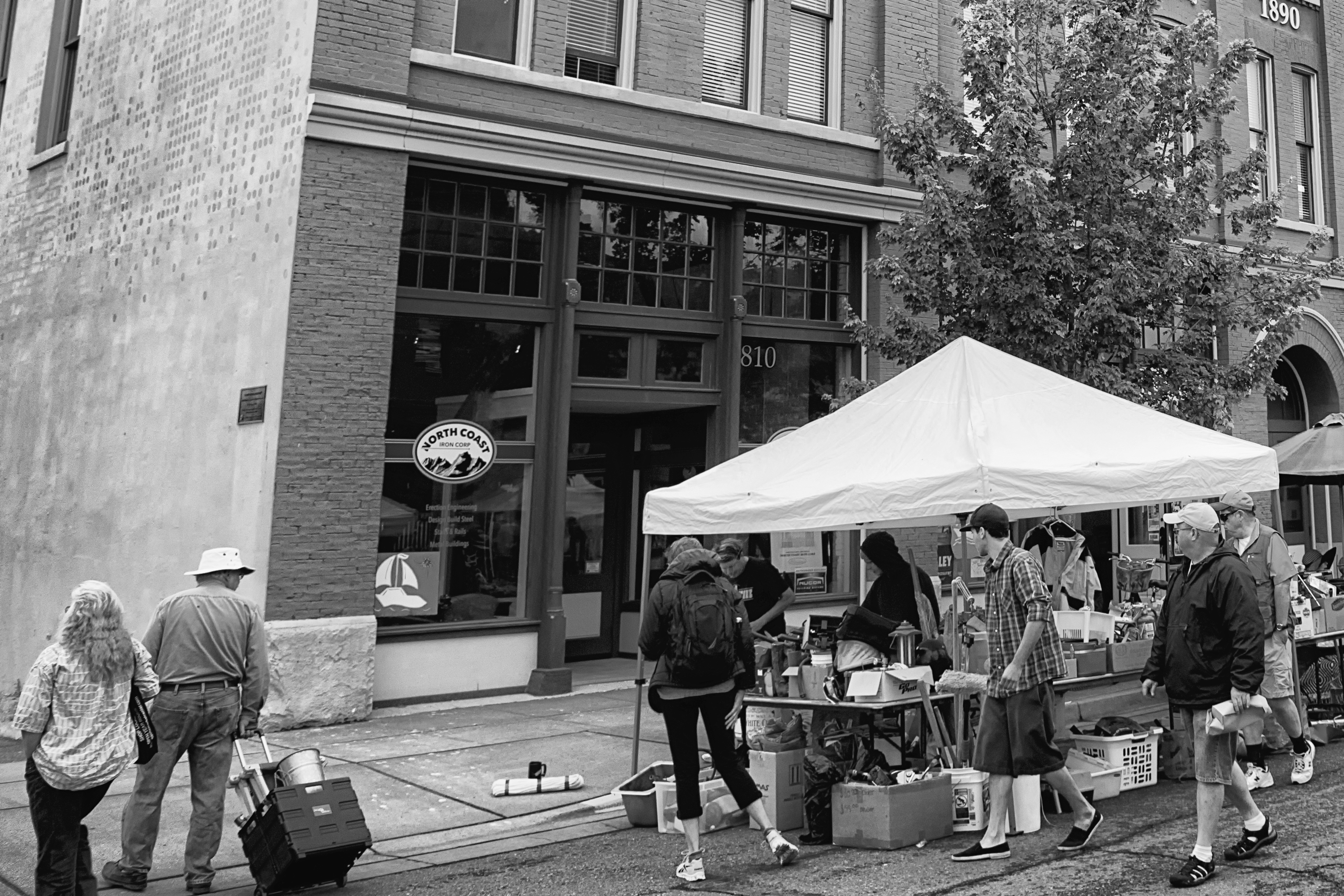
Thrift shop

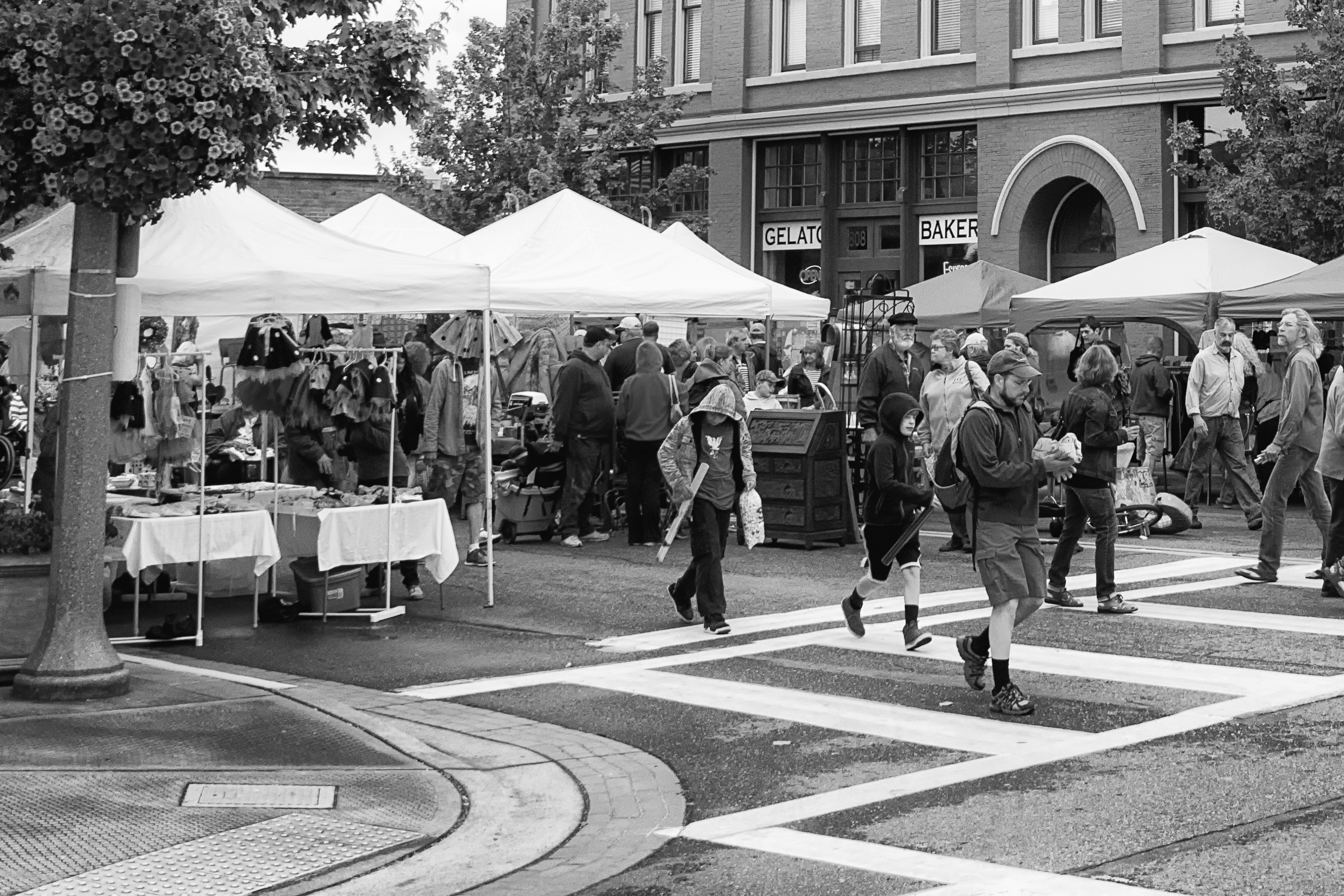
Great shopping

Bakery

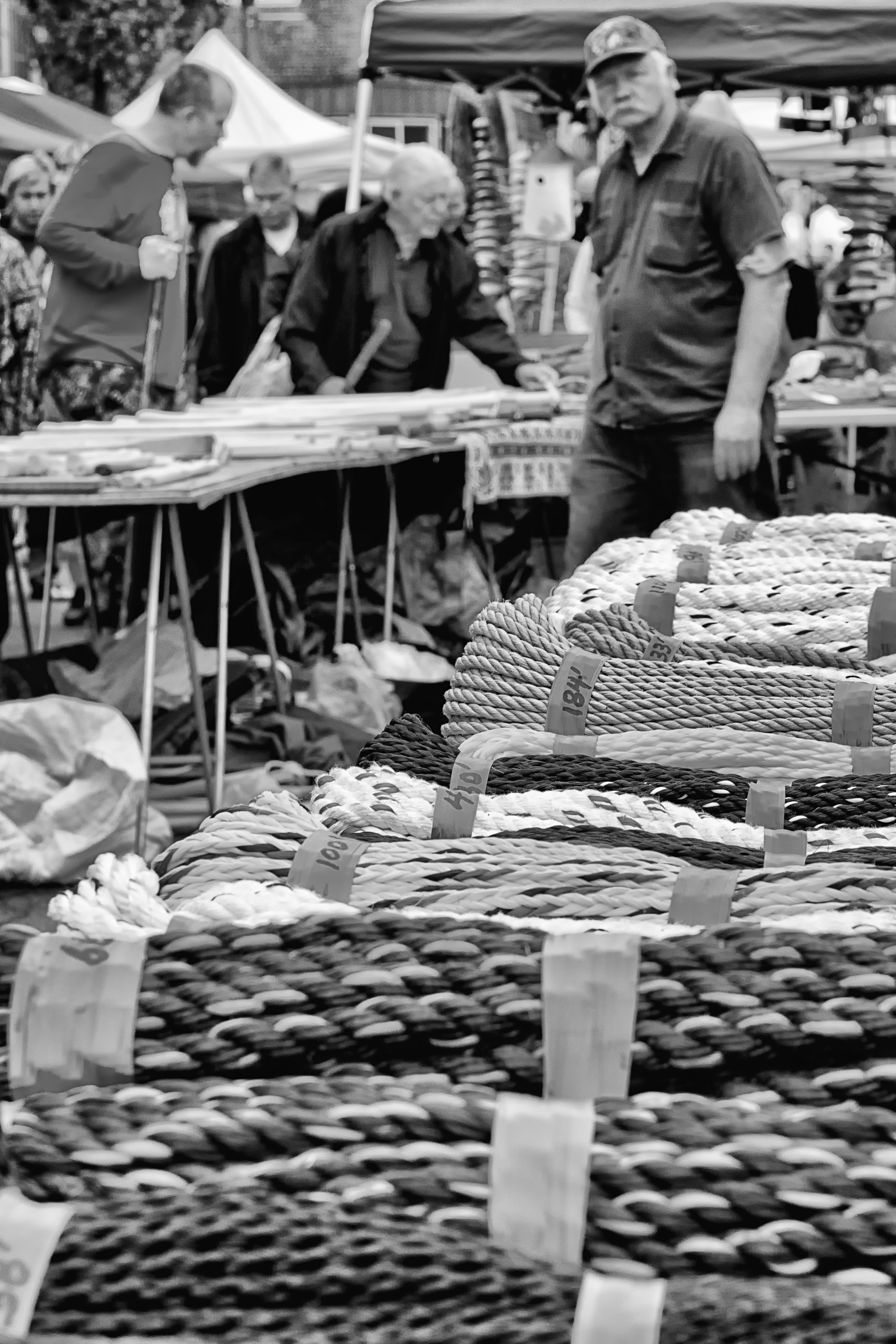
Rope guy

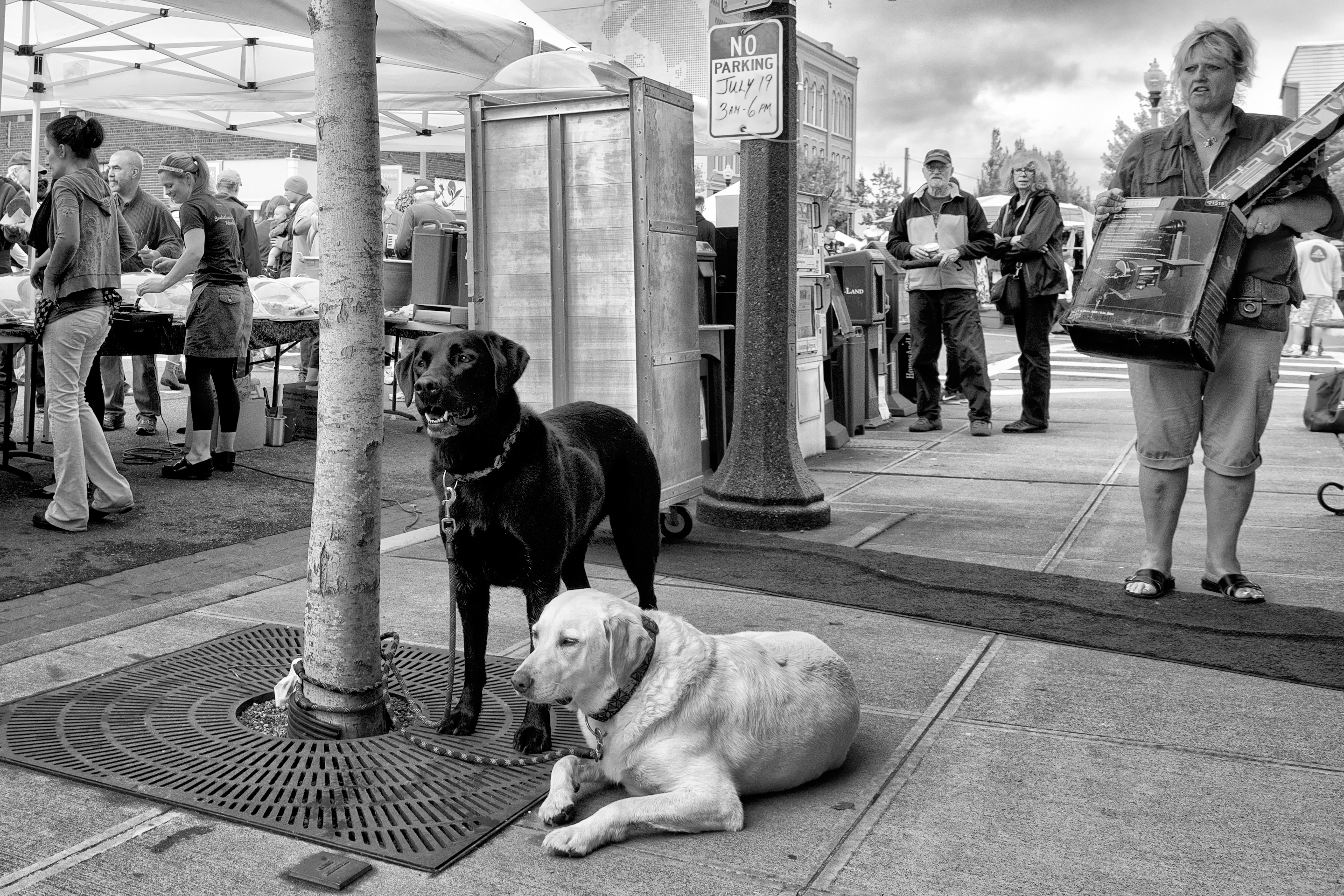
Waiting at the Festival

Of all the recent trends that has increased in popularity since digital cameras, it is street photography that intrigues me the most. Street photography is not a new phenomenon and has been around since the beginnings of photography. Just check out the work of French photographer Eugene Atget in the late early 1800’s, or Fred Herzog’s photos in 1950’s and 1960’s Vancouver, Canada. In spite of the long history the pastime is still a niche in the broad spectrum of interests that photographers have. However, I am spending more and more time viewing intriguing images of life on streets around the world captured by talented modern day photographers.

Wikipedia says, “Street photography is an art photography that features the human condition within public places and does not necessitate the presence of a street or even the urban environment…The origin of the term ‘Street’ refers to a time rather than a place, …when workers were rewarded with leisure time…and people engaged with each other …more publicly and therein the opportunity for the photographer.”

I’ve never been good at street photography. I have made a few pictures worth viewing, but I become more occupied with man-made things and get side tracked with some building’s shadow and miss those interesting people shots captured by photographers adept at seeing what I pass by.

On my recent visit to Anacortes, Washington, I did try a bit, but I quickly realized that with my big DSLR camera I was attracting too much attention. Whenever I stopped people slowed, turned to face me, and watched.

Since I started discussing photography on-line I have come in contact with some very skilled street photographers and regularly visit their blogs and websites to view their creative work. Those photographers don’t usually add comments, letting their work speak for itself, however, I found a discussion by Los Angeles street photographer, Eric Kim, and the following are some of his thoughts on being a street photographer.

Mr. Kim writes, “…When you start off in street photography you will be inspired by all these other photographers you see. You will look at their work and be amazed by their photos…my advice is this: start off copying the photographers whose work you admire. All the great renaissance painters started off as apprentices. They copied their masters for years, and learned all the basics and fundamentals. And once they mastered the basics, then they were able to go off and find their own voice.”

He counsels us to, “Follow your curiosity.” and says, “As a photographer you are a scientist. You experiment to find new results.”

Kim continues, “When I started photography I always thought it was my gear which held me back. I felt my camera or lens wasn’t good enough…but what I realized is that I was simply lacking education…I didn’t dedicate myself to learn enough about photography. I simply thought that buying gear would help me become inspired, and therefore become a better photographer.” I couldn’t agree more with him when he writes, “…education is the best investment money can buy. Education is something that will always stay with you, in your mind, thoughts, and actions.”

While writing this I thought about all the advice I could have gotten just by asking the talented street photographers I have come in contact with in the last few years. Those interested will find that a quick search will show many photographers to look at and from whom to learn. There is also “The International Collective of Photographers” at http://www.street-photographers.com/

I’m not ready to start roaming city streets yet, but there is a local Fall Fair coming up in September. That environment, with its festive participants, might be the perfect place to search for that decisive moment.

I always appreciate any comments. Thanks, John

My website is at www.enmanscamera.com
 

Photographers Must Remember to Consider the Background

Brewster copy 2  Spirit

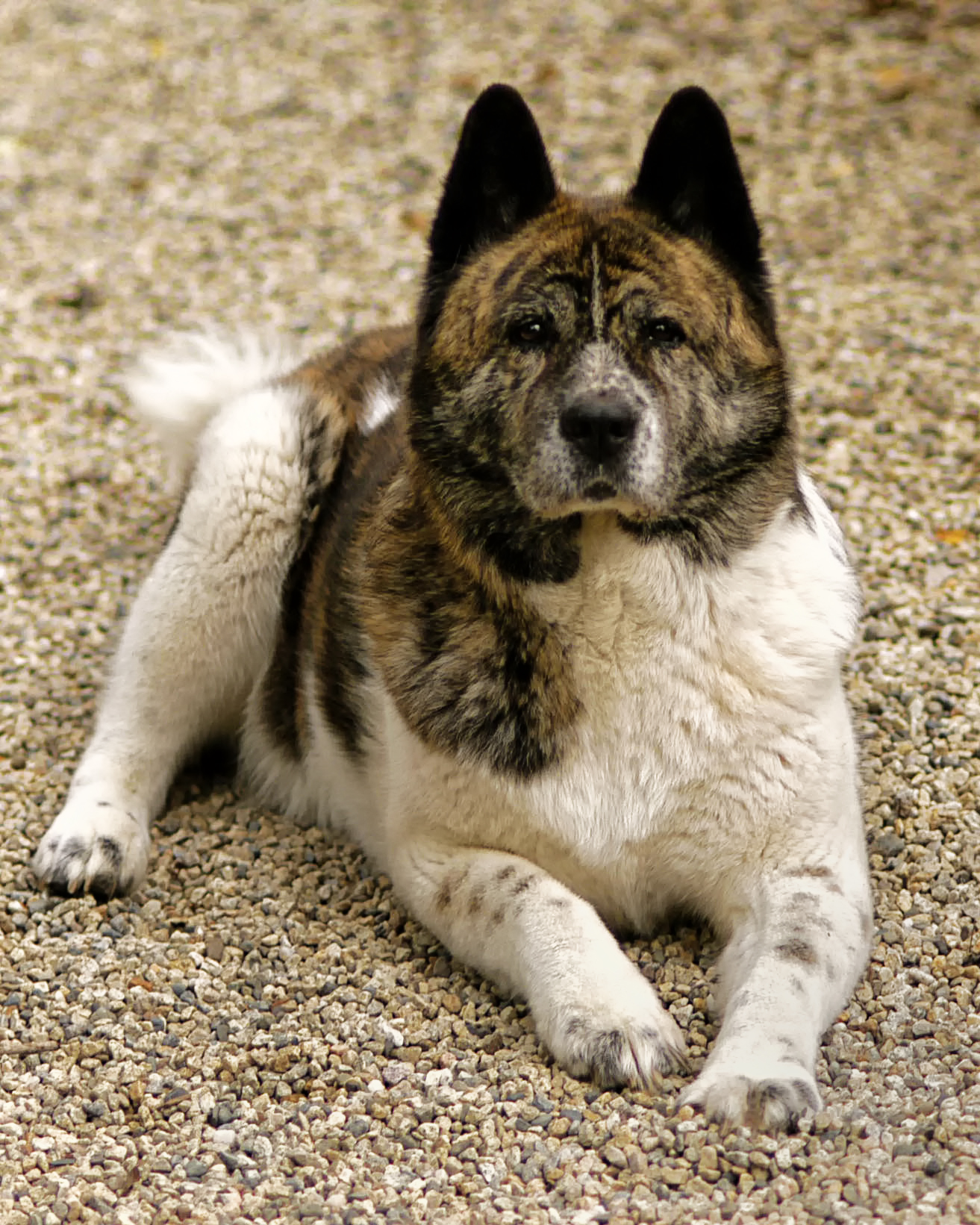
Gracie 1

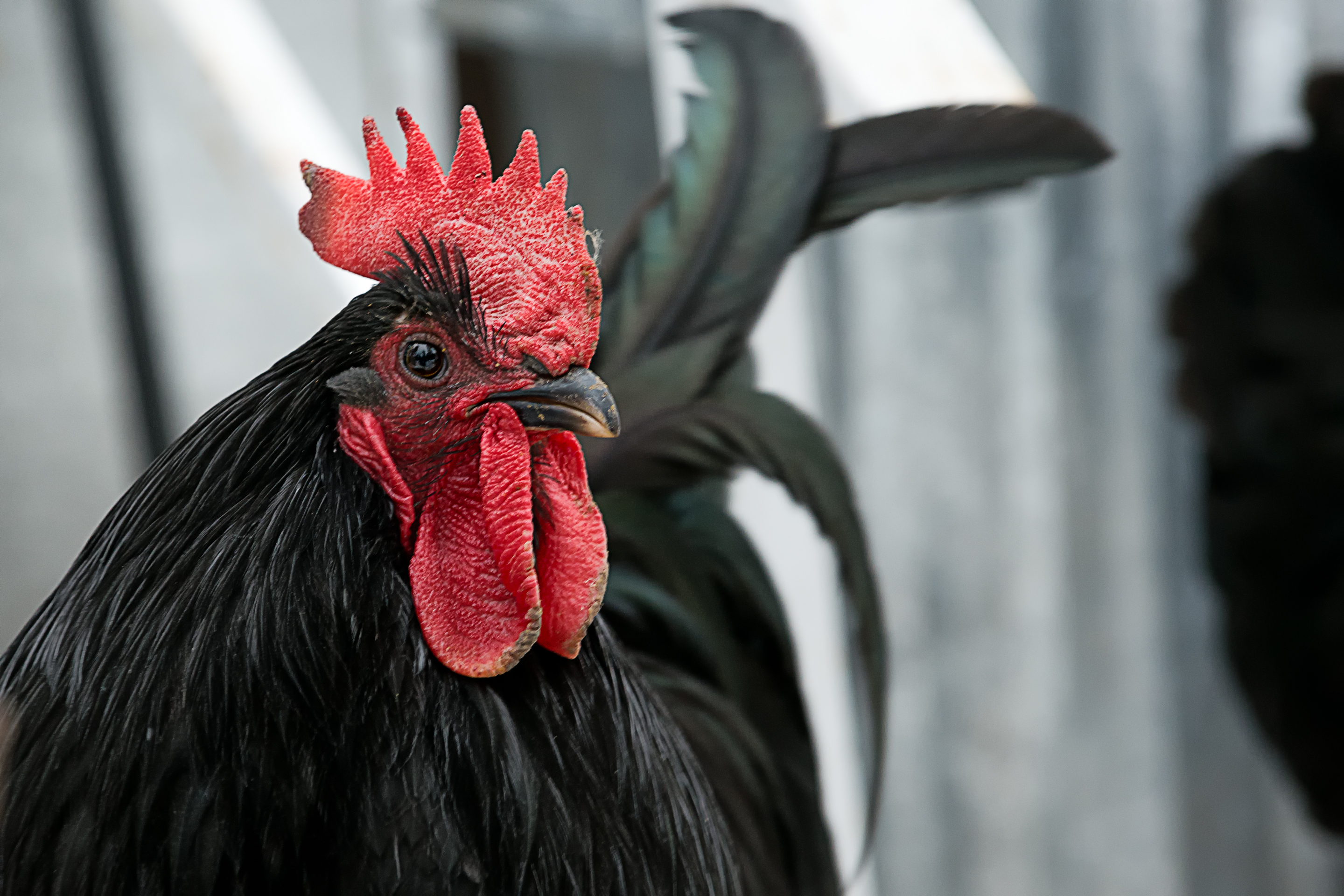
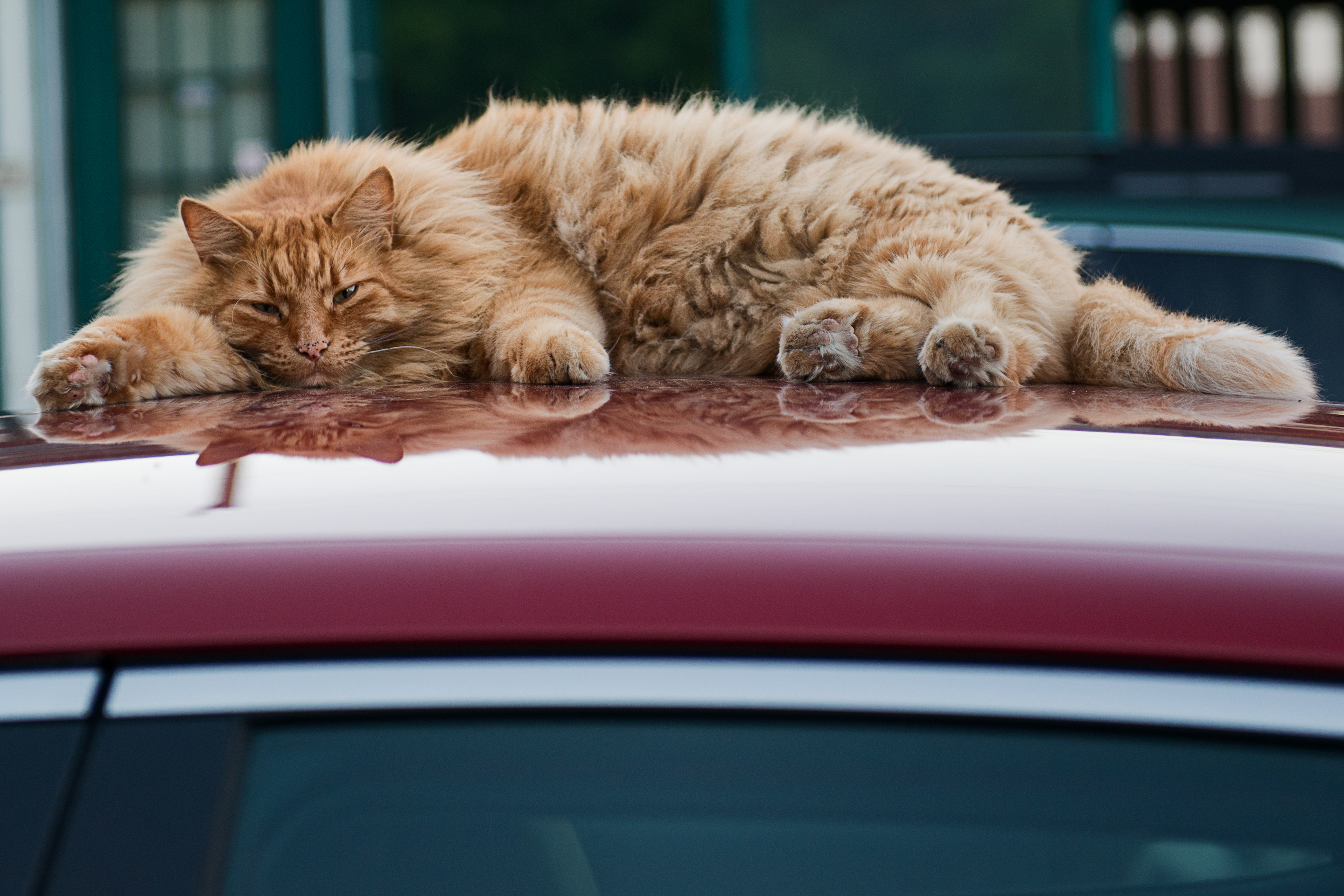
Fat Cat

chuck port copy

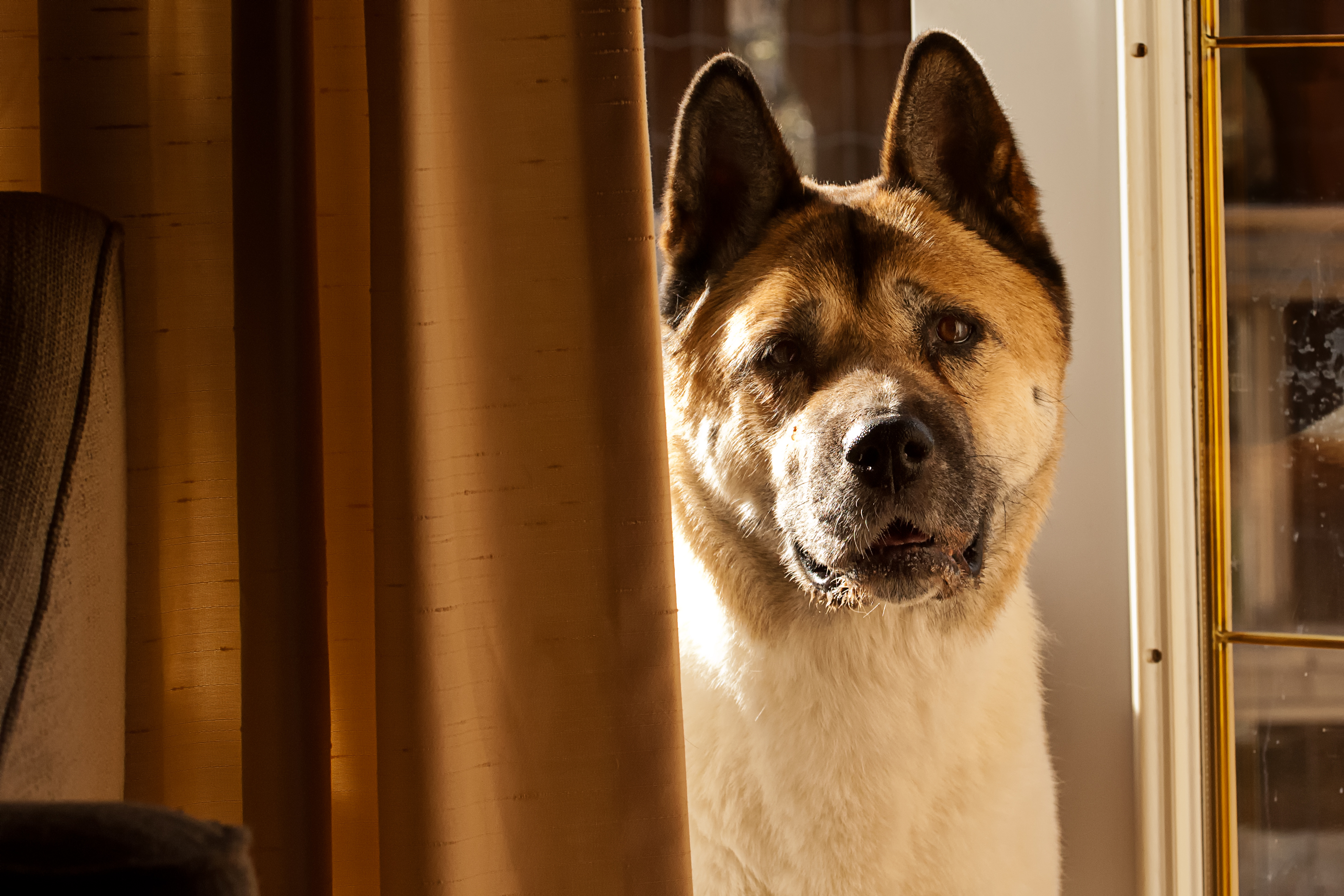
Looking Scout

Rikkonna 1

Much of the time photographers get so excited about the subject before their camera that they don’t pay any attention to anything else that is captured by the camera’s sensor when the exposure is made. Of course, things can be cropped out during postproduction, but what if the background is so busy that it obscures the intended subject of the photograph? The background can impact a subject in many ways and much of the time it interferes with the subject.

In the past I have written about composition, depth of field, and even bokeh. Composition can be as simple as creating an interesting photograph by using basic guidelines or compositional strategies for a balanced image. Depth of field is that area in front of and behind the subject that is acceptably clear, and bokeh refers to that portion of an image that is out of focus. Using those three mechanisms or strategies as a way to isolate a subject help photographers increase the impact their photographs have for viewers.

A serious wild life photographer once told me that it is important to have a background that is neutral and non descript. I had one experienced birder giving me tips on photographing Loons, explain that soft green water made better pictures than contrasty blue water. I think that this may be his personal opinion, but I have to agree that of the photos I took that day I liked way the green water looks better.

I recall a photographer who had exhibited his photograph in a local exhibition being angry because he didn’t get a mention by the judges on his photograph of an eagle posing on a branch. He had exposed it properly and displayed it sharply. He was so proud of his photograph of that bald eagle that he was unable to see the busy background and how it negatively impacted on the overall photograph. I believe the judges did see that.

My advice to that photographer would be to curb his excitement and spend some time examining his subject and its surroundings. Using the term, coined by Ansel Adams, that I mentioned in my 26 June 2014 article, he should “previsualize” the image for its best impact.

Compose and isolate the center of interest, and decide how to use the background to the best effect; whether the background should be in, out, or partially focused, or to have it clear or cluttered, and if it is appropriate for inclusion or to be excluded. A busy background distracts viewer’s attention.

Backgrounds present both opportunities and challenges to photographers. Here are four very simple suggestions other photographers have told me take into consideration to make the background work.

1. Check your background before pressing the shutter;
2. Pay attention to your shooting angle;
3. Use the aperture or the focal length to blur the background;
4. Fill the frame with your subject.
They are all great tips, or thoughts for us all to remember, and I personally like the words of Ansel Adams that fits well,  “A good photograph is knowing where to stand.” And I’ll add, remember to consider the background.

I enjoy all comments. Thanks, John

My website is at http://www.enmanscamera.com

When Do I Like Photographing Flowers?

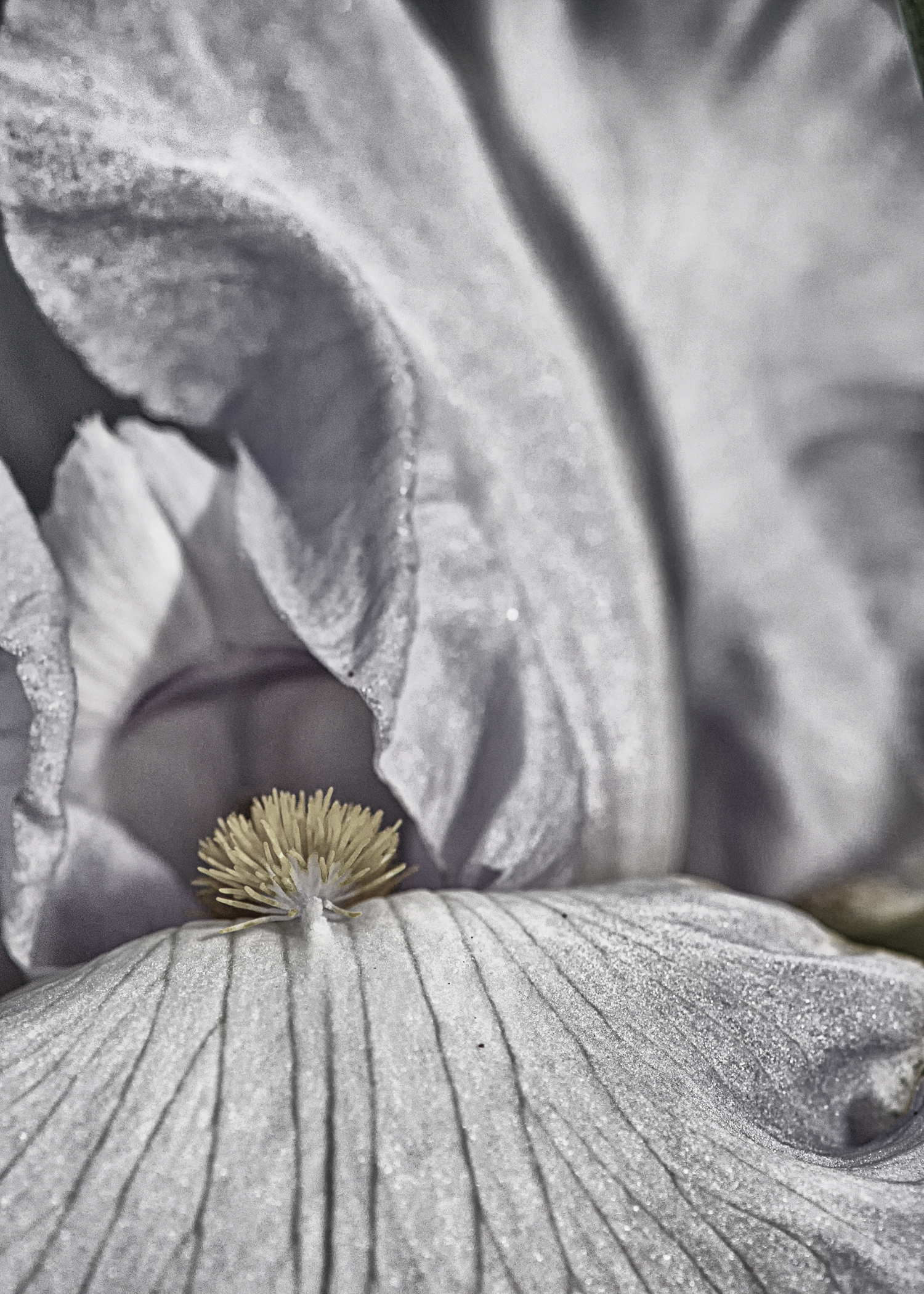
Iris sculpture

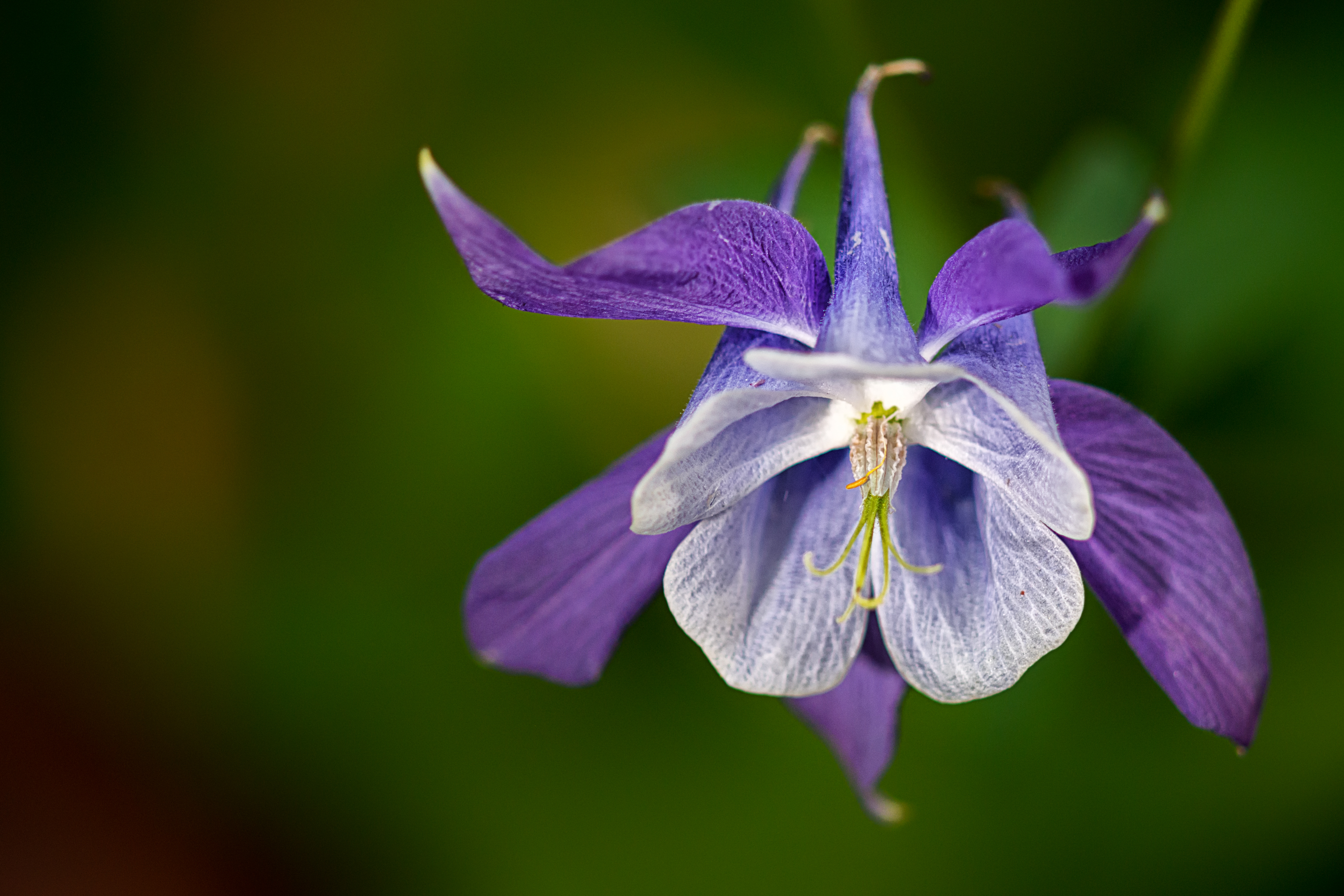
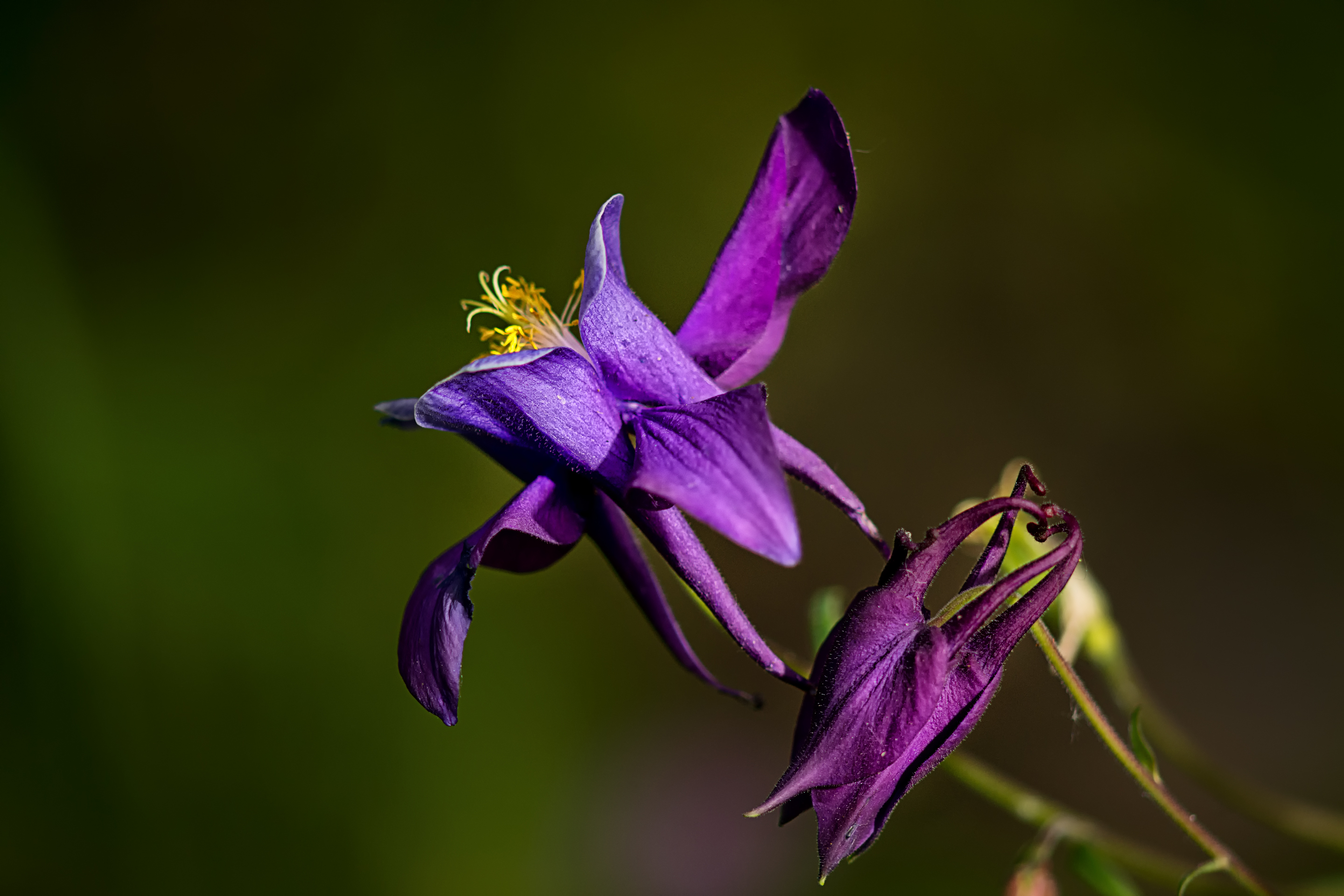
Columbine bloom


Columbine


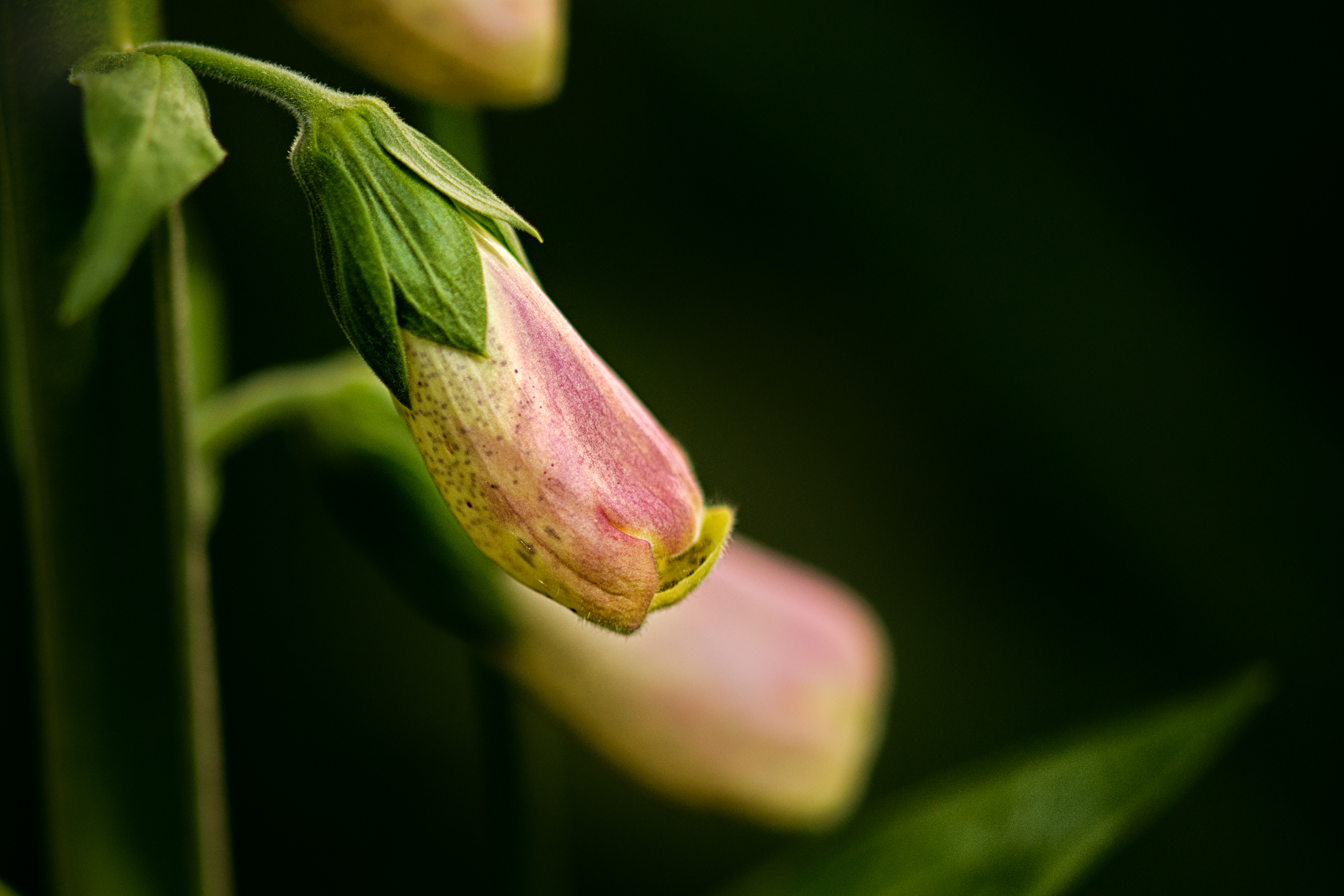
Foxglove


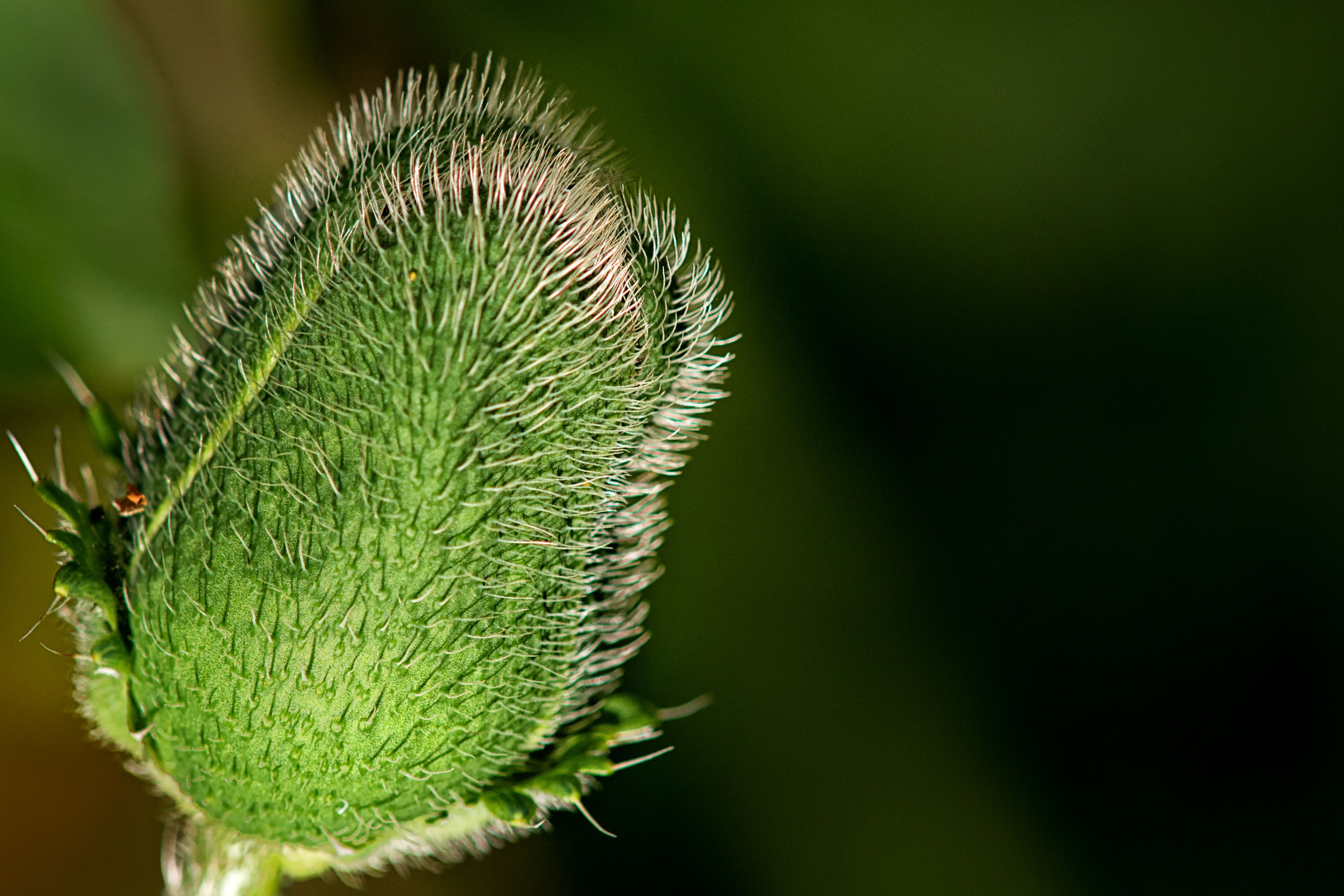
Poppy bud


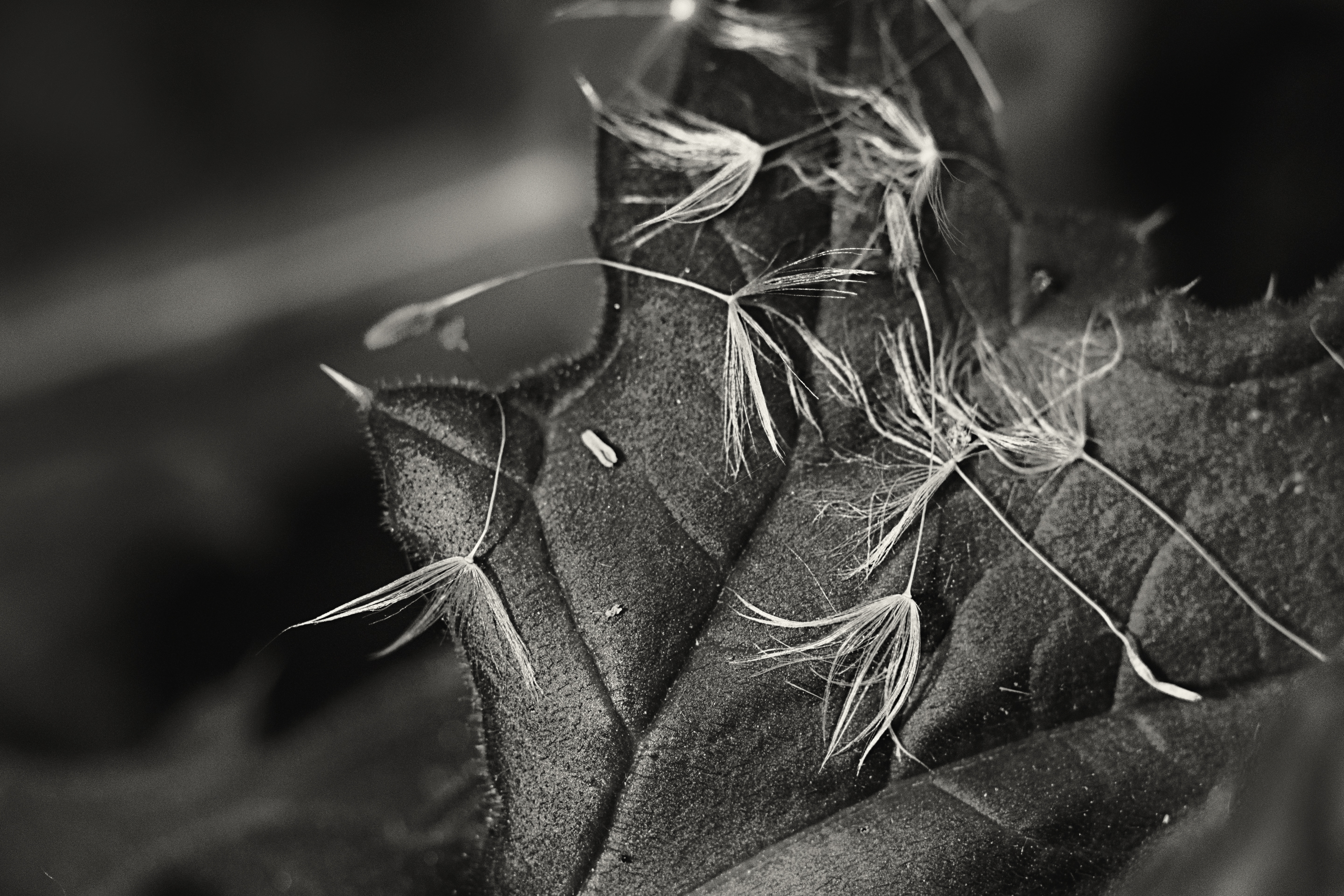
Dandelions seeds & Oregon grape

When I am bored, stressed, or just want to get away from crap that sometimes happens, I grab my tripod, camera, and flash, and head out to my wife’s garden.

I admit that I am not really a flower kind of person and plant names are more my wife’s interest than mine, although, I do try to document her sprawling garden as creatively as I can throughout the seasons.

Somehow pointing a camera at some colourful plant is calming, and wandering through a garden of differing shapes and tones offering photographic opportunities gives me a different experience than any other subject.

Unlike photographing people, animals, scenics, sports or almost any other subject, garden plants just wait to be looked at. One doesn’t have to cajole, creep, or climb, and it’s not necessary to get in a vehicle to search for some secluded or exotic location. Most of us can find a welcoming garden close by that is, in most cases, easily accessible.

The result of 30 years of my wife’s effort has put me in a fortunate position of having about a half-acre of garden right out our front door. However, even if I lived in a city and only had four or five potted plants, I still would have a place in which to get lost.

The past month has been busy keeping me constantly on the go. So when my wife and I went to the car to drive to a mid morning appointment, the doggone thing just stopped working, and I was confronted with another stressful problem. To make a long story short, I was (I’ll use nice words here) very irritated as I watched it disappear down our rural road, chained to the bed of a tow truck.

I stormed around for a while. Then as the bright afternoon sun began dipping into the mountains and the light started to fade I looked around. I had walked back into our yard and was standing hidden from the road in my wife’s garden. Everything was bathed in what photographer John Sexton called “quiet light”.

“It is light that reveals, light that obscures, light that communicates. It is light [that] I listen to. The light late in the day has a distinct quality, as it fades toward the darkness of evening. After sunset there is a gentle leaving of the light, the air begins to still, and a quiet descends. I see magic in the quiet light of dusk…”

As I wrote in the beginning, I was “stressed and just wanted to get away from the crap that happens” So I returned to the house, I grabbed my tripod, camera, and flash, and started looking at the plant shapes waiting in the garden.

Sexton had continued by saying, “I feel quiet, yet intense energy in the natural elements of our habitat. A sense of magic prevails. A sense of mystery – It is a time for contemplation, for listening – a time for making photographs.”

I immediately began to calm down. I wonder if it was the act of setting up a tripod and attaching the camera. Maybe it was figuring out the exposure and balancing the fading light with my flash. It might have been choosing an interesting plant and searching for a creative angle. Or it just might have been all of those together that stole my attention and allowed me to redirect my energies.

Another of my favorite photographers, Robert Mapplethorpe wrote, “With photography, you zero in; you put a lot of energy into short moments, and then you go on to the next thing.” I guess so.

I expect capturing an expression on someone’s face, photographing an exotic scenic or some sporting event, will get more raves from friends than a picture of some delicate flower. But none of those help to relax me and sometimes even trouble me more. So, next time I am, as I was this week, confronted with problems or just feeling pressure. You’ll know where to find me. And maybe it’ll work for some readers, whether it’s in their garden, a public park, or even on the side of the road; there are plenty of photos for the taking.

I enjoy all comments. Thanks, John

My website is at www.enmanscamera.com
Don’t Forget Some Photographic Basics

Helmkin Falls view   Low drifting clouds

A local photographer showed up at my shop with some scenic/landscape photographs he had made and asked me for a critique of them.

Photographers get excited about the subjects they photograph and sometimes forget, or never learned in the first place, some basic rules for photography. Rules that are actually procedures and guidelines that can be followed to make photographs more exciting for viewing. Although I enjoyed his series of photographs of Helmken Falls in British Columbia’s Wells Gray Park, I noticed two problems that I discussed with him.

The first is a very basic concept in photography – depth of field. Depth of field refers to the “in focus area,” or sharpness of a picture at different distances when the aperture diameter changes. Depth of field is the area around the subject that remains acceptably sharp. The farther things are away, the more depth of field one can achieve, and the closer things are, the less depth of field. To control depth of field one uses the lens aperture.

Photographers new to this medium think of the aperture only as a means of controlling the amount of light reaching the sensor. However, the aperture also controls depth of field.

Control over depth of field is accomplished by increasing or decreasing the aperture’s size. For example, the smaller the aperture opening (f/16) the more depth of field; and the larger the aperture opening (f/4) the less the depth of field is. So f/16 will give more “in focus area” in front of and behind the subject than f/8. Regardless of the F/stop one should have a shorter in focus area in front of the subject, and a longer in focus area behind the subject.

The ratio is approximately one-third in front, and two-thirds behind. So to obtain maximum depth of field in a photograph use a smaller aperture opening like f/11, and focus one third of the way into the scene.

The second thing I pointed out was his composition. I wondered what it is that makes photographers disregard the basics of compositional strategies and just snap away excitedly. My assumption is that many photographers are so excited about the subject they are photographing, and possibly the camera they are using at the time, that they forget to make the subject interesting in their final photograph.

With his scenics of the waterfall, as exotic and colourful as it was on that day, he ignored something fundamental in any properly composed photograph called “The Rule of Thirds”. This so called “rule” states that we shouldn’t place the main focus of interest in the centre of the frame, but should place it on an intersection line, or very close to it, created by dividing the picture into a grid of thirds.

That photographer’s pictures would have been stronger if he had paid attention to compositional elements that would make his image interesting by placing important or interesting visual information at intersections.

I have photographed those falls alongside other photographers many times since I moved to British Columbia 40 years ago; spring, summer, fall and winter.

Sometimes they have been excited, as with the fellow I critiqued, and just pointed their cameras without thought, overwhelmed by the roaring, wilderness splendour of Helmken Falls. Regarding those image makers, Guggenheim Fellowship for Creative Arts recipient Garry Winogand quipped, “Photographers mistake the emotion they feel while taking the photo as a judgment that the photograph is good”.

However, I have also set my tripod next to photographers that just seemed understand what it takes to make viewable images and appear to feel their way through the photograph. That’s always exciting. Of them I like to think they adhere to the words of Photo Imaging Association’s 2005 Photographer of the Year, David Harvey when he said, “Don’t shoot what it looks like. Shoot what it feels like.”

As always, I appreciate any comments. Thanks, John

My website is at www.enmanscamera.com
Leading an Outdoor Lighting Photography Workshop

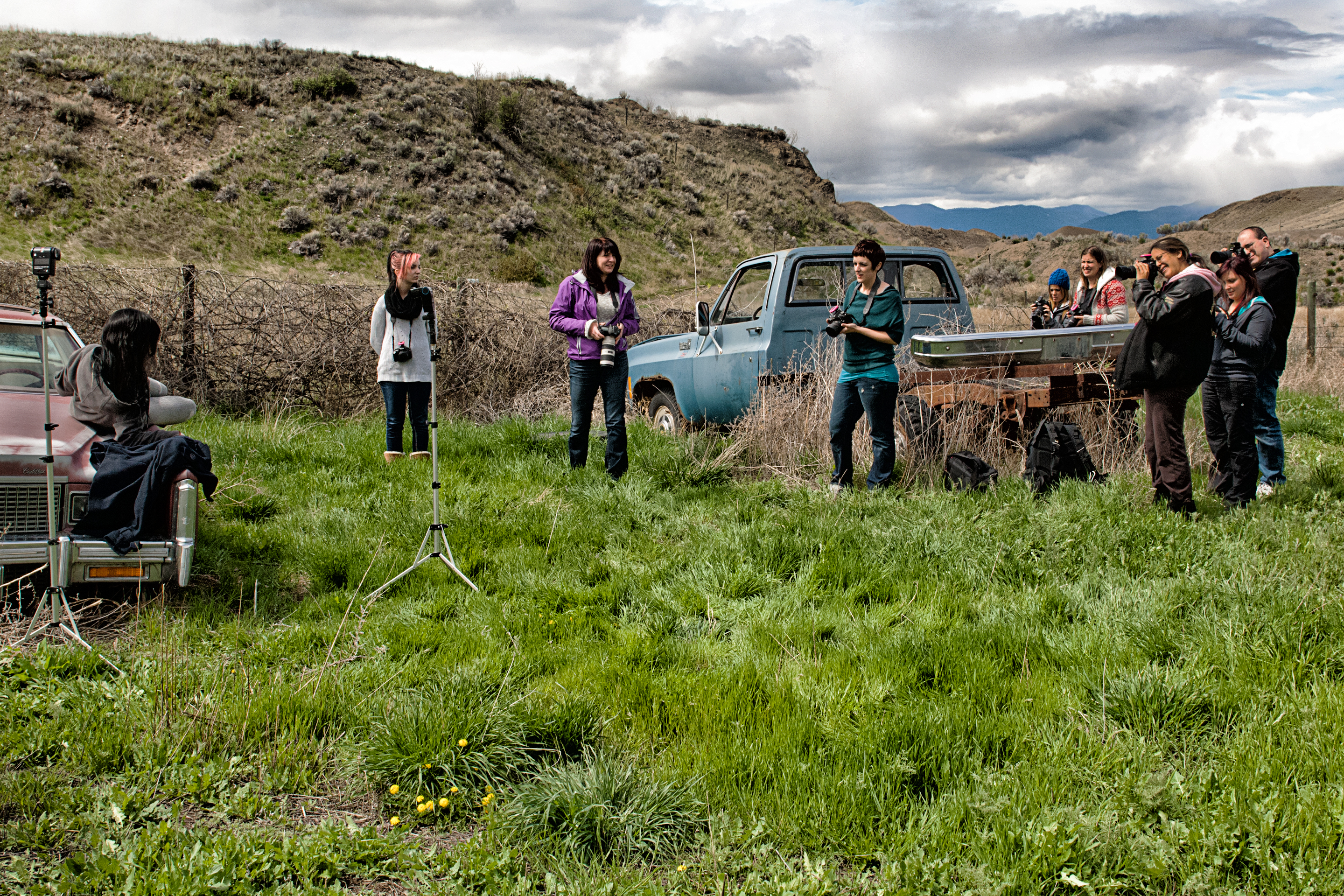
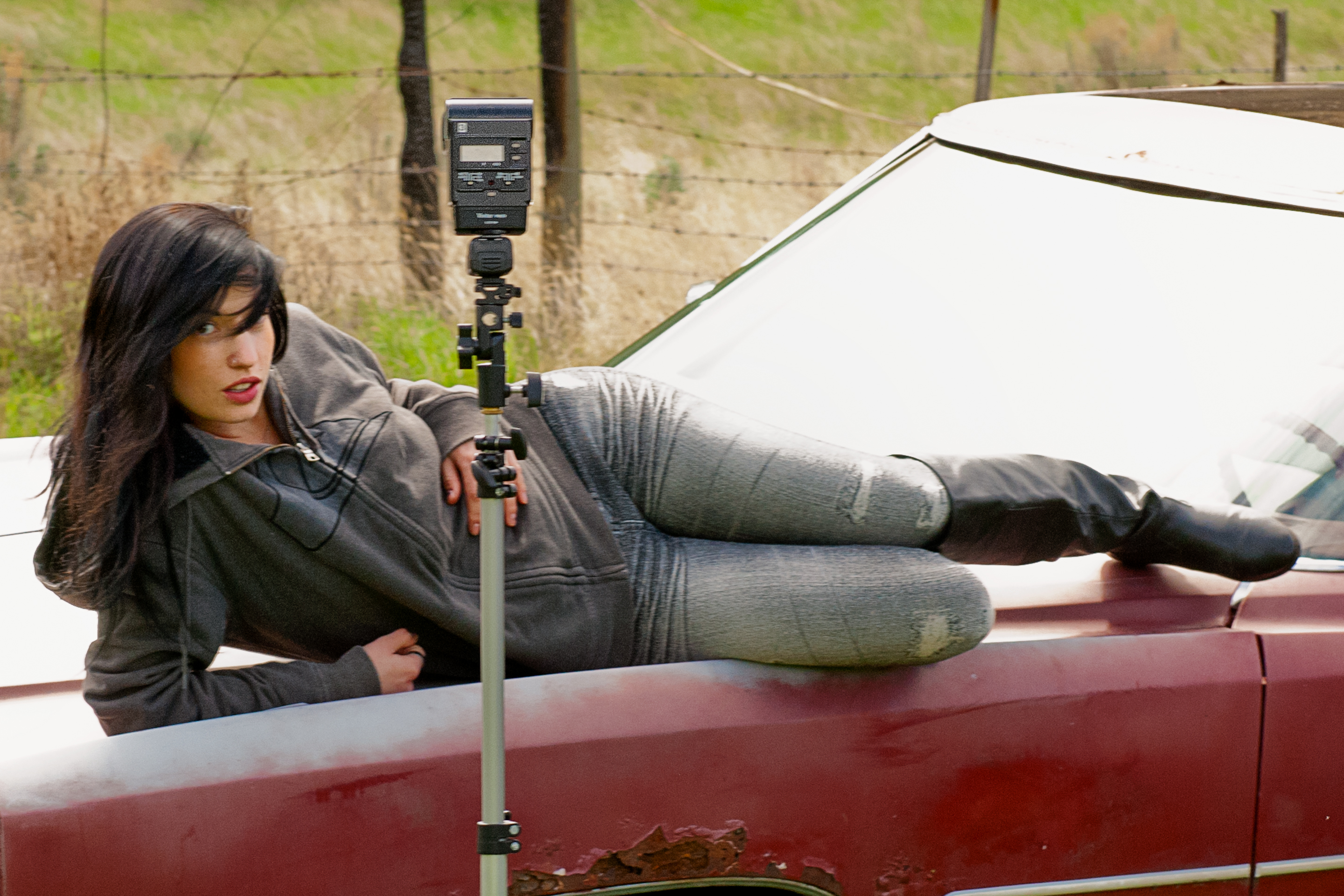
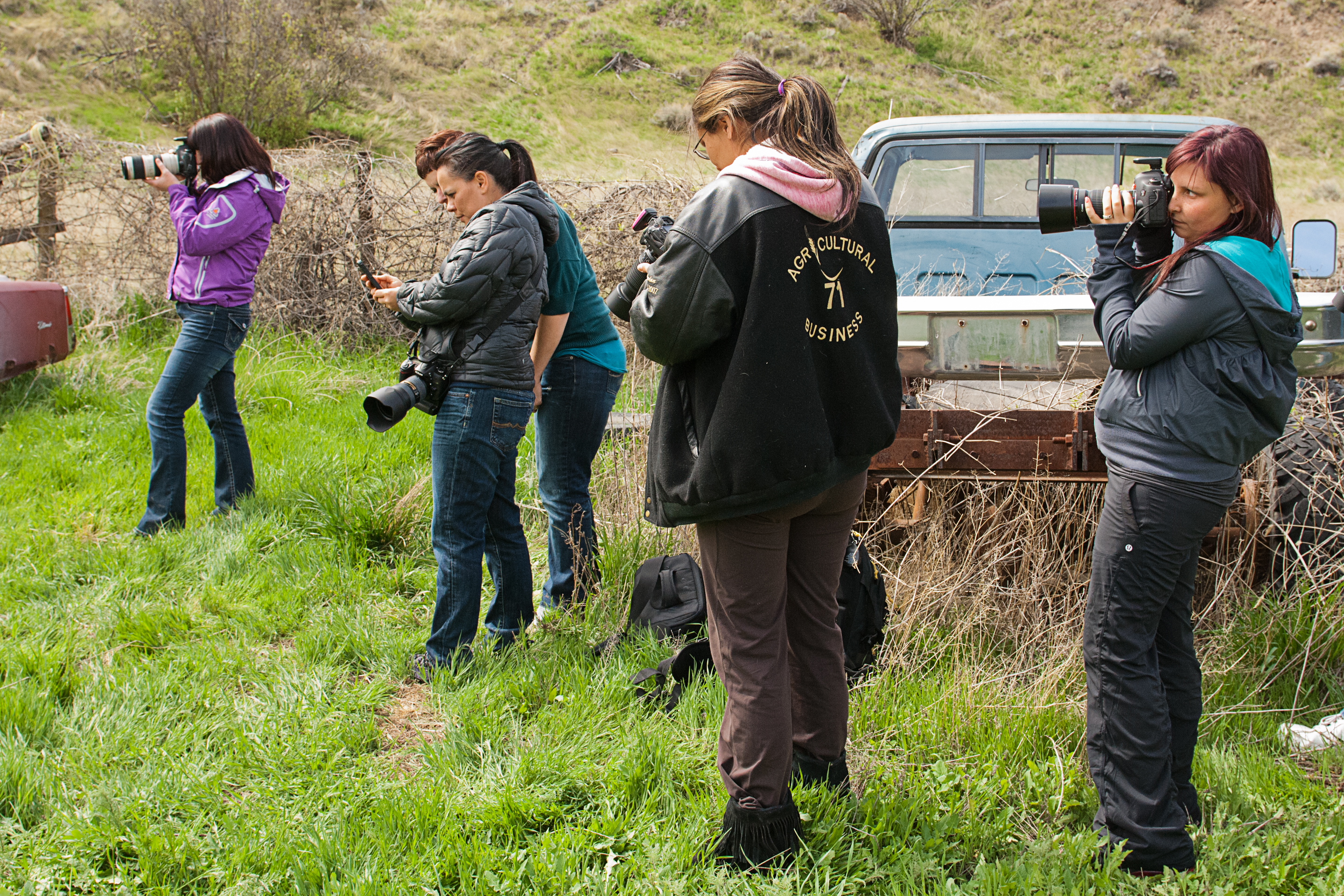
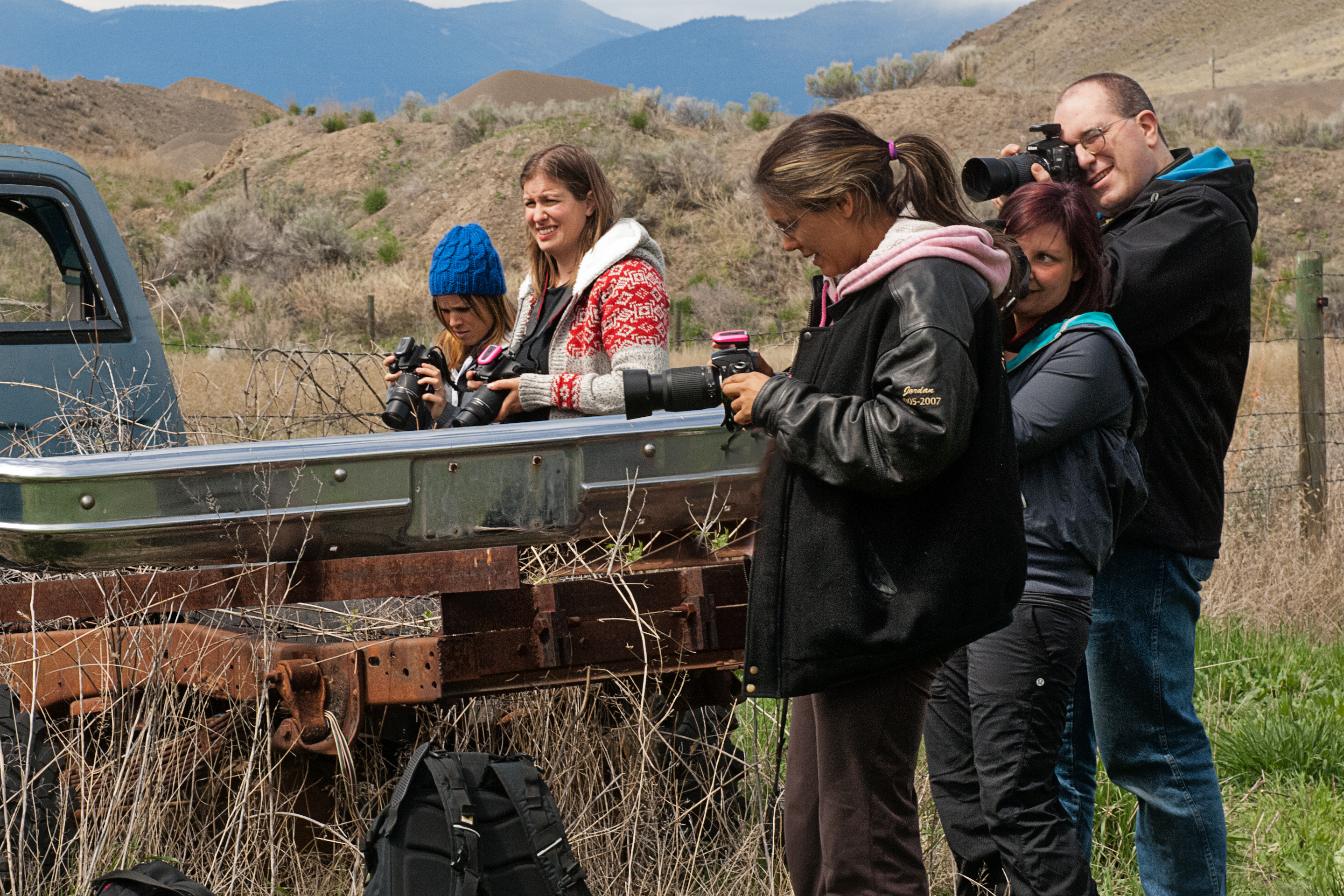
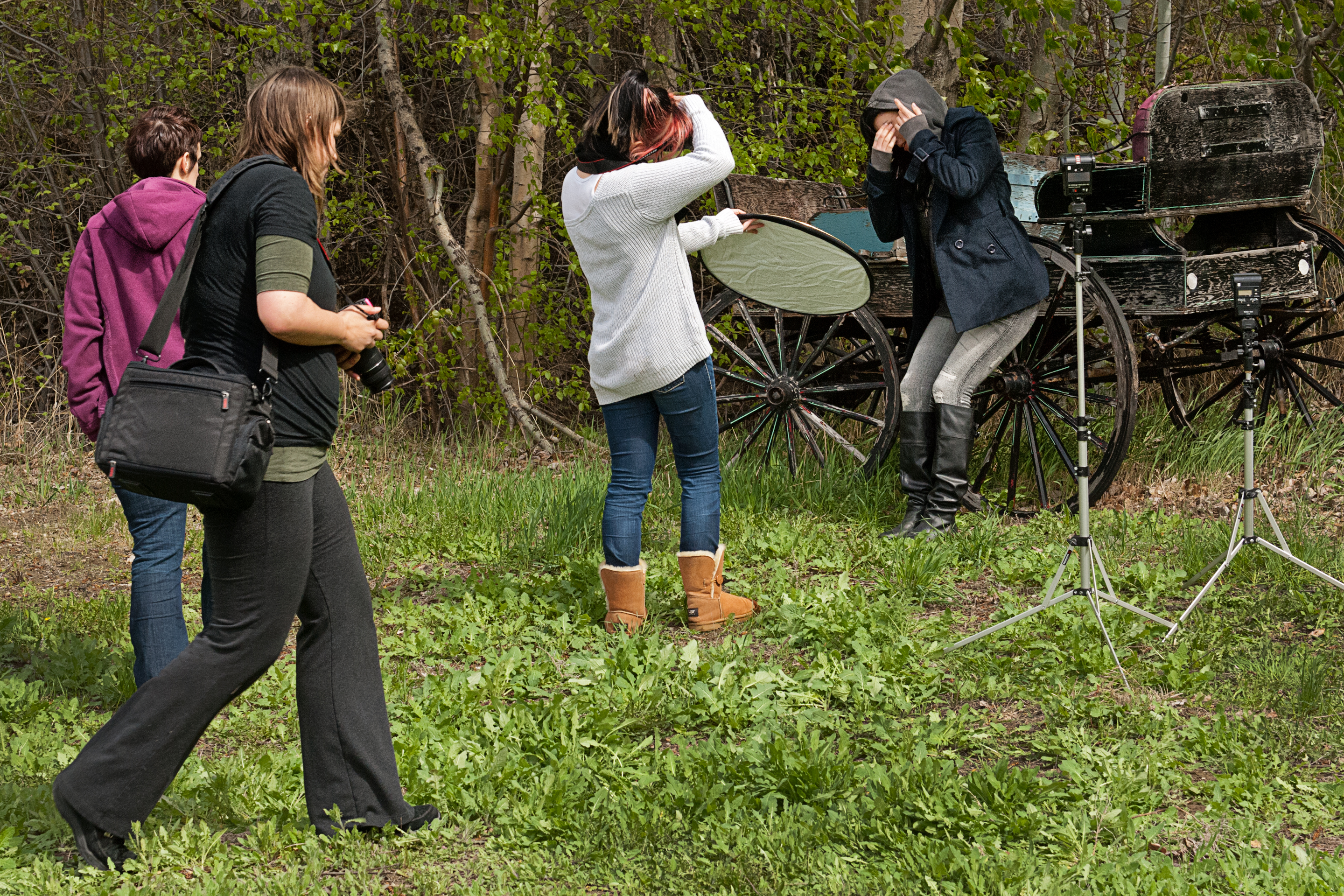
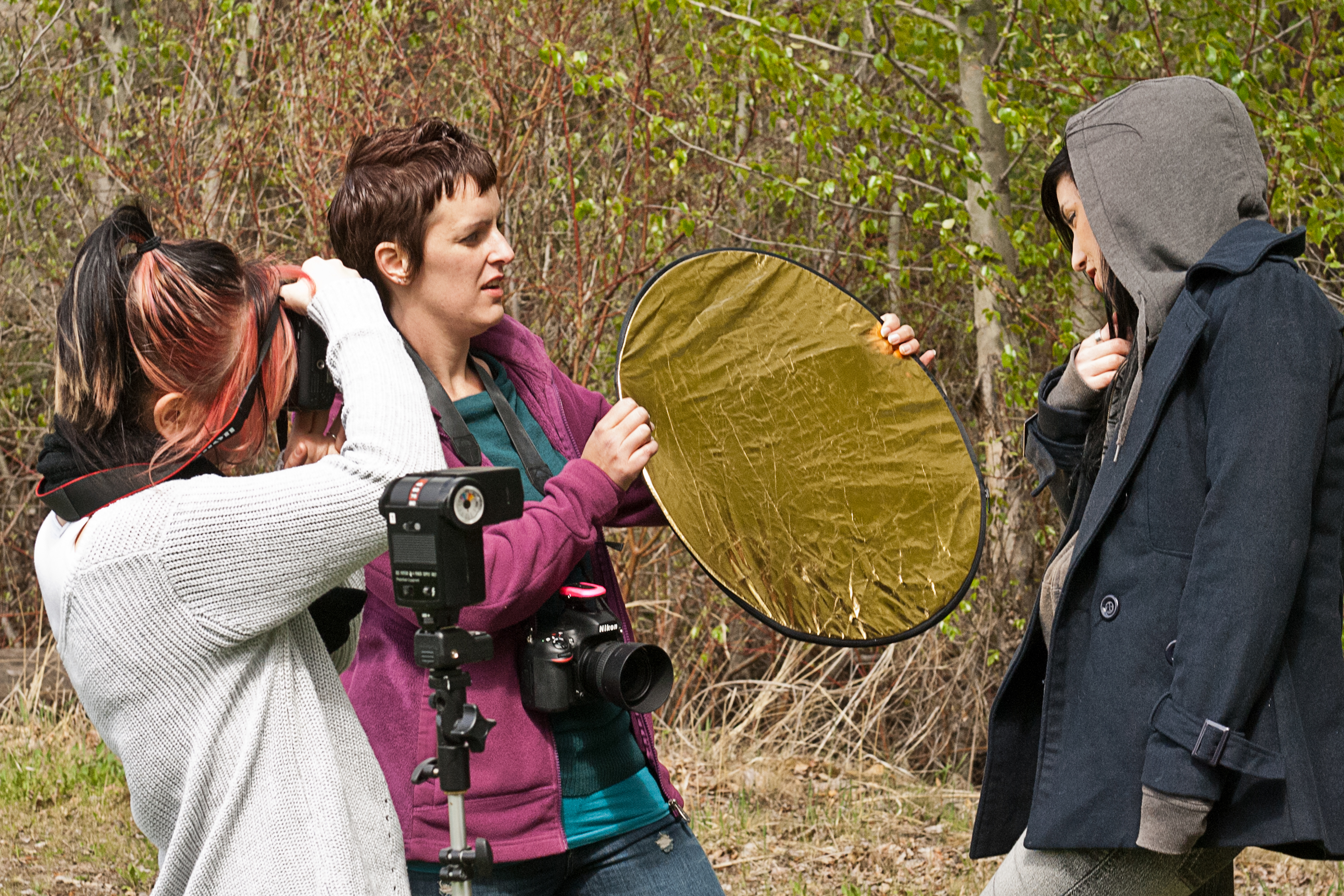
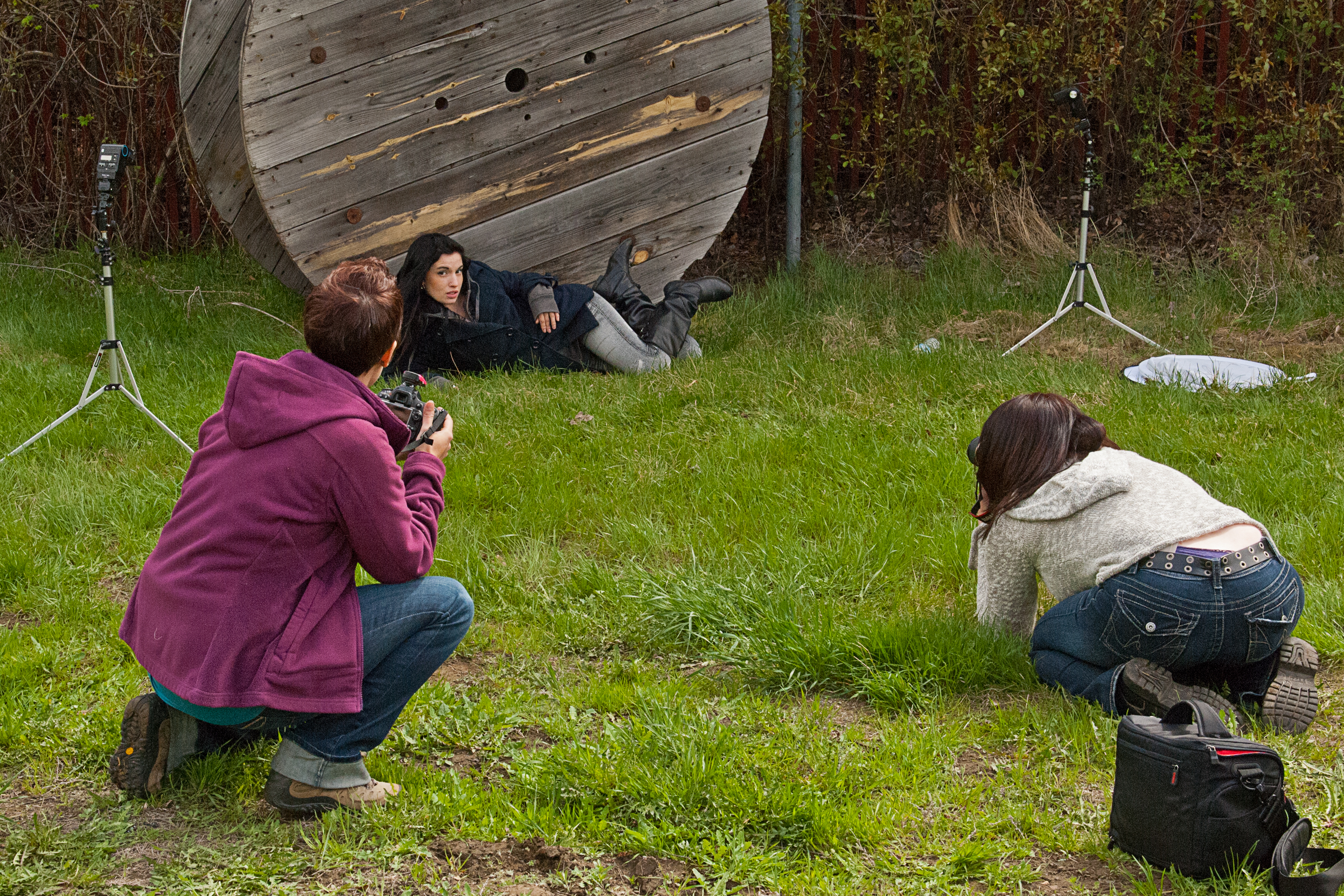
Adding light  Bailea & Flash  Big lenses  Participants  Sarah lighting Bailea  Model in the meadow  Hide from the wind  Flash & Reflector  Low angle shot  Didya get it

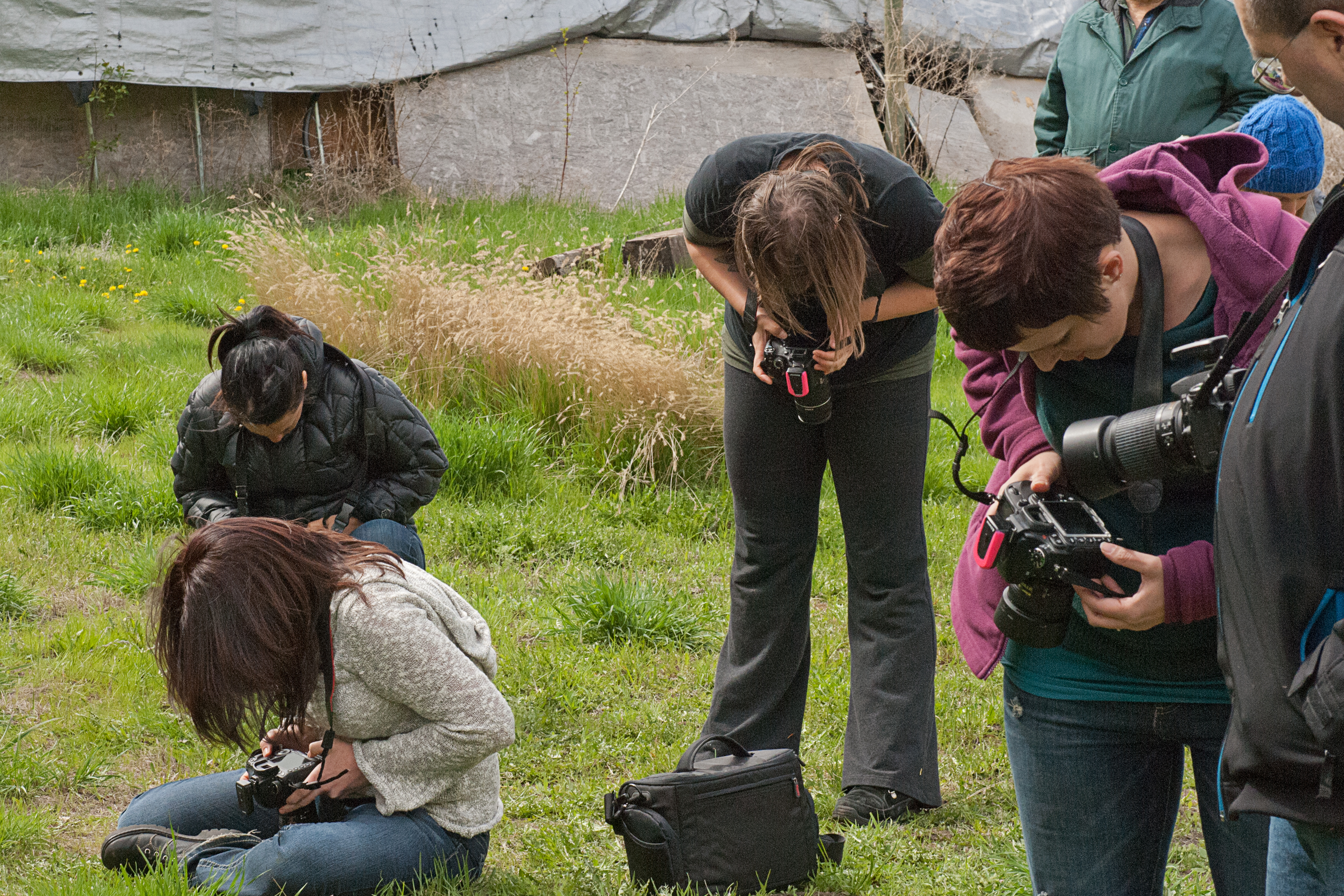
I always enjoy the enlivened interaction that happens when a student of photography makes the decision to participate. During a workshop my job is to present information on the subject, and keep things going. I don’t like to be a demonstrator on stage and rarely pick up a camera during the workshops I lead. That is left to the participants.

Those are the words I used when I was discussing the first of two workshops I am leading this spring on the use of off-camera lighting. The first two-day workshop was about lighting in a studio and was held in a well-equipped photography location where I introduced how different lighting tools are used for portrait photography.

I have now finished the first of a two-session outdoor lighting workshop where the participants were surprised when faced with using many of those same lighting tools outside.

This workshop was about using light out-of-doors and I think returning participants were struck with how straight forward lighting is inside compared to outside. In the studio one synchronizes the camera’s shutterspeed to the studio flash and uses the aperture to determine the exposure of the light reflecting off a subject. However, out-of-doors a photographer is faced with additional variables and must balance the natural ambient light with an off-camera flash, and when using flash effectively it is more about creating and controlling shadows than filling them.

The weather was not willing to co-operate very much. It had rained all night and although the day brightened up some, a cold breeze from fresh snow in the mountains made us shiver when it wandered through our workshop space every now and then. Nonetheless, crappy weather or sunny days, it’s all about adding light, so in spite of the cool damp weather, the ten participating photographers and our intrepid model, Bailea, defiantly (maybe hopefully is a better word) stepped out of the warm studio and into the constantly changing light of day.

In this lighting workshop we dealt with the key aspects of outdoor portrait photography, such as understanding exposure, how photographers would learn to control depth of field, and to gain off-camera flash techniques that would transform their outdoor portraits into something special. And, as with my last workshop, there was excitement as participants got down to business and weren’t at all shy about getting shoulder to shoulder in a process of experimenting with and exploring outdoor lighting.

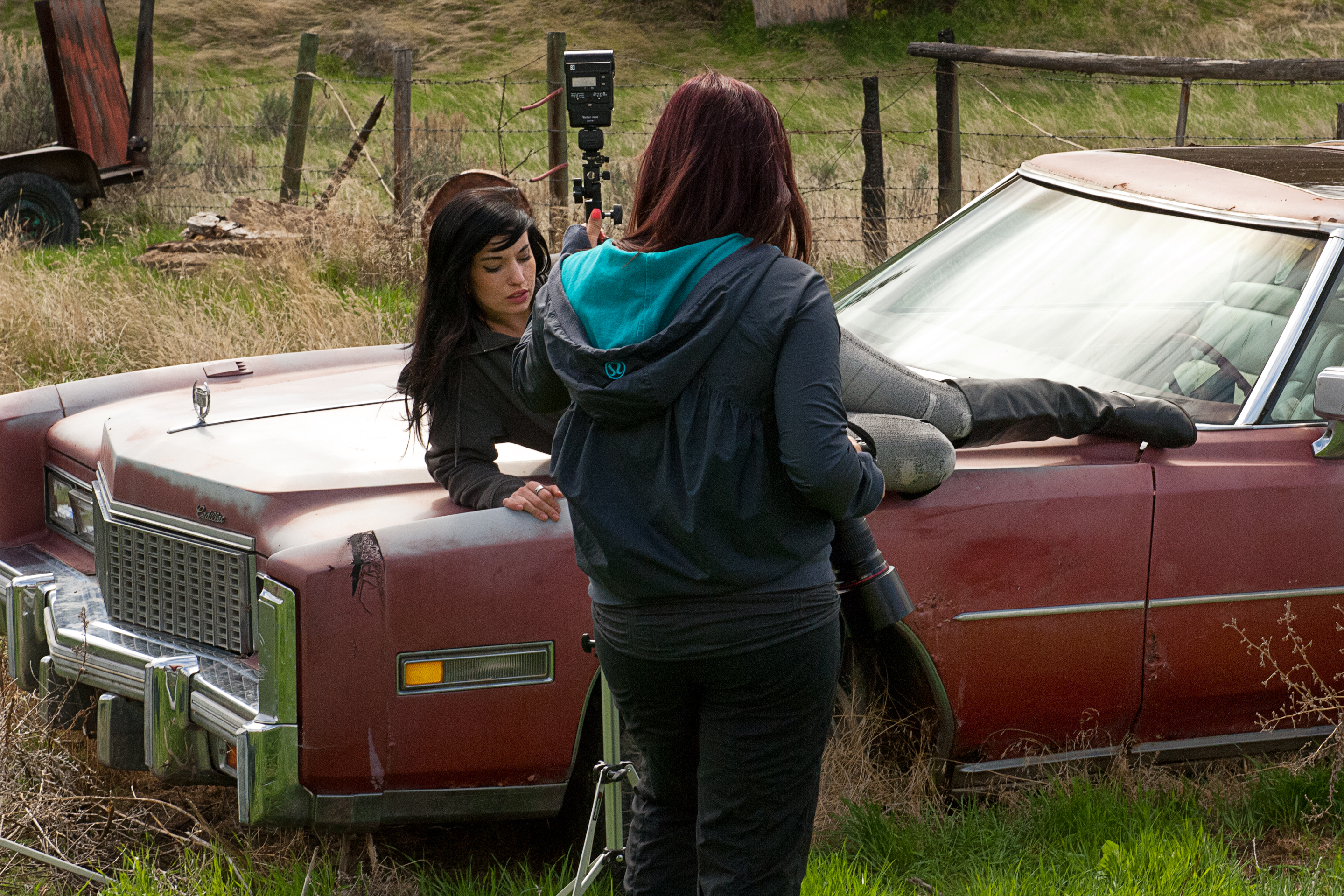
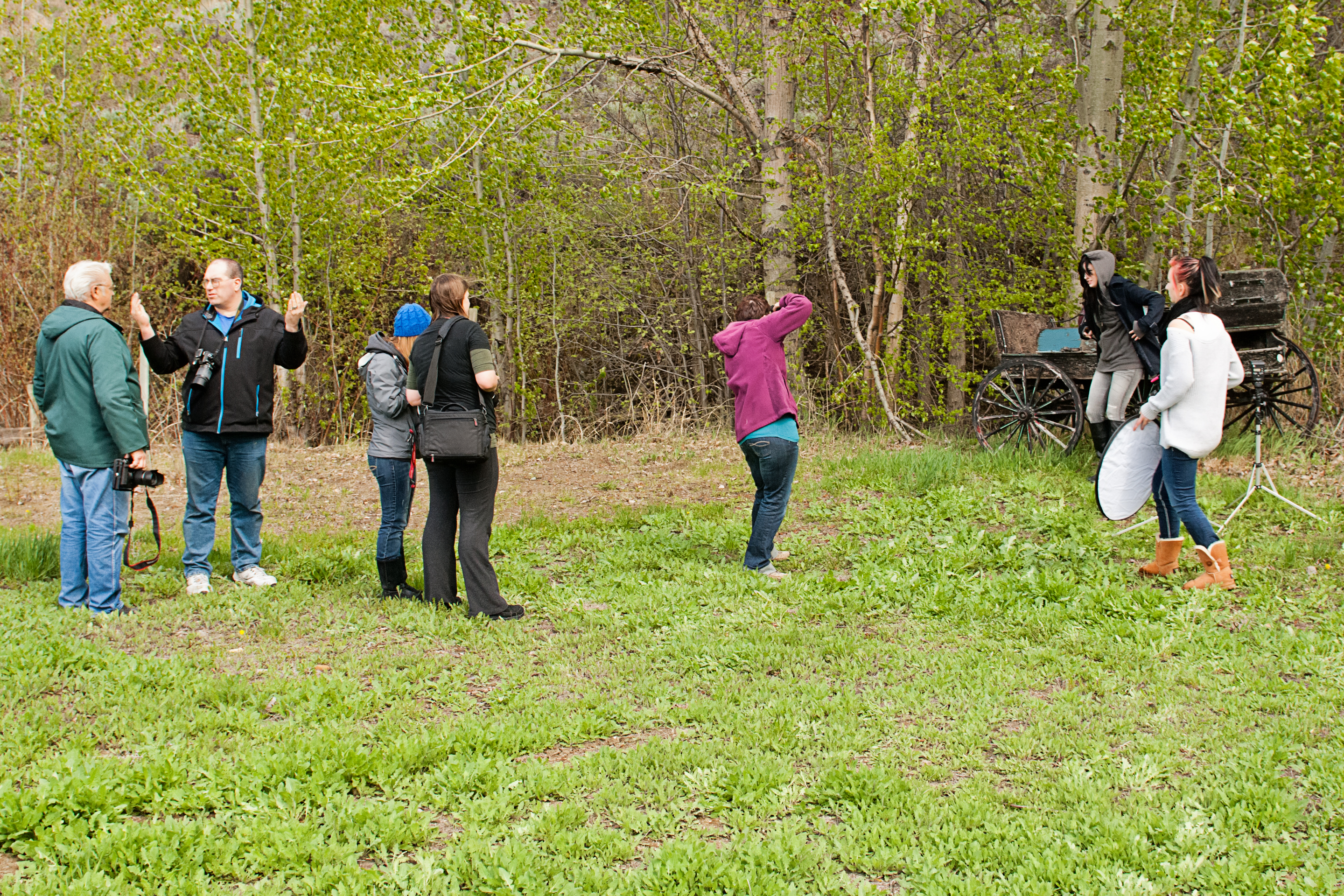
I had off-camera wireless flash setups in three locations, a large barn, a meadow beside a turn of the century horse buggy, and in the long grass where an old abandoned Cadillac rested. The photographers put each location to good use, and now I am looking forward to the next session. The few images I have seen so far are excellent and I am certain spending another day helping and watching each photographer’s progress is going to be a lot of fun.

Comments? I do like all comments. Thanks, John

My website is at www.enmanscamera.com


Waiting for the Best Light.

Early spring stream

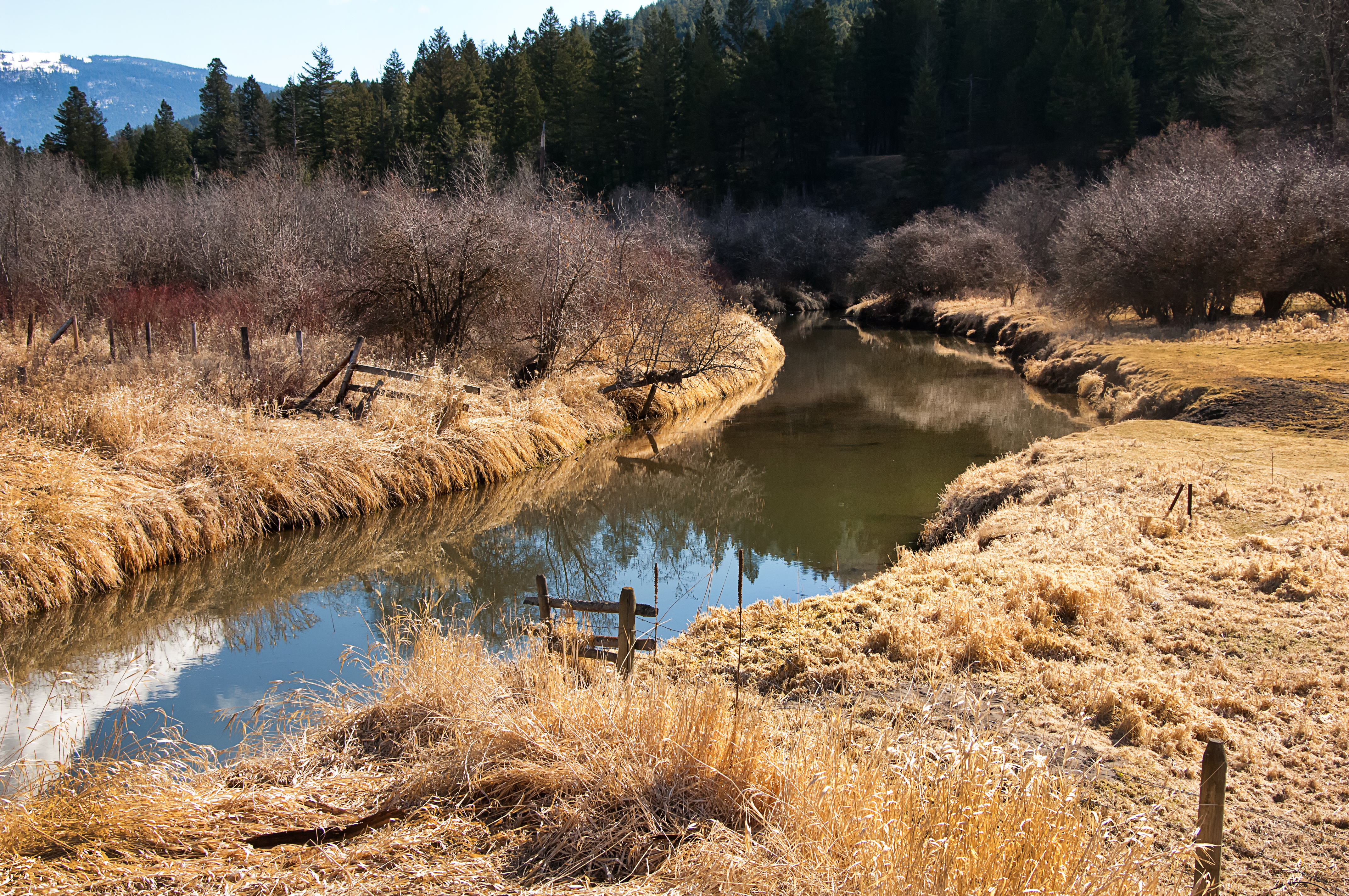
I am sure there are lots of photographers that have discovered a special location, or scenic spot, that looks good, but when the photograph just isn’t working out and the day just isn’t making things look good, photographers return again and again, hoping for the light to be just right. That bridge on the way to work or the gnarled tree outside of town bent from the wind, that never looks the way we want it. That was always the problem with a location that my wife and I regularly drive past along Highway 97 south of our home. We always, winter, summer, spring, or fall, slow down at a bridge crossing a drainage stream that flows out and onto wide lush hayfields. The stream turns a corner as it flows past bushy native shrubs and out of a pine forest.
The image I mention is a grass and foliage lined stream that for the past six years is usually  a shady, dark, flat, and poorly illuminated possibility. The elusive landscape is perfect with a fence in the foreground that creates three-dimensionality. Depth is easily achieved as a viewer’s eye easily moves from the objects in the fore, middle and background.

I always want a center of interest and the reflective meandering stream becomes that. The composition follows the rule of thirds without any effort. Walk off the road, stand in the deep grass and put a shoulder to the bridge-post to steady the shot, and the rest just comes natural. All that is required is interesting light (that has not been cooperating) to bring everything together to create interest.

At last, this week on a clear spring morning about 9:30am, the light was working. There are times when that open space along the road actually has had an all-illuminating bright light , but that defuses detail, or sometimes it’s cloudy and overcast with everything to be lost in shadow. However, to my great pleasure, this time the light was cool, and without glare, and the shadows weren’t dark and deep. I couldn’t have asked for a better morning to stop and make an exposure or two.

As I wrote earlier, we always slow down, and cast a glance up the stream (the constant traffic willing) as we cross the bridge in hopes that the light is working. I have even parked on a sunny day, got out and walked across the road, only to have some large cloud move in.

This location has been frustrating, but I just add it to the many other landscapes that I refuse to waste my time with unless the conditions are what I want. I recall the concrete bridge on the Thompson River that I watched every morning and evening for years as I drove to work. Everything has changed now, but once there was a young tree and a grass edged road leading to that bridge. I wanted to stand in the middle of the small road and make a low-angled photograph of that grey bridge. When the light was perfect I didn’t have my camera, when I had my camera there was no light. I struggled for five or six years with that picture. Film ruled photography in those days and I was determined that when I made the picture it would be with my medium format Hasselblad camera.

When the day finally came about 7am one foggy morning the low-angled light thinned at the bridge entrance and gave the young tree a golden glow and I was, for once, ready.   I originally called that image “six years” because that’s how long it took me to take the picture. However, when I sold several copies to an organization that gave them as gifts to visiting NASA scientists from the United States, they renamed it “Pathway to the Future”.

Well here I am again at another six-year point and thanks to my wife demanding that I stop the car and pull over, I finally have the image I have been after for all those years.

Photography can be a patient thing and I like having the time to think about my subject. Six years might be a long time for some, but I have always liked the process, and there are a few more landscape scenes out there waiting for the light and me to come together in agreement in the next few years.

As always, I remind readers that I really enjoy your comments. Thanks, John

My website is at www.enmanscamera.com