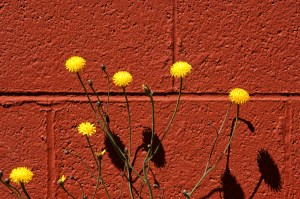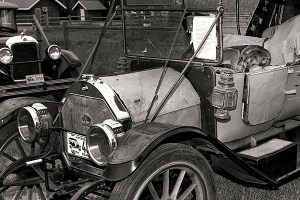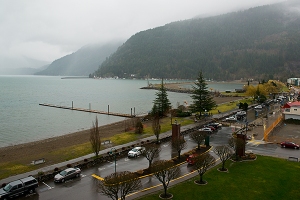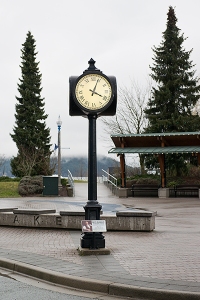
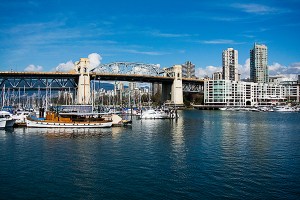
A fun day photographing Granville Island      


After an enjoyable Sunday at the Vancouver Camera Swap Linda and I decided it would be nice to spend another day just wandering around and we selected Granville Island.

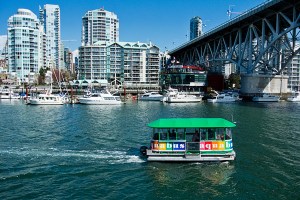
The peninsula & shopping district of Granville Island has been a popular destination for both local Vancouverites and tourists since the 1970’s. There is an excellent public market where one can find almost any type of food, the ever-popular Granville Island Brewery and a thriving artist community.

I can’t recall the number of times I have wandered that amazingly exciting visual location, camera in hand, photographing the architecture, the seafront, and the people. Gosh, the list of the many different cameras I have used to photograph that location goes back (like Granville Island) to the 1970’s.

This time I decided to bring my little Nikon J1 CX-format mirrorless camera. On previous outings I usually choose a DSLR, and before digital I used SLRs, and I had even spent days there with different large and medium format cameras.

I am not one to review cameras, but I will say that the small interchangeable lens Nikon V camera’s, in spite of their small sensors, are a pleasure to use and I have no trouble making sharp large prints. The focus is extremely fast; they deliver a blazing 10 fps, and are surprisingly consistent in program mode.

I rarely hold it up to focus with the LCD. I just lazily estimate how I want my subject composed, hold the camera out and shoot. It’s small and easy to carry in my pocket if I want to shop.

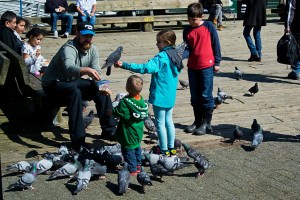
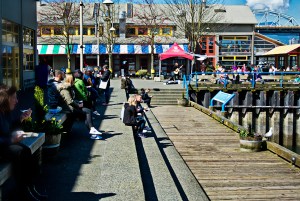
Linda and I got there early enough so that similar to the characters Merry and Pippen in the novel, “Lord of the Rings” would say, “to have second breakfast”. The public market has a great food court where if one is lucky there is actually a place to sit, eat, view the waterfront, and of course, people watch. People can also step outside, sit on the benches, and share their food with the birds.

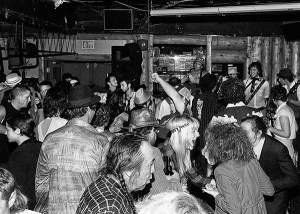
The day was sunny, warm and perfect for wandering the many shops filled with amazing artwork, and of course, also perfect for photography.

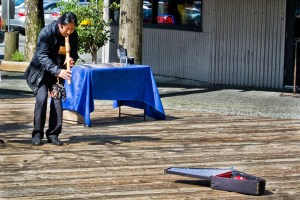
Granville Island is so colourful. Any way a person looked there was a picture waiting to be taken. I did notice a couple of other photographers setting up for scenics of the Granville Island bridge, one woman was crouching very low, with a wide angle lens, to photograph one of the many street performers. I am sure there were more, but Linda was intent on viewing as much artwork as she could, and she and I were having such a good time looking at and talking about things that I passed up many a shot.

I think a photographer has to work any environment with dedication. I have done that in the past, spending hours searching out subjects on Granville Island to photograph. (Not that one has to do much searching.) I read once that the best thing about Granville Island is it’s wonderful sense of imagination. I think that is so. And to quote another line from another movie, “I’ll be back.”


Movies about Photography              


This past week my wife commented to some evening guests that I always have something to say about any camera that one appears in a TV show.

Yes, I do that. I can tell her I am sorry for interrupting movies she is watching, but I’ll just do it again the next time I see an actor with a camera.

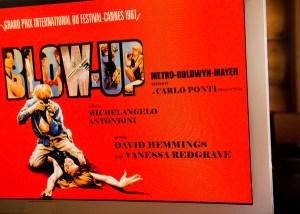
I enjoy watching movies about photographers. I guess the number one classic was “Blow Up” in 1966, staring Vanessa Redgrave and David Hemmings. The plot was about a fashion photographer that takes some casual shots of people while he walks through a park. However, when he blows up his prints he realizes he’s also photographed a murder. It is a worthwhile “time period” movie to watch if one is interested in what was “hip” in 1966 and likes symbolism.

I have seen it several times and enjoy critiquing the photography, and the cumbersome way the lead actor uses his Nikon. The stylish photographer kept enlarging, cropping, and enlarging the prints from his 35mm camera. Impossibly, the prints were always sharp and without any grain.

Another of my favourites was an awkward movie called “Nights in White Satin”. The story line was weak, but one has to watch a movie with a title and lead song by the Moody Blues. The music throughout was pretty good, and made up for the simplistic story revolving around a photographer who gets involved with a homeless woman.

The photographer tooled around on a Harley Davidson, used a Leica rangefinder, and, in spite of hurriedly taking pictures in dimly lit flophouses and back alleys the resulting pictures were always perfectly exposed with studio lighting. Of course, the woman living on the street was beautiful, well washed, and used makeup.

The third and last movie I’ll mention was packed with delightful clichés. It would be forgetful if not for those.

It was a made-for-TV British show entitled “Midsomer Murders”. The director sets his main characters, a couple of detectives, investigating the murders of camera club members.

The members were at odds over which technology is better, film or digital. The club members who used film had old Rolleiflexes, Leicas, and wooden 4×5 cameras, and all wore those campy, khaki-coloured, photography vests with all the pockets we occasionally see from time to time. The club members that preferred digital DSLRs had electronic flashes, and wore black leather jackets with black pants.

The directors must have had fun searching out every photo cliché imaginable, and, those of us old enough to remember film processing will laugh at the darkroom scene, where one fellow developed and printed colour film in a brightly lit room with what could only have been black and white chemicals in a tray.

I am a sucker for any movie or TV show that involves photography. They usually are poorly done, and I am sure I ruin it for anyone unfortunate enough to be in the same room because I am so vocal about everything photographic.

I do have a great time and can’t resist outbursts pointing out everything right or wrong (gosh, my wife is so patient) however, I expect some readers may share my enthusiasm and I am sure are thinking of movies with cameras that they critiqued out loud.

I wonder if there is a group called Photography Movie Addicts Anonymous?

Roadside Photography in February   


jre_3150bw 

february-watcher

jre_3138bwponys-winter-coat

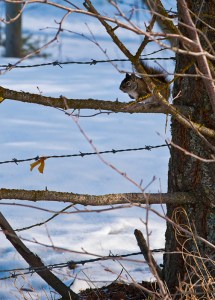
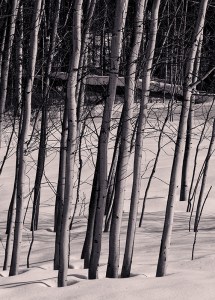
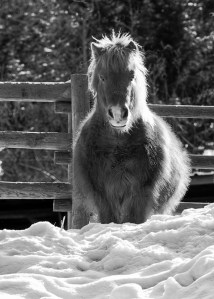
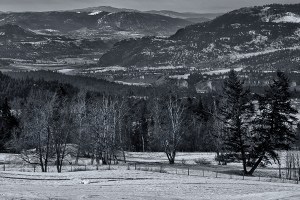
February is finally done. Gosh, that month always seems so darn long. Yes, I know it is the shortest month in actual days, but it hasn’t seemed that way for me. This past February was a bleak, grey, and lifeless time that one must endure. And try as I did during the past few weeks since my Kelowna beach walk, I just couldn’t garner the energy to wander the frozen landscape with my camera. However, when the sun finally made an unusual appearance on the last day of the month it didn’t take much coaxing to get me out.

All my wife had to say was, “Its nice out, let’s take a drive.” That sounded good to me. It’s always relaxing to take a drive around our rural neighbourhood. There still is a few feet of snow covering everything but the roads were clear.

I selected my 70-200mm lens. When I use one of my wide-angle lenses I am looking over the landscape, with a telephoto I get to look into it.

Mid-week is a perfect time to drive around, we had the roads to ourselves and I could drive slowly, stop to look around, or back up and get out just about any location to take a picture.

If it were just me, I would have headed down to the river. I like prowling the riverbank, but as we got into the car my wife said, “I don’t want to go down to the river.” I guess she didn’t want me taking chances tromping on the not-so-stable ice along the edge of the river.

My term for drive-around kind of picture taking is, “roadside photography”. The good thing about driving and looking for things to photograph is you cover a lot of distance and see a lot of stuff. The bad thing about driving around is once you are in motion it’s hard to stop. I am sure that without my wife reminding me, and at times, demanding I stop I’d just motor by many good subjects.

I don’t like to shoot from inside my car. A quick search on the Internet will bring up article after article explaining how easy it for those that don’t want to get out of their car to take pictures.

I can’t get comfortable. Everything is in the way and it’s hard to turn around with a steering wheel restricting my movements.

I prefer to stop, get out, close the car door, get my camera off the back seat, close that door, look at my subject for a while, and think about how I want to take the picture (remember “Previsualization” from my last article) then release the shutter.

Nevertheless, I expect I will be a roadside photographer for years to come. And I’ll keep getting in and out of my car and depending on my wife, Linda, to keep reminding me to stop.

I think sitting in the back seat would be a better and roomier place to take pictures from. My long-range plan is to have my granddaughters to drive me around. I mentioned this to the oldest at her last birthday, but I’ll have to wait a while because she’s only ten and can’t reach the pedals yet.

Photography on a Winter Beach    

beach-abbott

waters-edge-tree


Bootprints in the sand

beach-boat-docks

beach-bench-solitude

the-only-vacationers

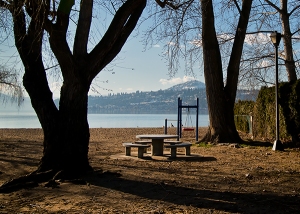
February found Linda and I spending a couple weeks in the lakeside town of Kelowna. Linda had 10 days of appointments so we decided rather than commute for four hours a day (it’s two hours each way) we would take accommodation.

Kelowna in the summer is packed. Parking is always at a premium, the cost of lodging anywhere near the beach is prohibitive and the traffic is, well the traffic is what one would expect in a city filled with vacationers. However, the days and nights in February are below freezing, and that pretty much reduces the beach crowd.

Linda’s appointments vary through out the week, but Tuesday’s was early so after a big lunch when she decided to relax with a couple magazines, I took the opportunity to grab my camera and headed to the beach.

I know that beach area pretty well. I have never seen a parking space during the summer, and any photographer wanting to capture photos of the beach, the lake, or distant mountains has to be content with lots of people included in their photographs.

My thought was to build a series of images that discussed the cold, empty winter lakeside. And I decided no matter what I saw I would limit myself to only photographs of the waterfront.

That meant to ignore the extravagant architecture of the beachfront homes, expensive cars and, of course, people. However, I was tempted to get shots of a guy eating a cup of ice cream while walking with his dog, and later on, two women slurping milk shakes while walking along on the breezy minus 6 Celsius day. There’s something to be said about Canadians.

I even declined when two tattered guys came up to me and suggested they would make good photo subjects. One fellow was waving a broken golf club handle and I stepped back saying, “I am not doing people today”. We all laughed and they ambled on leaving me alone on the beach.

The winter beach is interesting. Shoeprints in the sand instead of bare feet, the hordes of sun worshippers and swimmers are absent and the lake that’s usually a waterscape of boats has only ducks and geese this time of year.

I walked for two hours along the waterfront before deciding to turn back. And when I found a deserted bench I just sat enjoying the solitude. There is something about wandering alone along a big lake that is bordered by a large active city. I guess there is some isolation, but the noise never stops. Nevertheless, it’s an excellent opportunity to creatively point a camera without any interference.

Photographer’s resolutions for 2017  

The snows and drab colours of 2016 with the growth and bright colours of 2017.

The snows and drab colours of 2016 with the growth and bright colours of 2017.

So many people are saying they are relieved 2016 is over. I don’t know if I am really ready for this year to be over yet, there are lot of things I have enjoyed. That said, this year, 2016, like so many before it has passed by like a rocket. And there surely are new and exciting opportunities in the year to come, so I asked some friends if they had any resolutions or personal photography goals for 2017.

I knew they would struggle a bit knowing I wanted more than the usual simple ones we read about on some forums like, use a tripod more, turn off Auto mode, shoot RAW, make a photo-a-day challenge, and so on.

These first five are from my friends. I have edited them a bit, but the following is what I liked best from their resolutions for 2017.

  1. “This year my approach to photography is going to be to romance the simple things.” I like that. So much of the time photographers get so involved with the latest technology and spread themselve’s over everything while forgetting about the small stuff. And I think adding a bit of romance (whatever that means to each of us) is always a good thing.
  1. “I’ll be learning lots, I just got lights an they’ll give me plenty of opportunity to develop my own style. I want my knowledge to show in my work.” There is nothing like education. I can’t think of a better goal for any photographer.
3. “To grow and improve, as a photographer.” Now that is a good resolution.
  1. “Try new techniques and explore new places”. I could also use words like “examine” and “research.”
5.   “Despite how busy things get, make the time to shoot.” That is a great resolution for any one that enjoys this                                                  exciting medium.

I want to finish by adding two from previous years so as to give us a “Lucky Seven” for a lucky year for 2017.

  1. “Be more ruthless with the seeing and editing process; conditioning oneself to throw out the crap is the only way to keep improving.” This resolution is “quality not quantity”.

And I’ll suggest a final resolution number for everyone:

  1. “That they should take risks photographically and move away from always trying to please, and fitting in with what everyone else is doing.”

Make this the year to push beyond the comfort zone without being concerned with other’s opinions, to be pleased  first for oneself. Make this the year to put “me” in the photograph.   Linda and I are wishing everyone a Happy and eventful New Year.

Do you have a resolution for your photography for 2017 you’d like to share?

Photography at the Christmas Party   

tree-planters-4

tree-planters-1

tree-planter-5

tree-planters-7

tree-planters-6

I talked to a person this week that has been asked to be the staff photographer at an upcoming event. With that, I thought I would revisit an article I wrote December 2014.

The Christmas season is here and that means photographers will happily begin filling memory cards with photographic opportunities as they join family, friends, and co-workers at this month’s festive events.

The act of picture taking has become easy and so much fun as people rush over to take a picture and then quickly show other partyers the images from the LCD. Some seem more interested in that quickly snapped candid than what is actually happening at the moment. For many, it is more about the activity of picture taking than it is about making memorable photographs of the party.

Images made in this fashion rarely become more than stored files on computers and cell phones. People have good intentions, but after that initial viewing, most photos loose value because there are too many, and very few are good enough to give to others anyway.

What is my advice for photography at the next Christmas party? Yes, continue to make candid photographs of people having fun, but, perhaps, think about making pictures that tell a story, capture an exciting moment, and importantly, flatter the subjects. Most people don’t mind seeing a picture of them being silly or having fun, but they don’t like pictures that make them look stupid or unattractive.

My approach is to take a moment to look at the room in which I intend to make photographs, make a couple of test shots using longer shutter speeds (my favourite is 1/60th of a second), to include the room’s ambient light. And I always use a flash so as not to end up with brightly lit faces surrounded by a black environment.

I suggest taking group shots with two or three people. Get them to position themselves squeezed together with a tight composition, and include only a little background or foreground. Don’t shoot fast. Steady the camera. Select a shutter speed that includes the ambient light. Use a flash. Fortunately most modern DSLRs easily allow ISO sensitivity that can be set to 1600, and some can go a lot higher.

Shutter speeds of 1/60th of a second, or less, doesn’t always work for children (or adults) playing in the snow during the day because moving subjects will be blurry, but, with limited indoor lighting, moving subjects will only be properly illuminated when the flash goes off.

Lighting everything with complicated studio equipment would be great, but that would ruin the party for everyone. The occasion would become more about the photography and less about the fun and festivities. I use a hotshoe mounted flash and make adjustments as I go. I want to join in on the fun, blend in, and not act like a photojournalist.

Family and friends don’t mind having their pictures taken as long as it’s enjoyable and I want pictures that show them having a good time. So, along with those quick candids I make posed portraits with smiling faces, and if I select some pictures to give away later I want people to like and not be embarrassed by the pictures taken of them.


Time To Print Christmas Cards 

xmas-geese

santas-workshop

winter-christmas-view

xmas-chicken-1

xmas-chickens

holiday-train-2016

November isn’t even over and stores and television commercials are filled with Christmas advertising. Oh well, it always sneaks up on me, and anyway, I like all the festive celebration and excitement of Christmas. The early start means I get to enjoy all the colourful decorations, and listen to the Christmas music for a longer time. Yes, I like Christmas music.

All year long those photographer social media sites I belong to have been filled with photos made by members, but images posted on the internet quickly fade into memories and are easily forgotten when an hour later someone else posts theirs.

I like photographic prints. Prints have a life, whether framed and hung on the wall, taped on the refrigerator, or thumbtacked in an open space in the workroom. To me a print of any size has more importance than a digital image on my computer or iPhone screen.

Christmas is a great time for photographers that now have and an excuse (and an opportunity) to give our friends and family our photographs.

I suppose that could mean a big framed photograph, but what I am writing about is Christmas cards. Cards easier and less expensive than framed prints. Nevertheless, any card of a photographer’s work is more of a statement as a gift than an email.

I don’t want to believe that any photographer would be satisfied with mass produced generic Christmas cards. Personally, I want people enjoy my photography. Even if it’s only as a 5×7 card, and that’s better than having my pictures left languishing in some hard-drive.

Right now my wife, Linda and I are going through our many image files from this year’s photographs selecting those we want for Christmas cards. I’ll print up lots of different images and place all sorts of greetings on them. It is rare that we give the same picture to more than one person. And not all the cards say Merry Christmas. Although I like “Merry Christmas” what goes on a card doesn’t really matter. Happy Holidays, Seasons greetings, Have fun, A good New Year, and anything else I think fits a particular picture.

I have written before that my wife and I always produce a new monthly calendar, doing alternating months. I always get December even if it’s Linda’s turn. Doing a calendar is a neat way to enjoy our photography, but cards are a lot more fun because they are for others to enjoy. I also make cards for all occasions, like birthday’s, Valentine’s, Mother’s day, etc.,

My family expects me to share my photography. Sometimes it’s only a picture of something we’ve done, but if it’s a special occasion they always get a card. For those photographers that don’t have their own printer, it’s as easy as having a 4×5 print made at a local lab. Then get some construction paper, glue a picture on it, fold the paper, write something like Merry Christmas inside and give it away. And don’t make all the cards the same.                                 What would be the fun in that?

The Final Photographic Performance   

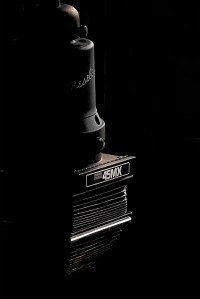
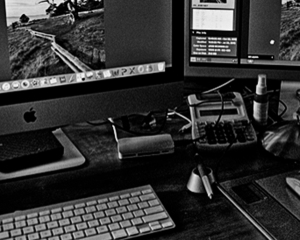
enlarger-2workstation-2

This week I wrote to photographer and blogger David Lockwood (https://davidalockwoodphotography.com) about why he seemed to be returning to film. His replied, “The whole process of using film, gives me a feeling of accomplishment; probably like the painter putting on the last brush stroke. Film gives me a feeling of control over the final image.” And regarding film vs. digital he wrote, “The question of film or digital shouldn’t really be asked, it’s a bit like asking why does one paint with oils, and the other watercolours. Both can produce an image, but both give a totally different sensation to the mind eye.”

During the time I taught photography in the 1980s and 1990s for the University College of the Cariboo (now Thompson River University) my students used film. In my initial lectures I would tell them that as well as learning to acquire skills using a camera, they would need to learn how to become proficient in negative development and printing. I would emphasize that those serious enough to strive for a perfect final photograph would come to realize that what they did with the camera was only the beginning, and that their final print would set them apart as photographers. I would quote famous photographer Ansel Adams who said, “The negative is comparable to the composer’s score and the print to its performance…”

Film has now been set aside by many of those serious about photography, although I expect artists will use film creatively for years, nevertheless, even with advancing photographic digital technology Adams’ words from the past are still significant.

I intend to spend time discussing Mr. Lockwood’s insightful thoughts about film photography later, but first I want to say a few words about digital image making.

The digital camera doesn’t make a picture in the sense of light permanently imprinting itself with different intensities on a chemically sensitized surface like film. Instead there are sensors and in-camera computers processing light from thousands of photosites that we transfer to our computers as data files for conversion into countless pictorial possibilities.

I once attended a photography workshop during which one of the speakers said in the past he would get up early and drive to some scenic location hoping to capture an exotic sunrise, after which he would package up his film and send it to the lab and leave all decisions to some technician’s personal vision. However, now he transfers his image files to his computer and he alone controls how his photograph will be processed for viewing and finally printing.

As in the days when I processed negatives in special chemicals and manipulated prints by adding and subtracting light, I now use computer programs to process my RAW images in my quest to perfect my vision.

I say the same thing to modern photographers as I did to my students, that what they do with the camera is only the beginning,

The image on exposed on film, although now a RAW image file, is only the “score” to the “final performance” – the photographic print.

A young photographer came into my shop announcing, with some kind of misplaced pride, that he would never use PhotoShop on any of his pictures because he was only into true reality. Although I didn’t comment, I thought about the manufacturer presets that were applied in-camera to his image files and the limited colour spaces his inadequate JPG files gave him, and his confused notion of photographic reality.

If he really wanted to step away from the unreality of computerized image making he should talk to David Lockwood who wrote, “The camera, light meter, film, paper and chemicals all go towards producing a single and unique image. That does not happen with digital; from the moment the shutter is pressed, the whole thing becomes a cloning process from which endless exact copies can be produced.” However, as Lockwood also says, “The question of film or digital shouldn’t really be asked… Both can produce an image…that give a totally different sensation to the mind eye.”


Why do photography?

No Loitering

Guitar

St. Andrews

Tall ships Victoria

Kamloops Lake 2

Sternwheel

Coca-Cola

Forgotten shops

Yellow & Red

Just Waiting

After a discussion with a fellow who told me he has become bored with photography I thought I’d revisit the following from an earlier post.

I once asked “Why do photography” to members of an online forum and received some unremarkable responses like, “because I can” and “because I have a camera”.  Well, I suppose it is all about the camera to lots of people. However, there were two responses that I really liked, the first from someone called Soenda who eloquently wrote,

“ Because taking pictures has helped me see better. Before, I was less aware or the way light strikes leaves. I didn’t notice the symmetry of birds on a wire. Sunsets were masses of agreeable colour; now they are gold, pink, lavender and blue”.

The second from someone named Laura who philosophically said,

“Because when I look at my life, I cannot say I have done nothing. The proof exists that I have seen at least a wee bit of the world. I take pictures because it is artistic expression, and I think when we repress our artistic nature, we do ourselves no good, no good at all. I take pictures because it is fun. I can spend the entire day taking pictures, and it could not be a day better spent…”

For me, photography changes. There are times when I just want to play and am interested in nothing more than experimenting, my goal just seeing how something works.   I enjoy photographing my friends, family and pets. Pictures that have meaning only to me, but might never go anywhere other than on my computer’s screen saver.  And of course, until I retired, photography was the way I earned my living.

There are those times when I try to visually create an image that says something to others about how I see and feel about something. I can’t really say that the medium of photography is a passion for me, but I am enthusiastic. It’s just something I think about a lot and do.

Many use photography as a way to express themselves artistically, of which I heartily agree. Expressing oneself through photography is easy, as it doesn’t require the trapping of other mediums like painting or sculpture, and merely requires a camera.

Photography, for those who first wanted to make photographs, became accessible during the 1800s. The first surviving image made by Jacques Daguerre was of some artistically arranged plaster casts resting on a window ledge in 1837, and a short 20 years later photographers were wandering the North American wilderness and newly constructed cities creating photographs with the same intensity, all though not in the same numbers, as we are today.

Why take pictures? For some it is to document history, we know about the civil war in the 1860s through the photographs of Mathew Brady and the Vietnam War in the 1970s by David Kennerly.   Timothy O’Sullivan, William Henry Jackson, Ansel Adams, Elliott Porter, Imogene Cunningham, Bret Weston and others gave us their visual opinions of an early American landscapes.

There were those like Dorothea Lang and Walker Evens that during the great depression of the 1930s told us about the human condition. While Photographers Arnold Newman, Richard Avedon and Canadian Yousuf Karsh, celebrated the beauty of the human expression”  paving the way for modern portrait photographers.

For some the question “Why do photography?” may be very philosophical and for others practical. Soenda commented, “ Because taking pictures has helped me see better.” And Laura wrote, “I take pictures because, when I look at my life, I cannot say I have done nothing.”

I wonder what readers would answer.

Trip to Harrison Hot Springs, British Columbia        

Lake view

Town Directions sign

Harrison town

Coastal mountains

4PM at Harrison

Pier

Wet Street

Hoter Bear

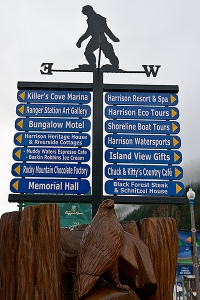
The best laid plans of mice and men often go awry”. That verse from the famous Scottish poet, Robert burns fit perfectly with our long anticipated plan to have a pleasant vacation at Harrison Hot springs.

My wife and I had been looking forward to a few days soaking in the luxurious Harrison Hotel’s mineral springs, and doing photography in the small waterfront town, and the nearby Sasquatch Provincial Park trails.

The weather report was for a sunny Monday, with some rain on Tuesday and a clear partly cloudy Wednesday. So we thought, rather than abandon our reservation (with the accompanying cancellation fees) we’d put up with the showers and stay close to the hotel. After all, shooting in the rain isn’t all that bad as long as it’s not too hard. However, “hard” is just what we got for our one full day at the resort town.

The first evening was so much fun with a soothing dip in the hot pool and a nice walk down the esplanade for a nice meal of fresh mussels and clams. And we sat talking about our plans for an early morning soak and a day of photography.

I rose early the next morning raring to go and went to the balcony to see what the day had in store for us outdoors. Well, what it had in store was a heavily cloud-covered town and one of the heaviest torrential downpours I could remember.

Trying to be optimistic we wandered down to have coffee, then headed for the hot pools in hopes of waiting the morning rain out. I will say that my short description of that event was that we were getting as wet from the rain as from the pool.

The rest of the day was much of the same with occasional short trips out when the rain lightened enough for some photos. As long as the rain was light I could wipe any accumulation off my camera with a towel. And the lens hood fended off rain as long as I didn’t angle the camera and lens in an upward direction.

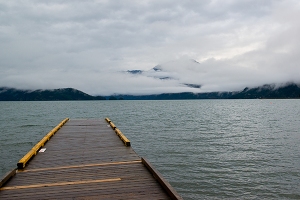
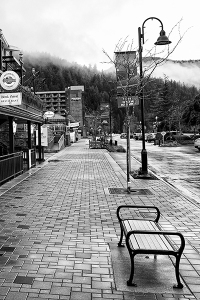
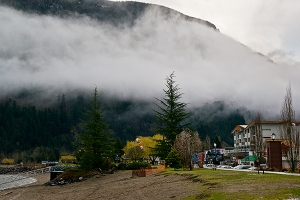
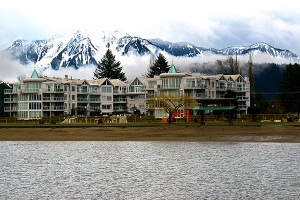
My planned hikes in the dripping wet forest were out, so my short excursions were limited to the small town and beachfront. I liked the overcast and low hanging clouds. But those expeditions were short and I hesitated to get to far away from the safety of my hotel.

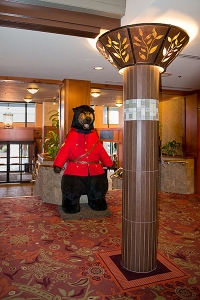
I normally take time to wander about indoors and had packed a flash for some interior photography. But along with a wet visit to the Harrison Hotel, we had also selected a time when there was a large convention. My one attempt at photographing the large 12-foot plush RCMP bear in the lobby took about 20 minutes as I waited for people to pass by so I could get a clear shot.

Oh well, so much for photography. I worked hard to get the few photos I got. In spite of the rain we did have a great time relaxing in the very hot mineral pool, chatting with other guests, and we had some enjoyable meals in local restaurants. In future I will need to take coastal weather reports more seriously if I want more than that.