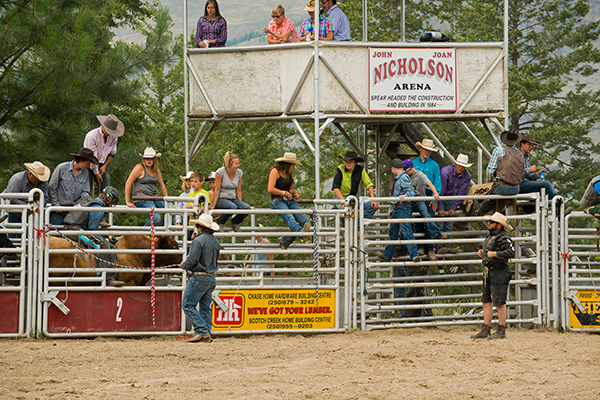
The Annual Pritchard Rodeo       

Pritchard Rodeo

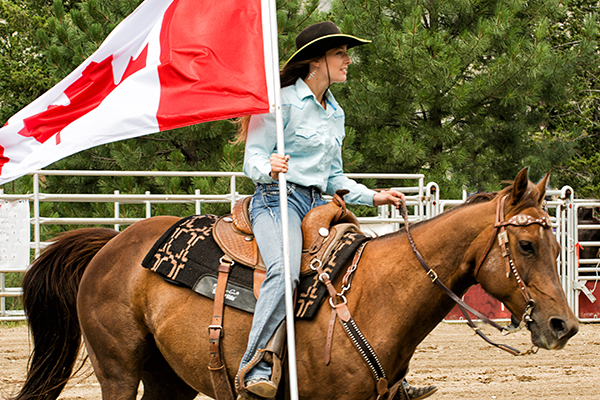
Canadian Flag

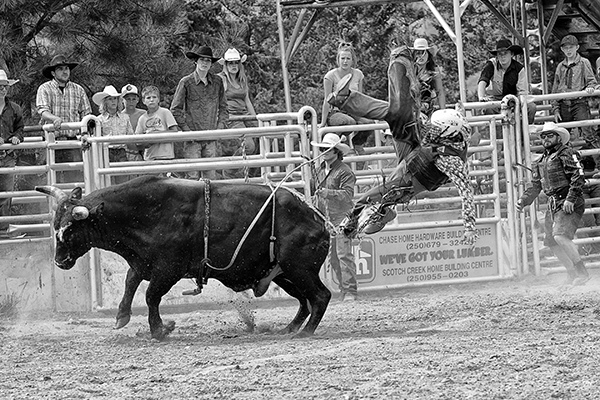
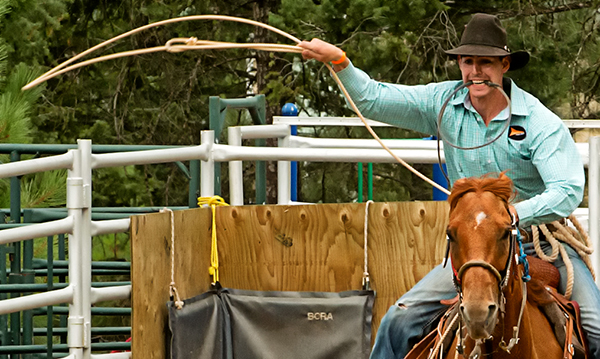
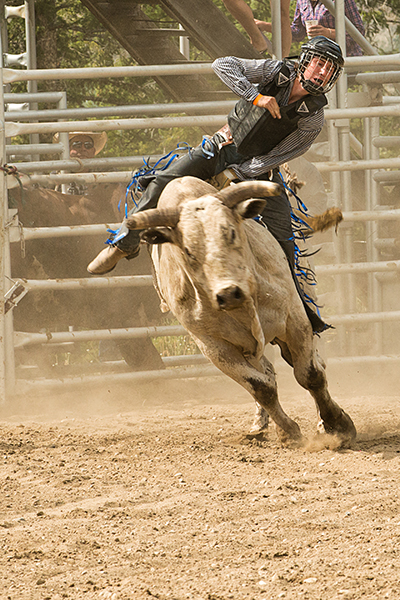
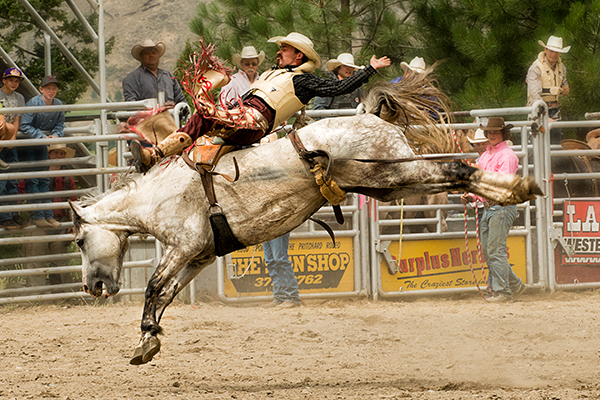
Bull wins

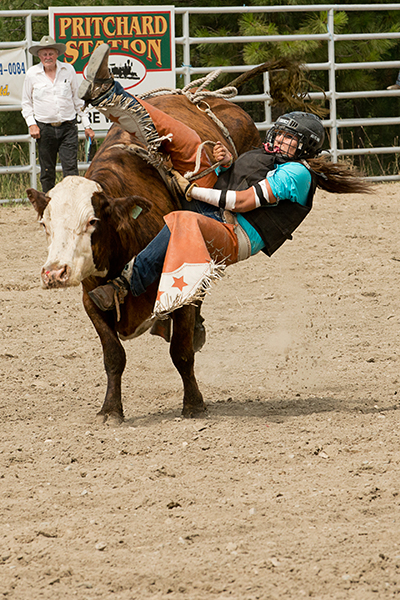
Cow-1 Cowgirl-0 Dustin

Lost the seat

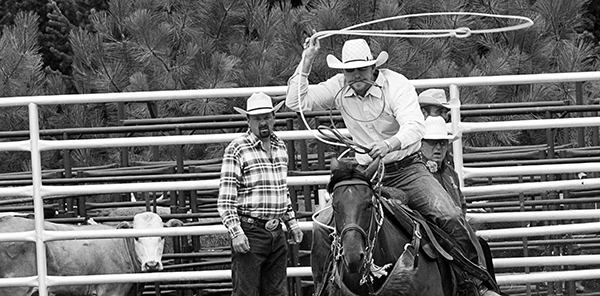
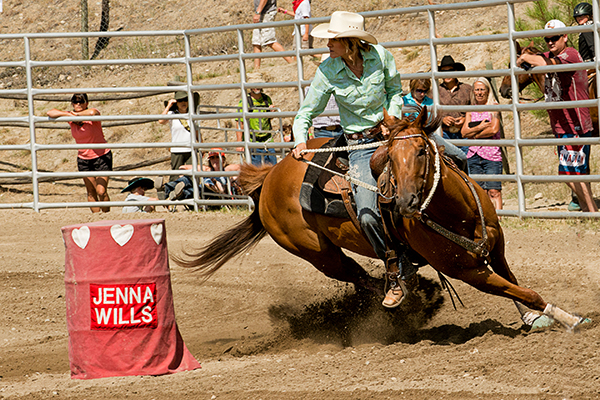
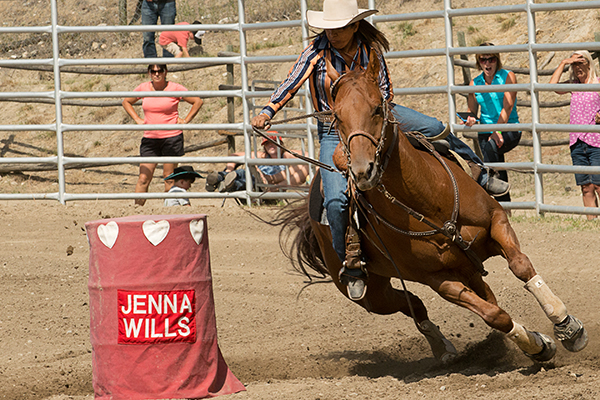
Roper  Barrel racer

Barrel racer 2

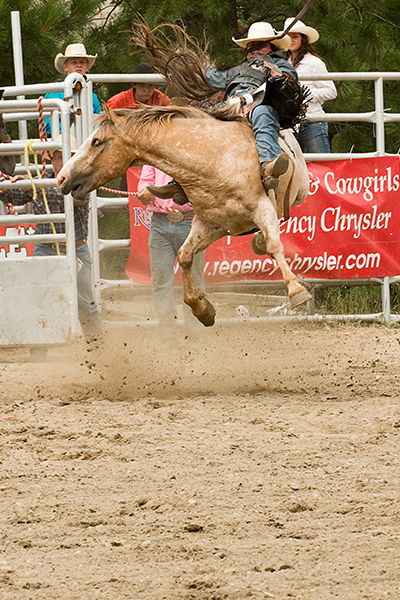
Wild bronc

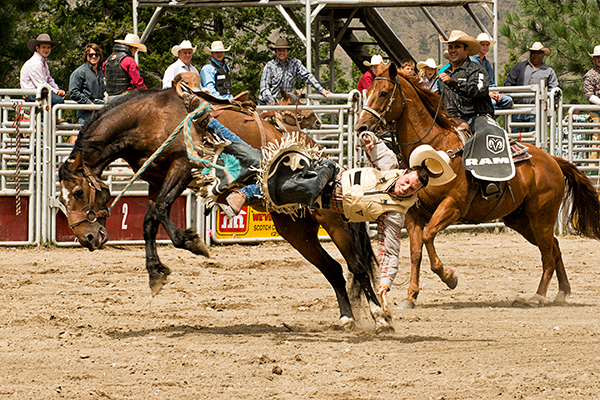
Bucked off Bareback ride

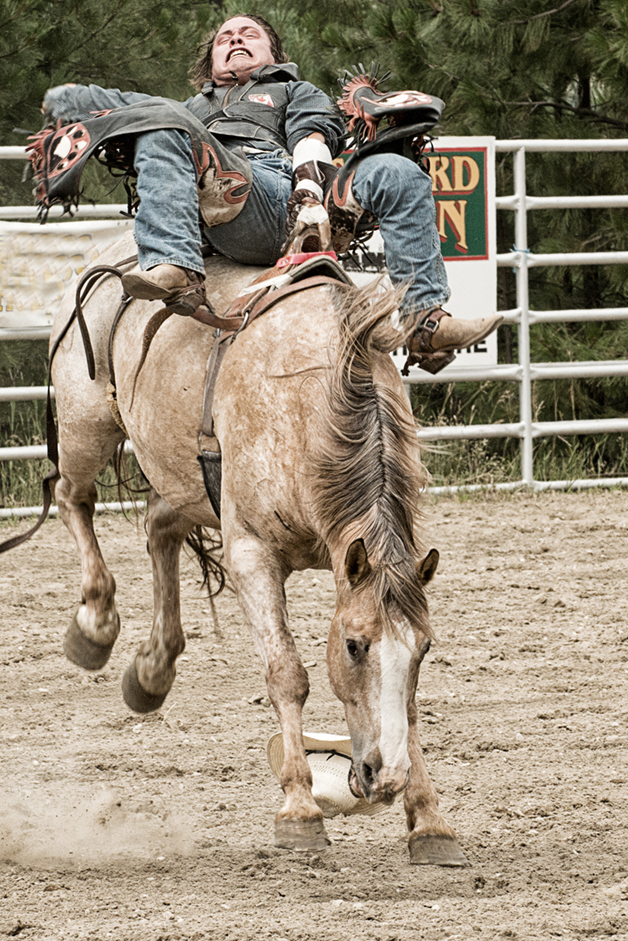
Hard ride

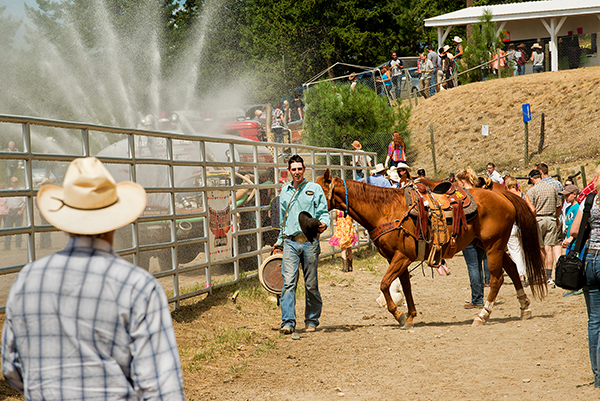
Cooling off ringside

As usual July has been a busy month, and, along with everything else, this past weekend had been one of my most looked forward to events to photograph, the annual Pritchard Rodeo.

I know I write about it every year, but I like talking about subjects that I take pictures of and there is nothing like fast paced subjects to keep photographers on their toes and rodeos, easy as they are to photograph, are always worth taking a camera.

The Pritchard Rodeo grounds are perfect for photographers. It has an arena that is enclosed with a strong metal fence that’s safe to stand close to and doesn’t restrict the photographer’s view. Of course, one has to be careful when excited horses are getting ready for competitions like the Barrel Race, but it is a rodeo and one must remember that the animals, like any other athletes, are focusing on what they are about to do, and not some silly person with a camera.

When photographing fast, volatile subjects like those at a rodeo I prefer shutter priority mode where I select the shutter, and the camera chooses the aperture. I like shutterspeeds of 1/500th or more if possible. One also must be aware of depth-of-field, and I balance my shutterspeed and aperture taking that into consideration.

All I do is follow the action, choose a position that allows everything to move towards me, and let the camera’s computer handle the rest. Yes, it’s all so easy for photographers, no matter what their skill, to get images worth framing.

I remember a friend telling me last year why he liked attending the Pritchard Rodeo. He said, “I like the wild location. Look at the hills, and trees, and all the open space. Everyone is so friendly, they say hello even though they don’t know me, and there is even a beer garden with people socializing, but no one is getting drunk, being loud, or causing trouble.”

My favorite activities to photograph are the bronc riding, and bull riding events. The action is explosive and I think the participants (horses, bulls, and riders) pitted against each other are well matched and one can never be sure who will win. I am of the opinion that both animals and humans know it is a game.

I also enjoy photographing barrel racing. What a great subject to photograph. Trying to capture what seems to me like a gravity-defying moment as horse and rider, fast and furiously, circle the barrel is exciting.

I am pretty lucky to have a local annual rodeo about five minutes from my home. I can go there to have fun, socialize with friends, and still get as many shots (that are keepers) of the rodeo as I can.

I said this last year and I will say it again. There should be a note saying,

“No animals, cowboys, cowgirls, or photographers were hurt during the process of having a great time.”
Photography, a personal vision.

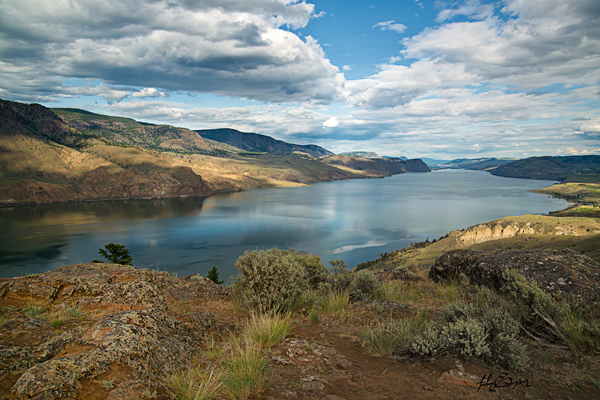
Kamloops Lake 1

Kamloops Lake

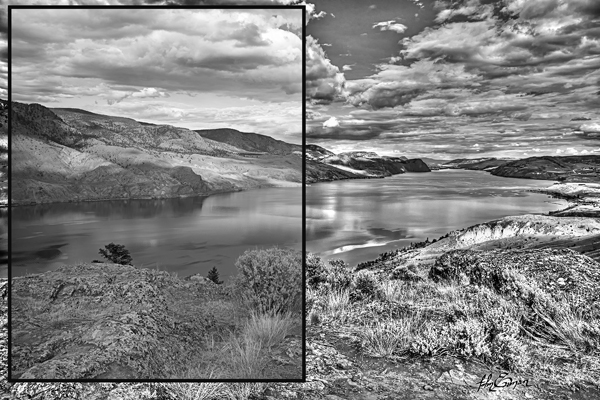
Kamloops Lake 1a

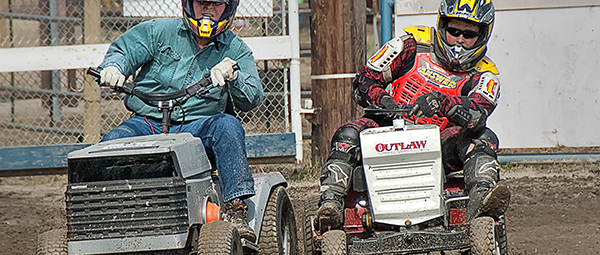
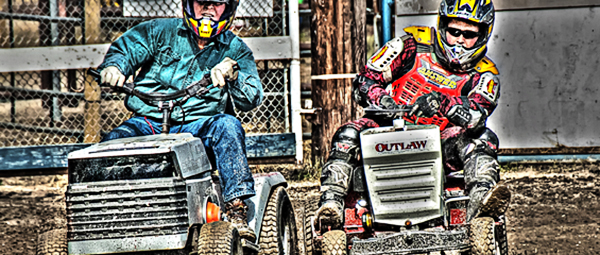
Lawnmower Race copy1

Lawnmower Race copy2

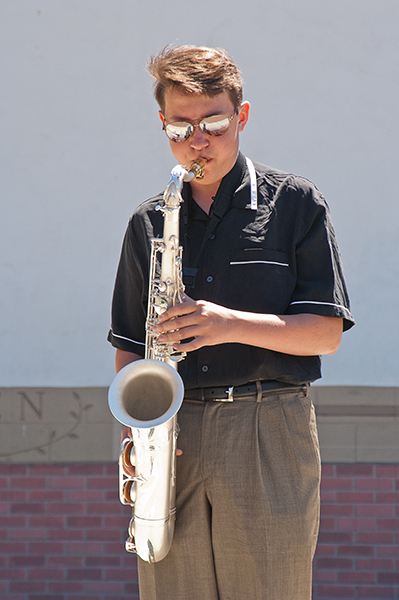
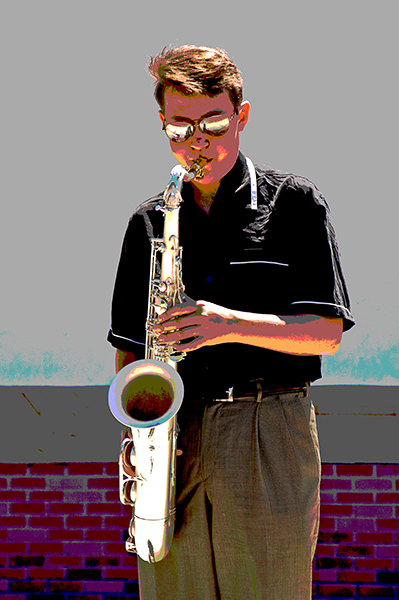
Sax player 1 Sax player 2


My photographer friend Greg posted the following statement on the Canadian photographer flickr.com/group: “Recently I’ve come across a number of photographs on the social media outlets that are absolutely stunning and amazing works of art, but there are a whole host of people who comment saying ‘it looks fake’, ‘it needs to be more real’, ‘that picture has no resemblance to reality’”. And he continues raising the question with “Should we be striving to produce photographs that are more ‘real’ to please the crowds who seem to have very little understanding of art?”

My quick and easy response is to quote Plato, “Beauty lies in the eyes of the beholder”. Even Shakespeare in his work, Love’s Labours Lost writes, “Beauty is bought by judgment of the eye”.

I understand his (and others) frustration with those that are ready to condemn anything that deviates from their personal interpretation of photography, but we need to remember that is just their opinion. I don’t think Greg or any other photographer should “be striving to produce photographs…to please the crowds”. However, when one displays a photograph on any social media site one needs to be ready for someone else’s opinion.

I used the following last January in my discussion of Photography as a Fine Art. Wikipedia’s on-line encyclopedia says, “Fine art photography is photography created in accordance with the vision of the artist as photographer.” That should be enough to ease my friend’s frustration. I will comment to him that those detractors didn’t understand the interpretation or artistic vision of the photographer’s work.

Some may disagree with me, but I think photography has always been a technology driven medium. And just as there are those willing to push the limits, there surely are also those that employ their cameras simply as devices to document the people, objects, and scenes in front of them, and I have no doubt their criticism might come swiftly to those that manipulate their images instead of maintaining the more conservative course of photographic reality.

Regarding Greg’s question about some people’s understanding, or lack of understanding of art, that is a question that countless generations may have struggled with possibly since the first humans decided to place a favourite rock in their cave or put coloured pigment on the wall.

I believe the question is actually, “What is Art and who has the right to define Art?”

Mark Twain is attributed with the words, “I don’t know much about art, but I know what I like.”   I expect most of us fall into that category.
Here are a number of quotes about art by artists. American architect and designer Frank Lloyd Wright said, “Art is a discovery and development of elementary principles of nature into beautiful forms suitable for human use.” However, I much preferred photographer Ansel Adams words, “Photography is more than a medium for factual communication of ideas. It is a creative art.” Or this from novelist Rainbow Rowell, “…and art wasn’t supposed to look nice; it was supposed to make you feel something.” And French Impressionist painter Edgar Degas wrote, “Art is not what you see, but what you make others see.”
When one has the need to be creative they should have the right to decide on their own particular style to fulfill their personal creative vision. What that vision is should be entirely up to the photographer, and the audience for whom the image is produced. I think the problem in this day of mass social media is how to select the right audience.

I do look forward to your comments. Thank you, John


Interesting and Unconventional Photography

Unorthadox refection

Building behnd the shadow LIght in the shadows

Looking Up Town

About the time of World War I the common attitude regarding art and photography was shattered by innovations of modern painters like Picasso and Matisse. However, the fundamentally realistic medium of photography did not acknowledge that photographers could or even should produce abstractions or distortions to the extent that painters could.

Nevertheless, there were a growing number of artist-photographers like Alfred Stiegletz and Edward Steichen that worked at bringing photography in line with modern painting by creating abstract images and processes.

They, and others, worked to popularize the “sharp focus realism” or “Modernist” movement that was at that time deemed unartistic by traditionalists that called themselves “Pictorialists”. (The Pictorializm style is where a photograph lacks sharp focus and sometimes even had brush strokes muting the surface of the final print.) The pioneers of the “Modernist” movement in North America was Alfred Stiegletz, Edward Steichen and Paul Strand

The current age of digital photography seems to have vitalized photography more than any one could have guessed as recently at the 1990s. Although there are still those clamouring loudly from the sidelines calling themselves “traditionalists” and insist they will never move beyond their beloved film.

Attend any event and there will be lots of cameras ranging from cell phones, little point-and-shoot cameras, to impressive DSLR’s documenting everything from every angle. The internet is packed with images, with all kinds of sites available for people to stack their documents of everyday life.

In a moment of late night boredom I decided to do a search for a past friend who lives in the US. I not only found his company advertisement, but also several pages of family Christmas photos he and his wife took. My thoughts were that this is a reasonable and typical document of people having fun, nothing creative, just a real nice family documentary; and not unusual, as photographic documentation is more prolific than it has ever been, however, I began to wonder about another creative part of photography, the abstract and the unusual.

There are lots of instances of PhotoShop manipulation that anyone can find without looking very hard, yet I wonder at the style of abstract photography practiced by the greats like Stiegletz, Steichen, and Strand. They were very much involved in looking at everyday subjects from different angles or perspectives. They photographed the usual in unique ways and photographed the unique in unusual ways. They searched out things that many would ignore because they were ugly or boring, and chose diverse photographic views and visually discussed them in interesting and unconventional ways.

In my work I get to see peoples’ photos all the time, landscapes, portraits of people and animals, and a few close-up flower shots. Usually they are very nice and some are downright beautiful, but it is rare for someone to show me an abstract created by using their camera to photograph something using a unique view.

Abstract art and abstract photography may not be to everyone’s liking and I know when we show our photographs to other people we want them to comment favourably about our pictures. When a photographer takes a chance and tries to visualize and photograph something differently, he or she cannot worry about whether or not they will receive praise or criticism of the visual creation of the unusual, the ugly, the boring, or the unique. To do so means they must contemplate photographing the subject in their own personal way.

If readers have the interest, my suggestion is to take some time and find out about those pioneer photographers Stiegletz, Steichen, and Strand. We can always learn from history and their photography is very interesting and just might be inspiring to those wanting to step away from the crowd.

I look forward to any comments. Thanks, John

The Vancouver Camera Show and Swap meet 2015

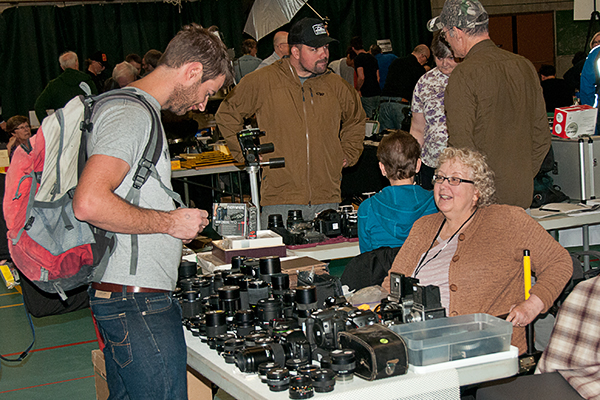
Linda at the SwapMeet

Linda at our table

Camera Swap find

A good find at the Swap meet

Camera Swap Meet

Check out this Leica

Vancouver Swap meet 2

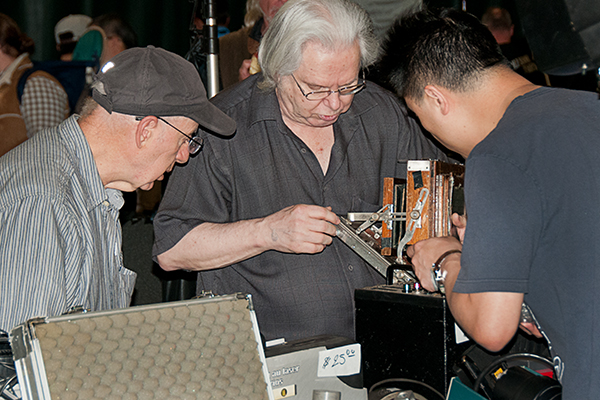
Lets assemble this 4X5 camera 

Ziggy Rhode

The Swap Meet organizer, Ziggy Rhode selling a Hasselblad

Vancouver Swap Meet 1

Wow, a nice twin lens at the Vancouver swap.


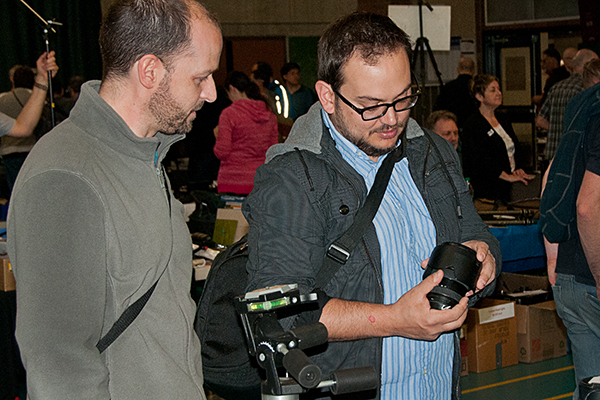
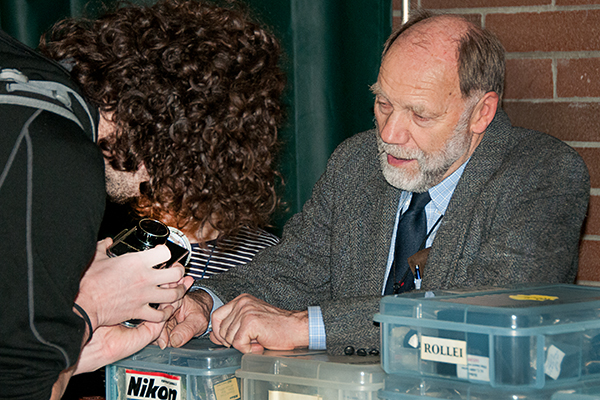
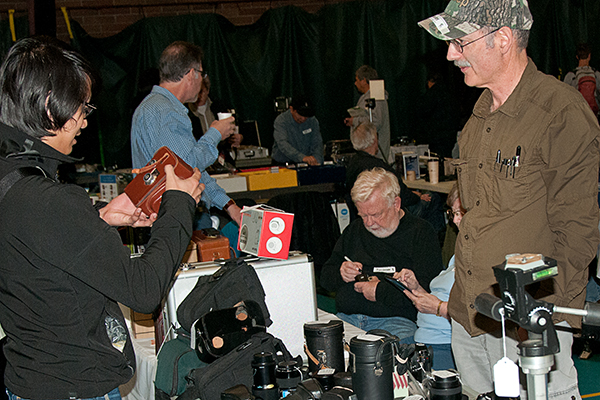
The Western Canada Photographic Historic Association hosts Vancouver, British Columbia’s, original camera show and swap meet each year. This long-running show has now reached its 39th year, and makes the claim of being the largest in Canada with I believe approximately 120 tables, and I have no doubt well over 1,000 people walked through the doors this year.

I can’t remember exactly when we (my wife and I) had our first table there, maybe some time late 1990s. Since then each year we join an always-interesting diversity of photographers in a large, photographic equipment packed hall in Burnaby, BC, who are eager to exchange information and ideas, and, of course, are looking for great deals on all kinds of camera equipment.

Each year we make the three and a half hour drive from Kamloops the day before and lodge overnight and eagerly join other vendors the next day at 7:30AM to setup. The early morning scene is so much fun as we interact with others busily arranging equipment on tables before the show even begins. When I arrived I was happy to see people I have known for years. Better put, I was happy to see people I have known for only one day a year for about 20 years.

For me it is always a rush to organize my table quickly so I am ready for the swap meet’s early bird shoppers who pay a premium to begin shopping at 9am. That group of shoppers isn’t so much into browsing as they are searching for specific pieces, and they will walk quickly by a vendor’s table unless they spy that item.

At the 10am regular admission I always am glad to get a chance to sit for a moment (only a moment) after the hour of non-stop showing, demonstrating, explaining, and, of course, bargaining with savvy photographers.

Spending a day surrounded by a huge selection of cameras and other photography equipment is exhilarating, and getting a chance to talk with other photographers about their different interests is invigorating. Even after all these years I always learn something.

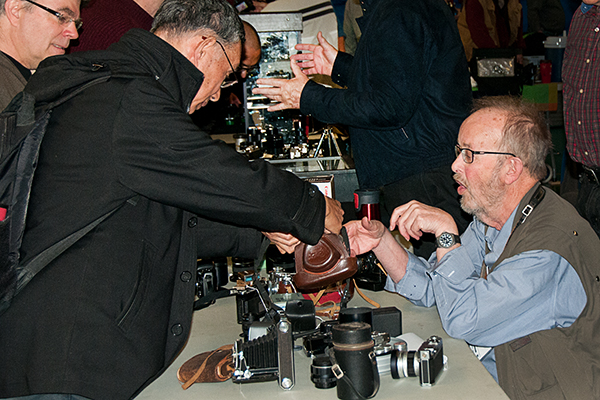
As I have mentioned before when I have written about this exciting event, one will find photographers of every age, from experienced elders to young people accompanied by patient parents. This congregation includes all kinds of lifestyles, interests, and photographic specialties. There are those that are dedicated to film, historic cameras, and processes of the past, walking alongside others that carry the latest and brightest in modern technology.

Other than actually pointing a camera at some inspiring subject, a gathering like the Vancouver Swap is a superb way to meet and exchange information with other photographers, and look at and check out the many kinds of photographic equipment that would not be so easily available anywhere else.

I had a great time with the photographers I met this year and the depending on who joined me at my table, the conversations always changed. My day of selling was a success, as it was for most of the dealers I talked to at the end of the day. And I even had some time to purchase another lens for myself, which is always nice.

I always look forward to any comments. Thank you, John


Chewy the Marmot and Chase Creek Falls

Chewy the Marmot

Chase creek Falls

Chase Creek April 2015

Path back to town

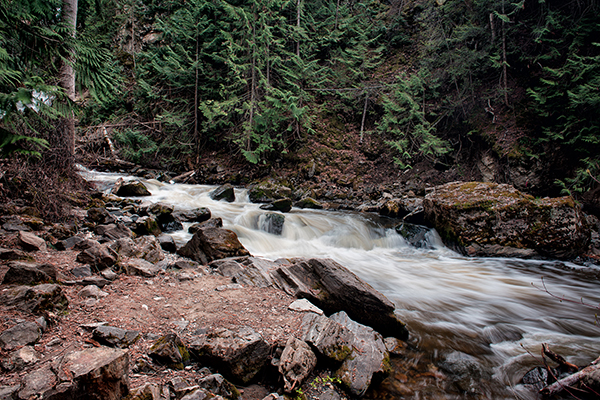
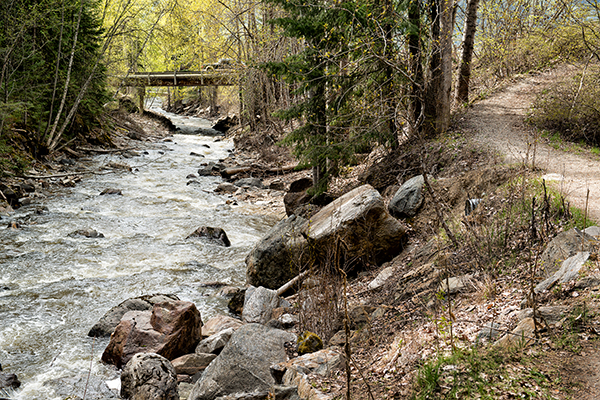
Spring is here. The weather has slowly warmed up I can see from my porch that the snow on the mountaintops is diminishing, so I decided it was time to visit a waterfall not far from my home.

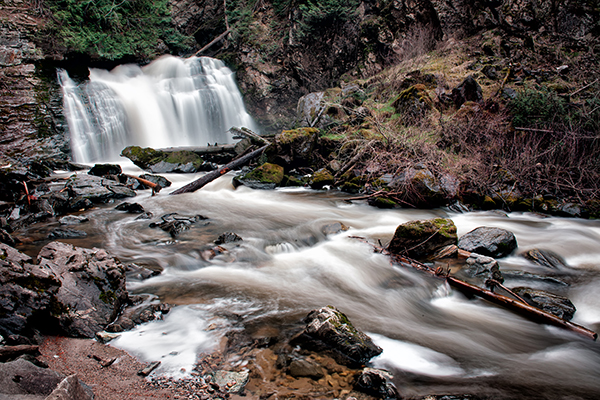
I usually avoid waterfalls at this time of year because high volumes of murky, spring water rushing over the falls isn’t that photogenic and one never knows if the river’s bank will give away while you position your tripod. However, with the low volumes of water being reported I was sure that at Chase Creek Falls the interesting stream features like rocks and trees would be visible with the reduced water flow.

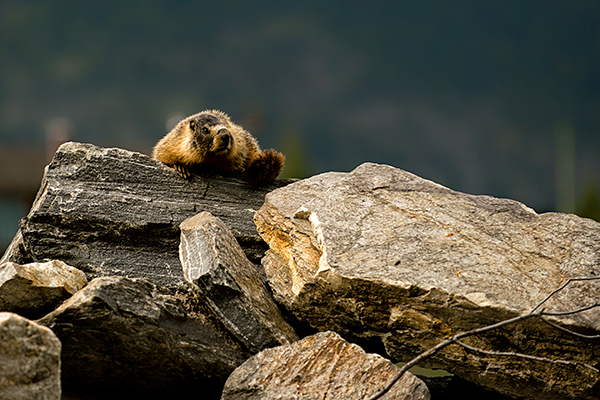
When I got to Chase Falls and parked my car I noticed a small sign along the trail that said to watch for a local marmot named “Chewy”. And sure enough, as I passed a large pile of very big rocks, there was a big marmot perched on top like some amusement park guard.

Marmots are usually shy when one walks near their burrow, but this rodent didn’t seem to be bothered in the least and readily posed for me as I hopped from rock to rock making portraits of him or maybe her. I did see a couple of immature marmots scurry out of sight; so I might be right thinking Chewy might be her instead him.

When I purchased my first DSLR years ago and began learning how to use Photoshop I remember saying to a friend that what I liked best was how easily one could crop without getting the degradation that came when cropping prints made from film. The problem with 35mm film was that anything shot over 400ISO was always grainy so that shooting wide and cropping later was usually disappointing. That’s why many photographers preferred medium or large format cameras to the tiny 35mm film.

I set my tripod up and focused my 24mm lens on the falls and shot wide.  I knew that when I viewed my images on my computer I would choose a crop that fit the rule-of-thirds without loosing much detail.

Modern DSLR sensors are much better in their ability to capture grainless detail at high ISOs than 35mm film was and even cropping away 50% of the picture doesn’t reduce the quality very much.

The low water level made it easy to scramble among the large rocks along the bank and chose a comfortable location to set my tripod up. I used a couple of neutral density (ND) filters so I could reduce my shutter speed to 3, then 4, 5, and finally 6 seconds to slow the water down and I chose a small aperture for lots of depth of field.

I have always enjoyed photographing that waterfall. I think I made my first photographs of it sometime in 1976, and I cannot recall how many times I have been back there since. I am fortunate to have a place like that so close to home where I can always find something to photograph.

With that I think I should end with a quote by a great Canadian photographer, Freeman Patterson, who says, “Seeing, in the finest and broadest sense, means using your senses, your intellect, and your emotions. It means encountering your subject matter with your whole being. It means looking beyond the labels of things and discovering the remarkable world around you.”

I look forward to comments. Thank you, John

Infrared photography moves a photographer far from the usual.

Horses in meadow

Monty Creek

Pritchard Barn

Spring pond                                                Pond Cattail

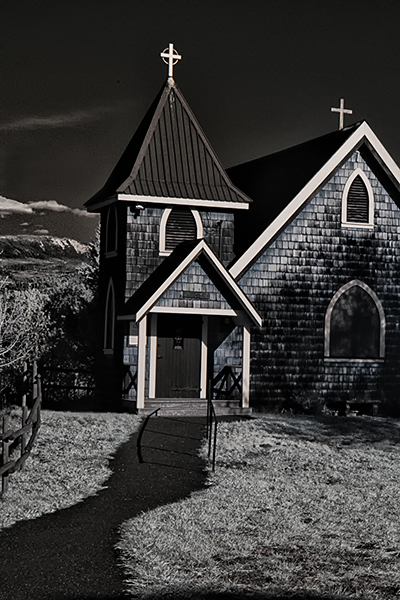
Monty Creek Church  Watch for Livestock

Sometimes it is necessary for me to get away from doing the usual things. My time as a photographer is spent being precise. I meter for the light and shadow, striving for the best possible exposure, and not much is left to chance.

On the Easter weekend I spent a day photographing a family Christening. My job was to take a creative approach to photographing that religious occasion and telling the family’s story. At an event such as a Christening nothing waits for the photographer and there is no time to correct omissions or mistakes.

The main rule for me was to keep out of everyone’s way, not to become a focal point of attention, and never to miss any thing that happens.

The next morning as I sat at my computer working on the post-production photo editing of the Christening my wife mentioned she would like to finish off the roll of film she had been saving for a sunny day. It didn’t take much convincing to ignore the day’s “to do” list and as I looked out at the clear blue sky I realized I needed something to take off the stress I had been feeling.

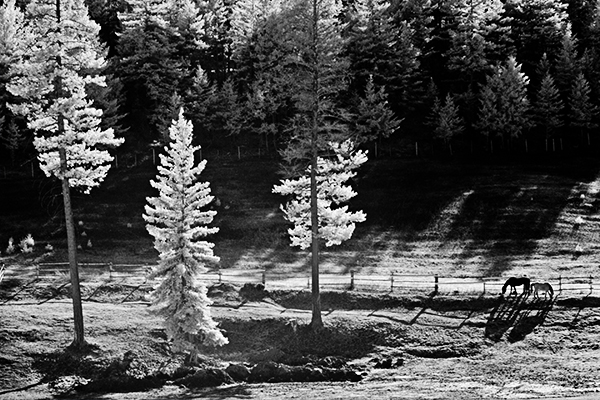
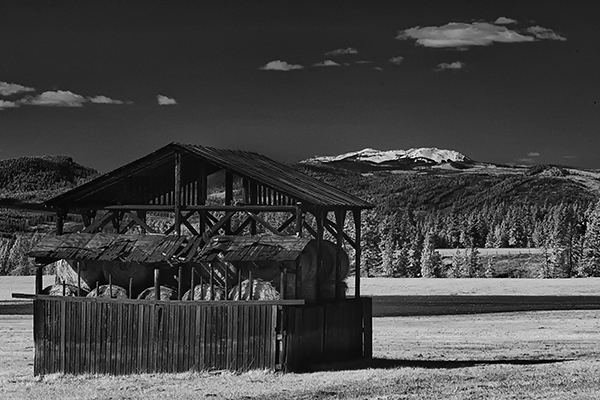
There is nothing quite like infrared photography. It is always an exploration when I use the well-worn Nikon D100 that I had modified many years ago to only “see” infrared light.

Vegetation appears white or near white. Black surfaces can appear gray or almost white depending on the angle of reflected light, and if photographed from the right direction the sky becomes black. The bluer the sky, the more the chance there is for an unworldly, surreal effect. And white surfaces can glow with a brightness that illuminates the sky.

I have written about infrared before, but for those that are new to this subject here is the gist of it.

Digital camera sensors are as sensitive to infrared light as to visible light. In order to stop infrared light from contaminating images manufacturers place what they call “a hot filter” in front of the sensor to block the infrared part of the spectrum and still allow the visible light to pass through. My infrared modified D100 has had that filter removed and replaced with a custom filter that allows for infrared only.

My wife wanted to visit a marshy area not far from our home that on wet years fills up with water, and is annually visited by birds, ducks, and geese. But this year’s early dry spring has not given the marsh much water, and when I walked up to the dam two ducks quacked loudly and flew away, and that was the only wildlife sighting for the day.

The back roads always have something to photograph, so we moved on and chose our subjects depending on the light. Linda was shooting with her old medium format 1950’s Ikoflex and was looking for interesting features like fallen trees and rock formations. That particular old film camera doesn’t have an automatic mode, or an in camera meter and requires a hand held light meter. I am sure the few passers by wondered at a woman standing roadside with a boxy thing hanging from her neck while she peered at something in her outstretched hand.

I just explored, and unlike Linda’s limited, 12 exposure roll of film, I had an almost endless supply of digital choice, and besides, infrared changes the way we see things. So I pointed my camera at anything that caught my eye.

I began this discussion with the words, “I spend my time being precise.” And “Not much is left to chance.” However, not so much with infrared. I only use the meter as a not-so-precise guide, and don’t worry about much else. I do try for interesting angles of the subjects I photograph, but sometimes I am in for a surprise when I bring the images up on my monitor.

Shooting infrared is always an exploration, a discovery and moves a photographer far from the usual.

I look forward to all comments. Thanks, John


Does Film Lend Itself Better to Creativity Than Digital?

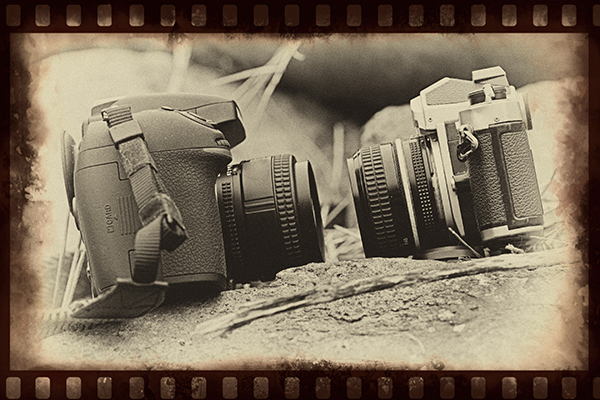
Digital VS Film

Where does a photographer’s creativity come from?


This past week I received the following question, “is film a better creative format than digital?”

I admit that the discussion regarding film vs. digital isn’t really that common anymore. Yes, I talk with high school students that are using film in photography classes. Those discussions are mostly about how film works, about processing, and printing, or using different chemicals.

Sometimes an older person who stopped taking pictures in the 1980s will loudly tell me digital is unnatural, doesn’t look good, and is cheating. Cheating? That conversation is always humorous. However, it is one-sided and not really worth getting into because any opinion but theirs is going to be ignored.

However, this question wasn’t about which is better as a way of making photographs, it was about creativity, and that intrigued me. Creativity is about imagination, originality, and art.

My quick answer to that was that I liked both film and digital images. To me, film is a more “tactile” medium than a digital image, and I like the extreme tonality that a good photographer can achieve. I believe digital image files can have more sharpness and a lot more detail. Sometimes that is good, sometimes not. That also depends on the photographer.

In my opinion creating an image is what the photographer does. It involves deciding upon the kind of camera and medium one might use, but the camera and medium is just the vehicle for a photographer’s creativity. It is really all about the final image, and how one decides to produce that image for the best visual effect.

I think some times that too much is made about the process. The process is just that, a series of actions or steps that one takes to achieve a particular end. I guess what a photographer does to create that show-stopping photograph is truly interesting, but in the end it is really only about the photograph.

The idea that there might be something more creative in making an image with film than with digital doesn’t make much sense.

I remember all the possibilities we had with film. Imaginative photographers would select different types of film and change the way they exposed and process it. Photographers probably had shelves of different chemicals for both developing film and making prints, as well as cabinets filled with photographic papers, and all as part of their process to bring out personal creative vision.

Now photographers can shoot with cropped or full frame cameras, and instead of dedicated rooms filled with equipment, they load their computers with software programs to help them with their personal creative project.

When using film one would previsualize (a term coined by Minor White) how one wanted to produce the final image before releasing the shutter. And I think many still do that to reach their vision, except now photographers are thinking of programs like Photoshop or Lightroom instead of the chemical processes required with film.

There are some photographers that only know film, there are some photographers that only know digital, and there are those that are competent in both. And although they might use film, digital, or both, to produce an image, creativity comes from the photographer and not the process.

Maybe I should have just replied to that question about creativity with photographer Ansel Adams’ words, “You don’t make a photograph just with a camera. You bring to the act of photography all the pictures you have seen, the books you have read, the music you have heard, the people you have loved.”

I look forward to any comments readers have. Thank you, John

My website is at www.enmanscamera.com


March is Here Again

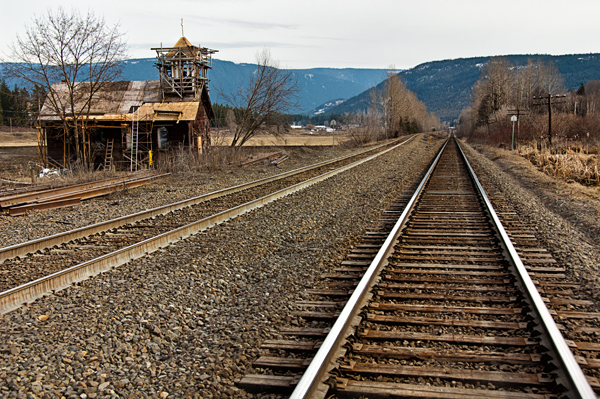
The train goes by

Notch Hill Church


From winter's storm

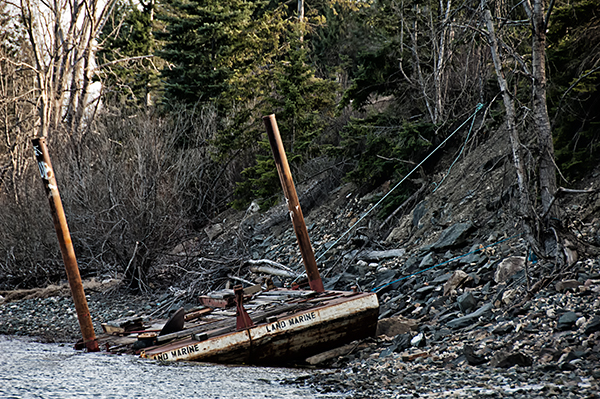
Lost during winter’s storm


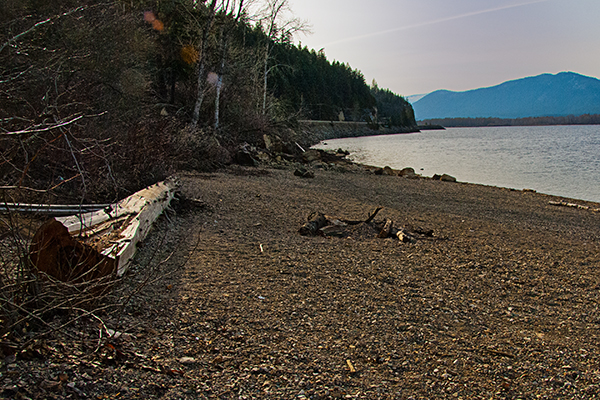
Lakeshore in spring

Desolate beach


Just before spring

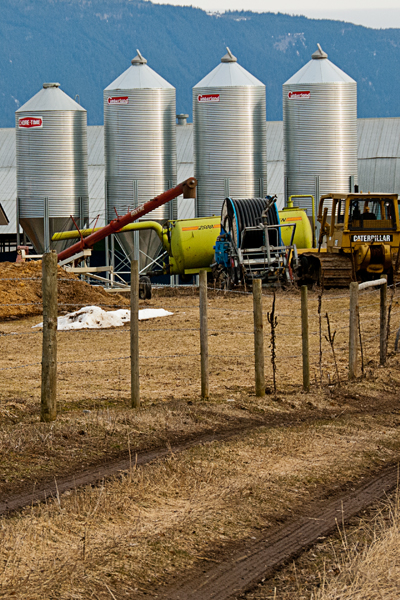
Waiting for planting season


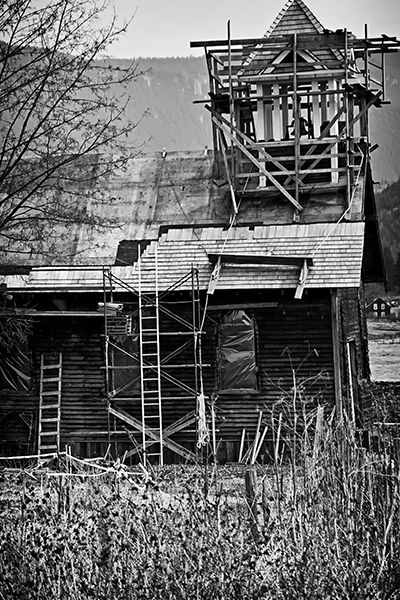
ReConstruction

Reconstruction


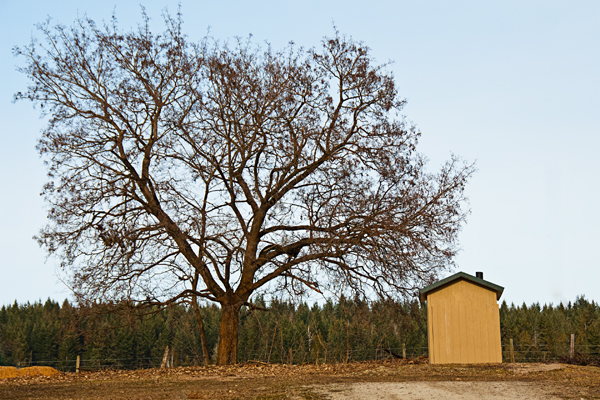
Winter tree in spring

Winter tree waiting for spring


Yes, March is here again. Those who have been reading my posts for a while know that I approach this month with a foreboding feeling. The optimism of January and the hopefulness of February have now passed.

Last year I wrote about the uninspiring landscape of this month and the frustration of photographers who are ready for something other than falling snow and icy roads. I quipped about useless forays into the countryside to photograph hungry coyotes, wandering deer, or sad little birds that hung about through the winter.

However, just when I was ready to be moody and join others gloomily complaining about the weather, Mother Nature has thrown a wrench in the spokes with spring-like weather.

I traditionally expect March to come “In like a lion and out like a lamb”, but not so this year. February 2015 is being heralded as the second warmest ever recorded here in British Columbia. What is a guy to do? I wasn’t ready for spring.

The landscape is mostly snow-less, but I know there is green growth beneath that drab, lifeless end of winter brown. So with that in mind, my wife, Linda, and I decided in spite of that lingering pale hue that we would pack our cameras and take a drive along the ice free Thompson River to see if we could find something worth pointing our cameras at.

I had decided to mount my trusty 18-200mm lens on my camera. I like that easy to use lens. It may not be the sharpest lens in many collections, but it is versatile, lightweight, and doesn’t take up much room. Besides that I can always tweak its slight lack of sharpness in Photoshop.

As we drove up the river valley I wondered if I would find anything in the lifeless landscape to photograph. We are so conditioned to search for colour when we set out to do scenics that we forget to look at the structure as the scene unfolds in front of us.

We talked and drove without finding anything to photograph and eventually stopped for lunch in the small lakeside town of Sorrento. I just couldn’t get motivated and after that big meal was about to resign myself to just returning home to sleep it off. But as I paid for our lunch, Linda talked to some local people who suggested we check out the old church at Notch Hill. I was surprised when they said that decrepit 1920s church was still there. Well, it was just barely there, and under some slow restoration.

As I selected different angles to photograph that decaying building I realized I should be photographing its transition in the landscape. I was seeing things wrong and falling prey to words of Shakespeare’s Julius Caesar who said, “beware of the ides of March”. It’s what is changing and emerging that I should capture, not try to photograph the bloom of spring when it isn’t here yet.

I began to look for the story that happens between one season and the next, the shoulder season. I realized my photographic goal should be to select subjects that visually talk about that moment just after winter and just before spring.

I am sure one could still wander up into the mountains and continue photographing winter or search for some hot location in the city with early growth. But for those that are always creating photography challenges for themselves, I suggest that as with that old Notch Hill church, this year’s March photography challenge should be about something between the seasons.

I look forward to your comments. Thanks, John

My website is at www.enmanscamera.com

Photographing Falkland in the afternoon

Falkland afternoon

Falkland, British Columbia


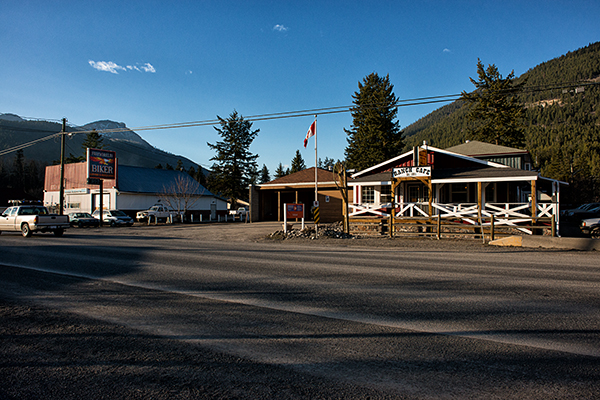
Ranch cafe

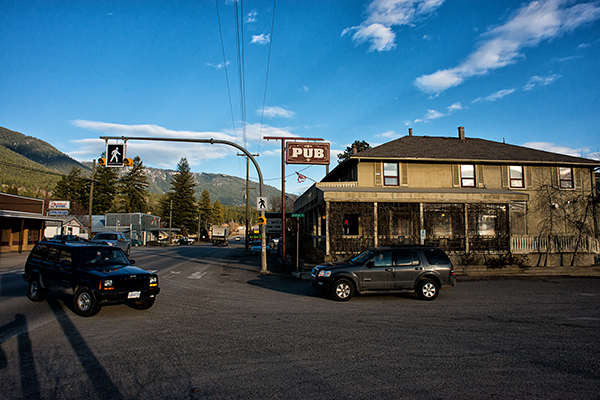
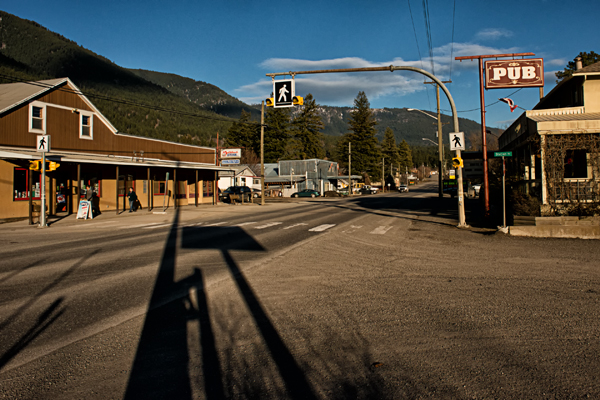
afternoon pub

street shadow

Falkland is one of the many small towns nestled along winding highway 97 that drivers almost miss if there weren’t signs posted at both ends of the village requiring them to slow down. Although I pass through there regularly, the only time I stop is when locals hold their roadside market during the summer. Usually I just reduce my speed to 50 km, watch for pedestrians and approaching vehicles from covered side streets, then resume speed without even thinking.   Falkland has about 600 residents, and is notable because each year on Victoria Day they host the Falkland Stampede (one of Canada’s oldest rodeos); and they also claim to have the biggest Canadian flag in western Canada.

My wife recently purchased a 24mm wide-angle lens and we were looking forward to checking it out. We had spent the day in Kelowna, about an hour south of Falkland and I thought that with the drive there would be lots of opportunity to see how her new lens would perform. I had read mixed reviews online, and I was anxious for my own results. I had made a few shots of the fence in front of our home, and allowed some side-lighted images to catch sunlight to check lens flare, but I hadn’t made any practical images.

I know reviewers can be very strict with their lens testing and even go so far to include charts and exaggerated enlargements when they evaluate a lens. However, in my opinion, all that most users care about is if a new lens is reasonably sharp and consistent in how it reproduces a subject; and regarding wide angles, if there is any unflattering distortion.

The day had been long and I wasn’t thinking about much of anything except getting home and out of that car before we lost daylight. I don’t mind winter very much, but I do mind driving that narrow, slippery, winding road after dark. However, traffic had been light and we hadn’t got stuck behind any big trucks. So we were making good time when we approached Falkland.

Photographers talk about that “Golden Hour” just before sunset when the light is warmer and softer than when the sun is higher in the sky. I doubt there is much of a golden “hour” in canyon towns like Falkland, but the light certainly was inviting at the moment and we had my wife’s camera and 24mm lens waiting for testing.

Linda was tired from our long day and was only willing to make a couple of shots of an old shop before handing me her camera. She said, “You walk around”. So I did. In Falkland it doesn’t take much time to see everything on the main street.

I like buildings, shop signs and afternoon deep shadows and the narrow street was perfect for testing that lens and anyway, I was happy to finally make a few pictures while the light was exciting in that interesting little town.

I only walked around for about ten minutes and had so much fun that I forgot I was supposed to be testing that lens. I have lived in this part of British Columbia for over 30 years, and as I walked around I wondered why the only pictures I have ever seen of Falkland were a few of cowboys being bucked off at the rodeo. I guess it is hard to stop and look. And some photographers might feel locals would be uncomfortable with outsiders intruding. I doubt that unless someone stuck a lens in a local’s face they wouldn’t even notice a person standing along the street, like I was, taking a few pictures in that neat little town.

Oh, and that Nikon 24mm was just fine. For those that wanted a review, I think my aperture was mostly at f8, f11 and f16 because I was interested in getting as much depth of field as I could get. So I can’t comment on how well it performs wide open.

I always appreciate your comments. Thanks, John

My website is at www.enmanscamera.com


Studio Portraiture Workshop

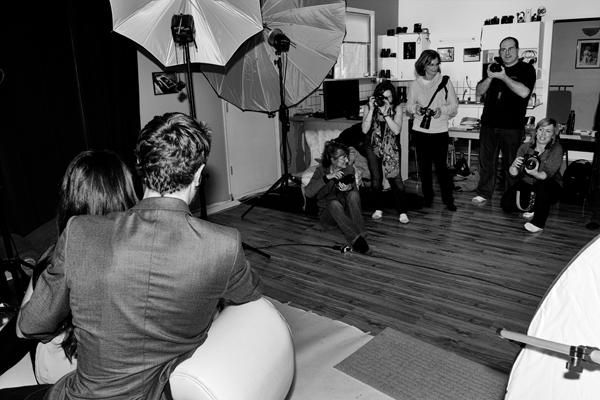
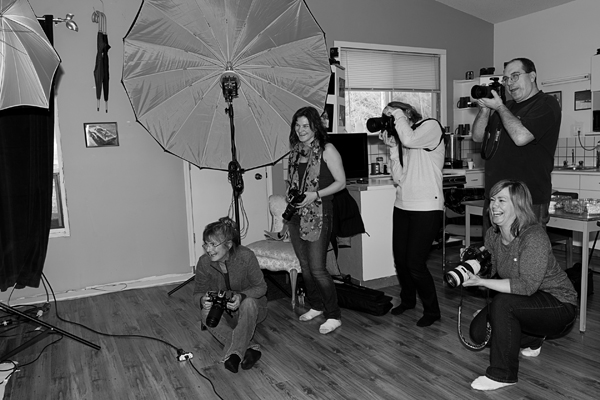
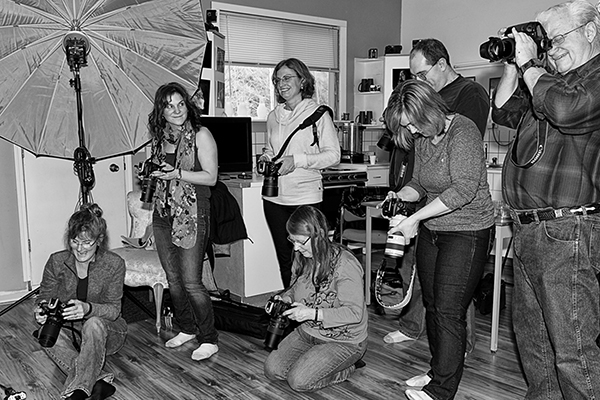
Class Portrait 1  Class 2

This past Sunday I lead the first day of a two-day workshop discussing posing and lighting. I hadn’t planned on undertaking any workshops this early in the year, but I had been getting requests from several excited photographers who are out there getting ready for spring and summer portrait sessions.

I finally made the decision to proceed when my friend Dave Monsees, owner of the Versatile Photography Studio near Kamloops, mentioned that photographers renting his studio told him they needed help in lighting couples. They lamented that most tutorials available were only about photographing one person.

I am sure if they browsed the internet they would have found what they were looking for, but working with live models is a lot more fun than reading articles and looking at pictures, so I hired two up-and-coming local models that fit that request perfectly.

In previous posts I have stated how I enjoy the enlivened interaction that happens when students of photography participate in active learning. So when I started getting requests that I offer  another session I crossed my fingers and hoped for an early spring, booked that large local studio, and hired two models.

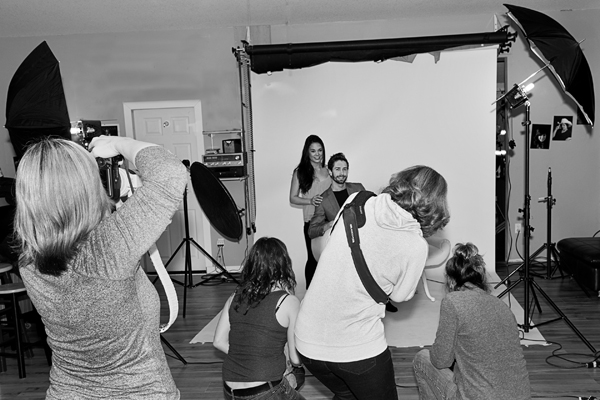
During a workshop my job is to present information on the subject, and keep things going. I don’t like to be a demonstrator on stage and I rarely pick up a camera during the workshops I lead, unless it is to take a snapshot or two of photographers in action. And besides, when I finally let the workshop participants apply what we had discussed, there wasn’t room for me anyway.

The workshop dealt with modifying and placing light. We employed one, then two, and then three lights; and modified the light first with umbrellas, then changed to a softbox and reflector to create shadow, and, of course, that classic and compelling “Rembrandt lighting” effect.

This was an advanced workshop and I limited participation to seven photographers. As with all my workshops, my main goal is to help participants gain an understanding of how to use light. I want them to consider the “quality” of light instead of the “quantity” of light. I lecture to them that they should use light to “flatter” their subjects as opposed to only “illuminating” them.

I think that studying the mechanics of lighting includes two additional aspects, which are (1) experience, and (2) the willingness to step beyond lazily pointing a camera in a light filled room or out in the sunshine. Posing a model, or in our case, two models, seems to me to be more about engaging with the subject and being comfortable with telling someone how you want them to look. I once heard a photographer say that he never posed people because he thought is was rude to tell adults what to do. I can’t comment on that fellow’s work, maybe he was really lucky, but I expect there were lots of missed shots. I suppose he would disagree, or just plain ignore the words of award winning Dallas, Texas photographer, Caroline Mueller when she says, “What I look for in pictures (that) I take: eyes, hands, head tilt, body language, background, and use of space.”

I believe those photographers that are successful at portrait photography don’t hide behind their camera, but they start with a plan and are good at engaging, explaining, and demonstrating what their vision for the session is.

Now I am really looking forward to next Sunday. The few images I have seen so far are great and I am certain spending another day (this time with speedlights out-of-doors in the failing afternoon light) helping and watching each photographer’s progress is going to be a lot of fun.

class 3  class 4


Thanks in advance for your comments, John

My website is at www.enmanscamera.com