Photography, a personal vision.

Kamloops Lake 1

Kamloops Lake

Kamloops Lake 1a

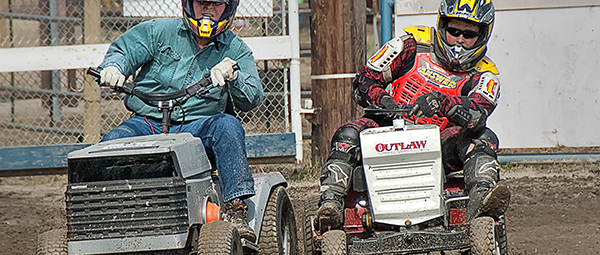
Lawnmower Race copy1

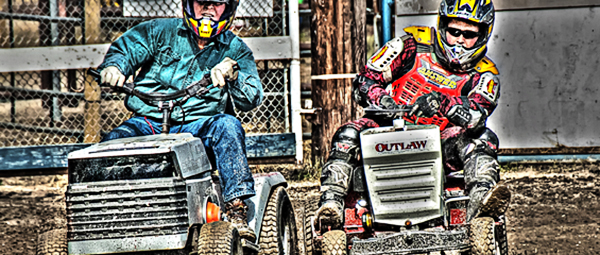
Lawnmower Race copy2

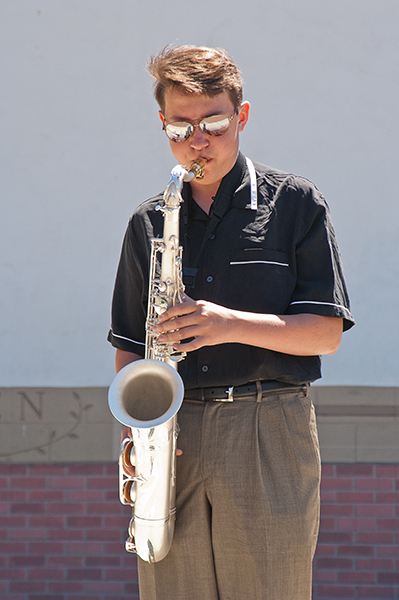
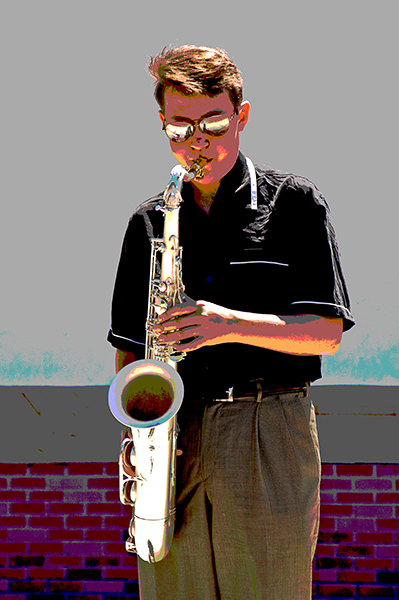
Sax player 1 Sax player 2


My photographer friend Greg posted the following statement on the Canadian photographer flickr.com/group: “Recently I’ve come across a number of photographs on the social media outlets that are absolutely stunning and amazing works of art, but there are a whole host of people who comment saying ‘it looks fake’, ‘it needs to be more real’, ‘that picture has no resemblance to reality’”. And he continues raising the question with “Should we be striving to produce photographs that are more ‘real’ to please the crowds who seem to have very little understanding of art?”

My quick and easy response is to quote Plato, “Beauty lies in the eyes of the beholder”. Even Shakespeare in his work, Love’s Labours Lost writes, “Beauty is bought by judgment of the eye”.

I understand his (and others) frustration with those that are ready to condemn anything that deviates from their personal interpretation of photography, but we need to remember that is just their opinion. I don’t think Greg or any other photographer should “be striving to produce photographs…to please the crowds”. However, when one displays a photograph on any social media site one needs to be ready for someone else’s opinion.

I used the following last January in my discussion of Photography as a Fine Art. Wikipedia’s on-line encyclopedia says, “Fine art photography is photography created in accordance with the vision of the artist as photographer.” That should be enough to ease my friend’s frustration. I will comment to him that those detractors didn’t understand the interpretation or artistic vision of the photographer’s work.

Some may disagree with me, but I think photography has always been a technology driven medium. And just as there are those willing to push the limits, there surely are also those that employ their cameras simply as devices to document the people, objects, and scenes in front of them, and I have no doubt their criticism might come swiftly to those that manipulate their images instead of maintaining the more conservative course of photographic reality.

Regarding Greg’s question about some people’s understanding, or lack of understanding of art, that is a question that countless generations may have struggled with possibly since the first humans decided to place a favourite rock in their cave or put coloured pigment on the wall.

I believe the question is actually, “What is Art and who has the right to define Art?”

Mark Twain is attributed with the words, “I don’t know much about art, but I know what I like.”   I expect most of us fall into that category.

Here are a number of quotes about art by artists. American architect and designer Frank Lloyd Wright said, “Art is a discovery and development of elementary principles of nature into beautiful forms suitable for human use.” However, I much preferred photographer Ansel Adams words, “Photography is more than a medium for factual communication of ideas. It is a creative art.” Or this from novelist Rainbow Rowell, “…and art wasn’t supposed to look nice; it was supposed to make you feel something.” And French Impressionist painter Edgar Degas wrote, “Art is not what you see, but what you make others see.”

When one has the need to be creative they should have the right to decide on their own particular style to fulfill their personal creative vision. What that vision is should be entirely up to the photographer, and the audience for whom the image is produced. I think the problem in this day of mass social media is how to select the right audience.

I do look forward to your comments. Thank you, John
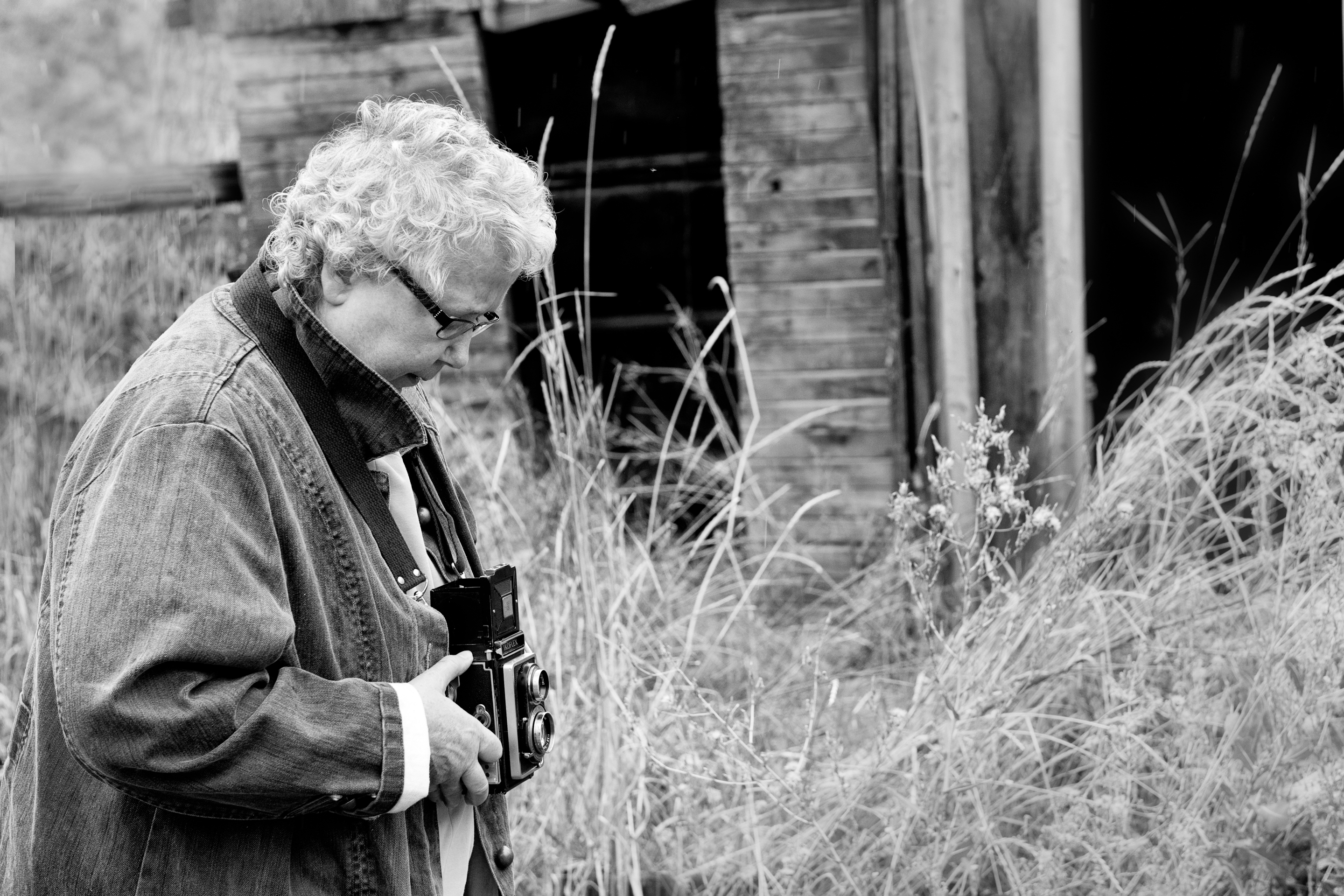


Revisiting Film and Twin Lens Camera

Using a Ikonoflex TTL camera

Photographic film is a strip of transparent material coated on one side with light-sensitive silver halide crystals called emulsion. The emulsion gradually darkens when exposed to light forming an image when light passes through the lens to reach it, creating a latent image in the light sensitive emulsion. This is then chemically developed as a negative image, and eventually printed as a positive image seen as a photograph.

Using film was a time consuming, and for many, an imperfect way to document the world. Nevertheless, for nearly two hundred years photographers have persevered and in spite of sometimes days, weeks, or even months between the initial exposure and the final print, learned to minimize the errors and present exciting examples of the craft, or art, to an appreciating public.

The good thing about shooting film is how it forces one to learn what each part of the camera is for before making a photo. Mistakes can get pretty expensive with a film camera so this forces photographers to learn quickly.

After about 30 years of earning a living using film I embraced the technological change to digital and had no intention or ever handling another roll of film. So when my wife informed me she was planning to get a medium format film camera and was going to begin shooting film I must admit to mixed feelings.

However, my wife’s reasons had little to do with film and more to do with finding a way to slow down the process of image making. She talked about getting more involved in the act of photography than the process of taking a picture. I knew exactly what she meant; many modern photographers seem to be more about the technology of photography, and instead of studying a subject for that perfect shot, will take the machine gun approach. And when asked why they released the shutter 300 times on their subject the answer is, “to be sure I got it”.

Linda will be limited to 12 exposures in her lightweight, German made, Ikoflex camera with a waist level finder. We’re all guilty of getting a little bit snap happy with our cameras, and taking loads of useless photos of nothing in particular just because we can. That’s not really an option with film (unless there’s more money then sense); one doesn’t thoughtlessly take a bunch of photos and transfer them to a computer.

There is the requirement for a decision making process before releasing the shutter – it can’t just be of anything. The added pressure of not wanting to waste money and time on film and developing forces a photographer to become much more careful in considering how to make the photo before releasing the shutter.

I welcome readers comments. Thanks, John

Judging Barriere 4H Photography

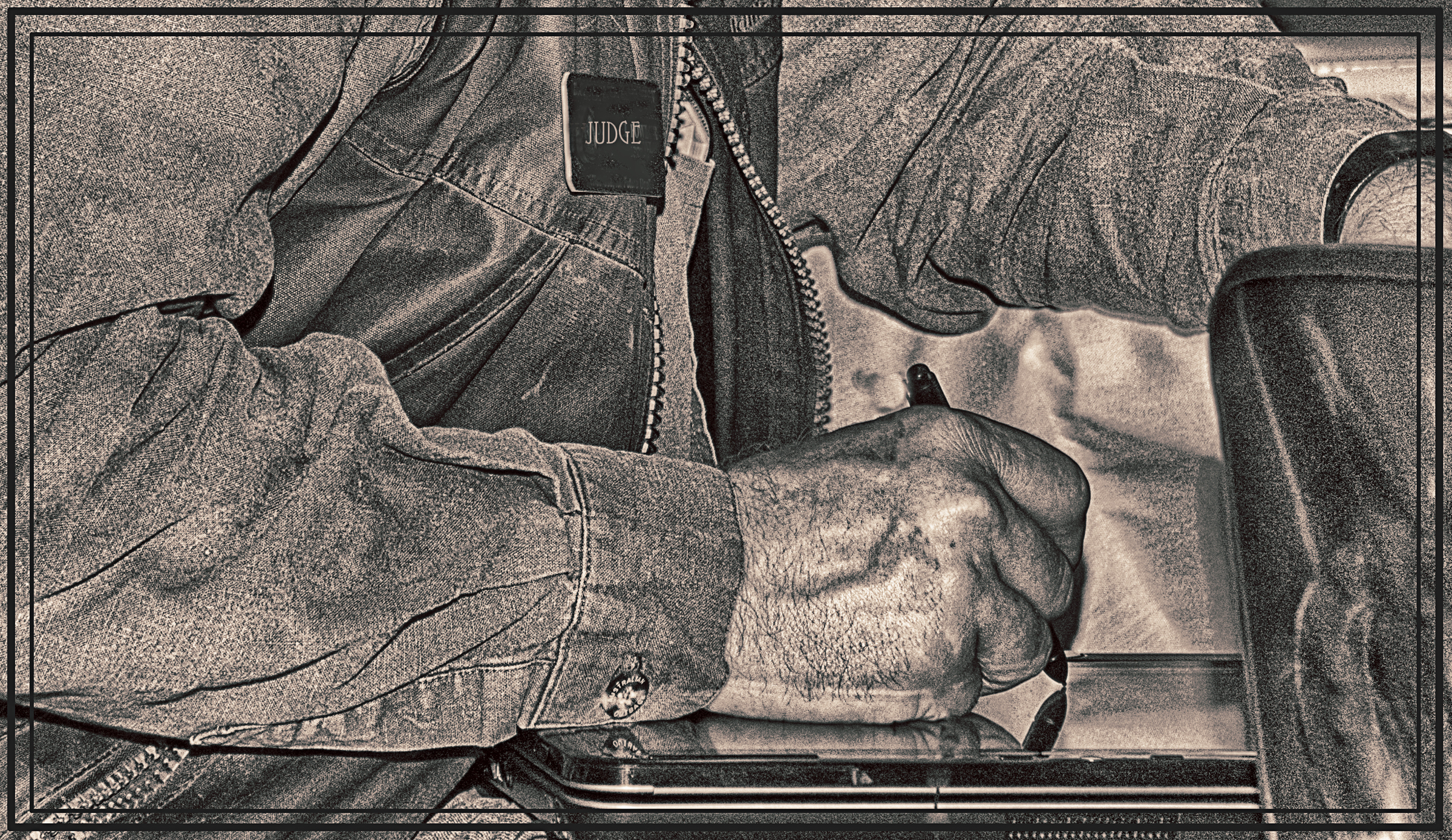
The Judge

On the Sunday of the September long weekend I spent an enjoyable day judging the Barriere 4H club members photography presentations at the North Thompson Fall Fair.

Although I have taken on the role of judge many times before, I am still slightly uncomfortable in a formal critique. Just looking at a photograph and discussing it, even placing a grade on it, as I did for years as a college instructor, is easier because everyone is competing with themselves. But when choosing a first, second, and third place is a competition about who is better, one has to work very hard not to be influenced by personal feelings, taste, and opinions on the subject.

Most photographers seem to think a photographic “critique” means “to find fault with.” I don’t think that’s right. When one critiques another’s photograph they should be analyzing its strengths and successes. What doesn’t work is important and should be part of the discussion, but the main concern is what works, not, what doesn’t work.

This was my first time with the 4H club. Photography in this instance was set apart from the other events at the North Thompson Fall Fair that included animal husbandry, and the judging was, in my opinion, more about the young member’s personal development in photography and how well they could adhere to the guidelines than how good their individual photographs were. Although unusual, the process was interesting, and I think valuable.

I will say that the quality of the photography was surprising for such young individuals. I was able to pick out specific interests and strengths in each of the young photographers. Yes, like all photographers, I expect those that are serious about the medium will undergo growth as they become more experienced with their cameras, and experiment with the medium of photography in general.

What is a good photograph?

“Life” magazine, “Time” magazine, and “People” magazine photographer, John Loengard, said, “It is not important if photographs are “good.” It’s important that they are interesting”.

Anyone who wants to take better pictures should focus on the fundamentals, and a successful photographer must have an understanding of composition and lighting because what is important for the viewer is how the photographer composes (or arranges) the image, and how the light is captured, both which sets the images apart.

William Reedy, in his book, “Impact Photography for Advertising” writes about how the successful photographer must, “…stop the eye…(and)…set the mood…” I have liked that quote for years. And I am pleased to say that there were some of those young 4H photographers that were able to accomplish that and I hope I get to see their again photography in the future.

Photographers Must Remember to Consider the Background

Brewster copy 2  Spirit

Gracie 1

Fat Cat

chuck port copy

Looking Scout

Rikkonna 1

Much of the time photographers get so excited about the subject before their camera that they don’t pay any attention to anything else that is captured by the camera’s sensor when the exposure is made. Of course, things can be cropped out during postproduction, but what if the background is so busy that it obscures the intended subject of the photograph? The background can impact a subject in many ways and much of the time it interferes with the subject.

In the past I have written about composition, depth of field, and even bokeh. Composition can be as simple as creating an interesting photograph by using basic guidelines or compositional strategies for a balanced image. Depth of field is that area in front of and behind the subject that is acceptably clear, and bokeh refers to that portion of an image that is out of focus. Using those three mechanisms or strategies as a way to isolate a subject help photographers increase the impact their photographs have for viewers.

A serious wild life photographer once told me that it is important to have a background that is neutral and non descript. I had one experienced birder giving me tips on photographing Loons, explain that soft green water made better pictures than contrasty blue water. I think that this may be his personal opinion, but I have to agree that of the photos I took that day I liked way the green water looks better.

I recall a photographer who had exhibited his photograph in a local exhibition being angry because he didn’t get a mention by the judges on his photograph of an eagle posing on a branch. He had exposed it properly and displayed it sharply. He was so proud of his photograph of that bald eagle that he was unable to see the busy background and how it negatively impacted on the overall photograph. I believe the judges did see that.

My advice to that photographer would be to curb his excitement and spend some time examining his subject and its surroundings. Using the term, coined by Ansel Adams, that I mentioned in my 26 June 2014 article, he should “previsualize” the image for its best impact.

Compose and isolate the center of interest, and decide how to use the background to the best effect; whether the background should be in, out, or partially focused, or to have it clear or cluttered, and if it is appropriate for inclusion or to be excluded. A busy background distracts viewer’s attention.

Backgrounds present both opportunities and challenges to photographers. Here are four very simple suggestions other photographers have told me take into consideration to make the background work.

1. Check your background before pressing the shutter;
2. Pay attention to your shooting angle;
3. Use the aperture or the focal length to blur the background;
4. Fill the frame with your subject.
They are all great tips, or thoughts for us all to remember, and I personally like the words of Ansel Adams that fits well,  “A good photograph is knowing where to stand.” And I’ll add, remember to consider the background.

I enjoy all comments. Thanks, John

My website is at http://www.enmanscamera.com

Don’t Forget Some Photographic Basics

Helmkin Falls view   Low drifting clouds

A local photographer showed up at my shop with some scenic/landscape photographs he had made and asked me for a critique of them.

Photographers get excited about the subjects they photograph and sometimes forget, or never learned in the first place, some basic rules for photography. Rules that are actually procedures and guidelines that can be followed to make photographs more exciting for viewing. Although I enjoyed his series of photographs of Helmken Falls in British Columbia’s Wells Gray Park, I noticed two problems that I discussed with him.

The first is a very basic concept in photography – depth of field. Depth of field refers to the “in focus area,” or sharpness of a picture at different distances when the aperture diameter changes. Depth of field is the area around the subject that remains acceptably sharp. The farther things are away, the more depth of field one can achieve, and the closer things are, the less depth of field. To control depth of field one uses the lens aperture.

Photographers new to this medium think of the aperture only as a means of controlling the amount of light reaching the sensor. However, the aperture also controls depth of field.

Control over depth of field is accomplished by increasing or decreasing the aperture’s size. For example, the smaller the aperture opening (f/16) the more depth of field; and the larger the aperture opening (f/4) the less the depth of field is. So f/16 will give more “in focus area” in front of and behind the subject than f/8. Regardless of the F/stop one should have a shorter in focus area in front of the subject, and a longer in focus area behind the subject.

The ratio is approximately one-third in front, and two-thirds behind. So to obtain maximum depth of field in a photograph use a smaller aperture opening like f/11, and focus one third of the way into the scene.

The second thing I pointed out was his composition. I wondered what it is that makes photographers disregard the basics of compositional strategies and just snap away excitedly. My assumption is that many photographers are so excited about the subject they are photographing, and possibly the camera they are using at the time, that they forget to make the subject interesting in their final photograph.

With his scenics of the waterfall, as exotic and colourful as it was on that day, he ignored something fundamental in any properly composed photograph called “The Rule of Thirds”. This so called “rule” states that we shouldn’t place the main focus of interest in the centre of the frame, but should place it on an intersection line, or very close to it, created by dividing the picture into a grid of thirds.

That photographer’s pictures would have been stronger if he had paid attention to compositional elements that would make his image interesting by placing important or interesting visual information at intersections.

I have photographed those falls alongside other photographers many times since I moved to British Columbia 40 years ago; spring, summer, fall and winter.

Sometimes they have been excited, as with the fellow I critiqued, and just pointed their cameras without thought, overwhelmed by the roaring, wilderness splendour of Helmken Falls. Regarding those image makers, Guggenheim Fellowship for Creative Arts recipient Garry Winogand quipped, “Photographers mistake the emotion they feel while taking the photo as a judgment that the photograph is good”.

However, I have also set my tripod next to photographers that just seemed understand what it takes to make viewable images and appear to feel their way through the photograph. That’s always exciting. Of them I like to think they adhere to the words of Photo Imaging Association’s 2005 Photographer of the Year, David Harvey when he said, “Don’t shoot what it looks like. Shoot what it feels like.”

As always, I appreciate any comments. Thanks, John

My website is at www.enmanscamera.com

Waiting for the Best Light.

Early spring stream

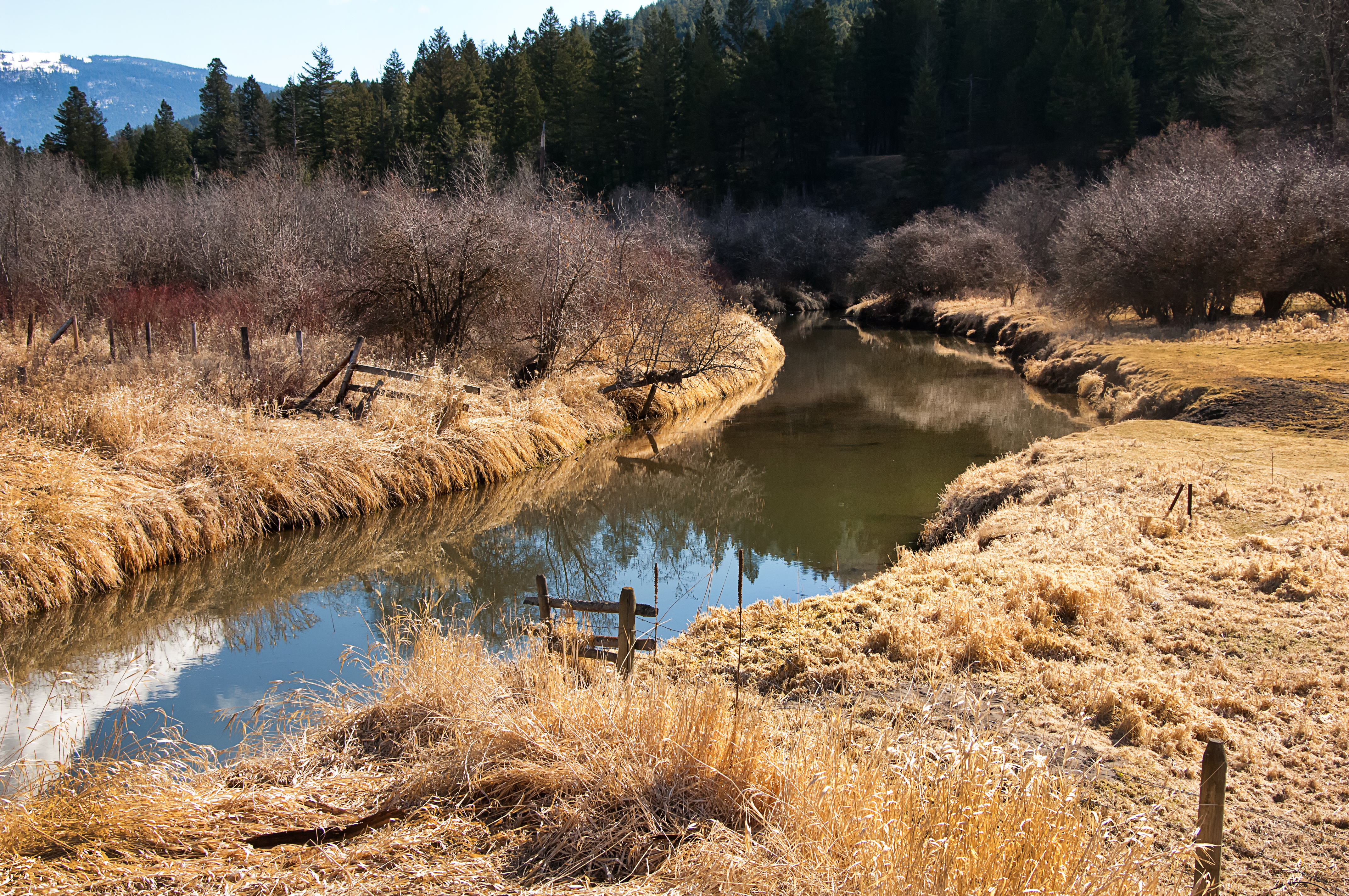
I am sure there are lots of photographers that have discovered a special location, or scenic spot, that looks good, but when the photograph just isn’t working out and the day just isn’t making things look good, photographers return again and again, hoping for the light to be just right. That bridge on the way to work or the gnarled tree outside of town bent from the wind, that never looks the way we want it. That was always the problem with a location that my wife and I regularly drive past along Highway 97 south of our home. We always, winter, summer, spring, or fall, slow down at a bridge crossing a drainage stream that flows out and onto wide lush hayfields. The stream turns a corner as it flows past bushy native shrubs and out of a pine forest.

The image I mention is a grass and foliage lined stream that for the past six years is usually  a shady, dark, flat, and poorly illuminated possibility. The elusive landscape is perfect with a fence in the foreground that creates three-dimensionality. Depth is easily achieved as a viewer’s eye easily moves from the objects in the fore, middle and background.

I always want a center of interest and the reflective meandering stream becomes that. The composition follows the rule of thirds without any effort. Walk off the road, stand in the deep grass and put a shoulder to the bridge-post to steady the shot, and the rest just comes natural. All that is required is interesting light (that has not been cooperating) to bring everything together to create interest.

At last, this week on a clear spring morning about 9:30am, the light was working. There are times when that open space along the road actually has had an all-illuminating bright light , but that defuses detail, or sometimes it’s cloudy and overcast with everything to be lost in shadow. However, to my great pleasure, this time the light was cool, and without glare, and the shadows weren’t dark and deep. I couldn’t have asked for a better morning to stop and make an exposure or two.

As I wrote earlier, we always slow down, and cast a glance up the stream (the constant traffic willing) as we cross the bridge in hopes that the light is working. I have even parked on a sunny day, got out and walked across the road, only to have some large cloud move in.

This location has been frustrating, but I just add it to the many other landscapes that I refuse to waste my time with unless the conditions are what I want. I recall the concrete bridge on the Thompson River that I watched every morning and evening for years as I drove to work. Everything has changed now, but once there was a young tree and a grass edged road leading to that bridge. I wanted to stand in the middle of the small road and make a low-angled photograph of that grey bridge. When the light was perfect I didn’t have my camera, when I had my camera there was no light. I struggled for five or six years with that picture. Film ruled photography in those days and I was determined that when I made the picture it would be with my medium format Hasselblad camera.

When the day finally came about 7am one foggy morning the low-angled light thinned at the bridge entrance and gave the young tree a golden glow and I was, for once, ready.   I originally called that image “six years” because that’s how long it took me to take the picture. However, when I sold several copies to an organization that gave them as gifts to visiting NASA scientists from the United States, they renamed it “Pathway to the Future”.

Well here I am again at another six-year point and thanks to my wife demanding that I stop the car and pull over, I finally have the image I have been after for all those years.

Photography can be a patient thing and I like having the time to think about my subject. Six years might be a long time for some, but I have always liked the process, and there are a few more landscape scenes out there waiting for the light and me to come together in agreement in the next few years.

As always, I remind readers that I really enjoy your comments. Thanks, John

My website is at www.enmanscamera.com

Some Thoughts on Portrait Photography

   Kisa4

Monica

Model 2

Walter's Portrait

Almost exactly a year ago I wrote an article titled, “Some Thoughts on Portrait Photography” and included a quote by Peter Brunnell the author of, “Creative Camera International 1977”.  Brunnell wrote, “There is no single form or style of portraiture. Portraiture means individualism and as such means diversity, self-expression, private point of view. The most successful images seem to be those which exist on several planes at once and which reflect the fantasy and understanding of many.”

I remembered that blog post and decided to revisit it after having a discussion with friend and fellow photographer, Michael Beach this week about creative portraiture. We talked about several aspects of photographing people, but I think the topic we kept returning to was a about making portraits that had a different look and feel than other photographers in the town we both lived in.

In last February’s article I referred to my college photography instructor’s contention that we should always follow rules for portraiture. I won’t go into those at this time. I’ll just say they weren’t very imaginative and left little room for innovation or experimentation for that matter.

My argument with his lectures on portraiture, are that great portrait photographers like Irving Penn, Arnold Newman, Bert Stern, Yousuf Karsh, Richard Avedon, Eve Arnold, and Annie Leibovitz, to name a few that I like, were anything but rule followers, and what marked their work, as Brunnell wrote was, “individualism .…..self-expression, (and a) private point of view.”  I did then, and still do think, that’s a lot for us mere-mortal photographers as we struggle to make our portraits something more than mere documentaries.

When I approach portraiture I try to create portraits that are, well, creative. Sometimes everything works and sometimes it doesn’t.  However, I always strive for something different, maybe even unique, in each.

Of course, one must be aware of how our subject sees themselves and the circumstances and conditions under which the portrait is made. Using a word coined by Minor White, I think most successful portrait photographers “previsualze” the final portrait.

White, co-founder with Ansel Adams and Dorothea Lang of the influential photography magazine, Aperture, has been hailed as one of America’s greatest photographers. And regarding previsualization, Ansel Adams defined it as, “The ability to anticipate a finished image before making the exposure.”

I’ll ad another quote by Minor White that fits here and might be a good thought for a photographer about to pick up that camera to make a portrait, “One should not only photograph things for what they are but for what else they are.”

Sometimes it’s the expression on a subject’s face that makes the image. And to get that expression the photographer and subject may need to experiment with different moods and emotions.  Portraitists spend much time putting people at ease and making them comfortable in front of a camera. I think it’s all about gaining a person’s trust that we are going to help them look the best they can.

The Internet is packed with “How to” advice on portraiture photography. Some of it is worth thinking about and some is bewildering. Those serious about bettering his or her portrait photography will select what works best and is the most comfortable.

A year ago I summed up with the following that worked for me then as it does now,

Everything comes down to one’s personal definition of what a portrait is. According to Wikipedia, “it is a picture of a person, a description. It can be a photograph, a sketch, a sculpture, but a portrait is so much more than that. It is collaboration between the subject and in this case the photographer.”  Collaboration is the key word for me in that description, and in my experience those portraits I have made that I think are the most successful, is because the person who was in front of the camera was willing to work, or collaborate, with me towards the final image.

I always look forward to any comments. Thanks, John

My website is at www.enmanscamera.com

What Does “Composition” Mean?

Cat & Rule of Thirds  White horse in field  OLYMPUS DIGITAL CAMERA

“Photography is not like painting. There is a creative fraction of a second when you are taking a picture. Your eye must see a composition or an expression that life offers itself to you, and you must know with intuition when to click the camera. That is the moment the photographer is creative.”    I included that quote by famous French photographer, Henri Cartier-Bresson, because he used the word “composition”, and it is that word and how it is currently being used that I have been recently thinking about.

The word composition gets thrown around a lot when discussing photographs.  I’ll read forums where responses to posted images might say something like, “great capture, good composition,” or sometimes, something as meaningless as “I love your composition”.

I know the posters don’t actually mean composition as a photographic technique. I think it has just become an alternative word that means “picture”.  Modern photographers seem to hesitate referring to a photograph someone has posted to an online site as a picture. They want a more modern word, and I guess using the word “composition” instead of “picture” has become that word.

That came to mind, when a young photographer said to me, “I don’t really know a lot about photography, but what I do know is that I am really good at is composition.”  That was one of the few times I have been left speechless.

Photographic composition is defined as, “the selection and arrangement of subjects within the picture area.”  And unlike those who replace the word picture with the word composition, I use composition and compositional guidelines to help me enhance a photograph’s impact.

Photographers are limited by the actual physical appearance of the subjects they are photographing, and depend on camera position, the perspective created by different lense’s focal lengths, and the elements that make up a picture to communicate to viewer’s what they saw when they made the photograph.

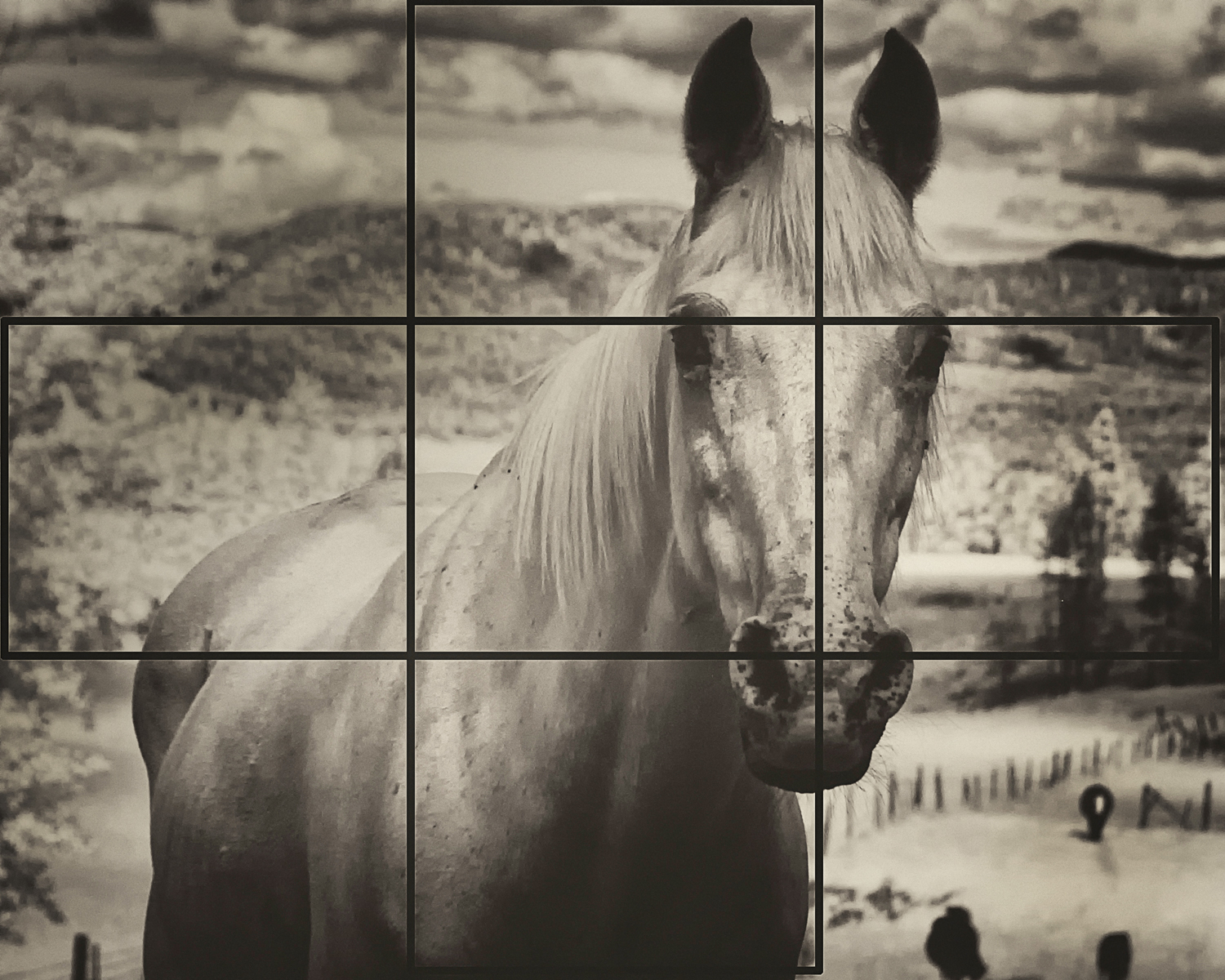
I think about what is important and how I want to arrange my composition, and I consciously subtract those elements that I think are unimportant or distracting. When setting up a composition I usually think about and apply the ‘Rule of Thirds’ wherein we divide the image into nine equal segments with two vertical and two horizontal lines. The Rule of Thirds says that you should position the most important elements in your scene along these lines, or at the points where they intersect, and by doing so, adding balance and interest to one’s picture.

I looked up composition online where there are page after page of composition tips. I decided I’d add my own, “apple technique to proper picture making and composition”.  Here goes!

While driving along and finding an inspiring scene.   Don’t just point the camera out the car window!

1. Stop the car.

2. Get out.

3. Leave the camera in the camera bag.

4. Get an apple and eat it as one looks at the inspiring scene. Think about what is likeable about it, and make some choices as to how compose, or arrange, the features within the picture area you photographing.  Photographers should ask; what would someone like to say about the scene to the viewer?

5. Finally, go back to the car, get the camera, and make the picture.

Elliott Erwitt, American, documentary photographer wrote, “To me, photography is an art of observation. It’s about finding something interesting in an ordinary place… I’ve found it has little to do with the things you see and everything to do with the way you see them.”

My website is at www.enmanscamera.com

Do Something Different with your Photography

I advise photographers to stick by the rules of composition and exposure to make successful photographs. But there is another valuable lesson that I don’t always discuss with photographers, and that is to experiment with their equipment and the photography they are producing and that subject came up during a discussion with a photographer that stopped by my shop last week.  His lament was “everyone’s a photographer now days and most of what I see (I think he was talking about the city he lived in) is pretty much the same…and I feel like I am just one of that crowd.”

I suggested trying to do photography in a different way, and to disregard advice from others and begin a personal exploration of creating and experimenting with photography to make something totally new and different from what is most comfortable.  Push the envelope and, in doing that, become more aware of what you are capable of doing, as well as what the equipment you own is capable of doing.

The famous photographer Ansel Adams once said, “You don’t take a photograph, you make it”.   I think that we might take the time to do just that.  Consider alternative and unique perspectives when photographing a new subject and try different camera techniques and try equipment you haven’t tried before.

That might be as simple as trying to shoot only from a tripod for a time period. If you don’t have own a tripod, borrow one, and make a commitment to use it for every photograph you take for the next month. Some times you’ll hate it, sometimes you’ll love it; but the outcome will be learning to “make pictures” in a different way.

Or perhaps, and maybe more difficult, select something that wouldn’t normally be considered a subject.  Use your camera to really photograph it and try angles that make people wonder if you have lost your mind. The opinion as to whether the photographs are successful will be yours, since the only opinion that really counts is yours when you have crawled through the dirt and photographed that flagpole from its base looking straight up through the flowers around it as a black crow flies overhead.

Try to be expressive with your photography.  When you photograph something think about getting rid of anything that complicates it.  Simplify, simplify, simplify.  Go for a minimalist effect.  I remember a photojournalist in the 1970’s telling me that the words he thought of before photographing a subject was “tighten up”.

Try a different way of photography and using light. See what happens when the color balance is absolutely wrong, or the lighting produces unusual colors and you photograph just the oddly colored items. One might carefully observe the lighting and wait.  Wait until it affects a subject in an interesting, and maybe better yet, in an incredible way.  Waiting for the light takes patience and that could mean waiting an hour, an afternoon, or all day for the light to become what a photographer wants when looking for something different.

Experimental photographs “made” from these efforts will have us thinking outside the box and when others view photos so different from what we normally produce it is they who probably won’t understand.  That’s a good thing because our objective to be different will have been achieved, and most importantly, we will have learned something new about photography.

One of the outstanding features of digital cameras is how delightfully easy and helpful they can be when experimenting.   The only real cost for to try something completely different with a digital camera is the time and effort.  Look at your images on a computer screen and decide if each worked for you or not.  I expect the result will not be boring and you will have learned more about, not only, how your camera works and responds, as well as any other equipment you tried for the first time, and you will likely have learned more about light, shadow, composition, and exposure.

You might well develop a way of photography that starts with the question, “How can I photograph my subject in such a way that makes it different?”

My website is at www.enmanscamera.com

A photographer asked me, “What is a Good Photograph?”

A photographer asked , “What is a good photograph, and how do I take it?”  That was two good questions I received from a young photographer in my shop last week. The “how to” part was the easiest answer and I talked about taking some classes. However, the response to the first question wasn’t as simple an answer.  I suggested that a good photograph includes proper composition, exposure, and an interesting perspective, but that was, again all “how to” stuff. That question and the discussion that followed was so very much like what I wrote about in  post I made in September of last year, I wrote the following at that time and hope I won’t  bore those that already read it.

A good photograph is one that makes us have a connection with, or think about, the subject.  Or, it could help us understand what the photographer feels about that subject; and can, if successful, evoke some kind of mood, whether good or bad.

When I see a photograph that I like, because of my nature and because I have been studying photography and other photographers for years, I begin dissecting it and try to figure out how the photographer made it.  When the photograph is good I am aware that the photographer had an understanding of the equipment and the subject he or she used to make the picture.  However, I sometimes have to stop myself from doing all of that and just enjoy the photograph.

As I mused about the question of a good photograph I thought it might be of interest to include quotes from some of the great photographers.  On the subject of a great photograph Ansel Adams said, “A great photograph is one that fully expresses what one feels, in the deepest sense, about what is being photographed.”  He continues,  “There are no rules for good photographs, there are only good photographs.”  And then he says, “Simply look with perceptive eyes at the world about you, and trust to your own reactions and convictions.  Ask yourself: “Does this subject move me to feel, think and dream? Can I visualize a print – my own personal statement of what I feel and want to convey – from the subject before me?” “

I also like his short quips,  “You don’t take a photograph, you make it.”  And “A good photograph is knowing where to stand.”  Then he reminds us, “There are always two people in every picture: the photographer and the viewer.”

The famous photographer, Elliott Porter, maker of spectacular scenic colour images, commented, “You learn to see by practice.  It’s just like playing tennis; you get better the more you play. The more you look around at things, the more you see.  The more you photograph, the more you realize what can be photographed and what can’t be photographed.  You just have to keep doing it.”

Irving Penn, known for his editorial photographs in Vogue magazine, stated, “A good photograph is one that communicates a fact, touches the heart and leaves the viewer a changed person for having seen it.  It is, in a word, effective” and in a lighter mood he said, “Photographing a cake can be art.”

I read the words of these famous photographers and think how each one has inspired me to work harder at making photographs that go beyond just a documentary of a particular subject.  I do extend my knowledge with continual viewing of other photographer’s images, and by reading, taking classes and practice.