Leading another class on photography         

The first class I ever taught on photography was sometime back in 1976. I think.

I had just moved from Los Angeles to Kamloops, British Columbia and a coordinator from the local Parks and Recreation Association asked me if I would teach a class for beginning photographers.

He had talked to some friends and found out that I had worked as a photographer for the Los Angeles office of Education and also spent time teaching grade school age children in private schools, so he thought I would be a perfect fit in their community education program.

I always liked sharing my knowledge of photography with those that, like me, were excited about this exciting medium and always enjoyed hanging out with other photographers. I had trained to teach grade school, but I wasn’t sure about adults.

Well, here I am all these years later. Gosh, 1976 seems so darned long ago. And I have shared my knowledge with so many people. I taught classes all over the province and was even employed as a college photography instructor for many, many years. So when a friend’s mother; who works for the Ashcroft community association asked me get up early on a Sunday morning and travel two hours to teach a photo class to fifteen eager photographers, lazy as I am, I couldn’t say no.

I designed the sessions I lead for busy adult beginning photographers that have lots of other stuff on their plate. I break my presentations into four separate headings that allow me to add information as I go along. I begin with Modes and give participants my opinion as to why they should only use and how to use, Shutter priority, Aperture priority and Manual modes. The terminology varies with different manufactures, but the discussion is the same. I can then easily plug in all sorts of tips and directions regarding their camera menus without loosing track of our exploration of Modes.

Naturally my next heading is Understanding Exposure, how could it not be after examining their camera’s Modes. Then as they scribble notes on the handouts I have given them I turn on my projector and begin my talk about Depth of Field.

Depth of field is, “that area in front of and behind the subject that is acceptably sharp”. Treating DOF as a main topic helps to show learners how the Aperture and Shutterspeed have a use other than just choosing a way to make sure their image isn’t under or over exposed.

Finally, and my favourite discussion of the day, I present Composition. The word composition gets thrown around a lot. I’ll read forums where members might say something like, “great capture, good composition,” or sometimes, something as meaningless as “I love your composition”.

I know they don’t actually mean composition as a photographic technique. I think it’s become an alternative word that means, “Picture”. They want a more modern word, and I suppose using the word “composition” instead of “picture” has sadly and ignorantly become that word.

Photographic composition is defined as, “the selection and arrangement of subjects within the picture area.” And my discussion is about using composition and compositional guidelines to enhance a photograph’s impact.

Those four topics allow me to interject all sorts of information about using their cameras and I can sum every thing up as I finish discussing Composition.

I always hope that those in attendance take the time to reread the handouts I gave them, browse their notes, practice their photography when they leave the same way one would when learning a musical instrument and when the opportunity arises, take another class on photography.

In my opinion the learning never should end.
What about Black and White photography?    

A fellow stopped by my shop this past week to see what kind of film cameras I was selling. I don’t think he was planning on a purchase as much as he was interested to see if there were still film cameras available and, likely, just wanted to kill some time in a warm shop after wandering along the freezing street.

He began by saying he missed the days when he would load his camera with Black and White film and go out for the day. I laughed and said there is no reason you can’t still do that. “You just have to set your digital camera to black and white only mode. ” Then added, “of course I prefer to convert my images to Black and White in post.”

I remember those days (Not so fondly I may add) when I would always carry two cameras to photograph a wedding or a family. One would be loaded with colour film and the other with black and white.  I placed a bright sticker on one camera so I would remember which had which film. And when I went on vacation I also would carry two cameras, one with black and white and one with slide film.

Always toting two cameras, and always changing lenses! Gosh, what a hassle lugging a big case with two cameras, lenses and bags of film.

I knew that fellow was just being nostalgic so I didn’t say any of that, but I sure thought about it and how much easier I have it now.  He commented how much he liked black and white photographs and said he still has enlargements he made years ago hanging on his walls.

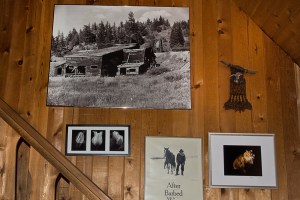
I also share is love for black and white prints. There are eight framed photographs that my wife and I made hanging on my walls. Including one that’s 3 feet by 4 feet. And there is even a B&W framed poster by Alfred Stieglitz on the wall behind the computer.

I agreed with him when he said that he thought that, black and white photographs, “convey a mood that stretches the imagination” and he mentioned that he admired several of the B&W portraits I have hanging in my shop.

That was a perfect time for me to quote Photojournalist Ted Grant, who is regarded as Canada’s premier living photographer, “When you photograph people in color, you photograph their clothes. But when you photograph people in black and white, you photograph their souls!”

In an article in June of 2014 I wrote. “A black and white photograph depends on its ability to communicate, it doesn’t need to rely on eye-catching colours for its’ visual presentation. Those B&W images that stand and pass the test of time combine attention to subtle changes in light, composition, and perspective. And it stretches our creativity and forces us to visualize our world in different terms.”

I wouldn’t want to be limited to shooting black and white any more than I would want to be limited to only using one lens. Some images just seem stronger in colour. However, if I can again repeat what I also wrote in that 2014 article, “I remember a photographer once saying that he believed shooting in B&W refined one’s way of seeing. And I heartily agree.”


An early morning photo challenge                                         

My friend, neighbour, and photo pal Jo decided to give herself an early morning photo challenge. That meant after feeding her kids, 6 dogs, making sure her 13 year old son is ready for school and greeting her tired husband after his long night shift, she quickly sneaks out with her camera to create artistic images out of normally uninspiring objects she finds close to her rural home.

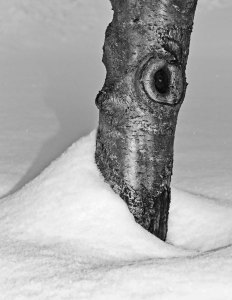
I first knew Jo was taking this challenge on when she texted me a picture of deer chomping on her neighbour’s bushes one morning. She casually added a close-up of snow that had drifted around a small tree trunk. I was thrilled with how she captured the play of light and shadow on something most photographers would walk past.

The mundane, normal features people ignore along the snow laden winter neighbourhood street as they dash from their warm homes, coffee in hand to jump in their cold cars, and join the morning battalion on the icy highway, are Jo’s chosen subjects.

I wonder what people think as they look out their windows at Jo all bundled up, holding her camera in gloved hands as she wanders the vacant streets. I can imagine her dodging oncoming cars as they slip along the icy snow packed street.

What those drivers are thinking when they see her standing calf deep in the snow, photographing a tree branch.

I’ll add this first quote by the iconic American photographer Annie Leibovitz, “The camera makes you forget you’re there. It’s not like you are hiding but you forget, you are just looking so much.”

I like her words, and I am pretty sure that most serious photographers get lost in the moment when they look into a scene searching to create interest out of some normally unremarkable object.

Of all the photography challenges people post on the many social media sites I think I like this one the most. It is hard for us to find interest in the world we walk by everyday. And forcing oneself to be creative with some unremarkable subject is a struggle, let alone wandering around on a cold February morning just after sun up.

I asked Jo why she likes to meander around with her camera in the early morning. She wasn’t sure, and at first only said, “because its peaceful”. However, I think there is more to that kind of challenge than searching for a peaceful moment. I know her enough to say that she is demanding in her photography, and is always exploring alternatives.

Photography is such an exciting medium that lets us examine the world around us in our own personal way. This kind of photographer’s challenge does just that.

I’ll end this with a couple quotes by Depression era photojournalist Dorothea Lange who wrote, “A camera is a tool for learning how to see without a camera.” And she also wrote “To know ahead of time what you’re looking for means you’re then only photographing your own preconceptions, which is very limiting, and often false.”

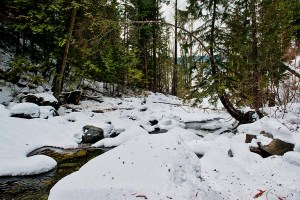
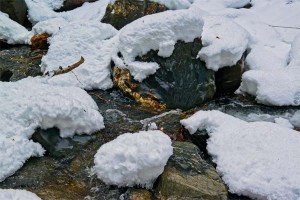
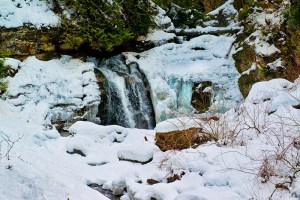
A snowy walk to Chase Falls


The day was grey, flat and cold. but, I was bored with watching TV and wanted to get out and put some footprints in the snow.

I lazily thought about wandering the deep snow in my yard or just taking a drive on the slushy roads above my home. However, I hadn’t visited the nearby Chase falls since a hot day in July and I thought it would be fun to see if there was any water coming over the falls.

When I visited the falls last summer I was joined by my photographer friend, Jo McAvany. I remember Jo loudly complaining about the mosquitos on that hot dry summer day. So I called her and asked if she wanted to trudge through the two-foot deep snow up to the falls and promised the mosquitos wouldn’t be too bad this time of year.

I don’t know what kind of deal she made with her husband on his day off work, but she said, “sure I want to go”.

As I thought, the trail into the falls hadn’t been tramped down by people, and other than foot prints of a lonely racoon that I expect has a warren somewhere in the river canyon to hide in when he’s not marauding garbage cans in the tiny town of Chase, we were breaking trail.

Last July Jo complained about the mosquitos. However, this time it was me complaining that I should have worn high top boots because the snow that filled my short-topped boots left little room for my feet.

I would have liked to climb down to the falls, but the snow hid all the boulders and caution said venturing beyond the trees might end in a very cold bath.

Jo had mounted a 24-105mm on her camera and I had my trusty 24-70mm on mine. We both had put longer lenses in my backpack, but the wide-angle lenses were the most comfortable to use.

The day was mostly cloudy and flat, but every now and then things lightened up just a bit. Not enough to create shadows, but at times there were highlights on protruding rocks, tree limbs and the water.

On a bright day one always struggles with overexposure on a waterfall. I prefer a slight overcast or a foggy day, and I did get some reasonable photographs of Chase Falls this time. Bright sun, deep shadows, a scene with too much contrast or mosquitos didn’t bother me this time. But just a bit more light (and less freezing snow in my boots) would have been nice.

Over the past forty years have visited those falls at least once in every season, and I can’t begin to count or even remember all the different cameras I have pointed at the falls and the surrounding area in that small canyon.

There has been lots of change as the canyon errodes, logs and boulders are swept over the falls and trees and foliage grow taller and denser. I am hoping to be making that short walk each season for at least ten more years.

Photographing the Canadian Pacific Holiday Train 

A couple weeks ago I wrote about how much I like Christmas lights.

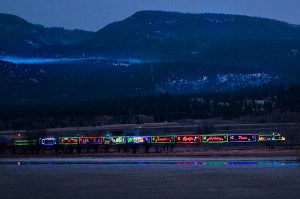
Well, the Christmas holiday season isn’t over yet and to prove it I got a chance to set my tripod up on the cold, winter’s river beach a few minutes down the hill from my home to photograph Canadian Pacific Railroad’s Holiday Train.

CP Rail’s website says, “The CP Holiday Train program launched in 1999 and has since raised more than $13 million and four million pounds of food for communities along CP’s routes in Canada and the United States…. The holiday season is the best time of the year, and we look forward to bringing together thousands of Canadians and Americans this season for this incredibly important cause and a great time.”

As I have in past years, I positioned myself on the beach across the river so I could get a wide shot of the brightly lighted train passing on the opposite side with the dark hills and forest behind.
I arrived an hour in advance while there was still plenty of light and made a few test shots. The schedule put the train at our location a bit after 4PM, just as the sun was going down. The time was about right for my preference of shooting just while there is still that cool, blue light illuminating the sky and I have enough light in my photograph to define the train from its surroundings.

I set my camera at ISO 3200. That allowed me to keep my aperture at f/5.6 for plenty of depth-of -field. I was a bit under exposed, but a stop or two really didn’t bother that kind of low light image. After all, the train’s lights were very bright.
As with past years there was a strong, cold wind blowing down river. In past years it was colder and I had bundled in the car drinking hot chocolate till the train arrived, but this year was warmer and I just stood there enjoying watching my neighbours children running around on the beach. When the train finally arrived the three year old boy and I both yelled, “The Christmas Train” I am sure his mother, shivering in the cold wind, just shook her head thinking, “Boys”.

A young fellow purchased a 1980s film camera from my shop today and we talked for some time about how interesting prints made from film are. He was really thrilled to begin capturing the world around him with film.

As I selected the images that I had edited and worked over using several computer programs for this article I thought of that young photographer and the journey he is beginning with film.

I am sure he will have fun, but the photographs I made of the Holiday train would have been beyond the ability of most popular films he will find at local outlets, and I had the unfair advantage of computer programs with which I could squeeze every bit of data there was in the digital file I made.

Photographing the Holiday train was fun and I am always surprised that there aren’t carloads of photographers joining me on the beach when the train comes by.


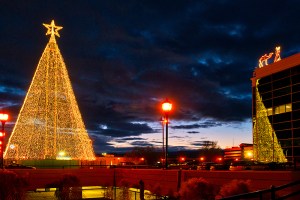
I have always liked Christmas lights.   


When I was a child my parents used to bundle my brothers and I into the family car and drive up along the high avenues around Salt Lake City so we could look down on all the decorative lights in the valley. And we even got hot chocolate, so needless to say I am a Christmas light junky.

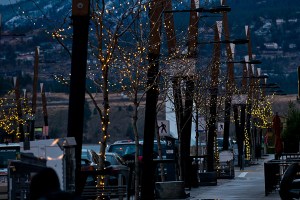
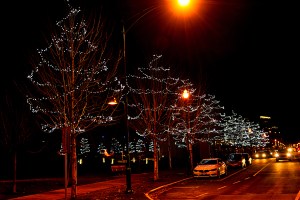
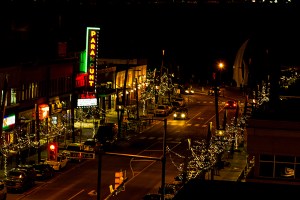
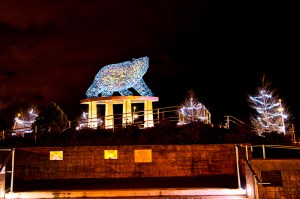
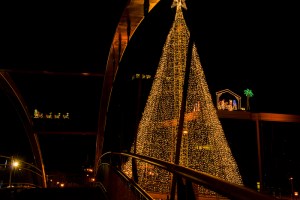
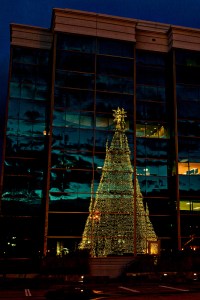
For years I have had business in Kelowna, British Columbia during December and I always brought my camera so I could go out at night and then again at morning’s first light to photograph the Christmas lights along the city streets.

This year I had to come down much earlier, on the last day of November. It was an early day for me and I finished just before lunch, so I wandered around looking through the store windows near my hotel until It had started to rain, no not the snow I was hoping for, but I had hours to wait till sundown so I went into an eatery called the Memphis Blues.  When I entered the place was filled with wonderfully loud southern blues music. I was delighted to find they had the perfect food for a damp cool day, southern barbecued chicken. Gosh, I am sure somewhere it might get better than that, but to me it was the perfect place to pass the time till evening and could photograph the bright Christmas lights in the city.  In spite of the rain, when I finished I decided to wander a bit with my camera for some low light afternoon photos. The last light of the day is always interesting, even on a drizzling over cast day.

Last year I photographed decorated boats moored along the lake harbor and people skating on the outdoor rink. However, to my dismay the barkeep gave me the bad news that the Kelowna winter light festival was days away and it was too warm to use the skating rink. Gosh, I might just be forced to make the winding two-hour drive again in a few weeks. Blast my bad luck.

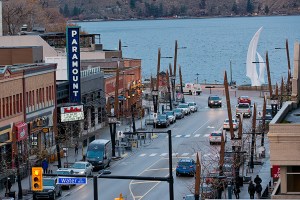
I snapped a few from my hotel room. My room was on the 5th floor above the street so I had an excellent shot with my 70-200mm down the street towards the lake and after that I meandered along the street and beside the lake making photographs. There weren’t a lot of people, but those I did pass must have already been in a holiday mood because every person either smiled and nodded or said hello. Maybe they just liked seeing an old grey haired guy enjoying himself taking pictures of the city they lived in.

The cold wind coming off the lake finally worked it’s way in and I decided to return to my hotel room to warm up till night fall.

By 7PM the light had gone down. I began by again taking a photograph down the street toward the lake, then grabbed my tripod and camera and went out for another ‘bout with the lake’s cold wind. I photographed many of the same things I had in the afternoon light, except this time the Christmas lights were sparkling in the dark sky.

Sun-up is at 7:30 here in southern British Columbia. I like the light just before that when I am photographing city lights. I want just enough to give the feeling of nighttime without covering building details.

There I was waiting at 6:30 in the cold morning air, and by 7ish I was sadly done. I always have to tear myself away. When I was back at my hotel some time later drinking coffee and having my morning yogurt I got a text from my friend Dave. He wondered how it was going and I replied that standing alone at 6:30 AM on a cold, windy, dark deserted overpass with frozen fingers while taking pictures of street lights is damned enjoyable, Gosh, it doesn’t get much better than that. The only thing that could have made it better was if it started snowing.

Night photography (well actually, early morning photography) gives a city such a nice mood that isn’t really manifest during the day. I like the mystery and, of course, this time of year the frosting on the cake is the wonderful Christmas lights.

Photos in the alleyways.  


This past week my friend Jo McAvany asked me if I would be willing to help her with using off-camera flash in daylight. I like controlled studio lighting, but I’ll admit that balancing flash lighting in the bright daylight is much more fun.

She texted me saying she had asked her friend Heather to be our subject. My question was “where do you want to do this”. I think I held my breath at that moment hoping she wouldn’t suggest wandering around in the woods to photograph our young model. If she had I probably would have feigned an attack of the flu or something just to get out of spending a boring day doing what every beginning photographer seems to be doing now days. However, Jo said, “I’d like to go downtown.”   My response was, “Great lets pose your friend in the alleys”.

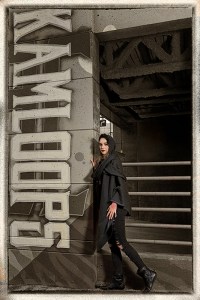
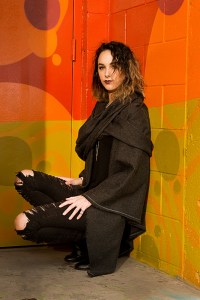
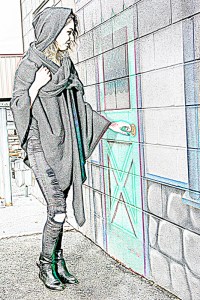
I am not sure if it was because of the shopkeepers or random artists, but the alleyways in downtown Kamloops are damn colourful. There are murals, wildly painted back entrances and large brightly coloured signs that fill complete walls. One might expect to find trash, discarded store goods and rusting garbage bins. But nope, it was as if someone had said, “Hey, there might be a photographer or two that want photograph our alleys so lets make ‘em nice.”

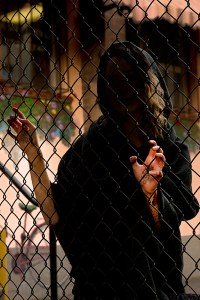
We went from coloured wall to coloured wall, posing our ever-patient subject in doorways, against brightly decorated enclosures and behind fenced walkways. I think this was Heather’s first time posing for photographers, or at least having two cameras pointed at her. And yes, she had to endure my constant discourse about balancing light, shadows, exposure and off-camera flash.

Sunday was a good choice. Other than the cold breezy November day, it was quite pleasant. Well, except when the wind caught the umbrella that was attached to the flash and stand and sent everything crashing to the ground.

There was no traffic zooming down the ally and other than some fellows sitting out of the wind behind a building and a street cleaning machine quickly scrubbing by, we had the alley to ourselves.

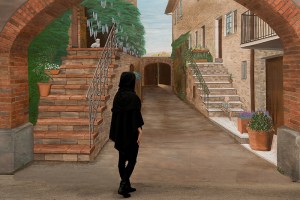
The three of us ambled up and down the alleys. There were so many places that demanded Heather to pose for us in front of. We even tried adding her into one of the large murals that looked like a walkway into an Italian villa. There was a small green door that someone had painted, and both Jo and Heather agreed that it would be like Alice in Wonderland if Heather reached down for the doorknob. We could have spent the day wandering the alleys photographing Heather, but eventually the cold crept in and we decided it was time to finish photo session talking and warming up at a coffee shop.

We had a good day. We discovered a new place where we can do photography and we all worked together to produce some interesting photographs.  Heather is leaving town for a job in the fast paced coastal city of Vancouver, and our photos will surely give her some great memories of the city she has been living in for some time now.

I think Jo and I might invite a few photographers and models to join us another time to do a bit more exploring around the back alleys.


Wells Gray Provincial Park. 


The morning news said to expect snow, overcast days and cold weather. So I decided I had better take a last visit Wells Gray Provincial Park with out the snow. I had been lazily putting off spending a day in that scenic park. Gosh, it’s only a two and a half hour drive to get there, and I am not that busy, so I couldn’t come up with an excuse not to throw my camera gear in the car and make the drive.

I first visited Wells Gray back in 1971. A friend and I had driven up the east coast of the US into Canada, traveled around Cape Breton, and then had a leisurely drove across Canada to Kamloops, British Columbia. Someone we met in Kamloops suggested Wells Gray Park.

I remember driving along the rough, rutted dirt road into the park and marvelling at the quiet wilderness encroaching from both sides. Until the road became blocked by many stern looking women carrying placards and standing by a big sign demanding that the road should be paved.  When we stopped someone thrust a petition through the window, while telling how the school bus had driven off the dangerous road we were on, and required our signatures. I am sure they saw the California plates on the front of our 60s Ford Econoline van, but they didn’t seem to care so we quickly signed their petition and were allowed to carry on.

I smiled remembering that as I drove on the pleasant road that had been freshly paved, yet again, and slowed down to look at the Black Horse Saloon and guest cabins that now sits where those women were. I guess they got their way!

The park was empty. There were no cars or tourist filled busses on the roadside. Gosh, I felt special.

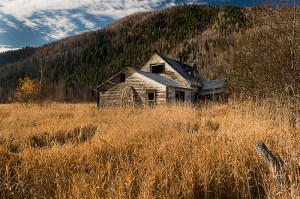
I have my favourite stops for when I don’t feel like hiking. There is an old abandoned building on the way into the park that I have been photographing for years. I am always surprised to see it still standing.

My second stop is to climb under the bridge that crosses the Murtle River. Going under the bridge gives a better location to photograph the “Mushbowl” and the large smooth rock surface is filled with big, round, deep holes. It’s a fun place to wander.

Then I made a fast drive to Helmcken Falls. Not so much because I really was in a hurry to get there, but because I had finished three cups of coffee and really needed to get to an outhouse. I got there and rushed to the privy only to find that the door had been unceremoniously pried open and the toilet paper had been shredded off it’s wall hanger. My friend Jo had mentioned that I should watch for bears, but if she does ask me I’ll just tell her that I am sure a large squirrel ripped up the toilet paper and the door was off its hinges because someone else (with long fingernails) that also too much coffee must have been in a hurry.

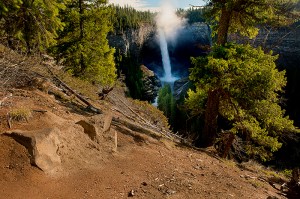
Helmcken fall was, as usual, in the shadow, but there was a nice fog and the sky had some clouds. Not that bad for photography. I like to wander away from the viewing platform, down past the end of the security fence, and just past the sign that warns hikers that they can fall over the edge of the canyon. That’s best because there is no fence to block my view.

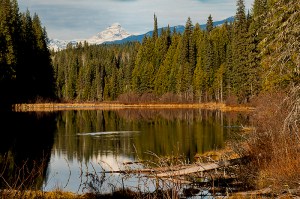
Then it’s only a short drive to my favourite place, Bailey’s Chute. As with the bridge, I climb down under the viewing platform.   My final spot is to park beside Shadow Lake. I like Shadow Lake because sometimes one can see a snow capped mountain to photograph in the distance.

Usually it’s hard to find and empty table at the end of Clearwater Lake to eat lunch at, but the park was empty.

My day couldn’t have been better. Although I have photographed that scenic park many times in the last forty plus years, I always enjoy the drive and the photography. And I am sure I have a good ten or maybe more years left in these old bones to be back photographing that park many, many more times.


Light the Portrait workshop        


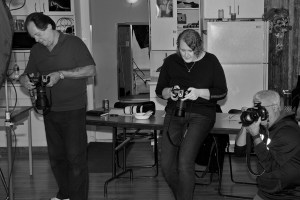
This past weekend I lead the first day of a workshop titled “Light the Portrait”. My goal during the two sessions was to help photographers understand how to use light, indoors or out, when they photograph people.

Fear-of-Flash has always been a topic of discussion for photographers photographing weddings, and portraits both indoors and out.

American photographer and author of the Strobist.com blog David Hobby said,  “…You hear a photographer say, “I’m a strictly available light photographer, I’m a purist.”  He continues, ” What I hear is, I’m scared of using light so I’m going to do this instead. Well, for me lighting was a way to start to create interesting pictures in a way that I could do it.”

It’s with those words that I began the workshop that would discuss using both studio lights and speed lights. Adding that personally, I always use a flash when I make a portrait of someone inside or outside. I don’t care if the ambient light is bright or dim.

My goal is to not only help photographers gain an understanding of off-camera lighting, but to also convince them that using flash will separate their photography from those that rely on natural or as I prefer calling it, “ambient light”.

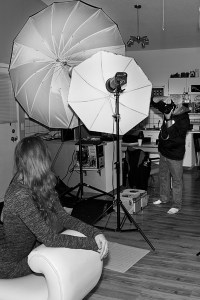
The first session was about the big studio lights and accompanying light modifiers like, umbrellas, softboxes and reflectors, to name a few we employed during the day.

Those of us in Kamloops British Columbia are fortunate to have a local portrait studio that is not only large enough for a class, but also is packed with all sorts of lighting equipment, backdrops and change rooms for models. The portrait studio, Versatile Studio, also comes complete with a kitchen and dining area. And there are all sorts of props for posing.  All I needed to do was write up my lesson plan, print some handouts, book the studio, hire a model and show up in time to start leading participants into the exciting world of off-camera lighting.

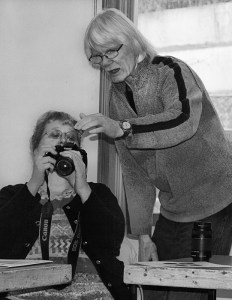
I enjoy leading; I like that word better than “teaching”. I know to teach “is to show or explain to people how to do something”, but most of those that attend know a lot about photography and have already been shooting portraits for some time. All I need to do is build a bridge for them between what they already know and what I am presenting.  And as I stand with them in the studio/classroom I get watch that quick tightening of shoulders, widening of eyes and smiles when they suddenly get it. When that happens I can’t help but smile too.

Well, the first day is over and, as usual, they tired me out. However, I am already looking forward to next week with those enthusiastic photographers (and our energetic model). I wonder if I should begin next week’s session with the words of legendary filmmaker from the 1920s, D.W. Griffith. “Lights camera action”.


Vancouver Camera Show and Swap Meet     


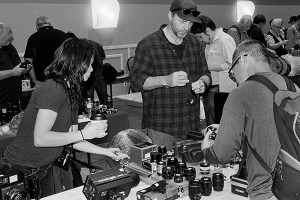
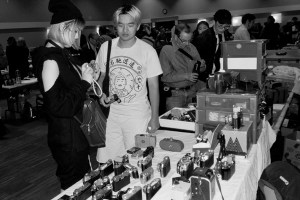
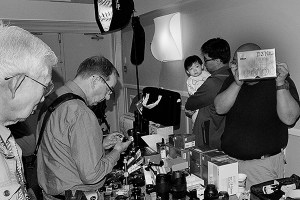
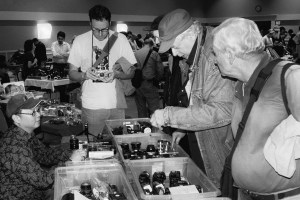
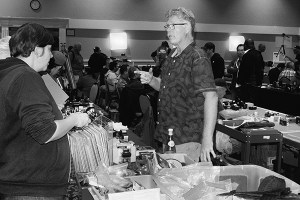
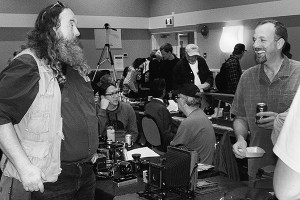
There wasn’t a better way to end this year’s dry, hot, smoke filled summer than hanging out in a large air-conditioned hall filled with cameras and other camera enthusiasts.

The year-end Vancouver Camera show and Swap meet was on the first Sunday in October and, of course, I was there!

I had convinced my friend Laurie Patmore to join me for the big camera sale. Actually it didn’t really take much convincing. If I remember right all I said was, “Do you want to go with me to the October 1st Camera sale?” And without hesitation he replied “yes”. Then I slide in, “If we take you all-wheel drive I won’t have to change to my snow tires.” I was glad he said yes to both, because I was too lazy to change my tires.

We didn’t need snow tires for the beautiful dry 4-hour drive through the mountains, even though they were required by October 1st.   With that notethe next morning we woke to a cool, clear, coastal, (also dry) autumn day, and by 8AM we were at our table setting out everything we had to sell.

I always wonder what will be popular with photographers I meet there. Last spring the trend was for vintage equipment and although I could see lots of older photographers walking through the door, the majority were a younger crowd. However, as usual, I’ll use the word “diversity” here to describe the mixed bag of photographer types with different interests, specialties in photography, some preferring film, others digital. There were collectors of both past technology, and some that were looking for the latest digital had to offer. Nevertheless when the doors opened they all rushed in to find sweet deals that I am certain they got.

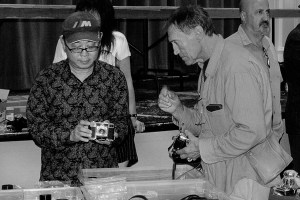
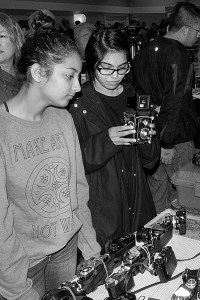
I spent an exhilarating day talking non-stop with other photographers about, hmm…just about everything photography. They readily showed me their cameras and told me stories about places and subjects they photographed. There were long time friends that stopped by to say hello, new friends to keep in touch with, and to my delight, local Vancouver blogger Michael Hoffmann (michaelhoffmannphotography.com) took time out of his busy day to show up and say hello. Gosh, in spite of a great day of selling the cameras and lenses I had on my table I even got time to wander around to check out all the neat photography equipment at other tables.

I know my main goal at the Vancouver Camera Swap and Sale is to “swap and sell”, but I must admit meeting people from all over the province, and finding out about their different interests means just as much to me.

I guess I finish with some words as I do every time to describe my day at Vancouver Camera Swap meet. It was, as always, invigorating, energizing, stimulating, entertaining, exhilarating and educational. Or maybe I could shorten that to just good fun.

The Vancouver Camera Swap Meet is an excellent way to meet and exchange information with other photographers, and to look at, check out, and buy an impressive selection of used photographic equipment that would not be so accessible anywhere else in Canada.