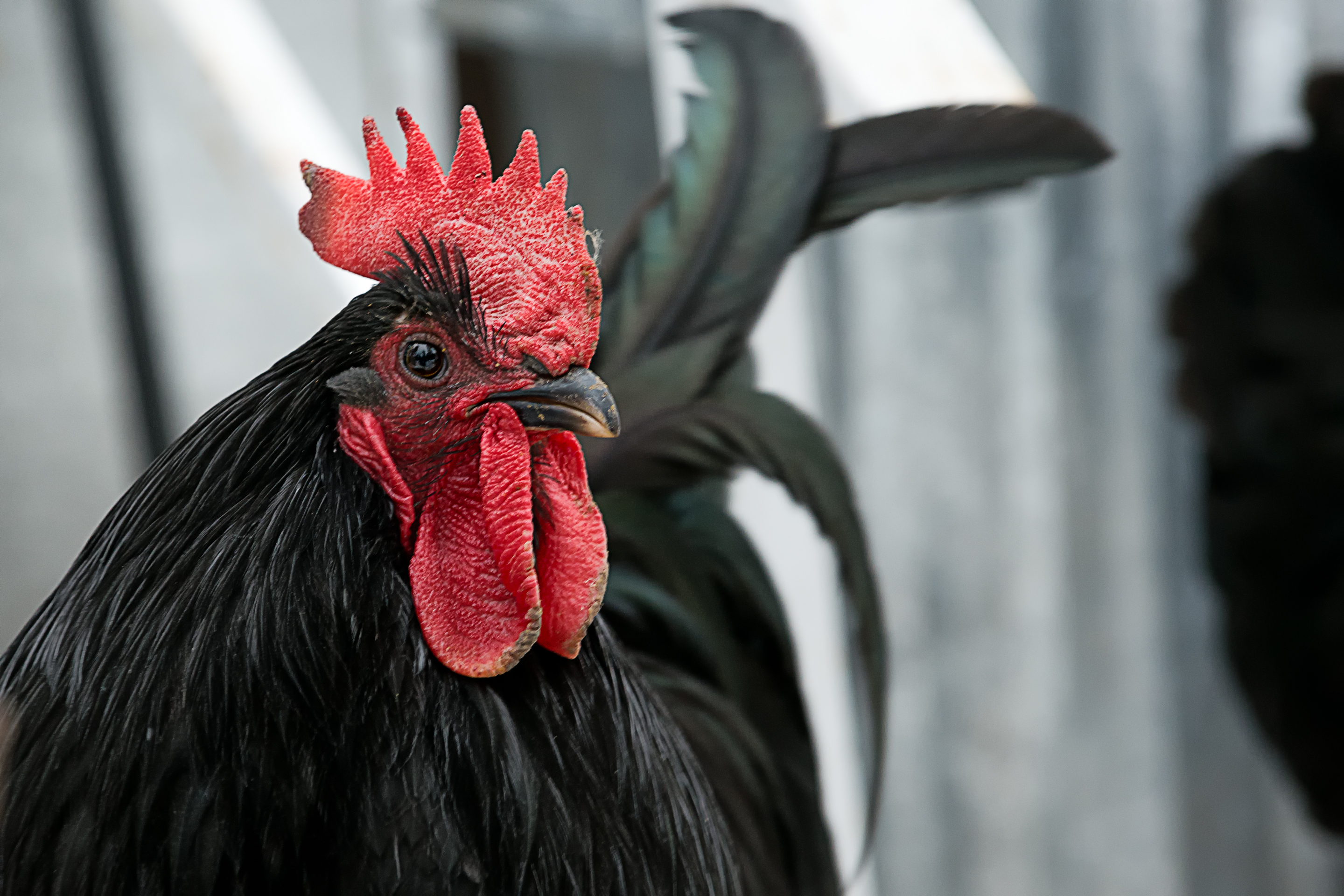
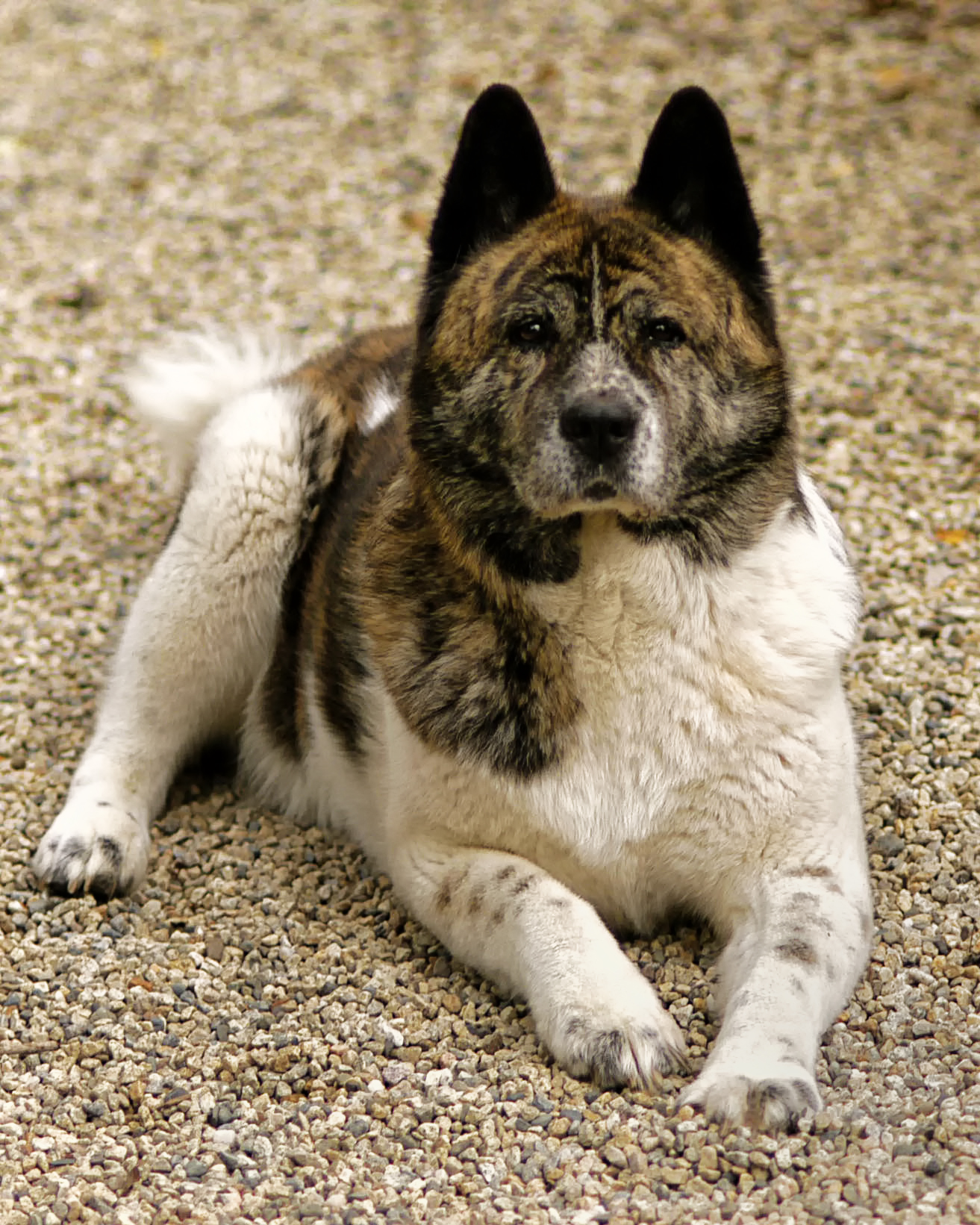
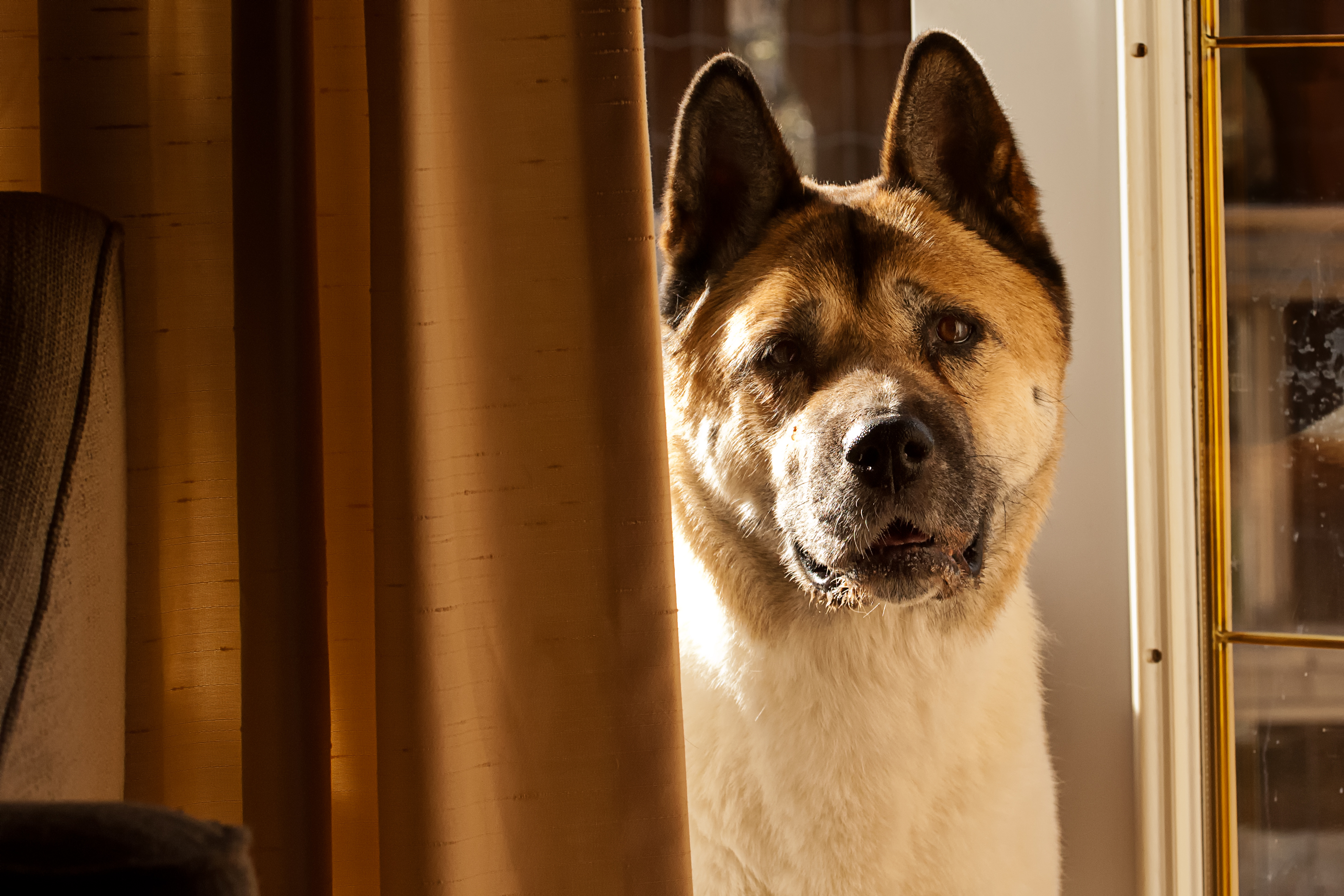
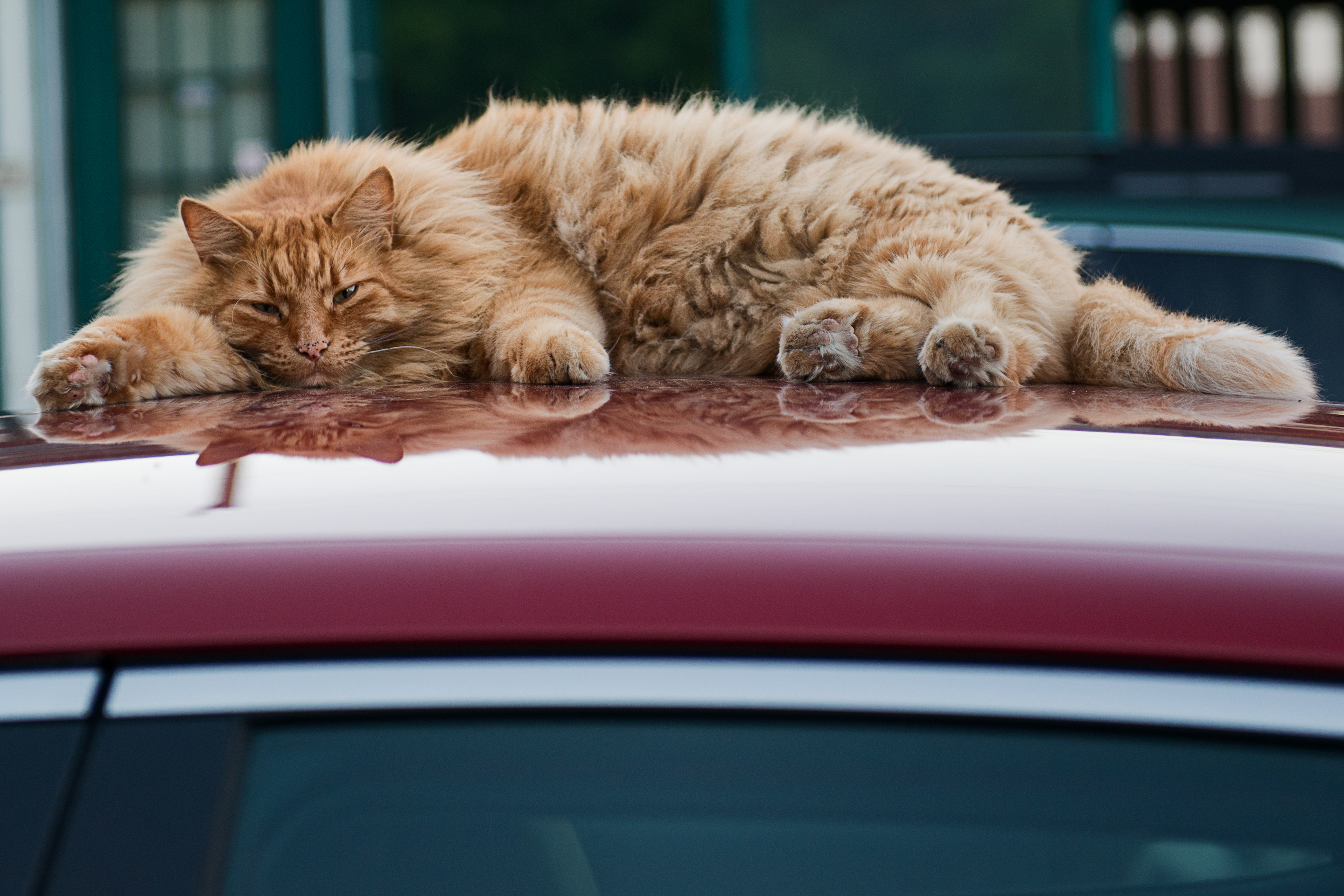
Photographers Must Remember to Consider the Background

Brewster copy 2  Spirit

Gracie 1

Fat Cat

chuck port copy

Looking Scout

Rikkonna 1

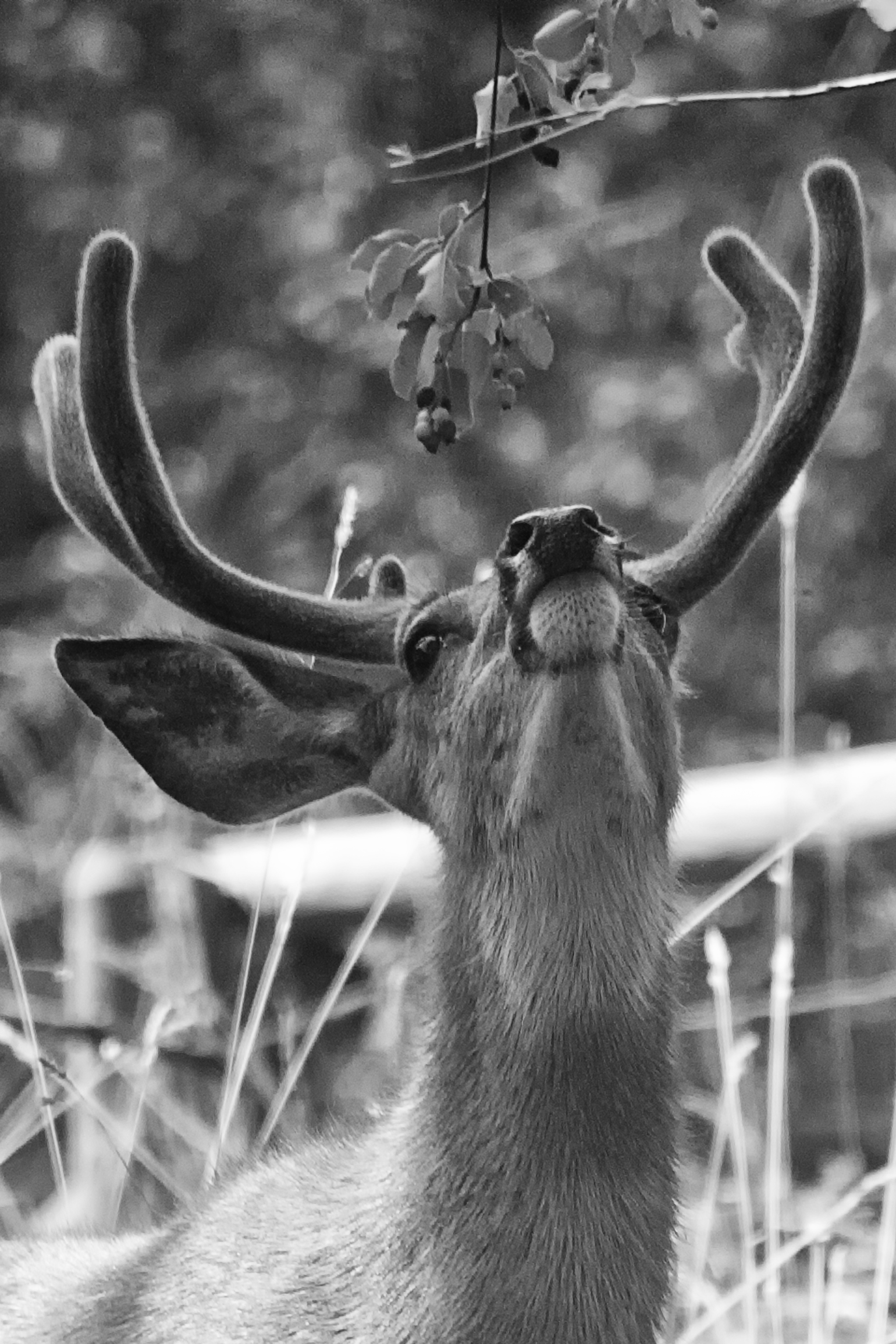
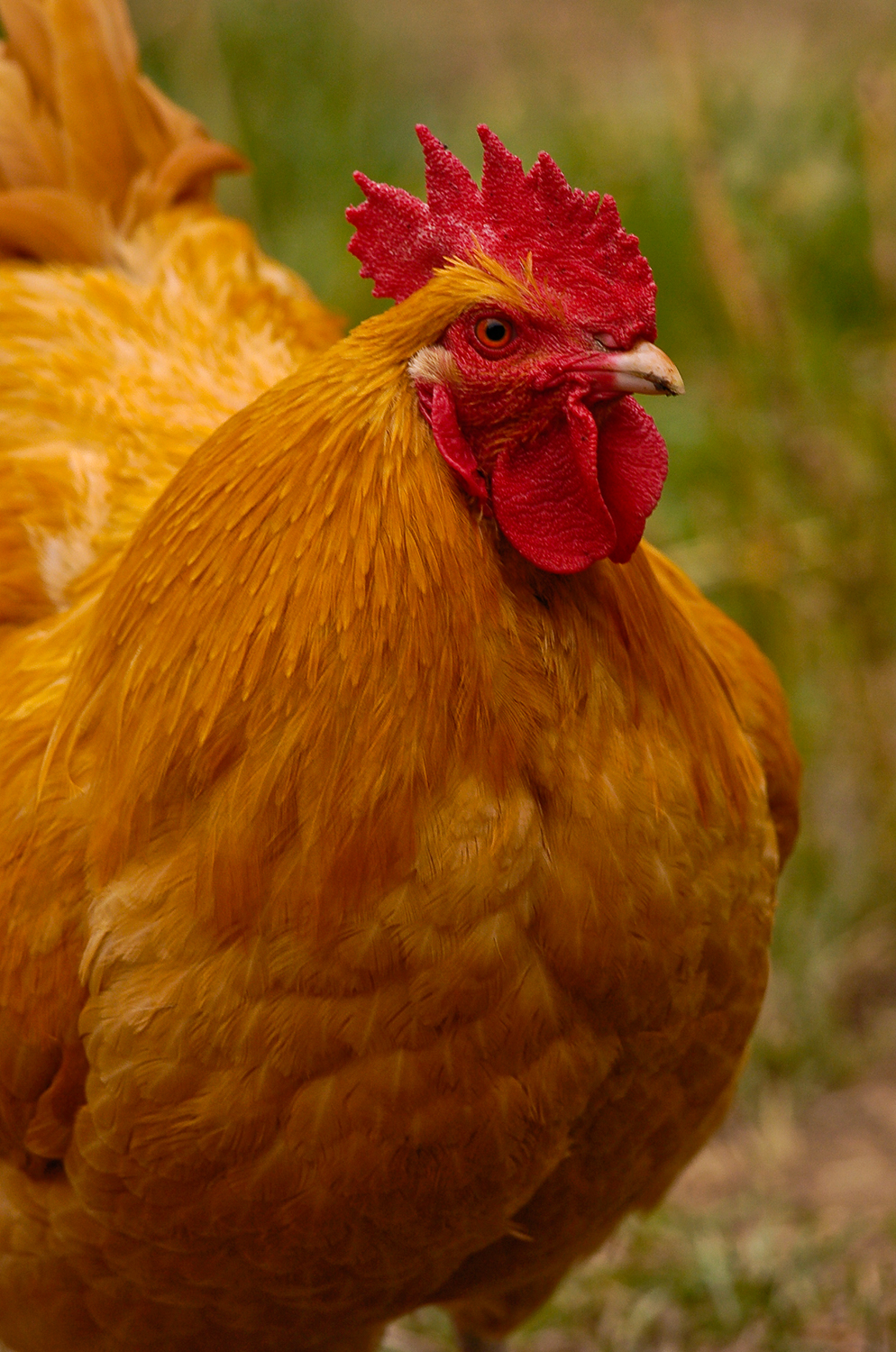
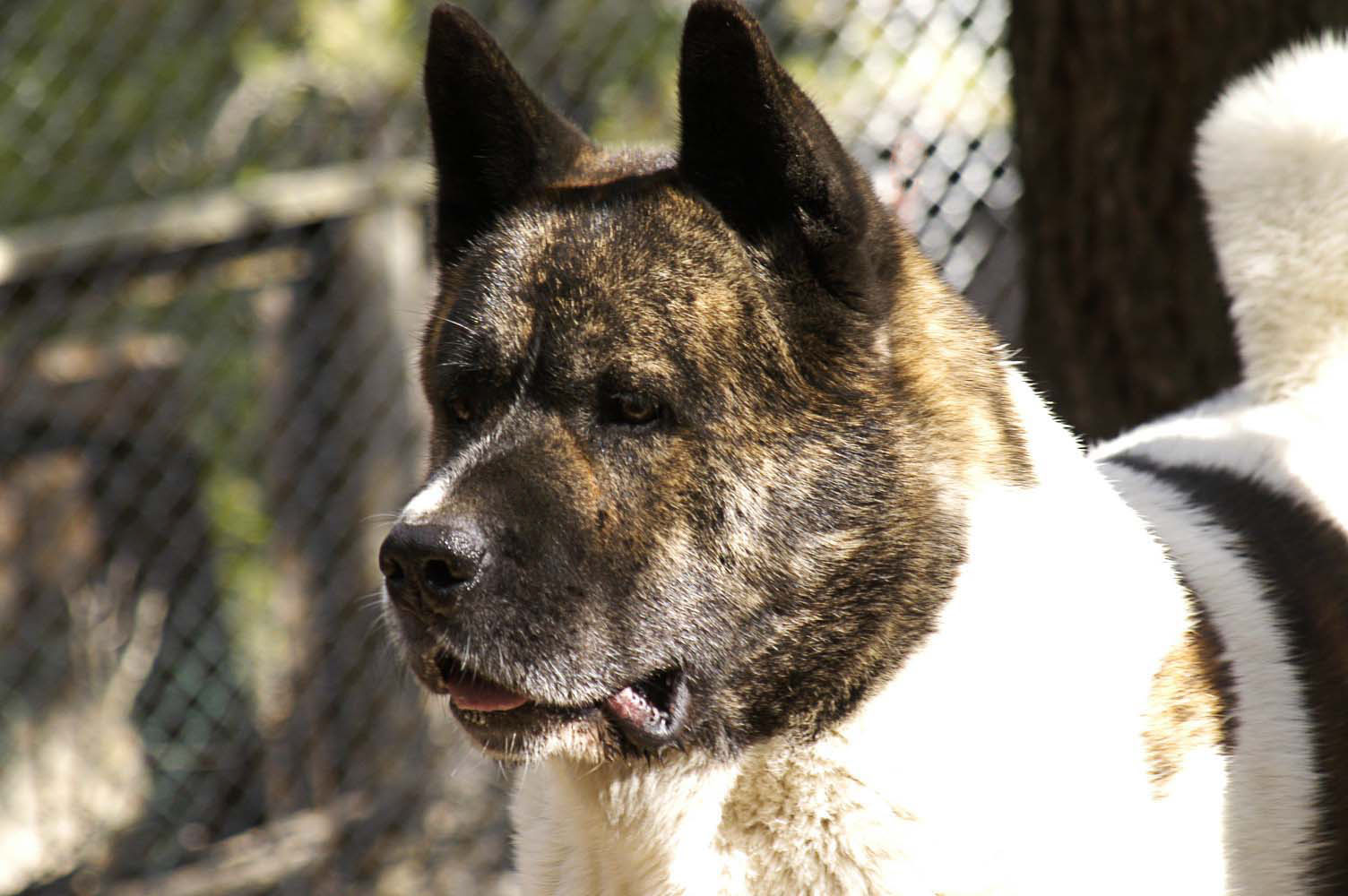
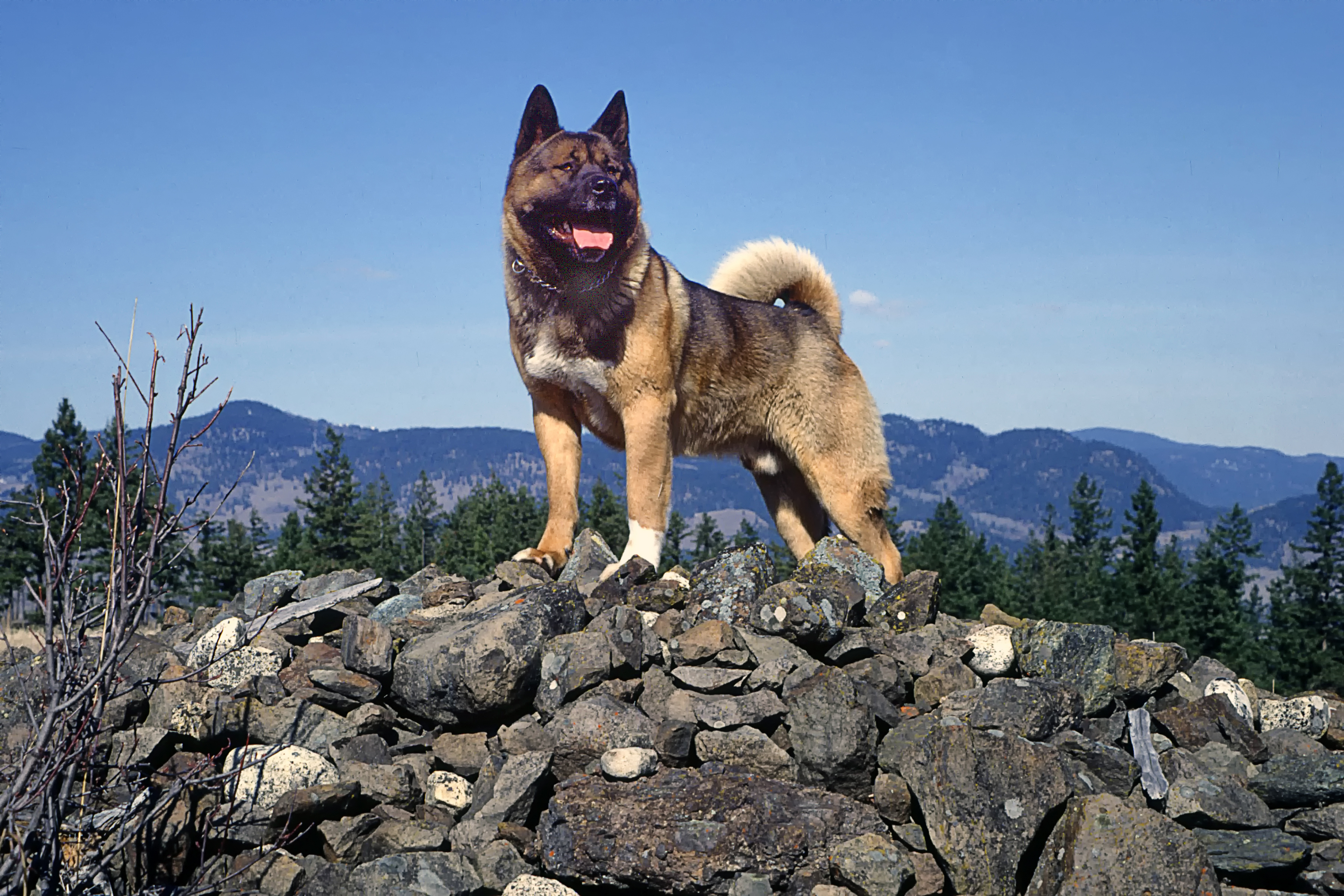
Much of the time photographers get so excited about the subject before their camera that they don’t pay any attention to anything else that is captured by the camera’s sensor when the exposure is made. Of course, things can be cropped out during postproduction, but what if the background is so busy that it obscures the intended subject of the photograph? The background can impact a subject in many ways and much of the time it interferes with the subject.

In the past I have written about composition, depth of field, and even bokeh. Composition can be as simple as creating an interesting photograph by using basic guidelines or compositional strategies for a balanced image. Depth of field is that area in front of and behind the subject that is acceptably clear, and bokeh refers to that portion of an image that is out of focus. Using those three mechanisms or strategies as a way to isolate a subject help photographers increase the impact their photographs have for viewers.

A serious wild life photographer once told me that it is important to have a background that is neutral and non descript. I had one experienced birder giving me tips on photographing Loons, explain that soft green water made better pictures than contrasty blue water. I think that this may be his personal opinion, but I have to agree that of the photos I took that day I liked way the green water looks better.

I recall a photographer who had exhibited his photograph in a local exhibition being angry because he didn’t get a mention by the judges on his photograph of an eagle posing on a branch. He had exposed it properly and displayed it sharply. He was so proud of his photograph of that bald eagle that he was unable to see the busy background and how it negatively impacted on the overall photograph. I believe the judges did see that.

My advice to that photographer would be to curb his excitement and spend some time examining his subject and its surroundings. Using the term, coined by Ansel Adams, that I mentioned in my 26 June 2014 article, he should “previsualize” the image for its best impact.

Compose and isolate the center of interest, and decide how to use the background to the best effect; whether the background should be in, out, or partially focused, or to have it clear or cluttered, and if it is appropriate for inclusion or to be excluded. A busy background distracts viewer’s attention.

Backgrounds present both opportunities and challenges to photographers. Here are four very simple suggestions other photographers have told me take into consideration to make the background work.

1. Check your background before pressing the shutter;
2. Pay attention to your shooting angle;
3. Use the aperture or the focal length to blur the background;
4. Fill the frame with your subject.
They are all great tips, or thoughts for us all to remember, and I personally like the words of Ansel Adams that fits well,  “A good photograph is knowing where to stand.” And I’ll add, remember to consider the background.

I enjoy all comments. Thanks, John

My website is at http://www.enmanscamera.com
Why You Should Be A Photographer

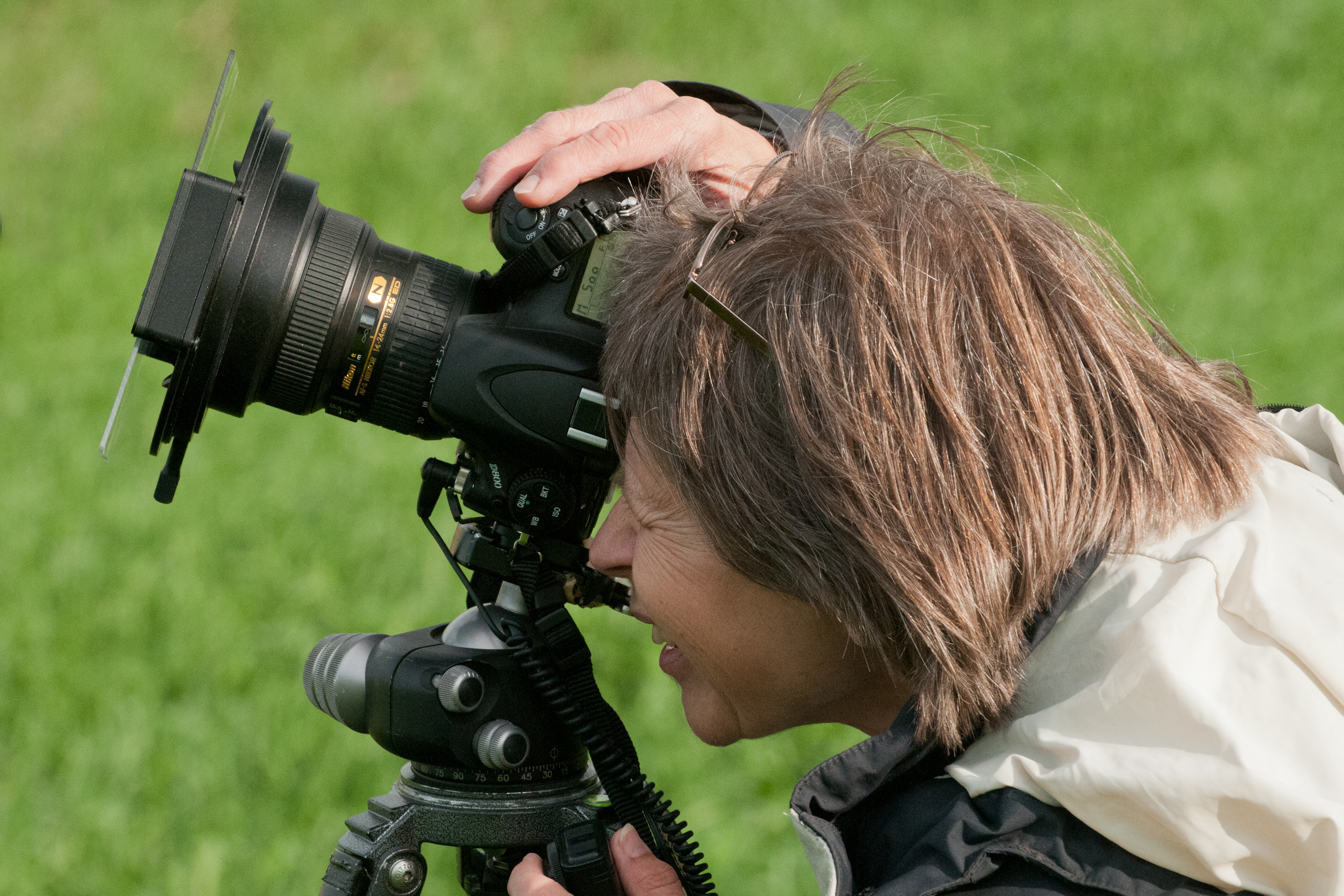
Accessory   Linda Photographer

picking the view

getting the shot

shooting Field patterns

I recently received an email from a friend that included a fun article titled, “54 Reasons Why You Should Be a Photographer.”

The author, Lauren Lim, began with, “Being a photographer is seriously awesome.” And continues, “I’ve compiled 54 really fantastic (reasons)…After you read all these reasons you’ll probably be even more inspired by this medium, and be itching to get out and shoot more.”     Reading that introduction intrigued me and, of course, I agreed with him when he wrote, “I think everyone should get into photography. You don’t ever have to do it professionally. That’s not what being a photographer means. Being a photographer just means you really love photography.”

The list of “54 reasons why you should be a photographer” didn’t really include 54 different reasons; it was pretty much made up of the same reason written over and over in different ways. However, I did select seven that I really liked and I think they are prefect as to why anyone should practice the art of photography.

1. “Capture a memory that you can have forever.”

2. “See the beauty (I’ll add the words, through you lens) every day.”

3. “It’s a creative outlet.”

4. “Share your perspective.”

5. “Express yourself.”

6. “Tell a story”

7. “Can make other people think.”

The exciting medium of photography began with inventors like Joseph Nicephore Niepce, when he succeeded in creating the first permanent image. Louis Daguerre with the “Daguerreotype” and Henry Fox Talbot’s “Calotype” that were instrumental in helping us with the first of that list, ““Capture a memory that you can have forever.”

There were the pioneers of photography like Ansel Adams, Galen Rowell and Eliot Porter that showed use how a photograph would help us, “See the beauty everyday.”

Jerry Uelsman, Duane Michals, Edward Seichen and Man Ray were among the first to split with traditional photographers and might even have said, “It’s a creative outlet.”

When I read the words, “Express yourself.” I immediately thought of the photography of Robert Mapplethorpe and Annie Leibovitz.

The last two about how photography can, “Tell a story.” and “Can make other people think.” Absolutely had me thinking about the wartime photography of Robert Mapplethorpe and Annie Leibovitz. and street photographer, Weegee.

I only mentioned those photographers that had a hand in the beginnings of photography and started us all thinking of the things we all might add to that list. And I am sure without hesitation readers can add pages of modern photographer’s names.

If you feel the urge, be sure to let me know if you have additions to “Why you should be a photographer”.

As for me I’ll just be content with Lim’s words, “Being a photographer is seriously awesome.” And “Being a photographer just means you really love photography.”

My website is at www.enmanscamera.com
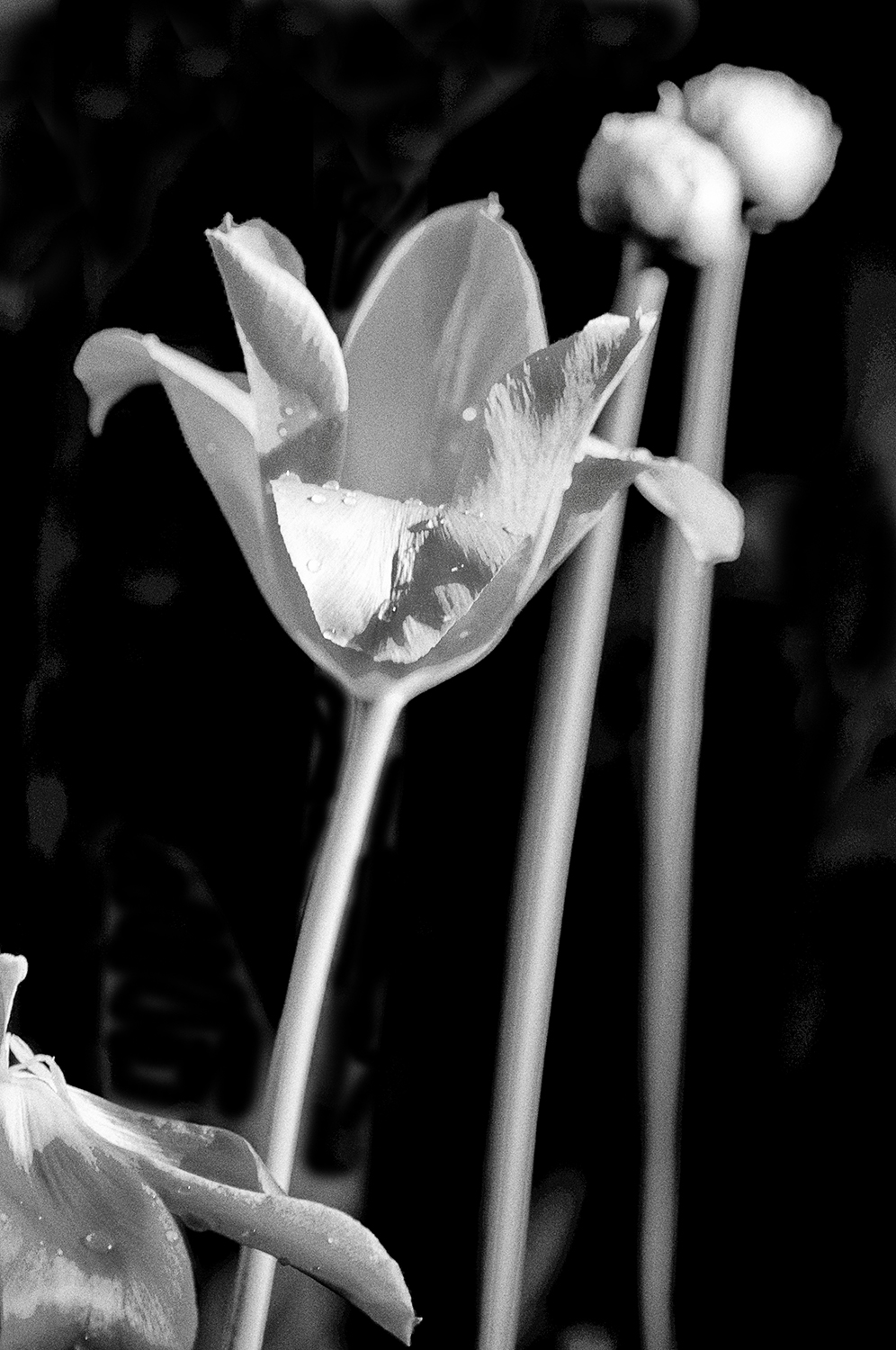
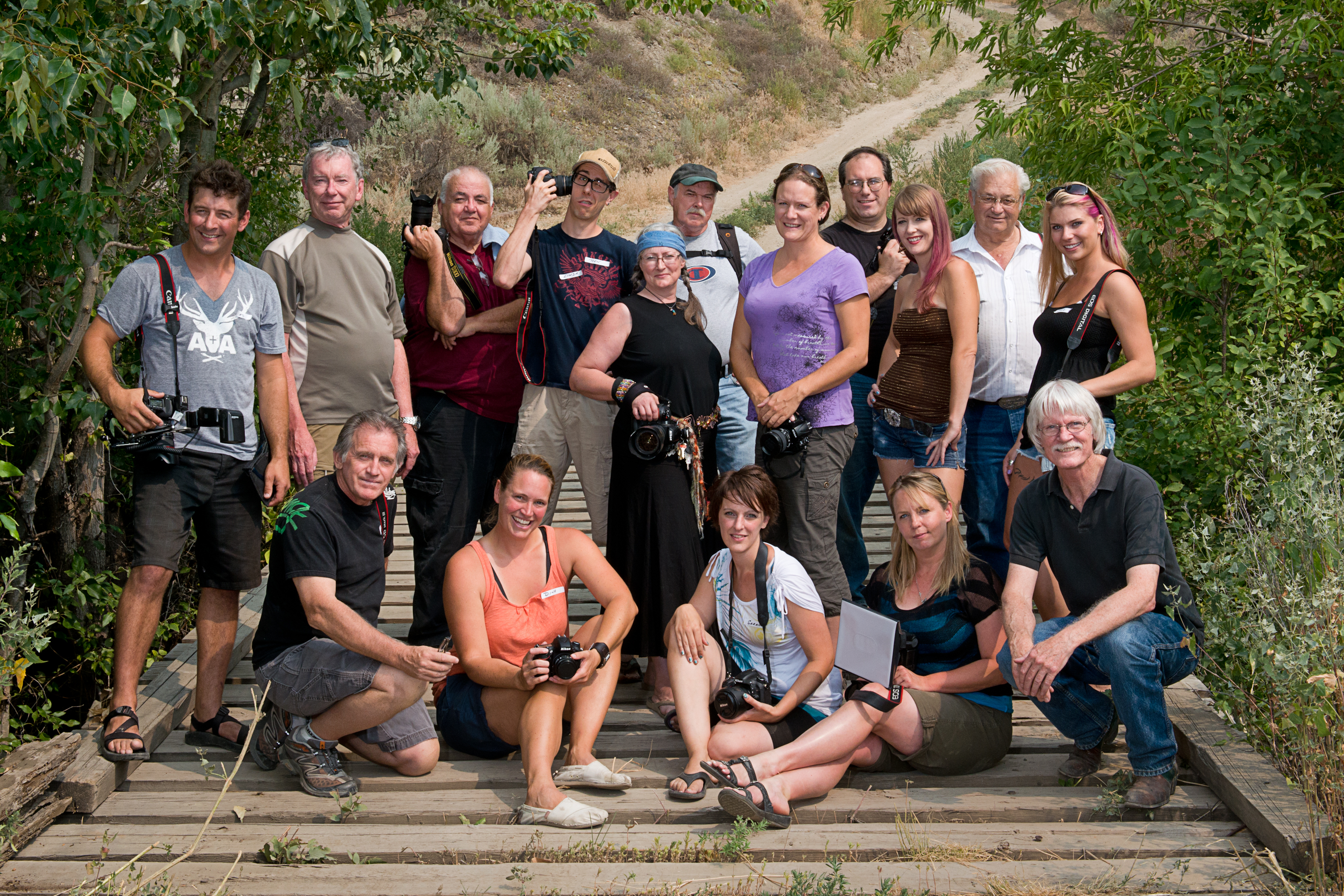
Fifteen Photographers at Open House

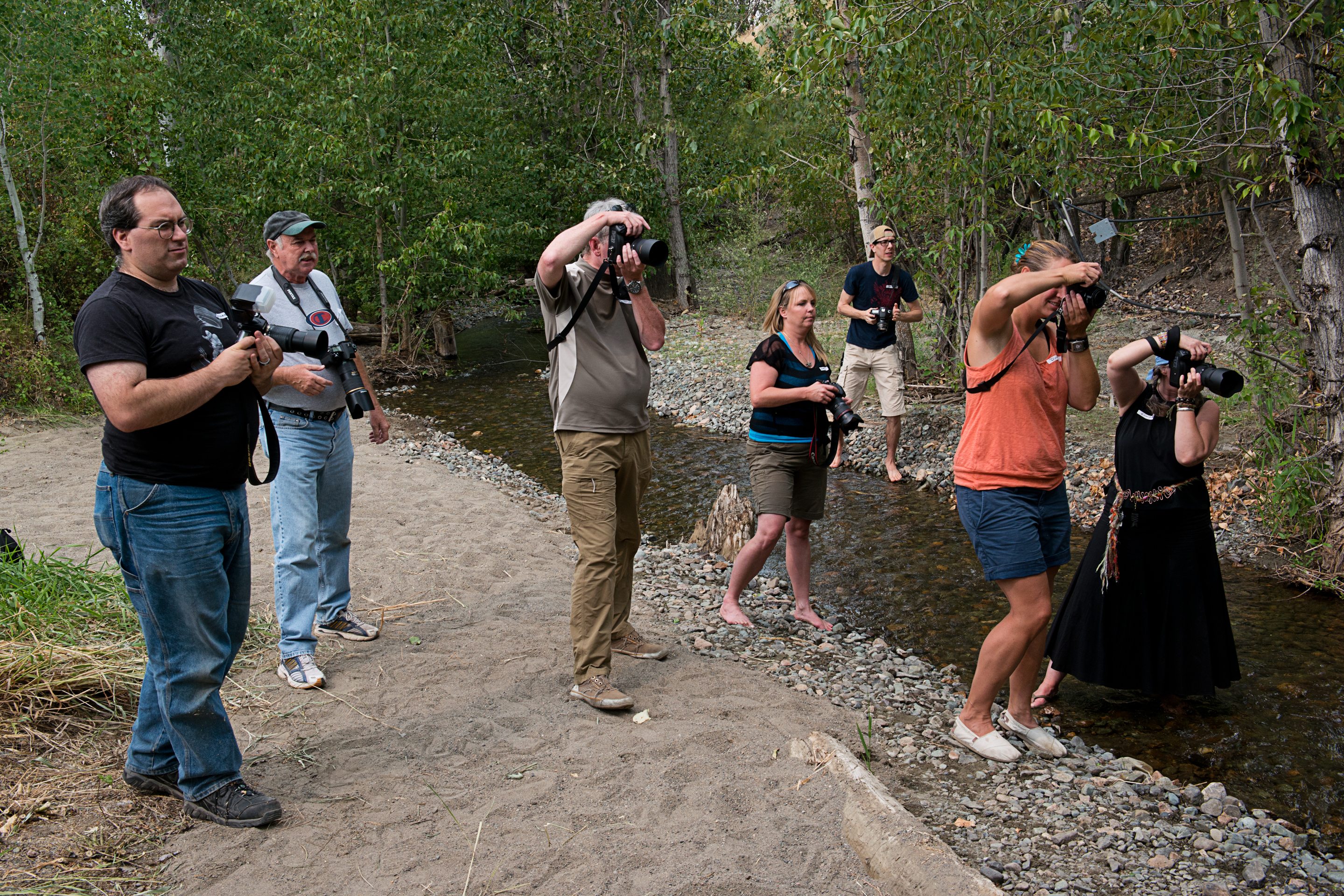
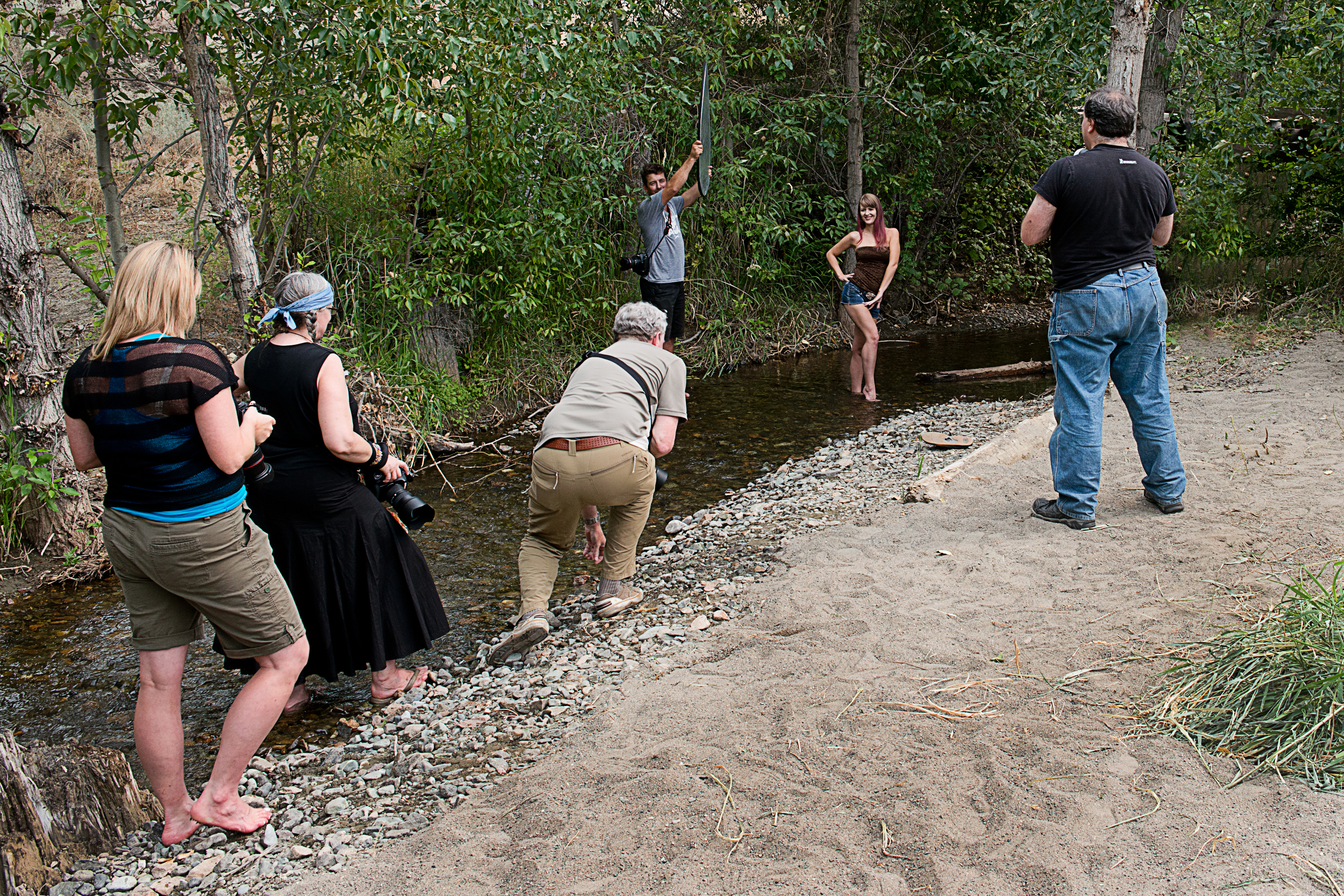
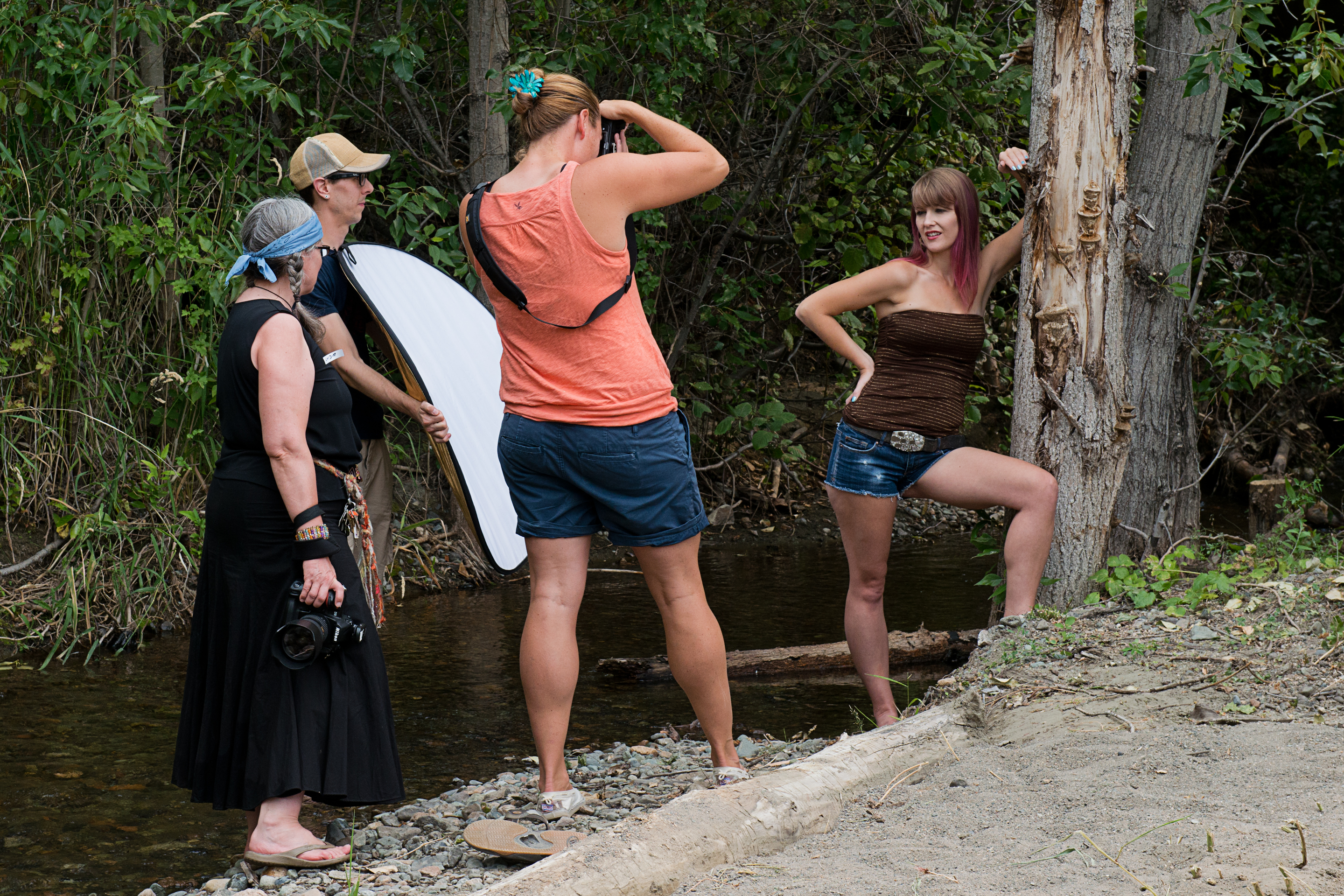
fifteen photgraphers & a Model  Creek shooters  Modeling session  Lighting a portrait

Last weekend fifteen dedicated, and I think, pretty excited, photographers attended the Versatile Studio’s photography open house just outside of Kamloops, British Columbia. It is aptly named Versatile Studio because it provides multiple locations for portrait photography inside and out.

The day began with coffee and numerous discussions on portrait photography. At one point I got up to refill my coffee and then stood back, realizing this group of photographers, with their many different styles and approaches was going to make the day interesting, educational, and a lot of fun.

Of course, it immediately began with a hitch, as only one (thank you, Ali) of the four models that promised to appear showed up; nevertheless, these relentless photographers didn’t miss a beat, and decided to split into three informal groups using each other as subjects.

Those that wanted to work with lights in the large studio space chose two of their number with the most experience in studio strobe lighting to lead, and they took turns modeling, moving lights, backgrounds, etc, and making pictures that delved into some interesting experimentation.

Several others picked up reflectors and gathered at the stream with the one model, Ali. The light filtering through the trees was perfect for the large reflectors, and I think wading in the cool running water was also enticing on the hot August day.

A few decided to try out the light-diffusion panels I had set up in the meadow behind the studio, and later made portraits using the portable strobe I had placed in what was once a large farm equipment/hay storage shed.

Small groups interacted, gathering to discuss different techniques and to exchange thoughts on photography, and in my opinion, it was that exchange of personal experience between the photographers that made the day a success.

As I got the chance to peak at the LCD of several photographers’ cameras, I was intrigued at how differently each photographer captured the same subject. As I write I think of some famous quotes, the first by iconic photographer Ansel Adams, “Photography, as a powerful medium of expression and communications, offers an infinite variety of perception, interpretation and execution.”   His words more than fit what I saw created by those assembled at Versatile Studio that day, and I also like this quote, by author Peter Bunnel, who in his book, “Creative Camera International” writes, “There is no single form or style of portraiture. Portraiture means individualism and as such means diversity, self-expression, private point of view. The most successful images seem to be those which exist on several planes at once and which reflect the fantasy and understanding of many.”

So of course, you can understand why I would include that quote because, indeed, I saw many styles of portraits being made on that day. That’s the interesting and enjoyable thing about getting together with other photographers, especially a collection of photographers as large and diverse in talent and experience as was there; everyone is an individual and creates from their own personal perspective.

Versatile Studio, situated in the small community about fifteen minutes from my shop in Kamloops, hosted this photographer’s event with the help of accomplished photographer, Gary Risdale and myself. Our roles weren’t that of instructors as much as we were there to introduce, demonstrate, and facilitate.

I was so involved with what others were doing that, other than the images I have posted, I didn’t get a chance for anything else.

The studio’s owner, Dave Monsees, commented to me that he liked being around fun people with a true passion for photography and said he enjoyed himself so much that he intends to try to have photographer and model get-togethers like this in his studio on an occasional basis, every month or so.

I enjoyed spending time with those photographers; some were long time friends, and some were new acquaintances; and, I must admit, some of my most favorite times of all, have been either doing photography, or being with people that are doing photography.

It is always great to have your comments, John

My website is at www.enmanscamera.com

Remembering those Great Portrait Photographers that influenced me.

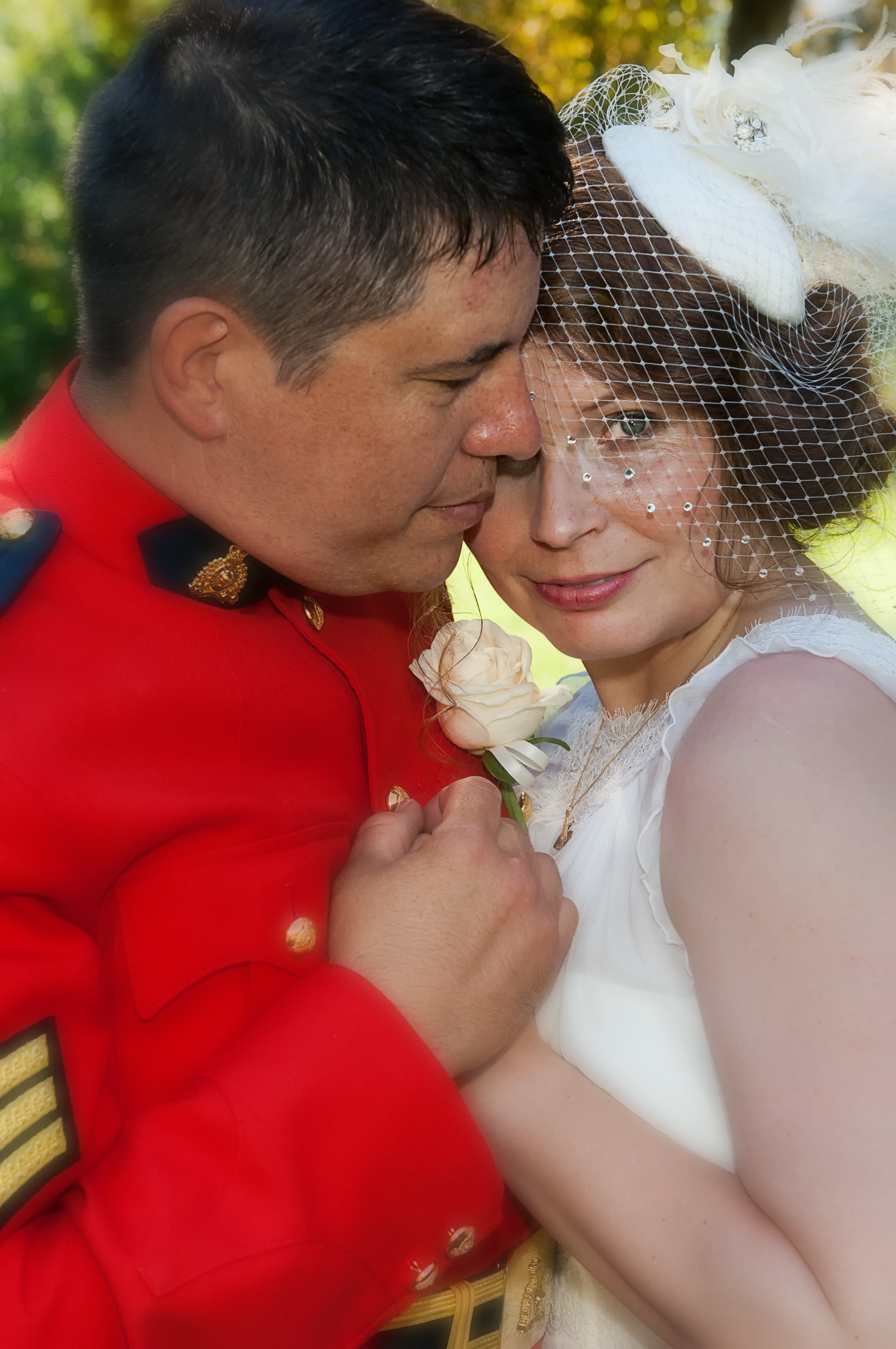
Mike and Shannon Moyer's wedding in Kamloops.

Mike and Shannon Moyer’s wedding in Kamloops.

I had been editing images from a wedding (pictured) I photographed on the weekend and decided to take a break, and settled down to watch a documentary that my wife had recorded on television about photography-great Annie Leibovitz.

Leibovitz made a name for herself with her collaborative style of portrait photography in the 1970s as a photographer for the Rolling Stone magazine and, of course, if you’re my age you may remember the incredible photos she made while touring with the actual Rolling Stones rock band.

The program was a walk down memory lane for me, and I thought about how she and other successful photographers had influenced my approach to photography, and as I watched I considered some other great photographers that impacted my view of portraiture.

The first photographers I became aware of while living and beginning my study of photography in Los Angeles so long ago were the co-founders of Group f/64, an association of west coast photographers.  I would go to exhibitions of their work and irritate my friends because I would ignore them to sit for long periods viewing each photographer’s work; I was amazed with the way they dealt with light and shadow. Ansel Adams and Imogene Cunningham, although not especially portrait photographers, were among those that changed the way photography was approached. Adams is well known to most, but Cunningham’s controlled photography of patterns, detail, and texture is worth viewing not only for her portraiture but also in her botanical work.  On portraiture she was known to comment, “The thing that’s fascinating about portraiture is that nobody is alike.”

Discovering Arnold Newman stopped me in my tracks. Newman photographed the world’s most influential people and his portraiture was termed “environmental”.  Unlike many of his contemporaries at the time, he might include tables, pianos, and other elements he deemed structurally important to a portrait and when interviewed about his style he said, “I am always lining things up, measuring angles…. I’m observing the way you sit, and the way you fit into the composition of the space around you.”

Another woman that challenged the way photographers approached portrait photography at that time was Sarah Moon. Her photographs were mysterious and surreal, sometimes in weirdly muted colours, or nostalgic with diffused grain. Her comment as to her portraiture was, “I never photograph reality.”

One of my favourite portraitists that I have mentioned and quoted many times is Richard Avedon, and his minimalist style with stark white backgrounds. The provocative three-foot high photographs from his exhibition entitled “In the American West” were an important hallmark in 20th century portrait photography. When talking about photography he said, “if a day goes by without my doing something related to photography, it’s as though I’ve neglected something essential to my existence, as though I had forgotten to wake up. I know that the accident of my being a photographer has made my life possible.”

There are many more that made me want to spend time making portraits in my early days with this medium, but the last I’ll mention is Irving Penn.  Truly an artist, his portraits are more than images depicting beautiful people and his prints take on the mantle of works of art in themselves. He said, “I myself have always stood in the awe of the camera. I recognize it for the instrument it is, part Stradivarius, part scalpel.”

Photographing people and stopping their lives for a fleeting moment is pure enjoyment, and for those photographers that want to become more proficient I recommend spending time searching out the famous photographers I have mentioned, viewing their works, and applying the lessons learned to their own portrait photography.

To complete my tribute to those portrait photographers that affected my photography, and that of many others. I will end with Imogene Cunningham’s famous quote “Which of my photographs is my favourite? The one I’m going to take tomorrow.”

Don’t hesitate to leave me your comments. Thanks, John

My website is at www.enmanscamera.com
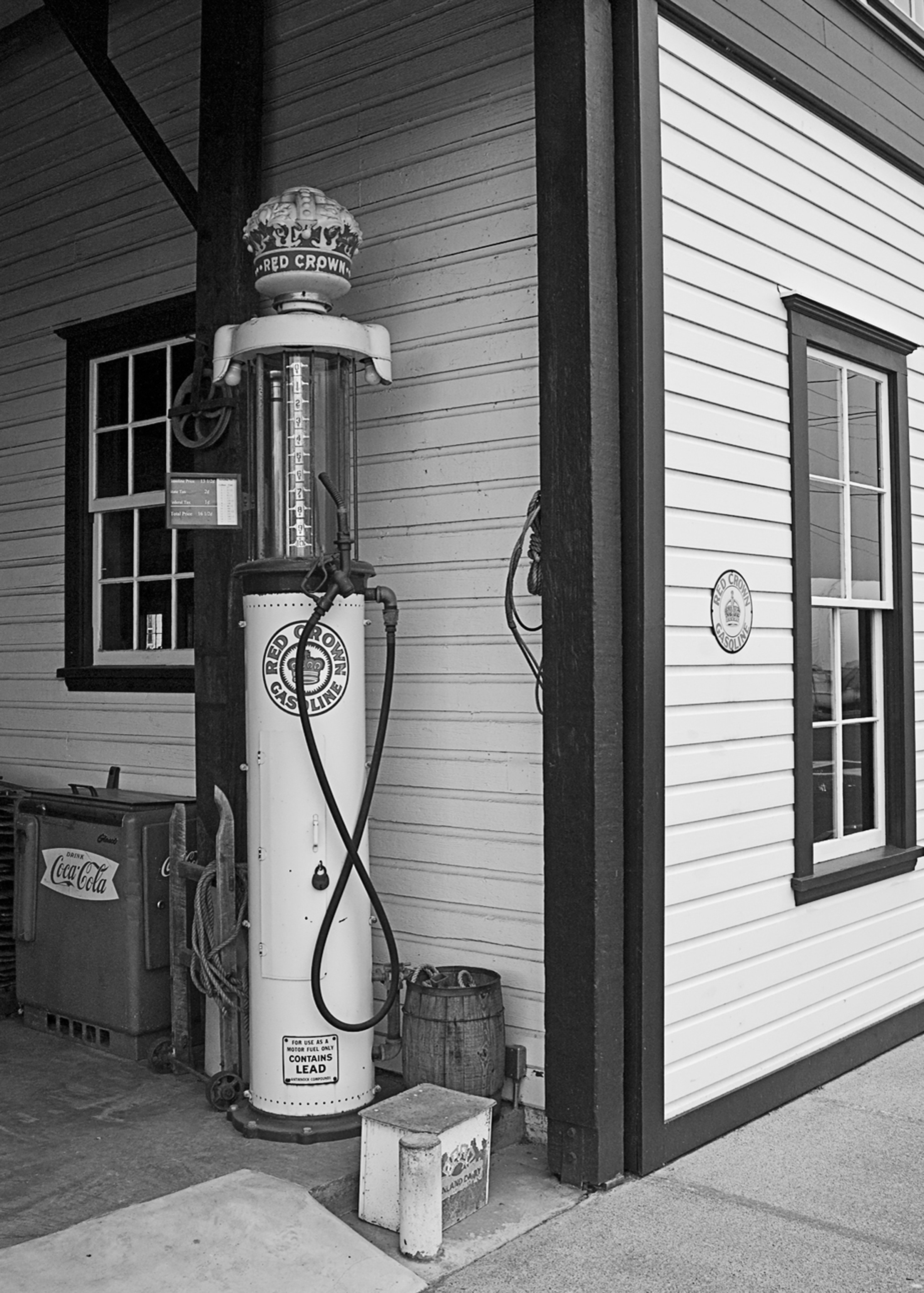
A Good Day of Roadside Photography

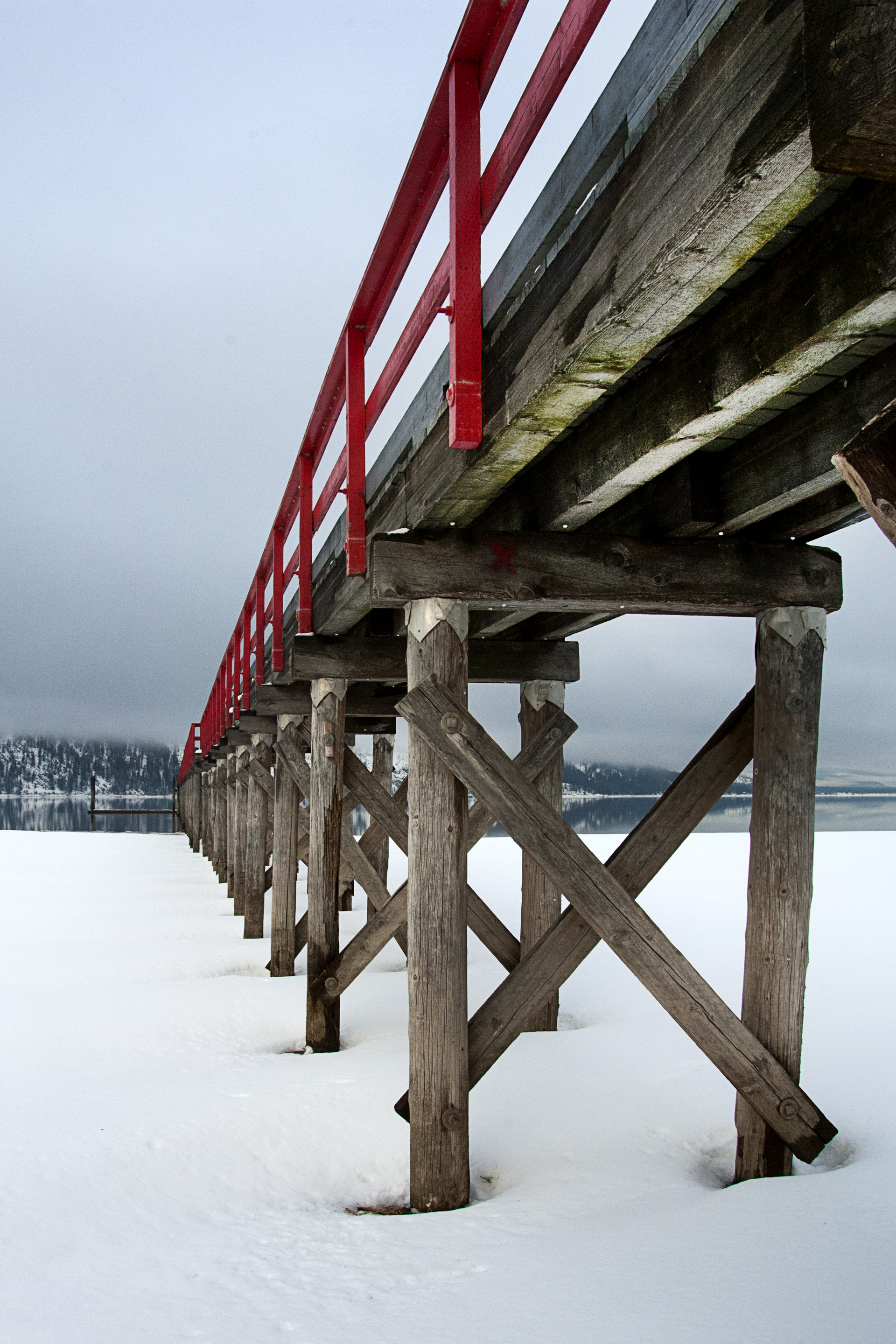
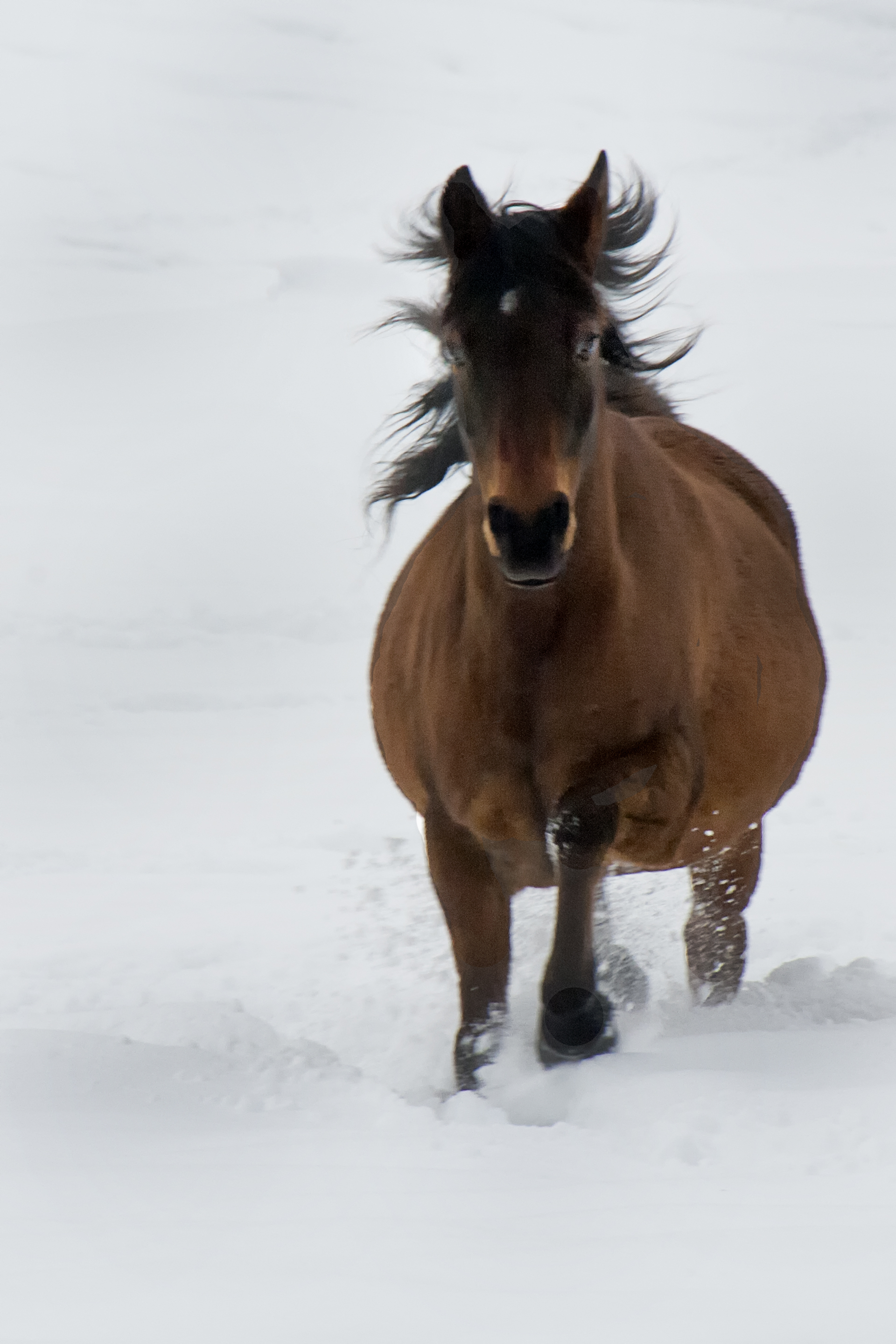
River view copy   REd pier copy Horse running copy

I recently talked to a long time photographer that said the landscape photography in early advertisements by the American Automobile Association was what got him into photography. That organization was once the best place to get maps for road trips in North America. They sent their employees out, with cameras and mapping instruments, across the continent finding the best and most scenic routes. I remember seeing pictures of their big, four-door cargo vehicles with people poised on platforms on top of the vehicle with large tripod mounted 8×10 cameras on some obscure dirt road in the middle of North America. It all looked very exciting.

We both remembered pictures of Ansel Adams standing on a platform on top of a vehicle very much like those used by the American Automobile Association with his large camera making wonderful photographs that scenic photographers still admire.  I actually sold my jaunty, little, two-seater MG that was so easy to get around the streets of Los Angeles, and bought a bright yellow International Scout 4×4. Underpowered, poor turning capability, uncomfortable on long trips with back seats that were only accessed by climbing over a metal barrier behind the front seats, it was perfect in my young mind and meant that I, like Ansel Adams and the folks from the AAA, could gleefully travel the back roads in a cool looking vehicle with my camera capturing the natural world on film.

Years have passed, and technology has changed, and so have I.  There are still lots of back roads to explore and photograph, but the days of climbing on my car roof are long gone.  The American Automobile Association no longer explores the country, and today I check maps on line or my cell phone. I don’t need a large 8×10 view camera like Ansel Adams used with the accompanying long hours working in a chemical darkroom to make good enlargements, and certainly don’t want to drive around in that uncomfortable, gas guzzling International anymore.

I thought about that conversation and the many scenic photographs I have made while driving along the South Thompson River towards Kamloops, British Columbia as I pulled off the road to meet up with fellow photographer Peter Evans. Evans and I were hoping the sun on the gray, overcast day would poke through the clouds enough for us to make some worthwhile pictures. We had headed out on the snow-covered roads without a plan. Not the best way to success, but both of us just wanted to get out.  We drove along the highway photographing horses, snow covered trees, and Evans even jumped out trying for some photos of distant deer bounding through a meadow. There were lots of opportunities in spite of the flat light, but our main problem was getting my car far enough off the snow lined highway so as not to be clipped by large passing transport trucks.

We stopped and wandered along the Shuswap Lake in the small town of Chase , and photographed the pier, reflections in the water, and trees along the white icy shore.  When the sun finally peaked though and we dashed back to the car, our goal to catch the sun along the river near a bridge that crosses the Thompson River a few miles from where we were. Chasing the sun seems to be part of roadside photography sometimes.

By the time we reached the Pritchard river crossing the sun was creating diagonal shafts of light that slowly illuminated some features in the landscape, and then in minutes moved leaving them absent of light.

We parked and rushed on to the bridge, yelling at each other, “look, look, look”. Then in spite of cars crossing the narrow bridge, we stood by the railings and shot away. The river scene was exciting, and I constantly altered my meter trying to keep the exposure under the fast moving light. Then in about ten minutes the sun moved into the clouds and dropped behind distant hills and the sky, hills, and river were back to unexciting flat light. However, we were like two happy young kids as returned to the car talking about our luck with the light.

That’s what I call a good day of roadside photography. Pictures of running horses, reflections on the lake, cool shots of the Chase pier, all capped with luminous pictures of the river and I didn’t even need a platform mounted on a gas guzzling vehicle, a big heavy camera, or back roads.

I appreciate your comments. thanks

My website is at www.enmanscamera.com

Photography on a Foggy Day


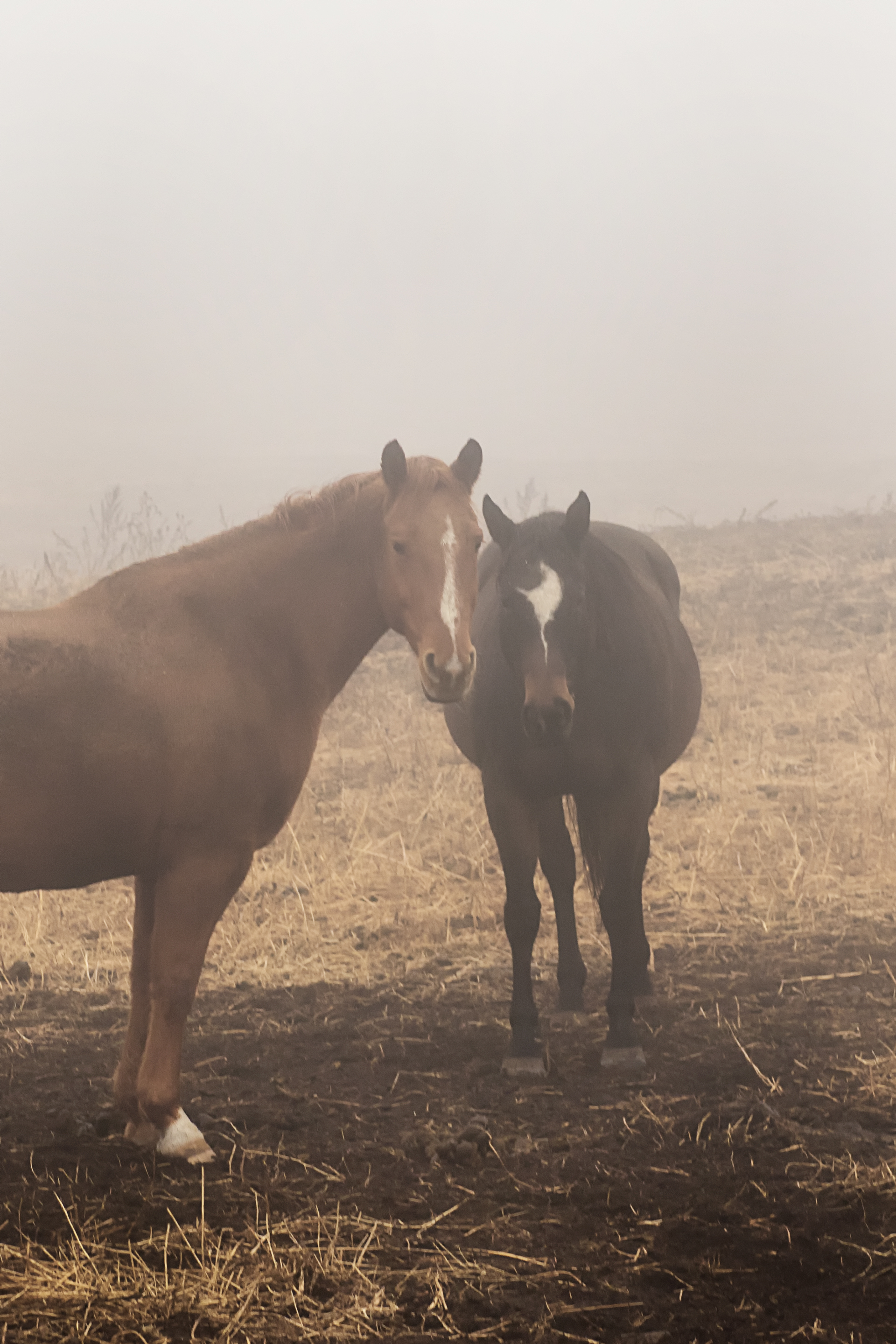
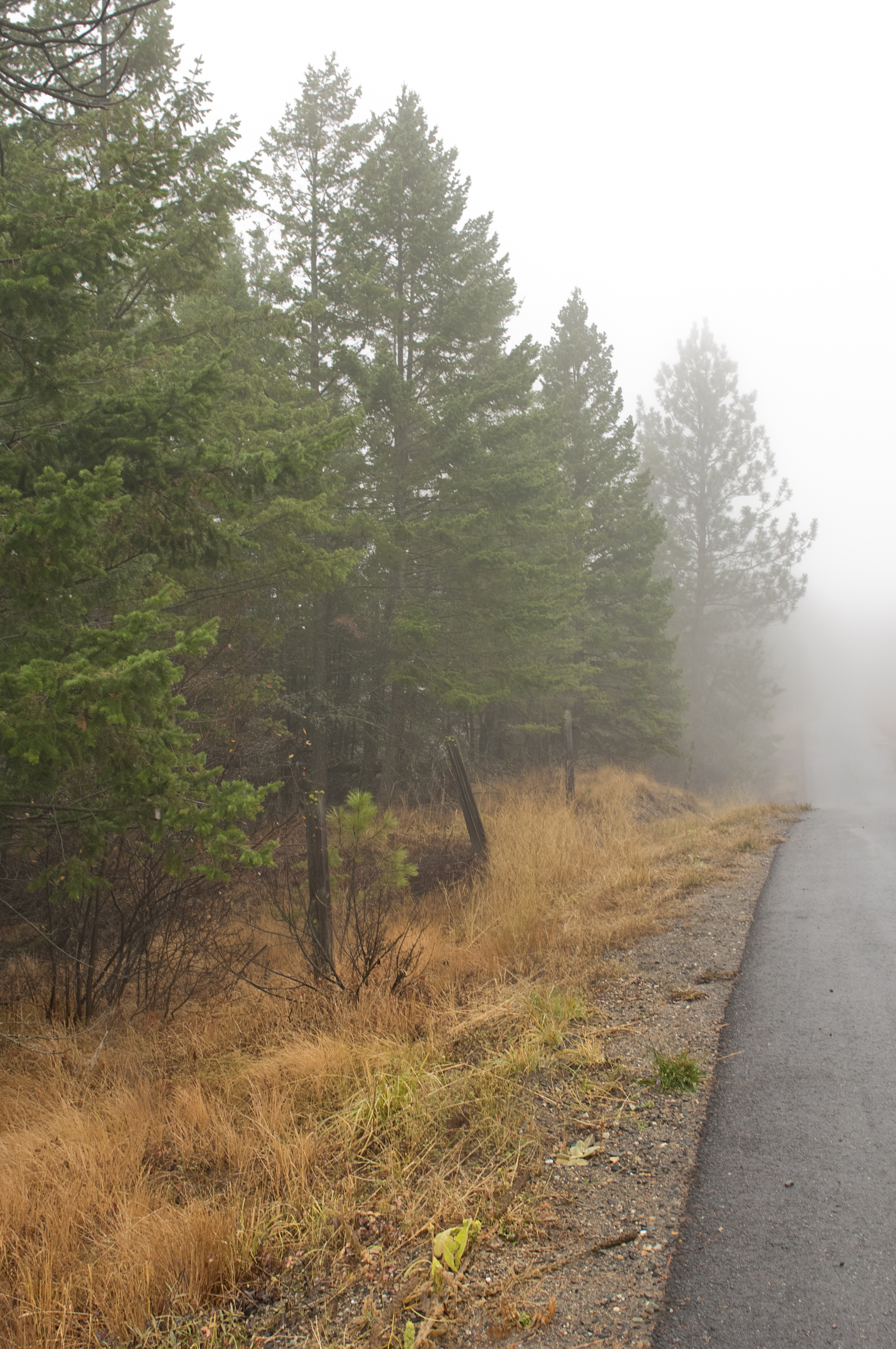
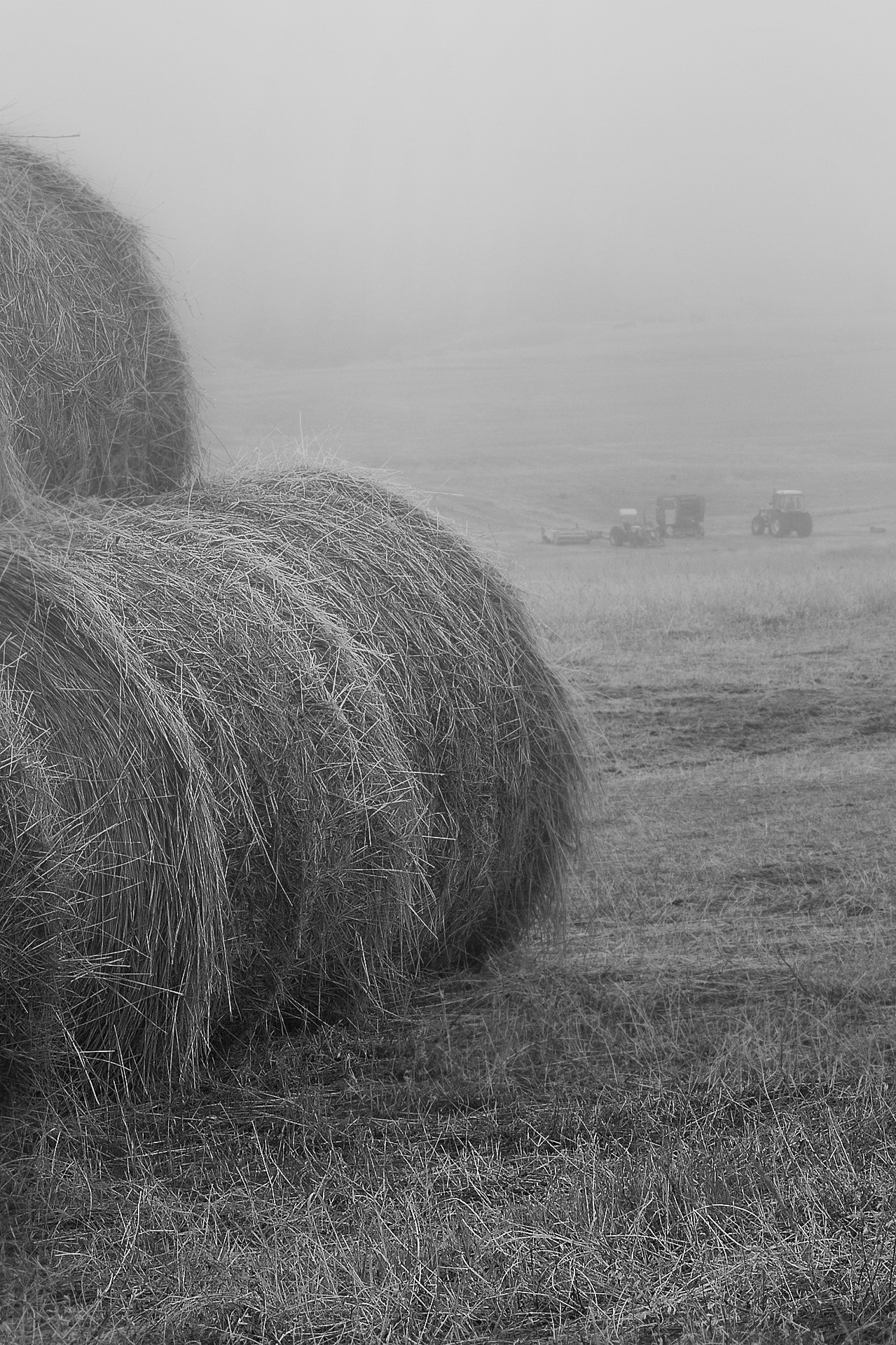
I like taking pictures on foggy days. I suppose I could have stayed inside and watched TV or read a book. I know that many photographers would have done just that as they complained about the damp, flat, lifeless-looking fog, but I like foggy, windy, snowy, and even rainy days. Inclement weather makes for unusual and interesting photographs, so when I woke on a morning with thick fog I knew I was going to have a fun day. Fog can conjure up feelings of mystery and awe, and of the many different conditions we encounter in landscape photography fog is one of my favorites.

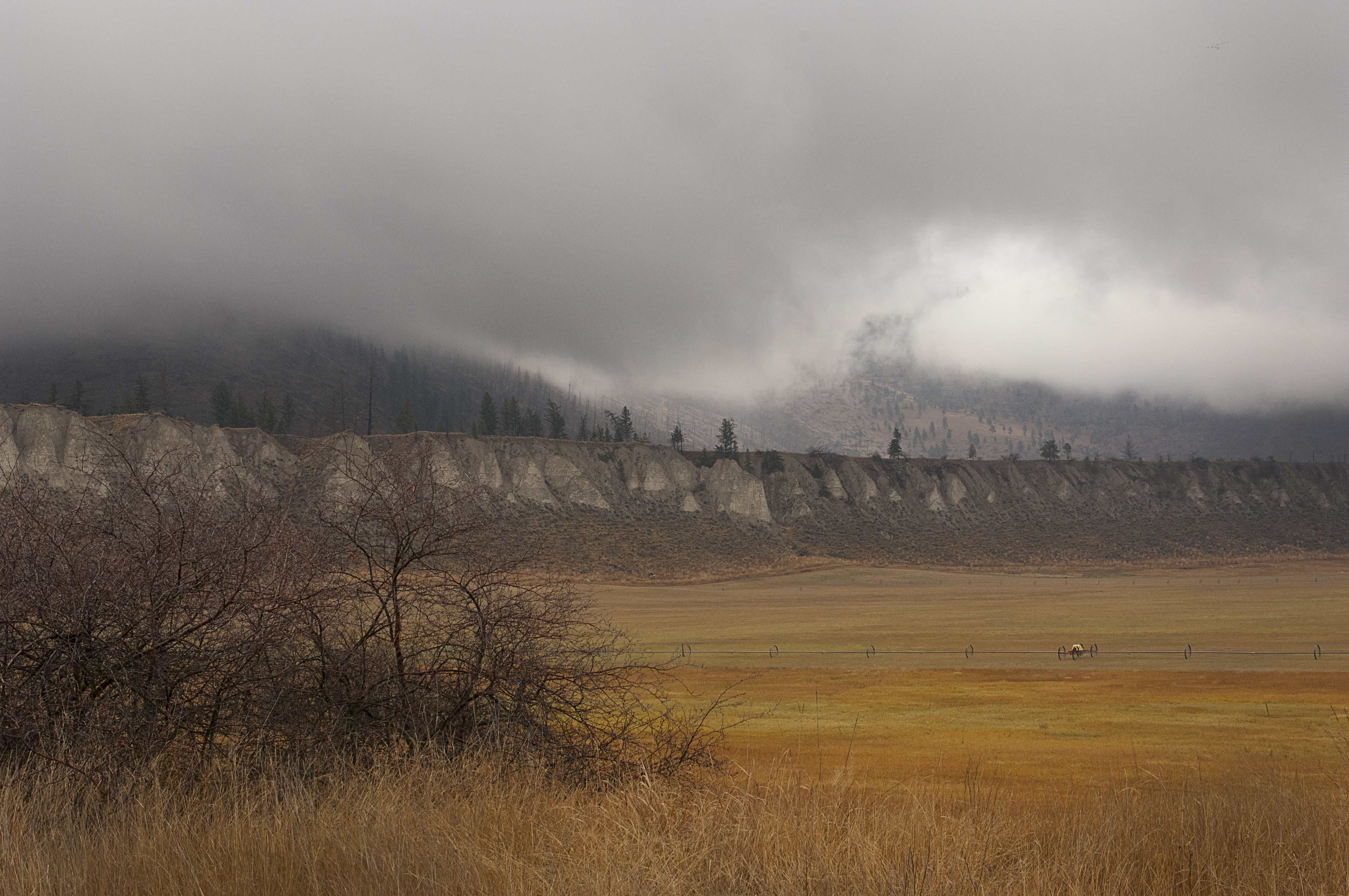
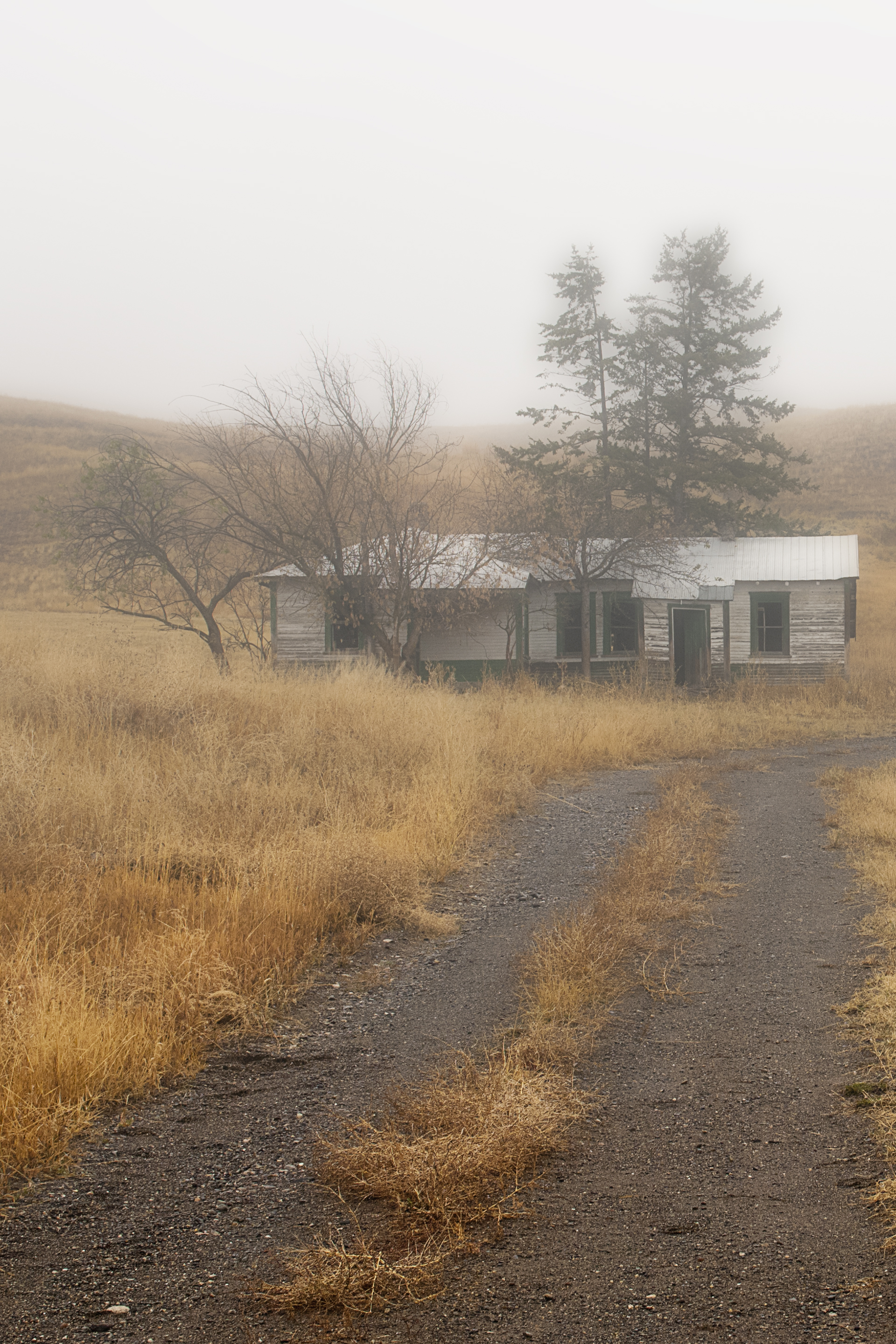
Yes, the light was low, but October fields here in the British Columbia interior are mostly shades of gold, so there really is lots of colour. All a photographer has to do is select a subject angle carefully. I began by wandering through the wooded area across the road from my house, but I didn’t really get very far, the fog was so thick in the pines that there wasn’t much that I liked. I jumped in my car and I made the short, five-minute trip down to the Thompson River, and was happy to be just a bit under the fog, and that made for lots of great opportunities.

I really didn’t have any particular subject in mind. I had hoped the bridge that crossed the river would be embraced in fog, but there was a strong, wet, breeze in the river valley that had pushed the clouds and the fog away. I wanted fog or at least low clouds, so I lingered higher up, along the valley rim, searching out and photographing fences, stacks of hay, and abandoned buildings. And I even took a few pictures of cows and horses, as they looked for food in the damp foggy conditions.

I always meter for the mid tone in my composition. The foggy flat light can easily trick the meter and I prefer manual exposure where I personally can determine my aperture and shutter speed. I had remembered to bring my tripod, so even when the light was low and required a slow shutter speed I could still keep an acceptable depth of field using an aperture of f8 or smaller.

Outdoor photographs taken in fog often look flat and dull. The fog and the low light decreases image contrast and colour saturation significantly. However, for modern photographers this isn’t much of a problem since the contrast and saturation of a digital photo can easily be adjusted.  Fortunately, we can turn the problem into an advantage because an image with low contrast is easier to manipulate than an image taken in harsh light with strong shadows and highlights.

With most digital cameras the contrast can be adjusted before the photo is taken. But in my opinion, it is better to do a rough adjustment during post-production in the RAW converter, and a fine adjustment in Photoshop. In-camera adjustment is not always the best since we don’t know in advance what the right amount is, and clipping of shadows/highlights can occur.

Modern technology gives us a hand up on the flat, contrast less light even if some elements in a picture are improperly exposed they are easily corrected during post-production, and increasing the contrast on important subjects in flat light is easy.

I have always liked my photographs to be about my personal vision of a scene and not to be limited by what a particular film or camera sensor can record.  Even Ansel Adams said, “You don’t take a photograph, you make it.”

Fog forms when a humid, cool air mass moves under a warm air mass and those conditions seem to be recurring for a second day. I know that might cause problems for drivers, but I am hoping to see some in Kamloops when I go to my shop today. And if so, I will be out on the street with my camera.

I enjoy your comments, Thanks.

My website is at www.enmanscamera.com

Do Something Different with your Photography

I advise photographers to stick by the rules of composition and exposure to make successful photographs. But there is another valuable lesson that I don’t always discuss with photographers, and that is to experiment with their equipment and the photography they are producing and that subject came up during a discussion with a photographer that stopped by my shop last week.  His lament was “everyone’s a photographer now days and most of what I see (I think he was talking about the city he lived in) is pretty much the same…and I feel like I am just one of that crowd.”

I suggested trying to do photography in a different way, and to disregard advice from others and begin a personal exploration of creating and experimenting with photography to make something totally new and different from what is most comfortable.  Push the envelope and, in doing that, become more aware of what you are capable of doing, as well as what the equipment you own is capable of doing.

The famous photographer Ansel Adams once said, “You don’t take a photograph, you make it”.   I think that we might take the time to do just that.  Consider alternative and unique perspectives when photographing a new subject and try different camera techniques and try equipment you haven’t tried before.

That might be as simple as trying to shoot only from a tripod for a time period. If you don’t have own a tripod, borrow one, and make a commitment to use it for every photograph you take for the next month. Some times you’ll hate it, sometimes you’ll love it; but the outcome will be learning to “make pictures” in a different way.

Or perhaps, and maybe more difficult, select something that wouldn’t normally be considered a subject.  Use your camera to really photograph it and try angles that make people wonder if you have lost your mind. The opinion as to whether the photographs are successful will be yours, since the only opinion that really counts is yours when you have crawled through the dirt and photographed that flagpole from its base looking straight up through the flowers around it as a black crow flies overhead.

Try to be expressive with your photography.  When you photograph something think about getting rid of anything that complicates it.  Simplify, simplify, simplify.  Go for a minimalist effect.  I remember a photojournalist in the 1970’s telling me that the words he thought of before photographing a subject was “tighten up”.

Try a different way of photography and using light. See what happens when the color balance is absolutely wrong, or the lighting produces unusual colors and you photograph just the oddly colored items. One might carefully observe the lighting and wait.  Wait until it affects a subject in an interesting, and maybe better yet, in an incredible way.  Waiting for the light takes patience and that could mean waiting an hour, an afternoon, or all day for the light to become what a photographer wants when looking for something different.

Experimental photographs “made” from these efforts will have us thinking outside the box and when others view photos so different from what we normally produce it is they who probably won’t understand.  That’s a good thing because our objective to be different will have been achieved, and most importantly, we will have learned something new about photography.

One of the outstanding features of digital cameras is how delightfully easy and helpful they can be when experimenting.   The only real cost for to try something completely different with a digital camera is the time and effort.  Look at your images on a computer screen and decide if each worked for you or not.  I expect the result will not be boring and you will have learned more about, not only, how your camera works and responds, as well as any other equipment you tried for the first time, and you will likely have learned more about light, shadow, composition, and exposure.

You might well develop a way of photography that starts with the question, “How can I photograph my subject in such a way that makes it different?”

My website is at www.enmanscamera.com
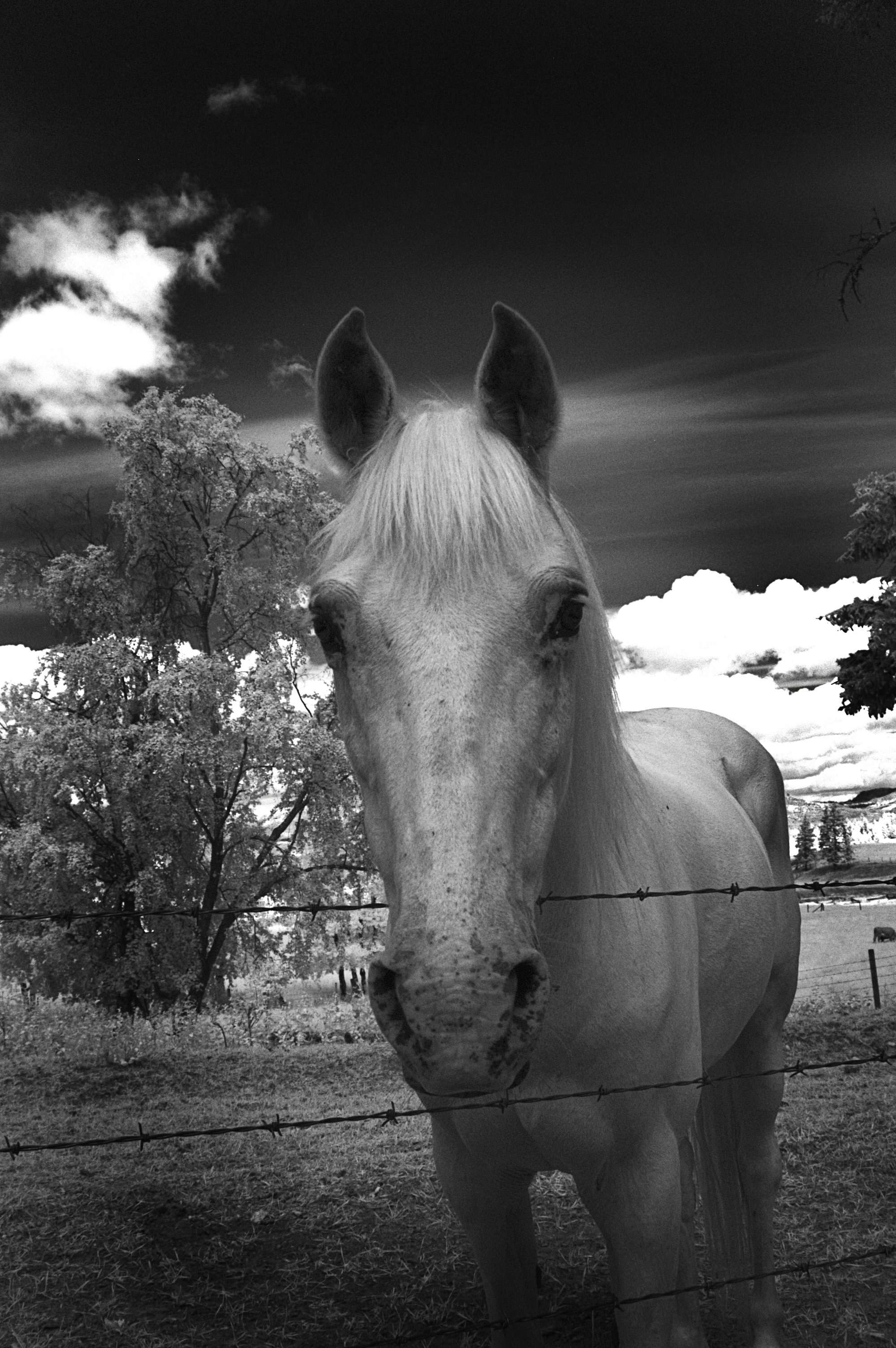
Liking Black and White Photographs


My last article entitled, “Wandering City Streets with my Camera” included both colour and black and white images and elicited the following remark from reader, Timothy Schultz, who said, “I don’t usually like black and white photos, but they were used very effectively here.”

Black and white photography has always been a favorite of mine, and I am pleased that some readers agree that sometimes the use of black and white is effective.

During my years of involvement with photography I have seen changes in the kind of photography people are doing. When I first started making pictures as a child it was all about economics – B&W prints were cheaper than colour prints.  After that one-hour photo labs appeared in shopping center parking lots, department stores, and finally in malls, and colour prints became inexpensive and the mainstay for photographers.

I have always liked black and white and much of the time prefer the mood it evokes.  Since the introduction of digital image making and programs like PhotoShop and NIK software’s Silver Efex the need to carry a dedicated camera and to commit space for a custom-built lab has disappeared.  Now all that is necessary is learning how to effectively use the correct program.

Colour is reality, and black and white seems a bit “arty”, or as I wrote, “mood evoking”.  I have never produced an album of wedding photographs without including some black and white prints and when I ask the couple if they are OK with that, I always hear, “Oh, we love black and white. Yes, please”.

People comment that a black and white portrait speaks about a person’s personality.  I am not sure about that, but I do like, and sometimes prefer, black and white, depending on whether the subject is a person, an animal, or a building, and what I am trying to illustrate with the photograph.  And, I “previsualize” how those colours are going to work as shades of gray while I am composing the photograph.

I’ll mention here that famous photographer Ansel Adams introduced the idea of, and the word, previsualization. It is a term he used to describe the importance of imagining, in one’s mind’s eye, what the final print reveals about a subject.

We see everything in colour, and in the modern world of digital photographic technology that’s what is captured.  Then, we visualize and translate those images into black and white images using post-production technology.  I really do like B&W pictures and sometimes miss those singular times in my darkened room, where I would produce my B&W photos by hand in open trays of chemicals.  However, technology has changed and there are many options that now allow photographers to produce higher quality B&Ws.

I read an on-line discussion entitled, “Why Black and White Photography” by Robert Bruce Duncan. In it he wrote, “black and white has an inherent dignity”.  His opinion is thought provoking.  Perhaps we do see and interpret more in a B&W photograph. Duncan goes on to say that he thinks few colour landscape photographers have matched the black and white work of photography greats like Ansel Adams, Edward Weston, Paul Strand, Margaret Bourke-White, and Imogene Cunningham, for example. And on portraiture he says, “it’s more than arguable that black and white is at it’s best for people photography…From early portraits by Julia Margaret Cameron, and later, Steiglitz and Steichen….(and) the photographers who documented America during the depression, to a whole slew of great Hollywood glamour photographers…and all the masters that made Life magazine perhaps the best periodical of its era.”

I am intrigued with Duncan’s words, I could mention some famous colour landscape photographers, but I’ll leave them to readers to search out. I believe both colour and B&W has its place.  As I wrote, sometimes I prefer black and white depending on the person, animal, or building, and what I am trying to say with the photograph. I pick and choose what image I think will work best in black and white and that depends upon the subject, the circumstance, the light, and, of course, the colour.

My website is at www.enmanscamera.com

A photographer asked me, “What is a Good Photograph?”

A photographer asked , “What is a good photograph, and how do I take it?”  That was two good questions I received from a young photographer in my shop last week. The “how to” part was the easiest answer and I talked about taking some classes. However, the response to the first question wasn’t as simple an answer.  I suggested that a good photograph includes proper composition, exposure, and an interesting perspective, but that was, again all “how to” stuff. That question and the discussion that followed was so very much like what I wrote about in  post I made in September of last year, I wrote the following at that time and hope I won’t  bore those that already read it.

A good photograph is one that makes us have a connection with, or think about, the subject.  Or, it could help us understand what the photographer feels about that subject; and can, if successful, evoke some kind of mood, whether good or bad.

When I see a photograph that I like, because of my nature and because I have been studying photography and other photographers for years, I begin dissecting it and try to figure out how the photographer made it.  When the photograph is good I am aware that the photographer had an understanding of the equipment and the subject he or she used to make the picture.  However, I sometimes have to stop myself from doing all of that and just enjoy the photograph.

As I mused about the question of a good photograph I thought it might be of interest to include quotes from some of the great photographers.  On the subject of a great photograph Ansel Adams said, “A great photograph is one that fully expresses what one feels, in the deepest sense, about what is being photographed.”  He continues,  “There are no rules for good photographs, there are only good photographs.”  And then he says, “Simply look with perceptive eyes at the world about you, and trust to your own reactions and convictions.  Ask yourself: “Does this subject move me to feel, think and dream? Can I visualize a print – my own personal statement of what I feel and want to convey – from the subject before me?” “

I also like his short quips,  “You don’t take a photograph, you make it.”  And “A good photograph is knowing where to stand.”  Then he reminds us, “There are always two people in every picture: the photographer and the viewer.”

The famous photographer, Elliott Porter, maker of spectacular scenic colour images, commented, “You learn to see by practice.  It’s just like playing tennis; you get better the more you play. The more you look around at things, the more you see.  The more you photograph, the more you realize what can be photographed and what can’t be photographed.  You just have to keep doing it.”

Irving Penn, known for his editorial photographs in Vogue magazine, stated, “A good photograph is one that communicates a fact, touches the heart and leaves the viewer a changed person for having seen it.  It is, in a word, effective” and in a lighter mood he said, “Photographing a cake can be art.”

I read the words of these famous photographers and think how each one has inspired me to work harder at making photographs that go beyond just a documentary of a particular subject.  I do extend my knowledge with continual viewing of other photographer’s images, and by reading, taking classes and practice.

Reflections on the Medium of Photography


This morning as I sat on our front deck I could feel a warm summer like breeze. I drank my coffee, I was reading, and I mused on how much fun spring photography is.  I like to take scenic pictures anytime, whether winter, spring, summer or fall and I feel that with each season’s change comes excitement.

The night before I had been moving some books around in my overflowing photographic library, and I came across an older stack of little booklets distributed by the Hasselblad camera company, and thought I’d review one in particular entitled “Black and White Photography” by Ansel Adams.  I enjoy looking at his photography and especially reading his essays and thoughts on photography.

So as I sat enjoying my coffee it was from that booklet that I chose to read about what Ansel Adams had to say about photography, and I began to reflect on the exciting medium of photography so many of us are passionately involved in.

I don’t know about my regular readers, but I am continually composing pictures of everything, whether I have my camera or not. I see light and shadow and put subjects together mentally in a photograph thinking about what would work in my composition and what wouldn’t.  I also enjoy looking at other photographers’ work, and I thumb through books and choose websites that have photographers’ galleries. Of course that is a great way to learn, but I like looking at photographs and reading what other photographers have to say about photography.

Here is a quote I borrowed from Hasselblad’s “ Black and White Photography” booklet printed in 1980.  While discussing the Art of Photography, Adams explains, “Photography is an analytic medium. Painting is a synthetic medium (in the best sense of the term). Photography is primarily an act of discovery and recognition (based on intention, experience, function, and ego). The photographer cannot escape the world around him. The image of the lens is a dominant factor. His viewpoint, his visualization of the final image and the particular technical procedures necessary to make this visualization valid and effective – these are the essential elements of photography.”

Currently, it is an exciting time period with continual leaps being made in camera technology and both Nikon and Canon have just released spectacular new models. However, I have concern that so many photographers spend so much time talking about equipment and the acquisition of it and that they often forget to think about the photograph.  A friend that I hadn’t seen in months stopped by the other day and all he could talk about was the latest cameras and hoped he had the money to get the newest Nikon.  When I asked him if he had been out doing any interesting photography all he said was “I haven’t really had the time,” and turned the discussion back to camera equipment. I was disappointed that he was more interested in the equipment than about photography.

The latest cameras and lenses are really fun to talk about, but one needs to leave some time to talk about personal photographs made with their cameras and also find more time to actually make those photographs.

In the Hasselblad booklet Adams also discussed black and white photography, but the information on black and white printmaking isn’t applicable to current digital technology. Personally, I really enjoy converting images to black and white, and so for those that are also interested in converting their images to black and white I recommend readers try the computer program Silver EFX pro by http://www.niksoftware.com.

For those who don’t know who Ansel Adams was they should go to http://www.anseladams.com and http://en.wikipedia.org/wiki/Ansel_Adams. Those readers curious about Hasselblad cameras should go to http://en.wikipedia.org/wiki/Hasselblad.

I enjoy almost anything about photography. Talking about it, reading about it, looking at other photographer’s work, and of course, pointing my own camera and releasing the shutter to make my own pictures. In closing here are the words of one of Adam’s contemporaries, Edward Weston. “Photography suits the temper of this age – of active bodies and minds. It is a perfect medium for one whose mind is teeming with ideas, imagery, for a prolific worker who would be slowed down by painting or sculpting, for one who sees quickly and acts decisively, accurately.”

www.enmanscamera.com

Thanks for following me.