Pictures Shot in the Bright Hot Sun


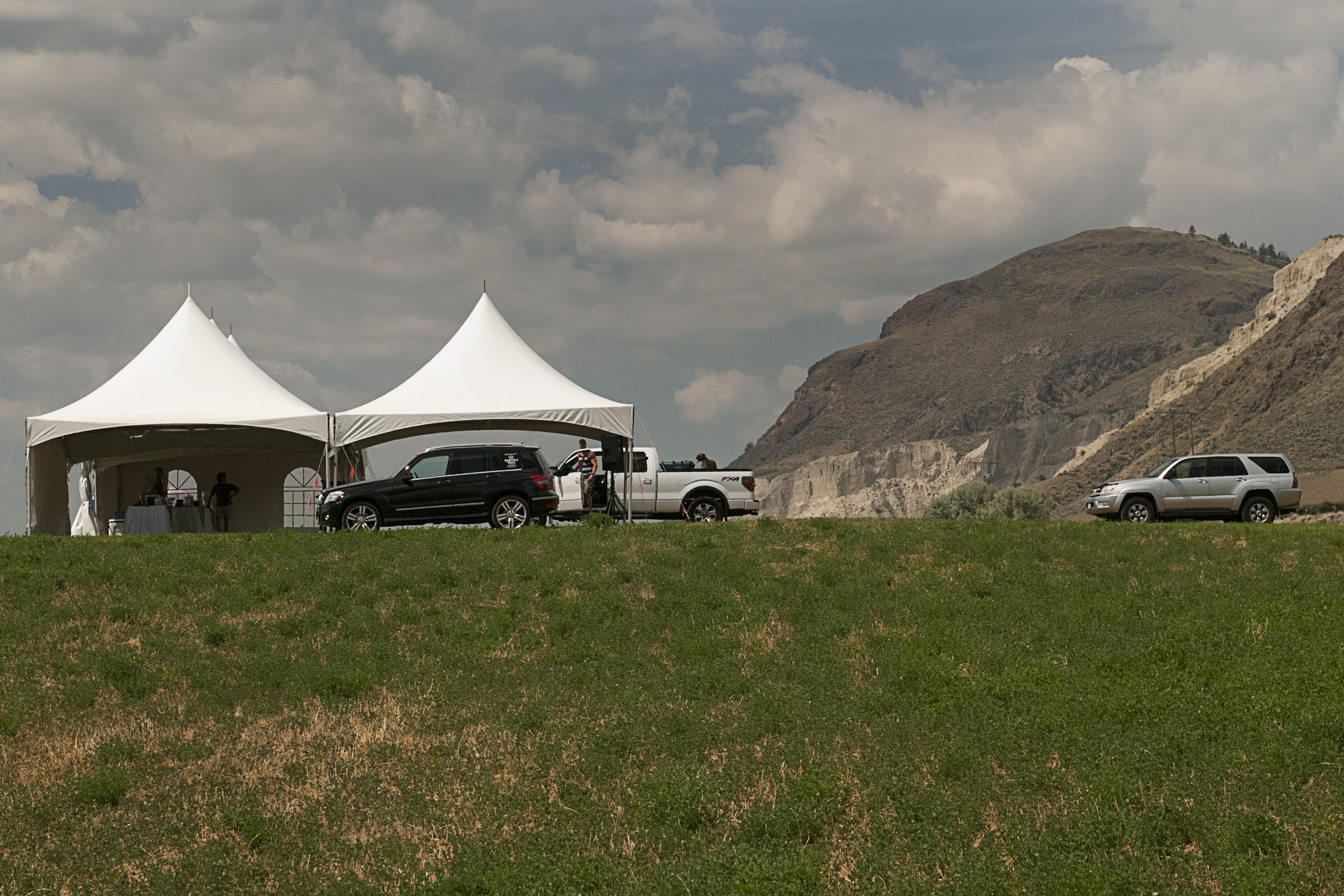
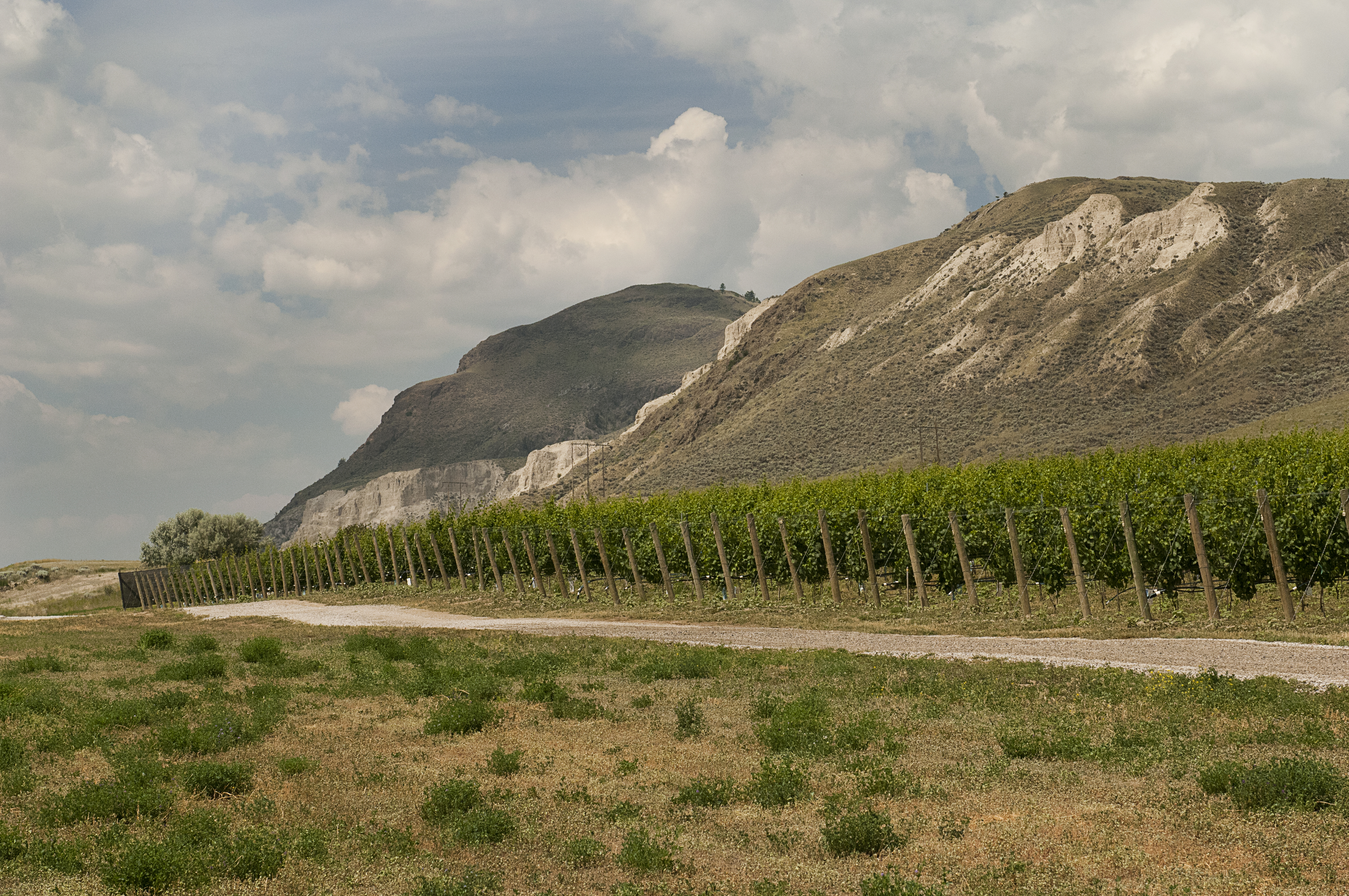
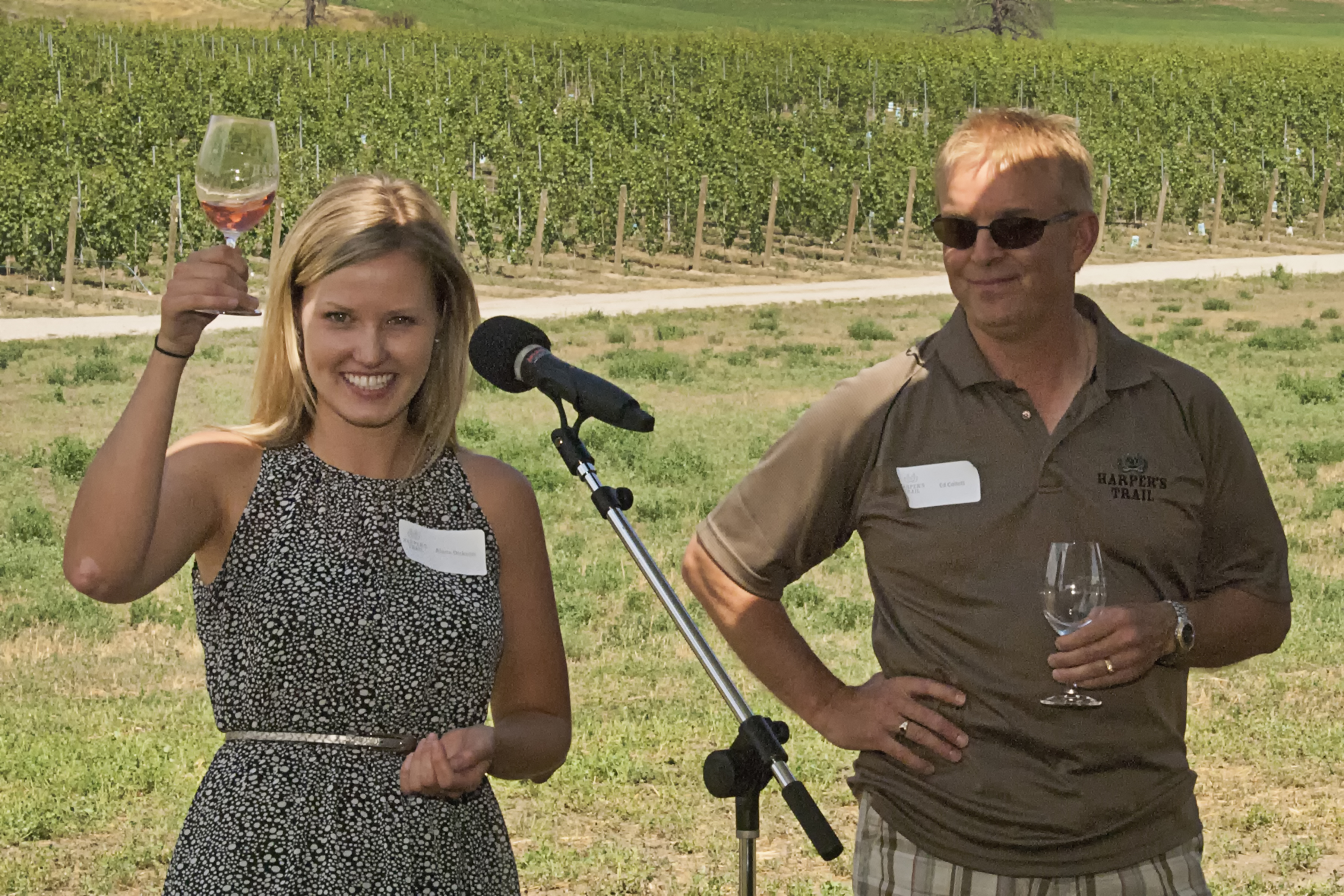
Bright sun and clear sky might be great for some scenic photographers, but it can cause many problems when photographing people.  My assignment this week was to photograph an event that began at 2:30 under almost clear skies, and where even in the shade the temperature hovered in the mid-30 degrees celsius. The location was on a south-facing, treeless, hill top with a sprawling vineyard in the background.

The event, other than a large group shot of all the guests, was held under five large, white tents, and my goal was to balance my flash and exposure to lighten up my subjects without glare, or shadows, and properly expose the field’s sun-drenched background.

The contrast in light from shadows to highlights on a very sunny day can be too extreme for a camera’s sensor to capture. I always look for open shade, or place the sun behind my subjects and use a flash.

I meter for the mid tones like the grass, or, in this case, large open field, and underexpose about two stops, then balance the overall image using my flash. My flash sits on a bracket and the flash is attached to my camera with a wire so I can remove the flash and hold it at different angles if I need to. I did notice people wielding point and shoot digital and a couple photographers with DSLRs trying to use their pop-up flashes, but I am sure they were disappointed with their results on that sunny day as the extremes from black to white are just too much for digital sensors.

Fortunately, photographers can load images into PhotoShop and no matter if they are JPG or RAW files can be optimized using Adobe RAW – an amazing application that gives additional control over exposure, shadow, and highlight detail. Adobe RAW can even help with those not-so-well focused images.  I use that program to polish my images and make them all that they can be which is much better than settling for photographs mass corrected at a big box lab.

After selecting the best images I correct the white balance and colour using Photoshop.  I make the photo look pretty much the way they appear through the camera and the images taken in the bright sun now have lots of detail.

Another program I regularly use (and think is amazing) is by Nik Software Inc. and is called Viveza.   Viveza allows selective control of light and colour. With that program I can maintain the colour and tonality while changing the background and blending the effect exactly.  All this isn’t much different than I used to do in my old film darkroom except now it is more precise, the process can be duplicated, and overall everything is easier.   Between the two programs I am able, without spending too much time in post-production, to provide my clients with polished and balanced images that do not show the harsh environmental realities of that day.

Sure, sunny clear days please us all and when planning an outdoor event we prefer that to rain, but for photographers the sun and harsh unflattering shadows on people’s faces isn’t the best outcome. My advice is not to approach this type of photography the same way as a scenic and to begin with test shots and constantly pay attention to the exposure and absolutely use a fill flash for the best outcome.

My website at www.enmanscamera.com
Liking Black and White Photographs


My last article entitled, “Wandering City Streets with my Camera” included both colour and black and white images and elicited the following remark from reader, Timothy Schultz, who said, “I don’t usually like black and white photos, but they were used very effectively here.”

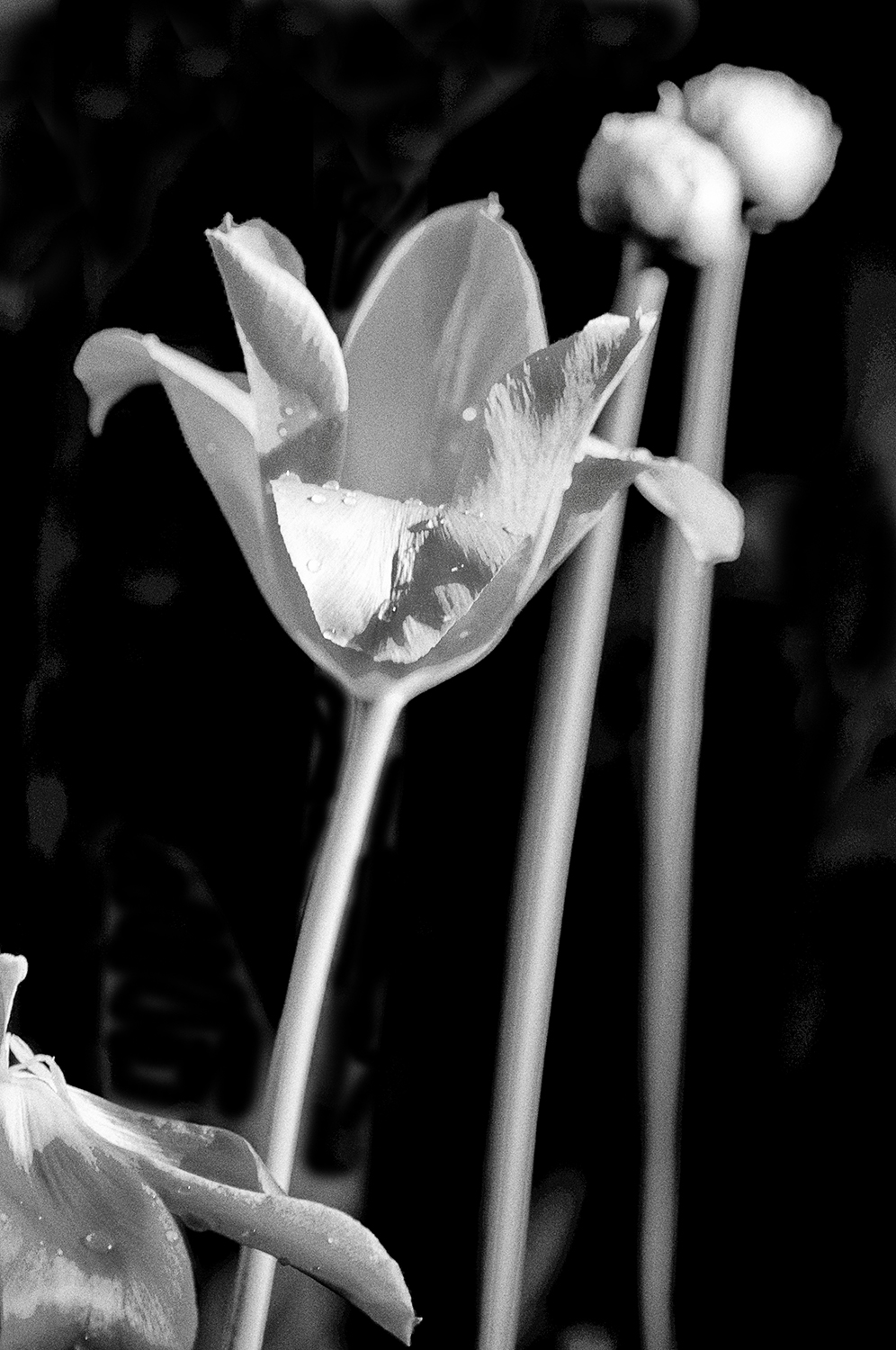
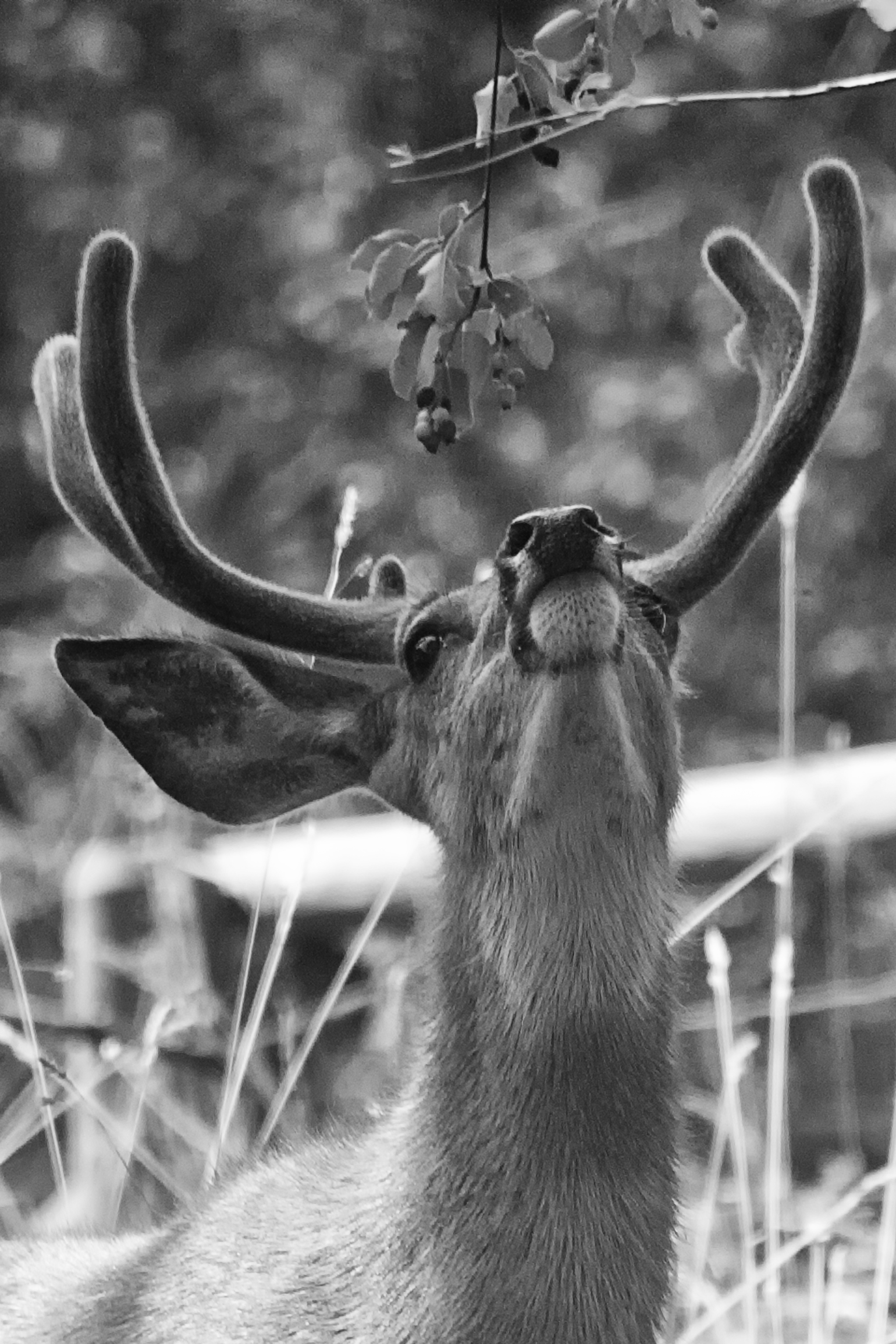
Black and white photography has always been a favorite of mine, and I am pleased that some readers agree that sometimes the use of black and white is effective.

During my years of involvement with photography I have seen changes in the kind of photography people are doing. When I first started making pictures as a child it was all about economics – B&W prints were cheaper than colour prints.  After that one-hour photo labs appeared in shopping center parking lots, department stores, and finally in malls, and colour prints became inexpensive and the mainstay for photographers.

I have always liked black and white and much of the time prefer the mood it evokes.  Since the introduction of digital image making and programs like PhotoShop and NIK software’s Silver Efex the need to carry a dedicated camera and to commit space for a custom-built lab has disappeared.  Now all that is necessary is learning how to effectively use the correct program.

Colour is reality, and black and white seems a bit “arty”, or as I wrote, “mood evoking”.  I have never produced an album of wedding photographs without including some black and white prints and when I ask the couple if they are OK with that, I always hear, “Oh, we love black and white. Yes, please”.

People comment that a black and white portrait speaks about a person’s personality.  I am not sure about that, but I do like, and sometimes prefer, black and white, depending on whether the subject is a person, an animal, or a building, and what I am trying to illustrate with the photograph.  And, I “previsualize” how those colours are going to work as shades of gray while I am composing the photograph.

I’ll mention here that famous photographer Ansel Adams introduced the idea of, and the word, previsualization. It is a term he used to describe the importance of imagining, in one’s mind’s eye, what the final print reveals about a subject.

We see everything in colour, and in the modern world of digital photographic technology that’s what is captured.  Then, we visualize and translate those images into black and white images using post-production technology.  I really do like B&W pictures and sometimes miss those singular times in my darkened room, where I would produce my B&W photos by hand in open trays of chemicals.  However, technology has changed and there are many options that now allow photographers to produce higher quality B&Ws.

I read an on-line discussion entitled, “Why Black and White Photography” by Robert Bruce Duncan. In it he wrote, “black and white has an inherent dignity”.  His opinion is thought provoking.  Perhaps we do see and interpret more in a B&W photograph. Duncan goes on to say that he thinks few colour landscape photographers have matched the black and white work of photography greats like Ansel Adams, Edward Weston, Paul Strand, Margaret Bourke-White, and Imogene Cunningham, for example. And on portraiture he says, “it’s more than arguable that black and white is at it’s best for people photography…From early portraits by Julia Margaret Cameron, and later, Steiglitz and Steichen….(and) the photographers who documented America during the depression, to a whole slew of great Hollywood glamour photographers…and all the masters that made Life magazine perhaps the best periodical of its era.”

I am intrigued with Duncan’s words, I could mention some famous colour landscape photographers, but I’ll leave them to readers to search out. I believe both colour and B&W has its place.  As I wrote, sometimes I prefer black and white depending on the person, animal, or building, and what I am trying to say with the photograph. I pick and choose what image I think will work best in black and white and that depends upon the subject, the circumstance, the light, and, of course, the colour.

My website is at www.enmanscamera.com

Wandering City Streets with my Camera


I enjoy wandering city streets with my camera because I think the possibilities for photographs of cityscapes are endless.  Let me begin by saying that my wife and I were in Kelowna, British Columbia,Canada, doing cleanup and some renovations to a house we own and rent out.

The day had been long and with lots of work done and we had reached the time when we wanted to just stop, rest, and find something to eat. Linda had said she had a craving for souvlaki. I don’t’ get cravings the way she does. Hers are always for some specific taste or particular food, while mine is just for food. She, of course, gets irritated with me when she asks for my help, “What would you like?” and I respond, “Hmmm….food”. So we stopped, washed up, and found a Greek restaurant called Yamas where I ordered souvlaki and she ordered lamb. Well, so much for her craving.

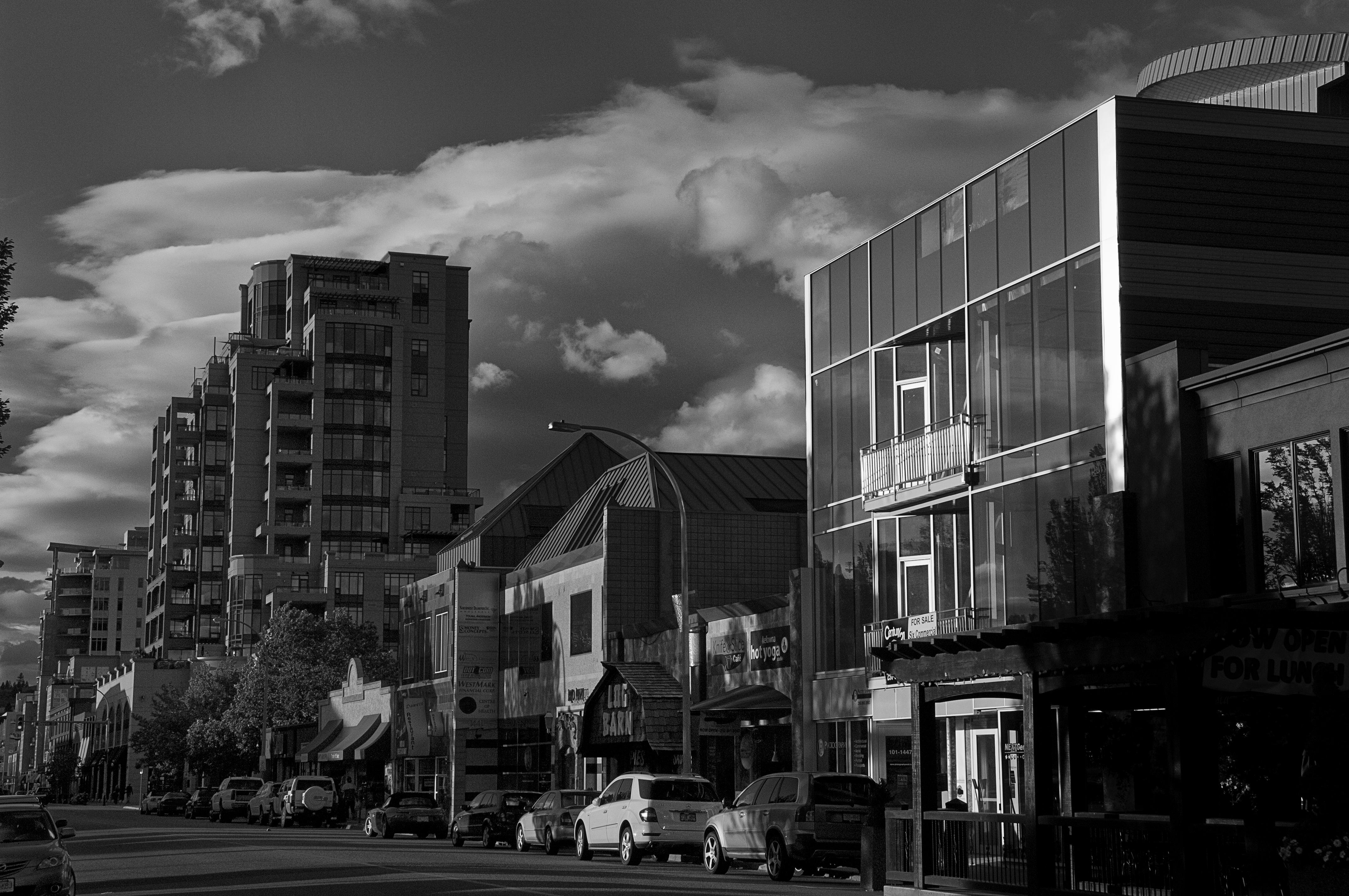
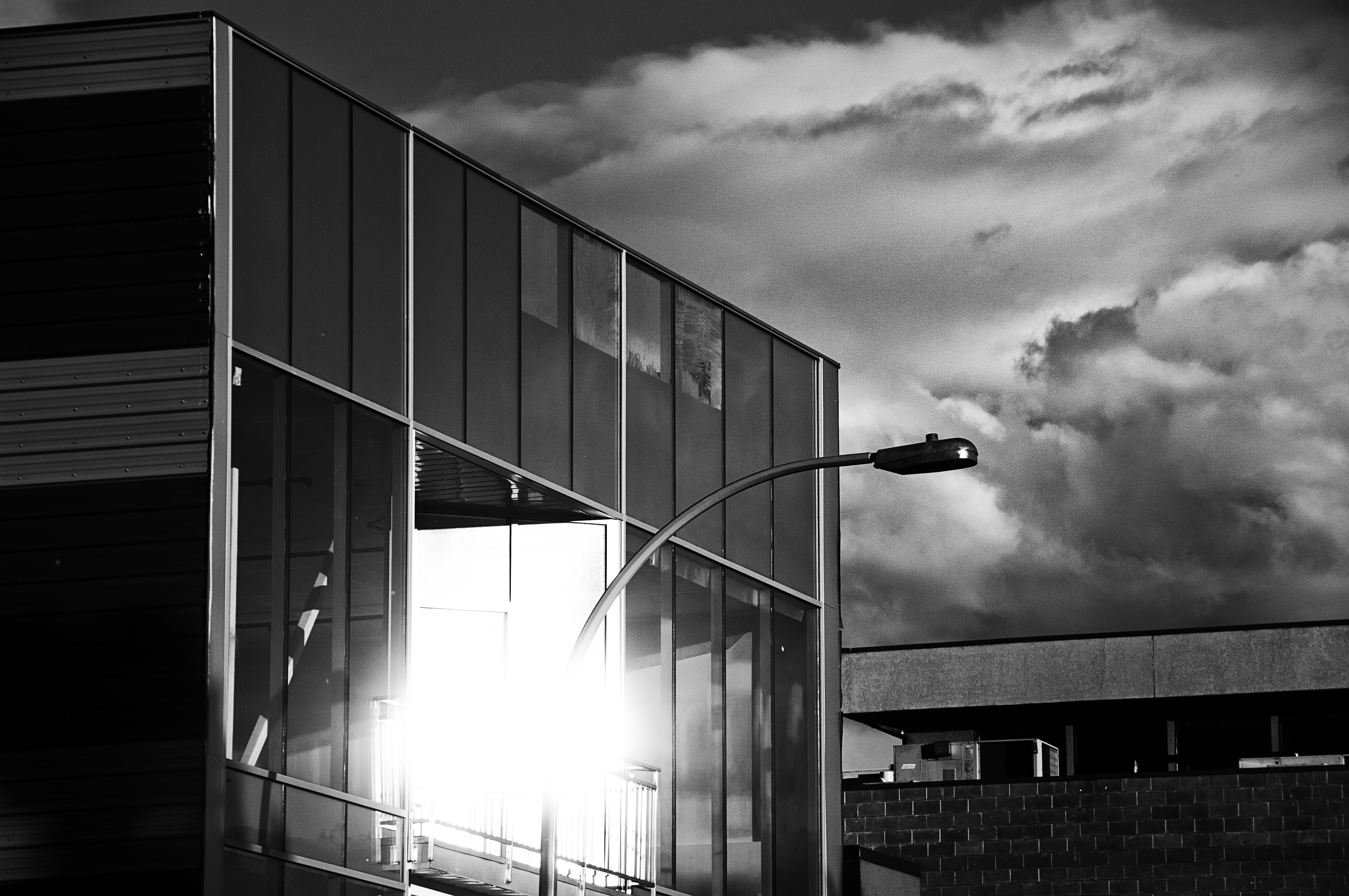
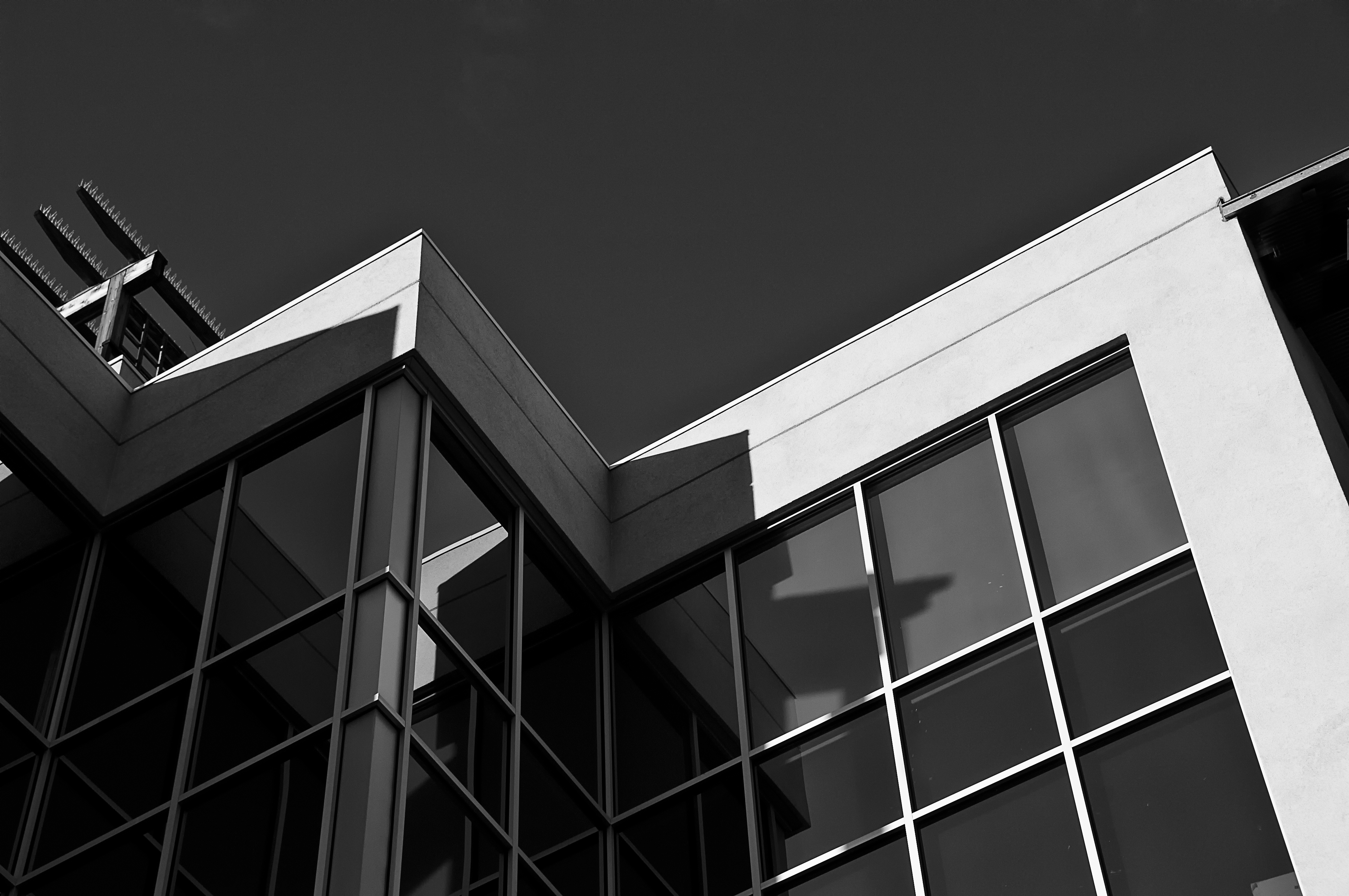
The day had been clear and bright, and at 7:30pm the sun was dropping and making the cityscape a mosaic of glittering glass, cold metal, coloured concrete, and deep, shadowy silhouettes. The sun on the downtown architectural features created angles, shapes, shadows, and textures.

I began this by writing “The possibilities for photographs are endless.”  Summer in the vacation city of Kelowna mean streets filled with tourists walking or bicycle riding, exotic cars, prowling Harley Davidson motorcycles, and just about any kind of architecture one wants. A photographer only has to select a subject.

So after one of those meals that makes one so satisfied that you must bump up the tip a bit to the waitress, we wandered out into that exciting scene and Linda suggested I take her back to the house so I could do what a photographic opportunist like me is most fond of, wandering.

I spent my time looking up, over, and around, jaywalking, precariously standing in the street, and oblivious to those that have just as much right to a sidewalk as I do.  I pointed my camera and made exposure after exposure, so totally preoccupied with what I was seeing and the act of photographing that, I admit, I do get caught up in what I am photographing.

On this occasion I had decided to only capture parts or specific details of the architecture, and not the whole building, as part of the city’s landscape; just small parts of buildings that engaged me. I wanted shadows on the concrete, glaring and reflecting glass, the contrast of bricks, concrete, metal, and glass, against the sky or other buildings, and patterns of everything.

Our dinner had lasted long and the return trip taking my wife home took away time so I had to move fast, because evening shadows were growing and starting to take over the valleys between the tall buildings in a dim, flat scene, without the defining contrast that separates features.

When I finally put the lens cap on my camera and headed for the car I did notice bright neon signs turning on and bright light pouring from a couple of nearby bars, but both had some intense looking characters glaring menacingly at me and my camera, so I continued walking without composing a picture. I’ll leave those shots for another day when I can shoot and rush off without being weighed down with too much Greek food, or better yet, to younger photojournalists. I’ll stick to photographing buildings.

My website at www.enmanscamera.com
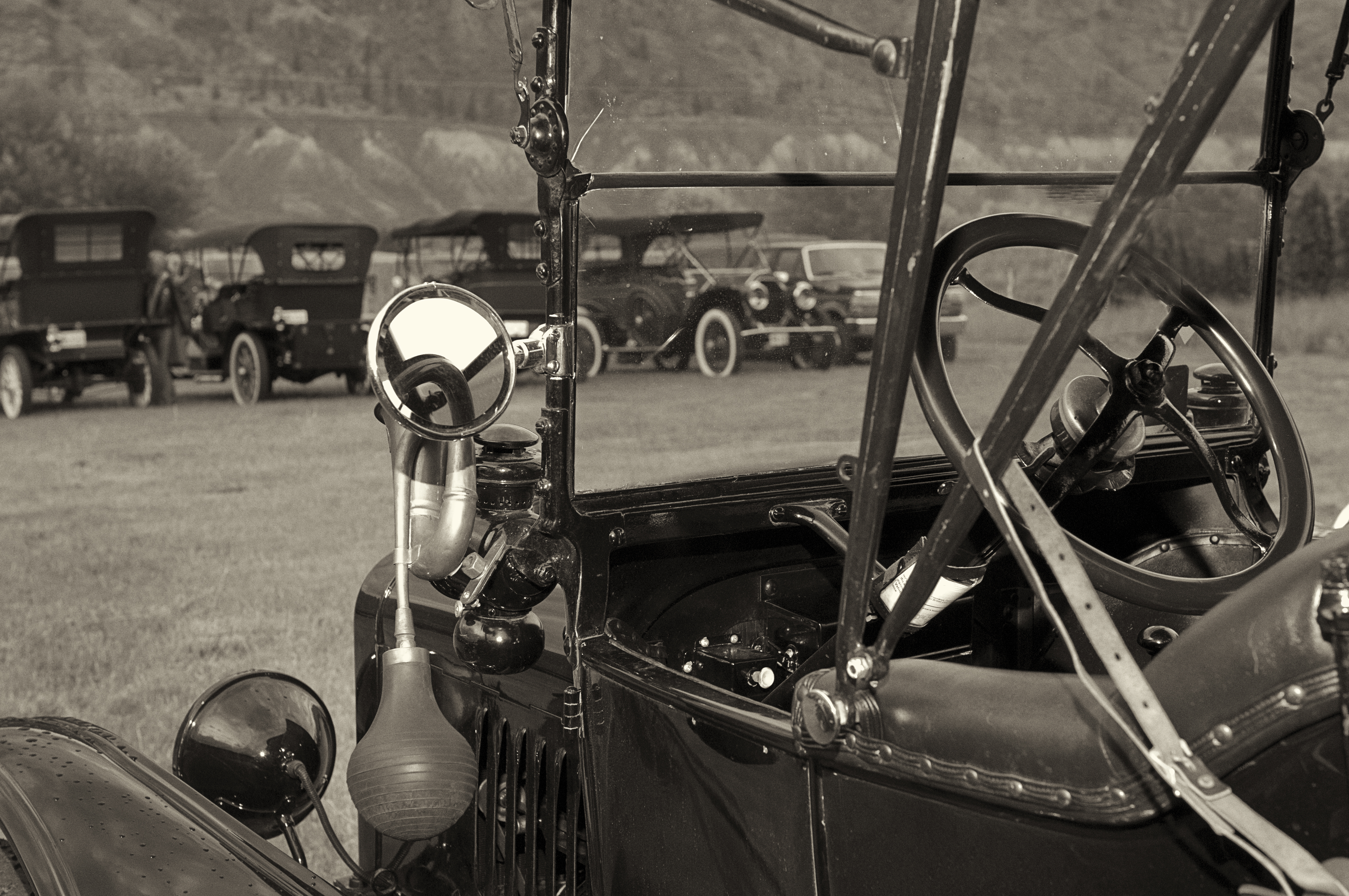
Photographing Vintage Cars Along The Road

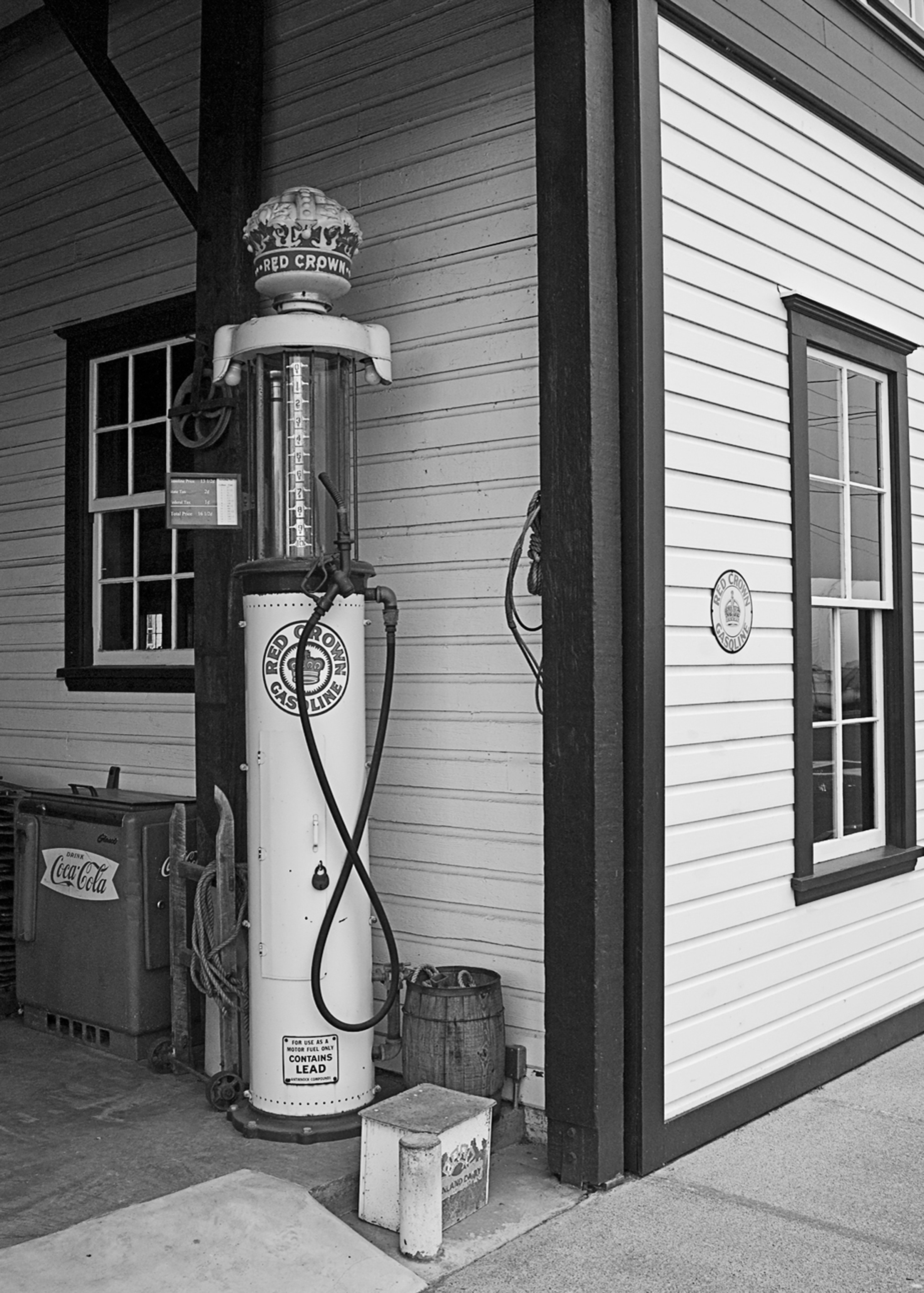
     A year ago I wrote, “Roadside Photographers Just Get Lucky”. I said those photographers that cruise the highways and byways by vehicle looking for subjects, “must be prepared and ready at a moment’s notice to grab the camera from its bag on the back seat, roll down the window (that’s a must), take a quick exposure reading, and shoot.” I saw them as distinctive among scenic, bird, and wildlife photographers and discussed how I thought luck played an important part in their photography.

These photographers don’t always have the luxury of time to attach a tripod to the camera base, and need to quickly and accurately meter, shoot fast, and be ready for other cars that slowly pass as people try to see why the car is stopped.

Loosing composure by madly waving or yelling, “Go, go, go. Get out of my way!”  doesn’t work very well.  That car will pass and hopefully won’t ruin the shot. The light isn’t always optimal, and the perspective and angle of the shot is going to depend on the road and the placement of the vehicle in relationship to the subject to be photographed. There are those roadside shooters that only use little point and shoot cameras, but the serious roadside photographer is equipped with a DSLR, the skill to use it effectively, and experience to understand how to work with restricting conditions.

Roadside photographers don’t go out to photograph a particular subject. Much of the time, skilled multi-taskers that they are, roadside photographers will be involved in other activities like going to work, visiting friends, or making that run to the store before supper, yet still are on the lookout for any kind of subject to photograph, and are silent about how the picture they are showing was made by chance, and from behind the steering wheel of their car. It sounds so much better for viewers to think the picture was made after detailed planning or some lengthy excursion on foot.

Over the years I have described what kind of photographer I am in many different ways. I won’t bore readers with that, but these days I see myself as an opportunist when it comes to the images I capture on my camera’s sensor. Most of the pictures I am able to make on the roadside are because of my sharp-eyed wife, Linda.  I thought about this roadside, opportunistic photography as I pulled off the Trans Canada highway to stop and photograph a field filled with pre-1920 cars that Linda saw and I almost drove by.

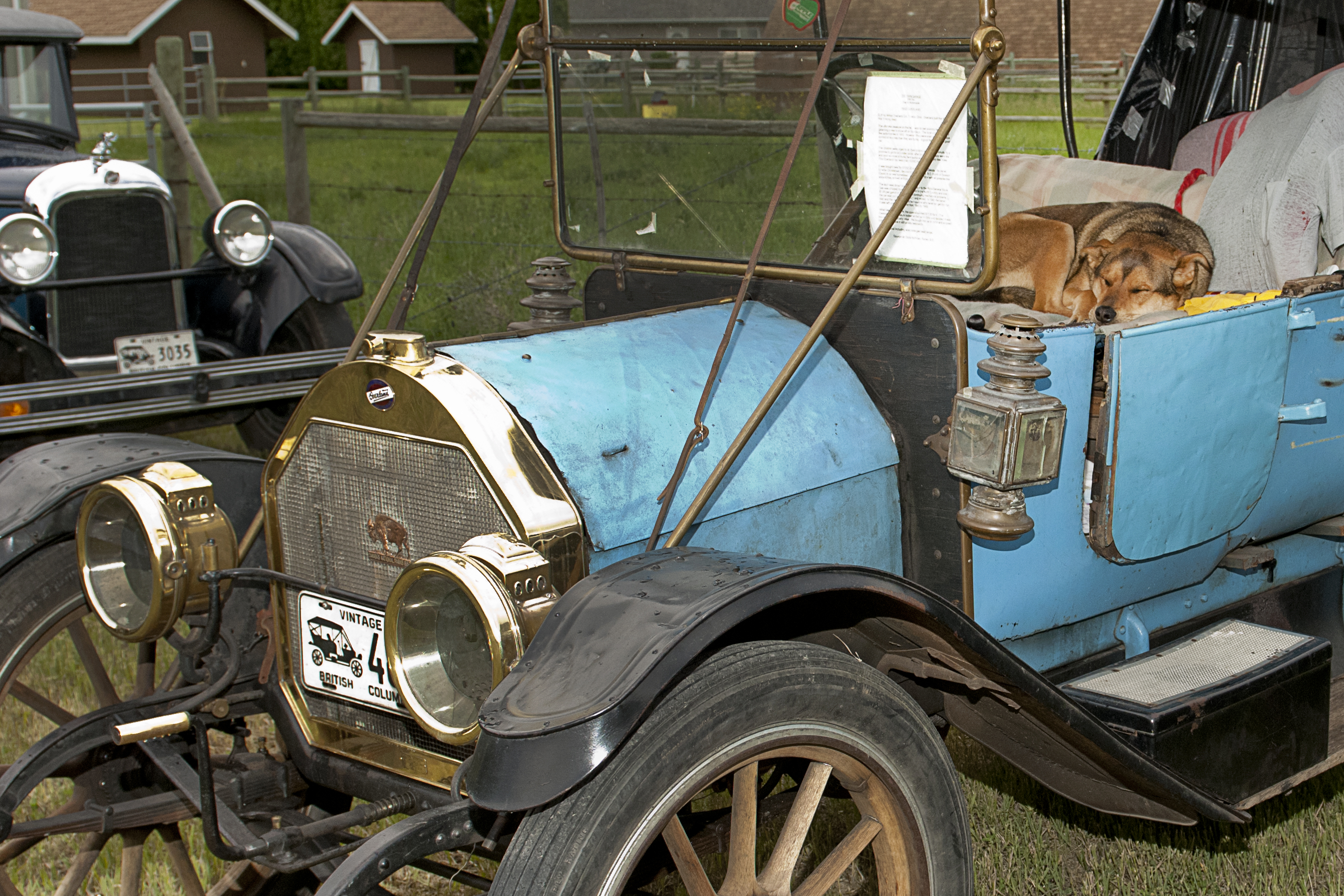
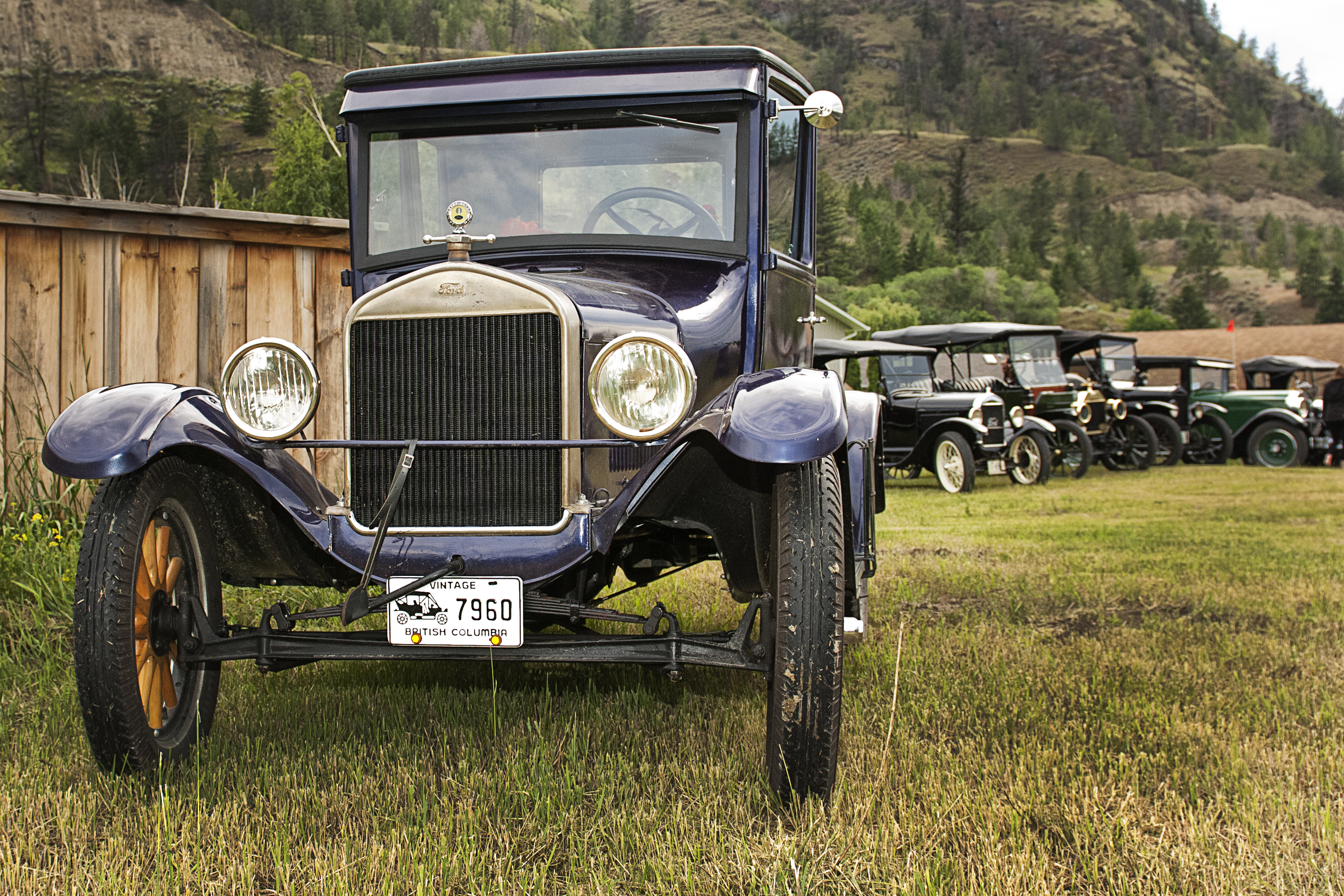
The Antique chapter from the larger organization, Vintage Car Club of Canada www.vccc.com had picked a location just outside of Kamloops, British Columbia, to hold their meet and had been touring around the area for the past two days. We sometimes see groups of restored old cars on the highways which I suppose is not that surprising with a 23 chapter, 1200 member-strong, Canadian car club. However, spectators usually surround them and chances of getting clear shots or even talking to the owners are rare.

But in this instance the wonderful antique cars were parked in a circle in a wide-mowed field and, unlike other car shows, spectators were absent and I could take all the time I wanted composing pictures, and even talking to owners about the club and receiving personal stories about their cars.

I was lucky. I already said roadside photographers just get lucky. The cars, the lack of other people, other photographers, and because I had been working earlier in the day at another job meant that I had my 24-70mm lens and a good flash and I got to get out of my car ready for the pictures.  I was lucky.

The sky had clouded over reducing metal glare and the warm evening light was perfect, all I had to do was add some fill light with my flash to bring out the character of the vintage cars. I began by just photographing those that interested me the most, then after the initial excitement I slowed down and walked around again trying to compose my pictures to tell a story instead of just documenting cars in a field.

I like cars, and like many men view them as works of art. As a photographer the chance to wander around photographing vintage cars is just plain fun, however, truth be told, I will stop to photograph pretty much anything.

My website: www.enmanscamera.com

On the Subject of Film

When the subject of film comes up my first impulse is to flippantly say something like, “Oh, film was nice, but no serious photographer would use film.”  Well, that’s not right. And should any of us be putting a definition on what a “serious photographer” is?

In my opinion, film, and those photographers that use it have positioned themselves in a new place among image-makers. These days most photojournalists and commercial photographers employ digital technology, but I think those that are interested in pushing this medium into a creative place are increasingly becoming aware of the unique characteristics of film.

A film purist can easily set up a home lab with an enlarger and complete chemical process, but there are also those that have embraced both digital and film and the results of the technological cross breeding can be exciting. Film has, in my opinion, a tactile quality that is different than digital capture.

Let’s not get into the boring discussion of film vs digital. That’s become wearisome. Film is different than digital. I think it depends on how one wants to show a subject to viewers. And as I wrote, I think the technological cross breeding of film and digital is exciting and rewarding.

The dialogue now may be about computers, monitors, and software. With film we wanted the best enlargers, and enlarger light sources. What lens was mounted on the enlarger was as important as the lens on our cameras. I had a cabinet filled with many different kinds of enlarging papers from around the world, and another stacked with a wide assortment of developing chemicals for both film processing and printing. All this is still available if one is willing to take the time searching out suppliers.

Serious digital photographers are faced with expensive computers and Photoshop’s steep learning curve. Those serious practitioners of film photography will still be dealing with lots of learning. However, quality film cameras, and quality film processing equipment is cheap and the required processing and printing equipment can easily be found languishing at garage sales. I think one needs to search out the best film equipment in the same way as the best digital hardware.

I don’t use, or even think about, film much, but in the last two weeks I have had several conversations with different young photographers that are making images with film cameras and starting to accumulate the equipment to process film and print pictures.  I will admit I enjoy talking about all that. I liked film cameras and same as with today’s photographers, I thought about and researched those cameras in my quest for what would fit my needs the best.

On the subject of using film photography and digital photography, this week has also found me reproducing a client’s very old photographs. (some easily over 100 years old) I photographed each image, loaded them into my computer, then using PhotoShop corrected the fading and discoloration, added contrast, retouched cracks, and finally sharpened and saved them on a CD.  Most photographs were over 40 years old will start to fade soon, if they haven’t already. And those boxes of family history may be lost as people move them to damp basements or garages when additional space is needed.

Making a quality digital image from the negatives or slides of those wonderful old family photographs and saving it on a space saving CD is ideal.  As I mentioned these two mediums work just fine together and a matching print can be made it the future.

I welcome the chance to exchange thoughts with those photographers who are using film in this day of digital technology. Many see it as a “retro” kind of thing, but maybe it’s not that at all. Including film in the creative and artistic process of photography is just one more factor in the continuing evolution of this exciting medium.

My website is at www.enmanscamera.com

This photographer’s thoughts on photography as art.

I didn’t include an image this time because I couldn’t think of what would fit with my philosophical   musing.

Wikipedia, the free, on-line encyclopedia states that, Fine art photography refers to photographs that are created to fulfill the creative vision of the artist. Fine art photography stands in contrast to photojournalism and commercial photography. Photojournalistic photography can be defined as photography that provides visual support for stories, mainly in the print media. Commercial photography’s main focus is to sell a product or service”.

Photography as art has changed over the years since the beginnings of photography in the mid 1800s, and in my opinion, with the dramatic escalation in photography and the making of photographs since digital technology became the mainstay, photography as art interests more and more people.

By the middle of the nineteenth century photographers felt their art should be held in the same exalted status that painters claimed for theirs. Their contention was that it was the photographer, not the camera that made the picture. The goal was, and still may be, to convince not only the art community, but also the community-at-large that photography should be treated as art. Then, as now, the discussion was about whether the different aspects of photography, commercial, photojournalistic, or those created only as personal creative vision should be considered art.

Presently, that art may be nothing more than a screensaver on one’s computer display. Some photographers do go further and it is not unusual to see a personal photograph, or that of a friend’s, framed and hanging on the walls of one’s home.

I have always been interested in art photography and over the years studied the history of when photography started being included as art in major exhibitions as well as what is currently being accepted as art in the medium of photography.  The Wikipedia definition is interesting because it separates what it declares as fine art photography from photojournalism and commercial photography.

The question photographers can ask is, whether their photographs only work as “visual support”, are produced to “sell a product” or as a creative vision?  Do many photographers wander around documenting the world around them and hope to be lucky enough to have final images that fit into one of those categories? I often wonder about that. However, I personally have come to think that definitions as to categories have changed. Maybe it is the way modern viewers see and use photography.  That quickly-snapped portrait of a favorite pet displayed in the owner’s home is cherished enough to be included as art along with the rest of the owner’s sometimes expensive art collection even though some scholars of the arts may disagree.

Remember, even in this technology charged time when making photographs is more popular than I think any other pastime, photographers are still contending with critics that hold that only painting and sculpture are real art.  For me the lines have become blurred, and I see photography as an artistic medium equal to others, although I am not altogether comfortable in categorizing any photographer’s work.  The camera is a tool that helps photographers be creative and photographers only need to decide on their own particular style, and what, as Wikipedia states, is “created to fulfill the creative vision of the artist”.

In my opinion, what that “creative vision” is should be entirely up to the photographer and the audience for whom the image is produced.

My website is at www.enmanscamera.com

Photography in the Garden on a Rainy Day


Two weekends in a row have seen me climbing up steep, loose, shale-covered cliffs to photograph eagles where they live high above a long, green, lake-filled, British Columbia valley.  However, this last week the weather has been cool, pretty wet, and certainly not good conditions for climbing or wildlife photography.  Oh, well, I had intended to stay away from those eagles until the chick was ready to fly later in the summer anyway, and I expect the interior of this province was getting a bit dry so the rain is welcome.

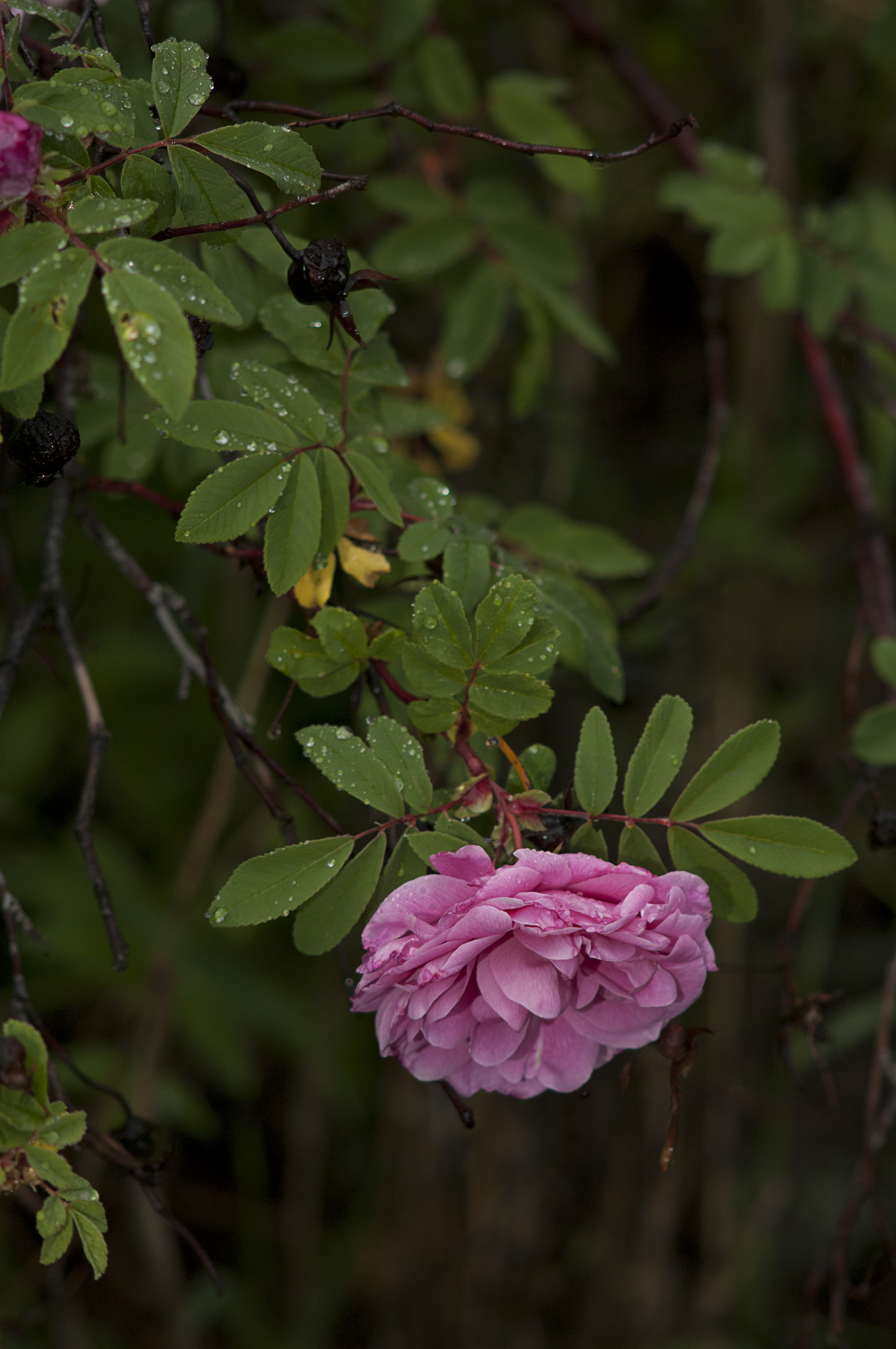
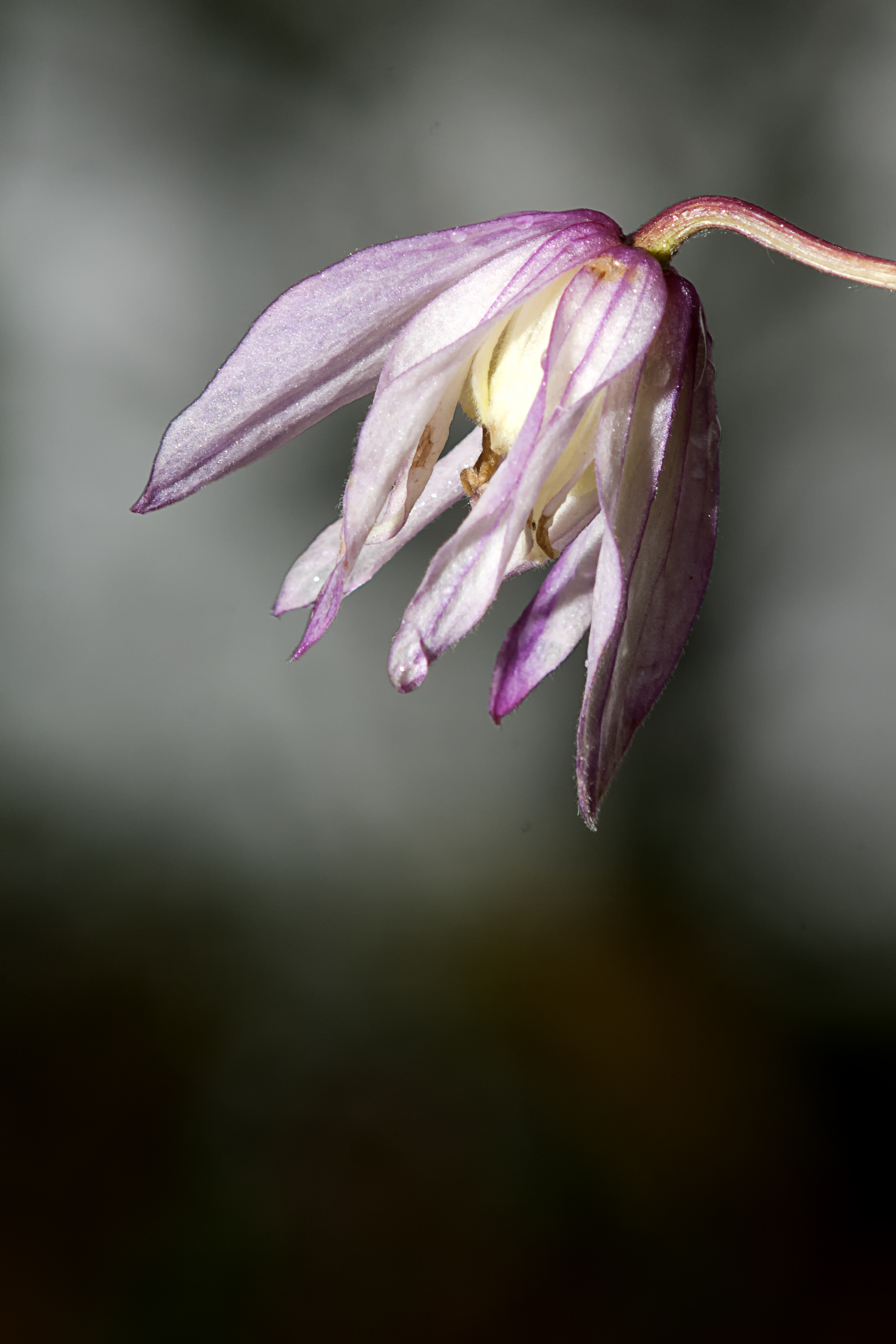
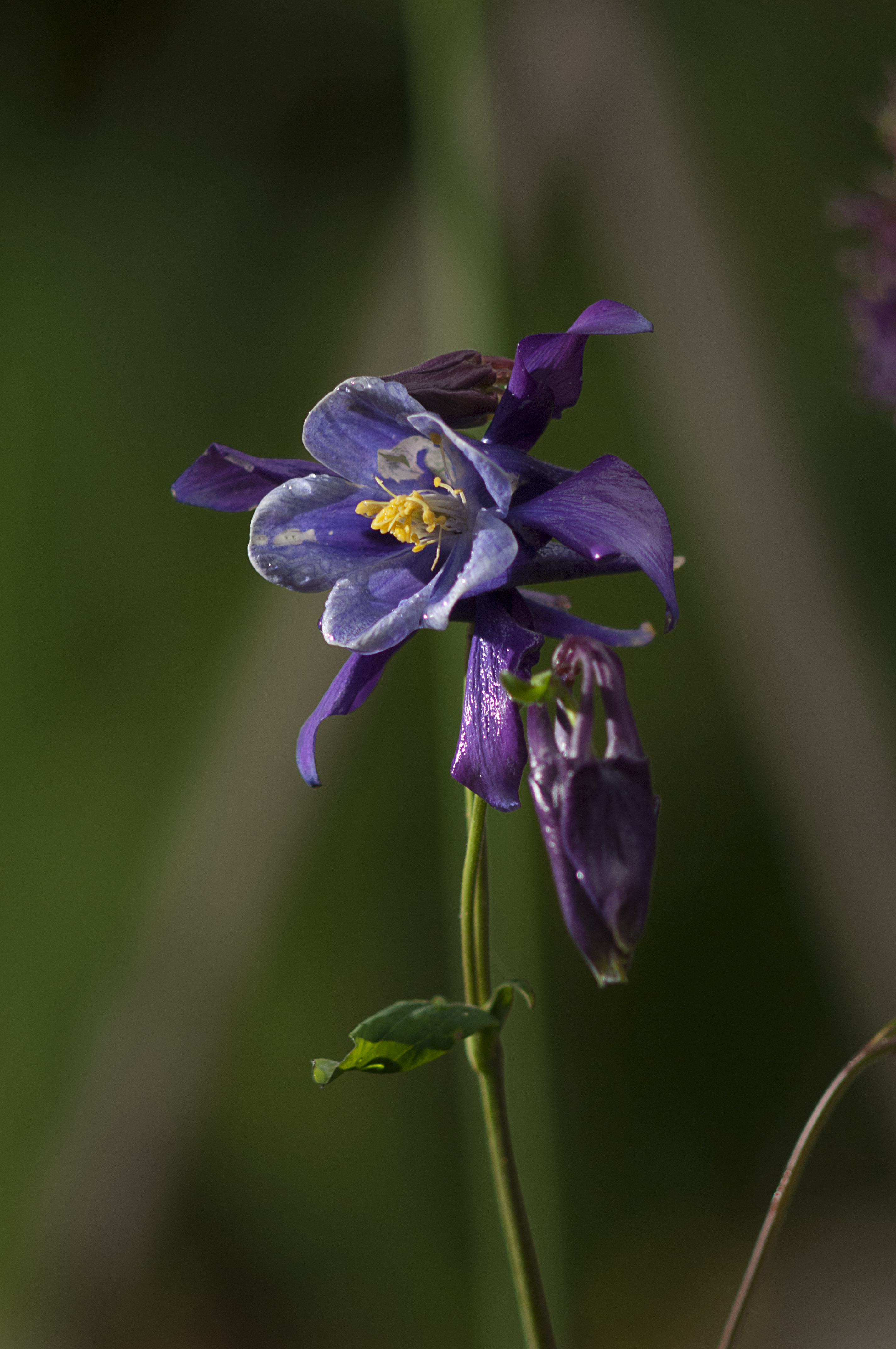
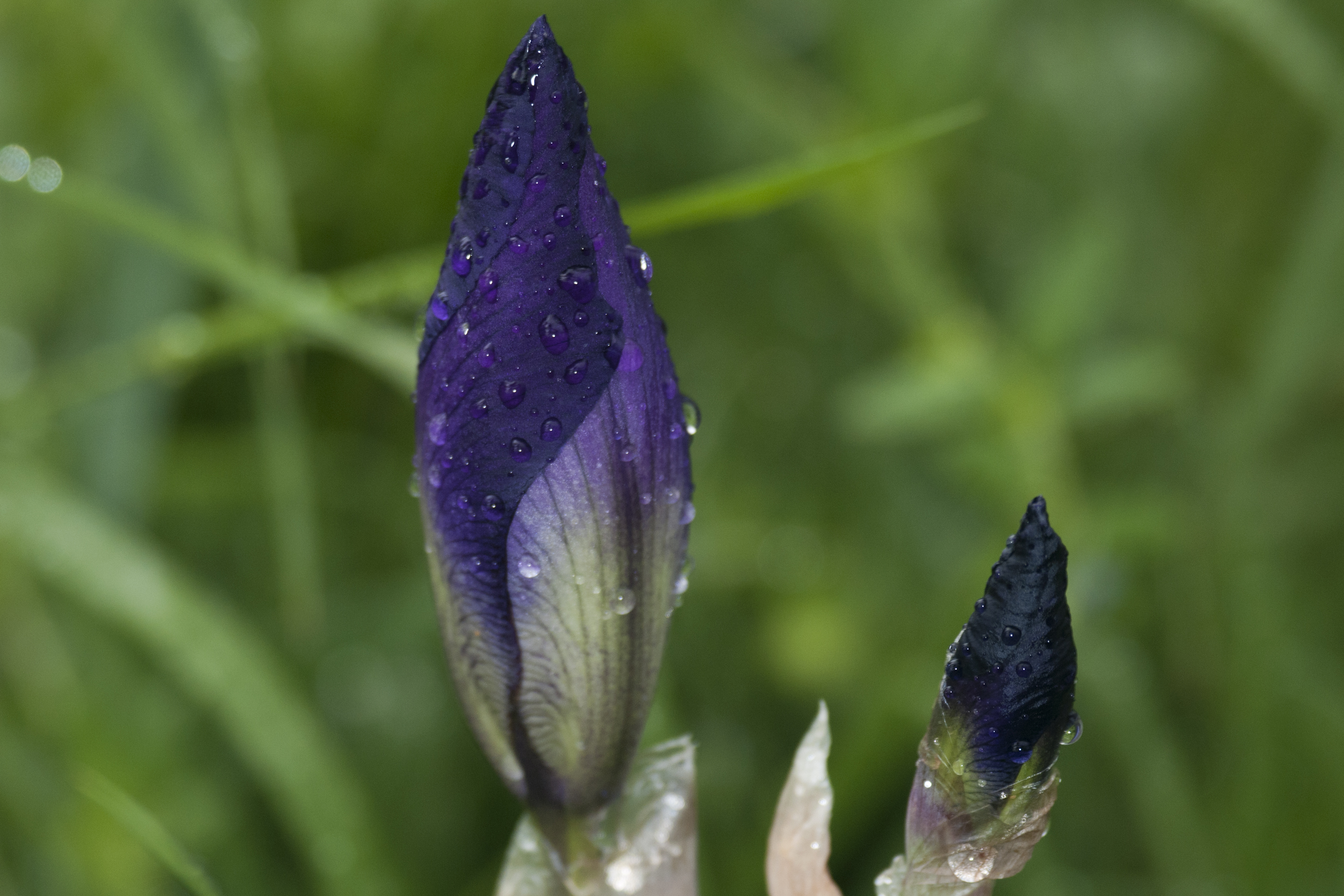
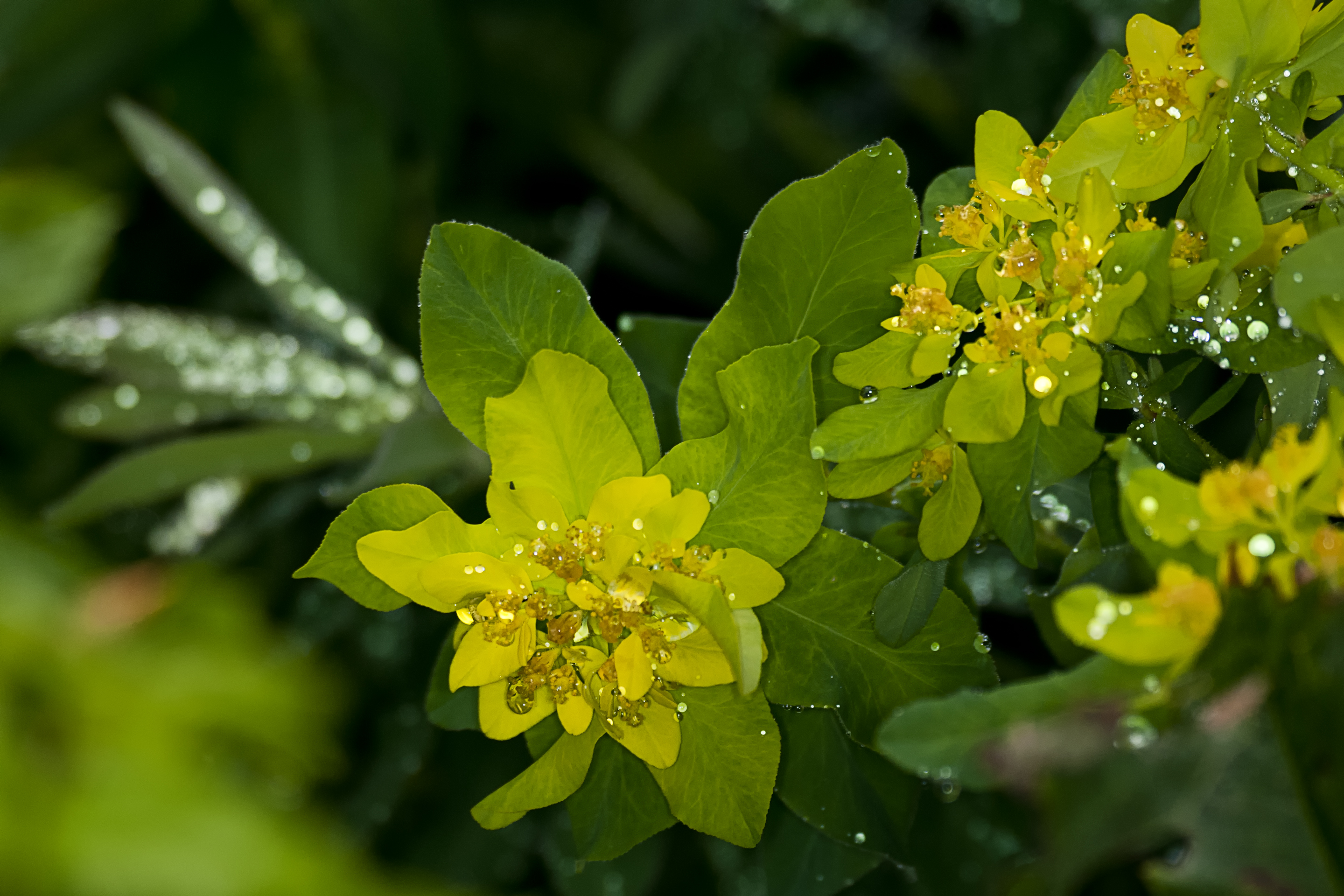
As I drank my morning coffee to a forecast of another day of rain I forgot about those birds and instead decided to go out into my wife’s garden to do some photography of her very wet plants. Hmm… I seem to make a lot of decisions over that first cup of coffee.  Just after a good rain is a favorite time to do garden photography and the dripping, spring morning was perfect.  When I mentioned I was going out, my wife, Linda, grabbed her camera and rubber boots and joined me.

Linda placed a ring flash on front of her 70-180mm macro lens and I used a 200mm macro and included a stand-mounted, off-camera flash. Adding light on the overcast day gave our images contrast and “pop” in the otherwise flat and limited lighting conditions of the rainy day. We both used monopods to steady our cameras as we moved around in the wet landscape.

When photographing plants I meter much the same as I would if I were doing an out of doors portraiture of a person. Selecting the camera’s manual exposure mode, I meter for the proper ambient, or existing, light exposure of my subject, and stop down to reduce the overall exposure. Then I add light. If the flash is set to TTL, then I use its exposure compensation feature to increase or decrease the power. If the flash is set to manual I move the flash closer or further away from the subject (in this case, the flower) until I get the illumination I want.

We enjoyed our photography in spite of the steady drizzle and I’ll mention that it is a good idea to keep wiping the slowly accumulating water off one’s flash. I don’t worry about my camera because it’s weather sealed, but the electrically charged flash is another matter. I know many photographers would opt for the dry comfort of home on a day like this, but sometimes we need to make our own photographic opportunities and even though this isn’t as exciting as hanging off a high ledge photographing eagles, I personally can’t think of any kind of photography I find more enjoyably relaxing than ambling through a garden capturing interesting light on interesting shapes, and the addition of rain drops on leaves and flower petals makes everything all the more creative.

We don’t have to go far to find something interesting to photograph. For my wife and me that location is just outside our front door and on that rainy day we would walk back to the cover of the porch to view and discuss the images on our camera’s LCD, and then we would step back into the garden and continue. There were no camera bags to be packed, trip planning, or driving of a car to a distant destination.

I am sure that is why I got interested in garden photography in the first place. It isn’t so much that I am fascinated with flowers, however, as a photographer, I am interested in colours, shapes, shadows and how easy it is to access all that. When I first started venturing into my wife’s garden, I would do it as a way to relax after a day of work.  Now it’s just fun photography that I recommend to any photographer wanting to be active with their camera.

Be sure to click the “follow” button.

Or, at least, select the “like” button.

See my personal website at www.enmanscamera.com
Leibster Blog award Nomination

I will thank Humbled Pie, http://humbledpie.wordpress.com for the Leibster blog award nomination. I had to look it up and will apologise that its origins are still unclear to me. However. I am delighted that someone appreciates my words about, what to me is, the exciting world of photography.


I enjoy reading and looking at pictures – so in my mind perusing the vastness of the Internet for Bloggers that are also consumed with photography is educational, inspiring and fun.


That Southern Living and Photography Blogger, HumblePie, http://humbledpie.wordpress.com instructs me to:


1.Add a photo for the award you received to a blog post.


2. Link back to your nominating blogger in your post.


3. Tell us some random stuff about yourself that might not be evident by following your blog.


4. Nominate some worthy bloggers for the same award you received and leave them a note linking them back to your award post.

Hmmm.. Some random things about me:


I am “sort of” retired.


When it comes to choosing subjects to photograph I am opportunistic.


Although readers already have found it apparent, I really do enjoy almost everything about photography.  And can be drawn into any conversation that touches on the subject of photography.


My nominations of those (other than Humble Pie) that I do find the time to read and appreciate are:


http://insearchofstyle.wordpress.com/


http://javashotsblog.wordpress.com/


http://igomy.wordpress.com/


Photographing Eagle’s Nest – An Adventure


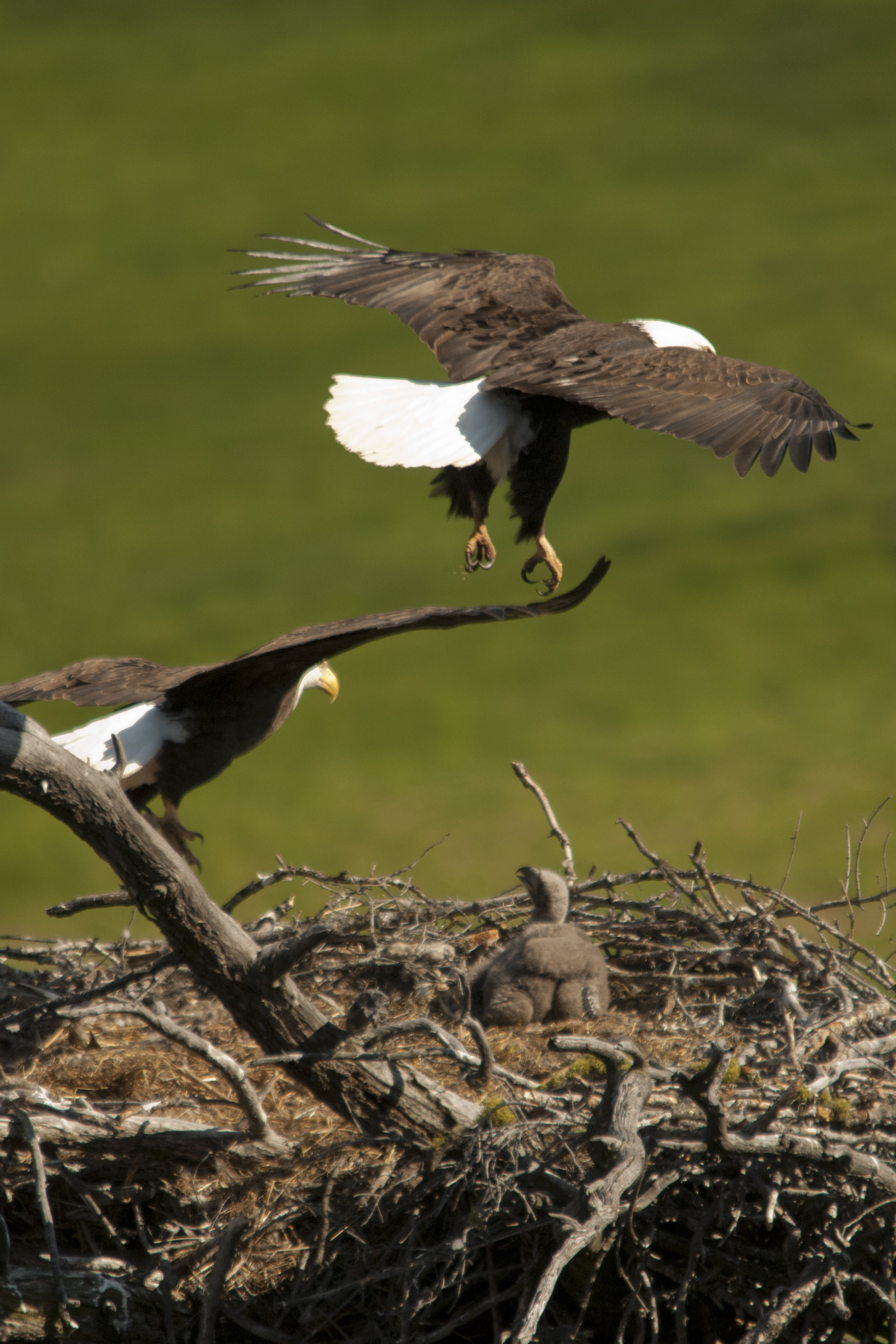
Generally, when looking for eagles viewers are peering upwards, and most photographs of eagles are of eagles flying high or perched overhead. So, thinking of all that, it was with excitement that my friend, Walter, and I began a somewhat hazardous climb up a steep, loose, shale-covered hill that would allow us to photograph an eagle’s nest from above.  He had found and climbed to this nest late in the spring about four years ago, but that time he only made a couple of photographic climbs because he thought he might be bothering the eagles.  I was able to photograph it only once and what a great day that was.

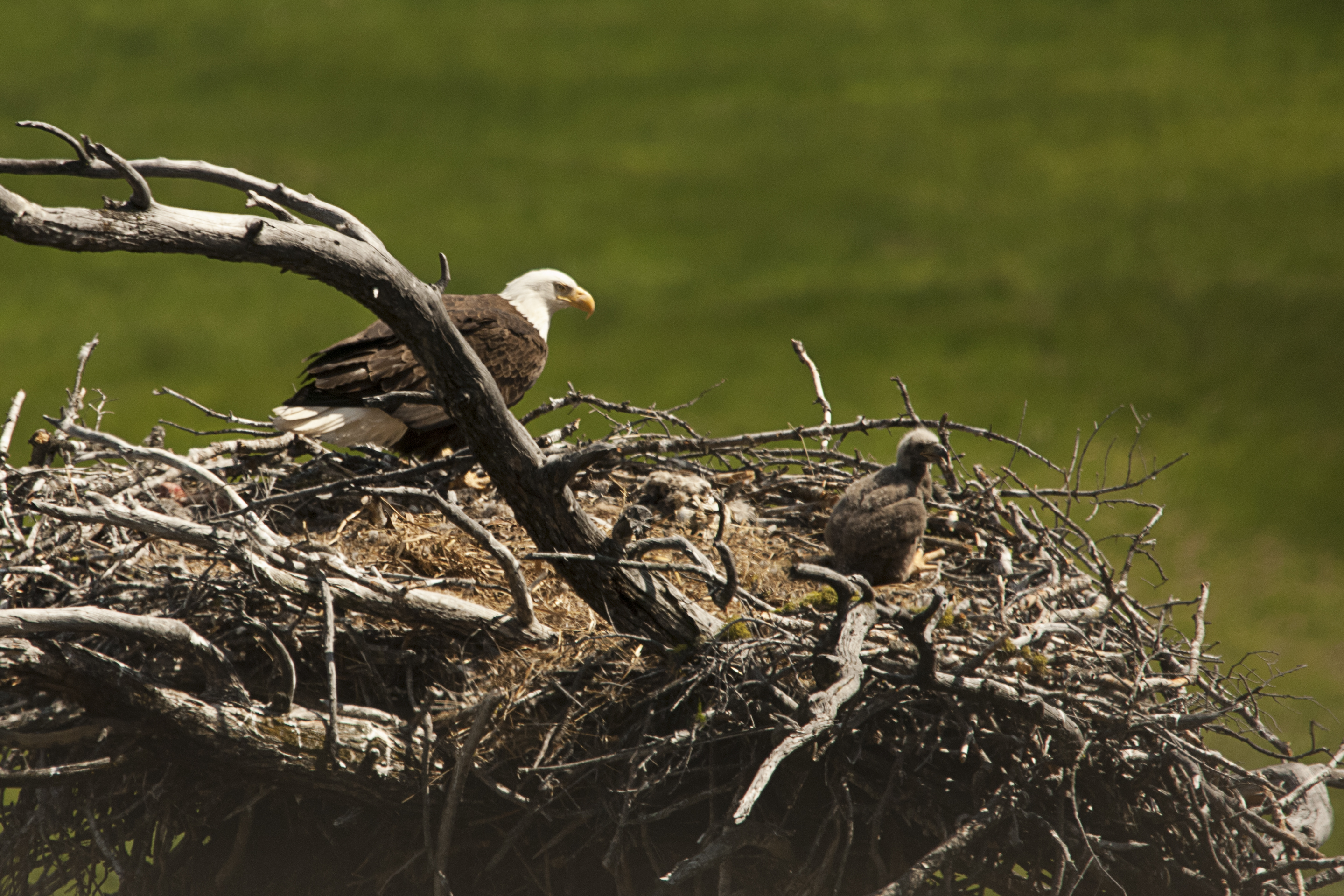
Last week Walter and I made the half-hour climb again and we found a position on a ledge where we could watch and photograph the eagles from a distance slightly further away than where we were four years ago.  This year there was one fluffy chick in the nest and although I am sure they were very aware of our presence, with the added distance between them and us, they didn’t seem to be bothered.

Walter brought his Sigma120-400mm and I had my wife’s 150-500mm. Both are big and heavy lenses, but because we followed the old photographers adage, “always select a shutter speed number that matches the focal length” neither of us had a problem handholding our hefty lenses. I know fixed-focal length lenses tend to focus faster and are usually sharper, but for this excursion we both wanted the versatility of multi-focal length (zoom) lenses.

The only difficulty we had was the climb. The shale was loose and we caused small avalanches as we crossed and slipped over the face of the hill. I stepped wide and constantly leaned into the hill and had to watch where I placed my feet seeking stable footing. And looking about, or straightening up, only increased the probability that one would end up bruised some distance down the steep hill with damaged equipment.

When we finally reached our photography perches we sat quietly for a while as our trip up was noisy and we expected we might have agitated the eagles.  After a time we moved to where we each could see the family of eagles, then pressing our eyes against our viewfinders we both began photographing them.

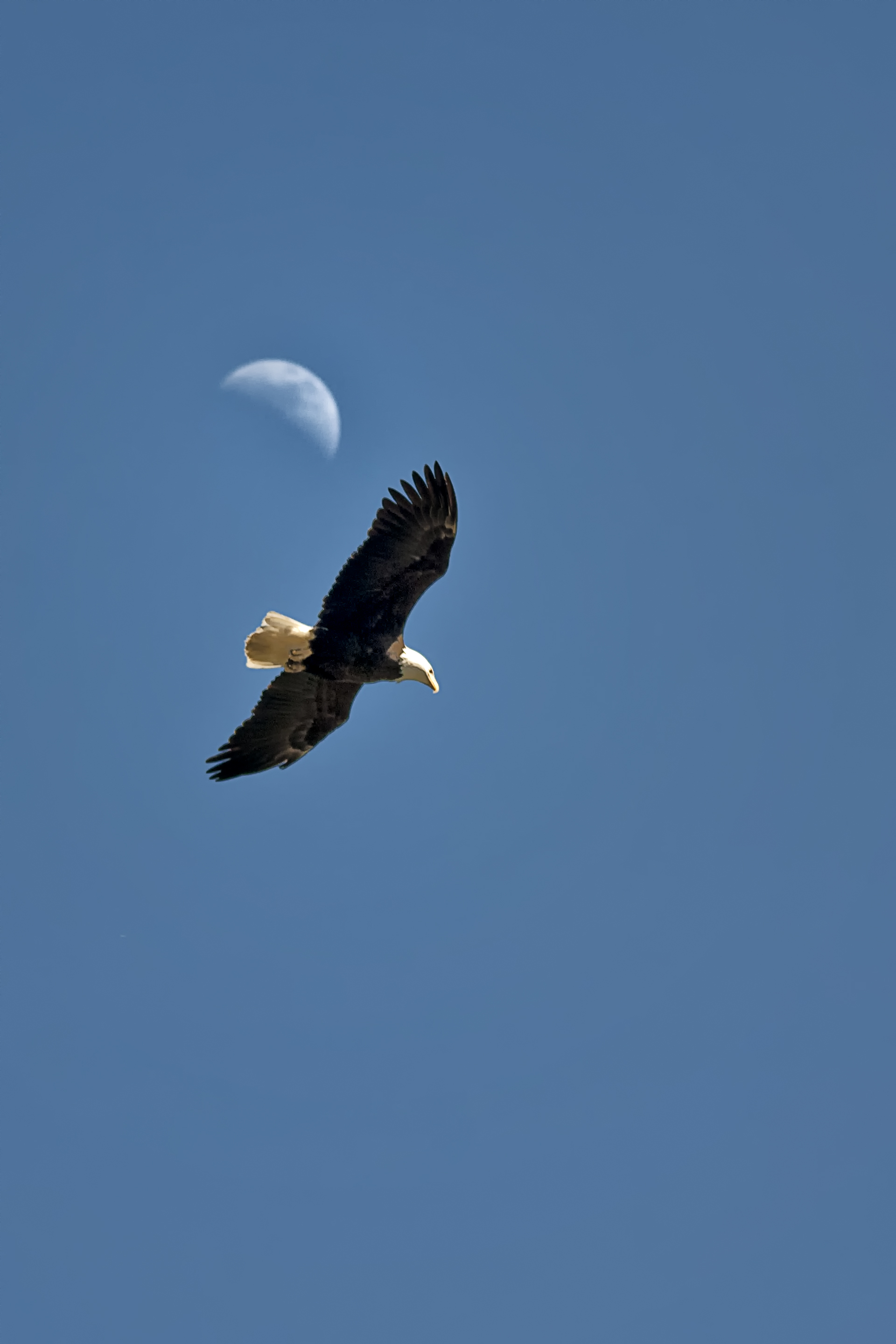
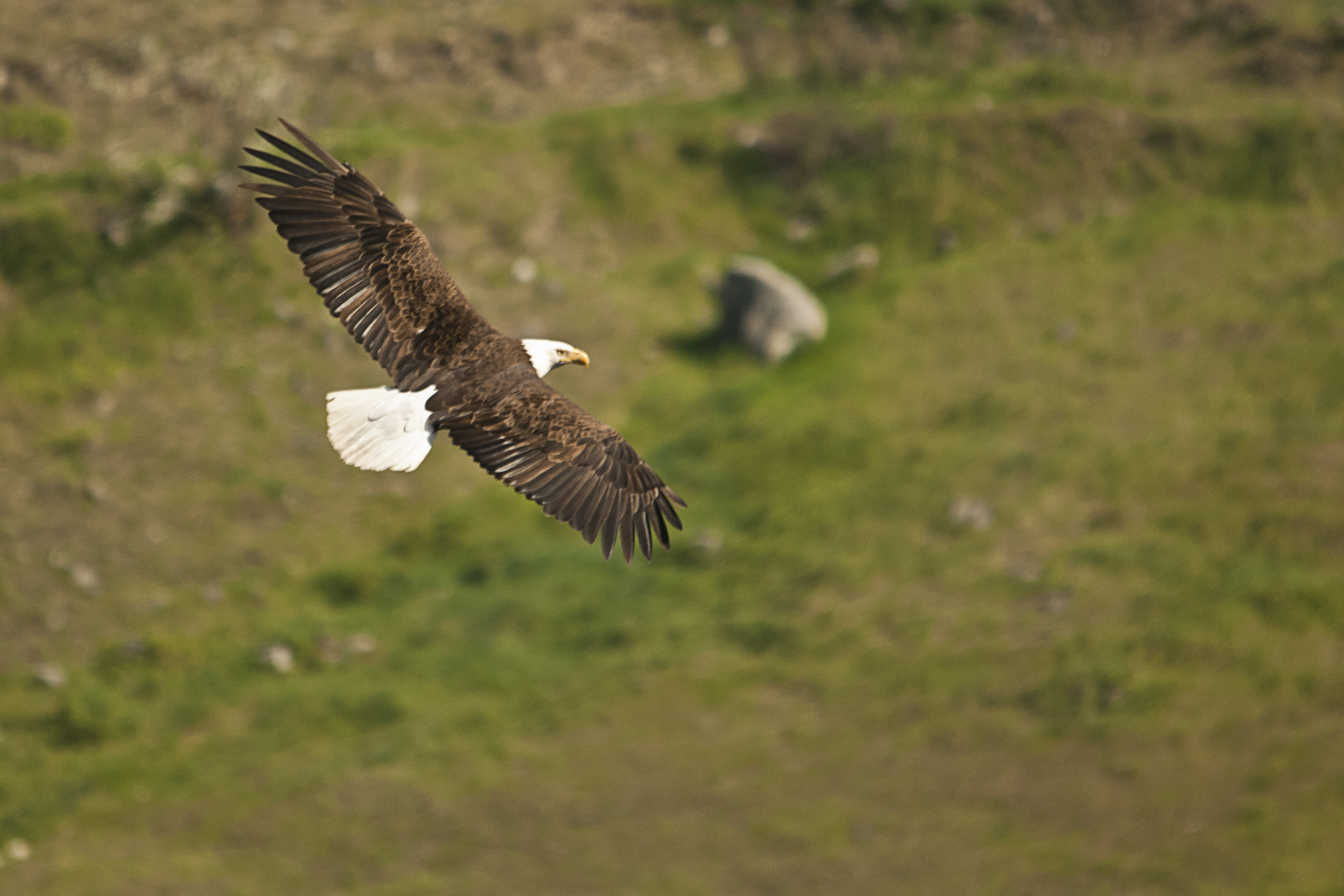
The day was clear and bright, so a sky shot, although dramatic, was always a silhouette. I wanted to show the eagles on the nest, to include parents and the chick, so most of my shots were level or angled downwards. The eagles would sit at the nest for long periods, and then seemingly take turns flying off to perform acrobatics high in the windy sky. Too high to photograph, but amazing to watch all the same and when they did zoom back to the nest I would start releasing the shutter all the time wondering if any of my captures would be usable.

Bird Forum, www.birdforum.net, claims to be the largest birding community, dedicated to wild birds and birding. The advice on photographing birds, by one of the moderators is, “A bird will pretty much let you know if they feel threatened by you so you should let them be your guide… The birds come first. Sometimes your close proximity to a nest can cause the parents to abandon the nest,… close proximity to a nest will only invite other predators to the nest… The best way to photograph birds is to make yourself stationary rather than chase them down. Stay put, you would be amazed at just how close the birds will come to you once they are comfortable”.

It was a great day for both of us; outdoors, fresh air, sun, wildlife, and great pictures to help us remember.  The eagle chick should be full grown by nine weeks, and now that we know we aren’t bothering them we’ll plan another visit shortly.

Be sure to press the “Follow” button.

my website www.enmanscamera.com

Photographers that have pets have something special.

In my opinion photographers that have pets have something special. I’m not just writing about the companionship, or the devotion one receives.  That relationship is special and important, however, what I am referring to is that pets are perfect models for our portrait photography.

Photographers point their cameras at just about everything in their lives. Spouses and children patiently put up with constantly having their picture being taken, but eventually even they need to go on about their lives without being constantly photographed, and when that happens, if you are like me, you go looking for the family pet.

Got a new camera or lens? Want to try out that studio lighting technique? Or just bored and want someone ever ready and able to pose for a photograph? Call the dog, or coax the cat. I can’t even begin to count the pictures I have taken of the horses, dogs, cats, parakeets, hamsters, chickens, fish, and frogs I have taken in my life.

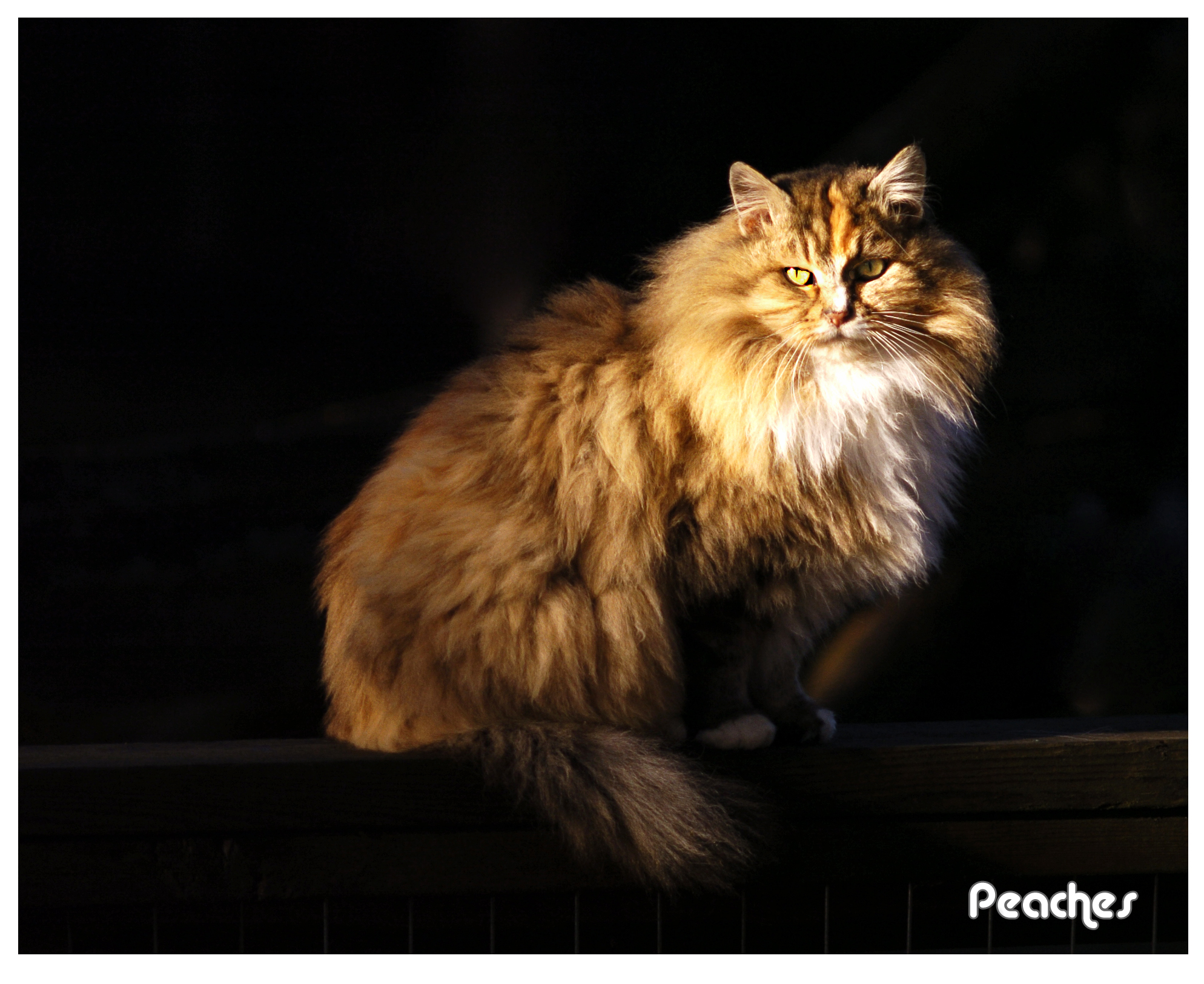
Those pets never complained when the pictures didn’t work out and even waited for another blast of the flash without blinking.  I admit the goldfish aren’t very good posers, and Chuck, the rooster that guards the hens, doesn’t seem too interested in standing still for his portrait, but Peaches, the cat, seems more than ok with posing for long periods of time.

Peaches became a resident years ago in the barn, as cats do from time to time. I have no idea her origin, or how old she is, but after a bad run-in with either a wandering coyote or the neighbor’s dog and the follow up convalescence in our home, she somehow moved from the barn to sleeping on my wife’s lap.

The name Peaches came from when I was feeding three strays one winter. My wife asked me what their names were, but, heck, I just didn’t want them starving in the cold weather and hadn’t bonded enough to exchange names. I explained, “ the black one is named Furry, the spotted one is Furry, and the yellow one is called Furry”.  Linda named them Furry, Trixie, and Peaches, respectively. So after Furry got old and died, and Trixie was adopted by a neighbor down the road, Peaches came inside for first aid, a warm place to live, and has become a constant object of my photography.

I will admit that cats are great posers. They will sit without moving for long periods of time, giving photographers lots of time to test out lenses, learn flash techniques, and get creative with a camera. Peaches ignores me most of the time, except when she wants food. So I can take all the pictures I want pretty much any time without any interference. She just sits and waits.

I have never been one of those picture takers that take cute or silly pictures of the animals with which I share my home. I like portraits, so my pet photographs are usually planned and not much different than a formal portraiture of a person. Actually, that cat is a lot easier than most people because she just sits motionless staring at some spot in space for long periods of time. Other than sleeping and eating, Peaches the cat doesn’t seem to think much else matters, thus she is the perfect poser.

“One day Alice came to a fork in the road and saw a Cheshire cat in a tree. Which road do I take? she asked. Where do you want to go? was his response. I don’t know, Alice answered. Then, said the cat, it doesn’t matter.”  That quote from “Alice in Wonderland” by Lewis Carroll reminds me of my cat, Peaches.

I am not suggesting that photographers should rush out and adopt a cat or any other pet only because they need a model, but if one already inhabits the home then put them to work as an artist’s model. And if any of the pictures are good, then add some words like Merry Christmas or Happy Birthday in PhotoShop and make some cards for your friends and relatives.

Don’t forget to press the “Follow button” . and I am also at www.enmanscamera.com