
What Shall I Photograph when its windy? 

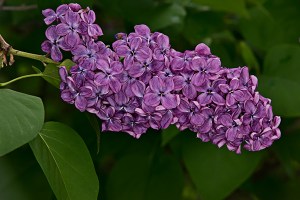
Lilac

Oregon Grape

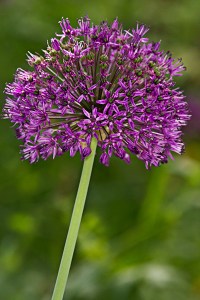
Allium

Oriental Poppy in wind

Iris in wind

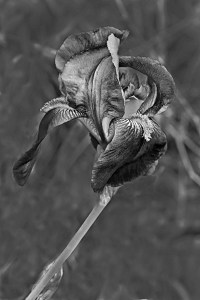
B&W Iris in wind

I looked out the kitchen window at my wife’s garden. It was late afternoon, the sun was peaking out under the clouds after a light rain, and the garden was glowing with a gusty, light breeze.

Linda mentioned that we hadn’t taken any pictures of the spring garden yet and suggested that it looked so fresh after that rain that I should be able to get some good flower photos in spite of the wind.

Wind? Wind is not a problem if photographers take the time to problem solve. I could increase the ISO or shutterspeed, but that wouldn’t do much for the ambient light, and I like more control. My normal technique for photographing flowers is to underexpose the ambient and illuminate the subject with a flash. I recall years ago having given my photography students a “stop action” assignment. They were to go out at night or find a large, dimly lit room, and use a flash to stop a moving subject in a photograph. All they had to do was select enough flash power at a specific distance to illuminate their subject properly when they released the shutter.

Those were assignments given before modern, computerized cameras and TTL dedicated flash when the flash would always produce the same amount of light and the aperture controlled the amount of light exposing the subject.

My technique for my windy garden was the same. I placed my 200mm macro lens on my camera and attached a ring-light on it. I really like is using a ring light on rainy days. I keep it on manual mode and stay at a specific distance so it won’t under or over expose the subject I am photographing. My ring flash also has ¼ and ¾ power increments to reduce the flash power output if I need it.

Just as my photography students learned all those years ago, when I pressed the shutter the flash stops the movement of the flowers in the wind. Nevertheless, the wind was quickly drying out the plants, so I had to quickly search for leaves that still showed raindrops.

The movement problem was almost solved. I took extra shots when I thought some motion had wrecked my shots, however, it was the sun that became the biggest concern. I had hoped the high clouds would block the sun, but instead of getting more bad weather, I got less, and with the clearing sky I began to struggle with the bright light.

The bright light would have been fine if all I wanted to do was document plants in the sun, but I wanted to go beyond that. Just pointing and shooting is boring. I would have liked to get out lightstands, a couple of off-camera flashes, and even a black backdrop, but the wind continued on, and would probably blow all that stuff over and I never followed up on that option.

So while other photographers might have celebrated the sunny, clear sky and be willing to put up with windy landscapes, I was done for the day.

I think I am pretty lucky that I don’t have to go far when I want to take pictures. Over the years I have looked hard into what is close to me and instead of being one of those photographers that depends on a car to find a location to get inspired. I just look around the yard and adjust my thoughts and camera for what awaits me.


Photographing Flowers by Bathroom Window Light       

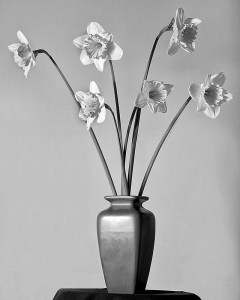
Daffodil BW

This week my wife and I had our first serious walk of the year around her garden.

Everything was competing for a place in the sun and the colours were beginning with white being the most prominent. I guess that might be because the first flowers to bloom in my wife’s garden this year were her white daffodils, and there are lots. We were looking for flowers to bring inside the house, so the abundant daffodils were the natural selection.

In March of 2013 I wrote, “Photographing an Orchid in the Bathtub.” In that article I discussed how one morning, I realized that a lone blooming orchid that my wife was watering on top of an upside down plastic barrel in our bathroom tub was a photo opportunity in the making.

At that time I could see a back light beginning to come through the frosted bathroom window and the slight beginnings of a back glow on the flower. It as in the morning and I knew within an hour or so the sun would move to that side of the house and continue in a southern arc for the rest of the day.

It was with that in mind that we decided it would be fun to photograph the daffodils before Linda choose a final location to display them in the living room.

One could set up a small studio for flower photography anywhere in a house. I even have a small diffusion box especially designed for product photography. Nevertheless the soft diffuse light coming through the frosted bathroom window glass is almost perfect for flowers.

I found another plastic 5-gallon barrel, placed it up side down in the tub with the white daffodils on top, and set up a speedlight coupled with an umbrella on a lightstand to photograph the daffodils.

When I photographed that orchid it was early morning. However, this time it was late morning and a more direct light was coming through the bathroom window. So I took the outer cover off the big 5-in-1 reflector I have and it became another layer of diffusion when I placed it between the daffodils and the window.

All I had to do then was point my 135mm lens, shoot, arrange the flowers, shoot again and rearrange. When I mentioned to Linda that the flowers would look good as a black and white photo she said. “Everything is pretty much monochromatic anyway”, so it was with a final b&w image in mind that I took the picture.

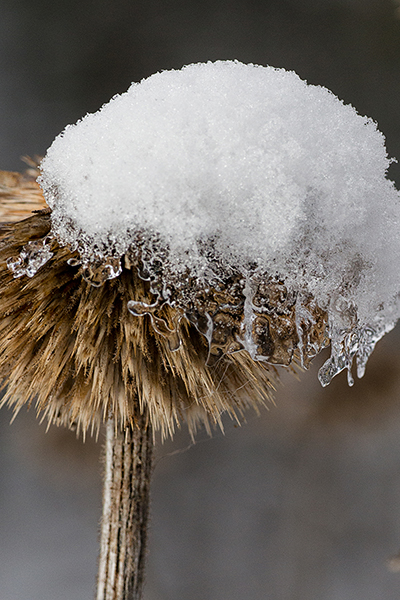
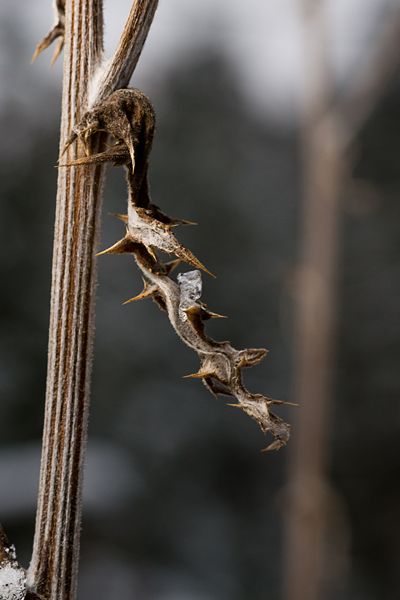
Photographing the Winter Garden

Outdoor lighting kit  Clematis

Erigron  Erigron b

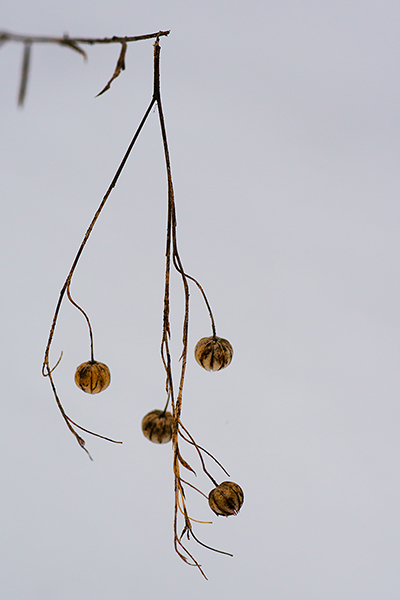
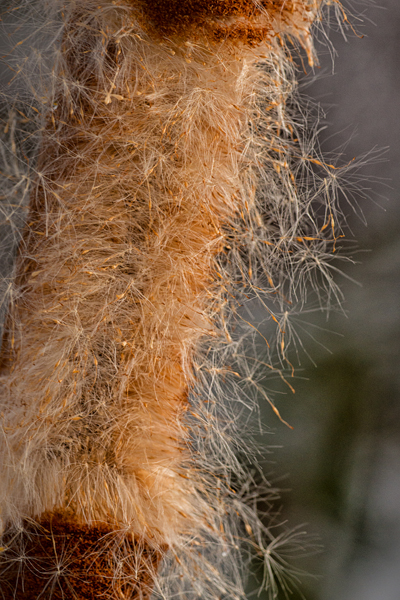
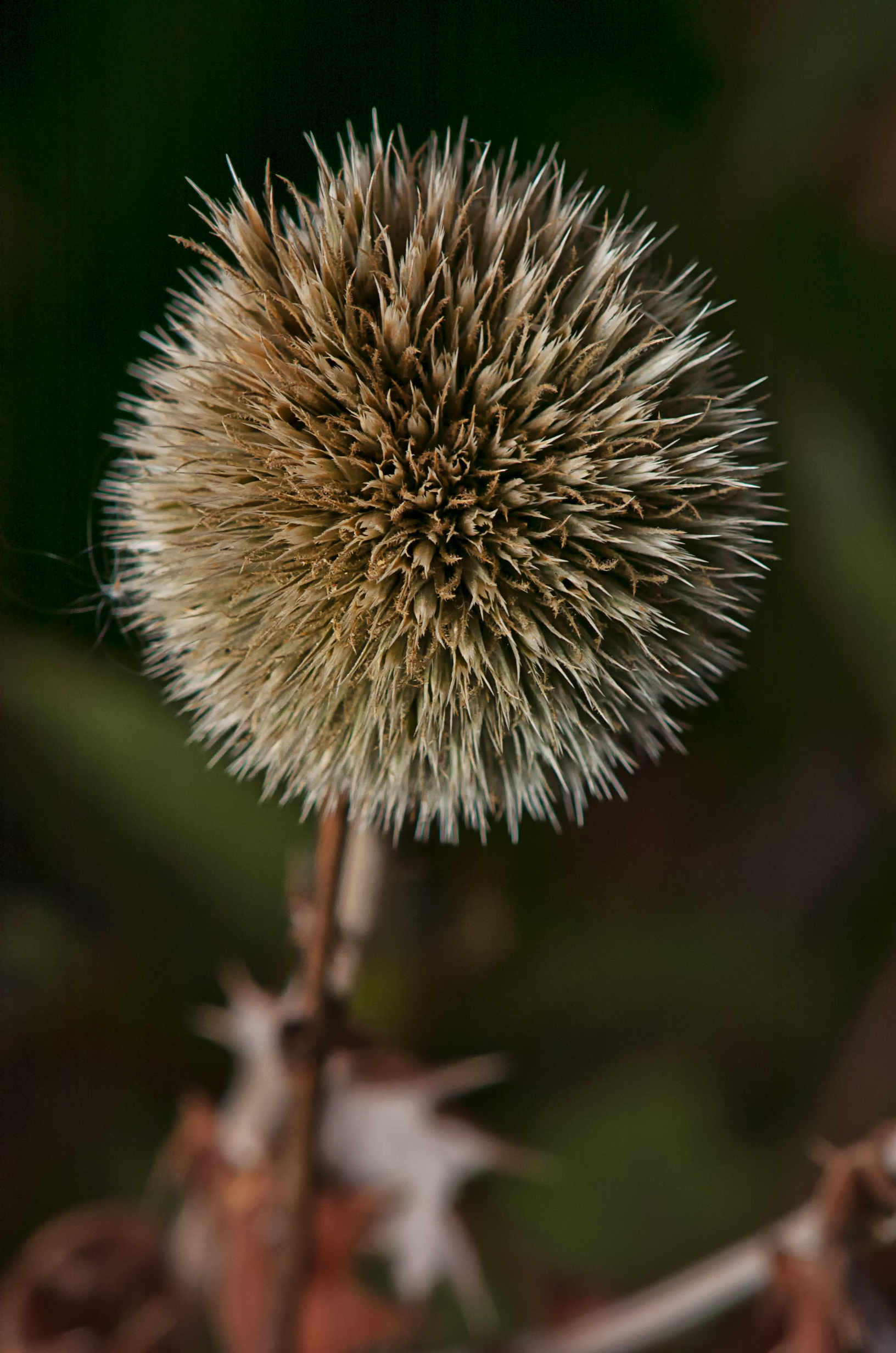
Winter blown bullrush

Step Ladder


Sunday was one of those “let’s see how many small jobs I can do” days. One would think there is no chance of being bored on a day like that, but I finally decided it was time to relax and sat down with a glass of wine, and enjoyed lunch with my wife and listened to some jazz.

As I made my way from one chore to another I kept looking at the snow in the garden and wondering if there was an opportunity waiting to make a photo or two, but I pushed along thinking “maybe later”.   However, as I started on my second glass of wine I complained that the outside light was gray and flat and that maybe I should just forget it. Could that have been the wine talking, or that I am just lazy?

Ever one to keep me on my toes, my wife, Linda, reminded me of a lecture we once attended by Canadian photographer, and author, Sherman Hines. (I recommend readers check him out) As she remembered Hines had said something like; “there is always something to photograph when the weather is poor, look for the small stuff”. There was the challenge. I left the room to get my camera.

The snow was getting wet on the plus 1 degree C afternoon so I decide to leave my tripod behind and mounted my wife’s 70-180mm AF macro on my camera. That unique, fun to use lens is the only true zoom Micro (macro) lens ever made by Nikon. And I get to borrow it anytime, well, almost anytime.

I got my camera and put together my lighting for what would be an excursion to search out the intimate features poking through the snow in my wife’s garden.

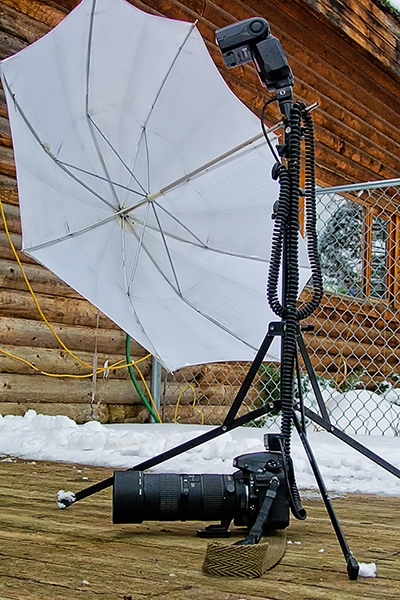
I attached a flash on a stand and chose a shoot-through umbrella. I could have connected a wireless sender and receiver, but I decided to use a TTL camera-to-flash cord that would allow the camera’s computer to direct the flash to provide the correct exposure for the close-up kind of subjects I would be photographing.

Although I had complained about the limited light on the heavy overcast day, I knew it would be perfect for my sojourn through the garden. I could easily meter the ambient light, then under expose slightly so the flash would become the main light instead of the hazy sun. The modified light from a shoot-through umbrella is even across the image with a gradual transition from highlights to midtones to shadows, or a soft light.

I stuck the stand through the snow and easily positioned the flash. And unlike a snowless landscape, the snow kept the stand steady no matter the angle. All I had to do was choose an angle and release the shutter. That particular zoom lens allows for a constant macro at every focal length. It was pretty neat and easy.

I choose to photograph that garden in every season. I know there are many photographers that only take pictures of plants when they are in bloom and prefer colourful representations. However, spring, summer, fall, winter, snow, rain, sunny, or overcast, I find that our garden is filled with ever changing subjects that always offer something new and I expect that Sherman Hines surely would approve. My advise to photographers that think they must wait for inspiring weather before their next garden safari, is to take Mr. Hines’ advice, because there is always something to photograph when the weather is poor, just get up close and look for the small stuff.

I enjoy everyone’s comments. Thanks, John

My website is at www.enmanscamera.com


TTL Flash Photography in my Wife’s Garden

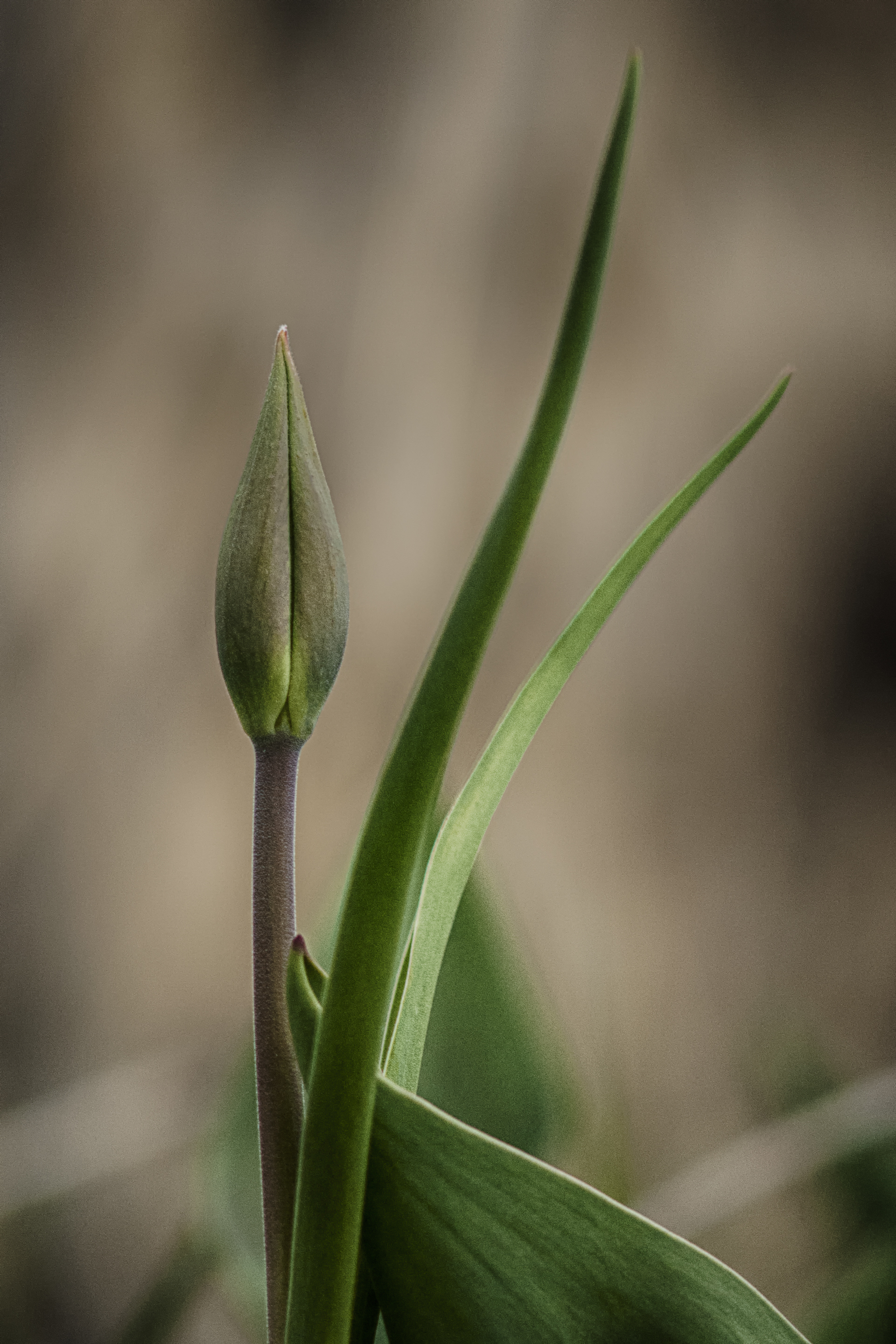
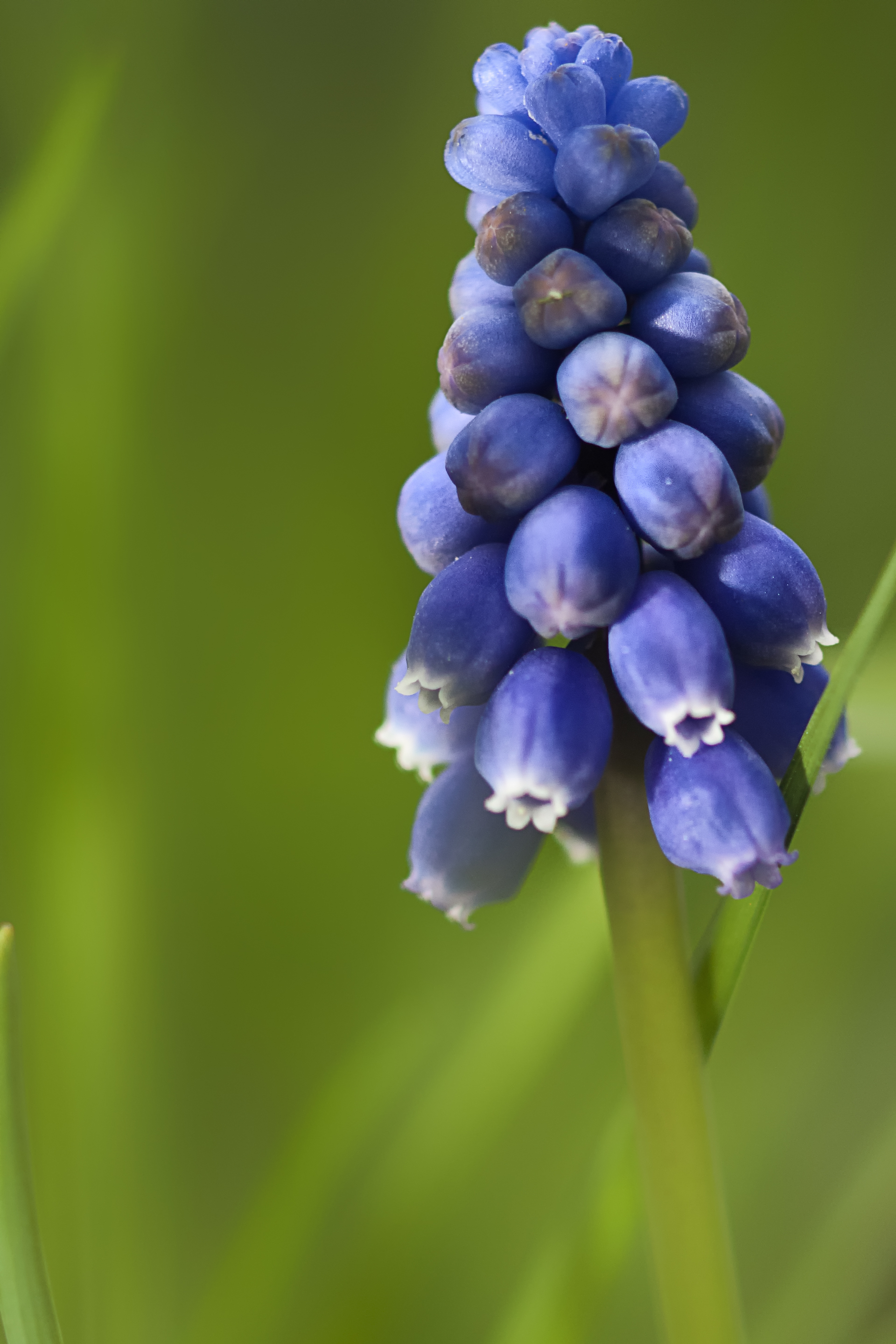
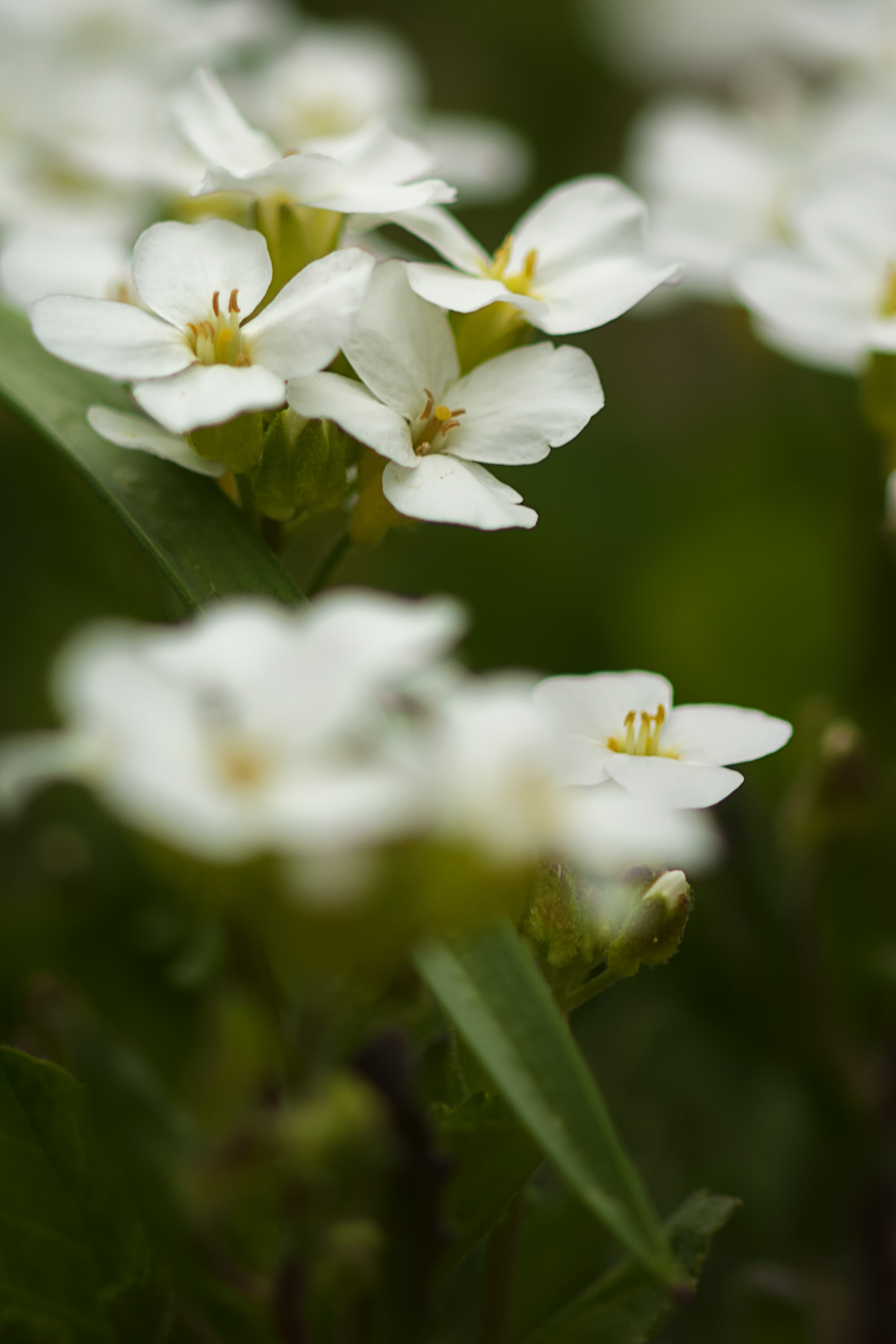
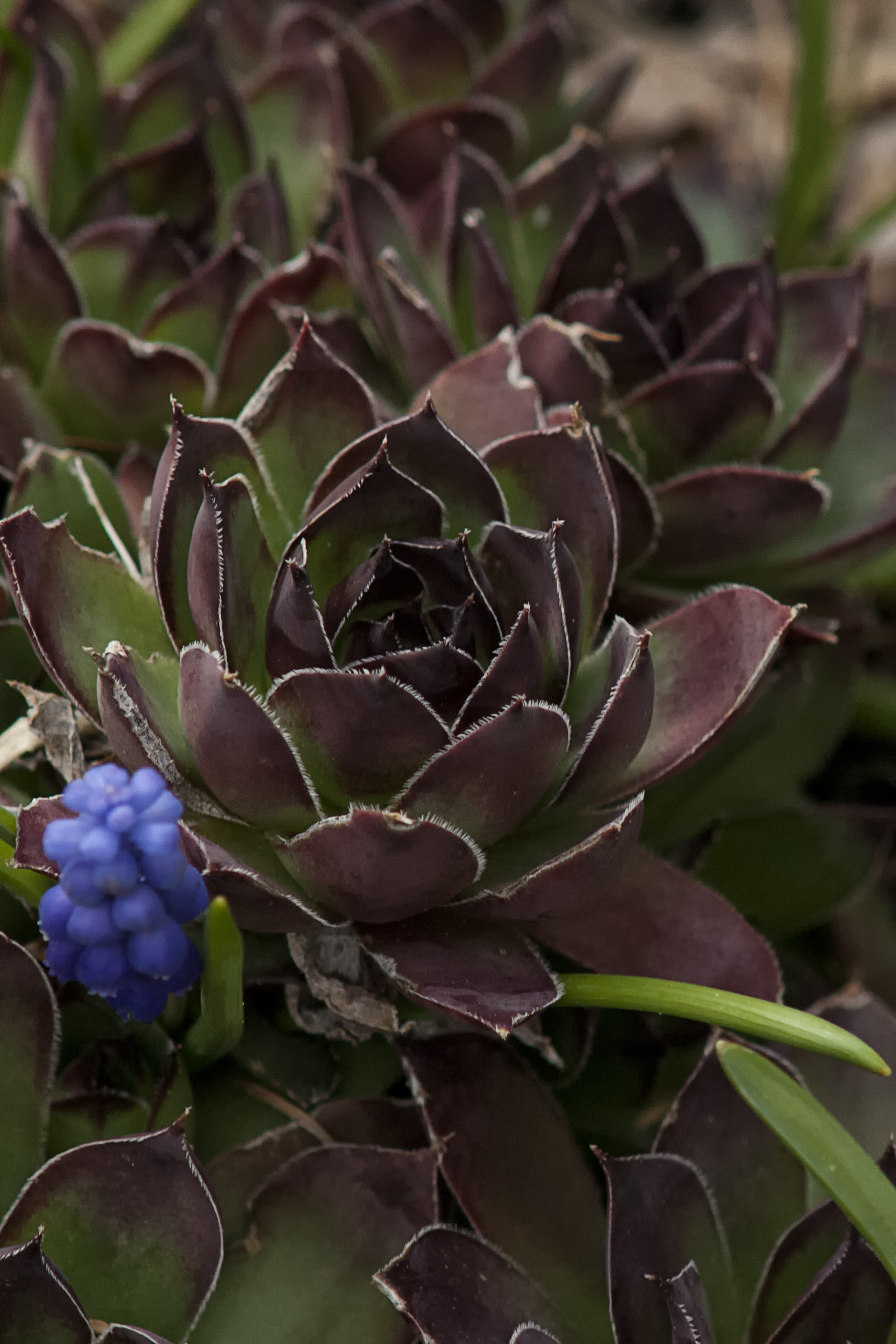
Tulip 1 Blue Muscari Arbis Sempervivum Pennesetum grass - fountain grass

This is beginning to be a busy spring. I expect that isn’t news to those in my area that have spent all day doing yard work the past few days. But for many photographers thoughts kept wandering to, “That could make a good picture.”

I really wanted to do some photography in my wife’s garden. The nights are still cold, but the days have been almost hot, and with that heat the first of her flowers are beginning to bloom. My goal is always to photograph what happens in the garden with the changing seasons.

There is always something in the garden no matter the weather, be it snow, rain, or like today, high clouds. The slight overcast day was perfect for my subjects. Bright sunny days increase the contrast of scenes, making it hard to capture details in the extremes and I wanted to retain what details I could. The diffused daylight reduced the number of f/stops from black to white.

My setup is a 200mm macro lens and depending on my mood and the light, either a ring-flash, a reflector, or as I used this afternoon, a wireless, off-camera flash.  Outdoor portraits, whether of people or flowers, in my opinion, aren’t that interesting when one only relies on illumination from the sun. Flash, on or off-camera, or even a reflector, adds dimension and depth that makes for a much better image.

I mounted my flash on a small 2-foot stand and carried a tiny six-inch tripod if I needed the light to be lower to the ground, and I this time I didn’t use a tripod because the few flowers were close to the ground and I prefer shooting very low level. That means almost every shot is made while lying on the ground.

By the time I could get out to the garden the sun was low and, sometimes, a heavy overcast. Perfect light. All I had to do was put the flash to one side and adjust my shutterspeed to decrease the bright ambient light.  Today’s TTL (through the lens) flash is amazing.  Previous generations recall when the flash/camera sync speed was limiting and we could only use a flash at 1/60th of a second! How did one survive?  Today I moved my shutter between 200th of a second and 8000th of a second. That gave me lots of control over the ambient light and easily allowed me to move my aperture to increase or decrease depth of field. My advice is check your camera’s manual, read about, and set the camera to hi-speed flash sync, if available.

I’ll include a brief explanation of TTL flash. When the shutter is tripped, the light from the flash fires off and hits the subject. Then that light from the flash bounces back to the camera, and a sensor reads it as it builds up exposure. The in-camera computer determines when the light has massed enough light for the correct exposure and turns off the flash.

The photographer controls the flash rather than the flash controlling our photography. With TTL technology the camera’s computer provides the correct exposure regardless of the aperture, or flash-to-subject distance.  TTL technology puts the control of depth-of-field back into the hands of the photographer.

Most of the time I kept my flash on TTL, increasing or decreasing the power depending on how far I positioned the flash from a flower, and only selected manual flash as I began loosing the light.

Books on garden photography recommend morning when everything is fresh, but I didn’t get a chance till late in the afternoon, as I was occupied building a temporary yard for six new chicks. We had an early morning marauder a few months ago, probably a bobcat, reducing my laying hens to two. I now have reinforced the chicken yard and think everybody’s safe now. I’ll give the garden another couple week’s growth and try for that fresh morning (and hopefully some overcast) light.

I’ll repeat what I wrote about garden photography last February, “Just about anytime is good for a dedicated photographer to make photographs. My advice is to be creative, have fun, and don’t worry about failures. Open them up on the computer, learn something from them, then quickly delete.  Of course, some tweaking with PhotoShop always helps and, for those photographers that are like me trying for something different, anytime and any conditions will be just fine.”

I always appreciate your comments. Thanks, John

My website is at www.enmanscamera.com

The Autumn Garden for Photographers


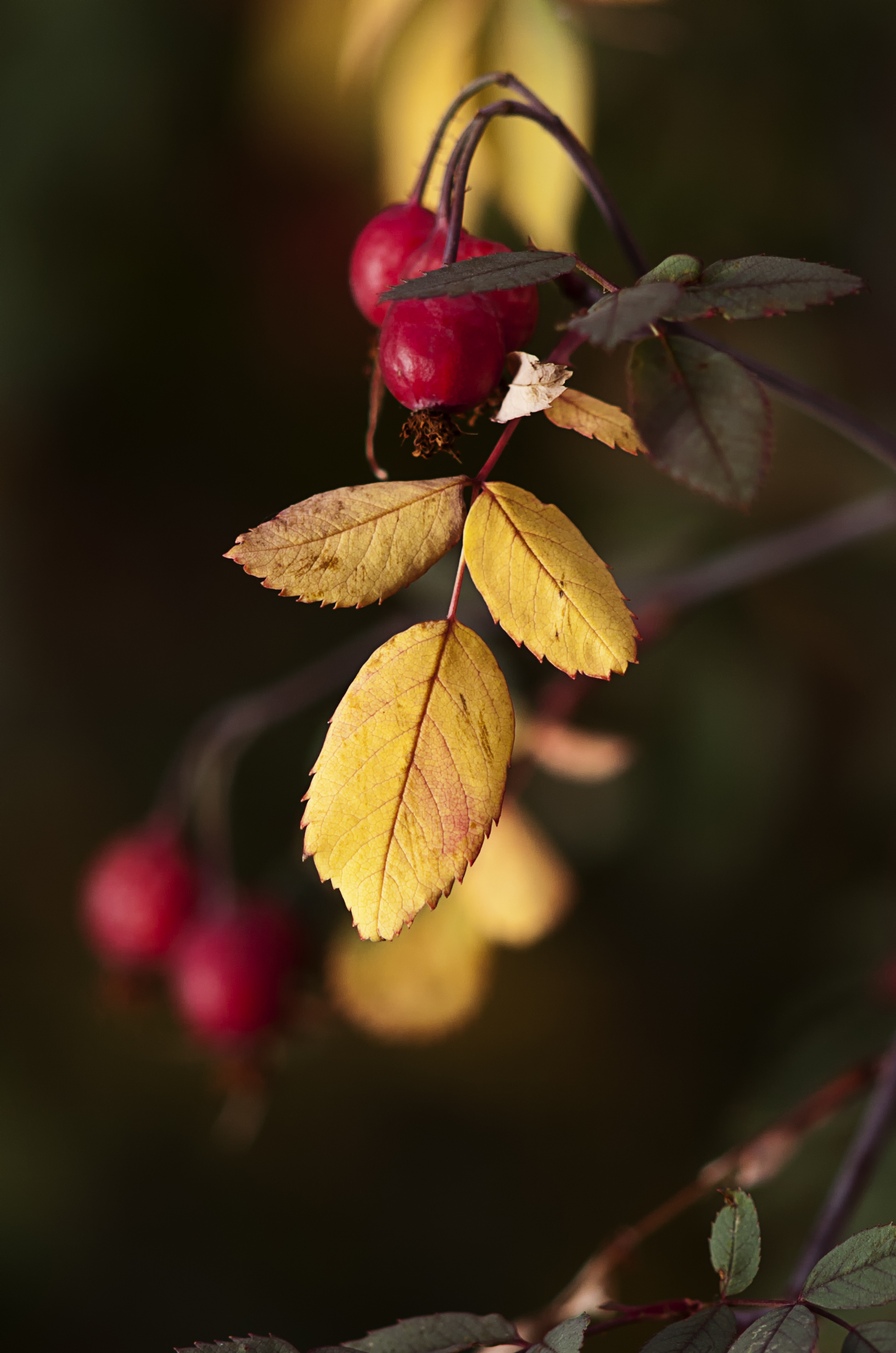
For the past week I have been looking at my wife’s garden as I walk the path from our front door to the car on my way out.  Her garden plants are dry; actually, crackling dry might be a better way to describe the plant life here in British Columbia’s interior after another summer season with very little precipitation.  She explains that she has a “dry garden,” and that she doesn’t water the garden, only for new plants when necessary.  Plants are selected that have the best chance of survival given the conditions. Parts of the garden are crispy dry, or have gone dormant, and offer a unique opportunity for photography before fall rains soften the landscape.

The nights are now getting cooler and the days aren’t as blistering hot as they have been for the past month and the plants that still have leaves that haven’t shriveled and fallen to the ground are beginning to change colour.

Most of the books that discuss garden photography recommend photographing plants in the morning when everything is fresh. Of course, spring is the most popular season for flower photography; and, I doubt those presenting their photographs to garden or photography clubs include photographs of lifeless plants. However, for this dedicated photographer, the combination of very dry, withered leaves and those with just enough life left to change colour are intriguing. As I have in the past I’ll admit that, unlike my wife, I can name few of the many of the flowers growing in our garden. To me, I look for colour and shape and how they fit in the environment.

My regular readers are already aware that I venture into our garden on rainy days and when it’s snowing. I enjoy photographing our garden in any season, and its dry condition is an invitation not a deterrent. So, this morning when I got up to a bright, clear, 9 degree autumn day, I thought I shouldn’t wait any longer and walked around our garden slowly looking for the flowers I would photograph later when the sun began to drop in the sky.

I waited for what I’ll call the “quiet light” at days end. I like that light that lasts for a very short time before dark when there is still light enough to see details, but not bright enough create highlights. As much as I like to use it, I can’t claim the term “quiet light”. That goes to photographer John Sexton and is described in his wonderful book of black and white photographs titled, “Quiet Light”. A protégé of Ansel Adams, Sexton and his collection of black and white photographs that he calls “an exploration of the natural environment” is inspiring; and it’s him, and photographers like him, that make me want to search out the unusual in the natural environment that would normally be ignored.

I wandered around with my tripod, a stand-mounted wireless flash pushed into a 30-inch diffuser, and a 200mm macro lens on my camera, and worked at picking out interesting shapes to photograph. The subdued light was perfect. I could place the camera on the tripod, focus on some intriguing-shaped plant, then direct the diffused flash from different positions to open up the flat-light conditions.

It’s easy to move the flash closer or further away to change the way the light effects a subject, or release the shutter several times while opening or closing the aperture.  The outcome would be different versions. Some would have shadows depending on the position of the light while others would or wouldn’t have a dark background depending on the exposure.

I didn’t spend a long time because the light didn’t last long, but I released my shutter at least a hundred times photographing different plants, trying to be as creative as possible and get the exposure and the angle just right. I had a good time and expect I’ll be at it again before everything changes again.

I appreciate all your comments, Thanks

My website is at www.enmanscamera.com

Photography on a Frosty Morning

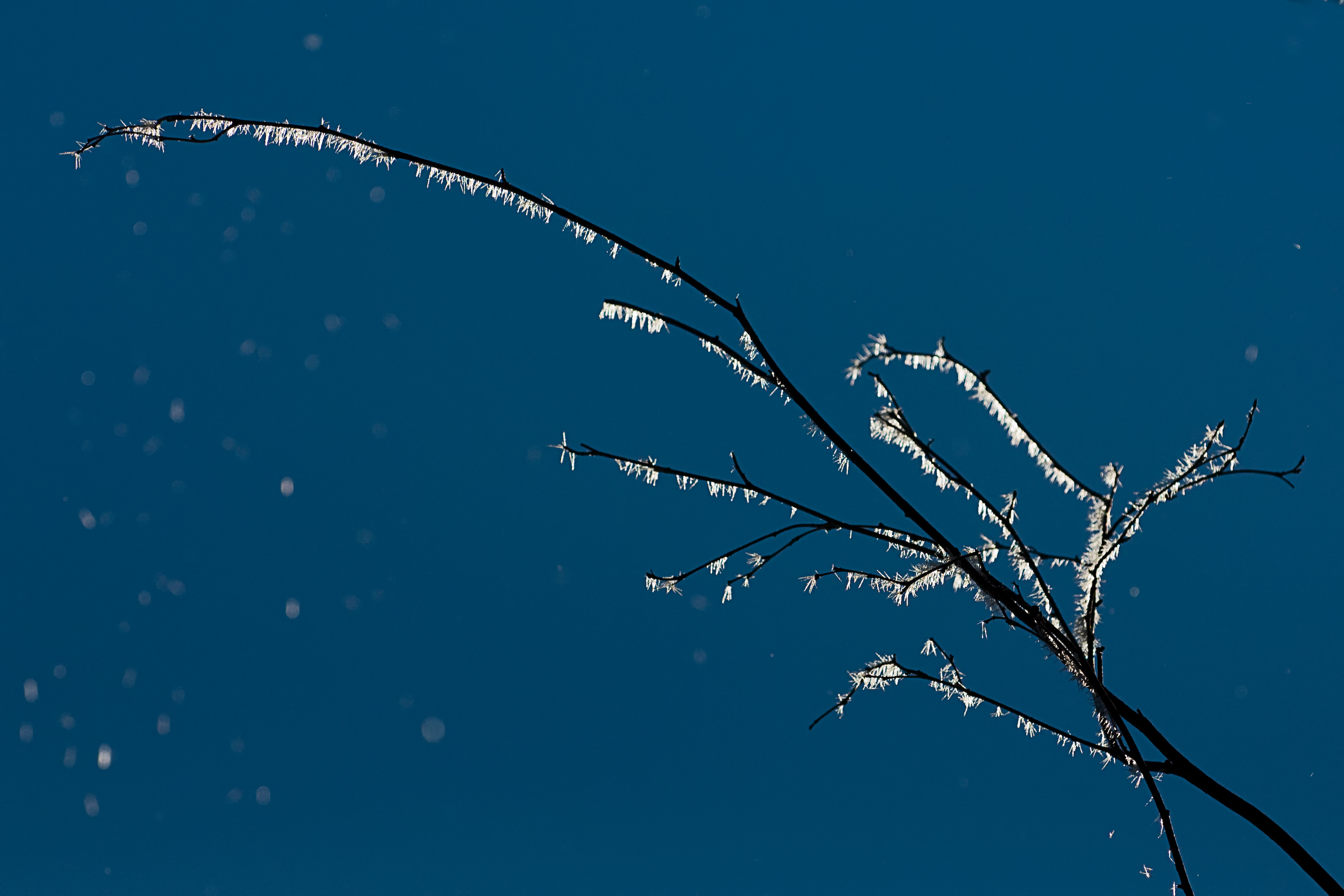
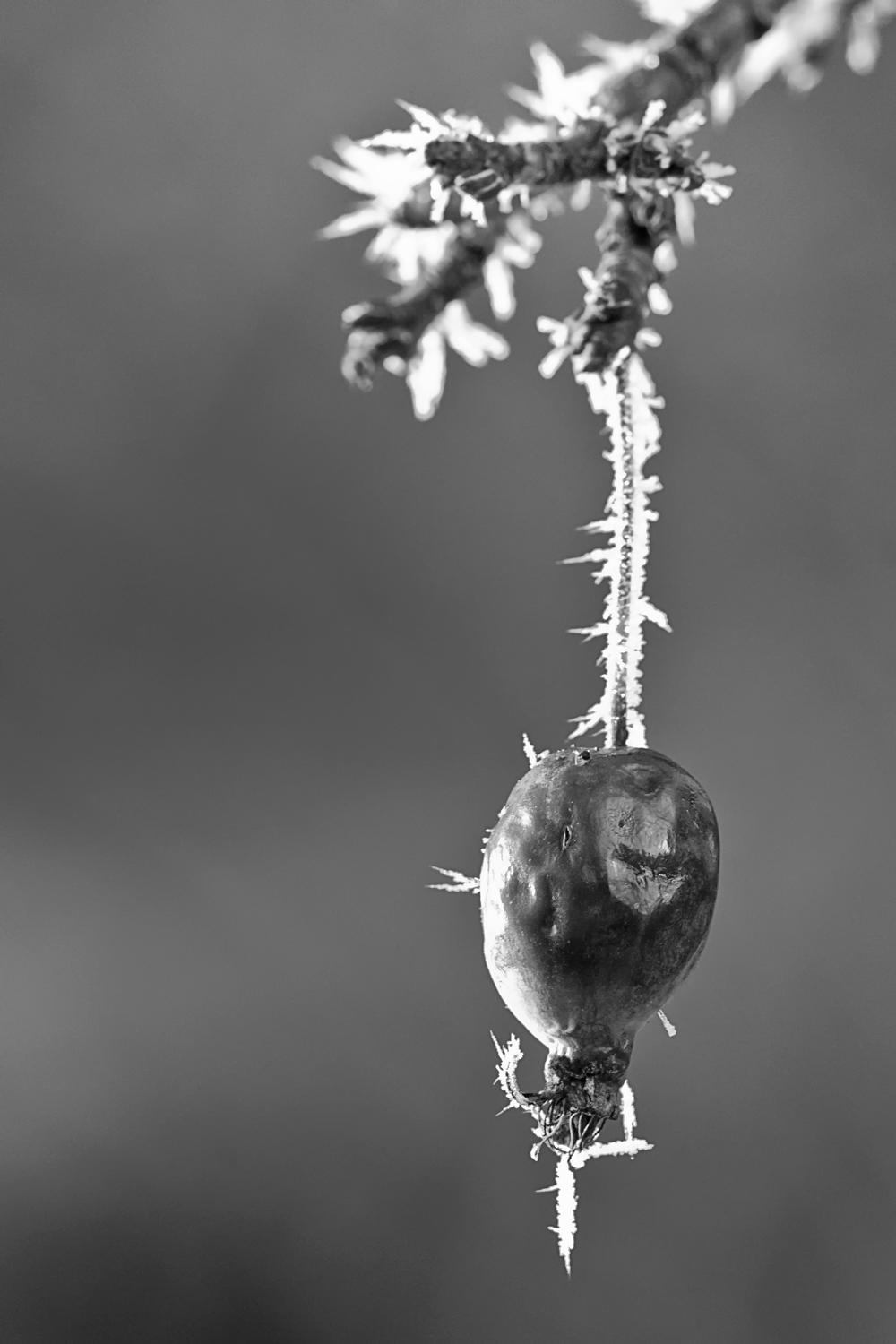
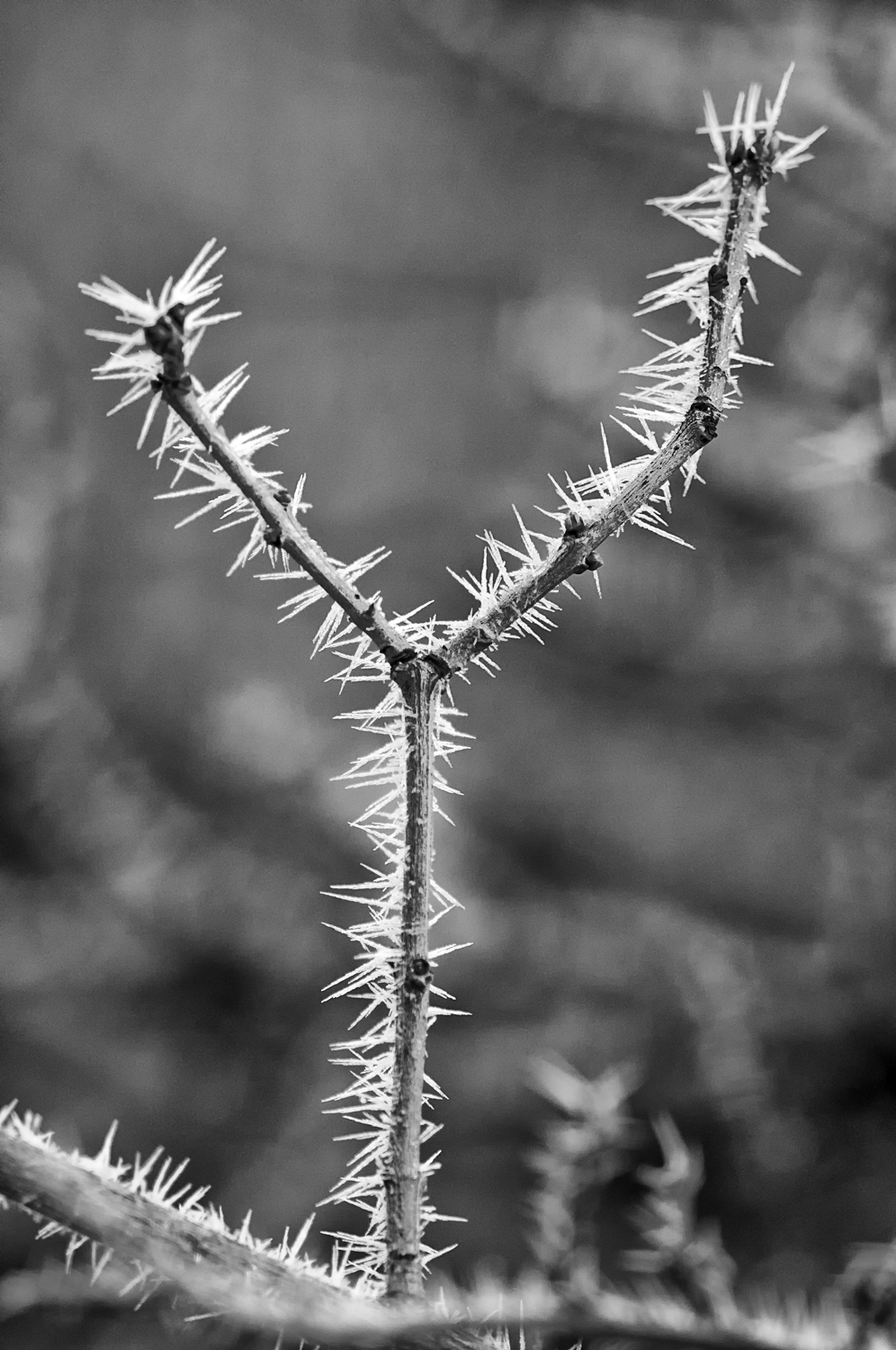
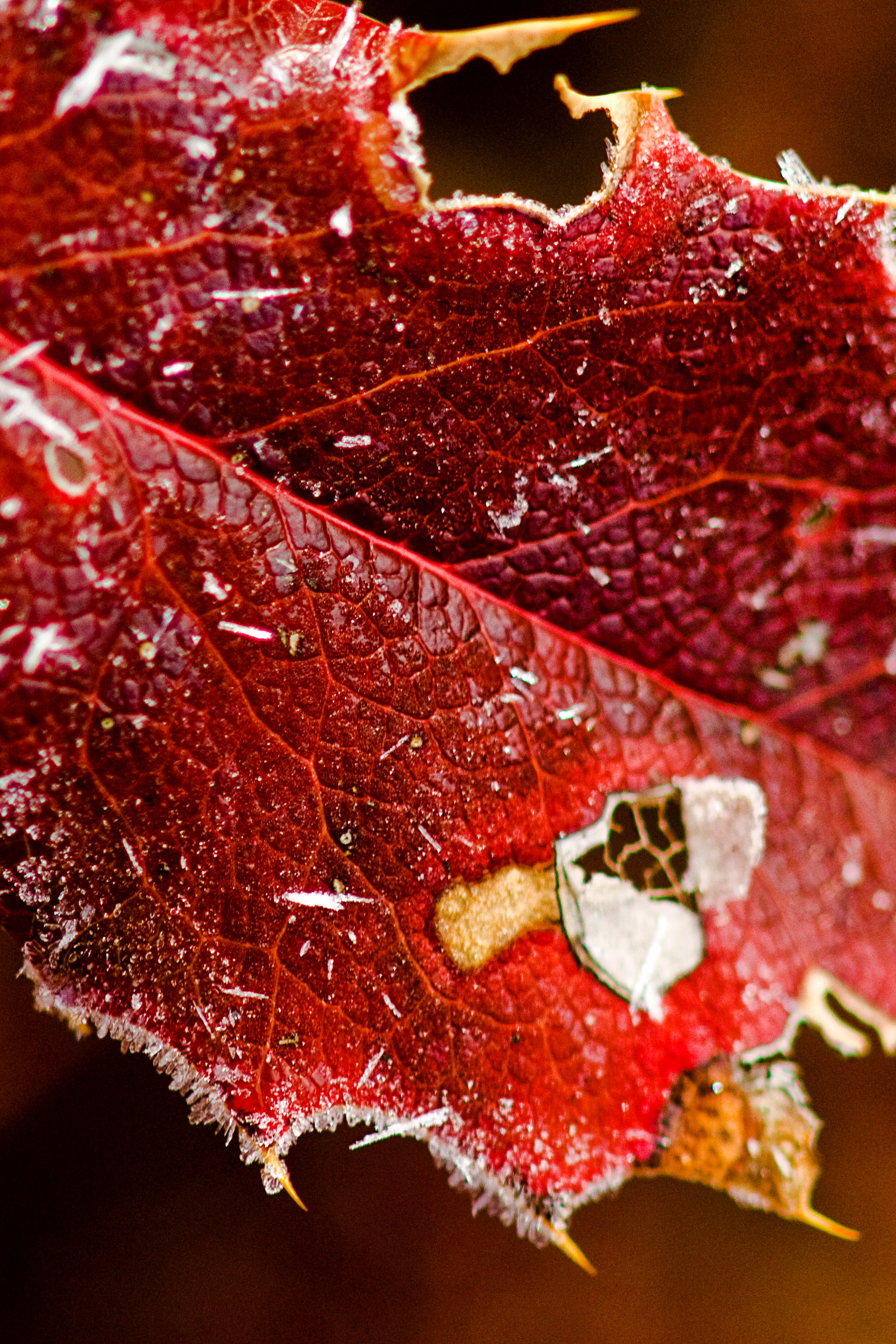
 Daybreak was foggy within a white, crystallized wonderland of hoarfrost-decorated trees and vegetation.  That scene is what I have been waking up to every day this past week. The damp cold has been bothersome, but what photographer could pass up such a creative opportunity to wander through frosty woods and fields trying out different lenses and locations. I like the search and the discovery.

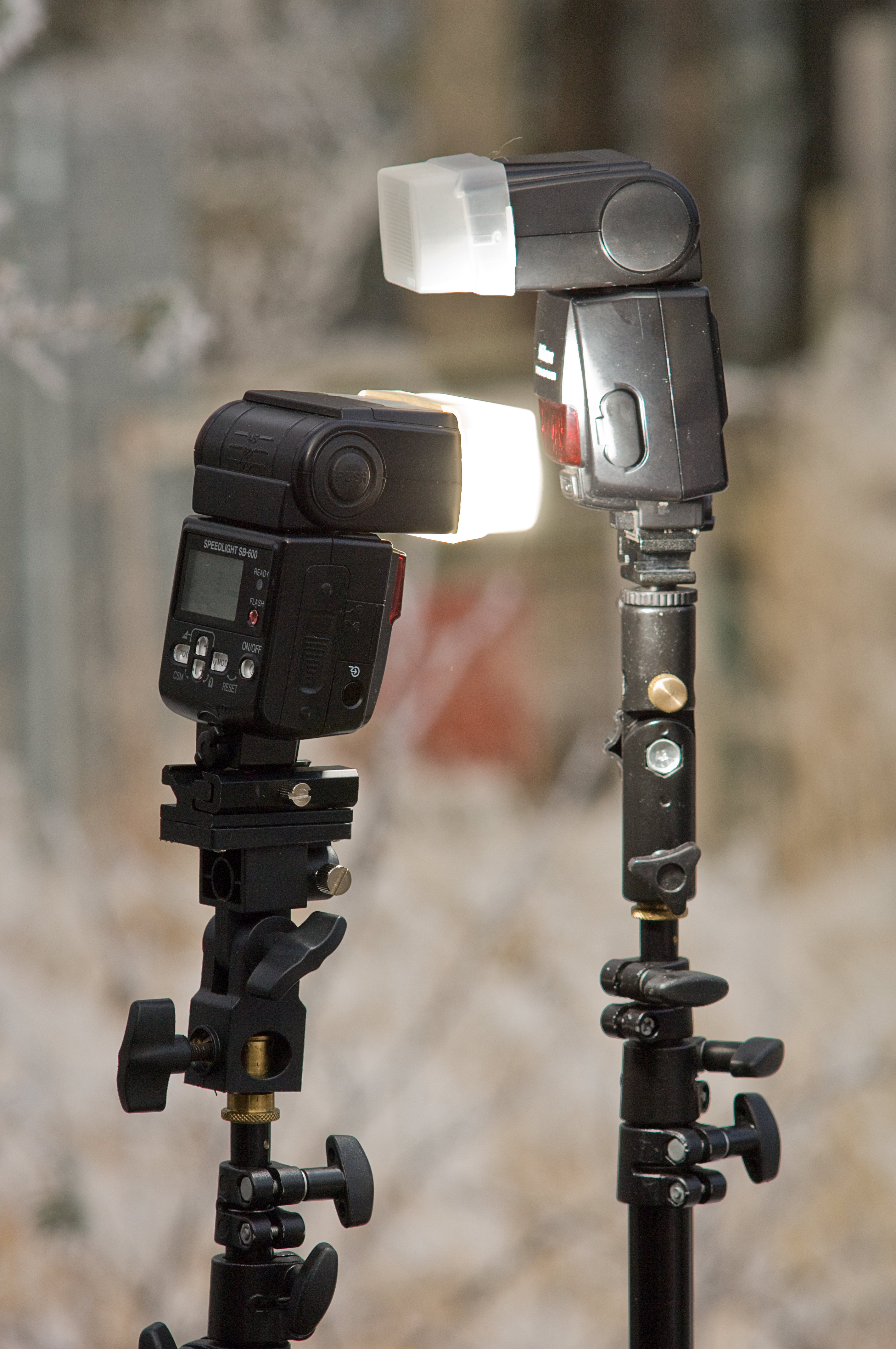
This morning I talked my wife, Linda, into venturing out into the cold to photograph the hoarfrost in her garden. For that we each mounted macro lenses on our cameras and I included a flash mounted on a light stand for both of us. There was a time when we would have been burdened with wires running from the flash to camera, but those days have passed now that wireless flash technology has become the standard.

The morning was overcast and foggy, so the addition of flash was a must in the dim light.  I have a ring flash that I like to use when I photograph plants, but the white crystalline hoarfrost would have been easily over exposed with the direct light from a flash mounted around my lens and I wanted to preserve as much of the delicate details as possible. All we had to do was position our flashes for the best light angle.

Our cameras allowed us to sync the shutterspeed above 1/250th of a second. Many modern cameras have a feature in their menus called “Hi-Sync” or something close to it and I recommend readers check their manuals on how to select and use a high flash synchronizing speed so they won’t be limited to 1/250th of a second shutterspeed.

Handholding at 1/500th of a second (or greater) reduces camera shake and with the addition of flash it is easy to stop any plant movement. Whenever I use a flash outside I like to reduce the ambient light by a stop or two so that if I didn’t use a flash the scene and subject would have been under exposed, consequently, I add the flash to illuminate the main subject, and those elements that the flash doesn’t affect are under exposed, and that flash is off camera sending light from the side or the rear, not limiting us to the on camera flash directly in front of the subject, or forcing us to position ourselves dependent on the sun.

We had a lazy morning and got out late, so although we both prefer to use tripods for close-up photography, we needed to working fast as the temperature rose. We could hear and see the crystals falling with the morning breeze. I suppose if we had a warm outside couch and been bundled up, just sitting on the porch would have been nice. Nevertheless, we got right into photographing our frosty subjects only stopping when we had to reposition our flash.

I approach and light a plant the same way I would a person. I begin by checking the exposure with my camera meter. I always use manual mode so in today’s foggy low light and because I was using hi-sync I could keep my shutterspeed at 1/650th and sometimes higher. Next I chose the best angle of view for my subject, and as always pay attention to what’s in the background. Lastly, I move the light around making exposures until I am satisfied with the highlights and shadows on my subject just as I would if I were doing portraiture of an individual.

I like foggy, frosty mornings and the last few days have been a great time to wander around with my camera. Soon everything is going to change. The frosty vegetation will be replaced with green buds and the cold, foggy, overcast days will be filled with sunny days and blue sky. Yes, I am looking forward to that, but for now winter is a creative challenge and I wouldn’t change it.

www.enmanscamera.com

And thanks to 96arley (www.shootabout.com) for the nomination.