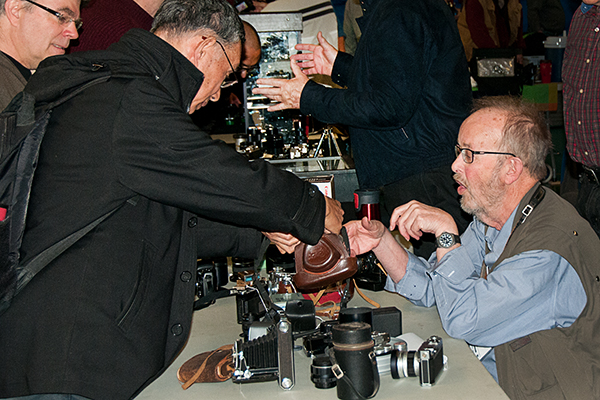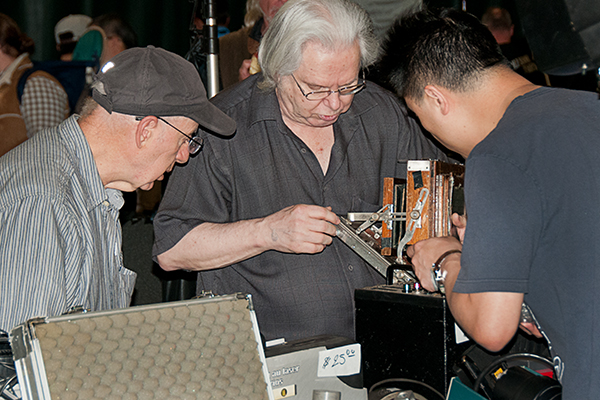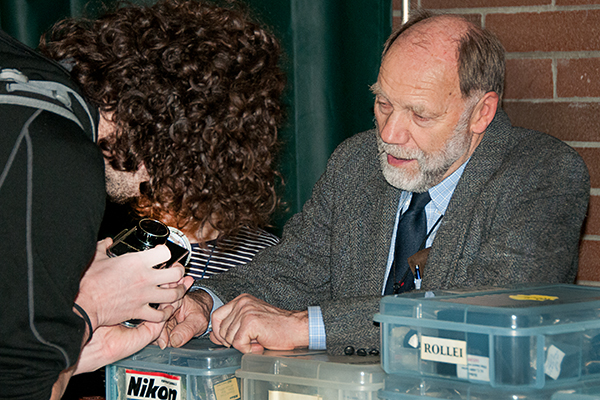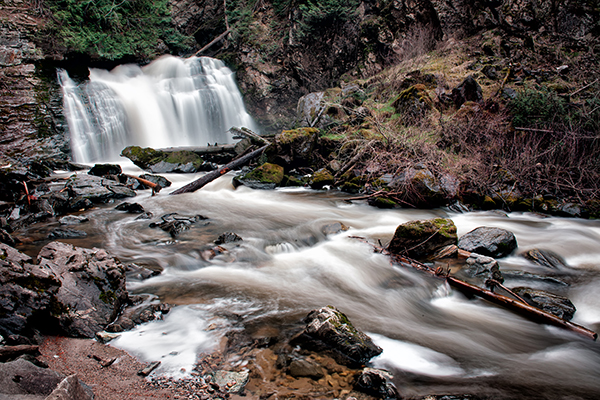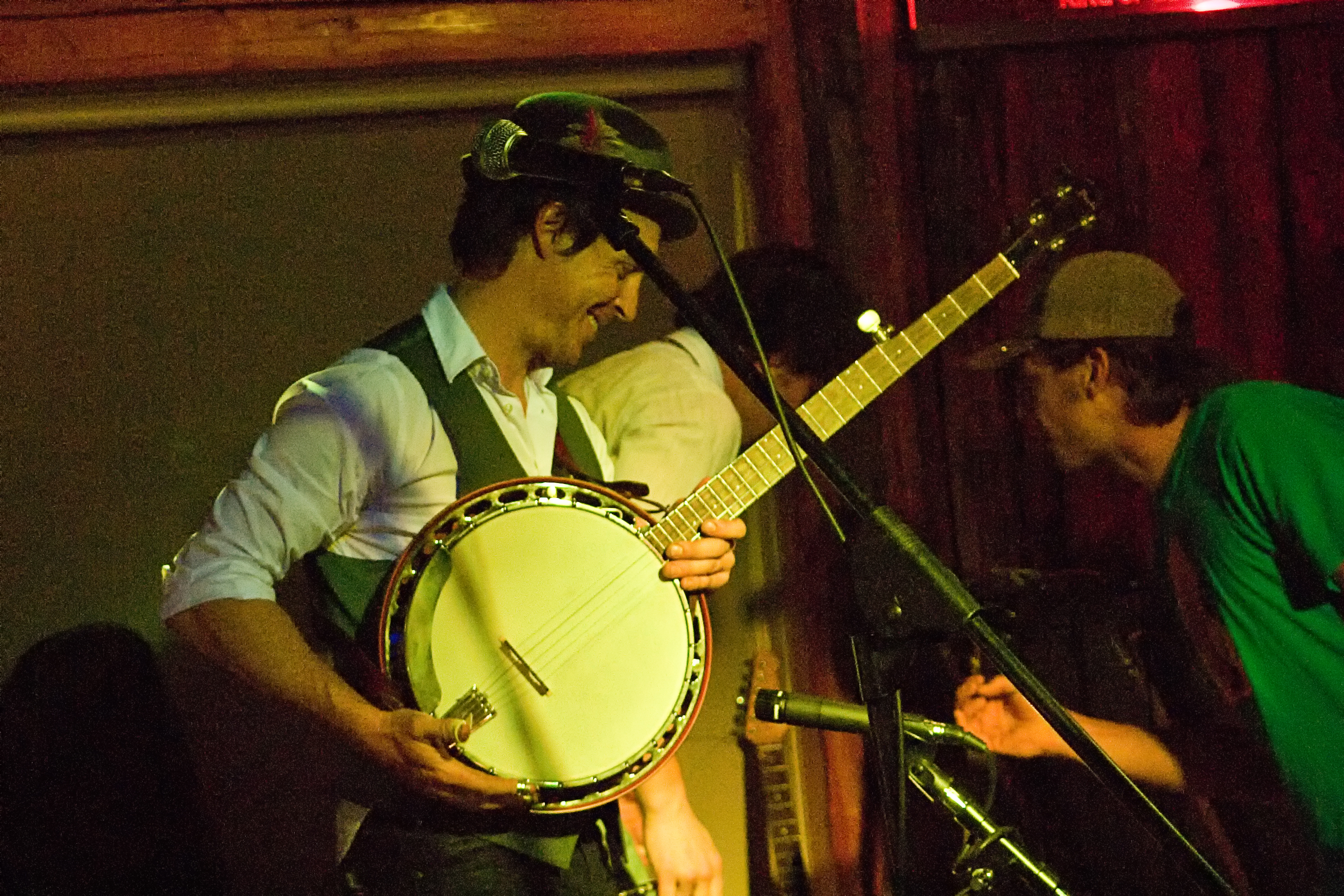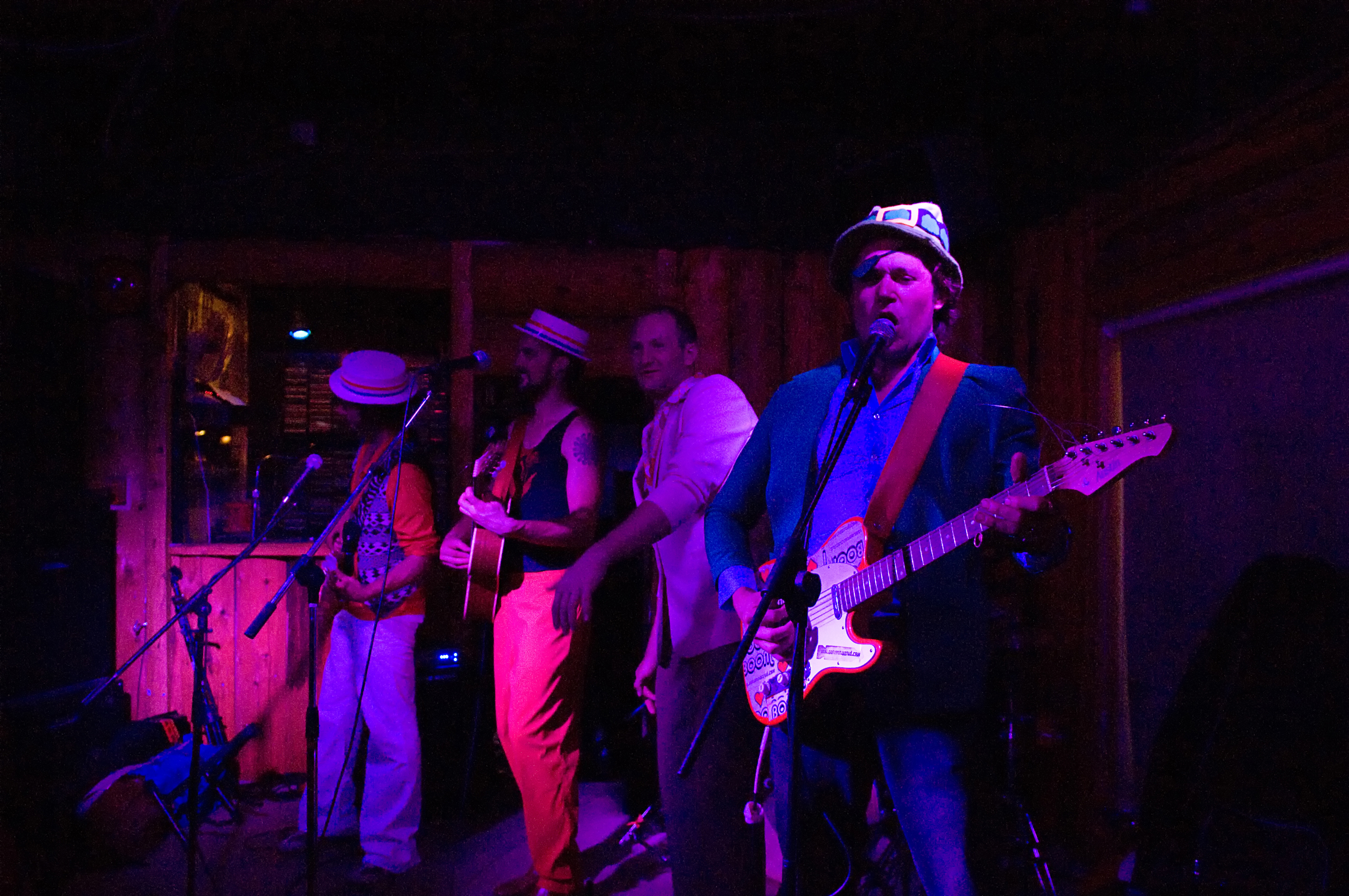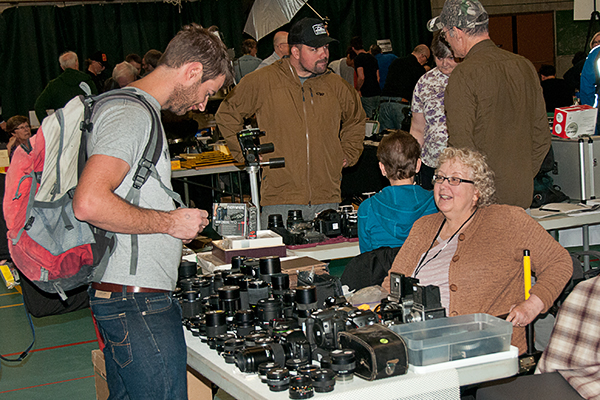
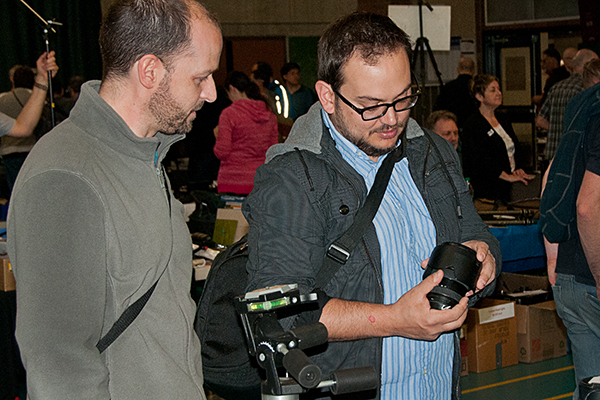
The Vancouver Camera Show and Swap meet 2015

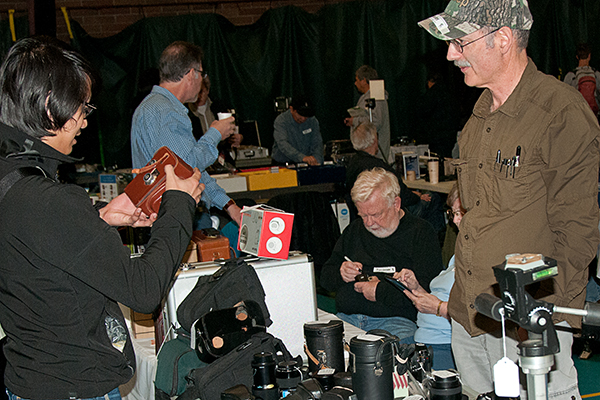
Linda at the SwapMeet

Linda at our table

Camera Swap find

A good find at the Swap meet

Camera Swap Meet

Check out this Leica

Vancouver Swap meet 2

Lets assemble this 4X5 camera 

Ziggy Rhode

The Swap Meet organizer, Ziggy Rhode selling a Hasselblad
Vancouver Swap Meet 1

Wow, a nice twin lens at the Vancouver swap.


The Western Canada Photographic Historic Association hosts Vancouver, British Columbia’s, original camera show and swap meet each year. This long-running show has now reached its 39th year, and makes the claim of being the largest in Canada with I believe approximately 120 tables, and I have no doubt well over 1,000 people walked through the doors this year.

I can’t remember exactly when we (my wife and I) had our first table there, maybe some time late 1990s. Since then each year we join an always-interesting diversity of photographers in a large, photographic equipment packed hall in Burnaby, BC, who are eager to exchange information and ideas, and, of course, are looking for great deals on all kinds of camera equipment.

Each year we make the three and a half hour drive from Kamloops the day before and lodge overnight and eagerly join other vendors the next day at 7:30AM to setup. The early morning scene is so much fun as we interact with others busily arranging equipment on tables before the show even begins. When I arrived I was happy to see people I have known for years. Better put, I was happy to see people I have known for only one day a year for about 20 years.

For me it is always a rush to organize my table quickly so I am ready for the swap meet’s early bird shoppers who pay a premium to begin shopping at 9am. That group of shoppers isn’t so much into browsing as they are searching for specific pieces, and they will walk quickly by a vendor’s table unless they spy that item.

At the 10am regular admission I always am glad to get a chance to sit for a moment (only a moment) after the hour of non-stop showing, demonstrating, explaining, and, of course, bargaining with savvy photographers.

Spending a day surrounded by a huge selection of cameras and other photography equipment is exhilarating, and getting a chance to talk with other photographers about their different interests is invigorating. Even after all these years I always learn something.

As I have mentioned before when I have written about this exciting event, one will find photographers of every age, from experienced elders to young people accompanied by patient parents. This congregation includes all kinds of lifestyles, interests, and photographic specialties. There are those that are dedicated to film, historic cameras, and processes of the past, walking alongside others that carry the latest and brightest in modern technology.

Other than actually pointing a camera at some inspiring subject, a gathering like the Vancouver Swap is a superb way to meet and exchange information with other photographers, and look at and check out the many kinds of photographic equipment that would not be so easily available anywhere else.

I had a great time with the photographers I met this year and the depending on who joined me at my table, the conversations always changed. My day of selling was a success, as it was for most of the dealers I talked to at the end of the day. And I even had some time to purchase another lens for myself, which is always nice.

I always look forward to any comments. Thank you, John


Chewy the Marmot and Chase Creek Falls

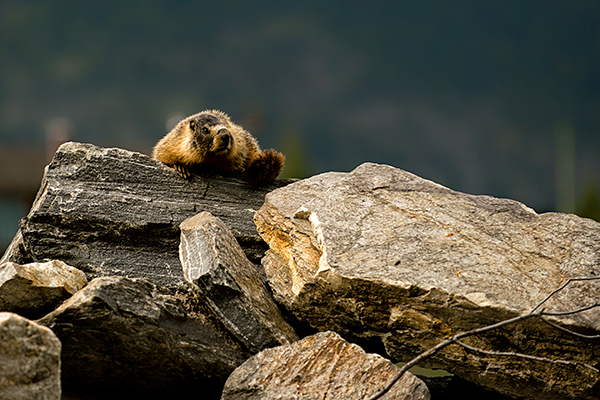
Chewy the Marmot

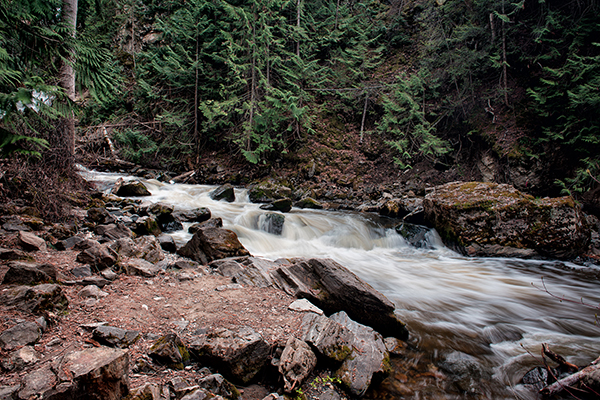
Chase creek Falls

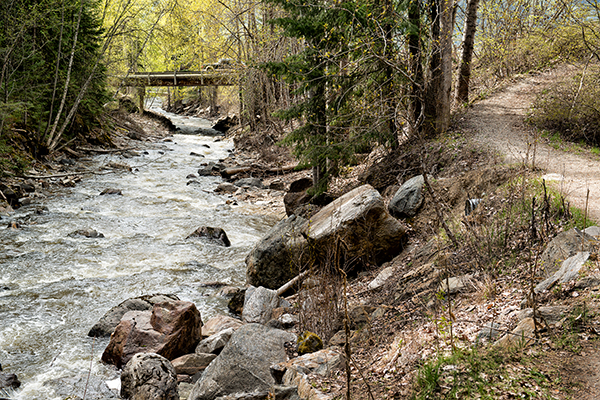
Chase Creek April 2015

Path back to town

Spring is here. The weather has slowly warmed up I can see from my porch that the snow on the mountaintops is diminishing, so I decided it was time to visit a waterfall not far from my home.

I usually avoid waterfalls at this time of year because high volumes of murky, spring water rushing over the falls isn’t that photogenic and one never knows if the river’s bank will give away while you position your tripod. However, with the low volumes of water being reported I was sure that at Chase Creek Falls the interesting stream features like rocks and trees would be visible with the reduced water flow.

When I got to Chase Falls and parked my car I noticed a small sign along the trail that said to watch for a local marmot named “Chewy”. And sure enough, as I passed a large pile of very big rocks, there was a big marmot perched on top like some amusement park guard.

Marmots are usually shy when one walks near their burrow, but this rodent didn’t seem to be bothered in the least and readily posed for me as I hopped from rock to rock making portraits of him or maybe her. I did see a couple of immature marmots scurry out of sight; so I might be right thinking Chewy might be her instead him.

When I purchased my first DSLR years ago and began learning how to use Photoshop I remember saying to a friend that what I liked best was how easily one could crop without getting the degradation that came when cropping prints made from film. The problem with 35mm film was that anything shot over 400ISO was always grainy so that shooting wide and cropping later was usually disappointing. That’s why many photographers preferred medium or large format cameras to the tiny 35mm film.

I set my tripod up and focused my 24mm lens on the falls and shot wide.  I knew that when I viewed my images on my computer I would choose a crop that fit the rule-of-thirds without loosing much detail.

Modern DSLR sensors are much better in their ability to capture grainless detail at high ISOs than 35mm film was and even cropping away 50% of the picture doesn’t reduce the quality very much.

The low water level made it easy to scramble among the large rocks along the bank and chose a comfortable location to set my tripod up. I used a couple of neutral density (ND) filters so I could reduce my shutter speed to 3, then 4, 5, and finally 6 seconds to slow the water down and I chose a small aperture for lots of depth of field.

I have always enjoyed photographing that waterfall. I think I made my first photographs of it sometime in 1976, and I cannot recall how many times I have been back there since. I am fortunate to have a place like that so close to home where I can always find something to photograph.

With that I think I should end with a quote by a great Canadian photographer, Freeman Patterson, who says, “Seeing, in the finest and broadest sense, means using your senses, your intellect, and your emotions. It means encountering your subject matter with your whole being. It means looking beyond the labels of things and discovering the remarkable world around you.”

I look forward to comments. Thank you, John
Rainy Day Photography

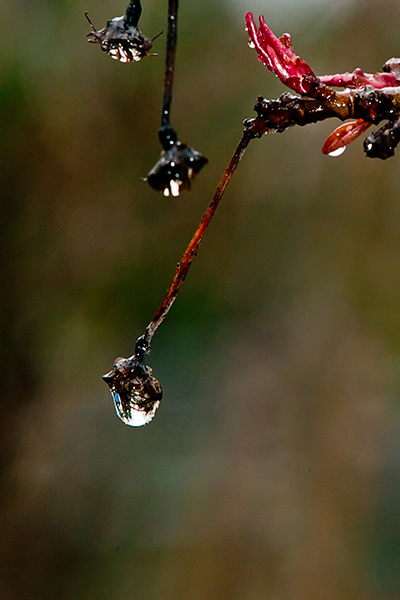
Last drop

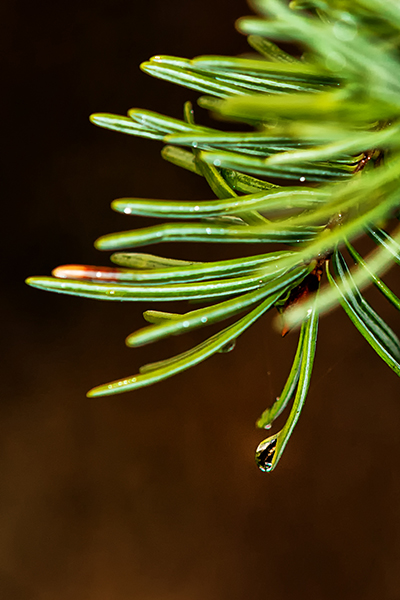
Wet fir tree

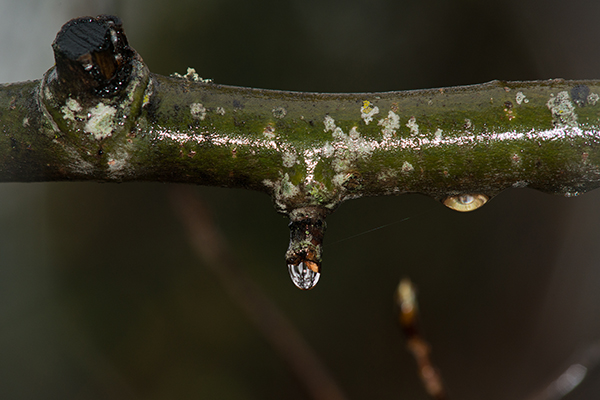
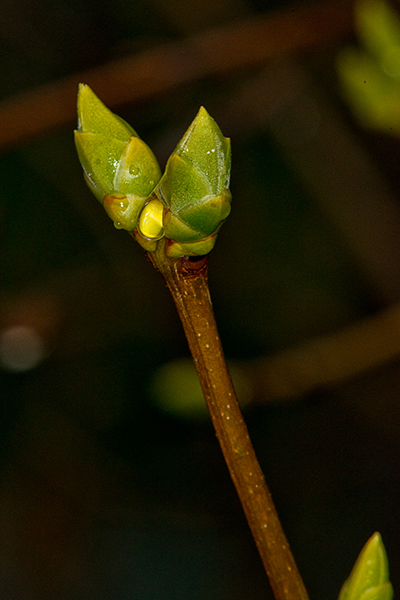
Spring bud

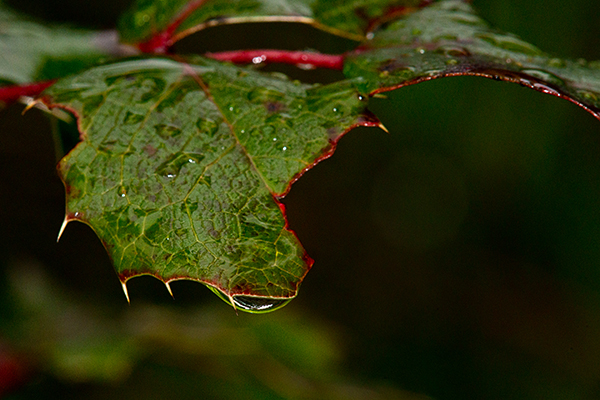
Oregon grape

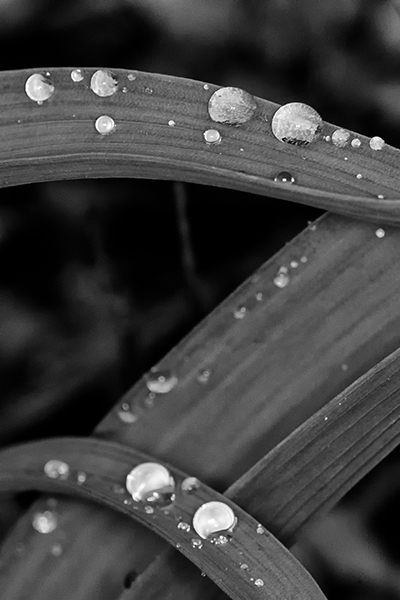
Rain drops

Reflection

Too many springs

Monday was another day of rain. It is spring here in the hills of Pritchard, earlier than usual, but it is spring and rainy days go with spring.

Rain doesn’t bother me much and had I thought about getting my camera and going for a drive up into the hills to see what I could find. However, as I walked through my wife’s garden on my way to the car I noticed all the drops of water hanging from branches and those leaves that made it through winter. The wet and foggy hills would have been interesting, but all those droplets were just waiting to be photographed.

How does one prepare to do photography in the rain? Put on a hat with a brim if, like me, you wear glasses. I also like rubber boots. Bring an old tea towel in your pocket to wipe the rain off your camera, and you are ready. Oh, and remember to keep the camera lens pointed down.

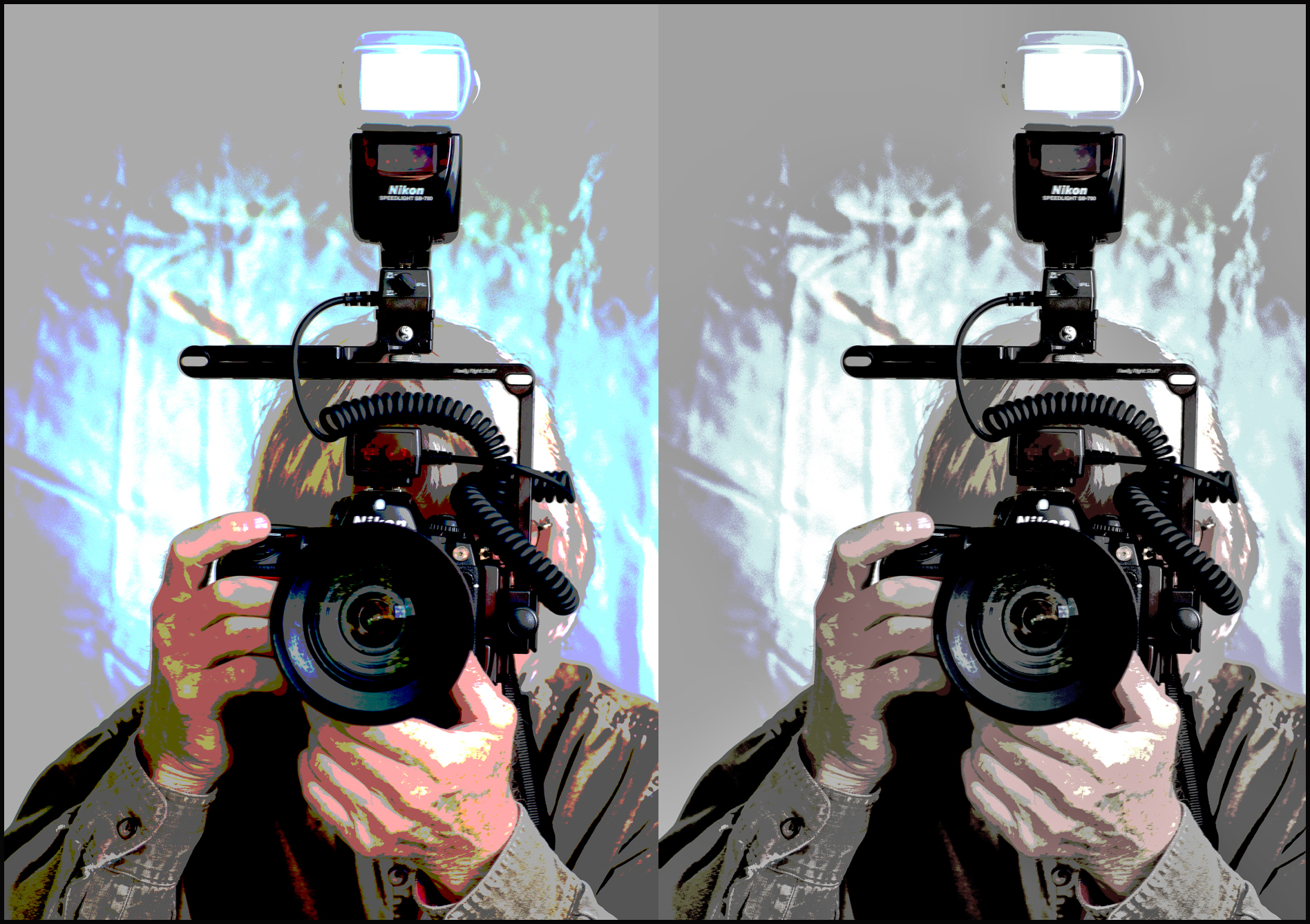
When the garden is dry I would usually put a couple of flashes on light stands, and add umbrellas so I can control the direction and quality of light. But when it is raining I prefer using my ring flash.

A ring flash fits tightly around the front of my 200mm macro lens and is perfect for building reflections on the droplets of water that were clinging to branches and sparse foliage that I wandered around photographing.

I expect many photographers prefer waiting out the rain and the unappetizing low, flat light on rainy days. I can understand that. Rain is such a hassle, and getting wet is uncomfortable. Nevertheless, that flat light, slight breeze, and wet conditions forced me to approach my subjects differently and I like that challenge.

In the low light of a rainy day we don’t think about light in the same way as we do on a sunny day. Everything is usually about colour, and how to deal with the contrast, especially on a bright spring day.

When the light is low one needs to see tonality and shape, and raindrops are a challenging element to add. In this instance there was also a slight, intermittent breeze.

I chose a setting that without a flash everything would be underexposed. That means I would only see my subjects when they were properly exposed and a flash is the best way to do that. Using my camera’s manual mode I selected 1/250th of a second and I kept my aperture at f/11 so I would have as much depth of field as possible when and if a branch shook back and forth in the breeze. I also switched my flash to a manual mode. The flash power would always be the same putting out the same amount of light. I then could control exactly how much light I wanted for each location.

I could have increased my ISO and shutterspeed if I had decided to only use natural light, but then everything would have been flat and it would have been hard to get a sparkle in the raindrops.

I know it can be disappointing to see those gray clouds on your day off when you had made plans to be out shooting. However, keep a positive attitude, remember you don’t have to go far, and with a bit of creative thinking and preparation you’ll be out having fun making photos, even in wet weather.

I always look forward to everyone’s comments. Thanks, John
About Black and White Photographs

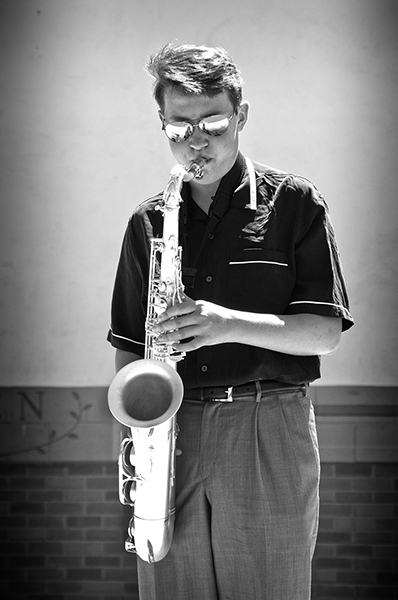
Sax player

Cups and a mirror

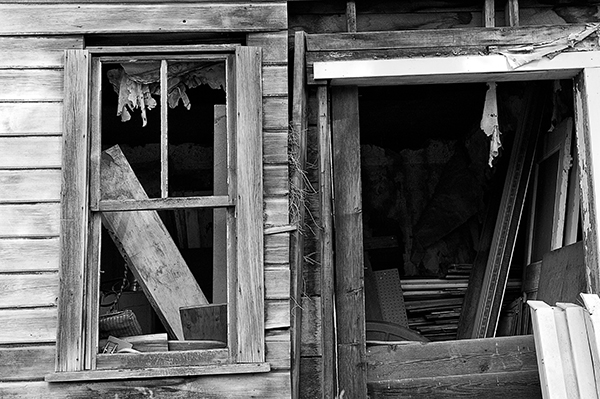
Windows


Bronc rider


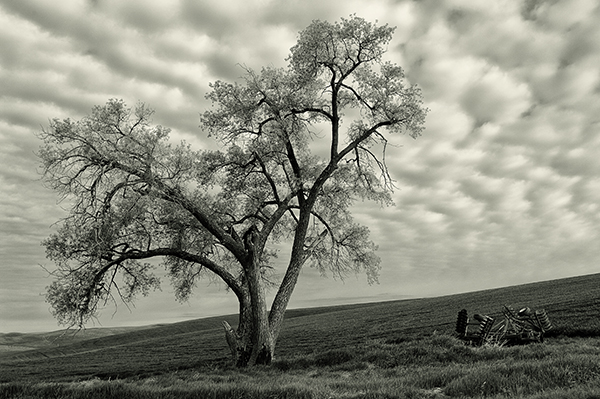
Tree

Sentinal after the fall

One of the fun things I like about photography is the endless conversations I get to have with both long time and beginning photographers, as they explore and re-explore this exciting medium. Last week I talked to photographers that wondered if reverting back to film would help them become more creative. And in the past few days more than one person has stopped by wanting to talk about converting their images to black and white.

When I started out with photography I spent most of my time shooting with B&W. I studied Ansel Adams’ books on his zone system, and Richard Zakia’s writings on tone control, and I read or looked at everything I could find to understand black and white photography and printmaking.

I began to understand exposure as of shades of grey, and got used to thinking about the subjects I photographed in tonal values instead of only bright colours. I remember a trick that one of my photography instructor’s suggested for those students that had trouble “seeing” contrast. He said we should “squint down to f/16 when we looked a subject”. I expect other students on campus wondered about the camera-toting students squinting up at the college’s clock tower after class.

I learned to previsualize, and as I selected my subject I would think about how I would process the film and make the final print. I might adjust the exposure rating and developing, as with the Zone system, and select different papers and alternate chemicals to change contrast or tonal values in the final print. Nowadays I do the same, but think about what I will need to do to enhance my image file with Photoshop.

Modern cameras capture images in colour, but that doesn’t mean we can’t previsualize the outcome; and converting a RAW colour file is really easy with programs like Photoshop, and my favourite, Silver EFex Pro. Converting that image to B&W stretches our creativity and forces us to visualize our world in different terms.

A black and white image is a matter for the eye of the beholder, the intuition, and finally the intellect. Of course colour is all that, but much of the time it seems photographers, overwhelmed by colour, just push the shutter seeing nothing deeper in a scene than the colours. A black and white photograph depends on its ability to communicate; it doesn’t need to rely on eye-catching colours for its visual presentation.

Black and white images don’t attract with a play of colours. To me they are subtle and make viewers think about the picture. The B&W image demands close attention to composition, lighting, perspective, and the context in which the image is shot

A 1950s photographer named Paul Outerbridge, once said, “In black and white you suggest. In color you state.”   And I remember another photographer saying that he believed shooting in B&W refined one’s way of seeing.

I am of the belief that those photographers that are good at black and white photography learn to exploit the differences in tonal elements in a scene and present viewers with successful B&W portrayals that make excellent use of shapes, textures, light and shadow, and the loss of those original colours becomes irrelevant.

For those that haven’t tried B&W image making, converting an image is really easy with programs like Photoshop and Silver Efex. Readers will find a new way of displaying work. Black and white will have readers visualizing the world in new and creative ways and who knows, like me I expect they will enjoy black and white photography.


I look forward to comments. Thanks, John
My website is at www.enmanscamera.com

Studio Portraiture Workshop

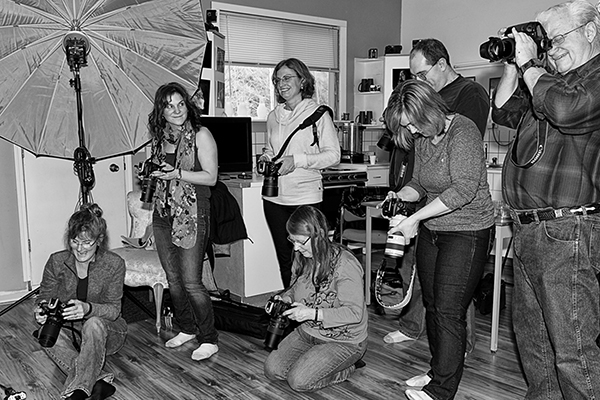
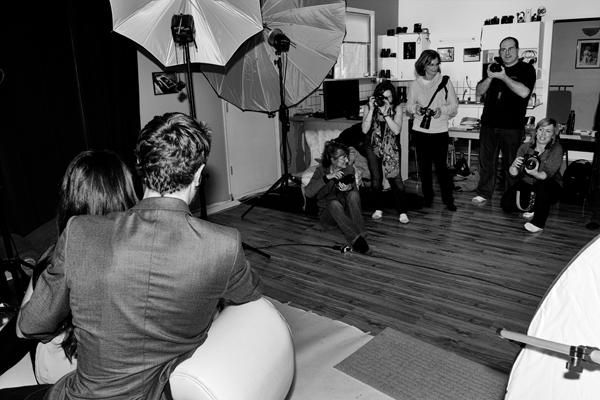
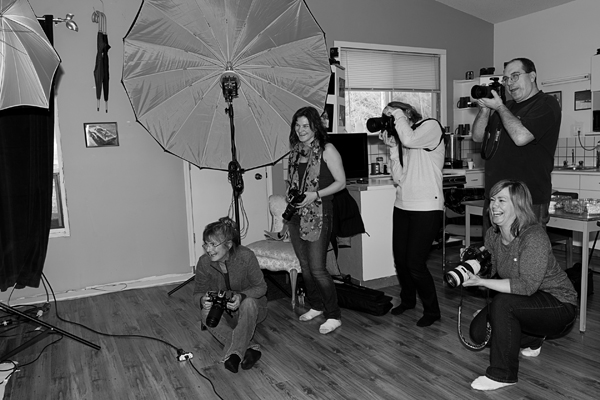
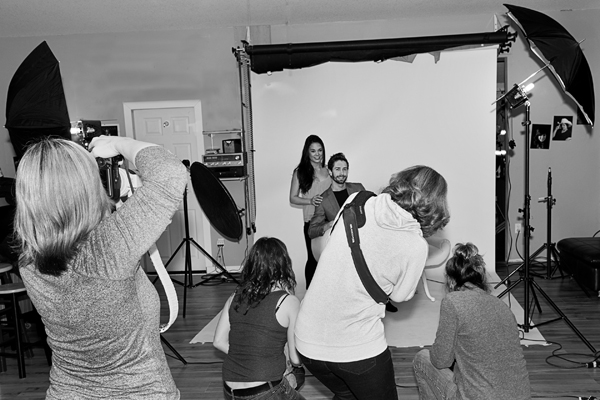
Class Portrait 1  Class 2

This past Sunday I lead the first day of a two-day workshop discussing posing and lighting. I hadn’t planned on undertaking any workshops this early in the year, but I had been getting requests from several excited photographers who are out there getting ready for spring and summer portrait sessions.

I finally made the decision to proceed when my friend Dave Monsees, owner of the Versatile Photography Studio near Kamloops, mentioned that photographers renting his studio told him they needed help in lighting couples. They lamented that most tutorials available were only about photographing one person.

I am sure if they browsed the internet they would have found what they were looking for, but working with live models is a lot more fun than reading articles and looking at pictures, so I hired two up-and-coming local models that fit that request perfectly.

In previous posts I have stated how I enjoy the enlivened interaction that happens when students of photography participate in active learning. So when I started getting requests that I offer  another session I crossed my fingers and hoped for an early spring, booked that large local studio, and hired two models.

During a workshop my job is to present information on the subject, and keep things going. I don’t like to be a demonstrator on stage and I rarely pick up a camera during the workshops I lead, unless it is to take a snapshot or two of photographers in action. And besides, when I finally let the workshop participants apply what we had discussed, there wasn’t room for me anyway.

The workshop dealt with modifying and placing light. We employed one, then two, and then three lights; and modified the light first with umbrellas, then changed to a softbox and reflector to create shadow, and, of course, that classic and compelling “Rembrandt lighting” effect.

This was an advanced workshop and I limited participation to seven photographers. As with all my workshops, my main goal is to help participants gain an understanding of how to use light. I want them to consider the “quality” of light instead of the “quantity” of light. I lecture to them that they should use light to “flatter” their subjects as opposed to only “illuminating” them.

I think that studying the mechanics of lighting includes two additional aspects, which are (1) experience, and (2) the willingness to step beyond lazily pointing a camera in a light filled room or out in the sunshine. Posing a model, or in our case, two models, seems to me to be more about engaging with the subject and being comfortable with telling someone how you want them to look. I once heard a photographer say that he never posed people because he thought is was rude to tell adults what to do. I can’t comment on that fellow’s work, maybe he was really lucky, but I expect there were lots of missed shots. I suppose he would disagree, or just plain ignore the words of award winning Dallas, Texas photographer, Caroline Mueller when she says, “What I look for in pictures (that) I take: eyes, hands, head tilt, body language, background, and use of space.”

I believe those photographers that are successful at portrait photography don’t hide behind their camera, but they start with a plan and are good at engaging, explaining, and demonstrating what their vision for the session is.

Now I am really looking forward to next Sunday. The few images I have seen so far are great and I am certain spending another day (this time with speedlights out-of-doors in the failing afternoon light) helping and watching each photographer’s progress is going to be a lot of fun.

class 3  class 4


Thanks in advance for your comments, John
My website is at www.enmanscamera.com

A Photographer’s Walk on Snowshoes

Snoeshoeing-2

Wind-swept-field-2


forgotten-barn-2

Tracks-2-


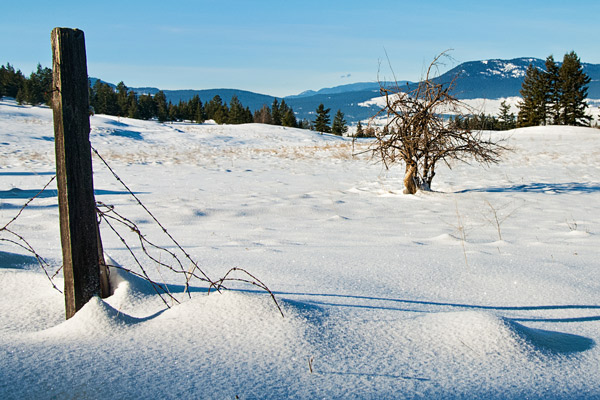
Almost a year ago to the day I wrote that I looked forward to enough snow-pack on the hills to snowshoe in, and as then, after a morning of shoveling a deep path to my chicken coops, clearing the driveway, and another path to the front porch, I was again taking my first winter hike up to the high meadow above my home.

Last year my January walk up into the meadow’s deep snow was on a sunless, stormy day. And I recall setting a high ISO so I could get a shutterspeed that would let me handhold my camera, and then returning home in a snowstorm.

This time I mounted a light-weight, 18-105mm lens on my camera, stuck an old tea towel in my pocket in case I got my camera wet from the snow, and headed out in the balmy minus 3C day under a bright, almost-cloudless, blue sky. And instead of struggling with low, flat light, my ISO was set at 400; and I added a polarizing filter to darken the skies, increase the contrast in the scene, and suppress glare from the surface of the bright white snow.

I trekked up the hill, and as I had so many times before photographed everything. When I stroll up into that long meadow I rarely see animals, however, they are surely there hiding, and I did hear a snort from something as it moved through the trees, and when I began to cross the meadow a crow cried a warning to hidden watchers, then everything quieted, and the only sound was from my snowshoes and my camera shutter as I photographed the Thompson River valley far below and the tracks I made through the meadow.

My last article was entitled, “What Makes Photographers Happy?” Photographers wrote me noting that, “there is nothing like a new lens” or “fun day with my clients”, and I can’t agree more. I must include the words of three bloggers that sent their comments to me: Northern Desert photography, Nature Photography by Martin Ryer and Jane Lurie Photography.

The first from blogger Northern Desert says that happiness is “The process of being out in nature searching for the shot, be it landscape or wildlife. I love the post processing, editing job. So fun to see what you can do with software. Love talking with and interacting with other photographers about photography.”

I also had to pause and think a moment about the words of blogger Martin Ryer who wrote about when he has“…results that exceed or even completely differ from any preconceptions I may have had. It’s when this happens that I feel myself entranced by all of the possibilities that photography offers.”

Blogger Jane Lurie’s comment is delightful, “…I’m very happy when my final result is actually what I conceived in my head when I saw the shot. Capturing that small moment in time is a beautiful thing.”

What great thoughts on photographic happiness and I agree with everyone.  As for me, I will include the following from philosopher and theologian, Paul Tillich, who wrote, ” Language…has created the word ‘loneliness’ to express the pain of being alone. And it has created the word ‘solitude ‘ to express the glory of being alone.”   To those words I will add that my quiet, solitary walk and photo excursion on snowshoes made me happy.

As always, I look forward to your comments. Thanks, John

My website is at www.enmanscamera.com

Photographer’s 2015 New Years Resolutions


Auld-lang-sine


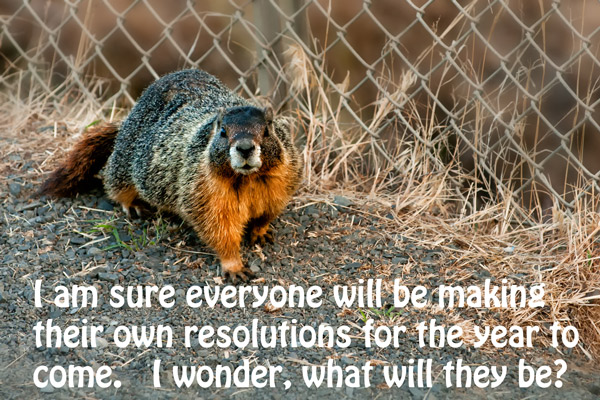
Marmot-b


It is time for me to write about New Year’s resolutions. The prospect of new opportunities is always exciting and jotting down a personal list of goals (resolutions) at the beginning of each year is a good idea if one wants personal growth.

This past month I have been asking people that come into my shop what their resolutions for the New Year would be. Here are a few from the many I heard that, in my opinion, are good solid resolutions.

Use a tripod more.

Turn off Auto mode.

Buy a new camera or lens.

Try shooting RAW.

Learn more about lighting.

Take more photos.

Learn about Composition and the Rule of Thirds

Learn to use Photoshop or Lightroom.

However, as good as those are I am adding seven that are a bit more inspirational (is philosophical a better word?) New Year Resolutions that I have put together (seven is a lucky number after all) this past year from all the long, coffee fueled discussions on ways to make improvements in the future with this exciting medium.

  1. Pay more attention to creative ideas. Without creativity a photographer doesn’t have a chance at moving forward. “This could be the year to begin evolving creatively”.
  1. There is too much focus on what is the best camera. When we spend too much time worrying and making everything about the camera we forget about the story. How about this year being more concerned with making images that tell a story”.
  1. Take risks photographically and move away from always trying to please. Make this the year to push-the-envelope beyond the comfort zone without being concerned with other’s opinions. Maybe this will be the year to put “me” in the photograph.
  1. Learn a New Technique. I think it’s as simple as experimenting, and definitely taking the time to “read up on some technique and then give it a try”. Photographers should always make the effort to learn new techniques, maybe by taking a class, or at least buying some books, or CDs, written or taught by experienced, educated photographers.
  1. Choosing new subjects to “get out of the rut of shooting the same thing over and over”. While practicing portraiture or landscapes is good, photographing the same thing the same way over and over can result in a lack of inventiveness and creativity. Sure it’s nice to stay in a comfortable rut, but as with Resolution #4, “Maybe this will be the year to put “me” in the photograph”.
  1. Make every shot count and stay away from the “spray and pray” shooting style. It should be about making each image a quality photograph, not massive picture snapping sessions hoping that a few to turn out.
  1. Become more ruthless with one’s photography and what is done in post-production; conditioning oneself to throw out the crap is the only way to keep improving.

Finally, I’ll wish everyone a great 2015, and end with a quote by award winning English author, Neil Gaiman. “I hope that in this year to come, you make mistakes. Because if you are making mistakes, then you are making new things, trying new things, learning, living, pushing yourself, changing yourself, changing your world. You’re doing things you’ve never done before, and more importantly, you’re doing something.”

Do you have any to add? I will be happy to read them.

My website is at www.enmanscamera.com. Thanks, John


Thoughts on Photography in Low Light and Camera Noise.

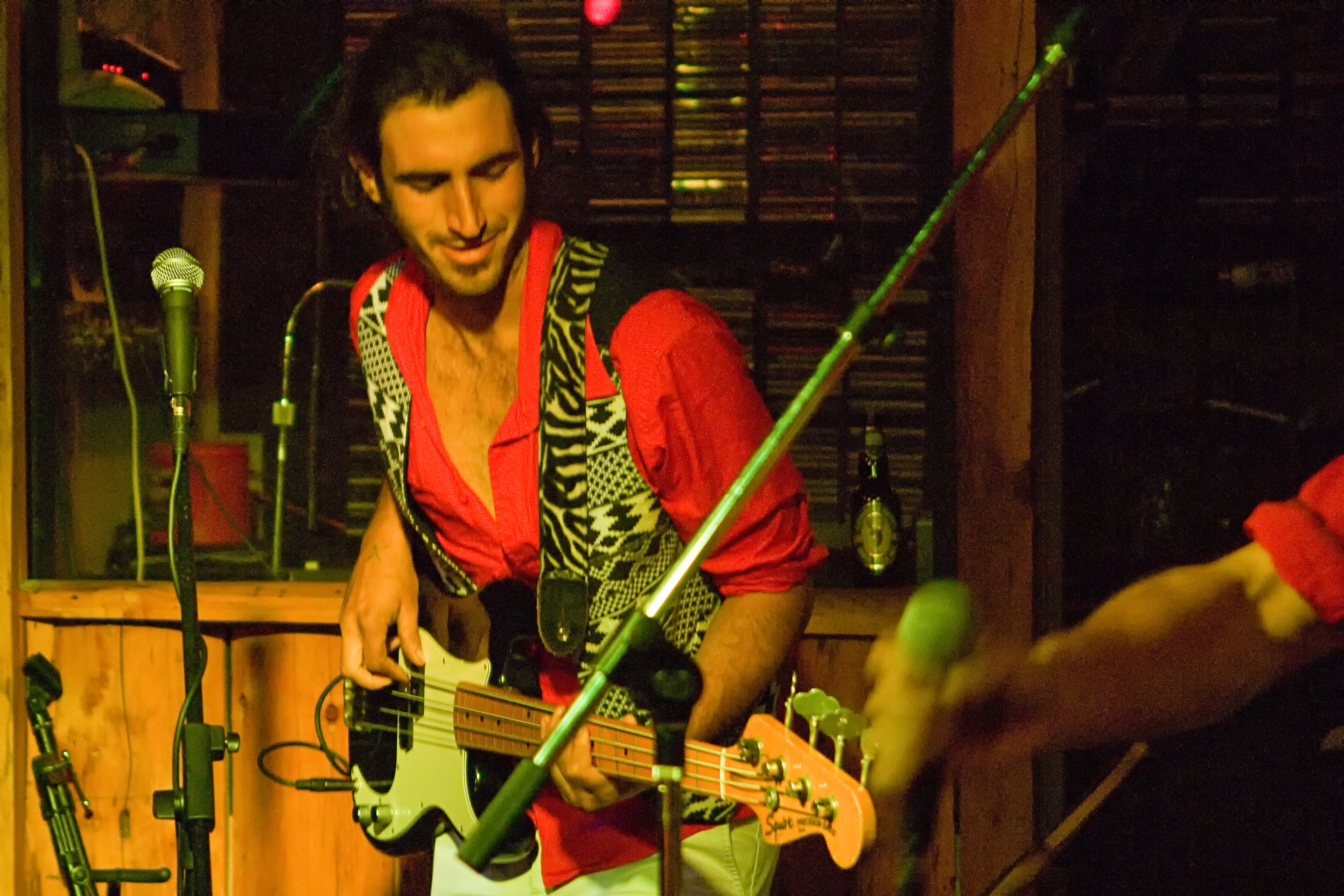
Musicians 1

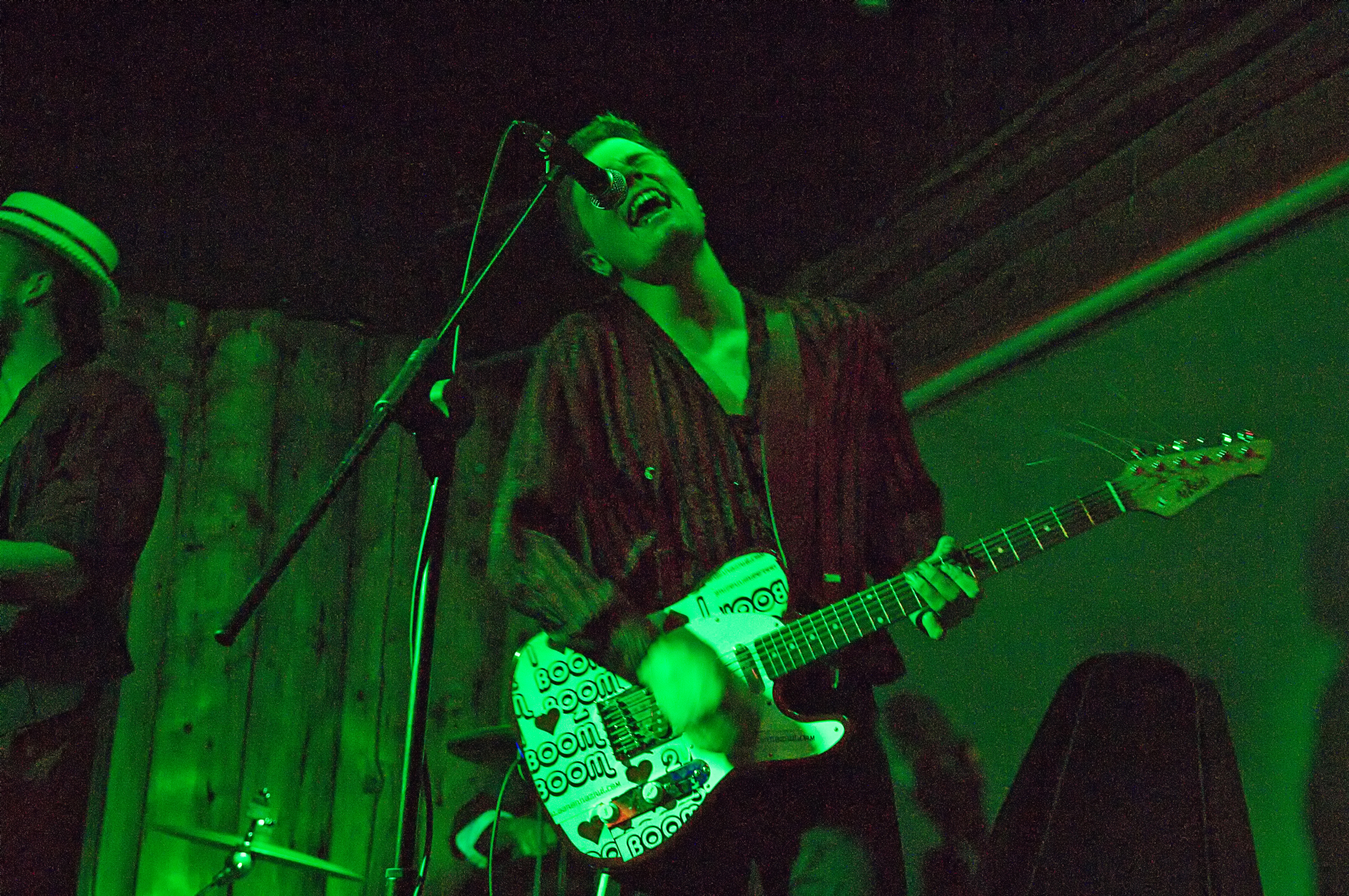
Musicians 2

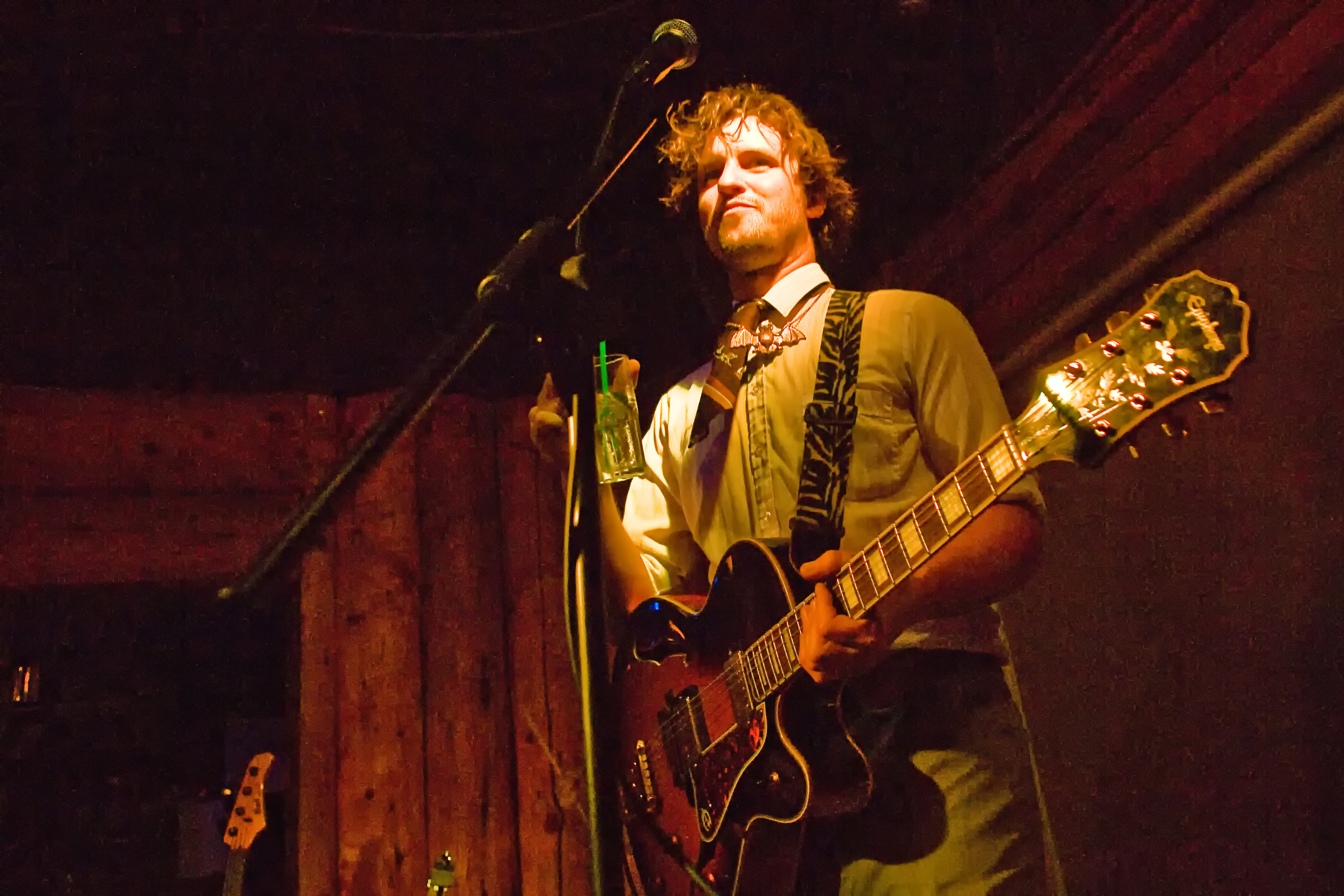
Musicians 3

Musicians 4


Musicians 6

Musicians 7

Dancers


A friend dropped by my shop to show me photographs he took of some musicians performing at a local evening event. As we looked at his images, we talked about how successful they were and how he had to push his ISO higher and higher for lighting conditions he was forced to shoot under.

He began by rating his camera first at ISO 800, then later, higher than that because of the low mood lighting. He didn’t want to use a flash because it would have disturbed the ambiance of the musicians and for the audience. The only illumination was a couple of little spotlights that had been redirected towards the musicians. In compensating for the low light, his only concern as he prepared to shoot was image noise.

Digital image noise is noticeable by the presence of coloured speckles where there shouldn’t be any. For example, instead of clear dark or coloured background, there might be different colour speckles in the background. Noise is closest to the “grain” one used to see when using high ISO films, except with film it was more about those areas that didn’t expose correctly.

Photographers have always struggled with the effect of high ISOs and I remember when 400 ISO was considered a pretty grainy film. In the days when film was king there were all sorts of special chemicals to process film to try to get fine grain and allow for pushing film to a higher ISO than 400. Photography magazines had article after article discussing ISO grain.

If photographers asked my advice ten years ago I would have suggested they use Ilford’s Delta 3200 ISO black and white film and to rate it at 1600 and process it in Ilford Perceptol, but these days some camera sensors are amazing in their ability to “see” light. Modern camera companies control the way images are processed in their cameras, and there is a lot of marketing based on beautiful images to encourage buyers to spend money on whichever new model they are promoting.

When selecting higher ISO today, the signal from light photons is amplified, and with that the background electrical noise that is present in a camera’s electrical system is also amplified.

Without enough light for a proper exposure the camera’s sensor will collect a weak signal and more background electrical noise is also collected.

This isn’t the place for making recommendations for which is the best camera for low light shooting. I’ll leave that to others. I suggest readers do some research on different manufacturers and tests on the cameras they own. There are also programs like Noise Ninja, Neat Image, Topaz DeNoise, and NIK’s Dfine that can reduce the effect of high ISO, and those that aren’t in the mood to follow the herd of photographers that purchase a new camera every year just to reduce digital noise, might try one of those programs.

For me, it comes down to the purpose of the photographs. If I was photographing a college basketball game and the images would be used in brochures or magazines, I would want the cleanest, lowest noise images I could get; but if they were going to end up as pictures in an on line album, or just stored in a computer’s hard drive for friends’ viewing, I wouldn’t be too concerned about noise. Therefore, I suggest that photographers determine the purpose in advance of any photos taken in low light.

There is a lot of information on the Internet about specific cameras and their abilities regarding sensor noise. I suggest doing some research and checking out other photographers’ comments regarding what they own, or may be thinking of upgrading to, and as I said before, do some experimenting with the camera they have.

I enjoy receiving comments. Thanks, John

My website is at www.enmanscamera.com

Photographing a Christmas Concert.

There is nothing like a well lit photograph.

There is nothing like a well lit photograph.

The Yule Log Fireplace channel is now available on TV. That must mean Christmas is coming. My wife and I also just received a call from my son to tell us the date of our granddaughters’ school Christmas concert. And with that festive event, it’s final – Christmas is on the way!

Last year my wife and I joined what seemed to be about five hundred parents, siblings, and, of course, other grandparents in a large hall. We had arrived early because my daughter-in-law said the seating would be limited and as it turned out, it was standing room only for those who arrived late.

There were many people holding their cell phones or little digicams, and I think I saw someone with a DSLR away in the back, but mostly they just sat in their chairs waiting, hopeful their cameras would make wonderful photographs of the childrens’ concert. I heard a parent near us complain she hadn’t charged her batteries.

I had a centre isle seat near the back that was perfect from which to move around. And before everything started I made several exposure tests so I would know my exposure and where to stand to get the best shots.

When the audience lights were lowered and teachers positioned themselves to coach (and coax) the children as they sang I remember looking around watching people holding out their cell phones and digicams at arm length to photograph those on stage.

Flashes on those tiny devices only have a reach of approximately 15 feet, and even if the small figures on the stage were visible in the pictures, everything in the foreground would be extremely over exposed. The person with the DSLR was at the back of the audience with a telephoto lens, but no flash, foolishly relying on her camera’s high ISO. I expect the resulting images were much the same as the digicams with inconsistent exposures.

As the concert began, and before my granddaughter appeared I stepped into the isle and made some shots and as I expected, they were not to my satisfaction. Yes, I could see the whole group with their teacher, back to me, gesturing, but the children were too far away, and although some parents may be interested in their children’s classmates, I selfishly only cared about getting good pictures of my granddaughter, so I moved up close. My technique for being in front of other people is to select my spot, kneel down out of everyone’s view until I am ready, then I stand up, take my picture, and kneel down again.

With my camera and lens pre-set, I only needed to work around several parents sitting on the floor holding their digicams at arms length above their heads, and the one grandparent kneeling and wildly waving.

The concert was fun and my granddaughter was excellent (in my opinion anyway) and I took lots of pictures of her while she was on stage, and downloaded the image files from my camera to my computer when I got home. I edited, re-edited, then edited again for a final selection that I liked, and finally was down to a couple that I really liked. My opinion is that anything but the best is just wasting space and I never want people to see anything but my best photographs.

As I left the concert I could hear people saying they wish they could have got better photographs, and of course they blamed their equipment or other people, but not themselves. Soon the season will be upon us and for photographers the decision should be easy; every photographic opportunity should be thought out and they should always take the time to produce quality images. At last year’s concert most people had inadequate equipment or poor locations, whereas I had a DSLR with a flash attached and had spent some time preparing and selected the best position I good get in that overcrowded hall.

I really enjoy everyones comments. Thanks, John

My website is at www.enmanscamera.com


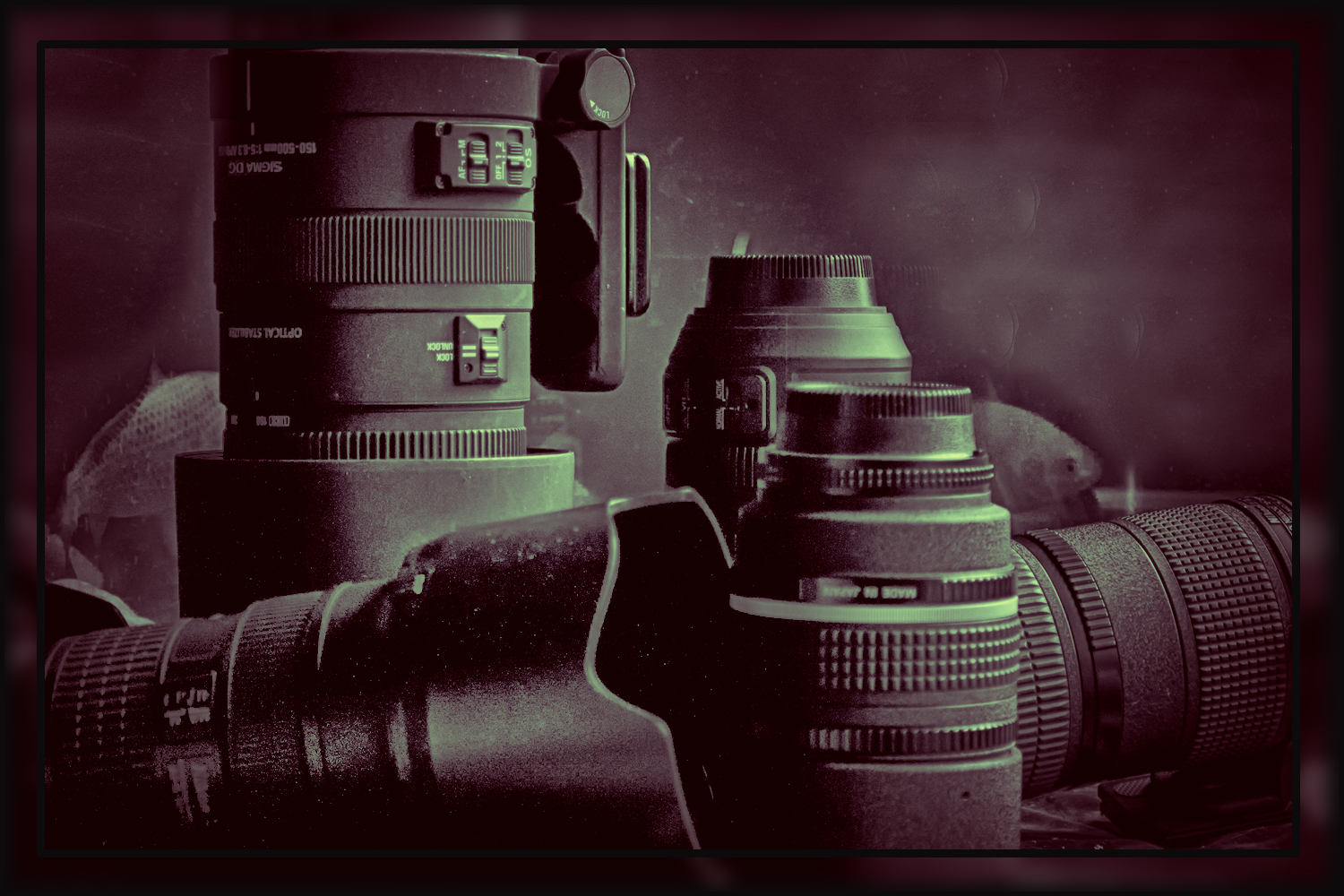
The Lens – The Most Important Part of the Camera

Lenses

The Lens – The Most Important Part of the Camera

Ask any experienced photographer whether to buy a new camera or a new lens and the answer will usually be, “it’s all about the glass,” or, “a good lens is more important than a good camera.”

A bad lens on a good camera will still make poor images, but a good lens on a poor or average camera will most likely give the photographer good results.

I listened to several friends talking over coffee about reviews they had read about the latest camera offering from Canon. The discussion began with questions like, “why does a photographer that doesn’t shoot sports need a camera with 7 or 8 frames a second” and “I really don’t spend much time shooting in low light situations, so why would I spend extra money on a camera because it is capable of a high ISO.” However, as expected, it wasn’t long before the talk easily turned to an exchange of views on lenses. Remember, because after all, “it’s all about the glass.”

The conversation easily moved from a difference of opinion between those that preferred prime (fixed focal length) lenses, and those, like me, that chose multi-focal length (zoom) lenses. We talked about the importance of wide angle and, of course, wide aperture lenses.

Just because you can change the lens doesn’t mean you have to, but I don’t know many photographers that are that sensible. Mostly we are willing to change lenses as soon as we have extra cash in our pockets, more emotional and impulsive than sensible.

I know very few are content with the short zoom that came as a package with the camera any more than they are with the tires the manufacturer installed on their car. Yes, the lenses, just like the tires aren’t high quality, but that’s not my point. What I mean is that changing lenses is like changing the visual personality of the image, and most photographers I know are engaged in, what I’ll call, a search for a perspective that fits their personality and personal vision.

The camera might capture some subject’s personality, but the lens, in my opinion, says more about the photographer than the subject.

Several photographers standing on a picturesque hillside using the same camera and lens will probably produce much the same image, but give them each a different lens and the resulting images will be diverse, distinct, and individual.

Yes, it is all about the glass, and there is such a pleasing and very exciting diversity of lenses out there waiting for each photographer to choose, discard, and choose again as they explore and create within this stimulating medium of photography.

As I wrote those words I wondered if there were others that I could use that were more applicable than stimulating. I could have used, intoxicating, invigorating, or even compelling. They all fit and, I think, could apply to some of the feelings I could see and hear from those photographers lounging around my shop drinking warm coffee on a cold November day as they talked about the lenses they used and would like to use.

A new camera is a lot of fun, but it really is “all about the glass.

I appreciate any comments. Thanks, John

My website is at www.enmanscamera.com