The Photographic Composer’s Score and Performance

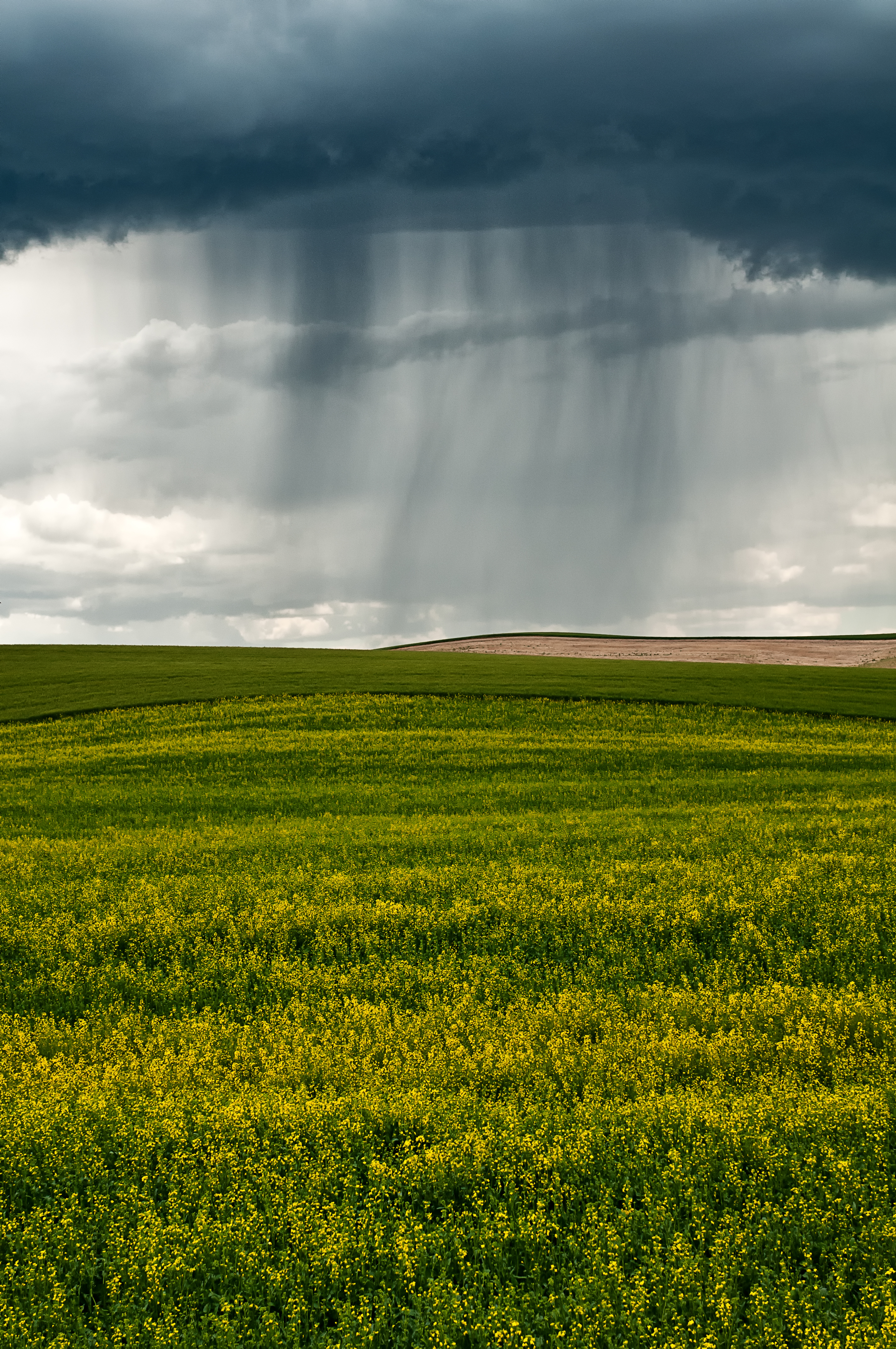
Spring storm

A storm o the prairie
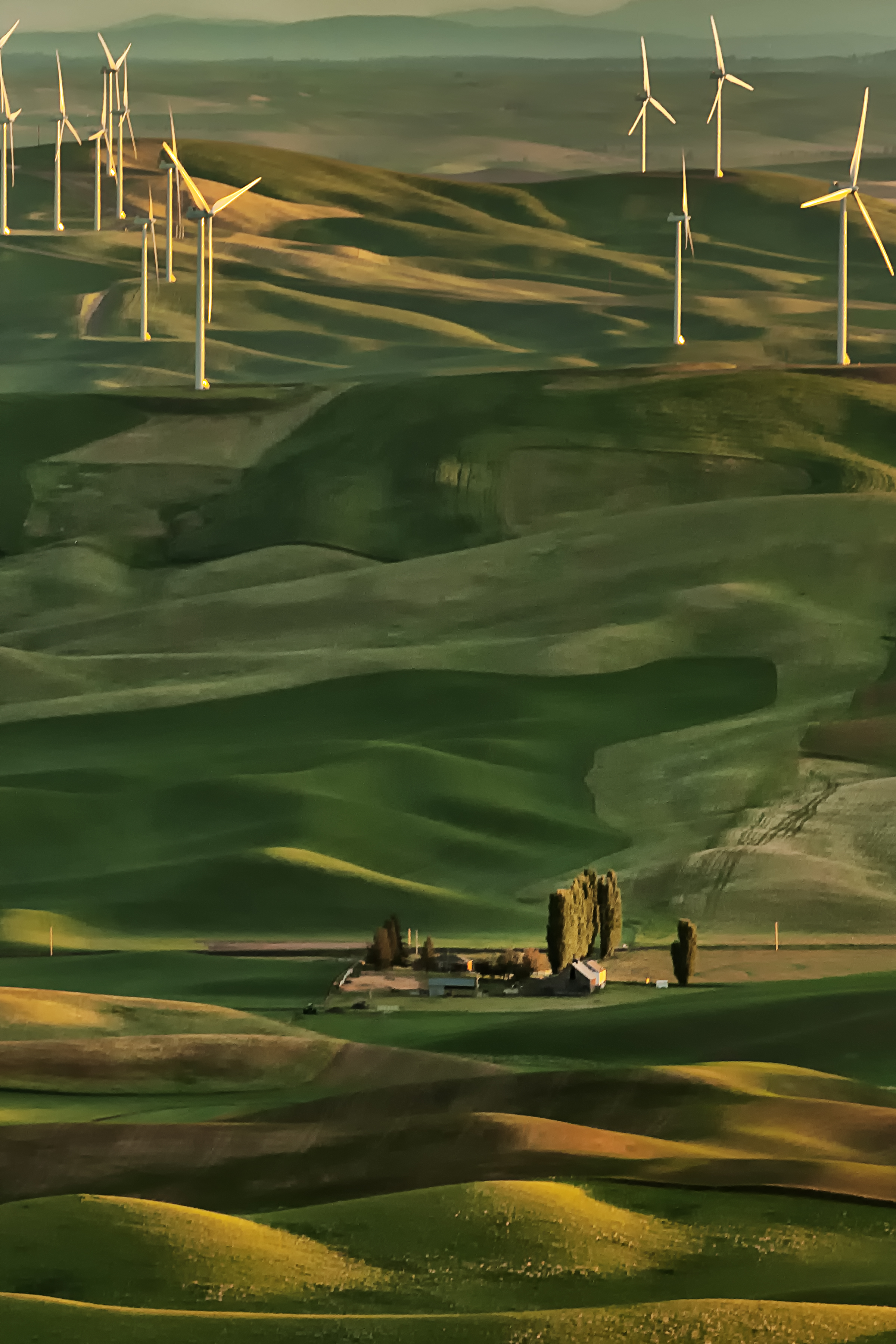
 

Wind power

Windpower

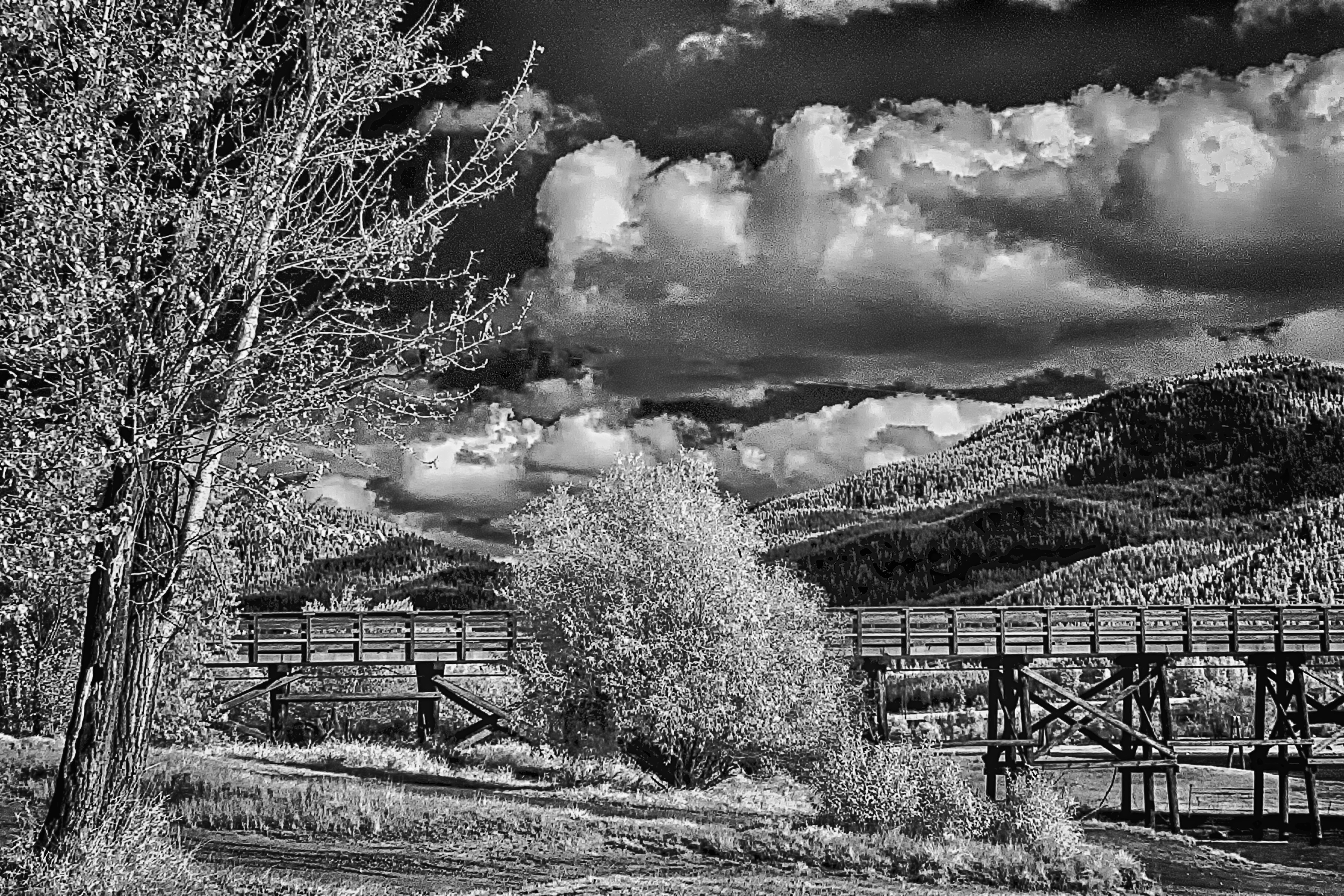
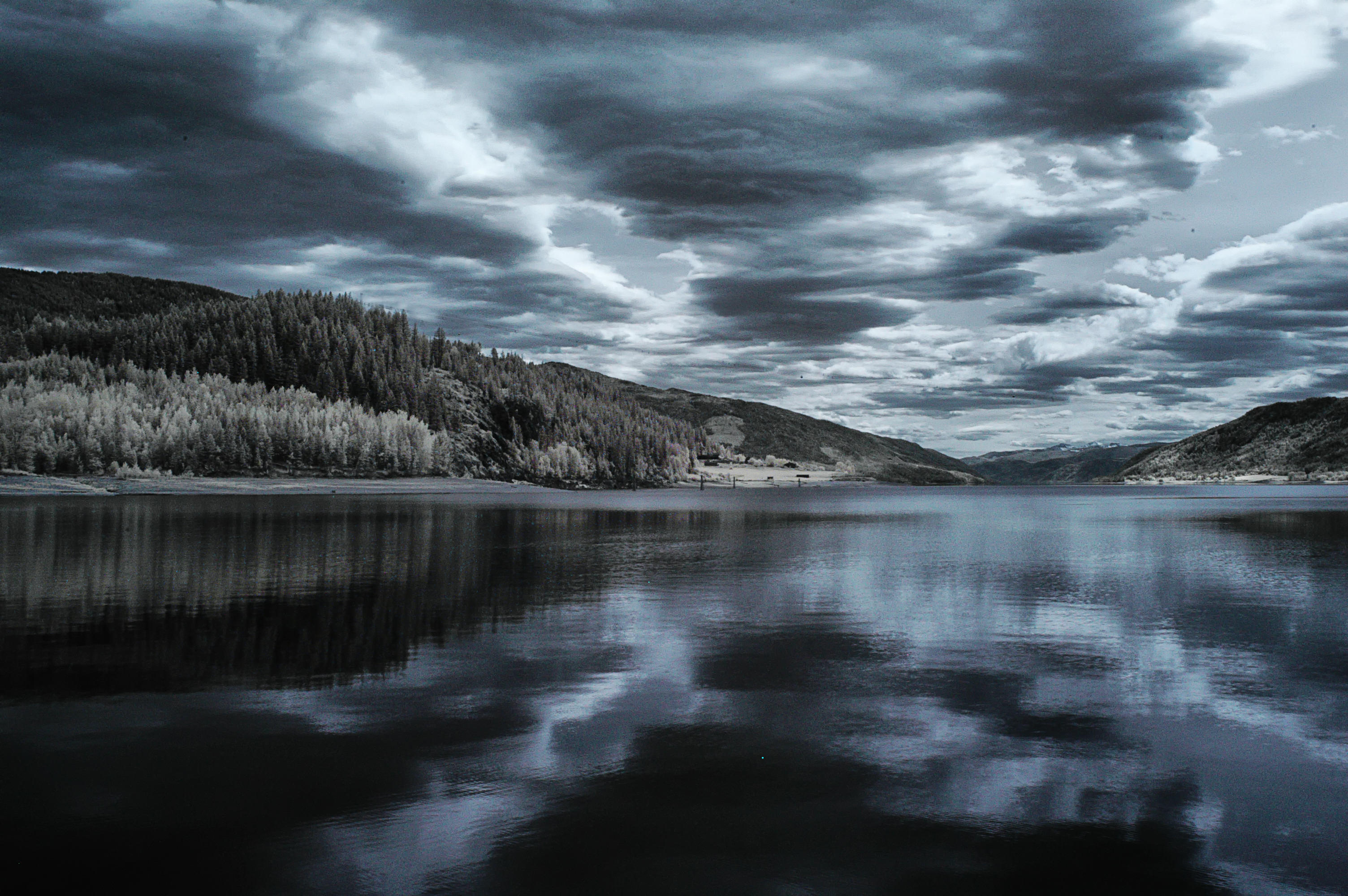
October Infrared

October walk in Infrared

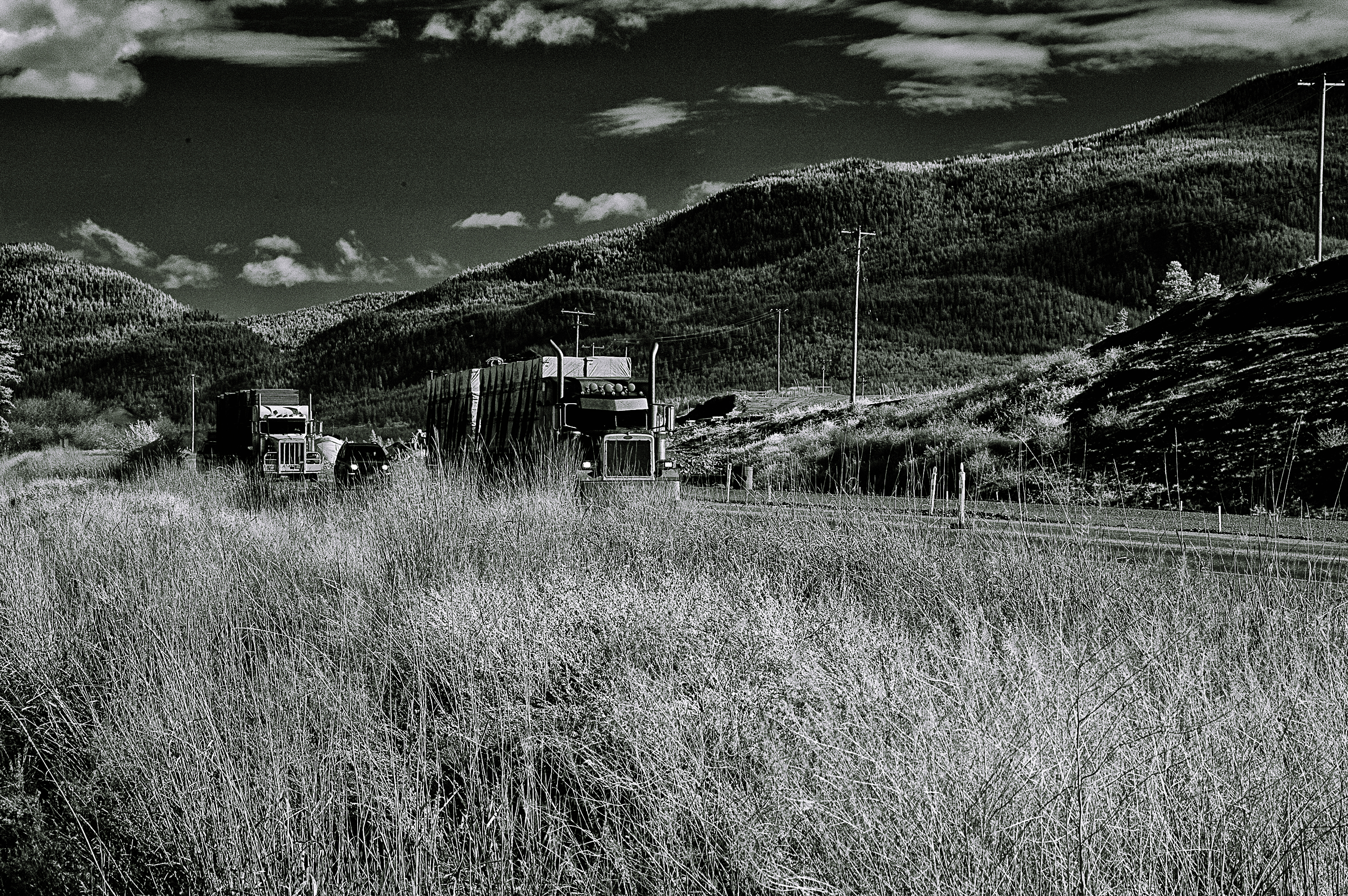
Trans Canada trucking

Trans Canada Highway – Infrared

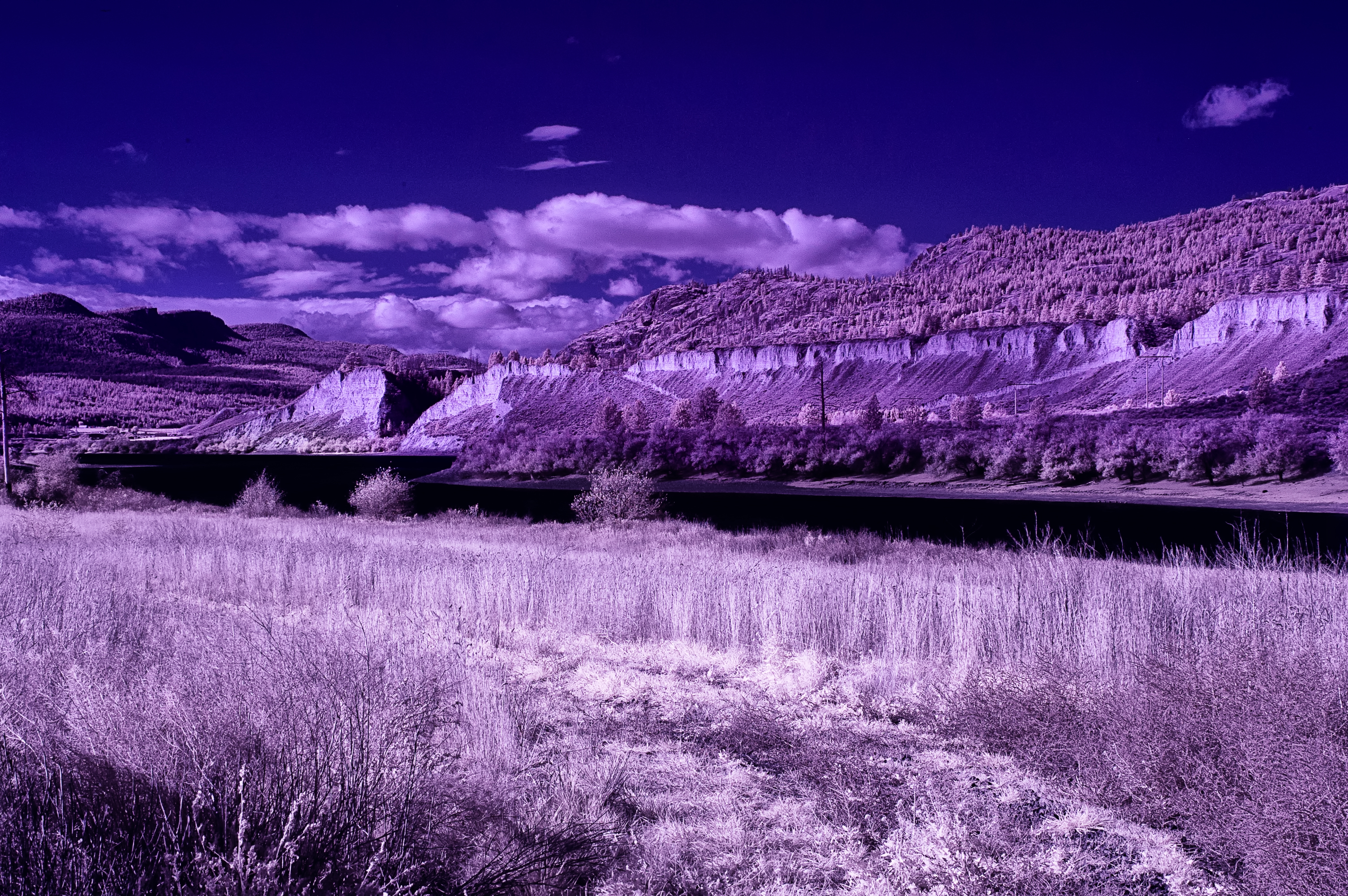
River bluffs

Infrared of Thompson River


I taught photography in the 1980s and 90s for the University College of the Cariboo (now Thompson River University) when the only way to make a photograph was using film.

In my lectures I informed students that as well as learning about their cameras, they must become proficient in negative development and printmaking. I would emphasize that those serious about the medium of photography would come to realize that what they did with the camera and the negative it produced was only the beginning, and that it was their final print that would set them apart as a photographer. And I would quote famous photographer Ansel Adams, “The negative is comparable to the composer’s score and the print…its performance…”

Film has now been discarded by most serious photographers, although I expect artists will use film creatively for years to come, nevertheless, even with advancing photographic digital technology Adams’ words from the past are still significant.

The digital camera isn’t making a picture in the sense of light permanently imprinting itself with different intensities on a chemically sensitized surface like film. Instead there are sensors and in-camera computers processing light from thousands of photosites that are transferred to computers as data files for conversion into countless pictorial possibilities. I have become, more than ever, of the opinion that like the negative, the RAW image file, is now the “score” to Ansel Adams – the photographic print.

I know there are those that haven’t bothered to move their camera selector off JPG (Joint Photographic Group). However, choosing JPG files means those images are pre-processed in-camera and the photographer loses control. I prefer shooting RAW (not an acronym like JPG, RAW is unprocessed data) and choosing RAW is like having the negative Mr. Adams discussed, affording us total control over those data files or, more importantly, allowing a personal vision of how the final photograph will look.

A young photographer that came into my shop last week got me thinking about this when, with some kind of misplaced pride, he announced he would never use PhotoShop on any of his pictures because he was only into true reality. Although I didn’t comment, I thought about the manufacturer’s presets that were applied in-camera to his image files, the sensor’s dynamic range of only about five stops from black to white and the very limited number of colour spaces his tiny JPG files gave him.

Some years ago I attended a print-making lecture during which one of the speakers said in the past he would get up early and drive to some scenic location hoping to capture an impressive sunrise, after which he would package up his film and send it to the lab and leave all decisions to an unknown technician’s personal vision. However, now he shoots RAW and transfers his image files to his computer and the decision has become his to control how his photograph will be processed for viewing.

As in the days when I processed and altered negatives in special chemicals and manipulated prints by adding and subtracting light, I now use computer programs to process my RAW images in my quest to perfect my vision of each. And I expect the same thing is true now as it was with my students all those years ago, that what they do with the camera is only the beginning, and to repeat Ansel Adams, “The negative is comparable to the composer’s score and the print (is) its performance…”

I look forward to all comments. Thanks, John

My website is at www.enmanscamera.com
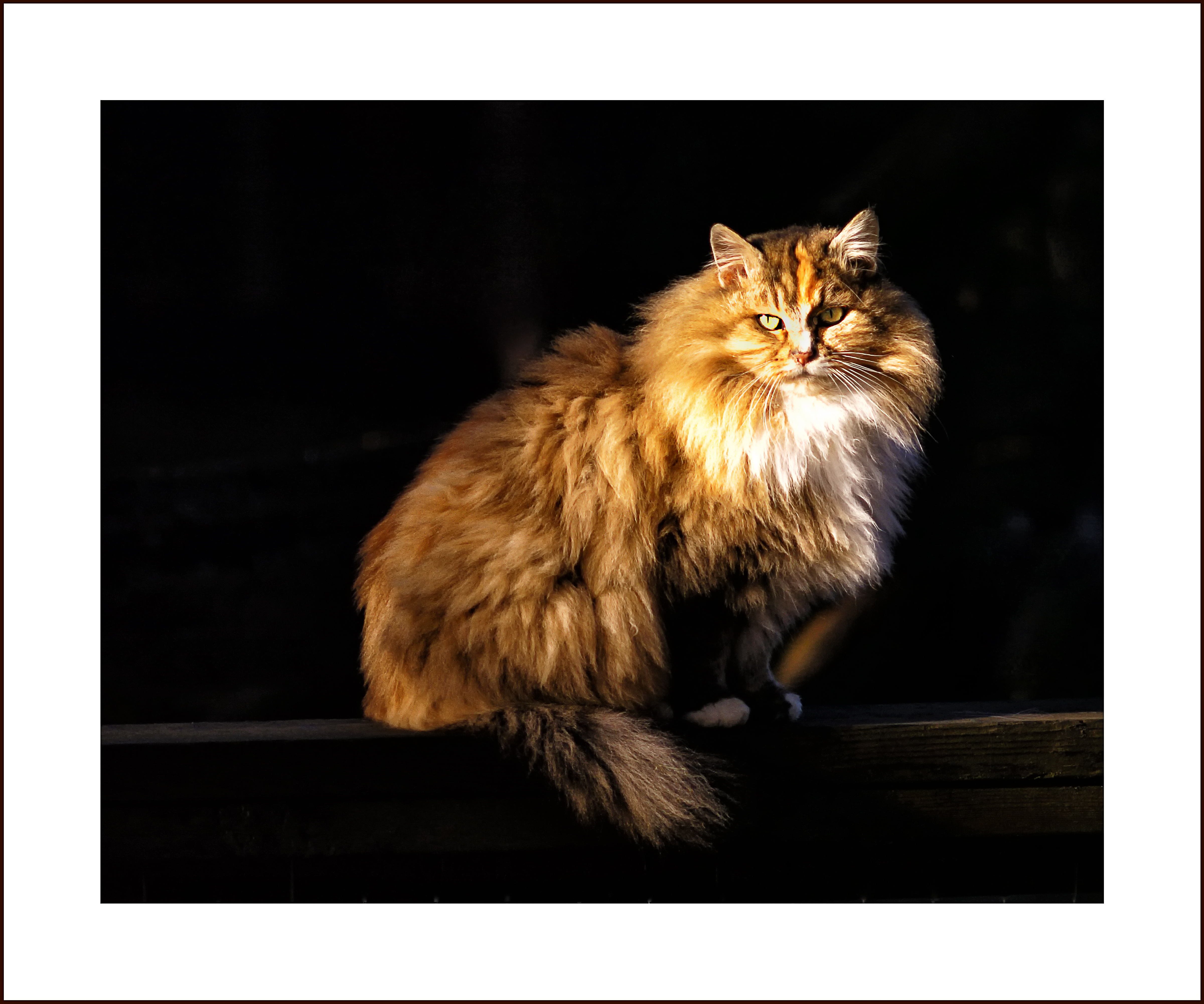
My Life with our Cat, (and photo pal) Peaches

Peaches the cat posing

My life with Peaches (sometimes referred to as that damn cat) started a little over fifteen years ago when she moved into the hay shed one cool fall day.

We would get cats living there from time to time, and I bought cat food and would feed them when I fed our horses. Here in the wooded hills where I live it is pretty common to find cats that heartless humans from nearby towns have pushed out of their cars along the road with the misguided belief that domestic cats will survive the wilderness.

I don’t know how but that little mess of calico fur made it to our shed, and survived the raccoons, hawks, owls, coyotes, bobcats, other cats, and neighborhood dogs that all prey on helpless cats that only knew the comfort of some home until they were coldly discarded.

Peaches got her name when I told my wife I was feeding four cats. She came out and asked me if I had named them; I pointed to the black long hair and said “Furry”. The grey and black-striped cat I named “Furry”. The orange I called “Furry”. And pointing at the calico long hair, I finished with “Furry”.

That worked fine for me, and the cats only cared about the occasional rub on their head and food anyway. My wife was not having that, named them on the spot and told me to call them by their names. I promised to do that, but mostly I just whistled at them. I expect they liked being named by that unknown person that cuddled and talked softly to them, but seeing me meant food.

An owl got the furry black that got to be called Miss Furry. The neighbour’s had a town friend who came out with his dog who promptly killed the orange cat named Earless, so named because her ears had been frostbitten down to short little stubs. After the neighbours moved away, the striped cat she named Trixie, moved into the new people’s garage and was eventually taken in. Finally she called the calico cat Peaches.

One very cold snow covered morning I discovered that longhaired, calico cat almost lifeless after what might have been a struggle with a coyote and brought it into the house to mend. Peaches became our house cat and with a single-mindedness that I later was forced to tolerate, became to be my wife’s lap cat.

Peaches also filled an important role in our household as my ever-present photography subject. Is there a better poser than a cat? I had dogs for years. Sure, dogs will do anything to please and I constantly photographed them, but dogs get bored easily and unless they were tired would move. If you photograph your dog be prepared to continually wipe the drool off your camera. But a cat, the consummate poser, will hold one position without moving for a long time.

Peaches didn’t mind waiting for multiple light setups, close-ups, or even an occasional repositioning. She would just sit there, soft orange-ish fur glowing in the light, and look at me waiting for the next release of the shutter.

What could be better for a portrait photographer than to have an ever present and willing subject? And her modeling fees were reasonable.

I don’t know how old that cat was when she wandered, cold and hungry, into our barn fifteen years ago. She certainly wasn’t a youngster. This last year she had been getting old fast like the rest of us, and this week, after a couple visits to the vet for medicine that was of little use to curb her failing health, Peaches died.

My wife, of course, will miss that cat purring on her lap and I am going to miss my ever-willing photography partner.

Street Style Photography at the Fall Fair

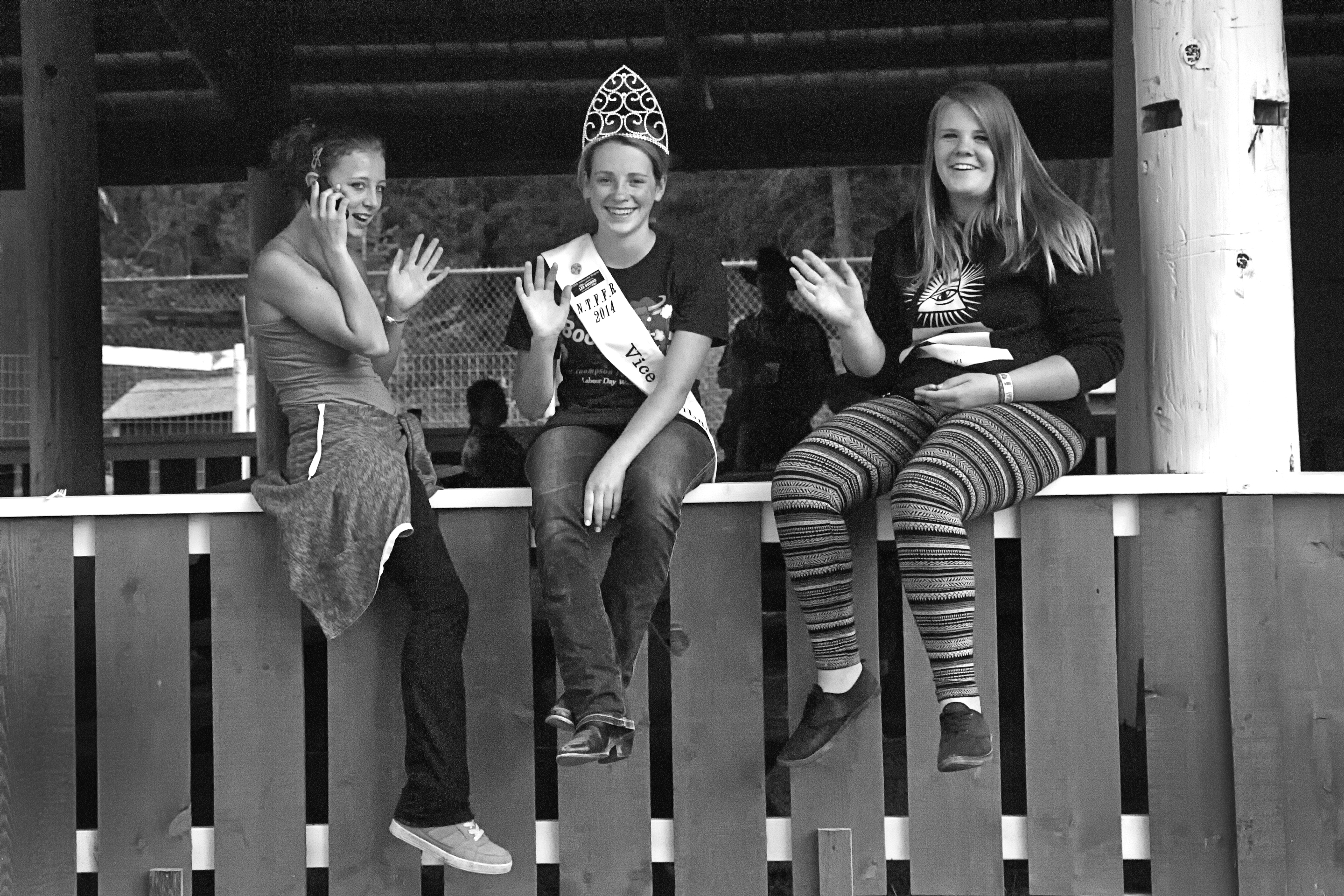
Royalty and Attendants

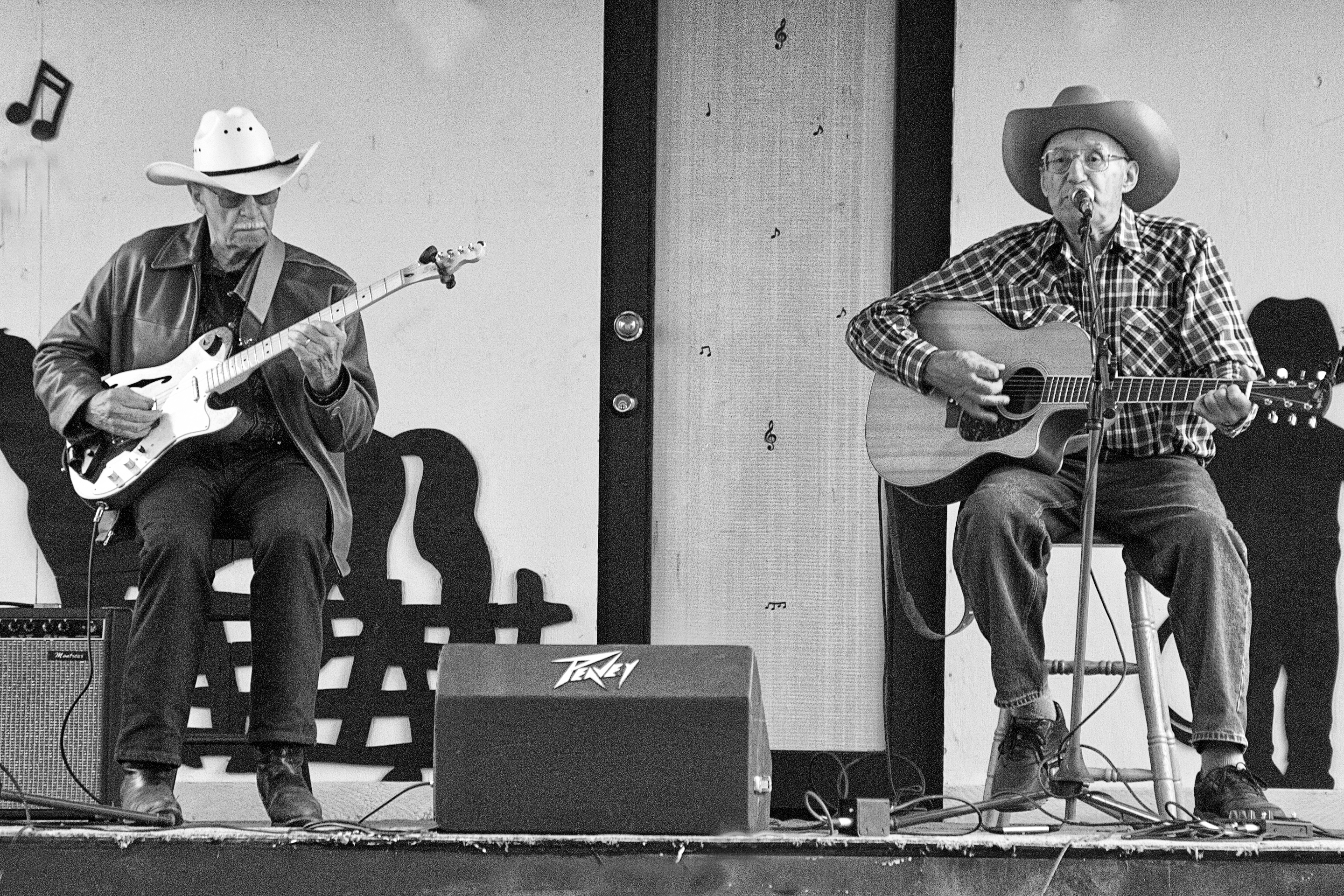
Country singers

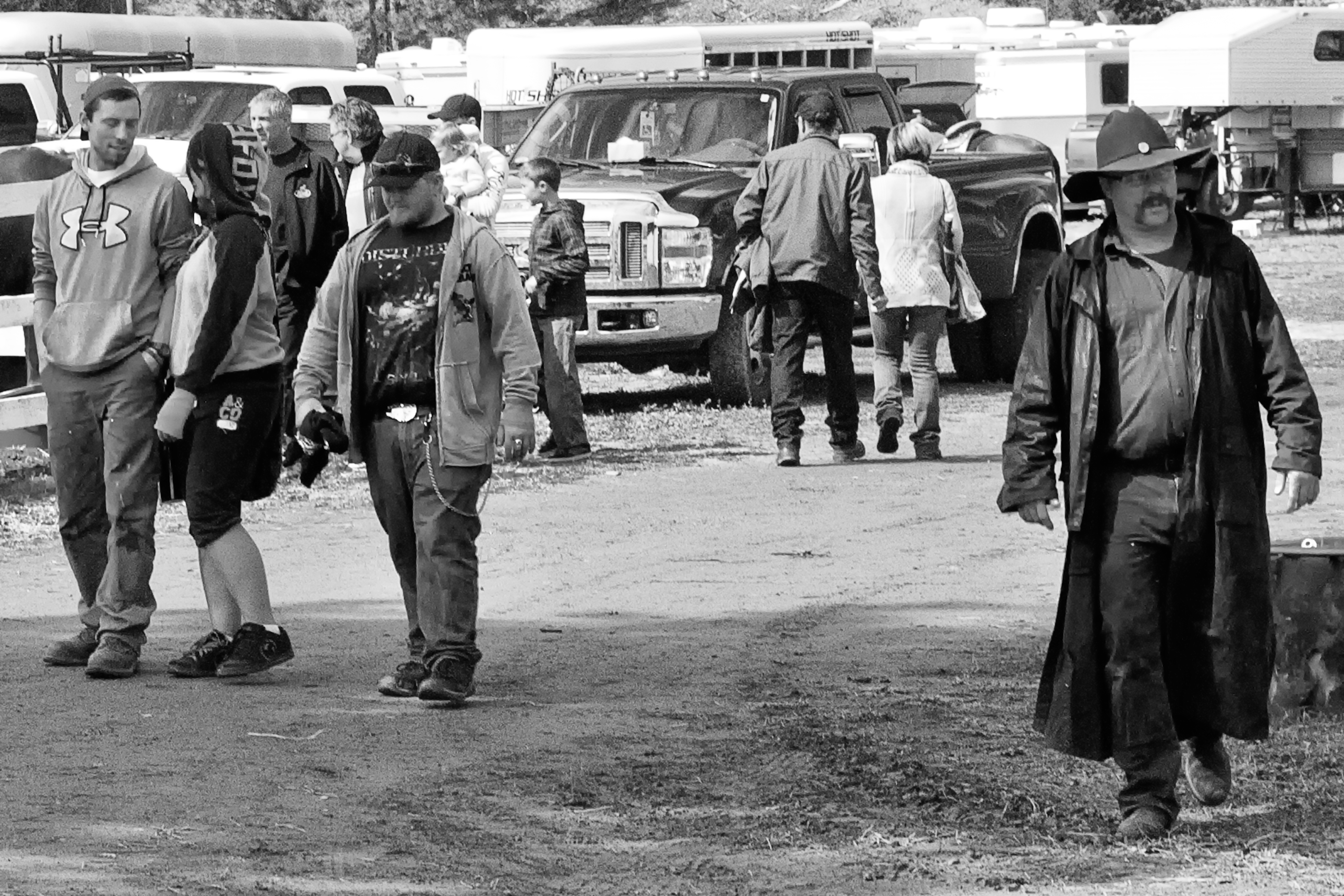
Cowboy in slicker

Mobile staff

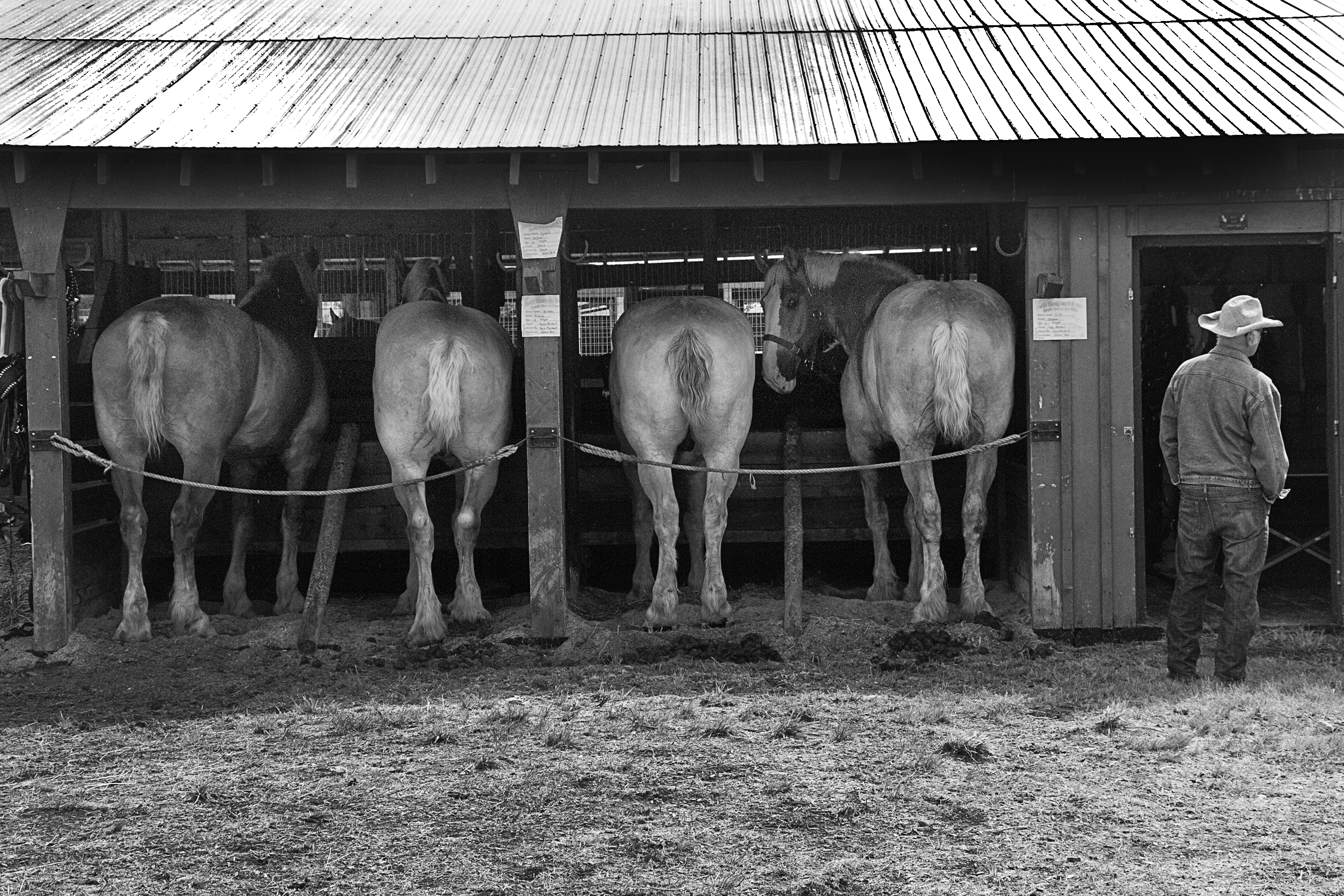
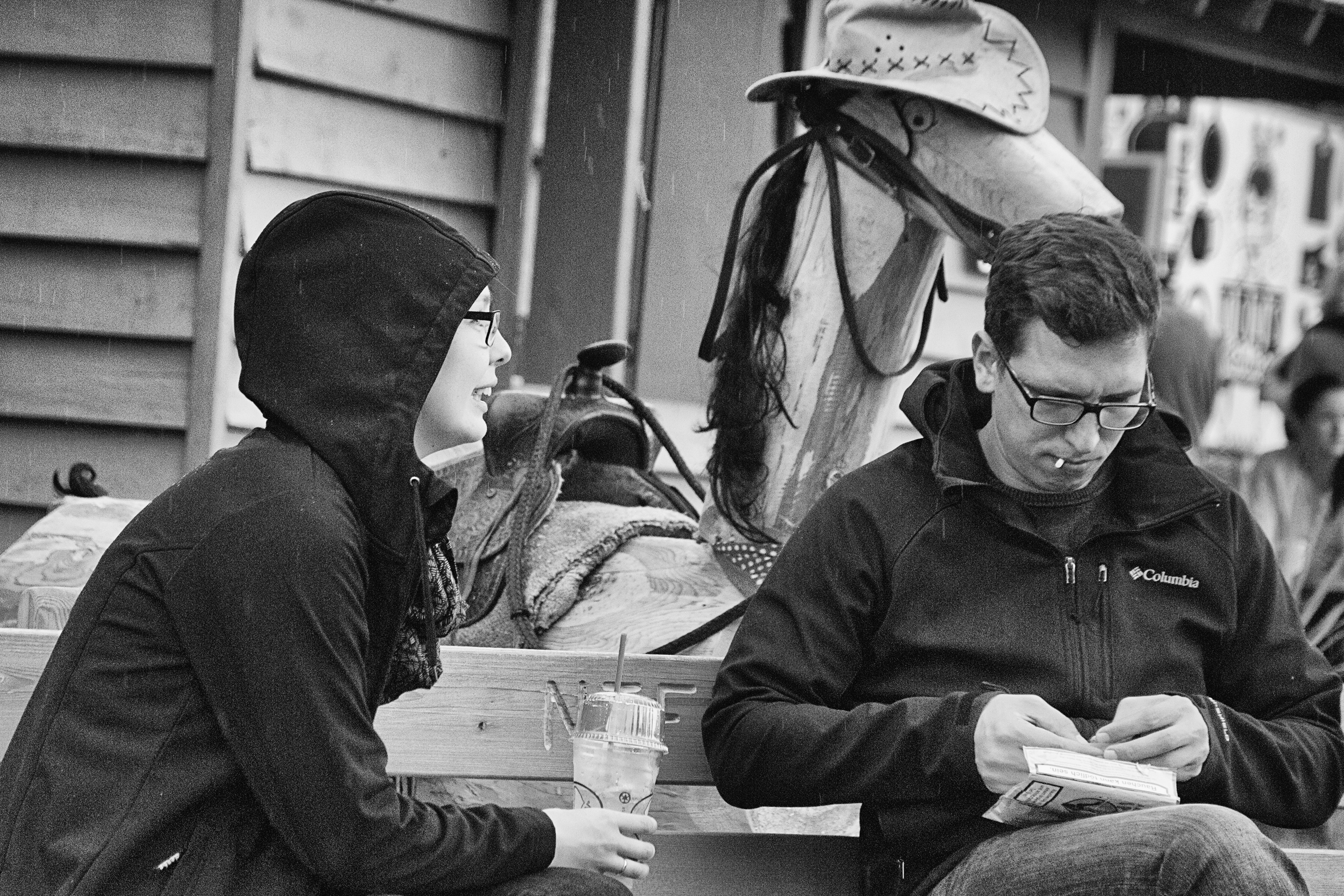
Wooden Horse listening

Waiting against the wall

Clydsdales

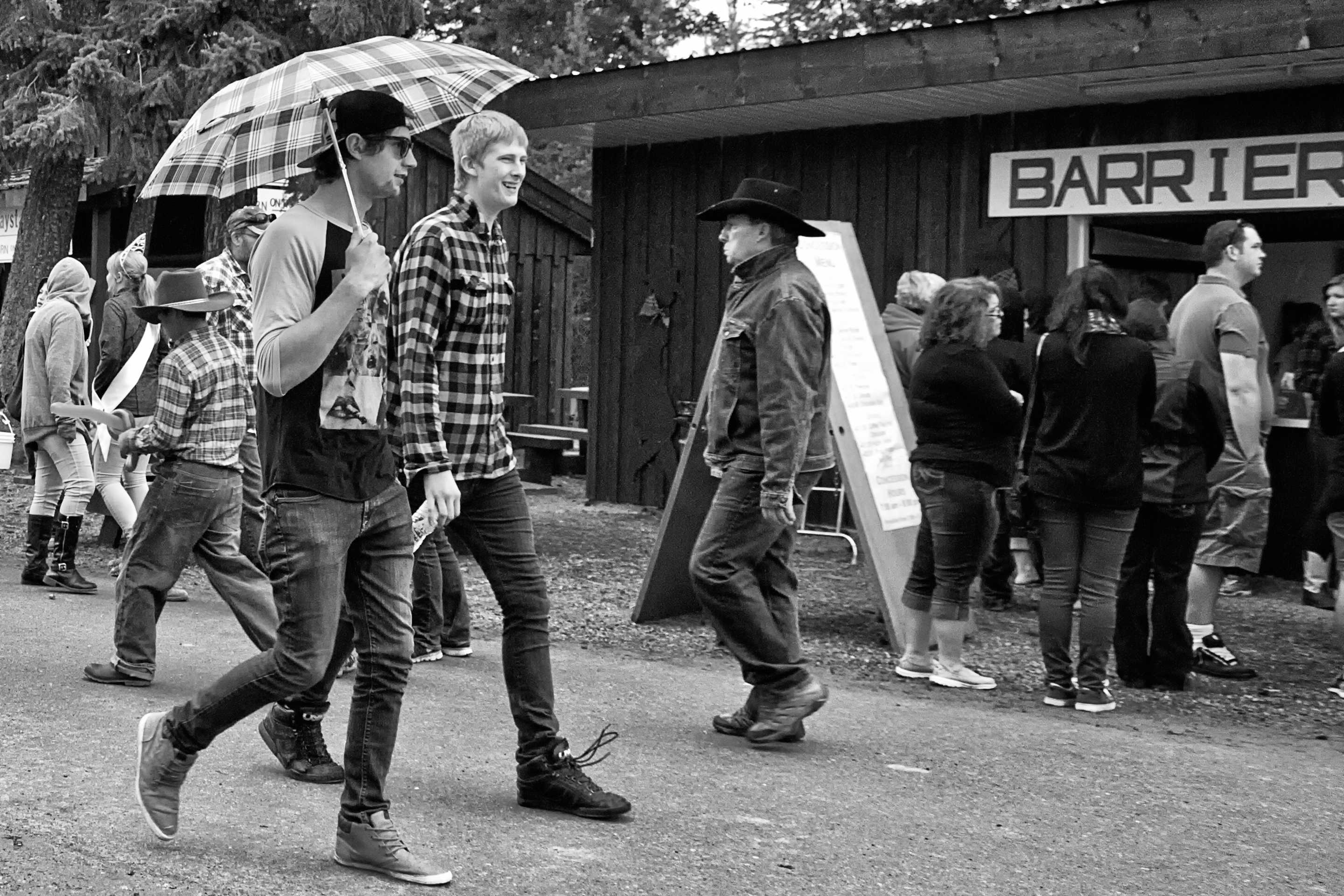
Umbrella guy

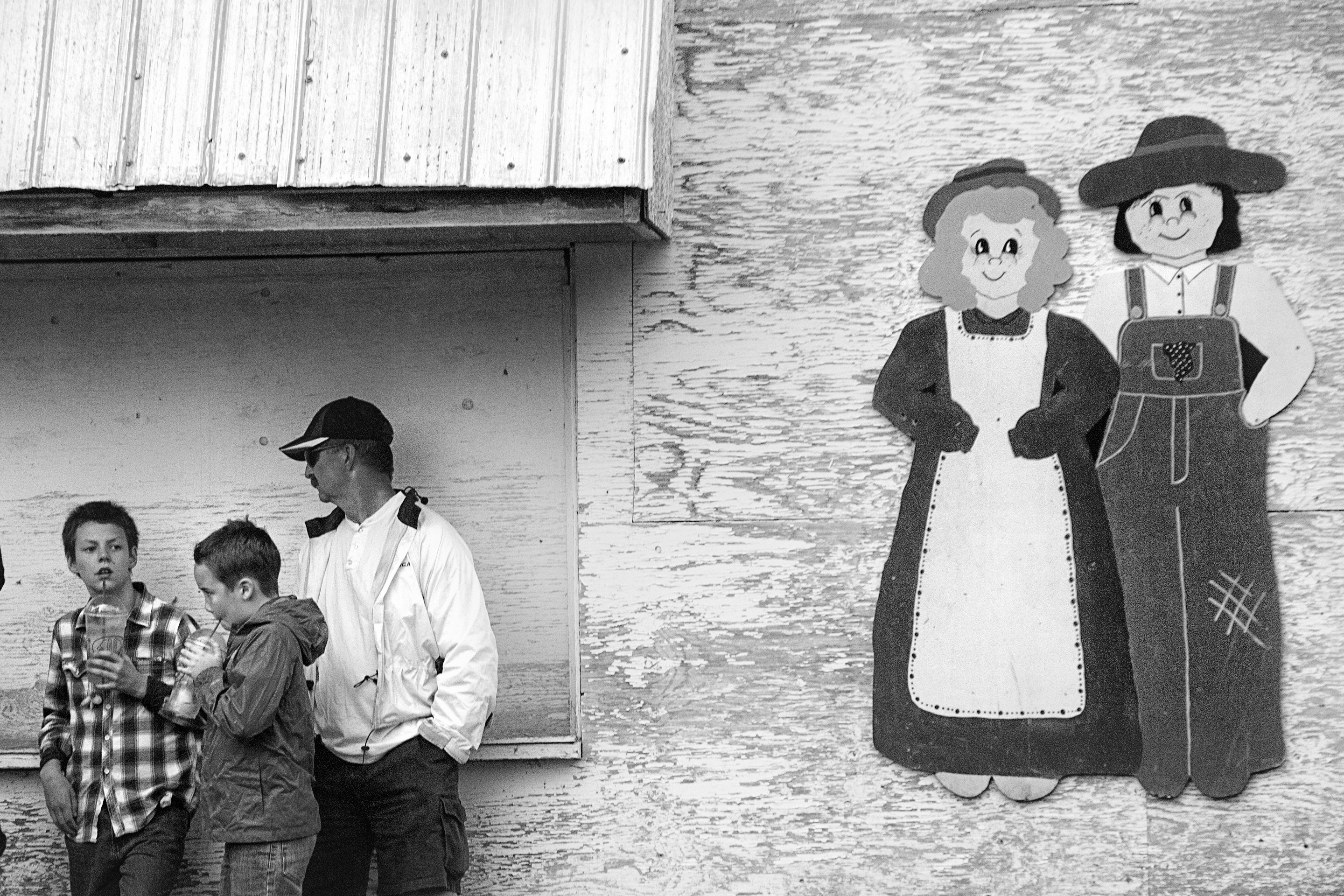
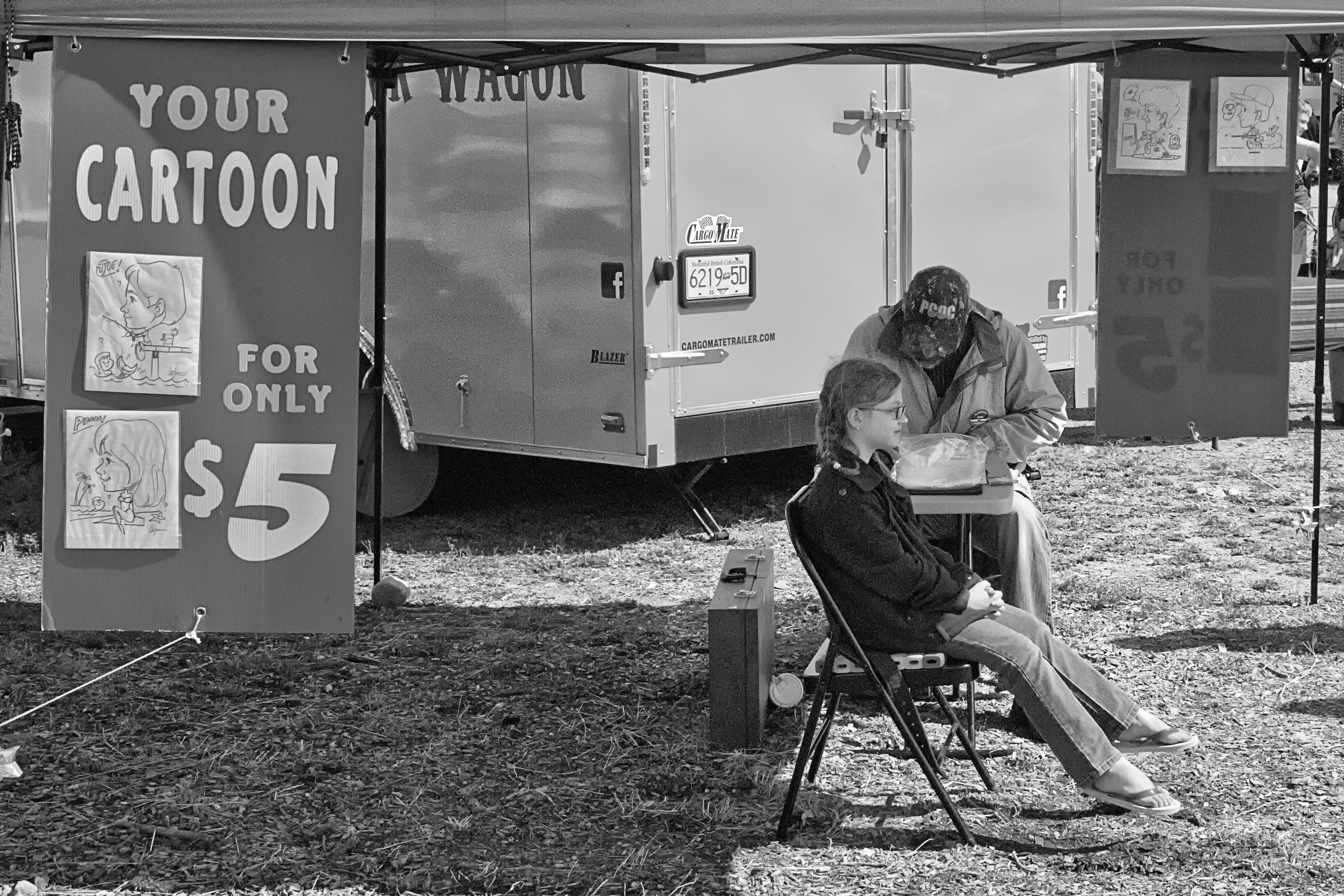
Your cartoon

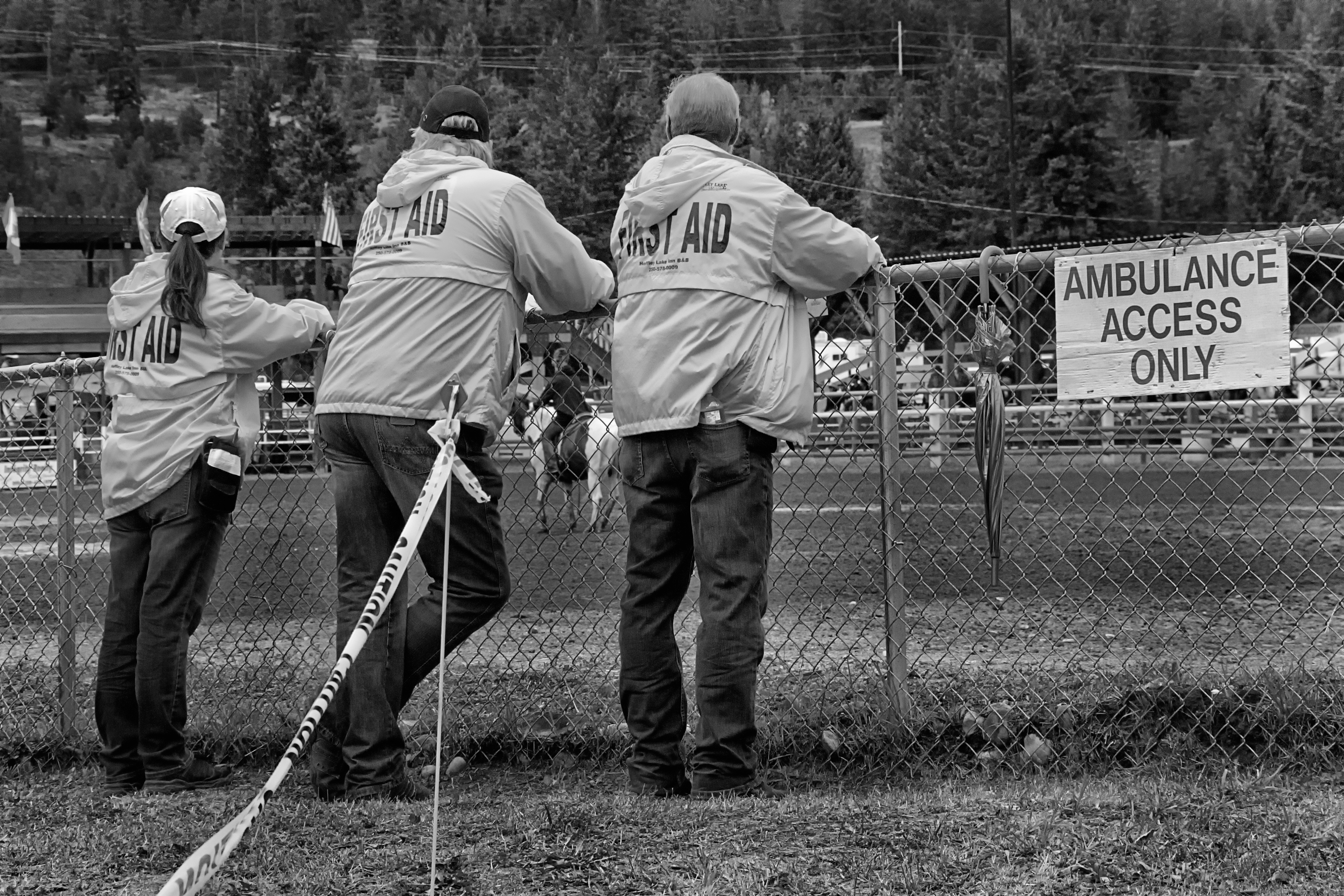
First Aid

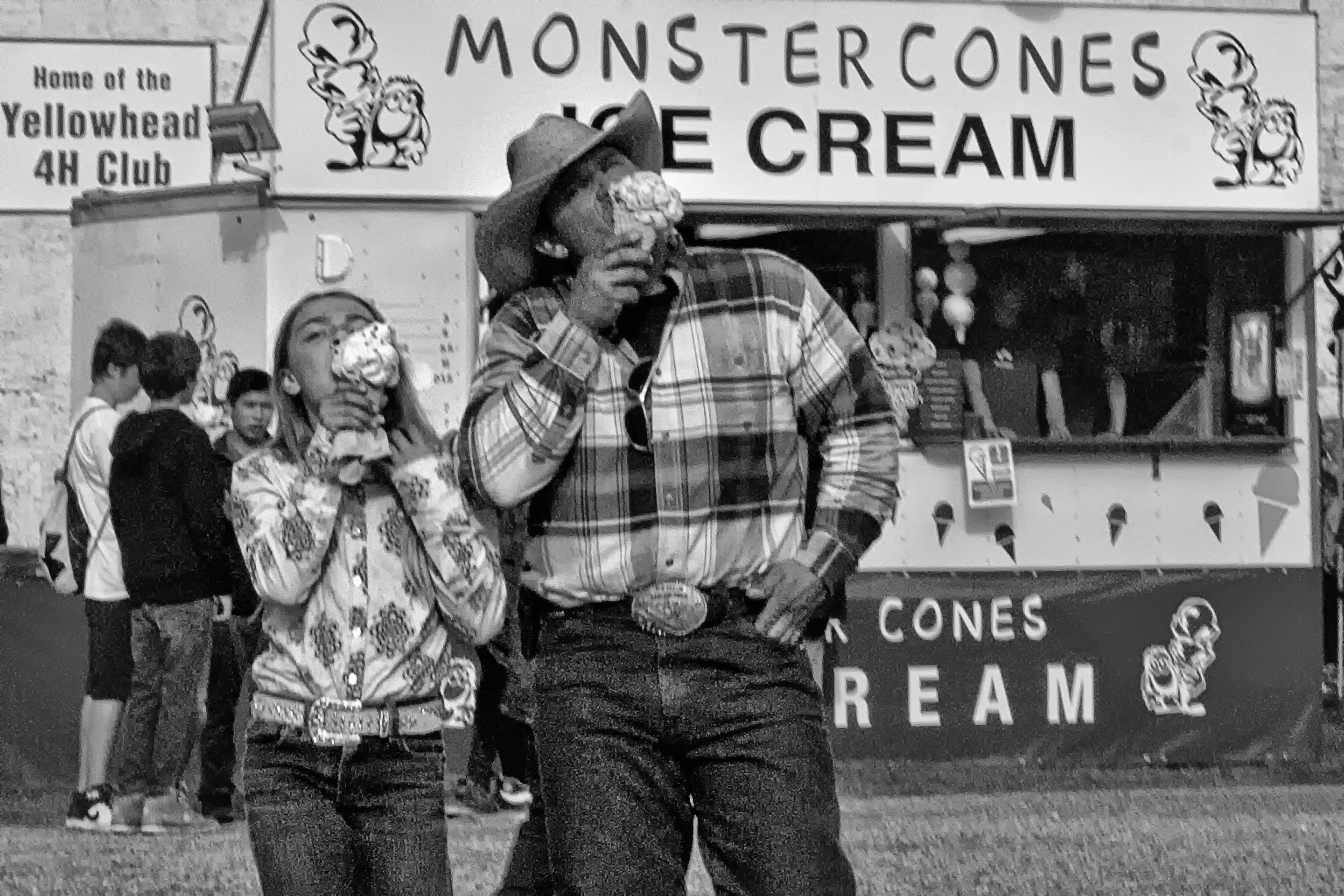
Monster Cones

“Every year when summer comes around

They stretch a banner ‘cross the main street in town

You can feel somethin’s happenin’ in the air…”

“County fair, county fair,

Everybody in town’ll be there

So come on, hey we’re goin’ down there…”

Bruce Springsteen – Country Fair


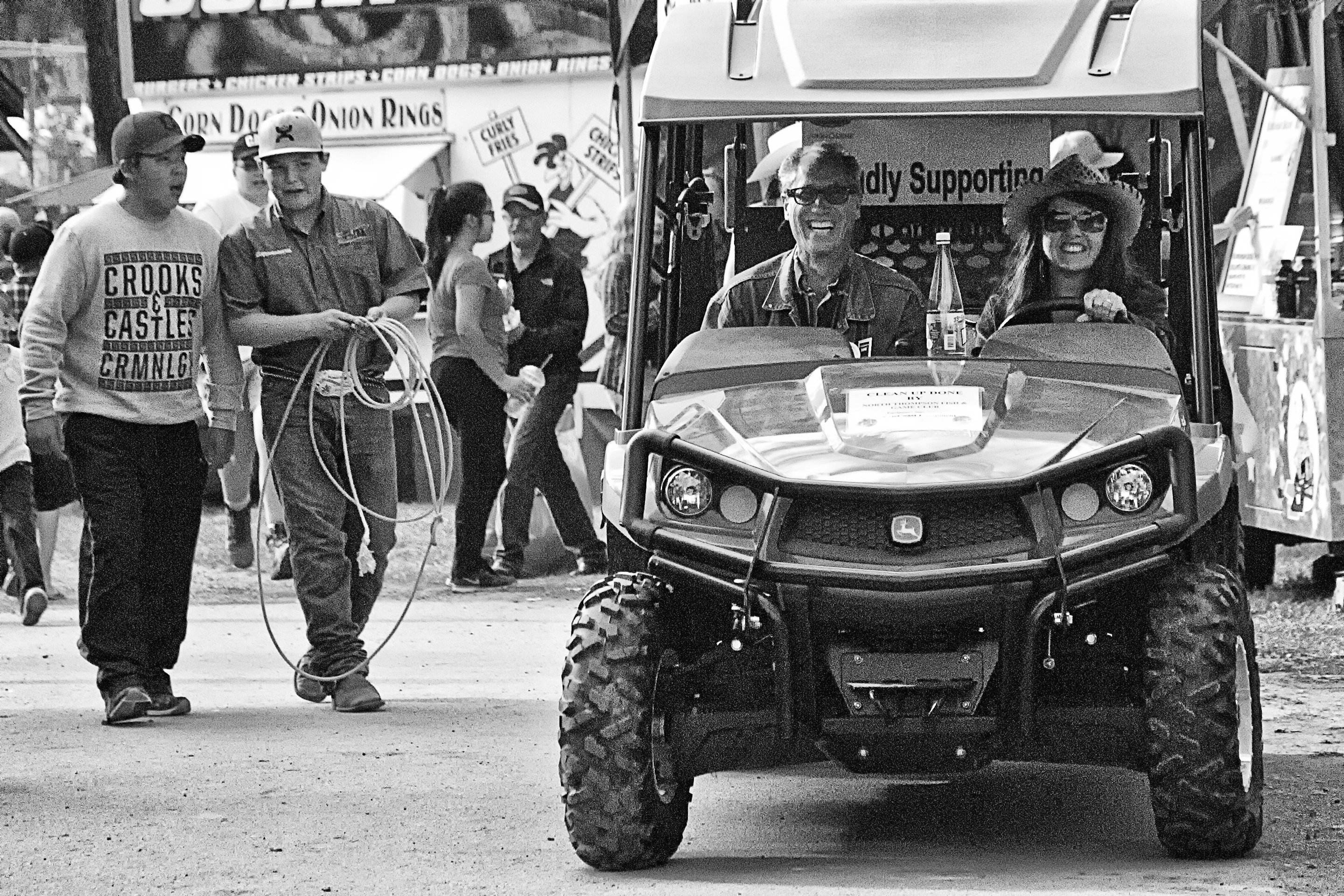
Where I live in British Columbia, the months of August and September see communities’ large and small hosting end of summer fairs. This year, same as last, I drove north to the small town of Barriere, parked my car, gave the smiling lady at the gate a couple bucks and strolled into the excitement of the Barriere Fall Fair packed with exhibits of local produce, poultry, livestock, all sorts of arts and crafts, lots of outdoor shows that included a rodeo, trick riders, several different horse competitions, an action packed midway with amusement rides, challenges for the children like wall climbing, and even a motorized bull that quickly dislodged even the most athletic of riders. There were all sorts of people selling cowboy hats, clothing, jewelry and too much more to list here. And one lady almost accosted me, demanding I try out her boot wax and leather preservative. (I will say my boots never looked better.)

Oh, and the food. The inviting and punishing, yep, that’s the word I am going to use for the smell of all kinds of mouthwatering foods that one confronts as far away as the entrance gate. Enticing everyone to make the next stop at one of the food venders.

The picture making possibilities immediately assaults those of us with cameras. What to photograph? Well, it’s all exciting.

Last year I spent most of my time photographing the rodeo, but after discussions and encouragement from the many photographers I have met online that excel in street photography, I decided to dedicate my time this year to photographing the people I saw wandering or performing in the midway.

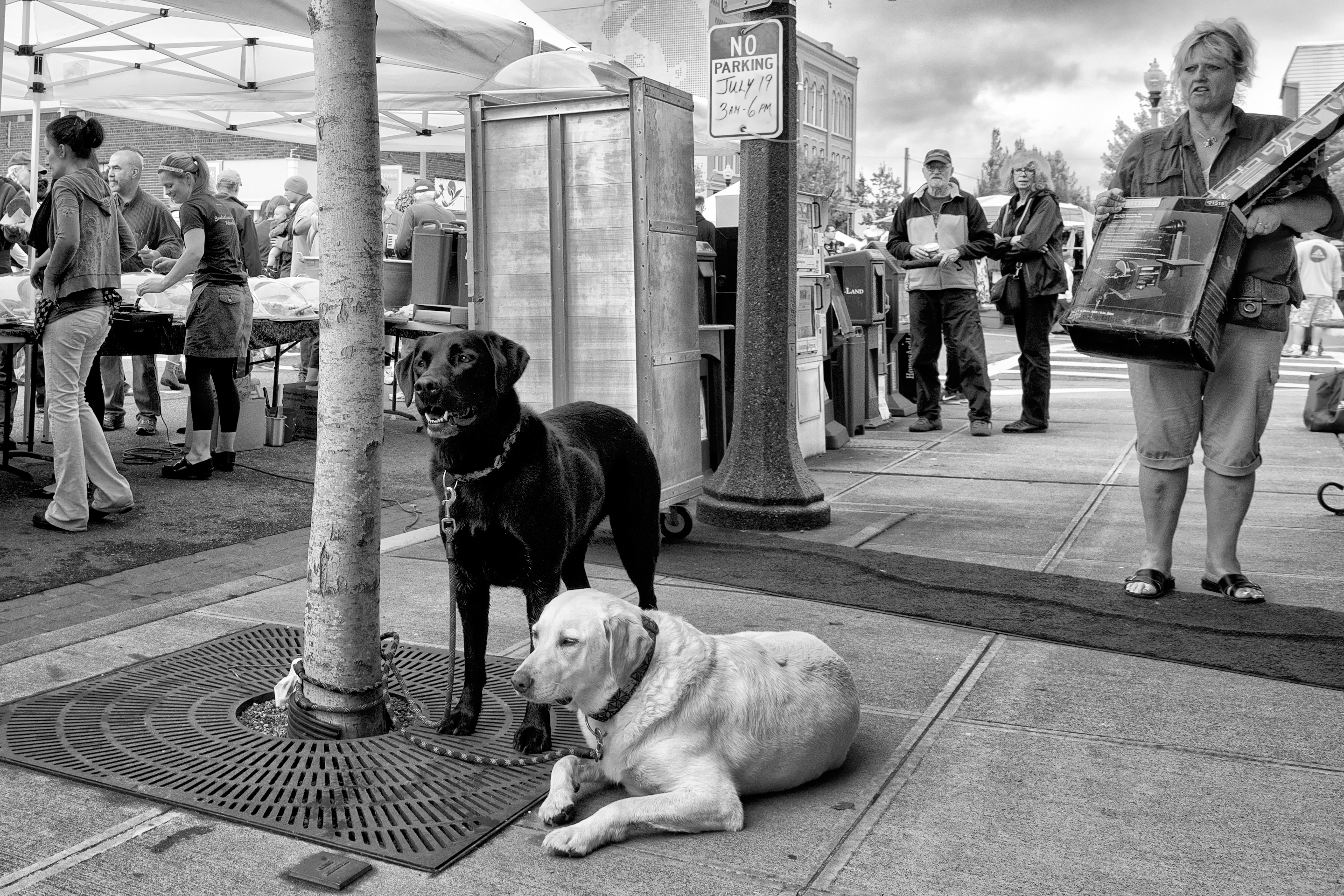
I have written before about my admiration of those that are proficient at wandering city streets creating stories with the way they photograph the people. Readers will recall I discussed my frustration last summer in Anacortes, Washington when I tried using a DSLR with a big 24-70mm lens mounted on it. People saw me coming with that big package and when I got close enough to grab a picture they almost leaned towards me to see what I was photographing. No chance of being inconspicuous or assuming stealth mode.

This time I brought a cropped frame DSLR and 105mm lens and extended my camera strap so I could point and shoot from the hip as I released the shutter. I think I can hear the laughing coming from some of those more skilled and experienced at this type of photography than I. Yep, I had little control over what I was aiming at. I did get some viewable shots, but I also got lots of images that showed the top of people’s heads and a great quantity of sky. How did those gunslingers in the old west hit their target?

Maybe I need to put some beer cans on a fence rail and practice like I saw actor Alan Ladd do in a movie I watched last week. Or better yet, I have a friend with one of those exciting little Fuji 100 cameras. I wonder if I took beer cans (full) over to his house instead of putting them on the fence, I could convince, or bribe, him to lend that camera to me next time I want to try.

I searched online for some street photography tips. Here are a few I could find.

  1. Use a wide-angle lens.
  2. Get close.
  3. Look for juxtaposition.
  4. Focus on the essential.
  5. Look for the light and shadows
  6. Look at the foreground and the background.
  7. Tell a story.

Street photography, whether at an event like a country fair, in a bustling city, or on some quiet back lane, is about photographing society around us. Some photographers’ shoot for the challenge, and some wander the city as a release of stress from everyday existence, and others because of their need to make some statement about the world in which they live. I wonder at the “Decisive Moment” of prolific French photographer Henri Cartier-Bresson, or the journalistic style of Leica toting Robert Doisneau, or the harsh images of marginalized people by Diane Arbus. They, and many others have left us with their own styles of street photography that affect each viewer on an emotional level.

I look forward to any comments. Thanks, John

Judging Barriere 4H Photography

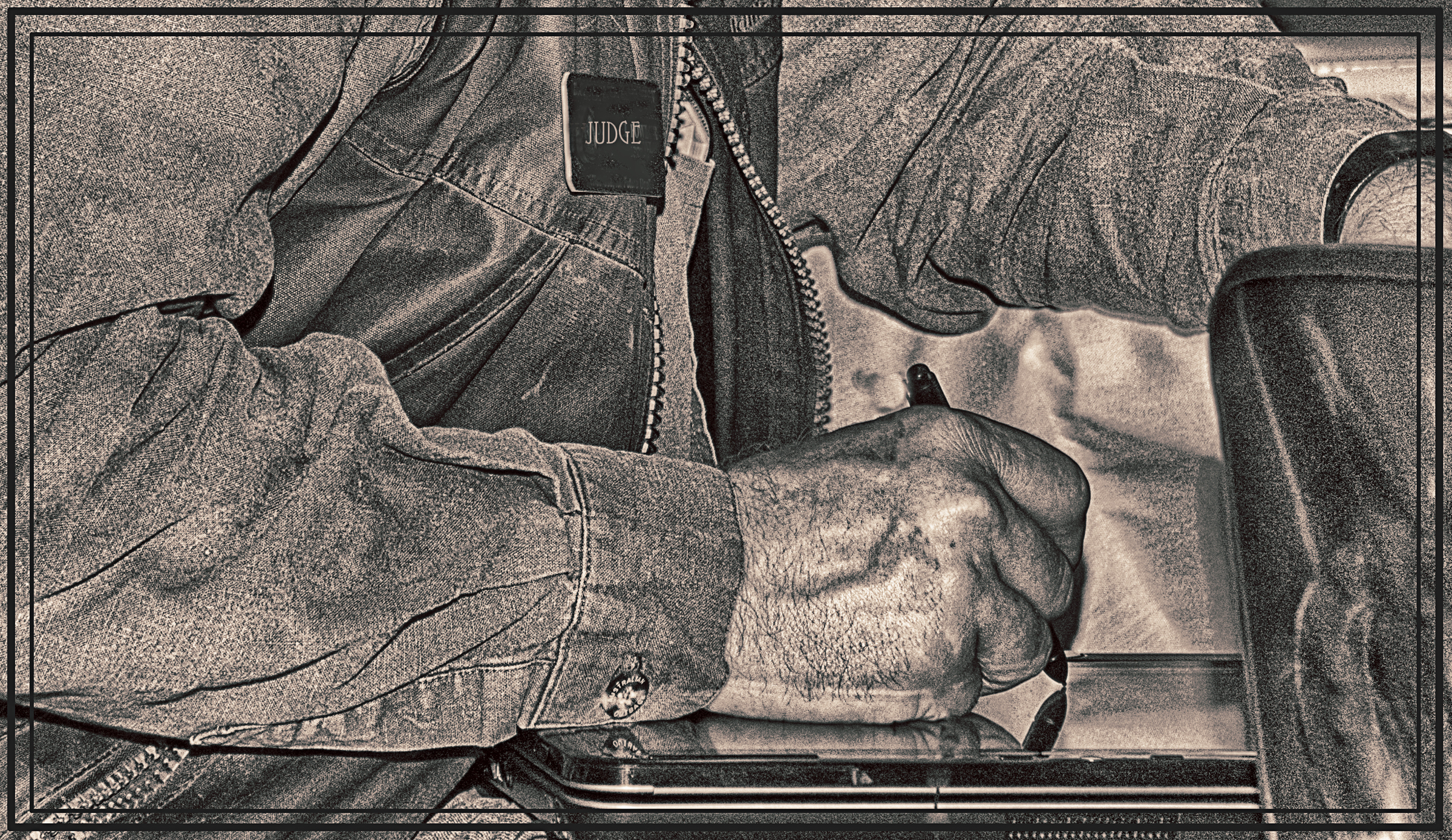
The Judge

On the Sunday of the September long weekend I spent an enjoyable day judging the Barriere 4H club members photography presentations at the North Thompson Fall Fair.

Although I have taken on the role of judge many times before, I am still slightly uncomfortable in a formal critique. Just looking at a photograph and discussing it, even placing a grade on it, as I did for years as a college instructor, is easier because everyone is competing with themselves. But when choosing a first, second, and third place is a competition about who is better, one has to work very hard not to be influenced by personal feelings, taste, and opinions on the subject.

Most photographers seem to think a photographic “critique” means “to find fault with.” I don’t think that’s right. When one critiques another’s photograph they should be analyzing its strengths and successes. What doesn’t work is important and should be part of the discussion, but the main concern is what works, not, what doesn’t work.

This was my first time with the 4H club. Photography in this instance was set apart from the other events at the North Thompson Fall Fair that included animal husbandry, and the judging was, in my opinion, more about the young member’s personal development in photography and how well they could adhere to the guidelines than how good their individual photographs were. Although unusual, the process was interesting, and I think valuable.

I will say that the quality of the photography was surprising for such young individuals. I was able to pick out specific interests and strengths in each of the young photographers. Yes, like all photographers, I expect those that are serious about the medium will undergo growth as they become more experienced with their cameras, and experiment with the medium of photography in general.

What is a good photograph?

“Life” magazine, “Time” magazine, and “People” magazine photographer, John Loengard, said, “It is not important if photographs are “good.” It’s important that they are interesting”.

Anyone who wants to take better pictures should focus on the fundamentals, and a successful photographer must have an understanding of composition and lighting because what is important for the viewer is how the photographer composes (or arranges) the image, and how the light is captured, both which sets the images apart.

William Reedy, in his book, “Impact Photography for Advertising” writes about how the successful photographer must, “…stop the eye…(and)…set the mood…” I have liked that quote for years. And I am pleased to say that there were some of those young 4H photographers that were able to accomplish that and I hope I get to see their again photography in the future.

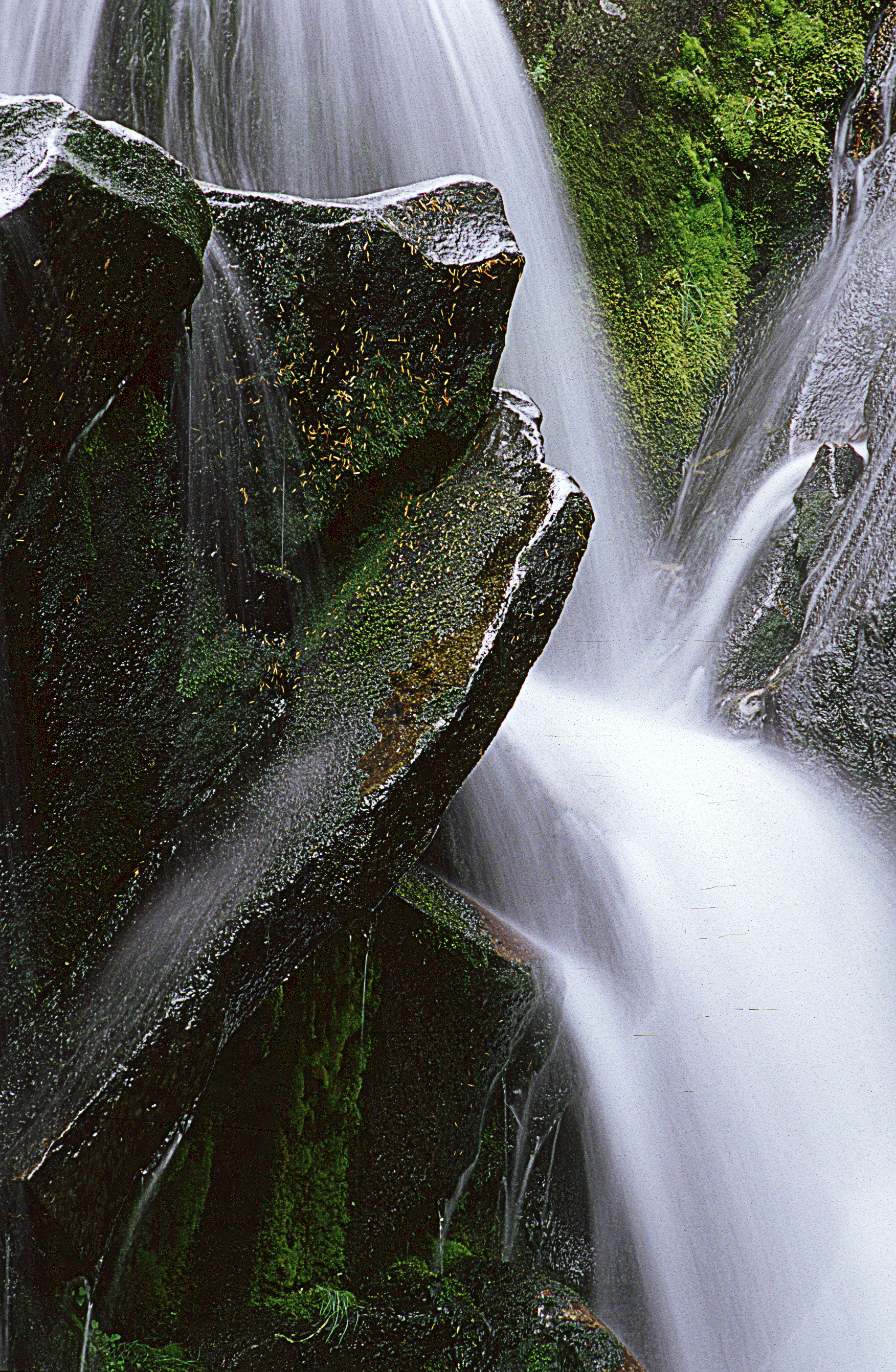
Water as a Photographer’s Subject.

Arrow lake crossing

Ocean ready

Gig Harbor waterfront

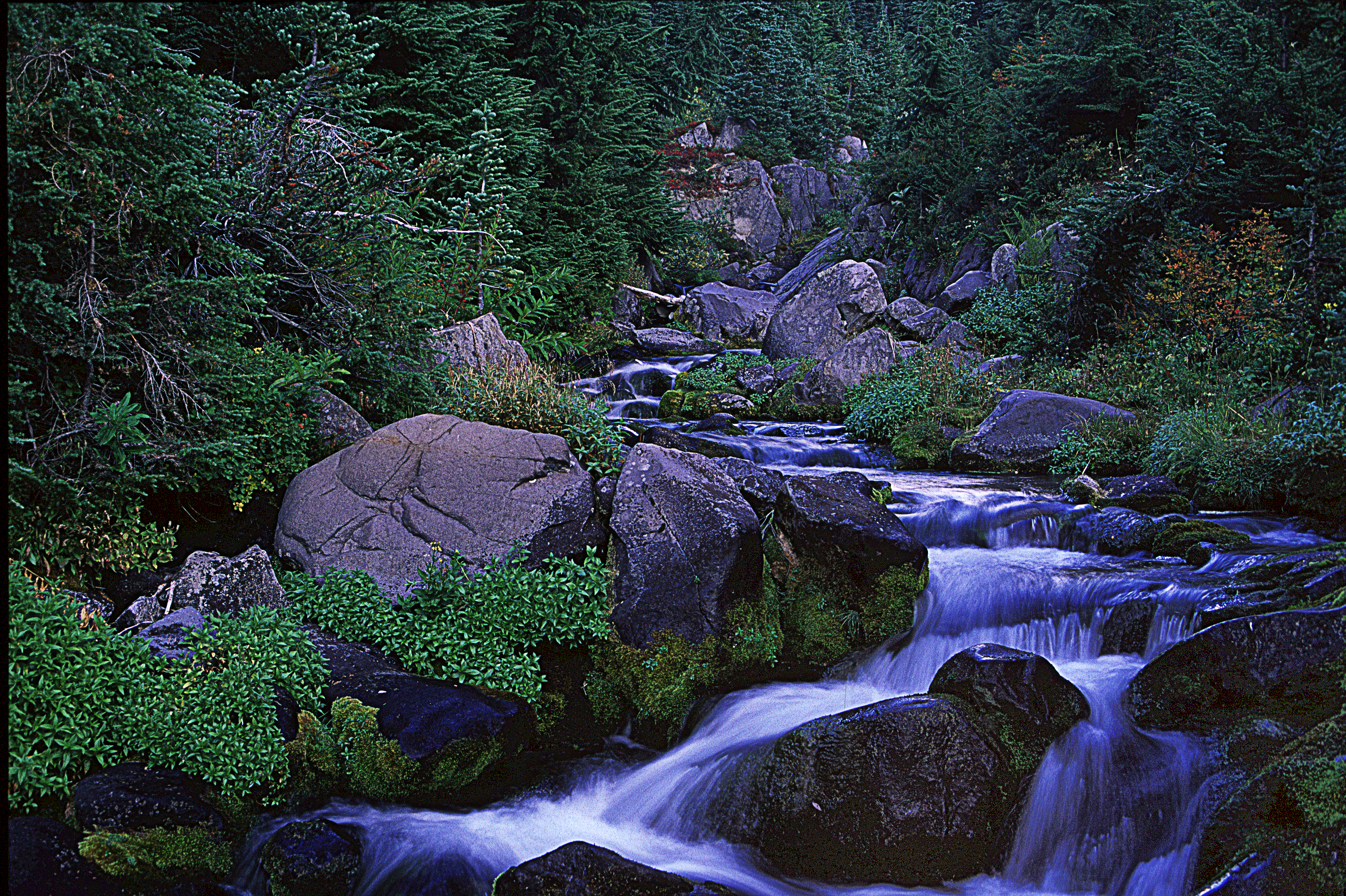
Valley stream

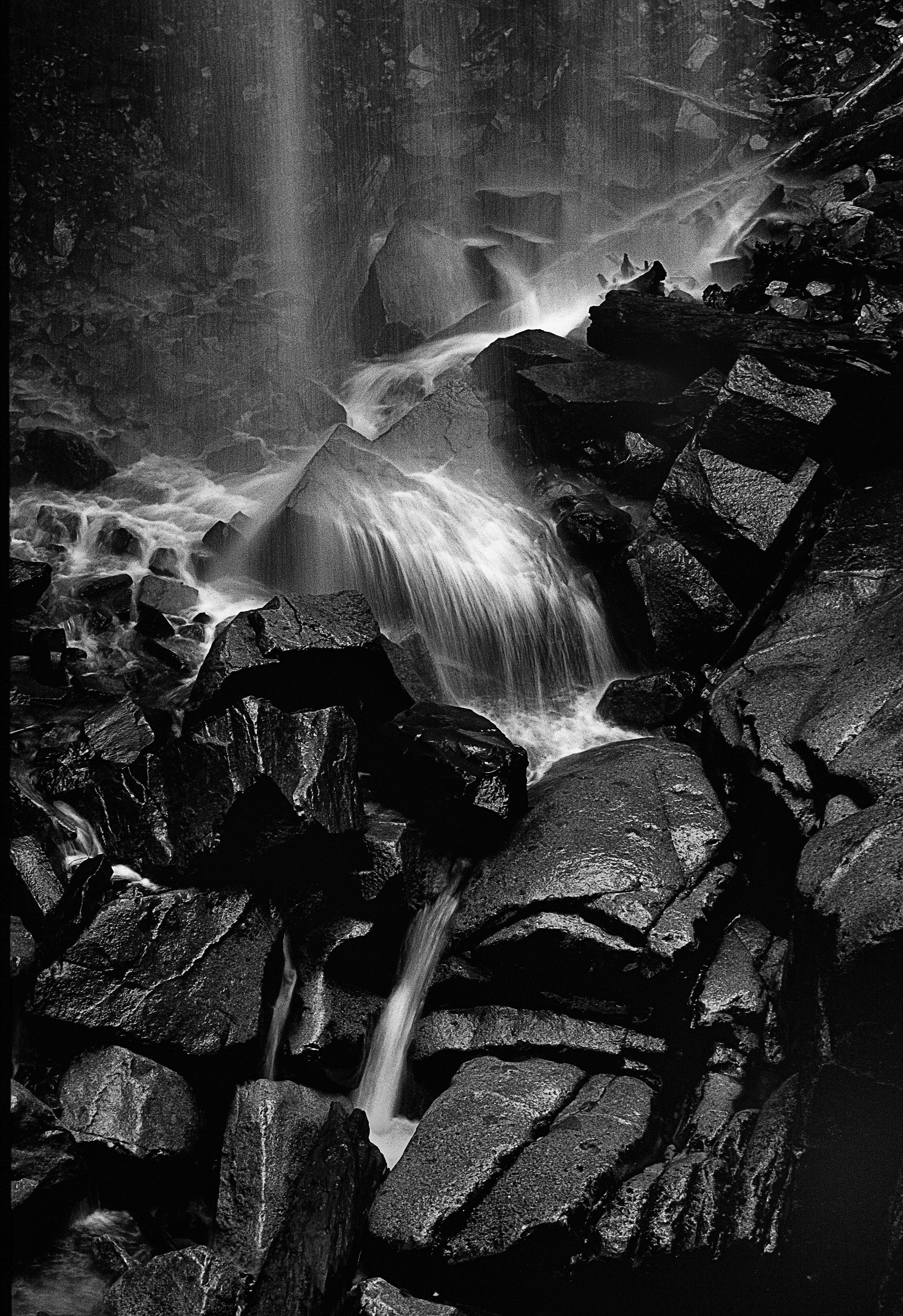
Under the falls

Framed in Green

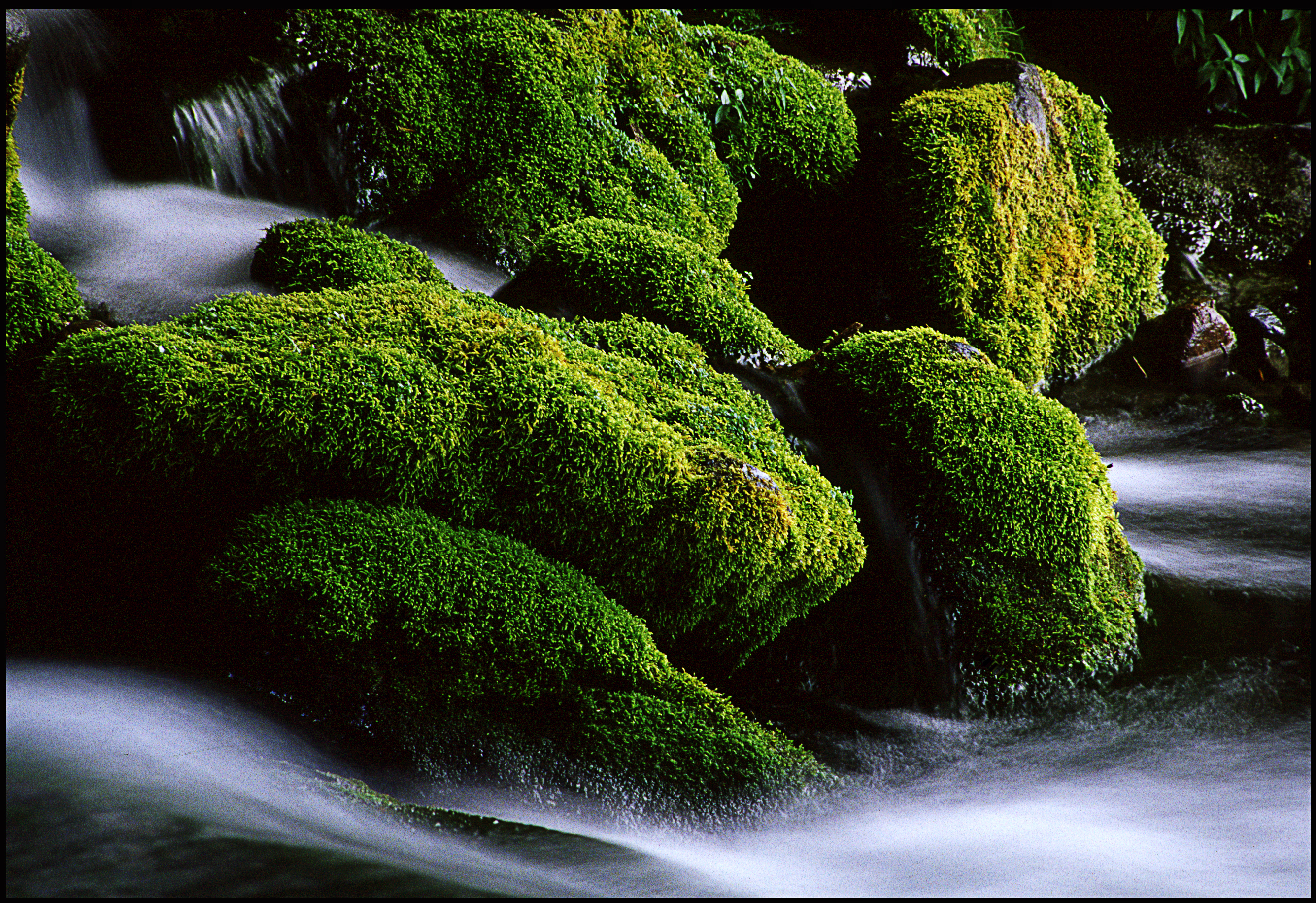
Water sculpture

What it is about water that has such a magnetic effect on photographers who wander ocean shores, the watersides of lakes and ponds, and river and stream edges in spite of slippery footing, and the occasional splash of water as they search of the perfect mood?

Whether crashing waves or clear reflections, water always adds interest to one’s images, and including a view of a flowing stream in a mountain landscape adds a great feeling of movement and mood.

The other night was one of those times that sleep would not come. I was tired, but thoughts just kept poking into my head and no matter what I tried, sleep evaded me.

I got up, turned on the computer, and manipulated a few images beyond recognition. That’s my usual recipe for putting myself back to sleep. However, this time that wasn’t working and after the fourth of fifth image I was bored, but not sleepy. So I decided I would start going through the list of photographer-bloggers I am connected to on WordPress. There are very few things I enjoy more than looking at other photographers’ work and the diverse circle of bloggers I regularly interact with are, if anything, entertaining and inspiring.

Street scenes, landscapes, cityscapes, wildlife, archaeology, and so many other genres, I read and viewed so many excellent photographs.

As happens to many of us when wandering the seemingly endless galaxy of the internet, I started searching “photographing water”, not so much for information, but to find the Google page that I knew would be filled with creative images of water.

There were photographs of water dropping into water, droplets on plants, or glass, and all sorts of surfaces, and wonderful images of waterfalls, streams, seashores, lakes and much, much more. I viewed page after page of excellent images, read lots of how-to advice and pondered many experienced photographers’ personal thoughts on pretty much everything related to photographing water.

Fall is coming fast here in British Columbia and with that the colours of the landscape will change. This is probably my favorite time to mount my camera on a tripod and wander to the waterside and start creating pictures.

I am really looking forward to doing lots of scenic/landscape photography in the upcoming months, and water will be playing a major part in what we will be photographing, I will be visiting nearby waterfalls and streams. There is the South Thompson River that flows along the valley I live in, and my wife and I are hopeful of a driving trip on the Washington/Oregon coast in October.

Regarding water, I found this quote by American novelist , “All water has a perfect memory and is forever trying to get back to where it was.”


As always I look forward to reader’s opinions. Thanks, John

My website is at www.enmanscamera.com


Thoughts about Neutral Density Filters for Photography

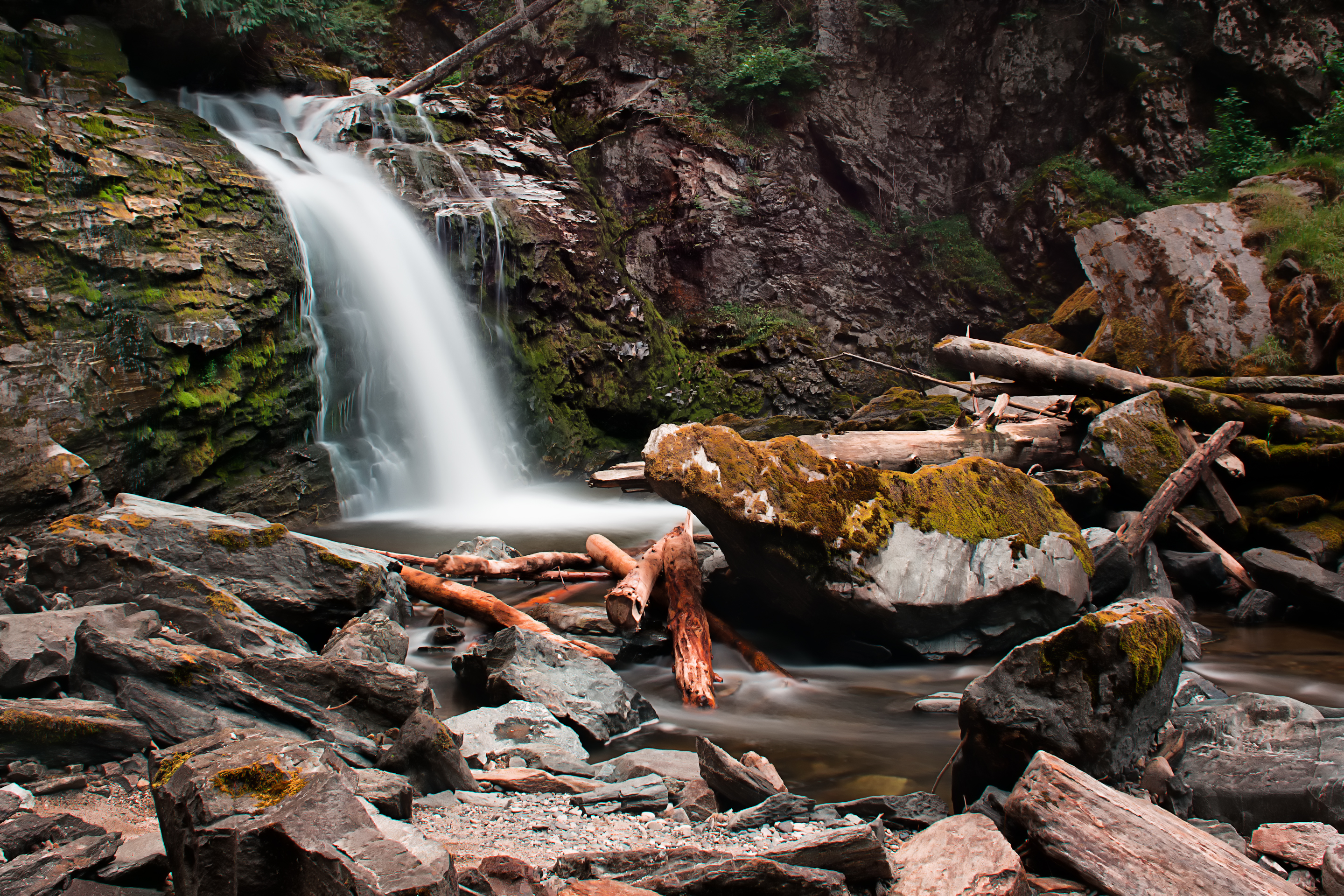
Chase falls in August

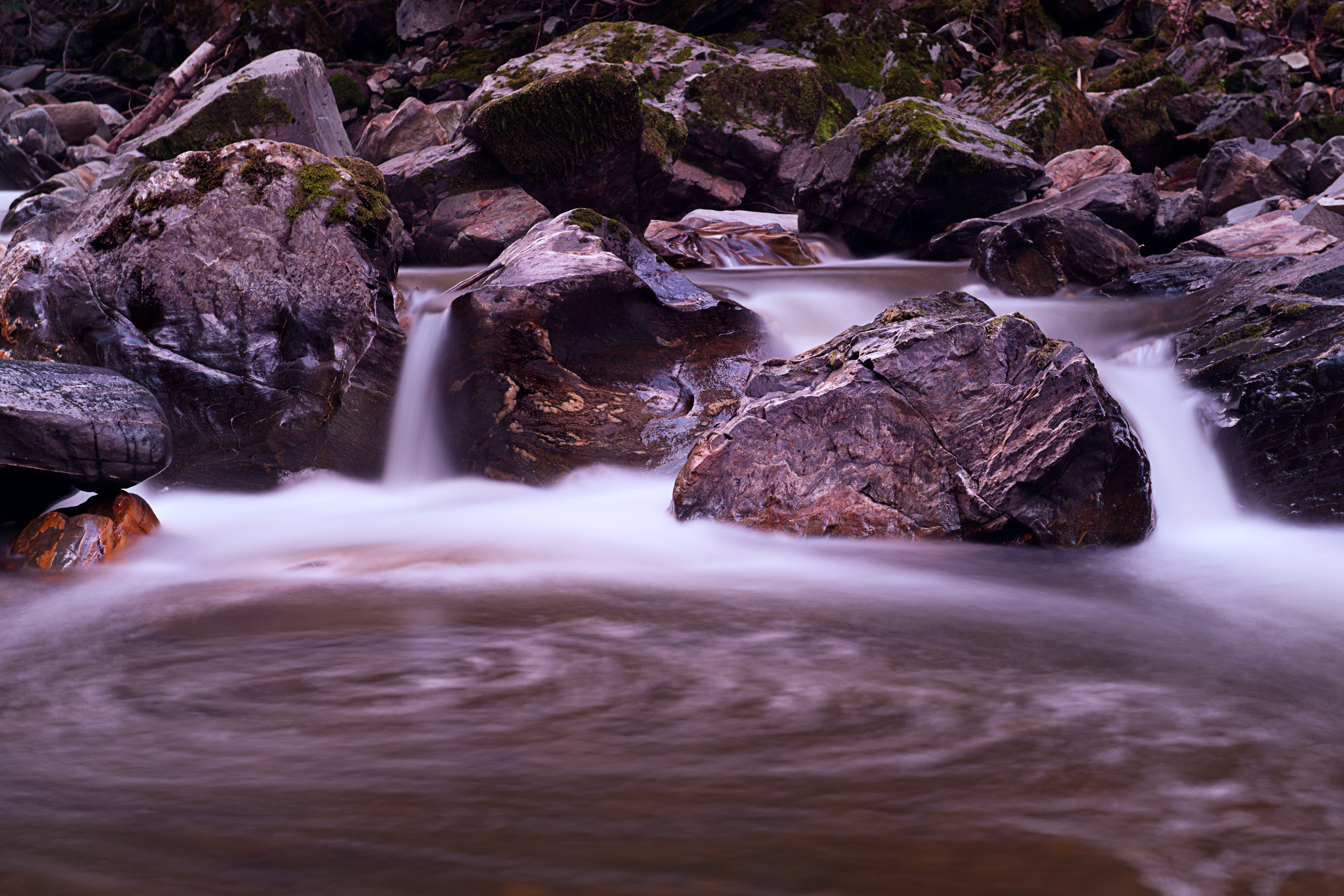
Cool waters

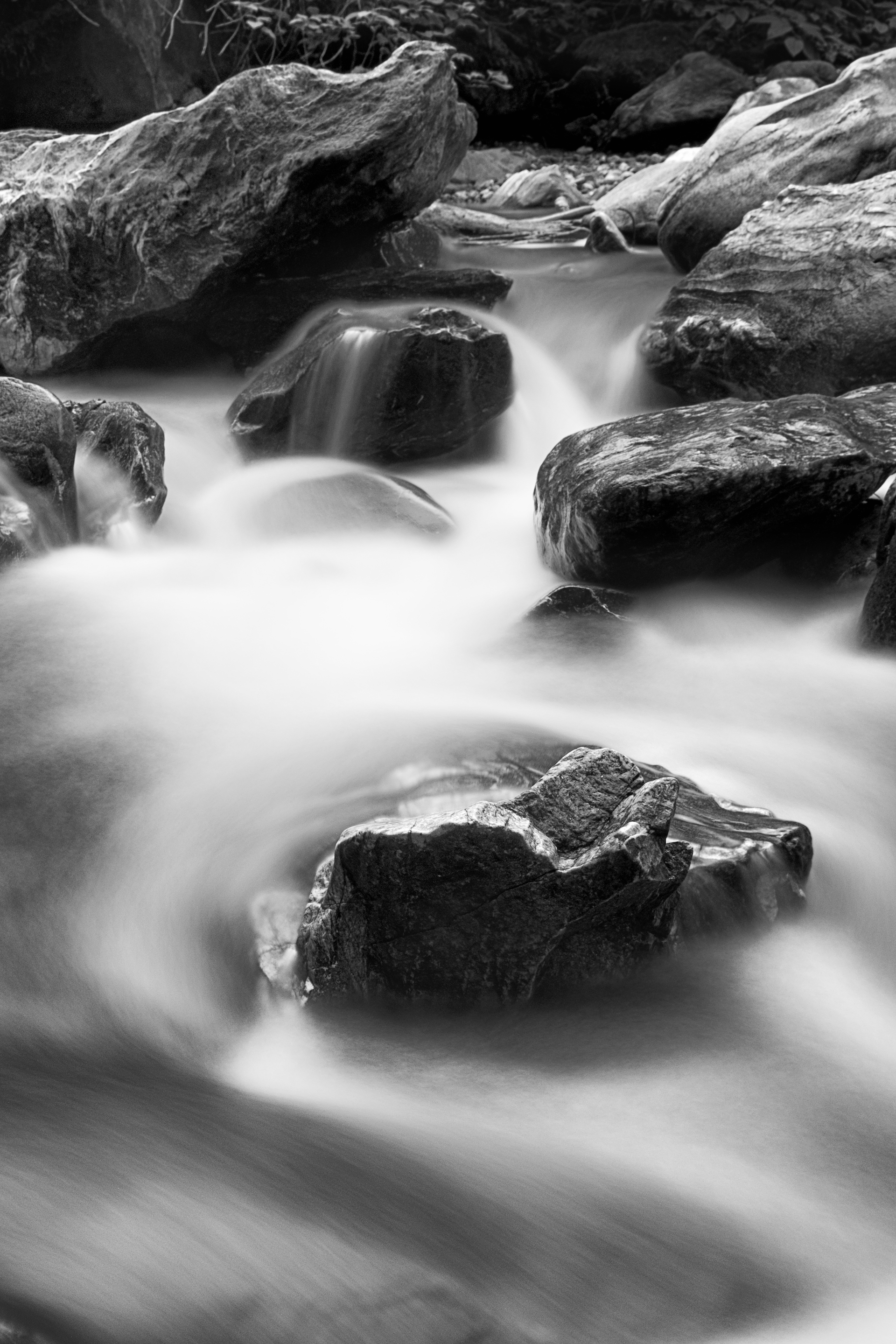
White water

A neutral density filter is a clear, colourless, filter that reduces the intensity of all wavelengths, or colours of light, equally. It is usually a colorless (gray) filter that reduces the amount of light entering the lens. A photographer can select exposure combinations that would otherwise produce overexposed pictures. Using a ND filter allows a photographer to achieve a very shallow depth of field, or motion blur.

I’ll begin by saying quality ND filters have always been expensive. During the days of film, the exposure you made was the exposure you got. And when one used colour film one didn’t get a second chance if there was a colour shift, usually a purple cast, with less expensive filters. Some cheap filters weren’t all that sharp either.

I thought about that when during a workshop the leader loaned me a couple Lee filters (over a hundred dollars each) to try on long exposures of the waterfall we were photographing. He indicated if I were to order through him I could get a discount.

I’d already spent a bundle on costs including travel and lodging, and owned ND filters that worked well so I passed on the deal and came home thinking about maybe a future purchase.

My memory of ND filter problems were from the time of film. Film has a permanence that data files created in our modern digital camera don’t have.

Colour balance in film means colour correction filters. Where as, with digital I mostly leave my camera on auto white balance, and fix any shift when I open my RAW files in Photoshop.

A photographer could somewhat help a soft image when shooting black and white film by increasing the contrast, but with colour it was permanent. Nowadays, we have a number of software possibilities that can almost (well, almost) fix a not-quite-in-focus image.

With all that in mind I thought that unless I was making very large prints that those cheap ND filters might be usable. So I ordered several very inexpensive, no-name ND filters thinking the $60.00 or so I spent might be foolish, but I’d have some fun and discard them if they didn’t work.

I bought them, put them away and forgot about them. Then this past week as I sat looking at the overcast sky after a much-needed shower in the parched hills around my home, I decided to give those filters a try. I grabbed my camera, tripod, and the bag of filters, talked my wife into coming, and drove to a local waterfall.

The Chase Creek falls weren’t the raging torrent of spring or early summer. This year’s long, hot, dry spell has had an effect and capturing an exciting waterfall wasn’t possible. I tried a couple different angles, scrambling around the rocks and down to a now sandy shore, and then a group of young people came to splash in the cold water so I moved downstream in the creek. I was getting bored anyway and didn’t mind giving up my spot to those kids and their blanket.

Returning home, I loaded my RAW files in the computer, easily corrected the white balance, added contrast and sharpened the image in Photoshop.

My conclusion is those inexpensive ND filters are great if one is willing to shoot in RAW and make post-production corrections. I think an out-of-the-camera JPG would be disappointing.

I expect there will be opinions by experienced photographers who read this. However, the images look pretty good on my calibrated 30-inch Mac display screen. I haven’t made any prints, but I expect 8×10’s might be just fine, and if just sharing images on-line I think inexpensive ND filters will be fine.

I look forward to any comments. Thanks, John

My website is at www.enmanscamera.com
Thoughts on Street Photography

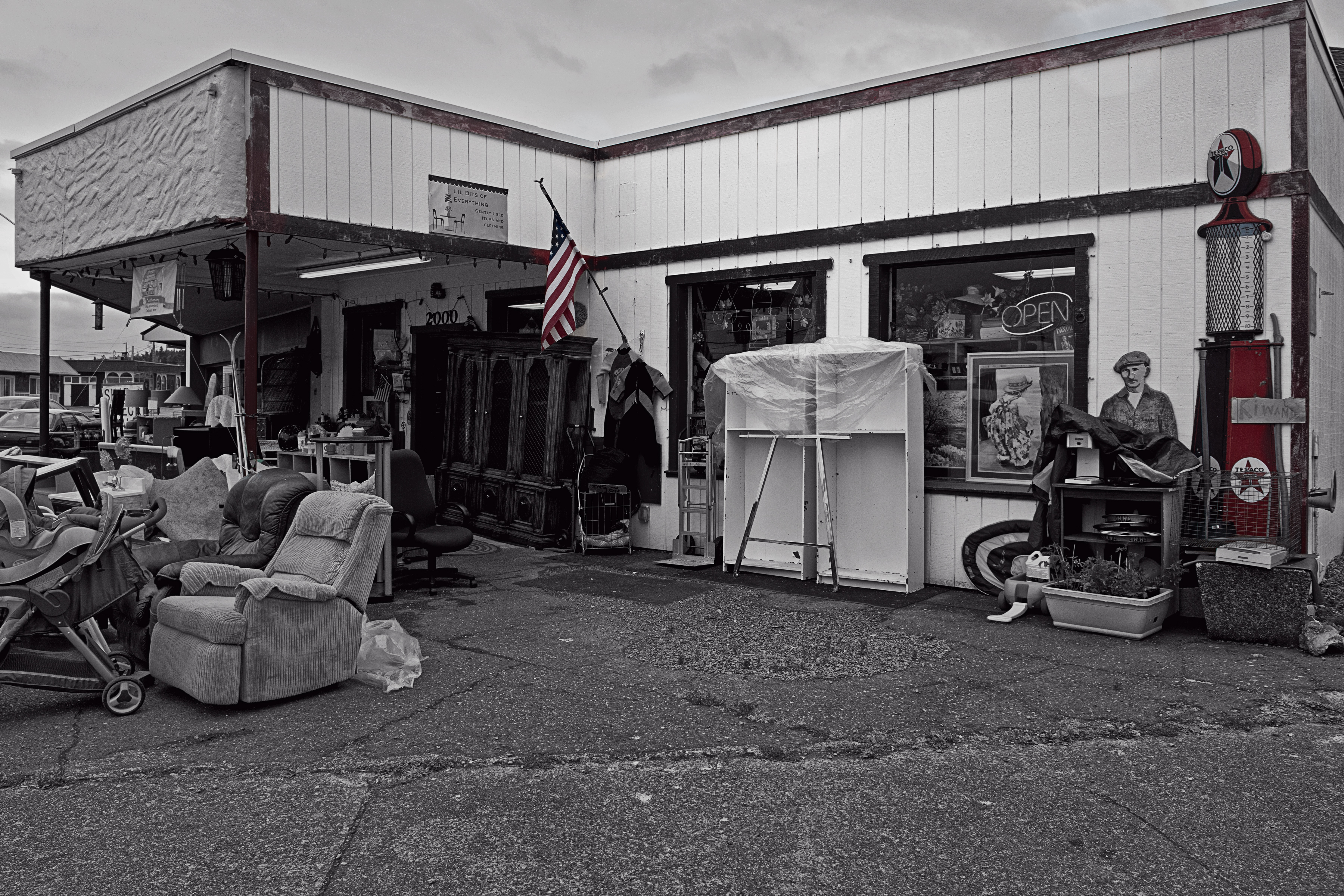
Thrift shop

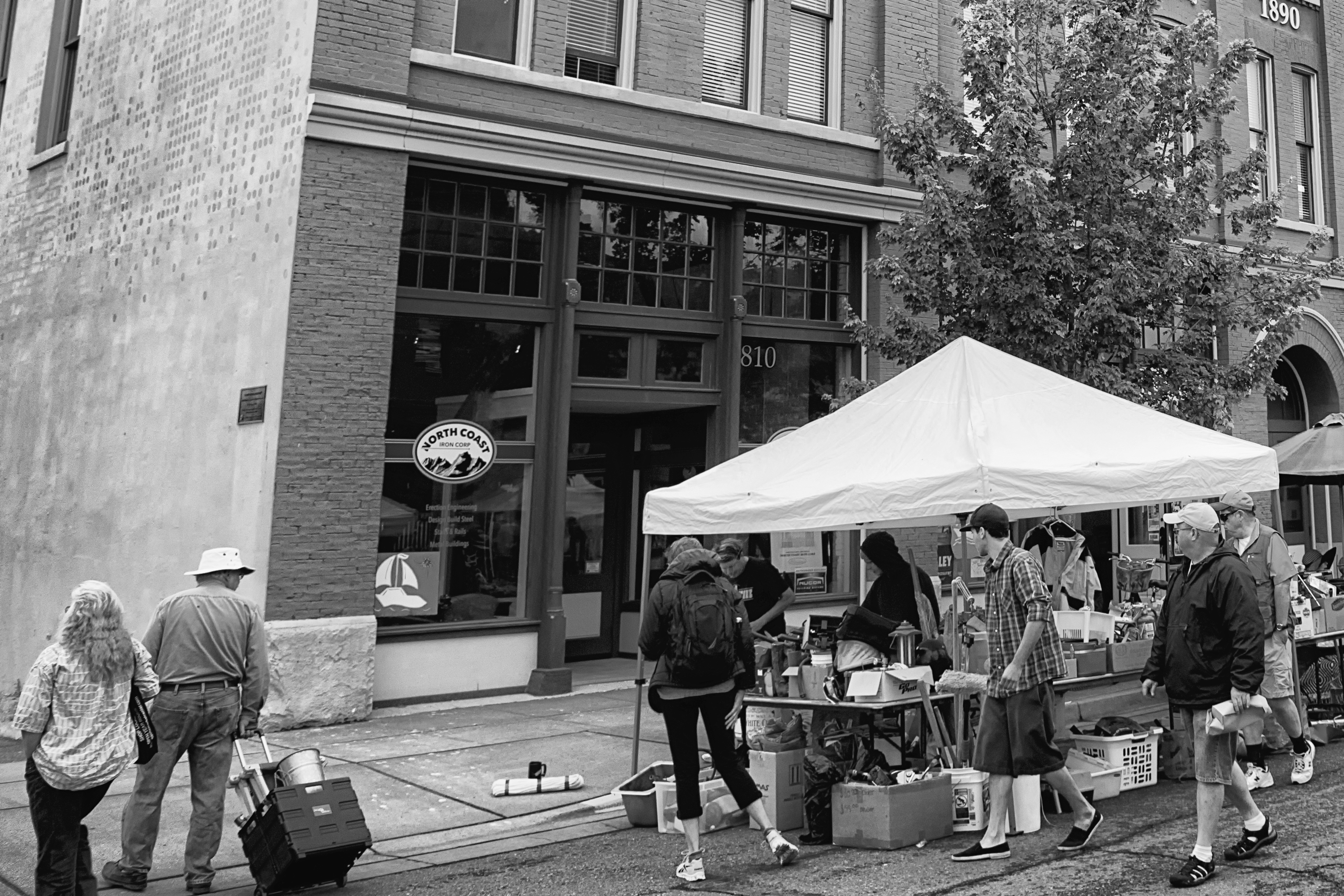
Great shopping

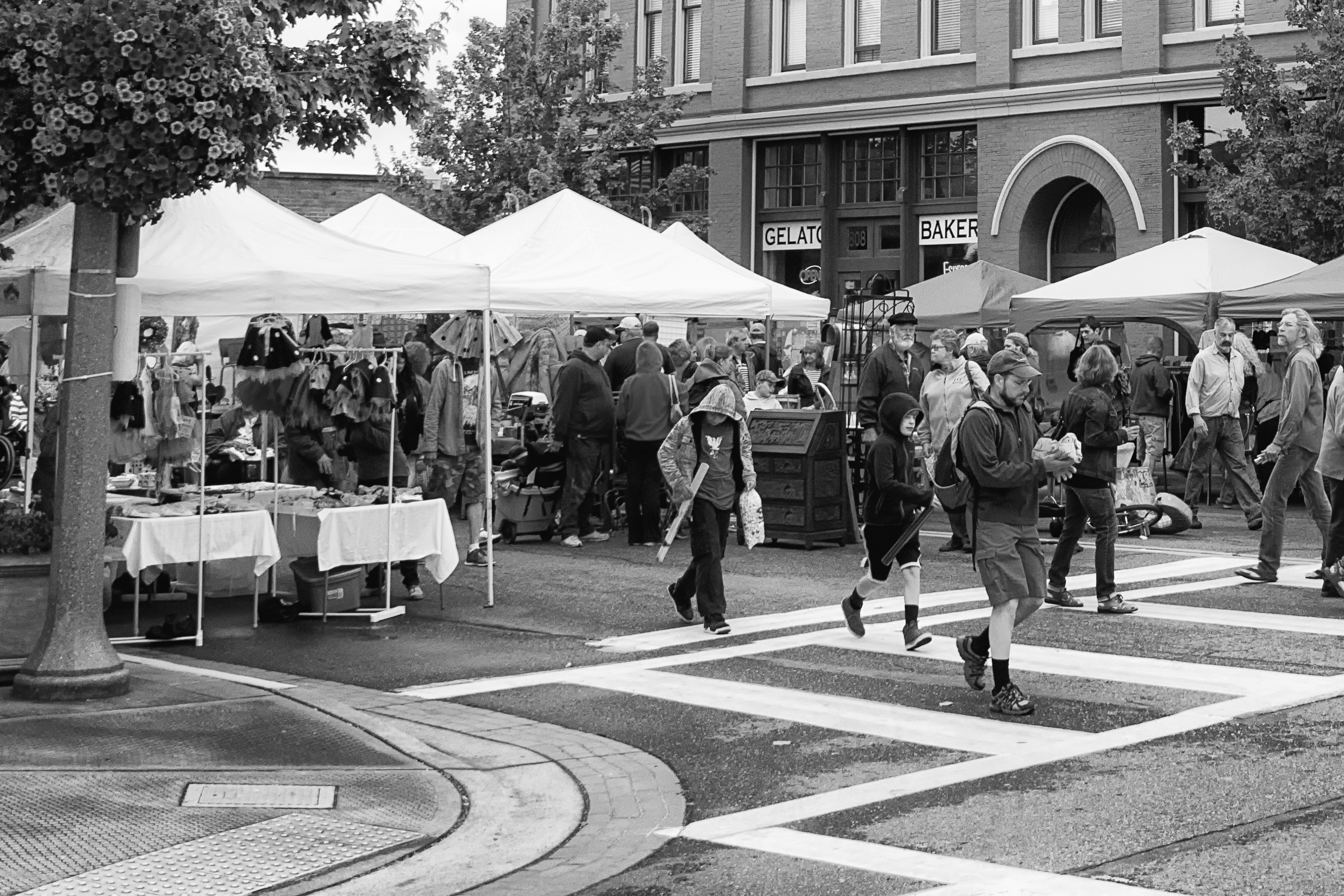
Bakery

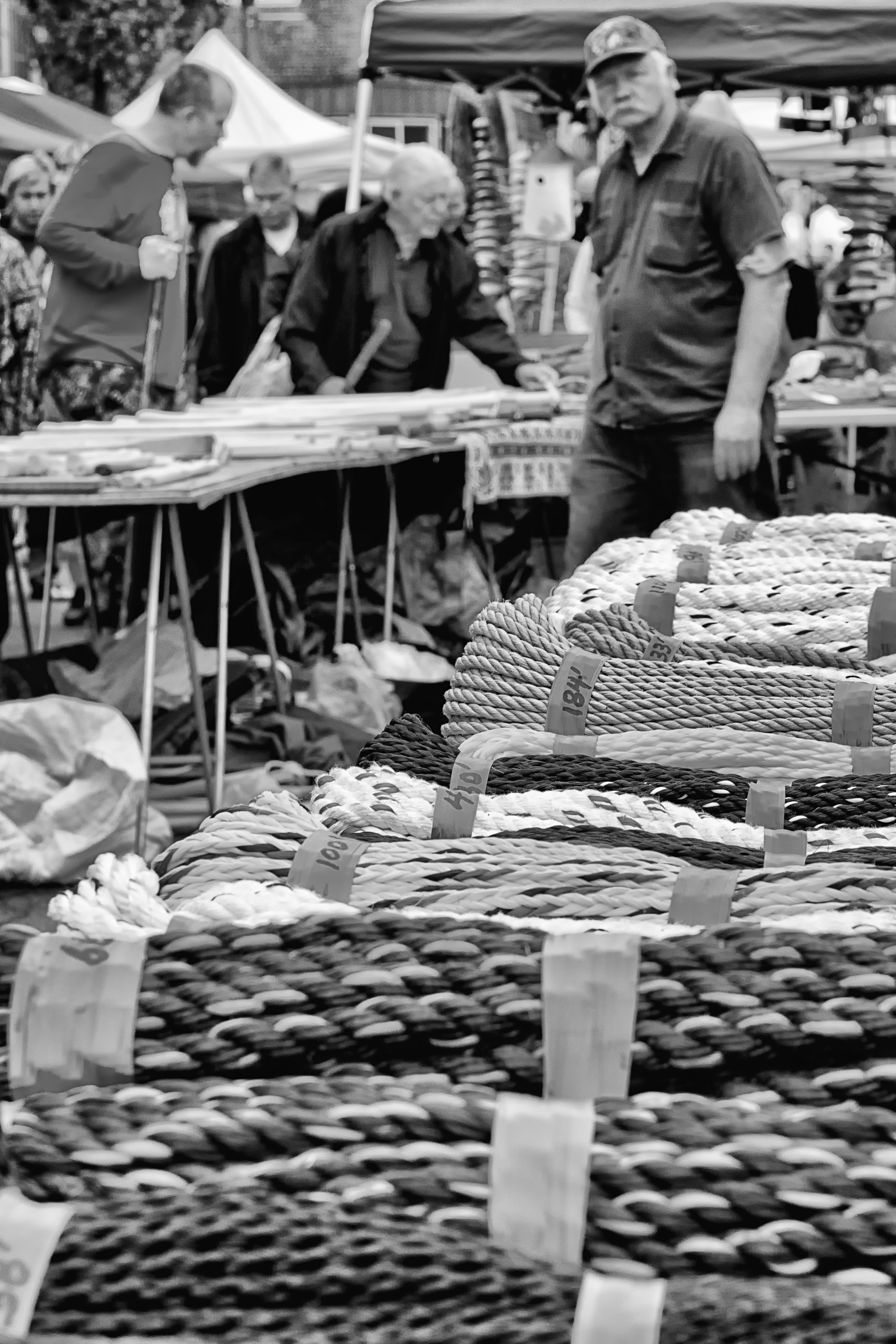
Rope guy

Waiting at the Festival

Of all the recent trends that has increased in popularity since digital cameras, it is street photography that intrigues me the most. Street photography is not a new phenomenon and has been around since the beginnings of photography. Just check out the work of French photographer Eugene Atget in the late early 1800’s, or Fred Herzog’s photos in 1950’s and 1960’s Vancouver, Canada. In spite of the long history the pastime is still a niche in the broad spectrum of interests that photographers have. However, I am spending more and more time viewing intriguing images of life on streets around the world captured by talented modern day photographers.

Wikipedia says, “Street photography is an art photography that features the human condition within public places and does not necessitate the presence of a street or even the urban environment…The origin of the term ‘Street’ refers to a time rather than a place, …when workers were rewarded with leisure time…and people engaged with each other …more publicly and therein the opportunity for the photographer.”

I’ve never been good at street photography. I have made a few pictures worth viewing, but I become more occupied with man-made things and get side tracked with some building’s shadow and miss those interesting people shots captured by photographers adept at seeing what I pass by.

On my recent visit to Anacortes, Washington, I did try a bit, but I quickly realized that with my big DSLR camera I was attracting too much attention. Whenever I stopped people slowed, turned to face me, and watched.

Since I started discussing photography on-line I have come in contact with some very skilled street photographers and regularly visit their blogs and websites to view their creative work. Those photographers don’t usually add comments, letting their work speak for itself, however, I found a discussion by Los Angeles street photographer, Eric Kim, and the following are some of his thoughts on being a street photographer.

Mr. Kim writes, “…When you start off in street photography you will be inspired by all these other photographers you see. You will look at their work and be amazed by their photos…my advice is this: start off copying the photographers whose work you admire. All the great renaissance painters started off as apprentices. They copied their masters for years, and learned all the basics and fundamentals. And once they mastered the basics, then they were able to go off and find their own voice.”

He counsels us to, “Follow your curiosity.” and says, “As a photographer you are a scientist. You experiment to find new results.”

Kim continues, “When I started photography I always thought it was my gear which held me back. I felt my camera or lens wasn’t good enough…but what I realized is that I was simply lacking education…I didn’t dedicate myself to learn enough about photography. I simply thought that buying gear would help me become inspired, and therefore become a better photographer.” I couldn’t agree more with him when he writes, “…education is the best investment money can buy. Education is something that will always stay with you, in your mind, thoughts, and actions.”

While writing this I thought about all the advice I could have gotten just by asking the talented street photographers I have come in contact with in the last few years. Those interested will find that a quick search will show many photographers to look at and from whom to learn. There is also “The International Collective of Photographers” at http://www.street-photographers.com/

I’m not ready to start roaming city streets yet, but there is a local Fall Fair coming up in September. That environment, with its festive participants, might be the perfect place to search for that decisive moment.

I always appreciate any comments. Thanks, John

My website is at www.enmanscamera.com
 

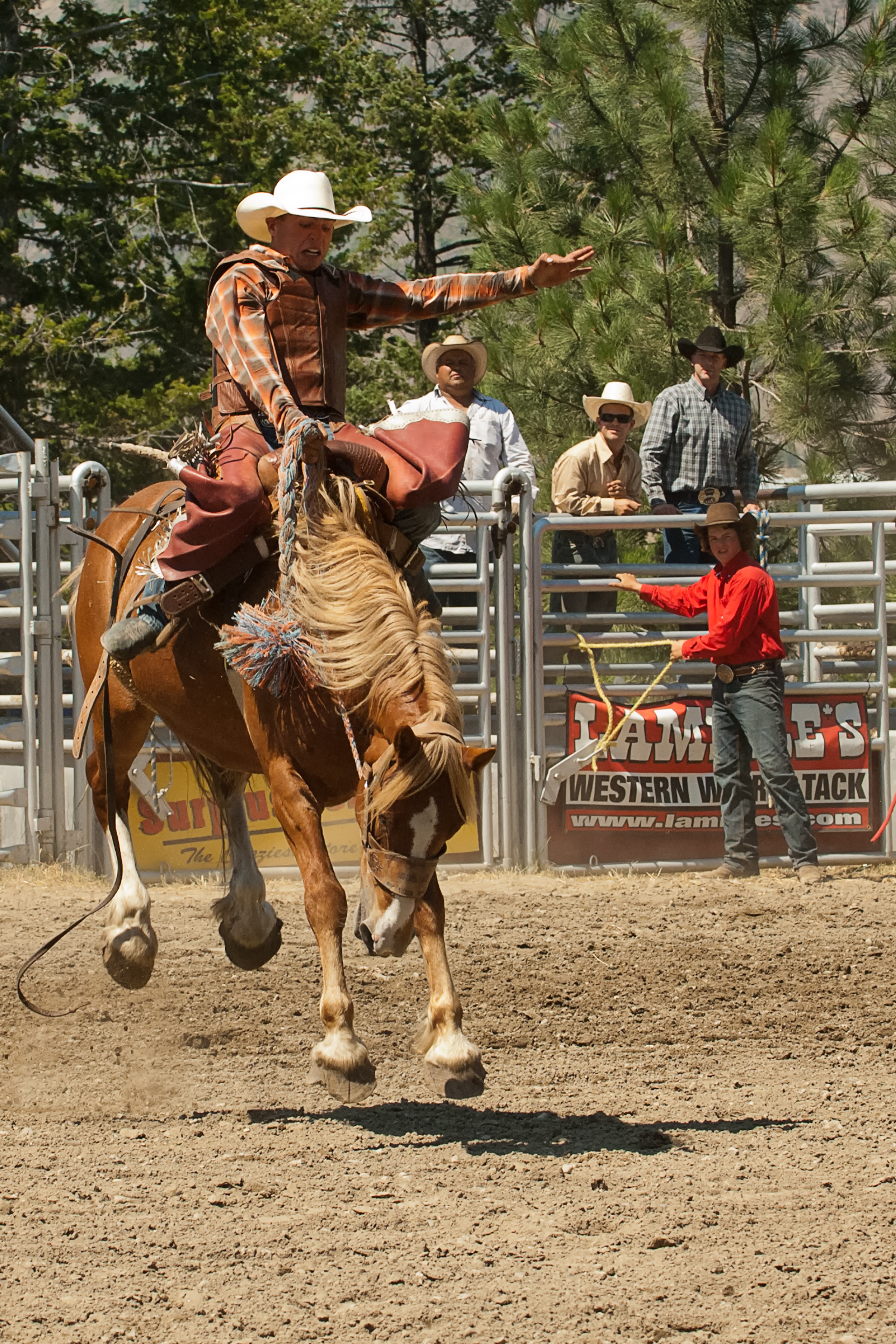
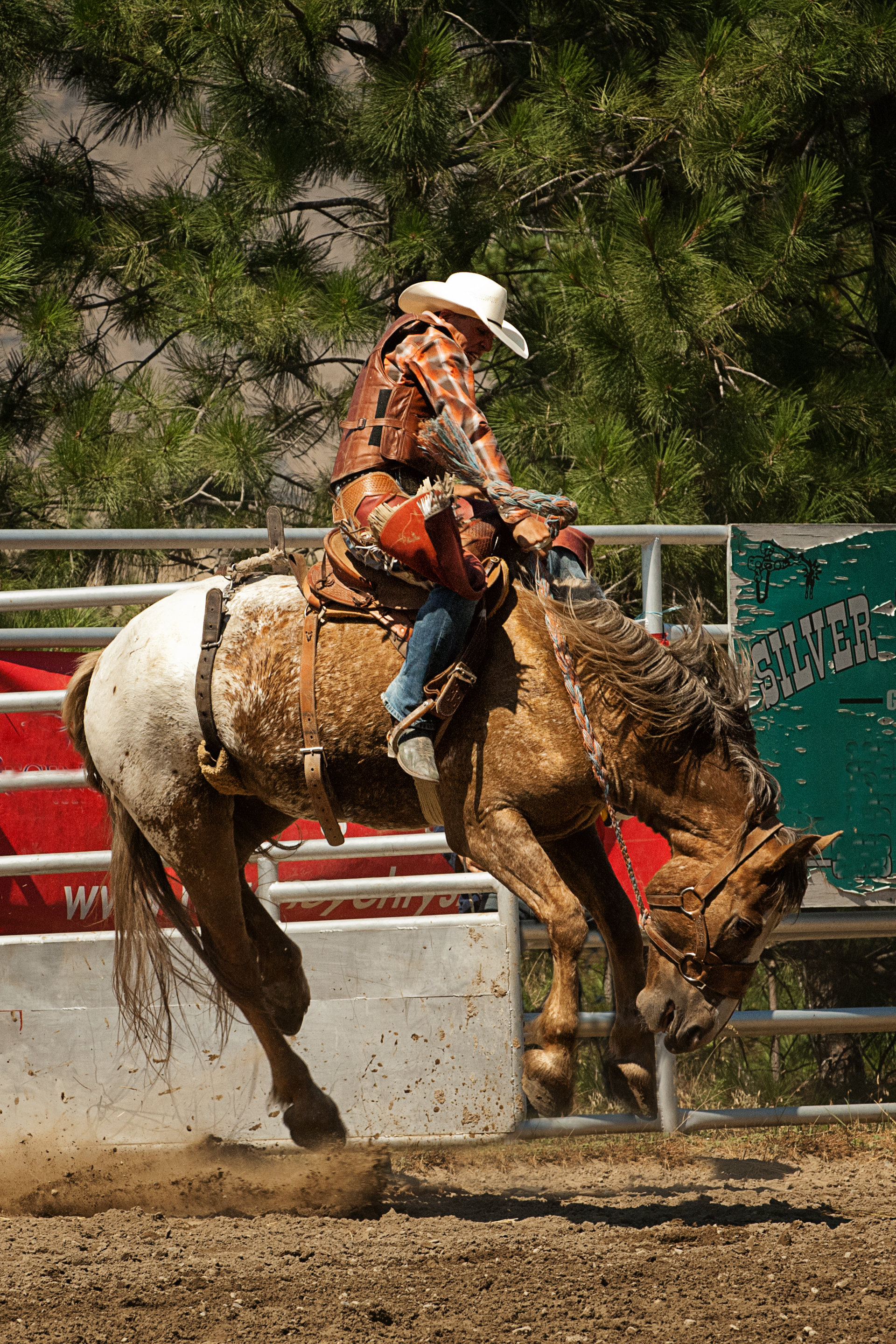
A Fun Day Photographing the Pritchard Rodeo.


A family event

Ride 'em


Doesn't look safe


Excellent riding


Horse 1 cowboy ?


JRE_6489 copy


Trick rider


Take-off


Bronco


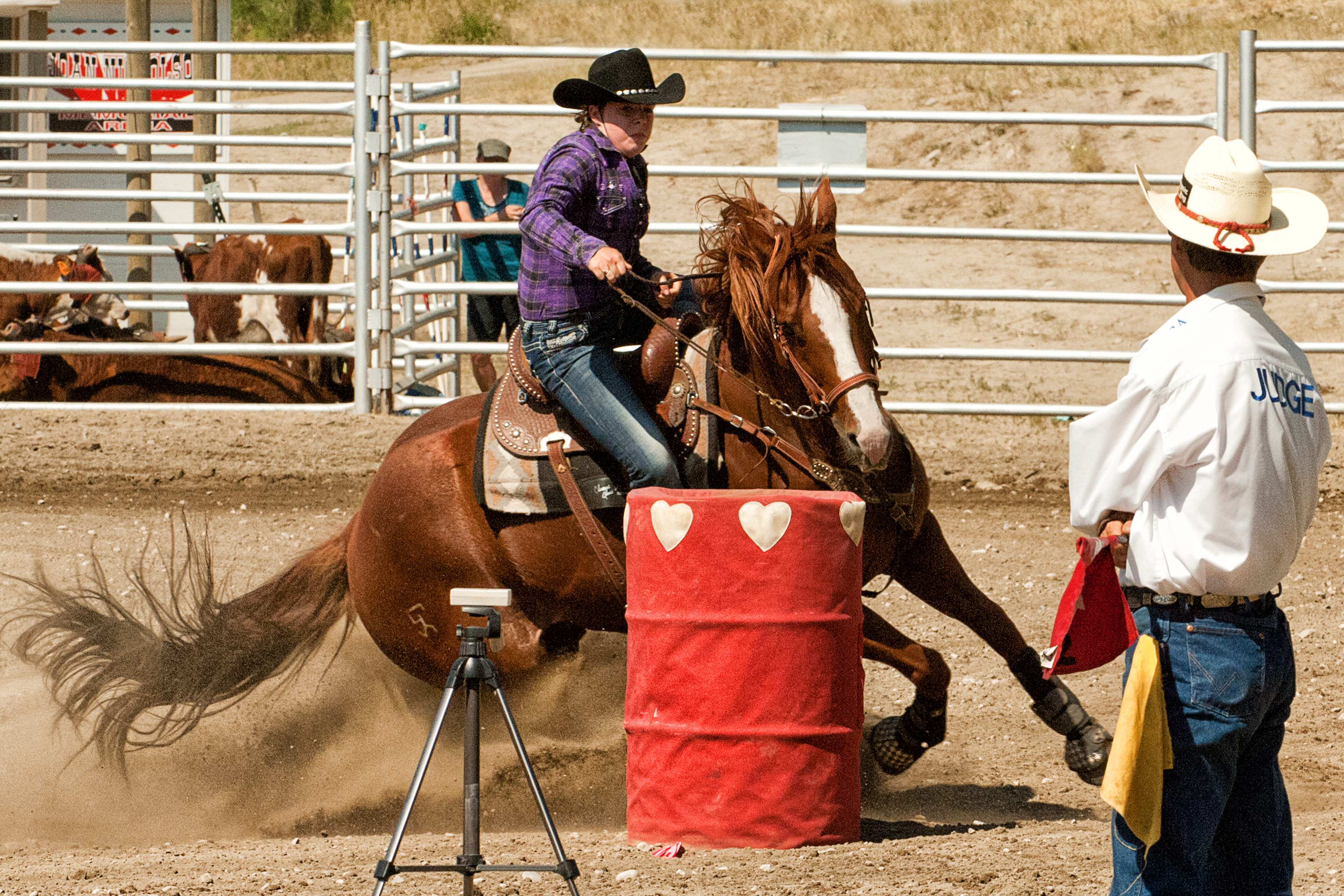
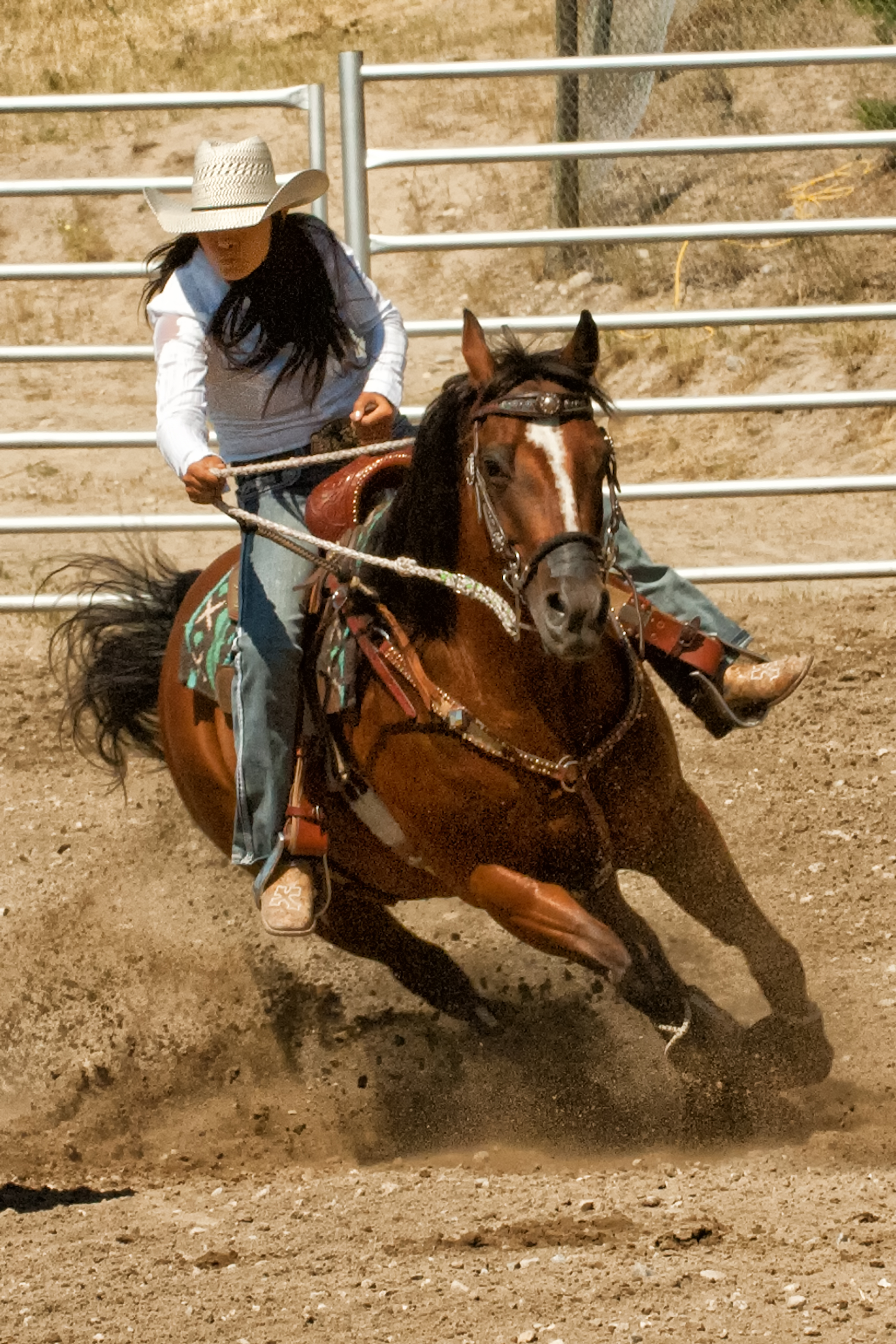
Barrel horse & Rider


Barrel Rider


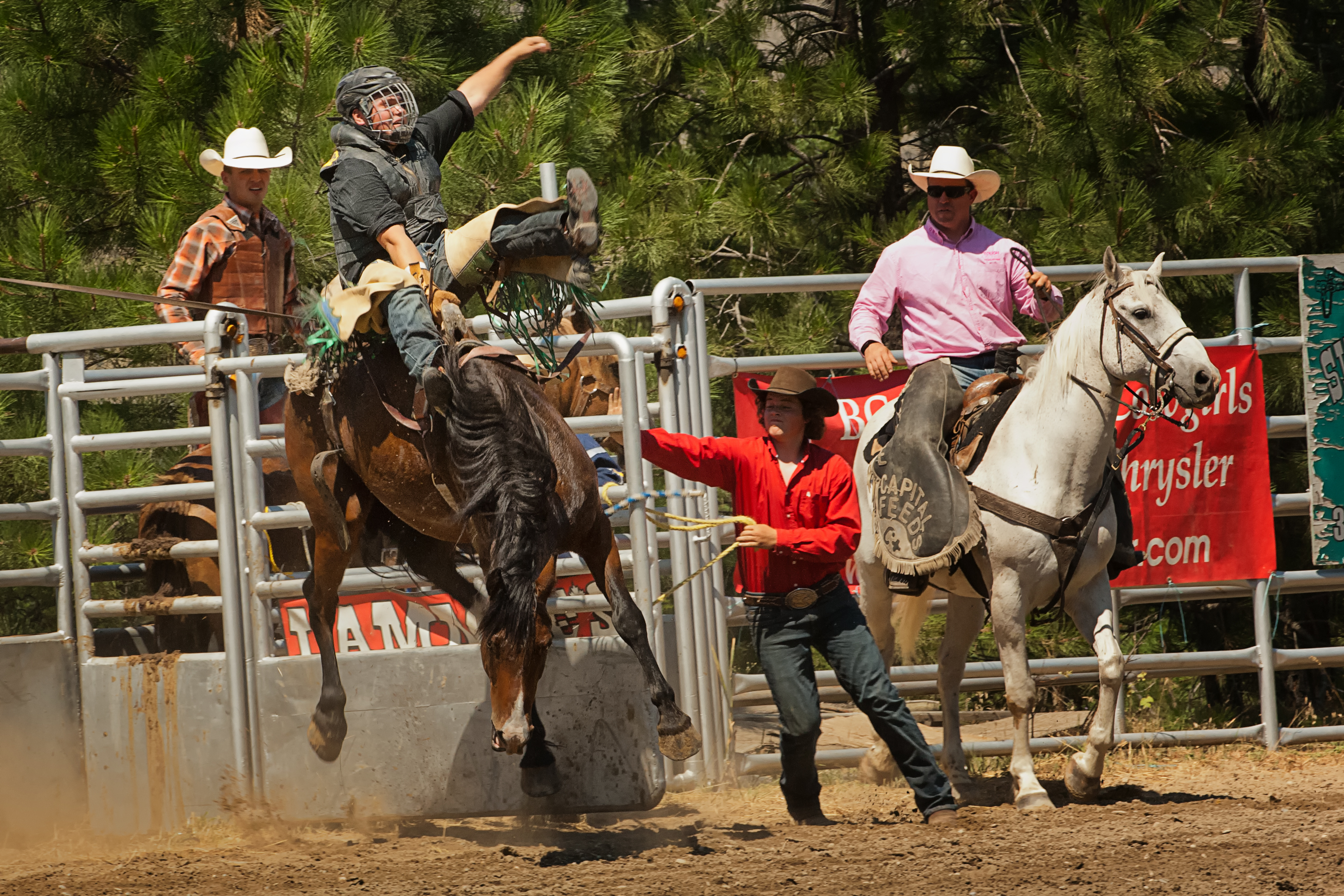
Leaving the shute

Every year I look forward to spending a dusty, fun-filled day pointing my camera lens thru the arena rails at the Pritchard Rodeo in Pritchard, British Columbia Canada.

My wife dropped me off and I walked down the dirt road to the arena. Events had already begun, and as I looked around at lots of familiar faces I spotted Karl Pollak, his Nikon cradled in one arm waving at me. Karl had driven four hours that morning from the large metropolis of Vancouver to attend our small rural community rodeo.

He had brought another photographer, Meko Walker, and this was her first time at a rodeo. As we were introduced, happy as I was to see Karl, meet Meko, and shoot with the two of them, I wondered how these photographers from the moderate humid climate of a coastal city were going to cope with the sunny, cloudless, windless, extremely dry, 40 degree Celsius day.

There was a lull in the action as we talked and the Pritchard fire department’s water truck drove around the arena spraying water. We moved aside continuing our conversation (protecting our cameras from the water), but two young girls ran rail side laughing as they danced around in the wet, cooling spray.

While we waited, sitting on the edge of the hill that ran down from the bandstand, I asked Karl why he would come all the way when there were other rodeos closer to Vancouver. He replied, “I like the wild location. Look at the hills, and trees, and all the open space.” And after snapping a wide angle shot of the arena the added, everyone is so friendly, they say hello even though they don’t know me, and there is a beer garden with people drinking, but no one is getting drunk, being loud, or causing trouble.”

The Pritchard Rodeo grounds are perfect for photographers. The arena is enclosed with a strong metal fence that’s safe to stand close to and doesn’t restrict the view. Of course, one has to be careful when excited horses are getting ready for the Barrel Race, but heck, it is a rodeo and one must remember that the animals, like any other athletes, are focusing on what they are about to do, not some silly person with a camera.

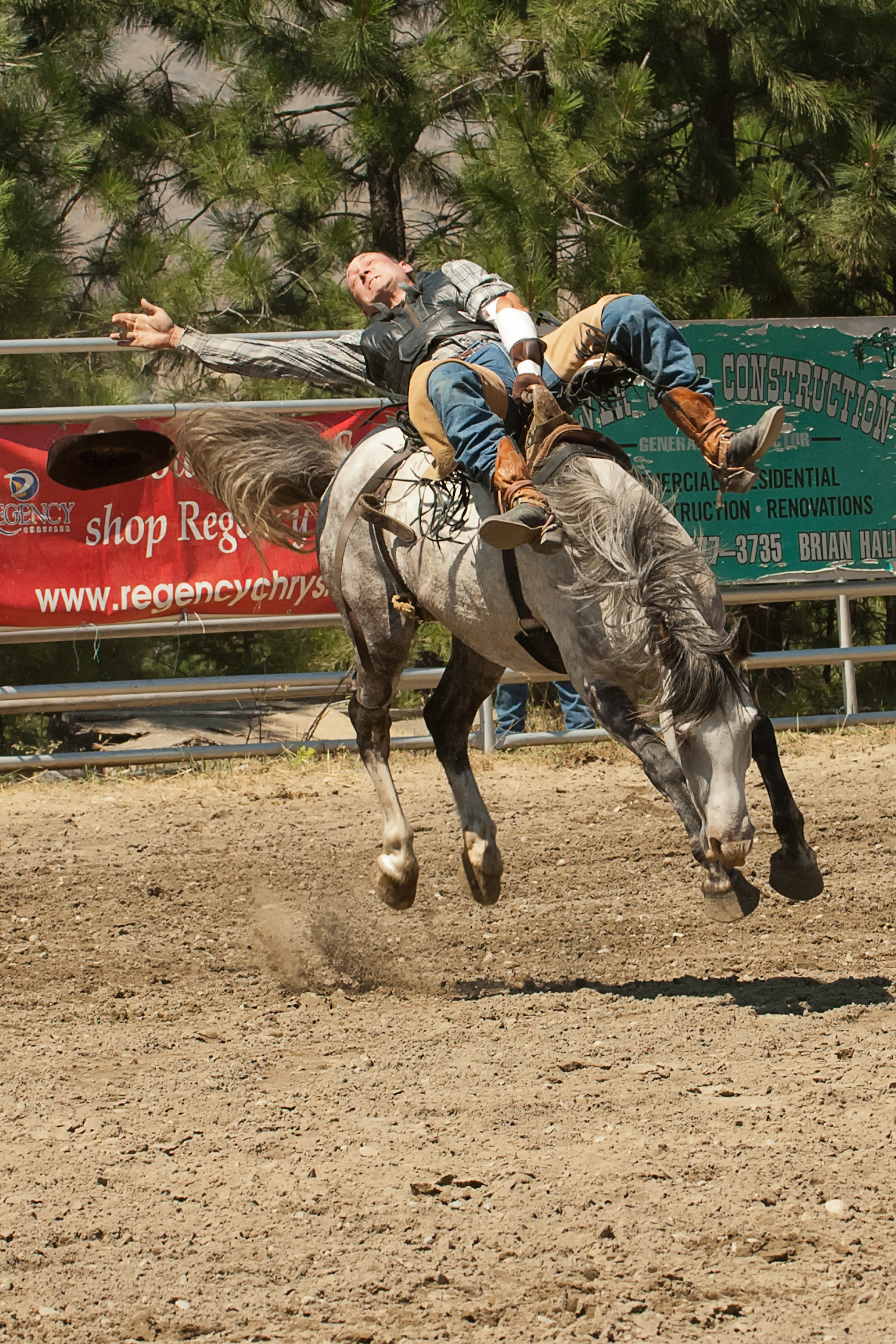
I like that rodeo, and as I wrote, every year I look forward to photographing it. I like capturing things that move fast, it challenges me to think and I enjoy the test of wills between animals and riders. Photographing any action event is fun, and one can be sure there will be action at a rodeo.

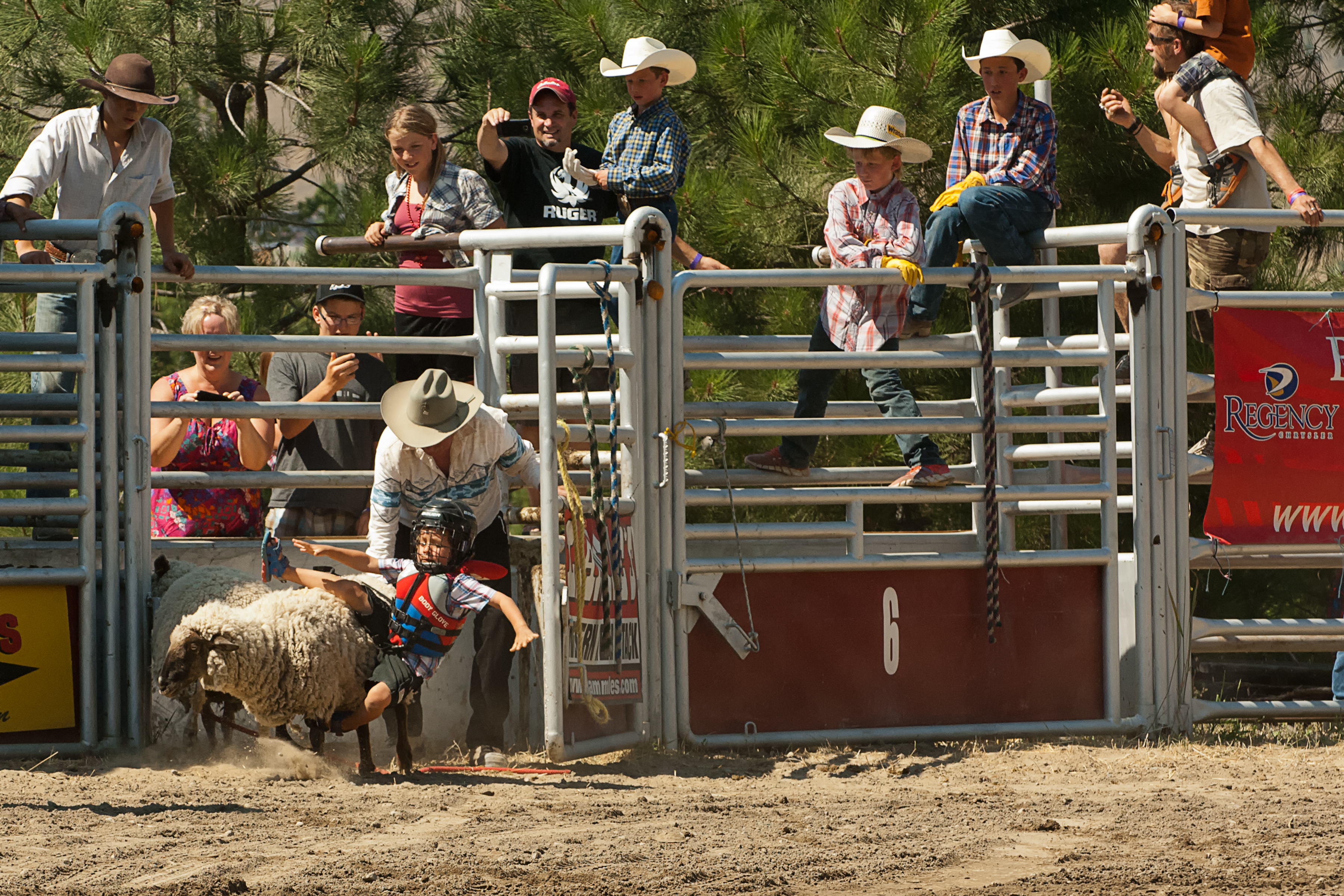
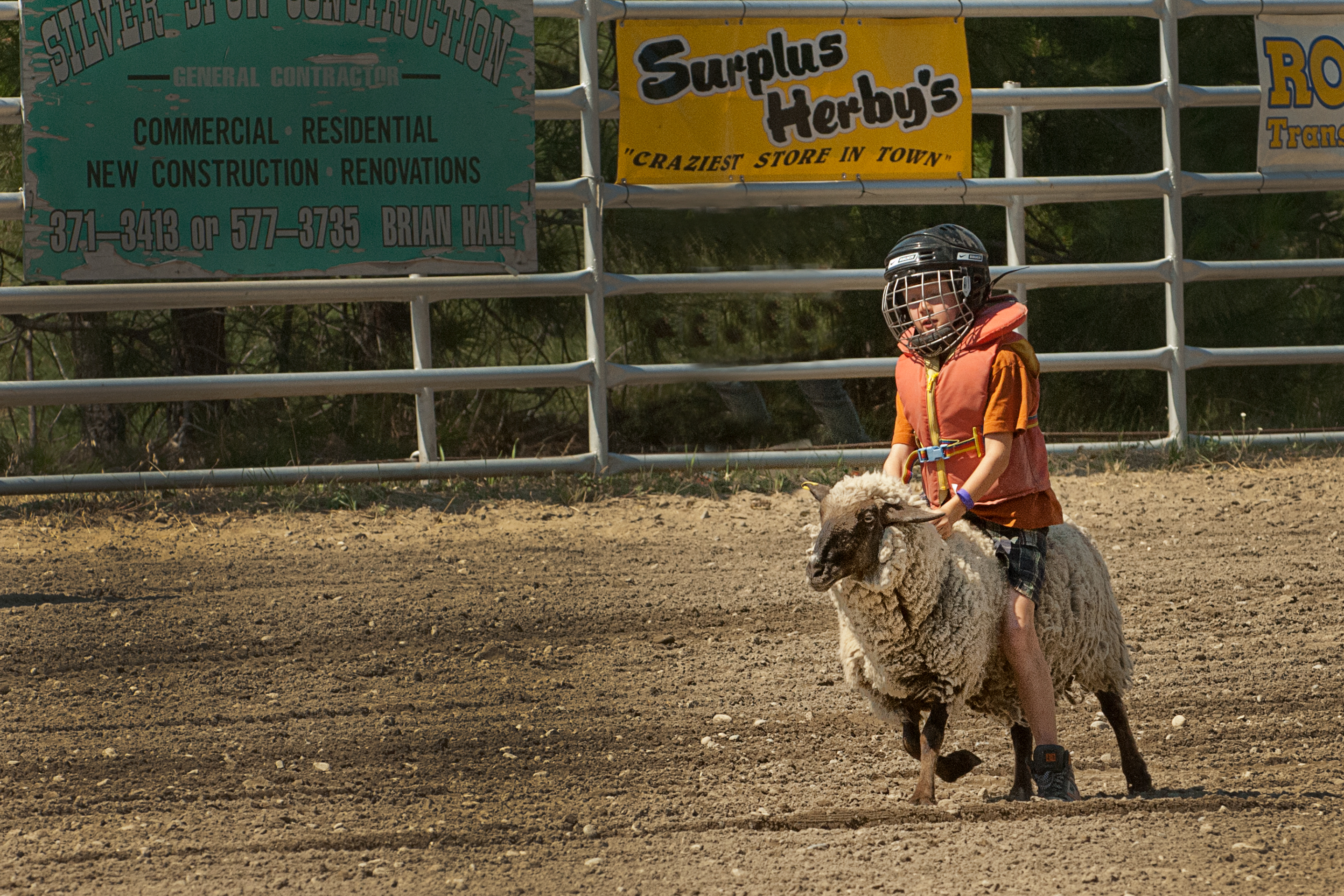
This year they added children’s sheep riding. I don’t know who is more bewildered, the poor kids being coaxed along by their parents, or the sheep trying to figure out why there is something on their back and why some big human is trying to persuade them to leave the enclosure they were just herded into. When the sheep finally were cajoled to move, the young rider would usually slide off, and fall to the ground pretty quickly. After all wool is slippery.

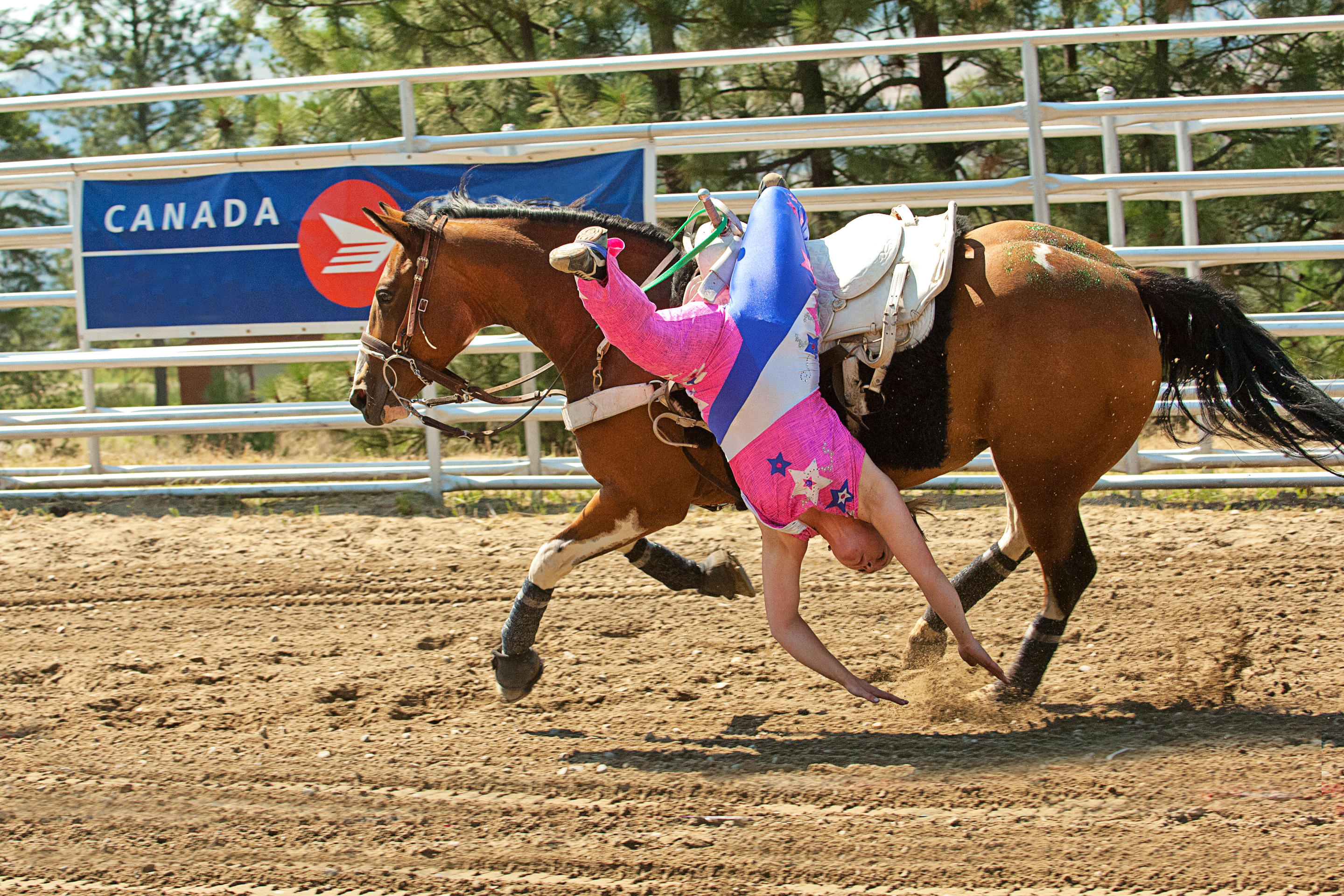
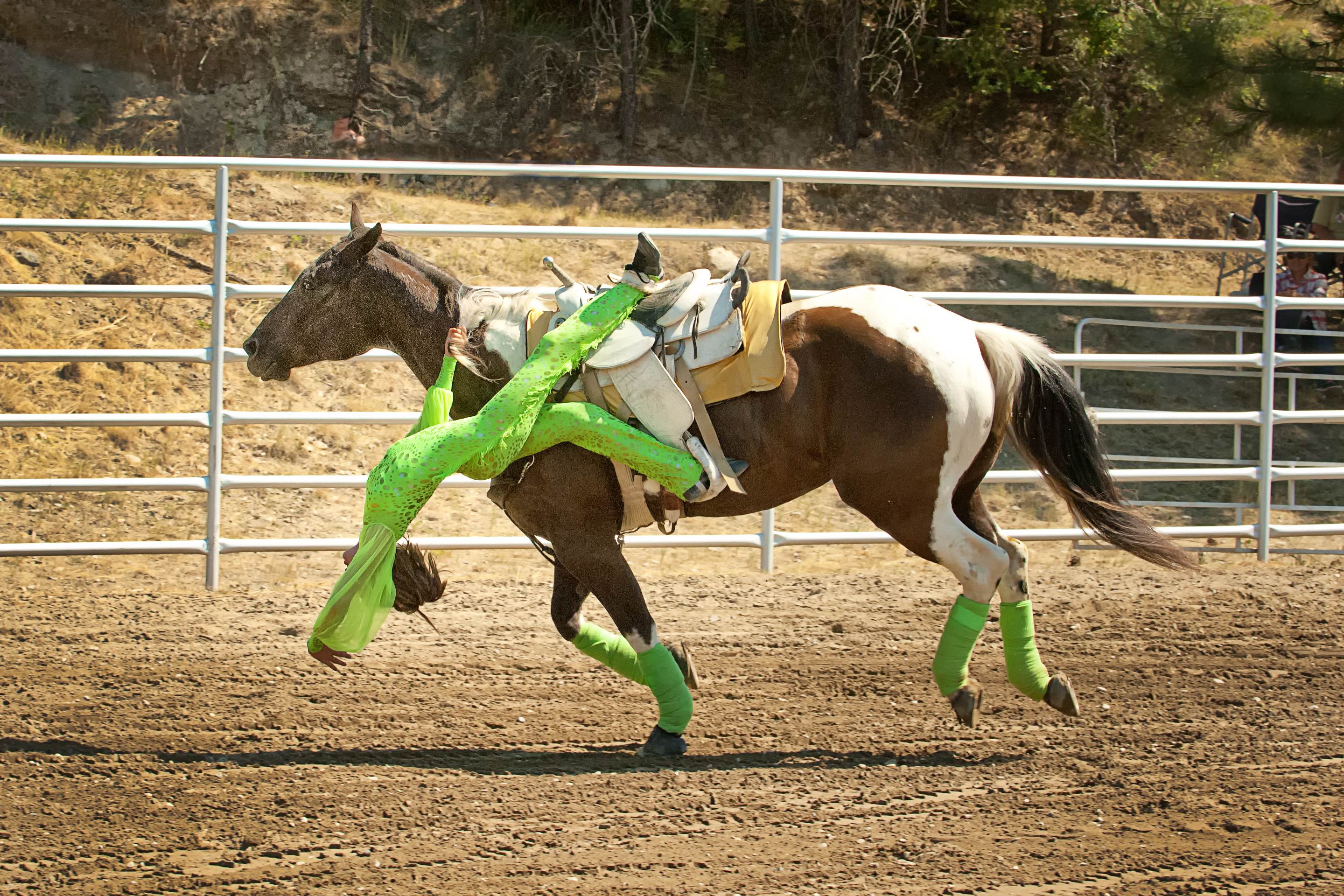
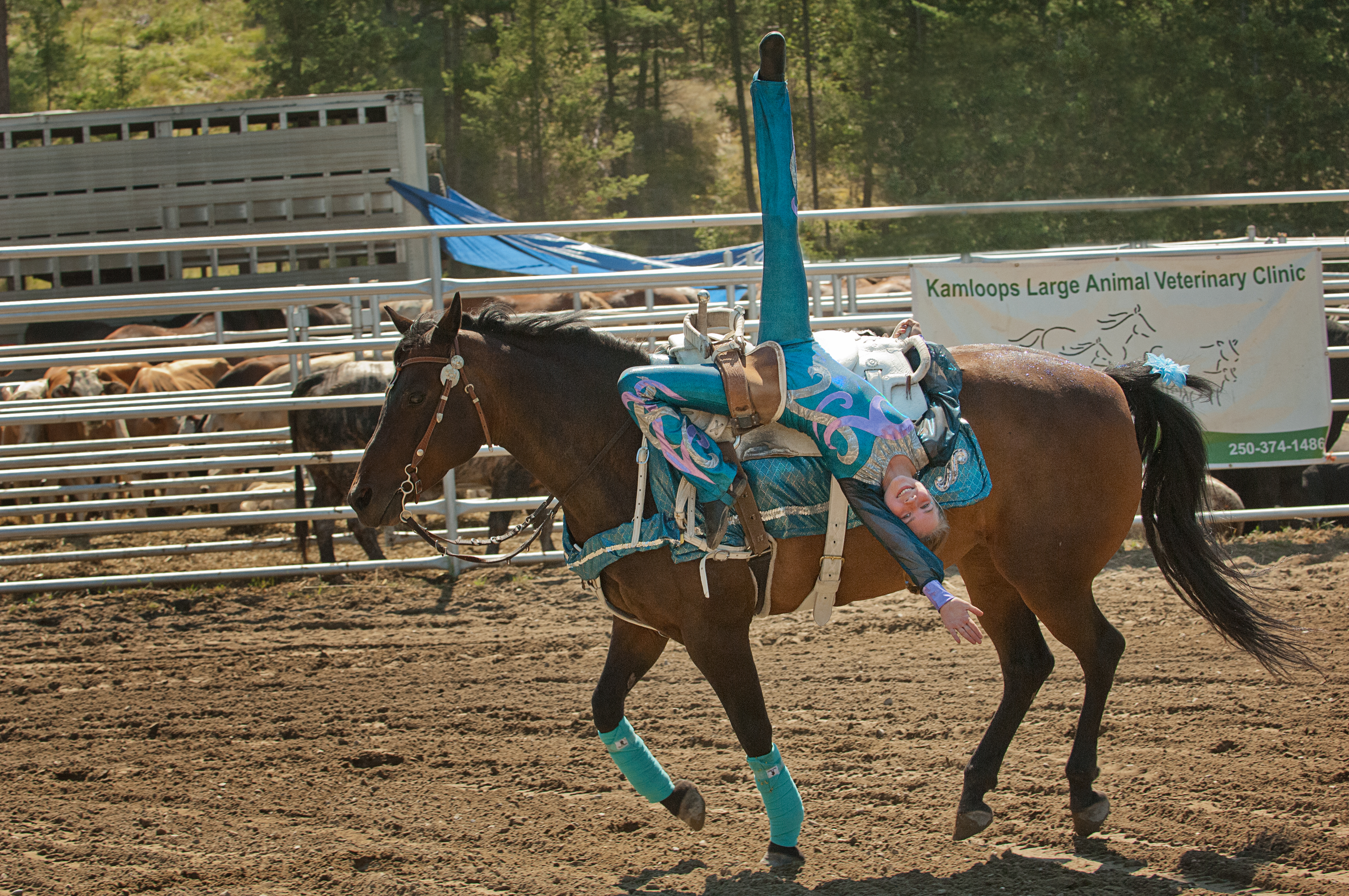
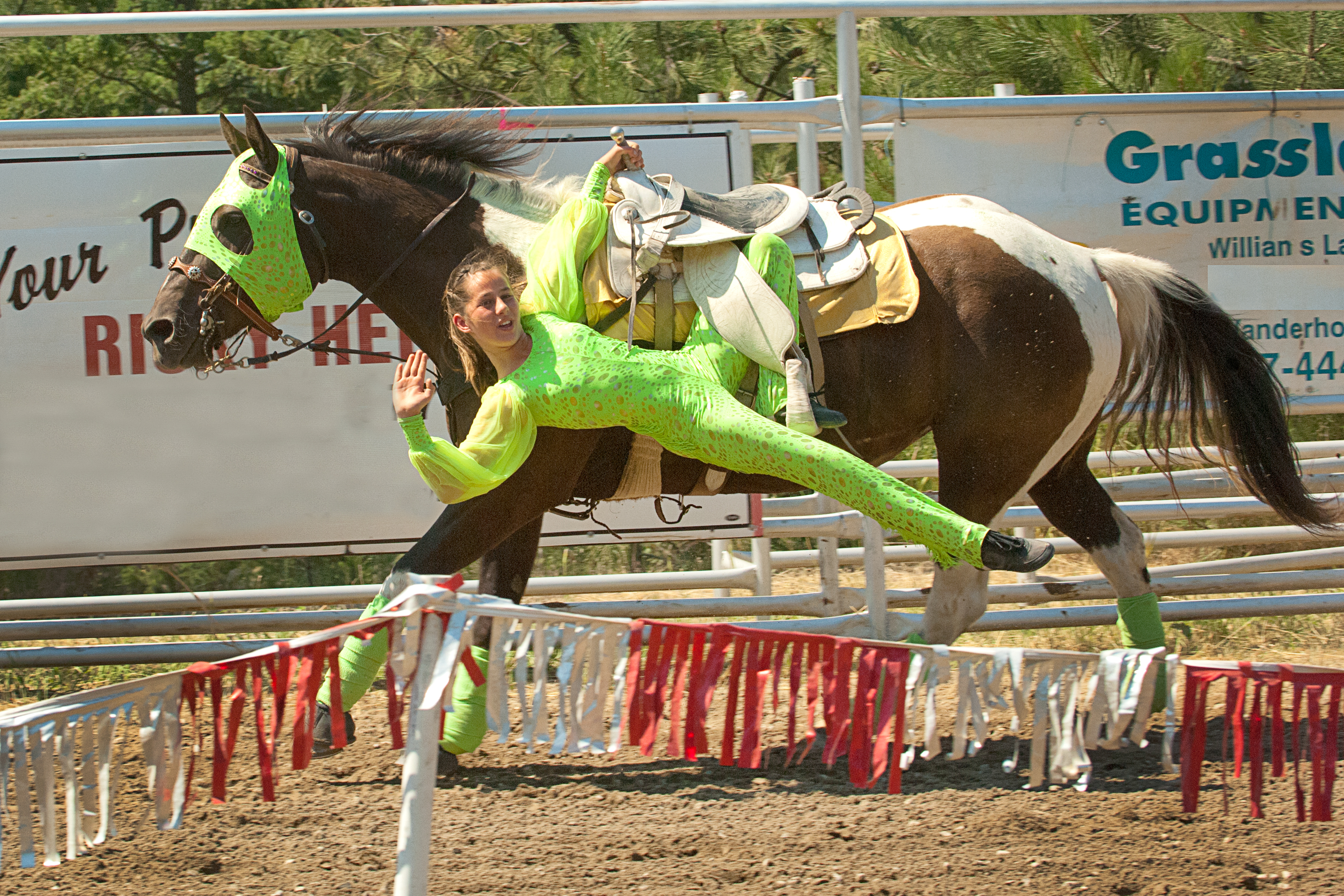
Another addition this year was the trick riders. Although I really like the Saddle Bronc, Bareback, Bull Riding competitions and, of course, Barrel Racing, I must admit those trick riders were amazing. I was actually requested to stand center arena so I could photograph them as they performed in a wide circle around me. Gosh, it doesn’t get much better than that.

When they beckoned Meko and I into the riding arena I was briefly worried that my 70-200mm lens would be too long, but as it was I had lots of room to move around and it was just fine.

Rodeos are easy to photograph. One just has to pay attention to where the action is coming from and take up a position that allows everything to move towards the camera.

Then choose a fast shutterspeed and start shooting. I prefer to use shutter priority; I select the shutter, and the camera chooses the aperture. All I need to do is follow the action as the camera’s computer handles the rest. Yep, it’s all pretty easy.

There should be a note saying, “No animals, cowboys, cowgirls, or photographers were hurt during the process of having a great time.”

I appreciate comments. Thanks, John

My website is at www.enmanscamera.com
I Learned About Photography by Shooting with Black and White Film

bicycle & stairs

iron rails

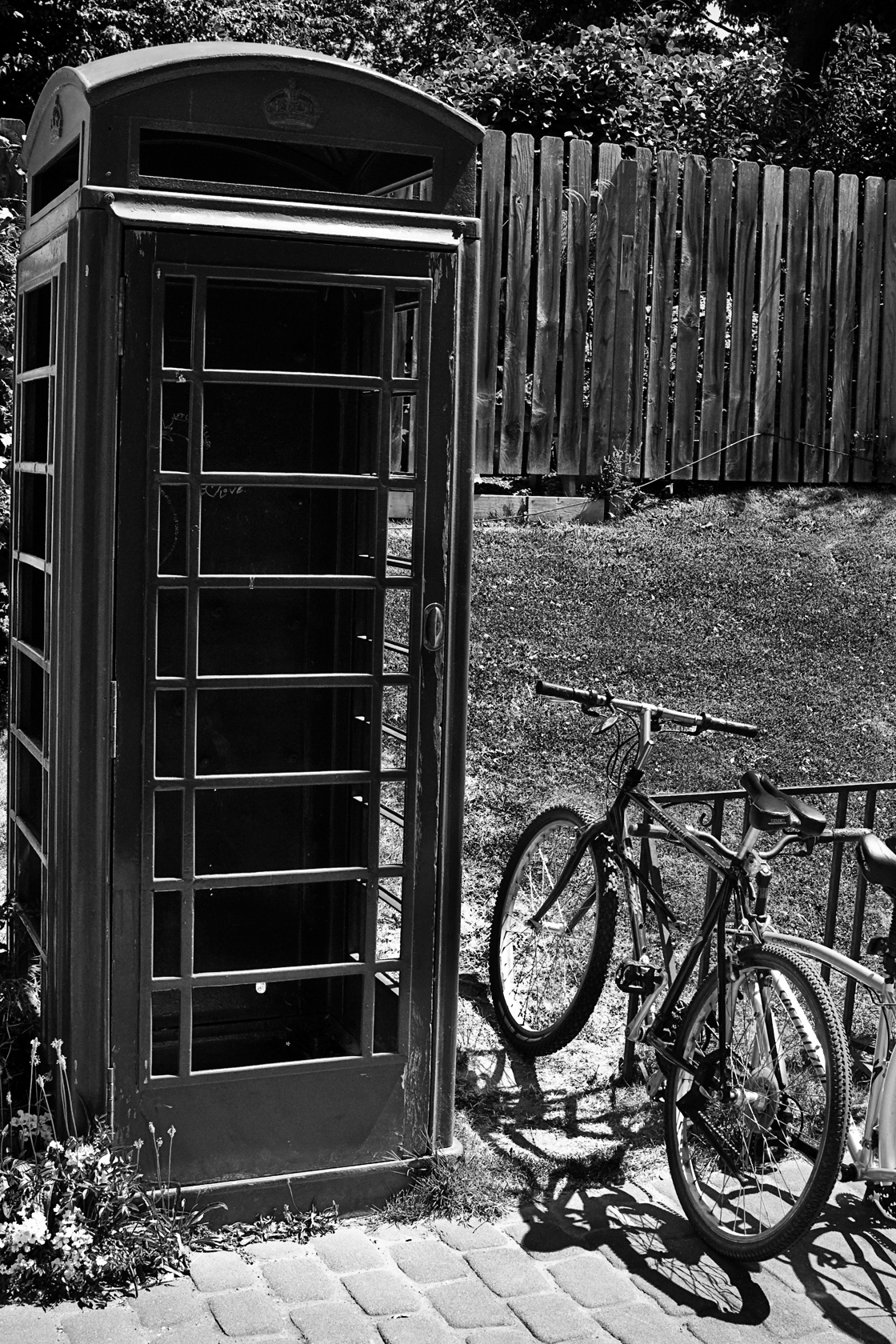
phonebooth

Red Crown Gas

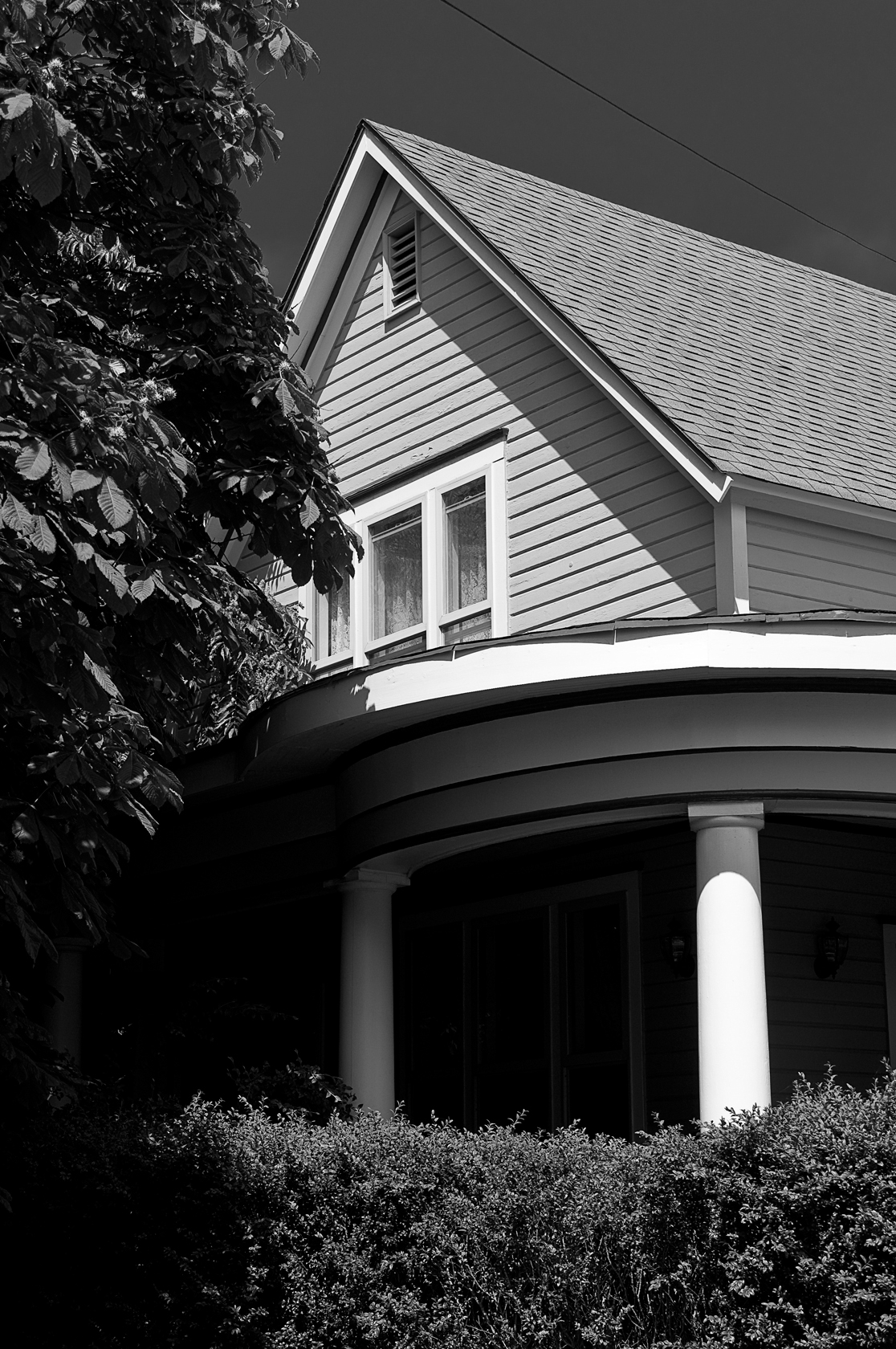
white pillars

floral entrance

Brick doorway

Last week I wrote about black and white photography. From the comments I received I realized there are many other photographers out there very interested in enjoying the process of making black and white images.

While driving my noisy, old diesel truck (with my car waiting a replacement engine) I got to thinking about what it was like when I used black and white film. The drive was along a winding, valley road that we are so familiar with in British Columbia,  And although I attempted to listen to the radio, the static caused by the power lines running along the roads edge, the loud diesel engine and, of course, the worn out radio, left me to my own thoughts, and soon I was contemplating about film and shooting with black and white film.

Formerly, once the shutter was released on a camera loaded with film what one got was, well, what one got was what one got. There were no second chances as enjoyed today. One was left with only a memory of that moment in time until the film was processed and printed.

A friend remarked that photographers had to be better in those film days than they are today. I think that’s a nice, egotistical thought to comfort aging picture takers, but I don’t think its true. And in my not so humble opinion, I am going to say that modern photography is just different, evolving and different. Even in the days when film ruled there was a difference between those that filled their cameras with colour film and those, like me, that preferred black and white film.

I began using black and white film because that’s what my first college class recommended, then after a time I began to understand the medium and grew to like B&W.

We used a term called “previsualization”. Previsualization is attributed to Minor White.

While studying the subject a photographer predetermines how the final image would be processed and printed. Ansel Adam referred to that process as “the ability to anticipate a finished image before making the exposure”.

There was also the Zone System. American photographers Fred Archer and Ansel Adams collaborated on the technique for determining optimal film exposure and development that provided photographers with a method to precisely define the relationship between the way they visualized the photographic subject and the final results.

Those techniques were, at least in the way I applied them, to formulate or determine how I wanted the final print to look. Colour film had creative limitations and had to be printed in an almost lightless room, whereas my personal lab for printing B&W was quite bright because photographic paper is only sensitive to white light, not yellow, orange, or red. And that allowed me to fill the room with light and see the image and control how it would look.

With B&W film I learned to previsualize, and as I selected my subject I would think about how I would process the film and make the final print. I could alter the exposure rating, as with the Zone system, depending on which chemicals I planned on using and how long I would keep the film in the developer. I would select different papers and alternate chemicals to change contrast or tonal values in the final print.

Shooting with black and white film and managing the process of developing and printing the picture taught me that the camera and film (now the sensor) are just the starting point to making a photograph match my personal vision, and my personal vision is much more important than the camera’s.

Shooting black and white taught me to watch for tonal shifts from black, to mid grey, and finally, to white with detail. Studying how it would look became an intellectual process rather than an emotional one.

B&W photography is a matter for the eye of the beholder, the intuition, and finally the intellect. Of course colour is all that, but much of the time it seems photographers, overwhelmed by colour, just push the shutter seeing nothing deeper in a scene than the colours.

Black and white images, because they don’t attract with a play of colours, seem subtle and make me think about the tonal range and demand my close attention to composition, lighting, perspective, and the context the image is shot in as important factors.

I learned about photography by shooting with black and white film. I don’t use film anymore, and the photographic examples I have included are digital. When I am thinking in black and white, I slow down and that stretches me to creatively see, and show, the world differently.

I really appreciate any and all comments. Thanks, John

My website is at www.enmanscamera.com
Don’t Forget Some Photographic Basics

Helmkin Falls view   Low drifting clouds

A local photographer showed up at my shop with some scenic/landscape photographs he had made and asked me for a critique of them.

Photographers get excited about the subjects they photograph and sometimes forget, or never learned in the first place, some basic rules for photography. Rules that are actually procedures and guidelines that can be followed to make photographs more exciting for viewing. Although I enjoyed his series of photographs of Helmken Falls in British Columbia’s Wells Gray Park, I noticed two problems that I discussed with him.

The first is a very basic concept in photography – depth of field. Depth of field refers to the “in focus area,” or sharpness of a picture at different distances when the aperture diameter changes. Depth of field is the area around the subject that remains acceptably sharp. The farther things are away, the more depth of field one can achieve, and the closer things are, the less depth of field. To control depth of field one uses the lens aperture.

Photographers new to this medium think of the aperture only as a means of controlling the amount of light reaching the sensor. However, the aperture also controls depth of field.
Control over depth of field is accomplished by increasing or decreasing the aperture’s size. For example, the smaller the aperture opening (f/16) the more depth of field; and the larger the aperture opening (f/4) the less the depth of field is. So f/16 will give more “in focus area” in front of and behind the subject than f/8. Regardless of the F/stop one should have a shorter in focus area in front of the subject, and a longer in focus area behind the subject.

The ratio is approximately one-third in front, and two-thirds behind. So to obtain maximum depth of field in a photograph use a smaller aperture opening like f/11, and focus one third of the way into the scene.

The second thing I pointed out was his composition. I wondered what it is that makes photographers disregard the basics of compositional strategies and just snap away excitedly. My assumption is that many photographers are so excited about the subject they are photographing, and possibly the camera they are using at the time, that they forget to make the subject interesting in their final photograph.

With his scenics of the waterfall, as exotic and colourful as it was on that day, he ignored something fundamental in any properly composed photograph called “The Rule of Thirds”. This so called “rule” states that we shouldn’t place the main focus of interest in the centre of the frame, but should place it on an intersection line, or very close to it, created by dividing the picture into a grid of thirds.

That photographer’s pictures would have been stronger if he had paid attention to compositional elements that would make his image interesting by placing important or interesting visual information at intersections.

I have photographed those falls alongside other photographers many times since I moved to British Columbia 40 years ago; spring, summer, fall and winter.

Sometimes they have been excited, as with the fellow I critiqued, and just pointed their cameras without thought, overwhelmed by the roaring, wilderness splendour of Helmken Falls. Regarding those image makers, Guggenheim Fellowship for Creative Arts recipient Garry Winogand quipped, “Photographers mistake the emotion they feel while taking the photo as a judgment that the photograph is good”.

However, I have also set my tripod next to photographers that just seemed understand what it takes to make viewable images and appear to feel their way through the photograph. That’s always exciting. Of them I like to think they adhere to the words of Photo Imaging Association’s 2005 Photographer of the Year, David Harvey when he said, “Don’t shoot what it looks like. Shoot what it feels like.”

As always, I appreciate any comments. Thanks, John

My website is at www.enmanscamera.com