Memories and photography   


I joined a friend for lunch last week and he began reminiscing about his long ago trip to Japan. We hadn’t been talking about that place, but something in the restaurant (could it have been the sushi?) brought his memories on. With that in mind I thought I’d revisit this article from 2011.

I am sure many of us experience that flash of instant memories when some song comes on the radio. That happed to me this morning as I drove to town. A 1970’s song by the Bee Gees came on the radio, and suddenly I was thinking about July 1978 when I played their tape over and over during my journey to a place in Wyoming’s Teton Mountain range called the T Cross Ranch. I was there attending a photography workshop lead by photographer, and writer, Boyd Norton.

I had been given Norton’s book “Wilderness Photography”. I poured over that book with its instructions and ideas about photographing the great out-of-doors. I don’t recall how I found out about his class, nevertheless I was so determined to attend that I sold my VW to pay for it. The cash from that sale was enough for my tuition and expenses to Wyoming, it also helped pay for an airline ticket for my girl friend (later my wife) to Salt Lake City, Utah. Our plan was to meet up there after my course and spend time photographing Arches National Monument, Zion Park and the Grand Canyon.

The T Cross Ranch was just outside of Dubois, Wyoming, and our class was comprised of photographers from Germany, New York, Florida, Idaho, Colorado, Tennessee, and two of us from Kamloops British Columbia.

We hiked and wandered during the days, photographed everything, and in the evenings had lectures in a wonderful 100-year-old antique-filled log house.

Our instructor wanted to provide instant feedback for us and had a new three-chemical-process for developing slide film. The first morning I noticed him reading the instructions and without thinking I said I could figure it out and immediately became the official class technician. So each evening while my classmates were sitting around the fire talking about the day’s events I was in an abandoned walk-in cold room removing film from cassettes, rolling them into large processing tanks, then developing and hanging the rolls for overnight drying. Hmm…me and my big mouth! We were excited that we could have our images for critique so quickly. I thought that film technology had finally become the best it could be.

I preferred using a huge Mamiya RB67 at that time. The RB used 120mm medium format film and the negatives were 2¼x2¾ inches.

One afternoon we trucked up to a mountain plateau and Norton said, “There is a lightning storm to the west and we’ll see antelope coming this way to stay out it. Find yourself a good position for some great shots.” I waited behind an old salt lick as several antelope came bounding our way. The lens on the RB67 racked back and forth on a rail instead of turning like modern lenses. I tried to keep the antelopes in focus as they ran toward us, but to my dismay I couldn’t. I didn’t get a shot!

When I came back within weeks I sold the RB and purchased a jaunty little Hasselblad that I used for years, until, coincidentally, I attended another wilderness class in 1999, that time in Washington State, and was introduced to digital. I returned to Kamloops after that class and bought my first DSLR. Both instances were because of the influence of other photographers. Getting together with other photographers, in my opinion, not only creates excitement, but also is the best thing one can do to become a better photographer.

Reminiscing about that trip while I listened to the Be Gees was fun. However it also reminded me was how important it is to interact with other photographers and participate in workshops, classes, and photo tours. The other thing I thought about as I sat rewriting this article is how dramatically and constantly, technology changes for those of us dedicated to this exciting medium of photography.
“All this digital isn’t real photography”        

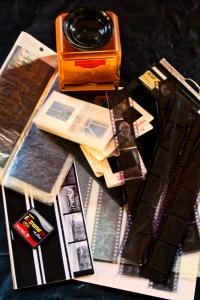
I talked to a confused young photographer that wondered if he should do as a friend that was using a 1970’s film camera and discard his DSLR for a film camera. His friend told him, “all this digital isn’t real photography”,

I doubt his opinionated pal even thought about or was aware that it has only been a bit over a century ago that photographers needed large glass plates, hazardous chemicals, bulky cameras and wagons to carry everything. And I wonder if there were some photographers that, when roll film first became available, said about the same thing when they saw people hand-holding their little box cameras.

The medium of photography has become very accessible for everyone. The days when a photographer had to be an engineer and chemist are long gone. With modern technology, today’s supercharged cameras with their machine-gun-like shutters and seemingly speed of light focusing allow many photographers to get great pictures on their first try. Photographers once had to understand the combinations of shutter and aperture for a properly exposed image, and worried about camera shake and film choice. Gosh, it’s only around 20 years ago that photographers carried more than one camera if they wanted black & white as well as colour prints of some subject.

I am not sure that the photographers of the late 1800’s or early 1900’s were really interested in photography as a creative medium as much as they were striving to document reality. No doubt they struggled to convince their subjects to sit as still as possible for long time periods while they set up unwieldy photographic equipment. And I am convinced that many people that tried photography “pre-digital” would not be shooting if it had remained like that.

There are those that are intent on complaining that with the end of film came the end of photography. Personally, I don’t think film is going away any time soon. I expect most outlets may not carry film or offer processing much longer, but there are lots of distributers that still supply film. I’d like to see the return of film to larger camera shops, along with people capable of giving the correct advice to users.

I rarely shoot with film these days, but I still have a film camera and I did put a roll thru it this past year and had fun. Nevertheless, I will admit to being frustrated at all the work it took to get to the final images. Digital is easier.

I am afraid I couldn’t give that photographer any advice. Although I disagreed with his friend’s comment, I told him I’d look forward to seeing his photographs and be there to help what ever his choice.

Photography has always been about technology. I hope that photographer works at producing images (digital or film) that are good visual statements about what he feels or wants to say. Most people viewing his photography will only be interested in the resulting photos and won’t really care how his images were produced as long as the final photograph has something to say, shows control over the technology used, and is visually exciting.


The Photographic idea

This past week I got into a discussion with two local photographers about photography as Art. Their opinion was that photography has become mostly a point-and-shoot process that is really all about documenting one’s personal life.

I think defining Art has always been “in the eye of the beholder”.  

I remember a friend chastising me when I was too critical of a photographer’s image, by saying that all to familiar phrase, “I may not know about Art, but I do know what I like.” 

Ansel Adams, in the forward to his popular 1950’s book “The Print” said, “Photography, in the final analysis, can be reduced to a few simple principles…” and he continued, “Photography is more than a medium for factual communication of ideas. It is a creative art…technique is justified only so far as it will simplify and clarify the statement of the photographer’s concept.”

I remember the series of books by Adams when photography was about striving for the perfect negative and a good final print.

We don’t need to worry about a perfect negative any more, because even if the image file produced in-camera isn’t satisfactory it’s easily colour balanced, cropped, and sharpened later. Contrast can be changed and increasingly, the trend for many photographers has become to not make large prints at all. 

That said, I still think that Adams’ forward in “The Print” may be as worthwhile now as it was in 1950 for a photographer’s Art. Even with the changes of how an image is managed and finally used (whether print or electronic) the thought process is still important. Adams wrote about the technique of taking the picture, the negative, and the printing procedure. He might as well have been talking about transferring image data from a camera to computer, optimizing the files, and outputting to an online portfolio.

Adams wrote, “We may draw an analogy with music: The composer entertains a musical idea. He sets it down in conventional musical notation. When he performs it, he may, although respecting the score, inject personal expressive interpretations on the basic patterns of the notes. So it is in expressive photography: The concept of the photograph precedes the operation of the camera. Exposure and development of the negative…” He continues by saying, “the print itself is somewhat of an interpretation, a performance of the photographic idea.”

I have always liked that final sentence of his “…the print (image file?) itself is somewhat of an interpretation, a performance of the photographic idea.”   Those words remind me not to be as critical of other photographers work, if as Adams put it, “Photography is more than a medium for factual communication of ideas.”

I think what my friend meant when he said, ““I may not know Art, but I do know what I like.”   Was that I should be paying attention to what a photographer might be saying with his or her image and remind myself to think about “interpretation” and the “performance of the photographic idea.”

That is why its good that I still have that somewhat out-dated book, and why I should regularly open it up. After all the prattle about the newest camera, or lens, or computer programs, I need to be brought back to what, in the end, photography is about for me personally.

2017 eclipse


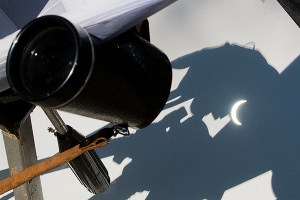
My hi-tech eclipse equipment capturing the eclipse as I relaxed with a cup of coffee on my front porch here in British Columbia.

Photographing people and their dogs.  

This August has been one of those months that most people I talk to are looking forward ending. This quote from “The Secret Life of Bees” by Sue Monk Kidd, easily sums up my feelings, “The month of August had turned into a griddle where the days just lay there and sizzled.”  The dry lifeless heat and the all-consuming smoke from all the wildfires here in British Columbia have left me with little interest in wandering outside with my camera. That said I hope I won’t be to boorish by again returning to my mid July’s trip to Washington with it’s cool mornings and gosh, (no smoke) fresh morning air.

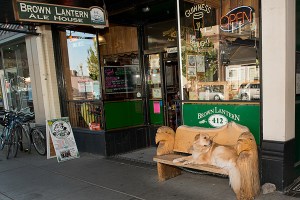
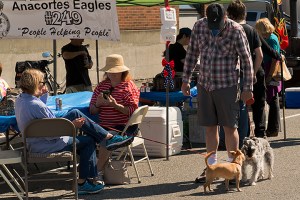
Dogs have become, actually I think they always have been, part of the family. And on my trip to the city of Anacortes there were dogs everywhere.

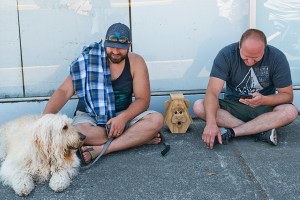
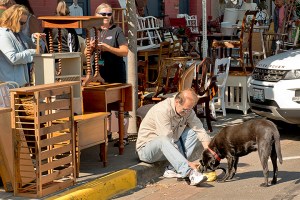
There were there dogs taking their owners on stop and go walks along the streets and alleys, There were dogs patiently waiting outside of grocery stores, restaurants, bars and shops along the main street, there were dogs lounging in the shade after a strenuous day of helping their people look for treasures at the giant flee market, and when I got up to leave for home in the morning I saw dogs excitedly stepping out of their motel lodgings and wait anxiously for vehicles to be packed.

Photographing dogs is always fun. Well, that’s my opinion.

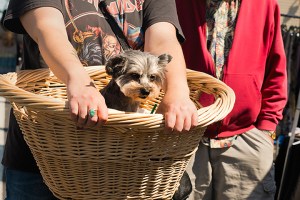
Walk up to some stranger and ask if you can photograph them and all to often they will either say no or silently and quickly turn and walk away. But ask that same person if you can photograph their dog and you’ll usually be met with a smile and “sure”. People are proud of their dogs.

The accomplished street photographer and blogger, Han Dekker always includes at least one photo he calls “street dogs” in his posts each week. And it’s his photos that got me thinking I should spend some time photographing people with their dogs as I walked the streets of that small coastal town.

I like dogs, so photographing them and complementing them and their owners is always a pleasure. I did do street candids of some people and their dogs. However, mostly I would walk up and say, “I gotta take a picture of you and your dog.”

One will find lots of artistic dog photographers on social media. I would call some of them portraitists when I look at their creative depth of field and soft focused images. Others are more candid with their distant captures, and some are surely making social statements. However, my approach is as always, to just have fun as I move from subject to subject.


Variety makes photography interesting.               


Washington Park’s Leaning Tree

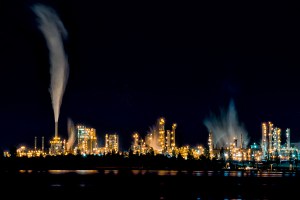
Tesoro

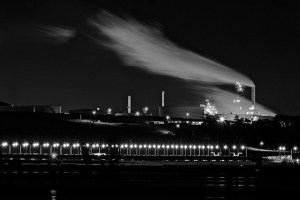
NIght refinery

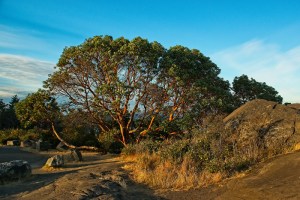
Pacific Madrone tree

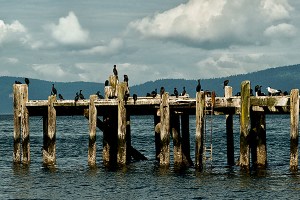
Cormorants and a seagull


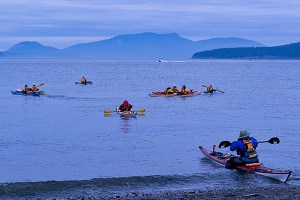
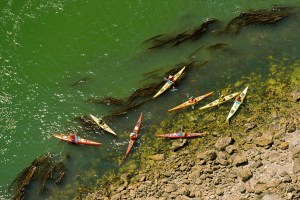
Deception Pass kayaks

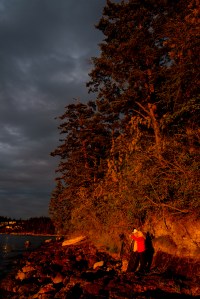
Dave and Cynthia at sunset


I have never been one of those photographers that proudly declares myself limited to one kind of subject. My visual interests depend a lot on what is happening when I have a camera in my hand, and when on vacation I never restrict myself to one subject. My past two articles were about my photographic experiences on a three-day weekend in Anacortes Washington with my friends Dave and Cynthia Monsees.

If I didn’t have a camera my goal would simply have been to attend the annual Shipwreck Festival, but I do have a camera and photography is always a major part of any vacation for me. When I plan my getaways I look for a variety in the subjects I will photograph. This trip was easy, I began by photographing the festival committee volunteers the first afternoon, then spent most of the second day photographing the festival, and on the third day we photographed the scenic coast from dawn to dusk.

The Rotary volunteers were waiting to meet me and were all looking forward to being photographed. The Festival photography was, well it was a street festival filled with excellent subjects. And finally, photographing a coastal landscape is pretty easy when one is on an island.

I am not sure if Dave and Cynthia were aware that I’d be constantly dragging them from location to location for three days, but there were so many places that after my three years away that I wanted to return to, and I was determined they should see and photograph as much of Washington state’s Fidalgo island as possible.

Someone, a long time ago said, “variety is the spice of life”. I have always liked that old saying that reminds me to try different things, and change my approach, especially in photography. Varity when it came to the subjects I photograph has kept my life with a camera interesting.
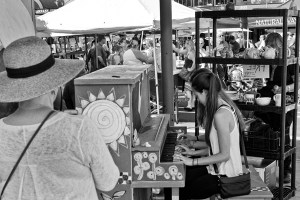
My dictionary defines Perspective as; outlook, point of view, attitude, frame of mind and reference, approach and interpretation. Unlike many other creative mediums photography not only allows, but encourages one to change their perspective and interpretation of reality. That change might be as simple as removing the 28mm lens and replacing it with a 105mm. (or changing the focal length on that zoom lens from 28mm to 105mm)

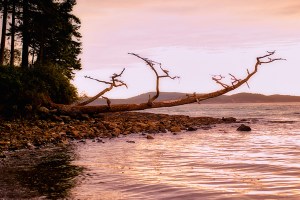
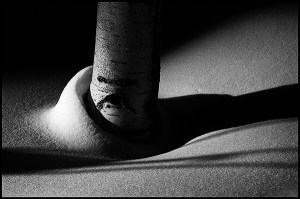
Anyone watching the three of us standing on a rocky beach as we waited for the right light to photograph the famous Washington park leaning tree might notice that although we were all photographing the same subject, our approach, perspective and interpretation was very different. Not only where our tripods were positioned, but also with our selection of lenses. And adding the word “variety” that evening, well that’s easy, as soon as the tide came in and it got too dark for the tree, we drove to the other side of town to photograph Tesoro Refinery’s bright lights shimmering on the dark ocean waters across the bay.

As I wrote in the beginning, “my visual interests depend a lot on what is happening when I have a camera in my hand, and when on vacation I never limit myself to one subject.”

Practicing Street Photography      

I have read that Street photography is the practice of photographing chance encounters and random incidents in public places, Well, like the street.

In an article about my experiences in Vancouver BC some time ago I wrote, “I think that successful street photography captures a moment from the society around us. It’s a moment in time that is an important for the present and future.”

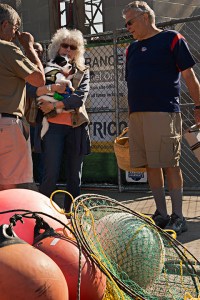
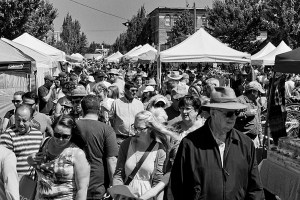
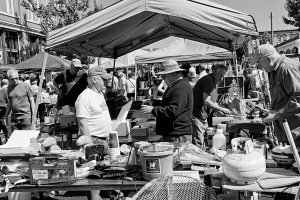
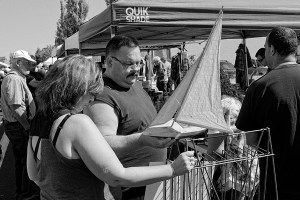
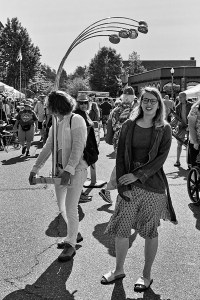
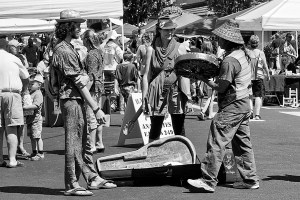
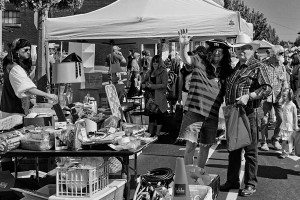
I am fascinated with this kind of candid photography that has been around since people began to carrying cameras in public, and I am always up to any occasion that allows my somewhat reserved and not so confident approach to photographing strangers going about their life on any public street. So when that opportunity presented itself at the giant outdoor flea market in Anacortes Washington I was excited.

Most modern street photographers seem to be recommending small, inconspicuous mirrorless cameras. However, in spite advice posted on many of the forums I have visited I still wondered if I could again try using my big DSLR with a battery grip and 24-70mm attached. I admit that’s a huge and very noticeable combination that the last time I tried at this event had curious by-passers looking right at me.

I remembered a 1969 Algerian-French movie, called “Z”, about some foreign dictatorship and a photojournalist who helped to uncover evidence about a murder. The photographer, wielding a big camera with a loud motor drive, continually shot from his hip. So I thought, what the heck, lets see if I can get away with that. Also, knowing I could easily crop, I moved the lens to its widest 24mm and photographed everything holding my camera at my waist.

I also figured that people at the street sale would be so absorbed with their treasure searching that if I didn’t hold my camera up to my eye, like I did last time, they would be oblivious to my photography.
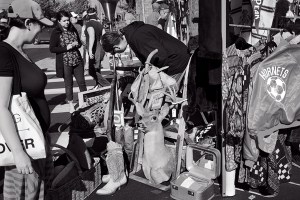
My results were much better than last time. I wandered releasing the shutter anytime I observed people doing something interesting. There were a few camera conscious people that remarked about how big and nice my camera was, and one guy even asked the model I had. Nevertheless, none of my pictures showed people turning to look at me as I was taking a picture, except for those times when actually I asked someone to pose.

The big street market made things easy, and my new “stealth” photography technique made me more comfortable. And as I said, my results were much better this time. Whether it will work when I am not at an event that distracts people’s attention away from me remains to be seen.

Anacortes Shipwreck Festival         

After an easy six or so hour highway drive from my home in Pritchard British Columbia and I pulled into the picturesque town of Anacortes, referred to as the homeport of the Pacific Northwest’s San Juan Islands, for an annual event called the Shipwreck Festival. Gosh, it had been two years since my return to the enjoyment of what is certainly one of my favourite places and events. The last time was when my wife, Linda, and I made two trips to that area in 2014, the first in July to Anacortes and a second the week before Halloween for a short stay in the neighbouring small town of La Connor.

The Festival’s website says that some thirty years ago commercial fisherman would gather to sell their used gear on Anacortes’ Commercial Avenue. That popular event expanded to what is now called the Shipwreck Festival, a giant community garage sale that on the third weekend of July each year occupies about nine blocks of the town’s main street, offering, unique treasures from over 200 or more businesses, organizations, antique dealers, small vendors and local families.

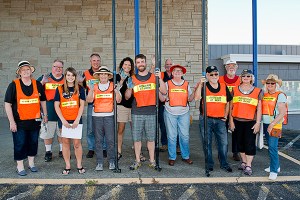
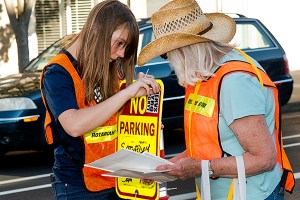
The Fidalgo Island Rotary Club organizes the Shipwreck Festival and this year I was fortunate to be included with the Rotary Club volunteers as photographer.

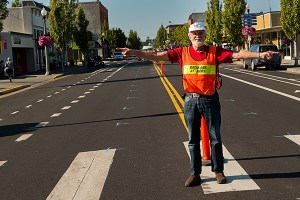
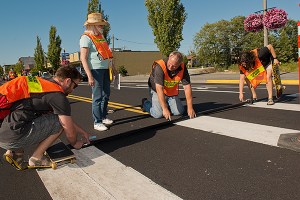
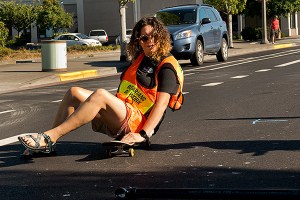
I am sure there was a lot of behind the scenes work that went on before I arrived the Friday afternoon before the big event, but I was greeted by a fresh and enthusiastic group that were gearing up to mark street locations for the next day’s deluge of vendors that I was told began happening at 4AM.

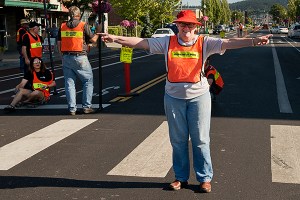
I will say that over the many years I have been attending that festival I have never heard or met with a sour word. The people I encountered are always warm and generous and after a short time one gets the feeling they are old friends. And I immediately felt that way as I joined that group decked in their Rotarian vests.

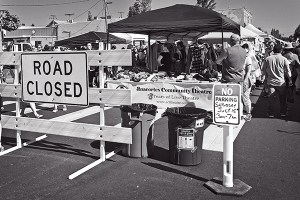
When they were finally all prepped with measuring poles, blue chalk and “street closed” signs, they fanned out onto the town’s main thoroughfare redirecting traffic and marking the street with me running around documenting everything with my camera.

I have been attending the festival for years; I don’t remember when I started. I am pretty sure I first learned about the Shipwreck Festival when joined some friends that were there for the Fidalgo Island crab festival. I also remember stopping in Anacortes with some Army buddies back in 1967. I was stationed at Ft. Lewis Washington and we set off to see as much of the state as we could on our weekend pass. I seem to remember sleeping (jammed uncomfortably) in the car. These days I sleep comfortably in motels and don’t drink as much beer as I did then.

I will say that I don’t get to make the trip every year, although I’d like to. So this year’s opportunity to join the festival’s local volunteers will stand out as one the most memorable.

I had a great time creating images that the festival committee will be able to use for next years advertisements and my fun didn’t end with just taking pictures of their efforts that afternoon. I spent the next day taking photographs and shopping.

This was the kind of vacation that I like – the opportunity participate as an event photographer, to try my hand at “street photography” on the packed avenue and to spend time photographing the coastal landscape. All less than a day’s drive from a completely different environment then the one I live in, and with a chance to meet new people, eat at great seafood restaurants, and, of course, wander the Shipwreck Festival looking for treasures.

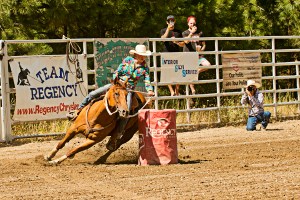
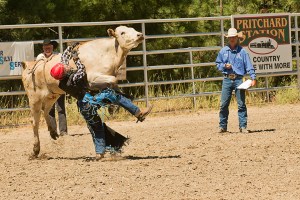
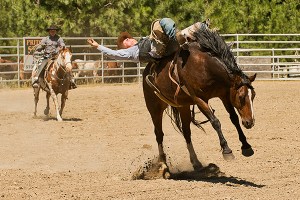
Pritchard Rodeo 2017    

A whole year has past and once again I joined my friends and neighbours for a dusty, fun-filled Sunday at the Pritchard Rodeo.

Now that the rodeo has come and gone and I am sitting at my computer looking through the many pictures I took, it is easy to see that I had a great time. Actually I am pretty sure everyone that attended, participants, organizers, spectators and photographers, had a great time.

This year’s event was a little sparse. Not when it came to all the spectators, the stands were full. But the numbers of cowboys and cowgirls participating was way down because of the wildfires across the province. I expect many were either evacuated and were struggling to safeguard their homes and livestock or they couldn’t get to the rodeo with all the road closures.

The days leading up to this weekend have been smoke filled and the sky has been grey. But by 10AM on Sunday blue sky with a few clouds. My friend Dave Monsees stopped by my house and ten minutes later we were ringside with our cameras, Dave with his 100-400mm and me with my 70-200mm.
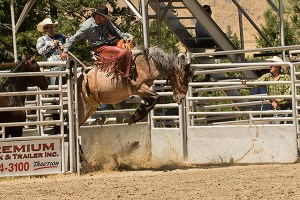
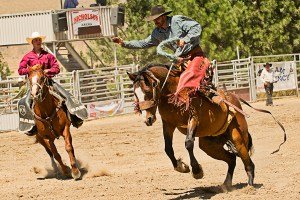
At 1PM the Rodeo Chairman, Pritchard Rodeo stood center ring and waved his hat, the announcer called out the first event, a bronc rider burst into the arena, and all the photographers along the rails started shooting.

I’ve written before how suitable the Pritchard Rodeo grounds are for photographers. There’s a strong metal arena railing that makes it safe to stand close to the action without restricting the view. And every year I look forward to standing there along side all the other photographers that, like me, enjoy capturing the fast moving test of wills between animals and riders. I think that photographing any action event is fun and there’s always action at a rodeo.

This year I met two well-known British Columbia rodeo photographers, Elaine Taschuk from Vancouver and Tony Roberts from Kelowna. They talked about other rodeos in BC and their favourite lenses for capturing the action, and naturally the Canon vs. Nikon quips were flying.

Pritchard is the only rodeo I attend. Its close by, easy to get to, and easy to photograph. All one has to do is pay attention to where the participants are coming from and take up a position that allows everything to move towards the camera. Then I select shutter priority, choose a fast shutterspeed and start shooting. I prefer to use Shutter priority (“TV” on Canon and “S’ on Nikon) so I can select the shutter’s speed and let the camera choose the aperture. Yep, it’s darned easy.

This year’s rodeo (or any rodeo for that matter) was a great way to spend the day. When I got home I downloaded my images and quickly edited out those that didn’t look good, then cropped and balanced the exposure on those I chose to keep.

There will be lots of rodeos over the summer and into the fall that are well worth any photographer’s time. My advice is to grab that camera and mount any zoom lens that, at least, goes to 200mm. Then enjoy a day that will fill your computer with some great action photographs.

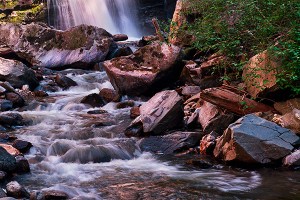
Another trip to Chase Falls             


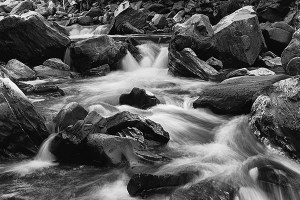
When I suggested to my friend, photographer Jo McAvany that we should drive over to nearby Chase Falls I imagined we’d be walking up a water filled creek to an overflowing falls and expected to be spending as much time wiping the water spray off my camera as I was taking pictures.  However, to my surprise the water coming over the falls was really diminished from its usual early summer flow.

The narrow stream canyon had been assaulted by a lot of water at sometime in the last month or so because there were lots of large rocks where there once was sand and my usual place for wide pictures was covered by a large pile of washed out trees.

3PM on a hot, cloudless July afternoon was definitely the wrong time to photograph the falls. The bright sun was cutting its way across the left side of the canyon leaving the right side in deep shade.  Even with graduated ND filters, trying to balance the scene’s high contrast was impossible.  Nevertheless I scrambled up and over the scattered boulders to find a better position, while Jo chose to work along the bank under the trees accompanied by, as she soon noticed, an ever-growing swarm of mosquitoes.

I guess there were enough breezes coming from the falls to push the mosquitoes away from my position, or maybe I was so fixed on my struggle to get some kind of image out of the contrasty scene that I didn’t notice their feasting.

I stacked ND filters over my lens and pointed my camera either into the sun or into the shade. It was one or the other if I didn’t want over or under exposures in my captures.

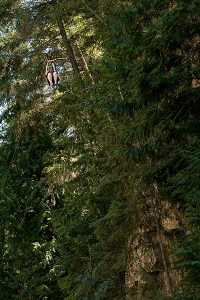
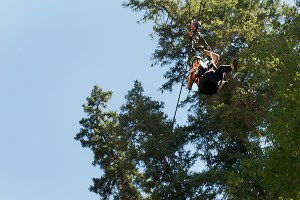
When I clambered back to where Jo was I found she had all but given up on the harsh lighting and was photographing people zip-lining above us. Well, that and giving her self up to the blood sucking hoards. She mentioned to me that she was being bitten everywhere, but dedicated photog that she was she still stood waiting for another zip-liner to zoom by screaming over-head.

I climbed down the bank and got a few more shots of the fast moving water and, of course, I just had to snap a couple shots of the people flying by.

Jo had just about had it with the mosquitoes and I finally began to notice the pesky creatures, so even though it was cooler by the creek than back at the car, we tore ourselves away from the falls with a promise to come back covered with repellent on an overcast day.

I will admit that what I like best about Chase Falls is they are only a few minutes drive from my home. It’s a cool location to scramble around and even though I have photographed it multiple times in every season during the last 40 years I have lived nearby I still enjoy making the trip there with my camera.

I guess there are lots of us photographers that have photographed local subjects over and over and over again.

I remember a long time old friend complaining. (Well he seemed to be) about a high mountain place we had climbed to countless times before. As we waited for the sun to rise he said, “I have taken every photograph that can be ever taken here”.  I quietly continued to drink my coffee without replying.

I am sure he knew I disagreed.