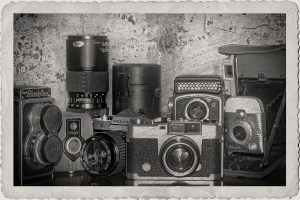
Camera Predictions from four decades ago.

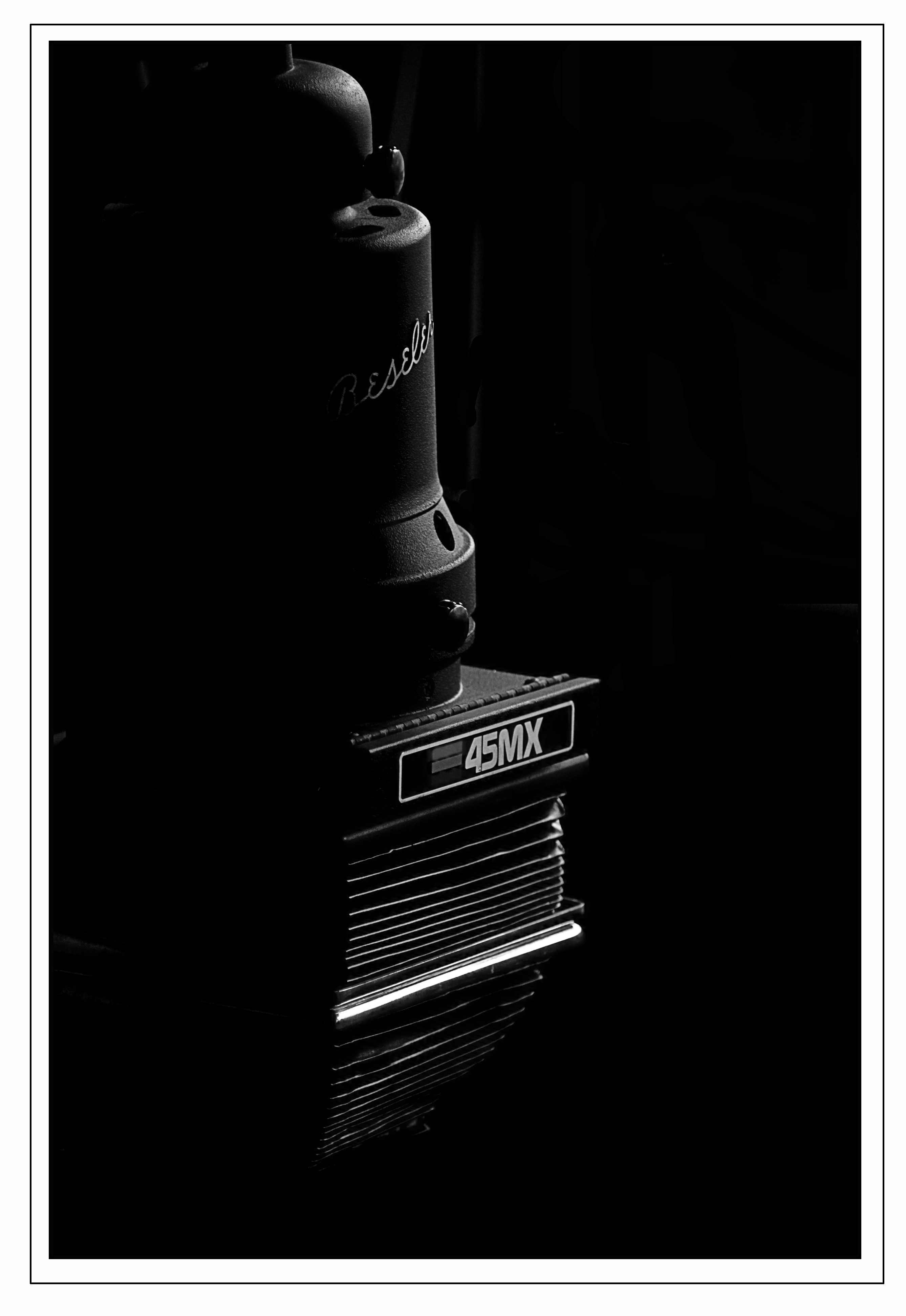
enlargerCamera's 3

My good friend and fellow photographer, Sam Bruno, stopped by excited about some rumours after he had read predictions regarding upcoming changes to the next Nikon camera. Rumours, predictions, prophesies, opinions, and conjecture by so-called insiders about what camera manufacturers will be doing in the future are rarely very accurate, but fun to talk about anyway.

I dug out an article that I wrote in 2007 on a magazine commentary I thought might be an entertaining re-read.  In the May 1974 (39 years ago) issue of Photo World Magazine was an article entitled “Tomorrow’s Camera: Report from Japan.”  The article by author Tony Chiu first discussed what would be the “next major technological breakthrough in Japanese-manufactured SLRs…a solid-state shutter, which would make cameras less prone to jamming,” and praised that breakthrough. One must remember that in 1974 cameras were mechanically pulling film off a roll, and in front of the shutter.

On miniaturization, he wrote that, “The manufacturers had misgivings about reducing the current dimensions of their SLRs because the decreasing weight reduced protection against shutter vibration.”

On lenses Chiu commented that, “It is conceivable that 10 years from now a compound lens (a lens that has several elements, like all lenses have now) may weigh more than the SLR body. Although light weight, plastic lenses have long been an industry dream, there is today no major research toward their development.”

In the article he mentioned also that electronic shutter cameras “in the next decade” would be an  “expensive option available only to top-of-the-line models.”  I am amazed at the changes that have occurred since 1974.  Is it conceivable that the writer of that article would have been astonished at modern developments, and would the thought have crossed his mind that even inexpensive cameras would have electronics?

This next part is really interesting because each of the major companies was asked what their predictions for cameras of the future would be:

Canon – Suichi Ando visualized a portable camera small enough “to be carried in the pocket”, and capable of using 35mm film. Such an instrument would have a “universal lens, which can be changed by the flip of the finger from microphotography to telephotography.”

Nikon – Takateru Koakimoto said that the perfect camera would be one that excludes the chance of human error: “It will be fully automatic, perhaps with a small computer to control the exposure.”  I say that he wasn’t far off in his prediction.

Olympus – Yoshihisa Maitanni believed the ideal camera would have a universal lens and one button will wind the film, focus the picture, frame the image and make the perfect exposure.  He also thought that “Images will be projected directly on to a sensitized material,” fully edited, and enlarged.

Ricoh – Tomomasu Takeshita predicted that major advances in the film industry would reduce the film size. “Within 20 years the 16mm camera will replace today’s 35mm camera.” Such an instrument, as he saw it, would be considerably smaller and simpler – it would have a one-piece plastic lens in a partial return to the “pinhole concept” as well as an “electronic crystal” shutter.

Yashica – Nobukazu Sato’s dream was one that would not utilize film. “Just put the paper into the camera, make the exposure, pull the paper out and spray it.” Such a camera would make use of ultraviolet rays, and would also feature a universal lens and a fully automatic focusing system.  Both Ricoh and Yashica are no longer manufacturing cameras.

The writer of the article continues to say “Will we see such marvels in or lifetime?”

“Perhaps by the end of this century” a photographer’s choice could be  “For the amateur, a single lightweight, compound (today one would use the word “zoom”) lens will replace three or four of today’s standard lenses. And price – as it is today (1974) – will remain just within reach at the upper end of your budget.”

Digital camera technology wasn’t even a dream in 1974. Yes, they were printing digitally, but not taking pictures.  I can remember one of my first jobs working as a photographer for the California Office of Alternative Education in 1972. I bought myself the newest and coolest Pentax camera, a Spotmatic II.  The batteries it used aren’t even made today. And Pentax had just come out with a technological breakthrough, “multicoated lenses”. Will the cameras that we think are amazing today even be around in 20 years? I wonder what the future will bring?

I always appreciate comments. Thanks, John

My website is at www.enmanscamera.com

What Does “Composition” Mean?

Cat & Rule of Thirds  White horse in field  OLYMPUS DIGITAL CAMERA

“Photography is not like painting. There is a creative fraction of a second when you are taking a picture. Your eye must see a composition or an expression that life offers itself to you, and you must know with intuition when to click the camera. That is the moment the photographer is creative.”    I included that quote by famous French photographer, Henri Cartier-Bresson, because he used the word “composition”, and it is that word and how it is currently being used that I have been recently thinking about.

The word composition gets thrown around a lot when discussing photographs.  I’ll read forums where responses to posted images might say something like, “great capture, good composition,” or sometimes, something as meaningless as “I love your composition”.

I know the posters don’t actually mean composition as a photographic technique. I think it has just become an alternative word that means “picture”.  Modern photographers seem to hesitate referring to a photograph someone has posted to an online site as a picture. They want a more modern word, and I guess using the word “composition” instead of “picture” has become that word.

That came to mind, when a young photographer said to me, “I don’t really know a lot about photography, but what I do know is that I am really good at is composition.”  That was one of the few times I have been left speechless.

Photographic composition is defined as, “the selection and arrangement of subjects within the picture area.”  And unlike those who replace the word picture with the word composition, I use composition and compositional guidelines to help me enhance a photograph’s impact.

Photographers are limited by the actual physical appearance of the subjects they are photographing, and depend on camera position, the perspective created by different lense’s focal lengths, and the elements that make up a picture to communicate to viewer’s what they saw when they made the photograph.

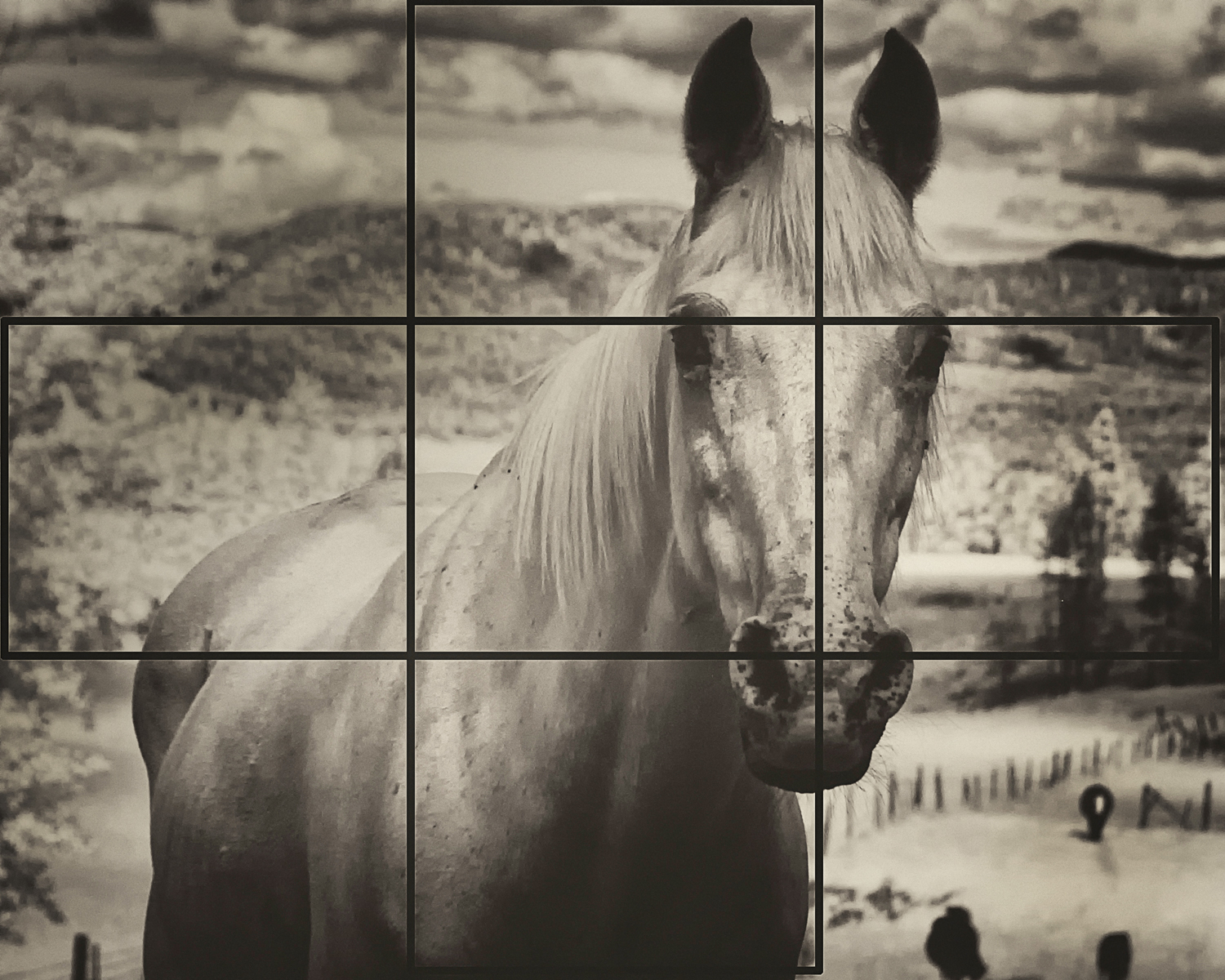
I think about what is important and how I want to arrange my composition, and I consciously subtract those elements that I think are unimportant or distracting. When setting up a composition I usually think about and apply the ‘Rule of Thirds’ wherein we divide the image into nine equal segments with two vertical and two horizontal lines. The Rule of Thirds says that you should position the most important elements in your scene along these lines, or at the points where they intersect, and by doing so, adding balance and interest to one’s picture.

I looked up composition online where there are page after page of composition tips. I decided I’d add my own, “apple technique to proper picture making and composition”.  Here goes!

While driving along and finding an inspiring scene.   Don’t just point the camera out the car window!

1. Stop the car.

2. Get out.

3. Leave the camera in the camera bag.

4. Get an apple and eat it as one looks at the inspiring scene. Think about what is likeable about it, and make some choices as to how compose, or arrange, the features within the picture area you photographing.  Photographers should ask; what would someone like to say about the scene to the viewer?

5. Finally, go back to the car, get the camera, and make the picture.

Elliott Erwitt, American, documentary photographer wrote, “To me, photography is an art of observation. It’s about finding something interesting in an ordinary place… I’ve found it has little to do with the things you see and everything to do with the way you see them.”

My website is at www.enmanscamera.com
Defining and, of course using, Depth-of-Field

D of F 1  D of F 2

I recently read a post on Facebook regarding photographing landscapes that said, “I’m not too sure how you’re supposed to choose a focal point when everything can be so similar…I focused on the tree, but not sure how that works for the composition.”

I was impressed with that post when considering that most people seem to just select some automated mode, point their camera, and release the shutter when photographing a landscape.  And, unlike the person that placed that post searching for answers to make her photographs better, many photographers are satisfied with not so sharp compositions.

My retort, all too quickly, was to review depth-of-field, but the Facebook reply box is limiting and not a very good place for such a broad discussion.

In my opinion a scenic/landscape photograph should be sharp, bottom to top. When I say that, I mean those elements in the foreground closest to the viewer should be in focus, and those in the distance should also be sharp enough to show some detail.

For landscape photographers intent on controlling the field of focus in their images, from front to back, do so by learning to manage depth-of-field.

Depth-of-field is defined as, “that area around the main subject, in front of and behind, that is in acceptably sharp focus”, and that will be, of the total field of focus, one-third in front and two-thirds behind the main subject.

Depth of field is controlled with the aperture. The smaller the lenses aperture is the more the area of focus, or depth of field, will be. I prefer using a smaller aperture for scenic photography. Most landscape photographers desire an image that appears sharp throughout the scene, so that elements of foreground interest look just as sharp as the distant horizon. Depth of field does not abruptly change from sharp to unsharp, but instead is a gradual transition. Everything immediately in front of, or in back of, the main subject begins to lose sharpness.

Many use a rule of thumb where one focuses roughly 1/3 of the way into a scene in order to achieve maximum sharpness throughout. While this isn’t optimal because the precise distance also depends on factors like subject distance, aperture, and focal length, it is better that just pointing and depending on the camera’s computer to make that decision.

My suggestion to that aspiring landscape photographer would be to begin by mounting the camera on a good, sturdy tripod. The tripod will negate the need to worry about slow shutter speeds that will likely appear on anything other than bright sunny days. I would also select either Manual or Aperture priority modes because as I wrote, the size of the aperture controls the depth-of-field or, in other words, the field of focus from near to far in the composition. I would then chose an aperture of f/8 or smaller. I would meter the scene and set the shutter to the proper exposure, or as with Aperture priority, let the camera select the shutterspeed.

I might be using a polarizer or a graduated neutral density filter, but that doesn’t matter as long as the camera is steady, the meter reading is correct and the depth of field is enough to cover important elements in my capture.

I always appreciate you comments. Thanks, John

My website is at www.enmanscamera.com

What is the (and is there a) best lens for scenic photography?

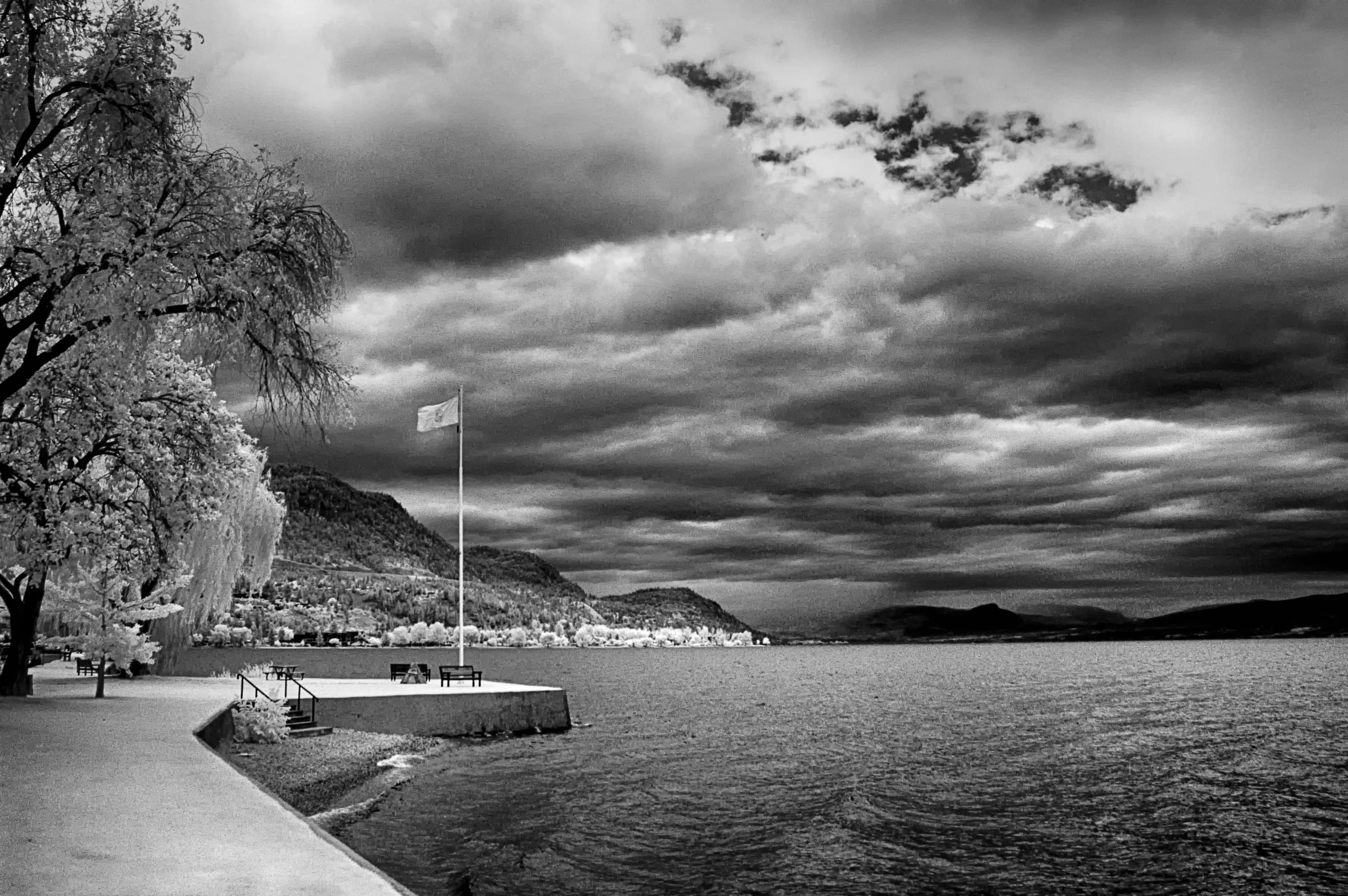
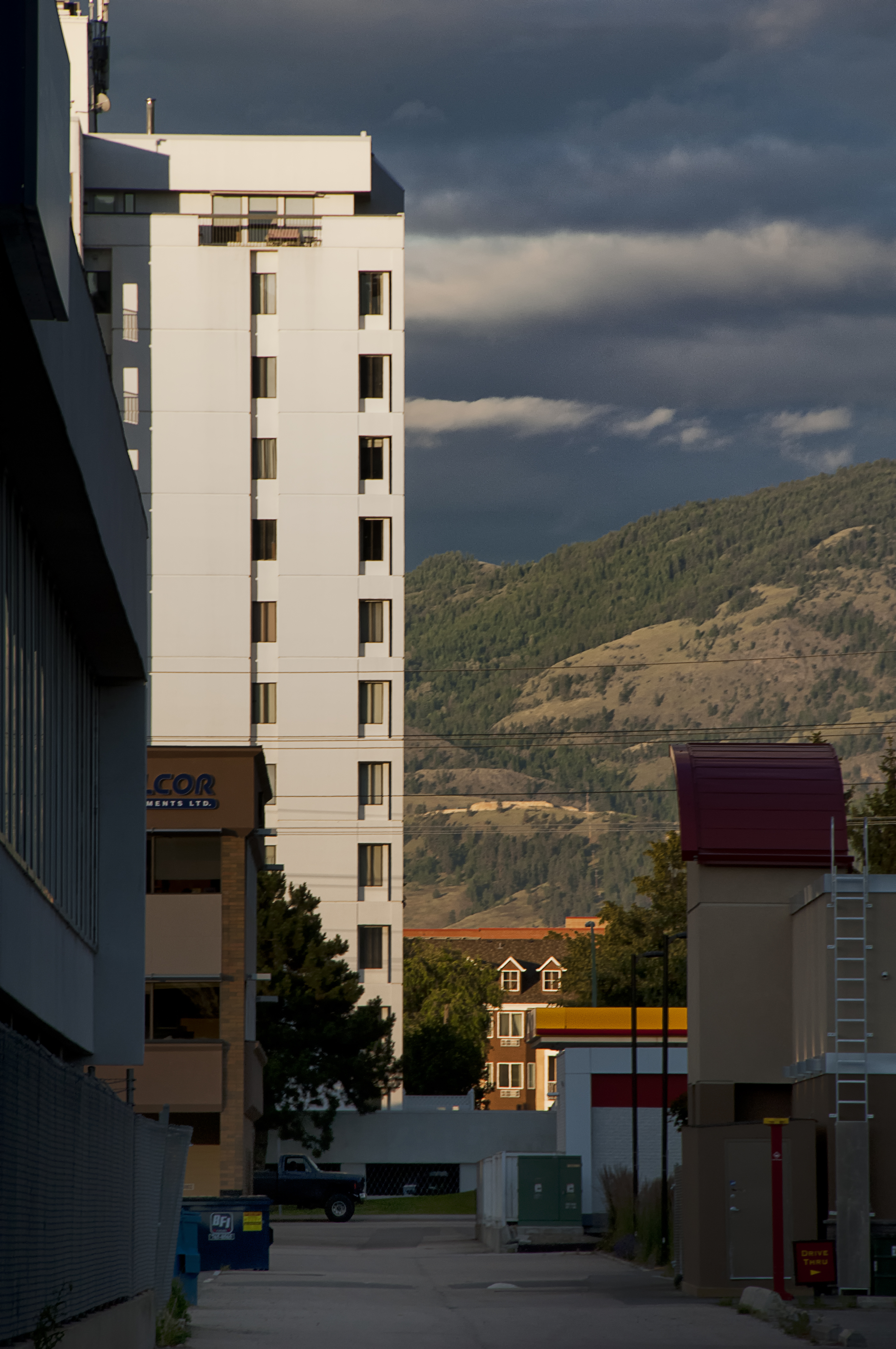
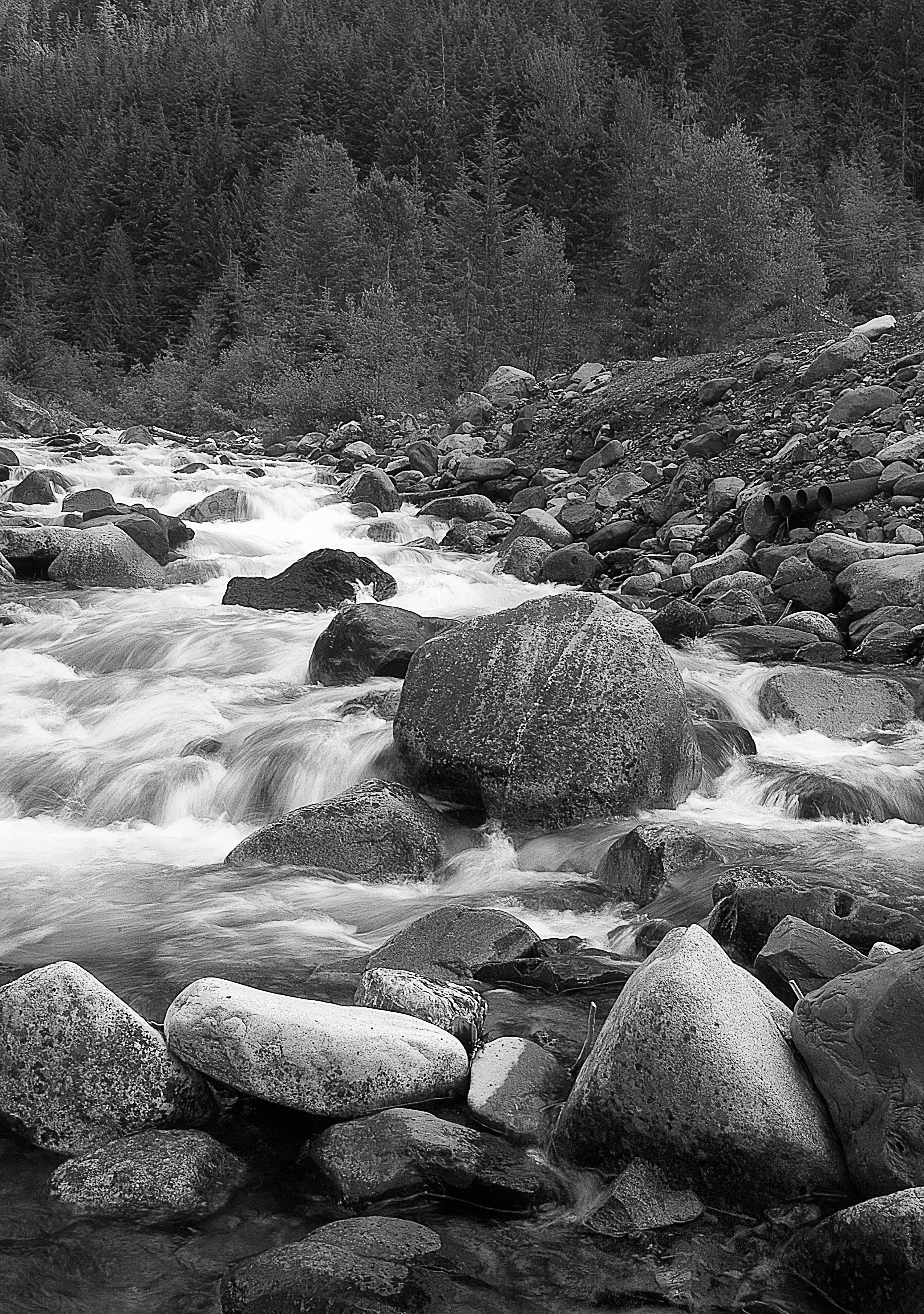
picking the view  Harper Trail vinyard  Kamloops neighborhood garden  Gig Harbor   peachland storm clouds  Kelowna afternoon River rocks

On a business trip to Canada in 1840 an Englishman named Pattinson made the first known scenic photograph in this country.  A student of an early form of photography perfected by Louis Jacques Mande Daguerre, Pattinson set up his camera at Niagara Falls, and produced the now cherished historical Daguerreotype photograph.

That Daguerreotype would have taken more than 20 minutes for the scene to expose on a silver-coated plate inside his camera.  Later the photographer would surround the plate with warm mercury fumes that would slowly make the image visible.

Those Canadian scenic landscape photographers reading this are part of a long history of photographing this country since that moment.

Last week a photographer stopped by my shop looking for a scenic lens. After looking around a bit she asked, “What is the best lens for scenic photography?”

That is a question that is all too familiar, especially from those new to the medium in the process of spending their hard earned money on equipment.

I suggested she take a look at zoom lenses that will give her the most versatility without having to spend the big bucks. There are lenses, for example, like the 18-70mm, 18-200mm, or even 70-300mm are reasonably light and give lots of choices of perspective. However, instead of just recommending a particular lens for scenic photography I wanted her to begin thinking about perspective.

A wide-angle lens has a curved front surface allowing for a wider view. Distances between the foreground and background subjects will be extreme, and the subject closer to the lens will be larger. When using a 18mm focal length for a portrait, the person’s nose will be big and the ears will be small. A 200mm lens will give a more tightly compressed view and distances between the foreground and background subjects will not look as extreme as the wider 18mm focal length. 200mm would be a better lens for photographing that person’s face because of the compressed perspective. An example we commonly see is when we watch a baseball game, and the pitcher looks very close to the catcher, which is caused by the compression of the long focal length lens.

Here is a more practical example. I am photographing a waterfall with cliffs in the background, and with wet rocks in the foreground. If I use a long focal length like the 200mm all the elements will be compressed in the final image with no subject gaining significance over another. However, if I fitted my camera with a 18mm lens the foreground subjects will be larger and more significant, creating distance to the background. Both would be good renditions, just different.

I believe the best lens depends on the perspective that the photographer wants to view in the final image. One must think about the perspective front to back, how much of the scenic is important as in a wide, or narrow, aspect. It comes down to the personal vision and what he or she wants to say about the landscape being captured.

Famous scenic photographer Ansel Adams advised,  “problem solve for the final photograph”.

Like Adams, photographers should think about how the final photograph will be used and how to accomplish that. If one thinks of a final photograph as a series of problems to be solved there will be a smooth transition from initial idea to final print.

There is no one lens that can be termed a “scenic or landscape” lens. Any lens might be used as long as it meets the photographer’s vision. That vision might be to include a wide vista with a wide-angle lens or on the other hand, a tighter cropped image created with a telephoto lens might be visually more powerful. The choice of lens for scenics comes down to what the photographer wants the viewer to feel and see.

Have a comment? Don’t hesitate – I like comments. Thanks, John

My website is at www.enmanscamera.com
Photographing the Fall Fair

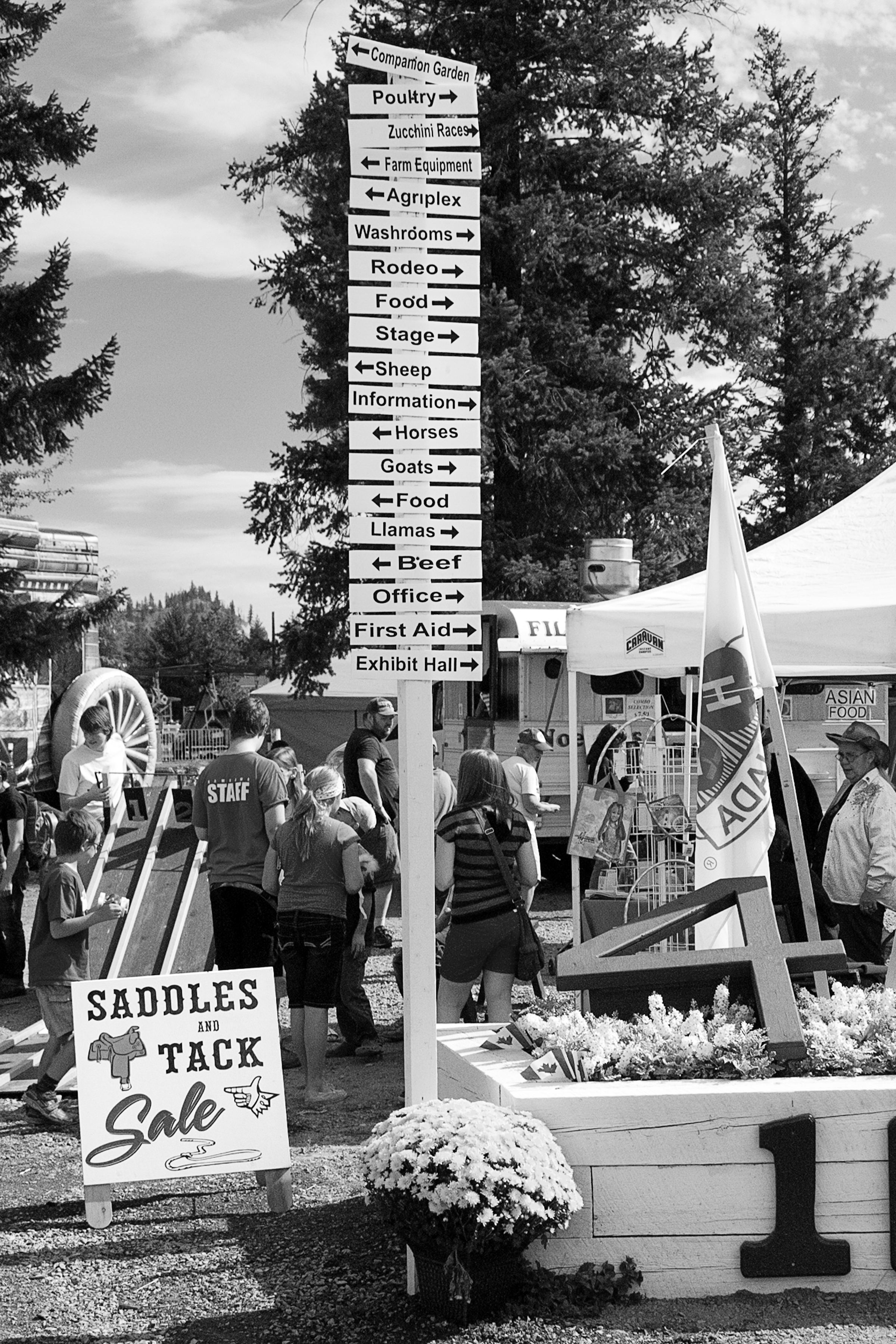
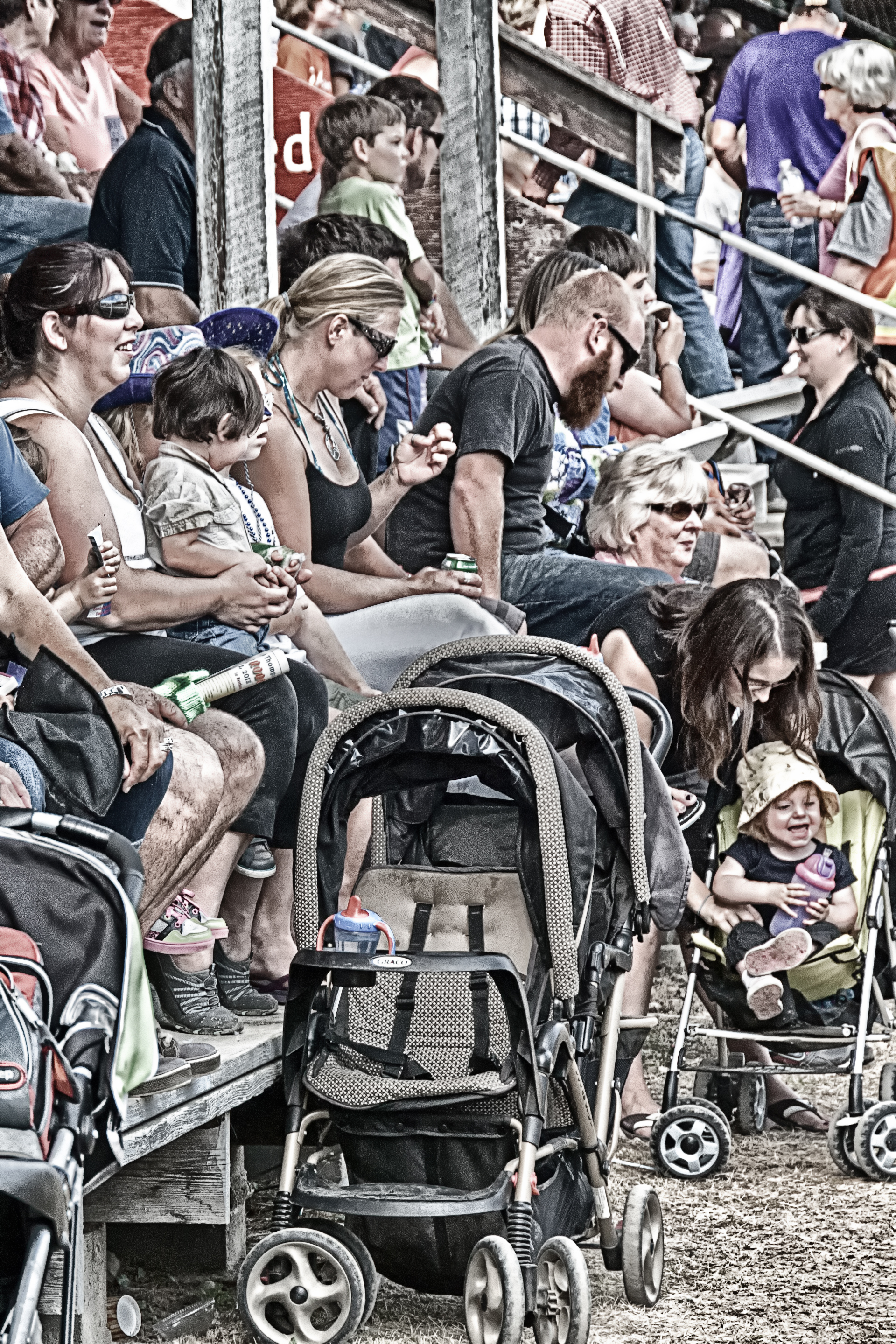
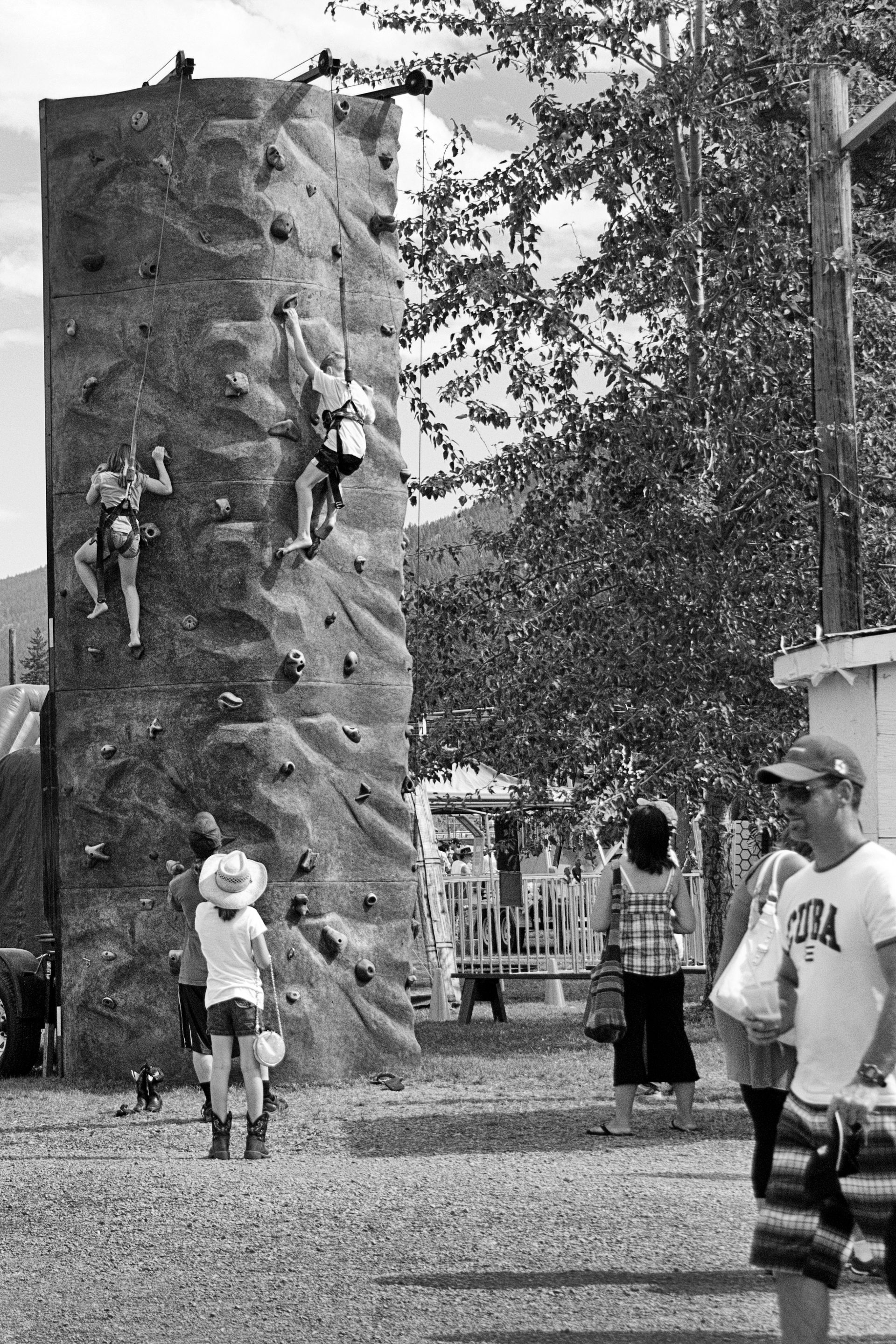
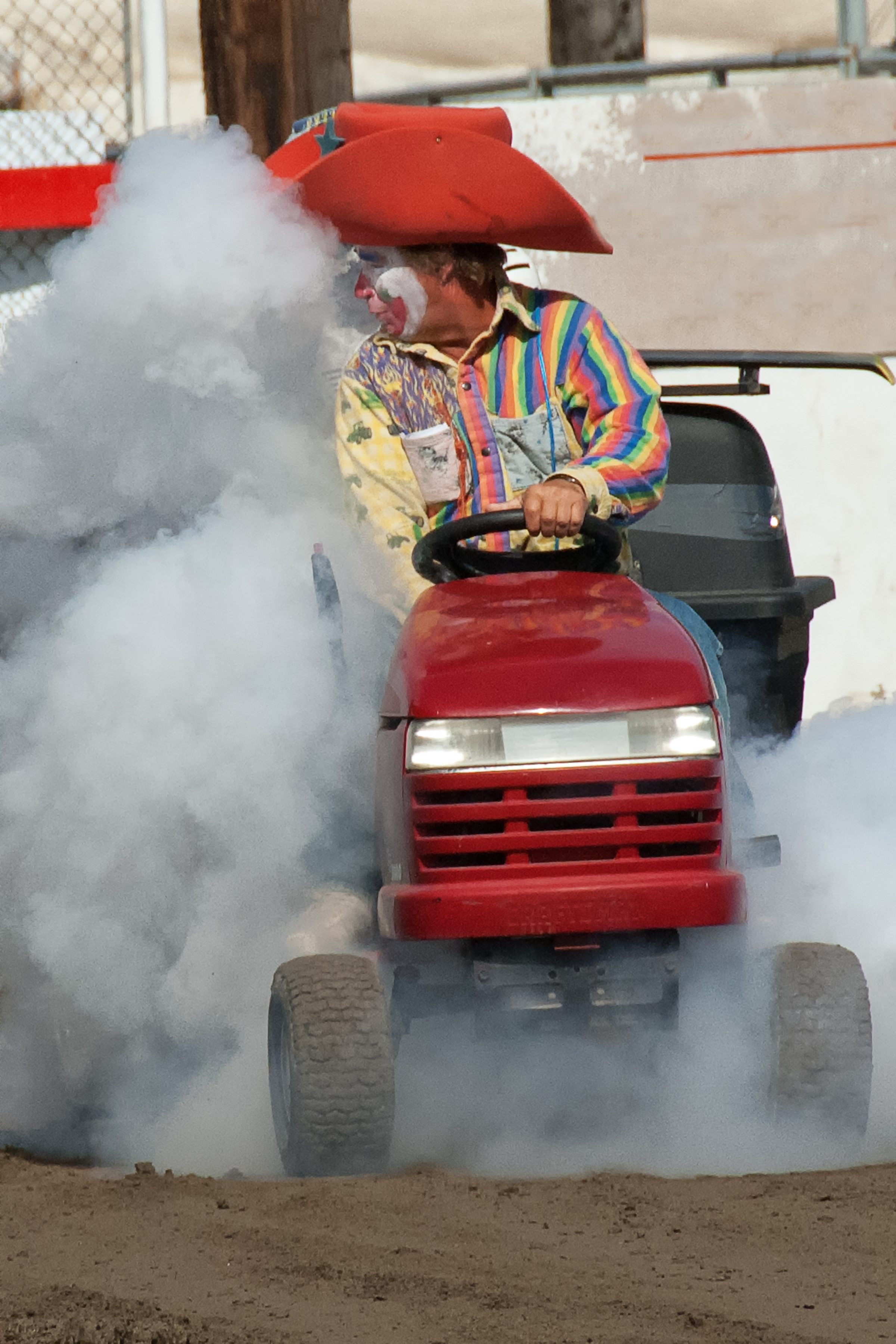
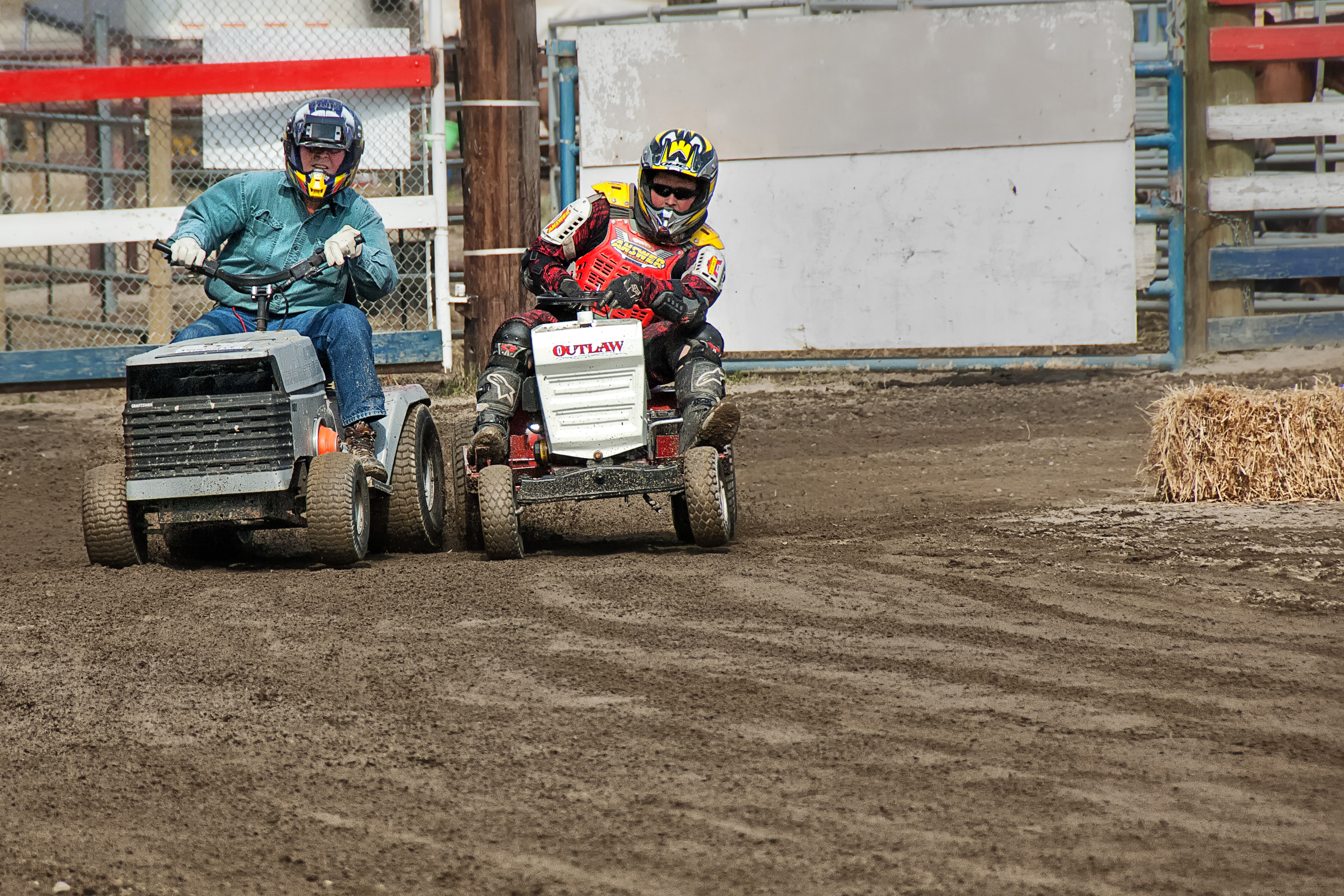
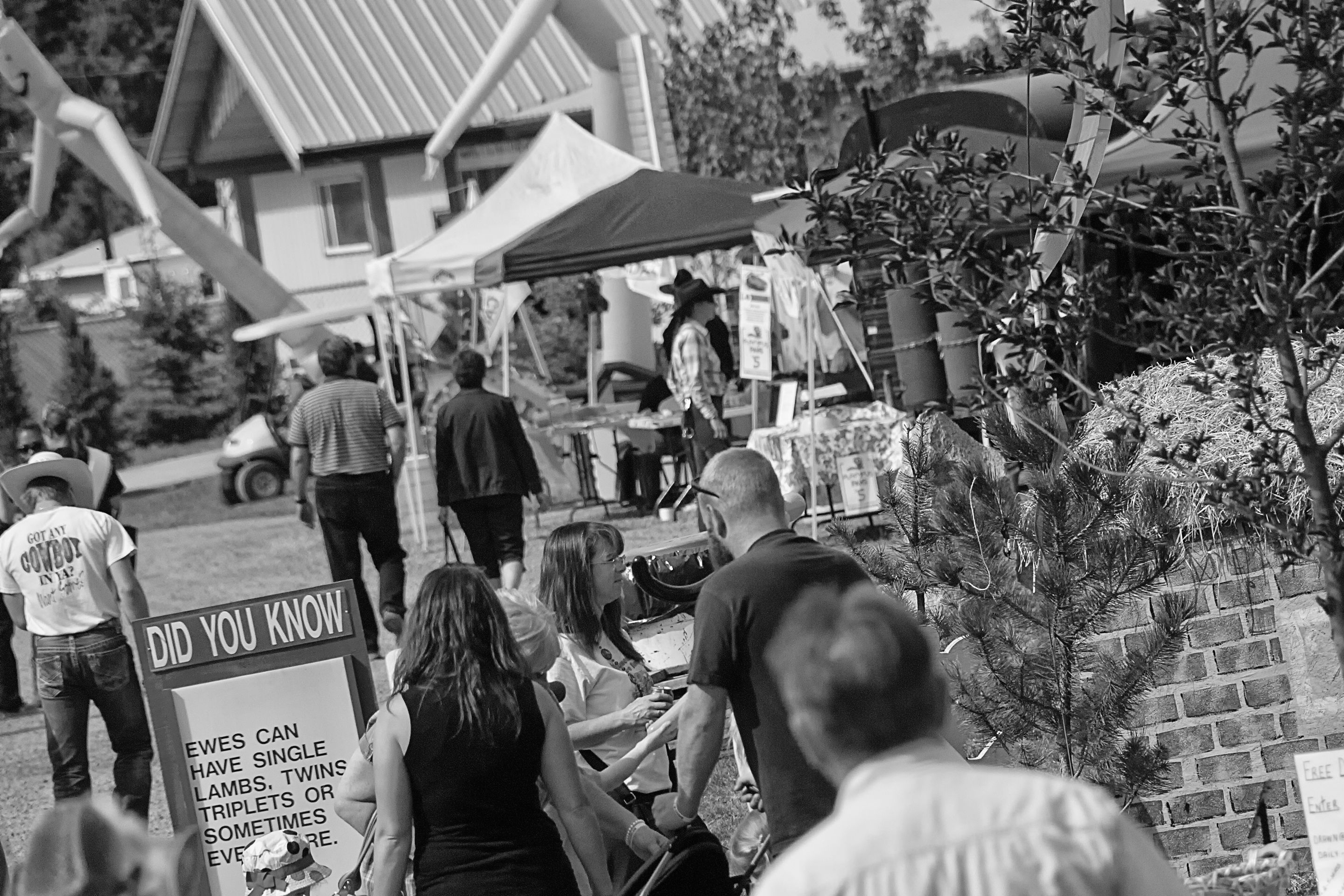
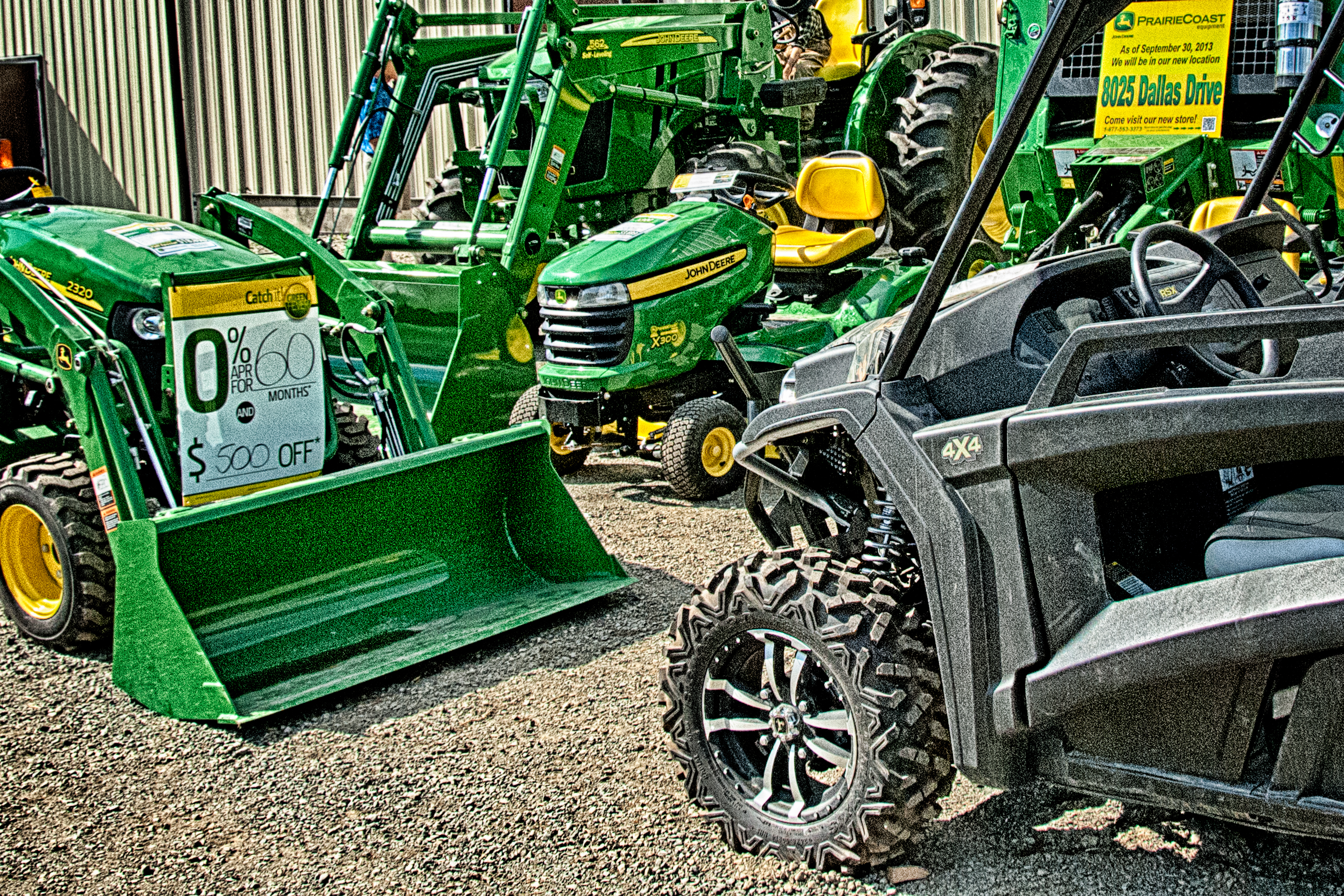
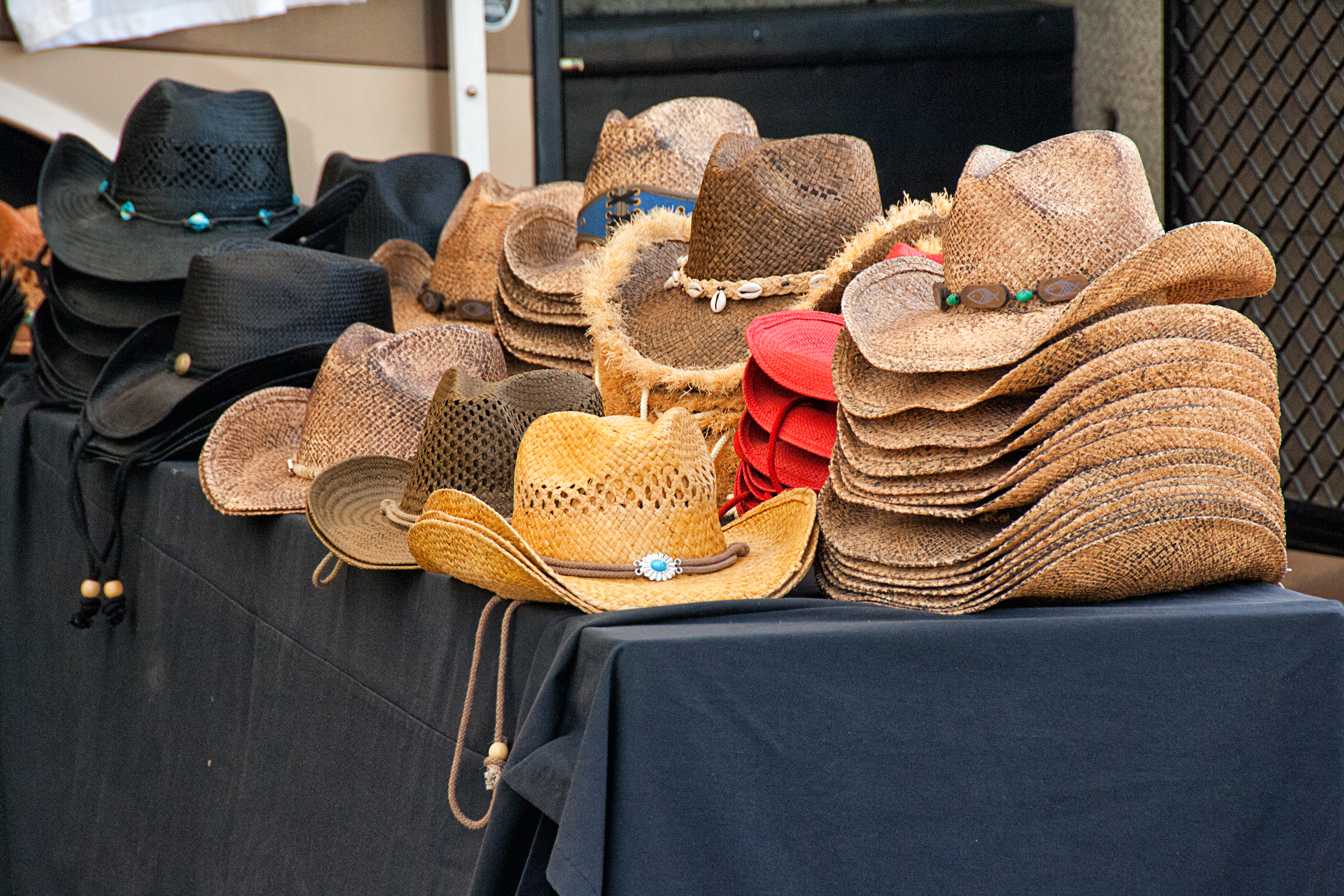
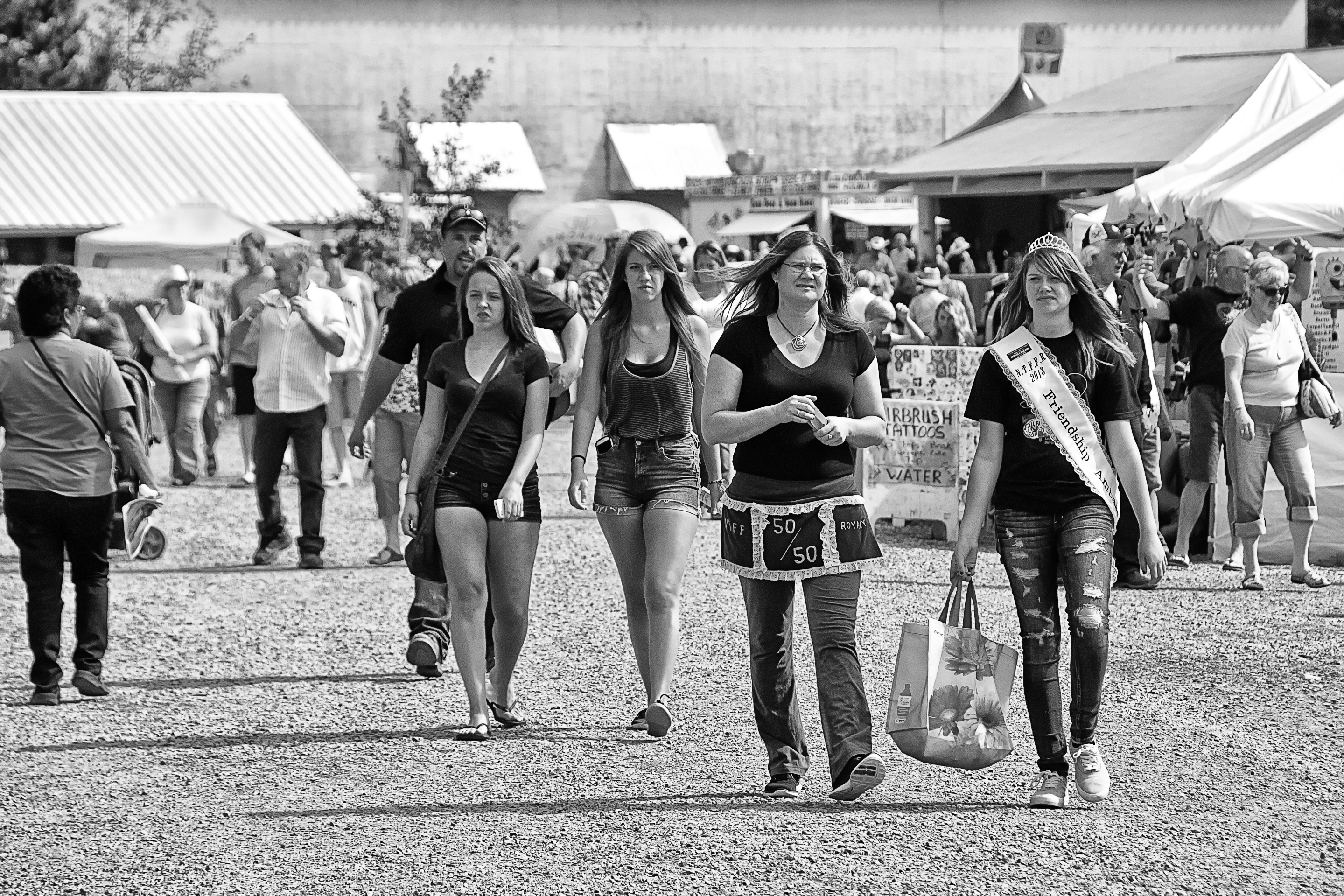
Barrier fall fair  The bandstand  Children's wall climb  Lawnmower race 1  Lawnmower race 2Midway  Tractors Cowboy hatsAt the Fall Fair

“Let’s all go to the country fair, there’s blossoms, and ribbons, and hope in the air.  The harvest’s in the endless bin, and Grandpa can bring the old mare.”  Anonymous.

In British Columbia the months of August and September are the season of fall fairs.  Communities large and small host events filled with exhibits of local crops, poultry, livestock, and all sorts of crafts, and the outdoor shows include rodeos, many different horse competitions, and even lawnmower racing. There are action packed midways that include amusement rides and challenges for the children like wall climbing, and there is food. The inviting and almost demanding smell of all kinds of mouthwatering foods confronts participants as far away as the entrance gate as they pull a few dollars out of their pockets to pay the entrance fee enticing everyone to make their next stop one of the food booths.

For this year’s Labour Day weekend my wife and I had the choice of two popular fairs, both about an hour away from our home, the Armstrong Fall Fair, or Interior Provincial Exhibition, is south, and the Barriere Fall Fair, or North Thompson Fall Fair is north.

We have attended both fairs over the years. Armstrong is larger, but this year we decided on Barriere, and besides I have more friends in Barriere.

I mounted my 18-200mm on my camera for our day’s excursion. The 18-200mm is a perfect walking-around lens for events like the one my wife and I were attending. I didn’t need a real wide, long telephoto, or fast aperture lens, as most exposures were ISO 400.  I always employed as fast a shutterspeed as I could and my aperture was usually f/8 or f/11.

The sky had a few clouds and the warm day was perfect for strolling through the small community’s fall fair. I looked around as I walked through the gate and into the excitement-filled fair thinking how that event was ideal for those of us that are always searching for something different to photograph.

The mid-way offered shots of vendors and interesting people engrossed in their visit to the fair. There was a large Agriplex building that presented opportunities to photograph livestock. I got some great images of young 4-H’ers in action and just outside I photographed cowboy musicians, magicians, and children on a climbing wall.

We got there late so I missed the horse pull, but I watched the Lawn Mower racing. Yes, I just wrote “lawn mover racing”. Who would have thought there would be such action, or any action at all from a lawnmower? But there they were, zooming around the dirt track. I have photographed running athletes, horse racing, stockcar, and motorcycle racing, to name a few, however, now I can add lawnmower racing to my resume.

I have always enjoyed community fairs, even before I started carrying a camera around. Nevertheless, ever since I have had my camera events like the Barriere Fall Fair has been great fun with the multitude of different subjects ready to be photographed.  For those photographers that haven’t yet ventured into that fertile photo territory, all I can say, if there is one coming to a fairground near you, put it on your calendar.

I always appreciate your comments. Thanks, John

My website is at www.enmanscamera.com
Rainy day photography – Why not?

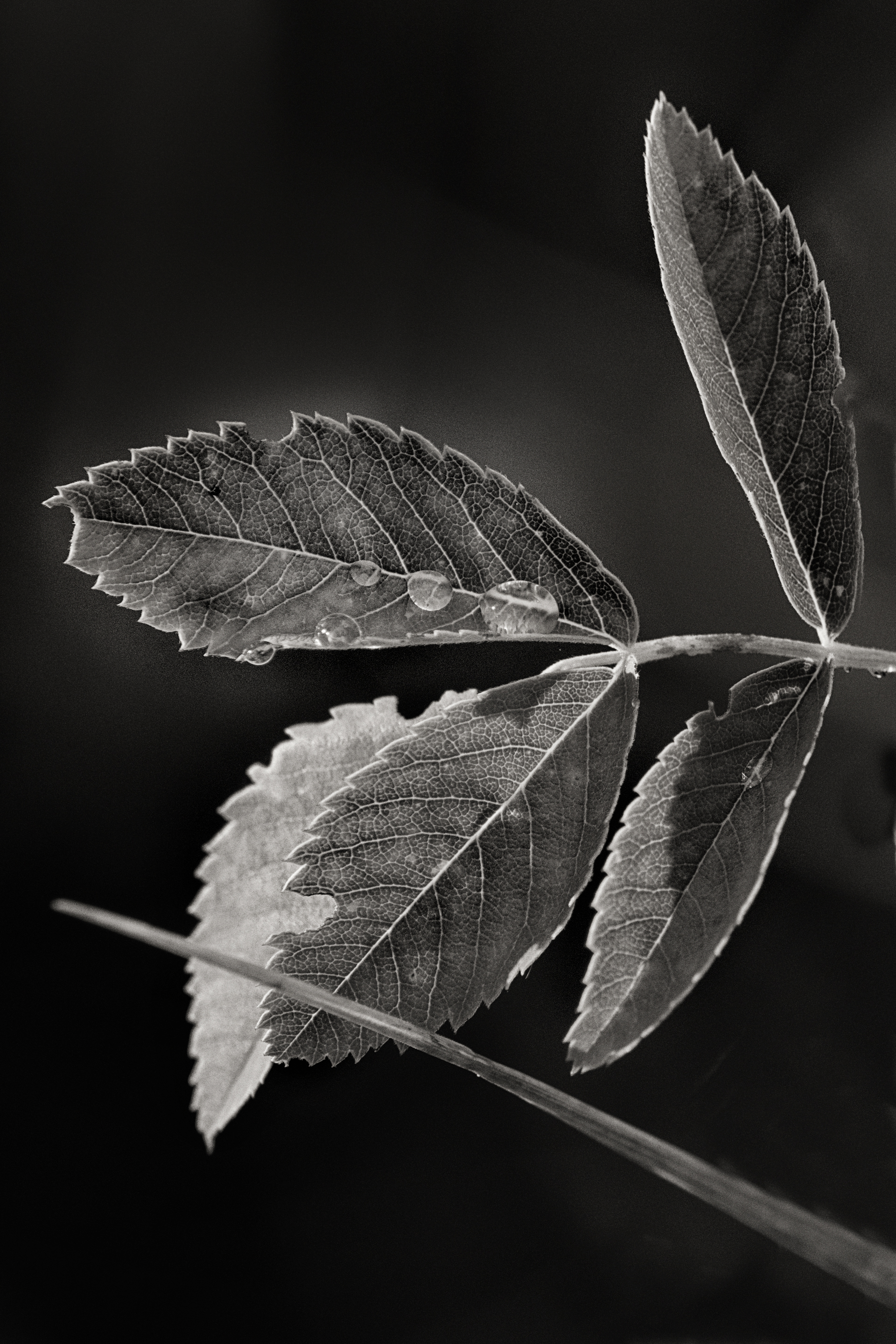
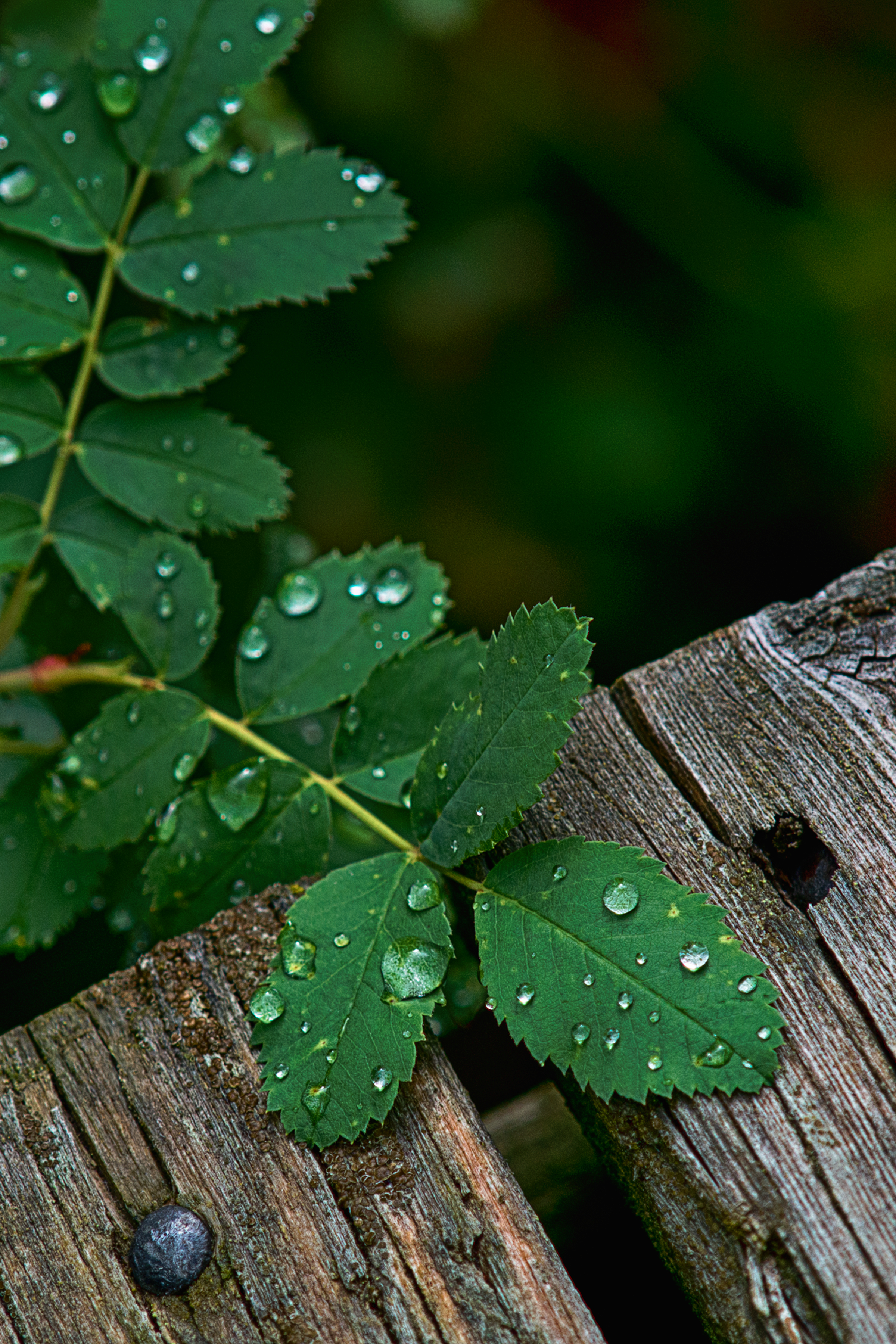
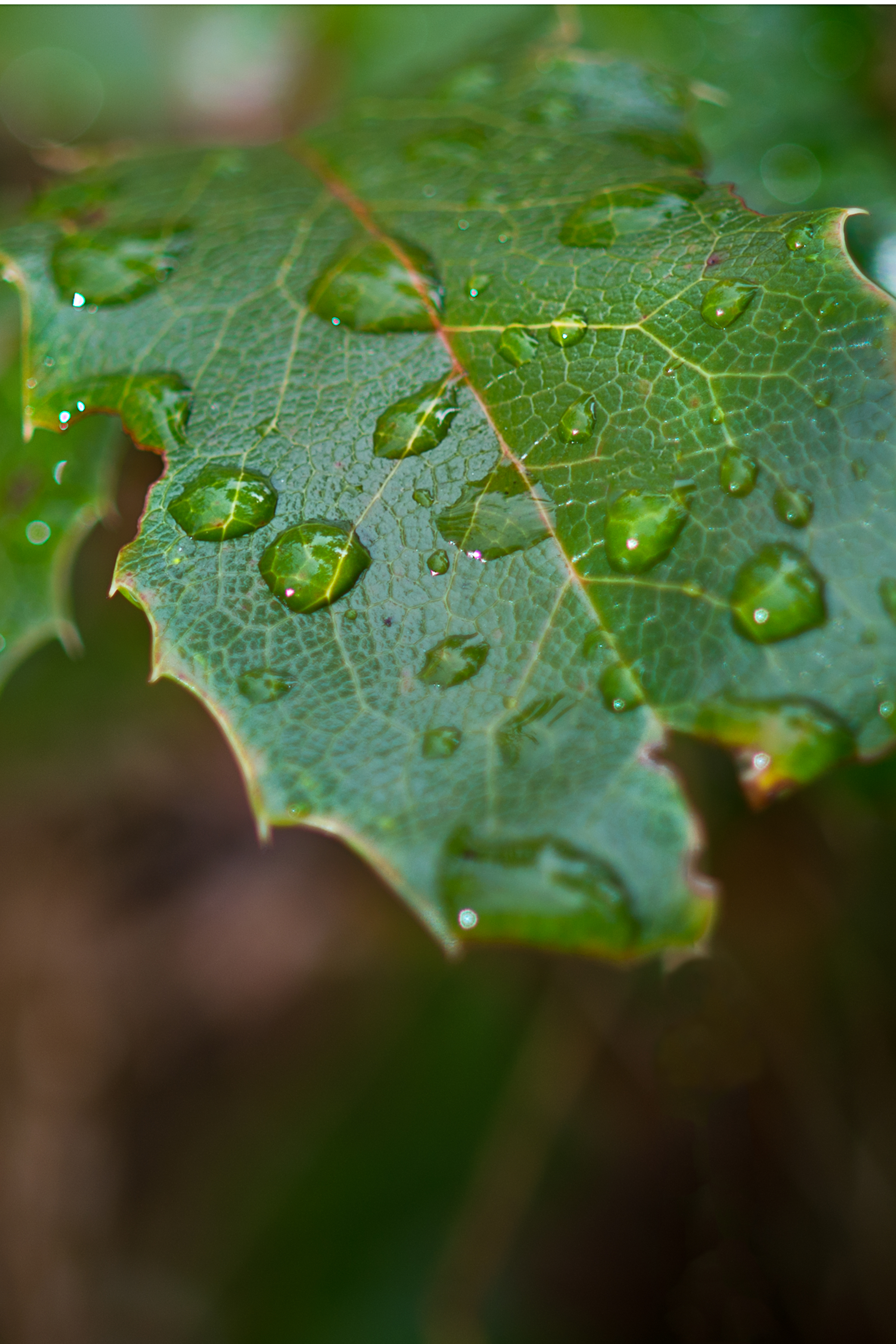
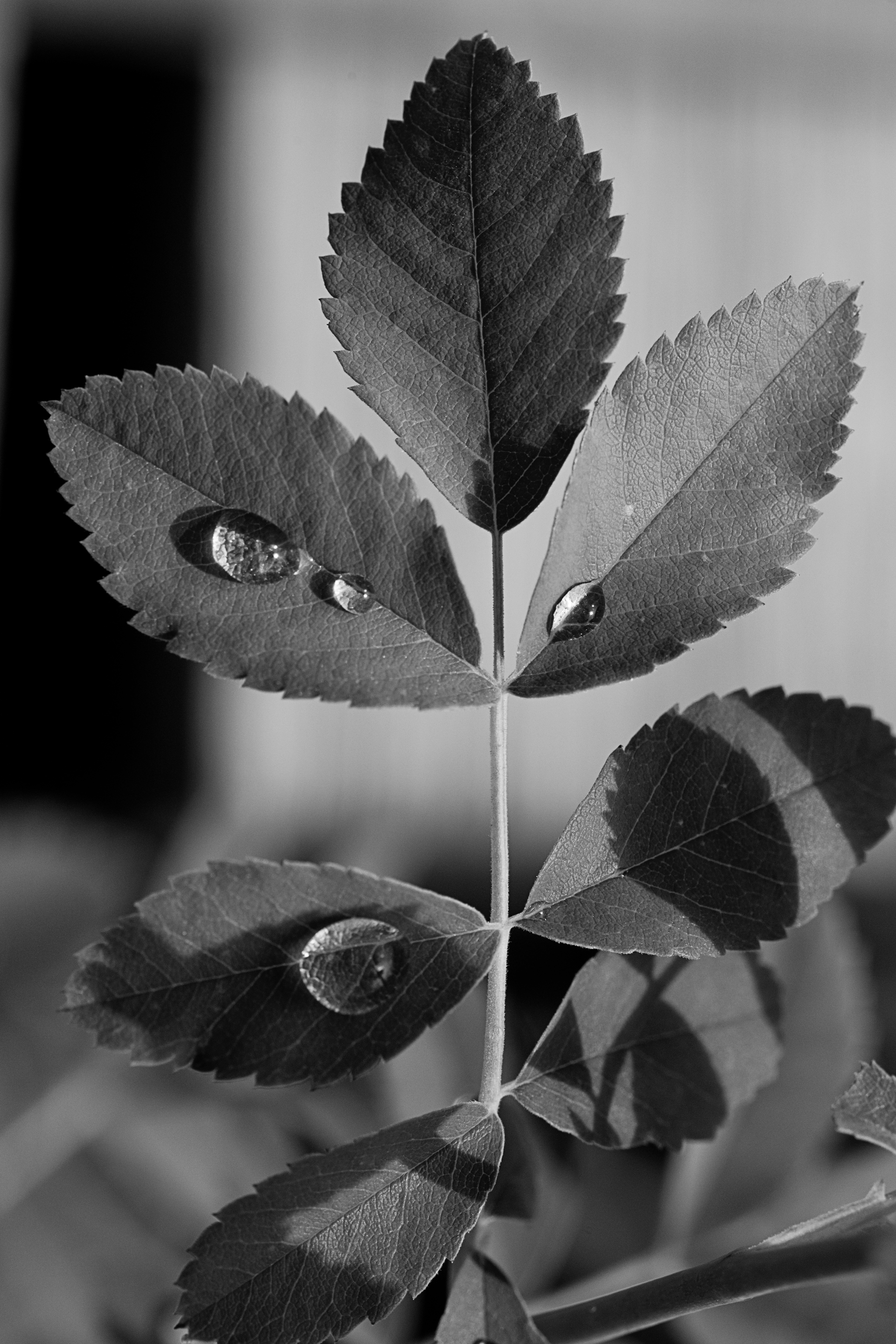
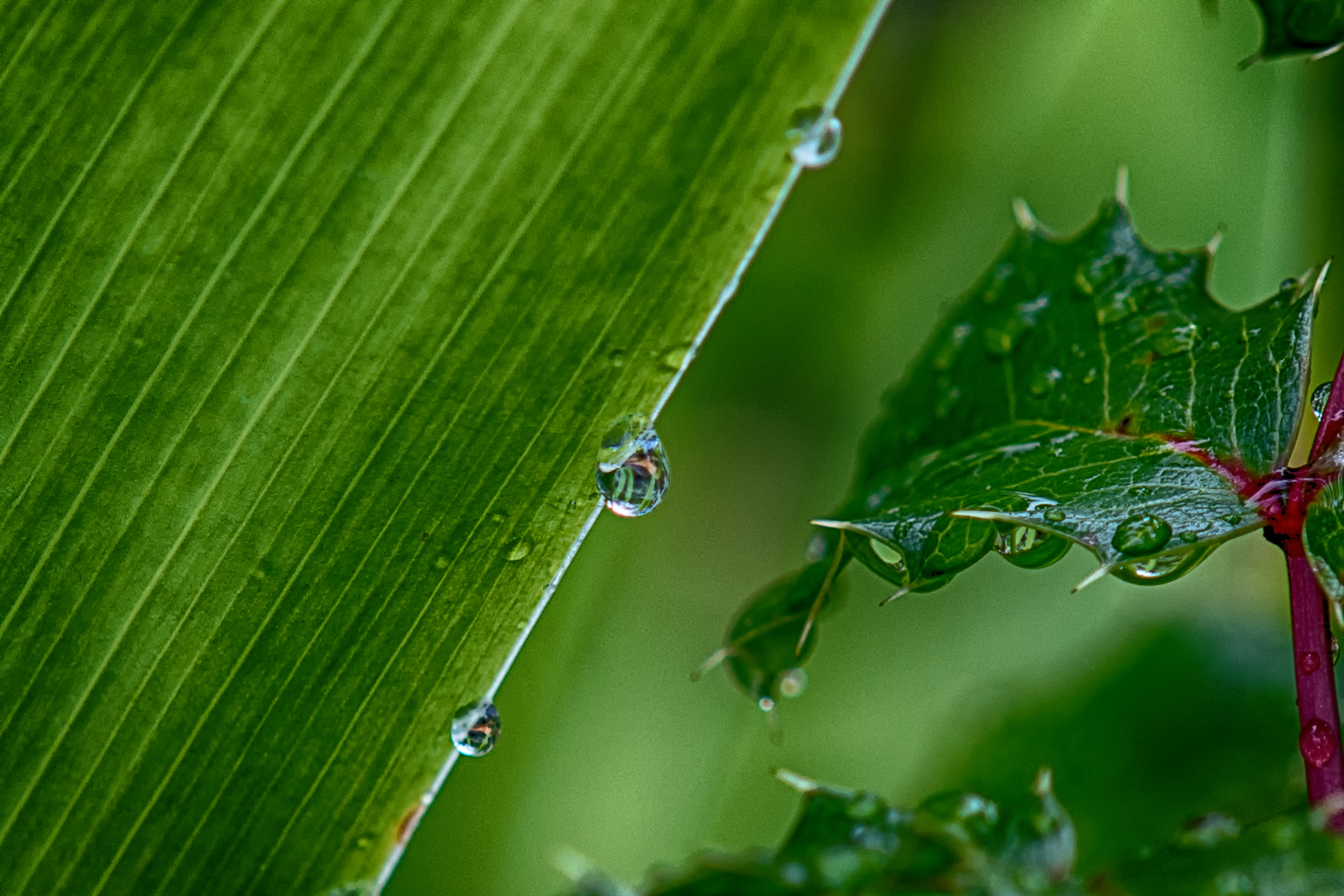
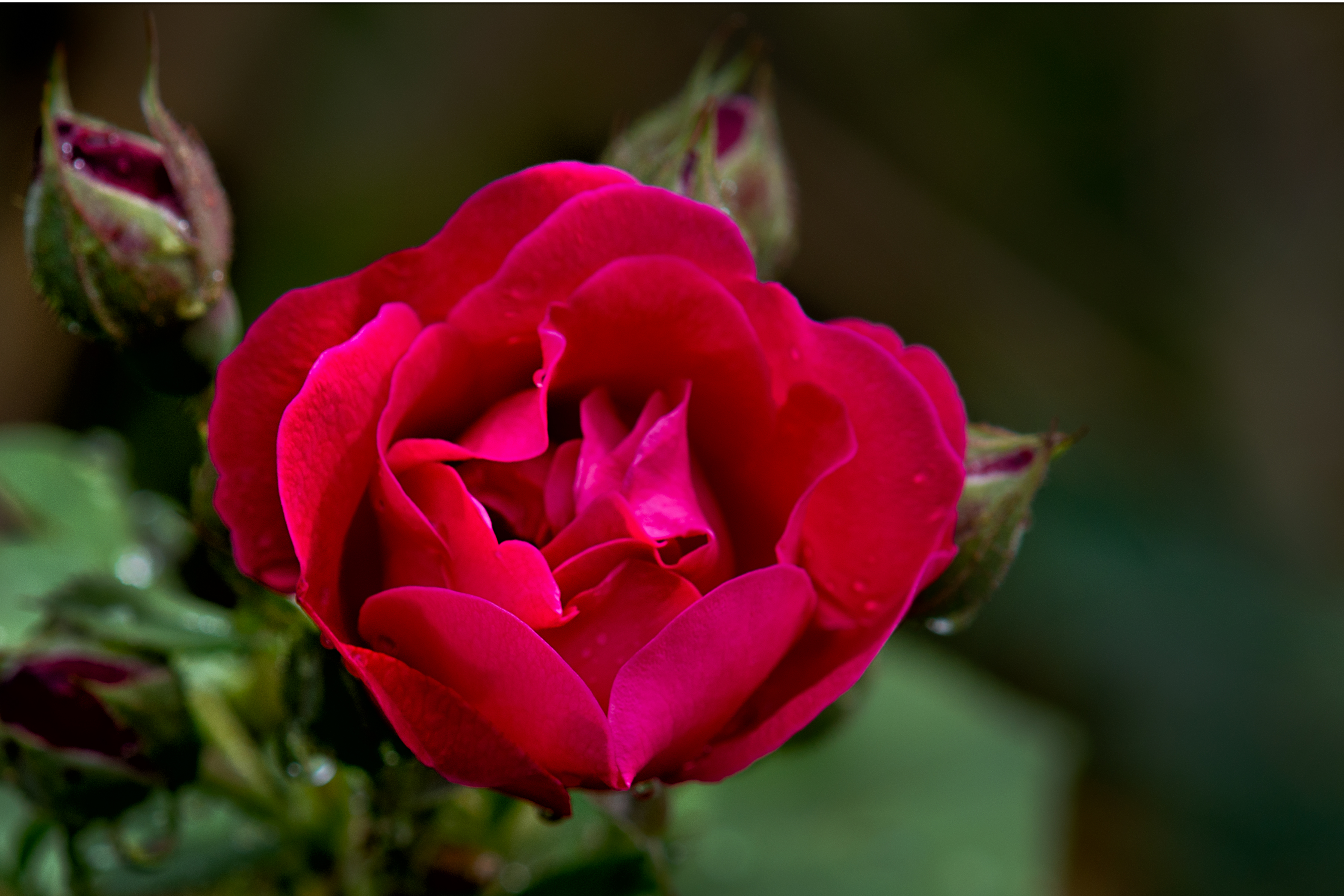
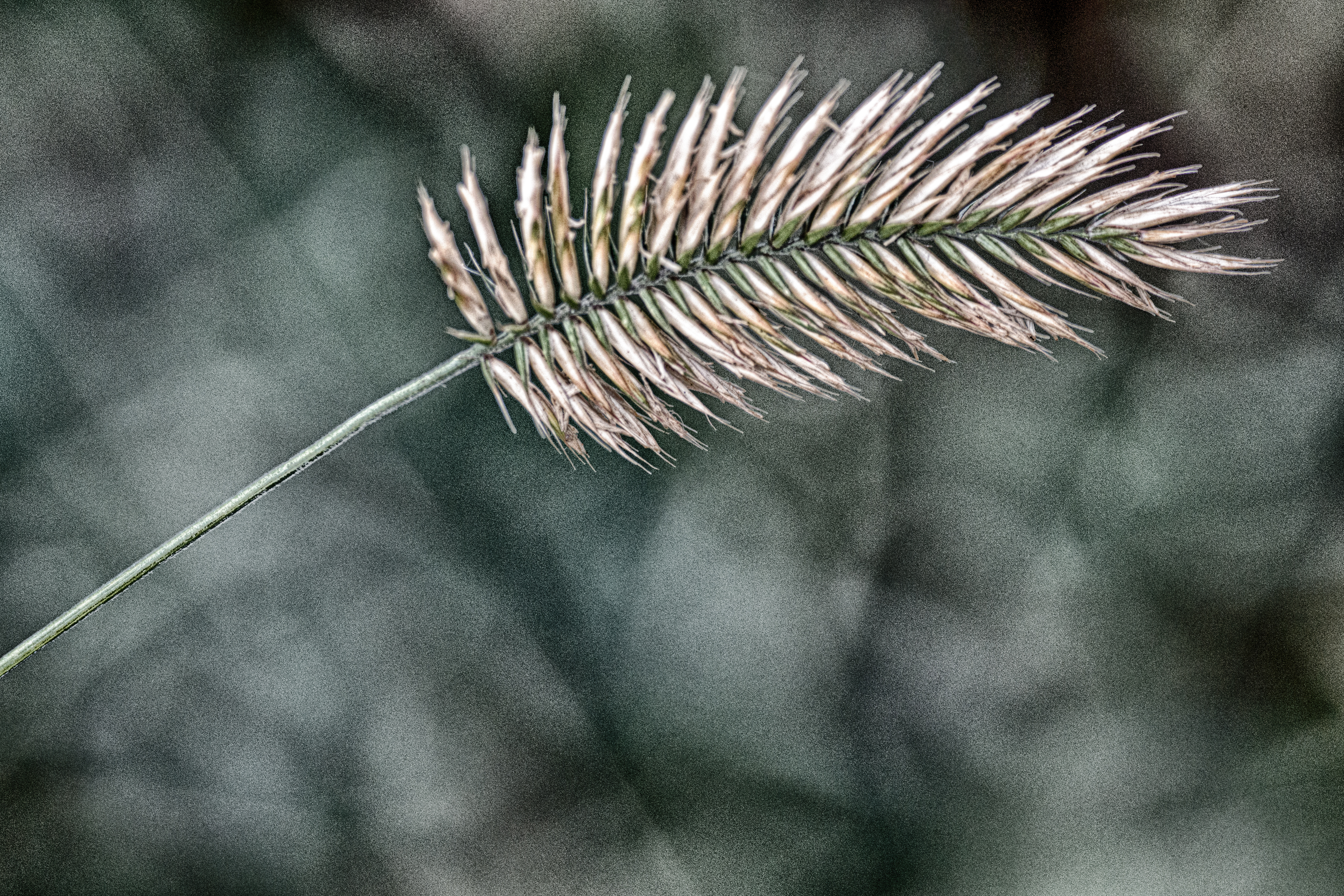
Wet leaves in black and white  Deep green & Rain  Wet green leaf   Perfect raindrops Green rain drops  Rose kinda soft  Grass

What does a photographer do on a rainy day?  This photographer’s options don’t include getting his clothes and equipment wet. When the rain outside has filled the paths with puddles I try to fine momentary instances when the sky lightens up for some shooting and then creating with Photoshop.

After two hot and dry summer months dark clouds rolled in seemingly out of nowhere and the rain came down. The damp, cool, afternoon breeze was a nice refreshing change, but I had just set my camera bag and tripod on the porch and was planning to make an afternoon drive to a local waterfall when it began to pour. Well, that excursion was out.

What does a photographer do? I suppose I could have turned on some music and picked up the unfinished novel I have been trying to get back to. There were some silly movies on the television, and I could have snuggled up on the couch and watched one or two, or (and I liked this one the least) I could have pushed my way into my messy workshop to continue the never-ending job of cleaning up. However, none of those seemed all that interesting as I stood looking at the rain falling on the garden out the front door.

Fortunately for me the rain wasn’t hard and constant. It would come and go, leaving spaces of time for clearing, with moments of sun poking through the clouds. So during some clear moments, I mounted a macro lens on my camera, grabbed my tripod and went outside.

I looked for interesting plants with raindrops to photograph until the rain began again, then I’d go back inside and wait for the next lull in the rain, however, I then had image files that I could download to my computer. And while I waited to go out again I could sit and creatively work with the pictures I just captured.

I spent the afternoon that way, I’d go out when the rain lightened up, wander around the yard and photograph anything with water drops that caught my eye, return to the house when the rain returned and work on those image files till I could go out again. I snacked, had a couple glasses of wine, and spent a great afternoon with photography. What could be better than that?

There is always something in the garden no matter the weather, sun, snow or, like on that enjoyable day, intermittent rain. The slight overcast day was perfect for my subjects. Bright sun will increase a subject’s contrast making it hard to capture details in the extremes, and I wanted to hold on to what details I could. The diffused daylight reduced the number of f/stops from black to white.

I used two different lenses, a 200mm macro lens and a 70-180mm macro. I wasn’t after anything in particular so I just changed lenses depending on my mood. I positioned a reflector sometimes, used a wireless, off-camera flash mounted on a light stand for others, and neither when the sun really came out.

I suppose I am a bit of an opportunist and I regularly can be seen wandering around the yard and neighborhood with my camera in search of nothing in particular.  I just like taking pictures rain or shine.

About getting out there with a camera the famous French photographer Jacques-Henri Lartigue said it best, “It’s marvelous, marvelous! Nothing will ever be as much fun. I’m going to photograph everything, everything!”               I am in complete agreement, how about you?

I look forward to your comments. Thanks, John

My website is at www.enmanscamera.com
Photographer Didn’t Understand the Purpose of a camera’s Meter.

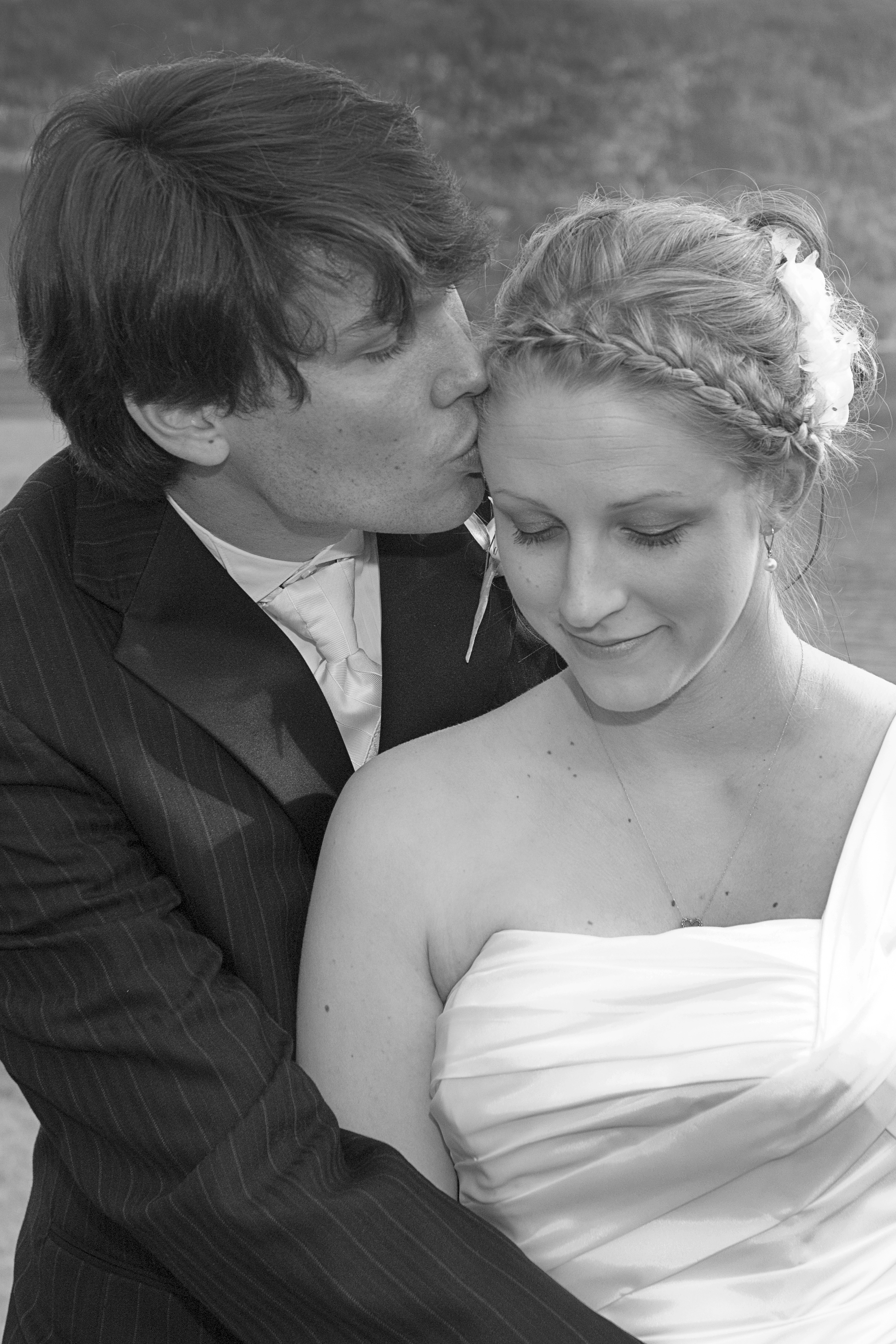
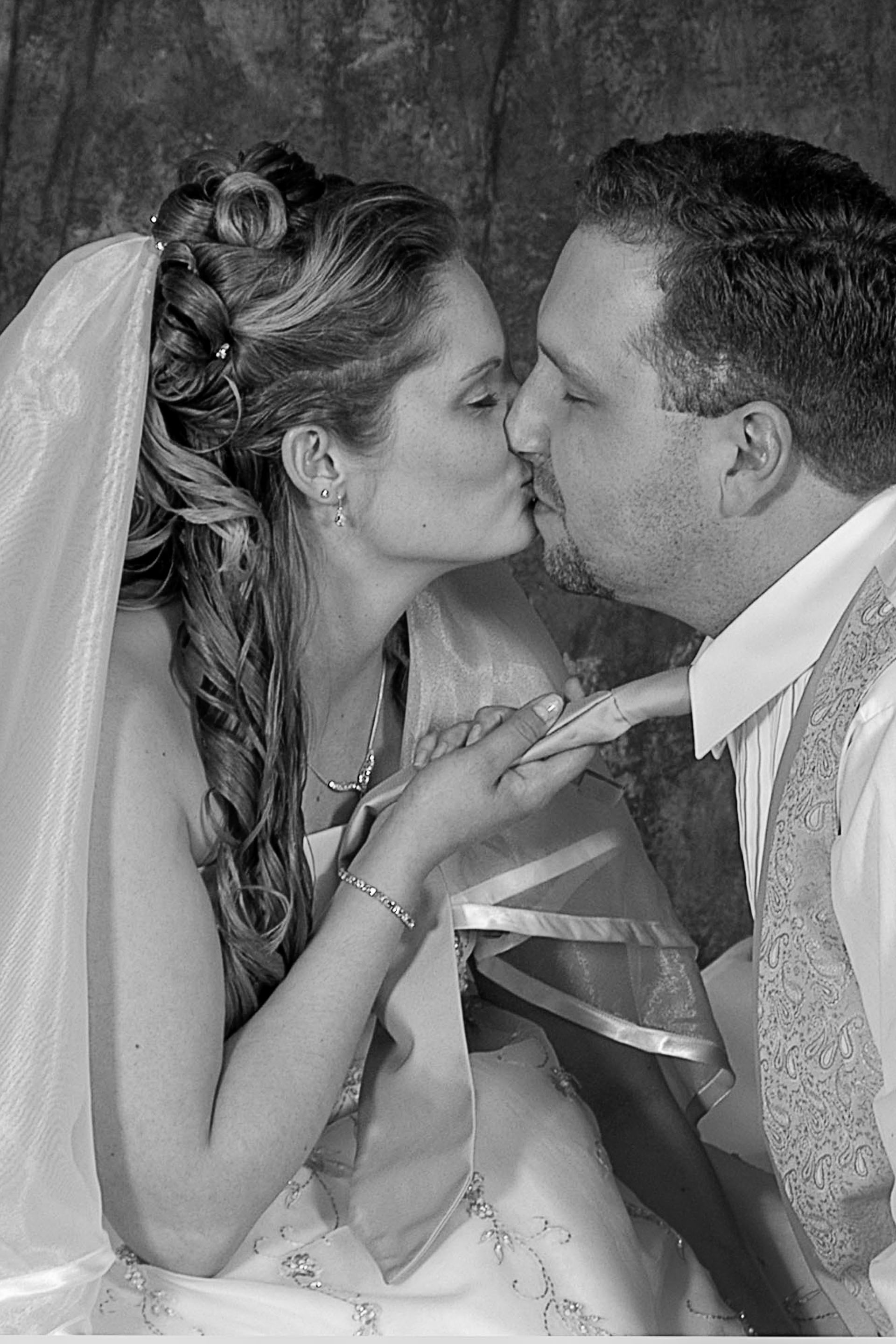
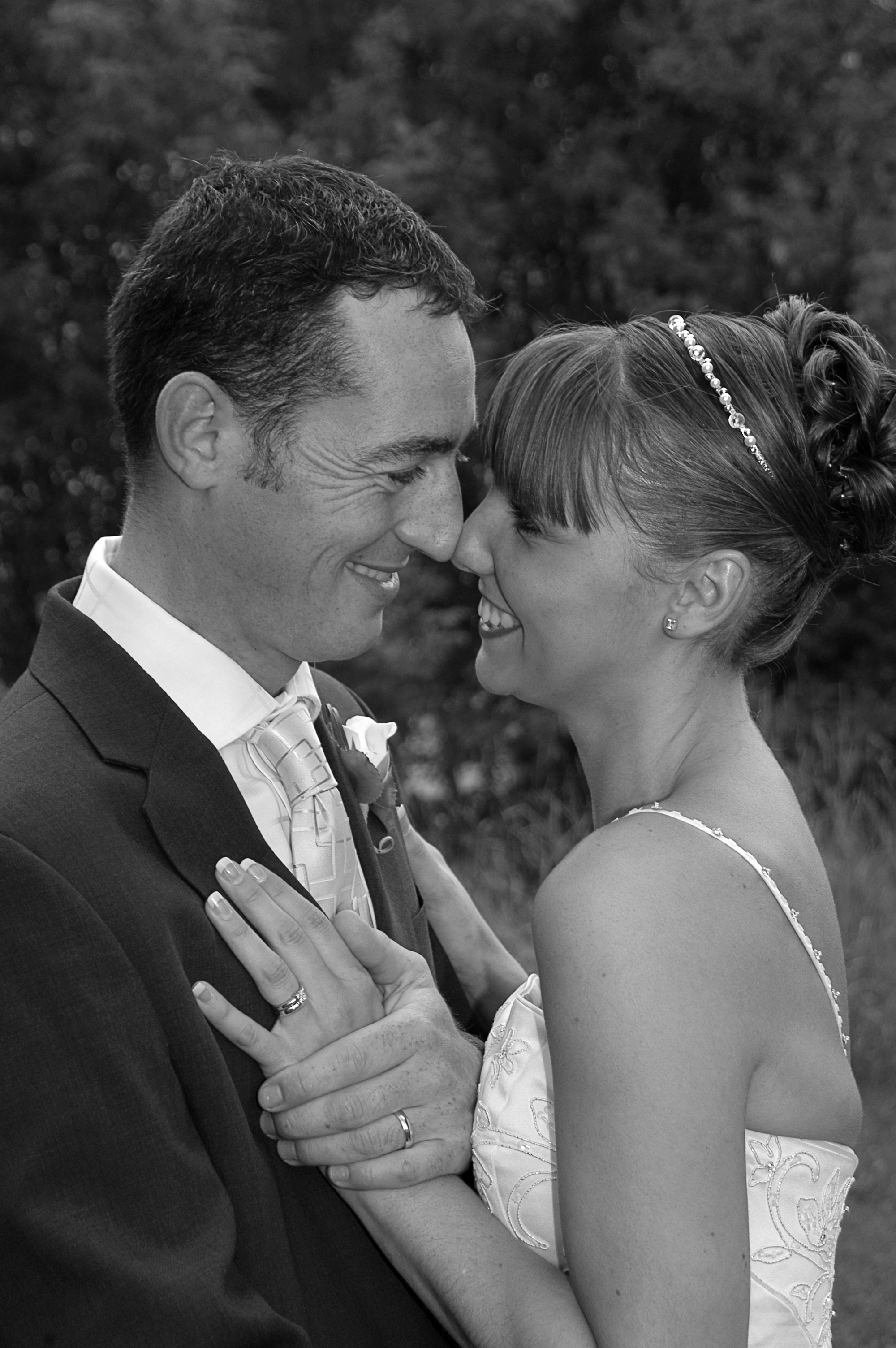
Wedding Kiss Touching Noses

A few weeks ago I wrote about digital camera terminology. I expected some readers may have skipped reading that to find something more advanced, however, I received lots of comments, and some good discussions on terminology I had not included, supporting my contention that many photographers are perplexed at the new jargon.

My article was in response to a customer confused about how to discuss her camera, however, this week I was reminded again that many photographers aren’t only confused with pixels, resolution, and bit depth, but also basic camera functions.

A photographer that had recently taken a local photography class complained to me, “I don’t really understand what the meter does, or how I would use it.”  The instructor had pointed out how to select the different camera modes, but neglected to include why one might select one over another for particular subjects. He told me the class ignored Manual mode, and left him thinking that only the three automated modes were worth using. The word exposure was only mentioned in passing when referring to those automated modes and guidance concerning the camera’s meter, and how to effectively use it didn’t seem to be part of the class.

I told the photographer that the meter is the measurement tool that allows users to control light, and suggested using the Manual mode as an easy way to access the two important camera mechanisms, the Shutter and the Aperture, to increase or decrease the amount of light reaching the sensor.

I explained that the Shutter blocks light from the sensor until the shutter release button is pressed, then it quickly opens and closes.  Setting the camera’s shutter speed controls the length of time light reaches the sensor.  The Aperture is an opening that lets light pass through the camera’s lens and is measured in f-stops. In actuality, it is a hole (aperture) that photographers control by opening it wider (wider aperture) for more light, and closing (smaller aperture) for less light, similar to the pupil of our eye.

Photographers can use the meter to determine under-exposure or over-exposure of their subjects, for example, I might want to slightly under-expose a highly reflective, white gown on a bright sunny day, or conversely, brighten it up on a heavily overcast day. In both instances I would use the manual mode to check a particular subject’s exposure with my camera’s meter, especially underexposed areas or subjects wearing a black suit.

To sum this all up, photography is all about reflected light and my recommendation to that beginning photographer was to pay attention to the camera’s meter and start using the Manual mode when he decides it is best for the job at hand. The camera is a tool with many functions, and one is never limited, and can choose as the situation demands.

Learning to use the camera’s meter and getting comfortable using manual exposure mode to manage shutter speed, and/or the aperture settings gives the advantage of full control without as many chances of the camera being fooled by unexpected changes in light. It gives optimal command, when needed, over the amount of light that still shows details in both the shadows and the highlights, allowing mastery over how photos are viewed and interpreted.

Don’t hesitate, I enjoy you comments.

My website is at www.enmanscamera.com
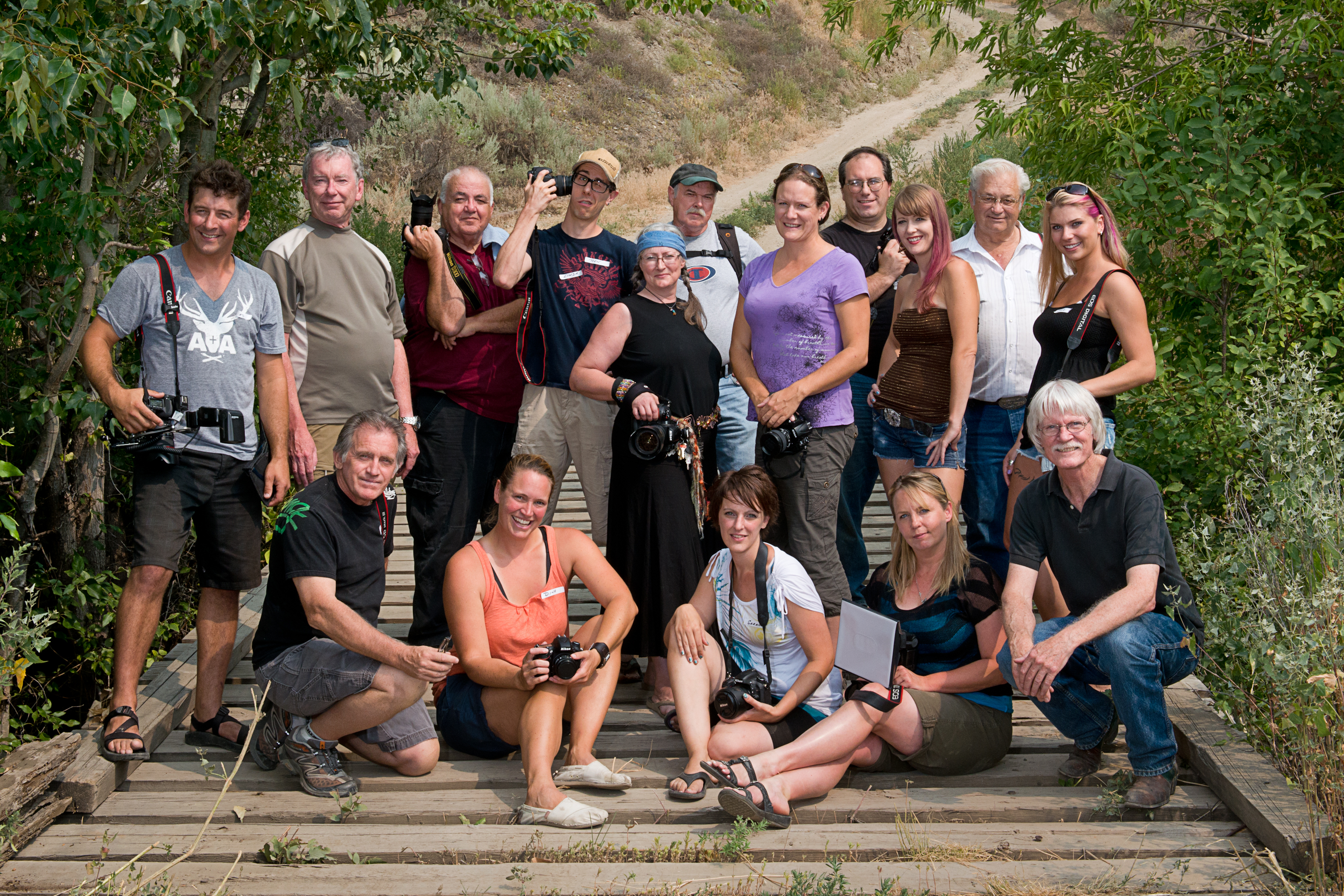
Fifteen Photographers at Open House

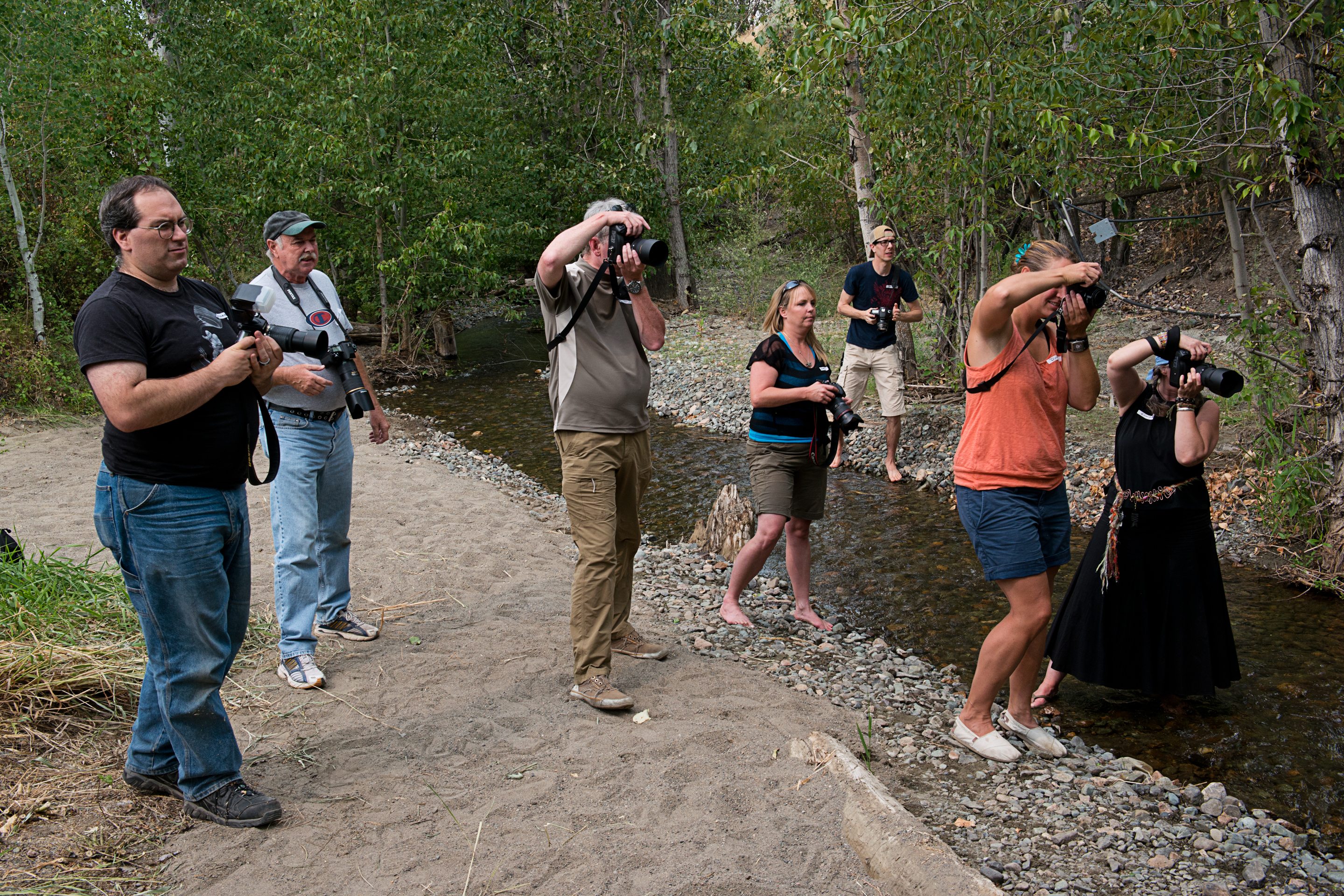
fifteen photgraphers & a Model  Creek shooters  Modeling session  Lighting a portrait

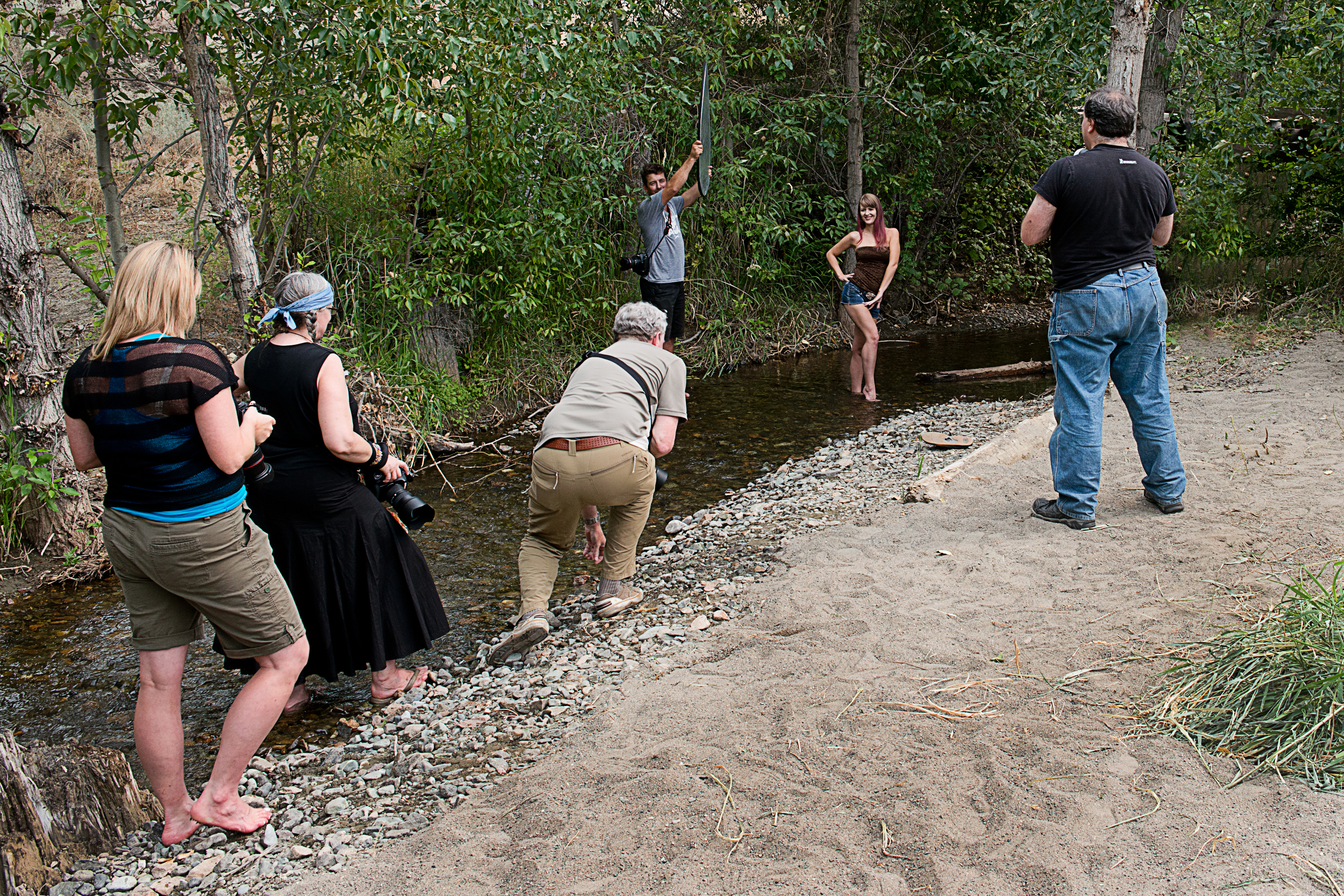
Last weekend fifteen dedicated, and I think, pretty excited, photographers attended the Versatile Studio’s photography open house just outside of Kamloops, British Columbia. It is aptly named Versatile Studio because it provides multiple locations for portrait photography inside and out.

The day began with coffee and numerous discussions on portrait photography. At one point I got up to refill my coffee and then stood back, realizing this group of photographers, with their many different styles and approaches was going to make the day interesting, educational, and a lot of fun.

Of course, it immediately began with a hitch, as only one (thank you, Ali) of the four models that promised to appear showed up; nevertheless, these relentless photographers didn’t miss a beat, and decided to split into three informal groups using each other as subjects.

Those that wanted to work with lights in the large studio space chose two of their number with the most experience in studio strobe lighting to lead, and they took turns modeling, moving lights, backgrounds, etc, and making pictures that delved into some interesting experimentation.

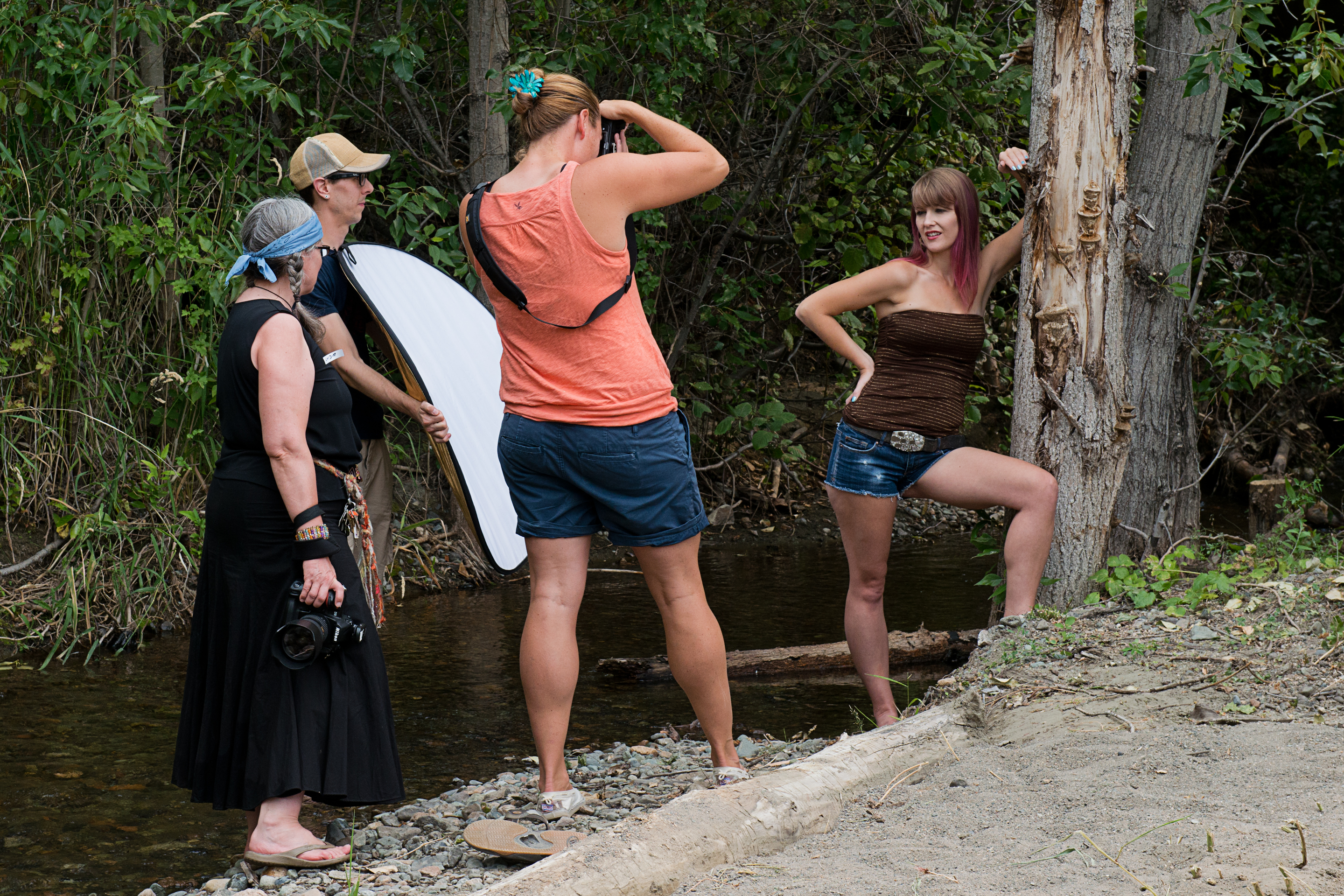
Several others picked up reflectors and gathered at the stream with the one model, Ali. The light filtering through the trees was perfect for the large reflectors, and I think wading in the cool running water was also enticing on the hot August day.

A few decided to try out the light-diffusion panels I had set up in the meadow behind the studio, and later made portraits using the portable strobe I had placed in what was once a large farm equipment/hay storage shed.

Small groups interacted, gathering to discuss different techniques and to exchange thoughts on photography, and in my opinion, it was that exchange of personal experience between the photographers that made the day a success.

As I got the chance to peak at the LCD of several photographers’ cameras, I was intrigued at how differently each photographer captured the same subject. As I write I think of some famous quotes, the first by iconic photographer Ansel Adams, “Photography, as a powerful medium of expression and communications, offers an infinite variety of perception, interpretation and execution.”   His words more than fit what I saw created by those assembled at Versatile Studio that day, and I also like this quote, by author Peter Bunnel, who in his book, “Creative Camera International” writes, “There is no single form or style of portraiture. Portraiture means individualism and as such means diversity, self-expression, private point of view. The most successful images seem to be those which exist on several planes at once and which reflect the fantasy and understanding of many.”

So of course, you can understand why I would include that quote because, indeed, I saw many styles of portraits being made on that day. That’s the interesting and enjoyable thing about getting together with other photographers, especially a collection of photographers as large and diverse in talent and experience as was there; everyone is an individual and creates from their own personal perspective.

Versatile Studio, situated in the small community about fifteen minutes from my shop in Kamloops, hosted this photographer’s event with the help of accomplished photographer, Gary Risdale and myself. Our roles weren’t that of instructors as much as we were there to introduce, demonstrate, and facilitate.

I was so involved with what others were doing that, other than the images I have posted, I didn’t get a chance for anything else.

The studio’s owner, Dave Monsees, commented to me that he liked being around fun people with a true passion for photography and said he enjoyed himself so much that he intends to try to have photographer and model get-togethers like this in his studio on an occasional basis, every month or so.

I enjoyed spending time with those photographers; some were long time friends, and some were new acquaintances; and, I must admit, some of my most favorite times of all, have been either doing photography, or being with people that are doing photography.

It is always great to have your comments, John

My website is at www.enmanscamera.com
Digital Camera Terminology

      White balance                                                  

A customer walked into my shop last week and complained, “ My camera isn’t working.  I think there is something wrong with the chip.”  Did that mean the camera’s main computer wasn’t working? Or maybe she was referring to the memory card, (the small storage hard-drive inserted into the camera)? As it was, the camera was fine and the problem was with the lens.

We should not be critical or frustrated with the owner. Since the introduction of digital cameras we have been confronted with new terminology and those new words can be bewildering.

Digital cameras have been available for well over a decade with Kodak introducing its 1.3 megapixel camera in a professional Nikon body in 1991, and then the Kodak DC40 for general consumers in 1995. Both Nikon and Canon had introduced several serious DSLRs by 2002.

Yet, all these years later, many photographers are still perplexed at the new jargon, and I will admit that sometimes I catch myself mixing up definitions or going to the internet in search of clarification.  After dealing with the confused customer, and a thoughtful explanation by a friend regarding my own confusion on “bit depth,” I thought I’d offer the following help to readers.

Digital Images:  The digital image is a grid of dots or picture elements (pixels). Each pixel is assigned tonal values (black, white, shades of gray, and colour). The bits are then interpreted, read by the computer, and produced as an analog version for display or printing.

Pixel: Picture Element: Digital photographs are comprised of thousands, or millions of them; they are the building blocks of a digital photo.

Sensors: When a picture is taken, the sensor is struck by light coming through the camera’s lens. Each of the tiny pixels that make up the sensor converts the light into electrons. The number of electrons, usually described as the pixel’s accumulated charge, is measured and then converted to a digital value.

DPI:  Dots Per Inch is a measurement of the resolution of a digital photo or digital device. When printing, the higher the number the greater the print quality.

Image Resolution:  Is the number of pixels in a digital photo and that affects the image quality.

Bit Depth:  A bit is the smallest unit of data. 8 bits comprise a byte. A byte (or 8 bits) can therefore represent 256 different colours.  Here is a good discussion on understanding bit depth by Ian Lyons.  Go to: http://www.luminous-landscape.com/tutorials/bit-depth.shtml.

Megabyte (MB):  A measurement of data storage equal to 1024 kilobytes (KB).

Mega Pixel:  Equal to one million pixels.

LCD: Liquid Crystal Display: A low-power monitor used on a digital camera to display settings or the photo itself.

Histogram: A graphic representation available on the LCD, of the range of tones from dark to light in a photo.

ISO: International Standards Organization is a rating describing the sensitivity of the camera’s sensor to light.

JPEG:  A standard for compressing image data developed by the Joint Photographic Experts Group. It is referred to as a “lossy” format, meaning image quality is lost in achieving JPEG’s high compression rates or when resaving.

RAW:  Is the image format data as it comes directly off the sensor, with no in-camera processing.

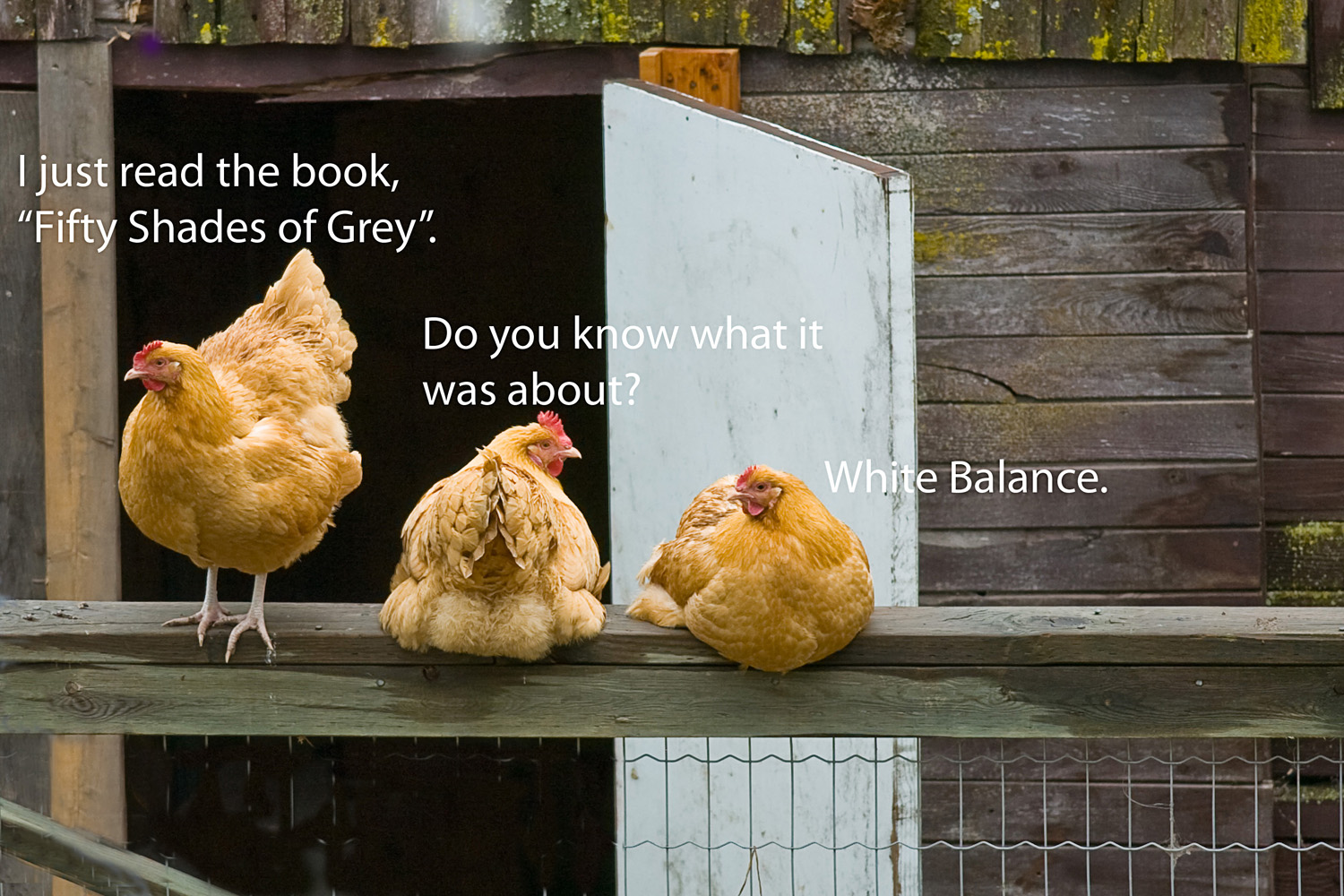
White Balance:  Refers to the relative intensity of colours in your image. Without correction, a picture taken at sunset can seem too yellow or orange, and a picture taken under fluorescent lights might seem too green.

Noise:  Pixels in your digital image that were misinterpreted, usually at the higher ISO values. It appears as random groups of red, green or blue pixels.

Shutter Lag:  The time between pressing the shutter and actually capturing the image.  This is due to the camera having to calculate the exposure, set the white balance, and focus the lens. It is usually a problem with small point and shoot cameras.

sRGB: A colour space produced by HP and Microsoft. Although sRGB has a small range of tones and colours, it is versatile and supported by all cameras and image viewing software. The best choice for those that prefer keeping things simple and avoiding colour shift problems during editing or sharing.

Adobe RGB (1998): Created by Adobe for colour management in their Photoshop software. Because of the wide use of Photoshop this colour space is popular and extensively supported. This is a wider colour space than sRGB.  It encompasses around 50% of all visible colours, and is a good choice for editing because it typically carries more information for custom printing.

Be sure to let me know if I have missed anything. I really like everyone’s comments.

My website is at www.enmanscamera.com
Using Flash – even – for Sunny Day Portraits

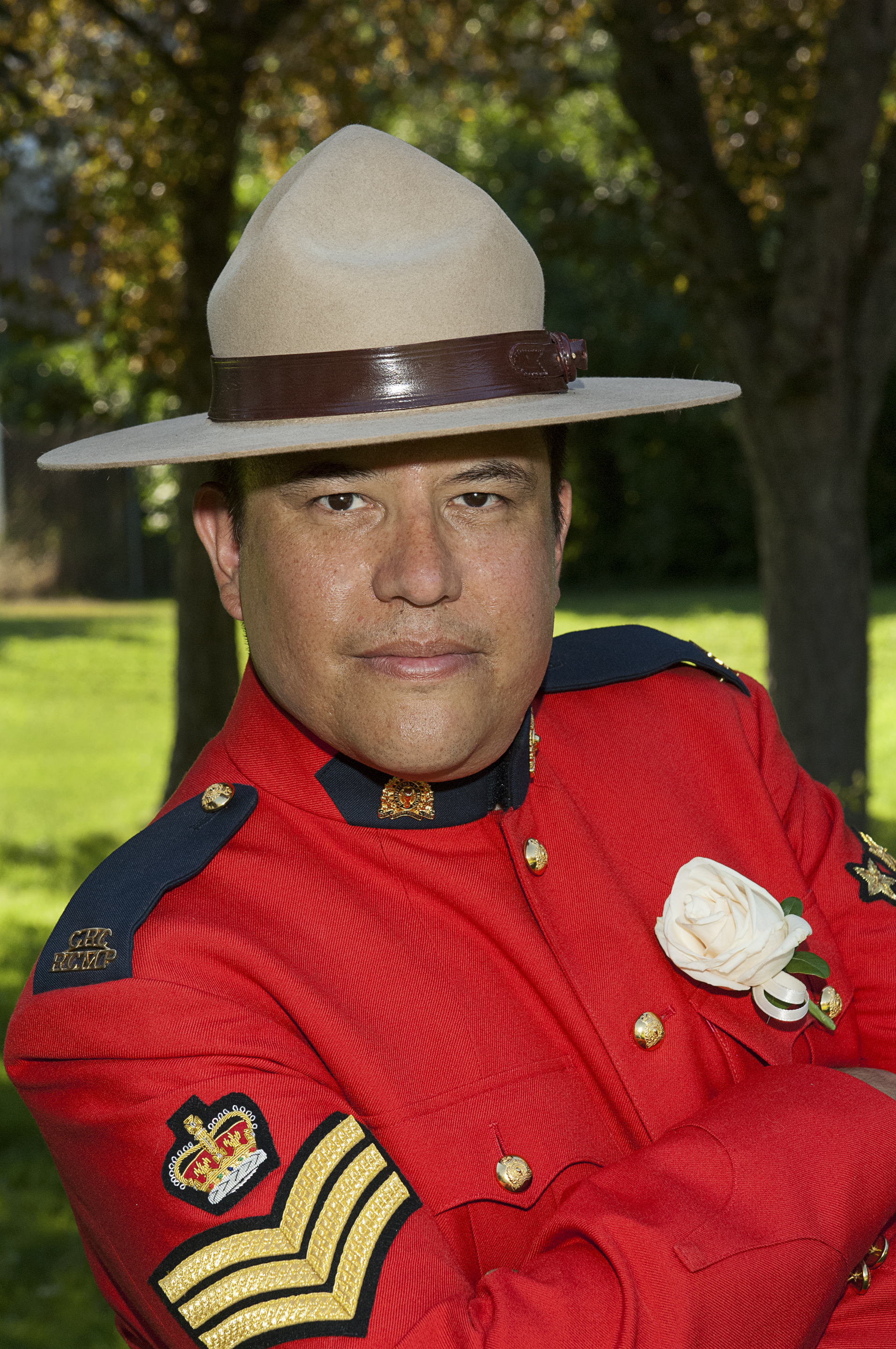
John Mike & Shannon Constable Mike Moyer View from the Bonniville Royal Canadian Mounted Ploice

Using a hot shoe or auxiliary flash is confusing for many photographers, and when I say that I prefer adding flash to all my portraits whether inside or outside, on overcast or bright sunny days, and that I rarely make a portrait without one, will often produce quizzical and disbelieving looks from photographers.
I got one of those looks recently at a wedding I was photographing under a cloudless +35C day. The unforgiving conditions were sunny and bright with participants’ faces constantly affected by strong shadows. A guest, wielding a sophisticated DSLR that was sporting a very wide angle lens, inquired about my bracket-mounted flash and politely listened when I said I always used flash, however, I could tell that he walked away still confused as to why I would bother to use a flash when there was plenty of daylight. I suspect that the unflattering shadows across the subjects’ faces were not all that evident on his camera’s LCD, or he just did not see the problem. Besides, he might have thought himself more of an event chronicler, or, because of the wide-angle lens he was employing, an artist.

I read a query in an online photographer’s forum asking, “I’ve been shooting headshots recently and it got me thinking a lot about metering. How do I meter for flash portrait photography on location? I know that without a flash, I would just spot meter their face…and snap. What happens when I have an off camera flash? Do I just meter normally then shoot? Because when I do this, once the flash goes off, the exposure would be completely different than what I’ve just metered, which would usually mean overexposed. This is so very confusing. Please shed some light on this (no pun intended).”

I also recall a friend’s class assignment to photograph someone wearing a wide brimmed hat under the midday sun. (My apologies to those that adhere to the words from Noel Coward that “only mad dogs and Englishmen go out in the midday sun”).

She explained, “Our assignment was to light the shadowed face under the hat and still have properly exposed surroundings.” At that time flash technology only produced constant light. The solution was to diffuse the light by placing a white handkerchief folded once or twice over the flash head to open up the deep shadow.

Fortunately, modern TTL flash is almost foolproof and only a modicum of thought is required on the part of the photographer as to how much light should be added for the subject’s exposure.

My camera is usually set to manual exposure mode. That allows me, not the camera, to choose the overall ambient exposure, and to add flash to those areas that are underexposed by shadows.  I meter the existing light, set the exposure, and make tests using the flash’s exposure compensation feature to increase or decrease the output level. I then check the histogram to see if there are blinking borders around any white areas indicating over exposure, and if I observe them I dial the exposure compensation down, till the flashing borders disappear on further test shots. That highlight-warning feature is set in the camera’s menu.

My photographs from that wedding day are evenly exposed with attractive, open shadows and do not appear as if there was a flash involved. Besides, using a flash really was not much more effort than if I didn’t, and I did not have to spend hours using postproduction software to lighten and darken my subjects from that day.

I use a bracket that places the flash high above the camera that can be quickly removed if I want to light the subject from one side. The bracket isn’t a must, however, I recommend a connecting cord from camera to flash so it can be used off camera.

I also advise reviewing the camera manual to determine if it has a feature called “high speed sync” that allows for a high shutter speed when using a flash. That’s a discussion for another time, but I recommend doing some recon on the web where there is lots of information.

Blending flash with ambient light isn’t really a mystery. The combination of off-camera flash, and a light meter to measure ambient and flash contributions, will give you complete control to craft portraits your friends and family will love.

A burst of flash will reveal your subject’s eyes and soften shadows all round, so it’s definitely a good thing and will improve your pictures.

I appreciate comments. Thanks, John

My website is at www.enmanscamera.com