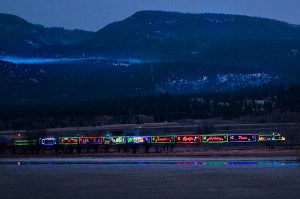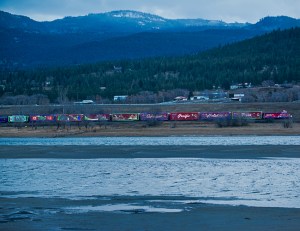
The Canadian Pacific Railroad Holiday train 


Every year the CPR holiday train chugs its colourful way across Canada from east to      west. The train makes stops at cities along the route where there are crowds of people waiting.

Those of us in rural Canada might miss assembly with all the festivities in the city, but we get to watch and, in my case, photograph that brightly lighted Christmas train as it winds its way through the wooded Canadian countryside.

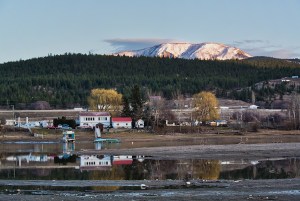
As I drove from my home down to the river valley to again photograph the Holiday train I passed people waiting in their cars parked in the area between the little Pritchard store and the train tracks just off the highway.

I have tried that location in the past, but it’s so close to the train that the only shots are on an angle. And to make it worse this time, a long freight train was waiting in the perfect position to block the view of the train after only a couple minutes.

My favourite place to photograph the train is from across the river. I drove past my neighbours, crossed the bridge and stopped along the river and walked out on the wide beach to set my tripod up.

I like the long wide view across the Thompson River that even using my 70-200mm lens lets me photograph the whole train at 70mm or just a few cars at 200mm.

That beach location allows me to capture that locomotive and it’s bright boxcars in a scenic view.

The train usually passes through Pritchard when there still is enough light to see the train. I saw a few pictures that were taken after it stopped in Kamloops 30 minutes later, and they only showed neon lights with an empty black background.

I chose an ISO of 800 when I first got there and took a few test shots. I walked around to choose a nice flat place where I didn’t have to stand in the mud. Gosh, mid December and no ice.

I will say that, although I had a better location than those on the other side of the river, I envied the fact that those waiting at the Pritchard store had hills that blocked the unpleasant, cold wind that blew at me across the flat wide river.

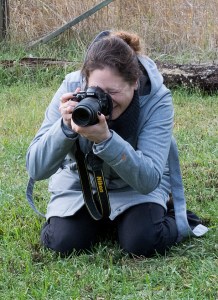
I joined by my friends and their children out on the beach. Jo had her stocking hat pulled down over her face and was crouching with her camera trying to get out of the wind.

I covered my ears and set up my tripod as I watched her 3 and 4 year olds running around on the muddy beach, oblivious to the cold, as they excitedly waiting for the train.

They had been to town earlier in the day to meet Santa and now running on the beach and seeing the brightly lite Holiday train was like the icing on the cake.

By the time the train came I had to push my ISO up to 1600. I was using my tripod, but with the all movement I decided the higher ISO would let me keep my shutter at a safer speed.

I think this will be the last photos of Christmas lights for this year. As always, it’s been fun. There isn’t any snow yet, but the snow will come soon I am sure, and I’ll be out again with my camera to make some pictures of that white playground.

I can hardly wait for the snow. But for now I’ll wish a very Merry Christmas and a Happy Holiday to all of you.


Photographing a November garden   


For years I have made sure to wander my garden with my camera in every season.

I know most photographers are only interested in the bloom of spring or glorious colours or fall, but to me it’s as much how the yearly changes shape the plants as it is the colourful presentation of spring and fall.

I like to walk around the garden that hides my home from the country road that borders my property. Spring, summer, fall or winter. I enjoy it.

It was on a late afternoon just after 4PM. I walked out on my porch to listen to the coyotes serenading the neighbourhood. Or maybe they were complaining loudly that the wet cold weather was making it hard to find food that normally scurries in the meadows.

Friends have commented that it must be nice to live away from the noise of the hustling city. However, at that moment it wasn’t only the coyotes that were disturbing my supposedly quiet rural life. Three roosters, fourteen chickens and five ducks were all making sure I knew they were as important as the coyotes in their forest home.

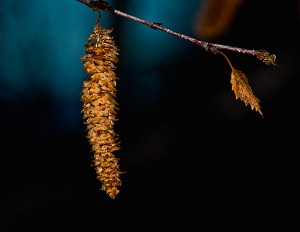
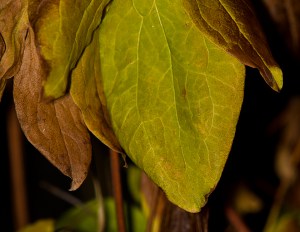
As I lazily kicked some fir tree branches out of my path I thought about how the cold plants looked interesting and decided to get my camera.

I mounted my 200mm macro on my camera and attached the ring flash and walked along the little pond to take some pictures. After about five not-so-sharp captures I chastised myself for being lazy and returned to my house to grab a tripod.

A photographer I met that worked for a couple magazines once asked me, “What is the difference between using a tripod and not using a tripod?   “The shot with the tripod is the one the editor chooses for the cover.”   I am not sure if that’s always true, but I am sure using a tripod (and a flash) when photographing plants and gardens give me more keepers.

The ring-flash creates a smooth direct light that is very different from the flash mounted top of the camera. There is a sparkle to the subjects.

I always use a flash for plants.

I begin by metering the ambient light as if I were about to photograph the flower without a flash. Then I stop the aperture down to under expose the picture. In the low, bright November light I wanted to darken everything but my subject.

Sure one could open the aperture to reduce the depth-of-field and soften the background. But the closer the lens is to the subject when doing a macro or close-up photograph the less the field of focus in front of and behind the subject will be anyway.

I want as much sharpness as I can get around the flower. So instead of relying on the aperture to separate my subject from a busy background, I reduce the ambient light.

My ring-flash is set to manual so all I need to do is experiment with flash distance. I move forward and back to give the plant the light I want.

The ring-flash has a diffuser and I use a 200mm macro lens. The magnification is the same as with a 50mm or 105mm macro. I just get to be further away and that distance is more effective for the ring-flash.

There isn’t much more relaxing photography than garden photography because the subjects usually cooperate.

December has just overtaken me and I have no doubt that festive Canadian month will bring a totally different garden to photograph.


Outdoors flash photographer’s workshop        

Last August I wrote about setting up an outdoors studio in the meadow on the south side of my home for my friend Joleen McAvany. Readers will remember that Jo wanted to do a “Disney Princess” session with some of her friends.

Jo posted her studio-like photographs from that day online. Her photos were so successful that I decided to offer another how-to workshop.

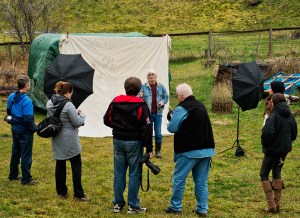
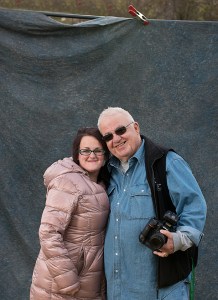
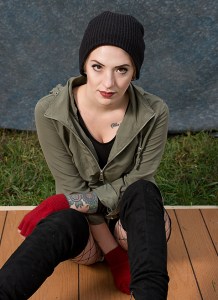
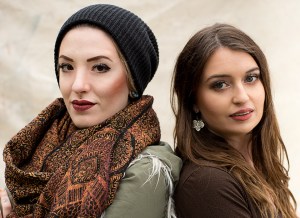
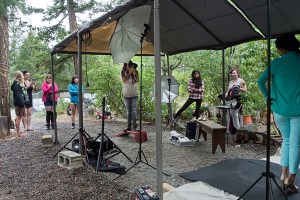
I limited participation to four interested photographers and Jo easily talked two of her friends into braving the cool October day to be our models.

I like flash and never pass by an opportunity to introduce photographers that normally would only use flash in dimly lighted rooms, to the advantage of employing flash in the daylight.

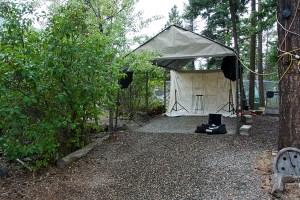
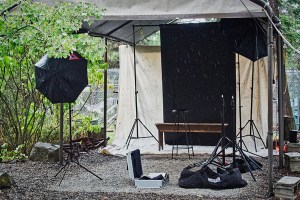
Jo and I set up both a white canvas backdrop and a painted blue/grey canvas backdrop. I had purchased the painted canvas, but the white canvas was formally a large painters ground cloth spattered with paint that I got for free.

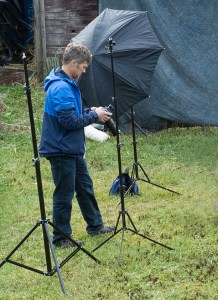
I attached several older 1970 vintage flashes on light stands with umbrellas. All were connected to wireless receivers and I gave a trigger to each photographer.

My lecture was about balancing the light from the flash with the ambient light. The key light (main light) that modeled the features of our ever-patient subjects, Morgan and Cora came from the flashes, not the sun.

Jo gave a posing demo using a 60mm, then a 70-180mm and finally a 400mm lens as she positioned each model in turn. Then after showing everyone how effective the long lenses were, and how easily it is to control the flashes, I positioned each depending on the light.

I then let the attending photographers experiment and learn as I showed them how great their photos could be using flash in the daylight.

Most had seen some of Jo’s “Princess” photos and I reminded them that she had originally asked me, “can I do this out-of-doors and still create flattering studio kind of light portraits?”

Now I have introduced four more photographers to using flash as a creative tool instead of just something that brightens a dimly lighted room or gives a flat light on some subject’s face that is standing in the shade.

I am left wondering if they will start using flash. It is so easy to be lazy and leave the flash at home on a sunny day. However, the resulting photographs where one controls the light and is able to place it to flatter and model a subjects face should be enough to convince any serious photographer.

I would like to think I was successful in convincing those four photographers that adding the light from a flash will make their photographs stand out among photographers that depend on the inconsistent light from the sun.

Note: Photos by Joleen McAvany


October photographer’s drive through Wells Grey Park   


My friend Jo and I decided to test out a big 400mm lens that came in to my shop.

I had brought it home to test and had tried couple shots in my yard, but decided it needed distance subjects for a realistic workout.

Jo had stopped by one evening and after a couple glasses of wine I flippantly said, “if we took it to Wells Grey Park we might find some bears”.

I was joking. Jo always tells me she would be afraid if she saw a bear wandering in the woods where we live. However, in an uncharacteristic comment she took a sip of her wine and said, “can we do that?”

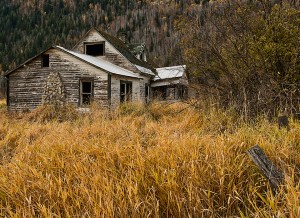
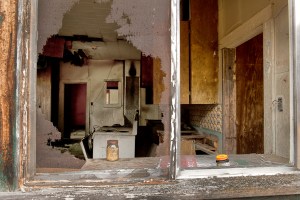
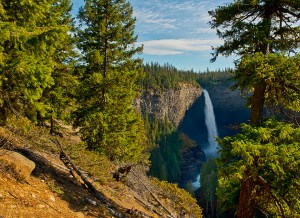
A week later we drove into the wilderness park and Jo had that big six-pound lens attached to her Nikon D800. We had began by stopping at Spahats Creek Falls 400mm lens for some wide angle shots, then wandered around a long deserted homestead and were heading to Helmkin Falls when we spotted the bears.

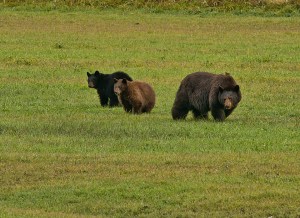
In the forest town of Clearwater, just before the park, I talked to a local that mentioned there had been a sow and two cubs hanging around a large meadow on the way to the park’s entrance, so we were watching and as we turned a corner there were cars parked on the roadside. And there in a farmer’s mowed field were the three bears.

I stopped, placed my beanbag on Jo’s open door and stepped back as she rested that big lens 400mm f3.5 on it and began pressing her camera’s shutter.

After that exhilarating event we drove on into the park.

We couldn’t have chosen a better day. The temperature was cool enough for a light jacket and the fall colours were inviting so we stopped and stopped and stopped again to take pictures.

The park is a favourite of hikers, boaters, trucks towing large trailers for overnight camping and for anyone, like Jo and I that want to do roadside photography.

Like most photographers, we over packed. We had our cameras, tripods, lots of lenses, a bag of filters, two flashes, extra memory cards and enough food for two or three days.

We didn’t eat very much of the food, use the filters, flashes or tripods and had no need to mount a flash on either of our cameras. I only used my 24-70mm and other than when she photographed the bears with that 400mm Jo stayed with her 20-40mm. But although the need never arose for us to employ that trunk full of equipment we were well prepared.

October is my favourite time of year for scenic photography and as last year at this time, Wells Gray Park is always on my list for fall nature photos.

When the shadows grew and the temperature began to drop we knew it was time to head home. Clearwater to our homes in Pritchard is about two hours and for us that meant two hours of talking about the photos we took, photos we plan to take and places we want to go with our cameras.

I looked for a quote to end with and found this by the most famous scenic photographer of them all, Ansel Adams.

Everybody now has a camera, whether it is a professional instrument or just part of a phone. Landscape photography is a pastime enjoyed by more and more. Getting it right is not an issue. It is difficult to make a mistake with the sophisticated technology we now have. Making a personal and creative image is a far greater challenge.


What is the best lens for scenic photography?    

With all its colours fall is creeping into onto the hills in my part of British Columbia photographers are grabbing their cameras, tripods and jackets to wander out to record the beauty.

This past week a young couple visiting my Kamloops shop asked my opinion of the best lens to take along on their next excursion to photograph BC’s inspiring landscapes.

That’s a good question, especially from those new to photography that are spending hard earned money on pricy modern lenses. Personally, I like versatility and convenience, and there are a lot of great zoom lenses available for someone that doesn’t want to carry a heavy bag.

I might suggest lenses like 16-85mm, 24-70mm, or even 18-200mm. Gosh, there are so many lightweight and easy to carry choices. However, instead of recommending a particular lens for scenic photography, I’d rather think about perspective.

My decision after stepping out of the car to photograph some grand vista would be whether I wanted a wide angel or a telephoto. A wide-angle lens has a curved front surface allowing for a wider view. A telephoto has a flatter front surface and a narrower view.

For example, using a 18mm focal length lens when photographing along a fence will make the first post big and the succeeding posts smaller and smaller. Whereas, a 200mm focal length will give a tightly compressed view, and distances between the fencepost in the foreground and those further back won’t seem as distant as with the wider lens.

In a more practical example, when one is photographing a boat on the lake shore with mountains in the background a long focal length like the 200mm will be compress everything in the final image with no subject gaining significance over another. Yet, an18mm lens will make the boat large, and mountains in the background small and distant. Both may be good photographs of that scene, just different interpretations.

The most appropriate lens depends on the perspective and how the photographer wants to interpret the final image, and because the focal length adjusts the visual relationships of the objects within the picture, one must think about the image front to back and how much of the scenic is important as a wide, or a narrow final image.

It comes down to the personal vision of the photographer and what he or she wants to say about the landscape. Famous photographer, Ansel Adams said, “problem solve for the final photograph”.

Like Adams, photographers should be thinking about how the final photograph will be used and how to accomplish that.

If one thinks of a photograph as a series of problems to be solved there will be a smooth transition from initial idea to final print. For example one could begin by thinking about the subject and its environment. What is the background and how will that affect the subject? What is in the foreground that will interfere with that subject?

I don’t believe that there is one lens that can be termed a “scenic or landscape” lens. Any lens might be used as long as it meets the photographer’s vision. That might be to include a wide vista with a wide-angle lens, or on the other hand, a tighter cropped image created with a telephoto lens might be visually more powerful. The choice of lens for scenics comes down to what the photographer wants the viewer to feel and see.


An outdoor studio for photography     


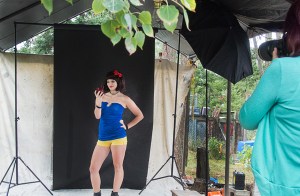
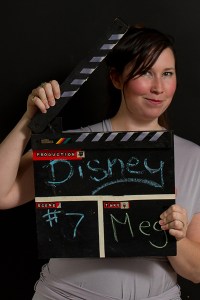
A couple of weeks ago Jo stopped by to tell me she and 8 friends wanted to do a “Disney Princess” shoot. She came up with that creative idea and posted a call for women that wanted to do modern interpretations of those cartoon characters from the Disney movies.

Her question to me was, “can I do this out-of-doors and still create flattering studio kind of light portraits?”

Absolutely! was my reply. Sure one could go through the expense and trouble of renting a studio, but it’s pretty easy to duplicate the indoor studio type lighting out-of-doors.

Gosh, the movie people have been doing it for years. I jumped at the chance to show Jo how easily it is.

We hadn’t had rain for almost a month so I decided to create an outdoor studio in the meadow on the south side of my home. The “princesses” would be showing up just after noon so I chose a location to set up the backdrop that had shade from several tall fir trees. I also planned to put up a canvas gazebo with a table for the makeup artist to work.

“The best laid plans”.

Actually, those aren’t the words I used as I looked out my bedroom window at the rain the morning of the event. The local weather reporter had suggested there might be some spotty rain in our area, but the pounding deluge outside my window wasn’t what I expected.

However, because of the possibility of rain Jo and I had set up one of my backdrops under my canvas carport the night before.

I got a “good morning I’ll be right over” text from Jo as I sloshed out to set up the lights under the carport. The rain was a hindrance that dampened the yard (and I am sure the spirits of the soon to be princesses) but “Light is Light” and all I had to do was balance my off camera lighting.

The larger backdrop we had set up was for blocking the wind, rain and what limited daylight there was. We then erected a black paper background and I used two lights mounted on stands with umbrellas to model our subjects.

I am sure there are those that would have just upped their camera’s ISO and hoped for the best on that dismal flat day. But I like the modeling, depth and control over a subject’s features a flash adds. Heck, we might as well have been in a dimly lighted room. The ambient light was that good for adding flash.

When Jo’s subjects arrived they turned my house into a makeup and change room. There were costumes and clothing everywhere. I just stayed out of everyone’s way and concerned myself with the outdoor studio except for an occasional quick trip to my kitchen for another coffee.

The rain lightened a bit, but never really stopped all that much. Nevertheless, those excited Princesses were all about creating a modern day reality or personal version of the Disney character they were supposed to be. There was a lot of laughter and running back and forth along the bushy wet path from the carport to the house.

American photographer and author of the Strobist.com blog, David Hobby said,  “…You hear a photographer say, “I’m a strictly available light photographer, I’m a purist.”

He continues to say, ” What I hear is, I’m scared of using light so I’m going to do this instead. Well, for me lighting was a way to start to create interesting pictures in a way that I could do it.”

I will add that I have, personally, always felt that photography is a series of problems to be solved, and rain or shine it’s really the goal of flattering portraiture.

I think that many people viewing the pictures Jo took outside on that rainy day will, unless told, think that the portraits were made inside a well-equipped indoor studio. I guess it doesn’t really matter where they posted for their Disney Princess portraits, only that they are good.

In all the commotion I forgot to begin the day with the words of legendary 1920s filmmaker, D.W. Griffith as Jo pointed her camera on that rainy day, “Lights camera action”.


Looking for an eagle to photograph, but I guess any bird will do.   


Last week a Canon 300mm lens was brought into my shop by an owner had decided to downsize her equipment. By “downsize” I mean that she was changing from her big DSLR to a much smaller and lighter mirrorless camera.

I thought I’d entice buyers by showing photographs of birds using that neat telephoto lens with a 1.4 Canon telextender that I also had to sell.

Everyone likes eagles, and I had noticed a few clinging to trees along the river on my drive home. I was sure a couple shots of eagles in the dismal valley smoke would be proof as to the quality of that 300mm.

I don’t have a Canon DSLR so I called my friend Jo McAvany and suggested that I’d drive along the river as she looked for eagles. I could pull over for her to use the 300mm and the 1.4 telex on he cropped frame DSLR. That meant she could shoot from the open window with what would effectively be around a 550mm lens.

Jo showed up at my house around 9AM as I was having my morning coffee. (Jo is one of those strange people that don’t eat breakfast or drink coffee…Ya, I know)

Anyway, as we were going to my car, Jo called to me to wait. I could see her sneaking slowly through my bushy garden.

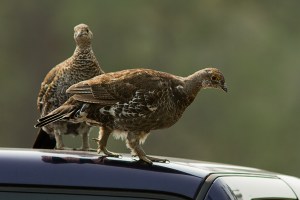
She had spotted five or six grouse sitting on her truck. They must have been drawn to the warm metal on the cool morning. I heard her say, “I wish I had my wide angle so I could get them all in”.

The first shot of the day was not an exotic eagle, but I think that a couple grouse standing on the top of he truck’s cab is pretty darned good.

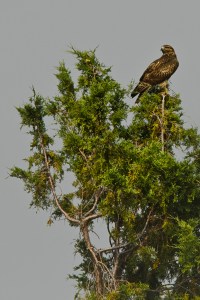
Talking and laughing about the silly grouse, we drove along the winding country road that leads down to the river from my home. I slowed down when I saw a hawk taking off from a fence post beside an open field.

That hawk is always hanging around there. It must watch for mice feeding where the cows dig up the pasture. I have never been able to get a shot of it, but I slowed and Jo got out to photograph it landing on a treetop across the field.

No eagles yet.

We drove down into the gloomy smoke settled motionless in the river valley and then as slowly along the highway as the big transport trucks speeding along would let us.

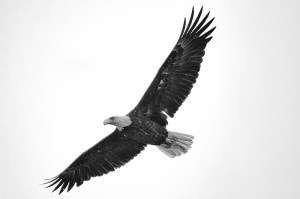
One eagle. Yep, we only saw one blasted eagle on a distant tree. I pulled over onto a train crossing and ignored the “No Trespassing” sign to get close enough for Jo to get a shot. Just as she got out to position herself the big bird took off, I yelled, “shoot” and she did. One out of the three was perfect! I think that’s a good ratio. We left and continued down the highway with out seeing another eagle.

Disappointed, we turned to take the back road to my place hoping to see a few ducks at the pond I had tried unsuccessfully all spring to get photos of geese at.

The reeds along the edge blocked most of the shots. But Jo was determined, and ran across the road to photograph ten or so ducks resting on a log. By the time she got a shot there were only three left.

Well no eagles, and no more birds waiting to be photographed. We did stop for a photograph of a deer. Big deal, there are hundreds of those.

We got back to my house and as I brewed myself another cup of coffee, my never-say-die friend went out to take pictures of my chickens. Chickens.

We didn’t prove that lenses’ quality with pictures of eagles. Well one. Nevertheless, Jo got some neat bird photographs, and we had fun.

Making up a reason, like testing a lens, is a pretty good excuse to get out with your camera if you actually need one. However, I think what it is really about is being enthusiastic about photography and, of course, stimulated and excited by just about anything one points their camera at.

Another day with infrared        

The days here in Pritchard, British Columbia have been hot, dry, with air that has barely moved. A cloudless sky and constant sun that beats down on my head as I walk around my parched property, None of which has been that inspiring for photography.

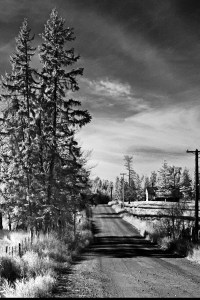
So when I woke up to an overcast day this week I hurried through my morning chores with the thought of going off somewhere with my camera, and by the time I had finished my coffee I had decided to pull out my infrared converted camera and travel out along the dusty Stony Flats road to see how the overcast sky would show off the tall Fir trees that line it.

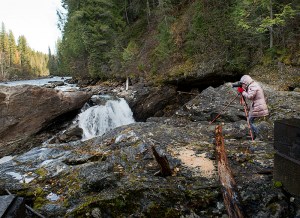
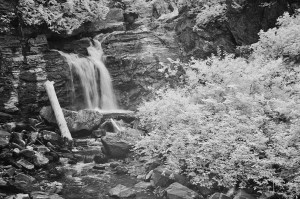
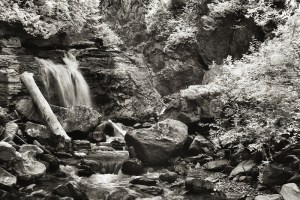
I drove along stopping for pictures every now and then, but I started feeling I was having a “photographer’s block”. It was then that I thought about the Chase falls.

I had been there only a couple months ago and thought about how nice it would to photograph the falls on a flat day without having to struggle with the hash contrast that accompanies a sunny day.

I knew the light would be unusual in that tight little canyon. It always is with infrared. Colour photos are so much easier there with the light is reflecting off the canyon walls.

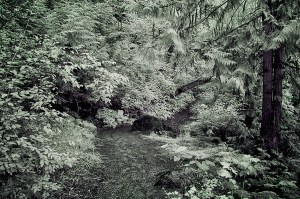
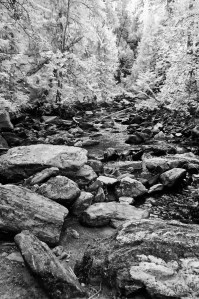
This time of year the path along the creek is overgrown and narrow. And in my opinion, was a perfect subject for infrared with the subtle changing shades of green to a tonal range of whites.

The most dramatic infrared photographs of the falls need to be wide enough to include vegetation. An unaltered infrared image turns out mostly brown with a few slashes of light drifting down to make some features blue. Without foliage converting the image to black and white that isn’t much different than a normal black and white picture.

To get the otherworldly effect of infrared one must find and angle that includes foliage that turns white.

When plants reflect infrared light the effect will show them as glowing white, and its that tonal change that one is after when using infrared.

My favourite photographs were not the falls. This time it was the tightly treed creek and the overgrown path leading to Chase falls. However, the falls will always be the focal point of any photographs and one needs to work with that so viewers have a feeling from that location

Patience is part of any scenic/landscape photographer’s tool kit. And anyone that has accompanied me knows that I don’t become annoyed or anxious if I have to wait.

On this outing as I waited for over a half and hour for a fellow poking a stick into the water moving dirt, then digging with his hands and sifting though the particles. I never talked to him. I was up along the rocks for wide shots and he was perched on rocks near the falls. I assume he was hoping to find gold in the streambed.

He was finding small bits of something because he kept putting his findings in his shirt pocket. I have never searched for gold along that creek, but I have noticed a lot of iron pyrite clusters glowing in the shallow water. Maybe “fools gold” was what he wanted. Or, who knows, maybe he actually was finding something valuable.

To me the value I find in that canyon stream is the photographs I get to make.

Another evening of photographing along the river.    

Days like today remind me why forty plus years ago I chose to build my home in the hills of Pritchard.

The end of March sun has melted most of the snow and there was a slow warming that drew me to again, on a cool evening to one of my favourite places to wander; the barren Thompson River shore just minutes from my woodsy.

I set my camera bag on the car seat drove down into the river valley, crossed the wide river bridge, parked my car, and walked out on the river beach. I had to be careful where I stepped or I would be ankle deep in mud.

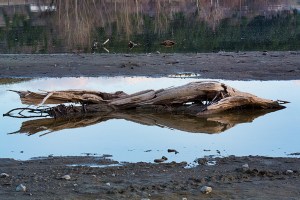
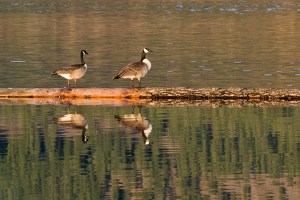
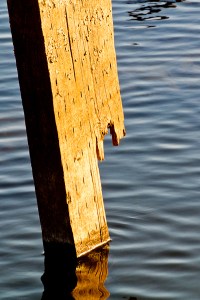
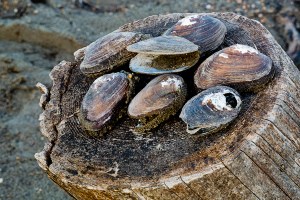
I like the river in the winter and early spring. The water is still low and its always fun to photograph rocks, broken clam shells, sunken posts, and all sorts of treasures that very soon will be covered with several feet of water.

I usually have a winter walk, but I guess I was lazy; this would be my first 2018 sojourn along the wet sand.

There is always a lot to photograph if one likes to get into the hunt. I look for stumps that were dragged along in the fast high fall water that now have become sculptural features. I like the sparkling late afternoon sun as it colours a long forgotten post sunk deep in the sand. And there’s so many of fresh water clamshells, now without life, that are always worth getting a wet knee while in search of a creative angle.

Soon the beach under the bridge will be under water and people with their excited dogs will be running everywhere. There will be boats lined along the bank and lots of trucks and trailers parked. Yep, in no time the small park will be filled with enthusiastic people enjoying themselves.

However, for me, it’s the enjoyment of a quiet peaceful walk with my camera.

I had decided to use my tiny little mirrorless Nikon V this afternoon. The small one-inch sensor doesn’t have the enlargement quality that my huge 36mp full frame camera has, I have two lenses for it and it is capable of Manual mode and shoots in RAW format.  And for the Internet and the occasional 8X10 print it’s perfect.

I call it my grandpa camera because I purchased it for those times when I go for high energy walks with my two granddaughters. At nine and eleven, “high energy” is the correct word and that pocket able little camera is convenient for the kind of animated photography I always seem to be doing when they are around.

The river beach on the late afternoon was beautiful. I know there are several serious photographers that also live in Pritchard, but I never see them wandering the beach. I sometimes think I should call them all and invite them down to my private winter beach. Well, private spring beach might be more correct at this point. I did send my friend Jo a text message hoping she had time to get her camera and join me. Heck, she only lives a couple streets away from the river.

I have often written about doing photography with another photographer, and I hope readers are fortunate enough to have like-minded camera owning friends.

I know this summer will be filled with excursions to distant visually interesting locations. We all yearn to for those away from home trips to recharge our fascination with this exciting medium. However, in my opinion, it would be such a waste not to photograph the wondrous world just outside our front door. I have met photographers that tell me they can’t find anything interesting around their home or town. They will say, “It’s all so familiar and boring.”

I doubt anyone will ever hear me say that.

Photographing the Canadian Pacific Holiday Train 

A couple weeks ago I wrote about how much I like Christmas lights.

Well, the Christmas holiday season isn’t over yet and to prove it I got a chance to set my tripod up on the cold, winter’s river beach a few minutes down the hill from my home to photograph Canadian Pacific Railroad’s Holiday Train.

CP Rail’s website says, “The CP Holiday Train program launched in 1999 and has since raised more than $13 million and four million pounds of food for communities along CP’s routes in Canada and the United States…. The holiday season is the best time of the year, and we look forward to bringing together thousands of Canadians and Americans this season for this incredibly important cause and a great time.”

As I have in past years, I positioned myself on the beach across the river so I could get a wide shot of the brightly lighted train passing on the opposite side with the dark hills and forest behind.

I arrived an hour in advance while there was still plenty of light and made a few test shots. The schedule put the train at our location a bit after 4PM, just as the sun was going down. The time was about right for my preference of shooting just while there is still that cool, blue light illuminating the sky and I have enough light in my photograph to define the train from its surroundings.

I set my camera at ISO 3200. That allowed me to keep my aperture at f/5.6 for plenty of depth-of -field. I was a bit under exposed, but a stop or two really didn’t bother that kind of low light image. After all, the train’s lights were very bright.

As with past years there was a strong, cold wind blowing down river. In past years it was colder and I had bundled in the car drinking hot chocolate till the train arrived, but this year was warmer and I just stood there enjoying watching my neighbours children running around on the beach. When the train finally arrived the three year old boy and I both yelled, “The Christmas Train” I am sure his mother, shivering in the cold wind, just shook her head thinking, “Boys”.

A young fellow purchased a 1980s film camera from my shop today and we talked for some time about how interesting prints made from film are. He was really thrilled to begin capturing the world around him with film.

As I selected the images that I had edited and worked over using several computer programs for this article I thought of that young photographer and the journey he is beginning with film.

I am sure he will have fun, but the photographs I made of the Holiday train would have been beyond the ability of most popular films he will find at local outlets, and I had the unfair advantage of computer programs with which I could squeeze every bit of data there was in the digital file I made.

Photographing the Holiday train was fun and I am always surprised that there aren’t carloads of photographers joining me on the beach when the train comes by.