Photos of turtles will have to do.   


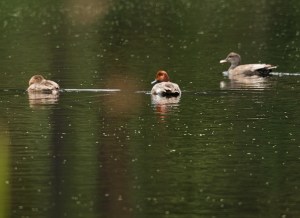
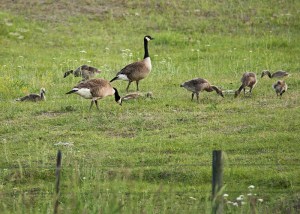
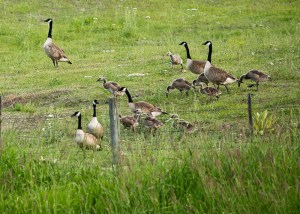
For the past month I have been visiting a little pond just up the road from my place hoping to get photos of geese and their chicks.

I have been going there with my camera equipped with long-lenses for years. Some times have been great with lots of geese near the road, like there were last year, but all to often they were too far away.

Last June the hill across from the pond was covered with geese. I am pretty sure that would be called a gaggle. (I have also heard people refer to a group of photographers as gaggle) Parents and goslings were everywhere and really didn’t mind my car after I parked and sat quietly for a few minutes.

This year I made trip after trip in the morning, at noon, then in late afternoon and finally evenings before I lost the light.

There are a lot of geese at the pond, but for some reason they are staying low to the pond and so far on the other side that even my 600mm lens isn’t doing them justice.

I wonder what caused them to stay such at such a distance this year. The road isn’t any busier than normal. They aren’t acting skittish, so I don’t think anything has been bothering them. Nevertheless, they are wild birds and I expect the first one there must have decided on a good spot and the rest nested nearby as they arrived. Good for them, disappointing for me.

I could have turned around each day and gone home for a beer, but the rural area I live in is filled with life in the spring. So instead I just moseyed along and keeping on the lookout along the roadside.

There are many old dilapidated buildings slowly dissolving into farmer’s back yards and I could have pointed my camera any of the many deer that are always munching grass in fields at anytime of the day. But, since I couldn’t photograph the geese I decided that deer and old buildings would be off my list and I should search for other wild things.

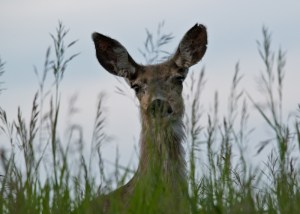
I wasn’t doing to well, and in frustration after my latest trip to the pond I chose a couple blackbirds and actually stopped to photograph a deer that peered out of the long grass as I passed. However, when my friend Jo stopped by, as I was about to leave on what I expected to be another fruitless trip, I invited her to join me on the drive.

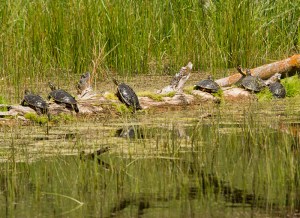
Sometimes it’s a fresh pair of eyes that is needed. Each day I passed a neighbour’s slough. I had seen turtles there before, but like the geese, they were eluding me. I drove slowly and Jo looking out the window suddenly yelled, “stop, there’s turtles”! Sure enough the wily little critters were sunning themselves all along a half sunken moss covered tree in the swamp. There were seven of them near one end and three resting midway down.

I finally did reach out with my long lens to photograph the distant geese, and I captured a couple shots of blackbirds, and there was that deer hiding in the ditch. I was bound to my goal of photographing anything wild, and have been keeping at that for days, but I wasn’t all that happy and maybe a bit bored with my subjects.

However, the septet of turtles changed that. I was pleased to have turtles for my subjects, so for this week the photograph of the turtles will have to do.

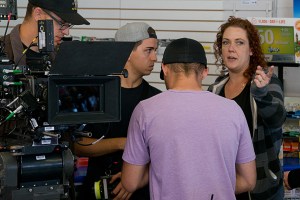
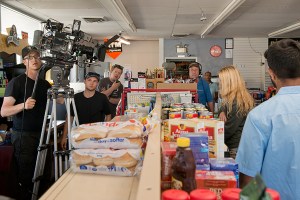
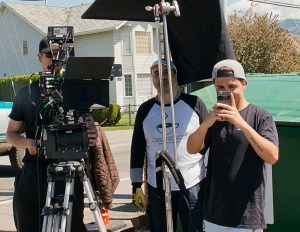
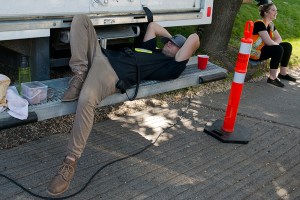
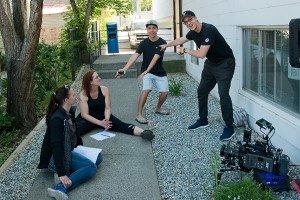
Photographing behind the scenes at a movie.   


My first full time job as a photographer was to document events for the Office of Education, Los Angeles California. Years later, after moving to Canada, I became a photographer for a University’s Public Relations Department.

During my 40 plus years earning my living as a photographer I pointed my camera at quite an array of exciting subjects, but it was those two early jobs that fashioned my approach.

This past week I was asked by writer and director, Cjay Boisclair, if I would act as a staff photographer for her movie, “The Bench”, for a couple of the shooting days.

I am retired and stay away from anything that demands that I be on time. But the thought of taking behind the scenes pictures intrigued me.

Although I have many, many times enjoyed watching movies being made, I have never actually been part of the film crew. “Film crew”, that can’t be correct. I wonder what they call themselves now? Nevertheless, I was sure the photography would be much the same as any public relations exercise.

Public Relations photography in my experience is physically active, there is never a chance to sit and one must to constantly be looking for animated subjects. I never saw or presented myself as being important as those I was photographing, and always preferred to sneak voyeuristically around. And although my photographs were used by news sources and much of the time were in publications, I never thought of myself as a photojournalist. Photojournalists tell a story, whereas my job was to document the interaction and hard work of the people in the event.

It was with that attitude that I quietly walked on to the set the morning of my first day.

I guess I forgot how small Kamloops is, one would think that in a city of over ninety thousand people there would be some anonymity, but alas, that was not to be. A complete stranger said, “John, right? They are around the corner.”

I photographed everything that happened behind the scenes for two days. I am sure that many star-struck, first time photographers might think, “what a great chance for me to photograph a movie”.   However, at this production there were three trained, creative, cameramen operating a two hundred thousand dollar camera, whose job it was to photograph the movie’s action. Taking pictures of the movie isn’t what I think my position as a still photographer needs to be doing. My job was to photograph the people that were actually making the movie and I did just that.

I shot for two tiring days. From time to time I was able to lean against walls, and once or twice even tried to sit down. But of course, as soon as I thought I could relax, I would see crewmembers doing something interesting and rushed to get that shot.

Mostly I wanted those classic images we see in the old newsreels of the Director in action. Pointing, talking to the lead, or working with the cameramen. The crew wasn’t huge and I got to talk to and photograph everyone working on “The Bench” at some point over the two days.

Photographing on a movie set was a new and certainly entertaining experience. I have always thought that movie people were a special breed, and now that I have had first hand experience being around them as they worked, I absolutely believe that.


Photography in the rain     


Last Sunday was cool and rainy. I had wandered a bit outside, but only long enough to feed my chickens and move some wooden chairs under a canopy so they wouldn’t get wet in the downpour.

Mostly, I just wasn’t interested in the rain or the cool light breeze and by noon I was content to just sit listening to music, and had just started a beer when there was a knock and my door and my friend Jo McAvany’s smiling face appeared through the window.

Some years ago one might have heard, “Can John come out and play?”   I really didn’t, I was enjoying the blues music and my beer on that rainy day. However, Jo had her camera and I knew I didn’t have much of a chance. She said, “How about we wander around, I want to take some pictures in the rain.

Ten minutes later we were ambling around pointing our cameras at features that on a sunny day might not have given us as interesting and creative photographs.

There are some cameras that are almost waterproof. A Nikon advertisement I once read stated that some models are, “splash proof’. Nevertheless, my main accessory for a rainy day is an old kitchen T-towel for wiping the rain off my camera. Every now and then I give my camera a wipe so the rain doesn’t accumulate, and continue on.

Shooting in the rain is one time that I enjoy a modern camera’s ability to use high ISO. Back in the painful days of film we were limited to 400ISO with colour film. There were a few black and white films that were rated at 3200, but their ability to give photographers reasonable image quality wasn’t all that good.

Wide scenic photos aren’t very pleasing in the overcast flat lighting, so we concentrated on more intimate and close-up subjects. Both Jo and I were using 70-200mm lenses that focused reasonably close. Not macro close, but close enough for us to confine and restrict the view.

Cloudy days always seem to be more colourful for plant photography, and there is something about green leaves and grasses on rainy days that attract me.

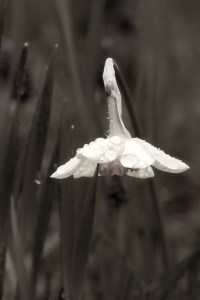
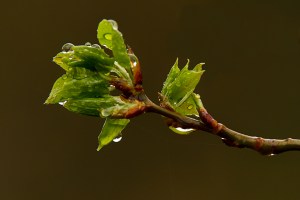
I once read, “one should embrace the rain’s infinite photo opportunities”. I like that. Photographing in the rain gives the photographer the chance to explore a whole new world that on a sunny, shadow filed day is invisible. The raindrops and the wet subjects are so inviting.

I know those gray clouds can be disappointing. However, keep a positive attitude. Sure there is a strong possibility that your hair and the knees of your pants are going to get wet, but in my opinion, wet knees are certainly worth the voyage. And remember you don’t have to go far, and with a bit of creative thinking and preparation you’ll be out having fun making photos, even in wet weather.


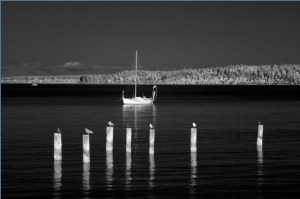
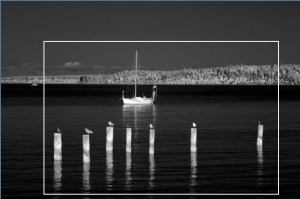
Composing a photograph includes eliminating the irrelevant   


Years ago the Hasselblad camera company published a series of photography pamphlets. While I had my Hasselblad I collected and studied the information contained in them.

Recently I thumbed through one titled “The Eye, The Camera, The Image”.  Although meant for medium format film cameras it’s filled with information that is still appropriate for digital camera users.

I skimmed over topics like Using the focusing hood magnifier, Colour film and colour balance, Types of exposure measurement, Double exposure and Polaroid film, all are interesting reads if one is concerned with photographic history, however, not practical or useful for those searching to be a better photographer in our modern digital age.

However the topic, “We see far to much” caught my attention and it said,

“The eye is our organ of sight. It’s lens has a focal length of about 17mm and covers a 150-degree vertical and 120 degree horizontal field; the binocular vision provided by our two eyes gives a 180-degree angular field. We seldom have any need for images encompassing so wide a field. The wealth of detail in such a field would be rendered small and insignificant when reduced to images formed in a camera when composing a photograph outdoors or elsewhere. We always need to crop our field of view.”

In my experience, most successful photographers want to “tighten up” on their composition, by that; I mean they only include those elements that add to the visual discussion of a photograph. Beginners are apt to aim with only the excitement of their subject in mind and don’t pay attention to other additional features captured by the sensor.

Photographers printing or posting their photos are surprised when they look and find a picture filled with irrelevant and disruptive items they wished they hadn’t included.

Hasselblad continues, “This elimination of irrelevance is vital. The trick often involves excluding most of what you see. Making a selection is a basic feature of all art, whether it is painting, drawing or photography. Art consists of picking out the most interesting, most illustrative, most instructive, the loveliest or most emotional components among a myriad of components in a subject.”

Photographers should train themselves to be specific with a subject, only showing the viewer what is important. How do we slow down to do this in an age of auto focus, auto aperture and rapid-fire shutter release? I have an easy answer – get a good tripod!

I know many photographers have never owned or used a tripod and some have only experienced rickety, inexpensive models. Using a sturdy, well-made tripod makes one slow down and pay attention to the subject in the viewfinder or LCD. In addition, the process of setting up the tripod and attaching a camera gives photographers time to think about composition.

I agree with Hasselblad’s contention that “we see far to much” and need to eliminate irrelevant items in our photos.

When an interesting subject is seen, stop the car and get out. Don’t be lazy and merely hunker down against the window to take the shot. Get that sturdy tripod out of the trunk; and as you do that think about, or “previsualize”, the photograph about to be made.

Set up the tripod, attach the camera and look through the viewfinder. I suggest making several shots starting from a narrow, limited view and zooming the lens out to a wide-angle view. That way there will be several choices for that picture.

Normal
0

false
false
false

EN-US
JA
X-NONE

/* Style Definitions */
table.MsoNormalTable
{mso-style-name:”Table Normal”;
mso-tstyle-rowband-size:0;
mso-tstyle-colband-size:0;
mso-style-noshow:yes;
mso-style-priority:99;
mso-style-parent:””;
mso-padding-alt:0in 5.4pt 0in 5.4pt;
mso-para-margin:0in;
mso-para-margin-bottom:.0001pt;
mso-pagination:widow-orphan;
font-size:10.0pt;
font-family:”Times New Roman”;
mso-ansi-language:EN-US;
mso-fareast-language:JA;}

To sum up, eliminate those elements inconsequential to the picture and compose for only those items important to the final photograph, not by looking at the subject and snapping away in a hurried fashion to include everything seen in the viewfinder, and take my advice, use a tripod.

Thoughts on Camera Handling   

The act of taking pictures and doing photography has become so easy that many of today’s up-and-coming photographers have come to rely completely on their camera’s tiny computers and are sure that the automated programs will always deliver wonderful results. All one has to do is put the digital camera up to the eye, or shakily extend arms, push the shutter release, and count on modern technology to make all the necessary decisions.

Last week a photographer proudly showed me some enlargements and asked how I liked them. They were reasonable images and the printing was ok, but as I looked at them closely I could see they weren’t very sharp, lacked depth of field, and contained tiny spots in the sky.

If I had been in a classroom environment it would have been a perfect time to break into a discussion on camera handling techniques. Using a camera effectively includes more than just moving a camera body around in front of one’s face and pushing the shutter. Camera handling means understanding how to use and control a camera in the most effective way.

Carpenters, cabinetmakers, mechanics, quilters, and cake decorators, to name a few professions, would nod their heads knowingly if I mentioned how important it is to learn how to control and use the tools of their trade correctly. However, when taking photographers and their tools of the trade into consideration, many believe that owning a feature-loaded camera is more than adequate, and if the photos from one’s camera aren’t great, they think the answer is to buy another camera.

With that in mind I have a few very basic camera-handling suggestions that would have helped that photographer to produce better pictures than those he showed me.

  1. Examine the picture and if there are lots of tiny dark spots, clean the sensor.  Cleaning the sensor is fairly easy and all that is usually required is a few minutes with an air-blower.
  2. Vibration reduction features only helps with shaking hands, not subject movement.   He should practice following subject movement and try to keep the camera as close as possible to his body to reduce shake.
  3. When handholding the camera, faster shutter speeds will produce more “keepers” than slower shutter speeds. For example, shutter speeds like 1/125th or higher are probably the safest to control both camera shake and subject movement. And follow that old rule to match the shutterspeed with the lens focal length.
  4. The current infatuation with wide aperture lenses is great, but the larger the aperture  opening is, the less the depth of field will be, and that will mean areas in front of and behind the selected subject will probably be out of focus. That photographer must understand that the smaller the aperture is the more chance the area in front of and behind the subject will be sharp.
  5. Using “program” or “auto mode” leaves exposure decisions to in-camera computers and takes creative and intellectual control away from the photographer. Some digicams and all DSLR (digital single lens reflex) cameras have manual exposure modes. My advice is to experiment and practice to find out when manual mode is most effective.

Photographing the garden in the March snow.     


Jo McAavany

Jo McAvany

Jo McAvany

This time last March I wrote about flowers as portraits, and discussed my indoor makeshift studio setup using modifiers like reflectors, umbrellas and softboxes to photograph potted plants.

This year I decided to put my winter boots on and wander out in the sub-zero, snow-laden garden out side my front door to see what interesting features I could discover.

As I have written before, I prefer using flash and the waning March light at 7PM was perfect for my off-camera flash equipped with a shoot-thru umbrella.

I really don’t care what time of year or the weather, I like photographing the plants and flowers in my garden. Shrubbery, weeds, and vegetation in general always make for fun subjects.

Plants are so much easier to photograph than people, plants don’t get tired, nervous or jittery, and always are happy to wait for me. Maybe that’s why I like photographing flowers, they (almost) always cooperate.

This time my goal was to photograph anything that caught my eye.

It didn’t matter how the late afternoon light was, because I had my key light with me. Relying on ambient light is so troublesome, and I knew that the only way to give my subjects “pop” and reduce deep shadows caused by sunlight was to use flash.

The slowly dimming light was perfect for my sojourn through the garden. I easily metered the ambient light, then under exposed slightly so the flash would become the main light instead of the late afternoon sun. The soft modified light from a shoot-through umbrella was even across the image with a gradual transition from highlights to mid-tones to shadows.

The snow was deep and more than once it filled my boots as I trod off the packed down path. However, there were lots to things photograph I didn’t care.

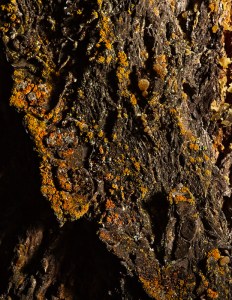
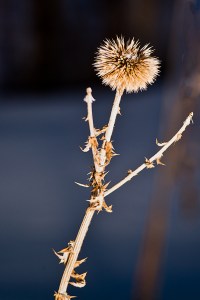
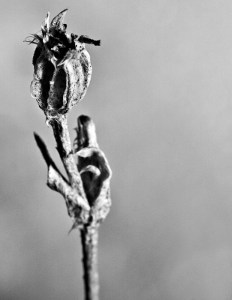
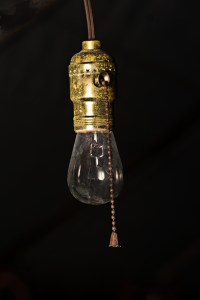
Branches and sticks poking out of the snow, shadows along the fence, a rusty old wagon wheel, the red leaves of Oregon grape, weathered boards, dead and dried out flowers, and as the sun sunk below the mountains, a light bulb hanging from the snow cover above my car.

I was enjoying myself so much that I texted my friend (Jo lives down in the valley and across the river from me) and suggested she grab her camera and join me.

We took turns holding the stand mounted flash and finally, when it was to dark to see things and we finished our photographic we went inside to load our images on my computer and warmed up with a glass of red wine as we looked over the pictures we had just taken.

As I have written before, I photograph my garden in every season.    I know there are many photographers that only take pictures of plants when they are in bloom and prefer colourful representations. However, spring, summer, fall, winter, snow, rain, sunny, or overcast, my garden is filled with ever changing subjects that always offer something new.

As always, my advise to photographers that think they must wait for inspiring weather before their next garden safari is, there’s always something to photograph no matter the weather or the season, just get up close and look for the small stuff.


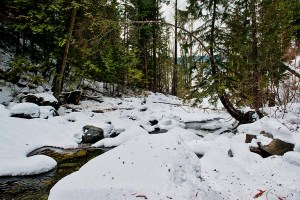
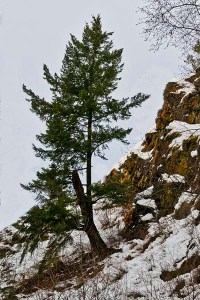
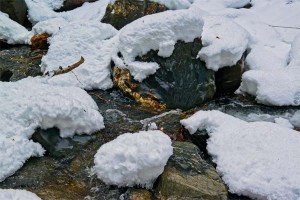
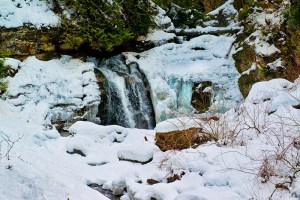
A snowy walk to Chase Falls


The day was grey, flat and cold. but, I was bored with watching TV and wanted to get out and put some footprints in the snow.

I lazily thought about wandering the deep snow in my yard or just taking a drive on the slushy roads above my home. However, I hadn’t visited the nearby Chase falls since a hot day in July and I thought it would be fun to see if there was any water coming over the falls.

When I visited the falls last summer I was joined by my photographer friend, Jo McAvany. I remember Jo loudly complaining about the mosquitos on that hot dry summer day. So I called her and asked if she wanted to trudge through the two-foot deep snow up to the falls and promised the mosquitos wouldn’t be too bad this time of year.

I don’t know what kind of deal she made with her husband on his day off work, but she said, “sure I want to go”.

As I thought, the trail into the falls hadn’t been tramped down by people, and other than foot prints of a lonely racoon that I expect has a warren somewhere in the river canyon to hide in when he’s not marauding garbage cans in the tiny town of Chase, we were breaking trail.

Last July Jo complained about the mosquitos. However, this time it was me complaining that I should have worn high top boots because the snow that filled my short-topped boots left little room for my feet.

I would have liked to climb down to the falls, but the snow hid all the boulders and caution said venturing beyond the trees might end in a very cold bath.

Jo had mounted a 24-105mm on her camera and I had my trusty 24-70mm on mine. We both had put longer lenses in my backpack, but the wide-angle lenses were the most comfortable to use.

The day was mostly cloudy and flat, but every now and then things lightened up just a bit. Not enough to create shadows, but at times there were highlights on protruding rocks, tree limbs and the water.

On a bright day one always struggles with overexposure on a waterfall. I prefer a slight overcast or a foggy day, and I did get some reasonable photographs of Chase Falls this time. Bright sun, deep shadows, a scene with too much contrast or mosquitos didn’t bother me this time. But just a bit more light (and less freezing snow in my boots) would have been nice.

Over the past forty years have visited those falls at least once in every season, and I can’t begin to count or even remember all the different cameras I have pointed at the falls and the surrounding area in that small canyon.

There has been lots of change as the canyon errodes, logs and boulders are swept over the falls and trees and foliage grow taller and denser. I am hoping to be making that short walk each season for at least ten more years.

Thoughts on upgrading to a better camera.     


In the previous era of film cameras many serious photographers would come to a point when they would consider whether to upgrade from an automated point and shoot type camera to a 35mm interchangeable lens SLR or to trade in the their well used 35mm SLR for a medium format 120mm camera, and maybe even to take the climb to a 4X5 view camera.

For film-based cameras it was all about the size of the film and bigger was better.  I recall feeling bad for those people that had friends photograph their wedding with a 35mm camera. The only way to get quality-wedding photographs was really only by photographers using larger film in their 120mm medium format cameras.  If one wanted a colourful, sharp, grain free enlargement then 120mm or larger was a must.

What do I now say to a photographer that is considering a more serious approach to photography?   I will always begin with the question, “what are your interests and what subjects do you like to photograph?”

My short answer for digicam and iPhone users is, if sports and fast action, wildlife or quality print enlargements are the goal, then, yes absolutely get a DSLR.    DSLR cameras don’t have shutter lag so sports photography is easy and action demands a camera (and quality lenses) that can adjust shutter speed and aperture. Wildlife photographers prefer a selection of telephoto lenses that can be changed at will, and obviously the best images are produced with sensors that are considerably larger than digicams and iPhones.

Digicams & iPhones are convenient for candid shots. Most of us have ’em in our pocket anyway. However, for photographers that are aware of the huge limitation of those tiny sensors and cheap little lenses the next question is, what is the best choice for a first time DSLR?

For this discussion I will put DSLR cameras in two simple categories, amateur and professional.  The difference between amateur and pro cameras has surely become hazy. If I were to offer a short comment I would say the most obvious difference is durability.  Pro cameras feel sturdy, are heavy and sealed against the elements. When dropped, they usually don’t break, and even with hard use will last a long time.  The amateur camera generally has lighter weight and smaller size.

When the first DSLRs came onto the scene there was definitely a difference in the quality of the images between entry level and professional level cameras, but that is not as distinct now. The technology for sensors and in-camera processing has rocketed.  The latest entry-level model may well have the same sensor as the previous year’s expensive pro model as the technology is transferred over.  The main difference is in the weight, substance, durability, and controls.

The new models are always being introduced, with that many previously great camera models will be reduced in price, discontinued and there are opportunities to purchase at reduced prices.  As always there will be a flurry of megapixel chasers that change their camera with every new model upgrade, making used cameras available.

Whatever the camera availability, my advice to those photographers asking the “upgrading” question is to consider what kind of photography they want to do. Talk to other photographers about the cameras that are interesting, go online and check out the many photography forums to find out what others with that same interest are using, and attend some classes.
So what are my thoughts on upgrading to a better camera? If it’s affordable, don’t hesitate, do it. Using a new camera is always fun, educational, and I believe the process of learning how to control and effectively use the unfamiliar technology a new camera offers is like a shot in the arm that gets the excitement going and ultimately helps one become a better photographer.

Volunteering your photography and using a flash           


This Christmas I volunteered to be a helper and photographer for a neighbourhood community friendship group.

Each year Dale Northcott, owner operator of Northcott’s New and Used, joins other local help organizations to put on a Christmas Meal for anyone in Kamloops that would like a big home cooked meal during Christmas.  This year Northcott asked me if I would take a few pictures of the event.

For those that might wonder about photographing a large room full of people, I’ll remind them that I use flash. I always have a flash attached to my camera when I photograph people close up, indoors or out. However, I never use the ineffective little pop-up flash that is part of the most modern digital cameras and I also don’t just slide a flash on the hotshoe.

I have never liked that bright directional light created by being inches away from the center of the lens. It is harsh and unflattering. The best would be to carry an off-camera flash mounted on a stand, but in crowded circumstances that doesn’t work very well. So the next choice is to have the flash mounted on a bracket that puts the flash up and off camera at least four or five inches.

That flash bracket is my choice. Most of the time it puts the subject’s shadow down and behind them and its slight distance from the lens makes a more flattering light. My Nikon flash comes with a frosted diffusion cup fitted over the flash head that modifies and softens the harsh, direct light of the flash.

I always test my location and try for a balanced light. Fortunately, in this location I was able to adjust the room lights to get plenty of ambient light bouncing off the walls and the ceiling so I wouldn’t get that “deer-in-the-headlights” effect.

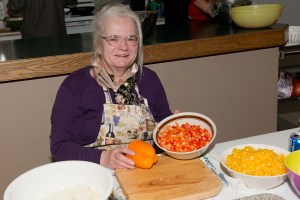
I think sometimes photos are of the organizers and volunteers get overlooked, and those were the people I approached as soon as I got to the hall. I am not one of those that nervously says, “Hi my name is so and so, can I please take your picture”?  I walk right up to the person and start talking as if we’ve always been friends. I rarely have to ask questions, because my new friends usually tell me about themselves, their organization and how important the event is. Then all I have to say is, “I gotta get a picture of you, hey grab that bowl or how about you wash some dishes…this is going to be a great picture.” And in this case I also said, “ I’ll be giving the pictures to Dale Northcott so you can get one.”

There was another photographer that knew many of the people sitting down to eat and I let him take their pictures. As I was about to leave he commented that one person asked him to delete their picture. I said, “and of course you did”, and he smiled and said, “yes I did”.

It was a fun event to attend, I liked taking pictures of the volunteers and organizers, and I got in great conversations with people that finished eating. My favourite comment was “did you get enough to eat” and “can I get you more”?

I know there are those that seem to believe their cameras are too valuable to be used for free, and the photographs they make are also too valuable to be given away. In the forty plus years I earned a living in this exciting medium of photography, I have never been one of those people.

My best wishes to readers on this festive season. And I hope everyone has a Happy New Year.

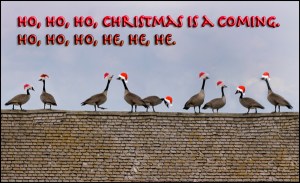
How about Christmas cards?


I like all the festive celebration and excitement of Christmas, and truly enjoy all the colourful decorations, the lights and listening to Christmas music for a whole month.  Yes, I do like Christmas music.  I have also written about Xmas cards before.

All year long the photography social media sites on the Internet that I belong to have been filled with photos made by members, but images posted on the Internet quickly become faded memories and are easily forgotten when an hour later someone else posts theirs.

I like photographic prints. Prints have a life, whether framed and hung on a wall in our home, taped on the refrigerator, or thumbtacked in an open space in the workroom. To me a print of any size has more importance and life than a digital image on my computer or iPhone screen.

Christmas is a great time for photographers, and besides than just having fun taking pictures of anything and everything they now an opportunity to give friends and family their photographs.

I suppose that could mean a big framed photograph, but what I am writing about today is Christmas cards. Cards are easier and less expensive than framed prints, and any card of a photographer’s work is more personal as a gift than an email or little picture tagged to a text message.

I don’t want to believe that any photographer would ever be satisfied with mass produced generic Christmas cards. Personally, I want people enjoy my photography, even if it’s only as a 5×7 card.   A card to someone I care about is so much better than having my pictures left languishing as image files deep in some computer hard-drive that hasn’t been backed up.

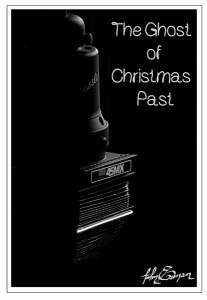
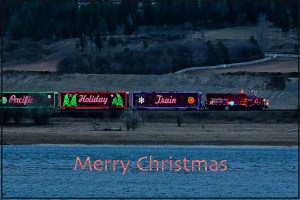
Right now I am going through my many files from this year’s photographs selecting those I want for Christmas cards. I’ll print up different subjects and place all sorts of greetings on them. It is rare that I give the same picture to more than one person. And not all the cards say Merry Christmas. Although I like “Merry Christmas” what wording goes on a card doesn’t really matter to me. Happy Holidays, Seasons greetings, Have fun, A good New Year, and anything else I think fits a particular picture. It’s about the card, never the words.

I have written before that I always produce a new monthly calendar. My wife and I used to alternate our months.   Doing a calendar is a neat way to personally enjoy my photography, but cards are a lot more fun because they are for others to enjoy. I also make cards for all occasions, like birthday’s, Valentine’s, Mother’s day, etc., My family has come to expect me to share my photography. Sometimes it’s only a picture of something we’ve done, but if it’s a special occasion they always will get a card. Even when would I go to my granddaughter’s school Christmas concert, I always took their pictures, made a card and send it to them through the mail.

For those photographers that don’t have their own printer, it’s as easy as having a 4×5 print made at a local lab. Then get some construction paper, glue a picture on it, fold the paper, write something like Merry Christmas inside and give it away. And don’t make all the cards the same.

What would be the fun in that?