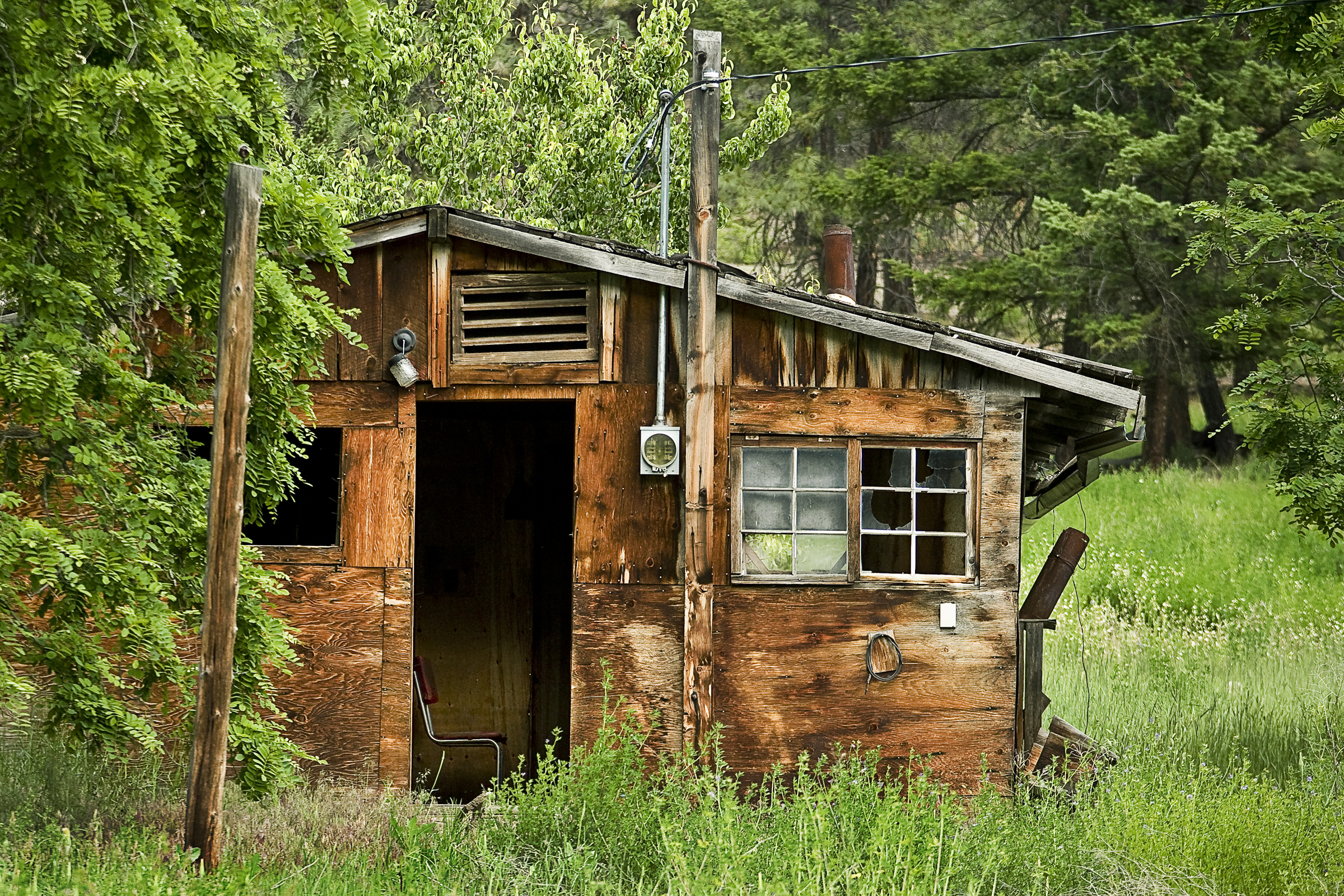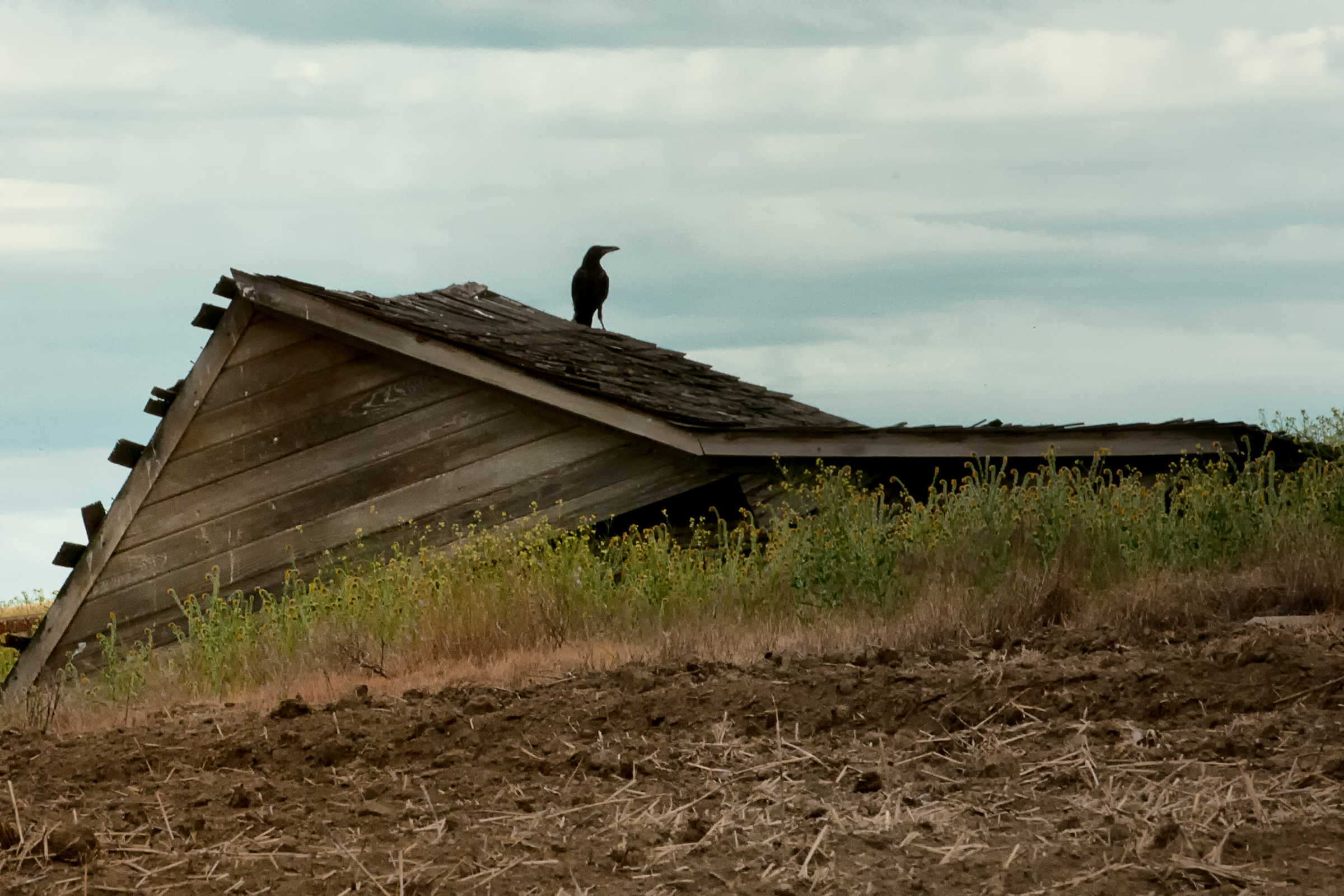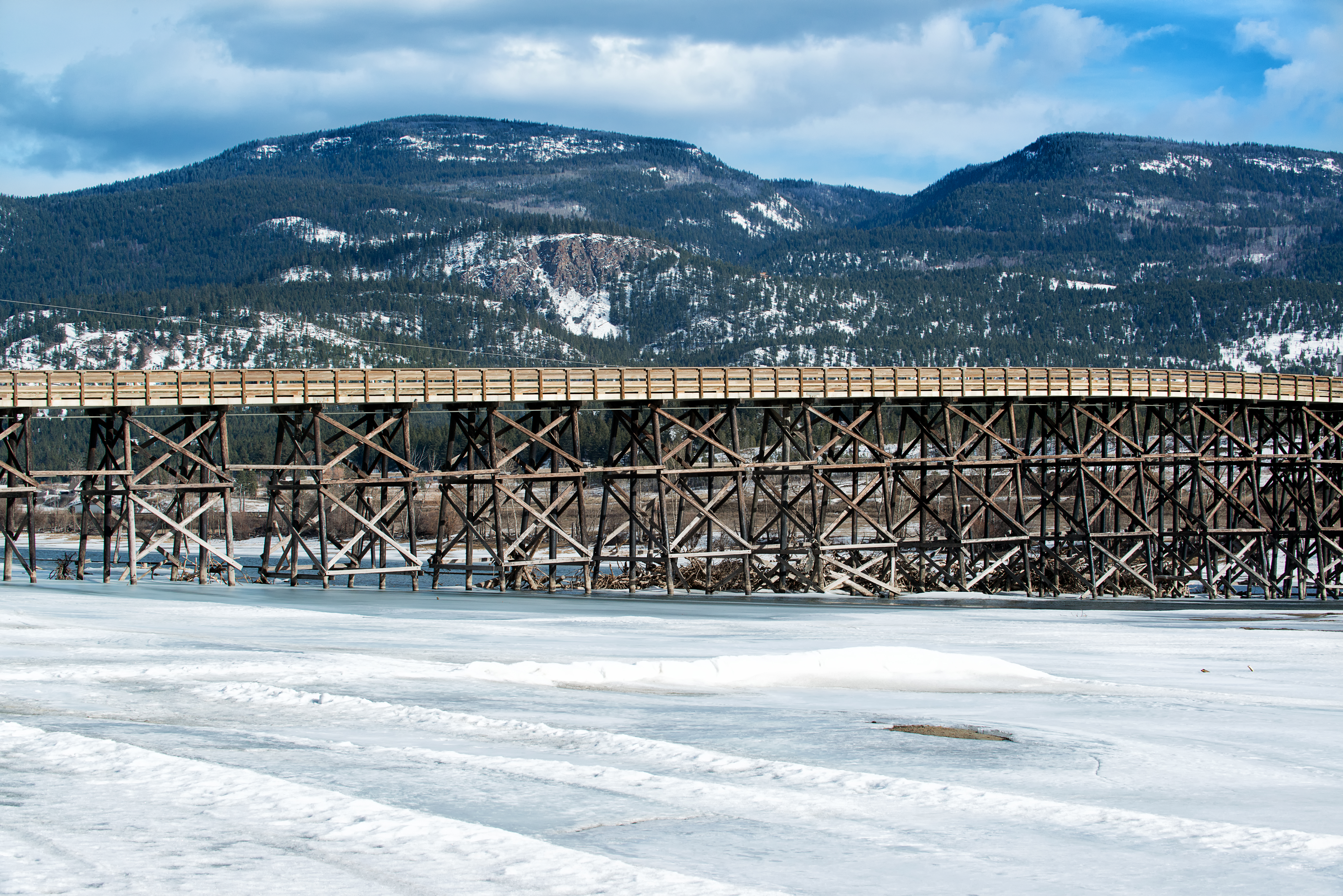
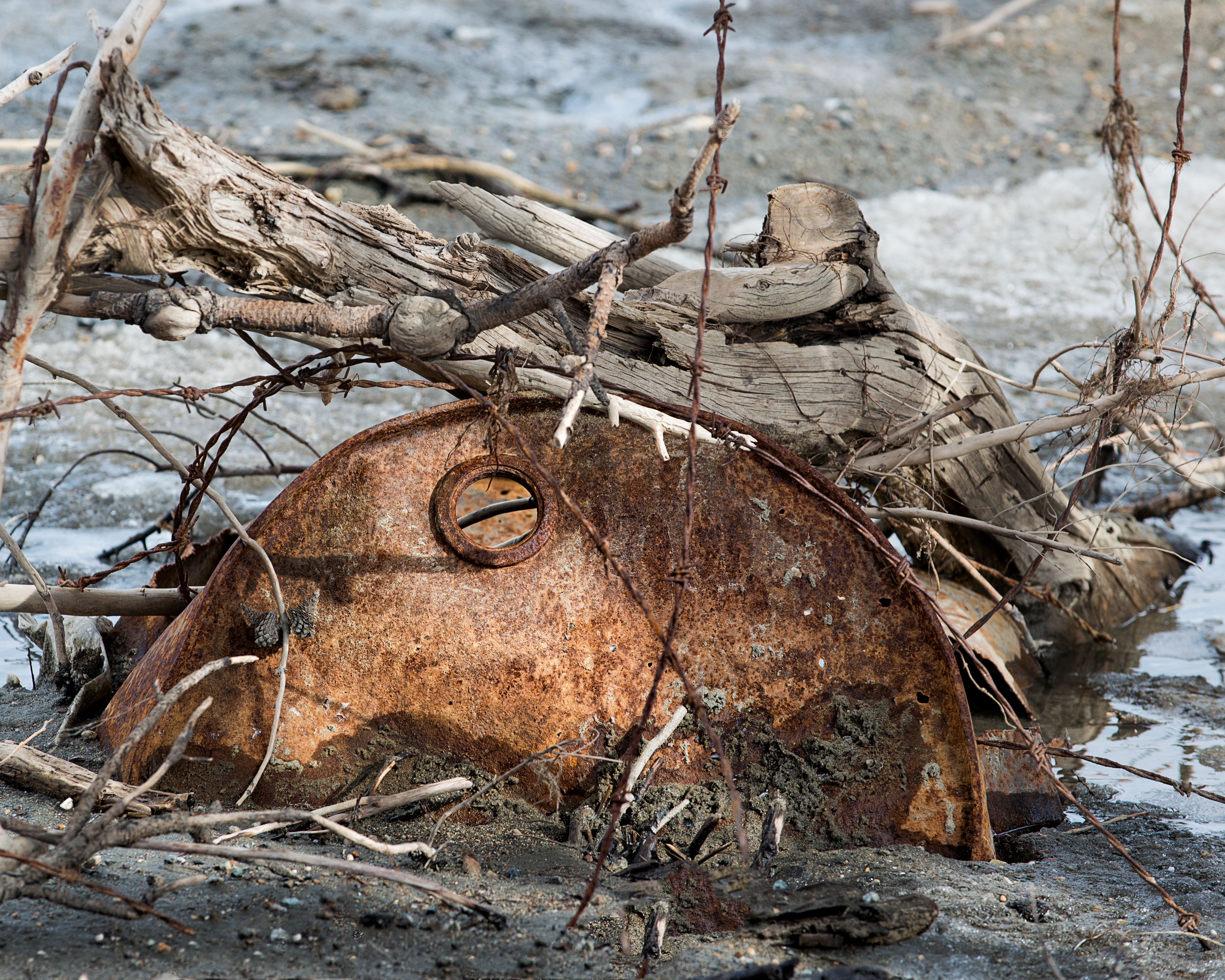
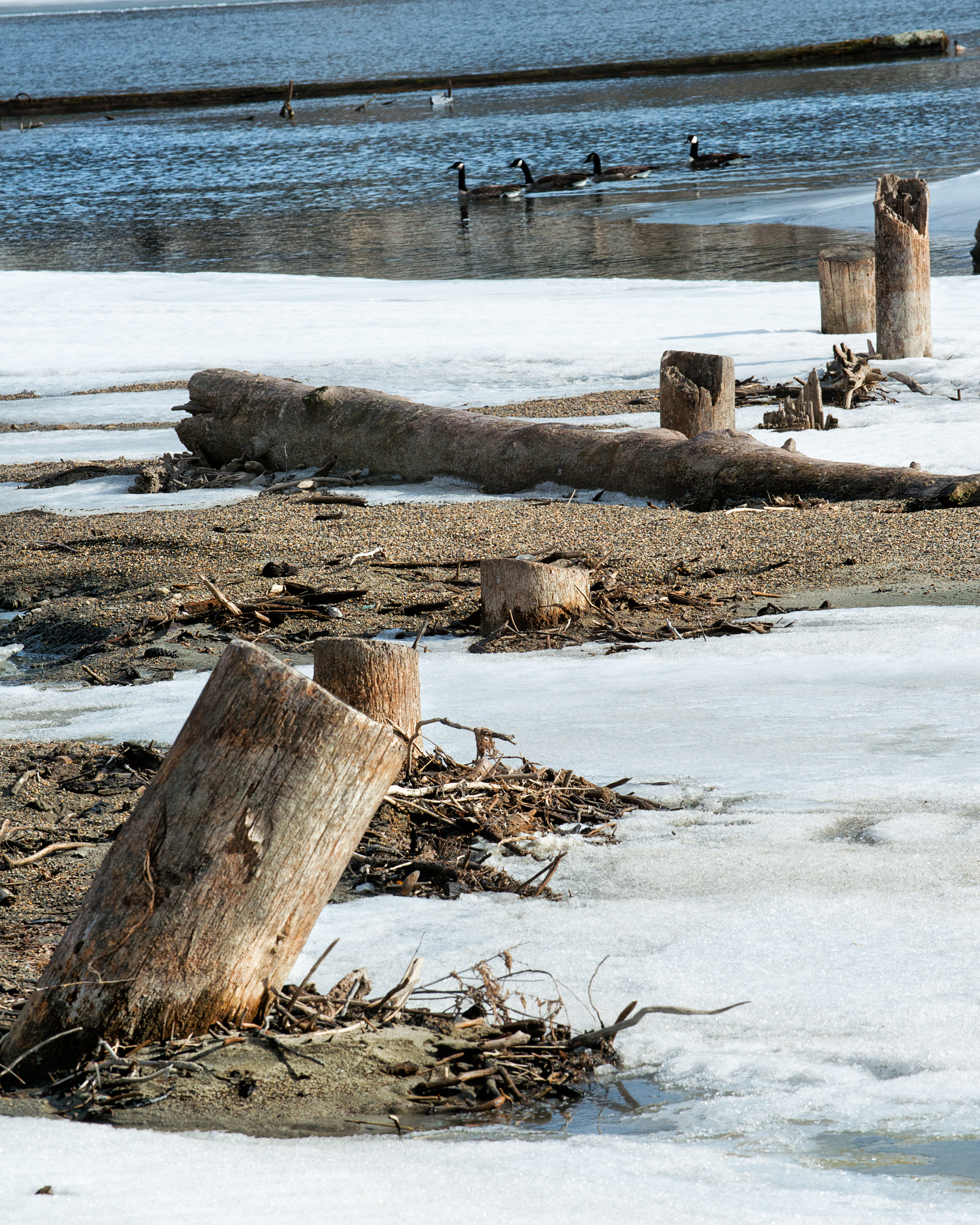
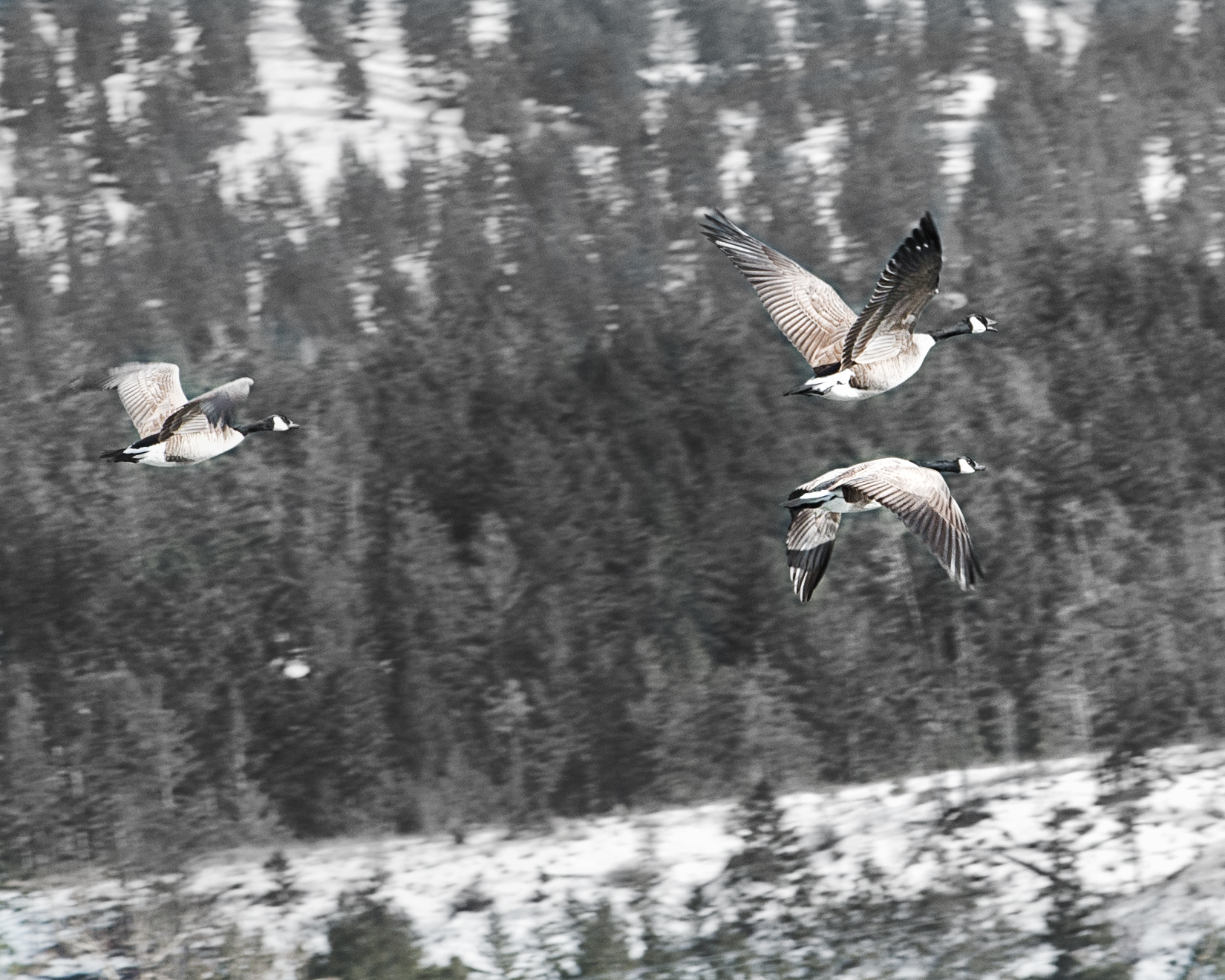
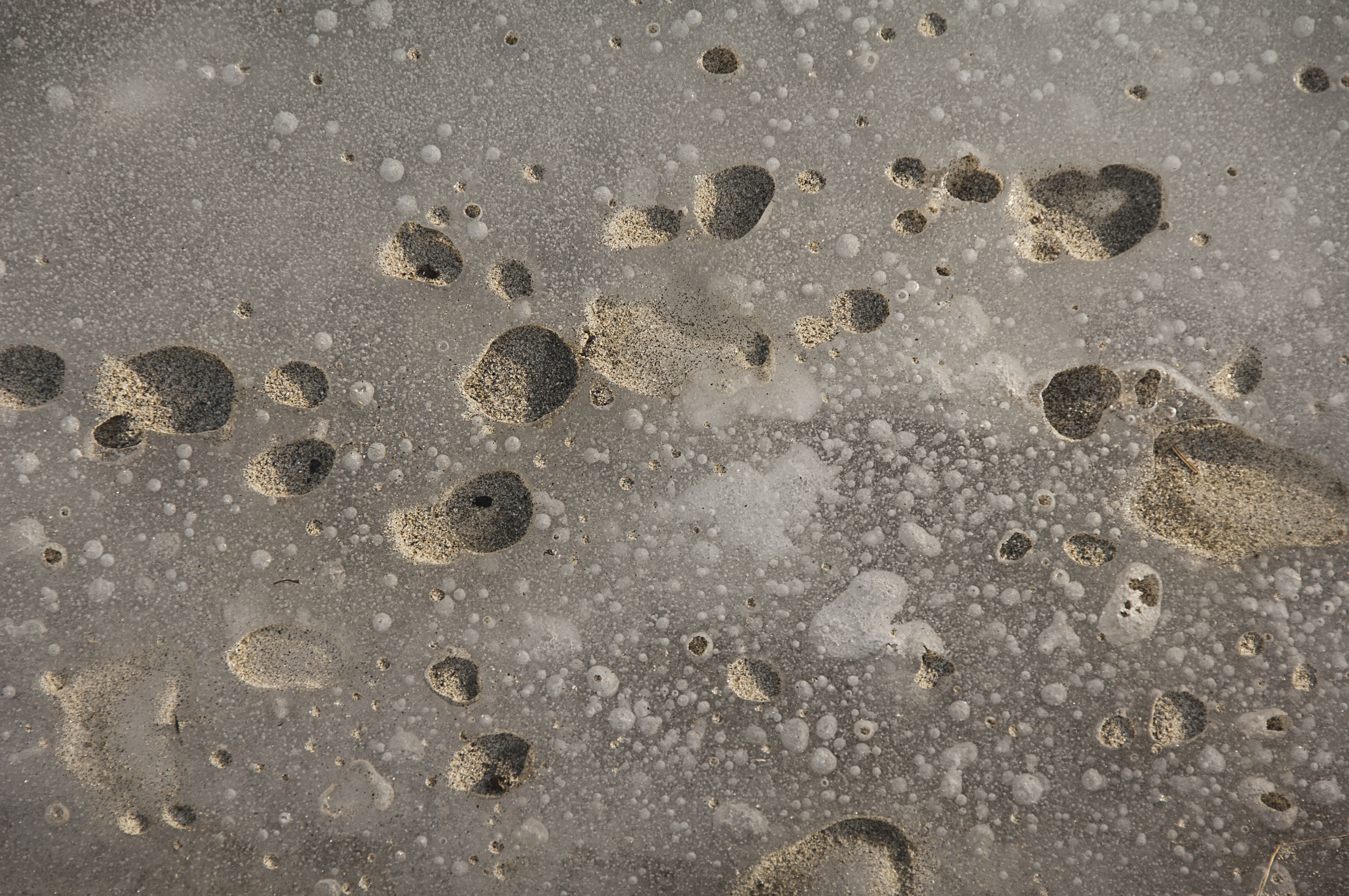
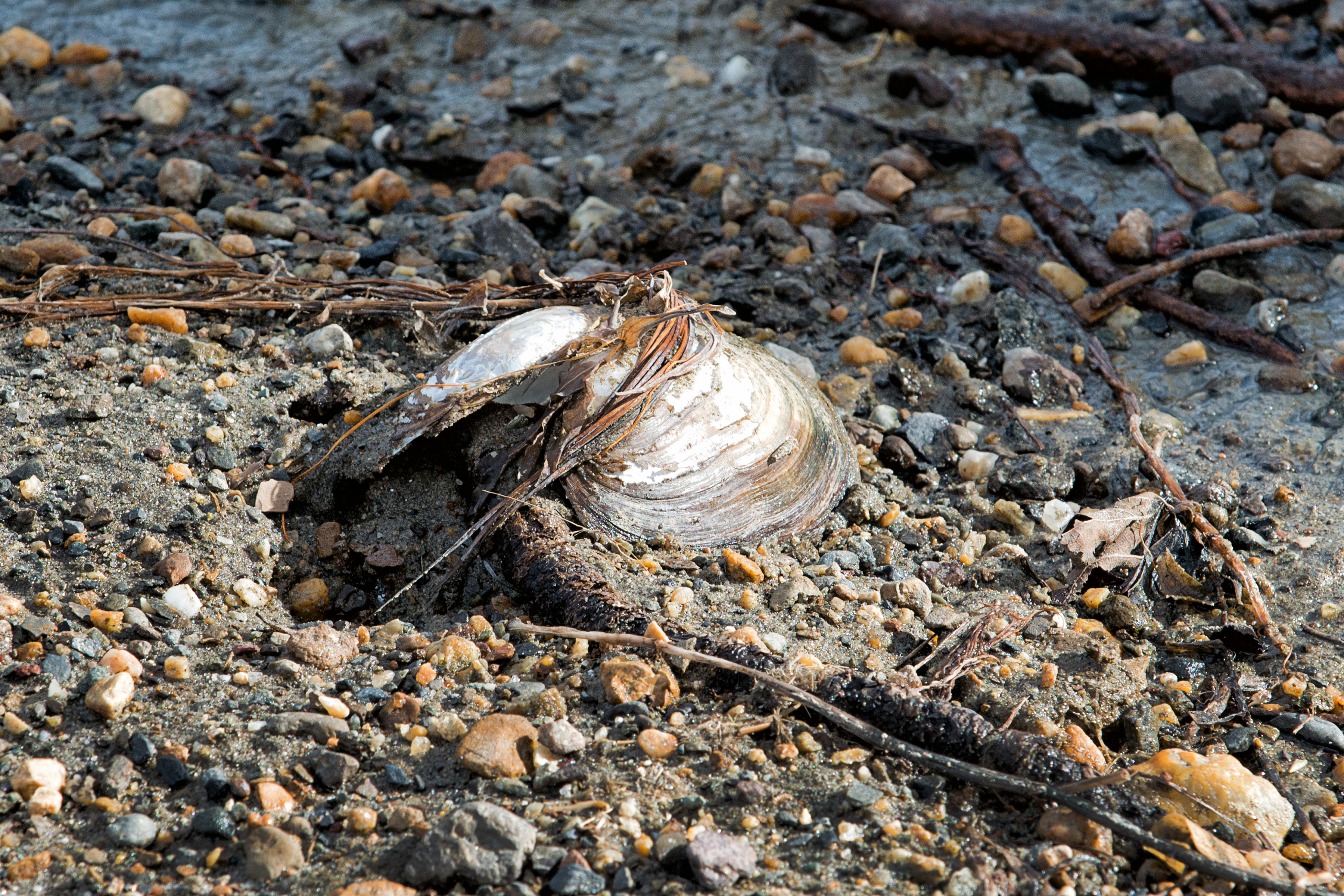
A photographer walks along the frozen riverside.

Ice & Pritchad bridge 1

  Oil can 2

Pier studs 3

Noisey Geese 4

Ice art 5

Clamshell 6

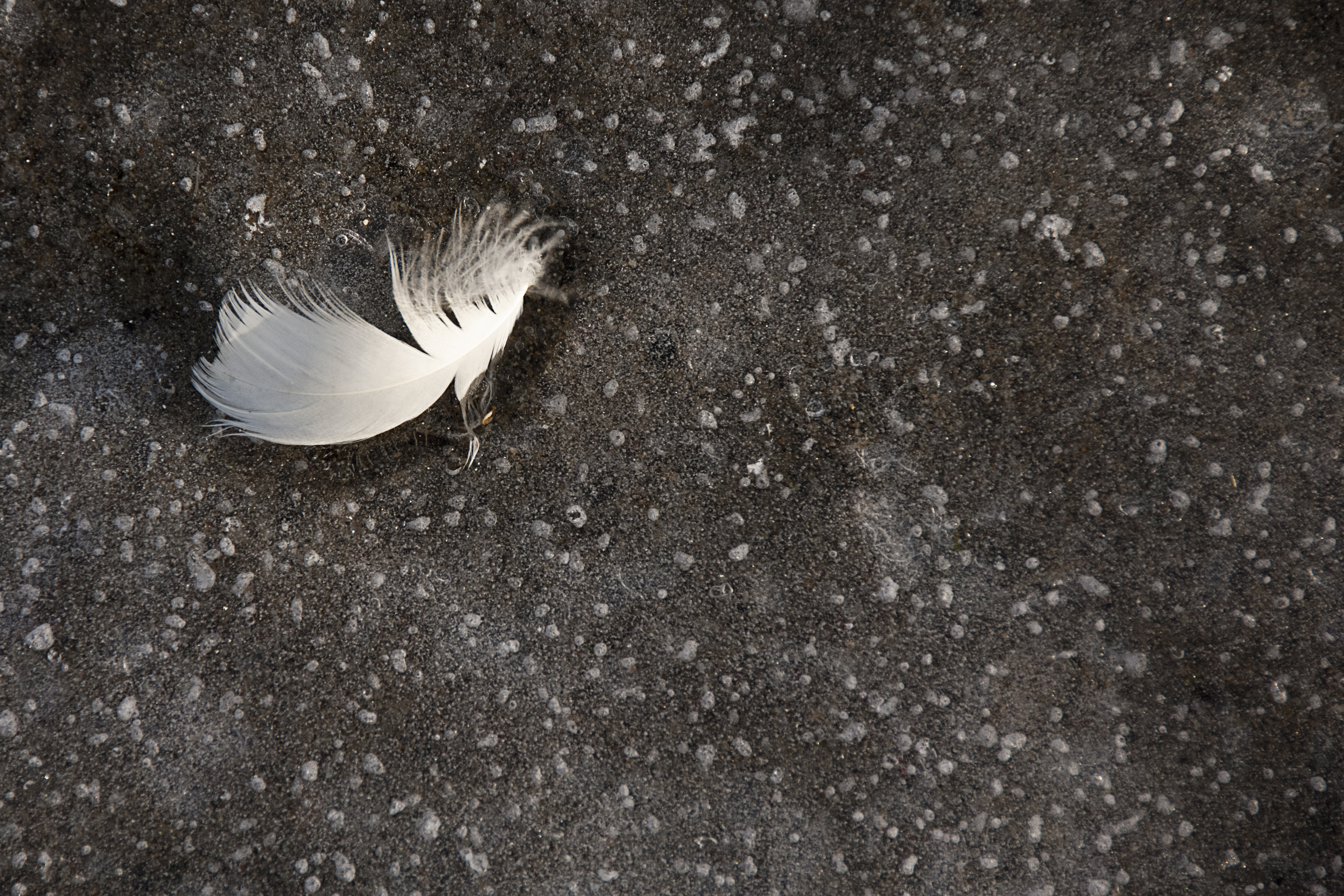
Goose down 7

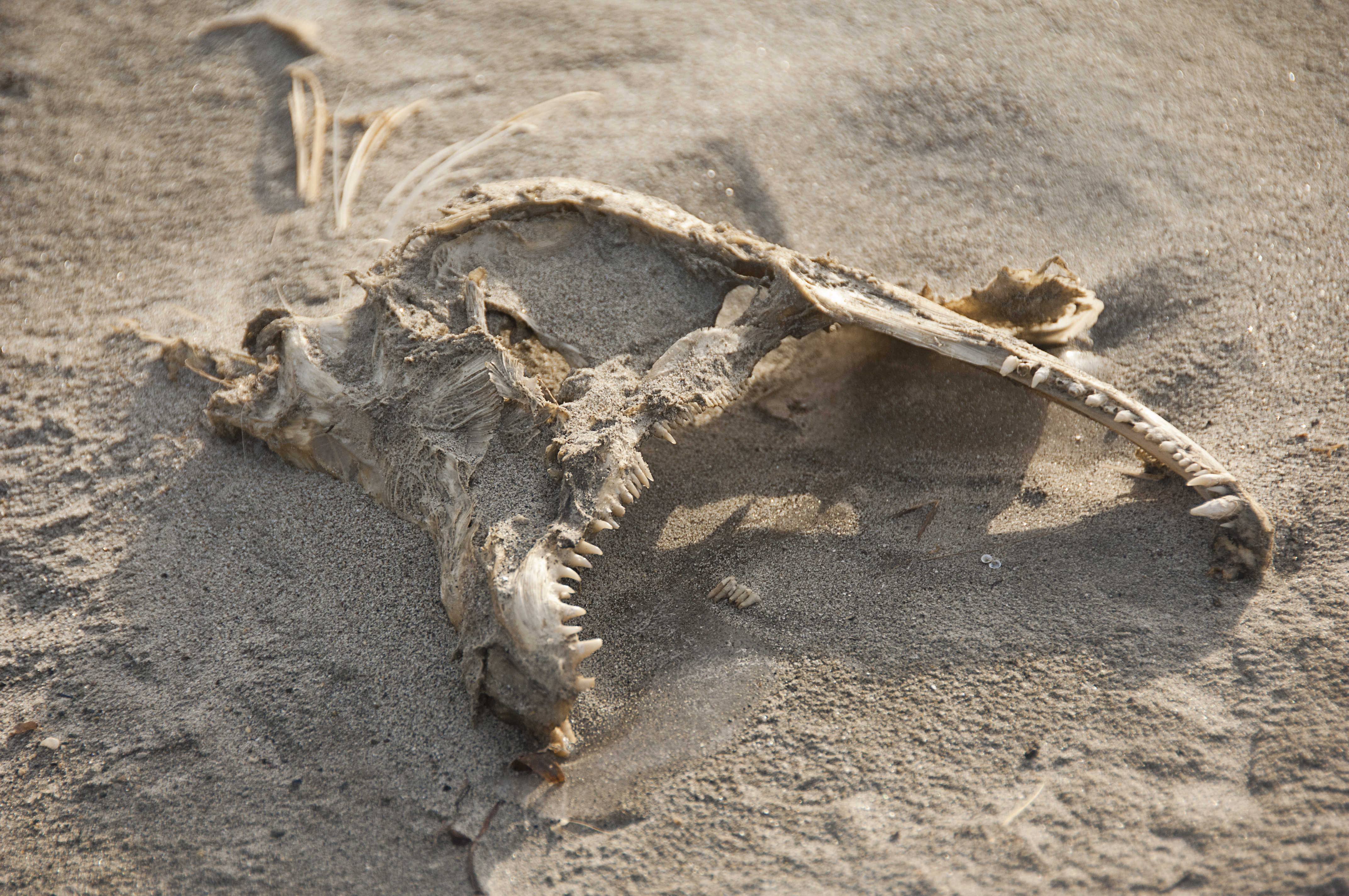
Last breath 8

 Henri Cartier-Bresson wrote, “Photography is not like painting. There is a creative fraction of a second when you are taking a picture. Your eye must see a composition or an expression that life itself offers you, and you must know with intuition when to click the camera. That is the moment the photographer is creative.”

      Walking along the frozen riverside.

There is something mysterious about the end of winter when the weather climbs to just around freezing. The snow is only just there. We can’t see the whole story, but it is letting us know that something waits beneath.

The Thompson River meanders along the valley basin not far from my woodland home and it’s on days like I just described that call me to wander the ice-covered shore. I like the solitude and although I carry my camera and I suppose I should be searching for something important to photograph, I usually don’t have much of a plan. I look for, as Cartier-Bresson said, ”a composition or an expression” that is interests me at that moment.

I would like to say it’s a quiet walk along the river side, but there is the constant din from the Trans-Canada high way that runs along one side of the river. However, this time, as I walked across the snow-covered ice and slogged through the emerging mud, an urgent alarm went up from several (actually, a lot more than several) sentinels stationed along the river’s beach up where the sand had dried. I had been so intent on looking along the ice edge that I hadn’t noticed all the resting geese, but they saw me and weren’t very happy at my intrusion and their honking was so loud that I no longer could hear the road noise.

I have friends that would have quickly moved into action and captured image after image of the geese loudly taking off and flying overhead. They also would have photographed the splashing of those heavy feathered birds coming back down in smooth backwater under the bridge. I did raise my camera to release the shutter a couple times, but I enjoyed watching them and liked the honking sound, so I turned away so as not to disturb them more. Besides, I am sure they appreciated that warm sand on the cold winter’s day and there will always be another opportunity to photograph geese.

I regularly see people prowling the river shoreline during the summer in search of treasures and I guess that is what I sort of do too, although I rarely do it in summer. Unlike them, I don’t touch the treasures. I just point my camera at something I am curious about and take the picture. I don’t move or change anything. My camera and I do the moving instead, as I choose the appropriate angle for each subject poking out of the sand and ice.

I never have seen another camera-equipped person walking that shoreline in the winter. I guess most find the place boring. The traffic keeps larger animals away, the low angles aren’t that favorable for grand landscape shots, there are no bridge lights that would encourage anyone to plant a tripod after dark, the sand and river water aren’t that inviting and this time of year the river is lined with stark, leafless trees.

For me it is perfect. I’ve walked along the frozen sand many times and I am sure many of my photographs over the many years look a lot alike. I expect someday I’ll get a really unique picture of a neat boot, a carcass of a really big fish or even some broken and discarded boat. Who knows?

As always, I really appreciate your comments. Thanks, John

My website is at www.enmanscamera.com
Why You Should Be A Photographer

Accessory   Linda Photographer

picking the view

getting the shot

shooting Field patterns

I recently received an email from a friend that included a fun article titled, “54 Reasons Why You Should Be a Photographer.”

The author, Lauren Lim, began with, “Being a photographer is seriously awesome.” And continues, “I’ve compiled 54 really fantastic (reasons)…After you read all these reasons you’ll probably be even more inspired by this medium, and be itching to get out and shoot more.”     Reading that introduction intrigued me and, of course, I agreed with him when he wrote, “I think everyone should get into photography. You don’t ever have to do it professionally. That’s not what being a photographer means. Being a photographer just means you really love photography.”

The list of “54 reasons why you should be a photographer” didn’t really include 54 different reasons; it was pretty much made up of the same reason written over and over in different ways. However, I did select seven that I really liked and I think they are prefect as to why anyone should practice the art of photography.

1. “Capture a memory that you can have forever.”

2. “See the beauty (I’ll add the words, through you lens) every day.”

3. “It’s a creative outlet.”

4. “Share your perspective.”

5. “Express yourself.”

6. “Tell a story”

7. “Can make other people think.”

The exciting medium of photography began with inventors like Joseph Nicephore Niepce, when he succeeded in creating the first permanent image. Louis Daguerre with the “Daguerreotype” and Henry Fox Talbot’s “Calotype” that were instrumental in helping us with the first of that list, ““Capture a memory that you can have forever.”

There were the pioneers of photography like Ansel Adams, Galen Rowell and Eliot Porter that showed use how a photograph would help us, “See the beauty everyday.”

Jerry Uelsman, Duane Michals, Edward Seichen and Man Ray were among the first to split with traditional photographers and might even have said, “It’s a creative outlet.”

When I read the words, “Express yourself.” I immediately thought of the photography of Robert Mapplethorpe and Annie Leibovitz.

The last two about how photography can, “Tell a story.” and “Can make other people think.” Absolutely had me thinking about the wartime photography of Robert Mapplethorpe and Annie Leibovitz. and street photographer, Weegee.

I only mentioned those photographers that had a hand in the beginnings of photography and started us all thinking of the things we all might add to that list. And I am sure without hesitation readers can add pages of modern photographer’s names.

If you feel the urge, be sure to let me know if you have additions to “Why you should be a photographer”.

As for me I’ll just be content with Lim’s words, “Being a photographer is seriously awesome.” And “Being a photographer just means you really love photography.”

My website is at www.enmanscamera.com
Some Thoughts on Portrait Photography

   Kisa4

Monica

Model 2

Walter's Portrait

Almost exactly a year ago I wrote an article titled, “Some Thoughts on Portrait Photography” and included a quote by Peter Brunnell the author of, “Creative Camera International 1977”.  Brunnell wrote, “There is no single form or style of portraiture. Portraiture means individualism and as such means diversity, self-expression, private point of view. The most successful images seem to be those which exist on several planes at once and which reflect the fantasy and understanding of many.”

I remembered that blog post and decided to revisit it after having a discussion with friend and fellow photographer, Michael Beach this week about creative portraiture. We talked about several aspects of photographing people, but I think the topic we kept returning to was a about making portraits that had a different look and feel than other photographers in the town we both lived in.

In last February’s article I referred to my college photography instructor’s contention that we should always follow rules for portraiture. I won’t go into those at this time. I’ll just say they weren’t very imaginative and left little room for innovation or experimentation for that matter.

My argument with his lectures on portraiture, are that great portrait photographers like Irving Penn, Arnold Newman, Bert Stern, Yousuf Karsh, Richard Avedon, Eve Arnold, and Annie Leibovitz, to name a few that I like, were anything but rule followers, and what marked their work, as Brunnell wrote was, “individualism .…..self-expression, (and a) private point of view.”  I did then, and still do think, that’s a lot for us mere-mortal photographers as we struggle to make our portraits something more than mere documentaries.

When I approach portraiture I try to create portraits that are, well, creative. Sometimes everything works and sometimes it doesn’t.  However, I always strive for something different, maybe even unique, in each.

Of course, one must be aware of how our subject sees themselves and the circumstances and conditions under which the portrait is made. Using a word coined by Minor White, I think most successful portrait photographers “previsualze” the final portrait.

White, co-founder with Ansel Adams and Dorothea Lang of the influential photography magazine, Aperture, has been hailed as one of America’s greatest photographers. And regarding previsualization, Ansel Adams defined it as, “The ability to anticipate a finished image before making the exposure.”

I’ll ad another quote by Minor White that fits here and might be a good thought for a photographer about to pick up that camera to make a portrait, “One should not only photograph things for what they are but for what else they are.”

Sometimes it’s the expression on a subject’s face that makes the image. And to get that expression the photographer and subject may need to experiment with different moods and emotions.  Portraitists spend much time putting people at ease and making them comfortable in front of a camera. I think it’s all about gaining a person’s trust that we are going to help them look the best they can.

The Internet is packed with “How to” advice on portraiture photography. Some of it is worth thinking about and some is bewildering. Those serious about bettering his or her portrait photography will select what works best and is the most comfortable.

A year ago I summed up with the following that worked for me then as it does now,

Everything comes down to one’s personal definition of what a portrait is. According to Wikipedia, “it is a picture of a person, a description. It can be a photograph, a sketch, a sculpture, but a portrait is so much more than that. It is collaboration between the subject and in this case the photographer.”  Collaboration is the key word for me in that description, and in my experience those portraits I have made that I think are the most successful, is because the person who was in front of the camera was willing to work, or collaborate, with me towards the final image.

I always look forward to any comments. Thanks, John

My website is at www.enmanscamera.com
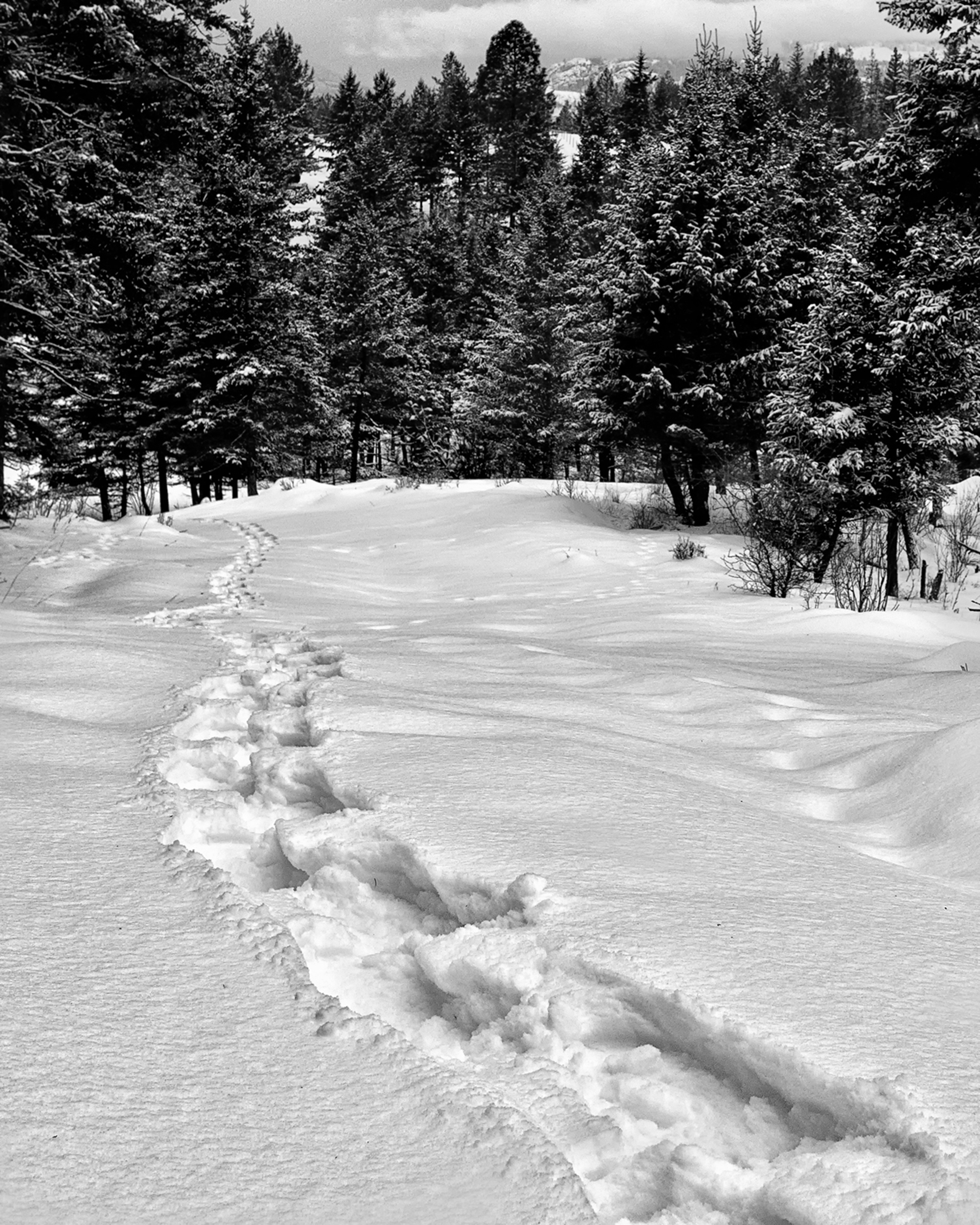
A Short Walk on Snowshoes

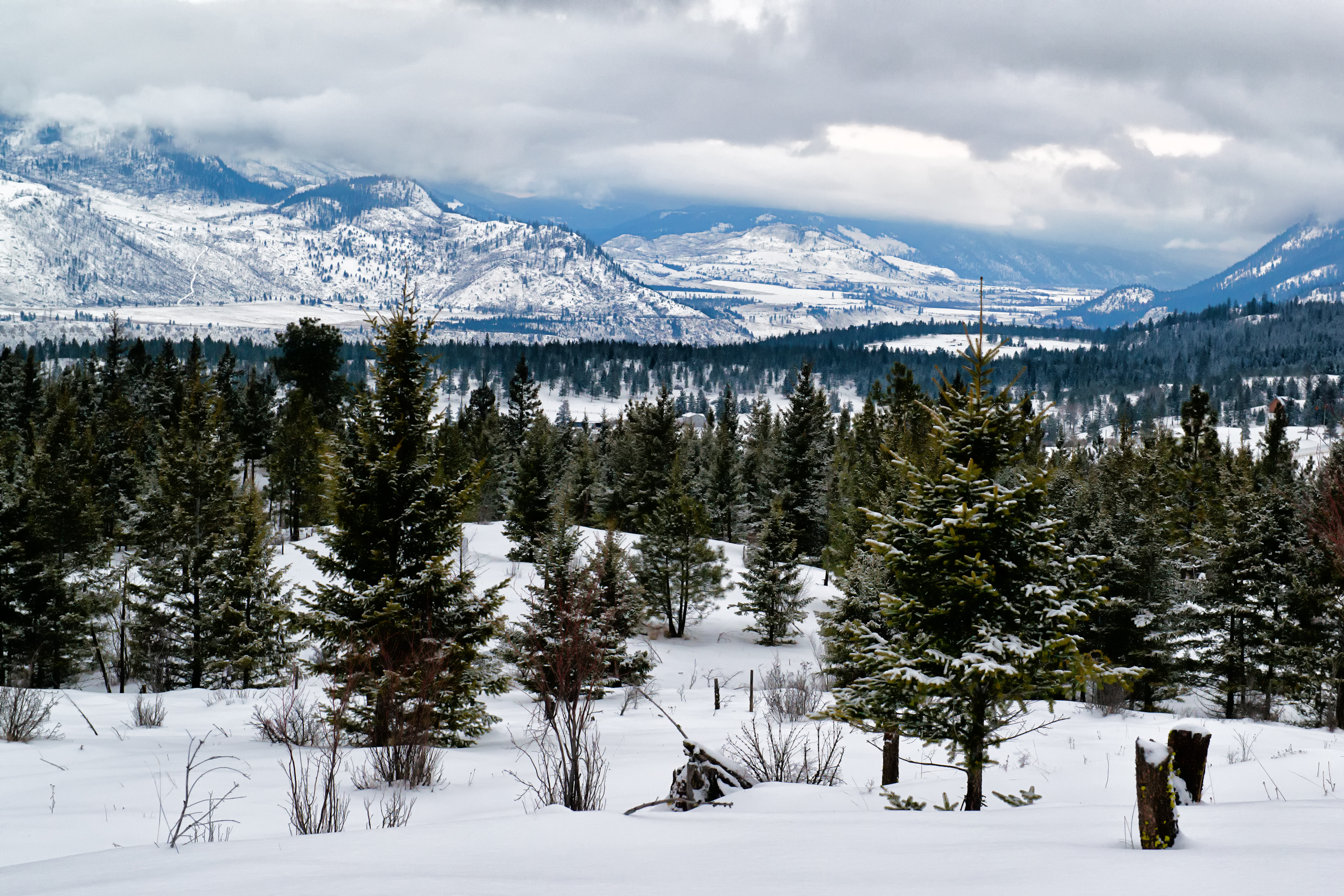
Photos by Snowshoe 2   Thompson River Valley

windswept snow

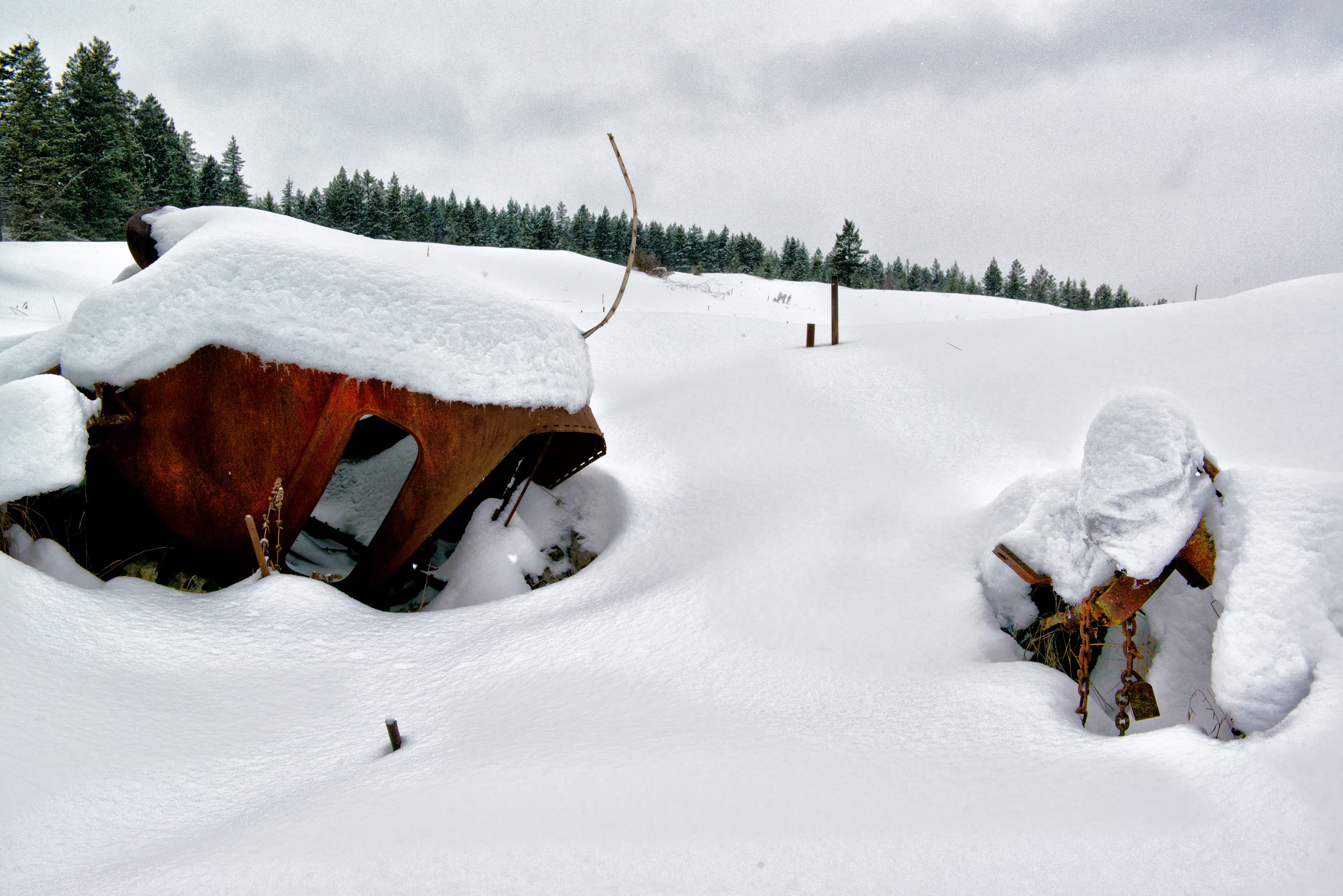
Old car in snow

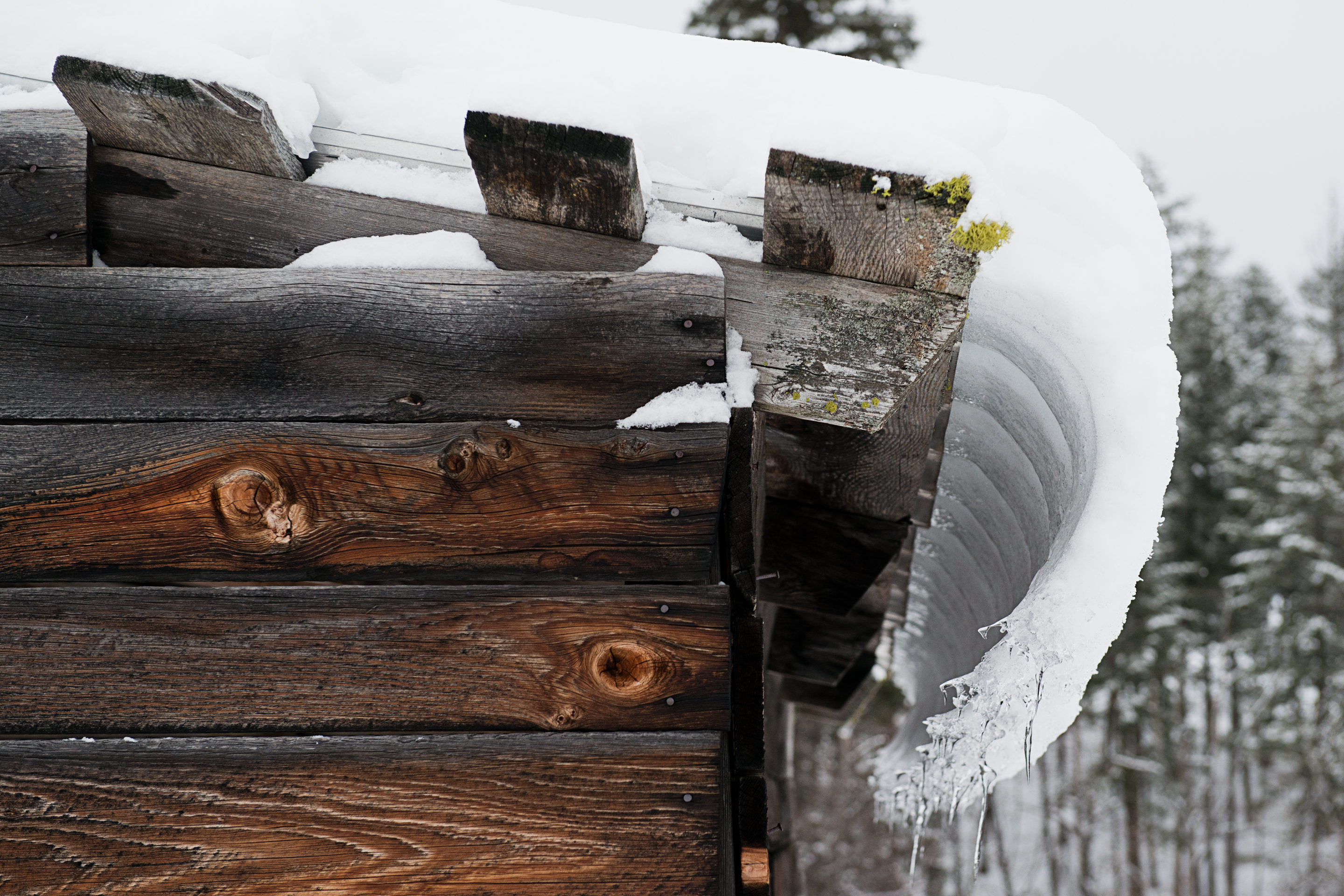
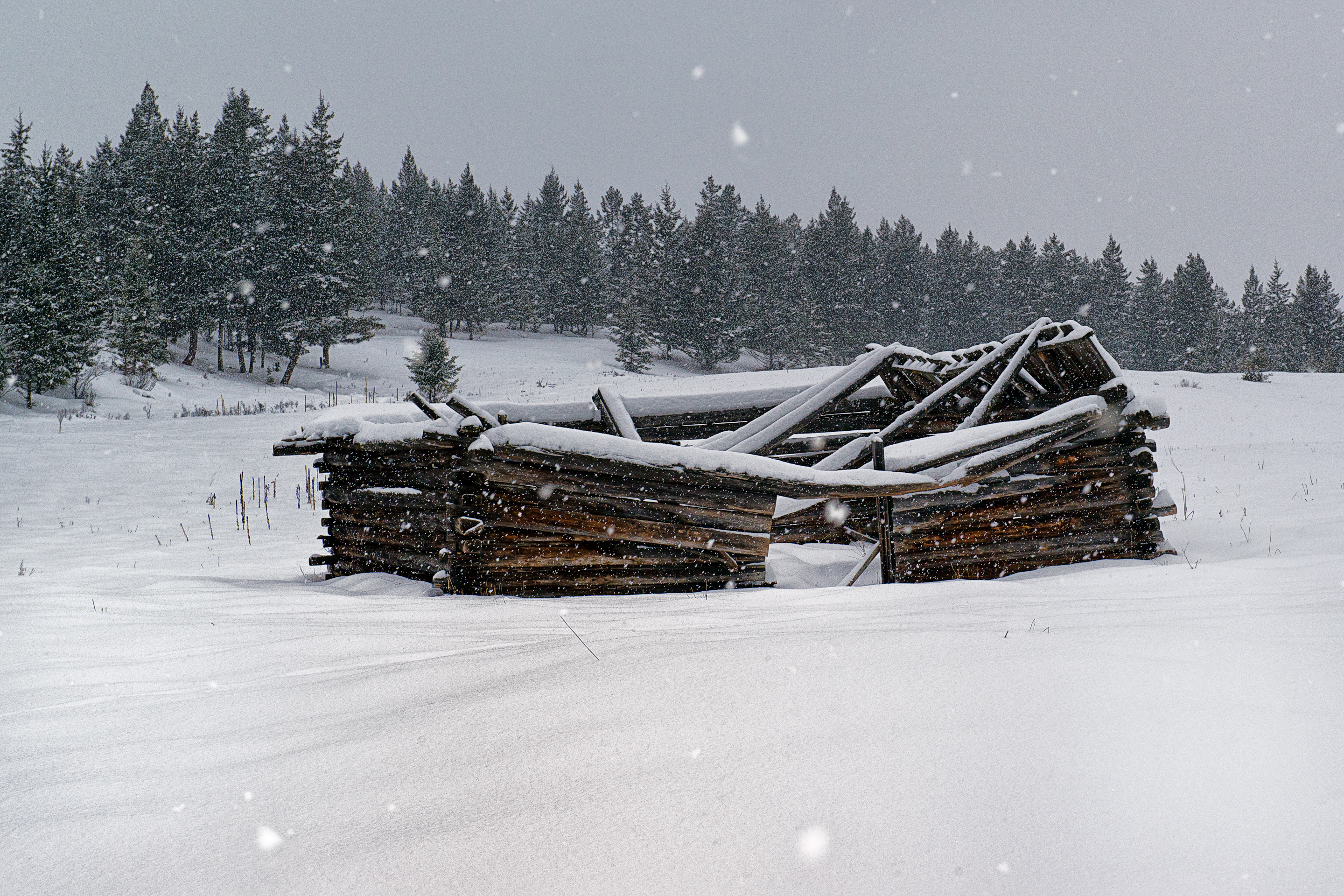
Log building in snow

My snowshoe easily broke through the two feet of snow that covered the well and down I tumbled into the soft snow. My years of experience as a photographer reminded me to “  at all costs”, and although my leg twisted and snow covered me, I held the camera up high and safe from the wet snow.

I should have remembered that hole. It’s not like I hadn’t been there many times over the years photographing the rusting 1930’s car. I would go there spring, summer, fall and winter in the rain, snow, and sunshine. I should have remembered where it was, but as usual, it’s always about the photograph. I had put on my snowshoes and hiked up the rolling hills to a long meadow not far from my home.

I have always liked snowshoeing. In my teens my friends and I would head out cross-country trekking for hours through the deep powder in the mountains.  I remember overnight trips where we dug snow caves to spend the night in (snowshoes also made great doors). Then we’d ski down long valleys and snowshoe up hills as we moved through the snow covered mountains.

My rural home is surrounded by wooded forests and rolling hills that are perfect for walking, or as today, snowshoeing. Each year I look forward to enough snow-pack to snowshoe in, and after another morning of shoveling a path to my chicken coops, to the car and cleaning the driveway, I decided it was time for my first winter hike up to the high meadow above my home.

The day was overcast, but today’s modern cameras easily handle ISOs of 800 and 1600, so the lack of bright reflection and low contrast on a snowy landscape made everything so much easier to see and photograph. And handholding is undemanding as one can keep the shutterspeed way over 1/400th of a second and still achieve lots of depth of field.

I mounted a 24-70mm on my camera and set out to photograph the snow covered hills on the quiet, cloudy day.  I like hiking when the only sound is my footsteps, or in this case, my snowshoes.

I hiked up and, as usual, photographed everything. When I stroll through that long meadow I rarely see animals, but I always feel as though I am being watched. That’s a good thing. This time a crow swooped low and circled me as I photographed the Thompson River valley far below. I am sure it was wondering what I was doing there.

I could see a storm rolling down from the mountains and photographed that also. Soon another crow appeared overhead, and this time cried a warning that I am sure was about the storm. And then it began snowing. There is nothing like standing in a forest meadow during a snowstorm; it’s quiet. The sounds from both the Trans Canada Highway and the CN Railroad alongside disappeared.

Thirty years ago, when I first started wandering that area there were three buildings, two old cars and an apple tree.  Now the struggling tree no longer bears fruit, someone hauled off the better of the two cars, one building fell down, and the last two are just hanging on.

Still, it’s a great place to snowshoe with a camera and I was having fun and the heavy falling snow didn’t bother me, I just kept wiping the water off my camera as I photographed the on-coming storm, the old buildings and the remnants of that old car and that’s when I fell into the well.

I think stumbling, bumping into things and sometimes falling while paying more attention to the subject being photographed than things in the way isn’t that unusual to those of us that participate in the exciting medium of photography.

I was wet, but I was fine, the camera was fine, and the snowshoes were fine, and best of all, I got lot of great winter pictures.

I’d really like to read your comments.

My website is at www.enmanscamera.com
My photography Resolutions for 2014

Every year I write about my New Year’s Photography resolutions. I’ll remind readers they aren’t only resolutions, but things I’d been thinking about for some time. This year, as last, I’ll also call them my photography goals as well as my New Year’s resolutions for the year to come.

This year I kept the number at six and mixed them into no real order. Too many goals don’t seem to work for me. However, I included five more I found on the Internet for new photographers.

My first resolution is an easy one that I recommend to all serious photographers. The resolution is to get together with other photographers. Collaborate with like-minded enthusiasts, plan an outing or just get together for refreshments and talk at some local spot.

My second resolution is to plan several photographer vacations this year.  I’ll be sure to make them about photography, not those rushing trips where one just grabs a picture now and then on a tiny point and shoot camera. These will be the kind of excursions that allow me look at the world in new ways and inspire me to use the equipment, knowledge, and talents I have.

My third resolution is to continue my ongoing, and seemly never-ending quest to organize my old photographic slides.  I make this resolution every year.

My fourth resolution is to upgrade my computer, well actually, to purchase a new computer. Gosh, I’d do almost anything to skip this one, but I suppose I must be resolute in this resolution.

My fifth resolution is to add a lens this year. Not that I really require anything, but there are a couple that are intriguing.  Nevertheless, because I prefer to purchase used equipment, I am always on the look out for bargains that fit the kind of photography I do.

My sixth resolution is to attend a photographic workshop. The subject doesn’t really matter; I always learn something whether it’s from the leader or from my classmates. I regularly buy books on different photographic subjects and I am an avid reader of many online bloggers and teachers, but the experience of being part of a class offers so much more.

I decided to search for other photographer’s New Year Resolutions and found a list by www.photoguides.net I changed their order and selected five that I think will benefit those readers new to this exciting medium in the year to come.

Their first New Year’s resolution is to, “Use filters”.

The second resolution, “Never use Auto mode” I do like that, but I think I would change it to “learn when and where to use Auto modes”, because I look at cameras and their functions as multipurpose tools.

The third resolution, “Shoot more in RAW” surprises me. Not the resolution, but that any serious photographer, even a beginner, wouldn’t prefer RAW.

The fourth, “Take control of your flash” might just be my favourite resolution. Anyone familiar with my photography knows how much I like flash.

For the fifth and last resolution for 2014.  I’ll just smile and nod my head, “Stop the car”.

I am sure readers will make their own resolutions for the year we have just begun.  What could they be? I can only imagine.  Let me know.

I wish you and yours the best in the New Year.

My website is at www.enmanscamera.com

Twelve Gifts for a Photographer’s Christmas

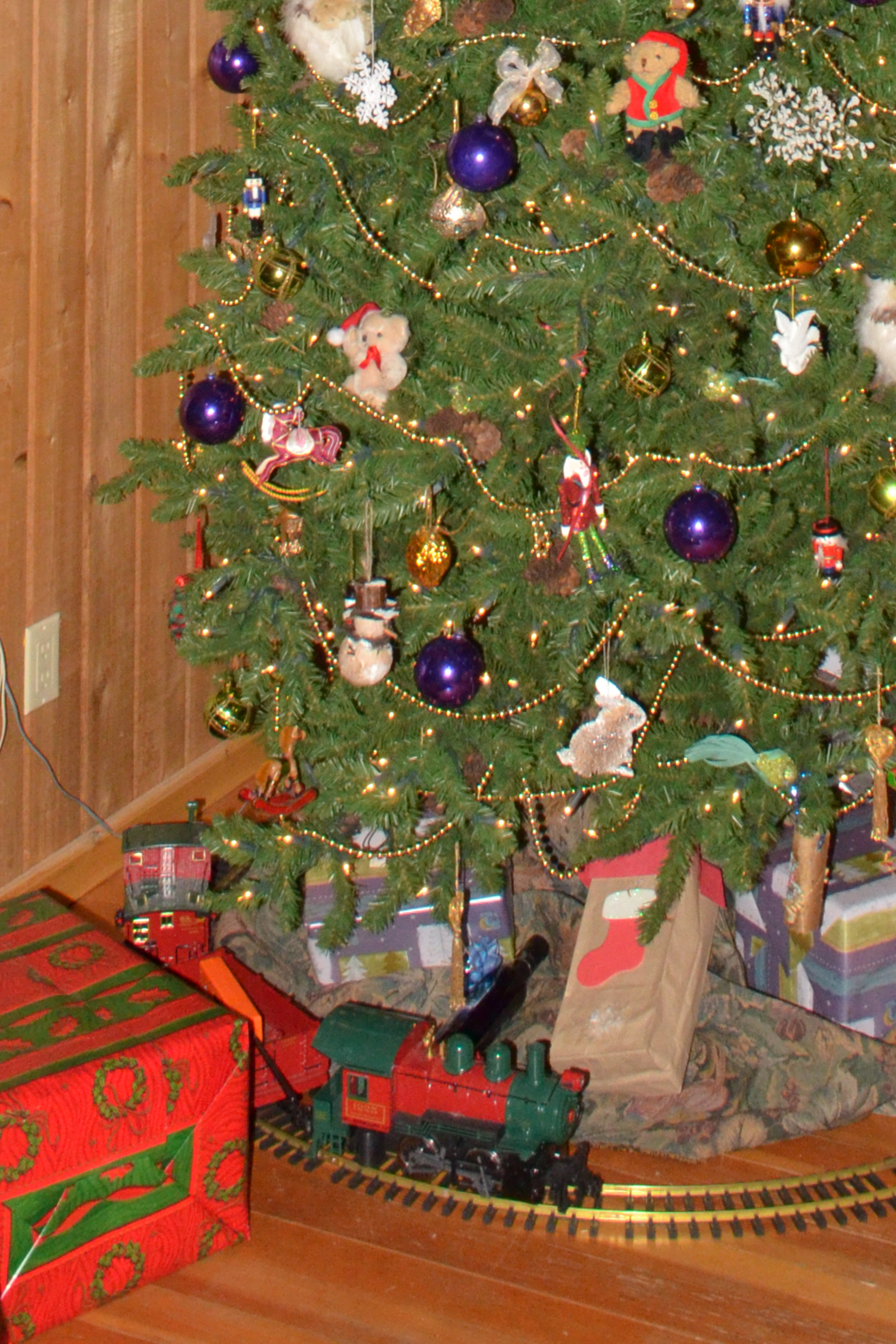
Tree 2 xmas presents

We finished decorating our 15-foot Christmas tree, and I started putting the tracks together for the Christmas train that goes round and round the tree.  Afterwards, my wife, Linda, resting and enjoying a cup of tea, and perusing the glory of our handiwork commented, “You haven’t told me yet what you want for Christmas. Do you want something for your photography?”

I hadn’t thought about what I wanted.  I had been enjoying the tree, the decorations, and the Christmas music, but as far as a gift for me, especially, “something for photography” left me at a loss of what to say, so I replied, “I suppose I want everything and anything that will fit my camera.”

I watched the train go round the tree, and I listened to the music coming from the satellite receiver (I like the channel that plays smooth Christmas jazz) and tried to think about what I could tell my wife.

In keeping with that subject, I decided to pose that question on a couple of photographer forums I frequent. There are so many different photographers with different ideas on what would be the perfect photography gift for them, that I edited them a bit and selected twelve in keeping with the tradition of twelve days of Christmas.

I am absolutely sure readers have their own Christmas list, however, here are some of the requests I picked out for this year.

(1) “I asked for the Canon 6D, worth a try.”  (The first on the list is one of many that wanted a particular camera, and I just went with the first response of many.)  One would have had to been really good to deserve this.

(2) “I thought about asking for an additional tripod; a smaller, lighter one for hiking… but I would not want to push my luck.”  Good choice.

(3) “I asked Santa for a 70-200mm lens.”  Very nice.

(4) “Lensbaby Composer Pro – This tilting lens is the first item on my list.”  Wow.

(5) “I already bought a Fujifilm X100s…I couldn’t wait.”  Good move.

(6) “I’ve asked for gift cards, better chance of getting some of those than the Nikon D800 I really want.”  That works for me.

(7) “A Bush Hawk Shoulder Mount would be great to find under the Christmas tree.” That would be so neat.

(8) “A 50mm f/1.4 lens would be perfect.” I agree.

(9) “I really would be happy if I could get a macro ring flash for Christmas.”  I agree.

(10) “I would like a wireless off-camera flash, light stand, and a softbox.” Excellent.

(11) “I’d be happy with a 5-in-1 collapsible reflector, or if I am really very good I would like a really big umbrella, 80 inches would be super.”  Absolutely.

(12) “A new camera backpack to hold the 70-200mm lens I hope I am getting.”  That would be so neat.

Personally, I could suggest to my wife that she empty out our savings and get me a really long focal length lens. But I doubt that item would actually find it’s way under our tree. After all there needs to be some money left for her. So, being the practical guy I am, I think I’ll request that Santa Claus puts a couple of good quality, 32GB memory cards in my stocking.

There is still time to get your list ready. Good luck and Merry Christmas.

Got any additions or comments? Let me know – Thanks, John

My new website is at www.enmanscamera.com

Examining the Work of Famous Photographers

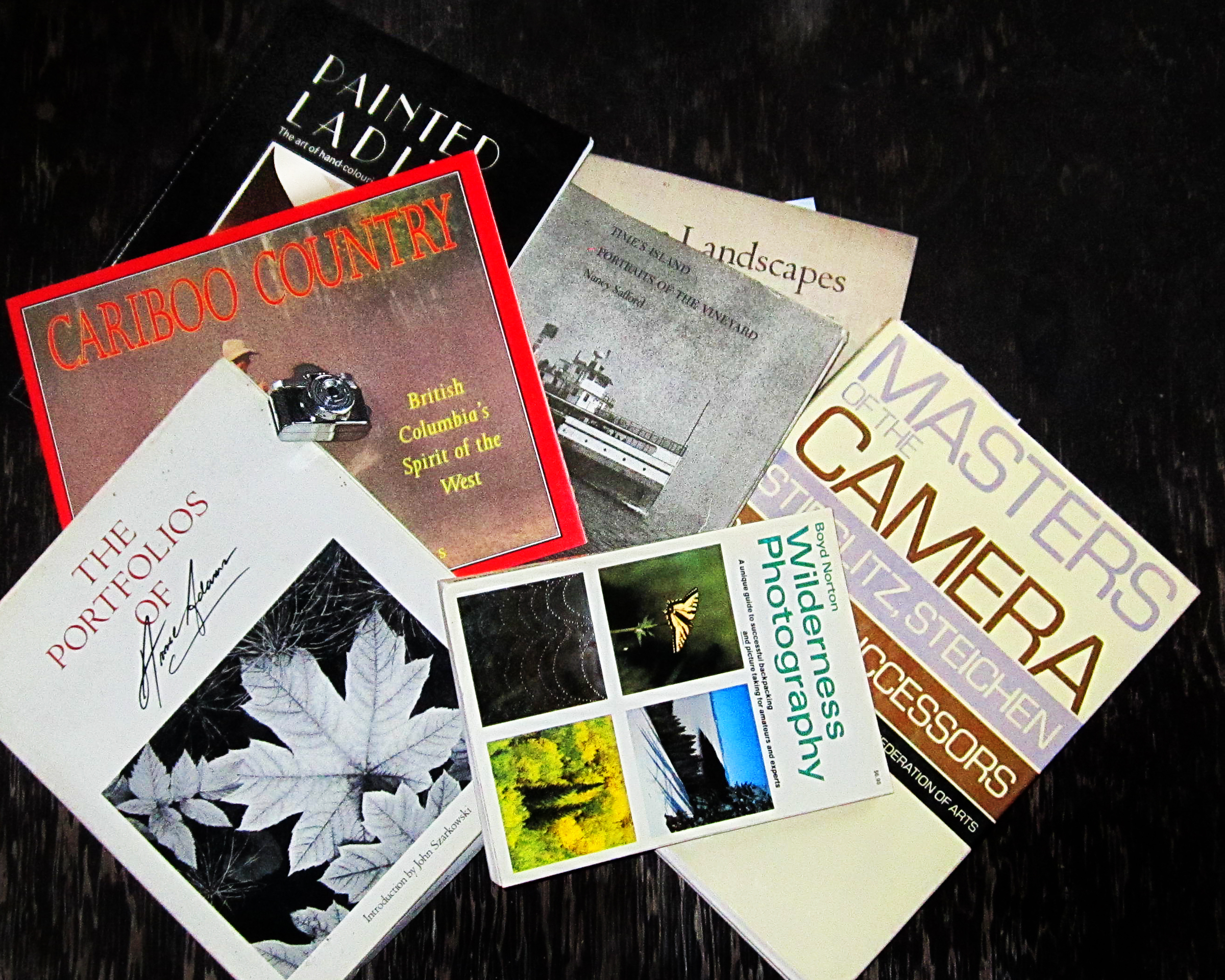
Good reading

I often search for what I would consider outstanding photography and I came across this article by the editors of Digital Camera World, “The 55 best photographers of all time.”

http://www.digitalcameraworld.com/2012/07/17/famous-photographers-the-55-best-photographers-of-all-time/

The editors begin, “We’re not afraid of courting controversy here at Digital Camera World…Over the years we’ve interviewed a number of famous photographers and have been inspired by each of them, but one thing we often hear from readers, social media followers, and others, is…. “Who are the best photographers of all time?” It’s a good question! We put on our thinking caps and took a stab it.”

I think the list provided is interesting and is a worthwhile read. It also includes Digital Camera’s 33 myths of the Professional Photographer and Famous Photographer’s tips for being the best.

Another website entitled, Picture Correct, also has a list of who they think are the top ten most famous photographers, http://www.picturecorrect.com/tips/top-10-most-famous-photographers-of-all-time/

They write, “If you want to take truly memorable and moving photographs, you can learn something by studying the pictures of famous photographers. Some of the most beloved artists are deceased, but some are still delighting us with their photographs. The list includes some of the more famous photographers that still impact our lives today.”

I liked what the editors of Picture Correct wrote about how famous photographers are, “impacting our lives today”.  Personally, I believe a good photograph is timeless and speaks to every generation.

I enjoy studying those that excel in the medium of photography and I concur with their statement that, as they wrote, “Can learn something by studying the pictures of famous photographers,” and that photographers can advance their personal work by examining the work of others.

Many of the photographers I come in contact with are content with viewing only the photography of their circle of friends, or those they exchange photos with on FaceBook. I expect, and regularly get blank stares when I talk about some photography book I have just purchased or when I excitedly discuss my observations about some Blogger/photographer I have recently discovered.

Photography is a medium that almost everybody within our contemporary culture has a personal familiarity with, and an opinion on, whatever photos they see.

John Kippin, the chairman of the, Association for photography in higher education,discusses photography and writes, “It is, after all, probably one of the only forms of communication that is truly universal, crossing social and cultural boundaries and interweaving itself seamlessly with so many aspects of our lives. On a global scale, relatively few of the world’s citizens are unaware of photography (either as practitioners, consumers, or subjects, suitable for photography). It not only reflects and offers commentary on our lives, but in many ways, shapes them too. Our desire and need for photography reflects our need for representation within a vast spectrum that runs from the personal use of the image within our domestic lives to the security and military requirements of an age blighted by terrorism. Many of the uses of photography are not benign – they frequently contribute nothing to celebrate or enhance the human condition. Photography as technology is mute and without mercy. It has no morality and its subject is invisible until we choose to make it otherwise.”

I suspect it is probably that familiarity with photography that drives many modern photographers to think that they will excel in spite of their lack of awareness of what is being done, and what has been done by other photographers, and that as long as they keep up with the latest technology their photography will be applauded by their peers.

I am of the belief that looking and examining the work of other photographers famous or otherwise will make positive and, I think, creative changes in one’s personal photography.

Those two lists are only the opinion of the authors and as I perused the comments that readers posted, many felt their favorite photographers had been excluded and others were unhappy with some included on the lists. In my opinion that just doesn’t matter who made or didn’t make the lists, I enjoyed reading about them and their personal perspectives on photography.

As always, I look forward to your comments.

My updated website is at www.enmanscamera.com
What is Your Favourite Photographic Accessory?

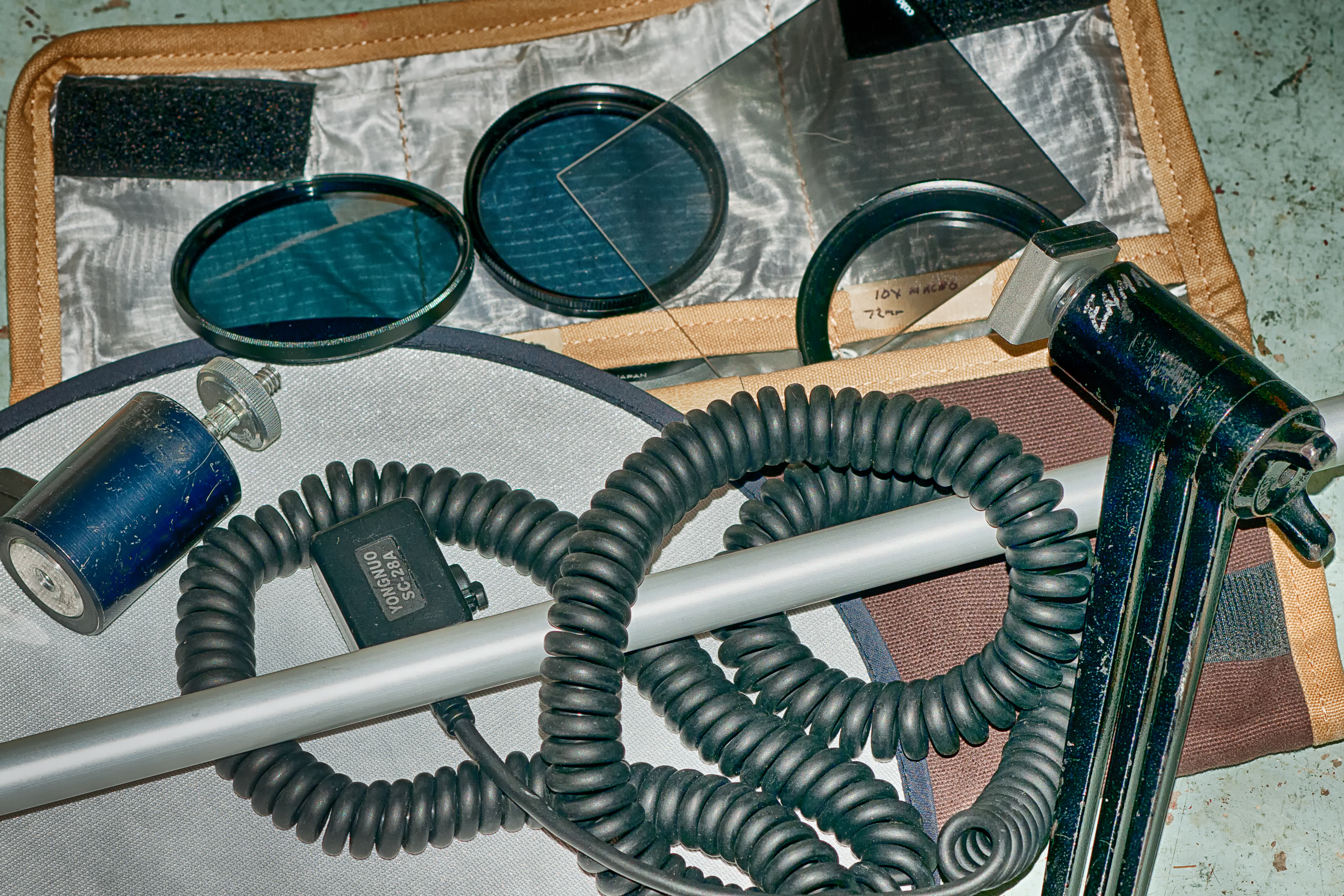
Accesories

Thursday mornings at my shop, I always have coffee with several friends. The conversation is always good, lively and is, of course, usually about photography.

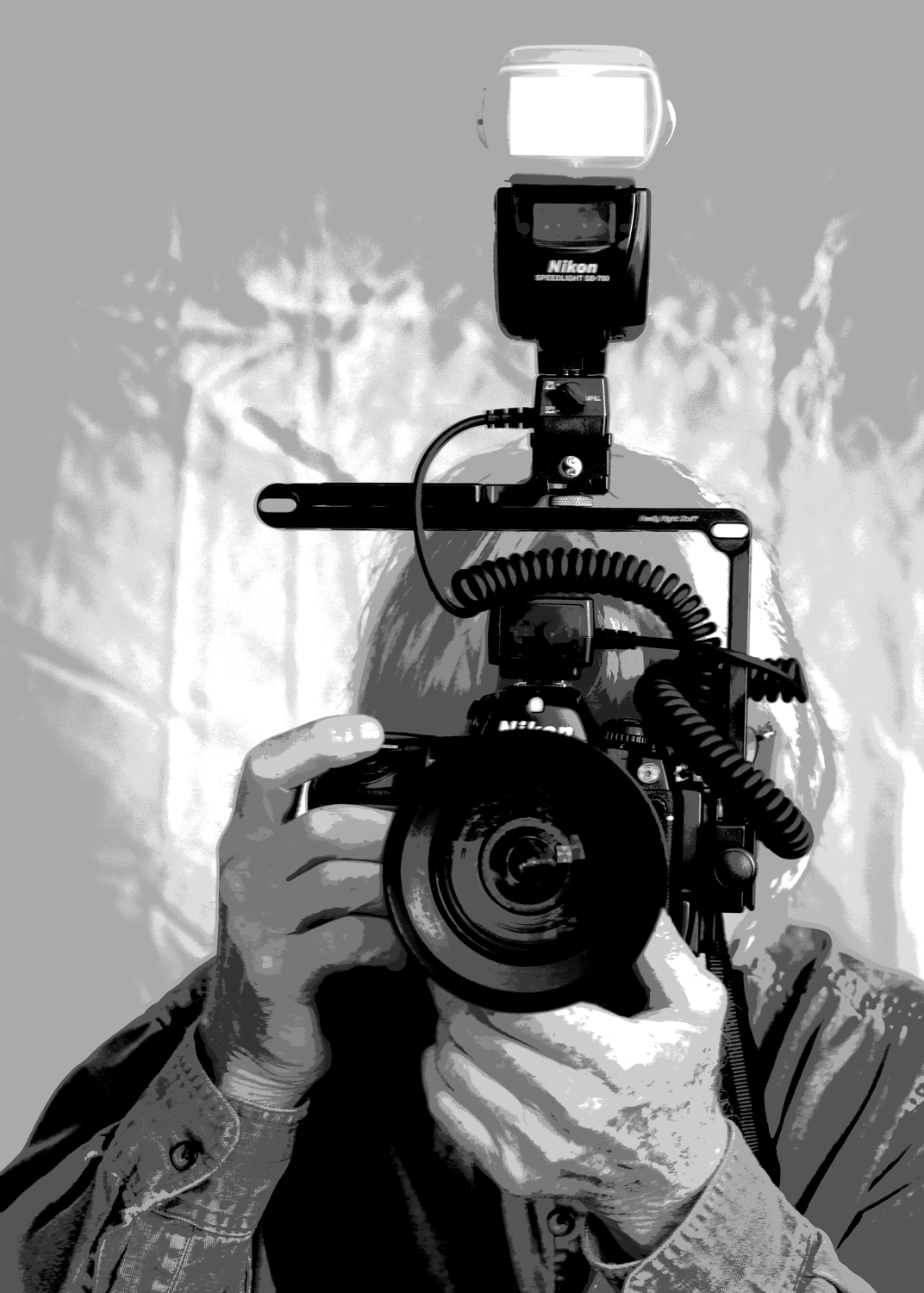
Last week we ended our morning conversation discussing how off-camera flash technology was advancing, and I had mentioned how amazing it was to be able to synchronize a camera’s flash at 1/8000th of a second, and how I liked the versatility of positioning a speedlight with the off-camera flash bracket that I use.

Later that day as I thought about what my friends had talked about that morning, I got to thinking about how some accessories make our experience as photographers easier. There is always lots of discussion about cameras and lenses, but photographers only seem to mention occasionally the accessories that they use.

I decided to post the question, “What is your favourite photographic accessory?” on a couple on-line photography forums, but I received very few replies. I suspect “What is your favourite camera or lens” would have gained more attention. Nevertheless, here are some responses that I selected.

This first from someone called Hawaiiboy says, “I would have to say my tripod combined with my wired timer/remote.”

Then Merlin from British Columbia wrote, “My iphone.  I use maps to find my way around and play birdcalls when needed.  It acts as a flashlight at night.  Oh yeah I can even make phone calls with it.”

The third I’ll include is from a Toronto, Ontario photographer, “My 10 stop Neutral Density filter is right up there.”

Another photographer called Cicopo in Ontario posted, “My cable release and tripod because that allows me to shoot from a higher perspective and steadies my camera.”

Dave from Alberta included, “I would have to go with the obvious ones like an air bulb blower, and micro-fibre cleaning cloth. I photograph mainly out side so I use them a lot.

A photographer named Matt that shoots in Manitoba wrote, “My monopod, the next best way to stabilize my camera after a tripod. I also use it like a walking stick during my weekend hikes.”

My wife Linda leaned back over her chair, after I interrupted her reading with the question, and said, “My polarizing and graduated ND filters. I shoot mostly scenics and those filters help me control the sky.”

From Saskatchewan, Gary wrote, I’d include my 5 in One reflector as my favourite accessory. I shoot portraits and always use a reflector.

I think my favourite commentator was Hendrik, from Alberta who wrote, “My bean bag. It gives me the best stability I can ask for; it enables me to shoot from the safety of my car and lets me use my car as a blind. When I am out a whole day and stop for lunch, I can use it as a super comfy pillow to lay down in the grass and look at the clouds flying by.”

I’ll add one of my personal favourite accessories. I have written many times in the past that I almost never photograph people, indoors or out, without adding light from a flash. My favourite accessory that makes that all so easy is a flash bracket that I use to lift my flash way up off my camera.

I am sure readers will have their own, even if they never think about it, that is there in the camera bag, always waiting and ready to be used. These favourites that I listed from my responses aren’t that special, they are just those accessories that, as I wrote earlier, make our experience as photographers easier.

I like comments. Let me know what you think.

My website is at www.enmanscamera.com

Photographer Didn’t Understand the Purpose of a camera’s Meter.

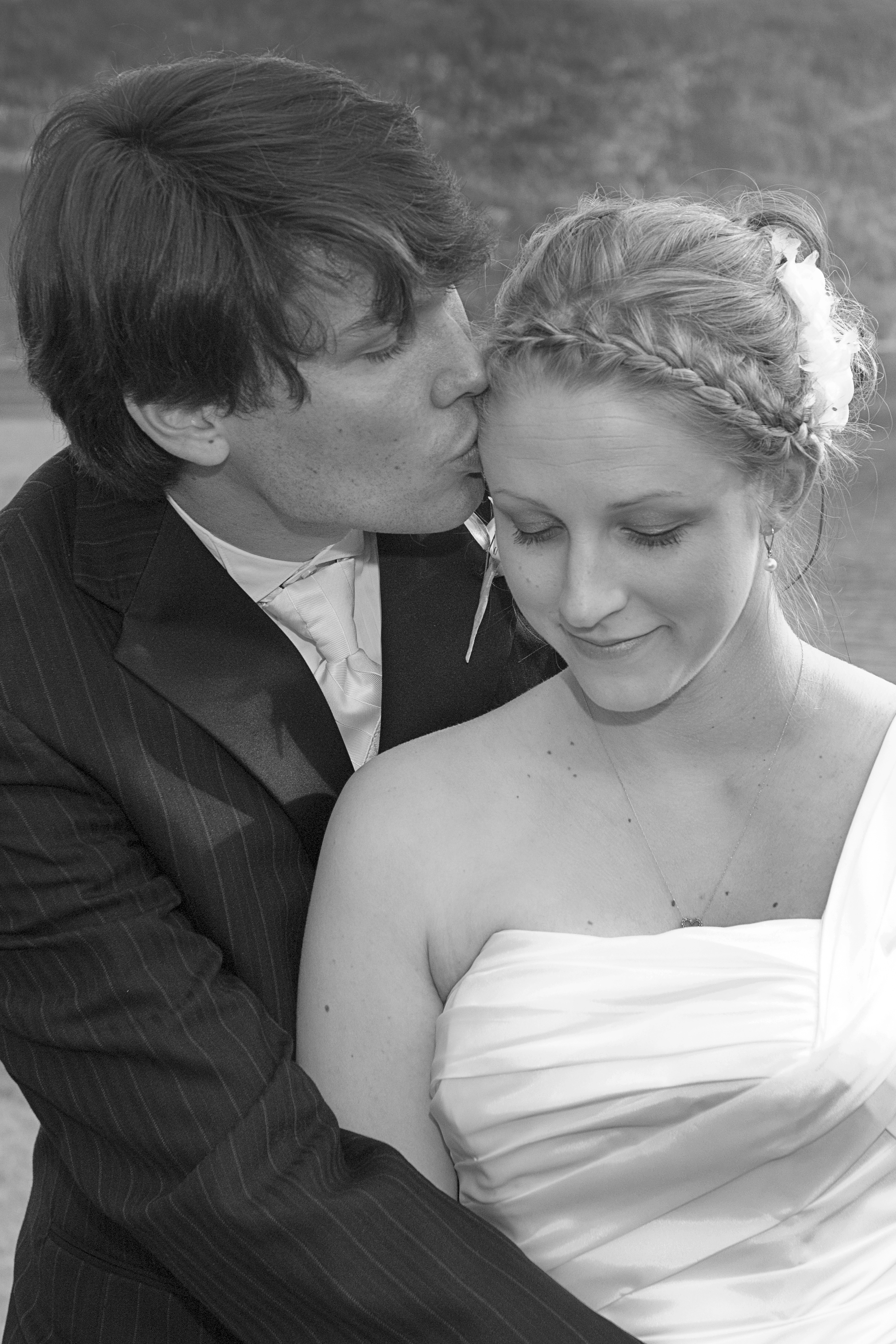
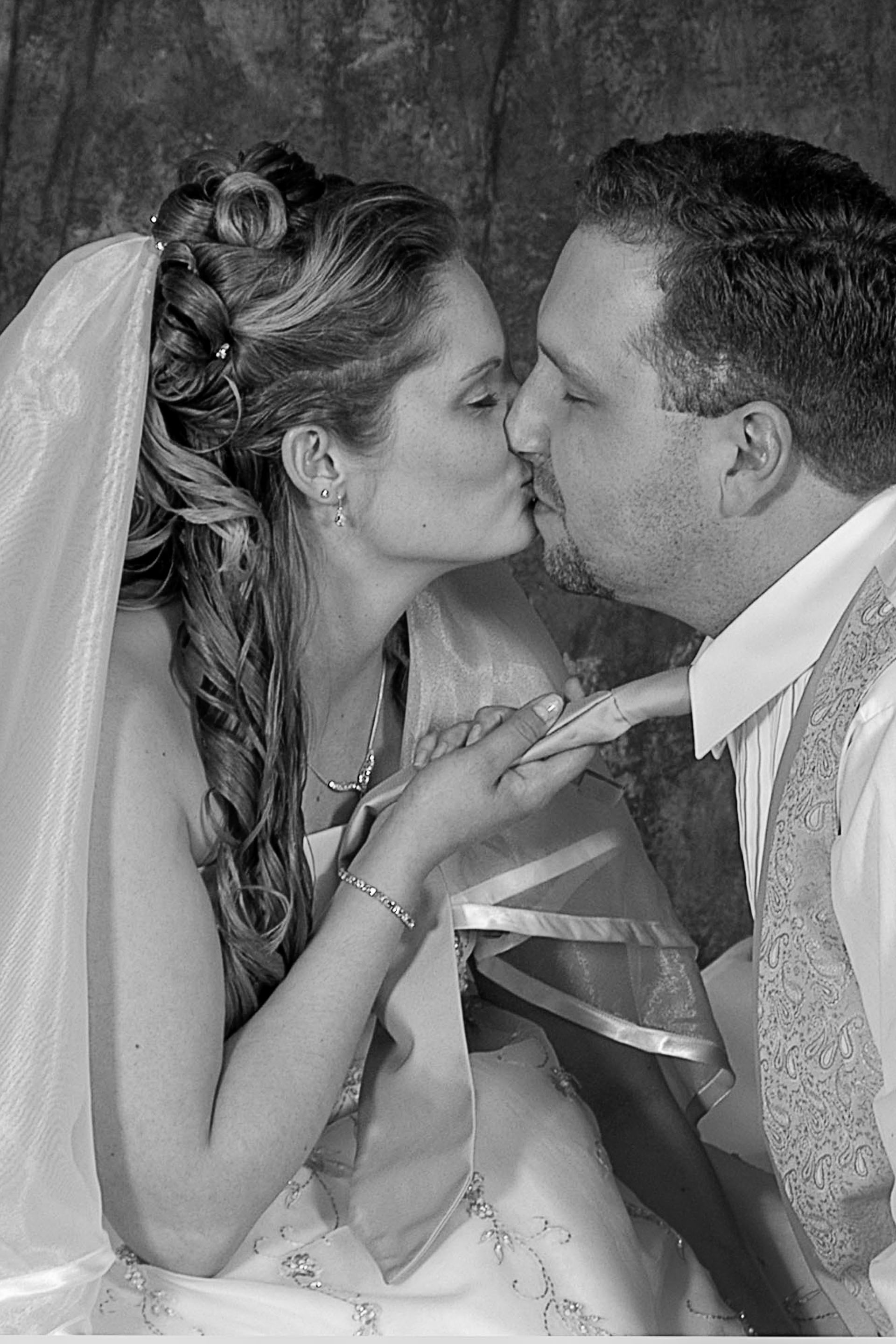
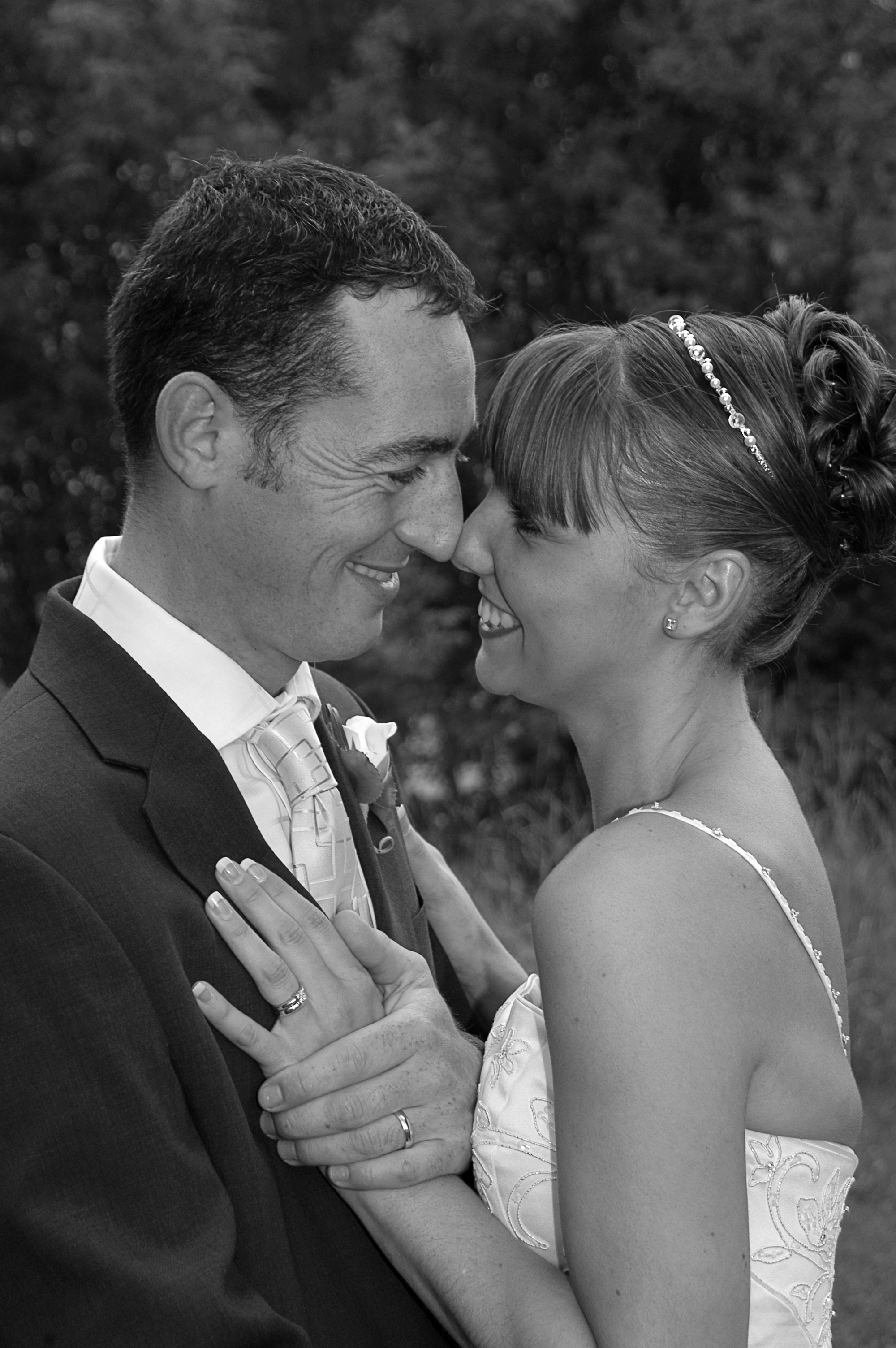
Wedding Kiss Touching Noses

A few weeks ago I wrote about digital camera terminology. I expected some readers may have skipped reading that to find something more advanced, however, I received lots of comments, and some good discussions on terminology I had not included, supporting my contention that many photographers are perplexed at the new jargon.

My article was in response to a customer confused about how to discuss her camera, however, this week I was reminded again that many photographers aren’t only confused with pixels, resolution, and bit depth, but also basic camera functions.

A photographer that had recently taken a local photography class complained to me, “I don’t really understand what the meter does, or how I would use it.”  The instructor had pointed out how to select the different camera modes, but neglected to include why one might select one over another for particular subjects. He told me the class ignored Manual mode, and left him thinking that only the three automated modes were worth using. The word exposure was only mentioned in passing when referring to those automated modes and guidance concerning the camera’s meter, and how to effectively use it didn’t seem to be part of the class.

I told the photographer that the meter is the measurement tool that allows users to control light, and suggested using the Manual mode as an easy way to access the two important camera mechanisms, the Shutter and the Aperture, to increase or decrease the amount of light reaching the sensor.

I explained that the Shutter blocks light from the sensor until the shutter release button is pressed, then it quickly opens and closes.  Setting the camera’s shutter speed controls the length of time light reaches the sensor.  The Aperture is an opening that lets light pass through the camera’s lens and is measured in f-stops. In actuality, it is a hole (aperture) that photographers control by opening it wider (wider aperture) for more light, and closing (smaller aperture) for less light, similar to the pupil of our eye.

Photographers can use the meter to determine under-exposure or over-exposure of their subjects, for example, I might want to slightly under-expose a highly reflective, white gown on a bright sunny day, or conversely, brighten it up on a heavily overcast day. In both instances I would use the manual mode to check a particular subject’s exposure with my camera’s meter, especially underexposed areas or subjects wearing a black suit.

To sum this all up, photography is all about reflected light and my recommendation to that beginning photographer was to pay attention to the camera’s meter and start using the Manual mode when he decides it is best for the job at hand. The camera is a tool with many functions, and one is never limited, and can choose as the situation demands.

Learning to use the camera’s meter and getting comfortable using manual exposure mode to manage shutter speed, and/or the aperture settings gives the advantage of full control without as many chances of the camera being fooled by unexpected changes in light. It gives optimal command, when needed, over the amount of light that still shows details in both the shadows and the highlights, allowing mastery over how photos are viewed and interpreted.

Don’t hesitate, I enjoy you comments.

My website is at www.enmanscamera.com

Photographing Old Buildings

Customs house Forgotten lane Homestead Neglected barnBarn field forgotten in the storm b WellsGrey Homestead neglected churchyarderghost residencese old house & chair Last sentinal

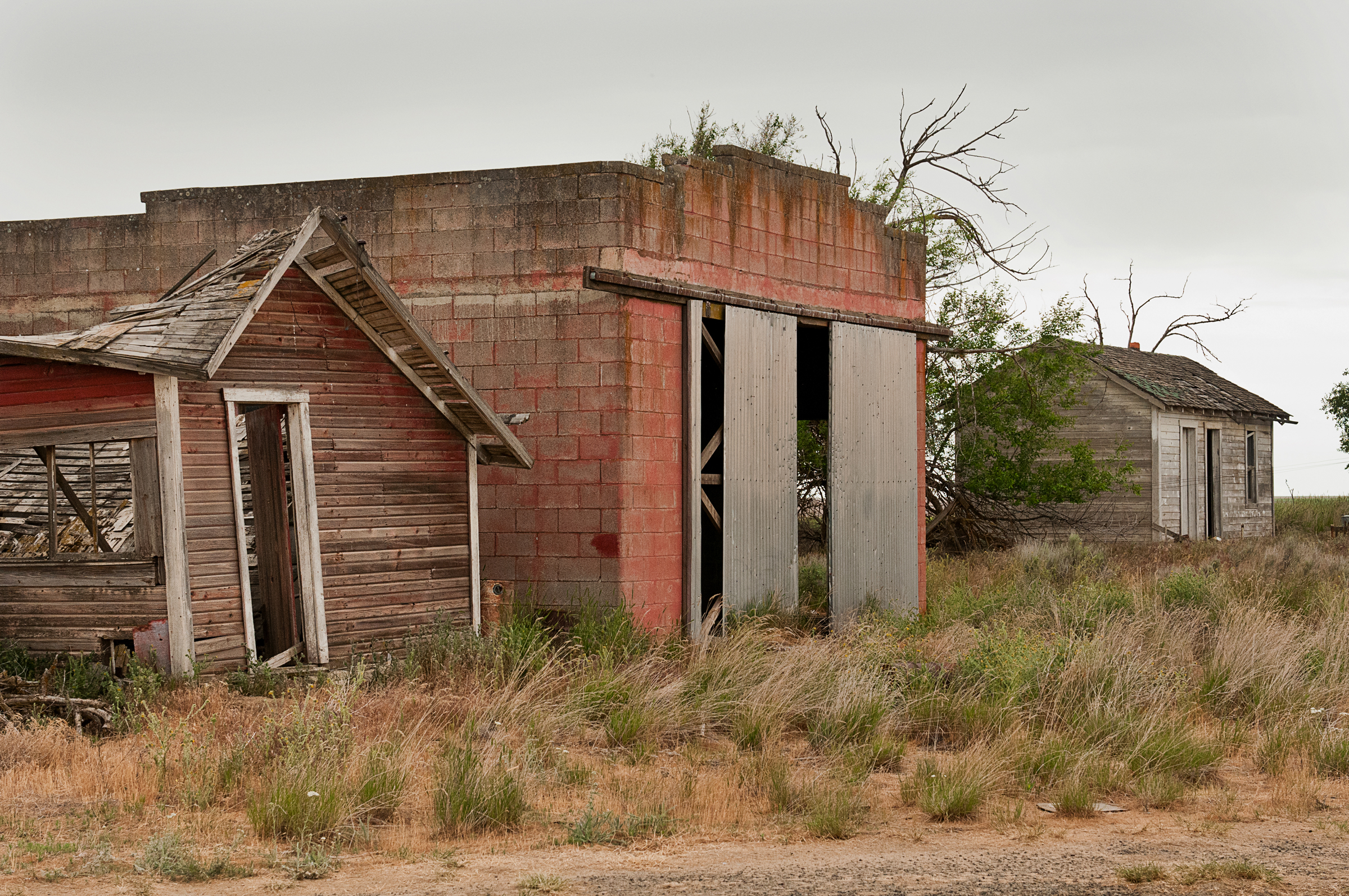
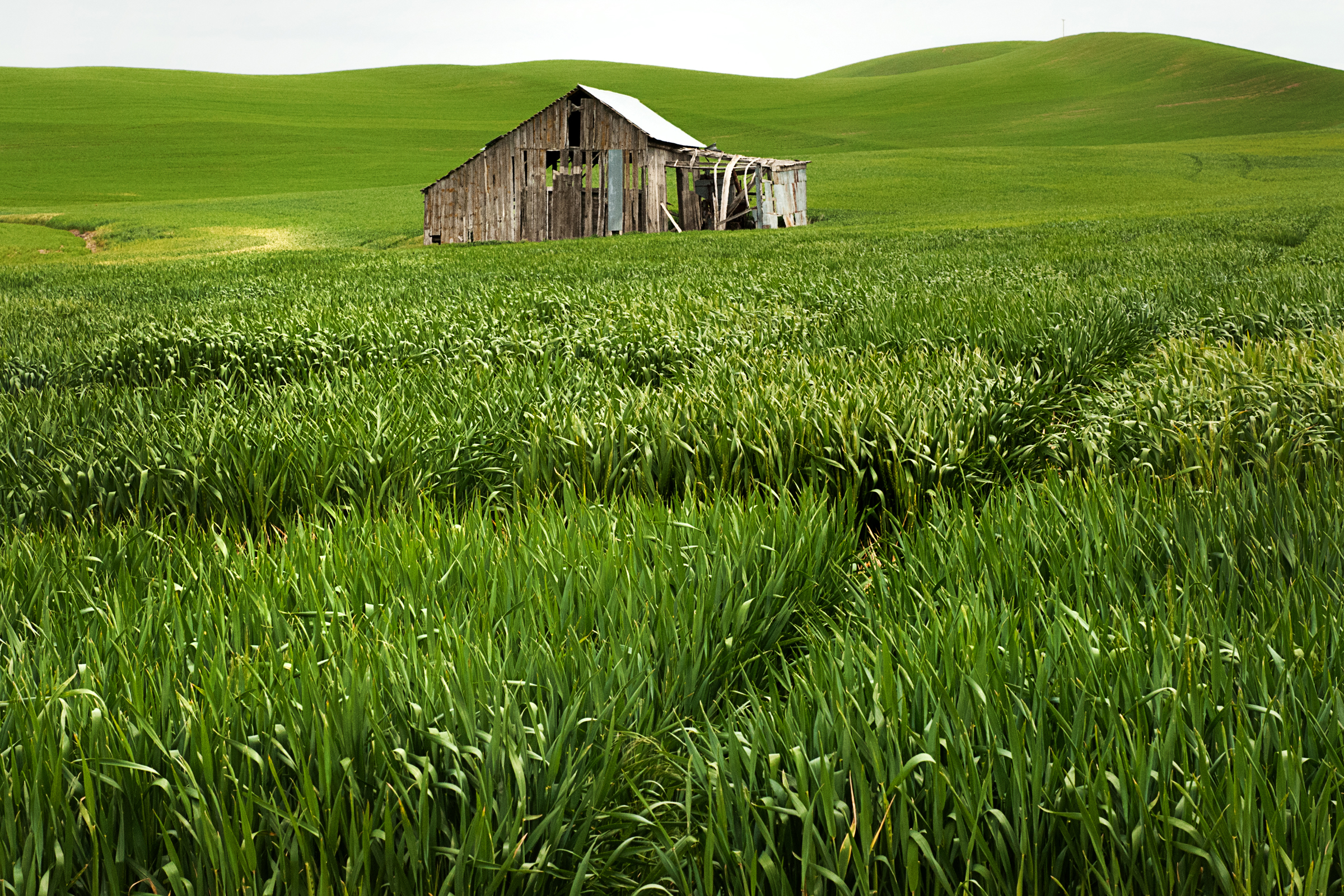
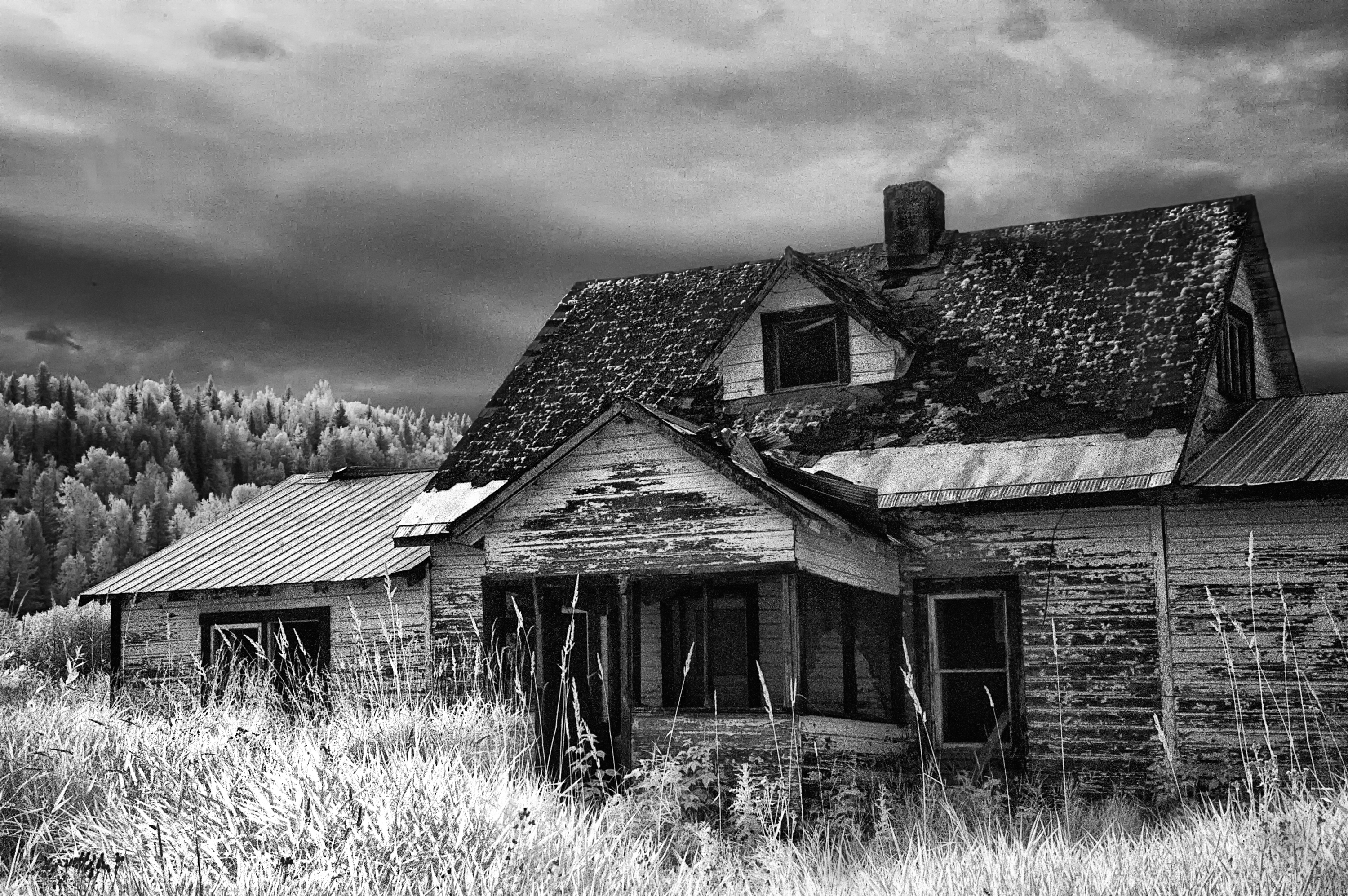
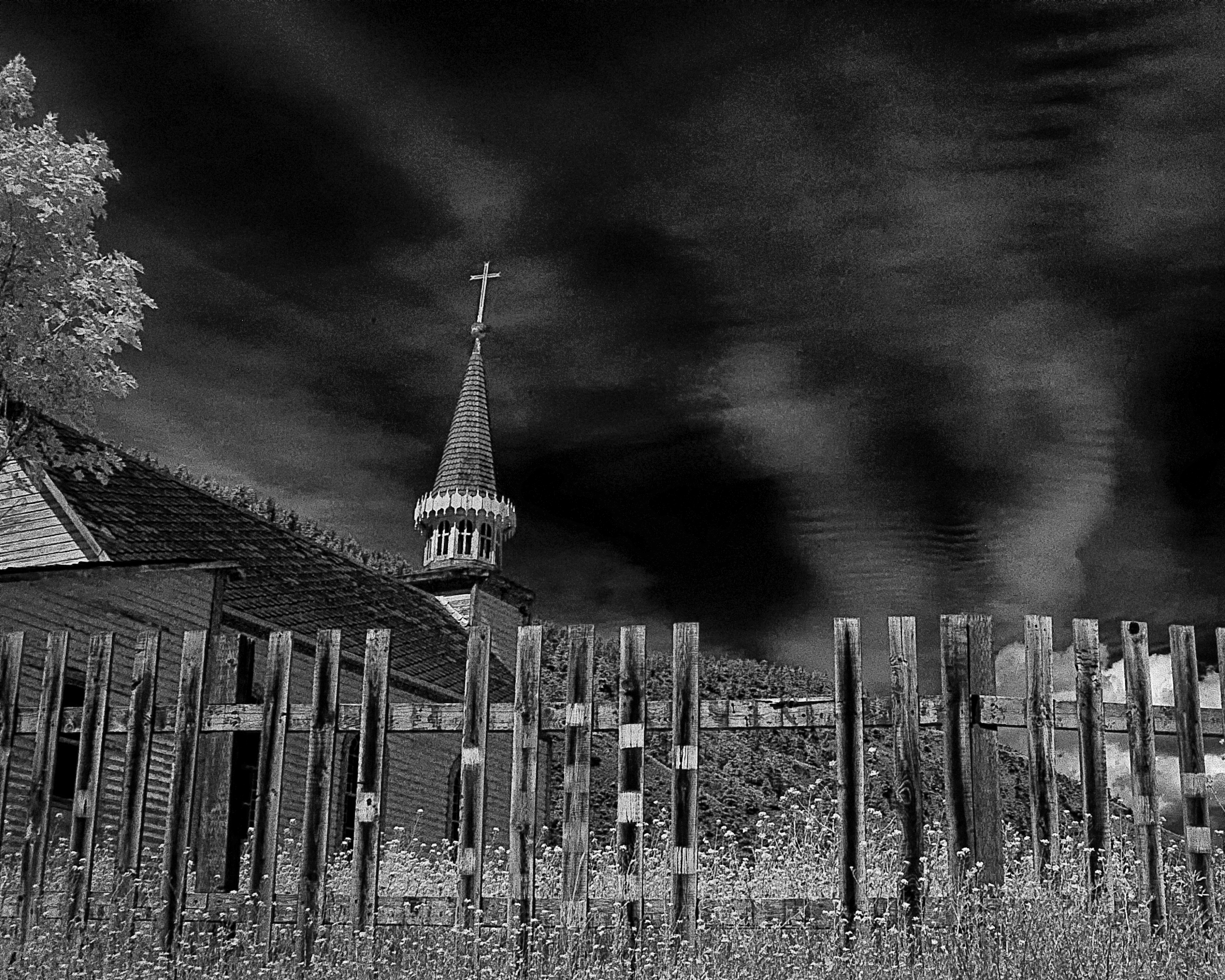
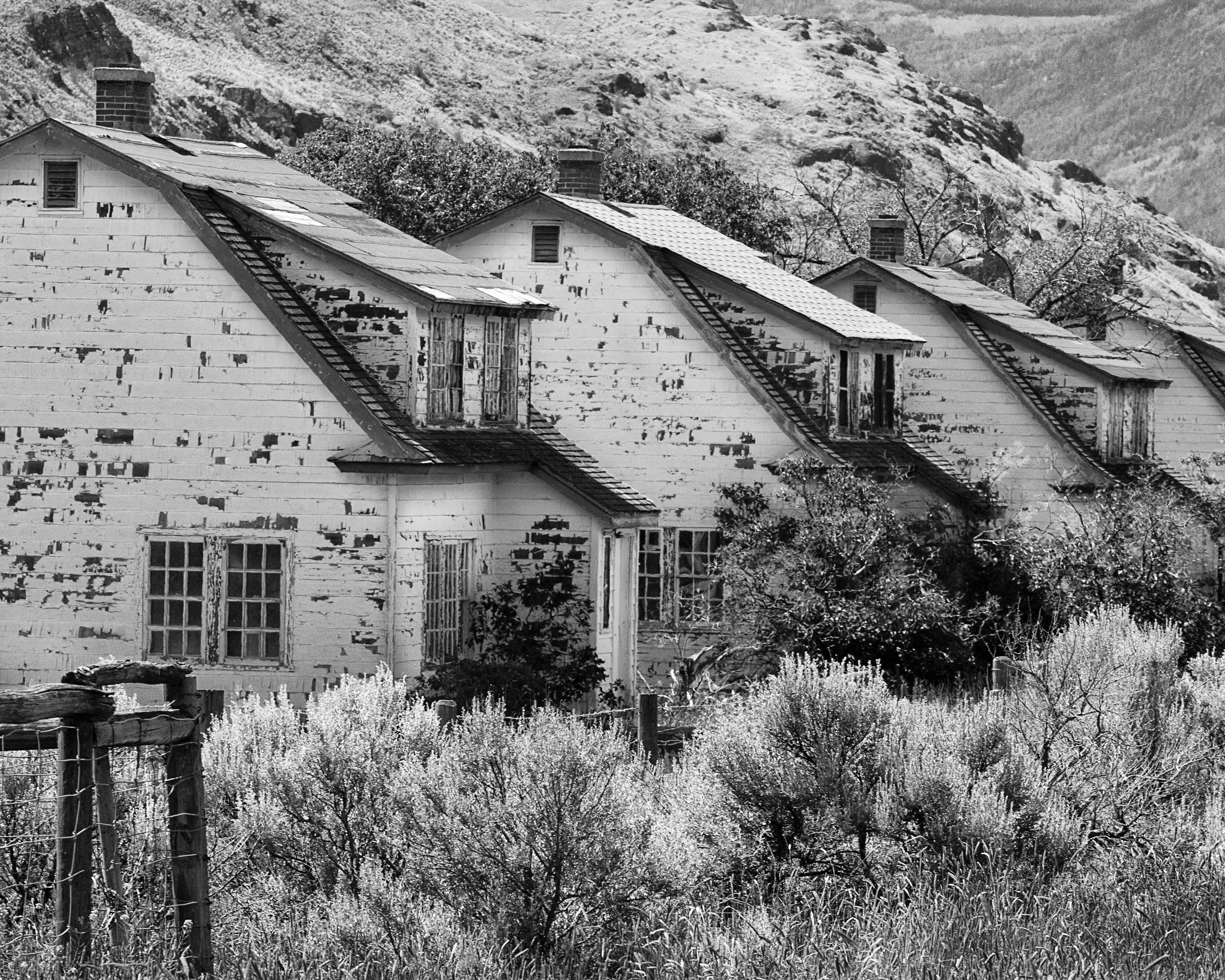
There are many camera-wielding travelers that cannot drive past an old barn, house, or an aging storage building standing and deteriorating in a field without stopping to capture a picture. And I admit that includes me.

I can’t begin to, or even try, count how many wooden relics of the past I have made photographs of since I acquired my first camera so long ago; or for that matter how many different types of cameras I have used in that pursuit.

I must wonder at my reason for stopping on the many roadsides, camera-in-hand, to take a picture of some rotting clapboard structure. For a moment as I look inside I wonder about the lives of those who lived there.  My wife likes to look for survivors of old plants and gardening that took place, e.g., rhubarb, and lilacs.  She says the fondest thing she ever discovered was some poets’ eye narcissus (daffodil) that had survived over fifty years on their own.  Very few photographs have ended as prints, and I suspect many readers will, like me, just file the memories away, because the act of documenting that old barn, or homestead, seemed important at the time, but when we developed the film, or downloaded our memory card, we didn’t have a plan that included dealing with the picture.

Hanging on my wall I have a very large (3’x5’) print of an old mining structure I had made using a 4×5 Speed Graphic camera; and once, in the late 1970’s I had a calendar made of buildings I found locally, in the interior of British Columbia. Sadly, as one might expect, none of those structures featured in that calendar still remain. However, most of my images like that languish in files, as forgotten as the structures they were made from.

What is it that makes it so exciting to discreetly, and precariously sometimes, to scramble over the barbed wire fence, onto some farmer’s private property, in spite of the “No Trespassing” signs nailed to the fence?  Our images rarely depict unusual subjects that haven’t been seen before or those of some architectural masterpiece; they are just of some decaying wood structure. However, those buildings are still intriguing and make us wonder about the life that was lived beside, around, and inside them, and why we need to make an exposure of that story on our camera’s sensor.

I don’t believe there is any one lens, or one particular way, to photograph a building. I think the words “whatever moves you” fits best.  Sometimes it’s the structure, sometimes the way it fits in the landscape. There are occasions that demand a long lens, others that call us to get close with a wide angle. My post-production might be some over-the-top effect, black and white, sepia toned, infrared, or a documentary as close to reality as I can make it. There isn’t a right or wrong way to make a picture, and in my opinion, almost any way one wants to present an image of an old building works.

No matter where the discussion goes regarding why so many photographers select dilapidated old buildings for their subjects, I think it is as photographer Elliott Erwitt says, “… I’ve found it has little to do with the things you see and everything to do with the way you see them.”

I always appreciate comments. Thanks, John

Check out my website at www.enmanscamera.com