Why I like Multi-focal (Zoom) lenses.        


The first SLR I owned came with three lenses. Gosh I was pleased, it had a 35mm, 50mm and a 135mm. The years passed and I started working as a photographer documenting many of the alternative approaches to learning that were happening at that time in Southern California’s Education system.

At that time my gear was an SLR, a 50mm and a 200mm lens. Equipment that I quickly found lacking in the fast moving events I was expected to document. Sure, sometimes I photographed students sitting down, but more often than not, those grade schoolers were bouncing around coastal rocks while searching tide pools, excitedly running on board whale watching boats, dashing through city parks and even racing up stairs in some Los Angeles high-rise.

Changing lenses on the go, better yet “on the run”, was a hassle and awkward in a crowded space.

Then a company named Vivitar started advertising their 70-210mm zoom lens. I can remember talking with other working photographers about the magazine advertisements showing a page of postage stamps with perfectly in line perforations.

I’ll make this short by saying, it wasn’t long before I owned one, and wow, could I work a crowded street, schoolyard, site seeing-boat or any other people-filled event. The fact that it wasn’t a wide angle and I was forced to stand back was a minor inconvenience. I shot tight. I got faces, hands, feet, children talking up close, and was able to capture those quick ever-changing expressions.

I was sold on the versatility of that first multifocal length lens. I shot thousands of slides and black and white prints for my employer until I left, deciding to wander up the coast and settle in British Columbia, Canada.

Digital had yet to be invented or thought of by those of us earning our living with cameras, and the bigger the negative was the better. I remember feeling bad for those unfortunate brides and grooms that chose some pal to record their wedding with the family 35mm.

Serious photographers were using medium format cameras and there were very few zoom lenses for medium format. So I was stuck changing lenses again. Lenses that like the big cameras they fit, took up space and made the camera burdensome.

Finally after many painful and expensive years of carrying big formats, Kodak began offering a 35mm professional film that maintained a neutral and true to life colour and was great for enlargements. The film, called “Portra” came in ISO160, ISO400 and ISO800. So with that I was back to using 35mm and zoom lenses again.

I would pack two camera bodies to an event like a wedding, one for black and while and one for colour. I had my choice of mounting a 35-105mm or a 70-200mm multi-focal length lens on which ever I needed at the moment. That flexibility gave me an edge on those photographers that were struggling as they tried to keep up during quickly changing events.

Zoom lenses allowed me to choose the crop I wanted and gave me versatility and speed in any situation.  That Versatility and speed is lacking when I am forced to change lenses and gosh, moving back and forth to widen or narrow framing is just tedious. Having many focal lengths all-in-one keeps me from missing those once in a lifetime shots.

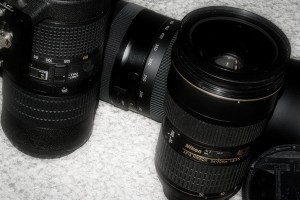
Present day zoom lenses have become sharper, quicker and lighter than those I used with my film cameras. And for those, like me, that have a vacation planned for the upcoming summer. One lens that has the ability to capture and change the world’s perspective at a multitude of focal lengths is so much easier to carry around than several (prime) lenses with focal lengths that are fixed.
 

Spring-cleaning and plans on Summer Photography.        

I am such a hoarder.

I knew I had an old tripod mount stashed away somewhere, but when I started searching (unsuccessfully I might add) through years of bits and pieces randomly stockpiled in unmarked containers I came to the conclusion that it might be time to do some spring-cleaning. I’ll call it that because it’s spring here in British Columbia.

No doubt there are other photographers that hold on to all-things-photographic as much as I do, so here are some thoughts that I had that might be helpful. I am sure there are many additions readers can think of, but I am starting with just a couple.

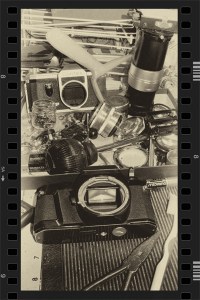
  1. This should be the year to get rid of all that old film camera equipment. I know it is hard to part with favourite old cameras. The pictures they produced were so great, and gosh, they initially cost so much money, but sadly there isn’t much resale value currently. The fact is today’s camera technology has progressed far beyond those old film cameras and most individuals that have embraced the high quality digital world will never return to film. If you haven’t, my recommendation is remove the batteries that are probably leaking, clean the camera up with an old toothbrush, and sell it to someone interested in playing with “retro” equipment or donate the camera to a student still using film in their photography classes. Don’t put it off, film cameras only loose value as time passes and very few ever become valuable collectibles.
  2. Might this be the year to “finally” organize all those old prints and slides? There are many ways to copy photographs and slides. For prints I use my camera, a tripod, and a level. For slides a scanner works best.

Regarding scanners, my recommendation is to do some research, and not purchase too cheap (or to          expensive) of a model. Find out which scanners produce quality resolution scans. A space saving and cost  saving idea would be to share one with other photographers.

  1. A couple years ago my wife and were evacuated as a fire raged down the hills above our home. Linda and I rushed through the house photographing everything before we left. I think spring is a perfect time to make the effort to photographically inventory household goods. I have to admit I am as lax as anyone when it comes to a photographic inventory. Nevertheless, when faced with that fire approaching my door I sloppily needed to do it in a hurry. Its not very hard, and I think worth the time.

I’ll add two spring goals that have nothing to do with photo house cleaning. However, I have made them part of the spring planning process for the summer to come. And anyway, these are way more fun.

  1. There are several of us that meet once a week to talk about photography. It’s not a club, there are no rules, everyone has strong opinions, and this spring we are all filled with energy and photography projects. Joining up with others that have different interests in photography to talk about or accompany on photo outings is fun and always instructive.
  2. It’s time to plan photography a trip. I am planning a July photography excursion down the coast of Washington State for a few days with my friend Dave, his wife Cynthia. I know we’ll be up early with our cameras and, I am sure, still up late talking about our day’s photography.

Those, like me, that that enjoy lists will delight on writing out their spring goals. It’s a good way to begin thinking about photography projects and goals for this year. I have only included a few from my personal list. Some might not get done, but it’s a start. I try to be realistic and I’ll hang my list on the wall next to the calendar I print each month and attempt what I can. That might help me keep it a spring instead of a summer project.


An excellent tool for a roadside photographer           

I live in a wooded rural location just short of an hour from the city of Kamloops in British Columbia, and it’s so easy to hop in my car to drive along the winding back roads. I suppose I could hike or climb, but truth be told I have the most fun as a roadside photographer.

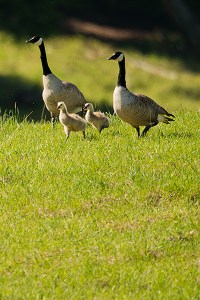
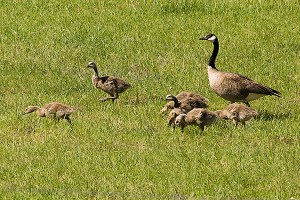
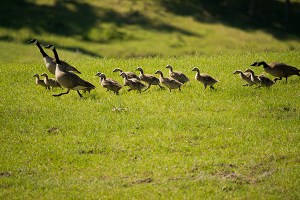
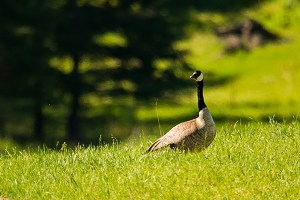
For years, each spring, my wife and I looked forward to seeing geese hatchings at a near by pond. There are normally two, or sometimes three adults with six or eight goslings hiding in the long grass just across the reed filled pond. However, this spring there are at least eight adult geese and maybe twenty soft yellow goslings residing at the pond.

To photograph them we would stealthily slow the car down and ease to a prolonged stop. Coming to a sudden stop spooks the apprehensive geese causing them to dash away. Do geese “dash”?   Anyway the fearful gaggle of geese would quickly move from sight. And opening the car door to try photographing them is a waste of time.

Having decided on the time of day that gives me the best light, I first slowly drive by so as to determine where I want to stop for the best photos and I shoot from the car. The geese are usually far enough away that anything shorter than a 300mm lens isn’t close enough. Actually, 300mm isn’t really close enough.

In the past twenty plus years Linda and I used countless kinds of equipment to stabilize our lenses. And the best, in my opinion, is a beanbag. A beanbag fits nicely on the car’s windowsill and allows the photographer to nestle down and rest any size lens on it for shake free shooting.

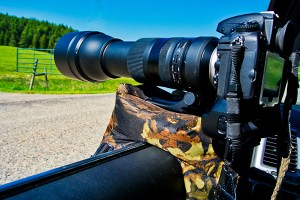
This year I purchased, after months of research and selling off some of my other lenses, the latest Tamron 150-600mm lens. The lens weighs just over four pounds and although it does have vibration control, shooting from a seated position in a car isn’t the best for sharp, shake free photographs. So out comes the beanbag. However,  I quickly realized that big lens demanded a larger beanbag than the one I hastily stitched together years ago.

With a bit of online searching I found a company called Movophoto.com that makes a large and unique beanbag that fits like a saddle over the car window. With my limited sewing skills I could never have made such a perfect beanbag for that big lens. I ordered it, and when it finally arrived I filled it with rice, and although it’s heavy it resides in the car and stays put on the window, so the weight is a good thing. There are a lot of gadgets that I could spend my money on, but for now that beanbag is my favourite.

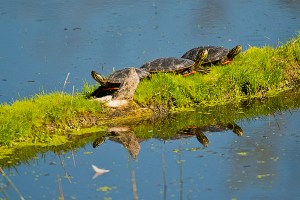
I slowed my car to a stop next to the pond, shut the engine off, positioned my camera on the large beanbag, and waited for the geese to resume their browsing along the grassy hill beside the pond. At 600mm I was able to frame pretty darn close. Then, when I wanted a different position, I’d just move the car a bit, and take more pictures. I photographed those geese (and some nearby turtles) for about thirty minutes.

Suddenly I heard loud honking from some unseen goose that must have been hiding in the tall pond reeds, and, like a crowd scene from a movie, they all turned at once and rushed into the pond.

I am sure there are experienced photographers that would have set up a blind and waited for hours to get the perfect shot. There is no doubt they will get my respect. But I know where those geese are and what time of day is the best to photograph them. And anyway my car is really comfortable and when I am done I just drive home. I guess I am just a roadside photographer.

Shooting infrared on a quiet spring evening.     

This week had one of those nice quiet evenings that are all so common here in British Columbia. By 7:30PM the sun was starting to go down giving the landscape dramatic shadows and a day’s end glowing light.

I’ll admit I was feeling pretty lazy after tearing the tile out of our shower wall so I could fix the tub taps, but there wasn’t anything interesting on the TV so I decided a short drive around my wooded neighbourhood might clear the tile dust out of my eyes and hair.

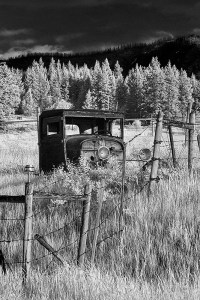
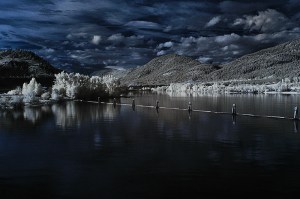
Over the many years I have been shooting with first, infrared film, and then for the past 10 plus years, a digital camera converted to only capture infrared, I have found that late afternoons give me the most impressive effects.

So, I grabbed my old IR modified Nikon D100, mounted a 24-70mm lens on it and set off along the winding roads that make up the wooded and hilly location I live in.

That old 6MP camera has served me well, I purchased it new when digital cameras were finally making images with enough quality to compete with film. I photographed weddings, scenics and everything else that I once shot with film. Then when Nikon began offering better sensors with more megapixels I sat it aside. For a while I called it my “car-trunk” camera because I just left it in the car all the time.

Then I read about infrared conversions. I had always shot black and white infrared film, but it was such a hassle. Loading and unloading the camera in the dark and even waiting till late in the evening to process it in metal tanks because I worried there might be some stray light creeping into my home photo lab. I sent that camera away and a few hundred bucks, and about a month later I had an infrared camera.

The images I get are a fun change from the colourful pictures or the sharp black and whites I am used to. Infrared is always a crowd pleaser.

I have a book by William Reedy titled, “Impact–Photography for Advertising”. It begins with the words, “To stop the eye… To set the mood… To start the sale…”

Those are great words for any photographer hoping to create visual impact with his or her photography. I think there is no doubt about it that those words ring true when one looks at the surreal effect of an infrared photograph. So I set off on that quite evening with my camera waiting on the empty seat beside me and made stop after stop to create infrared photographs of the rural neighbourhood that I know so well.

I have written about infrared photography before, so I’ll just end this by repeating myself, “Shooting infrared is always an exploration, a discovery and moves a photographer far from the usual.”

Photographing in the garden on a stormy day                                   


During my many years enjoying the exciting medium of photography I have photographed all most anything that happened to be in front of my camera.

I haven’t bothered with restrictions or claimed specialties. Sure, I have worked for all kind of clients, and most of the images I produced included people. That was how I put bread on our table for years. But when it came to my personal photography I always have been, and still am, an opportunist.

The process of creating an image on a roll of film or capturing data on my camera’s sensor excites me. Thinking the picture through, capturing a feeling and making technical decisions stimulates and excites me. However, I will admit all that also drains me. Photography has never been relaxing.

When I go out to photograph something it’s hard for me to think about anything else. Back when I when I spent almost every weekend photographing weddings my wife learned to just leave me alone. Nevertheless, over the past 40 plus years I did find a way to relax. No, not getting drunk.

No matter how wired I am or how mad something (or someone) has made me, if I pick up my camera and wander my wife’s garden the tension drifts away. I suppose any garden or quiet wooded area would work as well.

My wife could find enjoyment walking, smelling and looking at her flowers, but I don’t really care about the flowers unless I am pointing my camera at them. Where the colours would have mesmerized her, I would be thinking about how some plant’s tonality would look as a black and white photograph.

This week the storm clouds have been coming at me from all directions, not just the sky. Some photographers might chose to search out large birds that frequent the river or lakeside, while others would select the nearest sporting event to work out frustrations. I have friends that seek out the camaraderie of others and spend time in their studio creating masterful portraits. But for me a solitary walk, searching out shapes in a garden always lifts my mood or at least helps me cope with the storm clouds in my head.

Wednesday was as stormy as my mood and the clouds were darkening the landscape. There was a time when low light was bothersome for photographers, but with the technological marvels we now hang around our necks, low light is no problem at all. I just selected ISO 800, (I could easily have gone to ISO1600 or higher) and kept my shutterspeed at 1/250th to reduce camera shake and started taking pictures.

As readers know I prefer to use a flash to balance the overall exposure. In this case I mounted a ring flash on my wife’s 70-180 macro lens. I usually like to use a tripod, but I needed to walk and besides I was pretty sure I was going to get wet.

On flat overcast days it isn’t the colours that attract me, it’s shapes, interesting locations and the position of the plants. I spent a lot of time lying on the ground shooting at plant level.

The nice thing about using a flash is one can easily brighten or darken the background by either slowing down or speeding up the shutterspeed. And when the background has fewer details I stop down my aperture to disguise elements by under exposing them.

An afternoon garden is quiet, the plants are just there waiting and unlike locations with people one doesn’t have to engage in conversation.   How does it work for me? I like this quote by American photographer Annie Leibovitz, “The camera makes you forget you’re there. It’s not like you are hiding but you forget, you are just looking so much.”


Used Cameras                


Spring is here again and with the colours of the first plants poking up from the ground comes the annual speculation of what camera manufacturers are going to do in 2017.

The forums are also speculating with members guessing what Nikon, Canon, Sony, Fuji and Pentax will offer this year. Yes, it is so intoxicating for anyone that has money to spend in his or her pockets.

With the digital camera revolution came a new kind of photo enthusiast that seems to be as excited about changing their camera model as they are about photography.

The good thing for those consumers is that by summer time the prices on new cameras will start to drop. The bad thing for those that decide to sell off the cameras they have been using for the last year or two is they will join thousands of others doing the same thing and the price of their 2015 and older cameras will be much less than they were new.

As manufacturers compete and put sales on 2017 models, 2015 models will take a sharp drop, and the photographer wanting to sell his or her 2013 or 2012 camera will loose even more. And like a stone rolling down a steep hill those that have held on to cameras that have reached five years (considered old in this digital world) are having a hard time selling.

However, for those that just want a newer model than what they have been using, spring camera prices are as welcome as the green grass on the hills and the fields of flowers I see along the roadways on my drive to town.

Now it is the time for those of us that don’t mind a two-year old model that comes without a warranty. Sure, there might be some scratches on the bottom where the tripod is attached, but as long as the memory card door isn’t broken, and the rubber isn’t pealing off, it’ll be just fine.

Buying used is a great way to participate in the yearly new camera frenzy. One might be a couple years behind, but the money saved can be put towards that used dream lens.

Cameras aren’t like cars. Used cars might hide worn out parts, but that’s hard to do with a camera. My quick advice is to bring a memory card when testing that “new” camera. Take some pictures inside with a high ISO and then some outside with a low ISO.

One should always take the time to do some research before purchasing. I remember spending months reading magazines when I wanted to buy my camera back in the 1970s. But now I can find out everything I need to know about any camera in 10 minutes by searching online.

Read the reviews and join some forum and just ask the question. “I am buying X-00 camera what do you think?” It’s as easy as that to have a good understanding of what used camera to buy and which ones to avoid.

And lastly another reason to buy used is instead of loosing hundreds of dollars when selling the loss (and there is always a loss), the loss on that used camera won’t be as painful because it was purchased for a lot less than it would have cost new.


Roadside Photography in February   


jre_3150bw 

february-watcher

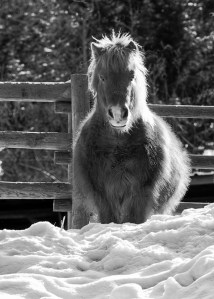
jre_3138bwponys-winter-coat

February is finally done. Gosh, that month always seems so darn long. Yes, I know it is the shortest month in actual days, but it hasn’t seemed that way for me. This past February was a bleak, grey, and lifeless time that one must endure. And try as I did during the past few weeks since my Kelowna beach walk, I just couldn’t garner the energy to wander the frozen landscape with my camera. However, when the sun finally made an unusual appearance on the last day of the month it didn’t take much coaxing to get me out.

All my wife had to say was, “Its nice out, let’s take a drive.” That sounded good to me. It’s always relaxing to take a drive around our rural neighbourhood. There still is a few feet of snow covering everything but the roads were clear.

I selected my 70-200mm lens. When I use one of my wide-angle lenses I am looking over the landscape, with a telephoto I get to look into it.

Mid-week is a perfect time to drive around, we had the roads to ourselves and I could drive slowly, stop to look around, or back up and get out just about any location to take a picture.

If it were just me, I would have headed down to the river. I like prowling the riverbank, but as we got into the car my wife said, “I don’t want to go down to the river.” I guess she didn’t want me taking chances tromping on the not-so-stable ice along the edge of the river.

My term for drive-around kind of picture taking is, “roadside photography”. The good thing about driving and looking for things to photograph is you cover a lot of distance and see a lot of stuff. The bad thing about driving around is once you are in motion it’s hard to stop. I am sure that without my wife reminding me, and at times, demanding I stop I’d just motor by many good subjects.

I don’t like to shoot from inside my car. A quick search on the Internet will bring up article after article explaining how easy it for those that don’t want to get out of their car to take pictures.

I can’t get comfortable. Everything is in the way and it’s hard to turn around with a steering wheel restricting my movements.

I prefer to stop, get out, close the car door, get my camera off the back seat, close that door, look at my subject for a while, and think about how I want to take the picture (remember “Previsualization” from my last article) then release the shutter.

Nevertheless, I expect I will be a roadside photographer for years to come. And I’ll keep getting in and out of my car and depending on my wife, Linda, to keep reminding me to stop.

I think sitting in the back seat would be a better and roomier place to take pictures from. My long-range plan is to have my granddaughters to drive me around. I mentioned this to the oldest at her last birthday, but I’ll have to wait a while because she’s only ten and can’t reach the pedals yet.

Photography lessons with Black And White Film 

5-flower

port-view

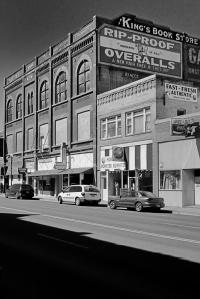
rip-proof-overalls

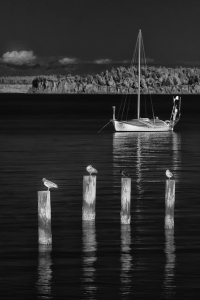
seagulls-and-boat-2

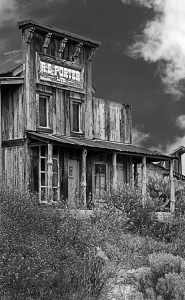
deadman-junction-building

windowpane

I have recently been talking with many photographers that are very interested in the process of black and white film photography. Most had their introduction to photography in high school using film and although they moved forward to iPhones and digital cameras, they were pulled back to film by memories of the unique “hands-on” experience they had with film.

With all that interest I thought I would revisit an article I wrote in June 2014,  “What I Learned About Photography by Shooting with Black /White Film”.

I began using black and white film because it was cheap and it’s what we used in my first college photography class. After I began to understand the medium as being creative instead of just a way to records things, I grew to like B&W and for years refused to shoot with anything else.

With film, once the camera’s shutter was released what one got was, well, what one got was-what-one-got. There were no second chances as enjoyed today. Photographers were left with only a memory of that moment until the film was printed.

We used a term called “Previsualization”. Previsualization is attributed to photographer and educator Minor White. While studying their subject a photographer predetermines how the final image would be processed and printed. Ansel Adam referred to that as “the ability to anticipate a finished image before making the exposure”.

There was also the Zone System. American photographers Fred Archer and Ansel Adams collaborated on the technique for determining optimal film exposure and development for a method to precisely define the relationship between the way one visualized the subject and the final results.

Those techniques helped us determine how the final print could look. Colour film had to be printed in an almost lightless room, whereas labs for printing B&W were quite bright allowing us to see the image and control an image as it was printed.

With B&W film I learned to previsualize, and as I selected my subject I would think about how I would process the film and make the final print. I could alter the exposure rating, as with the Zone system, and depending on which chemicals I planned on using, how I would develop the film. I would select different papers and chemicals to change contrast or tonal values in the final print.

Shooting with black and white film taught me to think about tonal shifts from black, to mid grey, and finally, to white with detail. Managing the process of developing and printing taught me that the camera and film (now the sensor) are just the starting point to making a photograph match my personal vision, and my personal vision is much more important than the camera’s.

A B&W photograph is a matter for the eye of the beholder, the intuition, and finally the intellect. Of course colour is all that, but much of the time it seems photographers are overwhelmed by colour, rarely seeing anything of importance in a scene other than the colours.

Because black and white images don’t attract with a play of colours, they seem subtle and demand close attention to composition, lighting, perspective, and the context the image is shot in as important factors.


The Excitement Of A New Camera   

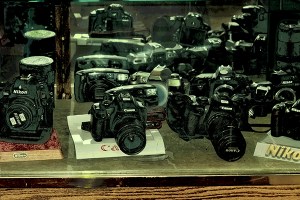
camera-on-display

I could tell that the camera a customer had just purchased was going to inspire him in new and exciting ways. He held the camera up to his eye and talked fast about what he was going to photograph on his next day off. As I watched and listened to his excitement with that used DSLR I contemplated how photographers like to make additions and changes to their equipment inventories. There are different needs for different types of photography, and personal growth within the medium changes the kinds and types of cameras and accessories needed.

I really like to be around other photographers. I recall when I first started seriously making pictures in the early 1970s that my friends and I did lots of backpacking in the rolling hills of southern California, but my fellow backpacker’s adventure goals were different than mine. While they would begin the journey with the goal of reaching a particular the location, I was more interested in what I could photograph along the way. Much of the time I lingered behind somewhere on the trail and wandered into camp near dark, and in the mornings while they were enjoying breakfast over the campfire I was off in the search for some intriguing photo.

I doubt that artists using mediums other than photography get as excited about equipment as photographers do. Photography has been a succession of inventions and technological advancements. The first practitioners like Joseph Nicéphore Niépce in 1826 using surfaces like pewter for one-of-a-kind positive photographs and Louis-Jacques-Mandé Daguerre and his announcement of the Daguerreotype in 1896 were making continual advancements in photography similar to what is occurring today. Those advancements were exciting for would be photographers of that time much as advancing technology excites those of us serious about photography today.

Keeping up with the changing technology of photography has always been a struggle, and also expensive, as photographers change camera equipment completely or upgrade their systems to get the maximum benefit and enjoyment in the medium. I know there are those that will say, ”Just learn to use the camera you have. It’s the photographer, not the camera.”

That is certainly right, however, the thrill of learning to operate and use a new camera is, (can I use the word?) cathartic.

I can remember in 1972 being just as excited with my new Pentax Spotmatic II as that customer was with the camera he just purchased. It came with a 50mm lens that I quickly discarded for a versatile 70-210mm Vivitar zoom. Gosh, I felt fortunate to be getting such an advanced camera and lens. In 1970s it was all about the increasing availability of quality lenses and cameras with built-in light meters.

There are many used DSLR cameras that would work just fine for the kind of photography this person would be doing. In the used camera market it always comes down to condition and price, and of course, the brand that suits the buyer. He looked until he found one at a bargain that met his criteria.

Now that he has his new camera, I suggested he join the local photographers Facebook page and I look forward to the pictures he posts, and of course, watching his growth in as a photographer.

Photography on a Winter Beach    

beach-abbott

waters-edge-tree


Bootprints in the sand

beach-boat-docks

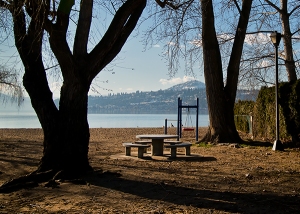
beach-bench-solitude

the-only-vacationers

February found Linda and I spending a couple weeks in the lakeside town of Kelowna. Linda had 10 days of appointments so we decided rather than commute for four hours a day (it’s two hours each way) we would take accommodation.

Kelowna in the summer is packed. Parking is always at a premium, the cost of lodging anywhere near the beach is prohibitive and the traffic is, well the traffic is what one would expect in a city filled with vacationers. However, the days and nights in February are below freezing, and that pretty much reduces the beach crowd.

Linda’s appointments vary through out the week, but Tuesday’s was early so after a big lunch when she decided to relax with a couple magazines, I took the opportunity to grab my camera and headed to the beach.

I know that beach area pretty well. I have never seen a parking space during the summer, and any photographer wanting to capture photos of the beach, the lake, or distant mountains has to be content with lots of people included in their photographs.

My thought was to build a series of images that discussed the cold, empty winter lakeside. And I decided no matter what I saw I would limit myself to only photographs of the waterfront.

That meant to ignore the extravagant architecture of the beachfront homes, expensive cars and, of course, people. However, I was tempted to get shots of a guy eating a cup of ice cream while walking with his dog, and later on, two women slurping milk shakes while walking along on the breezy minus 6 Celsius day. There’s something to be said about Canadians.

I even declined when two tattered guys came up to me and suggested they would make good photo subjects. One fellow was waving a broken golf club handle and I stepped back saying, “I am not doing people today”. We all laughed and they ambled on leaving me alone on the beach.

The winter beach is interesting. Shoeprints in the sand instead of bare feet, the hordes of sun worshippers and swimmers are absent and the lake that’s usually a waterscape of boats has only ducks and geese this time of year.

I walked for two hours along the waterfront before deciding to turn back. And when I found a deserted bench I just sat enjoying the solitude. There is something about wandering alone along a big lake that is bordered by a large active city. I guess there is some isolation, but the noise never stops. Nevertheless, it’s an excellent opportunity to creatively point a camera without any interference.