Camera Manual and the Basics of Photography.

I was photographing an outdoor event on a hot, bright day a short time ago when another photographer walked up to me complaining that most shots were not turning out as hoped. This happened again at a wedding I was photographing last weekend. The guest had a perfectly good camera, but criticized it, and said he wished he had a better one because the backlighted couple we were photographing were being recorded as silhouettes.

Ending up with faulty photographs from time to time isn’t unusual, although not as much nowadays as when film was used. However, I think most faults occur because photographers haven’t taken the time to learn how their cameras work, and have a poor basic understanding of photography and techniques.

With digital technology it’s easy to determine what is going wrong by checking the camera’s LCD and the histogram. I doubt that either of those complaining photographers I talked to used the LCD for anything but reviewing pictures. They probably hadn’t gone through the camera’s menu and set it for the conditions under which they would shoot. Both had selected the auto, or program mode, and to add light to the bright, backlit environment were only using the camera’s tiny pop-up flash. They would have been much more successful if they had a mounted a hotshoe flash on their cameras and selected the “M” mode. I expect they will be relying on their images being saved by technicians at the local photo lab or hoping for some friend with PhotoShop wizardry.

I continually meet photographers that complain about how various big photo labs are failing to make their prints the way they think they should be. They rely on their camera’s preset programs, and I expect are of the belief that if the camera they have been using doesn’t make good pictures then they should change and upgrade to the manufacturer’s latest offering to make it so.

When I arrive at a location to photograph I immediately start making tests. I keep my camera in the manual exposure mode so I can quickly change the ISO, shutter, or the aperture to suit my shooting.  I continue to do that throughout the entire session, checking the histogram frequently, and leaving nothing to chance by lazily relying on the camera’s pre-programmed modes.

I begin by contemplating about the subject and its environment.  What is the background and how will that affect the subject? What is in the foreground that will interfere with that subject?   If one considers depth of field a decision must be made about how much will be “in focus”.  Sometimes in a portrait that includes a landscape, I’ll want everything from the foreground to the far-off distance to be crystal clear, and at other times I’ll want the background to be “out of focus”; whichever I select requires its own aperture setting.

What is the lighting like and will its direction be flattering on the subject? The sun and its direction are always very important when photographing people. I prefer to have it coming from behind my subject and like to use a flash for “fill” lighting to remove shadows and silhouettes.

I can do all this because I have taken the time to learn the basics of photography, and I have also taken the time to learn how my camera works. I don’t think either of those photographers that complained to me had done that. I expect they just got themselves ready for the event, grabbed their camera on the way out the door without reviewing their manual beforehand, recalled that the digital camera has a “P”, or auto mode, and believed the camera would make everything they photographed perfect.

Photographers using film used to say that it was all in the negative; that a properly exposed and developed negative gave the best possibilities of a fine quality print.  I still agree with that principle, only now it isn’t an image about to be developed on the negative, but an image about to be processed on the sensor.

I always appreciate comments, Thanks in advance.
Eulogy for Chuck the Rooster

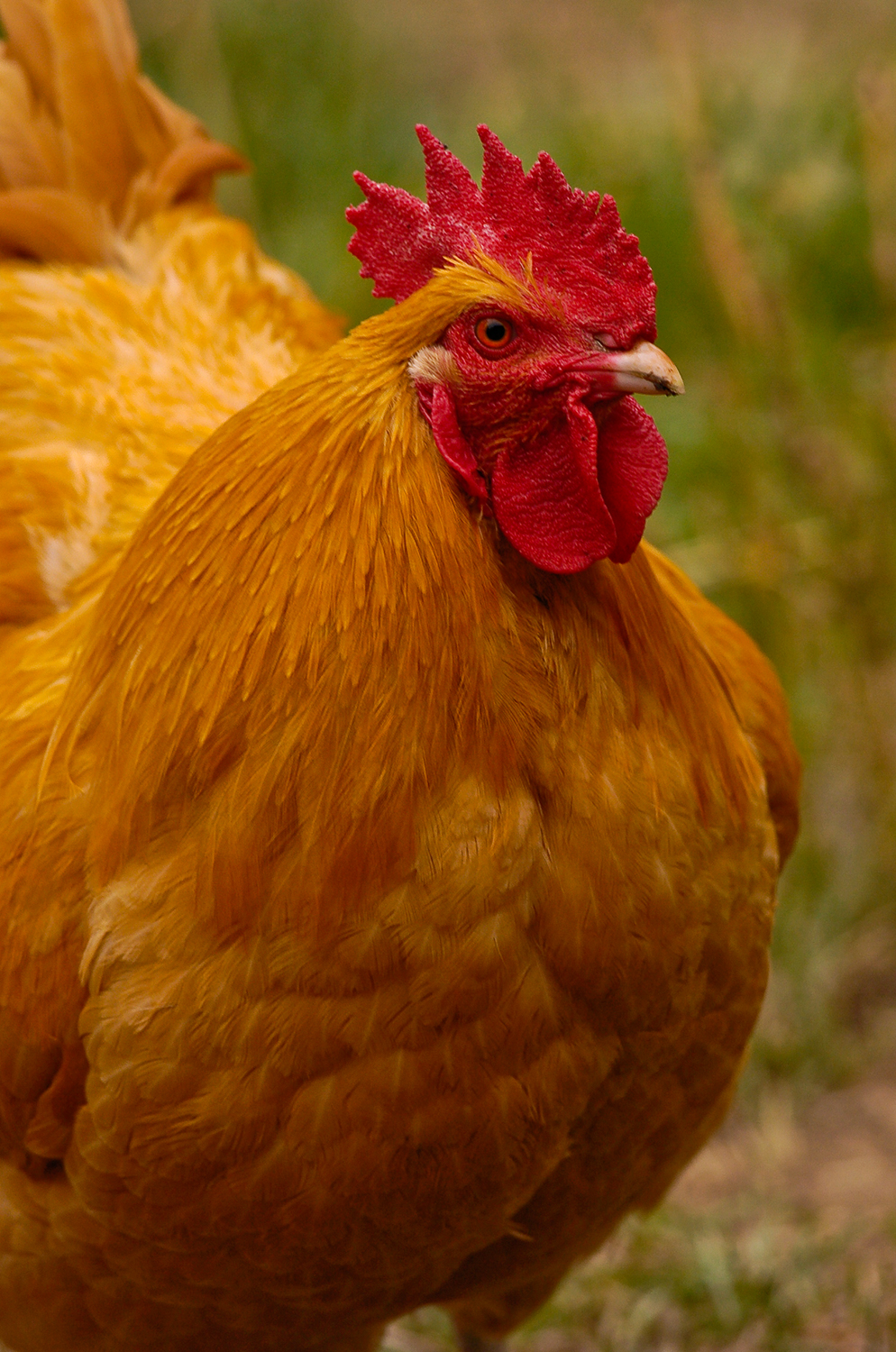
This past week Chuck the rooster died. I don’t think my neighbors will feel too sad because, if that rooster was anything it was a loud talker. I called it talking and everyone else called it crowing. But, to me he seemed like he had something to say and anyway I am going to miss him and his point of view.

Why would I write a eulogy for a silly bird? It should go something like, “Chuck kept the hens together, crowed lots, and then he died.” Surely a rooster isn’t worth more words of praise than that. He had a good pedigree; he was a Buff Orpington rooster with striking colouring and handsome spurs.

In May I wrote an article titled “Pets make Great Photography Models”.  In that I wrote, “Got a new camera or lens? Want to try out that studio lighting technique? Or just bored and want someone ever ready and able to pose for a photograph? Call the dog, or coax the cat. I can’t even begin to count the pictures I have taken of the horses, dogs, cats, parakeets, hamsters, chickens, fish, and frogs I have taken in my life”.

Those pets never complained when the pictures didn’t work out, and even waited for another blast of the flash without blinking. And I continued saying that Chuck, my rooster that guards the hens, doesn’t seem too interested in standing still for his portrait.

So, other than not having Chuck to keep a bunch of chickens on the straight and narrow, I’ll miss having an ever ready, constantly moving subject to practice my photography on. That rooster never stood still for long. He was always guarding, herding, searching for interesting stuff on the ground, then telling us all about what he found, flapping a lot and was always running around.

Sometimes I would set the lenses I wanted to try out on the rickety old wooden picnic table that sits in the back meadow and then open the gate to the chicken pen so Chuck and the girls could get out. They always want to get out, and eyeing my wife’s flower garden would clumsily run out and across the unmowed field grass with Chuck guarding the perimeter like some soldier on patrol.  I would sit, crouch, and lay in the tall grass, making exposure after exposure until they trundled past and into the overhanging bushes of the garden. In retrospect I should have been more serious about the pictures I took, and now I wish I had kept more of that silly old bird. But I seem to only have one or two stashed on my hard-drive.  Anyway, who wants a picture of a chicken hanging on their wall?

I tested cameras, lenses, flashes, and my ability to light with flash outdoors, stop movement and focus properly on quick moving subjects. I would walk out in the yard, find Chuck and the chickens, try something out, dump the images from my memory card to the computer, check them out, make a decision about what I wanted to try next, then delete them and go out and start again.

I couldn’t have thought of a better photographic test subject. Yep, that rooster never stopped moving and I am going to miss our time together.

My website is www.enmanscamera.com

Thinking Ahead to Photographing Fall Landscapes


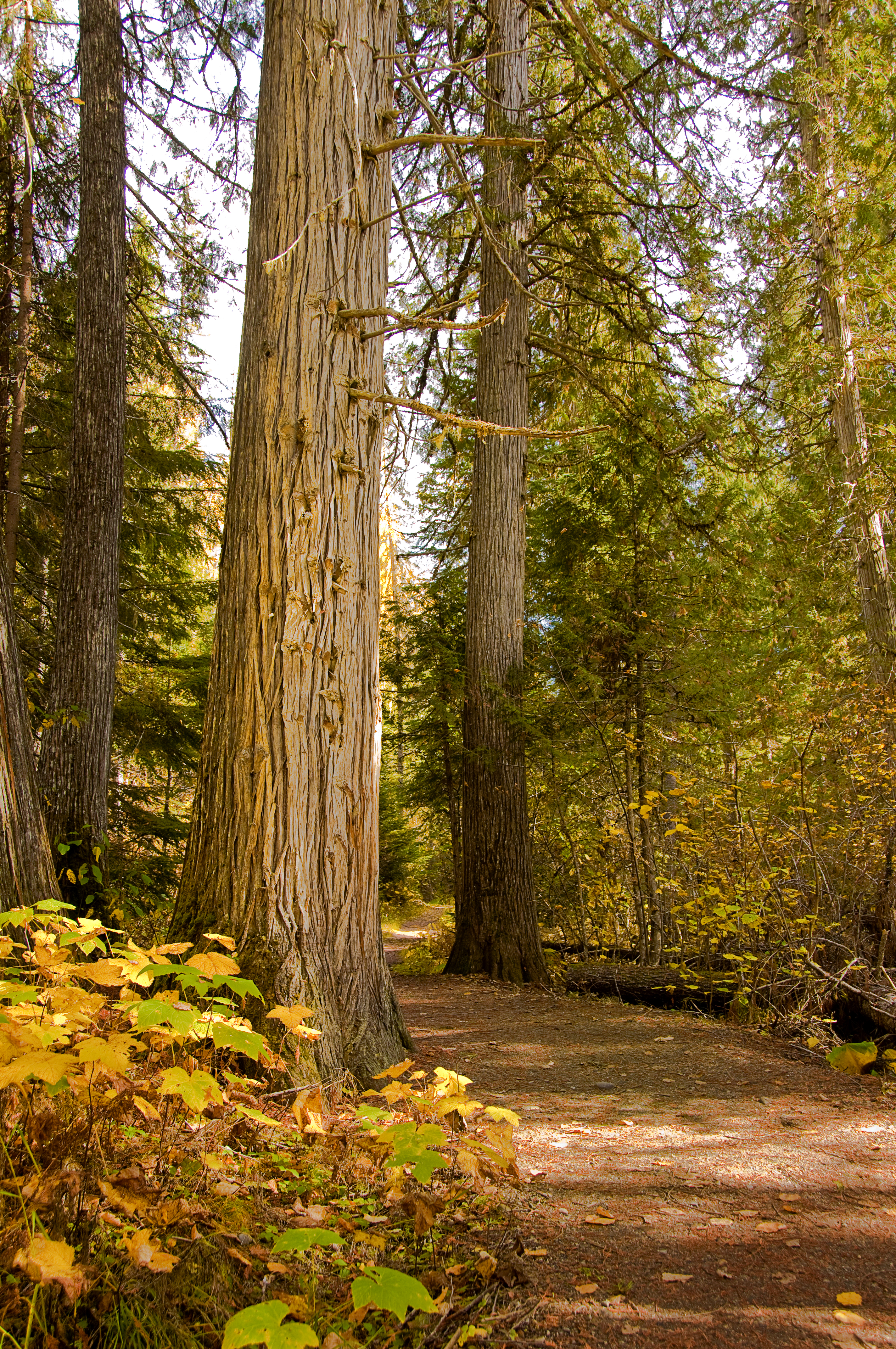
This time of year I always begin thinking about photographing fall landscapes. As of yet the colours aren’t really how I want them, everything is still hot and dry. I think I’ll be waiting the better part of a month for the changing leaves and landscape before venturing up into the mountains just a short drive north of my home in Pritchard, British Columbia

Books, especially those written by photographers, easily seduce me. I am in the mood for what is going to be weeks of fun colourful photography anyway. So when I walked by the well-worn copy of my favourite scenic photographer/writer, Eliot Porter’s book on landscapes I decided to thumb through it.

Porter’s book, “Intimate Landscapes,” will always get me thinking about taking time to visit some of the many picturesque locations in my part of the world and even though the book by Porter features photographs in north-western New Mexico and south-eastern Utah, it is filled with photographs that inspire me.

I have mentioned him before, but for those readers that don’t remember my past comments on this man, or those that aren’t familiar with him, the following is a quote from this book. “The natural world has always attracted my eye: associations of living and inanimate phenomena, from the tropics to the poles and from rain forests to deserts, have been favourite photographic subjects for almost half a century.  Grasses and sedges, especially, appeal to me – an appeal like disordered hair across a face, or a windblown field of hay before the mowing. When associated with water, as sedges so often are, the magic of restlessness is enhanced by reflections not foreseen. In mixed woods of pine and maple, the needles of pines drop throughout the year, building jackstraw mats of thin brown bundles on which, at the time of the fall of the leaf, the bright maple leaves settle at random, arranging themselves in harmonious patterns that defy improvement as though placed there intentionally.”

Reading this book or any other on photography for that matter, helps me examine the way I make photographs, and encourages me to try photographing landscapes differently.

Although I like to plan my photographic excursions and am apt to stand looking at a scene for a while before releasing my camera’s shutter, (The reason I like using a tripod is because it slows me down.) I do think photographic ideas and opportunities sometimes happen in a moment that once has passed will never be the same and I release the shutter for no other reason than it is fun to try photographing that scene.

Here is another quote from Porter’s book that I like.  Porter says, “I do not photograph for ulterior purposes.  I photograph for the thing itself – for the photograph – without consideration of how it may be used.  Some critics suggest that I make photographs primarily to promote conservation, but this allegation is far from the truth. Although my photographs may be used in this way, it is incidental to my original motive for making them, which is first of all for personal aesthetic satisfaction.”

Sometimes just the process of making a photograph for no other reason than doing it is enough and I have friends that regularly show me all types of pictures that are just made because they enjoy the medium of photography.  Photography, in this era of high tech digital images, has become so very easy. However, in my opinion, good photography is as time consuming as it ever has been, requiring practice and education.

I am hoping for a long, cool fall here in the interior of British Columbia with lots of colour. I’ll be driving to Wells Gray Park in the upcoming month. The environment of Wells Gray, although very diverse from the scenic locations in Porter’s book, has many of the features that I am sure would have appealed to him and if you have a moment check out landscape photographer Eliot Porter in your local library or on-line, and hopefully his photographs will inspire you as he does me.

PS, the two pictures are from last year…I’ll soon have some for this year…..

My website is www.enmanscamera.com

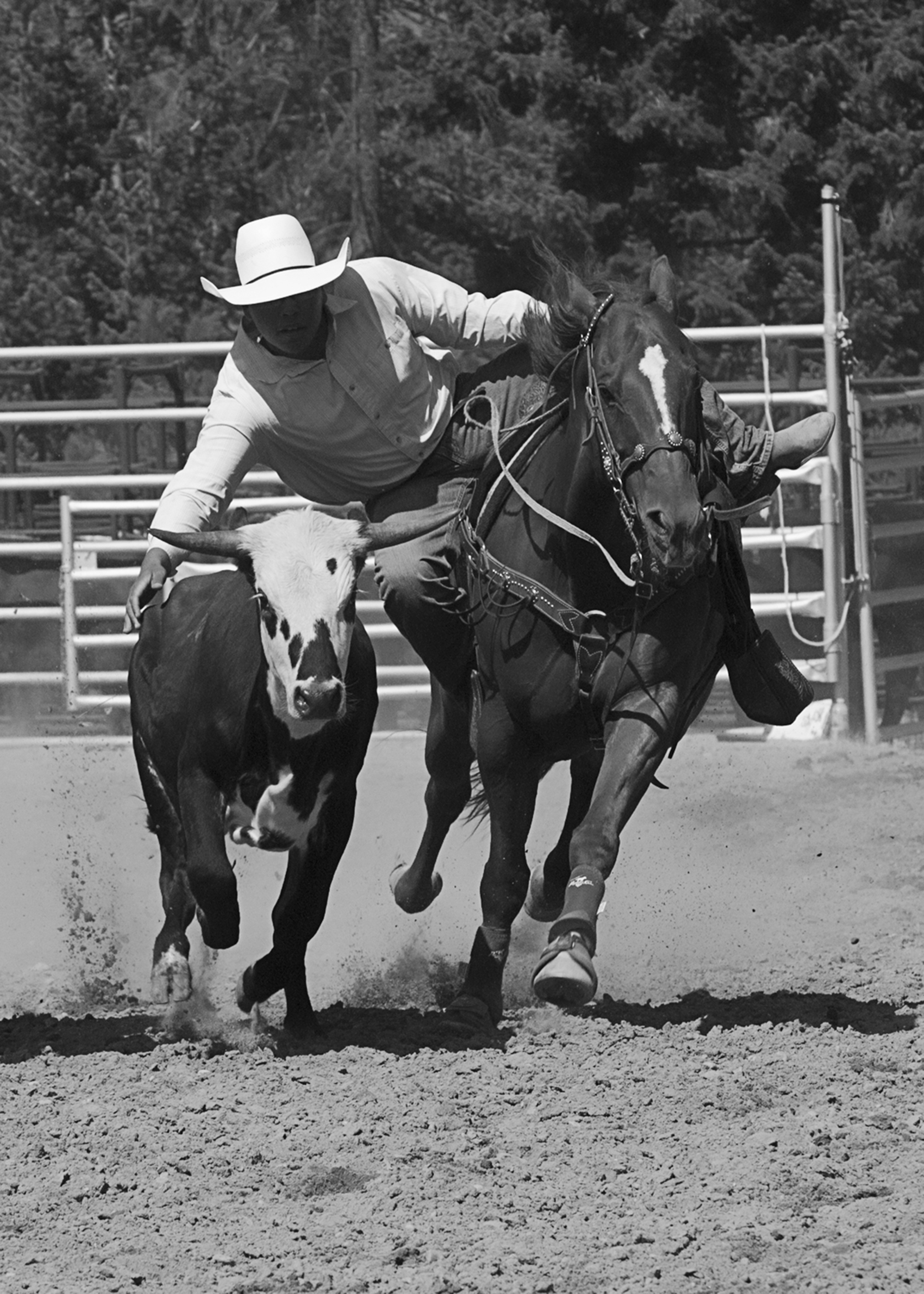
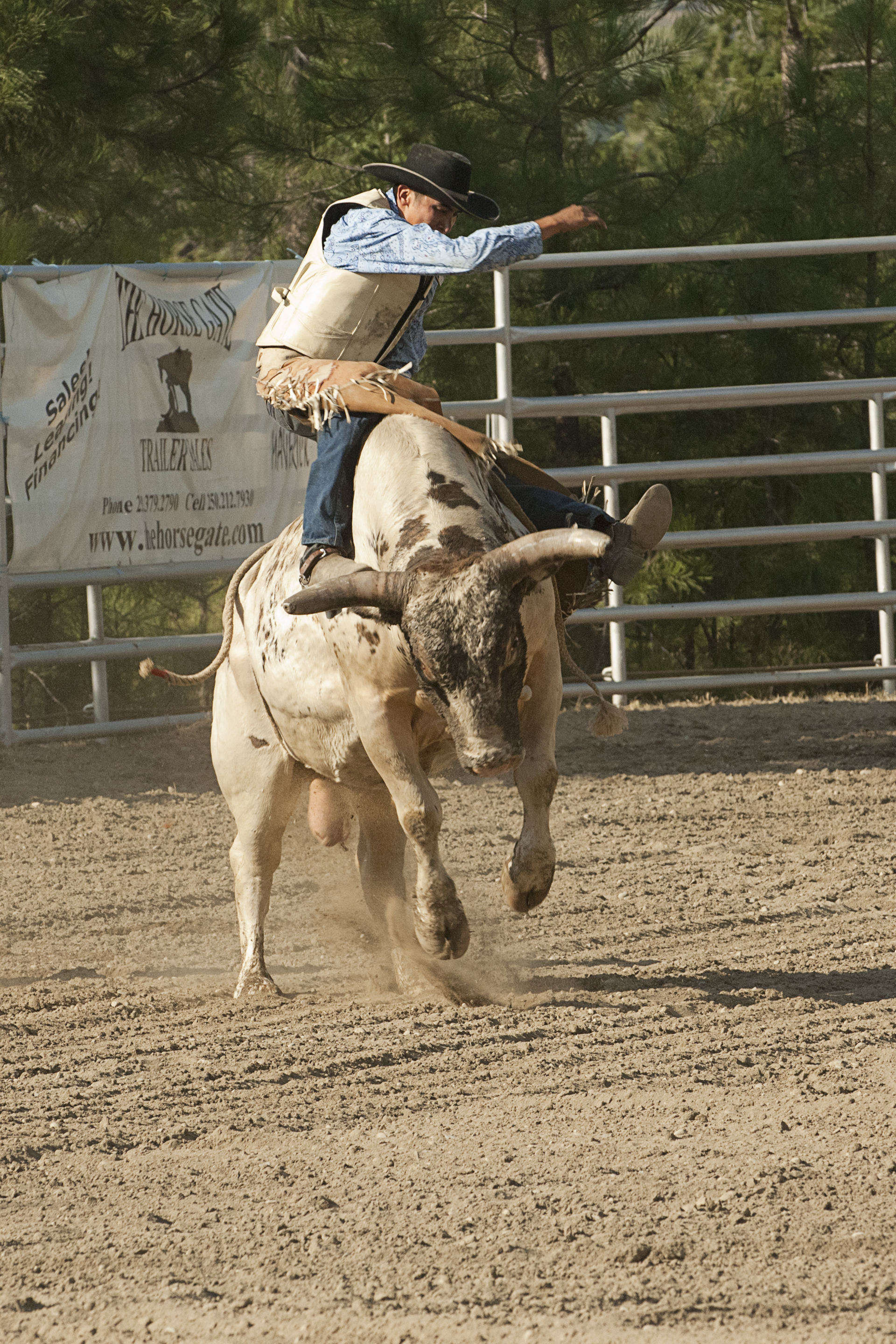
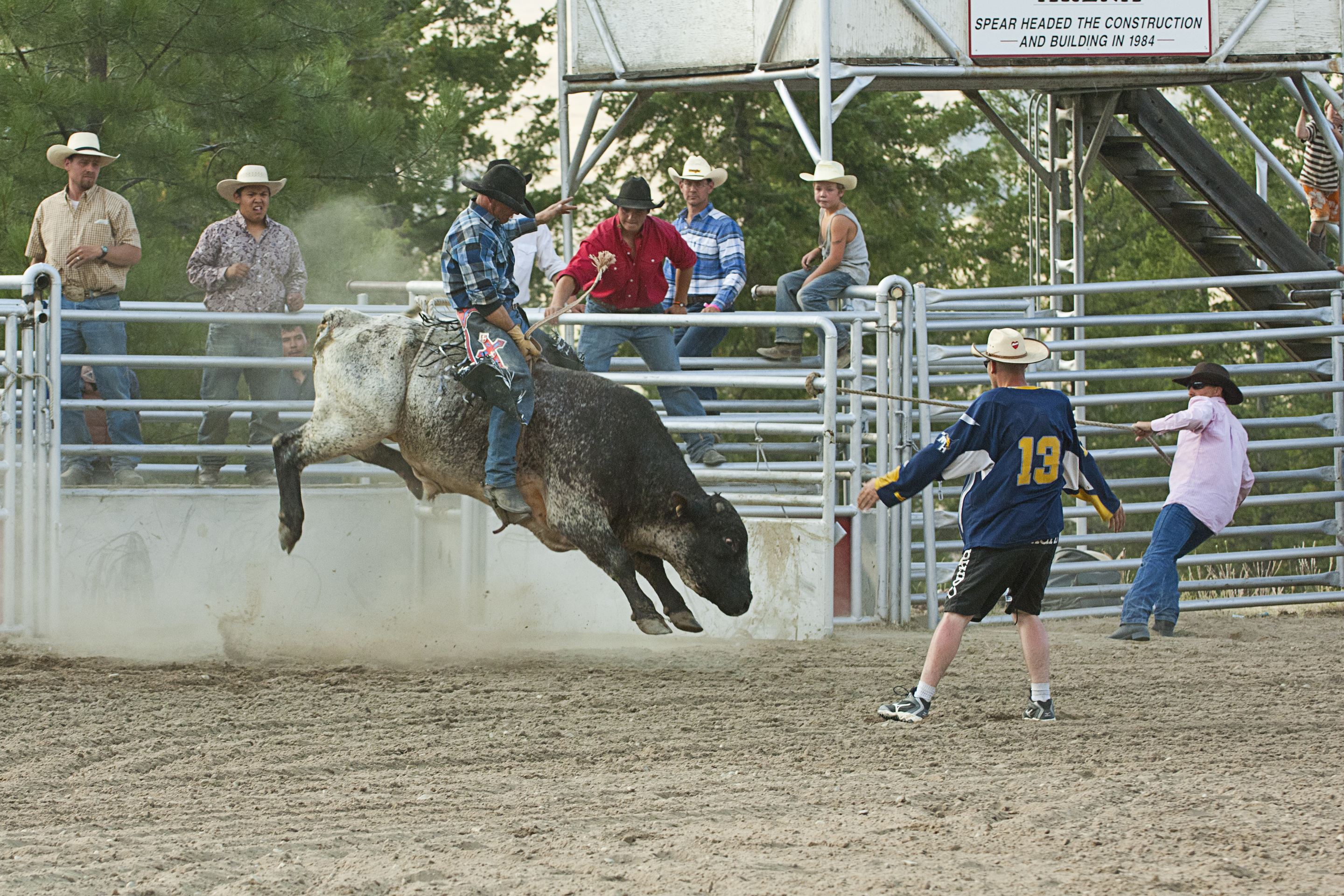
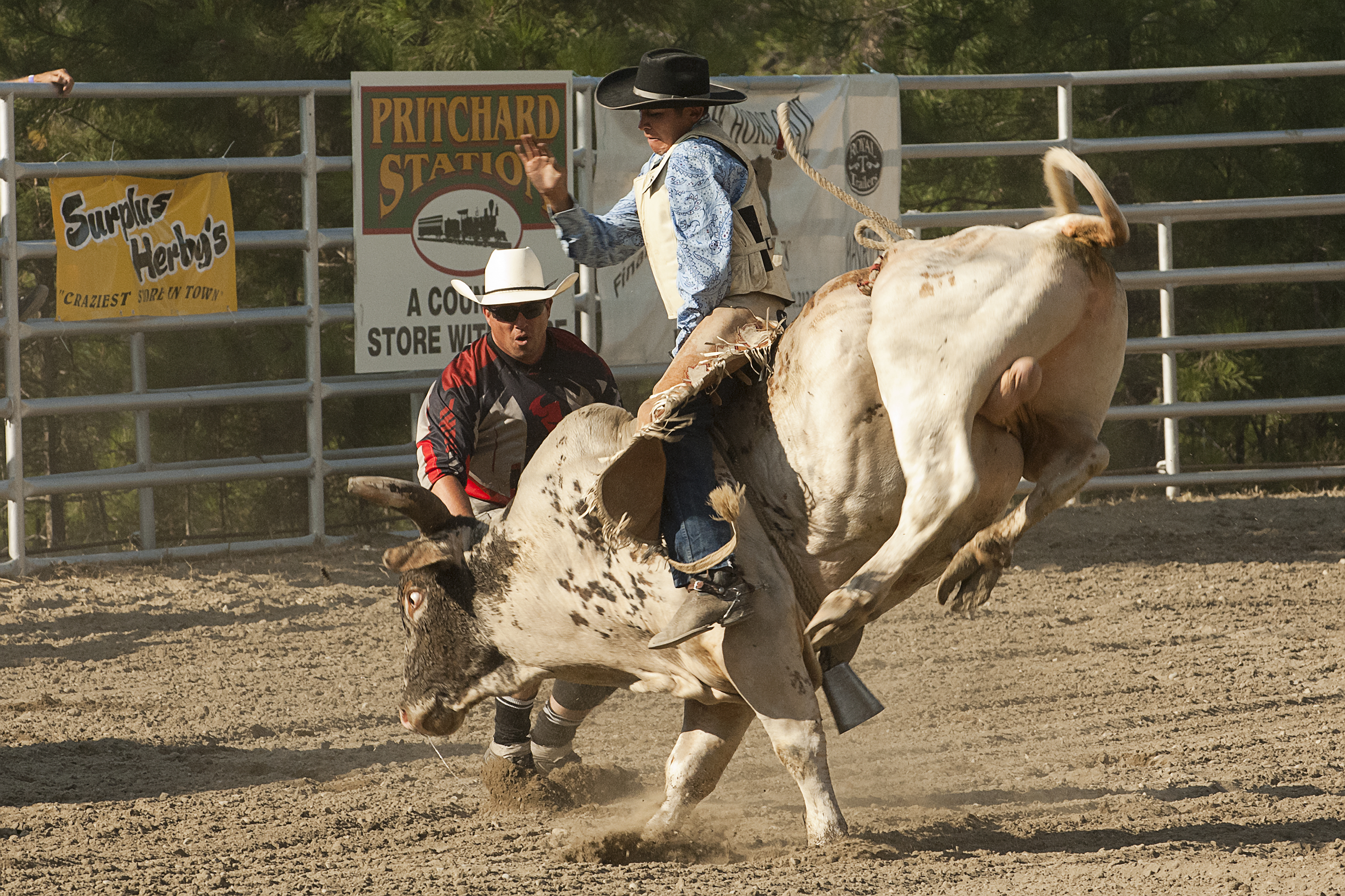
Grab your camera and go to the Rodeo

                                                                                                    I had finally reached Olympic games overdose. I enjoyed watching the Olympics, but in British Columbia, Olympics coverage was everywhere. Every radio station, television network, newspaper, and conversation had something about what was happening and I couldn’t get away from it. However, now they are over and I expect many (ok, I guess I’m included in this) might be going through some sort of withdrawal.


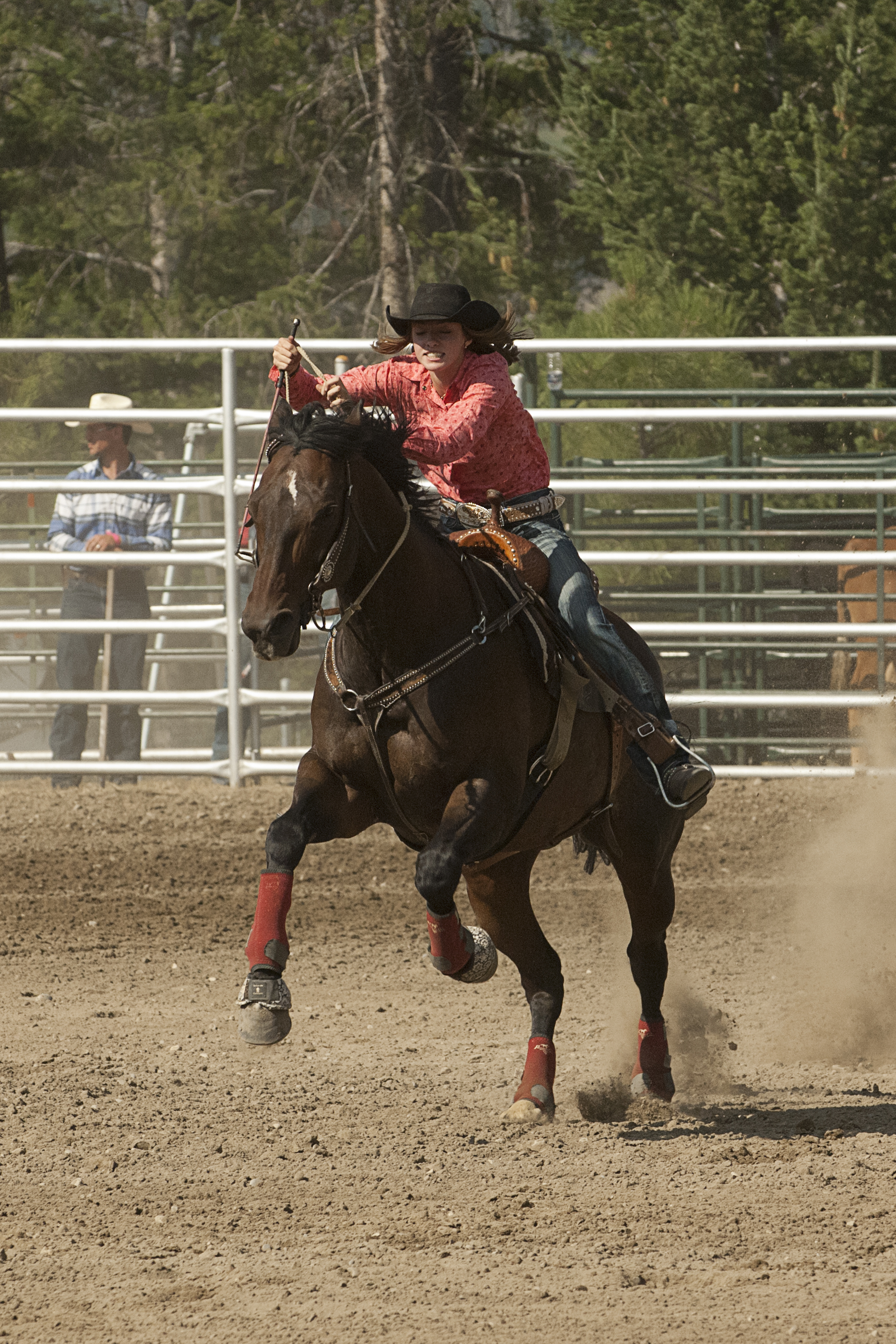
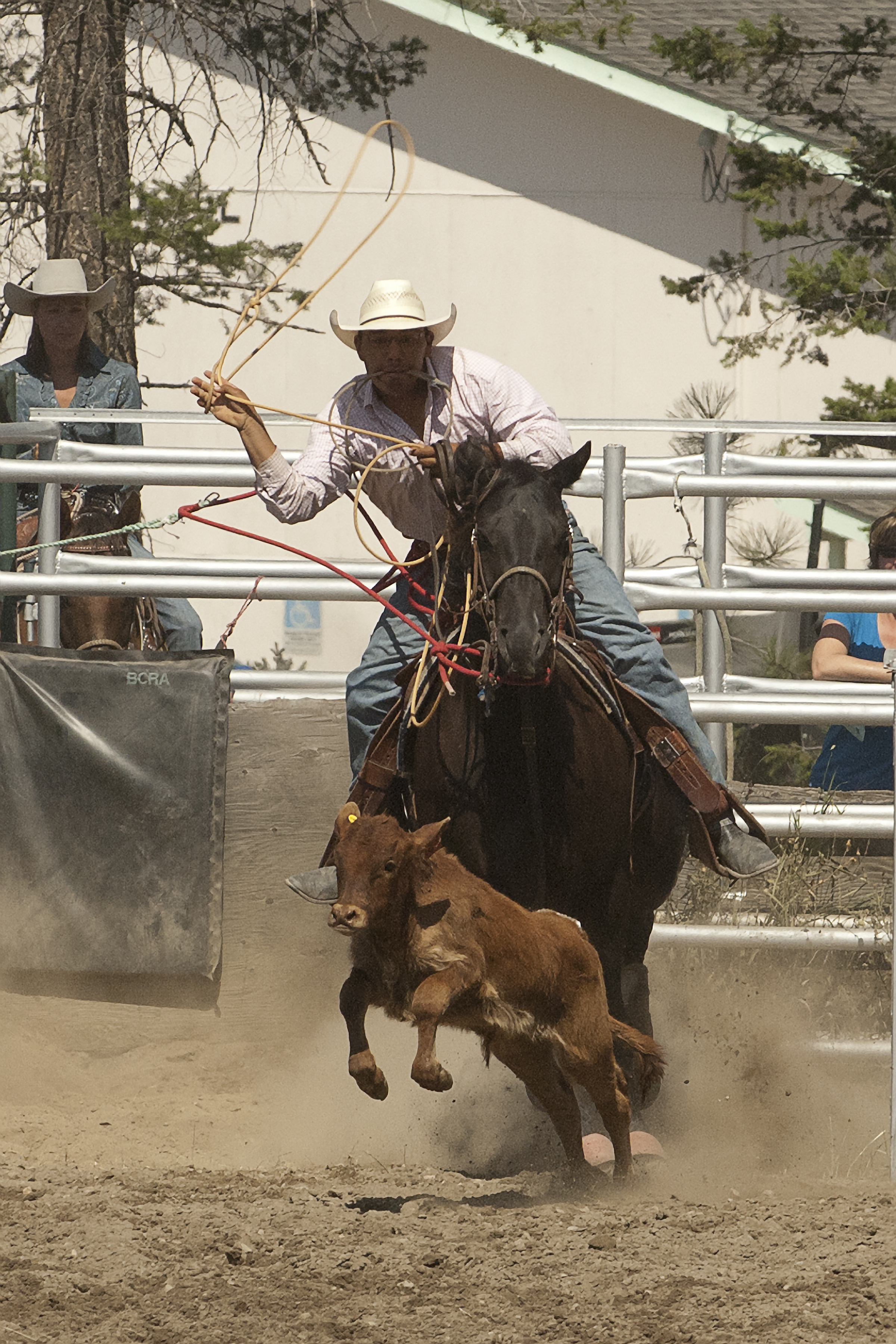
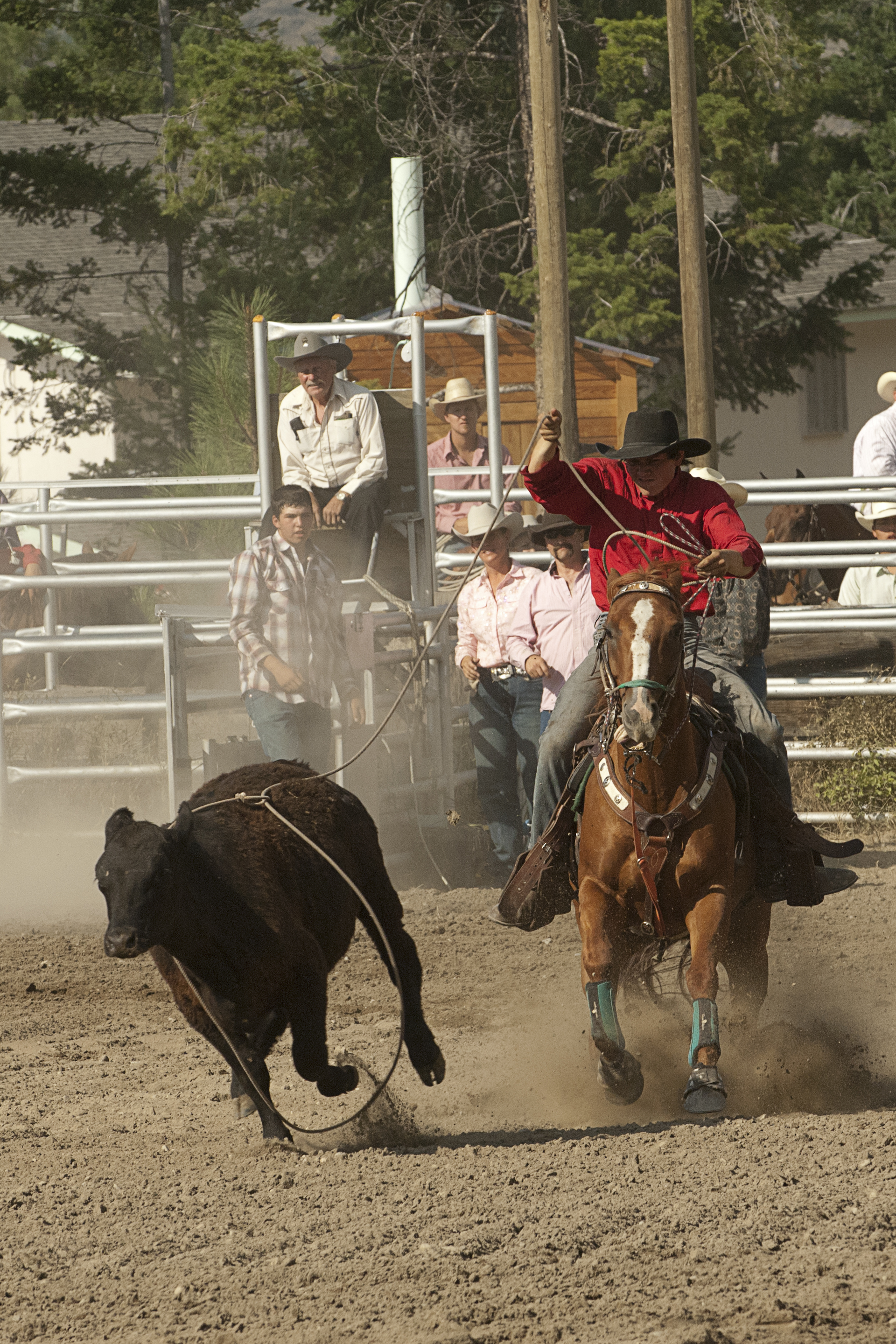
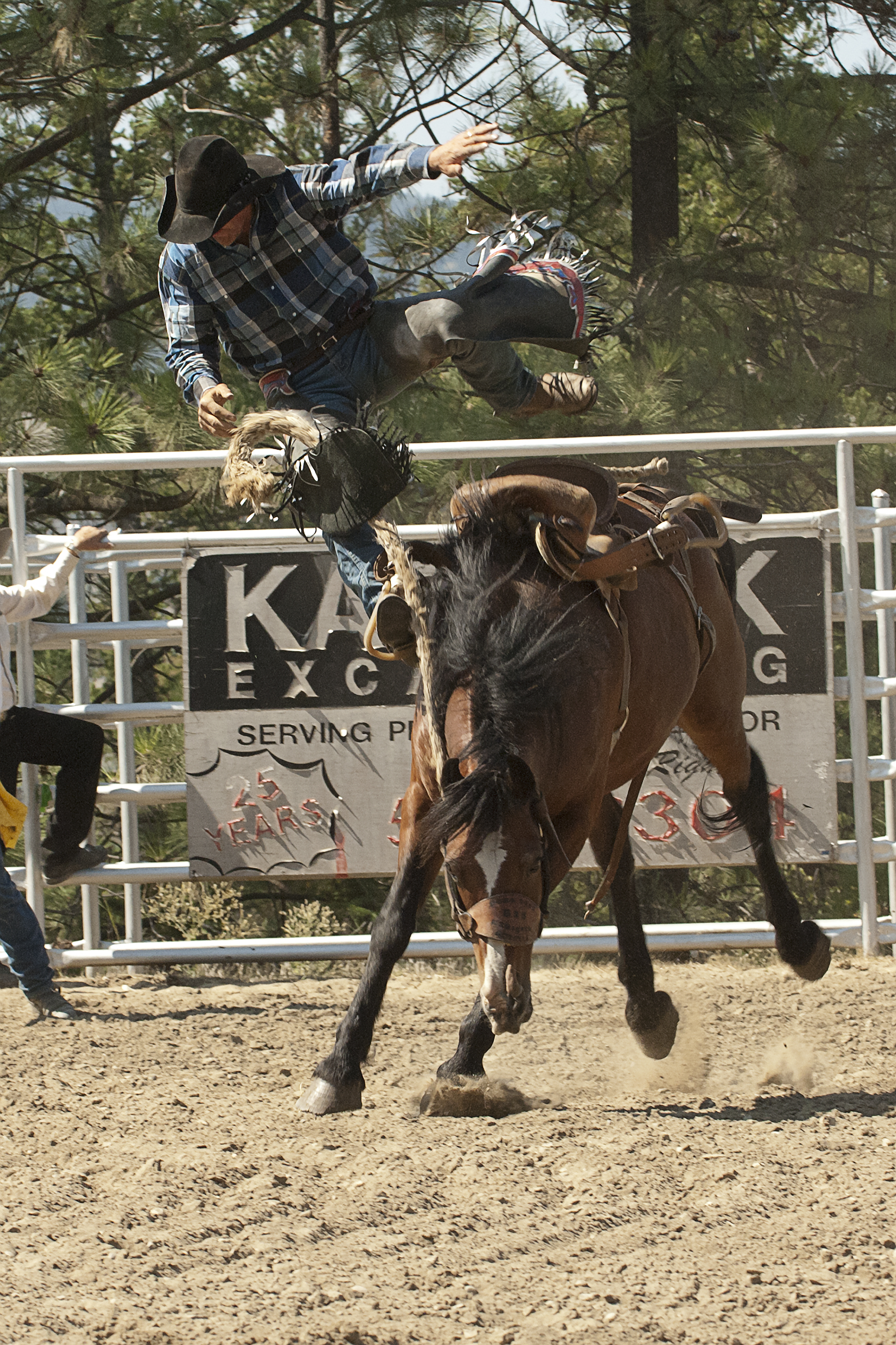
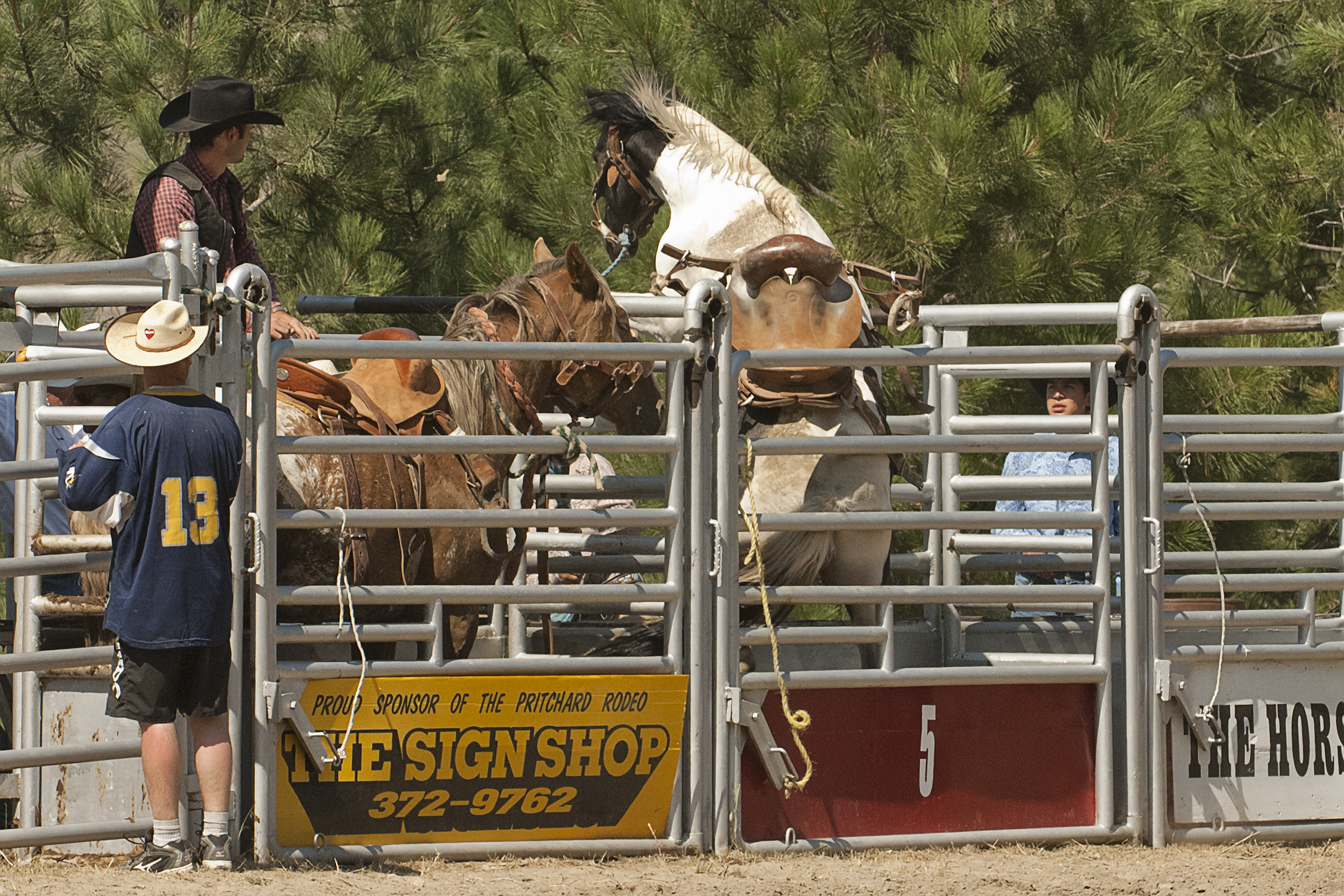
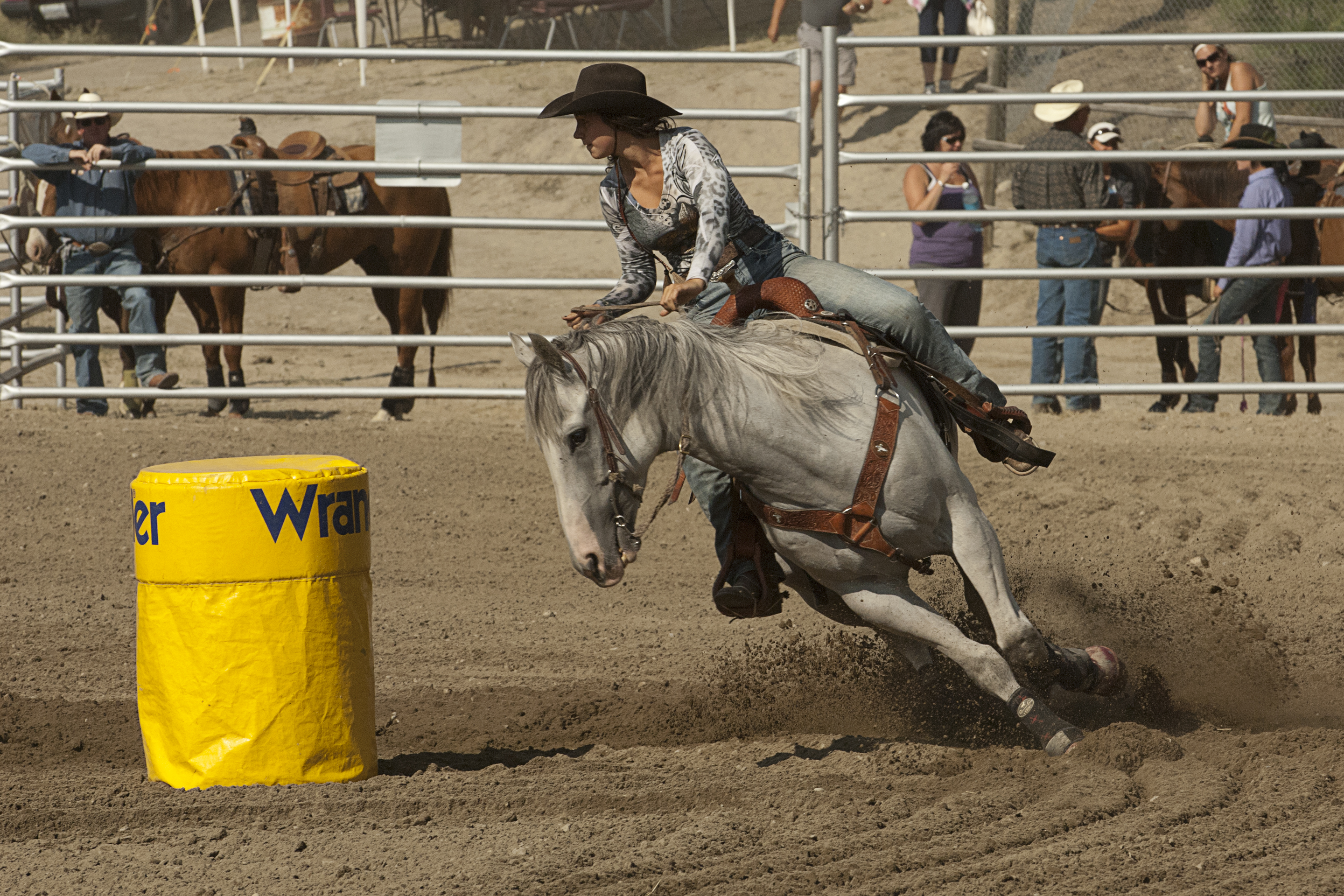
Well, for those who enjoyed watching and applauding athletes at their best I found a great way to get out of that withdrawal, however, they just need to be willing to get up off the couch and leave the comfort of their air-conditioned home.  Happening right now all over North America there is that time-honored tradition of the western Rodeo. Each year I look forward to the annual Prichard Rodeo. There are others all over BC that are worth attending, but I’m lucky because, “just down the road apiece” from my country home is the Pritchard Rodeo grounds.

As I strolled down the dirt lane to the bleachers, concessions, and rodeo arena, I looked around and could see some of my neighbors lounging in the fenced off beer garden, and others with their children waiting in the shaded bleachers. Then, of course, I checked out the photographers standing at the railing readying their equipment.  The first friendly face was local news photojournalist Hugo Yuen; we exchanged greetings, talked a bit before he left to get some of the participant names. He had a list to cover for his paper, so he was shooting fast and leaving.

I wandered on, watching photographers positioning themselves along the railing, I wanted to see what cameras they were using, and waved at the arena manager, Don Swift, as he readied participants and turned to see professional rodeo photographer Bernie Hudyma striding towards me. I knew I would see him there. He’s a good photographer and I always like to hear what he has to say. I’m sure many of the rodeo participants were also glad to see him arena side because of the pictures he will have waiting for them.


For those that haven’t yet photographed a rodeo, I’ll begin with the words, “Grab your hat and camera and do it!” You will have fun and get enjoyable pictures to share with friends and relatives.

Here one can see drama, explosive action, anticipation, heartbreak, defeat, excitement, athletic prowess, both male and female physical excellence, teamwork, sportsmanship and, of course, triumph. Then there isn’t, in my opinion, anything much better than attending a rodeo. And for those of us that are dedicated photographers, the action of a rodeo is the perfect way to spend the day.

My advice for first-timers is to get a DSLR. Little point and shoot cameras are great for taking pictures of family groups, and subjects moving slowly in one direction, but you won’t find much of that at the rodeo. When you shoot with the DSLR take the camera off the “P” mode and select  “A”, or  “S” mode if you own a Nikon, or on a Canon select AV or TV. Aperture priority means the photographer selects the aperture and the camera chooses the shutter speed. In shutter priority, it is the other way around, the photographer selects the shutter speed and the camera controls the aperture.

Fast moving, quick changing, rodeo subjects jump into the sky, quickly increase or close the distance from where the action began and, of course, constantly change the exposure by bouncing in and out of bright sun and deep shade.  While following the constantly changing scenarios it all happens very fast, and all one really needs is to control one part of the exposure equation.  Whether that is the shutter or the aperture really depends on what is important.

For example, when I am photographing the directional motion of horse racing or drag racing I prefer shutter priority. When at the rodeo I want more depth of field. That’s the field of focus in front of and behind my subject. Those horses and bulls move fast and I don’t want one moving out of my area of sharpness before I can refocus.

I suggest a zoom lens that goes to at least 200mm. Most modern lenses focus fast enough, following the action, and setting the focus takes a bit of practice, but there is lots of time to experiment at a rodeo, so just shoot and shoot and shoot. As I wrote, if you haven’t yet photographed a rodeo, grab your hat and camera and do it! Find a rodeo near your home and have fun.

My website is at www.enmanscamera.com

The Dog Days of Summer are Perfect for Infrared Photography


For several days I have been listening to fellow photographers complain about the hot, bright days here in the interior of British Columbia. When they stop by my shop I welcome them with the question “ What have you been out photographing?”  But mostly I have been hearing “Naw, I haven’t been doing anything. It’s too hot, muggy, and the light is crappy anyway. I can’t wait till September.”  Well, I must agree that my personal photography also stagnated during these dog days of summer.  I prefer summer’s end, fall colours and I suppose, the cooler weather.

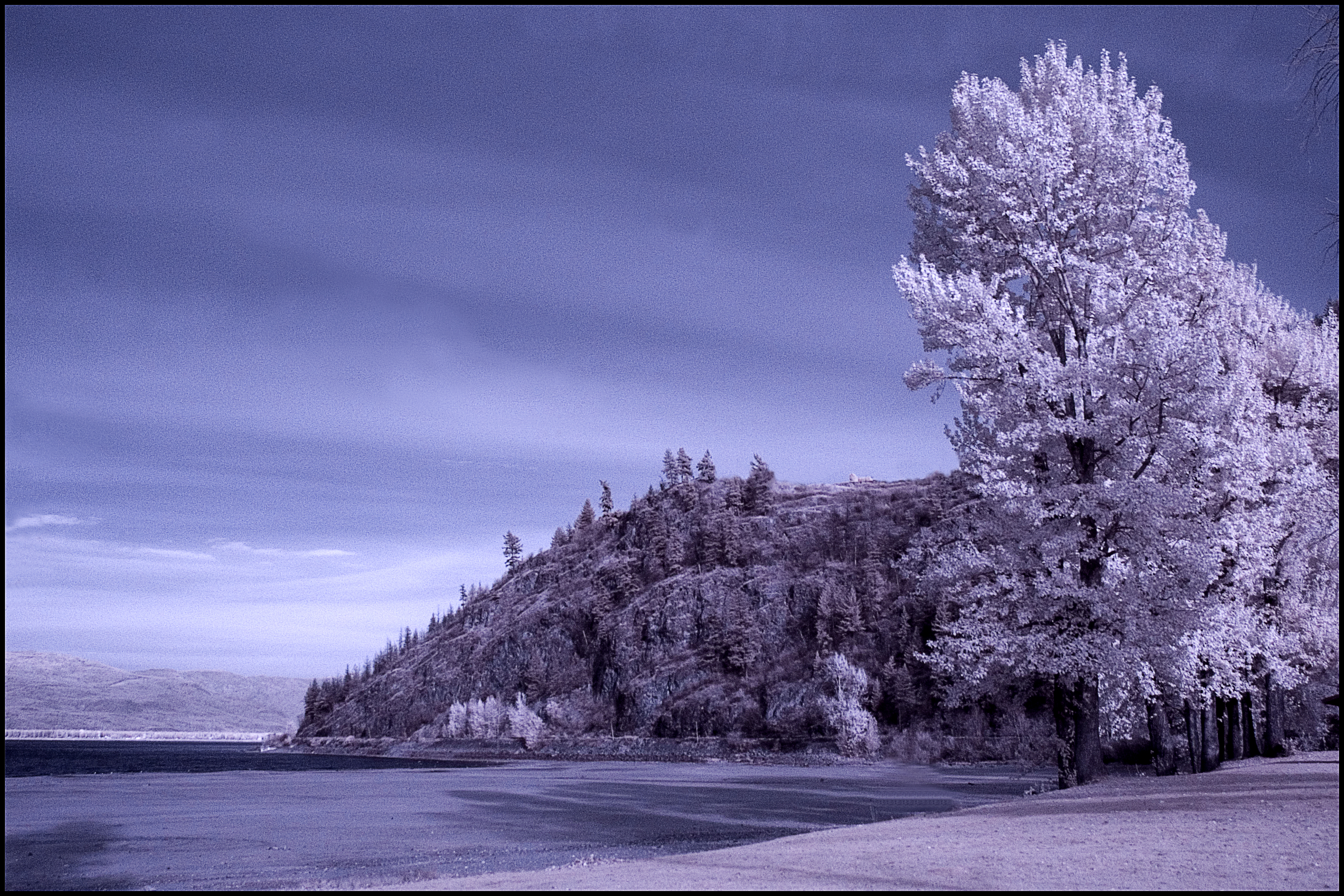
I had already spent a day doing stuff inside so when my wife mentioned that she wouldn’t mind a quick trip to the grocery store, so I grabbed a DSLR I had converted for infrared and we headed out. The closest town to our place is the small lakeside community of Chase, British Columbia. I like to drive the backroads when I go there and I thought the lake and bright sky would be perfect for a camera that only sees infrared light, plus I knew it would be nice and cool by the lake.

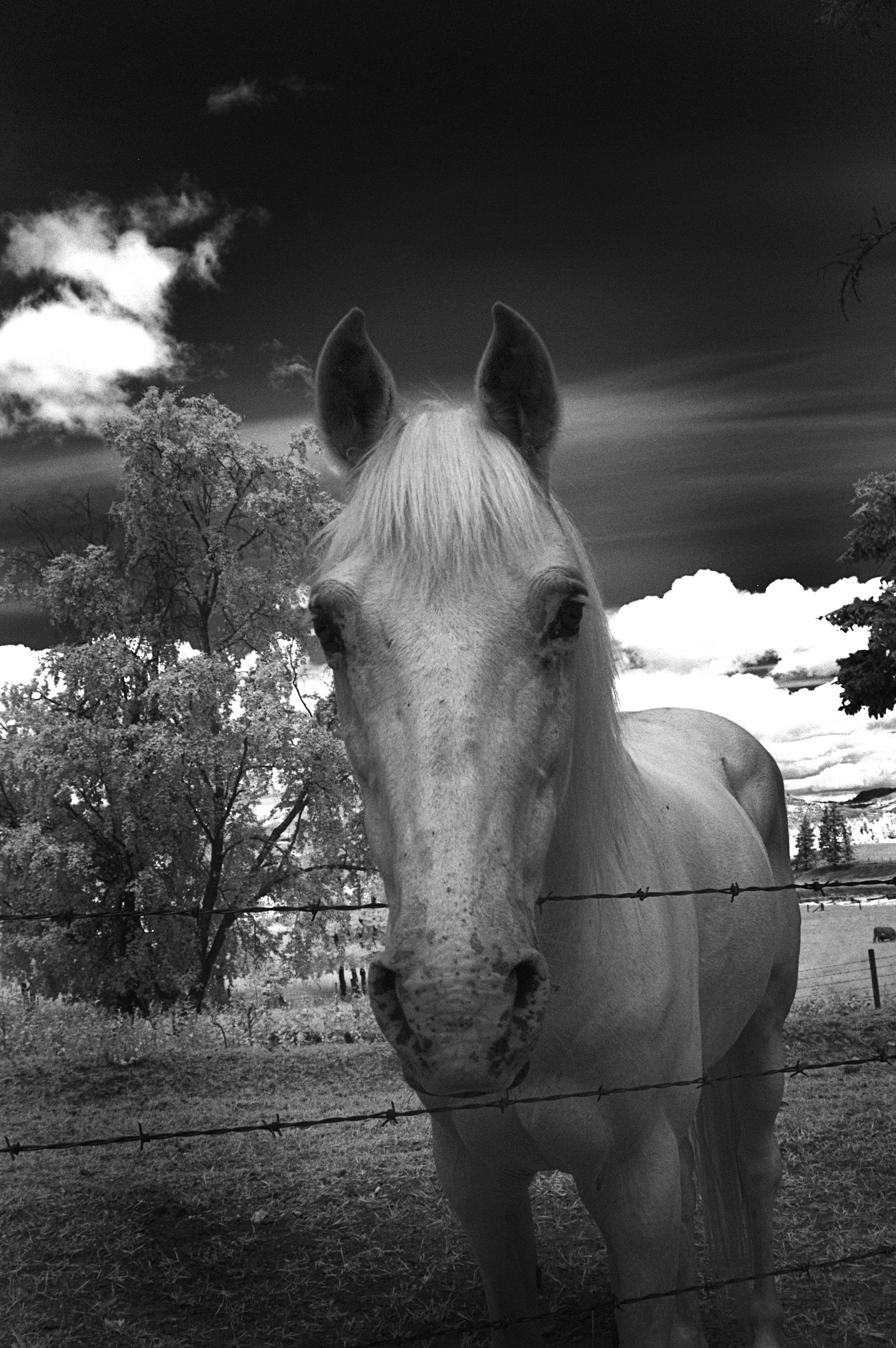
I have a camera that has been modified to only see infrared light and in my experience those harsh bright summer days are perfect for infrared image making. Infrared (IR) light is light that has longer wavelengths on the red edge of the spectrum and is invisible to human eyes.

Here is some trivia: In 1800 William Hershel described the relationship between heat and light and let the world know about his discovery of the existence of infrared light in the electromagnetic spectrum.

The sensors for digital cameras are sensitive to more than just the visible light spectrum. This causes problems with colour balance, so camera manufacturers place a filter in front of the sensor that blocks the infrared part of the spectrum that only allows visible light, and not infrared, to pass through.

The modification is accomplished by removing that filter, and then installing one instead that blocks visible light, allowing mostly infrared light to reach the camera’s sensor.

The camera still functions normally, with full auto focus and auto exposure, except that it’s now able to record the infrared wavelengths that are just beyond what the human eye is capable of seeing.  When infrared photographs are produced as black and white the photographs show trees with glowing white leaves and black skies opening up new visual opportunities for photographing the world around us.

Many think of infrared photography as the stuff of military night reconnaissance, or, as frequently portrayed in movies, as aerial thermal imaging that finds the bad guys. With thermal imaging one sees the heat the subject is producing, however, infrared as photographers use it, with our modified cameras is about capturing the light or radiation that is reflected off a subject and doesn’t involve thermal imaging at all.

I  wander around, and photograph pretty much anything, choosing different angles to see how the light would react. Some subjects don’t work very well with infrared, so I just experiment, take lots of pictures and hope for the best. Everything appears normal through the camera’s viewfinder and because so much light reaches the sensor on a sunny day one can use high shutter speeds and so it is easy to hand hold while exposing a picture.

I like infrared photography and have made prints from infrared film since the beginning of my career in photography, when infrared film had to be loaded and unloaded in complete darkness, and because dark red filters had to be used on the lens subjects were very hard to see through the viewfinder. When digital cameras were introduced all this changed.

For those interested, there is lots of information to be found on the internet. IR photography opens up a new visual dimension for the photographer willing to dust off that old DSLR and get it converted to an infrared camera.

Visit my website   at www.enmanscamera.com

Try visualizing and then photographing something in a different way.

I received several local comments (My blogs also appear as weekly newspaper column on photography) about my last article, “Do Something Different with your Photography”.  I had suggested doing photography in a different way, and to begin a personal exploration of creating and experimenting with photography to make something new and different from what is most comfortable.

As I reread that I was reminded of something I wrote several years ago about the Modernist Photography Movement that fitted nicely with what I had discussed, so I thought I’d bring that back for readers again.

About the time of the of the First World War the presumption of just what art and photography should be was shattered by innovations by modern painters like Picasso and Matisse. But the fundamentally realistic medium of photography did not acknowledge that photographers could be producing abstract or distortions to the extent that painters were beginning to. However, there were a growing number of artist-photographers like Alfred Stiegletz, Edward Steichen, and Paul Strand who were working to bring photography in line with modern painting by creating abstract images and processes.

The current age of digital photography seems to have vitalized photography more than anyone could have surmised.  Attend any event and there will be lots of cameras ranging from little point and shoot’s to impressive DSLR’s (digital single lens reflex) documenting everything from every angle. The internet is filled with images, with all kinds of sites available for people to store their documents of everyday life.

In a moment of boredom I decided to do a search for an old friend who lives in the US wondering if I would find his construction company. I not only found his company advertisement, but several pages of family photos he and his wife took. My thoughts were that this is a reasonable document of people having fun, although nothing creative, just a real nice family documentary.

This is not unusual as photographic documentation is more prolific than it has ever been, but I began to wonder about another creative part of photography, the abstract and the unusual.  There are lots of instances of PhotoShop manipulation that readers can find without looking very hard, yet, I wonder at the style of abstract photography practiced by the greats like Stiegletz, Steichen, and Strand.  In my opinion, they were very much involved in looking at everyday subjects from different angles or perspectives. They photographed the usual in unique ways and photographed the unusual in unusual ways. They searched out subjects that many would ignore because they were ugly or boring, and chose diverse photographic views and visually discussed them in interesting and unconventional ways.

I am fortunate in that I get to see photos all the time, landscapes, portraits of people and animals, and the occasional close-up flower shot, etc. Usually they are very nice and some are downright beautiful, but it is unusual and rare for someone to show me an abstract created by using their camera to photograph something using a unique view.

Abstract art and abstract photography may not be to everyone’s liking and I know when we show our photographs to other people we want them to comment favourably about our pictures and that is more likely with picture of a pleasant landscape or an attractive person. But when a photographer takes a chance and tries to visualize and photograph something differently, one cannot worry about whether or not it will receive praise or criticism.  Look for the unusual, the ugly, the boring, and the unique. Then contemplate about photographing it in a way personal to you.  And as I wrote last week, you might well develop a way of photography that starts with the question, “How can I photograph my subject in such a way that makes it different?”

And if you have the interest, take some time and find out about those pioneer photographers Stiegletz, Steichen, and Strand.  Their photography is very interesting.

View my website at www.enmanscamera.com

Do Something Different with your Photography

I advise photographers to stick by the rules of composition and exposure to make successful photographs. But there is another valuable lesson that I don’t always discuss with photographers, and that is to experiment with their equipment and the photography they are producing and that subject came up during a discussion with a photographer that stopped by my shop last week.  His lament was “everyone’s a photographer now days and most of what I see (I think he was talking about the city he lived in) is pretty much the same…and I feel like I am just one of that crowd.”

I suggested trying to do photography in a different way, and to disregard advice from others and begin a personal exploration of creating and experimenting with photography to make something totally new and different from what is most comfortable.  Push the envelope and, in doing that, become more aware of what you are capable of doing, as well as what the equipment you own is capable of doing.

The famous photographer Ansel Adams once said, “You don’t take a photograph, you make it”.   I think that we might take the time to do just that.  Consider alternative and unique perspectives when photographing a new subject and try different camera techniques and try equipment you haven’t tried before.

That might be as simple as trying to shoot only from a tripod for a time period. If you don’t have own a tripod, borrow one, and make a commitment to use it for every photograph you take for the next month. Some times you’ll hate it, sometimes you’ll love it; but the outcome will be learning to “make pictures” in a different way.

Or perhaps, and maybe more difficult, select something that wouldn’t normally be considered a subject.  Use your camera to really photograph it and try angles that make people wonder if you have lost your mind. The opinion as to whether the photographs are successful will be yours, since the only opinion that really counts is yours when you have crawled through the dirt and photographed that flagpole from its base looking straight up through the flowers around it as a black crow flies overhead.

Try to be expressive with your photography.  When you photograph something think about getting rid of anything that complicates it.  Simplify, simplify, simplify.  Go for a minimalist effect.  I remember a photojournalist in the 1970’s telling me that the words he thought of before photographing a subject was “tighten up”.

Try a different way of photography and using light. See what happens when the color balance is absolutely wrong, or the lighting produces unusual colors and you photograph just the oddly colored items. One might carefully observe the lighting and wait.  Wait until it affects a subject in an interesting, and maybe better yet, in an incredible way.  Waiting for the light takes patience and that could mean waiting an hour, an afternoon, or all day for the light to become what a photographer wants when looking for something different.

Experimental photographs “made” from these efforts will have us thinking outside the box and when others view photos so different from what we normally produce it is they who probably won’t understand.  That’s a good thing because our objective to be different will have been achieved, and most importantly, we will have learned something new about photography.

One of the outstanding features of digital cameras is how delightfully easy and helpful they can be when experimenting.   The only real cost for to try something completely different with a digital camera is the time and effort.  Look at your images on a computer screen and decide if each worked for you or not.  I expect the result will not be boring and you will have learned more about, not only, how your camera works and responds, as well as any other equipment you tried for the first time, and you will likely have learned more about light, shadow, composition, and exposure.

You might well develop a way of photography that starts with the question, “How can I photograph my subject in such a way that makes it different?”

My website is at www.enmanscamera.com

Pictures Shot in the Bright Hot Sun


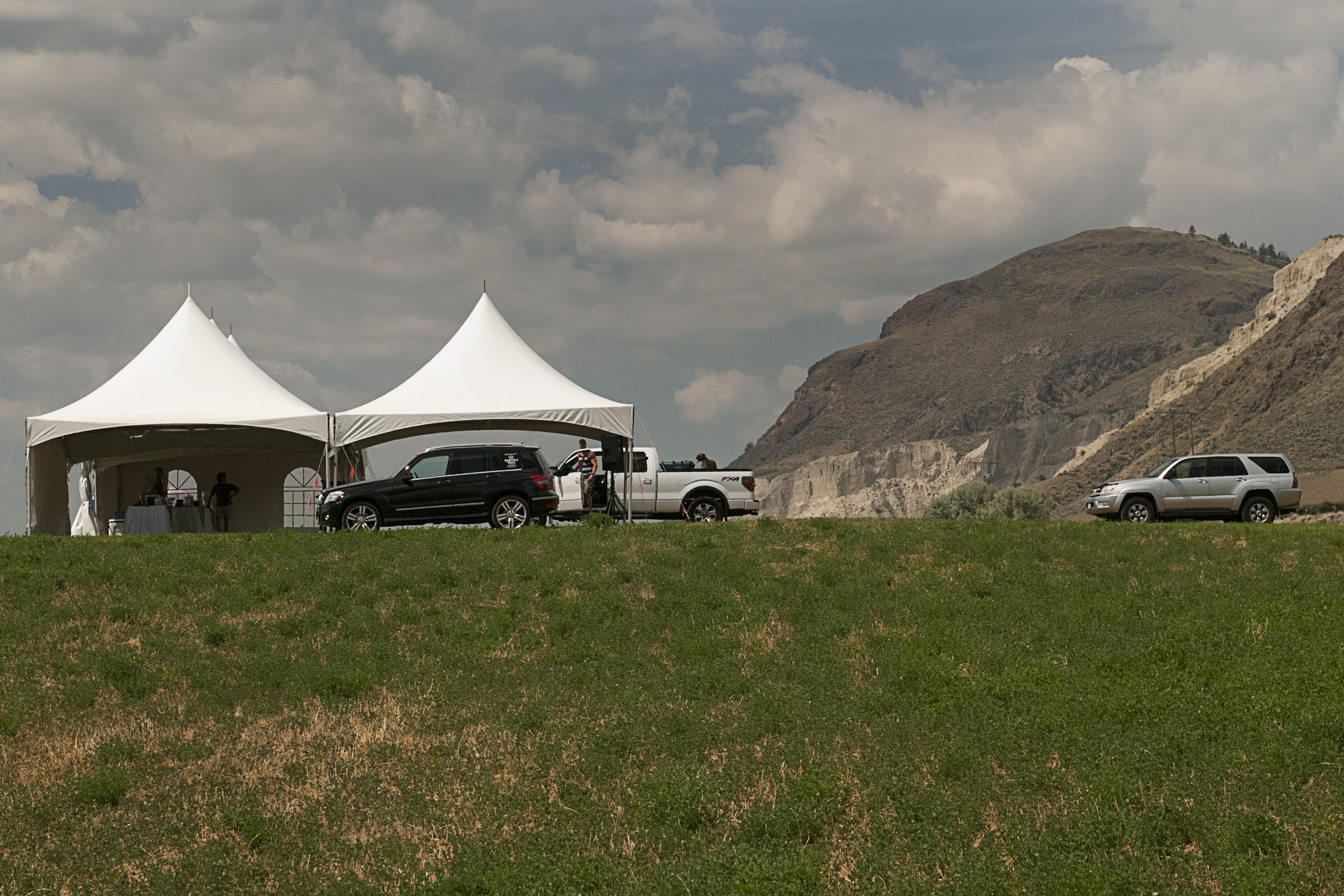
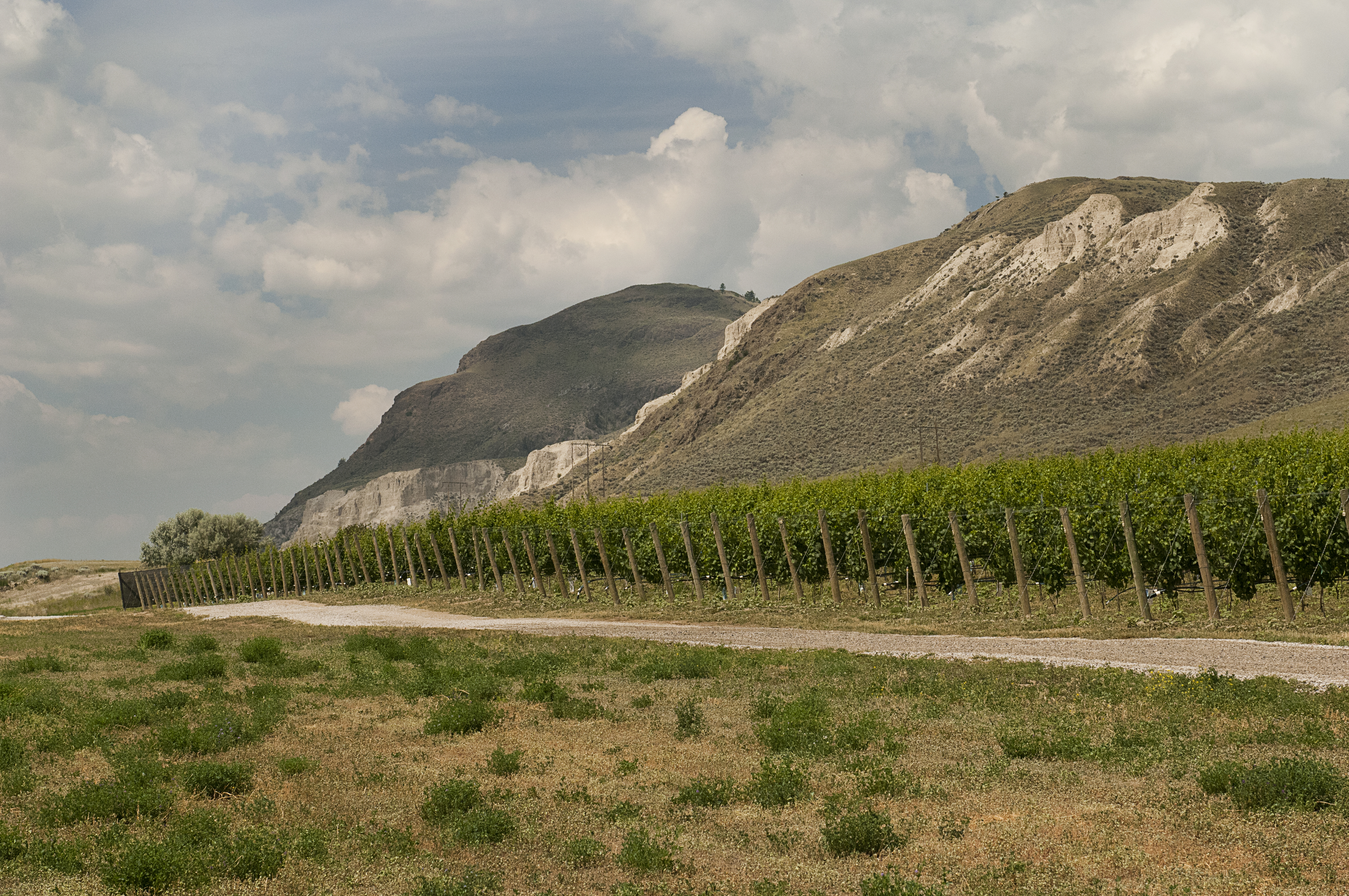
Bright sun and clear sky might be great for some scenic photographers, but it can cause many problems when photographing people.  My assignment this week was to photograph an event that began at 2:30 under almost clear skies, and where even in the shade the temperature hovered in the mid-30 degrees celsius. The location was on a south-facing, treeless, hill top with a sprawling vineyard in the background.

The event, other than a large group shot of all the guests, was held under five large, white tents, and my goal was to balance my flash and exposure to lighten up my subjects without glare, or shadows, and properly expose the field’s sun-drenched background.

The contrast in light from shadows to highlights on a very sunny day can be too extreme for a camera’s sensor to capture. I always look for open shade, or place the sun behind my subjects and use a flash.

I meter for the mid tones like the grass, or, in this case, large open field, and underexpose about two stops, then balance the overall image using my flash. My flash sits on a bracket and the flash is attached to my camera with a wire so I can remove the flash and hold it at different angles if I need to. I did notice people wielding point and shoot digital and a couple photographers with DSLRs trying to use their pop-up flashes, but I am sure they were disappointed with their results on that sunny day as the extremes from black to white are just too much for digital sensors.

Fortunately, photographers can load images into PhotoShop and no matter if they are JPG or RAW files can be optimized using Adobe RAW – an amazing application that gives additional control over exposure, shadow, and highlight detail. Adobe RAW can even help with those not-so-well focused images.  I use that program to polish my images and make them all that they can be which is much better than settling for photographs mass corrected at a big box lab.

After selecting the best images I correct the white balance and colour using Photoshop.  I make the photo look pretty much the way they appear through the camera and the images taken in the bright sun now have lots of detail.

Another program I regularly use (and think is amazing) is by Nik Software Inc. and is called Viveza.   Viveza allows selective control of light and colour. With that program I can maintain the colour and tonality while changing the background and blending the effect exactly.  All this isn’t much different than I used to do in my old film darkroom except now it is more precise, the process can be duplicated, and overall everything is easier.   Between the two programs I am able, without spending too much time in post-production, to provide my clients with polished and balanced images that do not show the harsh environmental realities of that day.

Sure, sunny clear days please us all and when planning an outdoor event we prefer that to rain, but for photographers the sun and harsh unflattering shadows on people’s faces isn’t the best outcome. My advice is not to approach this type of photography the same way as a scenic and to begin with test shots and constantly pay attention to the exposure and absolutely use a fill flash for the best outcome.

My website at www.enmanscamera.com

Liking Black and White Photographs


My last article entitled, “Wandering City Streets with my Camera” included both colour and black and white images and elicited the following remark from reader, Timothy Schultz, who said, “I don’t usually like black and white photos, but they were used very effectively here.”

Black and white photography has always been a favorite of mine, and I am pleased that some readers agree that sometimes the use of black and white is effective.

During my years of involvement with photography I have seen changes in the kind of photography people are doing. When I first started making pictures as a child it was all about economics – B&W prints were cheaper than colour prints.  After that one-hour photo labs appeared in shopping center parking lots, department stores, and finally in malls, and colour prints became inexpensive and the mainstay for photographers.

I have always liked black and white and much of the time prefer the mood it evokes.  Since the introduction of digital image making and programs like PhotoShop and NIK software’s Silver Efex the need to carry a dedicated camera and to commit space for a custom-built lab has disappeared.  Now all that is necessary is learning how to effectively use the correct program.

Colour is reality, and black and white seems a bit “arty”, or as I wrote, “mood evoking”.  I have never produced an album of wedding photographs without including some black and white prints and when I ask the couple if they are OK with that, I always hear, “Oh, we love black and white. Yes, please”.

People comment that a black and white portrait speaks about a person’s personality.  I am not sure about that, but I do like, and sometimes prefer, black and white, depending on whether the subject is a person, an animal, or a building, and what I am trying to illustrate with the photograph.  And, I “previsualize” how those colours are going to work as shades of gray while I am composing the photograph.

I’ll mention here that famous photographer Ansel Adams introduced the idea of, and the word, previsualization. It is a term he used to describe the importance of imagining, in one’s mind’s eye, what the final print reveals about a subject.

We see everything in colour, and in the modern world of digital photographic technology that’s what is captured.  Then, we visualize and translate those images into black and white images using post-production technology.  I really do like B&W pictures and sometimes miss those singular times in my darkened room, where I would produce my B&W photos by hand in open trays of chemicals.  However, technology has changed and there are many options that now allow photographers to produce higher quality B&Ws.

I read an on-line discussion entitled, “Why Black and White Photography” by Robert Bruce Duncan. In it he wrote, “black and white has an inherent dignity”.  His opinion is thought provoking.  Perhaps we do see and interpret more in a B&W photograph. Duncan goes on to say that he thinks few colour landscape photographers have matched the black and white work of photography greats like Ansel Adams, Edward Weston, Paul Strand, Margaret Bourke-White, and Imogene Cunningham, for example. And on portraiture he says, “it’s more than arguable that black and white is at it’s best for people photography…From early portraits by Julia Margaret Cameron, and later, Steiglitz and Steichen….(and) the photographers who documented America during the depression, to a whole slew of great Hollywood glamour photographers…and all the masters that made Life magazine perhaps the best periodical of its era.”

I am intrigued with Duncan’s words, I could mention some famous colour landscape photographers, but I’ll leave them to readers to search out. I believe both colour and B&W has its place.  As I wrote, sometimes I prefer black and white depending on the person, animal, or building, and what I am trying to say with the photograph. I pick and choose what image I think will work best in black and white and that depends upon the subject, the circumstance, the light, and, of course, the colour.

My website is at www.enmanscamera.com

Wandering City Streets with my Camera


I enjoy wandering city streets with my camera because I think the possibilities for photographs of cityscapes are endless.  Let me begin by saying that my wife and I were in Kelowna, British Columbia,Canada, doing cleanup and some renovations to a house we own and rent out.

The day had been long and with lots of work done and we had reached the time when we wanted to just stop, rest, and find something to eat. Linda had said she had a craving for souvlaki. I don’t’ get cravings the way she does. Hers are always for some specific taste or particular food, while mine is just for food. She, of course, gets irritated with me when she asks for my help, “What would you like?” and I respond, “Hmmm….food”. So we stopped, washed up, and found a Greek restaurant called Yamas where I ordered souvlaki and she ordered lamb. Well, so much for her craving.

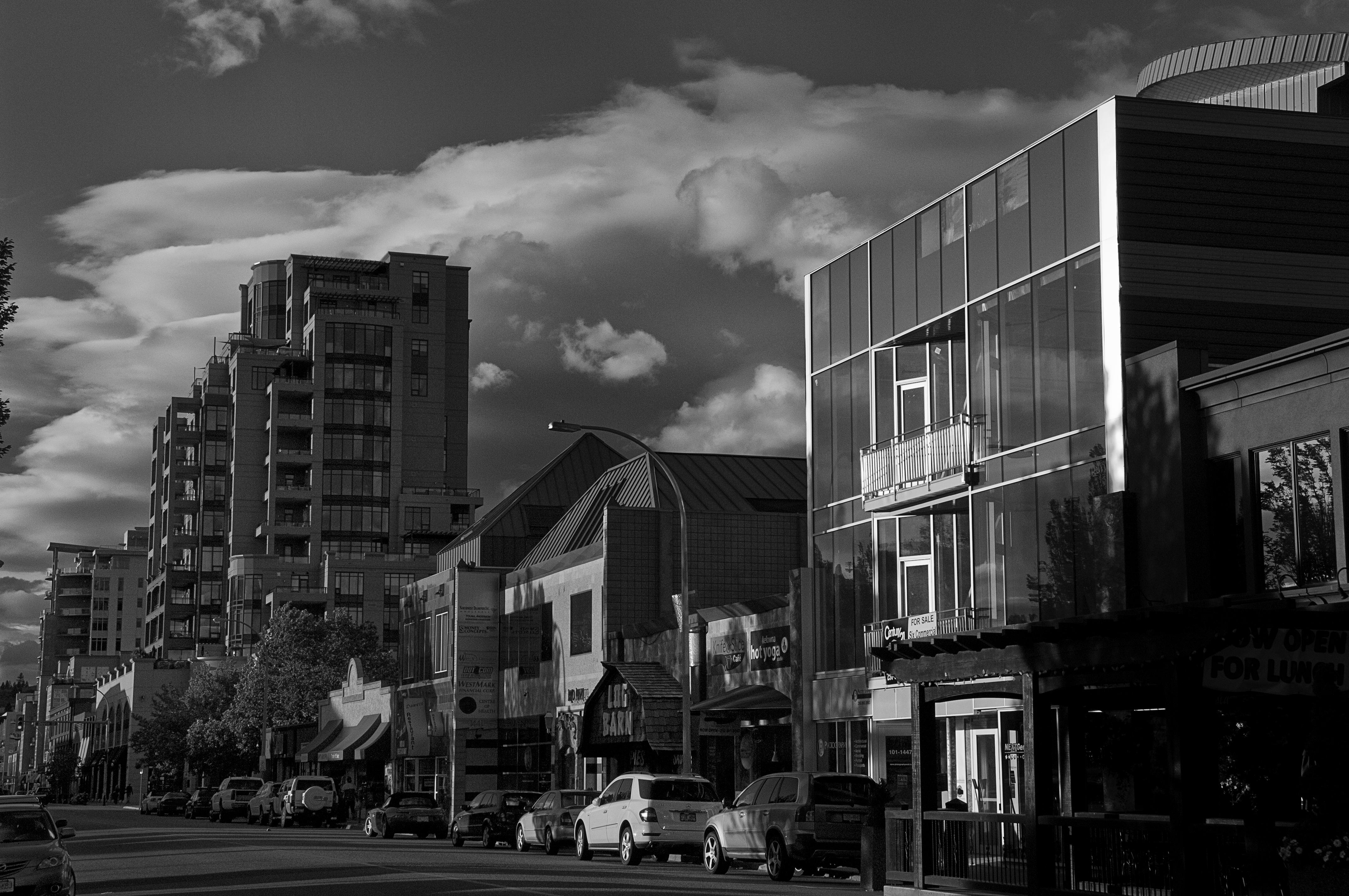
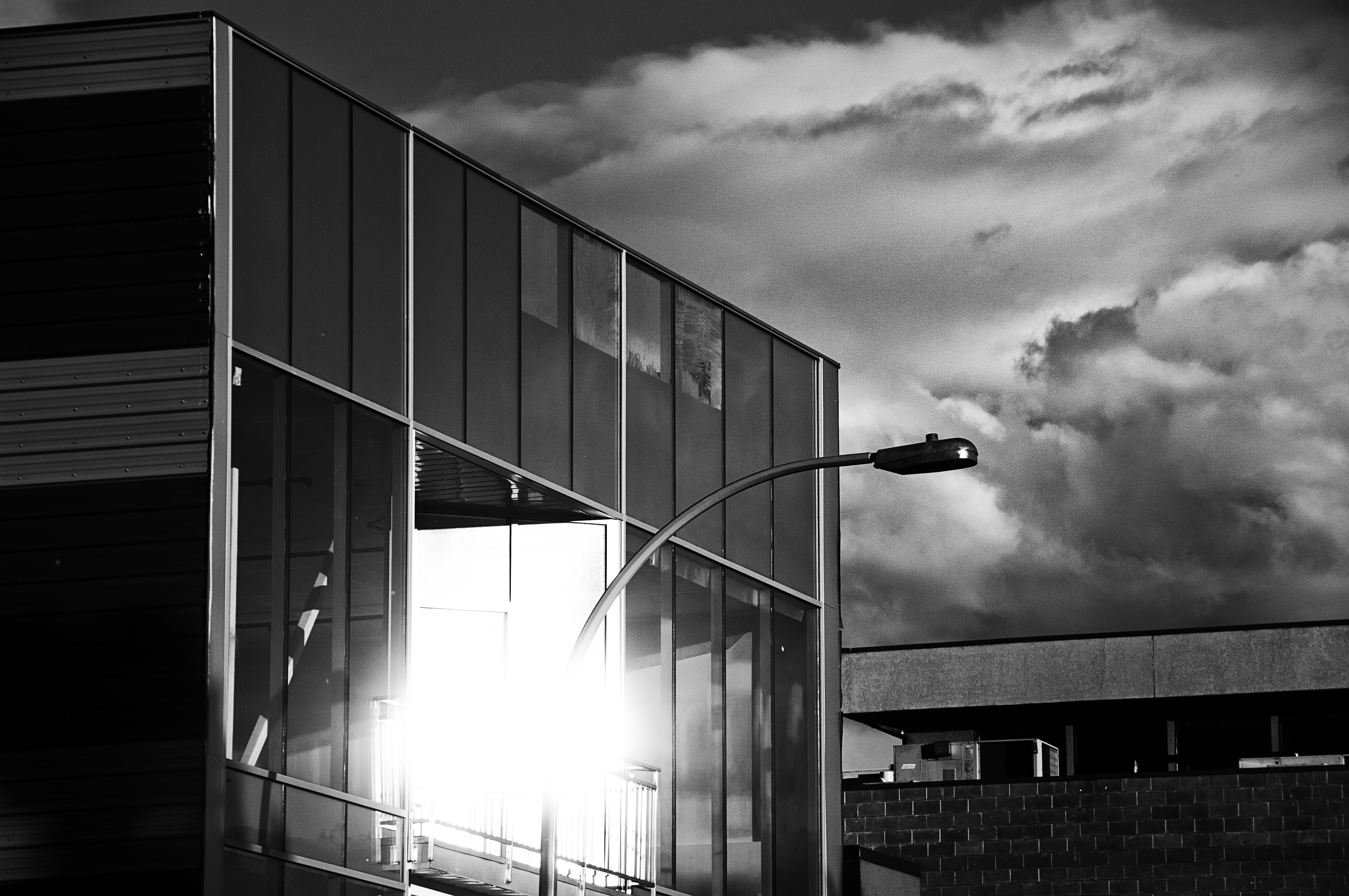
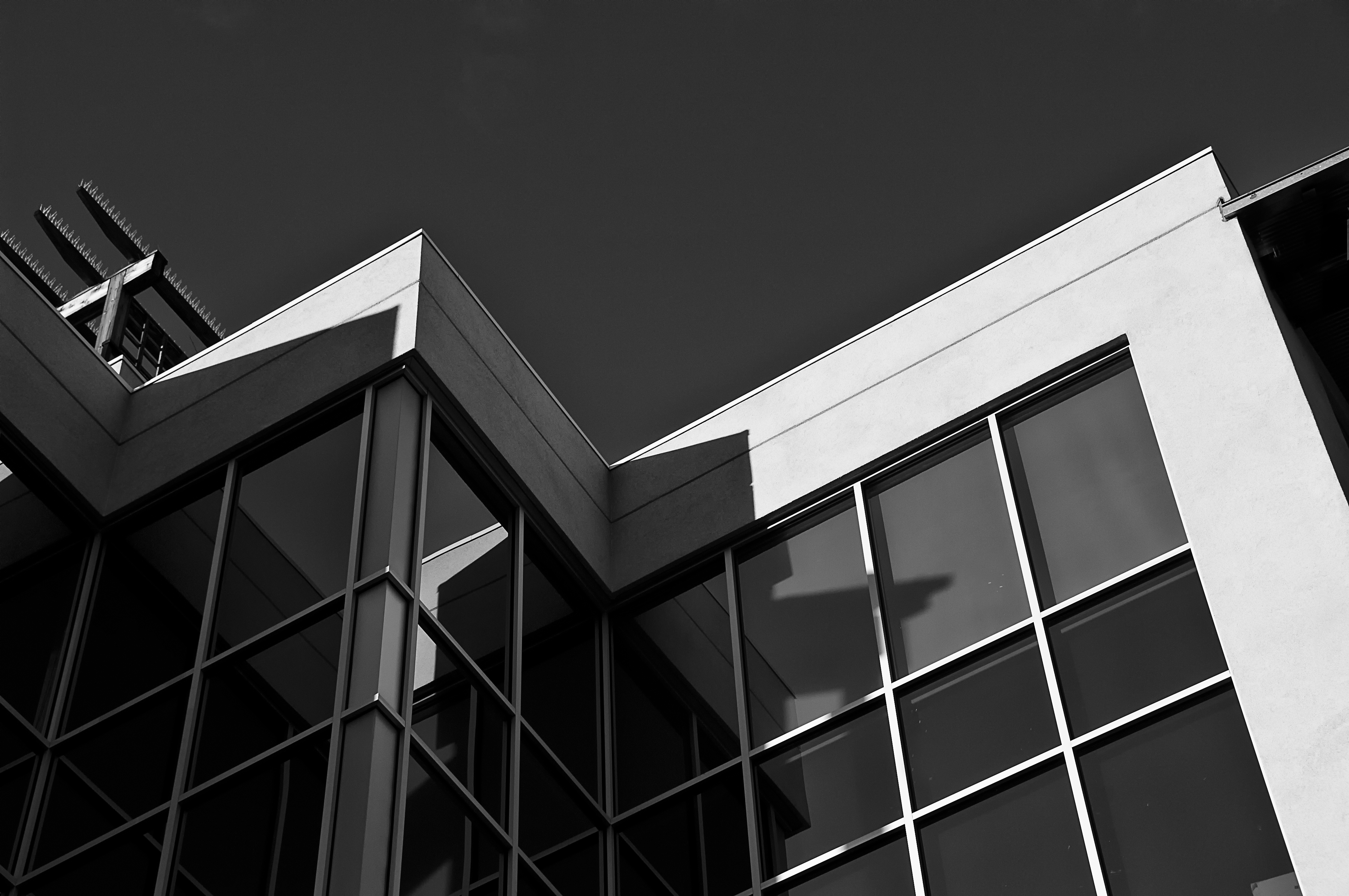
The day had been clear and bright, and at 7:30pm the sun was dropping and making the cityscape a mosaic of glittering glass, cold metal, coloured concrete, and deep, shadowy silhouettes. The sun on the downtown architectural features created angles, shapes, shadows, and textures.

I began this by writing “The possibilities for photographs are endless.”  Summer in the vacation city of Kelowna mean streets filled with tourists walking or bicycle riding, exotic cars, prowling Harley Davidson motorcycles, and just about any kind of architecture one wants. A photographer only has to select a subject.

So after one of those meals that makes one so satisfied that you must bump up the tip a bit to the waitress, we wandered out into that exciting scene and Linda suggested I take her back to the house so I could do what a photographic opportunist like me is most fond of, wandering.

I spent my time looking up, over, and around, jaywalking, precariously standing in the street, and oblivious to those that have just as much right to a sidewalk as I do.  I pointed my camera and made exposure after exposure, so totally preoccupied with what I was seeing and the act of photographing that, I admit, I do get caught up in what I am photographing.

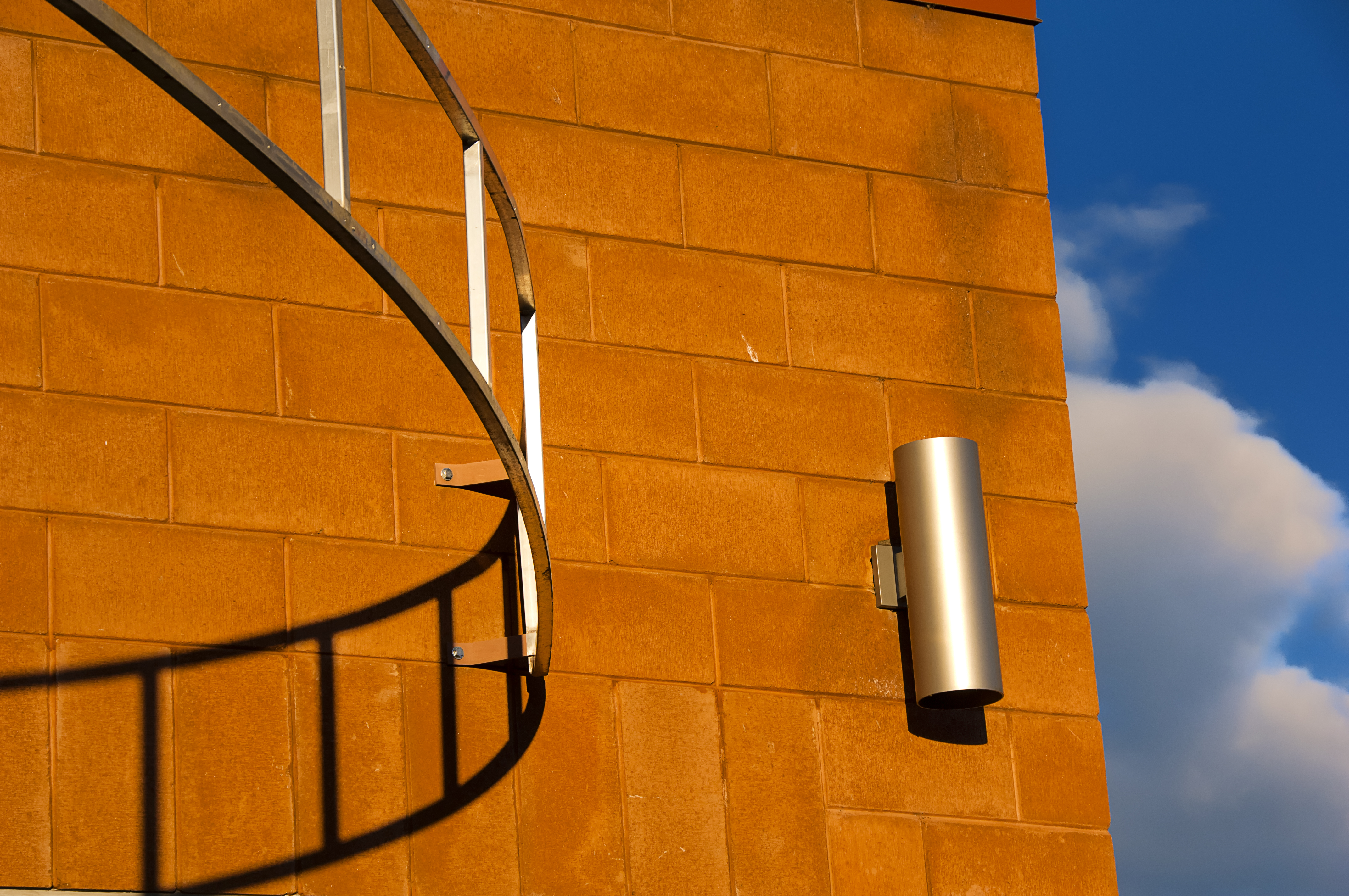
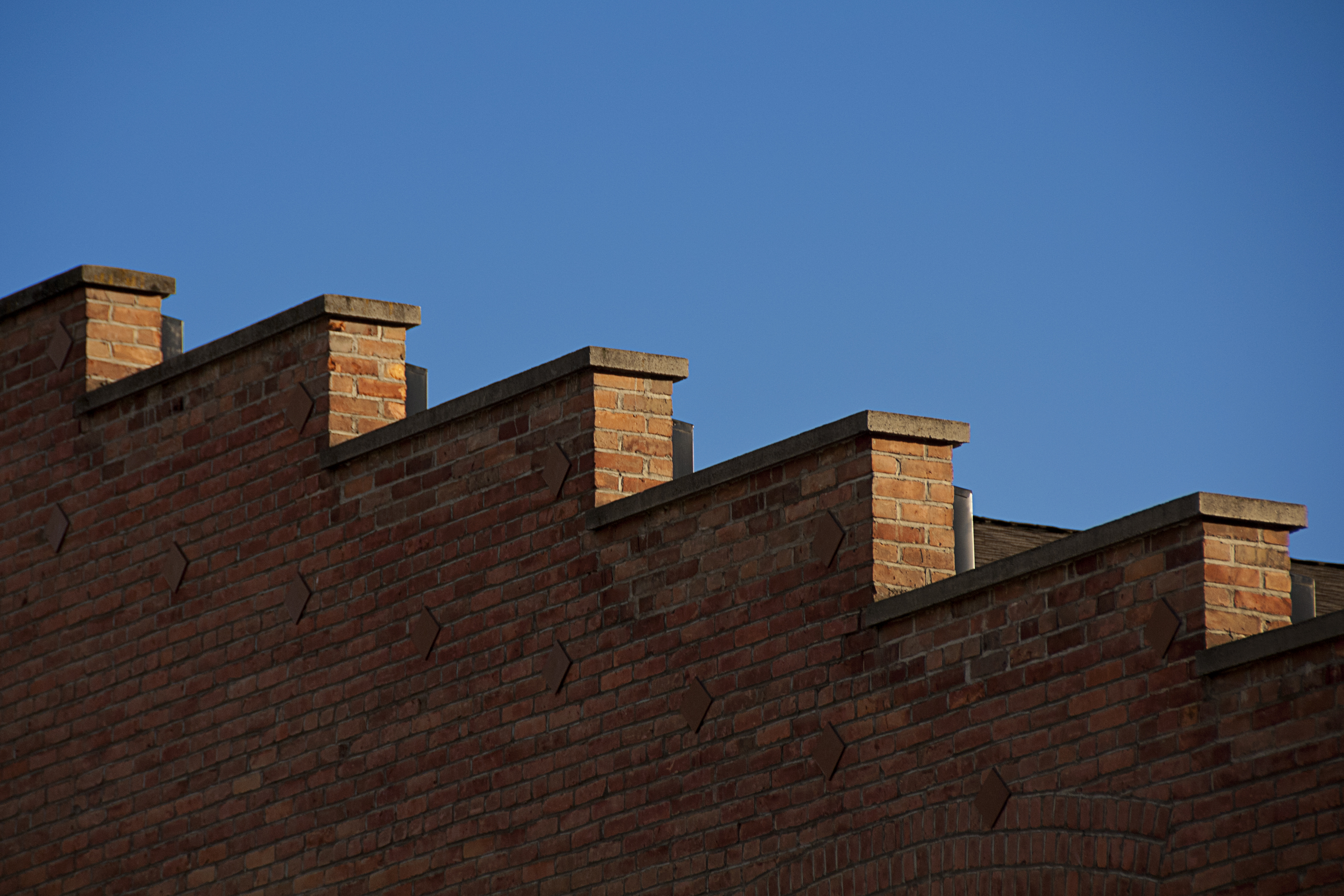
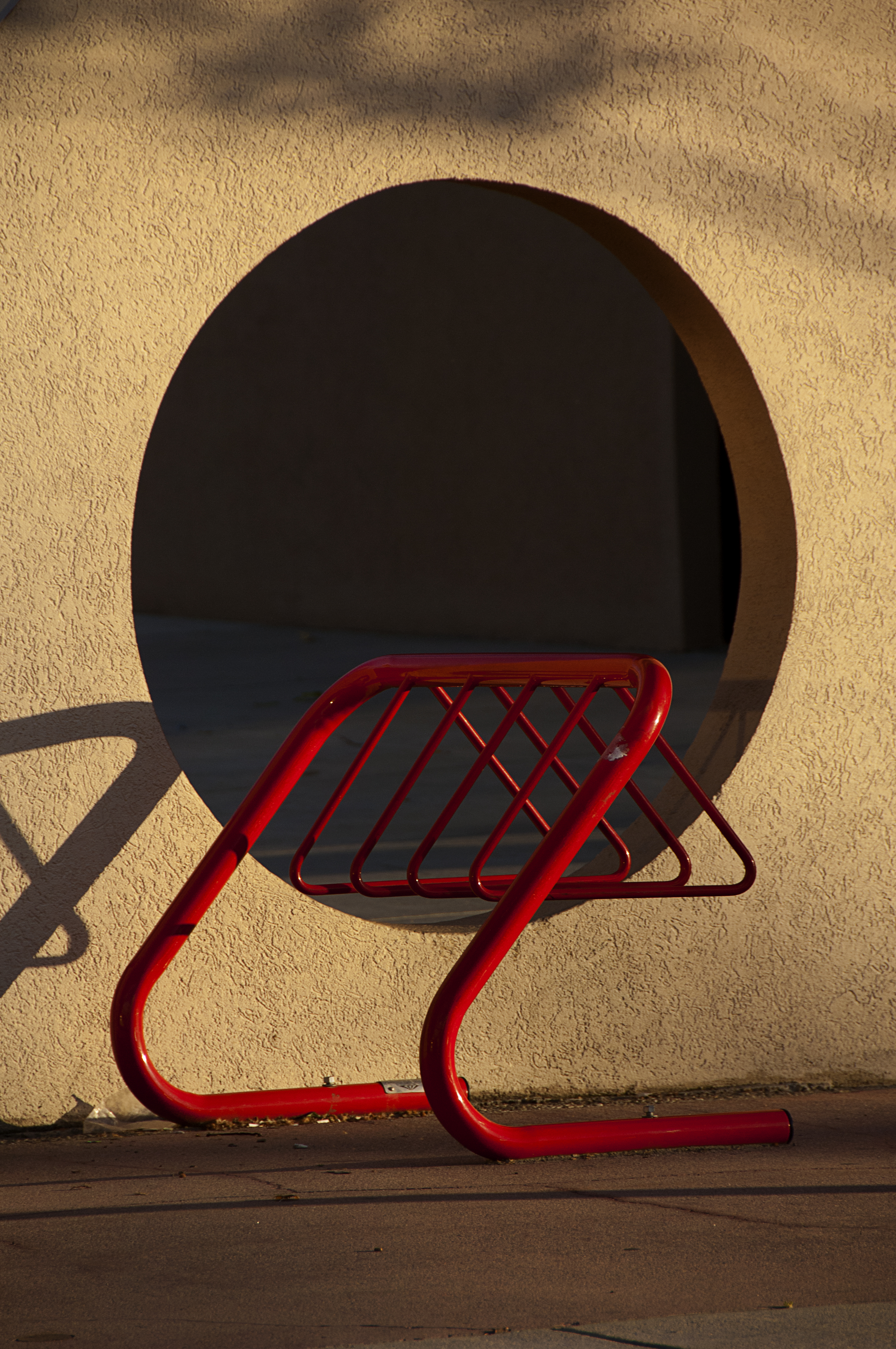
On this occasion I had decided to only capture parts or specific details of the architecture, and not the whole building, as part of the city’s landscape; just small parts of buildings that engaged me. I wanted shadows on the concrete, glaring and reflecting glass, the contrast of bricks, concrete, metal, and glass, against the sky or other buildings, and patterns of everything.

Our dinner had lasted long and the return trip taking my wife home took away time so I had to move fast, because evening shadows were growing and starting to take over the valleys between the tall buildings in a dim, flat scene, without the defining contrast that separates features.

When I finally put the lens cap on my camera and headed for the car I did notice bright neon signs turning on and bright light pouring from a couple of nearby bars, but both had some intense looking characters glaring menacingly at me and my camera, so I continued walking without composing a picture. I’ll leave those shots for another day when I can shoot and rush off without being weighed down with too much Greek food, or better yet, to younger photojournalists. I’ll stick to photographing buildings.

My website at www.enmanscamera.com