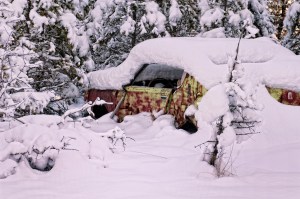
Infrared Photography on a winter day

old truck in infrared Infrared roadside Farm in Infrared

Photographers always tell me that they are participating on some kind of photo challenge or another: a photograph-a-day for a year, or once-a-month for some specific time, or some have even decided to follow a particular subject through each season. I like the idea, however, I expect dedicating time to making a photograph every day (unless one works in a busy studio and is doing it as part of the work day) could become quite a chore.

Personally, I have tried projects that require that kind of stick-to-it dedication, but I get side tracked easily and rarely complete what I started. Last February I thought I might photograph a bridge a month. I live near a big river so how hard could that be? I did get a few and then I just forgot.

When it comes to my personal photography fun stuff just happens. For example, it was one of those days when I was too lazy to do the stuff around the house that I should have been doing.  I was reading some and just thinking about photography in general. OK, for me thinking about photography isn’t that unusual, it is actually what I prefer to do.

I was lazy, reading and thinking about how I should have a photo project. OK, the project: drive up the road a couple miles and photograph neighbour’s places poking out of the snow and do it with my infrared camera which is fun.  Criteria: Hope for some sun.

I have an older digital SLR camera (Nikon D100) that has been modified to only see infrared light. Infrared (IR) light is light that has longer wavelengths on the red edge of the spectrum and is invisible to human eyes.

The sensors for digital cameras are sensitive to more than just the visible light spectrum. This causes problems with colour balance, so camera manufacturers place a filter in front of the sensor that blocks the infrared part of the spectrum that only allows visible light, and not infrared, to pass through. The modification for my D100 was accomplished by removing that filter, and installing one instead that blocks visible light, allowing mostly infrared light to reach the camera’s sensor.

The camera still functions normally with full autofocus and autoexposure, except that it’s now able to record the infrared wavelengths that are just beyond what the human eye is capable of seeing.  When infrared photographs are produced as black and white the photographs show trees with glowing white leaves and black skies opening up new visual opportunities for photographing the world around us.

Many think of infrared photography as the stuff of military night reconnaissance, or, as frequently portrayed in movies, as aerial thermal imaging that finds the bad guys. With thermal imaging one sees the heat the subject is producing, however, infrared as photographers use it, with our modified cameras, is about capturing the light or radiation that is reflected off a subject and doesn’t involve thermal imaging at all.

In 1800 Sir Frederick William Hershel described the relationship between heat and light and let the world know about the existence of infrared light in the electromagnetic spectrum.

I don’t know how conversions are accomplished with modern sensors. With my old D100 I need to preset the white balance and be aware of a meter that is easily tricked with the white snow. I must check my camera histogram after every release of the shutter and usually make two or three exposures just in case. However, everything appears normal through the camera’s viewfinder.  Also, because so much light reaches the sensor one can use high shutter speeds and so it is easy to hand hold while exposing a photograph.

I would have liked a clear sky with more sun to increase the infrared effect, but the high clouds let in just enough light to make things interesting and challenging. Some subjects don’t work very well with infrared, so I just experiment, take lots of pictures and hope for the best. I knew on that not-so-bright-day my images would take some work with PhotoShop and NIK’s SilverEfex.

Infrared photography is fun. I was only out wandering my neighborhood for a little over an hour before I hurried home to work on what I got. Everything changes when one is working with infrared, forcing even the least creative among us to think creatively. I can leave my images with blue trees the LCD displays or move the white balance off the preset to cloudy and get red and black pictures instead. Opening an image file in PhotoShop is always a bit of a surprise and from there on its all experimenting and personal vision. Yes, infrared is fun.

As always, I appreciate your comments.

My website is at www.enmanscamera.com

A Good Day of Roadside Photography

River view copy   REd pier copy Horse running copy

I recently talked to a long time photographer that said the landscape photography in early advertisements by the American Automobile Association was what got him into photography. That organization was once the best place to get maps for road trips in North America. They sent their employees out, with cameras and mapping instruments, across the continent finding the best and most scenic routes. I remember seeing pictures of their big, four-door cargo vehicles with people poised on platforms on top of the vehicle with large tripod mounted 8×10 cameras on some obscure dirt road in the middle of North America. It all looked very exciting.

We both remembered pictures of Ansel Adams standing on a platform on top of a vehicle very much like those used by the American Automobile Association with his large camera making wonderful photographs that scenic photographers still admire.  I actually sold my jaunty, little, two-seater MG that was so easy to get around the streets of Los Angeles, and bought a bright yellow International Scout 4×4. Underpowered, poor turning capability, uncomfortable on long trips with back seats that were only accessed by climbing over a metal barrier behind the front seats, it was perfect in my young mind and meant that I, like Ansel Adams and the folks from the AAA, could gleefully travel the back roads in a cool looking vehicle with my camera capturing the natural world on film.

Years have passed, and technology has changed, and so have I.  There are still lots of back roads to explore and photograph, but the days of climbing on my car roof are long gone.  The American Automobile Association no longer explores the country, and today I check maps on line or my cell phone. I don’t need a large 8×10 view camera like Ansel Adams used with the accompanying long hours working in a chemical darkroom to make good enlargements, and certainly don’t want to drive around in that uncomfortable, gas guzzling International anymore.

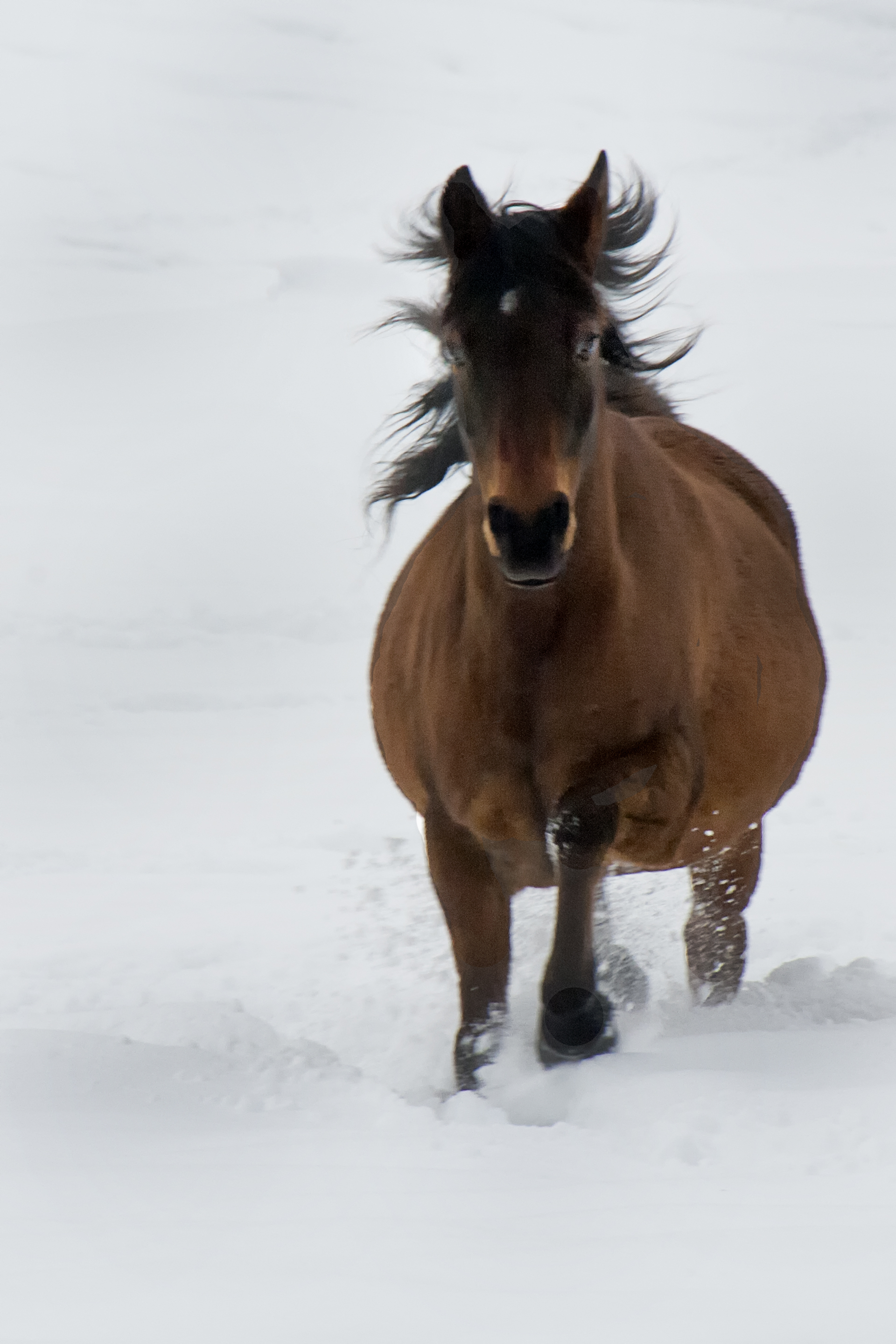
I thought about that conversation and the many scenic photographs I have made while driving along the South Thompson River towards Kamloops, British Columbia as I pulled off the road to meet up with fellow photographer Peter Evans. Evans and I were hoping the sun on the gray, overcast day would poke through the clouds enough for us to make some worthwhile pictures. We had headed out on the snow-covered roads without a plan. Not the best way to success, but both of us just wanted to get out.  We drove along the highway photographing horses, snow covered trees, and Evans even jumped out trying for some photos of distant deer bounding through a meadow. There were lots of opportunities in spite of the flat light, but our main problem was getting my car far enough off the snow lined highway so as not to be clipped by large passing transport trucks.

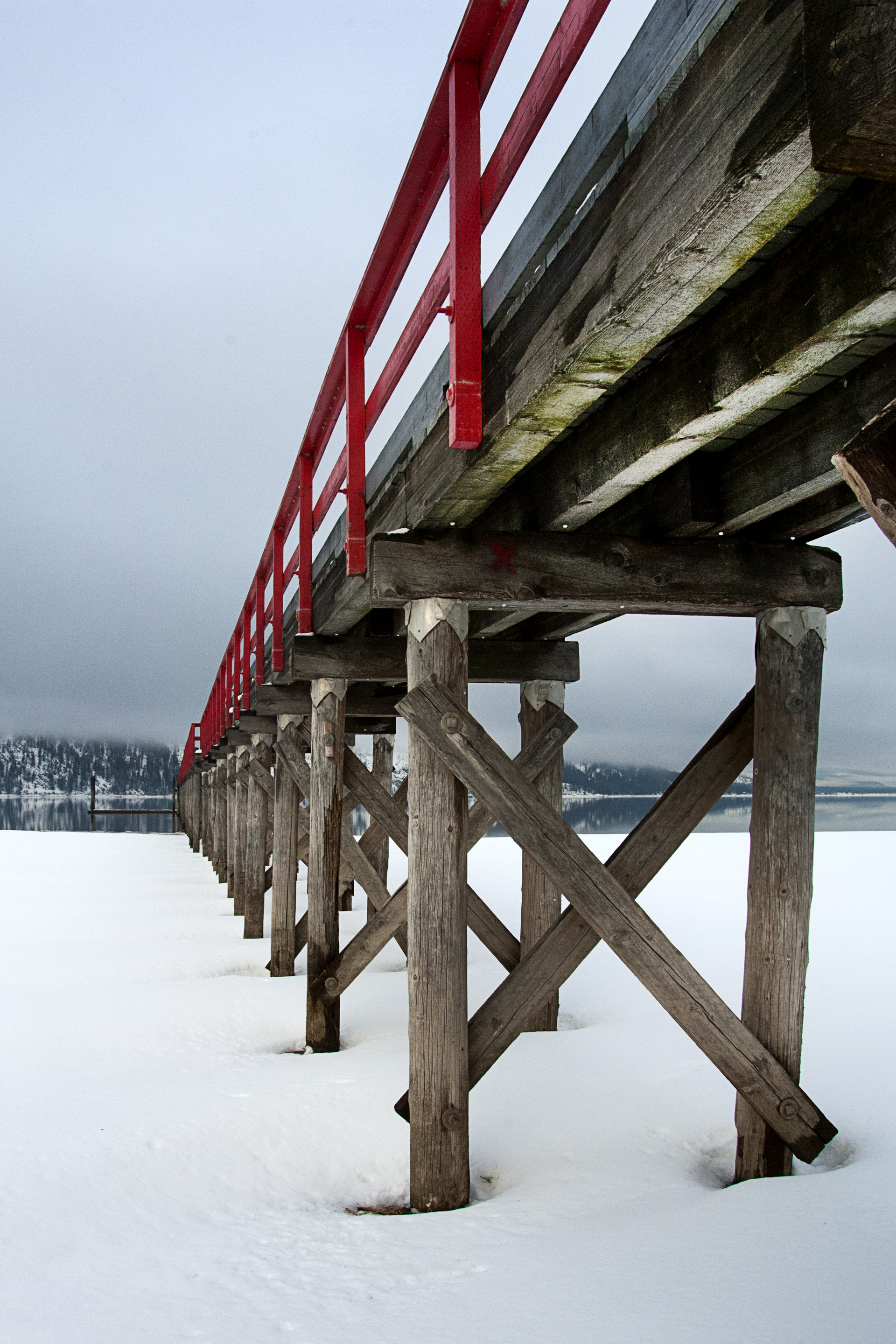
We stopped and wandered along the Shuswap Lake in the small town of Chase , and photographed the pier, reflections in the water, and trees along the white icy shore.  When the sun finally peaked though and we dashed back to the car, our goal to catch the sun along the river near a bridge that crosses the Thompson River a few miles from where we were. Chasing the sun seems to be part of roadside photography sometimes.

By the time we reached the Pritchard river crossing the sun was creating diagonal shafts of light that slowly illuminated some features in the landscape, and then in minutes moved leaving them absent of light.

We parked and rushed on to the bridge, yelling at each other, “look, look, look”. Then in spite of cars crossing the narrow bridge, we stood by the railings and shot away. The river scene was exciting, and I constantly altered my meter trying to keep the exposure under the fast moving light. Then in about ten minutes the sun moved into the clouds and dropped behind distant hills and the sky, hills, and river were back to unexciting flat light. However, we were like two happy young kids as returned to the car talking about our luck with the light.

That’s what I call a good day of roadside photography. Pictures of running horses, reflections on the lake, cool shots of the Chase pier, all capped with luminous pictures of the river and I didn’t even need a platform mounted on a gas guzzling vehicle, a big heavy camera, or back roads.

I appreciate your comments. thanks

My website is at www.enmanscamera.com
Ten Resolutions for Photographers for 2013

When I wrote about New Year’s my resolutions last year I said they weren’t so much resolutions, as they were things I’d been thinking about for some time. This year they could be just as accurately called my photography goals for 2013 rather than my New Year’s resolutions.

I also asked members of Canadian-Digital.com for their resolutions. So here are some of the best from them, a couple from other photographer’s blogs I liked, and some of mine.  I kept the number at ten and mixed them into no real order. Too many goals don’t seem to work for me.

1.    This is the year to concentrate on personal strengths. So the first resolution might be called  “growth”.

2.    Plan a trip or photographer’s vacation this year.  Be sure to make it about photography, not one of those    rushing trips where one hopes for a snap shot or two. For me the resolution would be, a photographer’s excursion that allows and inspires me to use the equipment, knowledge, and talents I have.

3.     Photographers should always make the effort to learn new techniques. Maybe by taking a class, or at least buying some books, or CDs, written by accomplished photographic writers. This resolution can be called “education”.

4.    I will continue my ongoing quest to organize my old prints and slides.  I make this resolution every year. This never-ending struggle has been ongoing for years and may never end. I want to place as many as possible on archival CDs. I suppose this resolution is “organize”.

5.    My shop is a great place to interact with others interested in photography; I have a few chairs available, and it is fun to talk about photography. My advice for those that don’t have my convenience is to get together with other photographers with the only goal being to talk about, or do photography. How about searching out photographers interested in the kind of subjects one might like to photograph, for example, collaborate with like-minded enthusiasts and plan an outing, or just get together for refreshments and talk at some local spot. This resolution is “get involved with other photographers”.

6.    I could add a lens or maybe get a newer camera body this year, but I am never really searching. New equipment just happens, there isn’t any one camera or lens that I require.  However, because I prefer to purchase used equipment, I am always on the look out for bargains that fit the kind of photography I do. So the resolution for this year should be to sell something that I am not using and buy something that I will use.

7.   Many photographers are participating on “photographic challenges”. Anything that gets us out with our camera has got to be good. Whatever the challenge may be, whether about some specific subject like photographing all the bridges in one’s area, or a photo-a-day for some period of time. As I’ve stated before anything that gets us out with our camera has got to be good. So this resolution might be “take on a challenge”.

8.   Study famous photographers and look at lots of photos. When I am interested in a new subject I begin by doing an internet search on photographers that worked in that specific area. Then I find their books or photographs and choose an image and try to figure out why it works. This resolution will be to “look at lots of photographs” this year.

9.   “Out of Chicago” blogger, Chris Smith, wrote, “Slow down. This was my resolution two years ago and it changed my photography. I decided to buy that new tripod.” And he continues by saying, “Before this I was taking too many pictures.”  He explains that by reducing his captures, “I actually had many more keepers. So take your time with each shot.” I like what he wrote so this resolution will be “slow down and take more time”.

10. The last is from photographer, Ming Theinb, “(Be) More ruthless with the seeing and editing process; conditioning oneself to throw out the crap is the only way to keep improving.” This resolution is “quality not quantity”.

I am sure readers will make their own resolutions for the year we have just begun.

What could  they be? I can only imagine.

2012 in review

The WordPress.com stats helper monkeys prepared a 2012 annual report for this blog.

Here’s an excerpt:

600 people reached the top of Mt. Everest in 2012. This blog got about 5,000 views in 2012. If every person who reached the top of Mt. Everest viewed this blog, it would have taken 8 years to get that many views.

Click here to see the complete report.

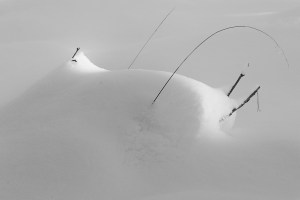
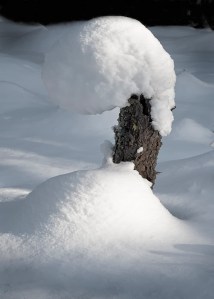
Photographing an Intimate Snowy Landscape

snow & light Old fire resting under the snow Snowcovered beast

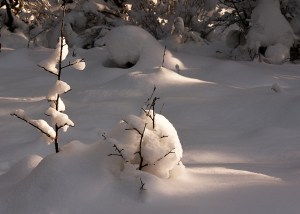
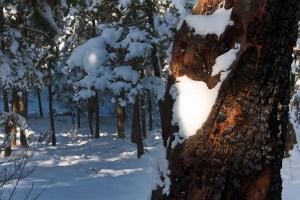
The sun was out in a clear, light blue sky, the snow was deep, and the temperature was moderate at -8C. When the snow gets deep I’ll usually wear snowshoes, however, on this excursion I wanted to isolate and create from the intimate parts of the landscape. The usual large open scenics were not what I was looking to photograph, so that meant I would be kneeling, sitting, and lying in the snow. This would be that rare winter occasion when snowshoes and a tripod would just get in the way.

I crossed the unplowed road in front to my home and stepped into the familiar woods.  I began by kneeling deep in the snow to photograph a branch poking out of the snow, hoping that some future viewer would enjoy the same surrealistic elements of clashing shadows, and white highlights on the frosty branch that I was photographing.

The landscape was covered with deep, powdery snow and I had to be careful not to get a cold surprise down my neck as I trundled along, camera in hand, searching out intimate possibilities the snow, shadow, and light.

As I surveyed the scene I thought about a book I had just started reading, “Sketching Light,” by photographer, and author, Joe McNally. In it he writes, “As it always has been, light remains the language of all photographers, everywhere.”  What I was searching for really depended on the light. Too harsh and directional, or too soft and flat, or too dark, and everything would be lost. McNally is right. I needed just the right amount of light for my visual discussion.

I chose low angles, and had to be careful of the background influencing my subject. My lens choice was a short focal length 24-70mm and because allowing the camera to select the exposure with an automated mode would have taken the control away, I choose the manual exposure mode. Manual exposure meant I could determine how the bright high lights and how dark the shadows were.

I wanted graphic depictions that depended on the tonal elements more that the actual subjects. I will comment that getting back up after lying in the deep snow is easier said than done. Remember that the camera doesn’t like to be covered with wet snow, so with only one hand for support in the soft and shifting mass the word support doesn’t really apply.

I do like walking through a quiet, snow-covered forest because all sound is muffled. I couldn’t hear the distant highway, other people or even neighbour’s dogs. My boots made the only noise, although every now and then I would mutter some off-colour word as I struggled to regain an upright position after another prone camera angle. I expect some silent listener would have wondered at the sound of grunting, and then an exclamation that usually was followed by laughing, coming from the snow covered forest.

Photographers, except those macro enthusiasts, aren’t really interested in what I’ll call the intimate aspects of a landscape. They position their tripods for wide scenics or choose larger subjects like river valleys, waterfalls, meadows, and mountainscapes. After all, those are the scenes from the natural world that capture our imagination.

The vast and unending spaces shown in photographs by the greats like Ansel Adams and Galen Rowell are inspiring and I’ll admit to the lure of a mountain ridge or waves crashing along some sweeping ocean beach. However, every now and then I find myself seeking out shapes created by shadows and light that are easily passed by in the quest to artistically document open spaces and convey our appreciation of some expansive environment.

Snow & Light Sculpture

Those that don’t mind kneeling, sitting, or laying on the ground (or in my case deep snow) might enjoy looking closely into the landscape to photograph sculptures created by how the shadows and light changes an otherwise unremarkable subject.

I do appreciate your comments, Thanks

My website is at www.enmanscamera.com
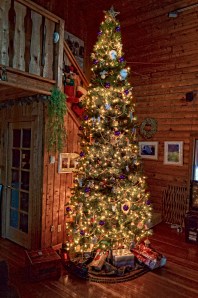
Photographers and Christmas Pictures

tree 2  presents Xmas Cat

Christmas is only a couple days away. Gosh, that was fast! Oh well, I like Christmas with all its trappings. I’ve been listening to Xmas music, watching plenty of not-so-great Xmas TV shows, attending both my granddaughters’ Christmas concerts, decorated our tree and most of our house and I have already been eating candy and lots of holiday snacks.  It’s Christmas.

This time of year is filled with photo opportunities. Yes, pictures of our home and the landscape covered in snow are great, and I have been having a great time wandering around in the fresh snow, but the unique opportunity I am writing about is the pictorial story of everything that happens around us during this holiday season. I have years of film slideshows and digital CDs of my Christmas’ and plan on continuing for many years to come.

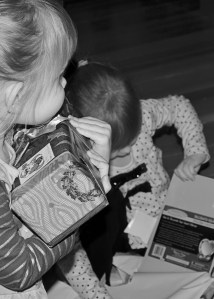
Photographers might try to tell a story and take pictures of everything.  For example, the decorated Xmas tree and house, even that Christmas Eve dinner table, and maybe the morning breakfast with the family on Christmas. Then get the camera ready for the gift opening. Yep, photograph it all and approach every photograph as if it’s the most important you’ll make. It doesn’t matter whether it’s for a client or for family archives, all pictures should be printable and viewable. I prefer a DSLR camera and every image gets post-post processed before anyone sees it.

Not one for the point and shoot style, I usually think a bit about how I want to make each picture and I take lots of pictures while things like opening presents are happening. I always use a flash and shoot wide with the intention of cropping for the most dramatic effect later. I sometimes think setting up a couple lights on stands would be great, but my family will only put up with so much, and anyway a stand might get knocked over in all the excitement.

Always use a flash for family stuff and go for as much depth of field as possible. My lens of choice for the past few years has been either my 18-200mm or 18-70mm, either one works fine in the confines of my house. They both focus fast and close and that’s all I need.

My family is used to my photographic demands as I expect most photographer’s families are. When we are at the table there isn’t a bit of hesitation when I get up and move in with my camera, everyone knows what to do. Even my son’s young daughters pose. Please don’t embarrass people with pictures. Good photographers shouldn’t be the kind of picture taker that crouches down in everyone’s face as they eat.

My family and friends know that I’ll delete those that don’t live up to my personal expectations. Well, I think they know. Maybe my family and friends think I only take good pictures. Yes, lets go with that. They don’t need to know how long I spend editing in post-production.

As I began, Christmas is only a couple days away. Give that camera’s sensor and lenses another cleaning and make sure flash and camera batteries are charged up.  Yes, I am already having a good Christmas and that’s going to continue with lots of holiday picture taking that I’ll extend into the New Year.

From my wife, Linda and me, have a great Christmas and take lots of pictures.

My website is at www.enmanscamera.com

A photographer’s musing on Black and White photographs

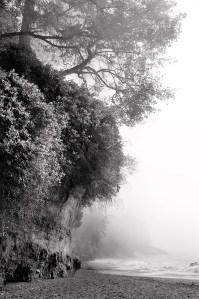
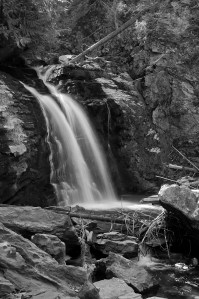
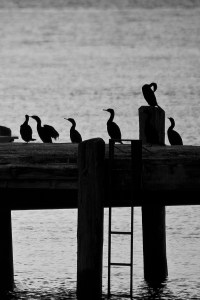
beach fog Chase Falls Coast silhouette

This week there were two things that made me start thinking about black and white photographs. The first was a discussion with a fellow that stopped by my shop, a film shooter, who announced that, in his opinion, the only way to get high quality photographs was to use black and white film and to make prints with chemically processed, black and white photographic paper.  The second was a notation in facebook advertising an exhibition that for some reason selected out black and white photographs as their own medium separate from photography, i.e., two exhibitions – a black and white exhibition and the other was photography.

I don’t agree with those long time photographers’ that belief that only film produces high quality images. That is now a discussion long past its time, the technology has changed, and in my opinion, for the better with improvements in camera sensors and programs like PhotoShop.

When I used to spend hours in my black and white printing lab I had the best enlargers and enlarging lenses that I could afford, and searched and researched the different manufacturers’ chemicals to obtain the most control I could get over contrast and density of my negatives (film) and printmaking paper.

I would work for hours in a darkened room to make the final images more than they would be if I just printed the straight negatives, as they were when they directly came out of the camera. These days I search out computer programs that give me the most control over my digital files and instead of expensive enlargers and lenses, I have a computer and 30 inch monitor. And I still work, although no longer in a darkened room, to make my final images more than they are directly out of the camera.

I know most modern photographers like to talk about cameras, lenses, and of course sensor megapixels. Not much has changed. It seems like only a few short years ago that photographers were talking about cameras, lenses, and film. And many of those that I spent my time with were discussing how to get the best image out of a black and white roll or sheet of film.

A few short years ago I thought all this had been lost.  Digital technology arrived and with it a new and exciting way to produce my personal photography, but I was disappointed with the quality of printmaking, especially black and white.  I believed that manufacturers were only interested in selling mega pixels and cheap inkjet printers.

Colour photography was getting better and better, but not so with black and white. I was disappointed with the in-camera presets for B&W images.

Many photographers, and I include myself in that group, wanted to produce black and white photographs that matched those we used to print in our chemical based darkrooms. That took a bit of time for software makers to catch up, but these days I am seeing lots of excellent black and white photographs.

An understanding of PhotoShop is important, and with program’s like NIKsoftware’s Silver Efex, producing those film-like black and white images of time past is relatively easy and if one has a pigment ink printer, making a high quality B&W print, once only available in a chemical lab, is now absolutely possible.

I like black and white photographs and to me there are some pictures that just look better that way. When asked, I’ll say something like, I like the mood created by processing this image as B&W.  Now we can look at different versions of any picture and choose the one we think says the most about our personal vision and has the best impact on viewers.  I think a photograph is a photograph and don’t agree with those trying to describe B&W as a different medium than colour. I suspect those may be the same people that like to say any image that has postproduction work is not a “real” photograph.

Some pictures look better as B&W and some look better as colour. It depends on what the photographer is trying to say about the subject. As for B&W, I admit that lots of my images end up as B&W.  I’ll finish with a quote by famous Canadian photojournalist, Ted Grant.

“When you photograph people in color, you photograph their clothes. But when you photograph people in black and white, you photograph their souls!”

I always appreciate your coments.

my website is at www.enmanscamera.com
Photographing models at a Strobist meet.

Stephanie4 Molly 2 Monica 1 Stephanie 2 Molly Monica3 Stephani 3

Last Sunday I joined six other photographers and three models at photographer, Dave Monsees’, rural studio for what Dave organized and referred to as a Strobist work session.

The rustic studio, nestled beside a stream in a picturesque treed valley, is a short ten-minute drive from city center to the rural community of Cherry Creek, British Columbia. I had heard about it from other photographers and was looking forward to his Strobist session so I could check the studio out, and, of course, spend the afternoon with like-minded photographers. Now what could be better than that?

This Strobist get-together was the third held in my area that I have been fortunate enough to attend, and as with the first two, it had its own uniqueness.

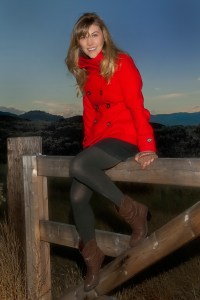
Some of the participants had experience using off-camera lighting and got right to the business of arranging lights and posing our three models for the day, Molly Lampreau, Stephanie Johannesen, and Monica Nicklas.  I had agreed to begin with a mini lesson and to be available to answer questions for those invitees that were just beginning to enhance their portrait photography with artificial light, and with a few minutes of instruction and a bit of prompting before long everyone was in the act of portrait photography.

The word, Strobist, and gatherings like the one I was invited to have become popular because of American photographer, David Hobby’s, Strobist.com lighting blog that promotes off-camera lighting techniques among photographic enthusiasts, with an emphasis on the practical knowledge rather than just the gear. Those that think our meets in Kamloops are unique should try searching Stobist meet on the Internet. There will be page after page featuring Strobist meets all over the world.

My regular readers know that I rarely make a photograph of people, indoors or out, without using a flash. So getting together with other photographers, experienced or not, that like to use off-camera light for their portrait work is fun. The studio was jam packed with lighting equipment set up with wireless camera connection. There were two different backdrop set-ups and we had our choice of several larger studio type lights in the larger space, and some smaller hotshoe flashes on stands in the more intimate space. There were also lots of light modifiers, softboxes, umbrellas, snoots, barn doors, and so on for us to employ.

How a person in a portrait appears does have a lot to do with how the subject(s) are posed, but I think light and how it is applied is just as important. Using flash, on or off camera, to modify light gives a photographer more control than just using the sun, or relying on a high ISO.

In addition photographers always need to explore and experiment to learn how to balance the background, or ambient light, with flash, and get-togethers like a Strobist meet are perfect for practicing off-camera lighting in a studio, with willing subjects without the pressure of actual clients, and watching other photographers work is always fun.

I was in a hurry to download my images from that day and began sorting, editing and optimizing as soon as I got home. As I opened PhotoShop and began, I thought of a quote by American supermodel Tyra Banks that fit the day of photography from beginning to end, “There are three key things for good photography: The camera, lighting, and…PhotoShop”.  In my opinion there might be a few more important things for good photography, but to a model the final picture is everything.

I appreciate you comments.

My website is at www.enmanscamera.com
Printmaking – 10 Tips to Make Better Prints

Last week a previous PhotoShop student of mine stopped by my store to discuss printmaking. We talked about a lot about techniques, papers, and one of my favourite topics, how to make black and white prints.  Consequently, for this week I decided to pass along a summary of that discussion in the form of 10 tips for readers that should help them to make better prints.

1. I’ll begin with the most important tip for getting a good digital print, which is a good quality image. You will need a good original image in order to get top quality digital photography printing. It’s like the old saying, “garbage in, garbage out.”

2.  Learn to white balance your camera. Proper camera white balance means the camera’s sensor reproduces the “colour temperature” of a light source, or the relative warmth, or coolness of white light. Setting the camera’s white balance corrects all the colours in your pictures, taking into account the light in which they were shot.

3.  If you are using a DSLR (digital single lens reflex) camera be sure to clean the sensor regularly. Even if you never remove the lens, dust will get in and show up on your prints.  Some cameras have self-cleaning, but that doesn’t remove all the dust from the camera, it only shakes it off the sensor and it will eventually find it’s way back, so to make sure I regularly clean my sensor with a clean blower.

4.  Calibrate the computer monitor. Do this about every two weeks with a new monitor, and then every month or so after it is a year old.  Adobe Photoshop provides the Adobe Gamma Wizard or use a more a specialized product by Color Vision, Monaco, Digital Light, or other manufacturers.

5.  Choose a colour space for the camera’s image files.  The two most common with digital images are sRGB and Adobe RGB 1998.   Check the camera’s menu for that initial selection.  If you are making enhancements to your images in PhotoShop you will do better with Adobe RGB 1998; it covers a wider colour gamut.  Wider range of colours mean more precise colour adjustments. These are subtle.

6.  Improve contrast.  Photographs from digital cameras are sometimes pretty flat and lack the contrasts that were once provided by films like Velvia and Ektachrome VC.  If shooting JPGs learn how to use levels and curves. With RAW it’s easy using the sliders in Adobe’s RAW converter.

7.  Resize your image.  Choose a resolution from 250 to 300.

8.  Sharpen.  All digital images whether scanned, or direct from the digital camera, require sharpening for a satisfactory print. I leave my camera at normal and do the real work in PhotoShop. Sharpening isn’t all that hard, there are many ways. Just spend some time searching the Internet and choose a method that isn’t complicated. I like sharpening to fit easily into my printmaking workflow.

9.  Choose the right paper.  Just like traditional photography, the paper you choose to print with will make a big difference. In Photoshop select print with preview and choose your surface – matt or glossy.  Be sure to go on-line and download the correct profile into PhotoShop for the paper you are using.

10.  Set your printer’s driver.  To maintain the colour accuracy of your image, it is essential to set your printer driver correctly. When you are ready to print, select the print preview option in your file menu.  There are several steps – you should learn them by reading your instruction manual for your printer.   It is important to let your printer know the amount of ink for the type of paper and surface.

And lastly, after printing save those images on archival CDs, DVDs or on external hard-drives. Don’t make the mistake of leaving all those image files on your computer, that’s the best way to loose everything.  Cheap bargain discs will degrade with time. Don’t store them in the sun and don’t write on them.

I really appreciate your comments.

And my website can be found at www.enmanscamera.com
Hey, it’s Christmas Card Time

Television and local stores have begun advertising Christmas again. That was fast. Weren’t those same advertisers just pushing camping and barbecue stuff on us? Don’t get me wrong.  I like Christmas and all the festive celebration that comes with it, but it always sneaks up on me just the same.

This is a great time for photographers that want an excuse to give friends and relatives photographs. I always give photographs this time of year. Sure that could mean framed prints and I have some in mind as gifts, but what I am writing about is Christmas cards.

For those satisfied with mass produced generic Christmas cards, there are stacks and stacks being offered at stores, but for photographers, as I just wrote, it’s a perfect excuse to give people photographs. And personally, I want people to see and enjoy my photography. Even if it’s only as a 5X7 card, that’s better than having my pictures left languishing in some hard-drive.

When my wife and I go to some location with the intention of photography we always return with our memory cards loaded. That’s not much different from any other photographer. Then we return home, delete a bunch, work on some and print one or two, and then store everything in folders on backup hard-drives. For many that’s where it stops. Not for us.

I have written before that my wife and I always make a new monthly calendar. Alternating months. I get December this year. I also make cards for all occasions, like birthday’s, Valentine’s, Mother’s day, etc., from those photography trips.

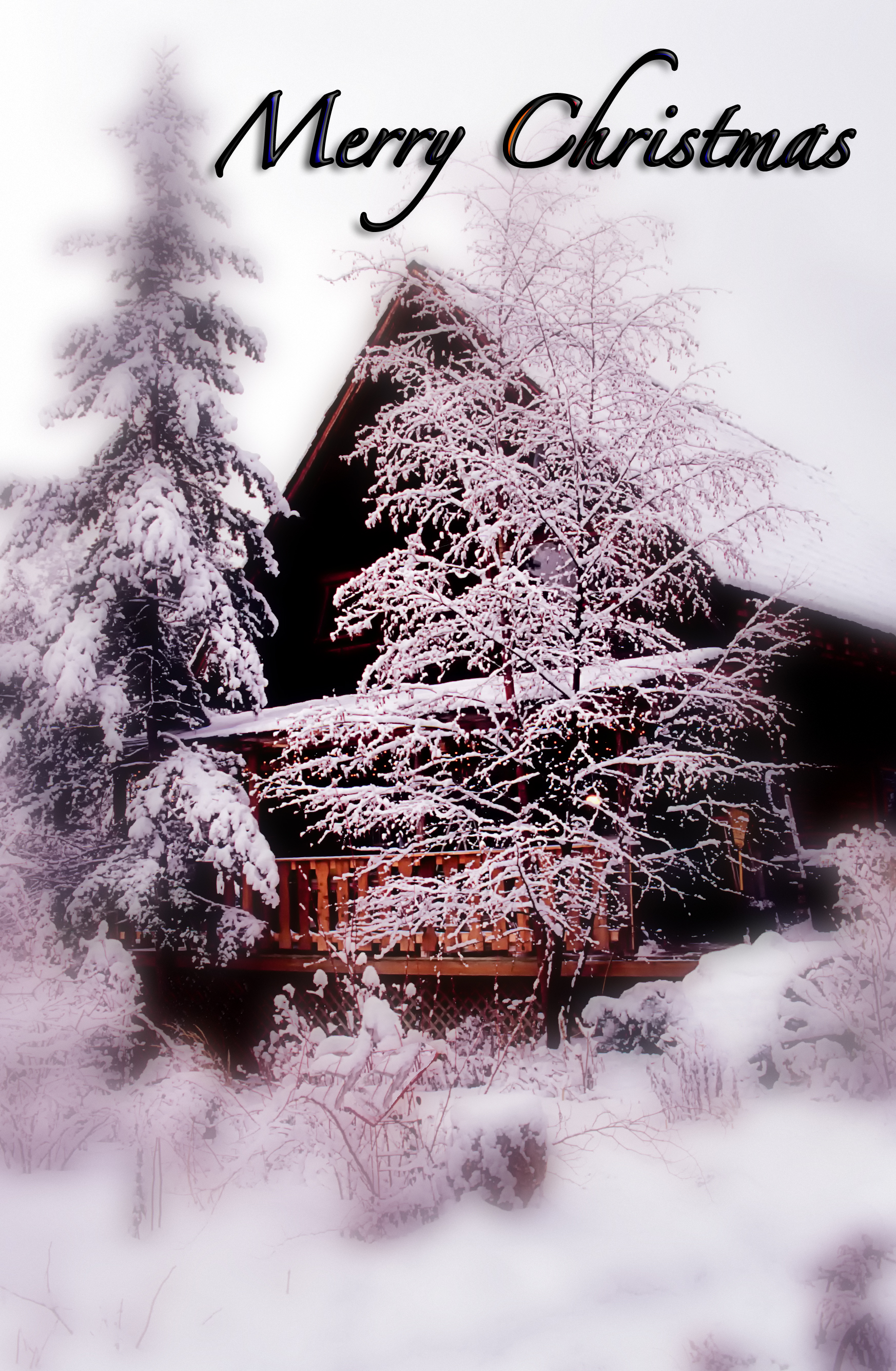
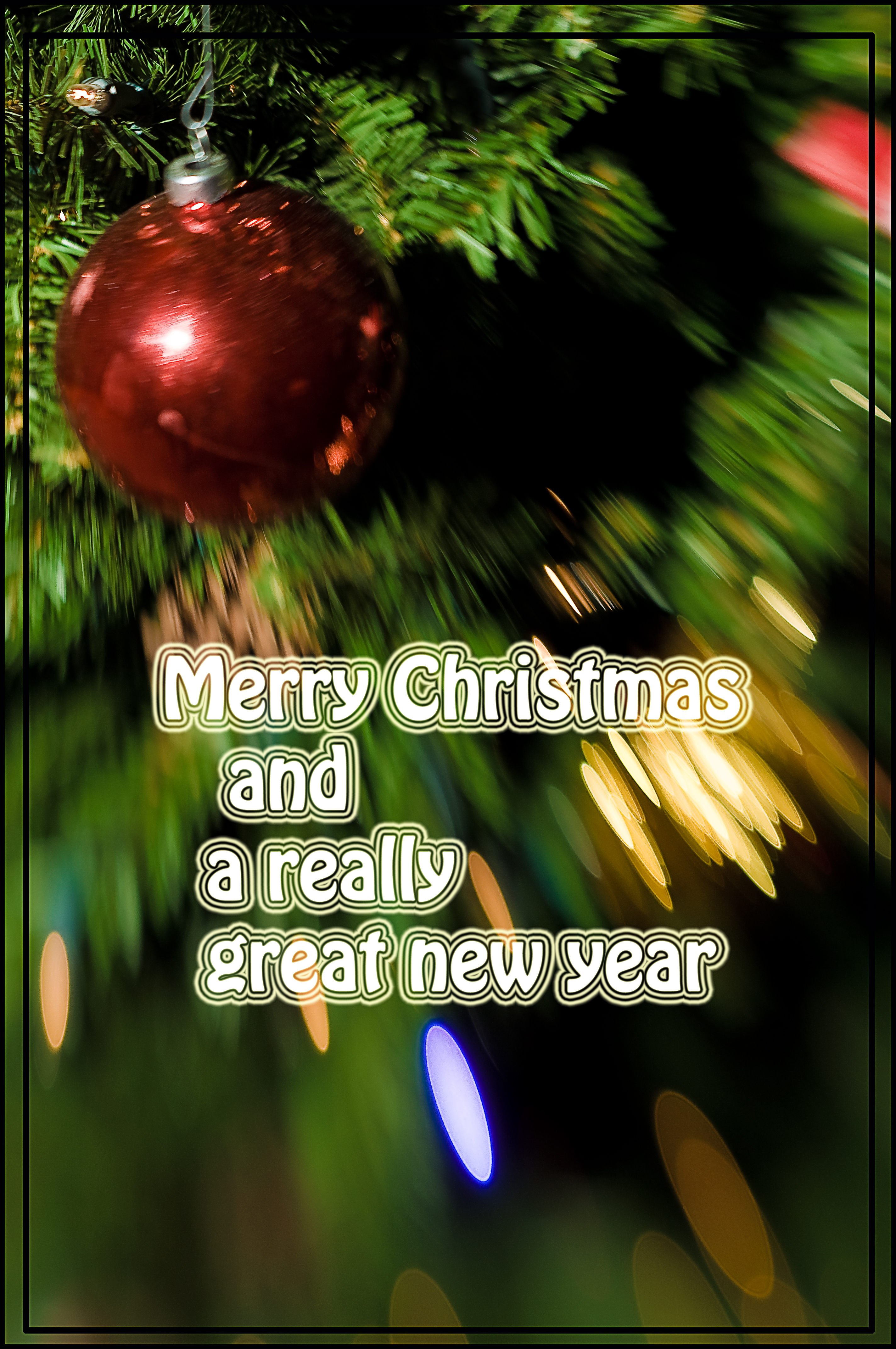
Right now we are going through our many image files from this year’s photographs selecting those we want for Christmas cards. I prefer a vertical format, but sometimes a horizontal picture also works and I choose that also.

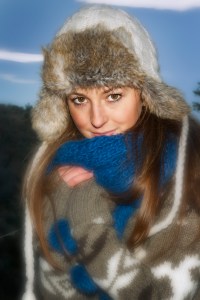
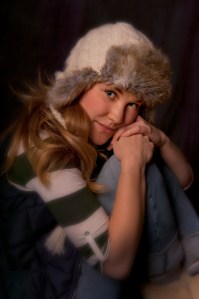
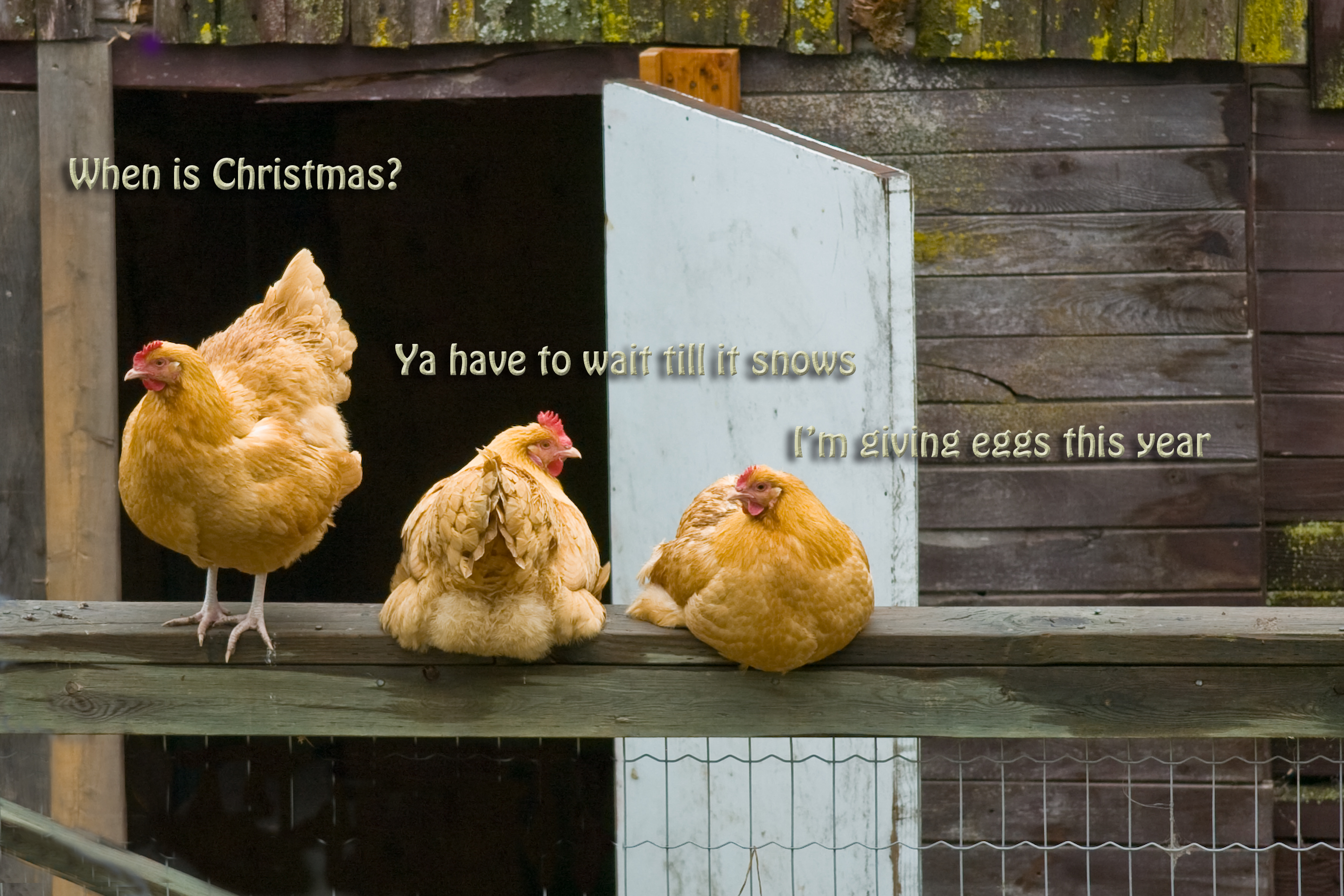
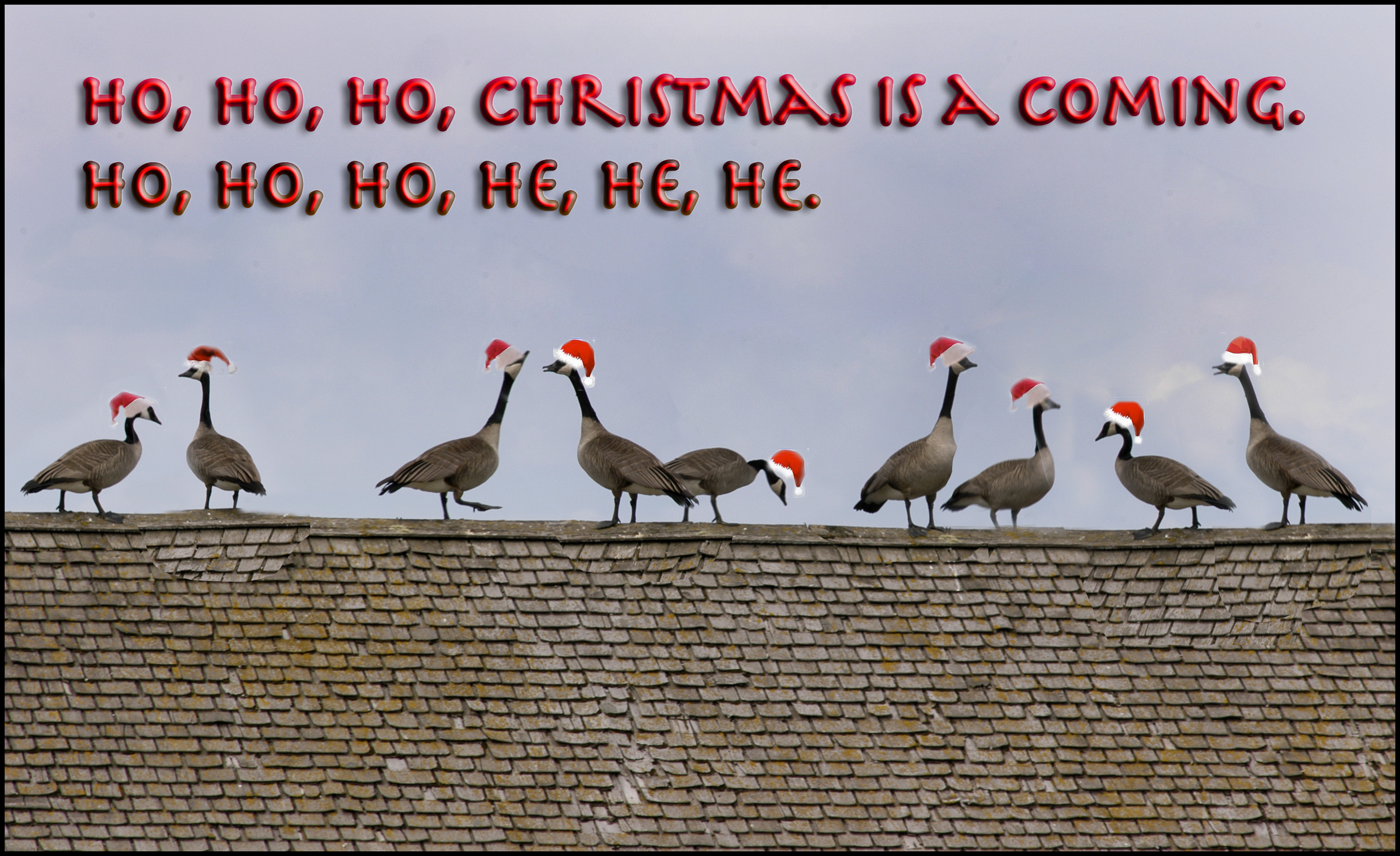
I print up lots of different images and place all sorts of greetings on them. It is rare that we give the same picture to more than one person. And not all the cards say Merry Christmas. To me, it doesn’t matter. Happy Holidays, Seasons greetings, Have fun, A good New Year, and anything else I think fits a particular picture. Sometimes I use bits of songs or quotes I have found instead of the words, Merry Christmas.

What matters is the picture and even that might be a manipulation of the original. What is important to me is that those I give a card to get something unique. And I will say that, unlike a framed print, I really don’t care what they do with the card I sent. I really hope people like what I give them, of course. However, if it gets thrown out with the gift-wrap after the holidays it doesn’t matter either, they got to see a photograph taken by my wife, Linda, or myself, and that’s what’s important.

So, to all the photographer’s out there I’ll say make your own cards this year. I print our cards on a sheet of 8×10 photo paper, fold it so we can write inside, and then cut it to fit inside an envelope. However, it’s easy to make a card gluing a photo to card stock or construction paper, or get a print made and write something festive on the back.  This weekend I’m booked to photograph two young female friends and their horses, and I know they will use their photographs for their Christmas greetings.

My point is, stop hiding all those great photographs. Just showing some picture on your iphone isn’t enough. Print it, make a card, put it in an envelope, and send it to friends and relative this year.  And if you realize on Christmas day that you’ve missed someone (or everyone) you can send your Christmas photo card electronically and instantly.

 I appreciate your comments and be sure to click “like”

My website is at www.enmanscamera.com