Fifteen Photographers at Open House

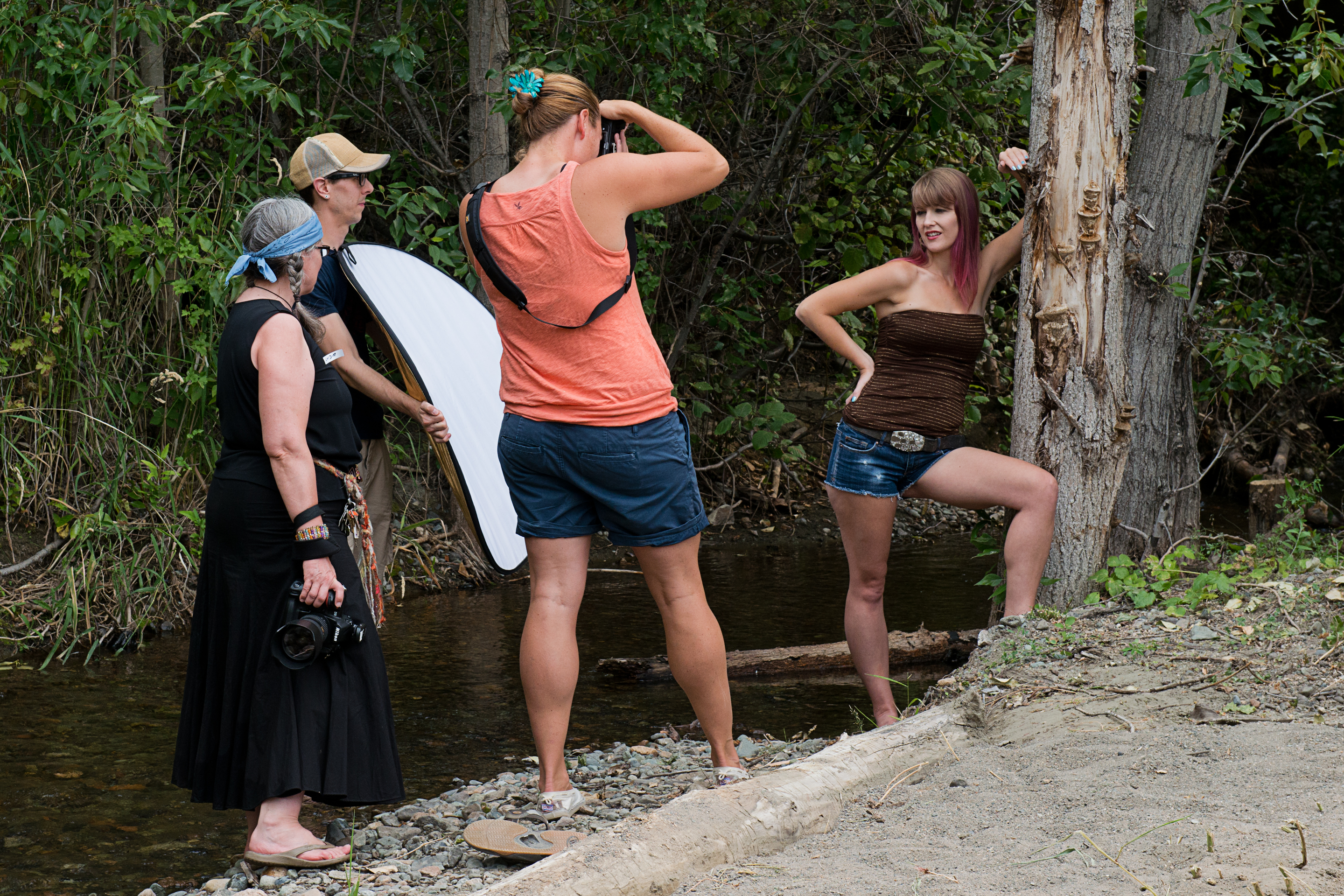
fifteen photgraphers & a Model  Creek shooters  Modeling session  Lighting a portrait

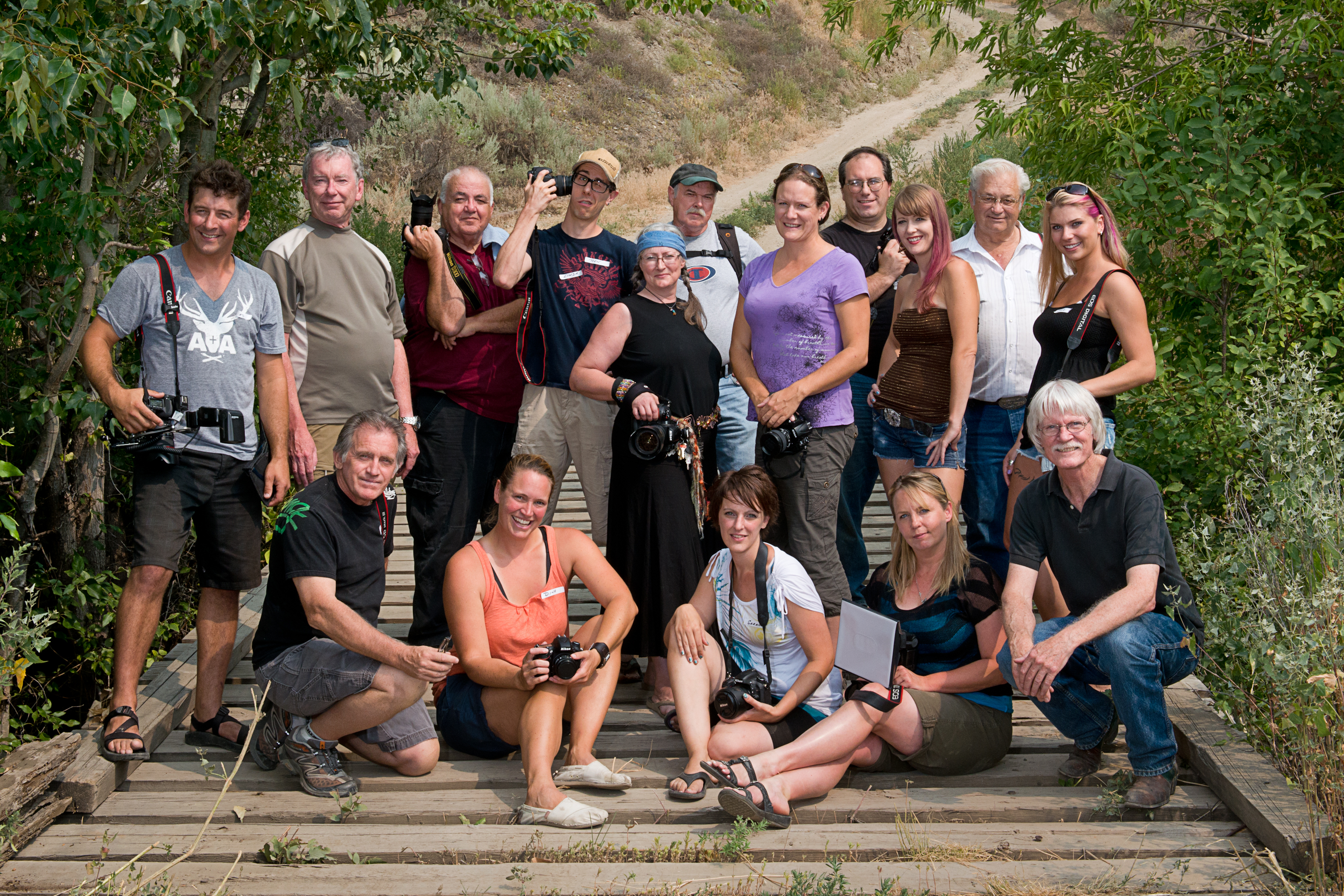
Last weekend fifteen dedicated, and I think, pretty excited, photographers attended the Versatile Studio’s photography open house just outside of Kamloops, British Columbia. It is aptly named Versatile Studio because it provides multiple locations for portrait photography inside and out.

The day began with coffee and numerous discussions on portrait photography. At one point I got up to refill my coffee and then stood back, realizing this group of photographers, with their many different styles and approaches was going to make the day interesting, educational, and a lot of fun.

Of course, it immediately began with a hitch, as only one (thank you, Ali) of the four models that promised to appear showed up; nevertheless, these relentless photographers didn’t miss a beat, and decided to split into three informal groups using each other as subjects.

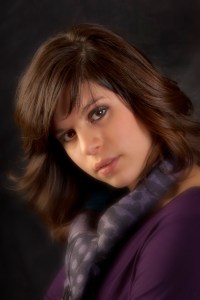
Those that wanted to work with lights in the large studio space chose two of their number with the most experience in studio strobe lighting to lead, and they took turns modeling, moving lights, backgrounds, etc, and making pictures that delved into some interesting experimentation.

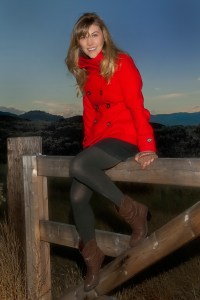
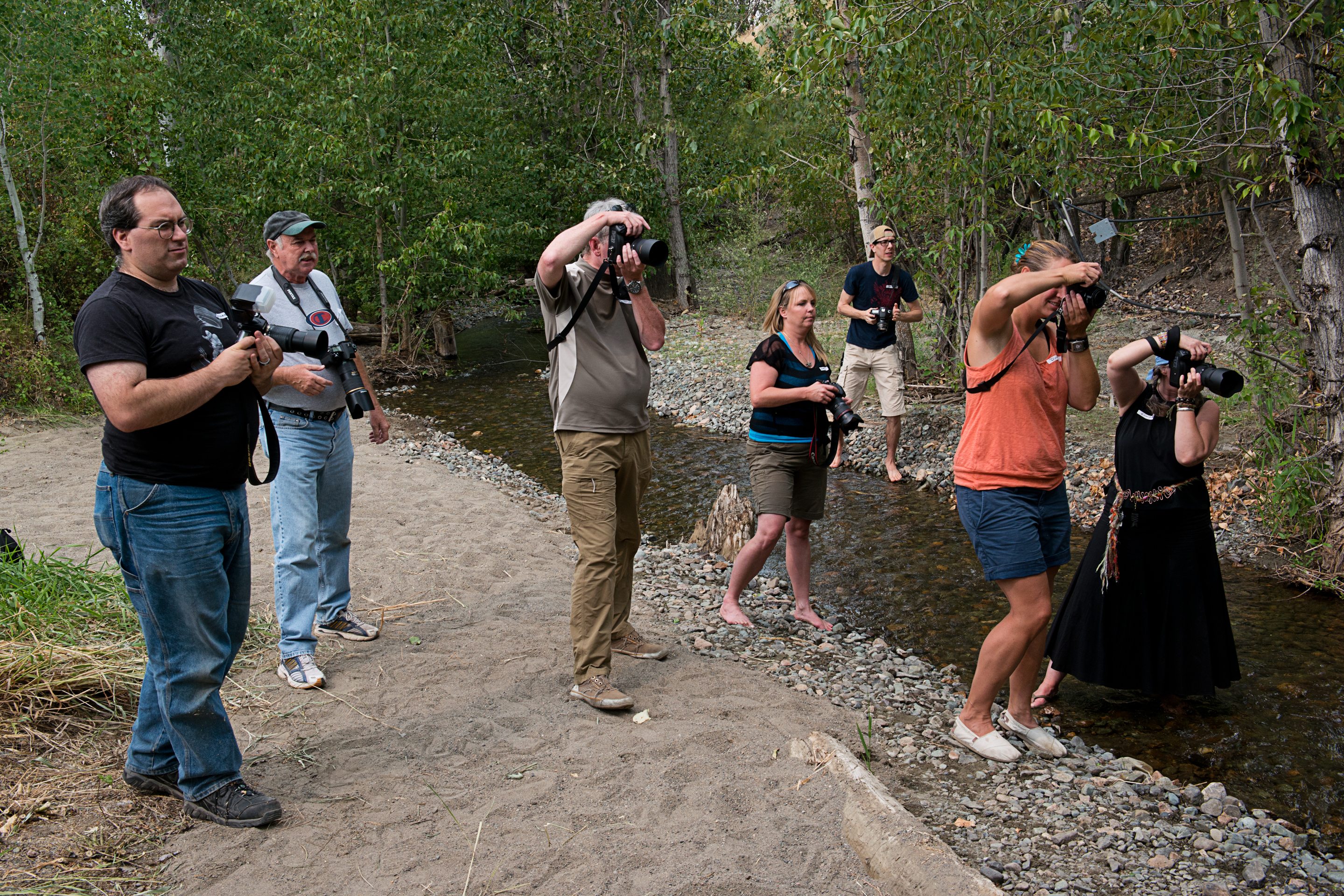
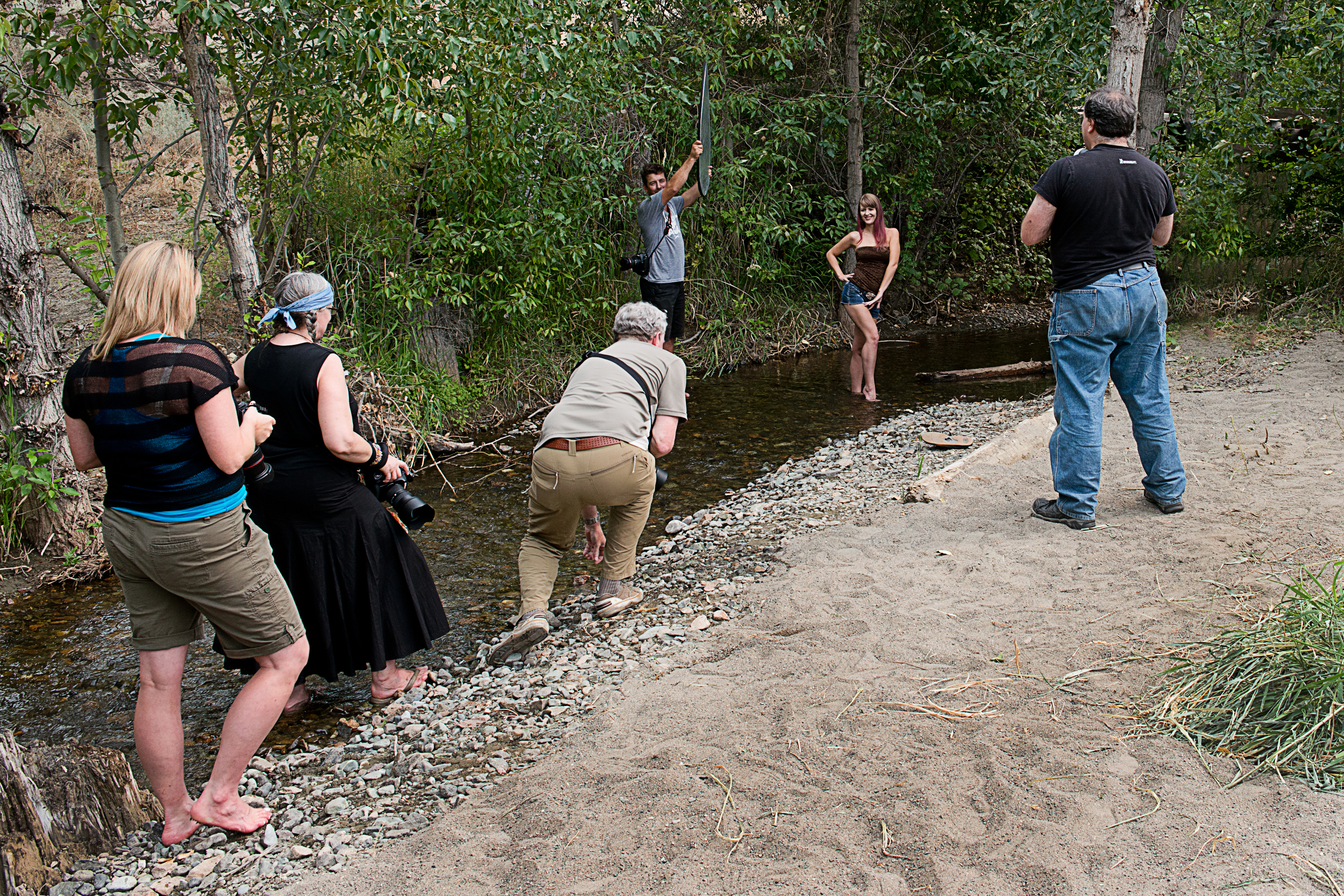
Several others picked up reflectors and gathered at the stream with the one model, Ali. The light filtering through the trees was perfect for the large reflectors, and I think wading in the cool running water was also enticing on the hot August day.

A few decided to try out the light-diffusion panels I had set up in the meadow behind the studio, and later made portraits using the portable strobe I had placed in what was once a large farm equipment/hay storage shed.

Small groups interacted, gathering to discuss different techniques and to exchange thoughts on photography, and in my opinion, it was that exchange of personal experience between the photographers that made the day a success.

As I got the chance to peak at the LCD of several photographers’ cameras, I was intrigued at how differently each photographer captured the same subject. As I write I think of some famous quotes, the first by iconic photographer Ansel Adams, “Photography, as a powerful medium of expression and communications, offers an infinite variety of perception, interpretation and execution.”   His words more than fit what I saw created by those assembled at Versatile Studio that day, and I also like this quote, by author Peter Bunnel, who in his book, “Creative Camera International” writes, “There is no single form or style of portraiture. Portraiture means individualism and as such means diversity, self-expression, private point of view. The most successful images seem to be those which exist on several planes at once and which reflect the fantasy and understanding of many.”

So of course, you can understand why I would include that quote because, indeed, I saw many styles of portraits being made on that day. That’s the interesting and enjoyable thing about getting together with other photographers, especially a collection of photographers as large and diverse in talent and experience as was there; everyone is an individual and creates from their own personal perspective.

Versatile Studio, situated in the small community about fifteen minutes from my shop in Kamloops, hosted this photographer’s event with the help of accomplished photographer, Gary Risdale and myself. Our roles weren’t that of instructors as much as we were there to introduce, demonstrate, and facilitate.

I was so involved with what others were doing that, other than the images I have posted, I didn’t get a chance for anything else.

The studio’s owner, Dave Monsees, commented to me that he liked being around fun people with a true passion for photography and said he enjoyed himself so much that he intends to try to have photographer and model get-togethers like this in his studio on an occasional basis, every month or so.

I enjoyed spending time with those photographers; some were long time friends, and some were new acquaintances; and, I must admit, some of my most favorite times of all, have been either doing photography, or being with people that are doing photography.

It is always great to have your comments, John

My website is at www.enmanscamera.com
Deadman Junction Photographs – A Great Time

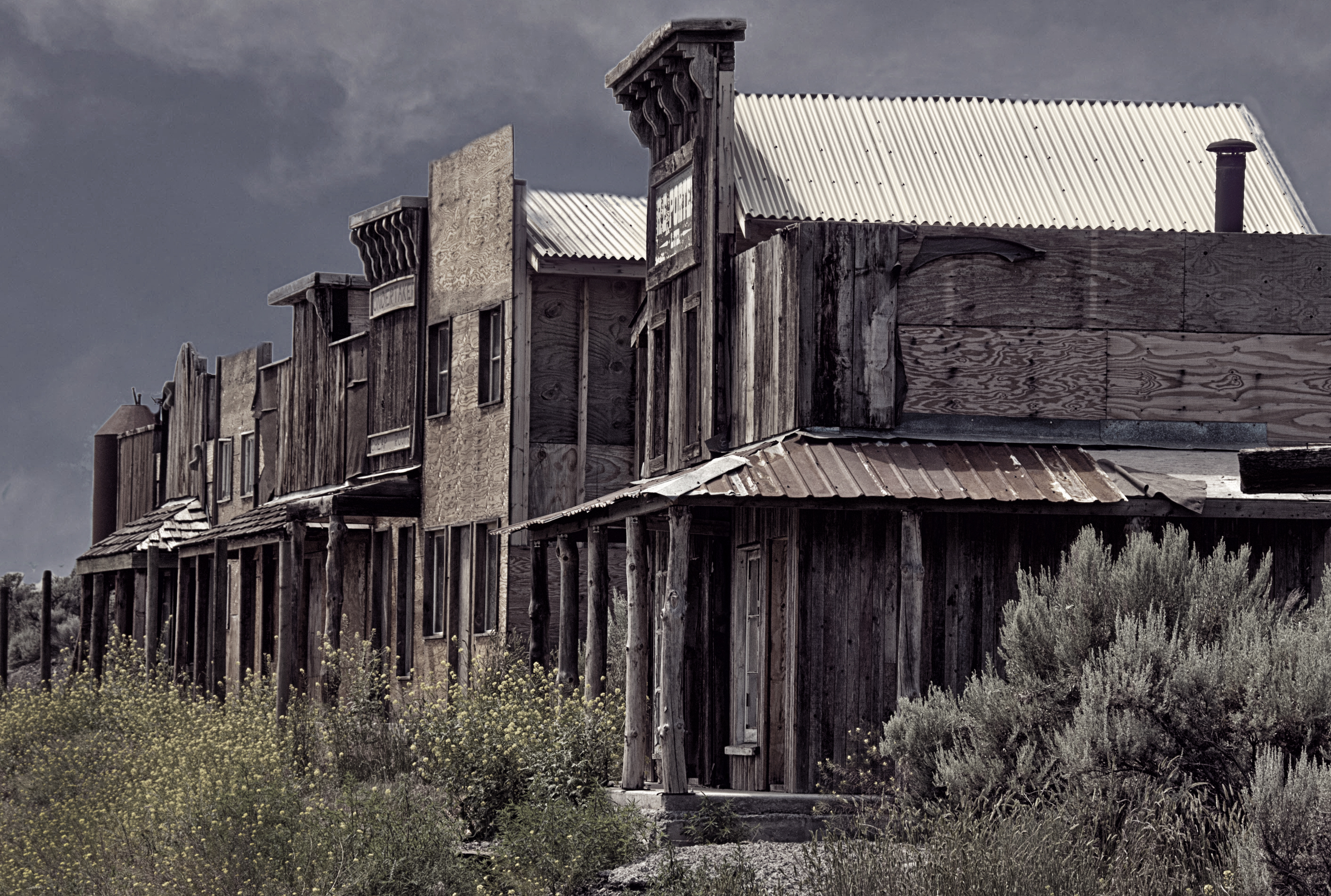
view of deadman junction buildings

view of deadman junction buildings

mining office and jail

mining office and jail

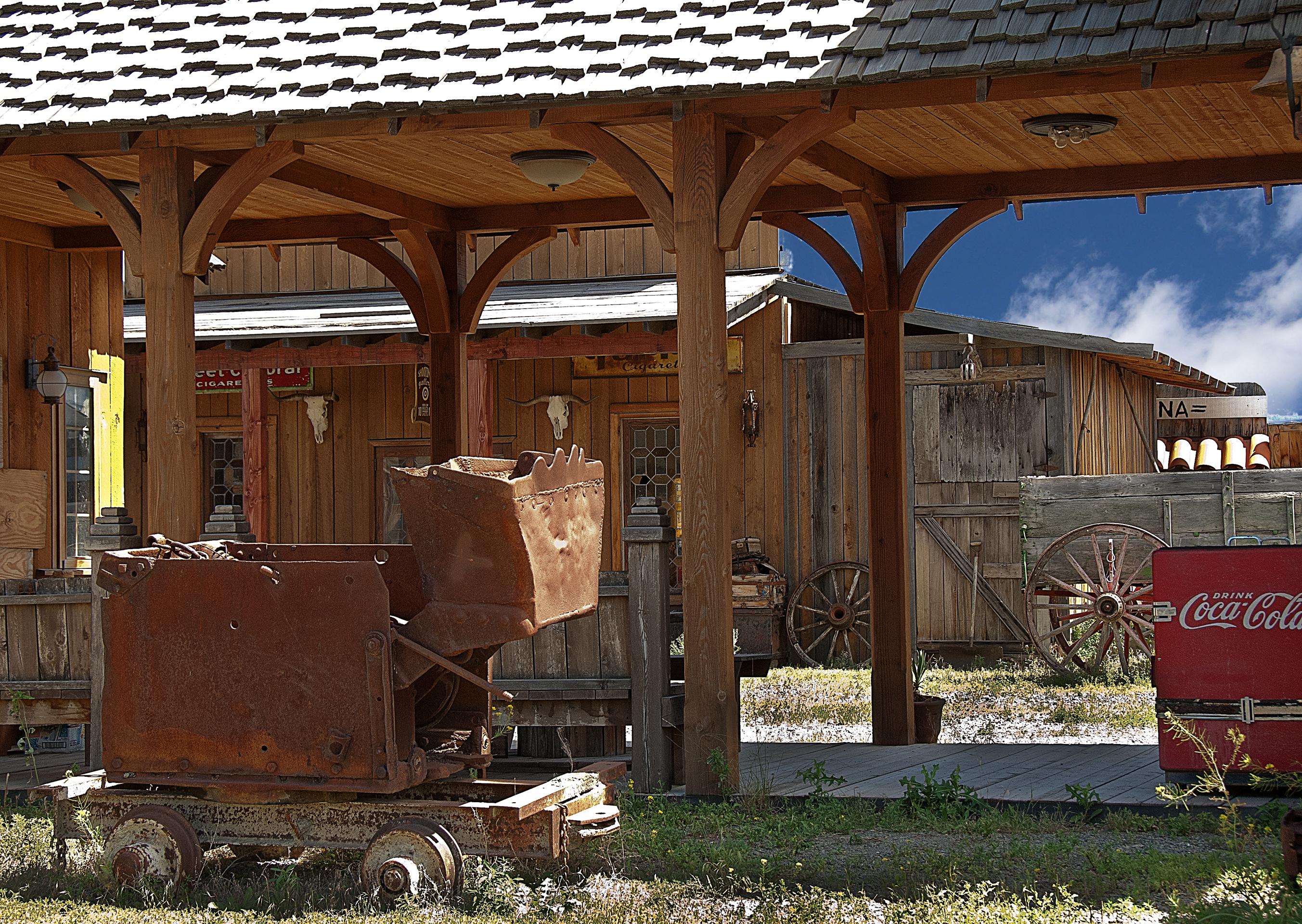
an old mining cart

an old mining cart

an old cargo wagon in the street

an old cargo wagon in the street

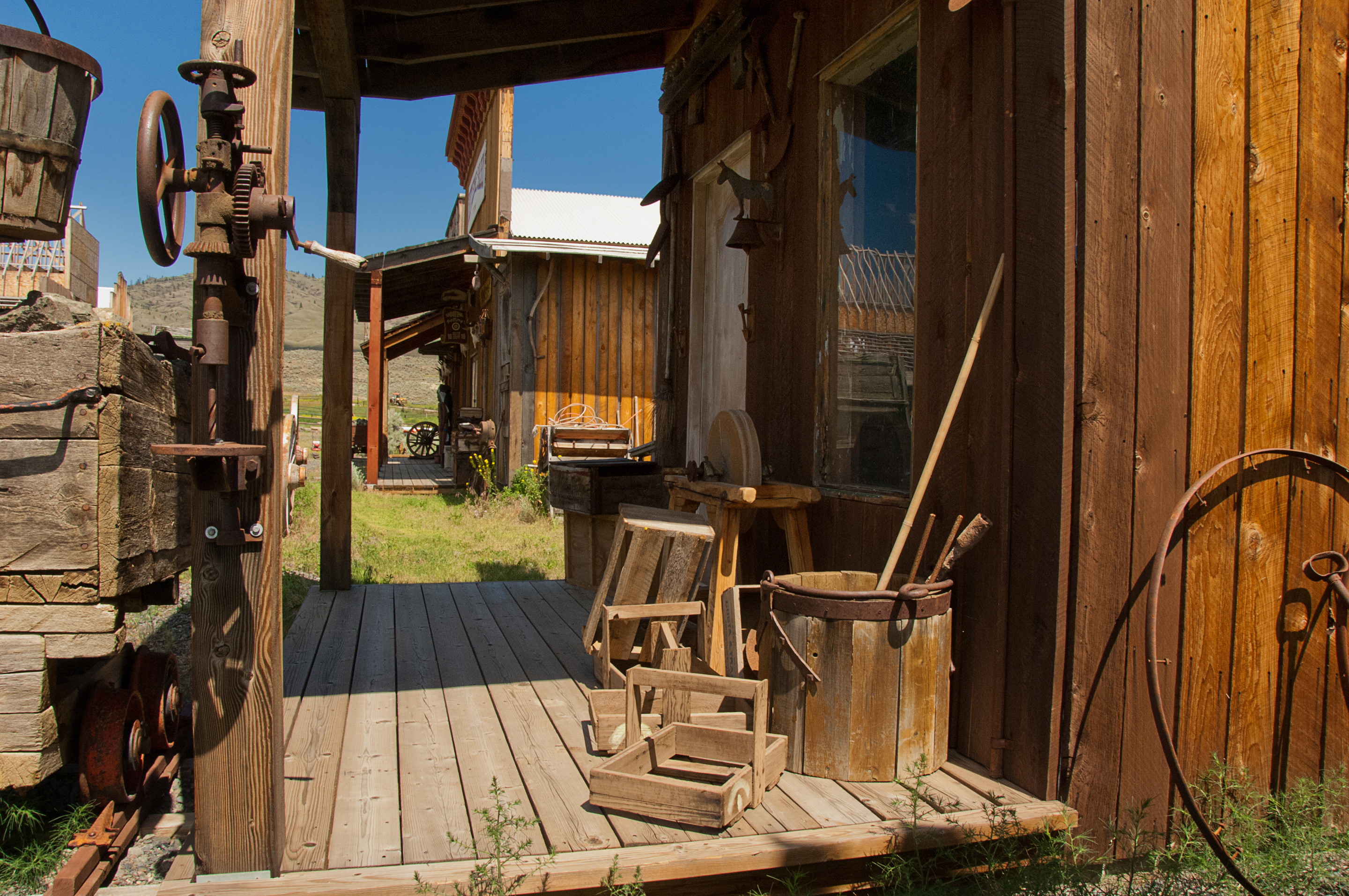
view from deadman's main street to buildings.

view from deadman’s main street to buildings.


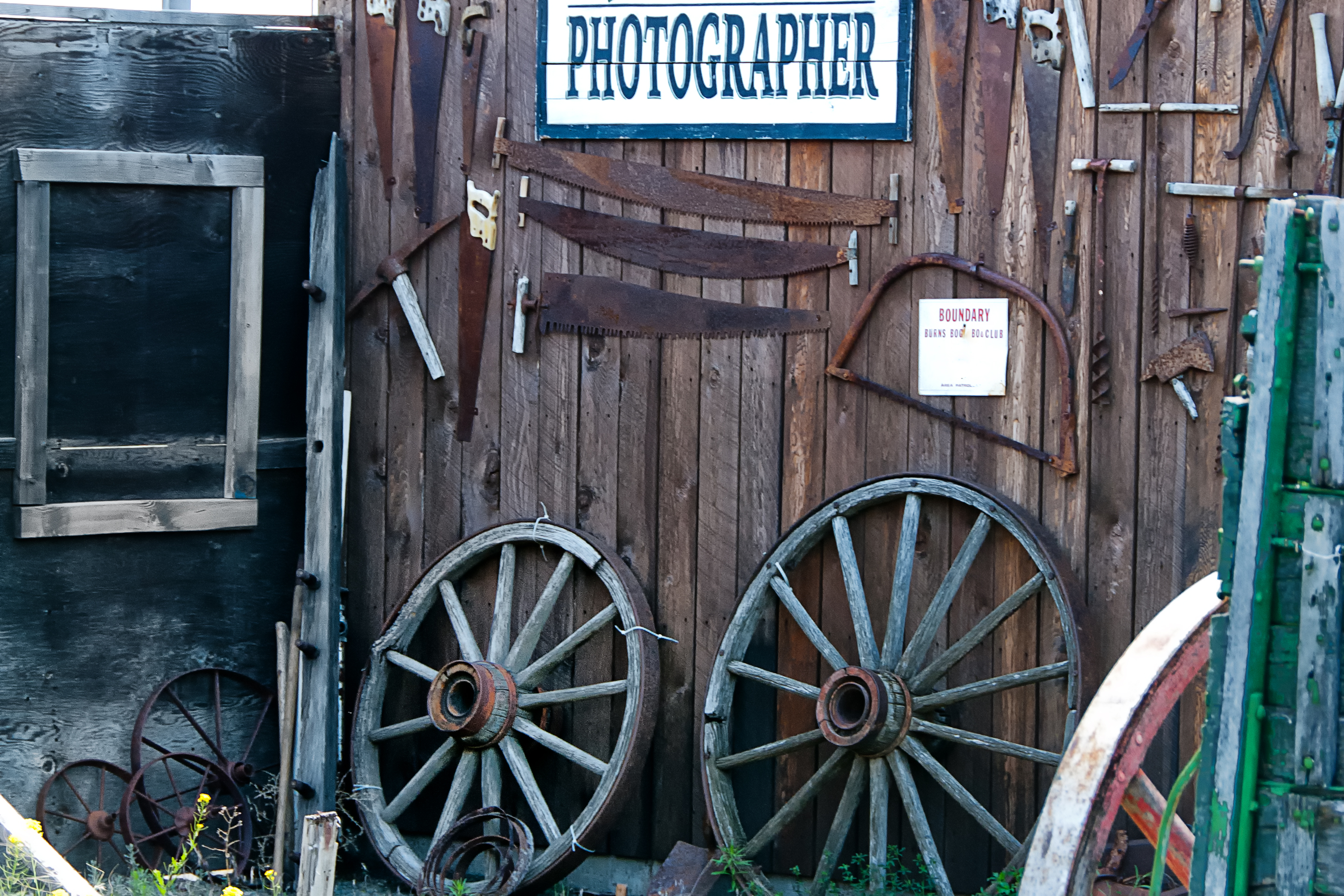
a wall with saws and a photographer's sign

a wall with saws and a photographer’s sign

an old cargo wagon in the street

an old cargo wagon in the street


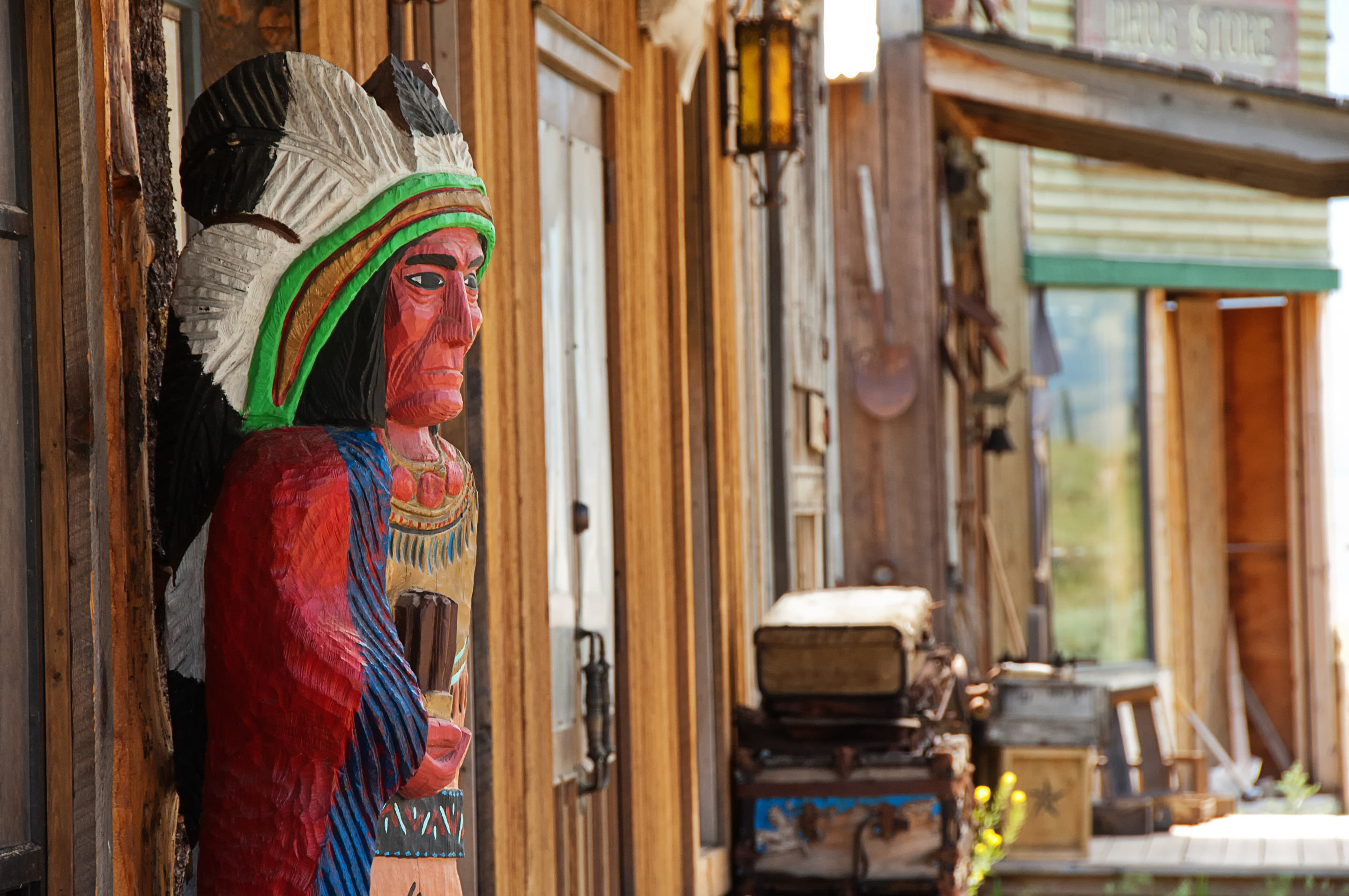
Cigar store sculpture in front of saloon

Cigar store sculpture in front of saloon

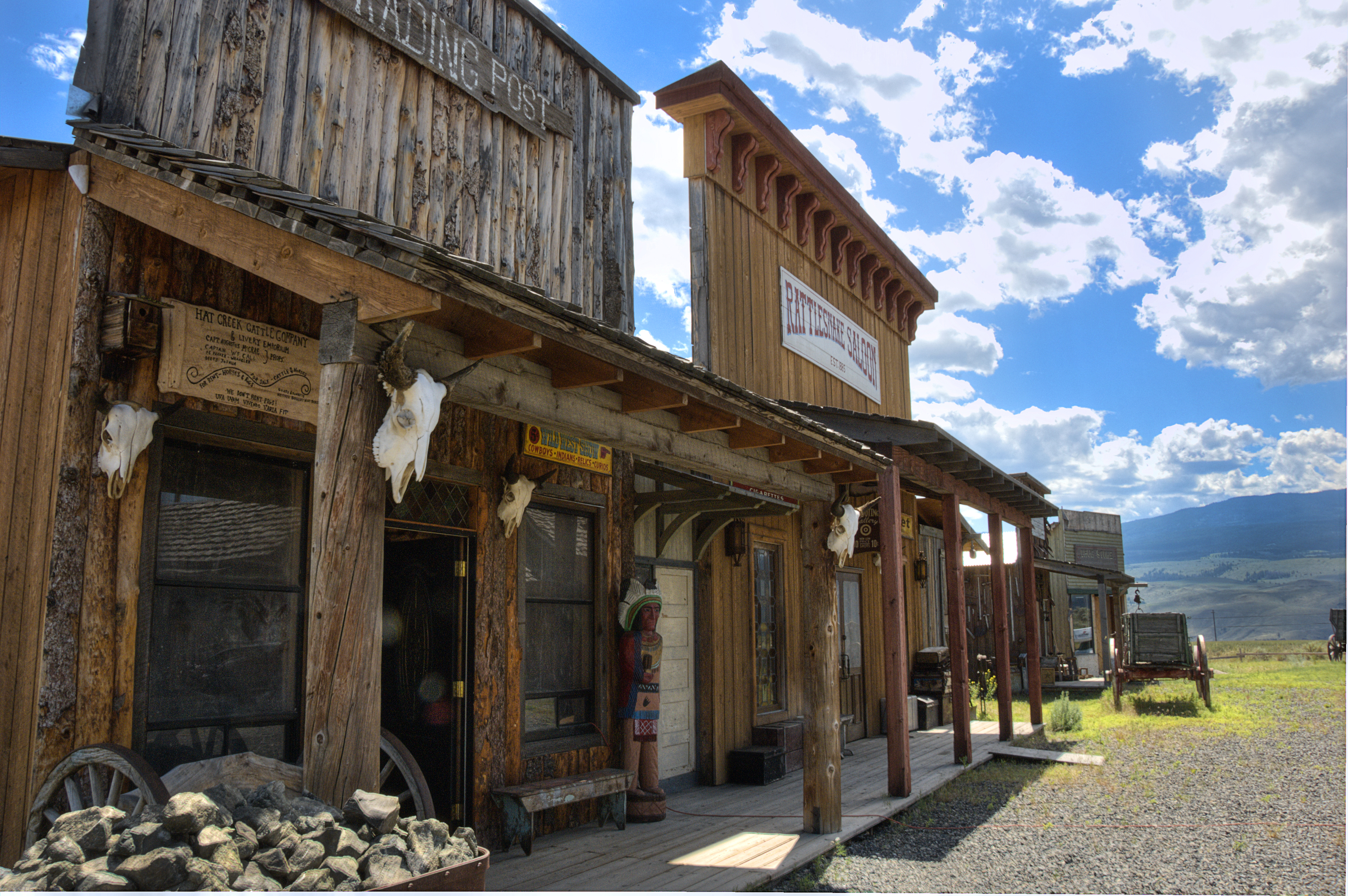
  walking down Deadman Junction main street

walking down Deadman Junction main street

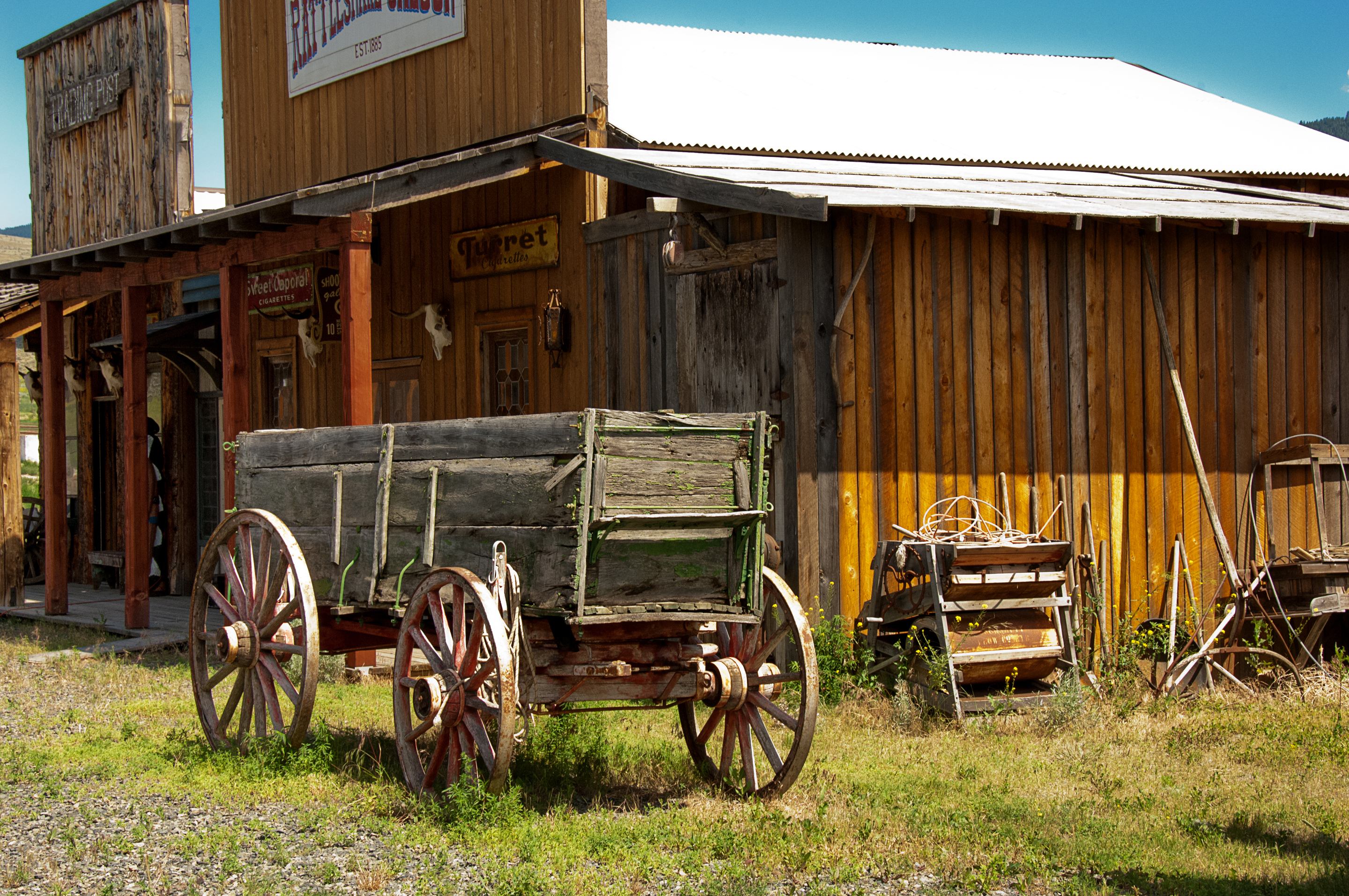
Photographers driving about an hour west of Kamloops British Columbia, along the Trans Canada Highway 1, past Savona, and past the turn to Deadman’s Creek, will discover a neat, little gem situated just off the road.  All they have to do is watch for a big, home-made sign positioned on the side of the road, amidst the wide, low, rolling-hilled, sagebrush-filled landscape that declares, “Deadman Junction”.

At first glace that sign marks what looks like the remnants of an old town. There are already plenty of decrepit structures left decaying along that stretch of highway and travelers might be hesitant to stop because it looks like it might be, like so many others, private property, and I expect many readers have been run off occasionally by landowners intent on preserving their privacy. However, my suggestion is to slow down and stop because this is a camera-waiting, ready-made, western movie set that is definitely not restricted to private invitation and where everyone will be welcome.

Owned by dedicated wild-west enthusiast Matt Sandvoss, the partially constructed old-west replica is a perfect place for any respectful photographer that wants to work with western lore and old buildings.

Sandvoss, an enjoyable storyteller, guide, and visionary in his pursuit to construct this copy of an Old-West town in a remote part of British Columbia, is an eager, willing, and immediately likeable host.

When I arrived there were motorcycle travelers from Alberta, and a family from England, with both groups enjoying his commentary on the movies that had been filmed there and his ideas for the town’s future. He was pointing out features, western items he had collected, and was adding interesting anecdotes on each.

Although I was mostly involved in my personal photographic quest through the photogenic location, I did hear him mention the movie “The A-Team”, and that actor Harrison Ford had been there. I think that is great, having just found the place I’d hate to see in fall into disrepair, and movies will give Mr. Sandvoss the funds to not only maintain it, but also to add more buildings (for us to photograph).

Photographically the location is almost captivating. The landscape is wide and rolling with almost none of the modern trappings like wide parking lots, concession stands and electrical power poles that usually come with roadside attractions, and when one does see a power pole or something else that gets in the way, it is easy to find a different view.

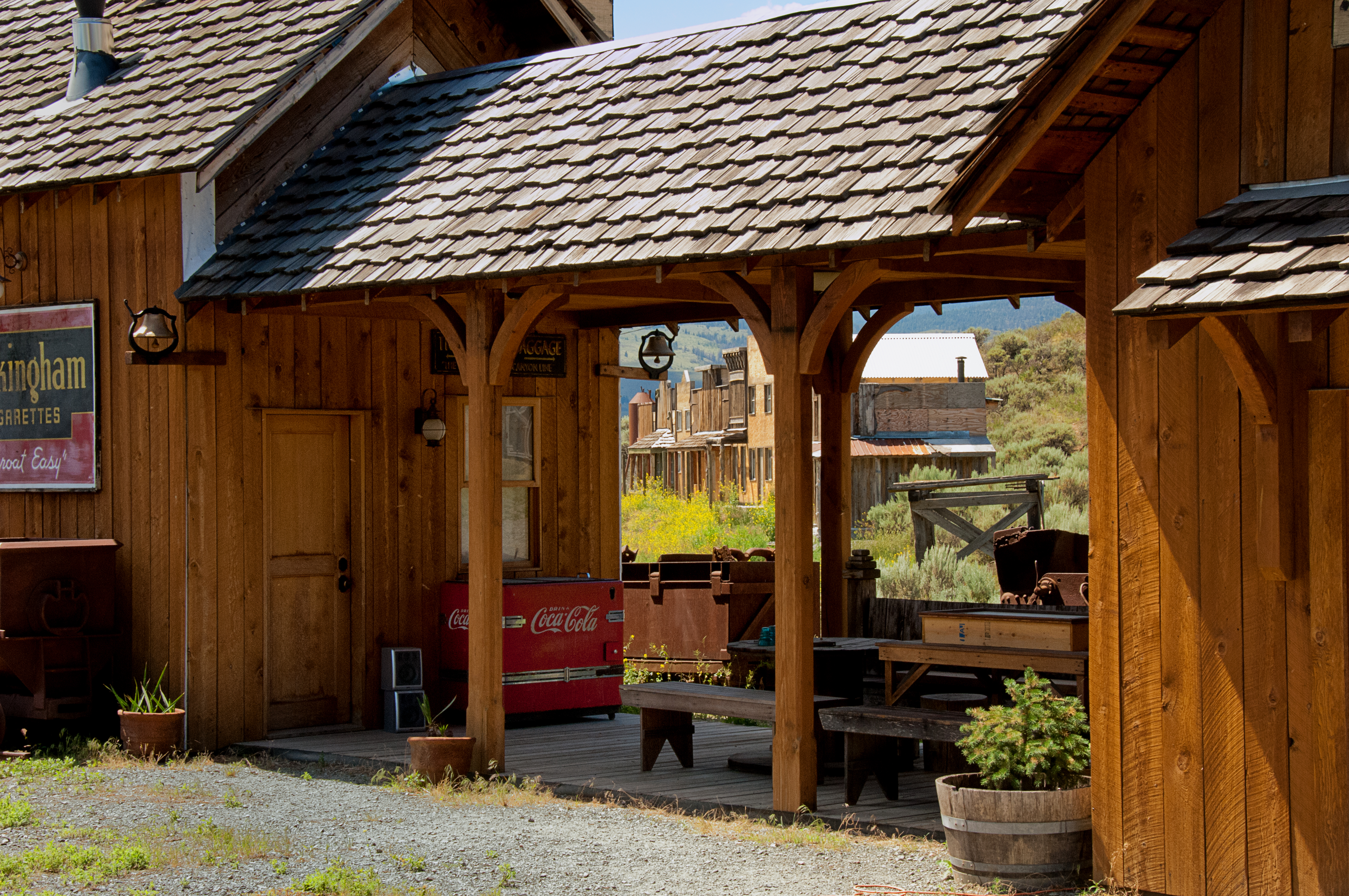
I wandered back and forth, there was so much to photograph that I found myself continually returning for another look or angle. I was able to capture wide, picturesque images of a row of buildings with appropriate sagebrush and tumbleweed in front of, and around, rickety-looking old wagons, and even iron works close-ups on what I am sure were authentic mining carts.

Those travelers of Highway 1 between Kamloops and Cache Creek might want to stop to cool off at the Juniper Beach Provincial Park nestled in a shady, treed spot along the river, and if the Skeetchestn Indian Band rodeo is in progress, that’s a neat event also. However, for me I know I’ll be taking the scenic drive again along the mighty, winding Thompson River to spend some time listening to Sandvoss’ stories and a whole bunch of time photographing Deadman Junction.

I always appreciate your comments. Thanks, John

My website is at www.enmanscamera.com
Photographing a yard of old cars

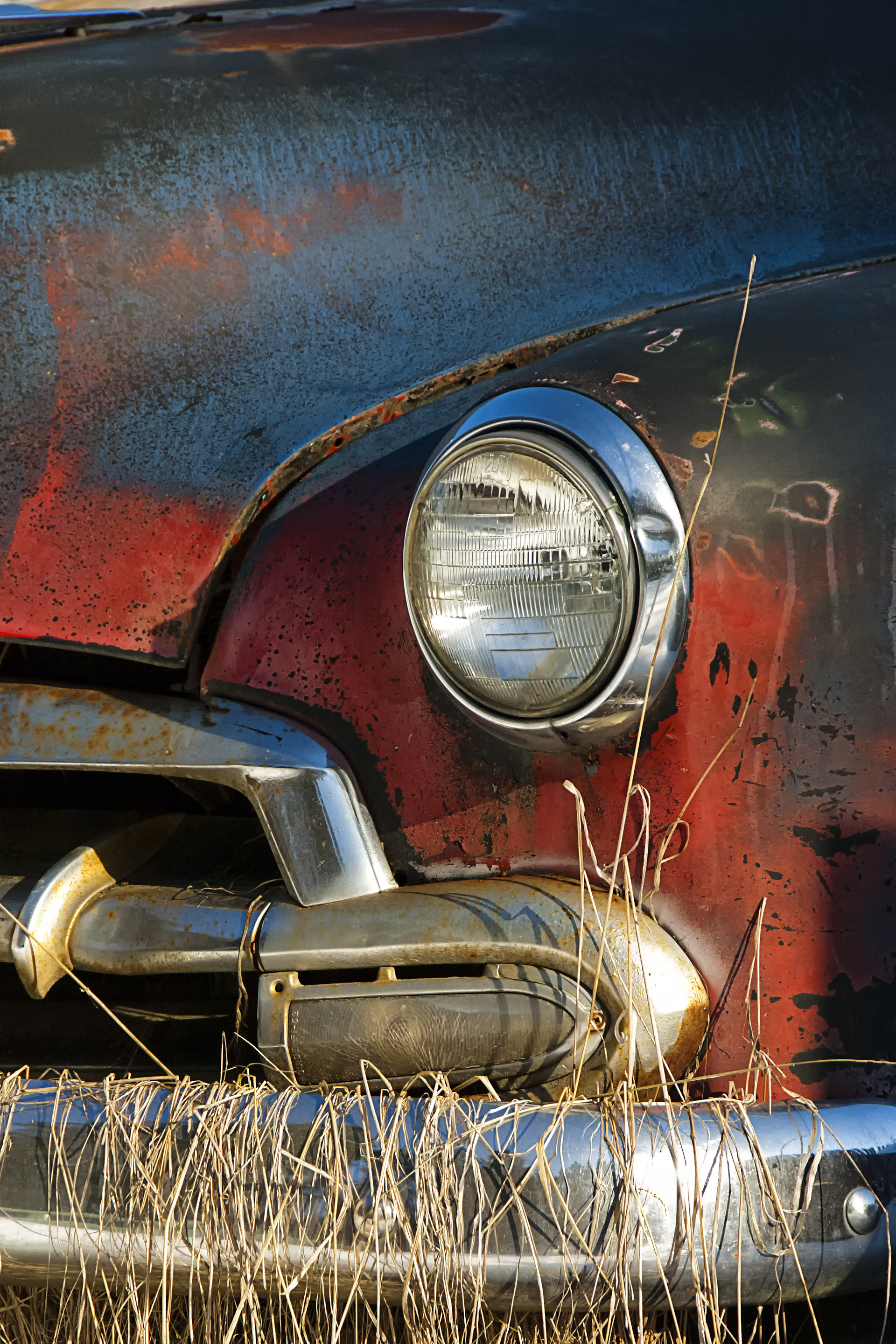
Red hood 1Sentinal 1 Gunshot Fading away Gunshotsnowed in 1

This week my wife and I decided we were long overdue a visit to friends Mike and Leslie. Like us, they have a rural home tucked up and near a forest not far from Kamloops.  It’s always fun sitting around the kitchen table in their woodstove warmed home talking and catching up on each other’s lives. Mike makes his living as a rock scaler and blasting contractor helping to keep British Columbia roads clear of impending rock slides and Leslie is one of those artistic people that will amaze you whether singing, drawing or aiming a camera. Leslie also operates a good size organic farm that gives them most of the food they eat.

On this visit I hoped the snow was melted enough that I could wander around in Mike’s car yard. Mike is a collector of old cars of all years and models and has created a wonderful metalscape that becomes a photographer’s paradise if you like cars like I do.  Rust, paint, dents on cars of all years and parts of cars are everywhere.  I could spend the day there just making pictures.  Each time I get the chance to wander in Mike’s car yard I discover something different.

We arrived mid afternoon and after a good while of yawing and discussing our lives I realized the sun was getting low and beginning to create shadows on the cars. Perfect for prowling the diverse collection of car bodies looking for sculptural details. I remember the first time Mike showed me his cars. I only had a little Olympus point and shoot with me that day, nevertheless, I almost filled the camera’s small memory card, and since then I have been back many times with better cameras.

On this day I mounted my trusty 18-200mm lens on my camera that was set to manual mode as usual. The slightly wide to slightly long lens was perfect for those shots of hard-to-get-to cars. I knew I’d be climbing around, so I set an ISO of 200 in the bright clear afternoon light that also gave me lots of depth of field when I wanted and could be I easily reduced when I softened focus in front of and behind some features.

Some cars have lost fenders, hoods, and windows as they are dismantled and sold. Others seem to be loosing a battle with the elements and there are always newer cars added, so the landscape changes each time I roam the yard.

This time I began with shots that showed car after car resting in the melting snow. Then I started tightening my view, eventually working the light reflecting of the changing colours of the metal, and narrowed my visual search to small features.

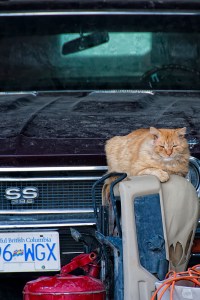
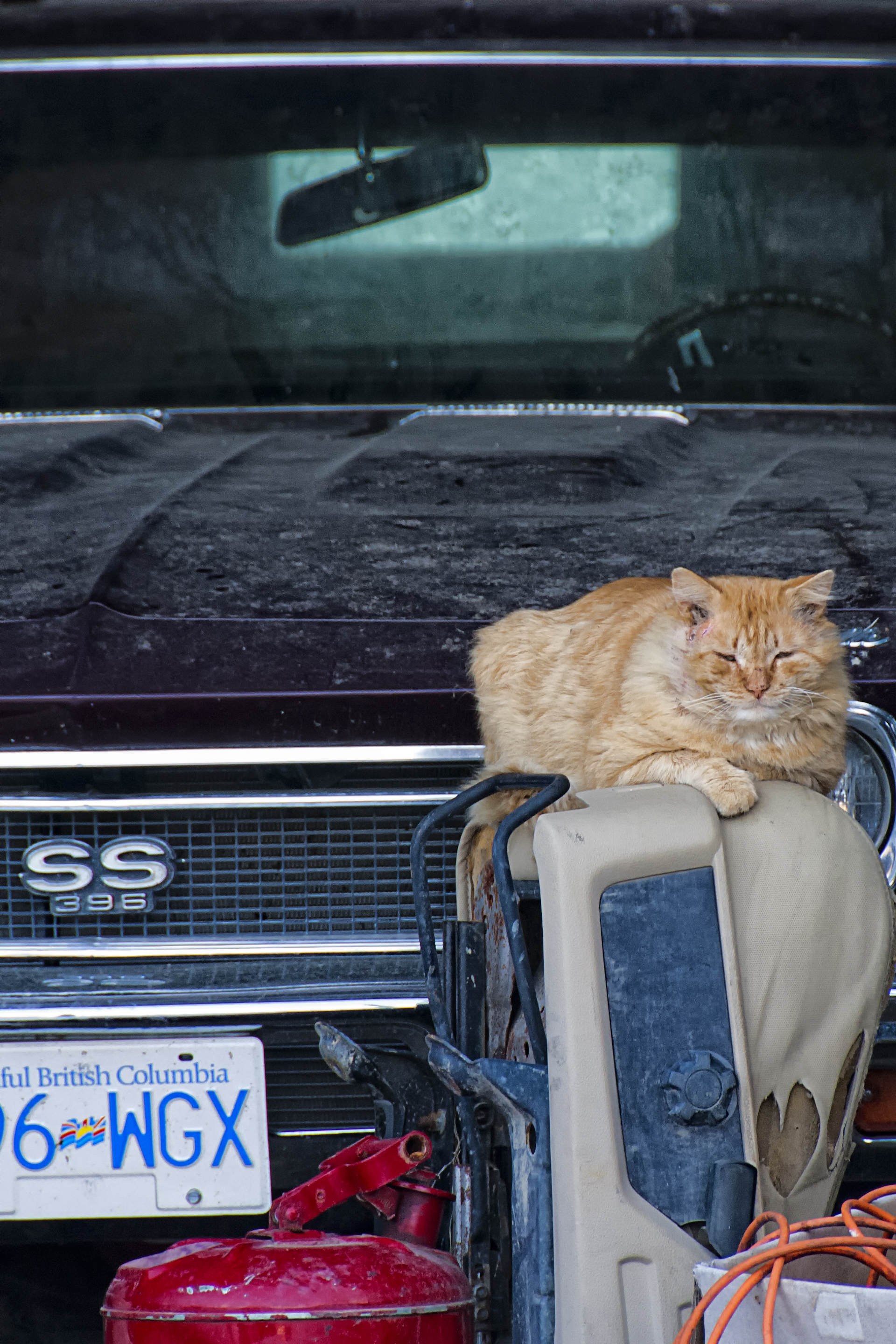
I could have spent several hours, but reluctantly wove my way out remembering I was ignoring my hosts. Yes, they are used to me being preoccupied when I have a camera, but all the same I shouldn’t be neglecting them.  Still, I had to make one more stop when I saw their scrappy old tomcat resting on an upturned car seat in front of a 1969 Camaro super sport. I was happy enough just to get a photo of that classic car, but that cat was the frosting on the cake for me.

As I sat writing I thought about how I enjoyed the day that began with a drive along a winding country road, then a long visit with good friends, and finally a really good time making pictures. Can it get much better than that?

I always enjoy your comments. Thanks, John

www.enmanscamera.com

A Good Day of Roadside Photography

River view copy   REd pier copy Horse running copy

I recently talked to a long time photographer that said the landscape photography in early advertisements by the American Automobile Association was what got him into photography. That organization was once the best place to get maps for road trips in North America. They sent their employees out, with cameras and mapping instruments, across the continent finding the best and most scenic routes. I remember seeing pictures of their big, four-door cargo vehicles with people poised on platforms on top of the vehicle with large tripod mounted 8×10 cameras on some obscure dirt road in the middle of North America. It all looked very exciting.

We both remembered pictures of Ansel Adams standing on a platform on top of a vehicle very much like those used by the American Automobile Association with his large camera making wonderful photographs that scenic photographers still admire.  I actually sold my jaunty, little, two-seater MG that was so easy to get around the streets of Los Angeles, and bought a bright yellow International Scout 4×4. Underpowered, poor turning capability, uncomfortable on long trips with back seats that were only accessed by climbing over a metal barrier behind the front seats, it was perfect in my young mind and meant that I, like Ansel Adams and the folks from the AAA, could gleefully travel the back roads in a cool looking vehicle with my camera capturing the natural world on film.

Years have passed, and technology has changed, and so have I.  There are still lots of back roads to explore and photograph, but the days of climbing on my car roof are long gone.  The American Automobile Association no longer explores the country, and today I check maps on line or my cell phone. I don’t need a large 8×10 view camera like Ansel Adams used with the accompanying long hours working in a chemical darkroom to make good enlargements, and certainly don’t want to drive around in that uncomfortable, gas guzzling International anymore.

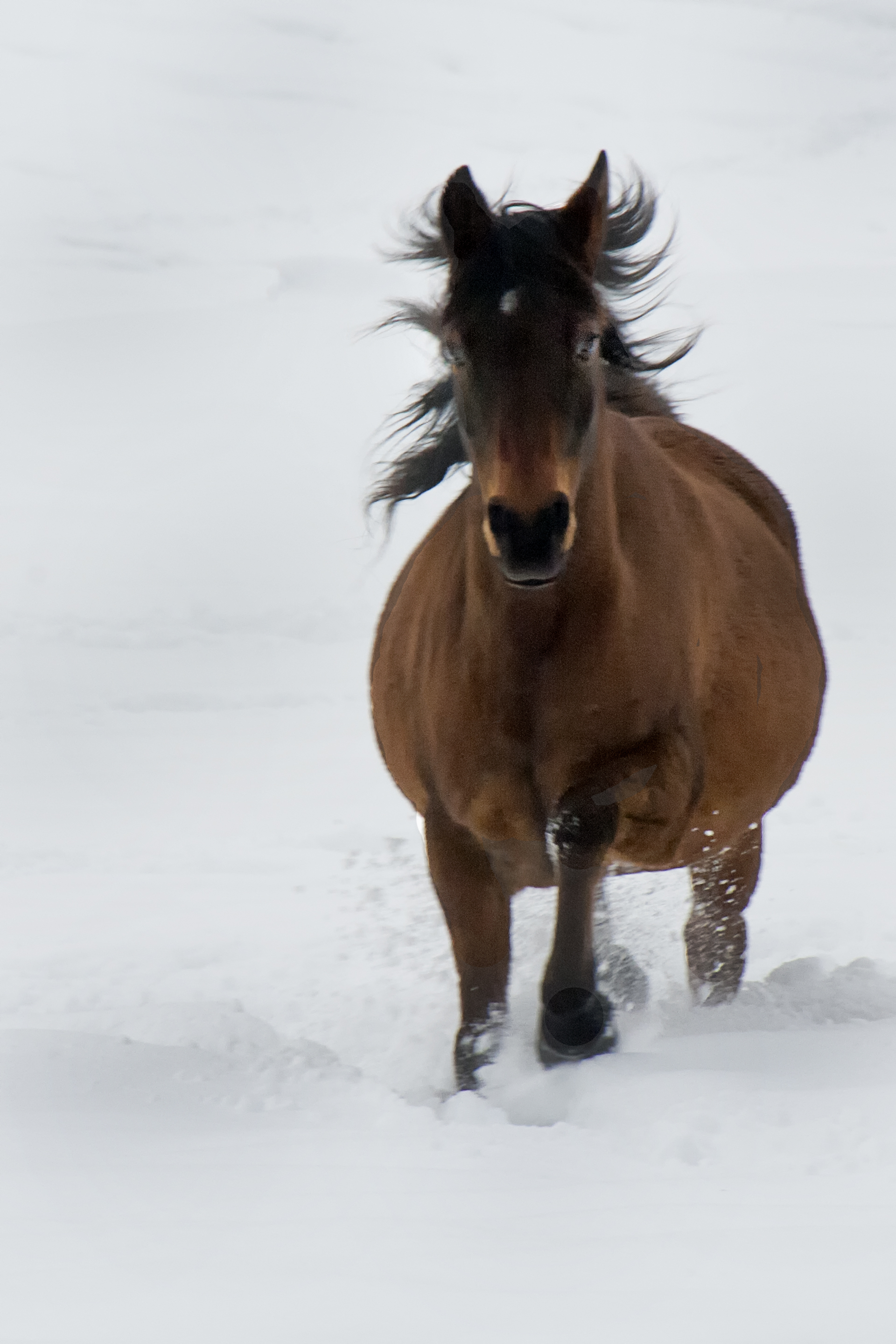
I thought about that conversation and the many scenic photographs I have made while driving along the South Thompson River towards Kamloops, British Columbia as I pulled off the road to meet up with fellow photographer Peter Evans. Evans and I were hoping the sun on the gray, overcast day would poke through the clouds enough for us to make some worthwhile pictures. We had headed out on the snow-covered roads without a plan. Not the best way to success, but both of us just wanted to get out.  We drove along the highway photographing horses, snow covered trees, and Evans even jumped out trying for some photos of distant deer bounding through a meadow. There were lots of opportunities in spite of the flat light, but our main problem was getting my car far enough off the snow lined highway so as not to be clipped by large passing transport trucks.

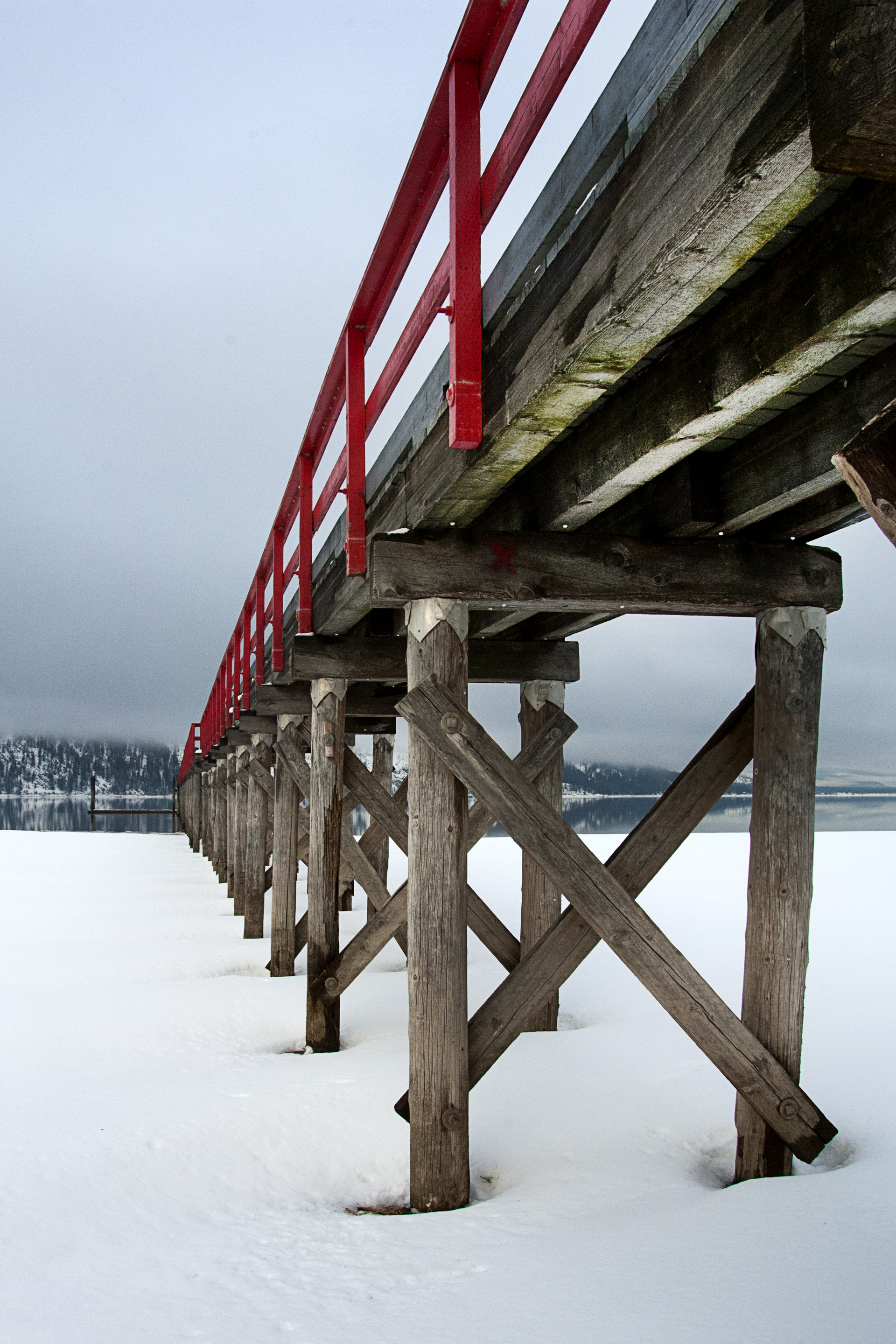
We stopped and wandered along the Shuswap Lake in the small town of Chase , and photographed the pier, reflections in the water, and trees along the white icy shore.  When the sun finally peaked though and we dashed back to the car, our goal to catch the sun along the river near a bridge that crosses the Thompson River a few miles from where we were. Chasing the sun seems to be part of roadside photography sometimes.

By the time we reached the Pritchard river crossing the sun was creating diagonal shafts of light that slowly illuminated some features in the landscape, and then in minutes moved leaving them absent of light.

We parked and rushed on to the bridge, yelling at each other, “look, look, look”. Then in spite of cars crossing the narrow bridge, we stood by the railings and shot away. The river scene was exciting, and I constantly altered my meter trying to keep the exposure under the fast moving light. Then in about ten minutes the sun moved into the clouds and dropped behind distant hills and the sky, hills, and river were back to unexciting flat light. However, we were like two happy young kids as returned to the car talking about our luck with the light.

That’s what I call a good day of roadside photography. Pictures of running horses, reflections on the lake, cool shots of the Chase pier, all capped with luminous pictures of the river and I didn’t even need a platform mounted on a gas guzzling vehicle, a big heavy camera, or back roads.

I appreciate your comments. thanks

My website is at www.enmanscamera.com
Photographing models at a Strobist meet.

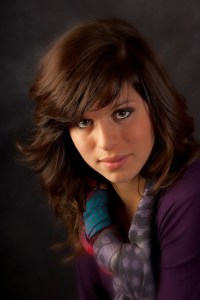
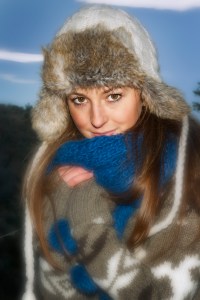
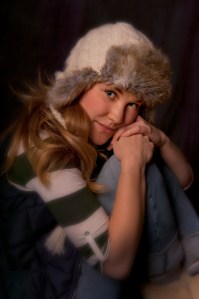
Stephanie4 Molly 2 Monica 1 Stephanie 2 Molly Monica3 Stephani 3

Last Sunday I joined six other photographers and three models at photographer, Dave Monsees’, rural studio for what Dave organized and referred to as a Strobist work session.

The rustic studio, nestled beside a stream in a picturesque treed valley, is a short ten-minute drive from city center to the rural community of Cherry Creek, British Columbia. I had heard about it from other photographers and was looking forward to his Strobist session so I could check the studio out, and, of course, spend the afternoon with like-minded photographers. Now what could be better than that?

This Strobist get-together was the third held in my area that I have been fortunate enough to attend, and as with the first two, it had its own uniqueness.

Some of the participants had experience using off-camera lighting and got right to the business of arranging lights and posing our three models for the day, Molly Lampreau, Stephanie Johannesen, and Monica Nicklas.  I had agreed to begin with a mini lesson and to be available to answer questions for those invitees that were just beginning to enhance their portrait photography with artificial light, and with a few minutes of instruction and a bit of prompting before long everyone was in the act of portrait photography.

The word, Strobist, and gatherings like the one I was invited to have become popular because of American photographer, David Hobby’s, Strobist.com lighting blog that promotes off-camera lighting techniques among photographic enthusiasts, with an emphasis on the practical knowledge rather than just the gear. Those that think our meets in Kamloops are unique should try searching Stobist meet on the Internet. There will be page after page featuring Strobist meets all over the world.

My regular readers know that I rarely make a photograph of people, indoors or out, without using a flash. So getting together with other photographers, experienced or not, that like to use off-camera light for their portrait work is fun. The studio was jam packed with lighting equipment set up with wireless camera connection. There were two different backdrop set-ups and we had our choice of several larger studio type lights in the larger space, and some smaller hotshoe flashes on stands in the more intimate space. There were also lots of light modifiers, softboxes, umbrellas, snoots, barn doors, and so on for us to employ.

How a person in a portrait appears does have a lot to do with how the subject(s) are posed, but I think light and how it is applied is just as important. Using flash, on or off camera, to modify light gives a photographer more control than just using the sun, or relying on a high ISO.

In addition photographers always need to explore and experiment to learn how to balance the background, or ambient light, with flash, and get-togethers like a Strobist meet are perfect for practicing off-camera lighting in a studio, with willing subjects without the pressure of actual clients, and watching other photographers work is always fun.

I was in a hurry to download my images from that day and began sorting, editing and optimizing as soon as I got home. As I opened PhotoShop and began, I thought of a quote by American supermodel Tyra Banks that fit the day of photography from beginning to end, “There are three key things for good photography: The camera, lighting, and…PhotoShop”.  In my opinion there might be a few more important things for good photography, but to a model the final picture is everything.

I appreciate you comments.

My website is at www.enmanscamera.com
Photography on a Foggy Day


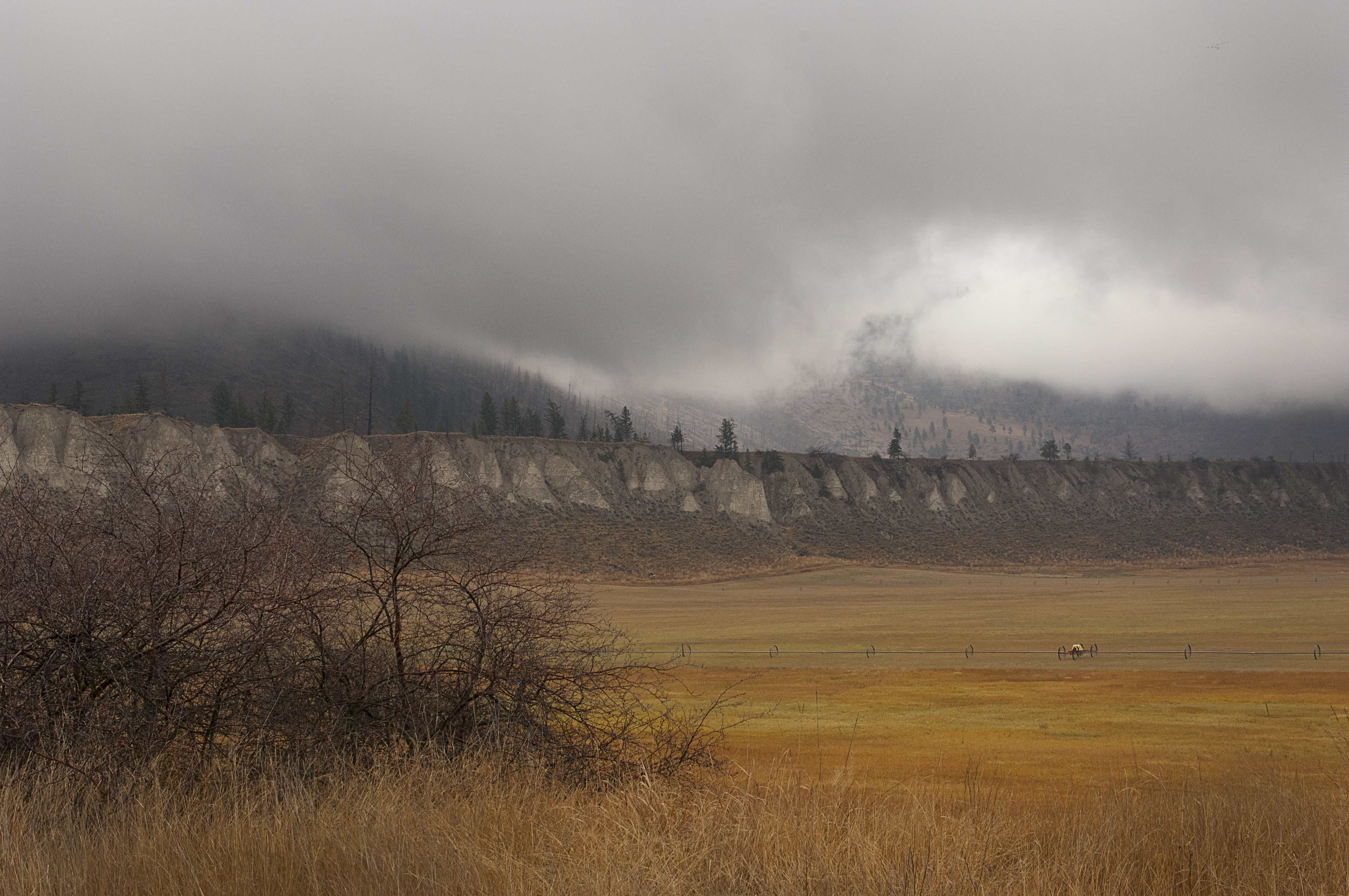
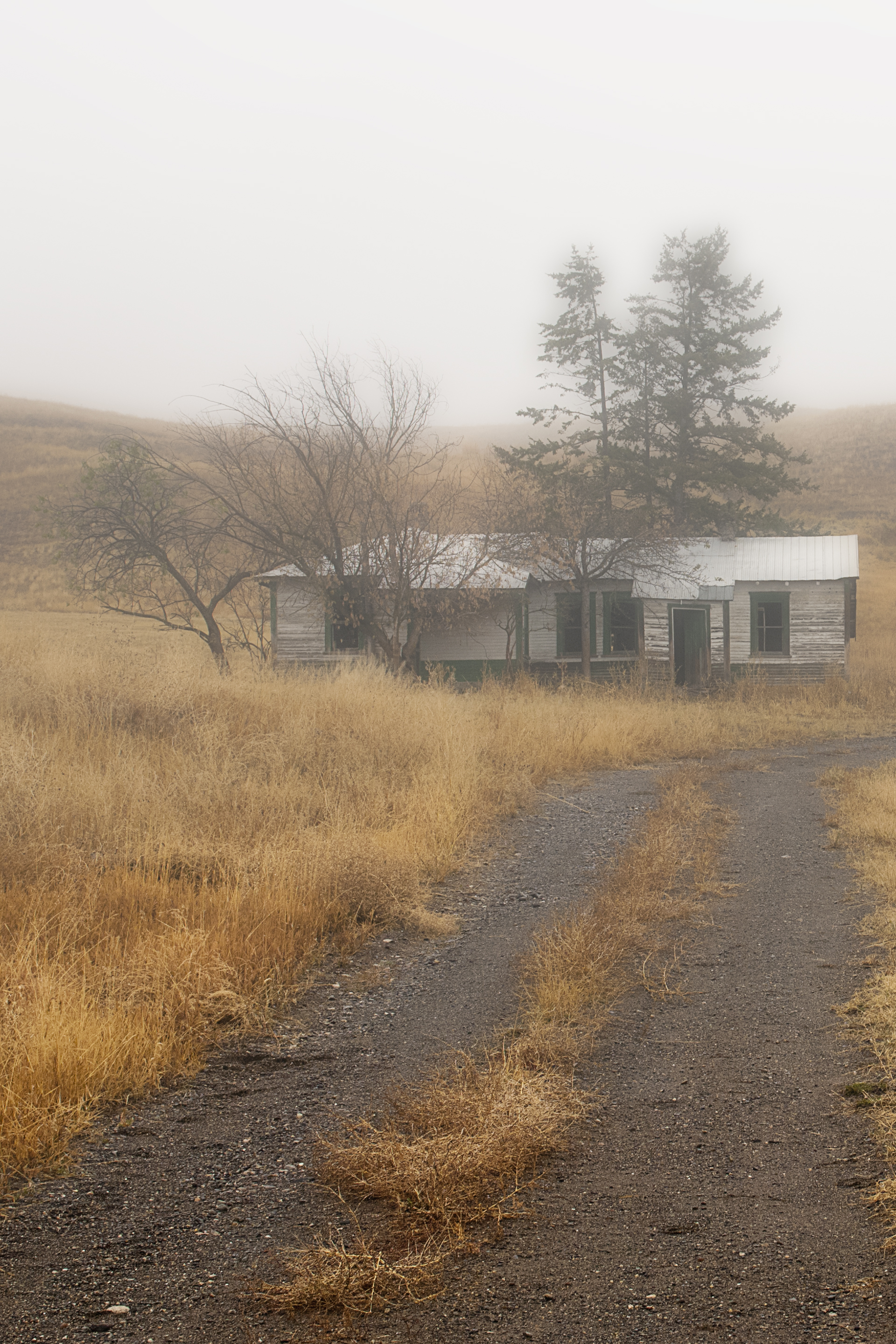
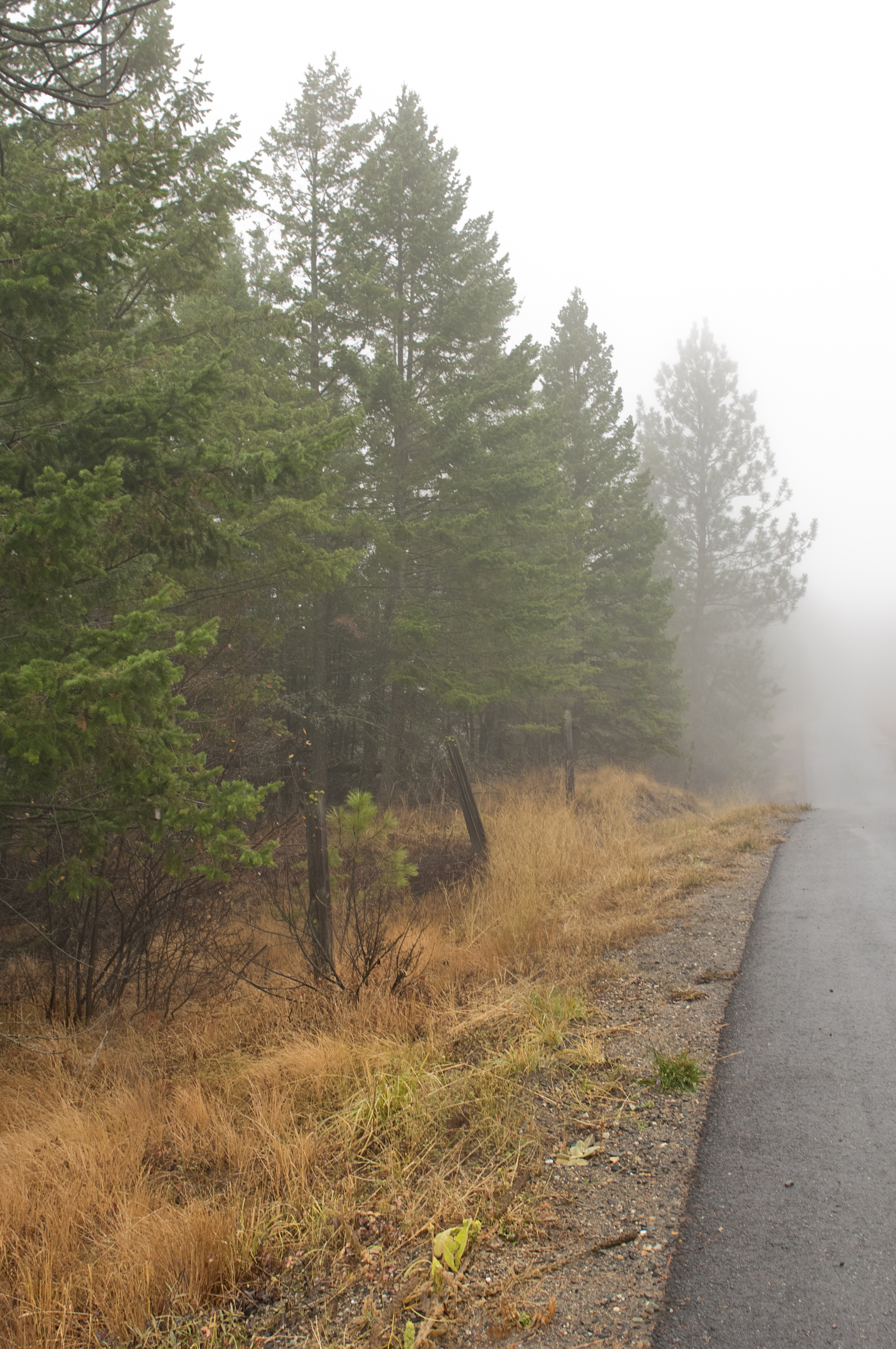
I like taking pictures on foggy days. I suppose I could have stayed inside and watched TV or read a book. I know that many photographers would have done just that as they complained about the damp, flat, lifeless-looking fog, but I like foggy, windy, snowy, and even rainy days. Inclement weather makes for unusual and interesting photographs, so when I woke on a morning with thick fog I knew I was going to have a fun day. Fog can conjure up feelings of mystery and awe, and of the many different conditions we encounter in landscape photography fog is one of my favorites.

Yes, the light was low, but October fields here in the British Columbia interior are mostly shades of gold, so there really is lots of colour. All a photographer has to do is select a subject angle carefully. I began by wandering through the wooded area across the road from my house, but I didn’t really get very far, the fog was so thick in the pines that there wasn’t much that I liked. I jumped in my car and I made the short, five-minute trip down to the Thompson River, and was happy to be just a bit under the fog, and that made for lots of great opportunities.

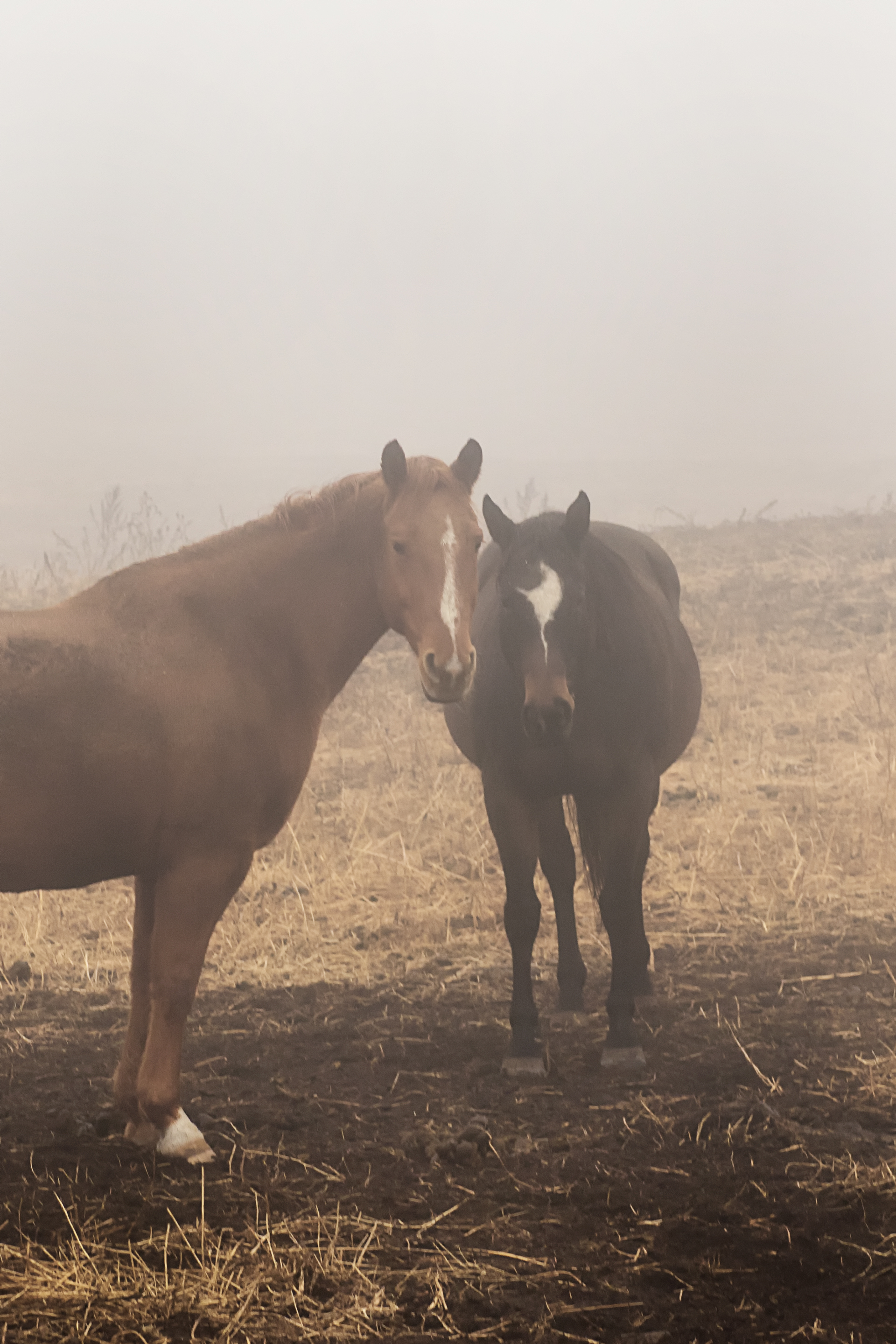
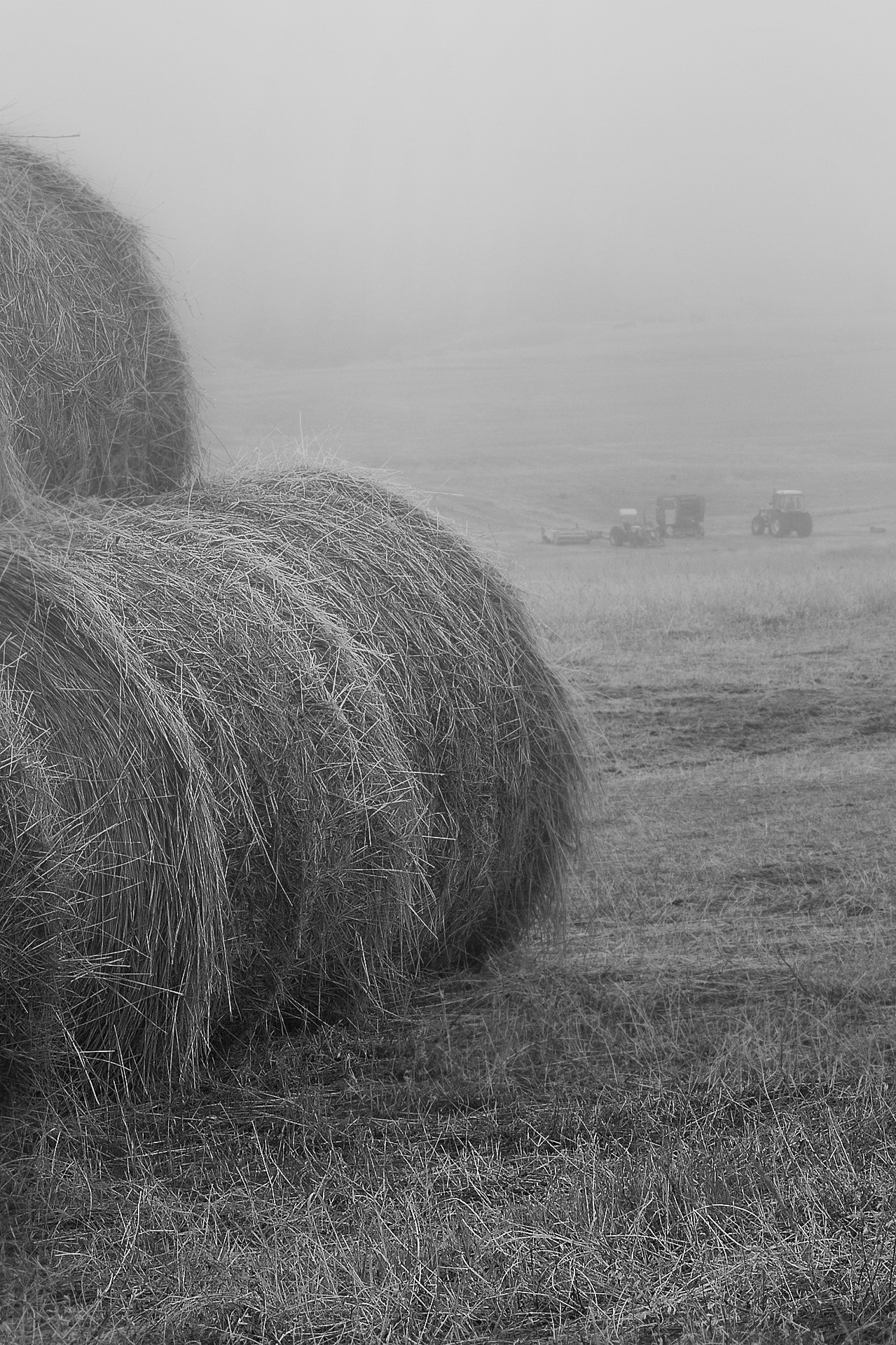
I really didn’t have any particular subject in mind. I had hoped the bridge that crossed the river would be embraced in fog, but there was a strong, wet, breeze in the river valley that had pushed the clouds and the fog away. I wanted fog or at least low clouds, so I lingered higher up, along the valley rim, searching out and photographing fences, stacks of hay, and abandoned buildings. And I even took a few pictures of cows and horses, as they looked for food in the damp foggy conditions.

I always meter for the mid tone in my composition. The foggy flat light can easily trick the meter and I prefer manual exposure where I personally can determine my aperture and shutter speed. I had remembered to bring my tripod, so even when the light was low and required a slow shutter speed I could still keep an acceptable depth of field using an aperture of f8 or smaller.

Outdoor photographs taken in fog often look flat and dull. The fog and the low light decreases image contrast and colour saturation significantly. However, for modern photographers this isn’t much of a problem since the contrast and saturation of a digital photo can easily be adjusted.  Fortunately, we can turn the problem into an advantage because an image with low contrast is easier to manipulate than an image taken in harsh light with strong shadows and highlights.

With most digital cameras the contrast can be adjusted before the photo is taken. But in my opinion, it is better to do a rough adjustment during post-production in the RAW converter, and a fine adjustment in Photoshop. In-camera adjustment is not always the best since we don’t know in advance what the right amount is, and clipping of shadows/highlights can occur.

Modern technology gives us a hand up on the flat, contrast less light even if some elements in a picture are improperly exposed they are easily corrected during post-production, and increasing the contrast on important subjects in flat light is easy.

I have always liked my photographs to be about my personal vision of a scene and not to be limited by what a particular film or camera sensor can record.  Even Ansel Adams said, “You don’t take a photograph, you make it.”

Fog forms when a humid, cool air mass moves under a warm air mass and those conditions seem to be recurring for a second day. I know that might cause problems for drivers, but I am hoping to see some in Kamloops when I go to my shop today. And if so, I will be out on the street with my camera.

I enjoy your comments, Thanks.

My website is at www.enmanscamera.com
Meeting Photographers and Photographing Bighorn Sheep.


Last week I wrote that I had a great time doing photography as I toured Victoria’s waterfront, and said that along with photographing a different environment I met interesting people, and even spent time with other photographers.

One of my goals for that Victoria excursion was to meet and spend time with the well-known painter, photographer, and documentary filmmaker, Karl Spreitz. His interesting career included working as a news photographer in Prince George, BC, for CTV television, for the BC Department of Travel and Industry, and as staff photographer/editor for Beautiful BC magazine.

Spreitz, now in his eighties, is a fountain of knowledge about film and photography and has been acquainted with most of the important west coast Canadian and American photographers for the past 50 years, and I was delighted to be able to spend the afternoon talking to him about photography and listening to his stories.

I like being a photographer. I also enjoy socializing with other photographers and spending time with a long time photographer like Spreitz is a rare opportunity I will always take if given the chance.

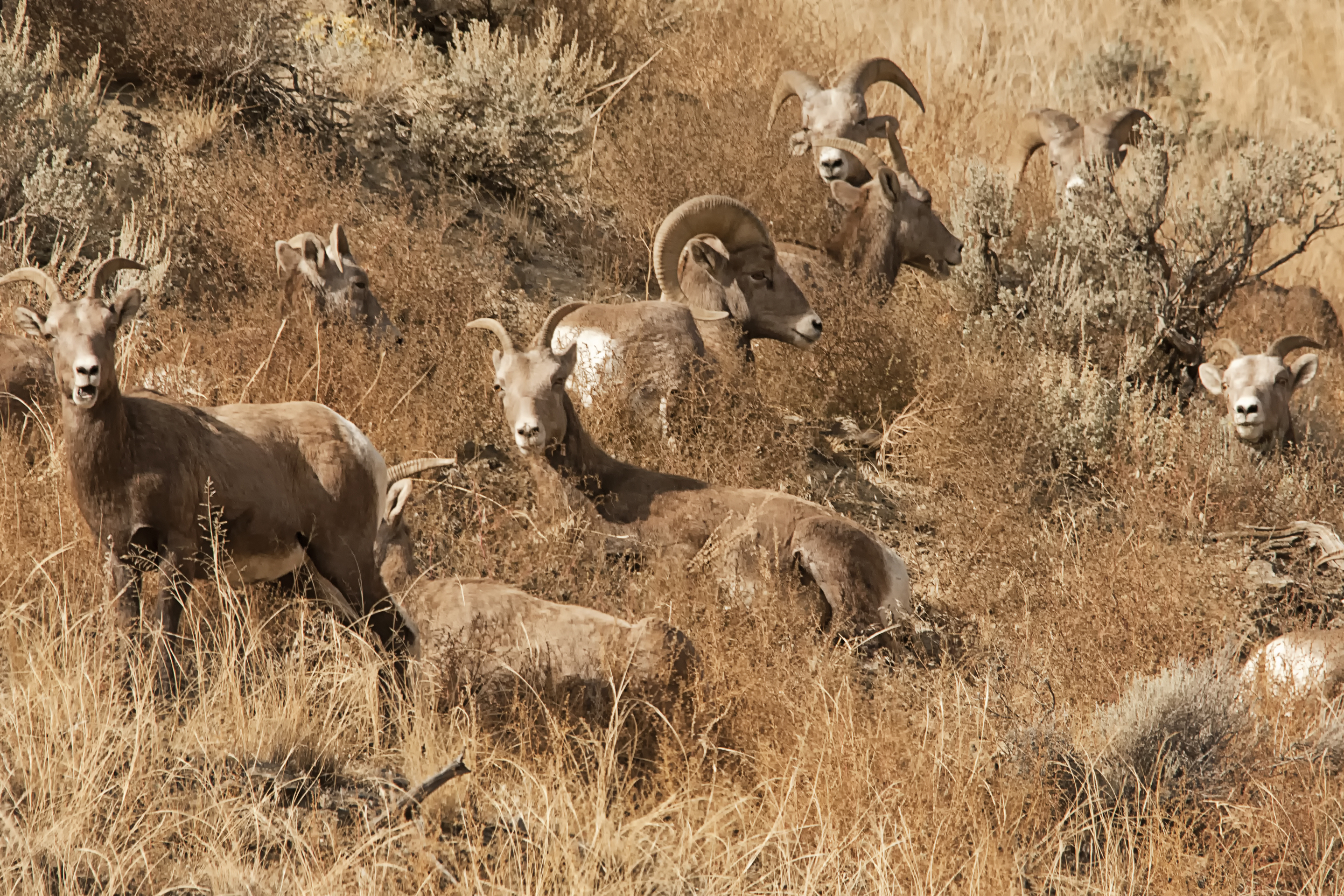
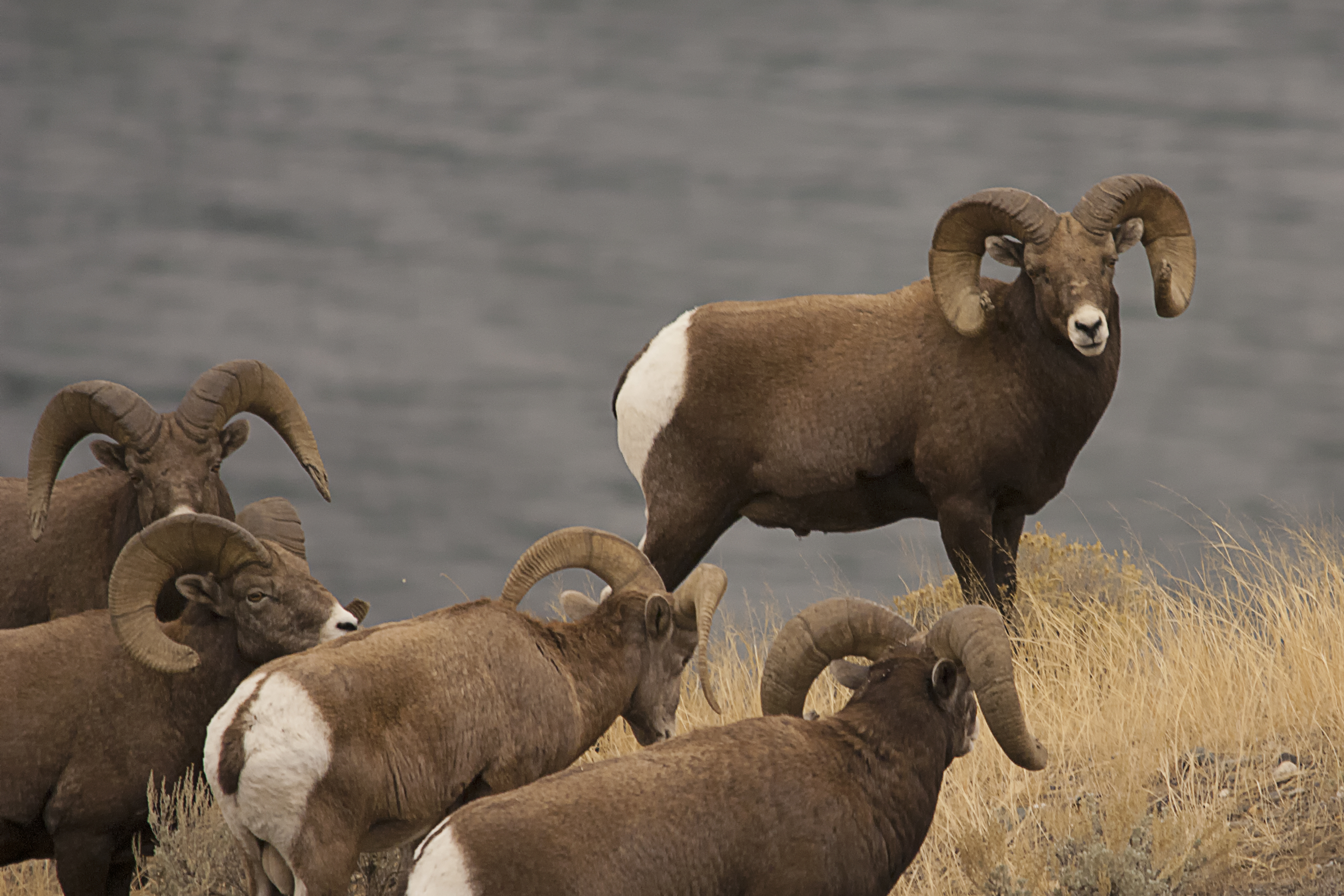
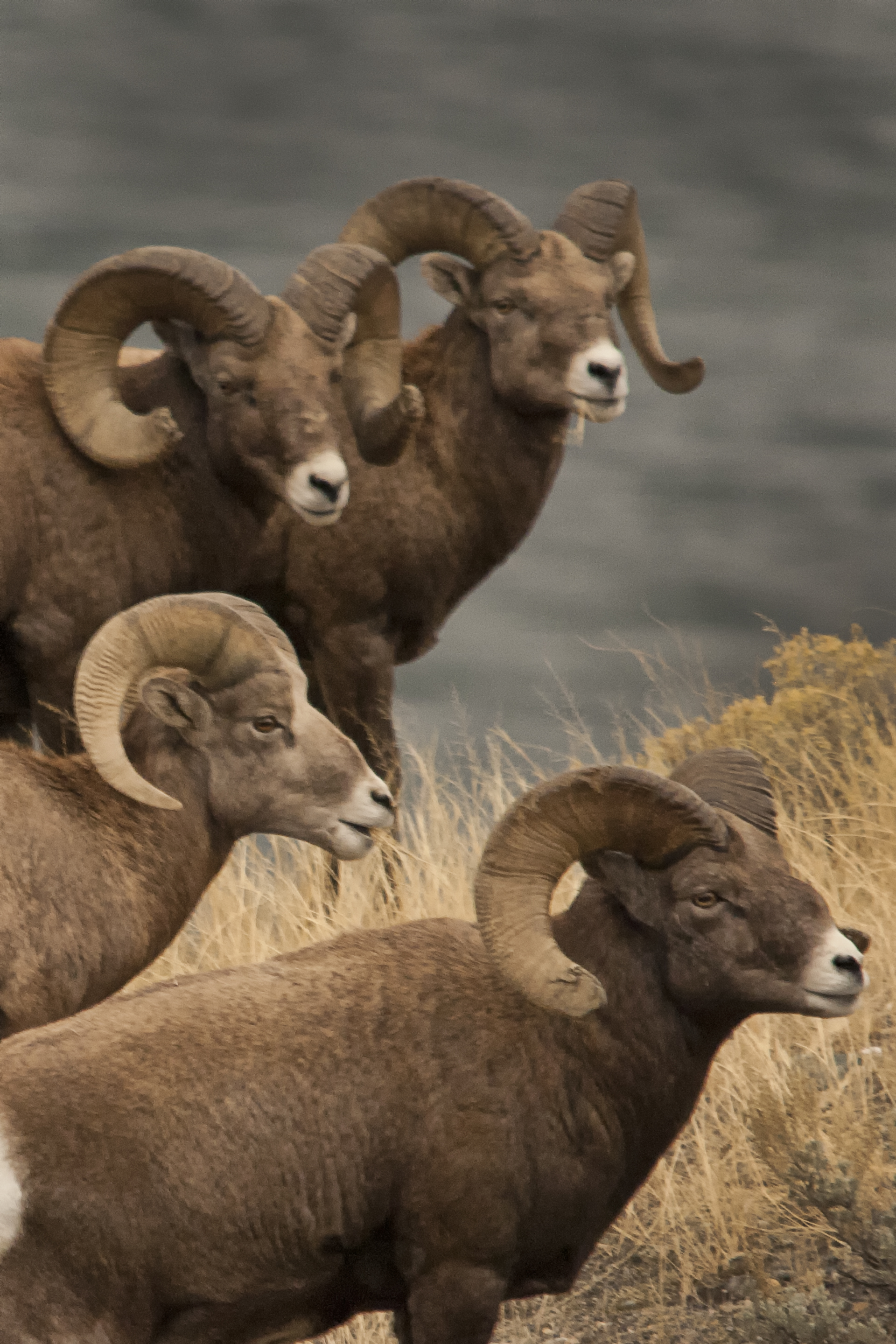
After I returned home from Victoria I was provided the opportunity to go out with my friend Walter to photograph bighorn sheep. We sat on a windy, sagebrush-covered hill overlooking Kamloops Lake. They should have been in rut at this time of year and we hoped to get shots of their violent head butting, but as it was most were bedded down or lazily wandering through the sagebrush.

As I sat I thought about Spreitz making fun of us that live in the BC interior. He said when the magazine needed pictures from the region I live in they would just look for any old picture of sagebrush and bighorn sheep and run with that. At the time I knew he was teasing me, I laughed then and again to myself on that windy hilltop, thinking that was exactly what I was viewing.

Our strategy was to let the sheep get used to us. We sat and waited for something to happen. Once the sheep got comfortable with our presence, we slowly moved in for closer and better pictures.

Both Walter and I had our long telephoto Sigma lenses. Walter’s is a 120-400mm and mine a 150-500mm. For this type of photography we preferred multi-focal (zoom) lenses. The sheep sometimes got pretty close and a fixed focal length lens would have been limiting.

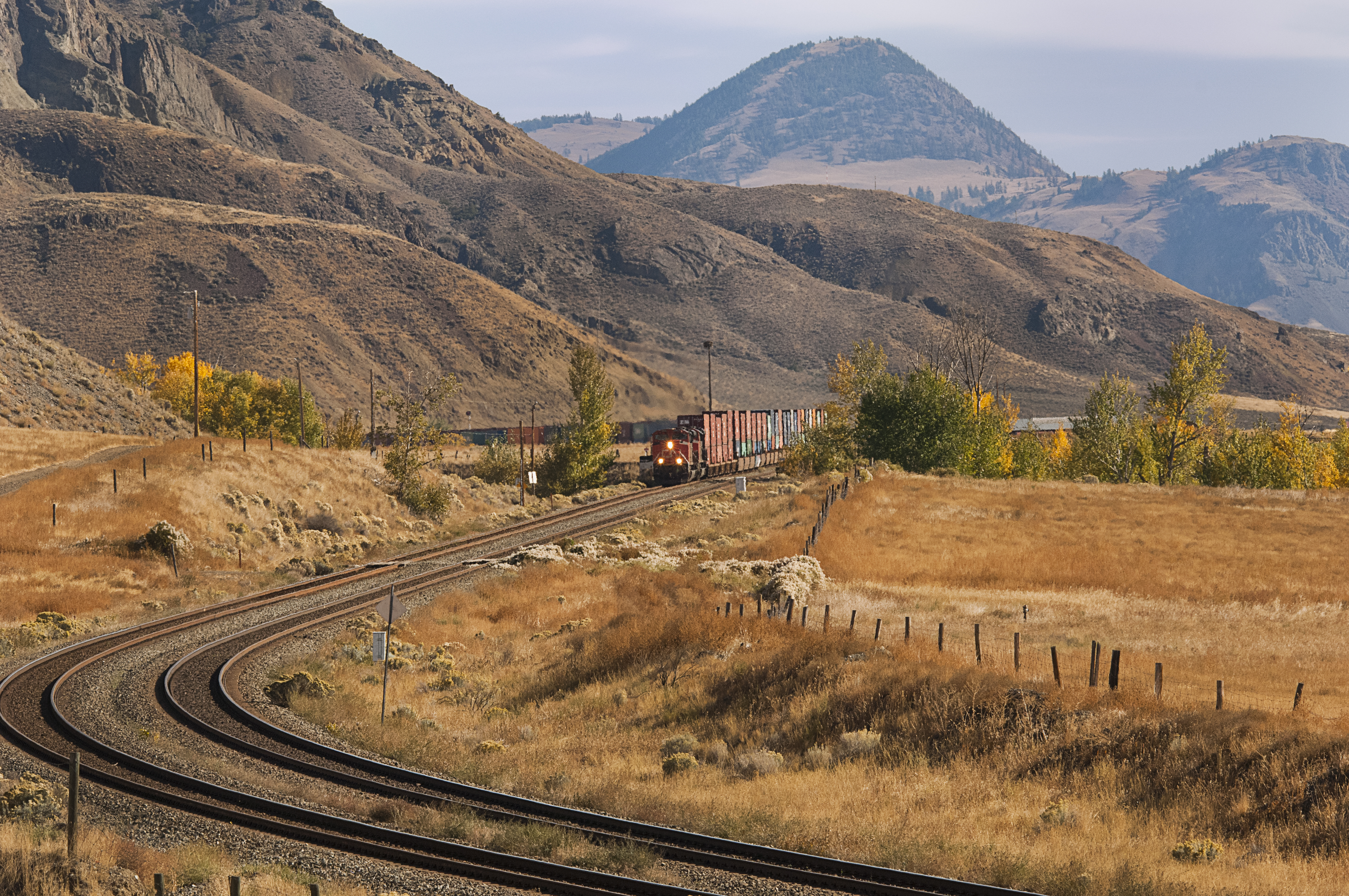
I know I am always recommending tripods, but on that occasion with all the steep climbing and odd angles, tripods made photography awkward, so we had to hand hold those big lenses. The acceptable technique is to follow the old photographer’s rule; “Always use a shutter speed equal to or more than the focal length of the lens.”   I make multiple exposures, expect a few soft images and hope for the best.  However, on that occasion there wasn’t any real action from those lazy bighorn sheep and it was easy to get usable, shake-free exposures. I suppose the challenge was to get images that were interesting.  I don’t know about Walter, but for me that meant climbing around to get lots of different angles, and for that occasion I even ended up taking several pictures of an oncoming train in the colourful Kamloops fall landscape.

Finally, we were overcome when the wind became so strong that it became hard to stand (or sit for that matter) without moving, so we headed home. We had been in the hills most of the day and even though our memory cards weren’t loaded with exciting pictures we agreed that the day had been fun anyway.

How much better can it get? Two consecutive weekends filled with fun photography in very different places, and, in my opinion, both spent with, interesting photographer companions.

I appreciate your comments.

My website is at at www.enmanscamera.com
Photographing Vintage Cars Along The Road

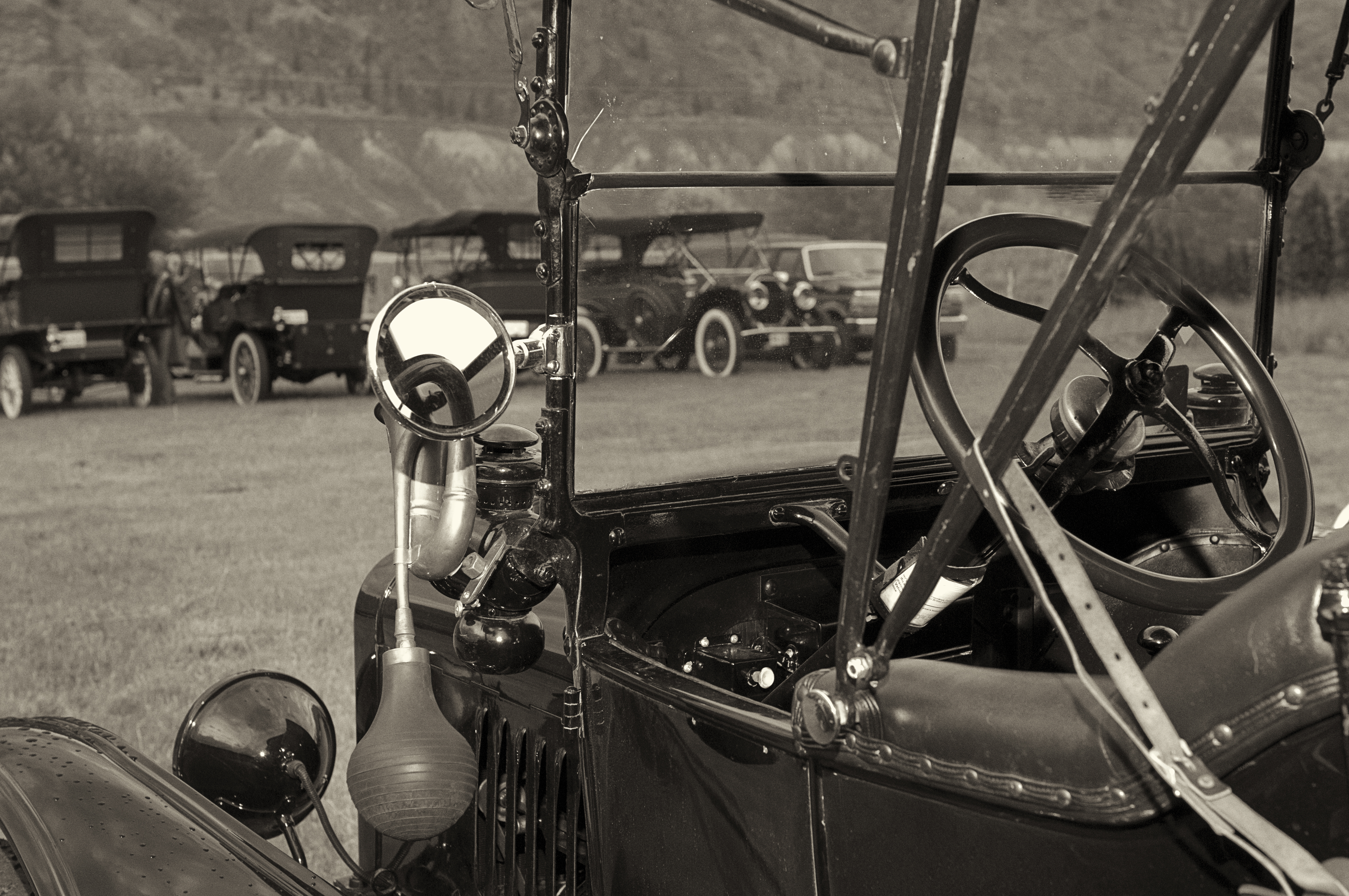
     A year ago I wrote, “Roadside Photographers Just Get Lucky”. I said those photographers that cruise the highways and byways by vehicle looking for subjects, “must be prepared and ready at a moment’s notice to grab the camera from its bag on the back seat, roll down the window (that’s a must), take a quick exposure reading, and shoot.” I saw them as distinctive among scenic, bird, and wildlife photographers and discussed how I thought luck played an important part in their photography.

These photographers don’t always have the luxury of time to attach a tripod to the camera base, and need to quickly and accurately meter, shoot fast, and be ready for other cars that slowly pass as people try to see why the car is stopped.

Loosing composure by madly waving or yelling, “Go, go, go. Get out of my way!”  doesn’t work very well.  That car will pass and hopefully won’t ruin the shot. The light isn’t always optimal, and the perspective and angle of the shot is going to depend on the road and the placement of the vehicle in relationship to the subject to be photographed. There are those roadside shooters that only use little point and shoot cameras, but the serious roadside photographer is equipped with a DSLR, the skill to use it effectively, and experience to understand how to work with restricting conditions.

Roadside photographers don’t go out to photograph a particular subject. Much of the time, skilled multi-taskers that they are, roadside photographers will be involved in other activities like going to work, visiting friends, or making that run to the store before supper, yet still are on the lookout for any kind of subject to photograph, and are silent about how the picture they are showing was made by chance, and from behind the steering wheel of their car. It sounds so much better for viewers to think the picture was made after detailed planning or some lengthy excursion on foot.

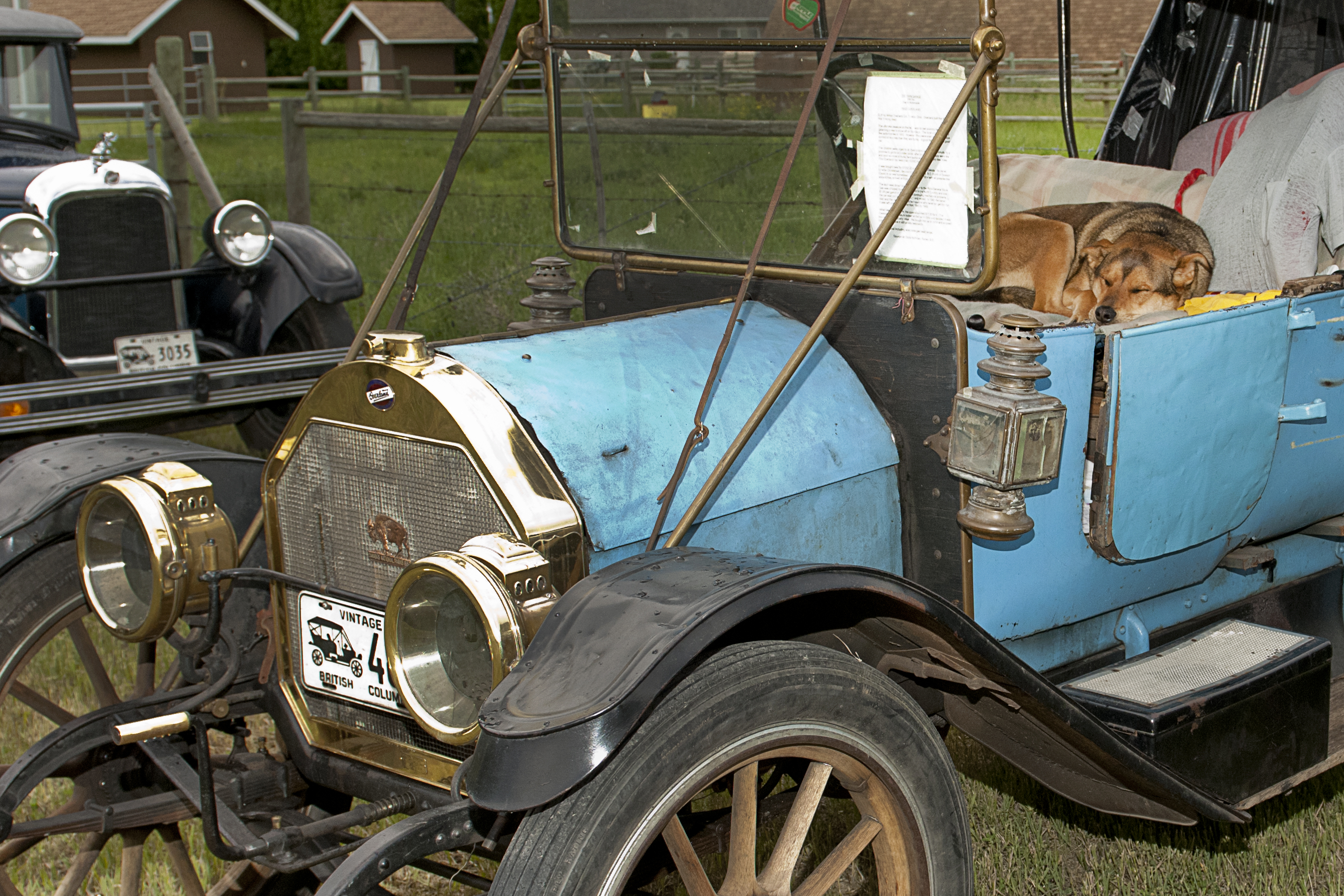
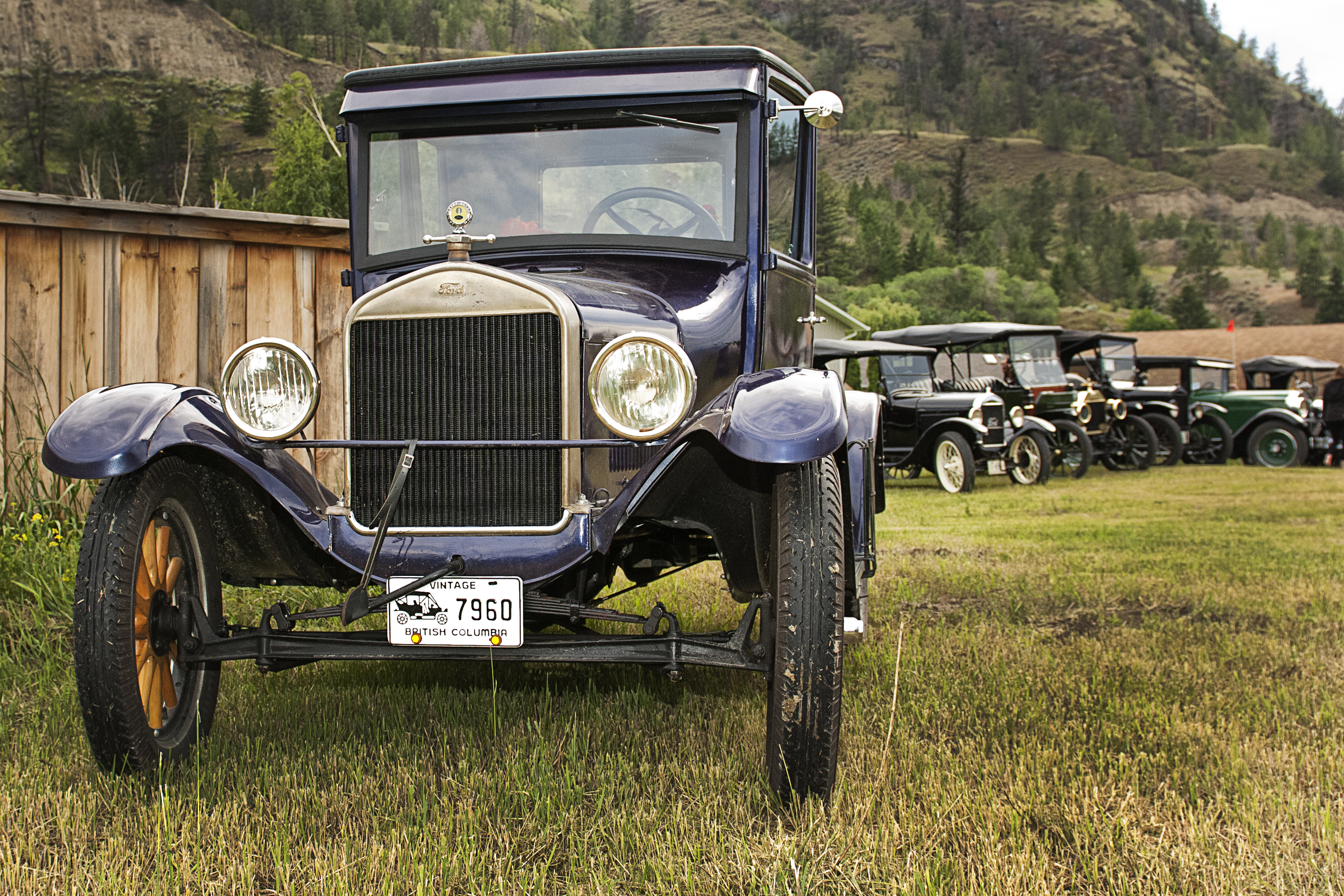
Over the years I have described what kind of photographer I am in many different ways. I won’t bore readers with that, but these days I see myself as an opportunist when it comes to the images I capture on my camera’s sensor. Most of the pictures I am able to make on the roadside are because of my sharp-eyed wife, Linda.  I thought about this roadside, opportunistic photography as I pulled off the Trans Canada highway to stop and photograph a field filled with pre-1920 cars that Linda saw and I almost drove by.

The Antique chapter from the larger organization, Vintage Car Club of Canada www.vccc.com had picked a location just outside of Kamloops, British Columbia, to hold their meet and had been touring around the area for the past two days. We sometimes see groups of restored old cars on the highways which I suppose is not that surprising with a 23 chapter, 1200 member-strong, Canadian car club. However, spectators usually surround them and chances of getting clear shots or even talking to the owners are rare.

But in this instance the wonderful antique cars were parked in a circle in a wide-mowed field and, unlike other car shows, spectators were absent and I could take all the time I wanted composing pictures, and even talking to owners about the club and receiving personal stories about their cars.

I was lucky. I already said roadside photographers just get lucky. The cars, the lack of other people, other photographers, and because I had been working earlier in the day at another job meant that I had my 24-70mm lens and a good flash and I got to get out of my car ready for the pictures.  I was lucky.

The sky had clouded over reducing metal glare and the warm evening light was perfect, all I had to do was add some fill light with my flash to bring out the character of the vintage cars. I began by just photographing those that interested me the most, then after the initial excitement I slowed down and walked around again trying to compose my pictures to tell a story instead of just documenting cars in a field.

I like cars, and like many men view them as works of art. As a photographer the chance to wander around photographing vintage cars is just plain fun, however, truth be told, I will stop to photograph pretty much anything.

My website: www.enmanscamera.com
Give people gift of Photography this year.

How many pictures did you take last summer?  How many pictures did you take while on your last vacation?  What did you do with all those images?  Make lots of small prints? Or did you, heaven forbid, just store them away on your computer’s hard-drive?  Maybe you have thousands of images on CDs and DVDs?

Some of you enlarged a few and maybe joined other photographers in an exhibition and might now have a some matted and framed photographs looking for space on your walls and if you are like me wall space gets pretty limited.   At least I have a shop that I can fill with my framed or matted photographs, but I still have lots of photographs that, in my opinion, deserve a better place than to be stored away and never to be seen.

I have always printed my photographs.  Before digital I would remove my film from the camera, take it to my home lab, then process and print every frame on the negative I liked. I rarely made prints smaller than 8X10 and if I really liked one or more of the shots I would make 11×14 enlargements that including the matt and frame became 16X20.  Nowadays I probably print even more because it is so easy to just sit down to my computer and get excited about the images my wife and I have captured.

As always, I try different techniques, paper, and colours, with an outcome of lots of prints piling up.  Now to get to the point of this column, giving photography as gifts.  I heard about a local photographer that places quite a value on the photography he produces and believes no one should have any of his photography unless they pay for it. As a working photographer I cannot find fault with the value he puts on his work, but I also like people to enjoy my photography and come from the belief that my photography is better suited to being displayed than gathering dust because I want money for every shot.

I have neighbours and because they are loggers they have gladly cut down a tree or two about to fall on my fence. Another neighbour is a skilled mechanic has helped me with my truck when it needed work. The people next door always take care of my chickens, pond full of fish and old cat when my wife and I must be away. None of these people have requested money for their professional skills.  I have friends that are fun to spend the evening partying with, and others that I just want to say hello to without disturbing their busy schedule. I guess I could go out and buy them presents. However, what better gift than a photograph or photographs by me? 

My favourite gift is to photograph their family and give them prints and a CD. If they want an enlargement or two for their family, I’ll make that for them also.   What about all those prints piling up? I haven’t tried this, but I remember that while at a party, a photographer friend of mine brought out a wonderful selection of dry mounted 8×12 and 11×14 photographs and

told everyone they could have any print they wanted. Cards and calendars of our photographs make great gifts also.

Years ago I stopped to photograph a little girl riding her horse along a dusty back road I live on. I printed an 8×10 and gave it to her the next time I saw her. She has since moved to Kamloops, grown up, married, and had children and I suspect her children have made her a grandmother by now. That photograph made us good friends. I know anytime she sees me she will make her way through the crowd or cross the street just to say hi. (I even photographed her wedding many years later) I have photographed my son’s friends on bicycles, motorcycles and cars and given them enlargements.  At one time I could say I had made pictures for everyone on the street I live, but many have moved away and we have new neighbours everywhere. Maybe it’s time to start walking around the neighbourhood again with my camera.  What a great gift a photograph can be.

www.enmanscamera.com
 

A photographer’s impression of a Scott Kelby Photography Workshop

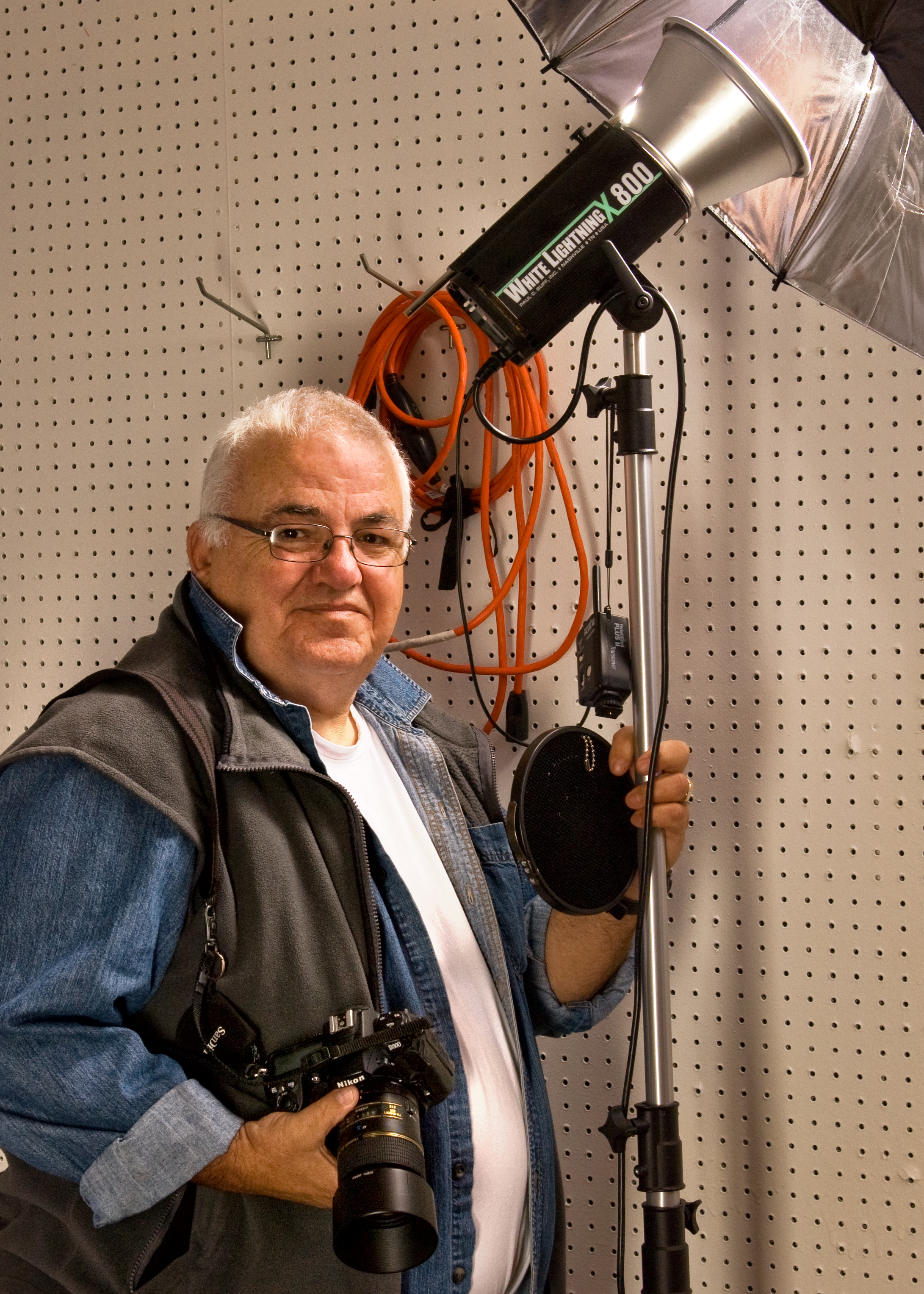
My friend Bob Clark (pictured) was fortunate to be able to attend photographer, and award-winning author, Scott Kelby’s, Light it, Shoot it, Retouch it seminar last month.   In his fact-filled tutorial Kelby showed participants how he produces a portrait; taking participants through an entire “live portrait” shoot – start to finish – controlling studio lighting with different lighting set-ups, a how-to on working with models, and his very latest PhotoShop portrait retouching techniques for finishing.

I have known Clark since my time at the University College of the Cariboo, (now Thompson Rivers University). He recently retired and opened a small photo studio located in a back space of the Public’s Own Market building at 970 Victoria Street. Bob’s clients are dancers, actors, and models looking for portfolios and in his own words “people that normally would not go to a traditional photographer”.

I would have liked to attend it, however my schedule didn’t work that day. I knew Clark was going and that I would be able to sit with him for a review of Kelby’s photographic discussion, so when he invited me over to check his studio out, of course, I made the time. We have always had fun bouncing ideas about photography off each other, and I wanted to see his new space, and knew I’d have the chance to quiz him on Kelby’s class.

I asked him about Scott Kelby and he said he was delighted with his lecture style. “He didn’t talk down to anyone no matter their experience, and it was obvious he could relate to everyone equally”. I asked Clark why he decided to take the class. He said he “had been reading and researching portrait lighting and photo retouching for some time, and Scot Kelby’s name came up continually, so when I saw that he was giving a workshop in Vancouver I knew I wanted to attend. I wanted to be surrounded by people of the same interest. This was not a social occasion for me, I wanted to be nothing more than a photo geek for one solid day.”

Clark told me he joined 500+ photographers in a spacious conference center fitted with two large video screens and equipment filled stage with many different portrait lighting set-ups. There was actually a full working studio on stage exhibiting moderately priced lighting equipment that the average photographer could afford, not the fancy out of reach, high priced stuff that he expected at a workshop of that caliber.

Kelby began with a basic one light setup, photographed his models using different backgrounds, showed how he would use PhotoShop for those subjects; then moved to a two light setup, photographed the models again changing backdrops a few times and took that subject to finish demonstrating PhotoShop techniques; then repeated the complete process using a three light setup.

I asked Bob if there was a high point or something that really got him excited during the class and he said definitely the part when Kelby photographed a model and in less than thirty minutes was able to change the background using PhotoShop. He had used a plain background then seamlessly placed the model on an album cover, and reminded participants that step-by-step instructions for that process were in the handbook provided.

Clark commented that one could easily reach information overload with all the information that was being shown and discussed, but Kelby reminded all the participants that everything in the workshop would be in the techniques book handed out at the beginning of the session and that if he had strayed a bit there would be additions available by going to his website.

Clark mentioned several times how much he enjoyed that class and highly recommended it to my readers. He said the class also comes in three distinct parts if one is reluctant to go for the whole package. And he emphasized that anyone will get something from Kelby’s Light it, Shoot it, Retouch it seminar, no matter his or her experience. I am hopeful the Scott Kelby road show will make the trip to British Columbia again next year and plan on attending if it does. This type of event features one of my ongoing bits of advice to aspiring photographers, and that is to continually upgrade photographic skills by attending appropriate educational seminars.

www.enmanscamera.com