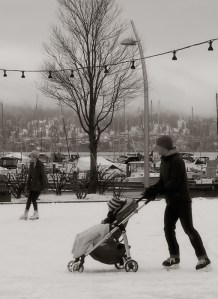
Photographing the waterfront on a snowy February morning    

Last weekend was my close friend and photography companion Jo McAvany’s birthday.

Remembering how much fun we had in December photographing the waterfront in Kelowna I suggested that for her birthday present we should make the two-hour drive to Kelowna, have dinner, stay overnight, and then spend the morning photographing the snow covered lakefront.

Of course Jo said yes and I booked some rooms, and Saturday’s cold overcast afternoon saw us packing our cameras and driving the wet, winding road to Kelowna.

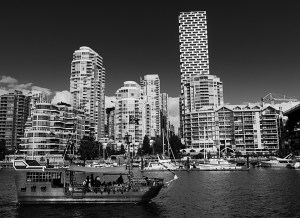
I like how the snow-covered waterfront looks and if Vancouver was closer I would have suggested we go there to photograph an ocean harbour, but the weather report said the mountain road between Kamloops and Vancouver might see icy conditions and possibly snow, so Kelowna it was.

We lucked out and had a balcony at our downtown hotel and braved the cold to spend some of the first afternoon taking pictures there and walking around. Then after dark we went out to my favourite Greek restaurant in Kelowna, watched the belly dancer and had way too much to eat.

The next morning we awoke to snow on the balcony. I know some photographers might have been displeased, but Jo and I couldn’t have been happier, and after a leisurely (complimentary hotel) breakfast we grabbed our coats and cameras and headed for Okanagan Lake.

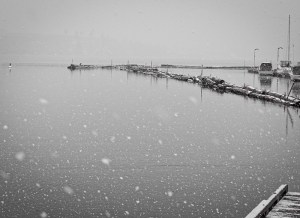
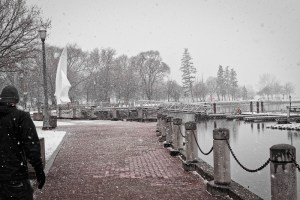
The snow was beginning to come down in huge flakes by the time we got there, but here were a people walking along the waterfront and a few were skating on the snow coverer ice skating rink.

I began by to photographing people on the skating rink and then moved down to photo a bonfire where people sat in it’s warmth drinking hot chocolate and getting their skates on.

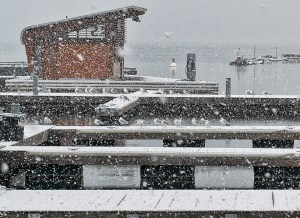
I was using my 24-70mm and wanted to stop the action as well as see the snowflakes. For those that haven’t shot in a snowstorm, the trick is simply to use a flash. The purpose of the flash was to stop the snowflakes.

The popup flash on my camera was perfect. I didn’t need to illuminate my subjects; anyway they were to far away.   I was using an ISO of 800, so I could keep my shutterspeed 1/250 and my aperture at f8 or f11 for lots of depth of field.

We wandered the shoreline photographing people, boats, ducks and anything else that caught our attention on that snowy morning. Jo was using her favourite 28-300mm travel lens. Gosh, we had a fun time and got some great photos.

We could have spent the day there, but the snow stopped, and the cold damp breeze coming off the lake was getting uncomfortable . I noticed that most of the people that had been ice-skating were now huddled around the big fire. It was time to go home.

The weekend was a perfect photo adventure and Jo said it was a very good birthday present.

Other than a few bundled up people strolling along the waterfront and those ice-skating or sitting by the fire we had the waterfront to ourselves. We saw no other photographers enjoying the photogenic lakeshore while we were there.

I expect local photographers must get their fill of photographing the lake and marina in the summer and fall when everything is so beautiful along the water and might not be interested enough to look for things to photograph on a cold snowy February morning. However, I like to remember the words of the famous Photojournalist, Robert Capa when he said, “the pictures are there you just take them.”

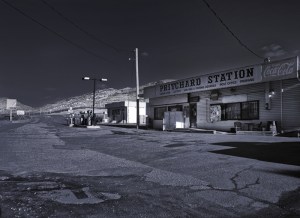
Black and White Photos with Infrared  


My last two articles discussed using black and white photography and I’d like carry on with that topic this week.

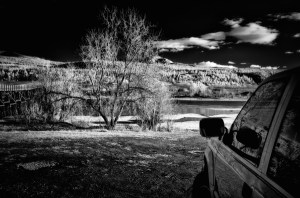
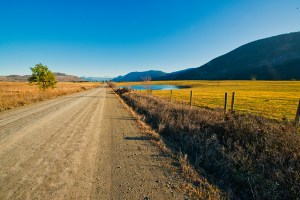
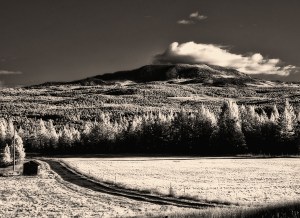
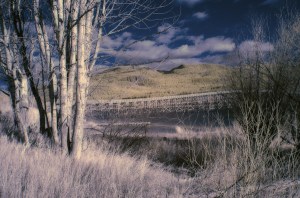
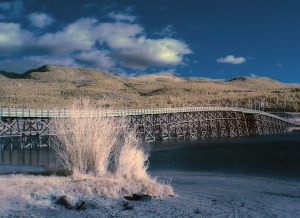
This past week when there was one of those almost rare sunny clear blue sky February days I decided take a drive around my neighbourhood to make some pictures with my infrared camera.

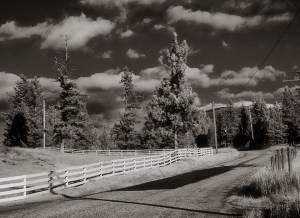
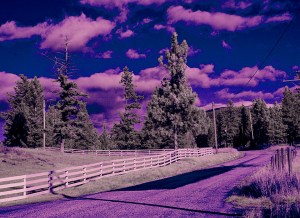
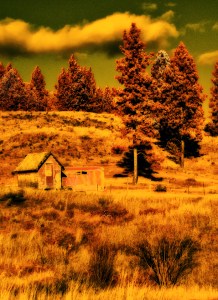
That camera gives me scenes of colourfully altered reality when the light is right with results that are often unusually deep blue skies, and trees that are yellow or white instead of green. However, continuing on with what I have been writing and thinking about when and loaded the day’s files on my computer I converted the colourful images to black and white.

I like the striking effects I can sometimes get that are contrasty with dark skies and white vegetation when I make a black and white infrared photographs. They seem to have what some photographers call an “otherworldly” look.

I like converting my digital files to black and white and I enjoy the creative manipulation available to me.

Scenic photographer Nathan Wirth explains that creativity, “I wanted something different to experiment with, and I saw the potential to experiment with those infrared whites that come from the greens and the infrared blacks that come from the blues…and manipulate them until I found the stark contrasts that I was interested in.”

Infrared is a different way to visually discuss a subject, and a black & white photograph communicates in a subtle way. To me the combination of those two allows a photographer to stretch his or her creativity and show our world in different terms.

Digital and infrared gets me involved in the complete process from picking up the camera, the fun of doing photography, to completing the image on the computer. I enjoy the creativity of the infrared process that includes the computer. And wandering the neighbourhood on a sunny winter day with any kind of camera is so darned fun

A snow-covered landscape   


I looked out my window and the sun was poking in under the clouds creating deep shadows on the cold white snow after being dark and gloomy all day.

It made me think about the quote I used in my article last week by Paul Outerbridge, “in black and white you suggest; in color you state.” and thought, everything is so contrasty and monochromatic, it’ll give me a perfect opportunity to do a follow up on my last article about black and white photographs.

I rushed to get my coat and boots, attached my 70-200mm lens on my camera and went outside intending to get some interesting black and white photos of the shadows being cast in the yard.

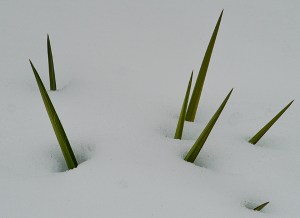
As I trudged into the deep snow I looked around at the flat, overcast, shadowless landscape of my yard and thought of that verse by Robert Burns, “The best-laid plans of mice and men often go awry.”  The clouds had drifted lower to cover the bright light of the sun.  I was disappointed, but I spied a planter poking out of the snow and almost in desperation I focused on it and released my cameras shutter. Struggling through the snow a bit further I saw and photographed an old wooden wheel that was leaning against a lilac.

This time of year lots of photographers take advantage of the snow-covered landscape to create minimalist images and I thought, what the heck I’d walk down the street and see what I can find.

I could see a bicycle waiting for summer against my neighbour’s fence, and some wire plant holders in my garden. Boulders jutted out, sharp branches protruded, the snow falling off my green house made interesting shapes, and the handle of a rusty old snow blower my friend Shaun stuck along the road in front of my house on a hot day last summer to remind me that winter snow is only a few months away.

I just needed to “think in black and white” and remember to meter the darkest areas of each subject so I would not loose detail.

I wondered if I should drive down to the river or up along the road to find some deep snow drifts. Maybe I was just lazy, but with a bit of thought one never has to go very far from home to find subjects to photograph and anyway the road had very little snow so walking was easy. All I needed to do was go for a slow stroll along the road.

Even without the bright sun making shadows everything still could work as black and white photographs and that’s what I wanted. Sometimes I think flat overcast light isn’t worth my time, but when I returned home and loaded my pictures on the computer I was satisfied that this time it was.

In an article I wrote some years ago I said that a photographer I once met saying that he believed “shooting in B&W refined one’s way of seeing.”   That’s an intriguing thought, and if it is so, there wasn’t a much better time to visualise in black and white and exploit tonal elements in a scene as when one is viewing a snow-covered landscape.

The Black and White Photograph  


Today my friend Jo McAvany showed me a book of black and white portraits she had made for a client.

Black and White has always been my favourite photographic medium so, of course, I was really pleased to see that she was willing to take the step away from what most local photographers are doing and create the portrait collection in black and white.

Photojournalist Ted Grant, who is regarded as Canada’s premier living photographer wrote,

“When you photograph people in color, you photograph their clothes. But when you photograph people in black and white, you photograph their souls!”

Black and white photographs (in my opinion) seem to create moods and convey an almost tactile quality.

A black and white photograph depends on its ability to communicate, it doesn’t need to rely on eye-catching colours for its’ visual presentation. Those B&W images that stand the test of time combine attention to subtle changes in light, composition, and perspective. I think a B&W image stretches our creativity and forces us to visualize our world in different terms. I remember a photographer once saying that he believed shooting in B&W refined one’s way of seeing. And I heartily agree.

In spite of the many modern photographers that don’t bother with anything more than just accepting what comes out of their camera, black and white photography is far from being left behind in the past and with the current processing software, updates in high quality printers, and the latest in printing papers, black and white image-making will continue to be an option for a host of serious creative photographers.

Those photographers that are good at black and white photography learn to exploit the differences in tonal elements in a scene and present viewers with successful B&W portrayals that make excellent use of shapes, textures, light and shadow, and the loss of those original colours becomes irrelevant.

For those that haven’t tried monochrome (another word applied to B&W) image making, I will mention that it is easier than ever. Most digital cameras have a black and white mode available in the menu. However, I would suggest trying one of the many great programs available on the Internet that can be downloaded to test for free. Who knows, you might, like I do, really like black and white photography.

Readers by now must know how much I like quotes from famous photographers. So I’ll finish this up with some words from a turn of the century fashion and commercial photographer, Paul Outerbridge who wrote, “One very important difference between color and monochromatic photography is this: in black and white you suggest; in color you state. Much can be implied by suggestion, but statement demands certainty… absolute certainty.”

Photographing Christmas lights    

I have always liked Christmas. I won’t go as far as saying that it’s my favourite time for year. Gosh, anytime time of year that I get to point my camera at something is my favourite time.

Christmas is special. I like the music. (Don’t ride in my car or visit me at my home if you expect any other kind of music till January 2nd) I also like the festive spirit of those people that remember this is a time of caring, giving and friendship. And, of course, I really like Christmas lights.

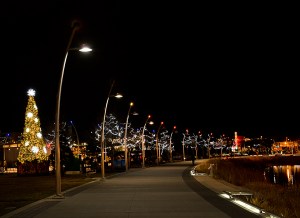
My last article was about using my ultra-wide lens Saturday morning to photograph the Tree of Hope, but the night before found Jo and I wandering in the cold photographing the city lights.

Jo used a 28-300mm and I used my 24-70mm and we both carried tripods. I think the lowest ISO I used was 800. Jo said she kept hers set at 100 ISO most of the time.

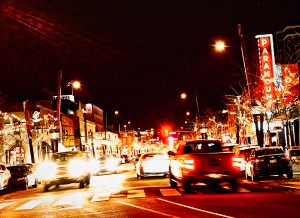
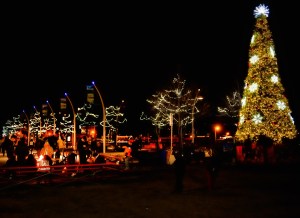
There were the usual strings of lights along the city streets, but it was the cheerful holiday lit Okanagan Lake waterfront that we wanted to photograph.

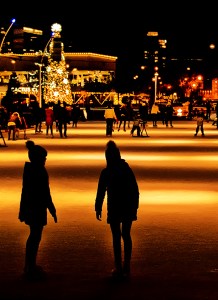
Kelowna goes all out and even has a skating rink that is open till 11PM and this year there was a big fire at one end for people to gather around.

Everything was perfect for two prowling photographers hunting for interesting and creative photos. I was hoping for snow. I like how the white covering reflects light at night.

We were ready for the cold and the snow and we even went shopping when we first arrived in Kelowna for a pair of insulated boots that Jo got for an early Christmas present.

What a fun overnight trip we had. We checked in to our downtown hotel, went Xmas shopping, had dinner at my favourite Kelowna restaurant (That plays blues music as you eat) were out till 9:30ish photographing the lights and got up early the next morning to photograph the 250,000 bulb Christmas tree.

As Jo and I drove home after that exhilarating time we talked about how we each found our own personal views of the lights. Would that be Perspective?

Photographing in low light or after dark helps to slow us down. One employs a tripod and most of the shutterspeeds are slow.

I think those photos that visually work usually take some forethought.

I’ll end this with a quote by American photographer Elliott Erwitt that I have used many times before because it fits so well, “To me, photography is an art of observation. It’s about finding something interesting in an ordinary place… I’ve found it has little to do with the things you see and everything to do with the way you see them.”


I’ve never been a fan of wide-angle lenses. 


Back when I began earning my living pointing a camera the widest lens I would use was a 35mm on my 35mm camera and a 50mm on my medium format camera. Both were as wide as I could tolerate because I disliked the perspective.

I have tried fisheye lenses in the past, and although the photos I took might have been called creative, I was never tempted to keep the lens.

This past year I acquired a 14-24mm. I bought it to sell, but after reading several positive reviews about that lens I ordered a filter holder with both an ND and a polarizing filter deciding to give the wide angle a try before selling it.

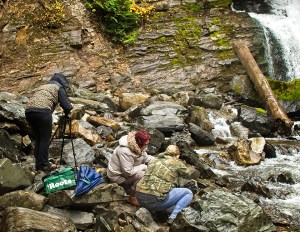
I wrote about using that lens this past spring to photograph a waterfall on a rainy day.

I loaned the 14-24mm to my friend Jo McAvany and she loves it. Her photos from our trip to Bellingham Washington last October were great. I only tried it once while we were there when I wanted to include two waterfalls in the same shot, it worked perfectly for that, but I changed back to my familiar 24-70mm after only a couple shots.

Jo plans on using it for her Santa pictures this weekend. She has set up a small studio in my shop and will be photographing people’s dogs with Santa. I’ll be interested to see if she ends up changing to her 24-70mm.

The 14-24mm is a different beast, like any ultra-wide lens it has that unique perspective and some distortion at the edges. It’s built like a tank with over 2 pounds to carry (969 grams). A reviewer wrote, “It must be held level and flat to avoid distortion. However, It will focus within a foot of the sensor from 18 to 24 mm, allowing very wide close focus shots.”
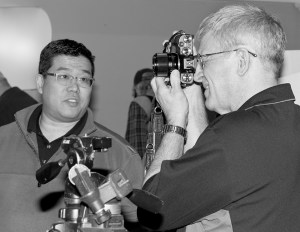
I found one photographer that said, “For those who know how to use it effectively a 14-24 can be spectacular.” And the prolific writer and photographer (bythom.com) Thom Hogan wrote, “The 14-24mm is a fantastic lens. Optically, it’s everything I’ve ever wanted in a wide angle.”
Well in spite of my feelings about wide angle photographs, I decided any lens receiving reviews like those deserved a chance.

This past weekend I finally took that lens out for a good workout. It is sharp and does give very wide scenic views like most wide lenses I have tried. It focuses very close, is sharp wide open and like my 70-200mm easily locks on to birds in flight. (I decided to try some birds even though it’s too wide for that type of photography.

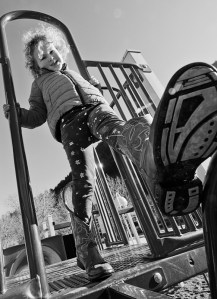
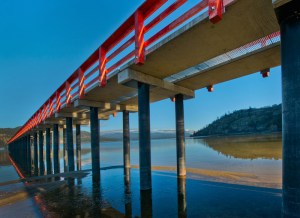
Most of the day I was photographing bridges and trees along the water thinking that might be a good way to test how I liked the wide perspective. I even spent some time with Jo’s three year old at a local playground to see how the lens performed up close.

Wide-angle lenses are interesting and, I think, a bit hard to use. I was continually trying to fit the subject into a wide-angle scene. Normally I would select a lens to match the subject, but with the 14-24 I was always looking for a subject that would match the wide lens.

There is also the need to correct some of the pictures in post. That’s not a complaint as I work on every image I take. But unless one wants the curved exaggeration of a wide-angle lens the edges require alignment. I guess that’s what using a ultra wide-angle lens is all about.

One reviewer wrote, “if you’re willing to roll with the punches, you’ll capture truly outstanding images…once you feel as if your creativity is starting to outgrow the confines of your gear, you might consider adding an ultra wide lens to your arsenal.”

I have never been comfortable with wide-angle photography so I am not convinced as of yet. However, I have this big lens so for the time being I intend to put it in my bag every time I go out.

Got new camera and its infrared  

When I first made photographs with infrared back in the early 1970s my choices were between purchasing black and white print IR film or colour IR slide film.

I tried the colour slide film, but at that time I wasn’t a fan of colour photographs and to make a reasonable print from a slide meant waiting a week or so for the film to get processed, (special handling also) then selecting an image for printing, sending it away again for an internegative copy to be made and then a final print enlargement. The whole process was not only costly, but time consuming.

As I have written before, Infrared film was a hassle. But nevertheless, I enjoyed the final images and shot IR black and white film for years.

When I became aware of digital infrared conversions I had my 6 MP Nikon D100 camera converted after I had been using it hard for some years. I purchased that camera in 2001 and expected it would, like a film camera, last forever. However, in this past year it began having problems keeping the data that I thought was being written to the memory card and I decided to start looking for another camera.

I answered an ad I found on eBay and bought a newer model. So that well used 2001- 6MP infrared camera has now been changed to a 2010, 16MP infrared camera.

Since I that first DSLR a lot has happened in the world of digital infrared. When I had that D100 altered there wasn’t much difference in IR filter availability. However, now I spent time deciding what the final IR effect was that I wanted.

I could stay with just black and white as I was used or choose any of several filters that are from total IR blocking to those allowing some visible light to show through.

I chose a filter called “super colour”. Now instead of only the black and white tones I get 4 color tones: Red, Yellow, Blue and Cyan.

With the super colour filter recording four colour tones of data I was pleased to not only have what is called “faux colours”, deep yellows, blues and muted red to work with, but when I convert a Super Color image to b&w I have many tones grey and black.

With my old camera all I needed to do was to go to Photoshop and change my blue channel and red channels, then turn the image to black and white. I like B&W, but as with my normal DSLR that starts with colour and then gets changed to B&W I decided to take the chance that I would like extra data the Super Color conversion offers.

Although this conversion isn’t as forgiving in flat, overcast light as my old camera and that somewhat limits the times I can get really good RAW images without needing to go to Photoshop or one of the other programs I have installed on my computer.

On a sunny day the pictures are stunning. Many are good enough to just stay as they are.

I am planning my yearly trek to photograph Christmas lights. That’s less than a month away and I am hoping there will be snow and at least on mostly sunny day along the waterfront and city streets so I can get some good infrared photographs when I first get there.

I want it all, snowy streets and just cold enough so I can photograph people ice skating at night, and clear enough so I can get silhouettes of the buildings in the early morning and, of course, some good infrared photos during the day

Long exposure workshop at Chase Falls                               

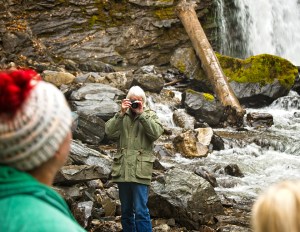
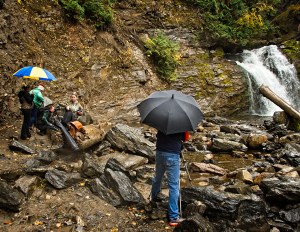
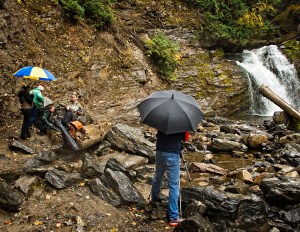
Two weekends ago Jo and I hosted a long exposure workshop at the nearby Chase Falls.                  In the rain I might add.

After returning from Vancouver my photo partner Jo McAvany posted some of the long exposure night photographs she took of the Vancouver lights. Those images garnered quite a bit of interest and Jo was fielding questions from more than one local photographer about how she made them.

We decided to pick a date and offer a workshop that would allow participants to try long shutterspeed photography and also to use neutral density filters.

I like my classes to be strong learning experiences and as with all that teach I included handouts, and this time I also included a set of six ND filters for each photographer to use. All they had to bring was their camera with a fully charged battery, their favourite lens, and a tripod.

We chose the Chase waterfall because it was close, easy to get to and, this time of year, extremely safe if one has good enough balance to climb through and over the big rocks.

What we weren’t expecting was a rainy day… fortunately some of the photographers in attendance had the forethought to bring umbrellas. I also had two that I always keep in the trunk of my car and I brought a few towels that I handed out to wipe the rain off cameras.

Jo began the day when everyone was gathered at the parking lot, while I was passing out filters and handouts, by telling people that after our trip to Vancouver she has absolutely become hooked on long exposures, and I have no doubt that we now have a few more dedicated converts.

Most photographers understand their shutter, but using shutterpeeds longer than 1/30th of a second, and adding ND filters is often new territory.

The rain was only a slight inconvenience as the excited group started seeing their results of the waterfall. The light on that wet rainy day was, as I had hoped, perfect at the falls. Rainy days are usually like that.

We worked as teams in the rain. With one partner holding the umbrella keeping the camera, lens and filter dry as the other set up the tripod and camera at each location.

It was a great day for learning something new. Yep, I am sure there are now a few more photographers that have Jo’s passion for long exposures.

I am looking forward to the trip we are planning to Kelowna in December to photograph the Christmas lights. I think we may go a bit early so we can do some long exposures near the marina along Okanagan Lake. I’ll finish with this great quote I found by German artist Dieter Appelt.

“A snapshot steals life that it cannot return. A long exposure creates a form that never existed.”


A Vancouver photography Adventure  


Our “Vancouver Adventure” is weeks in the past and Jo and I are still talking about the fun we had.

In last week’s article I said that my dictionary defines Adventure as “excitement, thrill, and stimulation”

Two weeks ago I wrote about the great time we had photographing the Bloedel conservatory and the birds in the aviary on our first morning. And last week my article was about the exciting time we had doing long exposures from Stanley Park across the water of the city lights after dark.

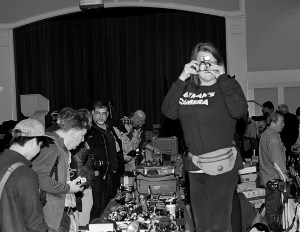
What an enjoyable way to spend the day before the Vancouver Used Camera Sale and Swap Meet.

That first night Laurie, Jo and I knew had to get up early to set up our tables in the morning, but we were having too much fun and instead were up late talking about photography. Nevertheless, we did get up to the sound of the early morning seagulls, ate breakfast, and after packing everything into our vehicles were off to the Croatian Community center for the third part of our adventure. We carried equipment through a light Vancouver rain to have our tables ready for the onslaught of excited photographers when they entered the large hall and started searching for great deals.

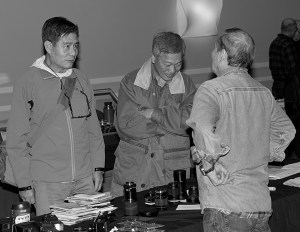
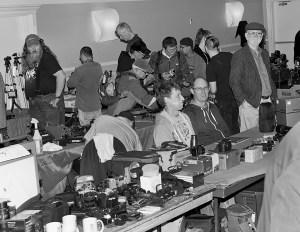
That event was, as always, a hodgepodge of different people with different interests. The crowd seemed to have grown a lot younger, but that might be my personal impression. After all, I have been attending the Vancouver Camera Sale and Swap since the 1980s and I’ve gotten a bit older.

Actually, the people attending are photographers of every age group; from experienced elders to teenagers accompanied by their patient parents. It is a diverse fellowship that includes all kinds of lifestyles, interests, and photographic specialties. There are those that are dedicated to film, vintage cameras, and processes of the past, walking alongside others carrying and looking for the latest in modern photographic technology.

Jo and I had a grand weekend photographing inspiring subjects, and the frosting on the cake was attending a gathering like the Vancouver Camera Sale and Swap where we got to meet and exchange information with other photographers and check out the many kinds of photographic equipment that would not be so available anywhere else. 

We spent the day selling the camera equipment I had gathered, had fun wandering the sale and, of course, talking with other photographers.

This was Jo’s second Vancouver camera show. When I turned to her and said, “Hey I just sold that neat old camera you bought last summer. What are you going to do with the $40.00 I got for it?”   I realized just how silly that question was when she said, “I’ll be right back” and about fifteen minutes later she returned with three little digital Canon Powershot cameras. A black one for her Husband, a blue one for her 5 year old son and a red one for her 4 year old daughter.

In my opinion it doesn’t get much better than spending the day surrounded by a huge selection of cameras and other photography equipment. Gosh, it is just invigorating and even after all these years I always learn something. We are already planning for next spring’s sale. Hmmm, I wonder if we can go two days early and search out more fun locations to photograph.

Night photography from Stanley Park  


After the great time we had at the Bloedel Conservatory and the aviary we wandered the city for a fun place to eat and then spent the rest of the day photographing the crowds of people on Vancouver’s Granville Island.

We then drove around Stanley Park to make sure the place we wanted to set up to photograph the lights across the Burrard Inlet after dark would still be ok.  Stanley Park is a 405-hectare public park that borders downtown Vancouver and is mostly surrounded by water.

We returned to our motel to pickup my friend Laurie that had just arrived from Kamloops, and our tripods and drove back through the city to Stanley Park as the light was going down. We took a meandering coastal route in case there were other opportunities – that had me continually getting lost as I drove the darkened streets.

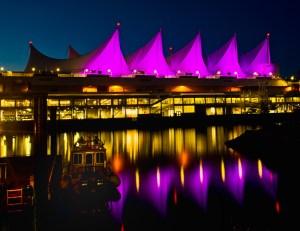
However, as luck would have it we happened on an empty parking lot directly across from the iconic Canada Place with it’s brilliantly lit fabric roof that resembled five sails.

During the day that location would be packed with cars and, I have no doubt, securely guarded against those without an expensive parking pass. But except for a lonely pickup the lot was empty and there wasn’t even the usual chain link fence to block our view of Canada place.

We jumped out with our tripods and excitedly started taking long exposures. Both Jo and I had 10 stop ND filters on our cameras.

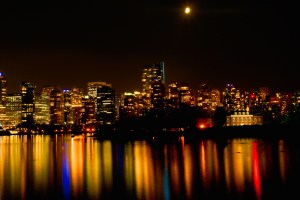
After making as many exposures as we wanted of that colourful building we turned our cameras on the skyscrapers across the street then jumped back in the car and drove on to Stanley Park where we would be looking across the water from the other side of Canada place at the city and shipping terminals.

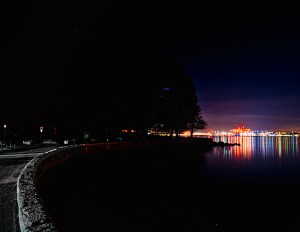
Our chosen location was across from a dark parking lot along the ocean. There was only occasional lights were from cars quickly passing on the park’s ring road and bicyclists that had to be watched out for as they zoomed out of the unlit forest with only tiny lights warning us to stay out of their way.

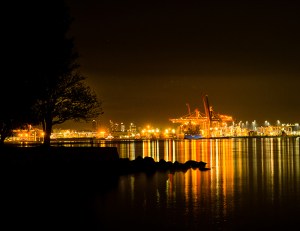
We wandered along the dark sea wall taking pictures across the inlet of the many bright city lights. I think both Jo and I were making mostly 30 second exposures of the bright lights, calm ocean and the moon high in the black night sky.

What a great way to end the day. We began in the bright morning light at the highest location in the city and ended in the dark night at it’s lowest location, and today as I write over a week later we are still talking about the fun photography adventure we had in Vancouver.

I suppose many might use the words, “trip to Vancouver” instead of a “Vancouver photography adventure”. But my dictionary defines adventure as “excitement, thrill, and stimulation”. So Adventure is the description the fits the best for that day and the next at the exhilarating Vancouver Camera sale and swap meet.