10 Suggestions for Successful People Photography.


Constable Mike Moyer

Constable Mike Moyer.
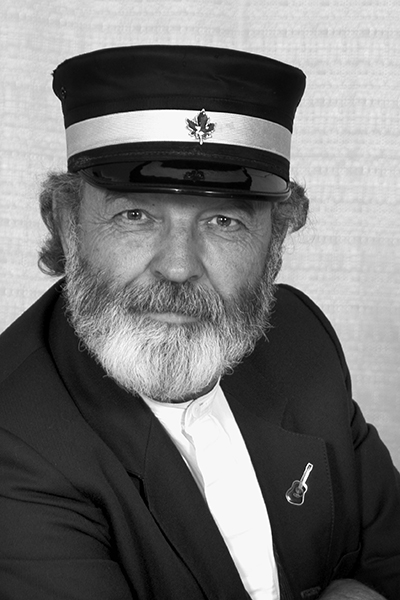
Actor

Professional Actor

Actor 2

Professional Actor


I had an interesting discussion with another photographer over coffee this morning. He had brought his memory card with several different pictures and as we talked about his shots he asked, “What is your favorite photography subject?”

Like many other photographers, what I like best changes with whatever I’m currently photographing, and I enjoy photographing just about everything. But in truth most of my subjects in the past 40 years have been people. My reply was, “I enjoy photographing people.”

I’ve been employed doing many types of photography since I began earning my living as a photographer in the 1970’s. And I have worked as a photographer for all types of organizations photographing all types of subjects. However, most of the time I have photographed people.  I think most photography is of people.  We take pictures of our family, of friends, and of people at celebrations and other events.

His next question was, “how do you make a photograph that is more than just the usual snap shot?”

Here are my 10 suggestions that contribute to successful people photographs.

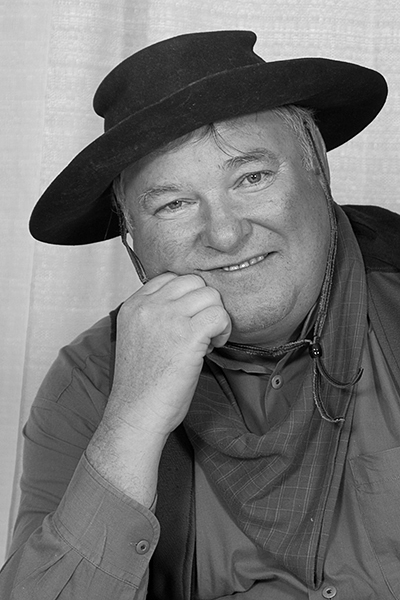
  1. When you take pictures of people look at them and pay attention to their appearance to ensure they look their best.  Don’t just rapidly take a photo and realize later that you should have had your subject adjust something, e.g., a necklace, glasses, a collar, or especially, that tie.
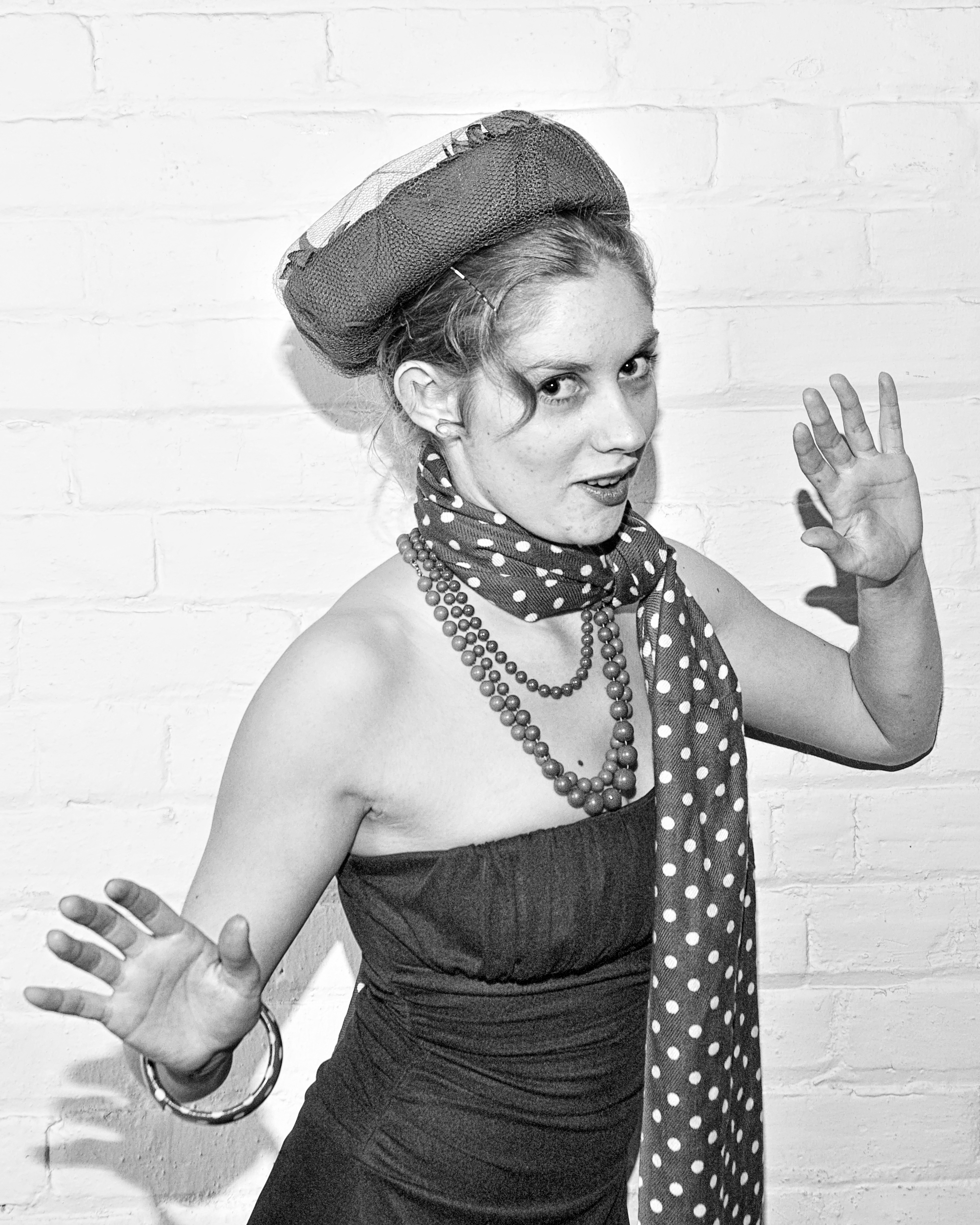
  2. Do three-quarter poses of single subjects. By that I mean turn their body so that they view the camera from over their shoulder.  Choose interesting and flattering angles or points of view. Avoid straight on or “up the nose” headshots.
  3. Focus on the subject’s eyes. When we talk to people we make eye contact. There is a greater chance of your subject liking the photo if their eyes are sharp and not closed or looking away. Ensure that subjects smile.  In my experience when subjects say they want a serious photo without a smile they appear sour or unhappy in the final photo. Do one of each as a compromise.
  4. Select an appropriate lens. Avoid short focal length lenses. On a full frame camera my favorite is 105mm. However, with crop-frame cameras I don’t mind 70mm. Longer focal length lenses create a flattering perspective.
  5. For portraits, an aperture of f/4 or wider will soften the background and make your subject stand out, but for group photos use an aperture of at least f/8 or smaller to increase the zone of focus (depth of field).
  6. Look at the background behind your subject especially when doing outdoor portraitures.  You don’t want the photo to appear to have something growing out of your subject’s head or to have objects in your photograph that are distracting.
  7. Pay attention to uncomplimentary shadows created by the sun, your flash, or other light sources.
  8. Get things ready first. Contemplate the poses before you photograph your subject. The best way to bore your subject and loose the moment is to make them wait.
  9. Tighten up the shot. Get rid of unwanted elements in the photograph that do nothing for it. If there is more than one person make them get close together.
  10. Talk to your subjects. The most successful portrait photographers are those who talk to and relate to their subjects.  We are dealing with people and we communicate by talking. Don’t hide behind the camera.

And as always be positive about the photograph you are about to make. Get excited. Your excitement will be contagious and affect those around you.

I appreciate comments. Thanks, John

My website is at http://www.enmanscamera.com
Rainy Day Photography

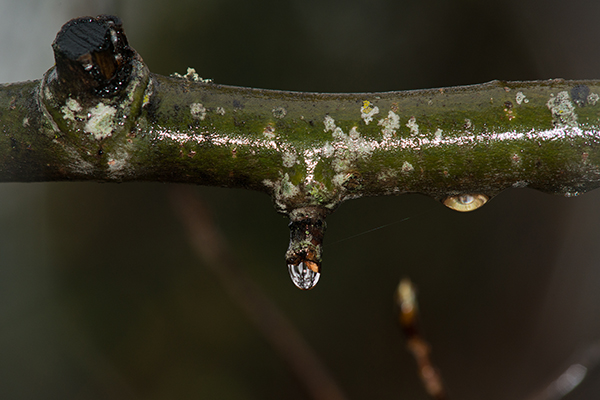
Last drop

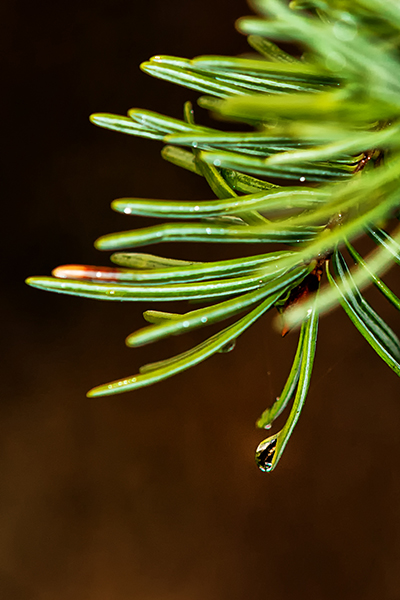
Wet fir tree

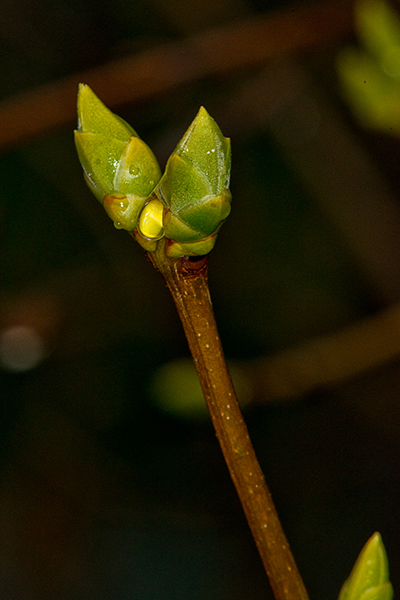
Spring bud

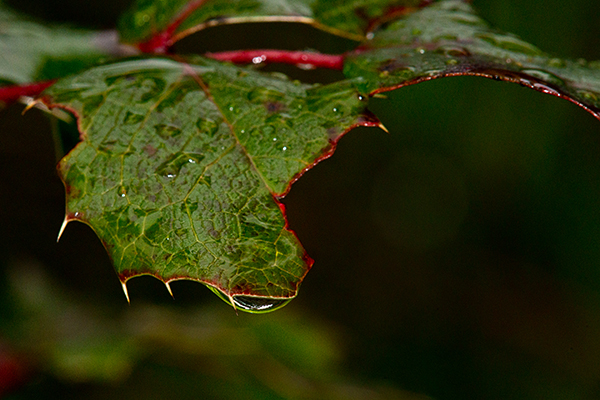
Oregon grape

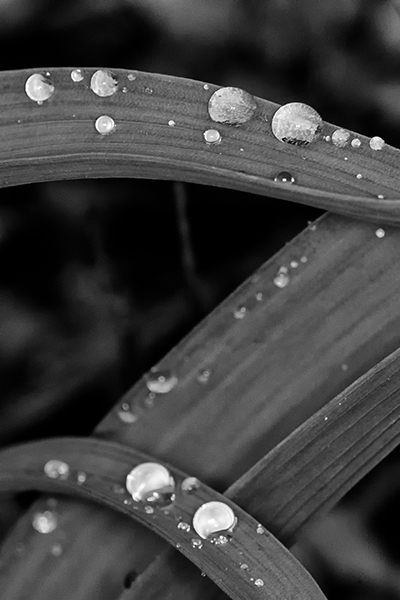
Rain drops

Reflection

Too many springs

Monday was another day of rain. It is spring here in the hills of Pritchard, earlier than usual, but it is spring and rainy days go with spring.

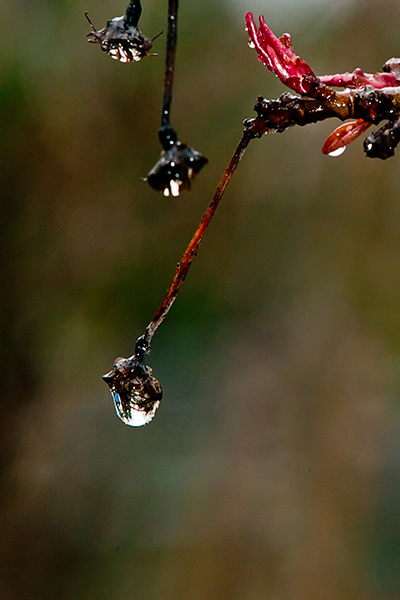
Rain doesn’t bother me much and had I thought about getting my camera and going for a drive up into the hills to see what I could find. However, as I walked through my wife’s garden on my way to the car I noticed all the drops of water hanging from branches and those leaves that made it through winter. The wet and foggy hills would have been interesting, but all those droplets were just waiting to be photographed.

How does one prepare to do photography in the rain? Put on a hat with a brim if, like me, you wear glasses. I also like rubber boots. Bring an old tea towel in your pocket to wipe the rain off your camera, and you are ready. Oh, and remember to keep the camera lens pointed down.

When the garden is dry I would usually put a couple of flashes on light stands, and add umbrellas so I can control the direction and quality of light. But when it is raining I prefer using my ring flash.

A ring flash fits tightly around the front of my 200mm macro lens and is perfect for building reflections on the droplets of water that were clinging to branches and sparse foliage that I wandered around photographing.

I expect many photographers prefer waiting out the rain and the unappetizing low, flat light on rainy days. I can understand that. Rain is such a hassle, and getting wet is uncomfortable. Nevertheless, that flat light, slight breeze, and wet conditions forced me to approach my subjects differently and I like that challenge.

In the low light of a rainy day we don’t think about light in the same way as we do on a sunny day. Everything is usually about colour, and how to deal with the contrast, especially on a bright spring day.

When the light is low one needs to see tonality and shape, and raindrops are a challenging element to add. In this instance there was also a slight, intermittent breeze.

I chose a setting that without a flash everything would be underexposed. That means I would only see my subjects when they were properly exposed and a flash is the best way to do that. Using my camera’s manual mode I selected 1/250th of a second and I kept my aperture at f/11 so I would have as much depth of field as possible when and if a branch shook back and forth in the breeze. I also switched my flash to a manual mode. The flash power would always be the same putting out the same amount of light. I then could control exactly how much light I wanted for each location.

I could have increased my ISO and shutterspeed if I had decided to only use natural light, but then everything would have been flat and it would have been hard to get a sparkle in the raindrops.

I know it can be disappointing to see those gray clouds on your day off when you had made plans to be out shooting. However, keep a positive attitude, remember you don’t have to go far, and with a bit of creative thinking and preparation you’ll be out having fun making photos, even in wet weather.

I always look forward to everyone’s comments. Thanks, John

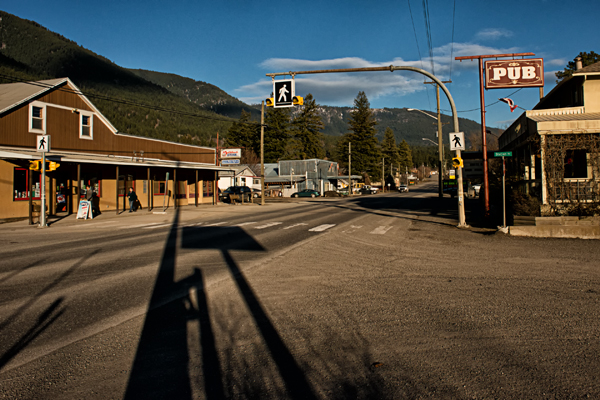
Photographing Falkland in the afternoon

Falkland afternoon

Falkland, British Columbia


Ranch cafe

afternoon pub

street shadow

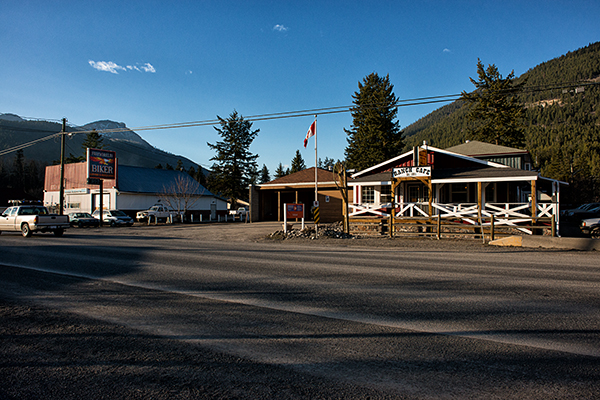
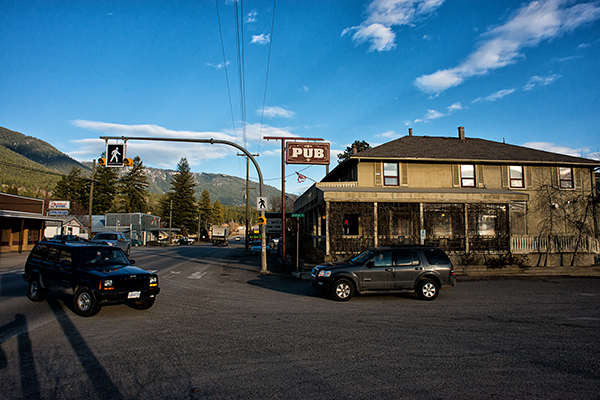
Falkland is one of the many small towns nestled along winding highway 97 that drivers almost miss if there weren’t signs posted at both ends of the village requiring them to slow down. Although I pass through there regularly, the only time I stop is when locals hold their roadside market during the summer. Usually I just reduce my speed to 50 km, watch for pedestrians and approaching vehicles from covered side streets, then resume speed without even thinking.   Falkland has about 600 residents, and is notable because each year on Victoria Day they host the Falkland Stampede (one of Canada’s oldest rodeos); and they also claim to have the biggest Canadian flag in western Canada.

My wife recently purchased a 24mm wide-angle lens and we were looking forward to checking it out. We had spent the day in Kelowna, about an hour south of Falkland and I thought that with the drive there would be lots of opportunity to see how her new lens would perform. I had read mixed reviews online, and I was anxious for my own results. I had made a few shots of the fence in front of our home, and allowed some side-lighted images to catch sunlight to check lens flare, but I hadn’t made any practical images.

I know reviewers can be very strict with their lens testing and even go so far to include charts and exaggerated enlargements when they evaluate a lens. However, in my opinion, all that most users care about is if a new lens is reasonably sharp and consistent in how it reproduces a subject; and regarding wide angles, if there is any unflattering distortion.

The day had been long and I wasn’t thinking about much of anything except getting home and out of that car before we lost daylight. I don’t mind winter very much, but I do mind driving that narrow, slippery, winding road after dark. However, traffic had been light and we hadn’t got stuck behind any big trucks. So we were making good time when we approached Falkland.

Photographers talk about that “Golden Hour” just before sunset when the light is warmer and softer than when the sun is higher in the sky. I doubt there is much of a golden “hour” in canyon towns like Falkland, but the light certainly was inviting at the moment and we had my wife’s camera and 24mm lens waiting for testing.

Linda was tired from our long day and was only willing to make a couple of shots of an old shop before handing me her camera. She said, “You walk around”. So I did. In Falkland it doesn’t take much time to see everything on the main street.

I like buildings, shop signs and afternoon deep shadows and the narrow street was perfect for testing that lens and anyway, I was happy to finally make a few pictures while the light was exciting in that interesting little town.

I only walked around for about ten minutes and had so much fun that I forgot I was supposed to be testing that lens. I have lived in this part of British Columbia for over 30 years, and as I walked around I wondered why the only pictures I have ever seen of Falkland were a few of cowboys being bucked off at the rodeo. I guess it is hard to stop and look. And some photographers might feel locals would be uncomfortable with outsiders intruding. I doubt that unless someone stuck a lens in a local’s face they wouldn’t even notice a person standing along the street, like I was, taking a few pictures in that neat little town.

Oh, and that Nikon 24mm was just fine. For those that wanted a review, I think my aperture was mostly at f8, f11 and f16 because I was interested in getting as much depth of field as I could get. So I can’t comment on how well it performs wide open.

I always appreciate your comments. Thanks, John

My website is at www.enmanscamera.com


Depth of Field

I have included a few examples that show the technique.

I have included a few examples that show control over the technique.

D of F 2

hoodo and fence 3

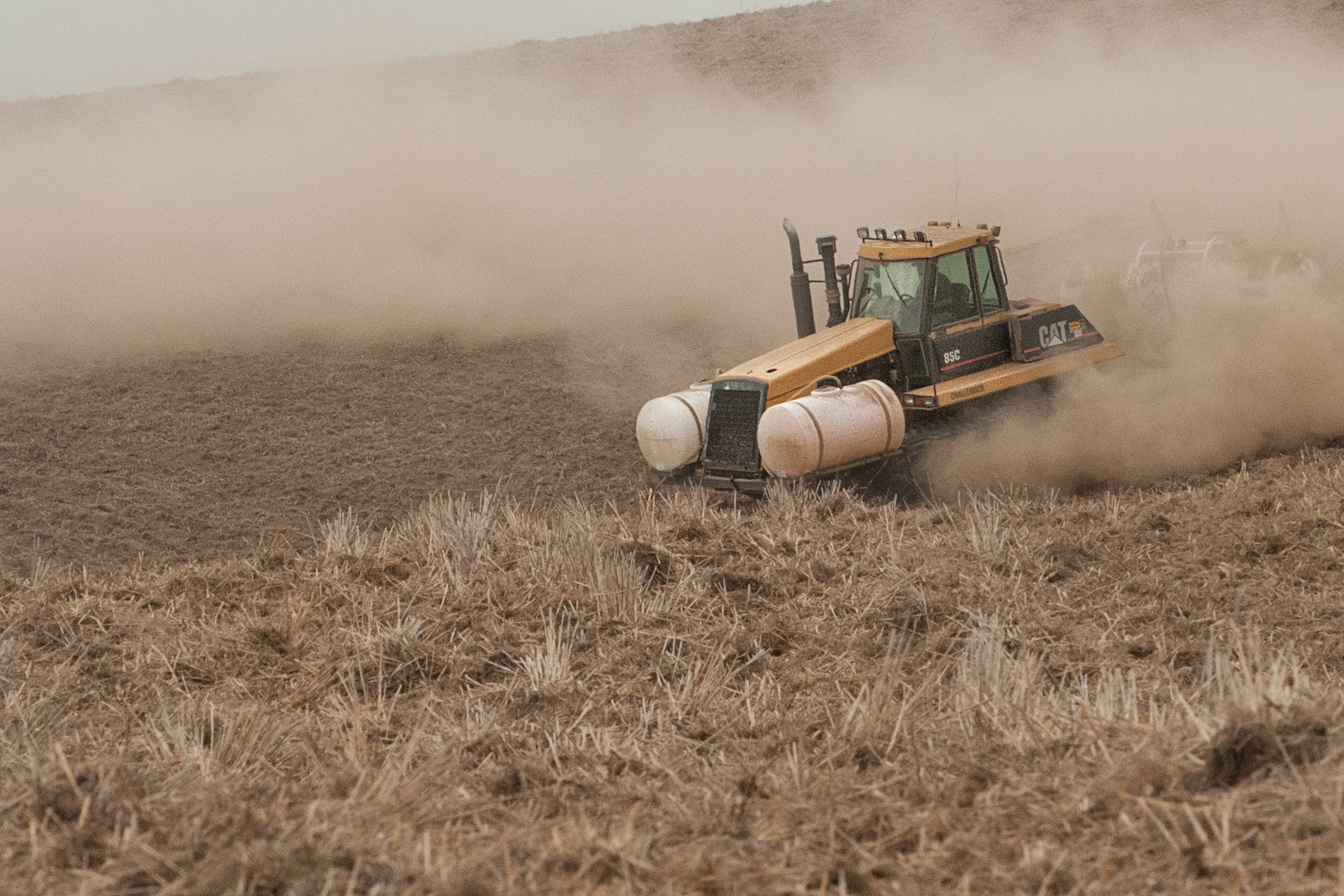
Plowing the field

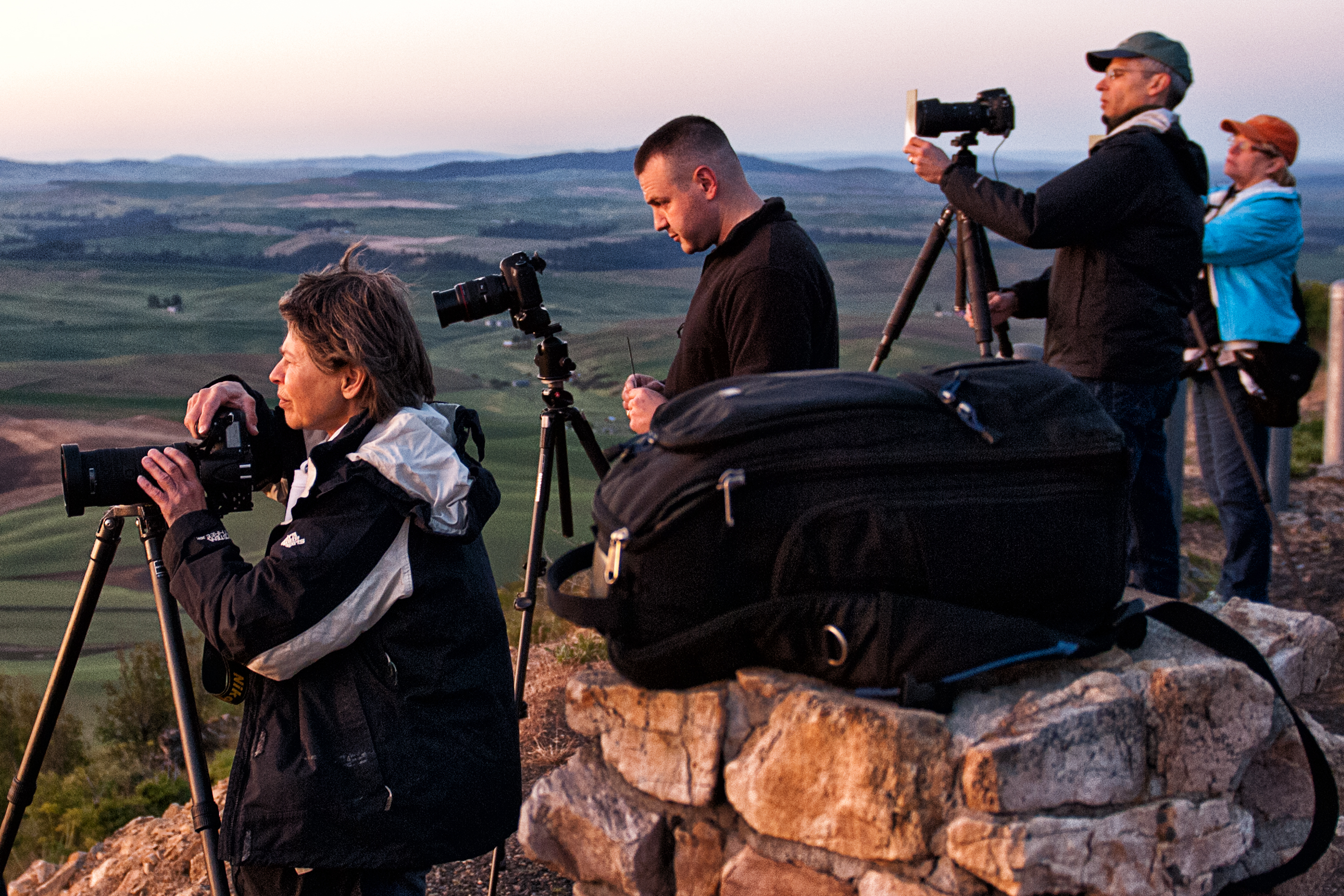
Shoot'n the sunrise 1

A smaller aperture for more depth of field.

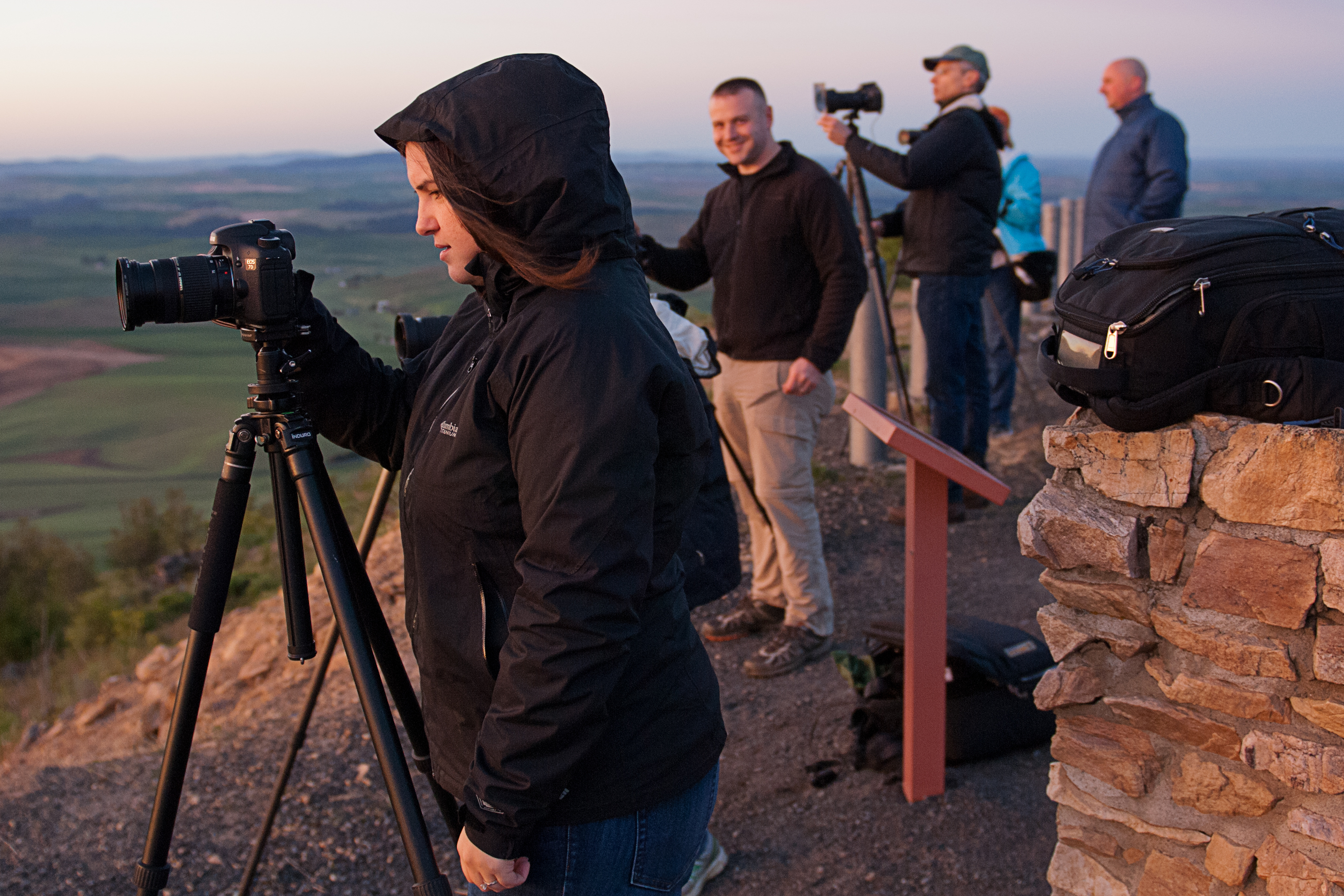
Shoot'n the sunrise 2

A wider aperture for less depth of field.

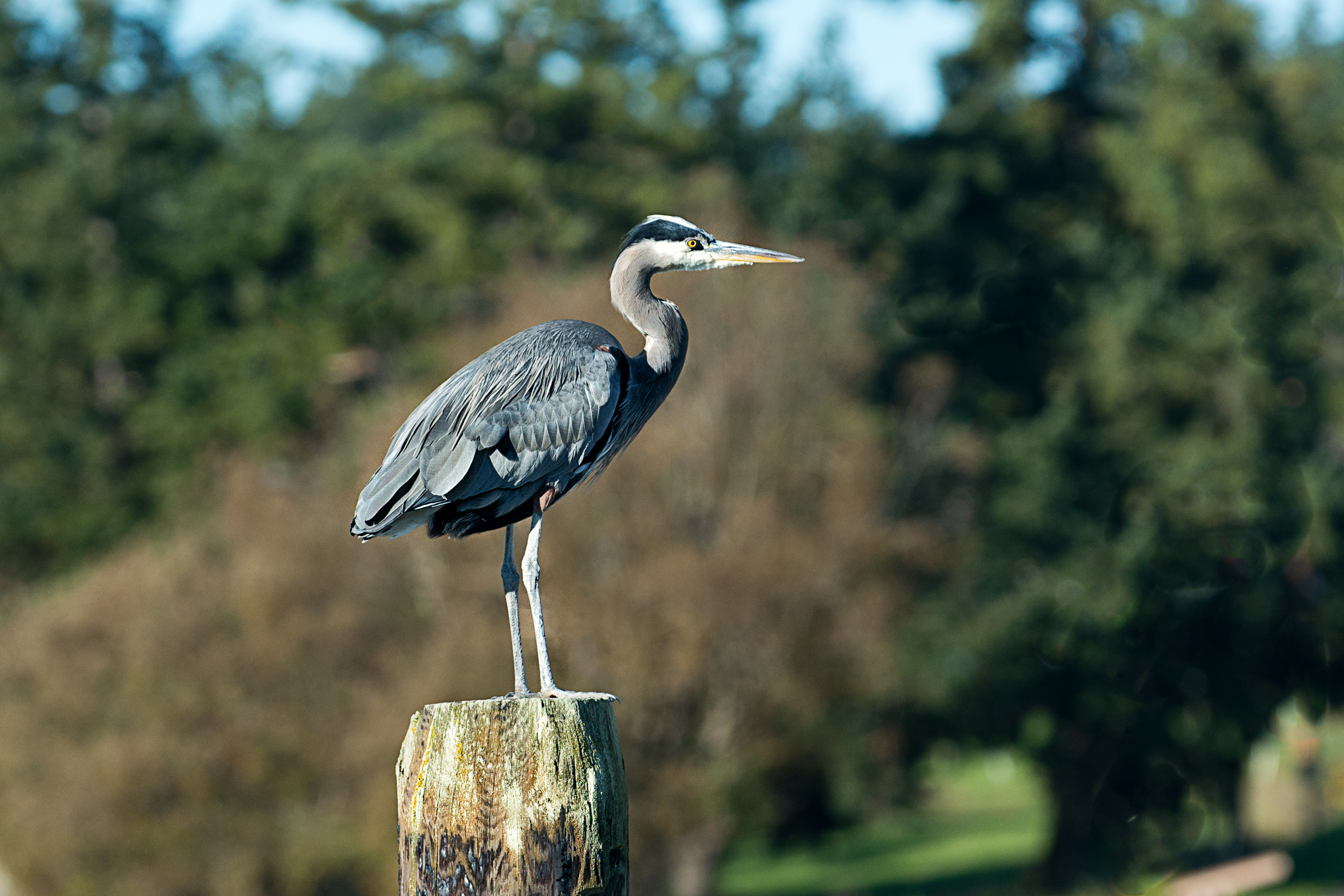
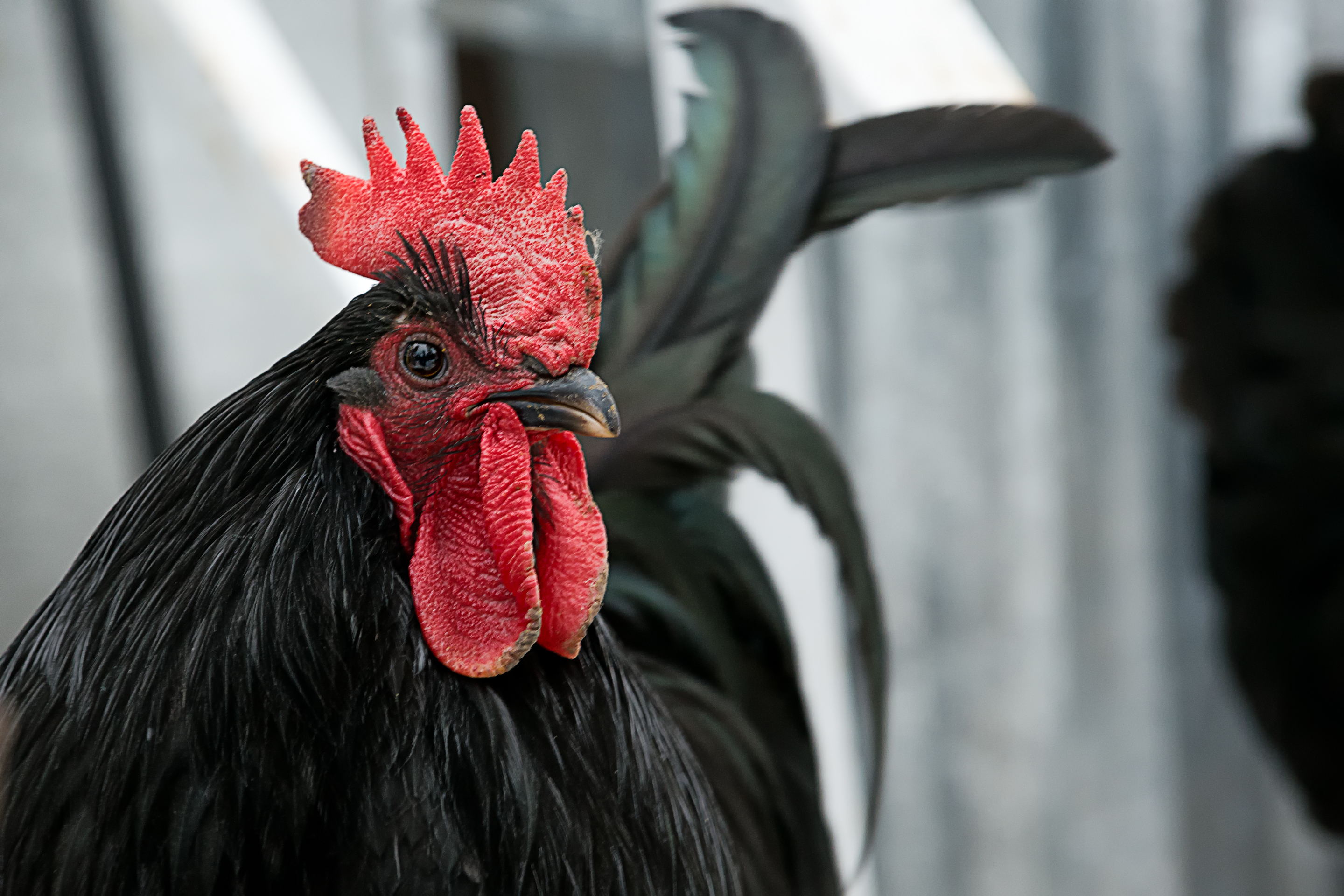
Heron

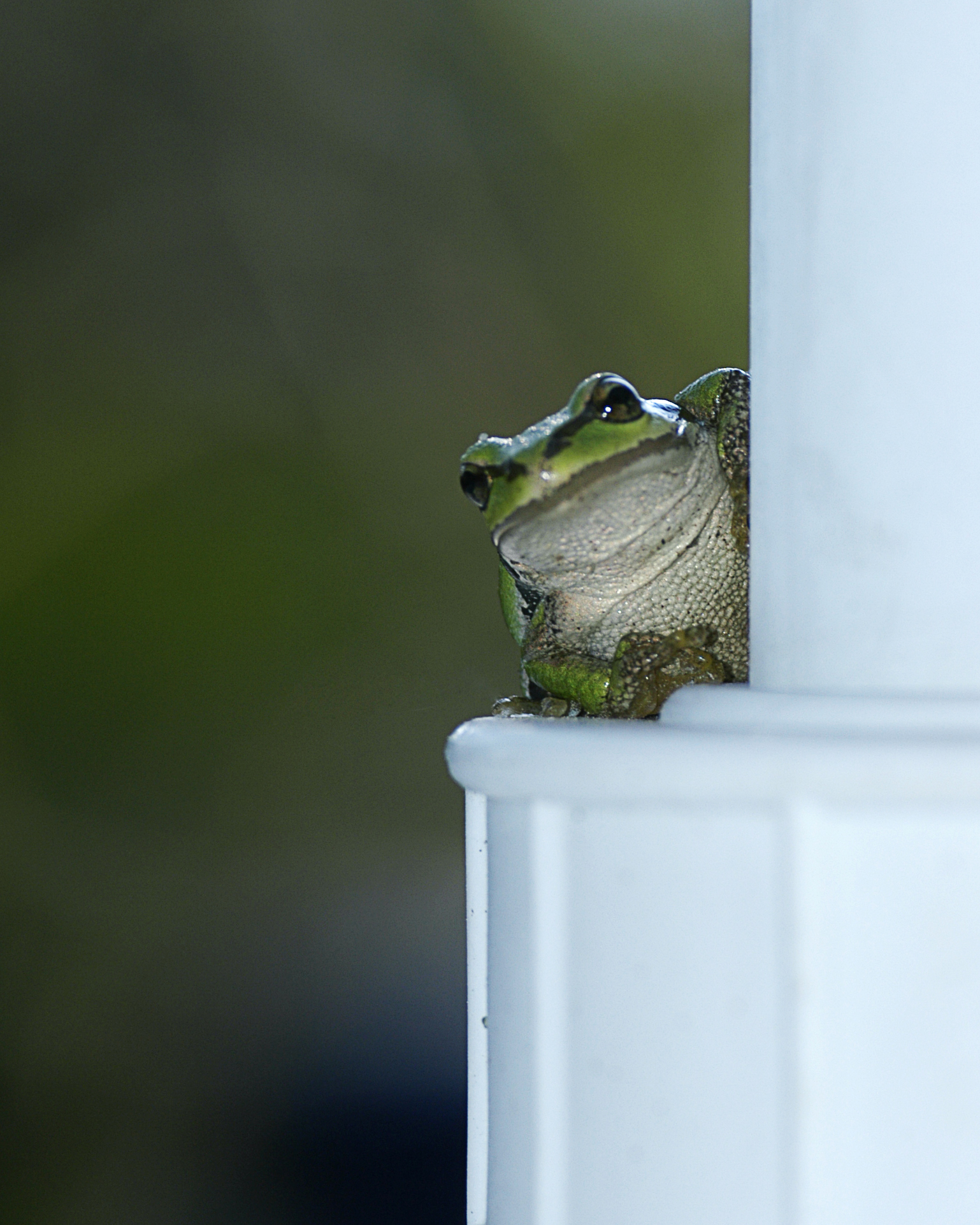
Blue Freighter Frog

Brewster copy 2

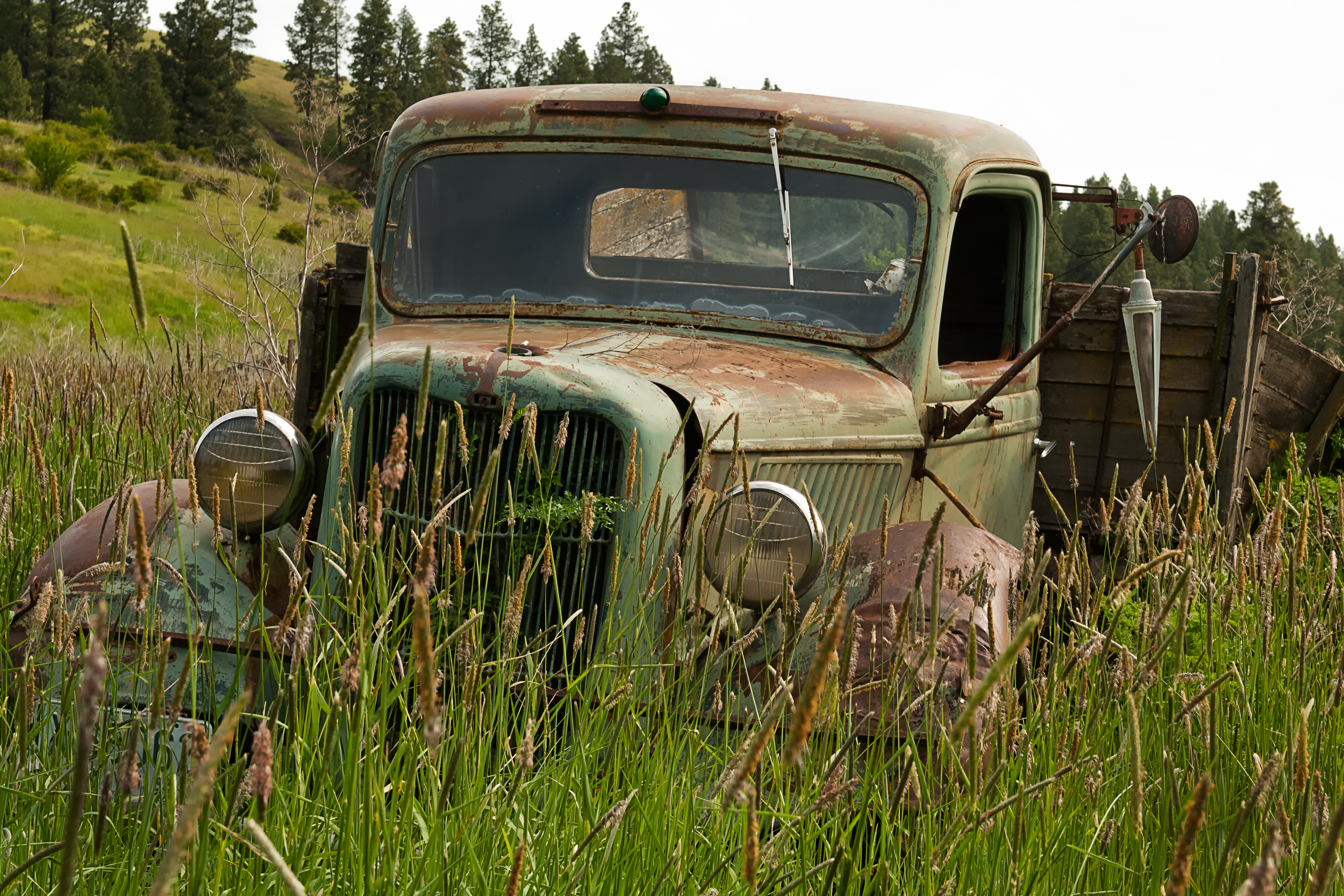
Truck in the meadow copy

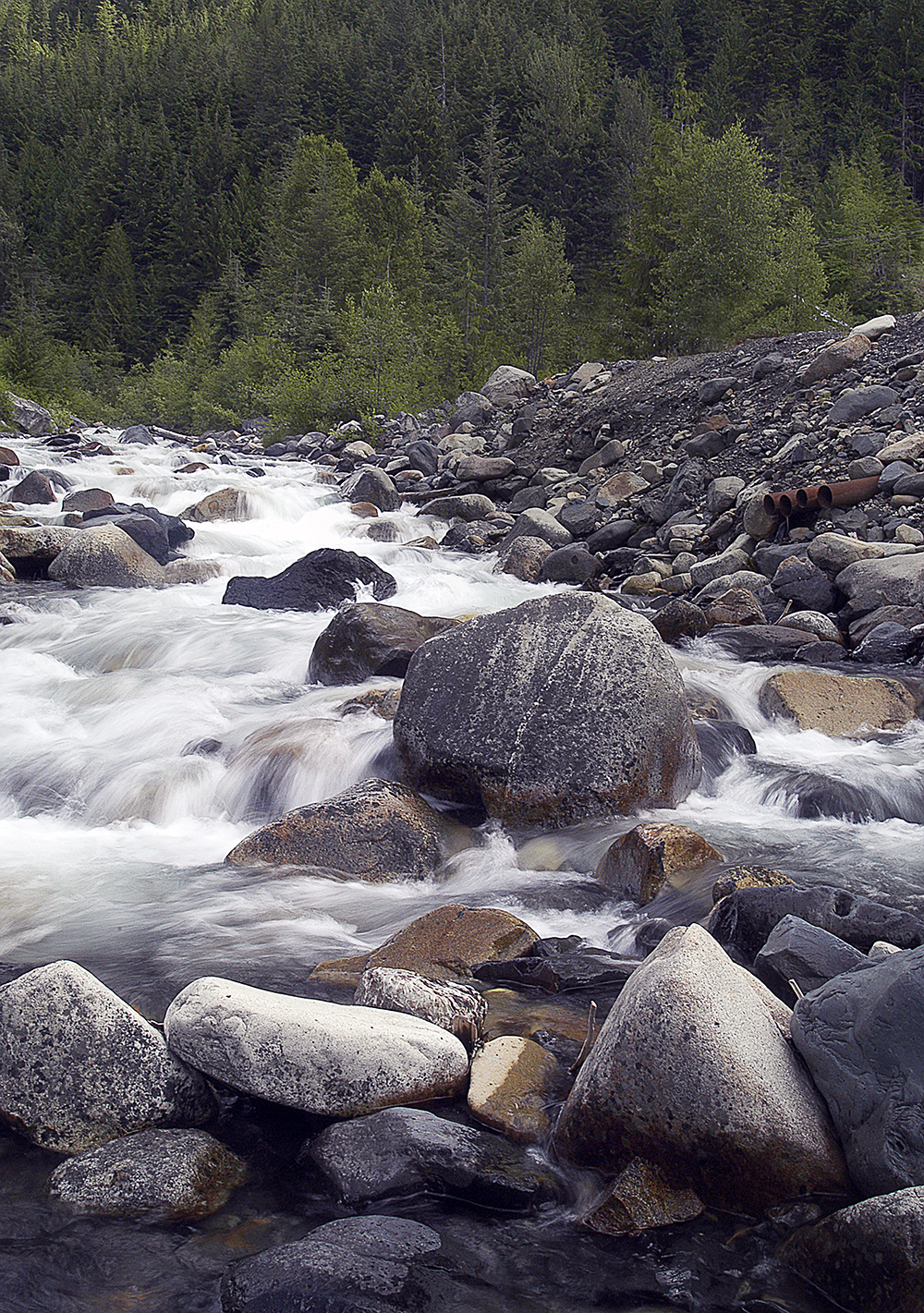
River Sandon BC


A topic that I recently discussed in my classes, that I repeatedly explain to photographers that come to my shop complaining about what they believe are lens focusing problems, and have written more than once about is “depth-of-field”, but it still seems to be an elusive concept for many. However, it is really important and photographers should make the effort to grasp it even though it appears difficult.

I pondered this last Thursday when a local photographer showed me an image she had made during a wedding. She showed it to me proudly and commented that she has chosen that lens because it let in more light when photographing in low light, but complained that the expensive lens she had didn’t seem all that sharp.

The image showed a view of the central aisle of the church with pews left and right, leading up to the bride in the distant centre, approximately 20 feet from where the photographer was standing. The overall exposure shot at an aperture of f/2.8 was fairly good. However, what that photographer saw was the lack of sharpness everywhere, except for the bride standing in the aisle.

The definition of depth-of-field is “that area around the main subject, in front of, and behind it, that is in acceptably sharp focus”. In application the wider the lens’ aperture is set the less will be the depth of field, or that area of sharp focus, around the main subject will be.

Wide aperture lenses are very popular these days and using a lens at a wide aperture like f/2.8 when making a portrait isolates the main subject and produces a soft, out-of-focus background referred to as bokeh by reducing the depth of field. Bokeh is a pleasing soft blur produced by a wide aperture lens in the out-of-focus area directly behind the subject.

In this instance the photographer was relying on the wide aperture to increase the exposure in limited lighting conditions. That additional light allowed a faster shutterspeed for handholding, but along with the benefit of additional light reaching the camera’s sensor the resulting effect was to reduce depth of field.

Using that wide aperture created a field of focus in front of the subject of a couple feet and only a bit more behind that would be fine in a portrait, however in that photograph of the church aisle with pews on both sides, that included lots in the foreground and much of the background, looked out-of-focus.

Many photographers unwittingly rely too much on their photography equipment to (magically?) make good images, and blame faults in their photographs on that same equipment. Understanding the basic concept of depth-of-field would have made that photograph more to the photographer’s liking.

The smaller the lens aperture number is the less the depth-of-field. I prefer using a small aperture (larger number) for scenic photography and, as in this instance, interiors. The answer to that photographer’s low light problem would be to increase the ISO and use a smaller aperture. (I would be surprised to find a modern DSLR that wouldn’t shoot noise free at ISO1600 or even more)

Assuming the lens isn’t sharp when the real problem is with photographic technique is expensive if the photographer goes so far as to replacing a lens. My recommendation is to spend time learning the basics of depth of field instead of blaming equipment when problems occur.


I appreciate reader’s comments. Thanks, John

My website is at www.enmanscamera.com

Photographers Must Remember to Consider the Background

Brewster copy 2  Spirit

Gracie 1

Fat Cat

chuck port copy

Looking Scout

Rikkonna 1

Much of the time photographers get so excited about the subject before their camera that they don’t pay any attention to anything else that is captured by the camera’s sensor when the exposure is made. Of course, things can be cropped out during postproduction, but what if the background is so busy that it obscures the intended subject of the photograph? The background can impact a subject in many ways and much of the time it interferes with the subject.

In the past I have written about composition, depth of field, and even bokeh. Composition can be as simple as creating an interesting photograph by using basic guidelines or compositional strategies for a balanced image. Depth of field is that area in front of and behind the subject that is acceptably clear, and bokeh refers to that portion of an image that is out of focus. Using those three mechanisms or strategies as a way to isolate a subject help photographers increase the impact their photographs have for viewers.

A serious wild life photographer once told me that it is important to have a background that is neutral and non descript. I had one experienced birder giving me tips on photographing Loons, explain that soft green water made better pictures than contrasty blue water. I think that this may be his personal opinion, but I have to agree that of the photos I took that day I liked way the green water looks better.

I recall a photographer who had exhibited his photograph in a local exhibition being angry because he didn’t get a mention by the judges on his photograph of an eagle posing on a branch. He had exposed it properly and displayed it sharply. He was so proud of his photograph of that bald eagle that he was unable to see the busy background and how it negatively impacted on the overall photograph. I believe the judges did see that.

My advice to that photographer would be to curb his excitement and spend some time examining his subject and its surroundings. Using the term, coined by Ansel Adams, that I mentioned in my 26 June 2014 article, he should “previsualize” the image for its best impact.

Compose and isolate the center of interest, and decide how to use the background to the best effect; whether the background should be in, out, or partially focused, or to have it clear or cluttered, and if it is appropriate for inclusion or to be excluded. A busy background distracts viewer’s attention.

Backgrounds present both opportunities and challenges to photographers. Here are four very simple suggestions other photographers have told me take into consideration to make the background work.

1. Check your background before pressing the shutter;
2. Pay attention to your shooting angle;
3. Use the aperture or the focal length to blur the background;
4. Fill the frame with your subject.
They are all great tips, or thoughts for us all to remember, and I personally like the words of Ansel Adams that fits well,  “A good photograph is knowing where to stand.” And I’ll add, remember to consider the background.

I enjoy all comments. Thanks, John

My website is at http://www.enmanscamera.com
Don’t Forget Some Photographic Basics

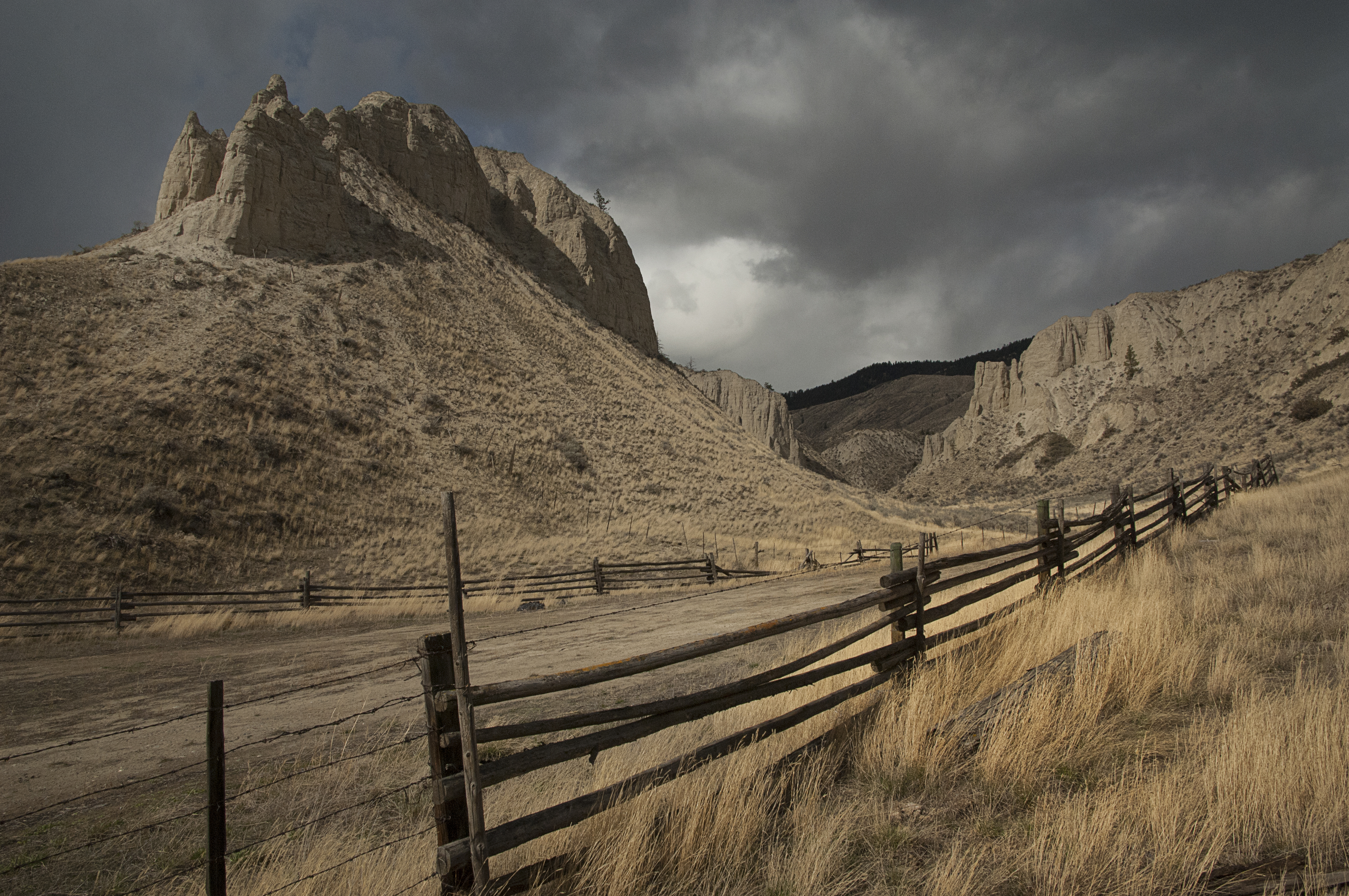
Helmkin Falls view   Low drifting clouds

A local photographer showed up at my shop with some scenic/landscape photographs he had made and asked me for a critique of them.

Photographers get excited about the subjects they photograph and sometimes forget, or never learned in the first place, some basic rules for photography. Rules that are actually procedures and guidelines that can be followed to make photographs more exciting for viewing. Although I enjoyed his series of photographs of Helmken Falls in British Columbia’s Wells Gray Park, I noticed two problems that I discussed with him.

The first is a very basic concept in photography – depth of field. Depth of field refers to the “in focus area,” or sharpness of a picture at different distances when the aperture diameter changes. Depth of field is the area around the subject that remains acceptably sharp. The farther things are away, the more depth of field one can achieve, and the closer things are, the less depth of field. To control depth of field one uses the lens aperture.

Photographers new to this medium think of the aperture only as a means of controlling the amount of light reaching the sensor. However, the aperture also controls depth of field.

Control over depth of field is accomplished by increasing or decreasing the aperture’s size. For example, the smaller the aperture opening (f/16) the more depth of field; and the larger the aperture opening (f/4) the less the depth of field is. So f/16 will give more “in focus area” in front of and behind the subject than f/8. Regardless of the F/stop one should have a shorter in focus area in front of the subject, and a longer in focus area behind the subject.

The ratio is approximately one-third in front, and two-thirds behind. So to obtain maximum depth of field in a photograph use a smaller aperture opening like f/11, and focus one third of the way into the scene.

The second thing I pointed out was his composition. I wondered what it is that makes photographers disregard the basics of compositional strategies and just snap away excitedly. My assumption is that many photographers are so excited about the subject they are photographing, and possibly the camera they are using at the time, that they forget to make the subject interesting in their final photograph.

With his scenics of the waterfall, as exotic and colourful as it was on that day, he ignored something fundamental in any properly composed photograph called “The Rule of Thirds”. This so called “rule” states that we shouldn’t place the main focus of interest in the centre of the frame, but should place it on an intersection line, or very close to it, created by dividing the picture into a grid of thirds.

That photographer’s pictures would have been stronger if he had paid attention to compositional elements that would make his image interesting by placing important or interesting visual information at intersections.

I have photographed those falls alongside other photographers many times since I moved to British Columbia 40 years ago; spring, summer, fall and winter.

Sometimes they have been excited, as with the fellow I critiqued, and just pointed their cameras without thought, overwhelmed by the roaring, wilderness splendour of Helmken Falls. Regarding those image makers, Guggenheim Fellowship for Creative Arts recipient Garry Winogand quipped, “Photographers mistake the emotion they feel while taking the photo as a judgment that the photograph is good”.

However, I have also set my tripod next to photographers that just seemed understand what it takes to make viewable images and appear to feel their way through the photograph. That’s always exciting. Of them I like to think they adhere to the words of Photo Imaging Association’s 2005 Photographer of the Year, David Harvey when he said, “Don’t shoot what it looks like. Shoot what it feels like.”

As always, I appreciate any comments. Thanks, John

My website is at www.enmanscamera.com
A Short Walk on Snowshoes

Photos by Snowshoe 2   Thompson River Valley

windswept snow

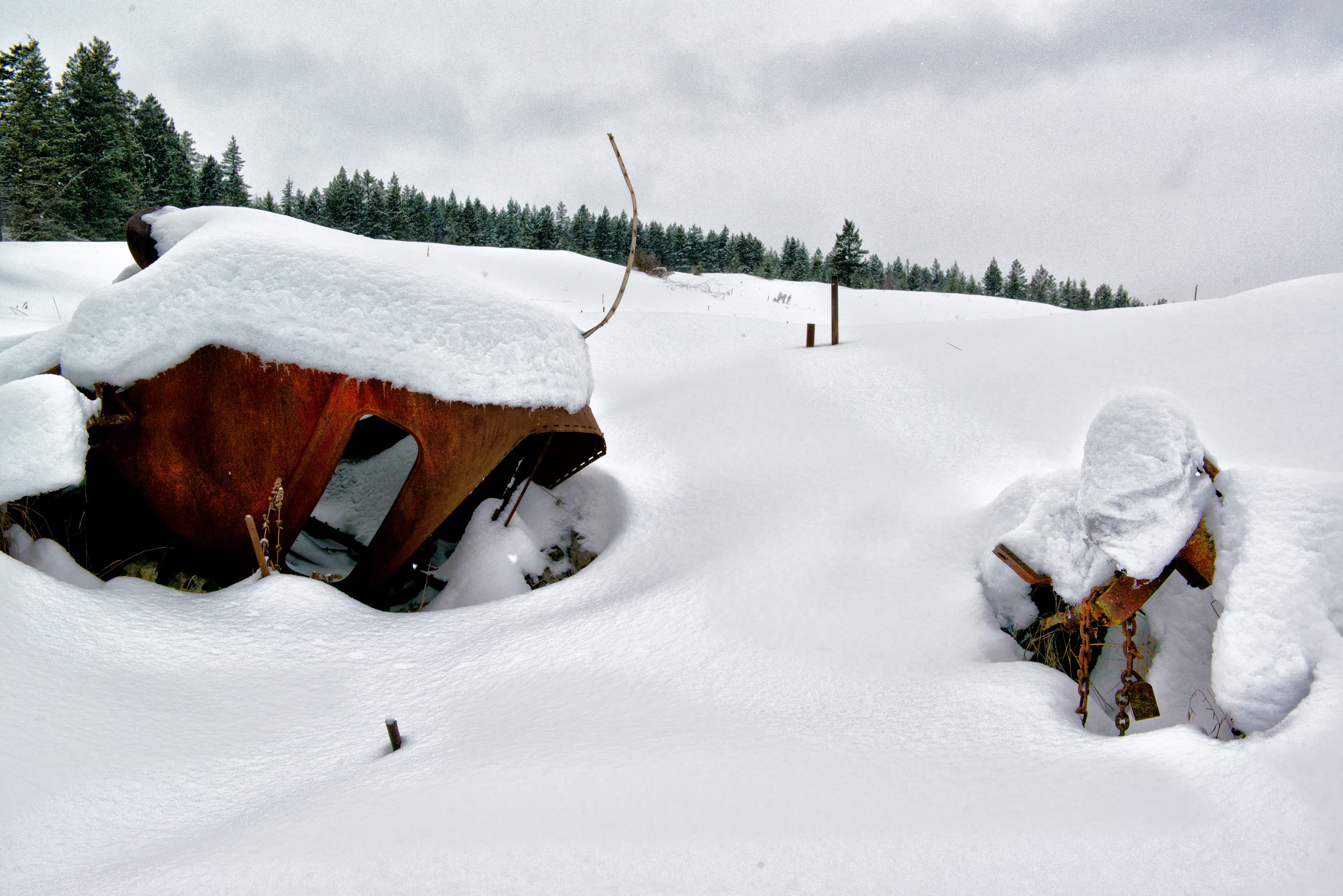
Old car in snow

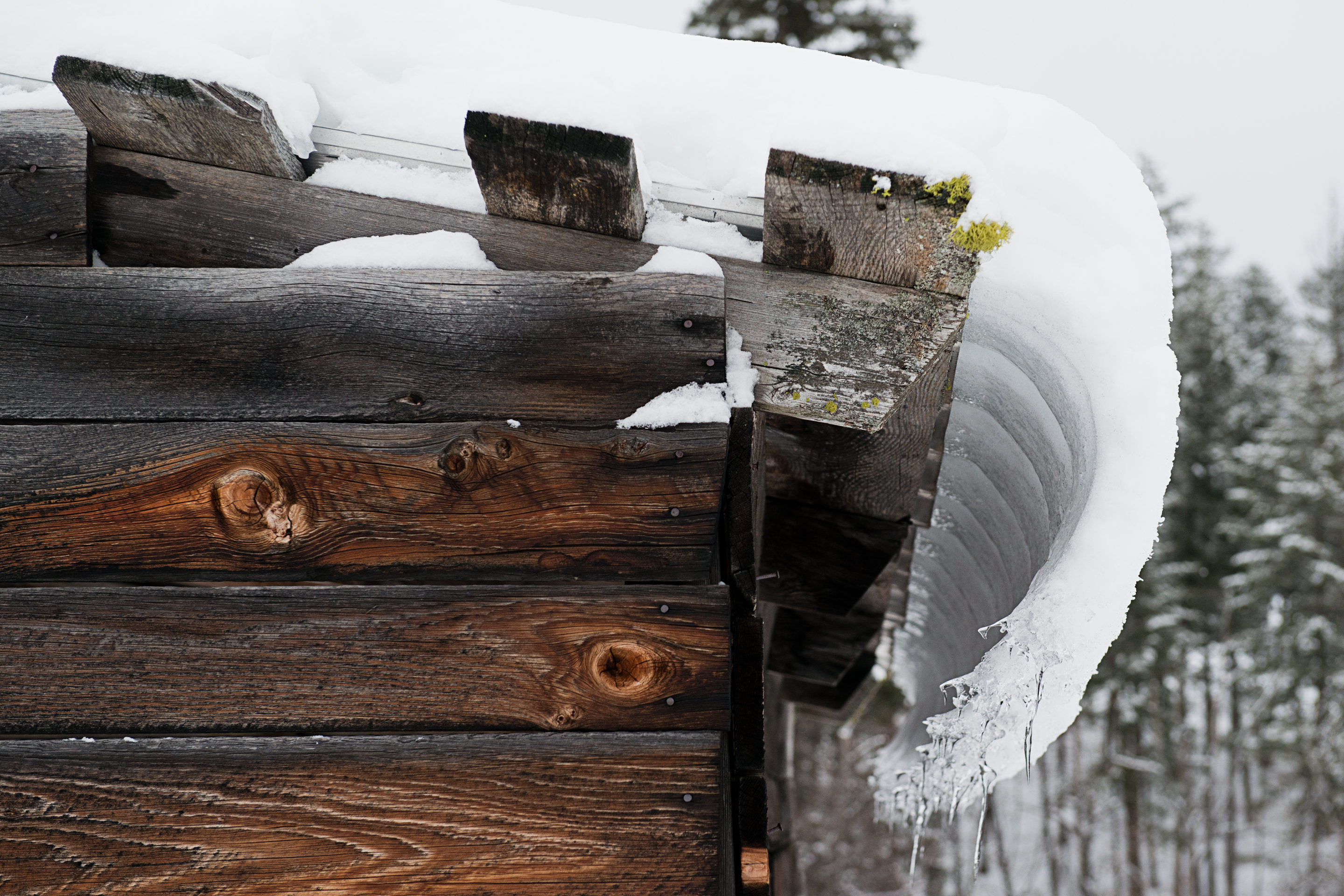
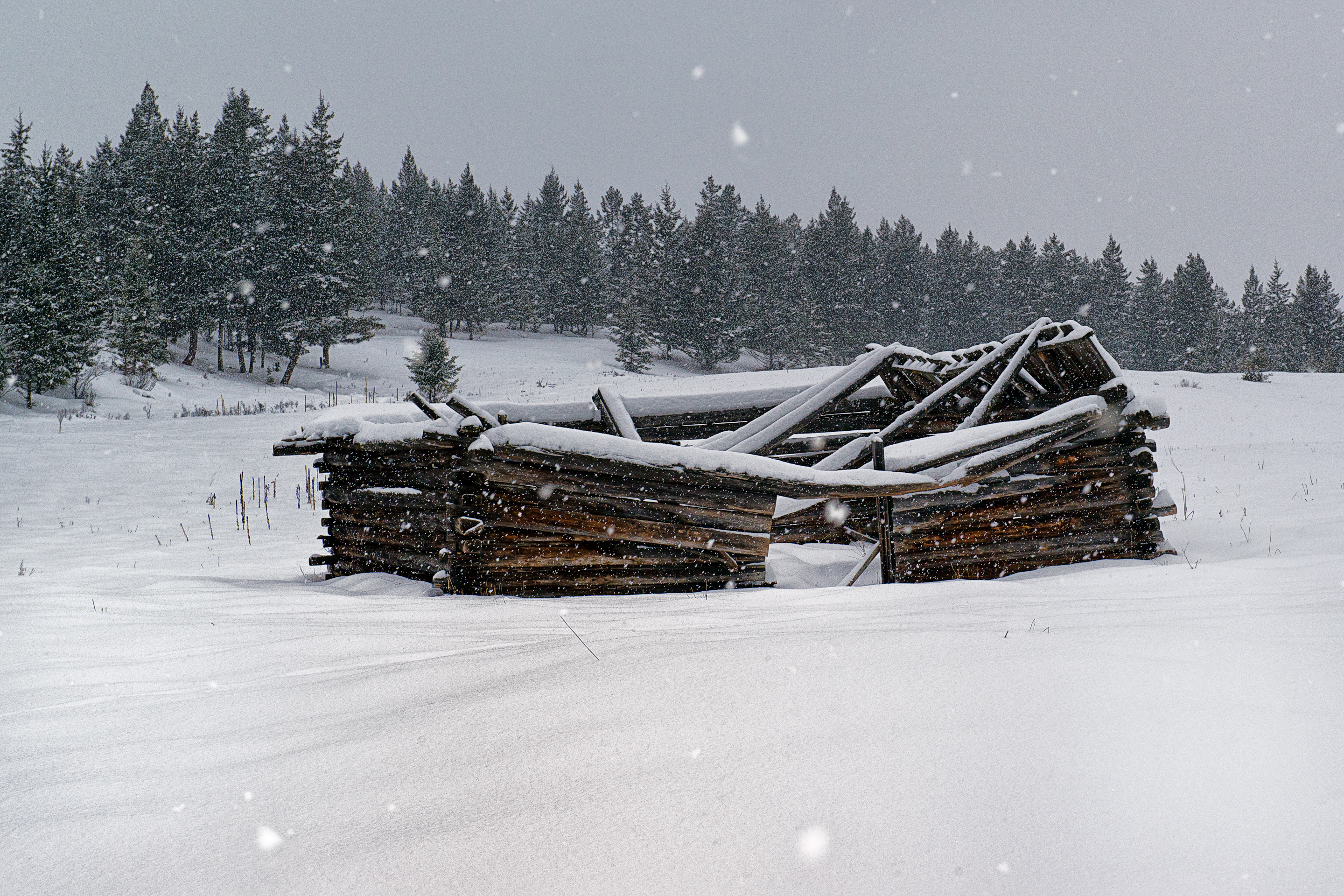
Log building in snow

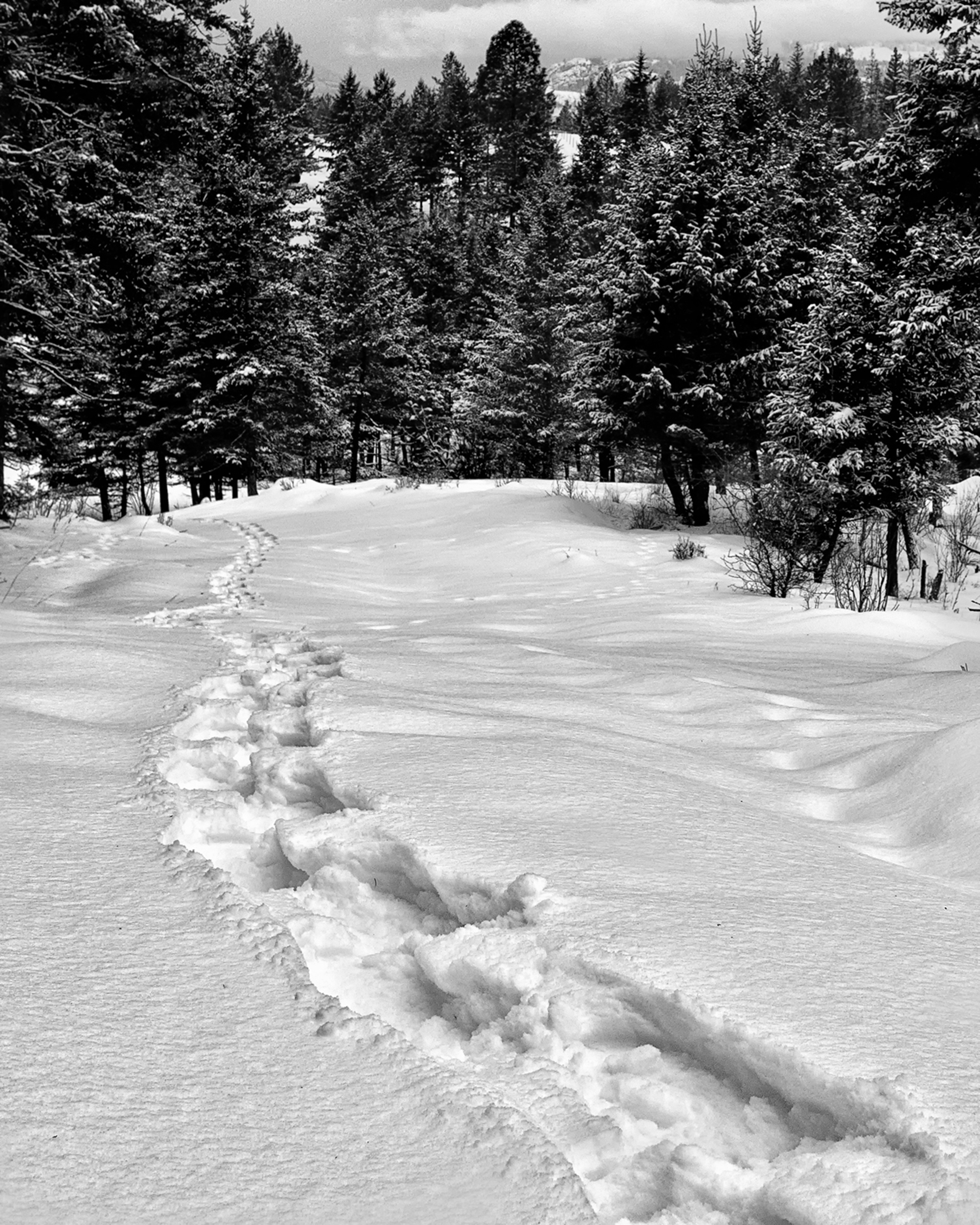
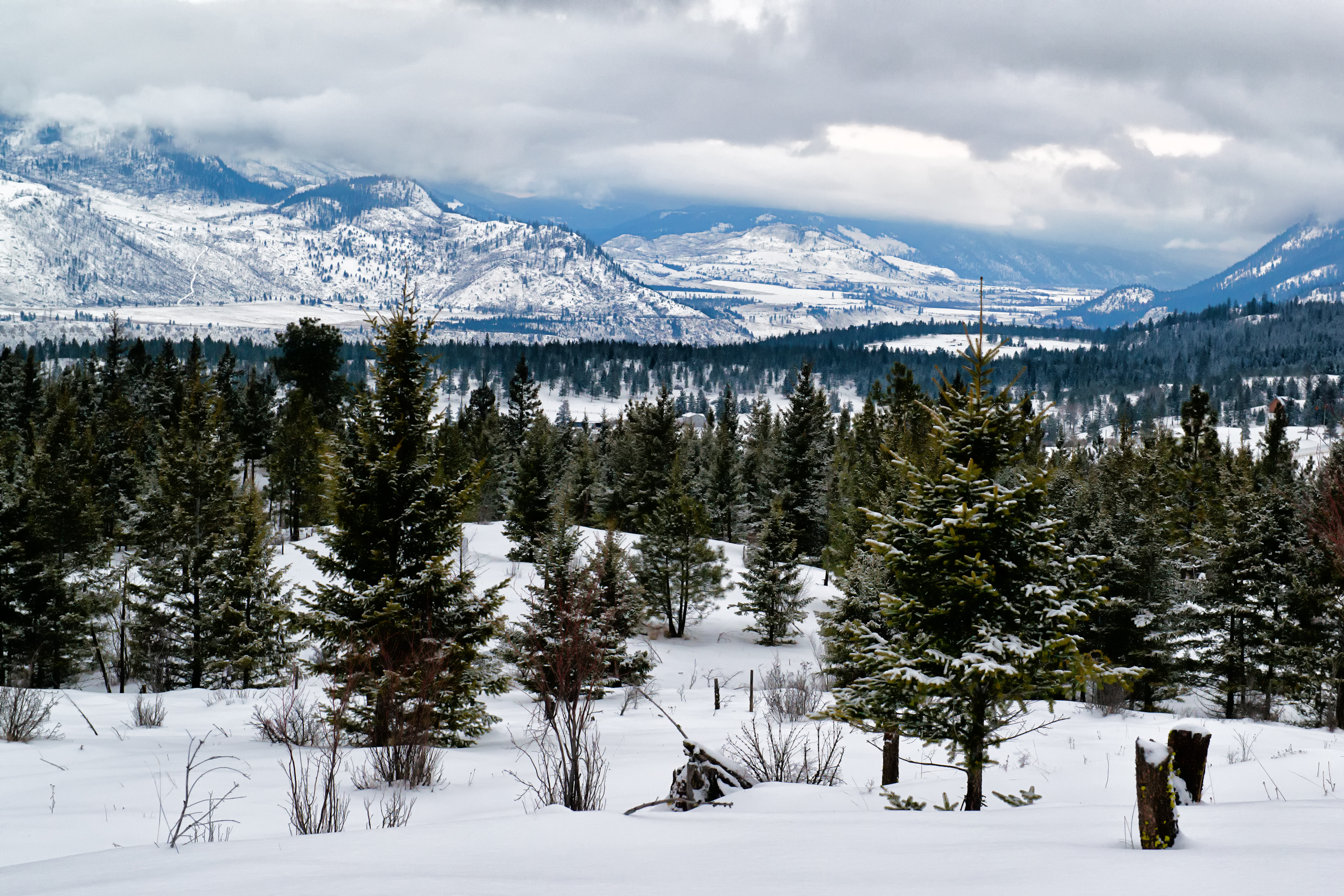
My snowshoe easily broke through the two feet of snow that covered the well and down I tumbled into the soft snow. My years of experience as a photographer reminded me to “  at all costs”, and although my leg twisted and snow covered me, I held the camera up high and safe from the wet snow.

I should have remembered that hole. It’s not like I hadn’t been there many times over the years photographing the rusting 1930’s car. I would go there spring, summer, fall and winter in the rain, snow, and sunshine. I should have remembered where it was, but as usual, it’s always about the photograph. I had put on my snowshoes and hiked up the rolling hills to a long meadow not far from my home.

I have always liked snowshoeing. In my teens my friends and I would head out cross-country trekking for hours through the deep powder in the mountains.  I remember overnight trips where we dug snow caves to spend the night in (snowshoes also made great doors). Then we’d ski down long valleys and snowshoe up hills as we moved through the snow covered mountains.

My rural home is surrounded by wooded forests and rolling hills that are perfect for walking, or as today, snowshoeing. Each year I look forward to enough snow-pack to snowshoe in, and after another morning of shoveling a path to my chicken coops, to the car and cleaning the driveway, I decided it was time for my first winter hike up to the high meadow above my home.

The day was overcast, but today’s modern cameras easily handle ISOs of 800 and 1600, so the lack of bright reflection and low contrast on a snowy landscape made everything so much easier to see and photograph. And handholding is undemanding as one can keep the shutterspeed way over 1/400th of a second and still achieve lots of depth of field.

I mounted a 24-70mm on my camera and set out to photograph the snow covered hills on the quiet, cloudy day.  I like hiking when the only sound is my footsteps, or in this case, my snowshoes.

I hiked up and, as usual, photographed everything. When I stroll through that long meadow I rarely see animals, but I always feel as though I am being watched. That’s a good thing. This time a crow swooped low and circled me as I photographed the Thompson River valley far below. I am sure it was wondering what I was doing there.

I could see a storm rolling down from the mountains and photographed that also. Soon another crow appeared overhead, and this time cried a warning that I am sure was about the storm. And then it began snowing. There is nothing like standing in a forest meadow during a snowstorm; it’s quiet. The sounds from both the Trans Canada Highway and the CN Railroad alongside disappeared.

Thirty years ago, when I first started wandering that area there were three buildings, two old cars and an apple tree.  Now the struggling tree no longer bears fruit, someone hauled off the better of the two cars, one building fell down, and the last two are just hanging on.

Still, it’s a great place to snowshoe with a camera and I was having fun and the heavy falling snow didn’t bother me, I just kept wiping the water off my camera as I photographed the on-coming storm, the old buildings and the remnants of that old car and that’s when I fell into the well.

I think stumbling, bumping into things and sometimes falling while paying more attention to the subject being photographed than things in the way isn’t that unusual to those of us that participate in the exciting medium of photography.

I was wet, but I was fine, the camera was fine, and the snowshoes were fine, and best of all, I got lot of great winter pictures.

I’d really like to read your comments.

My website is at www.enmanscamera.com
Photography at the Pritchard Rodeo

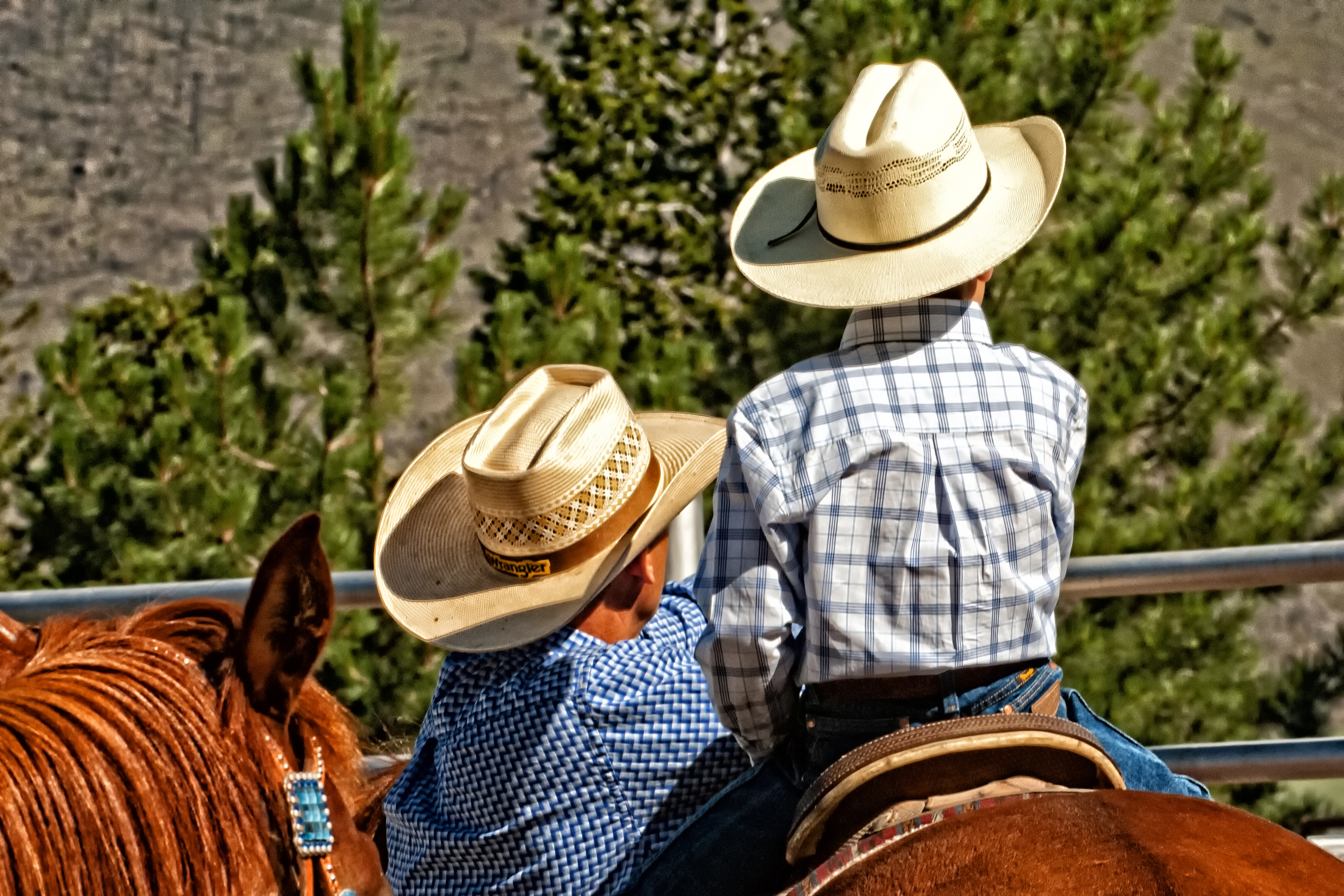
This father and son are watching the action at the Pritchard Rodeo.

This father and son are watching the action at the Pritchard, British Columbia Rodeo.

I never know who is going to win.

I never know who is going to win.

I think that horse is smiling.

I think that horse is smiling.

Root for who ya want...

Cow one, cowboy zero.  Root for who ya want…

I called this "Defying gravity"..I have never seen 'em fall..

I called this “Defying gravity”..I have never seen ’em fall..

Concentrating and holding on.

Concentrating and holding on.

I don't think riding sidesaddle is appropriate.

I don’t think riding sidesaddle is appropriate.

I'll call this, "Quick Dismount"

I’ll call this, “Quick Dismount”

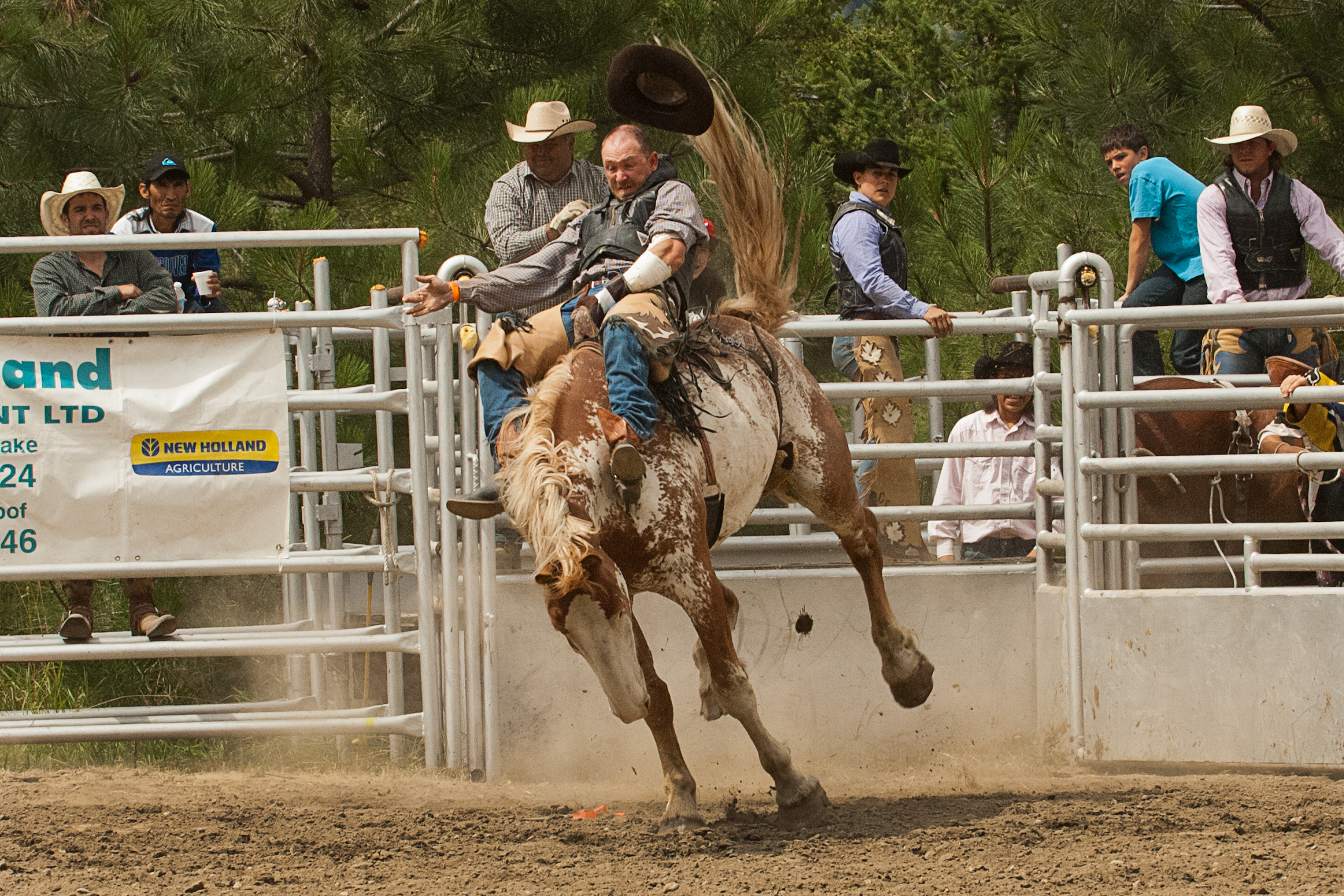
Maybe this is why they call bull riding dangerous. Ya wouldn't this that big fell could jump that high.

Maybe this is why they call bull riding dangerous. Ya wouldn’t this that big fell could jump that high.

Thats what I call a high kick !

Thats what I call a high kick !

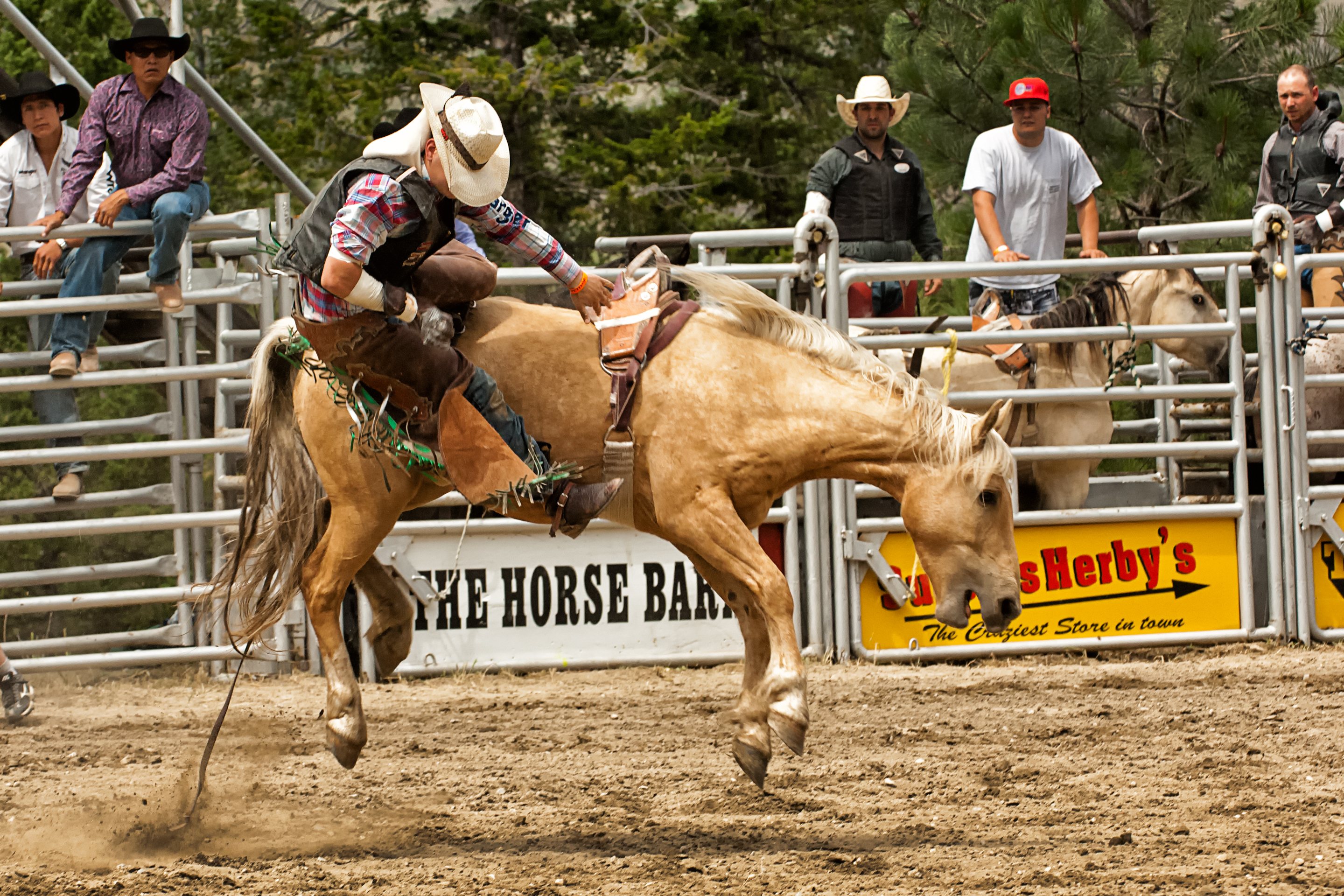
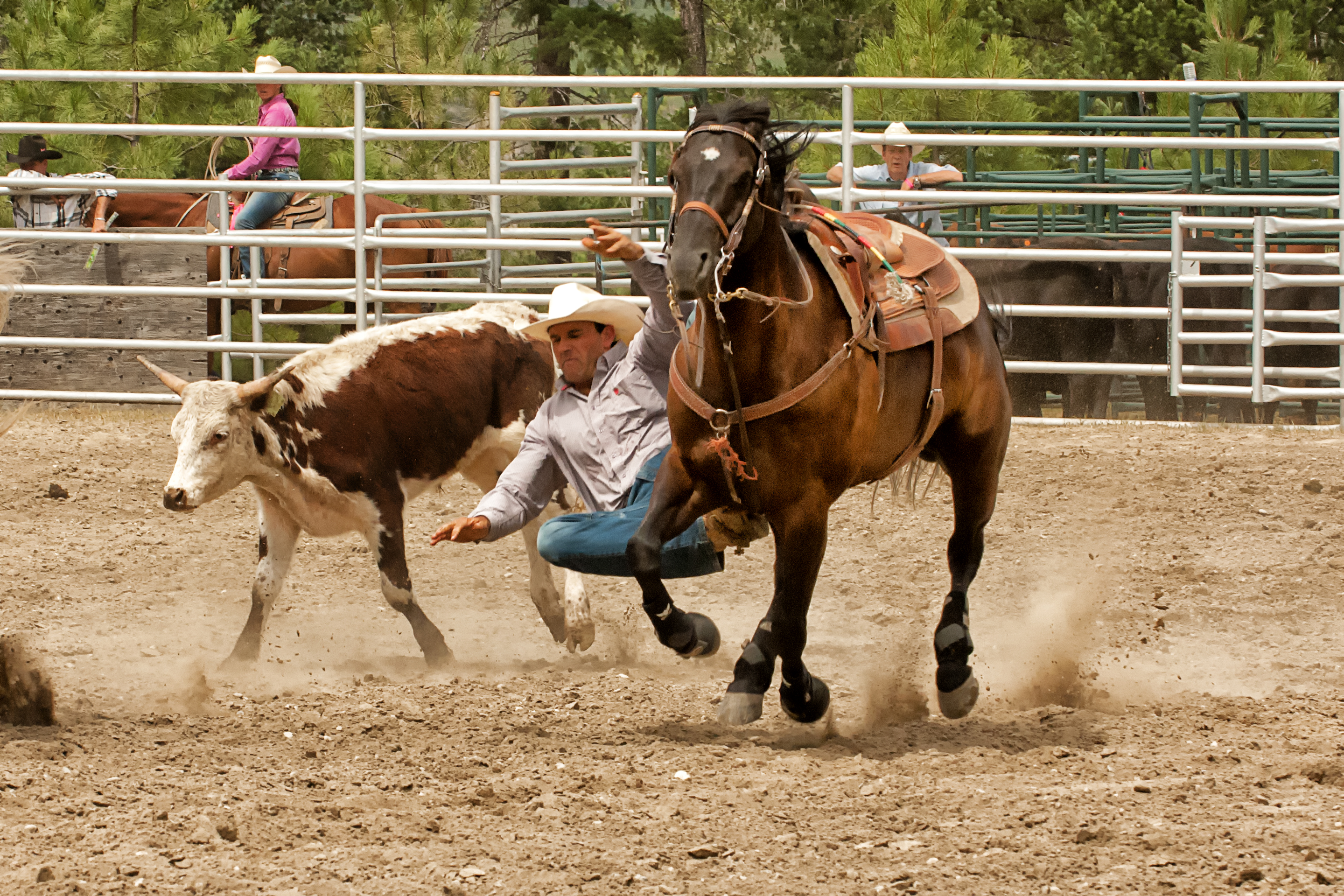
“When photographing fast-paced, erratically-moving subjects like those at a rodeo I would select Shutter priority. I like shutterspeeds of 1/500th or more and one always needs to be aware of depth-of-field, and balancing the shutter speed and aperture for that. Wide apertures reduce the field of focus in front of and behind your focus point, so leave room for the moving subject; something like f/8 or better yet, f/11 would be safest.”

That was part of a discussion I had with a fellow photographer while standing beside the arena at the Pritchard, BC Rodeo last Sunday.  I had been laughing about the not-so-successful attempts two wranglers were having as they tried to lasso a wily bronco.  As we talked I was quickly pointing my camera at the action, and the other fellow wondered why I wasn’t paying attention to my settings in the changing daylight.

I asked how he set his camera and his response was he first tried his camera on Manual mode and had just switched to Aperture priority.  I am sure either of those would work well, and I have no doubt that some photographers who shoot rodeos professionally will have their own advice to him.

I was there to have fun, socialize with friends, and still get as many shots (that were keepers) of the rodeo as I could. Shutter priority assured that I’d always have a shutterspeed that would stop the action.

My first goal was to get the light correct and keep it correct without constantly resetting the camera. The only “chimping” (a term used to describe the habit of checking every photo on the camera LCD immediately after capture) I would do was to check my camera’s Histogram every now and then.

Shutter priority was as close to point-and-shoot as I could get in an environment where my attention might stray. Fortunately this was a local rodeo and I was very familiar with the grounds and where the action would take place. When an event was about to change I would casually walk around the arena to where I had in the past found the best place to photograph that particular activity.

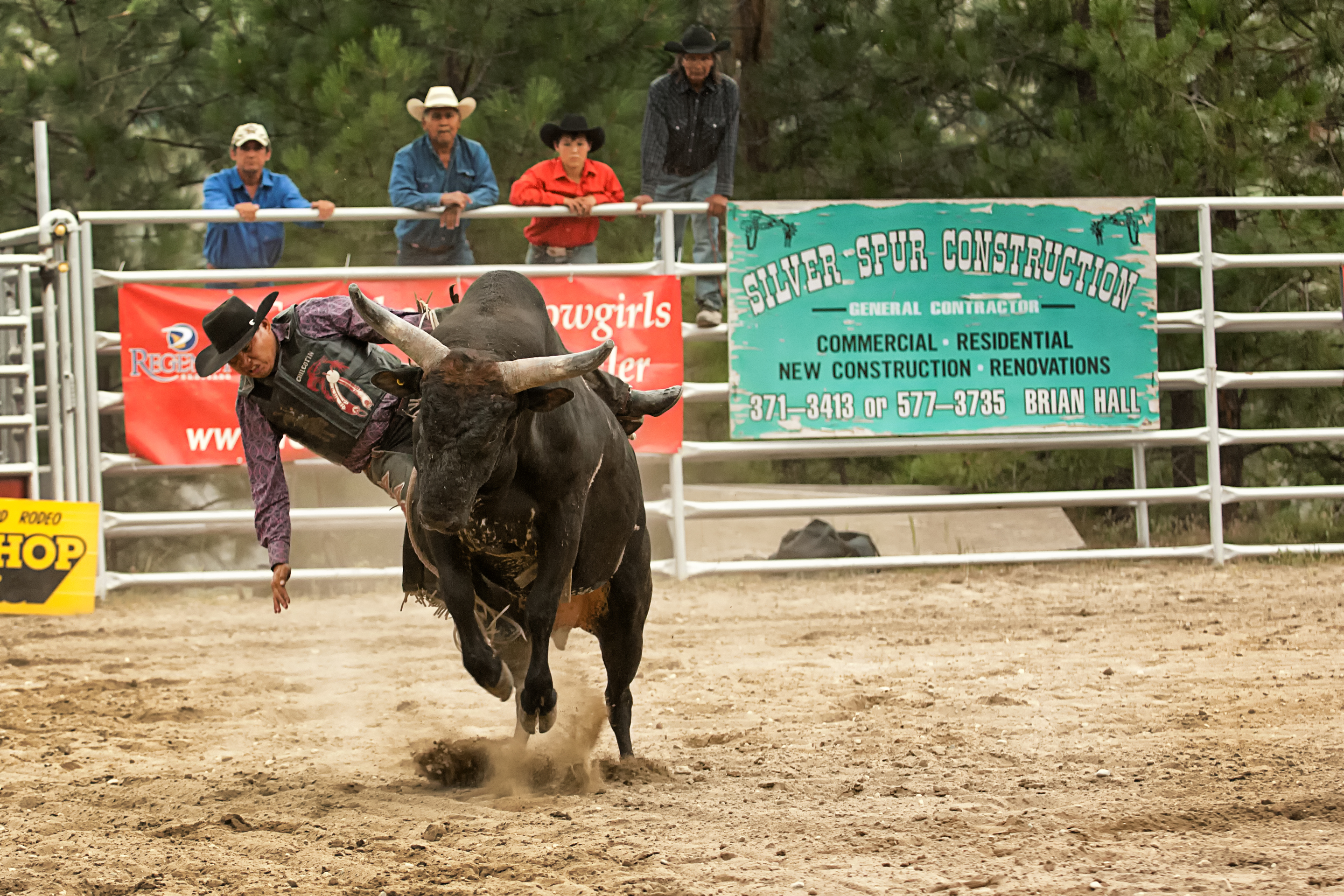
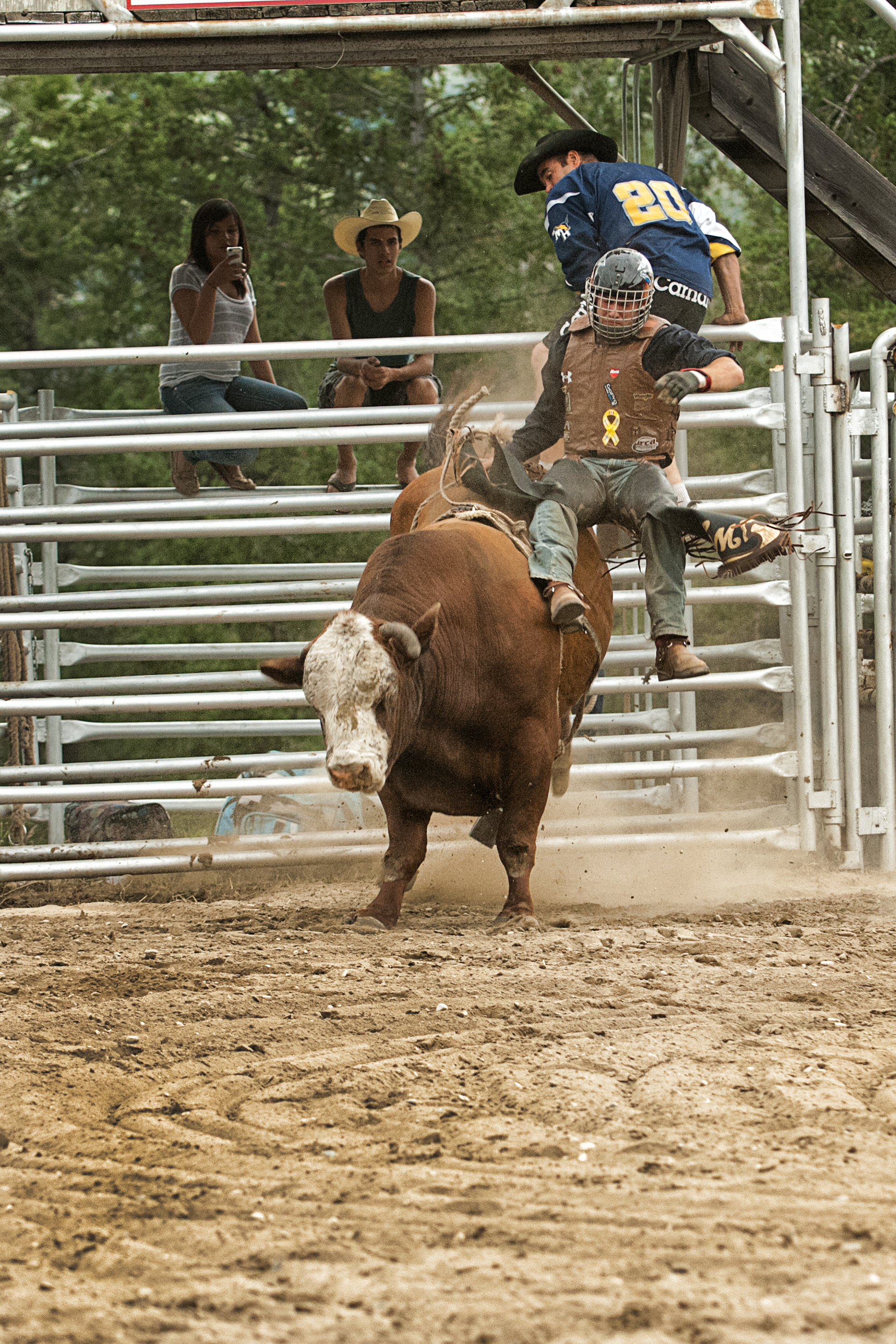
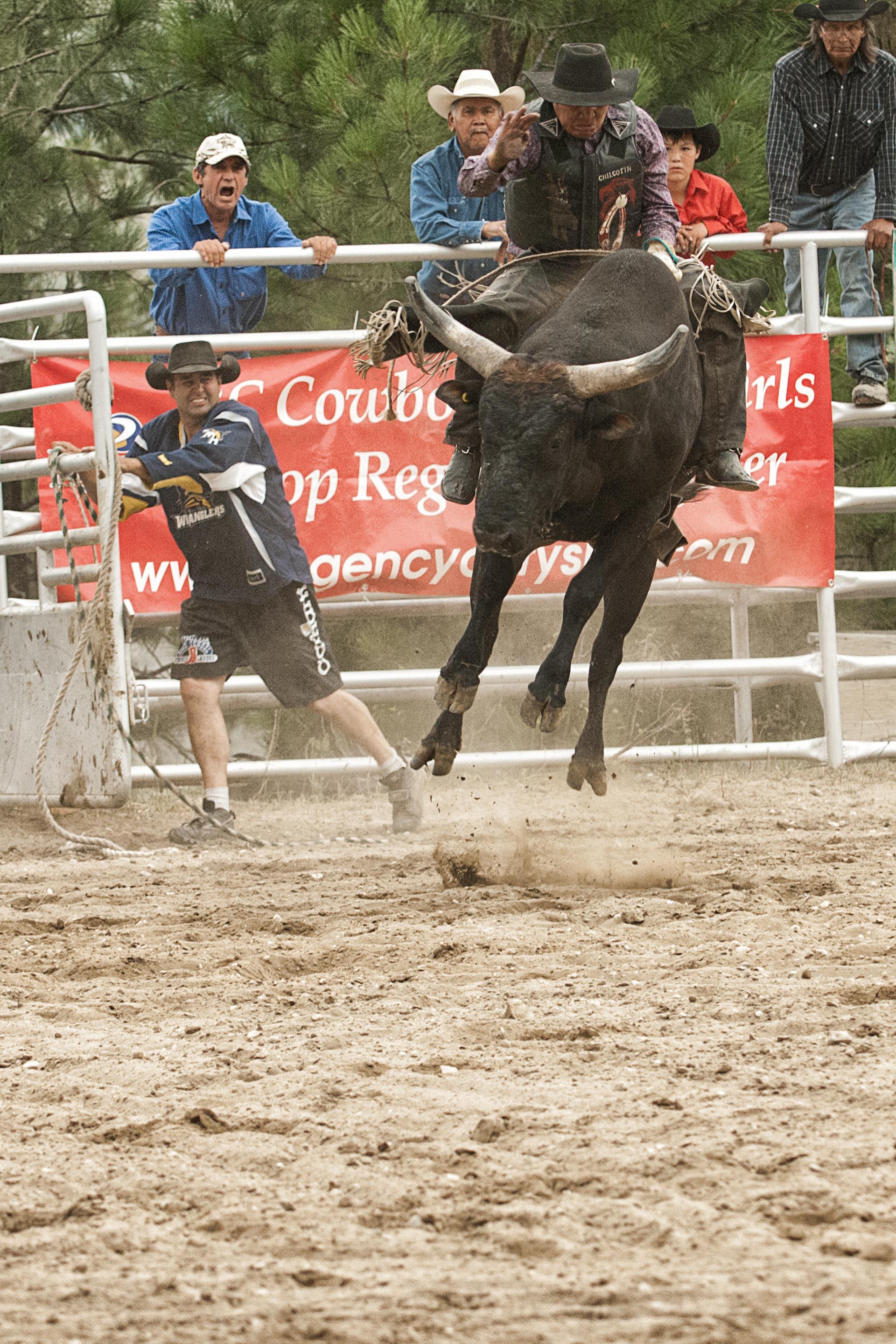
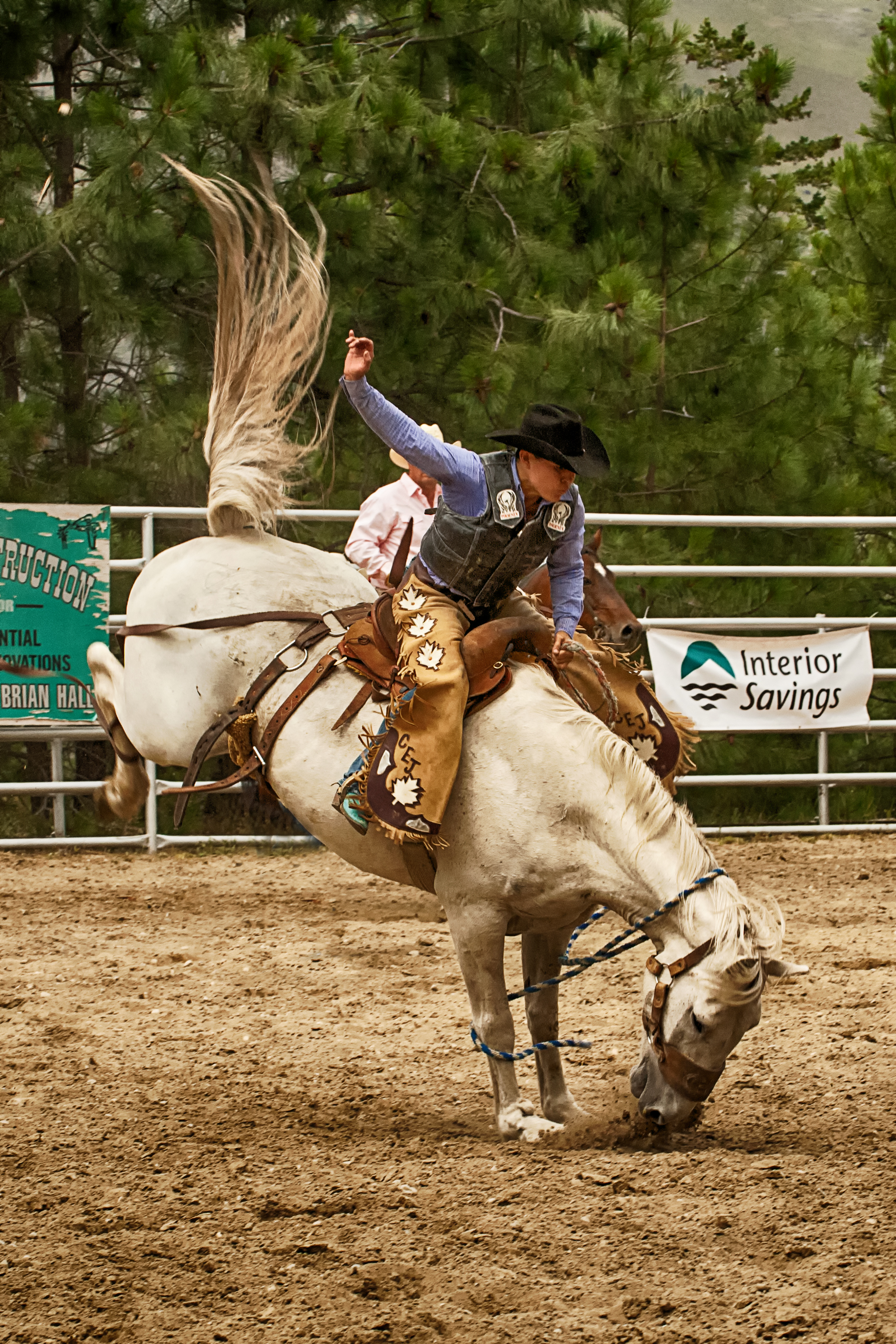
My favorites to photograph are Saddle Bronc, Bareback, Steer and Bull riding.  The action is explosive and I think the participants (horse and rider, or bull and rider) pitted against each other are well matched and one can never be sure who will win. I am of the opinion that both animals and humans know it’s a game. For example, I watched a large black bull crashing around in the bucking chute, giving the handlers a hard time as the rider tried to get mounted. The gate opened, rider and bull exploded into the arena with the bull bucking, rearing, kicking, spinning, and twisting. Although he did his best to hang on for the required eight seconds, the contest ended with the cowboy being thrown.

Bullfighters rushed to help the rider, possibly expecting additional aggression from the bull, but at that moment that large, black, dangerous bull’s attitude immediately seemed to change from “death incarnate” to, well, a nice fellow out for a stroll. And that’s exactly what he did, casually walked back to exit the arena to brag to his buddies.

My photographs didn’t show that mellow conclusion, that’s not what we expect at the rodeo. Instead they are great action photos of what has been called, “the most dangerous eight seconds in sports”.

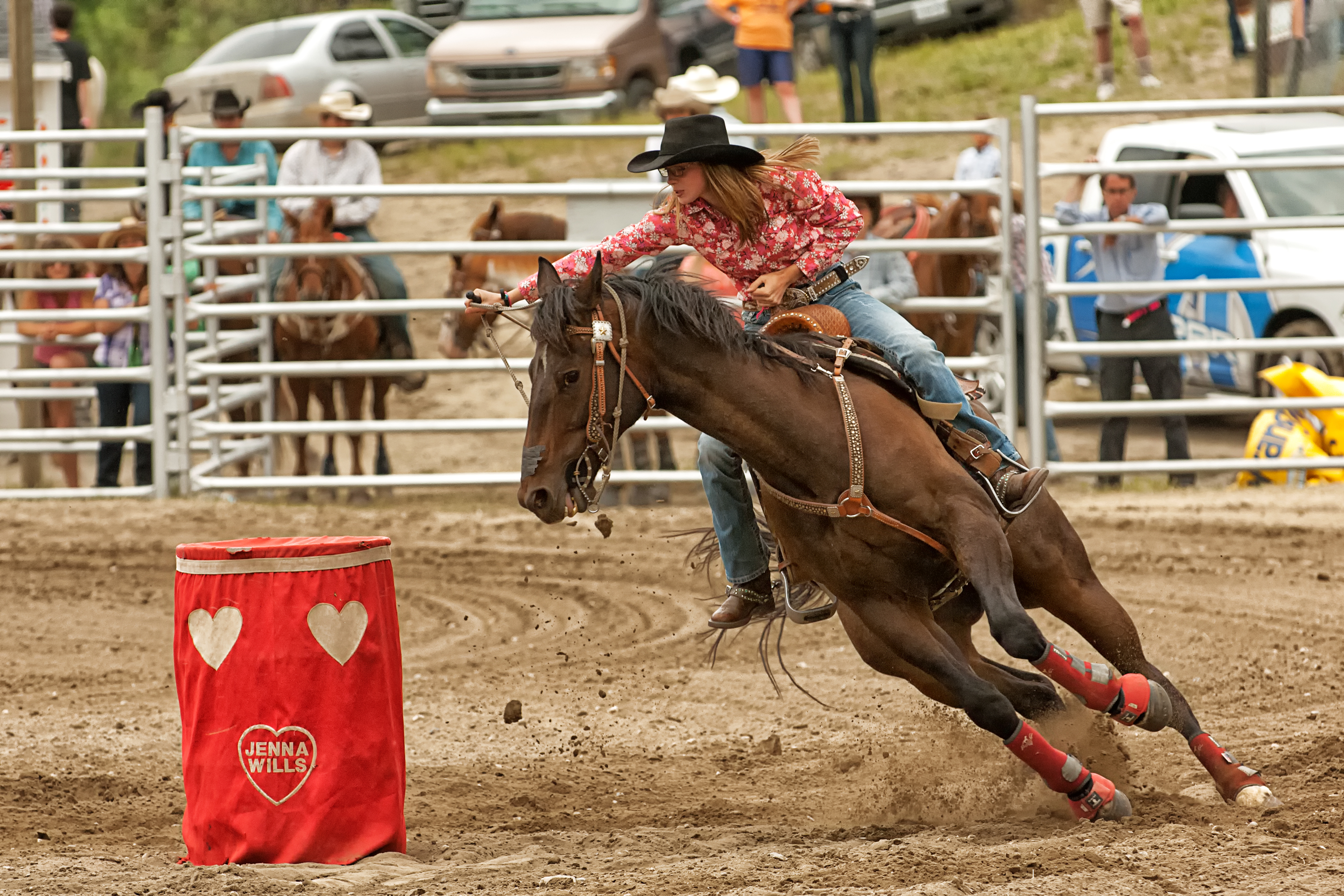
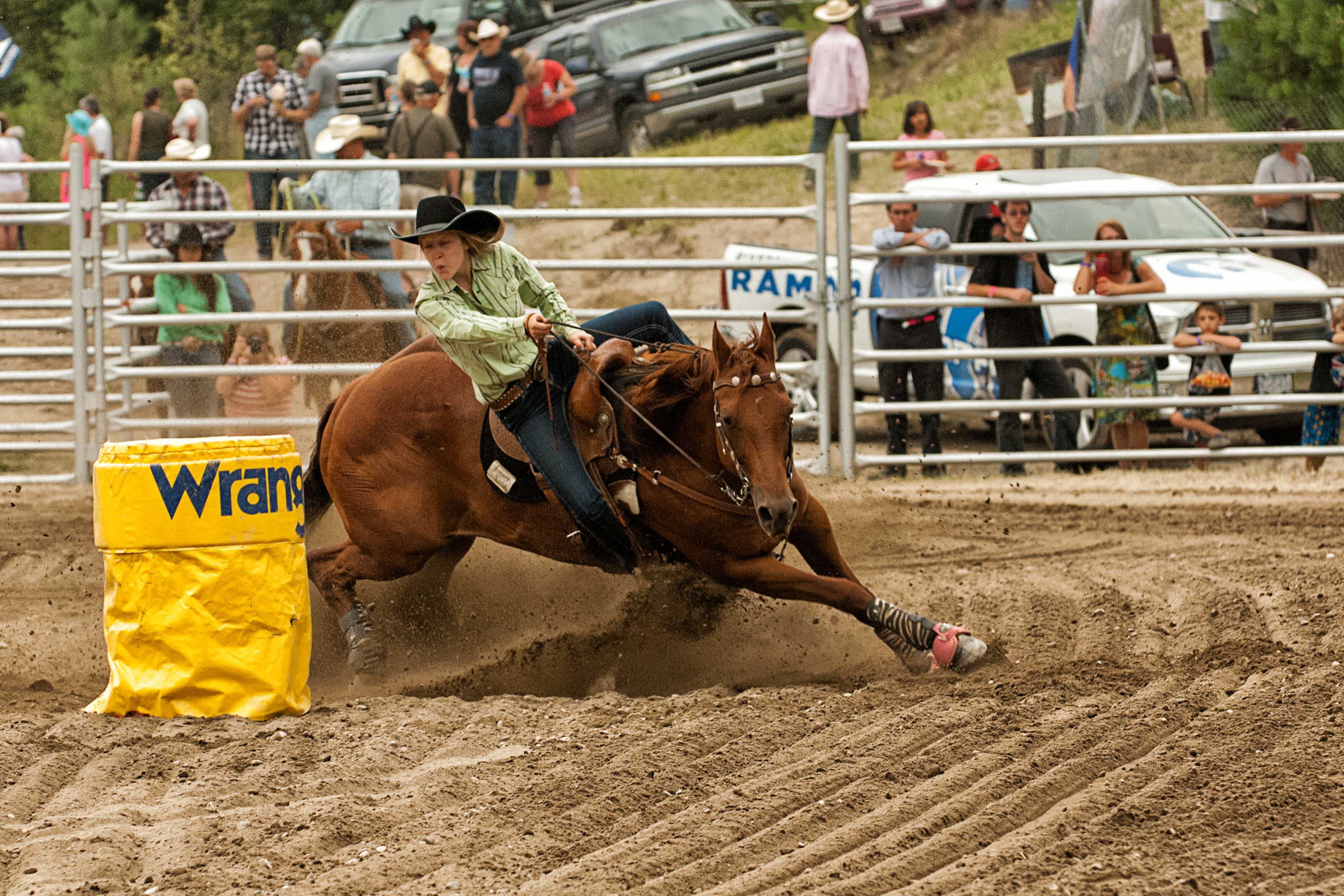
The Pritchard Rodeo grounds are perfect for photographers. The arena is enclosed with a strong metal fence that’s safe to stand close to and doesn’t restrict the view.  Of course, one has to be careful when excited horses are getting ready for the Barrel Race, but heck, it is a rodeo and one must remember that the animals, like any other athletes, are focusing on what they are about to do, not some silly person with a camera.

I’ll mention that Barrel Racing is also a great subject to photograph, and trying to perfectly capture what seems like a gravity-defying moment as horse and rider, fast and furiously, circle the barrel is exciting.

I know there are more rodeos scheduled for the British Columbia rodeo circuit ahead and interested photographers can expect an enjoyable, energy-packed day of photography that, at times, will test their skills.

I always appreciate any comments. Thanks, John

My website is at www.enmanscamera.com
Thinking about, Just what is a Great Lens for Portraiture

Model 1,   Danielle, 24-120lens at 105mm  Ms. Perault

This past week a friend of mine dropped off his lens for me to try. After talking about the lens’ quality, he added that it was a great lens for portraiture. Now there is a lingering question, “What is a great lens for portraiture?”

Although I hadn’t given his Tokina 50 -135mm a run through yet, I expected he was right regarding it being a good portrait lens.  On my cropped sensor camera the lens would have an effective focal length of approximately 75-202mm.

I mentioned this to another photographer, and he paused for a moment, and then said, “Oh, it acts like a 75-202”. I realized he had no idea what “focal length” meant and although I didn’t go into it at that moment, I’ll mention for those few readers that aren’t familiar with the long used photographic term. A lens’ focal length refers to the distance between the imaging plane, or the sensor, and the point where all light rays intersect inside the lens. A longer focal length leads to higher magnification (telephoto) with a narrower angle of view. A shorter focal length lens has less magnification and a wider angle of view.

The longer focal length, as in my friend’s 50 -135mm will have a pleasing effect on a subject because the minimally curved surface of the lens flattens the perspective between the eyes and ears. The wider the focal length is the more the front element (lens glass) is curved making the distance or perspective between the eyes and ears more visible.  A wide angle enlarges the nose and reduces the size of the ears.

Personally, I want as much focal length as I can get. The longer a lens is the better, and my choice then depends the ratio of length to weight, as in my big 70-200mm would be a perfect lens in the studio, but it’s weight becomes a liability when following a couple around at their wedding.

I have heard photographers say that the 50mm lens is a good portrait lens. Well, that’s 70mm on my cropped sensor camera, but still has too much curve in the front element for my comfort. An actual 70mm lens acts like a 105mm on my camera and that’s much nicer.

I can remember going to a Dean Collins’ workshop. I had worked hard to get an invite to one of his limited participant sessions. Collins demonstrated his shooting techniques on both a medium format (2 ¼ in film) and 35mm cameras. He used a 350mm on the medium format, and 300mm on the 35mm, and with the addition of a slide presentation he discussed how the longer lenses flattered the features of those he made portraits.

Information on Dean Collins can be found at: http://strobist.blogspot.ca/2006/08/review-best-of-dean-collins-on.html

A three hundred millimeter lens is spectacular to use for portraits and I think there are lots of fashion photographers that might be using 300mm and longer lenses, but I have to use a tripod or at least a monopod when using longer than 200mm or I have camera shake, so I defer to a lens that is much easier with which to move around. I have used that 50-135mm for some staff portraits I made for a local business and I must say it was fun to use; most of my shots were at 105mm and longer.

I recently read a post by a photographer who stated that only lenses with an aperture of f2.8 or wider were good for portraits, and his reasoning is because the background should always be out of focus.  I don’t really agree with that. A wide aperture just means one can reduce the depth of field. To me it depends on how far away, or how busy the background is, and I know how to control depth of field when required. The length of the lens, and how it affects my subject, is much more important.

A longer focal length, or telephoto lens reduces the effect of lens distortion and helps keep facial features in proportion. The longer lens also creates a more shallow depth of field that helps one’s subject to stand out from the background. I think those photographers that regularly do portraiture all have their preferred lenses that they are comfortable using. Photography is a creative medium and the final answer as to what is the best is up to the photographer and, of course, whether or not the subject is happy with the result.

I always appreciate your comments. Thanks, John

My website is at www.enmanscamera.com
TTL Flash Photography in my Wife’s Garden

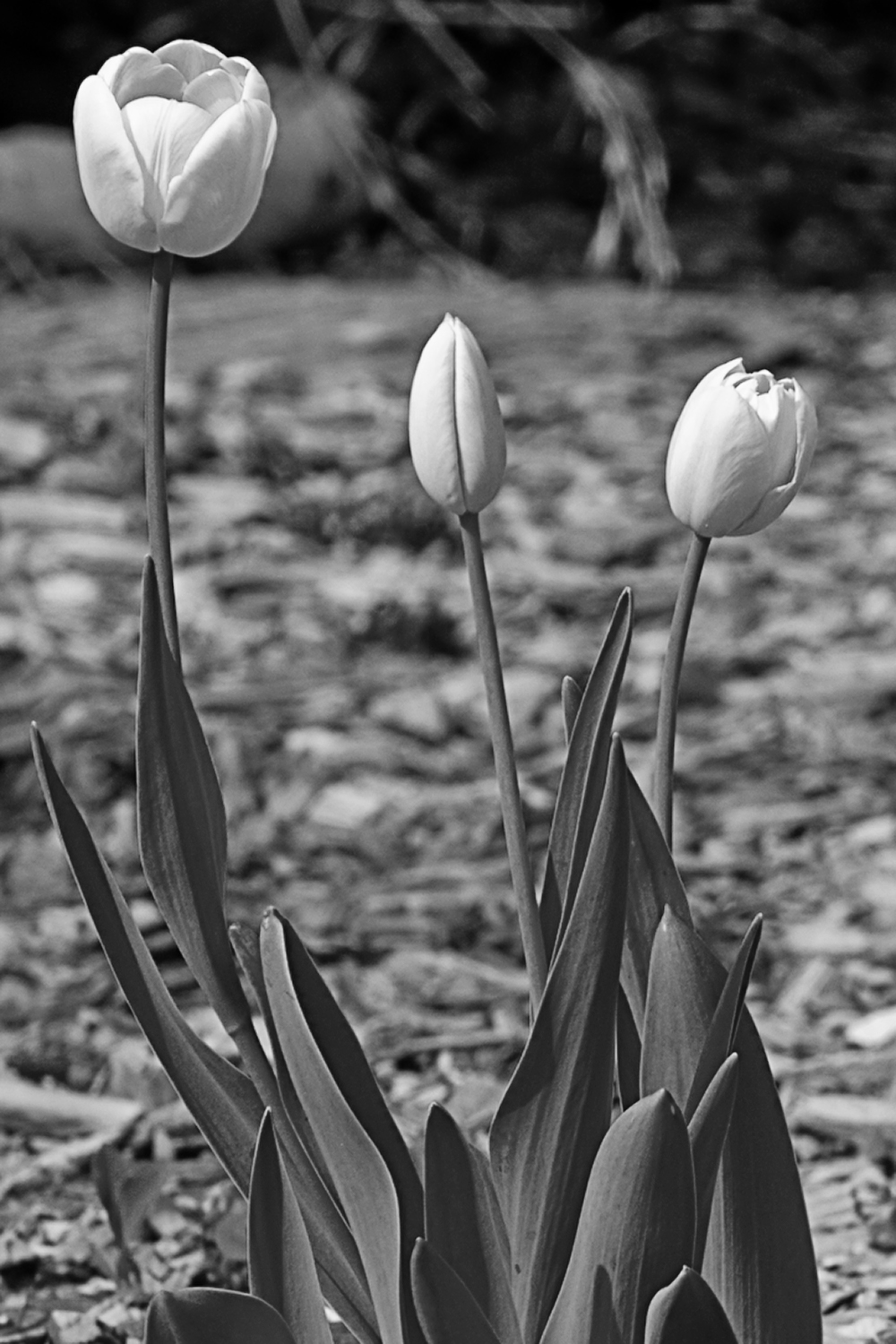
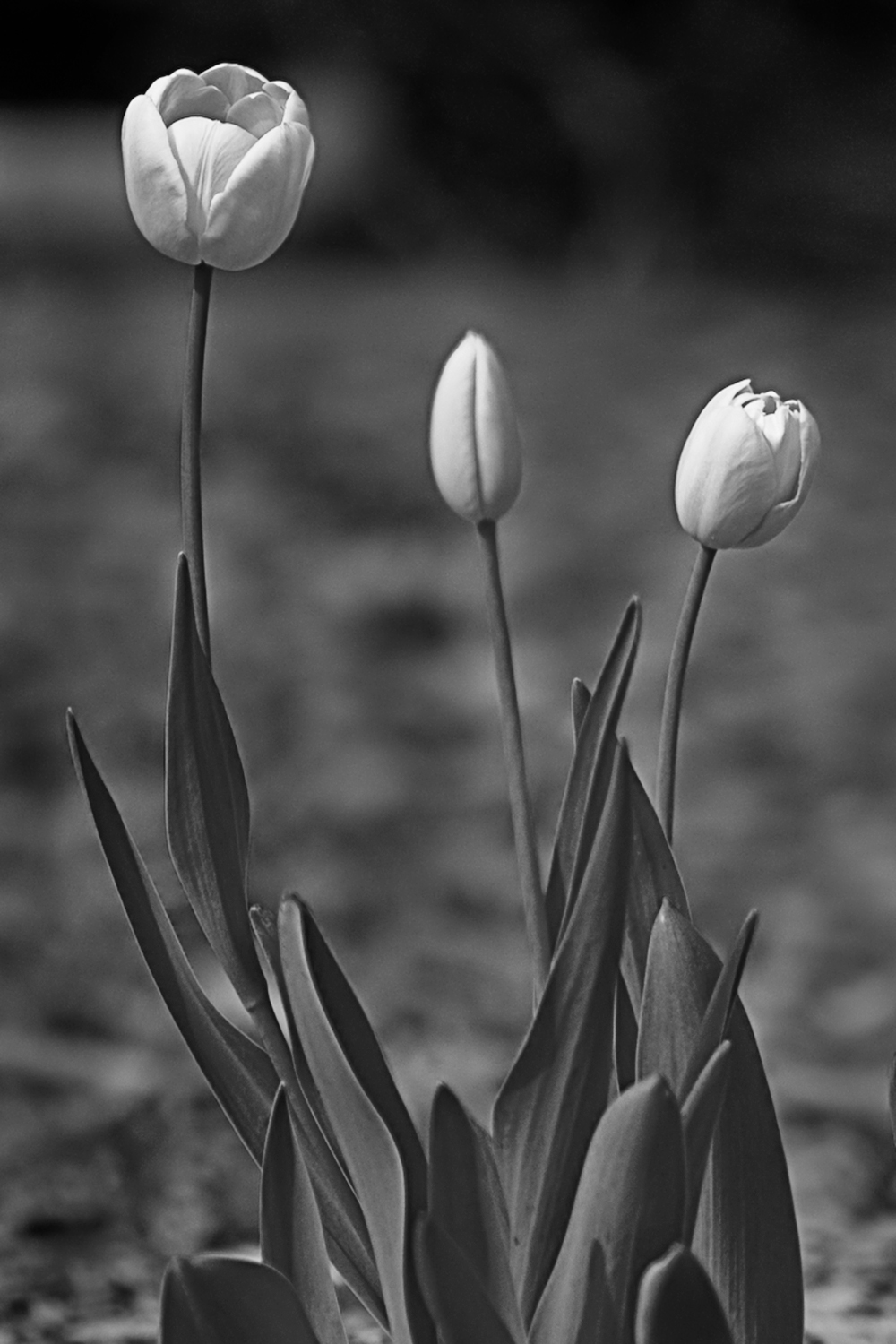
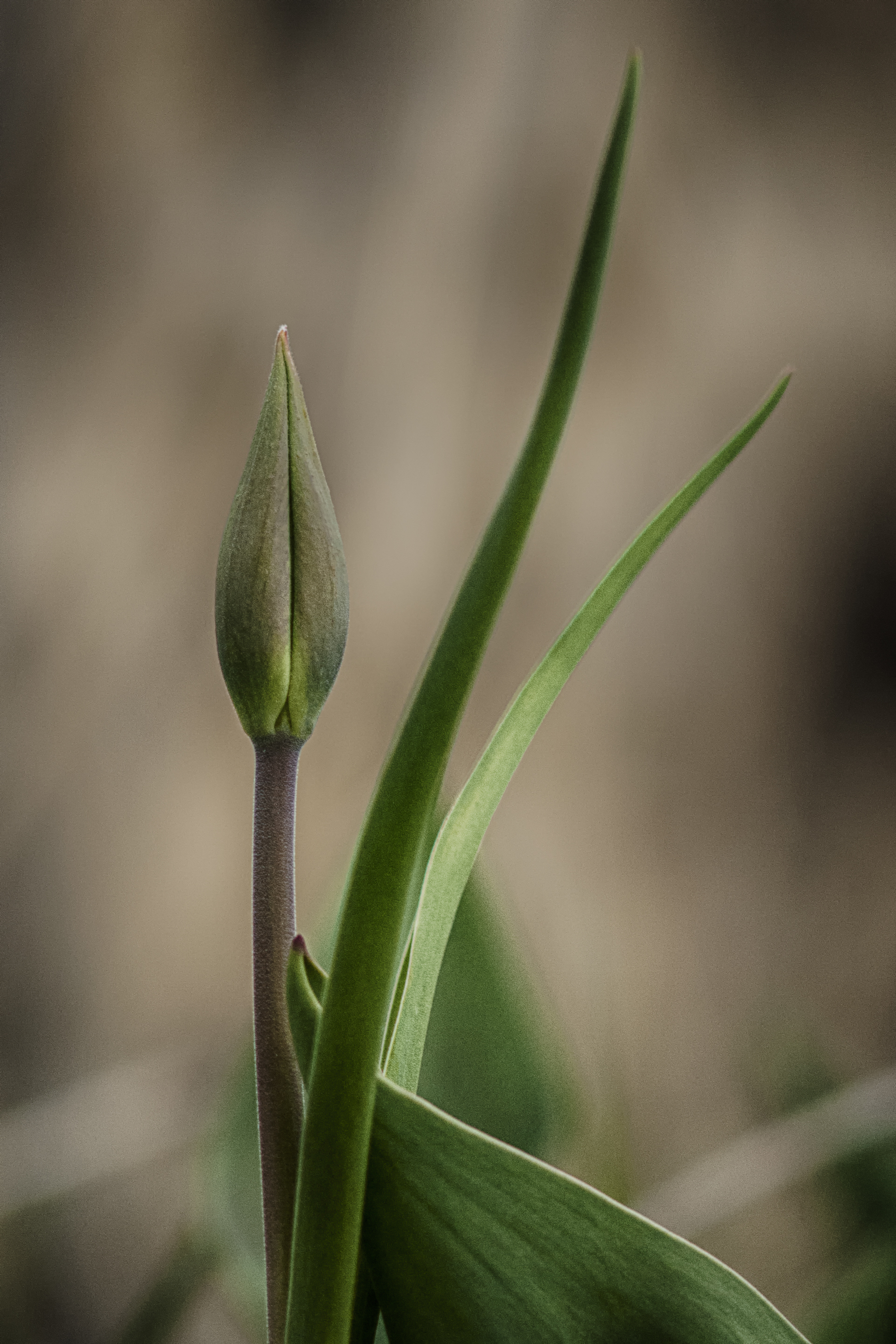
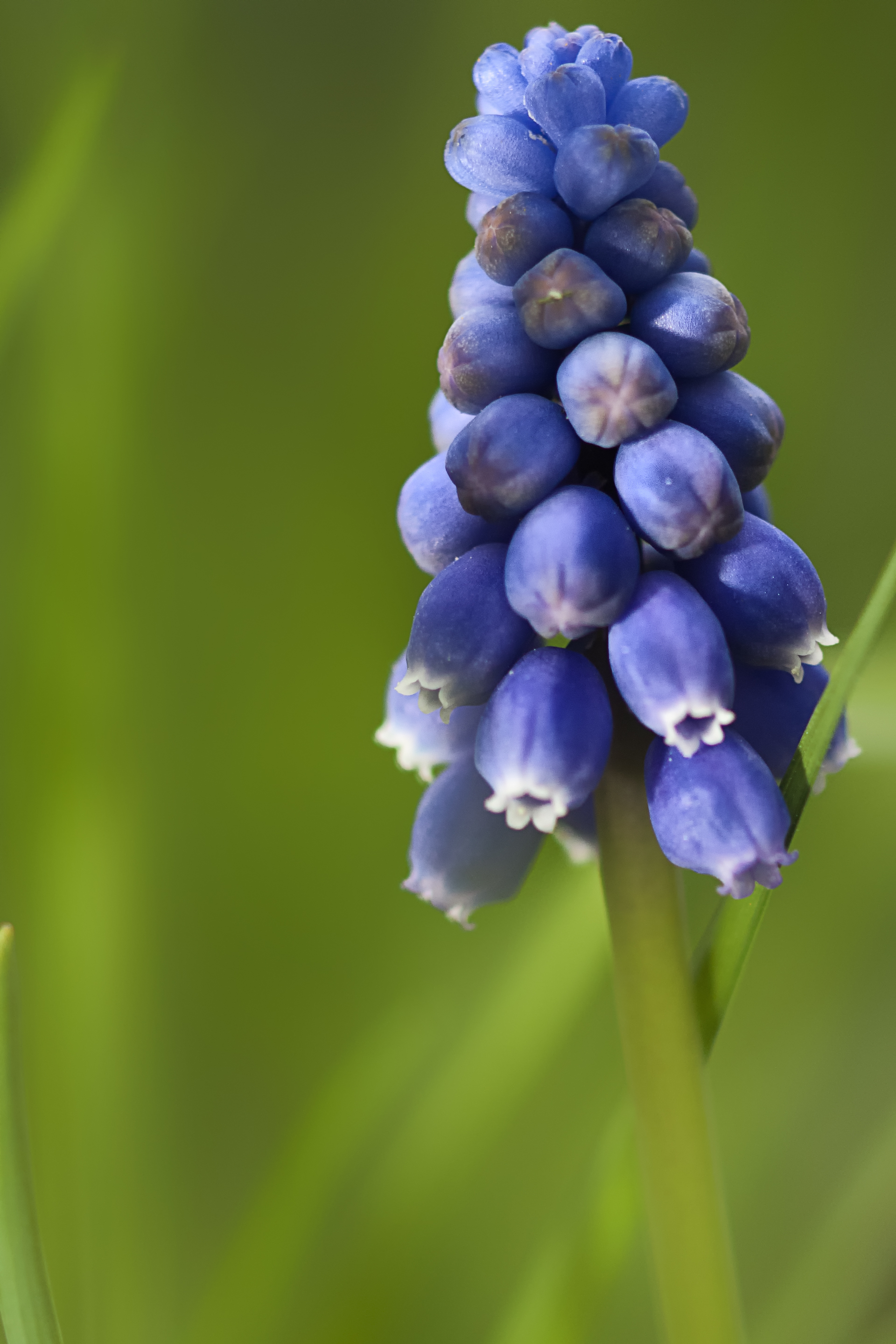
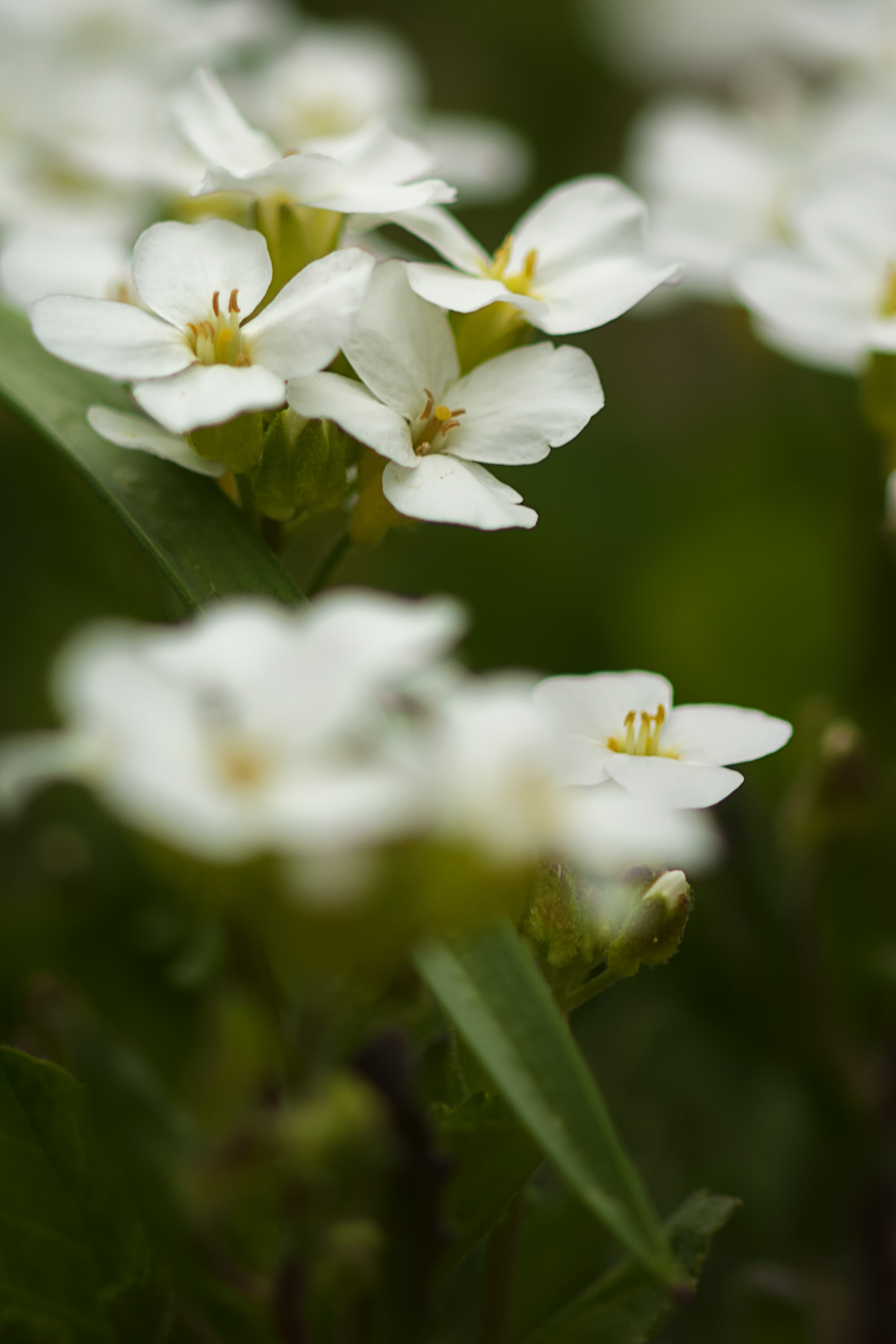
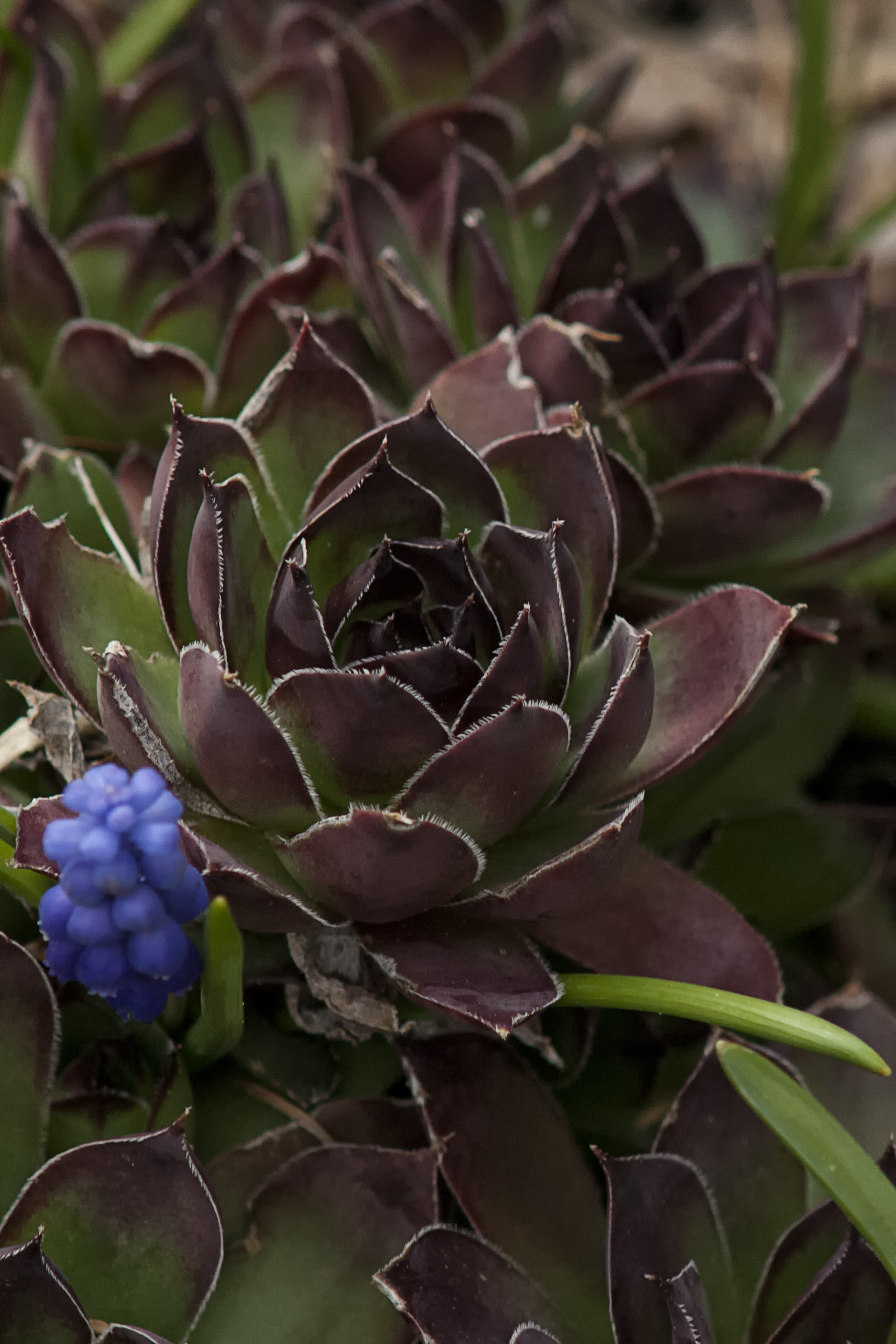
Tulip 1 Blue Muscari Arbis Sempervivum Pennesetum grass - fountain grass

This is beginning to be a busy spring. I expect that isn’t news to those in my area that have spent all day doing yard work the past few days. But for many photographers thoughts kept wandering to, “That could make a good picture.”

I really wanted to do some photography in my wife’s garden. The nights are still cold, but the days have been almost hot, and with that heat the first of her flowers are beginning to bloom. My goal is always to photograph what happens in the garden with the changing seasons.

There is always something in the garden no matter the weather, be it snow, rain, or like today, high clouds. The slight overcast day was perfect for my subjects. Bright sunny days increase the contrast of scenes, making it hard to capture details in the extremes and I wanted to retain what details I could. The diffused daylight reduced the number of f/stops from black to white.
My setup is a 200mm macro lens and depending on my mood and the light, either a ring-flash, a reflector, or as I used this afternoon, a wireless, off-camera flash.  Outdoor portraits, whether of people or flowers, in my opinion, aren’t that interesting when one only relies on illumination from the sun. Flash, on or off-camera, or even a reflector, adds dimension and depth that makes for a much better image.
I mounted my flash on a small 2-foot stand and carried a tiny six-inch tripod if I needed the light to be lower to the ground, and I this time I didn’t use a tripod because the few flowers were close to the ground and I prefer shooting very low level. That means almost every shot is made while lying on the ground.

By the time I could get out to the garden the sun was low and, sometimes, a heavy overcast. Perfect light. All I had to do was put the flash to one side and adjust my shutterspeed to decrease the bright ambient light.  Today’s TTL (through the lens) flash is amazing.  Previous generations recall when the flash/camera sync speed was limiting and we could only use a flash at 1/60th of a second! How did one survive?  Today I moved my shutter between 200th of a second and 8000th of a second. That gave me lots of control over the ambient light and easily allowed me to move my aperture to increase or decrease depth of field. My advice is check your camera’s manual, read about, and set the camera to hi-speed flash sync, if available.

I’ll include a brief explanation of TTL flash. When the shutter is tripped, the light from the flash fires off and hits the subject. Then that light from the flash bounces back to the camera, and a sensor reads it as it builds up exposure. The in-camera computer determines when the light has massed enough light for the correct exposure and turns off the flash.

The photographer controls the flash rather than the flash controlling our photography. With TTL technology the camera’s computer provides the correct exposure regardless of the aperture, or flash-to-subject distance.  TTL technology puts the control of depth-of-field back into the hands of the photographer.

Most of the time I kept my flash on TTL, increasing or decreasing the power depending on how far I positioned the flash from a flower, and only selected manual flash as I began loosing the light.

Books on garden photography recommend morning when everything is fresh, but I didn’t get a chance till late in the afternoon, as I was occupied building a temporary yard for six new chicks. We had an early morning marauder a few months ago, probably a bobcat, reducing my laying hens to two. I now have reinforced the chicken yard and think everybody’s safe now. I’ll give the garden another couple week’s growth and try for that fresh morning (and hopefully some overcast) light.

I’ll repeat what I wrote about garden photography last February, “Just about anytime is good for a dedicated photographer to make photographs. My advice is to be creative, have fun, and don’t worry about failures. Open them up on the computer, learn something from them, then quickly delete.  Of course, some tweaking with PhotoShop always helps and, for those photographers that are like me trying for something different, anytime and any conditions will be just fine.”

I always appreciate your comments. Thanks, John

My website is at www.enmanscamera.com