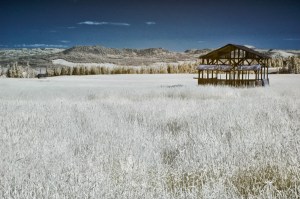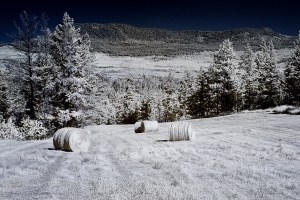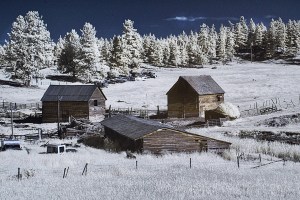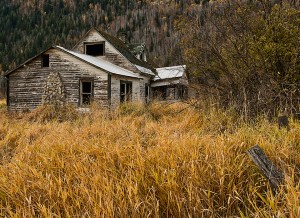
October photographer’s drive through Wells Grey Park   


My friend Jo and I decided to test out a big 400mm lens that came in to my shop.

I had brought it home to test and had tried couple shots in my yard, but decided it needed distance subjects for a realistic workout.

Jo had stopped by one evening and after a couple glasses of wine I flippantly said, “if we took it to Wells Grey Park we might find some bears”.

I was joking. Jo always tells me she would be afraid if she saw a bear wandering in the woods where we live. However, in an uncharacteristic comment she took a sip of her wine and said, “can we do that?”

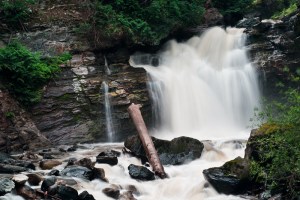
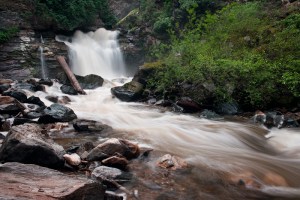
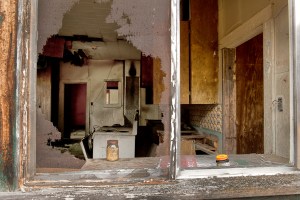
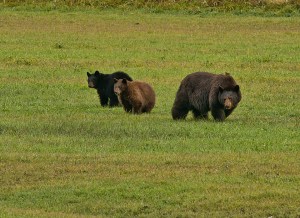
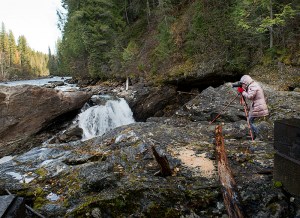
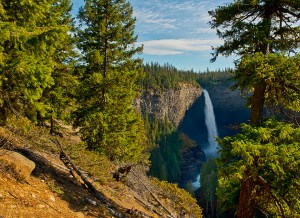
A week later we drove into the wilderness park and Jo had that big six-pound lens attached to her Nikon D800. We had began by stopping at Spahats Creek Falls 400mm lens for some wide angle shots, then wandered around a long deserted homestead and were heading to Helmkin Falls when we spotted the bears.

In the forest town of Clearwater, just before the park, I talked to a local that mentioned there had been a sow and two cubs hanging around a large meadow on the way to the park’s entrance, so we were watching and as we turned a corner there were cars parked on the roadside. And there in a farmer’s mowed field were the three bears.

I stopped, placed my beanbag on Jo’s open door and stepped back as she rested that big lens 400mm f3.5 on it and began pressing her camera’s shutter.

After that exhilarating event we drove on into the park.

We couldn’t have chosen a better day. The temperature was cool enough for a light jacket and the fall colours were inviting so we stopped and stopped and stopped again to take pictures.

The park is a favourite of hikers, boaters, trucks towing large trailers for overnight camping and for anyone, like Jo and I that want to do roadside photography.

Like most photographers, we over packed. We had our cameras, tripods, lots of lenses, a bag of filters, two flashes, extra memory cards and enough food for two or three days.

We didn’t eat very much of the food, use the filters, flashes or tripods and had no need to mount a flash on either of our cameras. I only used my 24-70mm and other than when she photographed the bears with that 400mm Jo stayed with her 20-40mm. But although the need never arose for us to employ that trunk full of equipment we were well prepared.

October is my favourite time of year for scenic photography and as last year at this time, Wells Gray Park is always on my list for fall nature photos.

When the shadows grew and the temperature began to drop we knew it was time to head home. Clearwater to our homes in Pritchard is about two hours and for us that meant two hours of talking about the photos we took, photos we plan to take and places we want to go with our cameras.

I looked for a quote to end with and found this by the most famous scenic photographer of them all, Ansel Adams.
Everybody now has a camera, whether it is a professional instrument or just part of a phone. Landscape photography is a pastime enjoyed by more and more. Getting it right is not an issue. It is difficult to make a mistake with the sophisticated technology we now have. Making a personal and creative image is a far greater challenge.


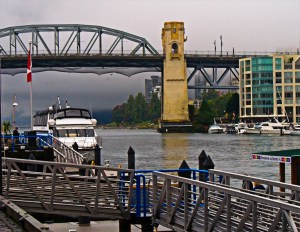
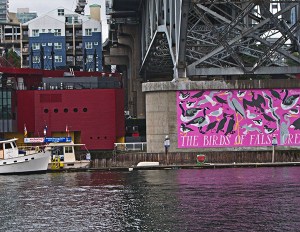
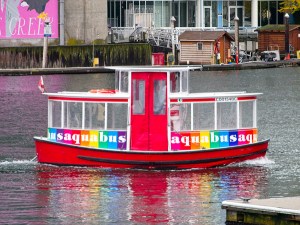
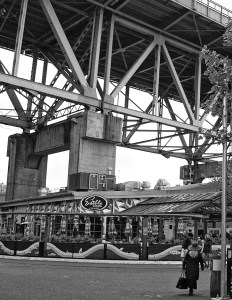
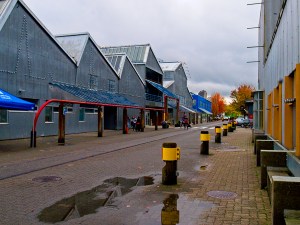
October 1st Granville Island photography wanderings       

As luck would have it my second Granville Island visit this year was again on a rainy day.

I suppose any Vancouverite would tell me I shouldn’t be surprised. Rain is normal in both spring and fall in that part of the province.

One could rationalize and say, “well, the colours are deeper on wet over-cast days”.

That is so true, but I still worried about getting my little Panasonic mirrorless camera wet as I strolled with wet hair between the colourful buildings, dodging people clad in rain coats and hiding under umbrellas.

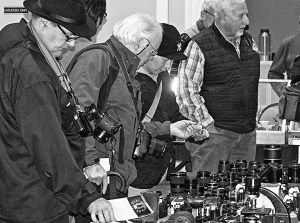
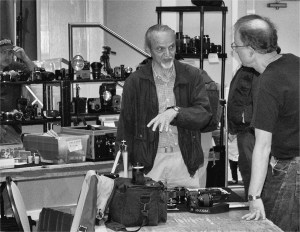
My friend Laurie and I spent previous day at the Vancouver Camera Show and Sale. Laurie had brought a camera that needed repair and we were waiting till after 1’oclock for a camera technician to return home.

There was no discussion for a photographer; Granville Island rain or shine was the prefect place to kill time and wander with a camera.

Buildings filled with expensive artwork, a food fair, farmer’s market, artist studios and, of course the Emily Carr University of Art and Design, are all great places to take pictures. Laurie was forever loosing site of, and then catching up to me as I meandered only thinking about the next photograph.

Heck, I knew where our truck was and was sure he’d find his way there when we both were tired of getting wet in the constant drizzle.

But I did have my camera.

I always find a reason to go there before or after the camera show. It’s also a grand place to shop if one has money in their pocket. And in spite of the sometimes-long wait, buying lunch or breakfast and relaxing among the excited and busy throngs of people from all over the world are fun.

I searched for some info on Granville Island, and the city’s info page says that Granville Island draws 10.5 million people each year. And the island’s architecture, much of which comprises remodelled warehouses, still show the island’s industrial past.

“Granville Island is a peninsula and shopping district in VancouverBritish Columbia. It is located across False Creek from Downtown Vancouver.”

“The peninsula was once an industrial manufacturing area, but today it is a hotspot for tourism and entertainment. The area was named after Granville Leveson-Gower, 2nd Earl Granville.”

That is great trivia, but for me, the lure of the place is photography. Sure, I enjoy an early morning coffee and bagel, but the urge to keep photographing the place doesn’t allow me to sit for long.

I think the famous American photographer Annie Leibovitz describes my wanderings in Vancouver’s Granville Island when she said,   “The camera makes you forget you’re there. It’s not like you are hiding but you forget, you are just looking so much.”

Another Vancouver Camera Sale & Swap Meet   

Vancouver is famous for it’s rain.

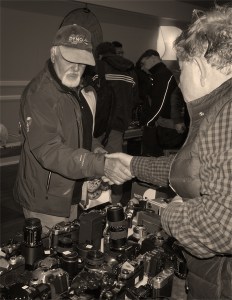
Pounding Vancouver rain was what greeted my friend Laurie Patmore and I as we rolled our loaded carts into a large room filled wet shouldered people that were arranging all sorts of camera gear on their tables for the Vancouver Camera Show and Sale.

It was 7:30AM and we had two hours to say hello to long time friends and get our equipment ready for an excited crowd of photographers anxious to exchange their hard earned money for the shiny items on our table.

Laurie, as always, disappeared and left me readying the table. Selling stuff is fun, but searching for and finding treasure is way more fun.

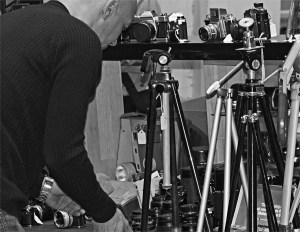
This time I had lots of old manual zoom lenses that I just wanted to get rid of any way I could and I wanted to organize my cameras so people would see them first.

Those zooms lenses were prized and sought after back in the 1970s and early 80s, but now they have lost their allure and aren’t even used as paperweights. Nevertheless, I keep trying to sell them. Actually, “get rid of them” are much better words.

Every show I go through the guessing game of what will sell. Last time anything from the 1970s was popular and digital equipment was totally ignored. However, this show there was little interest in the old manual equipment. It was mostly digital equipment that attending photographers were interested in.

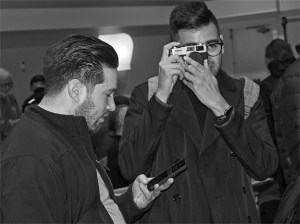
What keeps me coming back year after year? Well the people, of course.

The large, bustling, international, coastal metropolis of Vancouver British offers almost anything one could wish for, and events like the Vancouver Camera Show are always a great excuse to spend time there.

The advertisement says. “ Antique, vintage, digital, and everything else for photography, new and used. Do not miss this opportunity to the fascinating world of photography”.

I agree. What an opportunity to enjoy the exciting and fascinating “world of photography”.

I enjoy the people.

Of course looking at, touching and discussing some precious piece of camera equipment is darn fun, making pictures is stimulating, exciting and a rousing force.

I know we all can hardly wait to look at our latest picture on the computer screen as soon as we depress the shutter and making those pictures is all consuming. But talking with other photographers is exhilarating.

The Vancouver camera show and sale is over for 2018 and I’ll have to wait till the spring of 2019 for the next show. I am more than satisfied knowing that I have already planned a couple more photography excursions for this year.

I found this fun quote by the famous Canadian singer Celine Dion,

“I don’t know if the camera likes me, but I do like the camera”.


The best lens (for the price) to photograph wildlife.    

In my experience, any image can be altered (sometimes dramatically) when one changes lenses.  A subject can be isolated and the perspective in front of, and behind, the subject flattened with a telephoto lens. And landscapes are changed using a wide-angle lens as the field of focus increases the view around the subject.

To add a bit more to my last article, “what is the best lens for scenic photography” I thought I’d continue with a discussion I had with a budding wildlife photographer.

I select my lenses depending on what I want my photograph to say about the subject. And to me, control over my image is important so I ask my self two questions.

What lens will show my subject best? And second, what final result do I want?

This past week I spent some time talking about lenses with a photographer after he read my last article and said, What about the best option for the price to photograph wildlife here in the interior of British Columbia.

I suggested starting with a zoom that can reach 300mm and then purchase a 150-600mm in the future. Each of those lenses has a narrow angle of view and plenty of magnification for wildlife photography.  I thought he might start with a lens that is inexpensive, lightweight, easy to pack around and hand holdable. The smaller multifocal length lenses are generally lightweight and excellent for vacations or just walking around.

He told me he is hesitant to dig into his savings for a super zoom at the present, so I thought moderately priced lenses like the might do for his introduction to long lens photography.

There are interesting lenses like the 300mm and more impressive lenses like a 400mm, 500mm and even the favourite of bird photographers, the 600mm. But for an introduction I thought a zoom might be more versatile until he was ready to make the financial commitment to a large prime or zoom.

When he gets serious and willing to spend a bit more there are big lenses with maximum apertures of f/2.8. Those large high quality lenses give the user lots of light gathering capability and the ability to use higher shutter speeds for reducing camera shake, and help stop fast moving subjects.

To explain that, there is an optimum amount of light that reaches the camera’s sensor for a correct exposure. When the aperture is closed down it lets in less light and one must slow the shutter speed.  With large aperture lenses the shutter opening can be increased and let in a lot more light, therefore one has the ability to increase the shutter speed for less camera shake and still get a proper exposure.

All this also affects “depth of field”.  Depth of field is best defined as “that area around the main subject, in front of and behind, that is acceptably sharp”.  Photographers like to blur non-essential elements in the background by reducing the depth of field, and do that by increasing the size of the lens aperture.  In addition, letting in more light makes shooting in low light conditions less difficult.

And to that photographer’s question:  What lens do I need?  There are lots of other choices that will better help him visually discuss his subject. I don’t think there is one lens that fits all.

Each year manufacturers introduce more lenses with different technology, which improves imaging capabilities, and naturally, increases the price.

One of the favourite sayings in photography is “it’s all about the glass”.

Photographers I know that spend their free time photographing birds tend to stay with long fixed-focal length, or prime lenses. However an opportunist like myself will prefer the versatility of a multifocal length (zoom) lens.

With regards to that soon to be wildlife photographer, I expect to see him with more than one lens choice as he pursues his hobby and selects different lenses that meet his photographer’s vision. I know he will be cautious with his purchases, but ultimately his choice of lens comes down to what he wants viewers to feel and see.

What is the best lens for scenic photography?    

With all its colours fall is creeping into onto the hills in my part of British Columbia photographers are grabbing their cameras, tripods and jackets to wander out to record the beauty.

This past week a young couple visiting my Kamloops shop asked my opinion of the best lens to take along on their next excursion to photograph BC’s inspiring landscapes.

That’s a good question, especially from those new to photography that are spending hard earned money on pricy modern lenses. Personally, I like versatility and convenience, and there are a lot of great zoom lenses available for someone that doesn’t want to carry a heavy bag.

I might suggest lenses like 16-85mm, 24-70mm, or even 18-200mm. Gosh, there are so many lightweight and easy to carry choices. However, instead of recommending a particular lens for scenic photography, I’d rather think about perspective.

My decision after stepping out of the car to photograph some grand vista would be whether I wanted a wide angel or a telephoto. A wide-angle lens has a curved front surface allowing for a wider view. A telephoto has a flatter front surface and a narrower view.

For example, using a 18mm focal length lens when photographing along a fence will make the first post big and the succeeding posts smaller and smaller. Whereas, a 200mm focal length will give a tightly compressed view, and distances between the fencepost in the foreground and those further back won’t seem as distant as with the wider lens.

In a more practical example, when one is photographing a boat on the lake shore with mountains in the background a long focal length like the 200mm will be compress everything in the final image with no subject gaining significance over another. Yet, an18mm lens will make the boat large, and mountains in the background small and distant. Both may be good photographs of that scene, just different interpretations.

The most appropriate lens depends on the perspective and how the photographer wants to interpret the final image, and because the focal length adjusts the visual relationships of the objects within the picture, one must think about the image front to back and how much of the scenic is important as a wide, or a narrow final image.

It comes down to the personal vision of the photographer and what he or she wants to say about the landscape. Famous photographer, Ansel Adams said, “problem solve for the final photograph”.

Like Adams, photographers should be thinking about how the final photograph will be used and how to accomplish that.

If one thinks of a photograph as a series of problems to be solved there will be a smooth transition from initial idea to final print. For example one could begin by thinking about the subject and its environment. What is the background and how will that affect the subject? What is in the foreground that will interfere with that subject?

I don’t believe that there is one lens that can be termed a “scenic or landscape” lens. Any lens might be used as long as it meets the photographer’s vision. That might be to include a wide vista with a wide-angle lens, or on the other hand, a tighter cropped image created with a telephoto lens might be visually more powerful. The choice of lens for scenics comes down to what the photographer wants the viewer to feel and see.


Looking for an eagle to photograph, but I guess any bird will do.   


Last week a Canon 300mm lens was brought into my shop by an owner had decided to downsize her equipment. By “downsize” I mean that she was changing from her big DSLR to a much smaller and lighter mirrorless camera.

I thought I’d entice buyers by showing photographs of birds using that neat telephoto lens with a 1.4 Canon telextender that I also had to sell.

Everyone likes eagles, and I had noticed a few clinging to trees along the river on my drive home. I was sure a couple shots of eagles in the dismal valley smoke would be proof as to the quality of that 300mm.

I don’t have a Canon DSLR so I called my friend Jo McAvany and suggested that I’d drive along the river as she looked for eagles. I could pull over for her to use the 300mm and the 1.4 telex on he cropped frame DSLR. That meant she could shoot from the open window with what would effectively be around a 550mm lens.

Jo showed up at my house around 9AM as I was having my morning coffee. (Jo is one of those strange people that don’t eat breakfast or drink coffee…Ya, I know)

Anyway, as we were going to my car, Jo called to me to wait. I could see her sneaking slowly through my bushy garden.

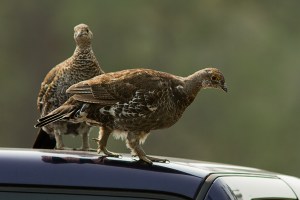
She had spotted five or six grouse sitting on her truck. They must have been drawn to the warm metal on the cool morning. I heard her say, “I wish I had my wide angle so I could get them all in”.

The first shot of the day was not an exotic eagle, but I think that a couple grouse standing on the top of he truck’s cab is pretty darned good.

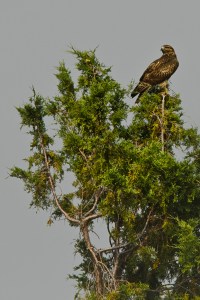
Talking and laughing about the silly grouse, we drove along the winding country road that leads down to the river from my home. I slowed down when I saw a hawk taking off from a fence post beside an open field.

That hawk is always hanging around there. It must watch for mice feeding where the cows dig up the pasture. I have never been able to get a shot of it, but I slowed and Jo got out to photograph it landing on a treetop across the field.

No eagles yet.

We drove down into the gloomy smoke settled motionless in the river valley and then as slowly along the highway as the big transport trucks speeding along would let us.

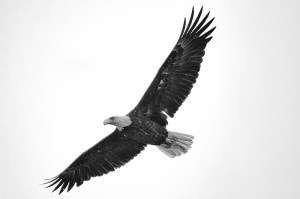
One eagle. Yep, we only saw one blasted eagle on a distant tree. I pulled over onto a train crossing and ignored the “No Trespassing” sign to get close enough for Jo to get a shot. Just as she got out to position herself the big bird took off, I yelled, “shoot” and she did. One out of the three was perfect! I think that’s a good ratio. We left and continued down the highway with out seeing another eagle.

Disappointed, we turned to take the back road to my place hoping to see a few ducks at the pond I had tried unsuccessfully all spring to get photos of geese at.

The reeds along the edge blocked most of the shots. But Jo was determined, and ran across the road to photograph ten or so ducks resting on a log. By the time she got a shot there were only three left.

Well no eagles, and no more birds waiting to be photographed. We did stop for a photograph of a deer. Big deal, there are hundreds of those.

We got back to my house and as I brewed myself another cup of coffee, my never-say-die friend went out to take pictures of my chickens. Chickens.

We didn’t prove that lenses’ quality with pictures of eagles. Well one. Nevertheless, Jo got some neat bird photographs, and we had fun.

Making up a reason, like testing a lens, is a pretty good excuse to get out with your camera if you actually need one. However, I think what it is really about is being enthusiastic about photography and, of course, stimulated and excited by just about anything one points their camera at.

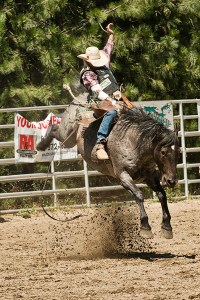
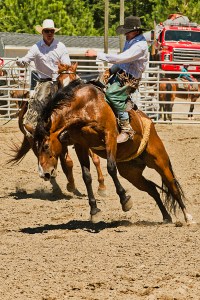
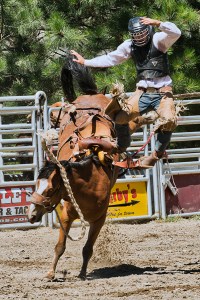
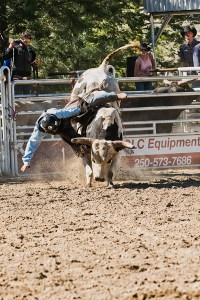
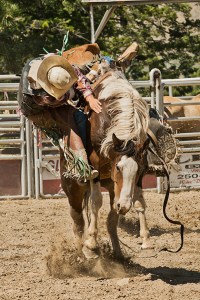
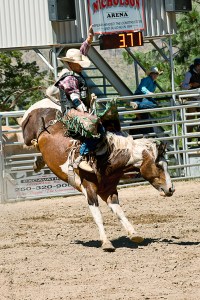
Photographing the 2018 Pritchard Rodeo       


The Pritchard rodeo has come and gone once again.

Gosh, its 2018. I need to dig though my storage of photographs to find out how long I have been attending and photographing that fun filled tournament.

I will say that it is a much smaller event than it was years ago. Maybe it’s a sign of the times. The numbers of participants has declined dramatically and so has the crowd.

There are so many opportunities for people to attend each weekend that spending the day at a hot, dusty rodeo may have become low on many peoples list. Nevertheless, for anyone, especially photographers, that want to see great action, our local rodeo is still a worthwhile way to spend the day.

I arrived an hour early expecting to beat the crowds. However, there were already several photographers ready and waiting ringside for the action to begin.

It’s always so much fun saying hello and trading quips with photographer friends I only get to see once a year. As I looked at the cowboy hatted gaggle of photographers I noticed that every dang one of them were sporting Canon cameras, all to evident by the large white lenses attached to their cameras. So I was ready and waiting for the Canon vs. Nikon jokes that never end.

That said, when the dust and the jokes clear, those that I stopped to talk to were experienced, talented and certainly dedicated rodeo photographers.

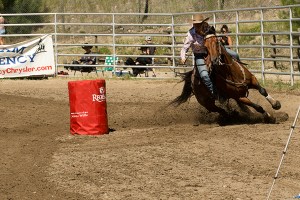
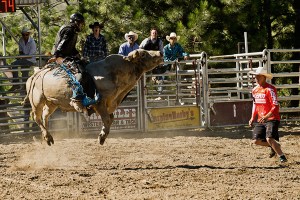
The first bronco-riding event started at 1AM and I comfortably positioned myself along the metal railing. I checked my camera and set my ISO to 400 so I could get a reasonable depth of field, selected Shutter Priority Mode and placed my shutterspeed at 1/500th of a second to stop the action.

My lens of choice for sports is the 70-200mm. There are longer focal lengths available, but my well used 70-200mm is easily hand holdable and quick focusing.

I like photographing any kind of action, and that especially goes for rodeos. Small venues like the one a few minutes drive from my home in Pritchard are photographically accessible and the organizers haven’t put restrictions that limit photographers. And for those new to rodeos, it’s a friendly and easy place to practice and, of course, experiment.

This hometown rodeo makes it easy for local participants to get quality photographs of themselves that can be made into wall prints. All they have to ask some one with a camera as they pass by.

I began this article with the words, “The Pritchard rodeo has come and gone once again”. As always, that fun packed rodeo was, well gosh, fun. I got to talk with other photographers and renew friendships with neighbours that I rarely see. And, of course, had a great time taking pictures.


Photographing a July garden.  


I waited all day for the bright harsh sun to dim. It was just after 8PM I was finally able to walk into my garden with camera and flash to photograph the July flowers.

June was, as usual, pretty wet and full of bloom, but I was waiting for the hot summer to present a change in the plants and flowers so I could continue with my photographs of the garden in all seasons.

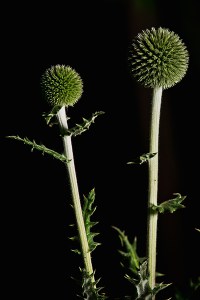
I am not so much impressed by flowers as I am by the shapes of them. To me the colour is only part of what I want to capture with my camera, and I don’t really care if I am photographing in the spring, the summer, and fall or in the cold of winter. Dry, wet, or covered with snow. It’s the shape and plays of light that intregues me.

I don’t like bright, contrasty sunlight. I prefer overcast or, at the least, the lower light at day’s end.

I wandered out with my camera, macro lens attached, tripod, light-stand and flash fitted with an umbrella in the still bright, but certainly not as glaring as mid-day or early afternoon light.

Regular readers know that I always employ a flash. The flash gives me control over direction and intensity of the light. Some photographers my say they prefer “natural light”. I will just say, “naturally, I add light.”

With digital came high-speed sync. High-speed sync gives me the opportunity to increase my shutter’s speed dramatically when using a flash. Even up to 1/8000th of a second. That increase in shutter speed means I can use a wide aperture even in the direct sun.

It also means that I can control flash exposure with the shutter speed instead of the normal way photographers control their flash power, the aperture.

I choose my well-used old 200mm macro. It’s from the time of manual cameras and doesn’t have the option of auto focus. I like it because I can select any point along its focal length when photographing flowers.

My flash was a big 800w battery powered, wireless off-camera strobe. I use it in manual power mode and, of course, High-Speed sync.

I under exposed the ambient light 4 or 5 stops so the proper illumination would come from my flash.

The garden, designed by my wife when she was alive, continually blooms from spring to fall. It colours, shapes change with the season.

All I have to do is choose what interested me all year long.

I have never talked to my neighbours about all the photography I do in my yard, but I wonder what they must think about the bursts of light coming from my bushy property at all times of the year.

My garden photo session ended as the light dropped at about 9:30, but by that time I had wandered all over and photographed shapes of flowers, some alive and some only memories of their glorious and colourful spring blooms.
The hot, drying July heat is now with us and I wonder what will survive till next spring for me to photograph.

First spring visit to photograph Chase Falls  

I have been keeping close to home with my last few posts.
With that in mind I decided a quick fifteen-minute highway drive to a waterfall that feeds a creek running through the small town of Chase would still fill that objective.
I try to visit that local falls for a few pictures every season and this past week was the first time I ventured there since I trudged to those falls through the deep snows last February.

On that excursion to the falls the deep snowy path was untouched except for small footprints made by some lonely racoon. This time there had been lots of people evidenced by discarded hamburger wrappers, plastic cups and the scattered remains of a styrofoam carton.

There was lots of spring water coming over the falls and by the looks of all the huge logs, boulders and the dangerously eroded path, it’s obvious that the early June melt must have produced a torrential flood of water in the small creek.

As with last February, I asked my photographer pal, Jo, to accompany me. She had remembered our last Chase falls adventure and mounted a 24-105mm on her camera while I had my trusty 24-70mm on mine.

Like that cold winter day it was cloudy and flat with just a bit of sun poking through to lighten up the forested creak a bit. Fortunately it was not enough to create shadows, although at times there were highlights on protruding rocks, tree limbs and the churning water.

I chose the day because of the slight overcast. On a bright day one will struggle with overexposure on the white, reflective waterfall. As I wrote in February, I prefer a slight overcast or a foggy day. Bright sun and deep shadows create too much contrast.

With our cameras tightly secured to tripods we set our lenses to apertures that would give us plenty of depth of field. Selected shutterspeeds over two minutes and placed neutral density filters in front of our lenses to reduce the amount of light so our slow shutterspeeds wouldn’t overexpose the scene.

We set and used the camera’s self-timer so as to reduce camera shake and started taking pictures from every angle we could get to. That meant a lot of climbing over the jumble of large stones.

Photographing waterfalls are easy and no special talent or equipment is needed. I use a DSLR, tripod and ND filters. There’s nothing that most serious scenic photographers won’t already have.

We had a great time and I will absolutely be back in another month or two. I like to photograph that little waterfall with my infrared converted camera. July and August will be perfect for that. I’ll also be back in September or October when the volume of water is dramatically decreased. Then winter, and everything starts over again.

Photography is like that to me, and pointing my camera at the same subjects over and over year after year is just plain fun. This past month I have been sticking close to home. However, I plan to go a bit further from home now that summer is here. My goal, no matter where I am or what the subject is, is the enjoyment of making photographs.

There was a 1950’s street photographer named Leon Levinsein that wrote, “I walk, I look, I see, I stop, I photograph.”

I suppose it’s as simple as that.


Infrared photography is a refreshing change                          


I just like to make pictures.

When I retired from pointing my camera for money I was reminded how much fun it is to photograph everything for my personal entertainment.

The past two weeks I have stayed close to home with my cameras and, yes I’ll say it, “focused’ on subjects that are within ten to fifteen minutes drive from my front door.

My subjects aren’t necessarily exotic and there aren’t troves of photographers traveling long distances to set their tripods up in anticipation of those once-in-a-lifetime photographs. But, for me the things I pass along the local roadside are always interesting and sometimes even stimulating.

This spring I was unsuccessful in my attempt at photographing the geese and their goslings, but I easily pointed my camera in a different direction and had a good time photographing turtles instead. I then (driving along the same road) decided to photograph my way to work on a rainy day.

This week staying dedicated to Duck Range Road I dusted off the camera I had converted to infrared some years ago.

My previous trip around the countryside with it was in September of last year, so it was about time to create some images in a different light.

Infrared is always fun, and this time I’ll be able to compare four versions. I’ll have those I made last week that were colour and black & white, and then this weeks colour and black & white from infrared.

The first time I drove and photographed that route was back in 1977. I had just moved and had hooked up the electricity to a 20’ X 9’ trailer on a couple acres of heavily wooded land, I didn’t know anyone and was curious to see what I could find along the dusty dirt road.

I loaded my Pentax Spotmatic II with a roll of Ilford black and white film, jumped in my yellow 1962 International Scout 4X4 that I had recently changed the California licence plates to British Columbia plates, and slowly drove along the bumpy road in search of photographs.

Well, here it is 41 years later. I no longer reside in that cramped trailer, or use film for that matter, and there is no longer need of that 4X4 because the road is paved. However, I still slowly drive along that road in search of photographs.

I don’t need infrared to keep me excited with the photos I make along that road I know so well, but as I wrote in my title, “Infrared is a refreshing change”.

I thought about reusing last week’s quote by Elliott Erwitt. However, I wanted to find words by a photographer that described how I feel about pointing my camera at subjects I have photographed (hundreds of times?) before.

I searched some and found this quote by German photographer Helmut Newton.

“Look, I’m not an intellectual – I just take pictures.”