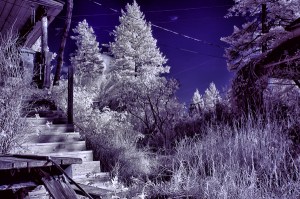
Infrared, A Completely Different Feeling….

Pritchard Station

Riverside

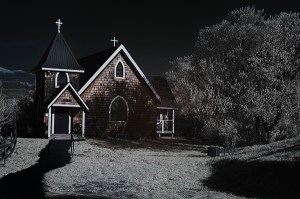
Monty Creek church

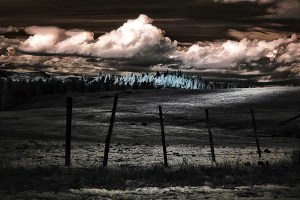
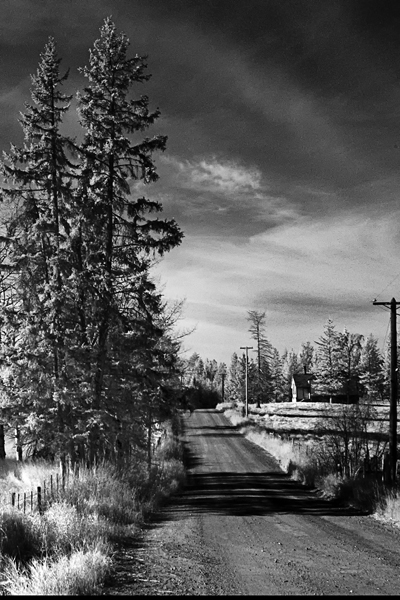
Fence along a dirt road

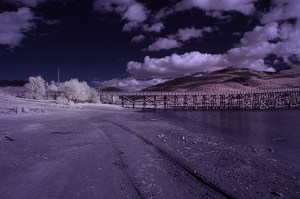
Pritchard Bridge

Back Porch

Infrared, A Completely Different Feeling

In my last article I discussed how easy it is to make creative changes in one’s photography by using a camera converted to infrared. I wrote that photographers have the option to creatively challenge themselves by selecting different lenses, choosing to produce black and white images, electing to use highly manipulative post-production techniques, etc., or any combination just to mention a few. Then I added one more creative tool to the list that I use, a camera converted to only capture images of the world around me in infrared.

Infrared allows a photographer, and gives the viewer, a completely different feeling of a subject. Making an image with a modified camera is an exploration and a discovery that moves a photographer far from the usual. I like the sometimes-surprising tones that I can obtain when I convert the image to black and white. Like any form of photography, or art, it’s all a matter of taste.

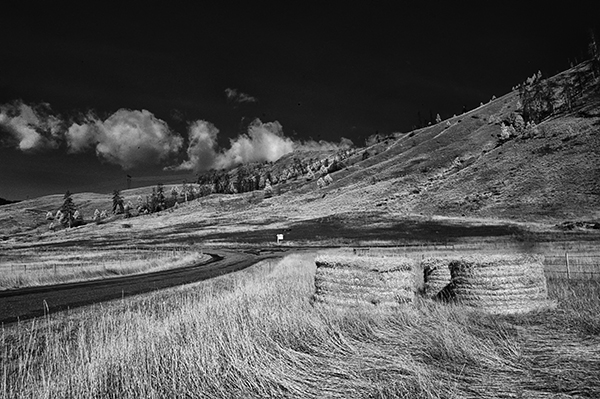
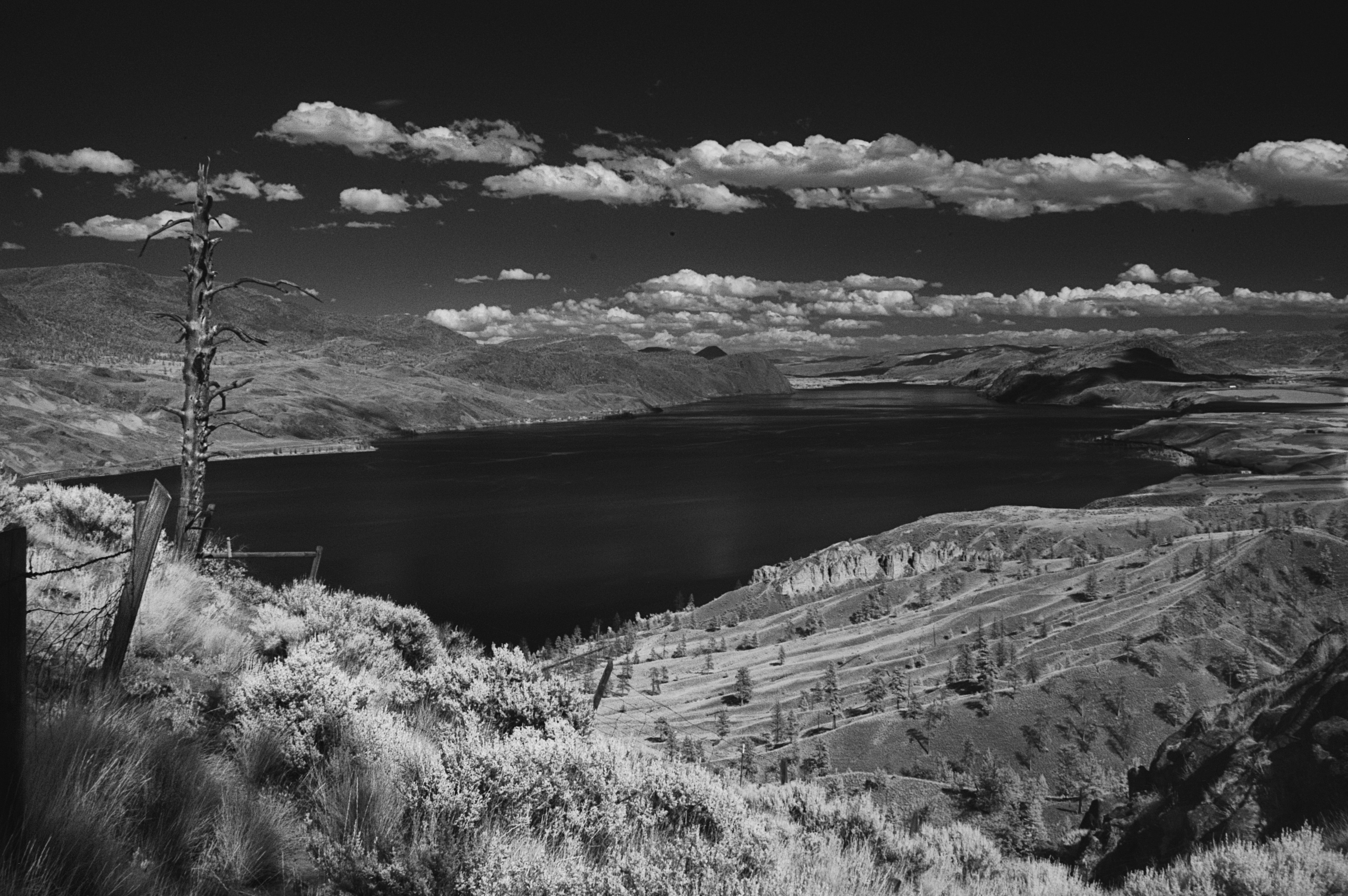
Reflected IR light produces an array of surreal effects, vegetation sometimes appears white or near white. Black surfaces can appear gray or almost white depending on the angle of reflected light, and if the sky (my favourite part of the infrared image) is photographed from the right direction it becomes black. The bluer the sky, the greater the likelihood of an unworldly effect; and white surfaces can glow with an ethereal brightness.

The response I received from readers got me thinking about how much I like shooting infrared. That’s been a long relationship. My first forays with infrared during the 1970’s were began with infrared colour transparency film and then with infrared black and white film.

Now that I have set film aside I am more than content to use a converted digital camera. Besides it’s much easier with digital than the arduous process we had to contend with when we used film. Infrared film had to be loaded and unloaded in complete darkness, then processed in metal tanks that kept the film from getting fogged. We attached a deep red filter to the lens. The deeper the red the better the effect, and because of the dark red filter things become very hard to see. Oh, and the exposures were long if the sun wasn’t bright.

In spite of that infrared photography has had a strong following of creative photographers for as long as I have been involved in photography. And now with the light gathering ability of modern sensors I think that following is stronger than ever.

In an article I wrote about using infrared film titled “Photographing a Different Kind of Light” I said, “There are those who believe a fine art photograph must represent reality, but reality doesn’t necessarily take into account that there are differences between what one sees, what the photographer’s camera produces, and what the photographer was trying to capture.” I think a photograph is only a representation of a particular vision of reality.

Infrared allows us to photograph a world illuminated by infrared light, that part of the colour spectrum we can’t normally see, and produces intriguing, exquisite and sometimes unearthly photographs that can’t be captured in any other way.

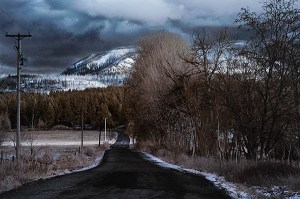
Infrared is a good way for me to change the way I make photographs.

Cattleguard 1

Martin Mountain 1

Fence 1

One of the things I like about the exciting medium of photography is how easy it is to change the tools with which we use to create photographs.

I suppose painters can change their brush to a different size, or use a pallet knife to apply paint on their canvas. They can step away from a canvas surface altogether and apply paint to any number of other materials. I guess photographers aren’t alone in the ability to change tools in pursuit of making an interesting picture.

However, photographers have the option to creatively challenge themselves by selecting different lenses, choosing black and white images, electing to use highly manipulative post-production techniques, etc., or any combination just to mention a few.

For myself, I’ll add one more item to that list: using a camera converted to only capture images of the world around me in infrared.

I have mentioned before the old Nikon that I had converted to infrared many years ago. I enjoyed using that old 6 mega pixel camera, it served me well. I purchased it in 2001 and it was my first DSLR, however, when the time came to move to a camera with a newer and better sensor, instead of selling it off like I have with many cameras since, I opted to have it converted to a dedicated infrared camera.

Infrared cameras like blue cloudless sky, and I think many of my most successful images have been late in the afternoon on sunny days. Nevertheless, this week I decided to wander the roads near my rural home in hope of getting some dramatic skies on the heavily clouded afternoon.

My experience on cloudy days has been that one has to pick subjects carefully. There are some objects that, in spite of a sensor that only sees infrared, look pretty much the same as they would if photographed with a roll of black and white film. Instead of taking on a light coloured, or white glow, trees might go black and meadows look normal.

With that in mind, my goal, as I drove along the snowy dirt roads was to find a camera angle that would do the most for the vegetation and still give me lots of dramatic sky.

Life Pixel, http://www.lifepixel.com/ writes on their website, “Are you tired of shooting the same stuff everyone else is shooting? Then be different & shoot infrared instead!”
I don’t think I care whether I’m shooting the same subjects as photographers, but I sure do like to change how other photographers see the stuff I do shoot, and infrared works perfectly for that.

The infrared camera allows me to change my tools and way of visualizing and capturing the world around me. It makes me think about my photographs in a different and challenging way.
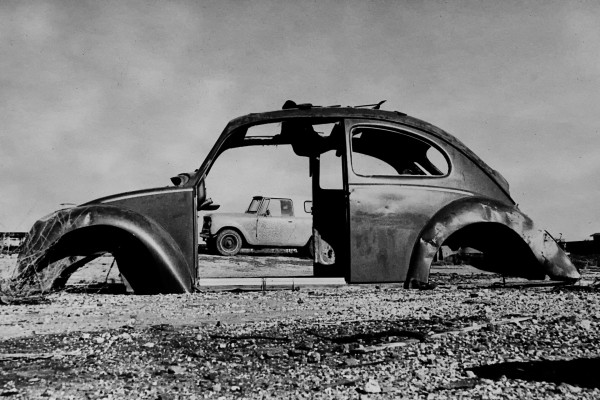
Photographing Eagles along the Highway       

Eagle of all atitudes

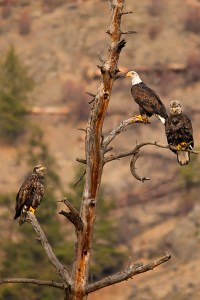
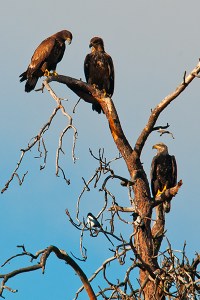
Young eagles

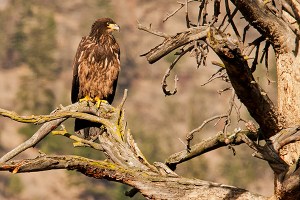
Young eagle

Waiting eagle

In the warm sun

Watching young ones

Fly, there's a photographer

Fly away


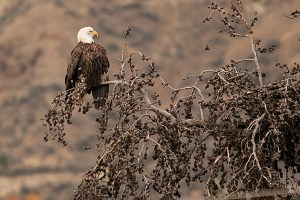
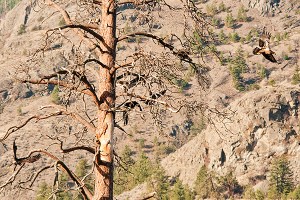
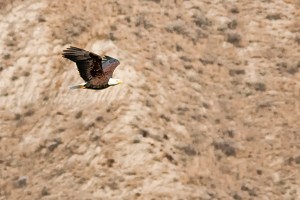
Eagles come in all shapes and sizes, but you will recognize them chiefly by their attitudes.” I don’t think British economist, E. F. Schumacher was really discussing the kind of eagles my wife and I saw perched in trees along the river, but his quote perfectly describes a picture Linda took of three eagles

Winter is on its way and eagles have been moving west along the South Thompson River towards the warmer feeding grounds on the pacific coast.

My commute to Kamloops from my home in Pritchard is on the Trans Canada highway that runs parallel with that wide river and this year it has been fun to see how many eagles we can count before reaching Kamloops.

After counting 35 eagles on our way to town the previous week Linda mentioned that she’d like to try taking some pictures. So after waiting until the sun was high to the south last Wednesday we made the drive to see what we could find.

The traffic on the Trans Canada is constant and fast moving with lots of big, transport trucks. But with some preparation it isn’t that big of a deal to quickly pull a safe distance off the road to photograph eagles in the tall, dead trees along the river in which the eagles like to perch to watch for fish. In one tree alone we counted fourteen eagles, some mature but mostly adolescent.

My job is to drive and my wife’s is to photograph eagles. I pull over, stop and turn off the car to reduce vibration caused by the engine, and Linda rolls the window down, plops a beanbag on the frame and positions her heavy 150-500mm Sigma lens out the window and starts shooting.

It would have been nicer if we had a way to get closer. However, even if one got out of the car, struggled through a deep ditch, crossed the railroad tracks and climbed over farmers’ wire fences, I am sure the skittish eagles would just fly off anyway.
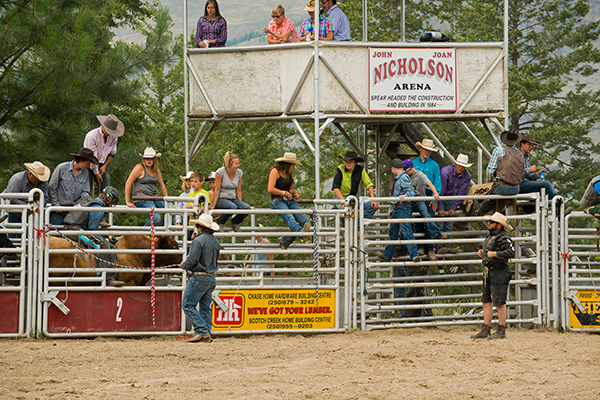
Linda had a pretty easy time of photographing those eagles from the car anyway. She had selected Shutter Priority on her camera with a shutter speed of 1/650th of a second and 650 ISO. Yes, there were some shots that didn’t turn out, the car would shake when big trucks passed by and every so often clouds would block the sun. But she got some great keepers.
As exciting as it is for those of us here in the BC Interior to see 40 or 50 eagles in the trees along the river, in a few days lots of those big birds will be making their way down the river to join many, many more eagles congregating on the Harrison River to feast on spawning salmon.

The Fraser Valley Bald Eagle Festival began 20 years ago and this year it will begin on November 28th at Harrison, British Columbia. This is an annual event with the migration of thousands of Bald Eagles returning to the Harrison Mills area to take advantage of the spawning salmon.

For photographers the place to be is where the Harrison River widens with shallow gravel bars for the returning salmon to spawn. Organizers say it is possible to see up to 10,000 Bald Eagles feasting on salmon.

Road Trip to Penticton  

SS Sicamous

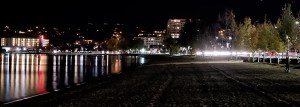
Walking the beach at night

SS Sicamous Penticton

StearnWheeler

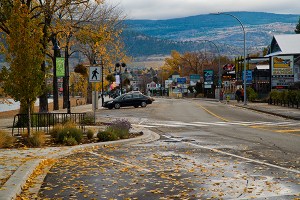
Penticton Waterfront


The month of November has began and my wife, Linda, and I thought it might be a good idea to take a drive south before the cold winds blow the last leaves of fall from the trees. Sometimes it’s just nice to go for a drive. So we decided on Penticton; a scenic three-hour drive from our home for a fun, fall, overnight getaway. Any pictures we could get would be a bonus.
During the summer the city of Penticton, situated at the southern tip of British Columbia’s Okanagan Lake, is a thriving tourist destination. And I didn’t doubt a friend’s statement when he suggested that Penticton, a city of 30,000 plus population easily doubles in the summer. However, everything changes in the lull between summer and winter. When I called a motel the clerk told me, “You don’t need to bother with a reservation as there are plenty of rooms.”

I like cities at night. The lights sparkle and beckon to those of us that have our camera and tripod ready. Arriving after dark and settling in to our room it was no time at all before we had bundled up against the cold lake breeze and rushed out into the dark to wander along the wide sandy beach.

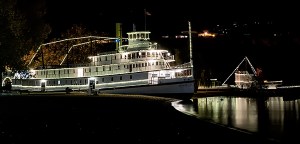
It’s easy to get sharp, colourful night pictures. I was out to photograph the SS Sicamous, said to be the largest surviving sternwheeler in British Columbia. The SS Sicamous, now a museum, prowled Okanagan Lake until 1936, servicing the lakeside fruit growing communities of Penticton, Kelowna and Vernon.

The big stern wheeler had strings of lights that illuminated and outlined it bow to stern, and the lights were perfect for some night shots. As I mentioned, it is so easy. I selected Aperture priority, and chose a small aperture that would give me lots of depth of field, and with the camera securely mounted on my tripod, set it on self-timer to reduce camera shake, and released the shutter.

Then after four or five shots I turned around and shot down the beach toward the brightly lit, big casino hotel in the distance and walked back to our room to stow our gear so that Linda and I could go out for dinner. Even in the off-season the charming Italian style restaurant was filled with happy patrons.

In the morning I returned to the now sun-lit beach to photograph the SS Sicamous again.

I think fall is a great time to go for a two-day drive. We called it our end-of-summer, mini vacation. Most people are more interested in getting ready for winter, which leaves plenty of accommodation available and reasonable prices.

I expect Penticton will fill up again when the snows arrives, and vacationers that spent the summer boating, wind-surfing, playing golf, hiking and cycling will return for downhill skiing, snowboarding and cross-country skiing adventures in the winter.

For my wife and I the cool autumn stay in that lakeside city was perfect. And I couldn’t ask for a nicer time to take pictures.

Bridge Lake Workshop Wireless Off-Camera Flash              

OffCamera Workshop 1

OffCamera Workshop 2

OffCamera Workshop3

OffCamera Workshop4

OffCamera Workshop5

OffCamera Workshop7

OffCamera Workshop8

OffCamera Workshop9

OffCamera Workshop10

OffCamera Workshop11


Last Sunday saw me making the scenic two-hour drive north to join the Bridge Lake Photography Group. I have been following that creative and talented group of photographers, (www.bridgelakephotogroup.com) since a long time friend, Derek Chambers, got in touch with me about a year ago. On Sunday I led a full day workshop for them about using off-camera speedlights indoors and out-of-doors.

There is so much that I want to tell photographers when they first attempt to use flash as a tool to create better photos instead of the flash being an uncontrollable device photographers perch on the top of the camera when it’s too dark in a room to take a photo.

In my opening presentation I had to hold myself back as I sometimes realize I am talking too fast. But I get excited and I really want to move from lecturing in front of students, and go to the studio setup where the learners, not me, are center stage. That’s where my fun, and, assuredly, the participants’ fun begin.

I always enjoy the enlivened interaction that occurs when a student of flash photography takes that first shot with one of the flash set ups. Usually, no one ever wants to be first. Everything is strange. The flash that usually is attached to their camera is now attached to a softbox or an umbrella. I always have to prod and coax the students to begin, but I can hardly wait for the first “oohs and aahs” that happen when they see the results of their first photos.

My job is to present information on the subject, and keep things going. I don’t like to be a demonstrator on stage and rarely pick up a camera during the workshops I lead. That is left to the participants, and watching them learn is the fun part for me. After everyone crowds around that first volunteer’s camera and sees the picture it is all I can do to hold them back.

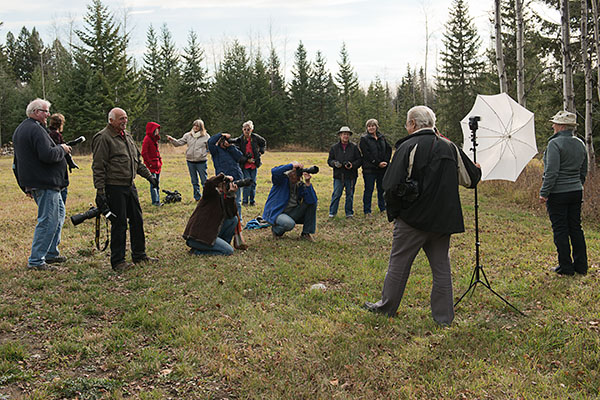
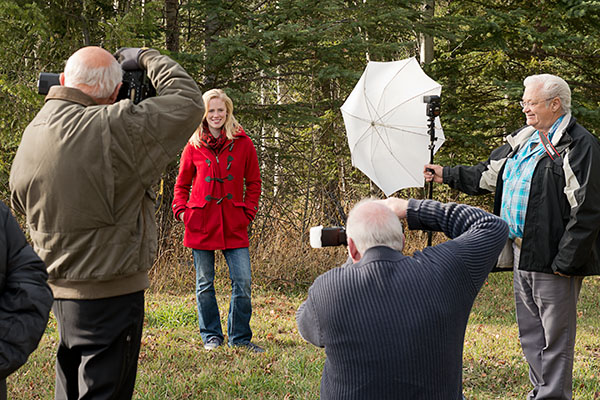
Our ever-patient model was overwhelmed as she tried to pose for everyone at the same time. She pleaded, “Where do I look?”   I laughed and loudly said to that excited scrum of photographers, “If you want her to look at you yell, ’Me! Me! Me!’”

We spent the morning shooting in the inside studio. For that session I had the flashes set to manual mode so their output would always have the same power. That is the easiest way. If more light is wanted on the subject move the flash forward. Less? Move the flash away.

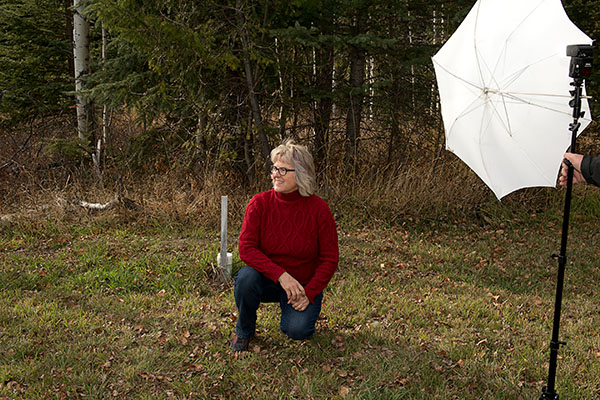
After lunch we moved outside and I set up one flash with a shoot-through umbrella, however, this time the flash was set to TTL mode. When using flash in an indoor studio one synchronizes the camera’s shutterspeed to the studio flash, and uses the aperture to determine the exposure of the light reflecting off a subject. Progressing, however, to an out-of-doors situation with TTL a photographer must balance the natural, ambient light with the off-camera flash; and using flash effectively is more about creating and controlling shadows than about filling them.

We walked out into the bright day and our model had barely reached a location in the meadow before 15 excited photographers got down to business. By then they weren’t at all shy about getting shoulder to shoulder in the process of experimenting, exploring, and learning about outdoor lighting.

I just received an email from Chambers saying, “You’ve definitely added a whole new dimension to our photographic adventures. Thanks a lot.” Gosh, a whole new dimension to their photographic adventures. That is one of the best “thank you’s” I have ever received.

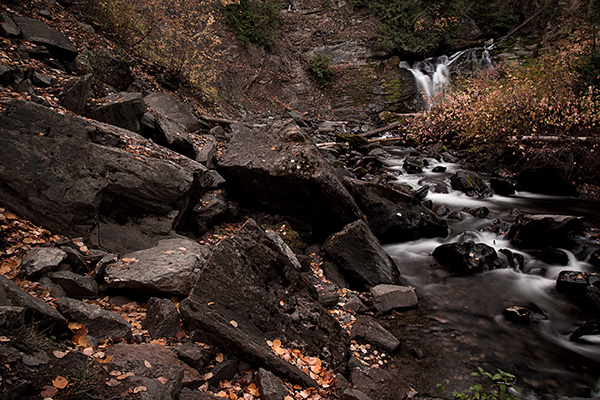
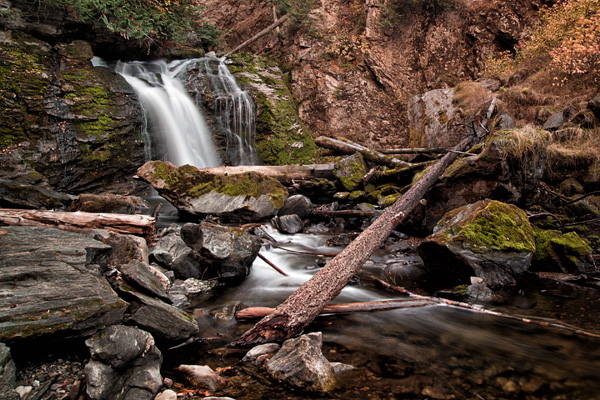
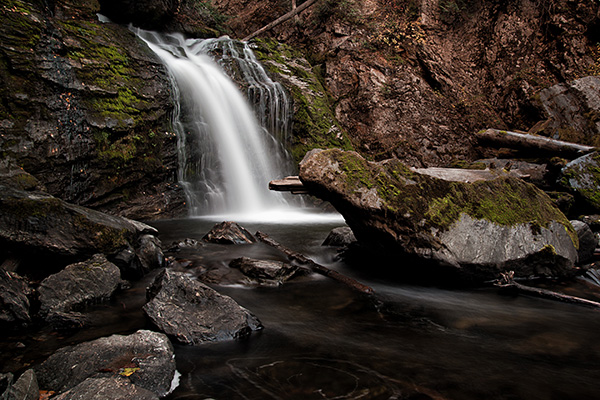
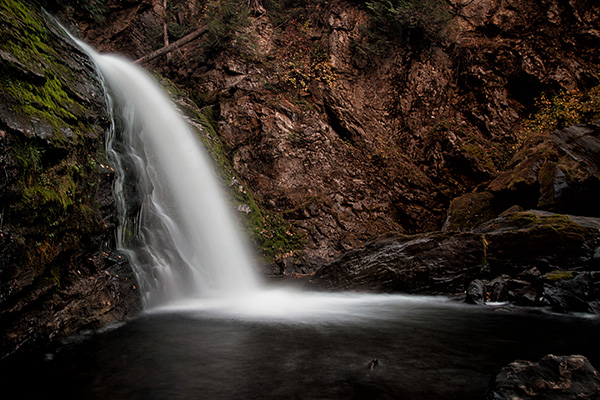
Photographing Chase Creek Falls  

Chase Falls 1

Chase Falls 2

Chase Falls 3

Chase Falls 4

The third season of the year is here, and it is my favourite season of the year for photography. Fall or autumn, it doesn’t matter which word is used, is so darn colourful here in British Columbia; and I really enjoy the cooler air, a welcome relief from the heat of summer.

This week I drove the short distance down the road to Chase Creek Falls. I was in April just after the spring runoff when the high water began to subside. April is the second best time to go there, October the best. October has low water that makes scrambling along the colourful creek side easy, and lets photographers position their tripod and cameras close to the falls without getting wet.

In my April article I wrote that I have been photographing Chase Creek Falls since sometime in 1976. I have used 35mm, medium format, large format, film, and digital to photograph those falls every season of the year in every type of weather using black and white, colour, and even polaroid film.

I have gotten wet, walked away muddy after sliding down the steep bank, and bumped into the large river rocks a bit to hard. I’ve lost lens caps, a lens hood and even a polarizing filter on my visits. I have used the Chase Creek Falls once as a background for a large family reunion and another time for wedding portraits.

Photographing waterfalls is very easy and almost as relaxing as wandering around a garden. Modern digital cameras have improved the ease of taking photos by removing the requirement of much of the technical information that photographers once needed to know.

The equipment doesn’t need to be expensive or special. Select your favourite DSLR, a lens that has a wide enough focal length to see the falls, a tripod, and a neutral density filter. When I remember, I also like to use a cable release; but if forgotten the cable release isn’t a big deal, just use the camera’s self-timer instead.

Setting up the camera to get that soft looking water coming over the falls is very easy. Just choose a low ISO and a small aperture. The low ISO allows a slow shutter speed, and the small aperture gives lots of depth of field.

An ND, or neutral density, filter reduces the light going through the lens to the sensor and is the most trouble free filter for making long exposures. I prefer the square or rectangle ones that I can hold in front of my lens. I don’t use the fancy filter holder as that just gets in my way when I want to add additional ND filters to reduce the light.

I prefer shutter speeds of three or more seconds, and adjust the ISO, aperture and ND filters to accommodate that. Next, point the camera and start making pictures decreasing the shutter speed and checking the LCD as one goes along. It is all so easy.

This is a perfect time of year (here in British Columbia anyway) to spend some time photographing local waterfalls. They don’t have to be large and exotic, just have a bit of water going over them. And like me, after a dozen or so shots, put the camera back in it’s bag and sit quietly in the sand and lean back on a big smooth river rock so you can enjoy the sound of the water. Life is good.


What Influenced My Photography of Landscapes?  


Along the back road 2

Bales along the road 2

River view

Lake view

Scout

Memories of roadside photography.


My interest in photography began in the early 1970s. I had grown up with cameras, but until that time they were no more than a simple boxy device with which to document family and friends. When I look at my tattered old albums packed with fading pictures taped to construction paper pages, I see lots of poorly composed and poorly exposed images, partly due to the inadequate technology of the day and my ignorance in using it.

When I did decide the medium of photography was worth using for more than documenting friends and family my first progression was into arty, creative images. I have mentioned before that the great photographer, Man Ray, was my first inspiration, but now thinking about my photography of those days I am amused at my youth, and contemplate how far I have progressed and of course how far the technology has come.

I think my influence with the photography of landscapes and other subjects in nature may have begun with the early advertisements by the American Automobile Association. That organization was the best place to get maps for road trips in North America. They sent their employees out, with cameras and mapping instruments, across the continent finding the best and most scenic routes. I remember seeing pictures of big, four-door International vehicles with people poised on platforms on top with camera and binoculars in hand on a dirt road in the middle of “no-where North America”. It all looked very exciting.

Then I was introduced to the writings and photography of Ansel Adams, and saw pictures of him standing on a platform on top of a vehicle very much like those used by the American Automobile Association with his large format camera making wonderful photographs any scenic photographer would admire. So, I saved my dollars, sold my jaunty little MG Midget, that was so easy to get around in on the streets of Los Angeles, and bought a bright yellow International Scout 4×4. Underpowered, poor turning capability, uncomfortable on long trips with back seats that were only accessed by climbing over a metal barrier behind the front seats; it was perfect in my young mind and meant that I, like Ansel Adams and the folks from the AAA, could travel the back roads in a cool looking vehicle with my camera gleefully capturing the natural world on film.

Years have passed and technology has changed and so have I. There are still lots of back roads to explore and photograph, but the days of climbing on my car roof are long gone. The American Automobile Association no longer explores the country and today I check maps on my iPhone. I don’t need a large 8×10 view camera like Ansel Adams used with the accompanying long hours working in a chemical darkroom to make good enlargements and certainly don’t want to drive around in that uncomfortable, gas guzzling International anymore.

I thought about all this as I was heading towards the city of Kelowna last week. My wife and I left early so we could stop for some pictures and still be there for a 5PM appointment. My car of choice is now a Honda Accord. Comfortable, fuel-efficient and if I drop the back seat down I can carry lots of equipment. As I drove I mentally made photographic compositions of the countryside and thought about how nice the day was for photography.

I reminisced about the many times I have made this same drive over the years, and the different photographic equipment I have used to photograph many of the subjects and scenes I was driving past, and the different vehicles I have used, and we talked about how easy it is to make pictures today. As the cameras get better and better, and equipment like tripods and lenses get lighter, and our vehicles are more fuel efficient, the life of roadside photographers like me is just great.


The Annual Pritchard Rodeo       

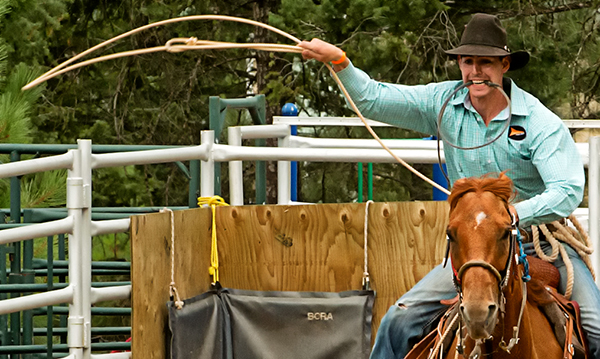
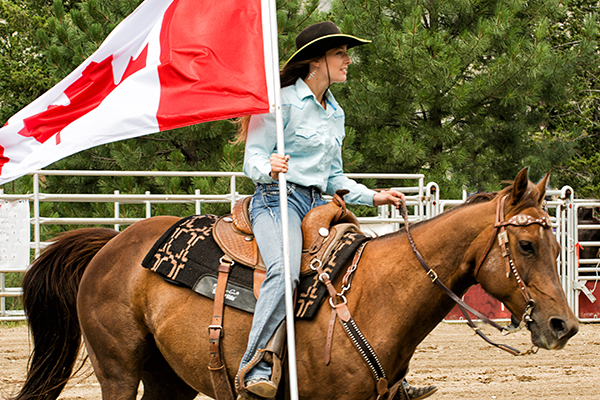
Pritchard Rodeo

Canadian Flag

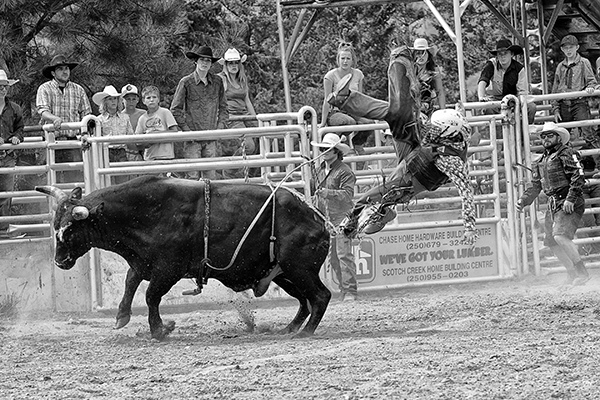
Bull wins

Cow-1 Cowgirl-0 Dustin

Lost the seat

Roper  Barrel racer

Barrel racer 2

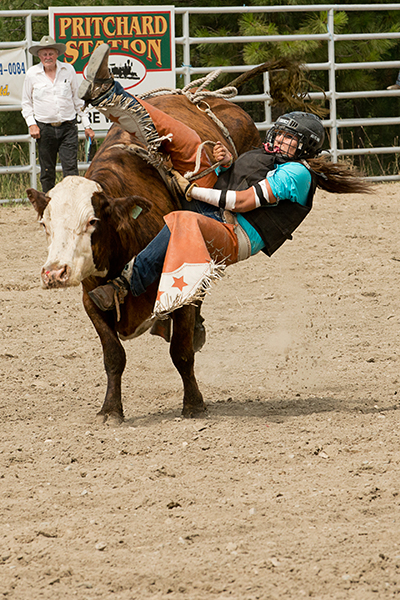
Wild bronc

Bucked off Bareback ride

Hard ride

Cooling off ringside

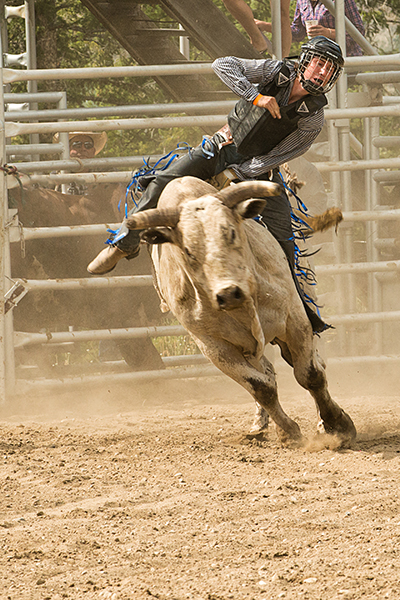
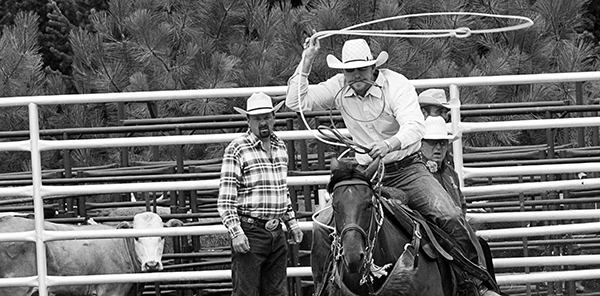
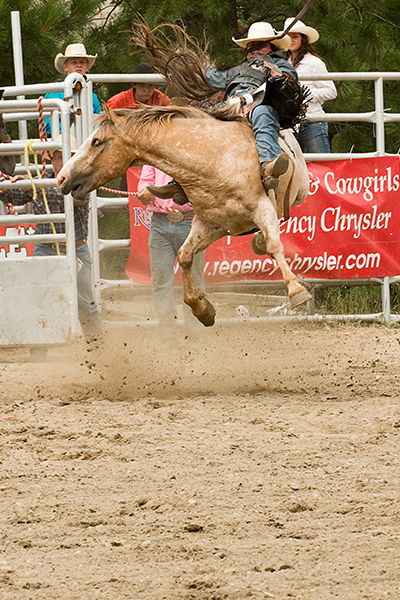
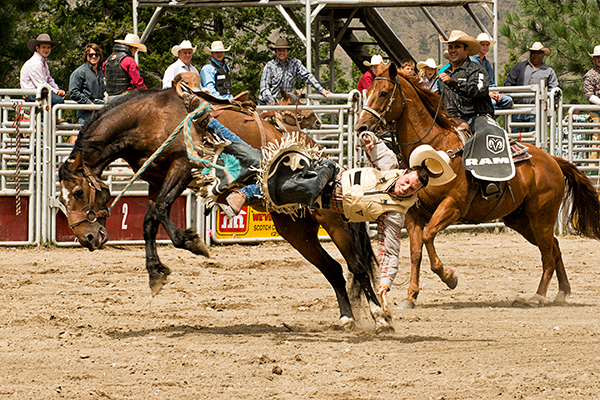
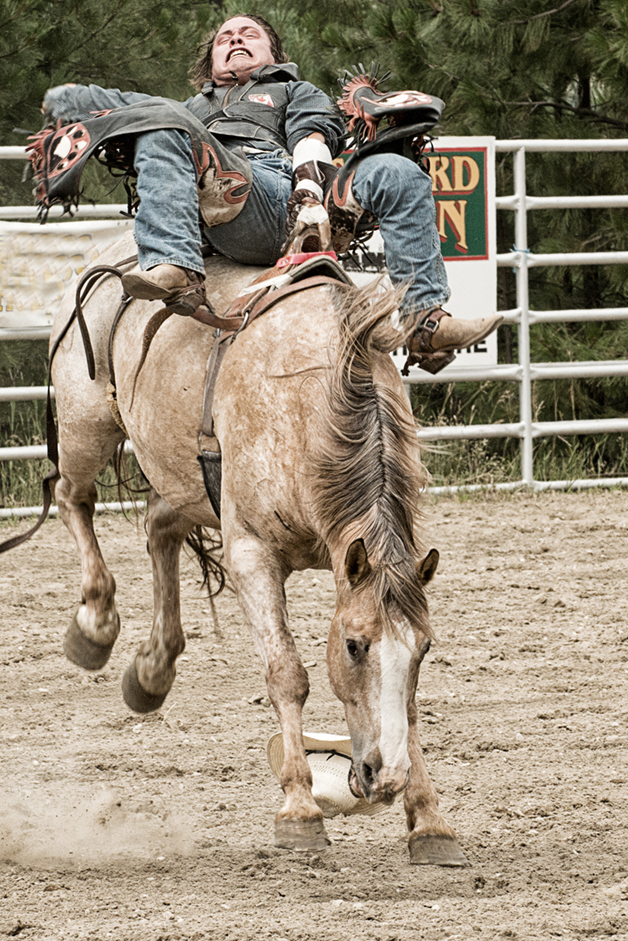
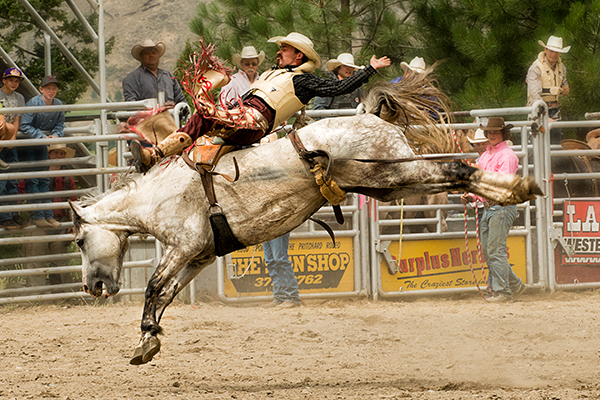
As usual July has been a busy month, and, along with everything else, this past weekend had been one of my most looked forward to events to photograph, the annual Pritchard Rodeo.

I know I write about it every year, but I like talking about subjects that I take pictures of and there is nothing like fast paced subjects to keep photographers on their toes and rodeos, easy as they are to photograph, are always worth taking a camera.

The Pritchard Rodeo grounds are perfect for photographers. It has an arena that is enclosed with a strong metal fence that’s safe to stand close to and doesn’t restrict the photographer’s view. Of course, one has to be careful when excited horses are getting ready for competitions like the Barrel Race, but it is a rodeo and one must remember that the animals, like any other athletes, are focusing on what they are about to do, and not some silly person with a camera.

When photographing fast, volatile subjects like those at a rodeo I prefer shutter priority mode where I select the shutter, and the camera chooses the aperture. I like shutterspeeds of 1/500th or more if possible. One also must be aware of depth-of-field, and I balance my shutterspeed and aperture taking that into consideration.

All I do is follow the action, choose a position that allows everything to move towards me, and let the camera’s computer handle the rest. Yes, it’s all so easy for photographers, no matter what their skill, to get images worth framing.

I remember a friend telling me last year why he liked attending the Pritchard Rodeo. He said, “I like the wild location. Look at the hills, and trees, and all the open space. Everyone is so friendly, they say hello even though they don’t know me, and there is even a beer garden with people socializing, but no one is getting drunk, being loud, or causing trouble.”

My favorite activities to photograph are the bronc riding, and bull riding events. The action is explosive and I think the participants (horses, bulls, and riders) pitted against each other are well matched and one can never be sure who will win. I am of the opinion that both animals and humans know it is a game.

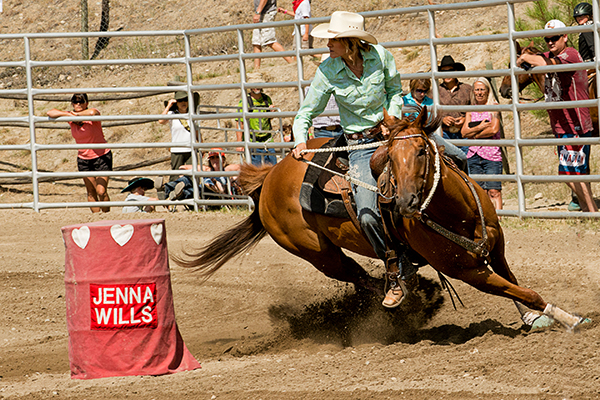
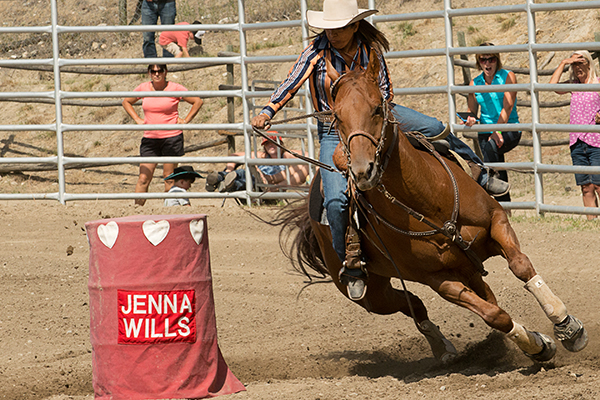
I also enjoy photographing barrel racing. What a great subject to photograph. Trying to capture what seems to me like a gravity-defying moment as horse and rider, fast and furiously, circle the barrel is exciting.

I am pretty lucky to have a local annual rodeo about five minutes from my home. I can go there to have fun, socialize with friends, and still get as many shots (that are keepers) of the rodeo as I can.

I said this last year and I will say it again. There should be a note saying,

“No animals, cowboys, cowgirls, or photographers were hurt during the process of having a great time.”

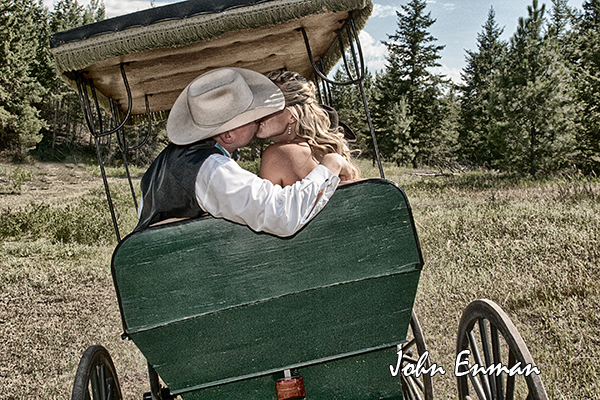
A Country Wedding.


Wedding

Wedding ride 2

Guest wagon

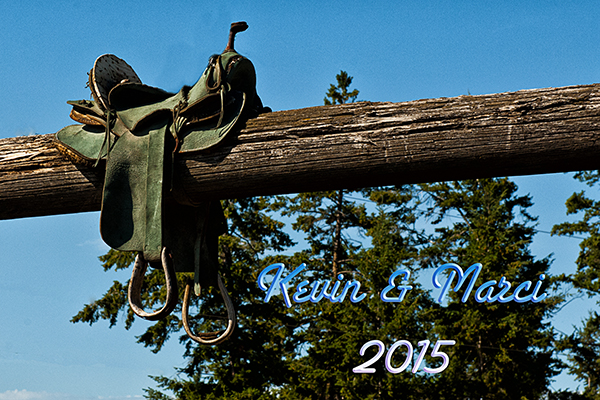
Kevin & Marci

Me too

Marcie's wedding

Country dancing

Just Married


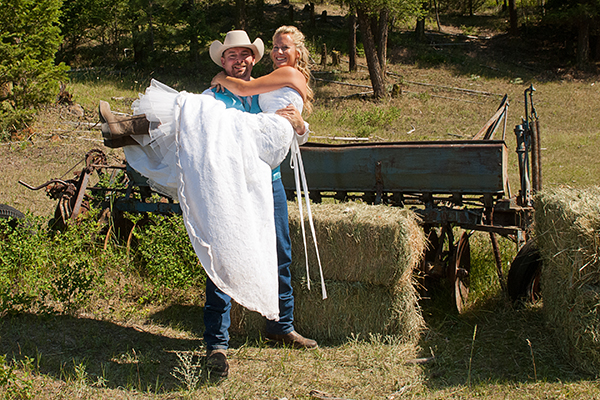
My friend and neighbor, Kevin, called to tell me that he was getting married and asked if I would photograph his wedding.

Although I am pretty much retired, without hesitation I said yes, only asking the date. He continued, “It will be western casual and at our place”. With that I thought, “Well, of course,” and hanging up the phone I turned to my wife and said, “Kevin and Marci are getting married at the end of the month, I hope it’s an overcast day.”

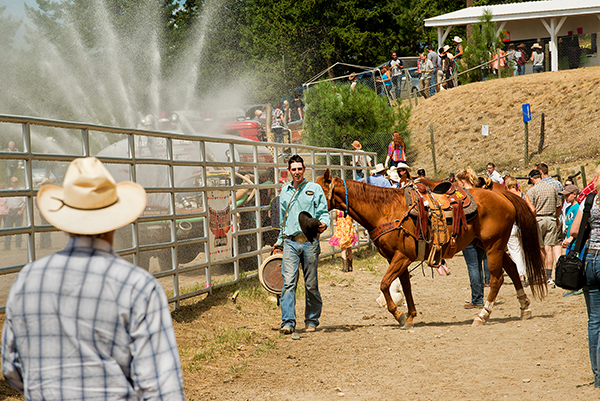
Who knew British Columbia would be having such a record breaking, rainless, hot summer that steadily got hotter and hotter. So by the time Kevin and Marci greeted their guests who waited in large shade tents under a cloudless blue sky the temperature had reached 40 degrees Celsius.

I kicked up dust as I walked into the large coral glad of two things. The first was that my wife made me put on sunscreen and the second, was that high-speed flash sync had been invented.

I remembered the limiting days of film and the one-power-fits-all flashes with which we struggled. On a sunny day we’d load our camera with 50 ISO film, shoot at a high-sync of 1/60th or 1/80th per second depending on the camera and hope the flash didn’t blast the detail out of the wedding dress. On torturous bright days, like the one I was preparing to photograph my friends under, I’d use my favourite flash diffuser, a functional white handkerchief that served to reduce the flash and, when needed, wipe off the salty sweat that made my eyes sting.

I made my way to the plywood dance floor and took a of couple test shots using the DJ as my model. My goal was to slightly underexpose the background. I really don’t like those pictures of people standing in an overexposed environment.

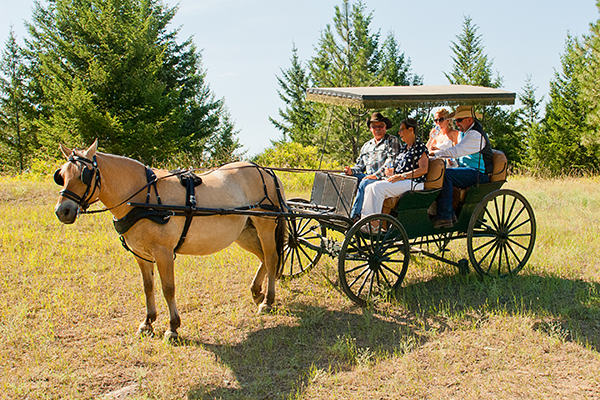
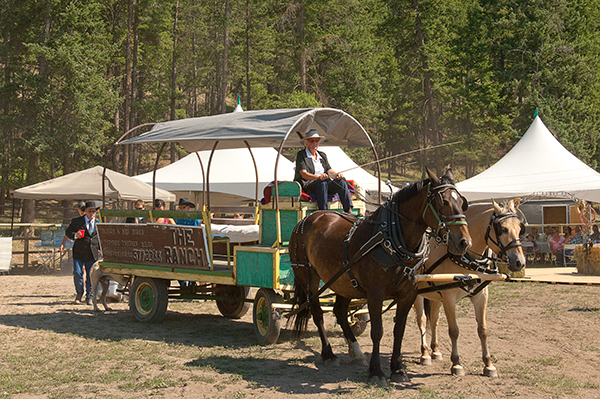
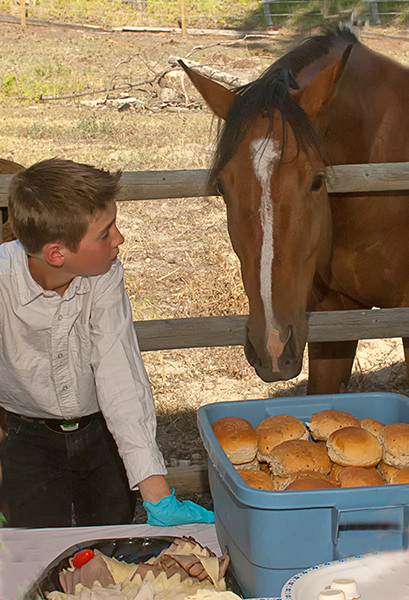
After the ceremony we joined the newly married couple in horse drawn wagons brought over by neighbours, Ellen and Steve from The Ranch, and traveled through the trees to another location where family and guests patiently stood waiting for me to take group pictures. Then we all, bottled water in hand, loaded back in the wagons for the waiting wedding feast.

I wrote that Kevin told me the wedding would be western casual. I don’t know if the ties, vests, and dark, western-cut jacket that the groom, best man, and father of the bride wore were casual attire, but the hats and boots were western, and I will mention that most of the guests were wearing cowboy boots and hats, and boot-cut jeans were the norm.

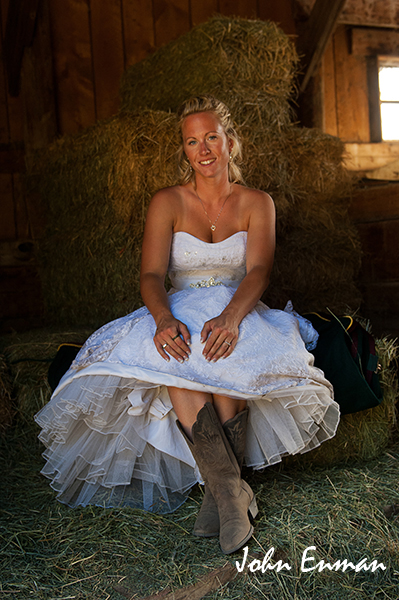
As everyone enjoyed a meal under the shade of the large tents I snuck away to set up a portrait studio in the barn. My lighting was two speedlight flashes positioned behind a six-foot diameter shoot-through umbrella. I like the wide, undirected, soft light a shoot through umbrella delivers, and a large shoot-through like the one I employed in the narrow walkway between horse stalls in the barn gave a flattering light that allowed me to quickly and easily pose the bride and groom.

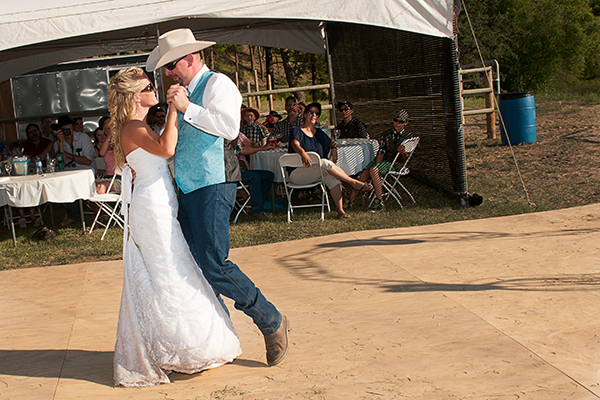
Then it was back to the dance floor for the first dance. And I worked my way around capturing photo after photo of Kevin and Marci as they showed everyone how country music should be danced to, then I stepped back so as not to block the many pictures being made by guests holding their cell phones at arm’s length for that perfect shot that I am sure was quickly posted on some social media site.

In spite of the heat I had a great time. And I am certain everyone enjoyed the day. I left before sun down, but later Marci told me things were hopping till around 2AM.

Since then I have seen more than one over-exposed, wedding pictures from at other events displayed with misplaced pride, and read photographer’s complaints about shooting under the bright sun, and working in the heat. My advice for them is to under expose, to use a flash, and not to forget sunscreen.


Open House Versatile Photography Studio

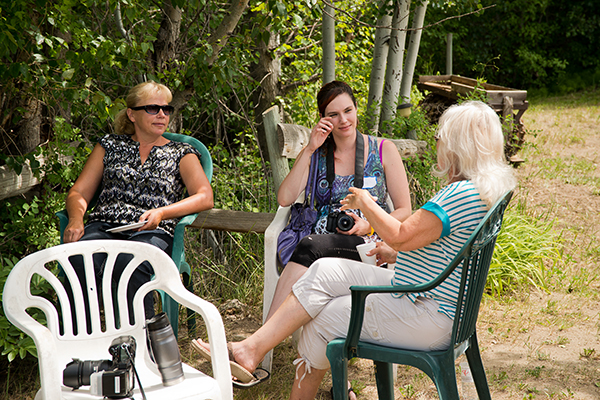
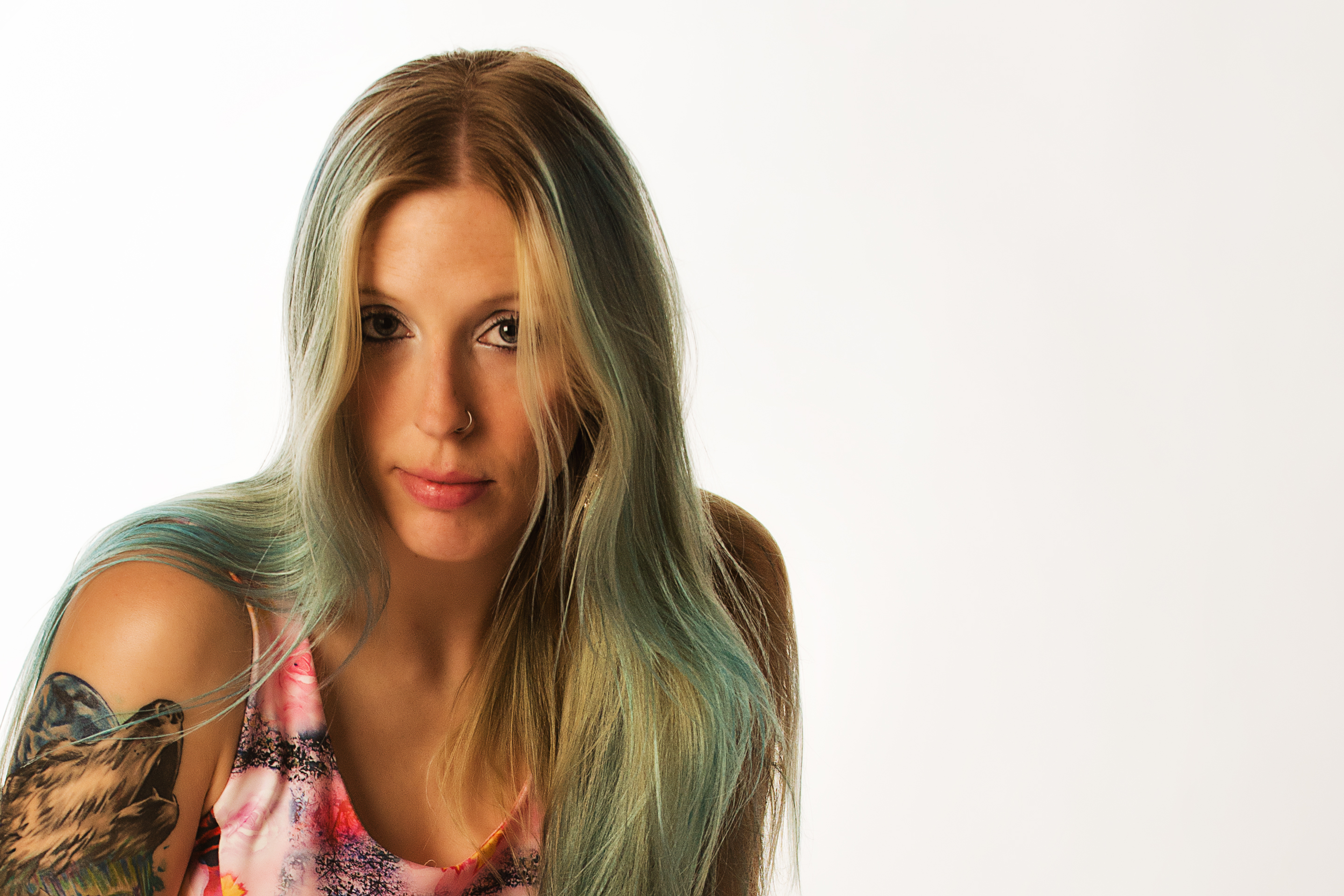
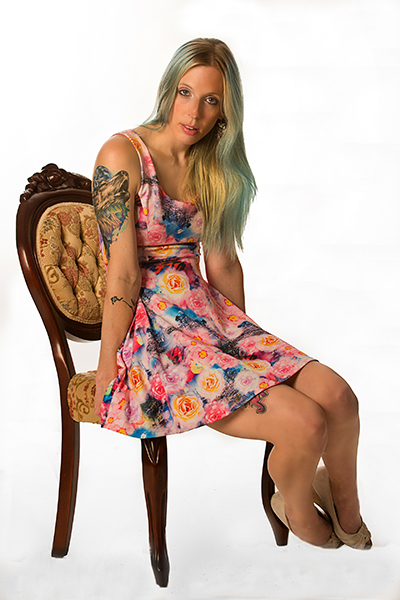
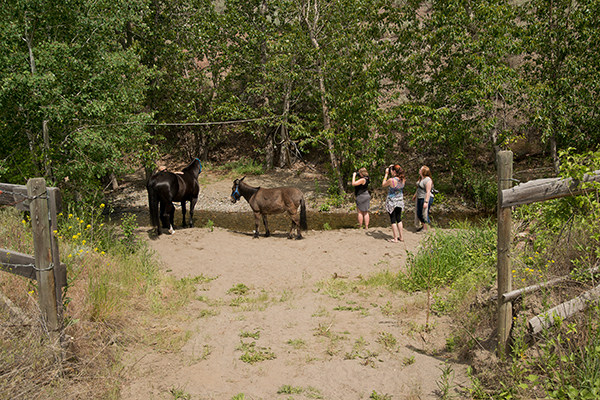
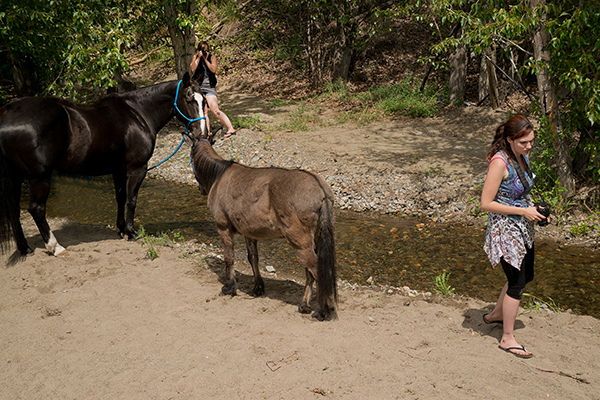
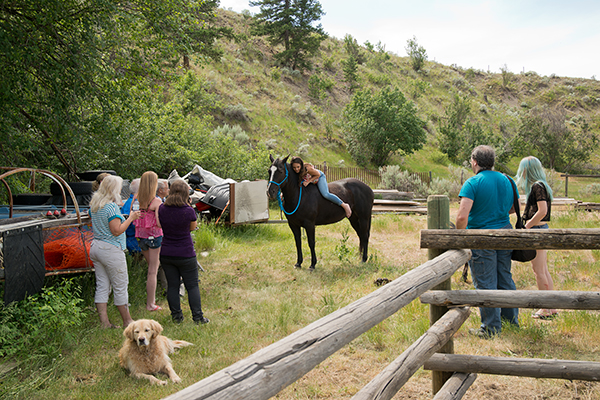
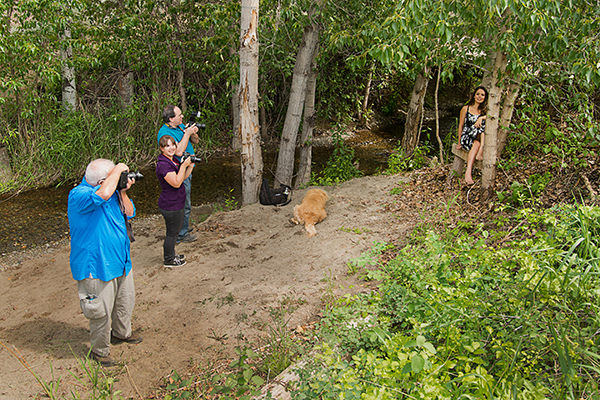
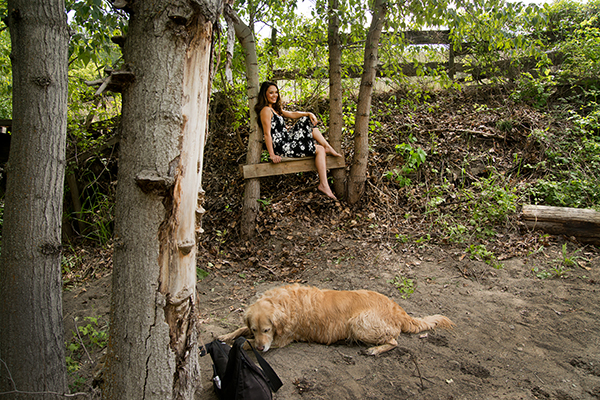
Guests arriveGuests 2Guests 3Guests 4AshleyAshley in Studio Horses at the creekHorse portraitsMonique on the horseThree with MoniqueMonique and dogOpen StudioFun on the HarleyAshley on HarleyMoniqueShy-lynRoasting hotdogs

I was invited to attend a photographer’s open house at a local studio last Sunday. The owners, Dave and Cynthia Monsees, hosted the event and invited photographers of all levels to attend. On their Facebook page they had posted “Versatile Studio took delivery of some new equipment this week. Two new 300-watt strobes arrived along with a 60-inch Octobox that is going to be interesting to use. We now have a 480-watt battery powered strobe complete with a 24-inch soft box for use anywhere on the site. More changes are happening outside of the Studio as we continue to grow.”

Versatile Studio is probably one of the best-equipped rental studios in the British Columbia interior, with a wide array of lighting equipment for use in the studio or on the studio grounds. As well as the indoor location, Versatile Studio facilities include a large open-sided barn equipped with backdrop and electricity for lighting equipment, a mowed meadow complete with an antique buggy and old farm implements, an old Cadillac resting in a field, and the real favourite, a tree lined stream with a sandy beach.

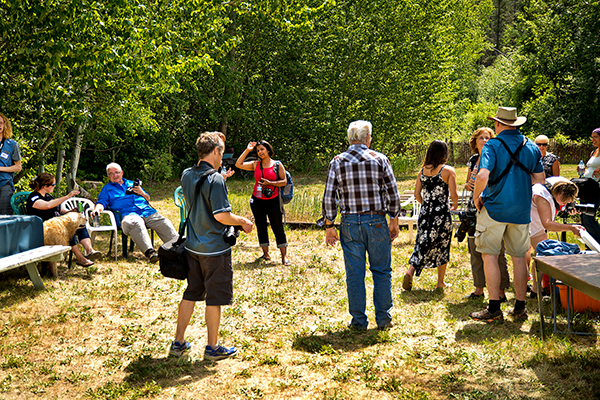
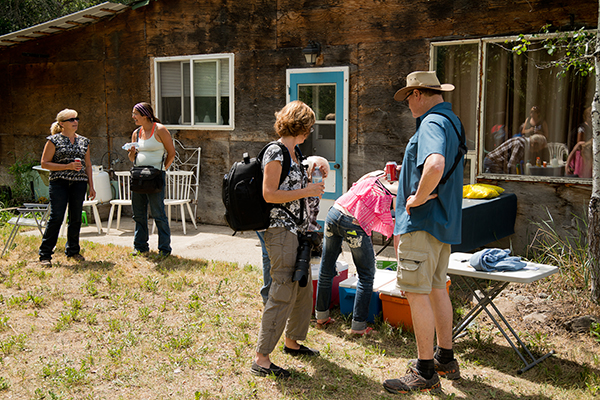
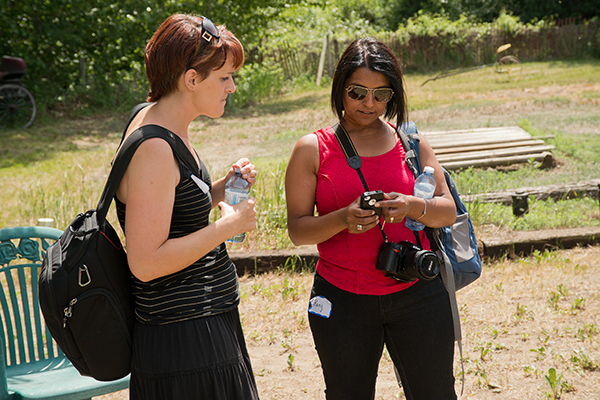
I joined several others to include a local photographer’s group called Coffee n’ Click, several members of the Kamloops Photo Arts Club, and other serious photographers, and I was pleased when Dave told me that twenty-five signed his guestbook. I wish I had thought to get a group photo.

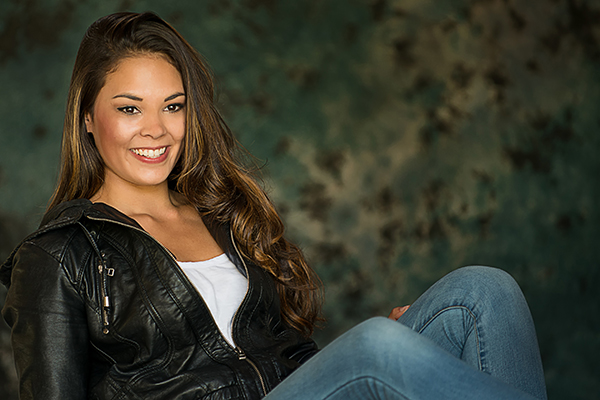
The day started at 10am with refreshments. After a short welcome everyone split up and the excitement began. Several chose to use the studio and I decided to set up high key lighting for Ashley, one of the three models volunteering that day. The other models were Monica and Shy-lyn.

Several photographers walked to the meadow where a neighbor had brought over her horse and a donkey for models to pose on. Another group chose go down to the stream to take pictures.

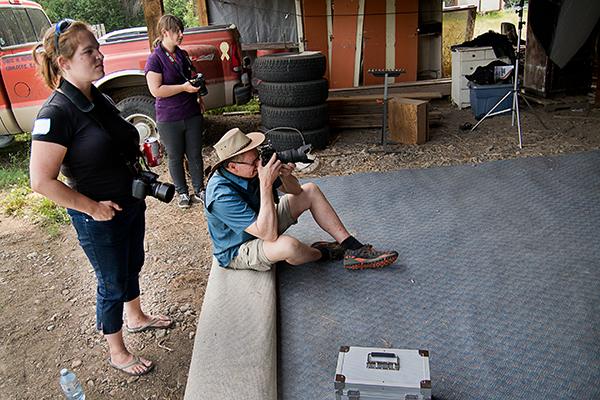
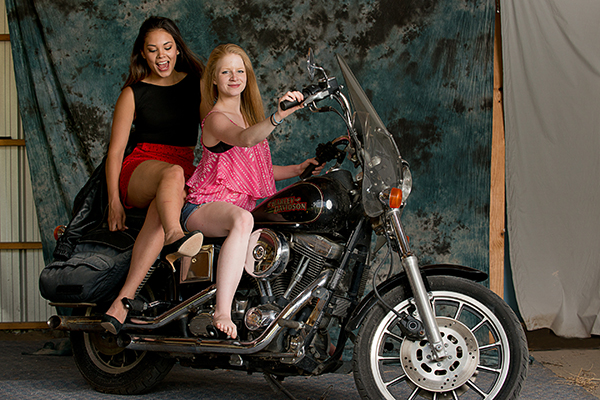
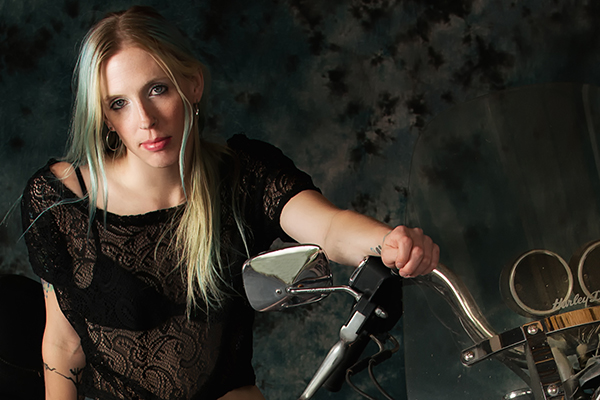
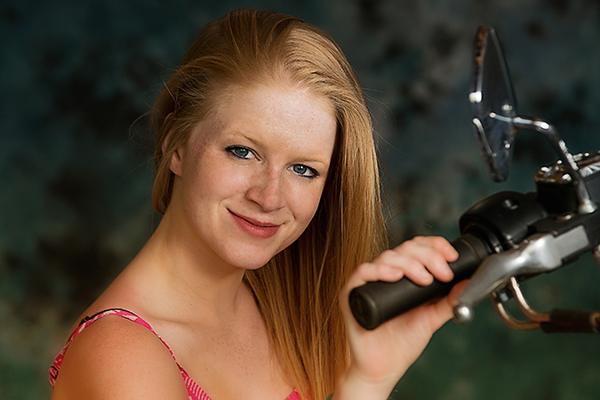
I didn’t stay long in the studio. There were so many excited people competing for the model’s attention that after a couple quick portraits I moved on. A Harley Davidson motorcycle had also been loaned to the studio and I rolled it into position in front of a painted backdrop that hung in the open barn, where I tried out the new battery operated, wireless 480w studio light with a 60-inch Octabox, and added a large gold reflector I had brought from my store. The results were great.

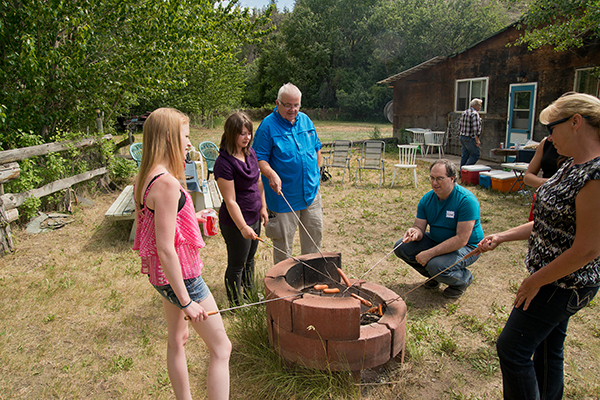
The day was fun, most photographers barely stopped for lunch and before I knew it people were roasting hotdogs over an open fire and it was 4pm. I enjoy events like this where one can interact with other photographers are just having fun doing photography. Usually I use that studio as a place of work where I lead workshops on studio lighting, but on this day I didn’t have to be “on” and was able to relax and talk to other photographers.

This week the Kamloops Photographer’s Facebook page was filled with photographs from the open house. I am pretty confident that everyone had a great time at Versatile Studio’s event.

I always look forward to your comments. Thanks, John