What Influenced My Photography of Landscapes?  


Along the back road 2

Bales along the road 2

River view

Lake view

Scout

Memories of roadside photography.


My interest in photography began in the early 1970s. I had grown up with cameras, but until that time they were no more than a simple boxy device with which to document family and friends. When I look at my tattered old albums packed with fading pictures taped to construction paper pages, I see lots of poorly composed and poorly exposed images, partly due to the inadequate technology of the day and my ignorance in using it.

When I did decide the medium of photography was worth using for more than documenting friends and family my first progression was into arty, creative images. I have mentioned before that the great photographer, Man Ray, was my first inspiration, but now thinking about my photography of those days I am amused at my youth, and contemplate how far I have progressed and of course how far the technology has come.

I think my influence with the photography of landscapes and other subjects in nature may have begun with the early advertisements by the American Automobile Association. That organization was the best place to get maps for road trips in North America. They sent their employees out, with cameras and mapping instruments, across the continent finding the best and most scenic routes. I remember seeing pictures of big, four-door International vehicles with people poised on platforms on top with camera and binoculars in hand on a dirt road in the middle of “no-where North America”. It all looked very exciting.

Then I was introduced to the writings and photography of Ansel Adams, and saw pictures of him standing on a platform on top of a vehicle very much like those used by the American Automobile Association with his large format camera making wonderful photographs any scenic photographer would admire. So, I saved my dollars, sold my jaunty little MG Midget, that was so easy to get around in on the streets of Los Angeles, and bought a bright yellow International Scout 4×4. Underpowered, poor turning capability, uncomfortable on long trips with back seats that were only accessed by climbing over a metal barrier behind the front seats; it was perfect in my young mind and meant that I, like Ansel Adams and the folks from the AAA, could travel the back roads in a cool looking vehicle with my camera gleefully capturing the natural world on film.

Years have passed and technology has changed and so have I. There are still lots of back roads to explore and photograph, but the days of climbing on my car roof are long gone. The American Automobile Association no longer explores the country and today I check maps on my iPhone. I don’t need a large 8×10 view camera like Ansel Adams used with the accompanying long hours working in a chemical darkroom to make good enlargements and certainly don’t want to drive around in that uncomfortable, gas guzzling International anymore.

I thought about all this as I was heading towards the city of Kelowna last week. My wife and I left early so we could stop for some pictures and still be there for a 5PM appointment. My car of choice is now a Honda Accord. Comfortable, fuel-efficient and if I drop the back seat down I can carry lots of equipment. As I drove I mentally made photographic compositions of the countryside and thought about how nice the day was for photography.

I reminisced about the many times I have made this same drive over the years, and the different photographic equipment I have used to photograph many of the subjects and scenes I was driving past, and the different vehicles I have used, and we talked about how easy it is to make pictures today. As the cameras get better and better, and equipment like tripods and lenses get lighter, and our vehicles are more fuel efficient, the life of roadside photographers like me is just great.


Why is Photography so good    

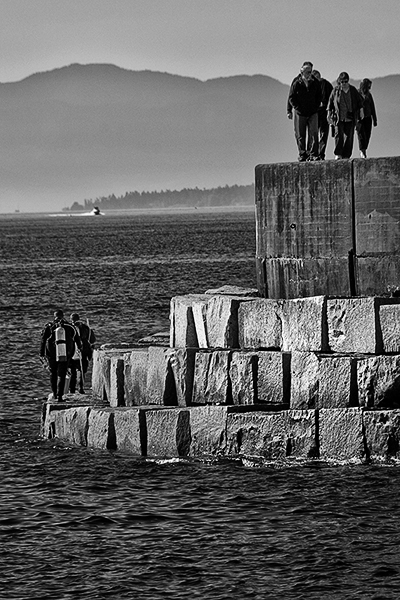
Story at the Seawall

A story at the sea wall.

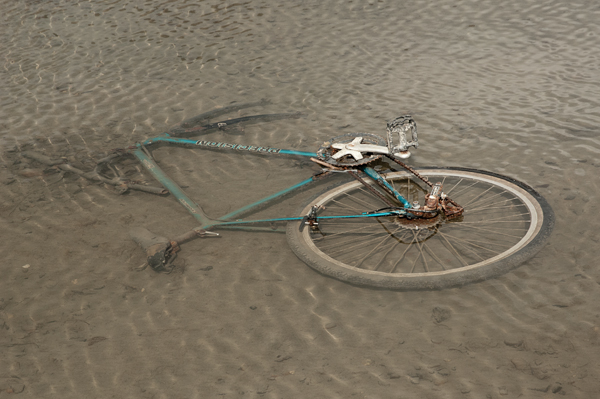
%22I rode my bicycle pat your window last night%22

” I rode my bicycle past your window last night”

%22I was thinking to myself, this could be heaven or this could be hell%22

“I was thinking this could be heaven or it could be hell”


Some time ago I wrote a column titled, “What is a good photograph?” At that time I said, “A good photograph is one that makes us have a connection with, or think about, the subject…it could help us understand what the photographer feels about that subject; and can, if successful, evoke some kind of mood, whether good or bad.”

While having coffee with some friends this week one raised the thought, “Just what is good photography?” He wasn’t referring to the nuts and bolts of the technology, but what is it about photography that makes it a good medium to so many.

I like the statement made by famous scenic photographer Ansel Adams said, “Photography, as a medium of expression and communications, offers an infinite variety of perception, interpretation and execution.” Simply put, I think it is all about making a picture of something and visually explaining that to others. The creative medium of photography is much different than other artistic endeavours.

Another celebrity in the world of photography, Edward Steichen said, “ Every other artist begins with a blank canvas, a piece of paper… the photographer begins with the finished product.” (For readers’ information, Steichen was married to the famous southwestern painter, Georgia O’Keefe.) I am sure he believed creative art is something attained because of the artist, not the medium.

I’ll expand my friend’s thought with the question, what is photography? Internationally known photographer, Elliott Erwitt wrote, “ To me, photography is an art of observance. It’s about something interesting in an ordinary place…I’ve found it has little to do with the things you see and everything to do with the way you see them.”

I am always interested in talking to photographers about what they were trying to do (or say) when they took a picture. Any two photographers in the same location will provide two very different interpretations.

Sometimes we look at a photographer’s work and realize there is more to the image than just what we saw at first glance. It is as if the photographer is challenging us to catch a glimpse of something deeper in meaning. Speaking to that, controversial photographer Diane Arbus exclaimed, “A photograph is a secret about a secret. The more it tells you the less you know.”

That is certainly my impression of some photographs I look at. The photographer might just say, “Oh, I just saw it and pushed the shutter”, but if pressed I usually get a lot more about what he or she was feeling when they pushed the shutter.
Another great quote by the innovative Duane Michals wrote “Photography deals exquisitely with appearances, but nothing is what it appears to be.”

Recently I looked at a photograph made by a friend in an old abandoned house. The view was at floor level with decaying furniture and windblown leaves looming in the foreground. At first the low angle was inviting with light coming in from uncovered windows. Then I noticed not so focused stuff like toys, and a bookshelf with books in the background, and a textured story of more than just a simple picture through an open door emerged.


Photography has become more popular than ever before, and the ease with which modern technology makes holding a camera, releasing the shutter, and making a sharp, colourful picture is also easier than ever before, and I look forward to every new aspect of this exciting medium that develops, and I enjoy getting into these types of philosophical moods regularly; I like all things photographic and enjoy the opportunity to discuss photographers, photographs, and what photography as a medium is to photographers.


I am sure most of the allure of photography is how one can capture a moment of a subject’s time and show that moment to others. And what makes it such a good medium might be as Ansel Adams who said, “My last word is that it all depends on what you visualize.”


Which Button is for the Composition Mode?        

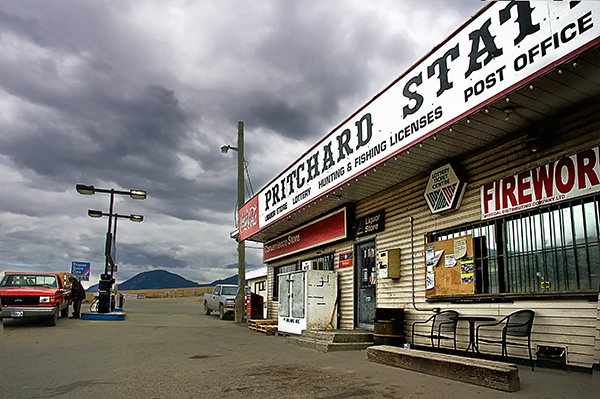
Pritchard store

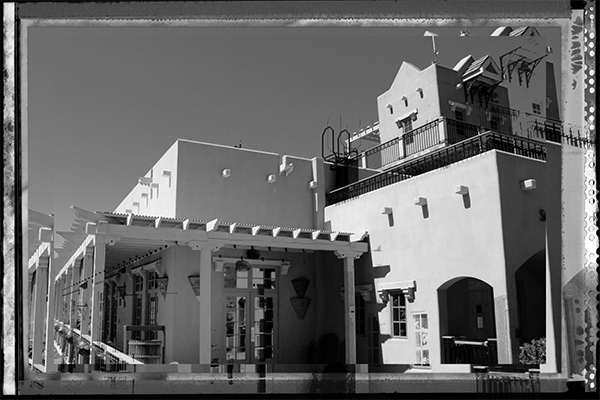
Open Gates bw

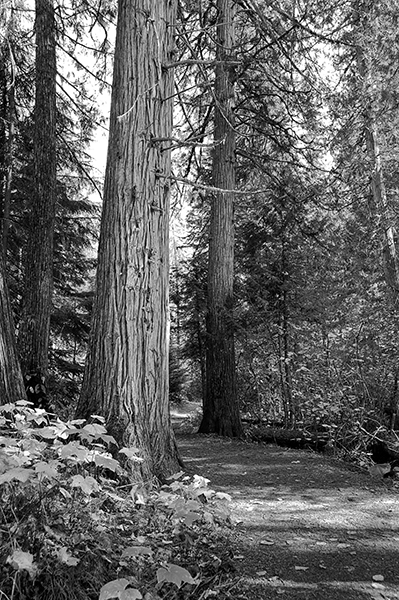
Forest path

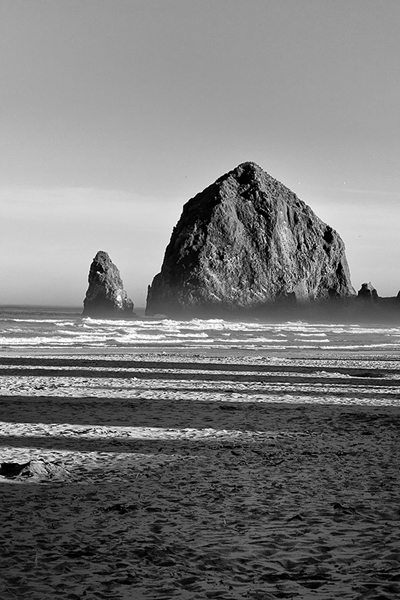
Canon Beach 2

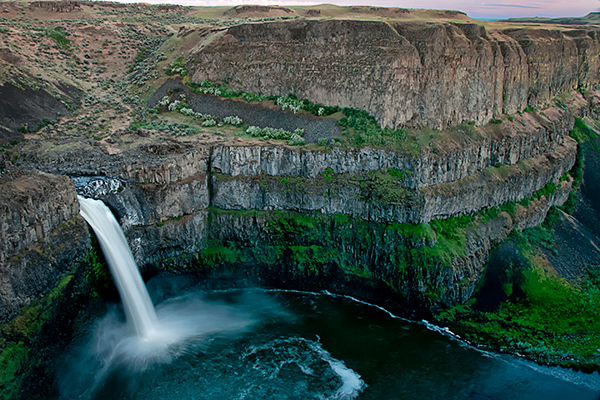
Palouse falls 2

Which button is for the composition mode?     Yes, I did get asked that question the other day, but it is not as silly as it first sounds. I’ll go back to the conversation from which it comes.

A customer stopped by my shop wanting to get a different camera other than the one he had been using for over 20 years.

I was showing him a couple of cameras and explaining the different modes like “aperture priority”, “shutter priority”, “program” and “manual” when he made the statement, “All that seems a bit complicated, just show me which button is for the composition mode because mostly I like taking scenics”.

The other customer in the store stopped her browsing, turned, and just looked at me. I’m not sure if she was troubled by his statement, or also wanted to know about this secret button.

I replied, “Composition is what you do, not the camera, to position your subject within the viewfinder frame,” and added; “composition also deals with perspective and the relationship you create between subjects in the foreground and background.”

Does all that seem too complicated of an answer? I was making squares and rectangles with my hand and moving things around on the counter as I explained it hoping to make it clear to him. Now, however, let us go back to his question of the “composition button” and what he was trying to achieve with his camera. Remember his last camera was from the 1970’s. Even auto focus was new to him.

Cameras programmed since the 1980s are pretty capable of getting the exposure correct in all but the most contrasty lighting conditions. If he were to get serious now that he was about to get a DSLR he would be trying to discover how other successful photographers compose a scenic. Or he would be doing some reading, joining a camera club, or taking some classes that would teach him composition. My impression was that he just liked to take pictures and capture memories of the places he has been. So I think either the mode with the “little mountains” or with the “running person” on the dial of the camera I was showing him would give him exactly what he was looking for and we could, if we wanted to, call them composition modes.

The exposure mode I feel most comfortable with is manual and I am continually thumbing through the different menus on my camera to reset things. I make my living using a camera so I have a camera in my hand a lot of the time. I think each of us needs to use our cameras in ways that make us comfortable so we won’t happen to be confused and experimenting with the settings at that moment when the action happens in front of our camera.

I used to call that a “Kodak moment”. Hmmm, I think I need to find a new phrase now that I am no longer using Kodak films and that company has pretty much disappeared.

In any event, I recommended that he not worry too much about composition and experiment with the different modes his camera has to offer other than “P”. Hopefully he’ll stop by again and I can get him using his DSLR as more than just a point and shoot camera.

In closing this article that started with thoughts of composition, I particularly like this quote of Alexander Lee Nyerges of the Art Institute of Dayton, Ohio, when discussing an exhibition of Ansel Adams of the American West.
“His landscapes were operatic in composition, complete with lighting, tragedy and drama—luring those who viewed his works to seek Nature and capture the spirit of the wilderness.” I am certain Adams had a special button for composition.
Getting Close 

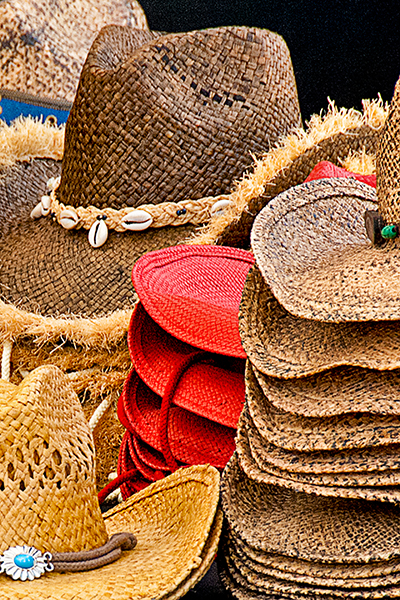
Cowboy hats Not eaxctly bullet proof

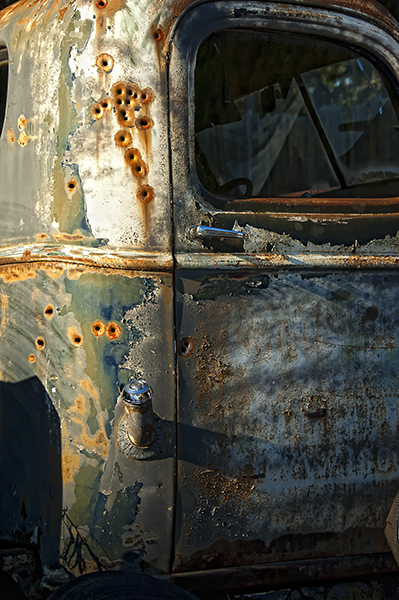
Ford V8

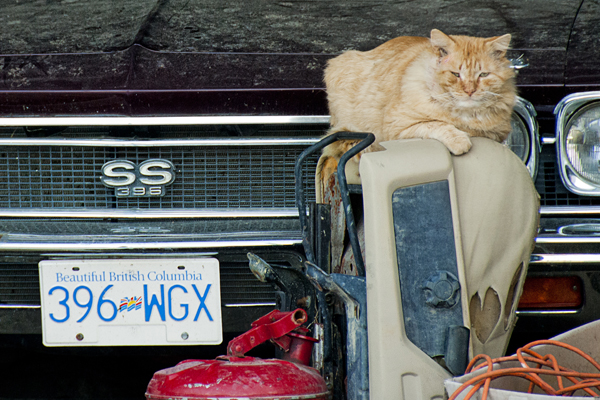
c. Cat & Car

Blue bottles

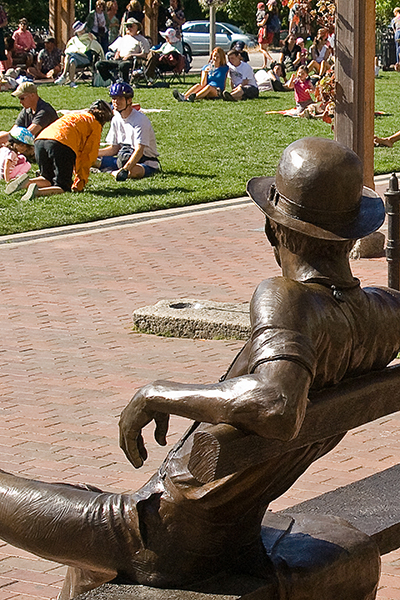
People watching Ocean Tree

Watching the Rodeo


There is an old saying in photography that goes, “ If your photographs aren’t good enough, it’s probably because you aren’t close enough”.

I remember saying this to a young photographer, who became somewhat alarmed and responded, “You mean I should stop using my wide angle and shoot with a telephoto instead?” However, that isn’t what that long time photography quote is about.

What that means is that a photograph should be about something. That the photographer should discard, crop out, or, when making the original capture, move in close enough so that those elements visible in the image are the only things that relate to the photograph.

When I was just a young photographer I would question other photographers who I felt were successful at their craft for ideas that would make my photographs better, and I remember the following advice by a working photojournalist.

He talked about pre-visualizing a photograph (a term Ansel Adams and Minor White coined regarding the importance of imagining in your mind’s eye what you want the final print to reveal about a subject), and continued that a photographer should follow the rules of composition with all the elements in the scene, and finally told me I should always think about stepping closer to “tighten up” the image.

His advice came from a time period when very few photographers were using mutifocal or “zoom” lenses. In that time period quality glass and sharp images depended on fixed focal length lenses, or the more modern term is “prime” lens.

I will not go into a discussion of prime versus zoom lenses. Some people enjoy arguing about equipment, and they will pull out charts and make lots of tests to prove their point of view. Personally, I select a lens with which I am comfortable with and that I think will help me do the best job for the work at hand.

Getting closer changes the perspective and builds a relationship between the foreground and background. With a wide-angle or 50mm lens, the elements in the foreground become more important, and with telephoto’s 200mm and longer, they become less important and, as in a scenic taken with, say a 100mm, everything seems to have equal importance.

Teach yourself to look at the many features inside your composition. Start with the centre of interest or main subject, decide what in that composition relates to that centre of interest and then step closer to remove areas and features that have no relationship or interfere with whatever you want your viewer to concentrate upon.

Pre-visualise what you want to say visually and get closer to remove everything that doesn’t relate to the composition.

I remember reading an article written by a photographer I really enjoy, Ron Bigelow, www.ronbigelow.com. In an article he discussed his experience shooting with another photographer. However it was his summary that made me stop and think,   “I couldn’t help thinking of some of the extraordinary images that I have seen from various large format photographers. It was obvious to me that much of what I admired in their images had nothing to do with the very high resolution that their equipment produced. Rather, it had everything to do with the time that they put into each image. The observing, thinking, and preparation that occurred before they fired their first shot.”

Photography, a personal vision.

Kamloops Lake 1

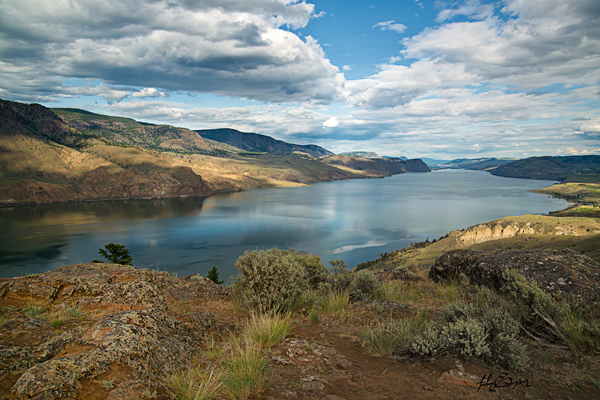
Kamloops Lake

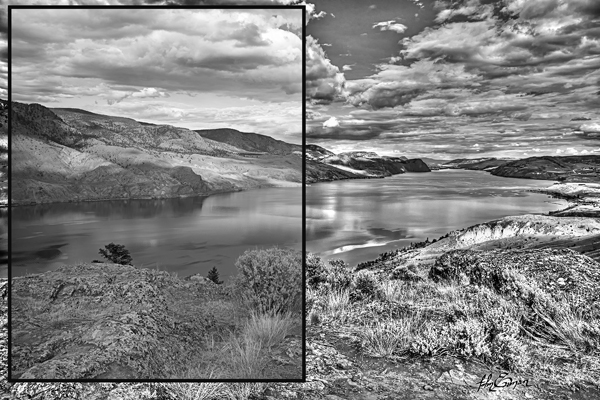
Kamloops Lake 1a

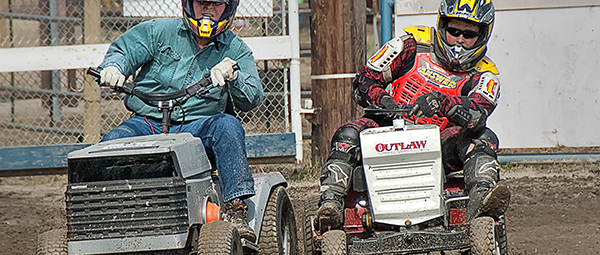
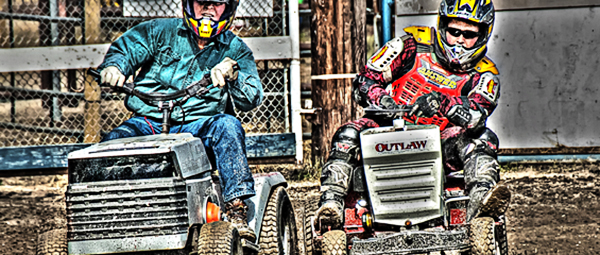
Lawnmower Race copy1

Lawnmower Race copy2

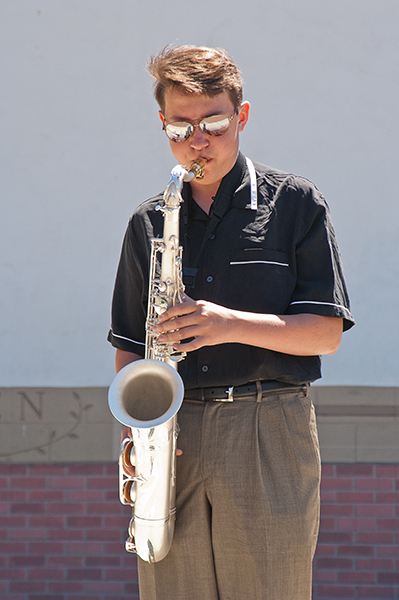
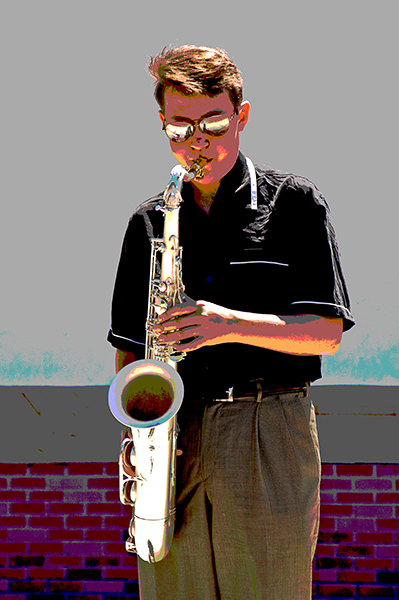
Sax player 1 Sax player 2


My photographer friend Greg posted the following statement on the Canadian photographer flickr.com/group: “Recently I’ve come across a number of photographs on the social media outlets that are absolutely stunning and amazing works of art, but there are a whole host of people who comment saying ‘it looks fake’, ‘it needs to be more real’, ‘that picture has no resemblance to reality’”. And he continues raising the question with “Should we be striving to produce photographs that are more ‘real’ to please the crowds who seem to have very little understanding of art?”

My quick and easy response is to quote Plato, “Beauty lies in the eyes of the beholder”. Even Shakespeare in his work, Love’s Labours Lost writes, “Beauty is bought by judgment of the eye”.

I understand his (and others) frustration with those that are ready to condemn anything that deviates from their personal interpretation of photography, but we need to remember that is just their opinion. I don’t think Greg or any other photographer should “be striving to produce photographs…to please the crowds”. However, when one displays a photograph on any social media site one needs to be ready for someone else’s opinion.

I used the following last January in my discussion of Photography as a Fine Art. Wikipedia’s on-line encyclopedia says, “Fine art photography is photography created in accordance with the vision of the artist as photographer.” That should be enough to ease my friend’s frustration. I will comment to him that those detractors didn’t understand the interpretation or artistic vision of the photographer’s work.

Some may disagree with me, but I think photography has always been a technology driven medium. And just as there are those willing to push the limits, there surely are also those that employ their cameras simply as devices to document the people, objects, and scenes in front of them, and I have no doubt their criticism might come swiftly to those that manipulate their images instead of maintaining the more conservative course of photographic reality.

Regarding Greg’s question about some people’s understanding, or lack of understanding of art, that is a question that countless generations may have struggled with possibly since the first humans decided to place a favourite rock in their cave or put coloured pigment on the wall.

I believe the question is actually, “What is Art and who has the right to define Art?”

Mark Twain is attributed with the words, “I don’t know much about art, but I know what I like.”   I expect most of us fall into that category.

Here are a number of quotes about art by artists. American architect and designer Frank Lloyd Wright said, “Art is a discovery and development of elementary principles of nature into beautiful forms suitable for human use.” However, I much preferred photographer Ansel Adams words, “Photography is more than a medium for factual communication of ideas. It is a creative art.” Or this from novelist Rainbow Rowell, “…and art wasn’t supposed to look nice; it was supposed to make you feel something.” And French Impressionist painter Edgar Degas wrote, “Art is not what you see, but what you make others see.”

When one has the need to be creative they should have the right to decide on their own particular style to fulfill their personal creative vision. What that vision is should be entirely up to the photographer, and the audience for whom the image is produced. I think the problem in this day of mass social media is how to select the right audience.

I do look forward to your comments. Thank you, John


The Best Camera for Outdoor and Wildlife Photography

Outdoor camera

Washington Landscape

Eagle

Landscape Photographer

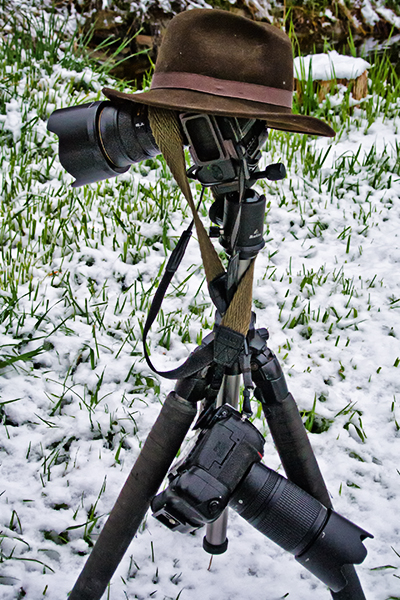
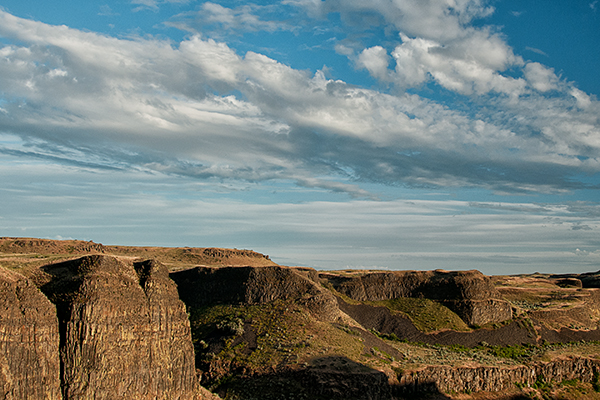
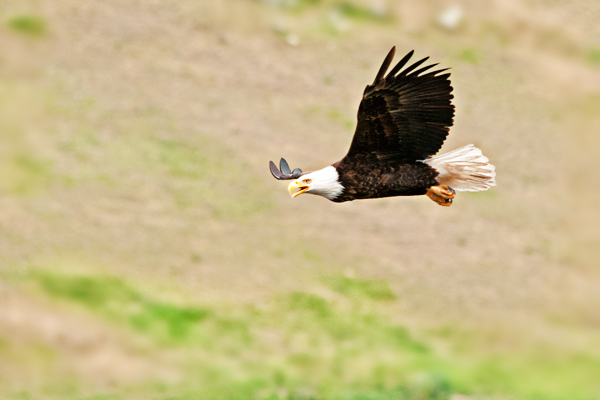
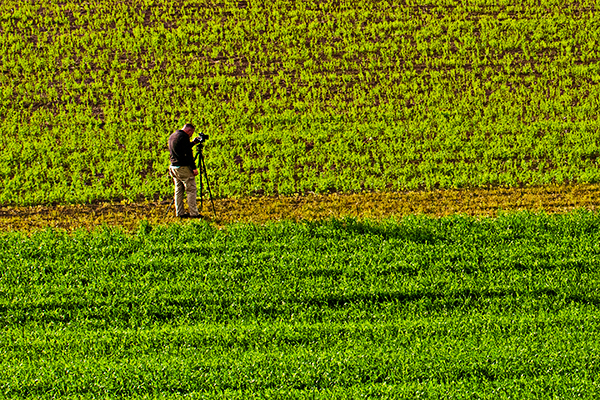
Digital technology has been around long enough that I occasionally forget there are many people that have never used anything but small-sensored point and shoot digicams. I recently talked with an amateur photographer who was planning to discard his well-used point-and-shoot camera hoping that a DSLR would help him take better pictures. No, that’s not exactly right. He believed like so many others that a better camera would make him a better photographer. Actually, his question was, “What would be the best camera for outdoors and wildlife photography?” He is an outdoorsman and “needed the whole meal deal,” although I am not sure what he actually meant by that. Perhaps he wanted one camera that would be capable of doing everything.

What should be my advice to an aspiring wildlife photographer? I could give him my personal perspective, and I could suggest he search out wildlife and scenic photographer sites online to make his own decisions.

I will summarize what I got from a check of advice from avid wildlife photographers. Wildlife photography is harder on a camera than any other type of photography. Most of the time photographers will need to push the limits of their cameras. And, photographing wildlife will demand speed, resolution, and a well-built, quality camera, and, therefore, the best cameras for wildlife photos are usually the most expensive ones.

The photographer then should begin by looking at cameras that are durable, and capable of taking some bumping around, and be sturdy enough to take some abuse from the weather. And because the photographer would be shooting in all types of lighting conditions, especially low light, early in the morning, or at the end of the day, I would recommend looking at, and expecting to pay more for models capable of higher ISO.

Unlike a tiny digicam the photographer will need to concern him/herself with the lens, as well as with the camera. Personally, I would save my money on the camera and spend it on a quality lens. A saying I have heard over and over ever since I have been in this medium is that “it’s all about the glass,” referring to the lens. A photographer, like any craftsperson, needs the correct tools.

Then there is the discussion of full frame versus crop-sensor cameras when one is deciding on which is the best DSLR. Hmm…I think that’s a can of worms best left for later. There are enough confusing choices to keep a photographer awake at night with topics like which camera manufacturer, which model, and which lens. And I suppose there are also the possibilities with the new host of lightweight, mirror-less cameras making their way into photographer’s bags.

I plan on spending some time helping this about-to-be wildlife/scenic photographer make his own choice about his camera equipment. I would rather not be one of those that advise a particular manufacturer. That choice should be the photographer’s.

If we were able to ask Ansel Adams, one of the most famous scenic photographers, for his thoughts, he would say, “The single most important component of a camera is twelve inches behind it.”

I know that does not assist with the decision of what camera that photographer should get, but it does let him know that whatever he gets, he will absolutely need to spend time learning how to use it.

I always enjoy comments. Thank you, John

About Black and White Photographs

Sax player

Cups and a mirror

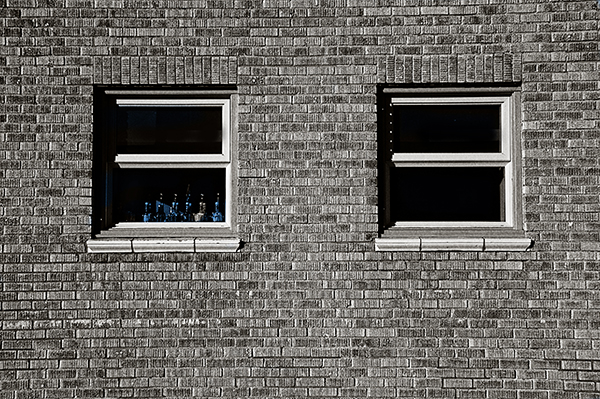
Windows


Bronc rider


Tree

Sentinal after the fall

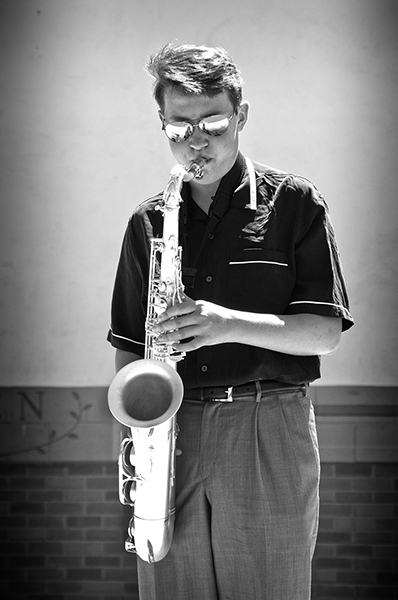
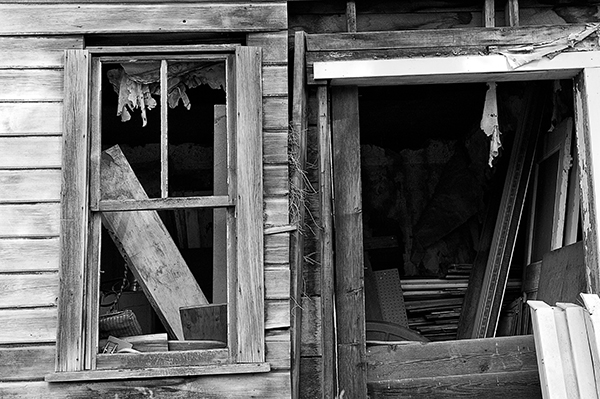
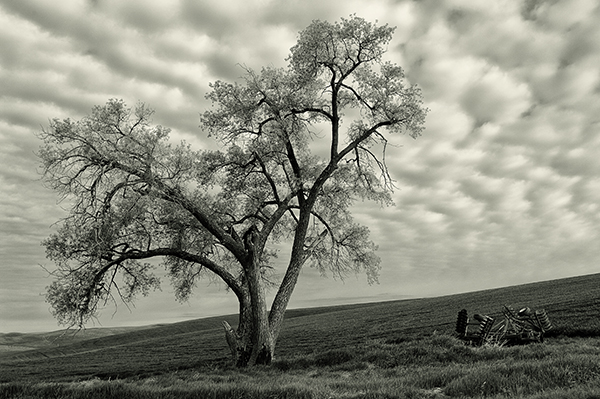
One of the fun things I like about photography is the endless conversations I get to have with both long time and beginning photographers, as they explore and re-explore this exciting medium. Last week I talked to photographers that wondered if reverting back to film would help them become more creative. And in the past few days more than one person has stopped by wanting to talk about converting their images to black and white.

When I started out with photography I spent most of my time shooting with B&W. I studied Ansel Adams’ books on his zone system, and Richard Zakia’s writings on tone control, and I read or looked at everything I could find to understand black and white photography and printmaking.

I began to understand exposure as of shades of grey, and got used to thinking about the subjects I photographed in tonal values instead of only bright colours. I remember a trick that one of my photography instructor’s suggested for those students that had trouble “seeing” contrast. He said we should “squint down to f/16 when we looked a subject”. I expect other students on campus wondered about the camera-toting students squinting up at the college’s clock tower after class.

I learned to previsualize, and as I selected my subject I would think about how I would process the film and make the final print. I might adjust the exposure rating and developing, as with the Zone system, and select different papers and alternate chemicals to change contrast or tonal values in the final print. Nowadays I do the same, but think about what I will need to do to enhance my image file with Photoshop.

Modern cameras capture images in colour, but that doesn’t mean we can’t previsualize the outcome; and converting a RAW colour file is really easy with programs like Photoshop, and my favourite, Silver EFex Pro. Converting that image to B&W stretches our creativity and forces us to visualize our world in different terms.

A black and white image is a matter for the eye of the beholder, the intuition, and finally the intellect. Of course colour is all that, but much of the time it seems photographers, overwhelmed by colour, just push the shutter seeing nothing deeper in a scene than the colours. A black and white photograph depends on its ability to communicate; it doesn’t need to rely on eye-catching colours for its visual presentation.

Black and white images don’t attract with a play of colours. To me they are subtle and make viewers think about the picture. The B&W image demands close attention to composition, lighting, perspective, and the context in which the image is shot

A 1950s photographer named Paul Outerbridge, once said, “In black and white you suggest. In color you state.”   And I remember another photographer saying that he believed shooting in B&W refined one’s way of seeing.

I am of the belief that those photographers that are good at black and white photography learn to exploit the differences in tonal elements in a scene and present viewers with successful B&W portrayals that make excellent use of shapes, textures, light and shadow, and the loss of those original colours becomes irrelevant.

For those that haven’t tried B&W image making, converting an image is really easy with programs like Photoshop and Silver Efex. Readers will find a new way of displaying work. Black and white will have readers visualizing the world in new and creative ways and who knows, like me I expect they will enjoy black and white photography.


I look forward to comments. Thanks, John

My website is at www.enmanscamera.com

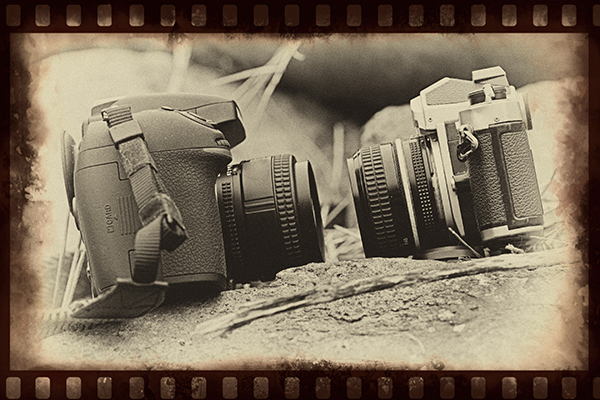
Does Film Lend Itself Better to Creativity Than Digital?

Digital VS Film

Where does a photographer’s creativity come from?


This past week I received the following question, “is film a better creative format than digital?”

I admit that the discussion regarding film vs. digital isn’t really that common anymore. Yes, I talk with high school students that are using film in photography classes. Those discussions are mostly about how film works, about processing, and printing, or using different chemicals.

Sometimes an older person who stopped taking pictures in the 1980s will loudly tell me digital is unnatural, doesn’t look good, and is cheating. Cheating? That conversation is always humorous. However, it is one-sided and not really worth getting into because any opinion but theirs is going to be ignored.

However, this question wasn’t about which is better as a way of making photographs, it was about creativity, and that intrigued me. Creativity is about imagination, originality, and art.

My quick answer to that was that I liked both film and digital images. To me, film is a more “tactile” medium than a digital image, and I like the extreme tonality that a good photographer can achieve. I believe digital image files can have more sharpness and a lot more detail. Sometimes that is good, sometimes not. That also depends on the photographer.

In my opinion creating an image is what the photographer does. It involves deciding upon the kind of camera and medium one might use, but the camera and medium is just the vehicle for a photographer’s creativity. It is really all about the final image, and how one decides to produce that image for the best visual effect.

I think some times that too much is made about the process. The process is just that, a series of actions or steps that one takes to achieve a particular end. I guess what a photographer does to create that show-stopping photograph is truly interesting, but in the end it is really only about the photograph.

The idea that there might be something more creative in making an image with film than with digital doesn’t make much sense.

I remember all the possibilities we had with film. Imaginative photographers would select different types of film and change the way they exposed and process it. Photographers probably had shelves of different chemicals for both developing film and making prints, as well as cabinets filled with photographic papers, and all as part of their process to bring out personal creative vision.

Now photographers can shoot with cropped or full frame cameras, and instead of dedicated rooms filled with equipment, they load their computers with software programs to help them with their personal creative project.

When using film one would previsualize (a term coined by Minor White) how one wanted to produce the final image before releasing the shutter. And I think many still do that to reach their vision, except now photographers are thinking of programs like Photoshop or Lightroom instead of the chemical processes required with film.

There are some photographers that only know film, there are some photographers that only know digital, and there are those that are competent in both. And although they might use film, digital, or both, to produce an image, creativity comes from the photographer and not the process.

Maybe I should have just replied to that question about creativity with photographer Ansel Adams’ words, “You don’t make a photograph just with a camera. You bring to the act of photography all the pictures you have seen, the books you have read, the music you have heard, the people you have loved.”

I look forward to any comments readers have. Thank you, John

My website is at www.enmanscamera.com


The Photographic Composer’s Score and Performance

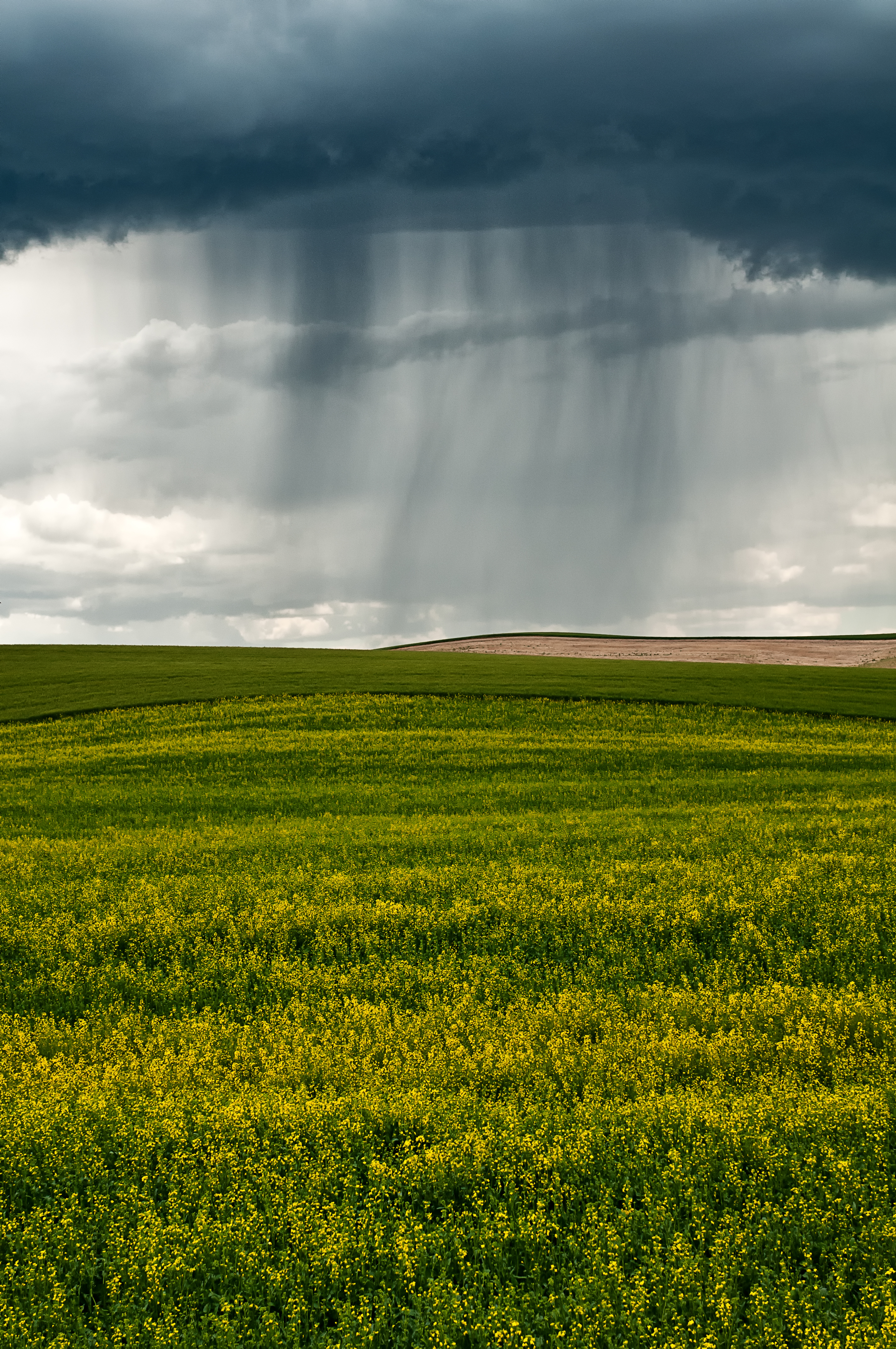
Spring storm

A storm o the prairie


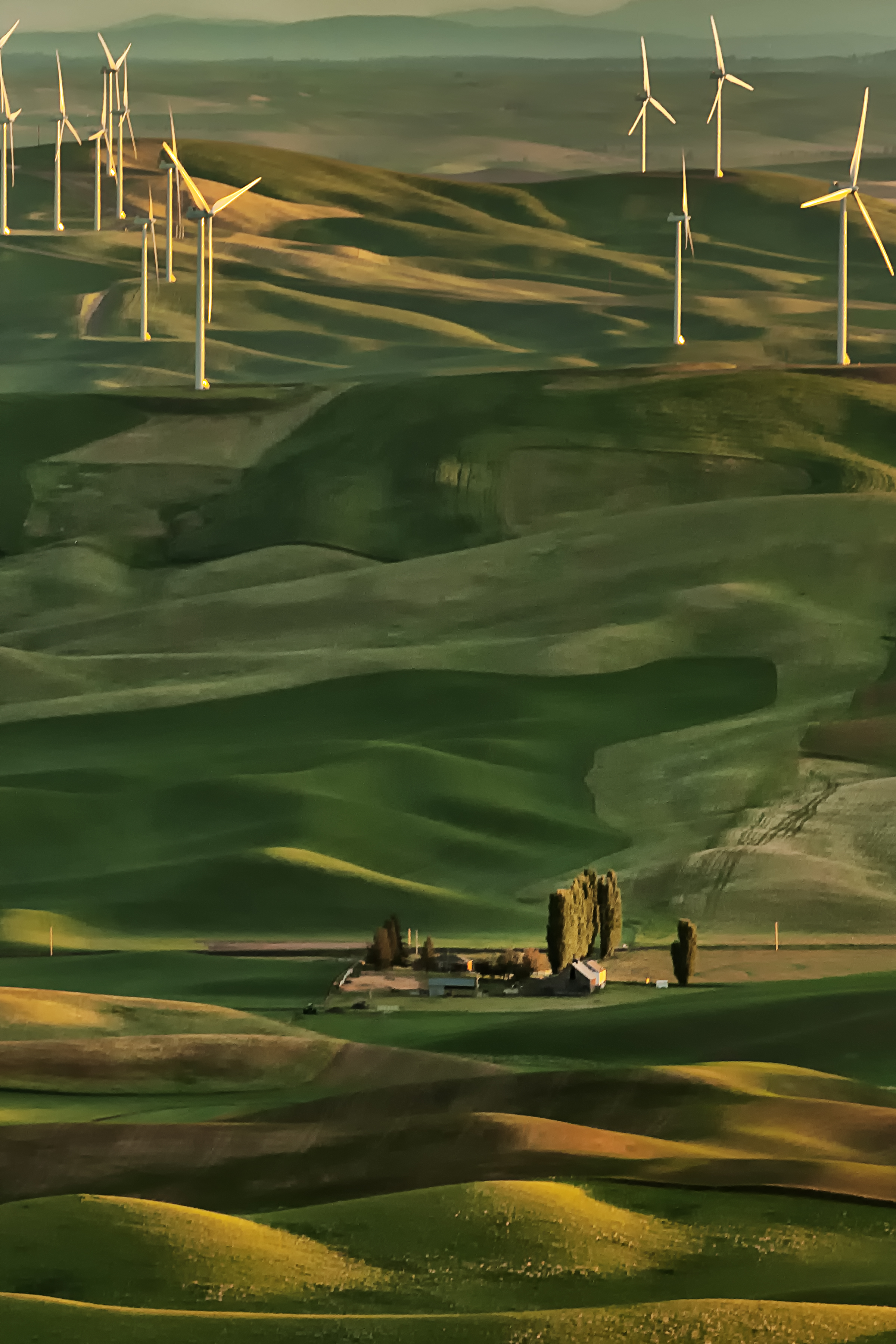
Wind power

Windpower

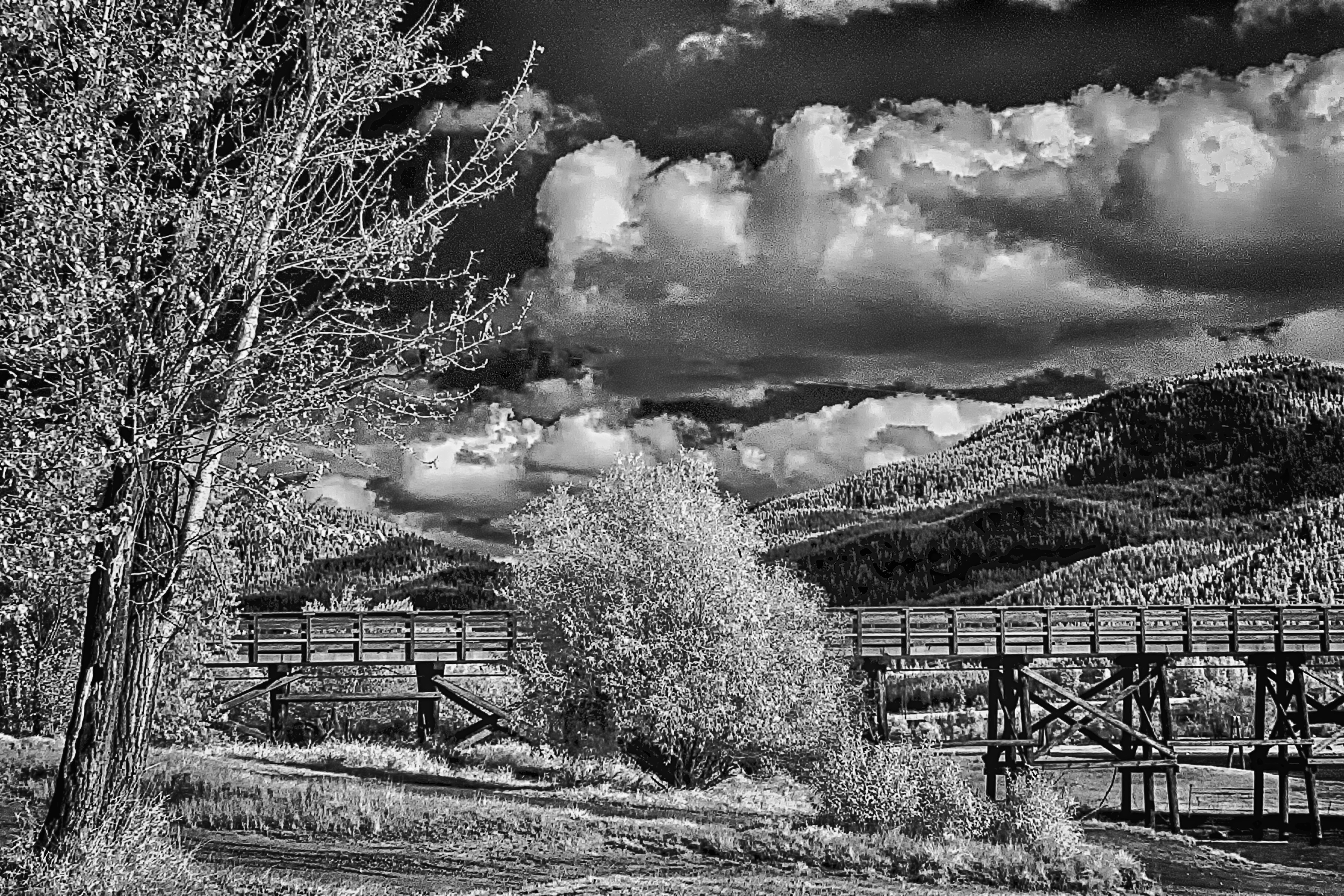
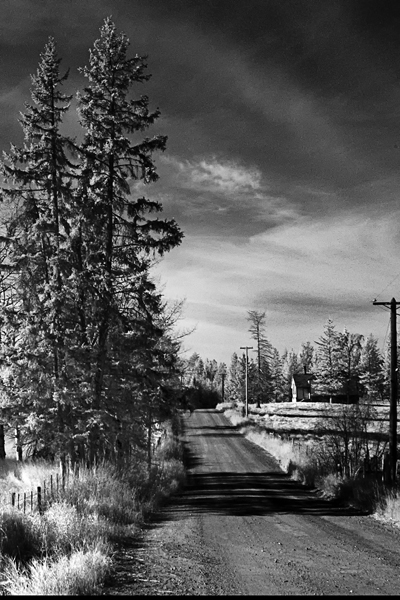
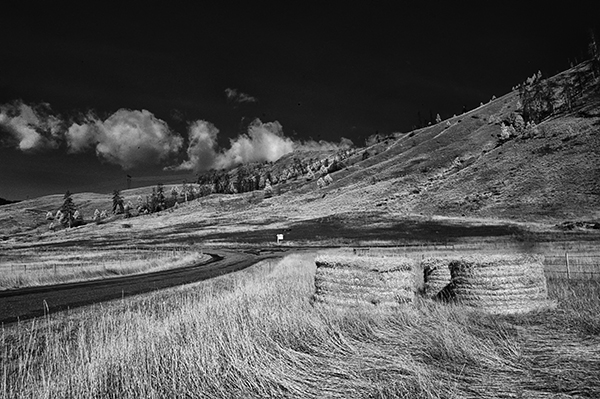
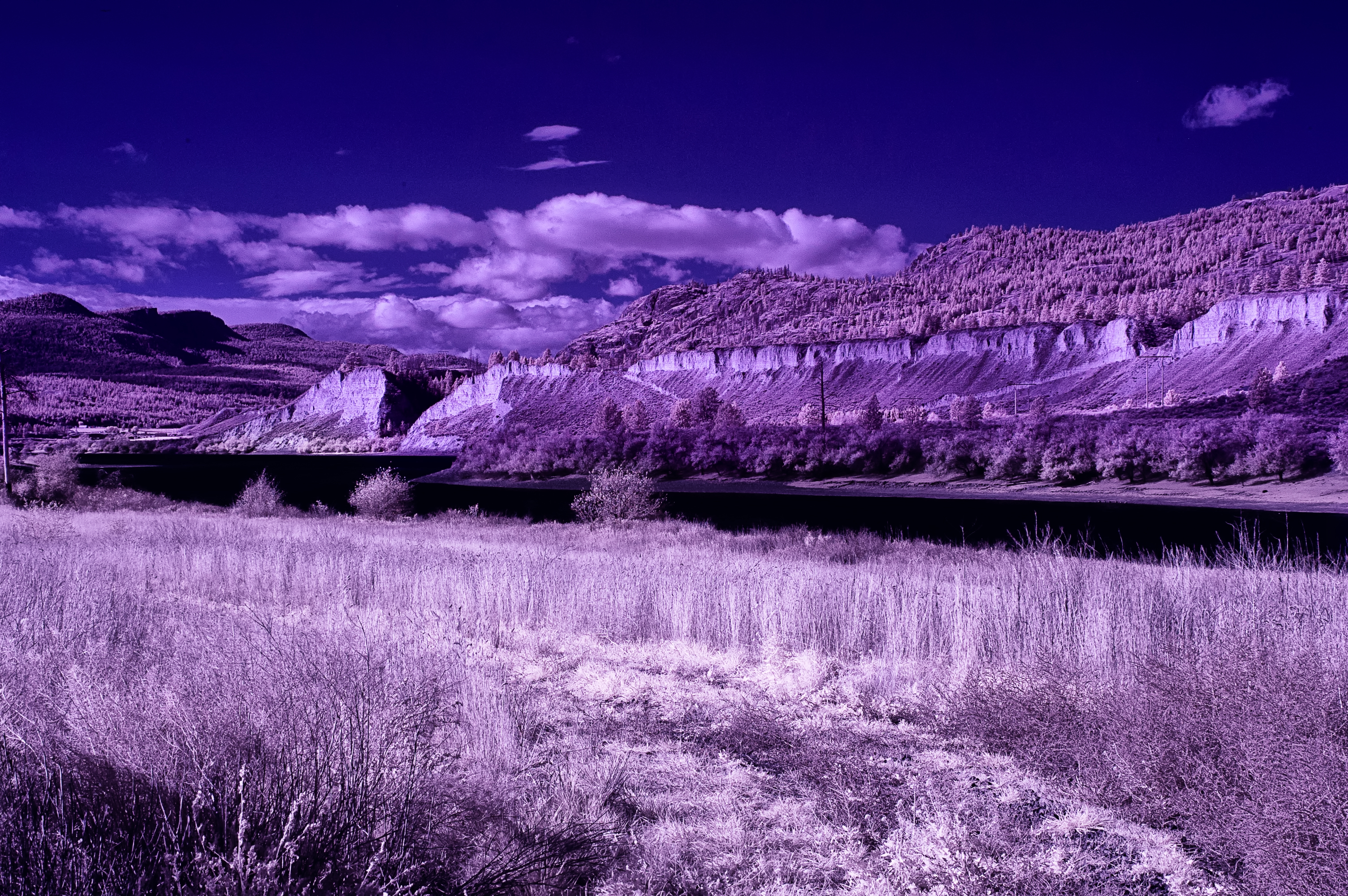
October Infrared

October walk in Infrared

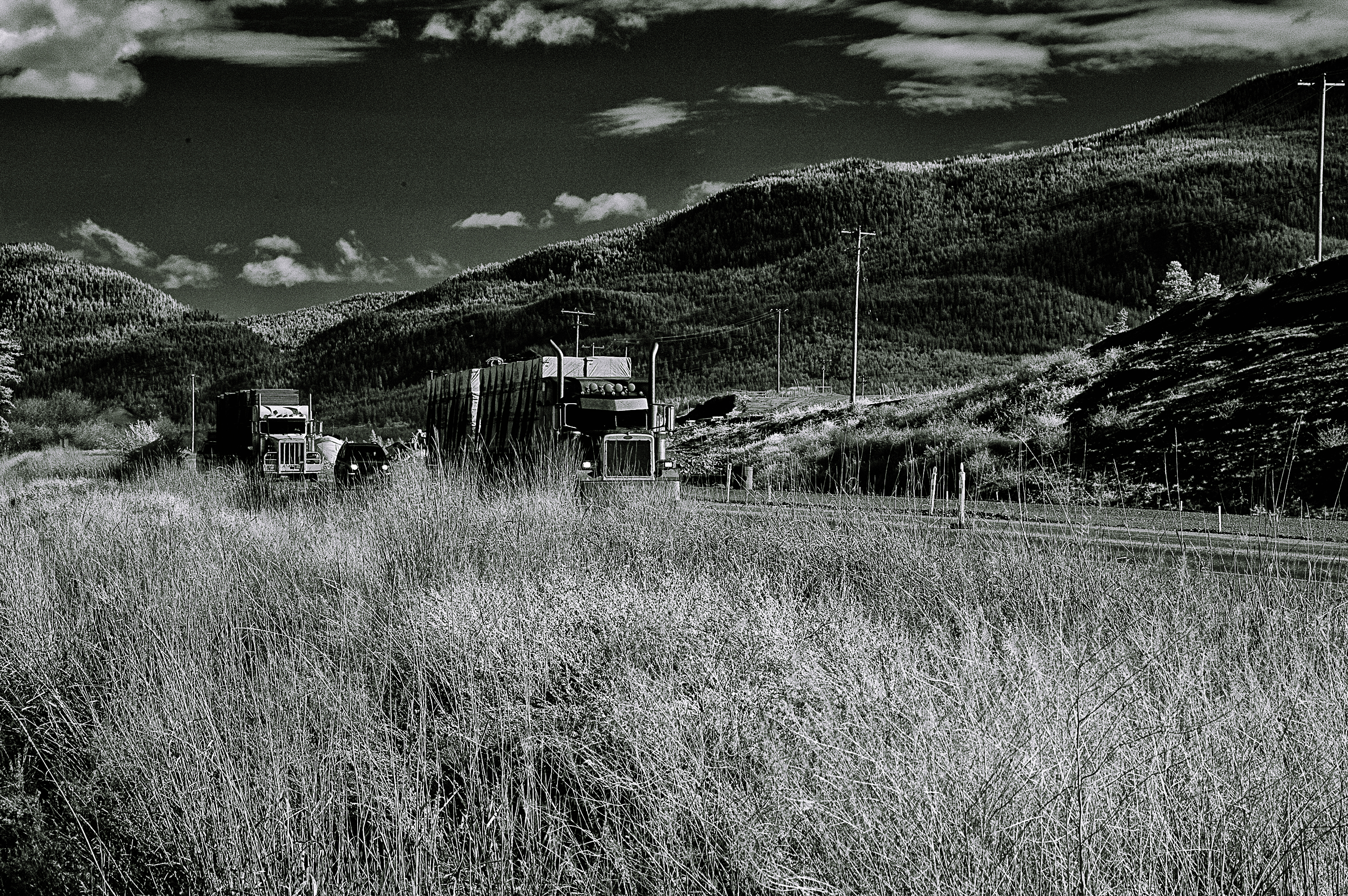
Trans Canada trucking

Trans Canada Highway – Infrared

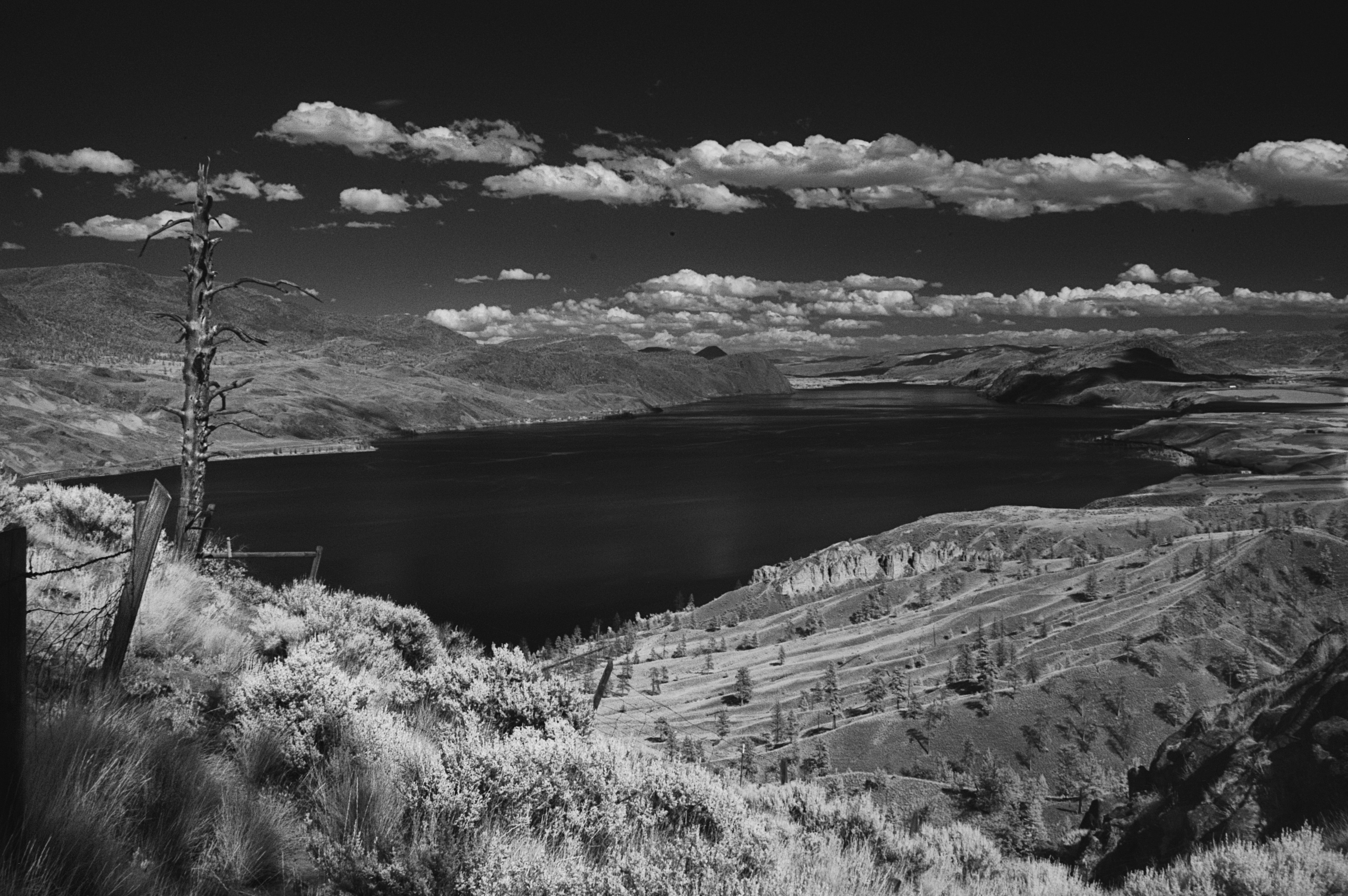
River bluffs

Infrared of Thompson River


I taught photography in the 1980s and 90s for the University College of the Cariboo (now Thompson River University) when the only way to make a photograph was using film.

In my lectures I informed students that as well as learning about their cameras, they must become proficient in negative development and printmaking. I would emphasize that those serious about the medium of photography would come to realize that what they did with the camera and the negative it produced was only the beginning, and that it was their final print that would set them apart as a photographer. And I would quote famous photographer Ansel Adams, “The negative is comparable to the composer’s score and the print…its performance…”

Film has now been discarded by most serious photographers, although I expect artists will use film creatively for years to come, nevertheless, even with advancing photographic digital technology Adams’ words from the past are still significant.

The digital camera isn’t making a picture in the sense of light permanently imprinting itself with different intensities on a chemically sensitized surface like film. Instead there are sensors and in-camera computers processing light from thousands of photosites that are transferred to computers as data files for conversion into countless pictorial possibilities. I have become, more than ever, of the opinion that like the negative, the RAW image file, is now the “score” to Ansel Adams – the photographic print.

I know there are those that haven’t bothered to move their camera selector off JPG (Joint Photographic Group). However, choosing JPG files means those images are pre-processed in-camera and the photographer loses control. I prefer shooting RAW (not an acronym like JPG, RAW is unprocessed data) and choosing RAW is like having the negative Mr. Adams discussed, affording us total control over those data files or, more importantly, allowing a personal vision of how the final photograph will look.

A young photographer that came into my shop last week got me thinking about this when, with some kind of misplaced pride, he announced he would never use PhotoShop on any of his pictures because he was only into true reality. Although I didn’t comment, I thought about the manufacturer’s presets that were applied in-camera to his image files, the sensor’s dynamic range of only about five stops from black to white and the very limited number of colour spaces his tiny JPG files gave him.

Some years ago I attended a print-making lecture during which one of the speakers said in the past he would get up early and drive to some scenic location hoping to capture an impressive sunrise, after which he would package up his film and send it to the lab and leave all decisions to an unknown technician’s personal vision. However, now he shoots RAW and transfers his image files to his computer and the decision has become his to control how his photograph will be processed for viewing.

As in the days when I processed and altered negatives in special chemicals and manipulated prints by adding and subtracting light, I now use computer programs to process my RAW images in my quest to perfect my vision of each. And I expect the same thing is true now as it was with my students all those years ago, that what they do with the camera is only the beginning, and to repeat Ansel Adams, “The negative is comparable to the composer’s score and the print (is) its performance…”

I look forward to all comments. Thanks, John

My website is at www.enmanscamera.com

Problem Solving Approaches to Photography

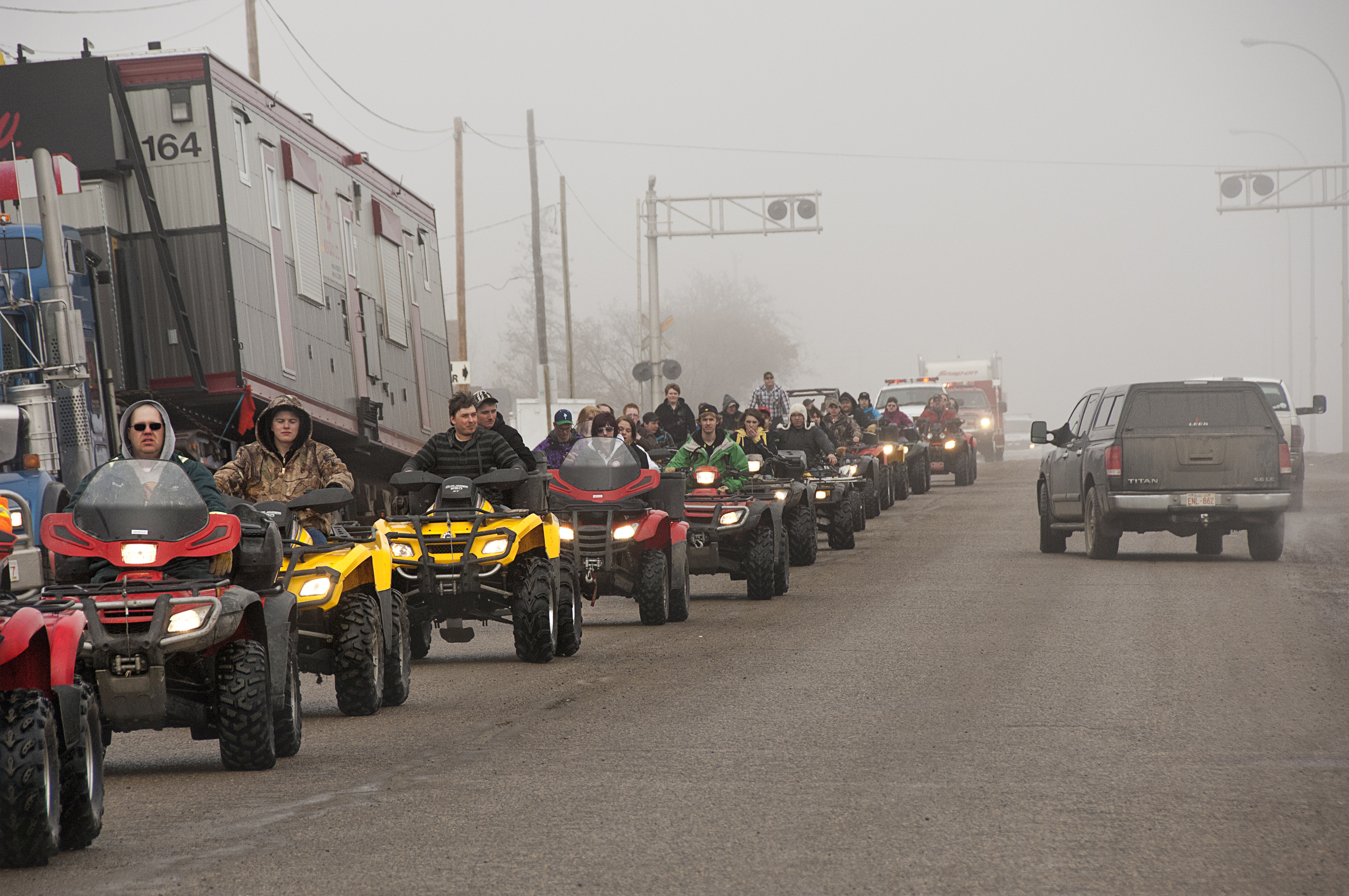
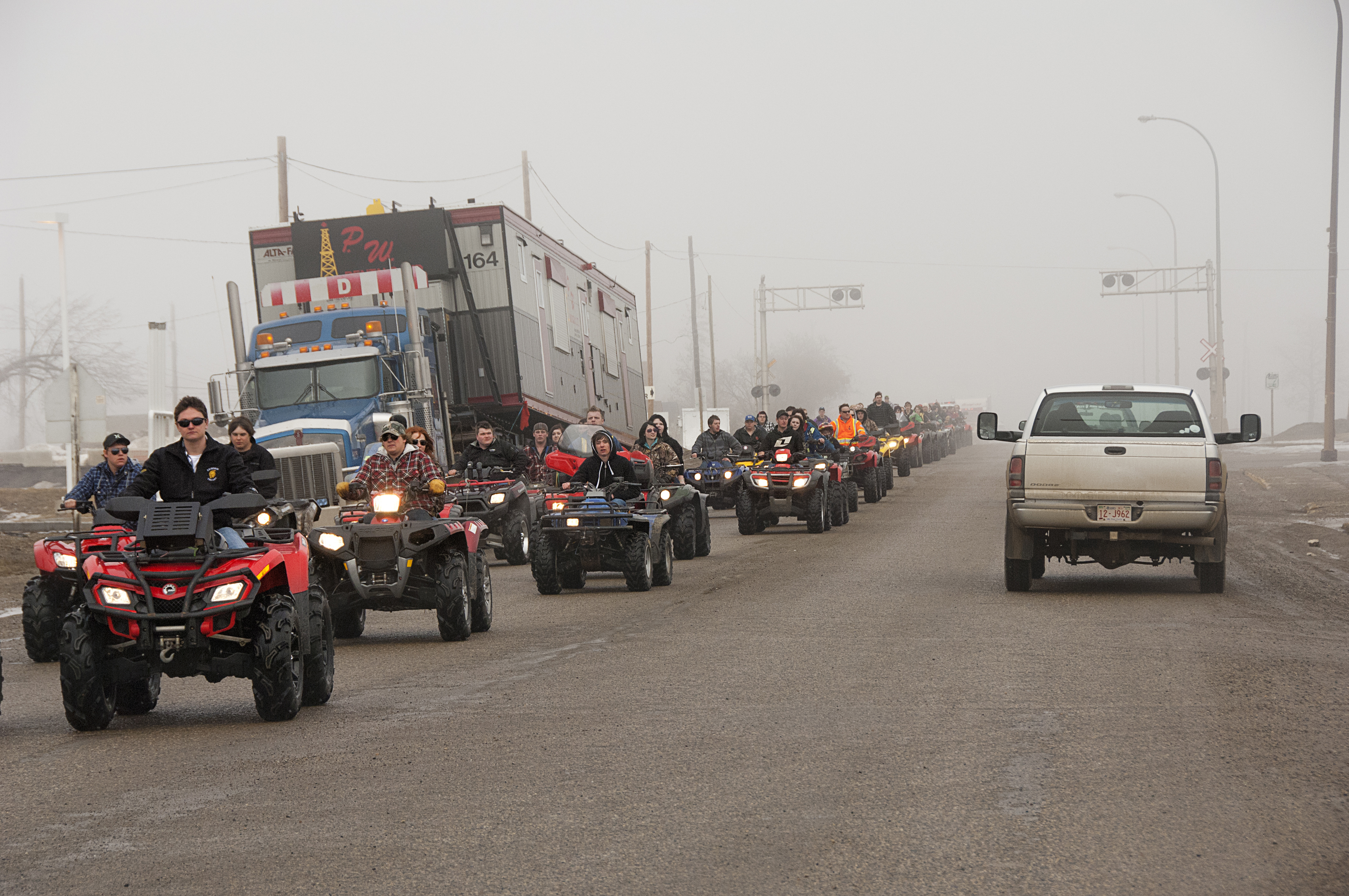
The procession 1

The procession 2

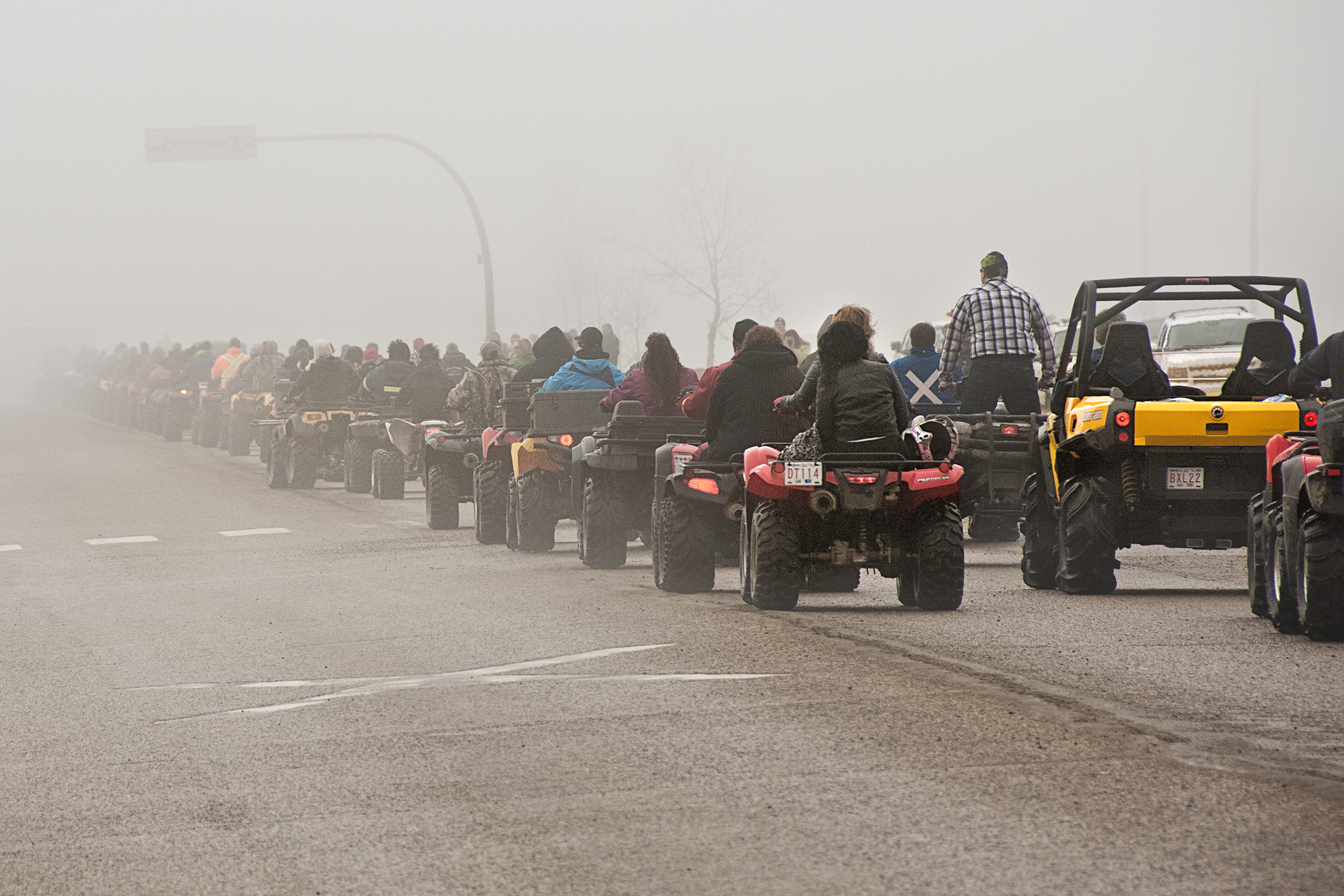
The procession 3


There are times when all photographers end up with faulty photographs. Once in a while it can be blamed on the equipment, or processing, although certainly not as much now as when film was used. However, in my opinion, even today most of those faulty photographs are because of poor techniques.

A friend stopped by my shop last week to tell me about his trip to Mexico. He complained that his daughter’s cheap little point and shoot camera got better pictures than he had with his son’s expensive DSLR. I don’t think he was happy when I told him the problem was most likely with his technique. I was certain that little point and shoot’s tiny sensor or it’s lens didn’t match the quality of a DSLR.

I listened to a local photographer grumble about how local photo labs are failing to make her prints the way she thinks they should be. I expect she totally relies on her camera’s programs and is one of those of the belief that if the camera they have been using doesn’t give good pictures then they should buy a newer or different manufacturer’s offering to make it so. In her opinion, that latest camera is advertised as producing wonderful images and when she doesn’t get the correct colour balance or sharpness it can’t be the camera or her fault, it must be the labs.

Years ago I was asked by the Abbotsford Photo Arts Club to give a lecture about problem solving in photography during their annual session. That was long before any of us even thought of the amazing control computers in our cameras or on our desktops now give us. However, at that time I felt, and still do, that the responsibility for a good photograph belongs to the photographer and not the film companies, camera manufacturers, or some poor, overworked lab technician. The point of that lecture, so long ago, was that photographers should look at each photograph as a problem to be solved, and go through the process of correcting faults before releasing the shutter.

Photographers used to say that it was all in the negative; that a properly exposed and developed negative gave the best possibilities of a fine quality print. I still agree with that principle only now it isn’t an image about to be developed on film.

By the time I arrive on the scene to photograph my subject of choice I have already made several decisions and I try to do as the famous photographer, Ansel Adams would do and “previsualize” the image or in my words, “problem solve for the final photograph”.

Like Adams, photographers should be thinking about how the final photograph will be used and how to accomplish that. If one thinks of a final photograph as a series of problems to be solved there will be a smooth transition from initial idea to final print. For example one could begin by thinking about the subject and its environment. What is the background and how will that affect the subject? What is in the foreground that will interfere with that subject?   If one considers depth of field a decision must be made how much is wanted to be “in focus”. Continuing on, in a landscape photograph, photographers will probably want everything from the foreground to far off distance to be crystal clear; whereas, for a portrait the photographer may want the background to be “out of focus”. Another consideration is what is the lighting like and will its direction be flattering?

The sun and its direction is always very important when photographing people. I prefer to have it coming from behind my subject and as readers know, I like to use off-camera flash. Although, if for whatever reason that isn’t possible, I problem solve my way into a photograph that works.

Photographers don’t need to see problems as a deterrent or bad thing. When I suggest to photographers to take a problem solving approach to photography I am really just saying that every element in any creative photographic composition is important, and from start to finish if a photographer uses a system of photographic problem solving there will be less faulty and more successful images.

With digital technology one can easily determine what went wrong or is going wrong and take the time to problem solve before downloading to the computer or relying on technicians at the local photo lab and hoping they are equipped with PhotoShop wizardry.

I appreciate your comments. Thanks, John

My website is at www.enmanscamera.com