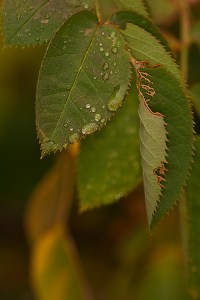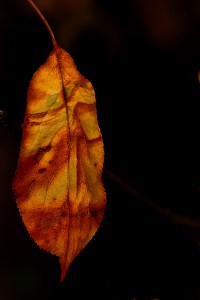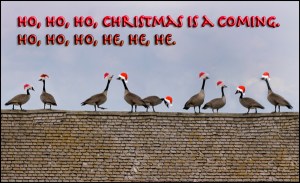
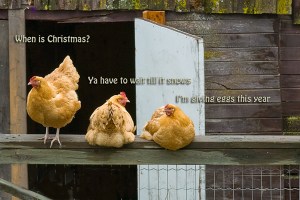


How about Christmas cards?


I like all the festive celebration and excitement of Christmas, and truly enjoy all the colourful decorations, the lights and listening to Christmas music for a whole month.  Yes, I do like Christmas music.  I have also written about Xmas cards before.

All year long the photography social media sites on the Internet that I belong to have been filled with photos made by members, but images posted on the Internet quickly become faded memories and are easily forgotten when an hour later someone else posts theirs.

I like photographic prints. Prints have a life, whether framed and hung on a wall in our home, taped on the refrigerator, or thumbtacked in an open space in the workroom. To me a print of any size has more importance and life than a digital image on my computer or iPhone screen.

Christmas is a great time for photographers, and besides than just having fun taking pictures of anything and everything they now an opportunity to give friends and family their photographs.

I suppose that could mean a big framed photograph, but what I am writing about today is Christmas cards. Cards are easier and less expensive than framed prints, and any card of a photographer’s work is more personal as a gift than an email or little picture tagged to a text message.

I don’t want to believe that any photographer would ever be satisfied with mass produced generic Christmas cards. Personally, I want people enjoy my photography, even if it’s only as a 5×7 card.   A card to someone I care about is so much better than having my pictures left languishing as image files deep in some computer hard-drive that hasn’t been backed up.

Right now I am going through my many files from this year’s photographs selecting those I want for Christmas cards. I’ll print up different subjects and place all sorts of greetings on them. It is rare that I give the same picture to more than one person. And not all the cards say Merry Christmas. Although I like “Merry Christmas” what wording goes on a card doesn’t really matter to me. Happy Holidays, Seasons greetings, Have fun, A good New Year, and anything else I think fits a particular picture. It’s about the card, never the words.

I have written before that I always produce a new monthly calendar. My wife and I used to alternate our months.   Doing a calendar is a neat way to personally enjoy my photography, but cards are a lot more fun because they are for others to enjoy. I also make cards for all occasions, like birthday’s, Valentine’s, Mother’s day, etc., My family has come to expect me to share my photography. Sometimes it’s only a picture of something we’ve done, but if it’s a special occasion they always will get a card. Even when would I go to my granddaughter’s school Christmas concert, I always took their pictures, made a card and send it to them through the mail.

For those photographers that don’t have their own printer, it’s as easy as having a 4×5 print made at a local lab. Then get some construction paper, glue a picture on it, fold the paper, write something like Merry Christmas inside and give it away. And don’t make all the cards the same.

What would be the fun in that?
I have always liked Christmas lights.   


When I was a child my parents used to bundle my brothers and I into the family car and drive up along the high avenues around Salt Lake City so we could look down on all the decorative lights in the valley. And we even got hot chocolate, so needless to say I am a Christmas light junky.

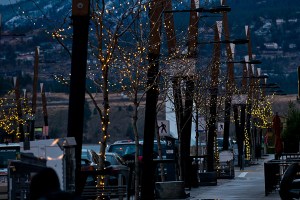
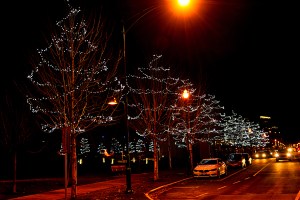
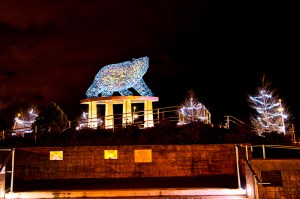
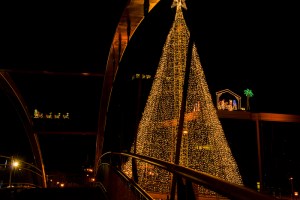
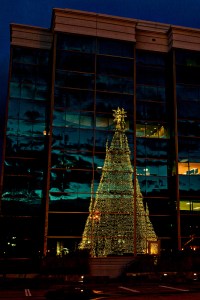
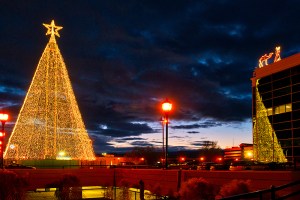
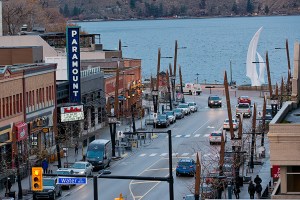
For years I have had business in Kelowna, British Columbia during December and I always brought my camera so I could go out at night and then again at morning’s first light to photograph the Christmas lights along the city streets.

This year I had to come down much earlier, on the last day of November. It was an early day for me and I finished just before lunch, so I wandered around looking through the store windows near my hotel until It had started to rain, no not the snow I was hoping for, but I had hours to wait till sundown so I went into an eatery called the Memphis Blues.  When I entered the place was filled with wonderfully loud southern blues music. I was delighted to find they had the perfect food for a damp cool day, southern barbecued chicken. Gosh, I am sure somewhere it might get better than that, but to me it was the perfect place to pass the time till evening and could photograph the bright Christmas lights in the city.  In spite of the rain, when I finished I decided to wander a bit with my camera for some low light afternoon photos. The last light of the day is always interesting, even on a drizzling over cast day.

Last year I photographed decorated boats moored along the lake harbor and people skating on the outdoor rink. However, to my dismay the barkeep gave me the bad news that the Kelowna winter light festival was days away and it was too warm to use the skating rink. Gosh, I might just be forced to make the winding two-hour drive again in a few weeks. Blast my bad luck.

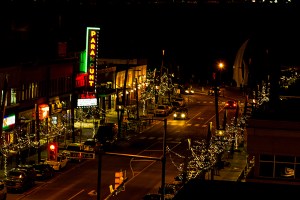
I snapped a few from my hotel room. My room was on the 5th floor above the street so I had an excellent shot with my 70-200mm down the street towards the lake and after that I meandered along the street and beside the lake making photographs. There weren’t a lot of people, but those I did pass must have already been in a holiday mood because every person either smiled and nodded or said hello. Maybe they just liked seeing an old grey haired guy enjoying himself taking pictures of the city they lived in.

The cold wind coming off the lake finally worked it’s way in and I decided to return to my hotel room to warm up till night fall.

By 7PM the light had gone down. I began by again taking a photograph down the street toward the lake, then grabbed my tripod and camera and went out for another ‘bout with the lake’s cold wind. I photographed many of the same things I had in the afternoon light, except this time the Christmas lights were sparkling in the dark sky.

Sun-up is at 7:30 here in southern British Columbia. I like the light just before that when I am photographing city lights. I want just enough to give the feeling of nighttime without covering building details.

There I was waiting at 6:30 in the cold morning air, and by 7ish I was sadly done. I always have to tear myself away. When I was back at my hotel some time later drinking coffee and having my morning yogurt I got a text from my friend Dave. He wondered how it was going and I replied that standing alone at 6:30 AM on a cold, windy, dark deserted overpass with frozen fingers while taking pictures of street lights is damned enjoyable, Gosh, it doesn’t get much better than that. The only thing that could have made it better was if it started snowing.

Night photography (well actually, early morning photography) gives a city such a nice mood that isn’t really manifest during the day. I like the mystery and, of course, this time of year the frosting on the cake is the wonderful Christmas lights.

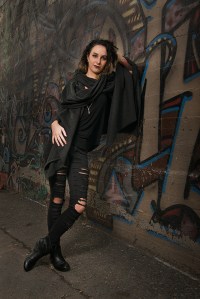
Photos in the alleyways.  


This past week my friend Jo McAvany asked me if I would be willing to help her with using off-camera flash in daylight. I like controlled studio lighting, but I’ll admit that balancing flash lighting in the bright daylight is much more fun.

She texted me saying she had asked her friend Heather to be our subject. My question was “where do you want to do this”. I think I held my breath at that moment hoping she wouldn’t suggest wandering around in the woods to photograph our young model. If she had I probably would have feigned an attack of the flu or something just to get out of spending a boring day doing what every beginning photographer seems to be doing now days. However, Jo said, “I’d like to go downtown.”   My response was, “Great lets pose your friend in the alleys”.

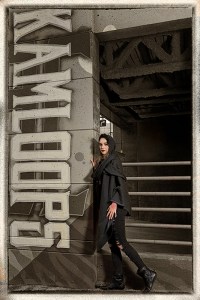
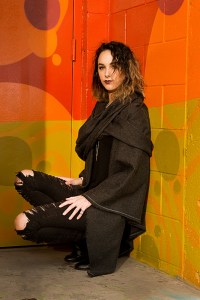
I am not sure if it was because of the shopkeepers or random artists, but the alleyways in downtown Kamloops are damn colourful. There are murals, wildly painted back entrances and large brightly coloured signs that fill complete walls. One might expect to find trash, discarded store goods and rusting garbage bins. But nope, it was as if someone had said, “Hey, there might be a photographer or two that want photograph our alleys so lets make ‘em nice.”

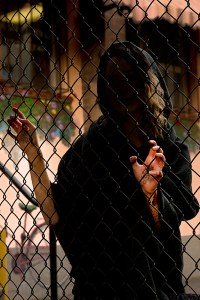
We went from coloured wall to coloured wall, posing our ever-patient subject in doorways, against brightly decorated enclosures and behind fenced walkways. I think this was Heather’s first time posing for photographers, or at least having two cameras pointed at her. And yes, she had to endure my constant discourse about balancing light, shadows, exposure and off-camera flash.

Sunday was a good choice. Other than the cold breezy November day, it was quite pleasant. Well, except when the wind caught the umbrella that was attached to the flash and stand and sent everything crashing to the ground.

There was no traffic zooming down the ally and other than some fellows sitting out of the wind behind a building and a street cleaning machine quickly scrubbing by, we had the alley to ourselves.

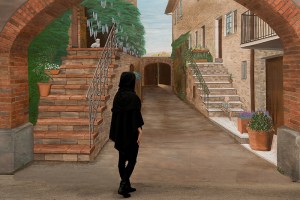
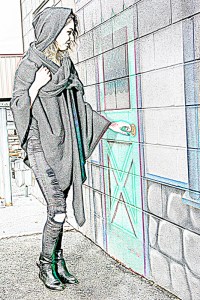
The three of us ambled up and down the alleys. There were so many places that demanded Heather to pose for us in front of. We even tried adding her into one of the large murals that looked like a walkway into an Italian villa. There was a small green door that someone had painted, and both Jo and Heather agreed that it would be like Alice in Wonderland if Heather reached down for the doorknob. We could have spent the day wandering the alleys photographing Heather, but eventually the cold crept in and we decided it was time to finish photo session talking and warming up at a coffee shop.

We had a good day. We discovered a new place where we can do photography and we all worked together to produce some interesting photographs.  Heather is leaving town for a job in the fast paced coastal city of Vancouver, and our photos will surely give her some great memories of the city she has been living in for some time now.

I think Jo and I might invite a few photographers and models to join us another time to do a bit more exploring around the back alleys.


Wells Gray Provincial Park. 


The morning news said to expect snow, overcast days and cold weather. So I decided I had better take a last visit Wells Gray Provincial Park with out the snow. I had been lazily putting off spending a day in that scenic park. Gosh, it’s only a two and a half hour drive to get there, and I am not that busy, so I couldn’t come up with an excuse not to throw my camera gear in the car and make the drive.

I first visited Wells Gray back in 1971. A friend and I had driven up the east coast of the US into Canada, traveled around Cape Breton, and then had a leisurely drove across Canada to Kamloops, British Columbia. Someone we met in Kamloops suggested Wells Gray Park.

I remember driving along the rough, rutted dirt road into the park and marvelling at the quiet wilderness encroaching from both sides. Until the road became blocked by many stern looking women carrying placards and standing by a big sign demanding that the road should be paved.  When we stopped someone thrust a petition through the window, while telling how the school bus had driven off the dangerous road we were on, and required our signatures. I am sure they saw the California plates on the front of our 60s Ford Econoline van, but they didn’t seem to care so we quickly signed their petition and were allowed to carry on.

I smiled remembering that as I drove on the pleasant road that had been freshly paved, yet again, and slowed down to look at the Black Horse Saloon and guest cabins that now sits where those women were. I guess they got their way!

The park was empty. There were no cars or tourist filled busses on the roadside. Gosh, I felt special.

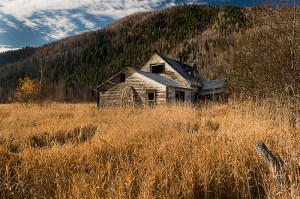
I have my favourite stops for when I don’t feel like hiking. There is an old abandoned building on the way into the park that I have been photographing for years. I am always surprised to see it still standing.

My second stop is to climb under the bridge that crosses the Murtle River. Going under the bridge gives a better location to photograph the “Mushbowl” and the large smooth rock surface is filled with big, round, deep holes. It’s a fun place to wander.

Then I made a fast drive to Helmcken Falls. Not so much because I really was in a hurry to get there, but because I had finished three cups of coffee and really needed to get to an outhouse. I got there and rushed to the privy only to find that the door had been unceremoniously pried open and the toilet paper had been shredded off it’s wall hanger. My friend Jo had mentioned that I should watch for bears, but if she does ask me I’ll just tell her that I am sure a large squirrel ripped up the toilet paper and the door was off its hinges because someone else (with long fingernails) that also too much coffee must have been in a hurry.

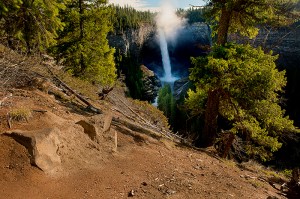
Helmcken fall was, as usual, in the shadow, but there was a nice fog and the sky had some clouds. Not that bad for photography. I like to wander away from the viewing platform, down past the end of the security fence, and just past the sign that warns hikers that they can fall over the edge of the canyon. That’s best because there is no fence to block my view.

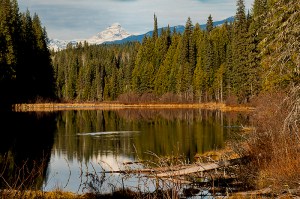
Then it’s only a short drive to my favourite place, Bailey’s Chute. As with the bridge, I climb down under the viewing platform.   My final spot is to park beside Shadow Lake. I like Shadow Lake because sometimes one can see a snow capped mountain to photograph in the distance.

Usually it’s hard to find and empty table at the end of Clearwater Lake to eat lunch at, but the park was empty.

My day couldn’t have been better. Although I have photographed that scenic park many times in the last forty plus years, I always enjoy the drive and the photography. And I am sure I have a good ten or maybe more years left in these old bones to be back photographing that park many, many more times.


The Camera’s LCD.                

Of all the modern technology conveniently packed into our DSLRs there is one major trap DSLR users should be aware of when attempting to find a correct exposure. And that, in my opinion, is relying on the camera’s LCD.

That little picture screen will lead you astray faster than believing a politician’s promises. It should never to be trusted.

This past week I talked to two different photographers that were wondering why their photos were improperly exposed when they downloaded them into their computer. However, when they handed me their cameras in hopes I would correct some programing error I immediately saw their problem.

The LCD is great for previewing and checking for closed eyes and composition, but it’s never completely trustworthy, and committing the following three transgressions are a sure way to give yourself an unpleasant surprise when you download your images for processing.

I’ll begin with the LCD’s Brightness. If you leave your camera on auto it will change the brightness based on ambient lighting and that can be confusing when one reviews images.

I suggest setting the LCD’s brightness manually for a more reliable way to judge the image. Some photographers even change it for different events so they know exactly how their image is meant to look for different ambient light levels. However, for most of us, a static setting will be just fine. Whatever brightness we our LCD to, it’s going to be better than auto.

My next thought goes to the Histogram. Even with the LCD set to manual brightness, many still only rely on that JPEG preview without paying attention to, in my opinion, one of the best features on digital cameras; The Histogram. The histogram gives a mathematical bar graph representation of the image’s tones. It is also a quick and easy indicator of an under or over exposed capture. And most importantly when the graph shows clipping on the far right or far left, that the photograph is losing detail.

Reading the histogram may be a bit daunting at first, but it’s just a simple bar graph and with a little research and practice reading the histogram will become second nature.

And finally the Highlight alerts. Highlight alerts are a flashing overlay that can be set up to alert when there are clipped highlights. This means that some areas of the photograph are to bright and have no detail recorded at all. The flashing areas on the LCD that many affectionately call, “blinkies” show us where the detail is missing.

It is important to remember that what we are looking at is, in fact, a JPEG preview and hopefully you are shooting raw and won’t actually lose that all that data when opening the image to post-process. However, if a large portion of the image is flashing your camera is alerting you that much of the data may not be recoverable.

If the subject is a bride and her white gown is flashing on the camera’s LCD, you’re in trouble and need to dial back your exposure or face a very angry bride when she sees her expensive gown is reduced to a wash of pure white.

Every camera should come with an instruction manual. The Instruction Manual is one of the most important accessories you have with your camera. And if the camera was purchased second hand it is very easy to find the instruction manual on line. The instruction manual will help you understand and control the three important LCD features I have dicussed.


Light the Portrait workshop part two.                                              


The second of my two day off-camera lighting workshop is now over and I am pretty sure I have converted a few more photographers to using off-camera flash indoors and out.

The session we just finished was all outside. I would have been happier with a warm, sunny day that had deep shadows and harsh light, but what we got was a cold, slight overcast day instead. Oh well, at the end of the last session I told everyone (yes, our model too) to come prepared for a cold wet day.  As it was, the rain came at night with a wind that dried things out by morning, so all we had to contend with was a cool October, and fortunately, windless day.

Whether one is shooting under a bright sun or overcast conditions, the goal should be to balance both the ambient and the light from the flash. The subject shouldn’t look like a deer-in-the-headlights and the background shouldn’t be unusually under or over exposed.

I began by discussing TTL flash and how to set up and use high-speed sync. Then progressed to demonstrating manual flash lighting. I will say that TTL is wonderful for fast moving events and high-speed sync allows the photographer amazing control over ambient light.

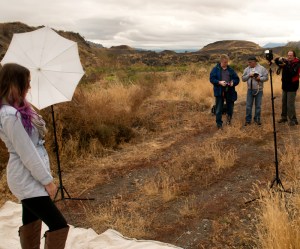
Our first location was in the middle of a field where I had set up a backdrop and two flashes. The 15X15 foot backdrop was a well-used old painter’s tarp that I had found when sorting through the garbage at a house vacated by some tenants who snuck out during the night to avoid paying rent. A drag for the landlord, but an excellent find for me.

Painted backdrops are expensive, especially if they are large and seamless. However, for budget conscious photographers I suggest purchasing a painter’s cloth from the local hardware store and dying it grey. All those that want to be creative need to do is work on the dyed cloth with some spray paint or a large sponge dipped in paint. Instead of spending the extra cash on a seamless cloth, one just employs the cloning tool on the seams in post-processing.

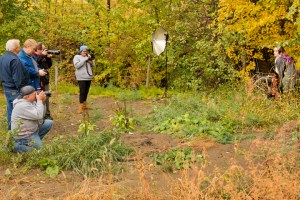
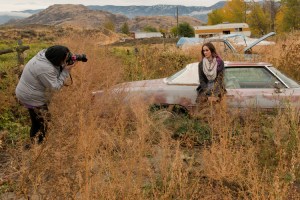
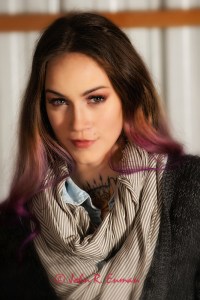
After using different light modifiers at the backdrop location we moved to the edge of the meadow with it’s colourful background of fall leaves. Then we all carefully climbed down into the deep shadowed creek for some photos. After that our model, Sarah wanted to pose against a discarded Cadillac resting in the field. That Caddy was caked up to its bumper in mud from a spring flood that washed out the bridge and almost damaged the studio. From there we posed our model against an old rail fence and finished with a setup using flash and reflectors in a large open barn.

I know that between the very active day and all the handouts I gave those in attendance everyone was dealing with a bit of information overload. Hopefully they will review their notes and remember how we set up the pictures they have on their memory cards. After a few days and a bit of practice everything will come into focus. Pun intended.

Light the Portrait workshop        


This past weekend I lead the first day of a workshop titled “Light the Portrait”. My goal during the two sessions was to help photographers understand how to use light, indoors or out, when they photograph people.

Fear-of-Flash has always been a topic of discussion for photographers photographing weddings, and portraits both indoors and out.

American photographer and author of the Strobist.com blog David Hobby said,  “…You hear a photographer say, “I’m a strictly available light photographer, I’m a purist.”  He continues, ” What I hear is, I’m scared of using light so I’m going to do this instead. Well, for me lighting was a way to start to create interesting pictures in a way that I could do it.”

It’s with those words that I began the workshop that would discuss using both studio lights and speed lights. Adding that personally, I always use a flash when I make a portrait of someone inside or outside. I don’t care if the ambient light is bright or dim.

My goal is to not only help photographers gain an understanding of off-camera lighting, but to also convince them that using flash will separate their photography from those that rely on natural or as I prefer calling it, “ambient light”.

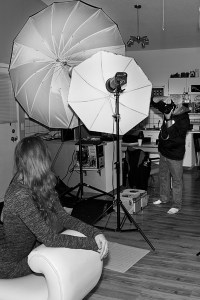
The first session was about the big studio lights and accompanying light modifiers like, umbrellas, softboxes and reflectors, to name a few we employed during the day.

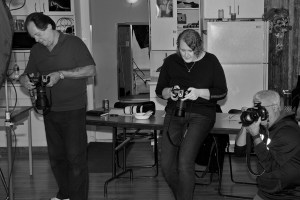
Those of us in Kamloops British Columbia are fortunate to have a local portrait studio that is not only large enough for a class, but also is packed with all sorts of lighting equipment, backdrops and change rooms for models. The portrait studio, Versatile Studio, also comes complete with a kitchen and dining area. And there are all sorts of props for posing.  All I needed to do was write up my lesson plan, print some handouts, book the studio, hire a model and show up in time to start leading participants into the exciting world of off-camera lighting.

I enjoy leading; I like that word better than “teaching”. I know to teach “is to show or explain to people how to do something”, but most of those that attend know a lot about photography and have already been shooting portraits for some time. All I need to do is build a bridge for them between what they already know and what I am presenting.  And as I stand with them in the studio/classroom I get watch that quick tightening of shoulders, widening of eyes and smiles when they suddenly get it. When that happens I can’t help but smile too.

Well, the first day is over and, as usual, they tired me out. However, I am already looking forward to next week with those enthusiastic photographers (and our energetic model). I wonder if I should begin next week’s session with the words of legendary filmmaker from the 1920s, D.W. Griffith. “Lights camera action”.


Vancouver Camera Show and Swap Meet     


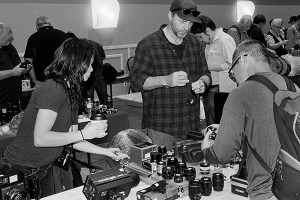
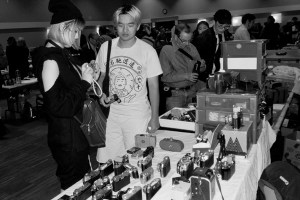
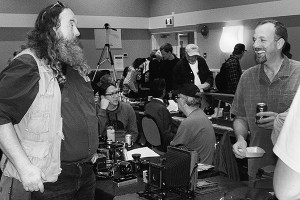
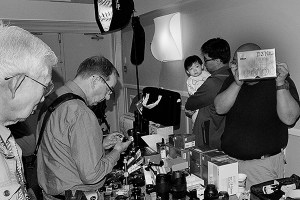
There wasn’t a better way to end this year’s dry, hot, smoke filled summer than hanging out in a large air-conditioned hall filled with cameras and other camera enthusiasts.

The year-end Vancouver Camera show and Swap meet was on the first Sunday in October and, of course, I was there!

I had convinced my friend Laurie Patmore to join me for the big camera sale. Actually it didn’t really take much convincing. If I remember right all I said was, “Do you want to go with me to the October 1st Camera sale?” And without hesitation he replied “yes”. Then I slide in, “If we take you all-wheel drive I won’t have to change to my snow tires.” I was glad he said yes to both, because I was too lazy to change my tires.

We didn’t need snow tires for the beautiful dry 4-hour drive through the mountains, even though they were required by October 1st.   With that notethe next morning we woke to a cool, clear, coastal, (also dry) autumn day, and by 8AM we were at our table setting out everything we had to sell.

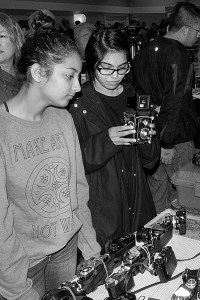
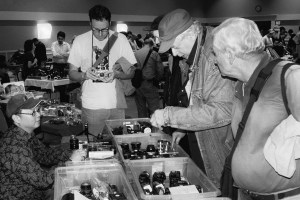
I always wonder what will be popular with photographers I meet there. Last spring the trend was for vintage equipment and although I could see lots of older photographers walking through the door, the majority were a younger crowd. However, as usual, I’ll use the word “diversity” here to describe the mixed bag of photographer types with different interests, specialties in photography, some preferring film, others digital. There were collectors of both past technology, and some that were looking for the latest digital had to offer. Nevertheless when the doors opened they all rushed in to find sweet deals that I am certain they got.

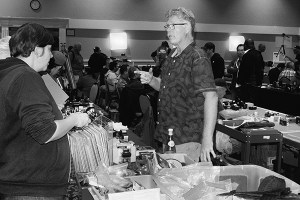
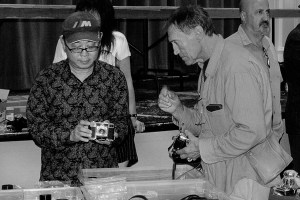
I spent an exhilarating day talking non-stop with other photographers about, hmm…just about everything photography. They readily showed me their cameras and told me stories about places and subjects they photographed. There were long time friends that stopped by to say hello, new friends to keep in touch with, and to my delight, local Vancouver blogger Michael Hoffmann (michaelhoffmannphotography.com) took time out of his busy day to show up and say hello. Gosh, in spite of a great day of selling the cameras and lenses I had on my table I even got time to wander around to check out all the neat photography equipment at other tables.

I know my main goal at the Vancouver Camera Swap and Sale is to “swap and sell”, but I must admit meeting people from all over the province, and finding out about their different interests means just as much to me.

I guess I finish with some words as I do every time to describe my day at Vancouver Camera Swap meet. It was, as always, invigorating, energizing, stimulating, entertaining, exhilarating and educational. Or maybe I could shorten that to just good fun.

The Vancouver Camera Swap Meet is an excellent way to meet and exchange information with other photographers, and to look at, check out, and buy an impressive selection of used photographic equipment that would not be so accessible anywhere else in Canada.

Photographing a late summer garden.   


I woke up to a wet day.

There was a light shower overnight, not the strong rain everything is dying for here in the southern part of British Columbia, but it did dampen things down the most since those rainy weeks last June. However, any rain is good and if I had better hearing I surely would have heard happy sounds coming from the garden outside my door.

The drizzle ended and as I lazily finished my morning coffee, like any serious photographer, I knew there was an opportunity waiting.

Many photographers that are excited with all the brilliant colours of spring ignore the dry plants at the end of summer. Sure the reds, blues, purples, bright yellows and greens have mostly gone, but there is still an abundance of colours if one just takes a moment to look.

I like photographing the garden. As that well-worn quote attributed to Mark Twain goes, “ I don’t know much about Art, but I know what I like”, I admit that I have no memory for plant names, but I like all the flowers, trees and bushes one finds in a garden.

With me, it’s not really the colour as much as it is the shapes. My approach to a spring, summer, fall and winter garden is much the same. I search for the shapes, differing tones and, of course, the light.

My favourite accessory for rainy days is my ring-flash. As I would with any portrait, person or plant, I always use flash. I usually operate my flash off-camera using light stands and light modifiers. Sometimes just holding my flash at arms length works at the end of the day. But after a rain I like the sparkling direct light a ring flash produces.

The ring flash is a flash that fits around the front of a lens instead of on the camera. I prefer keeping the flash at some distance by employing longer focal length macro lenses. My macro lens, a true macro, is a 200mm. That lens keeps me out of the garden ensuring that I don’t step on other plants.

I photographing the garden, spring, summer, fall and winter, calming. Maybe that’s because I am looking into and at the small details of a landscape ignoring the world around me

When my wife and I photographed the garden together her final images were about space, design and how all the bushes and flowers fit together and how the colours interacted. Linda’s visuals discussed the landscape rather than individual flowers. Mine are more intimate. As I wrote, I am always, “looking into…at the details” when I wander our garden.

As with any portrait, I am rarely satisfied with natural light and almost always add light from a flash. And during those hours of low light as the storm slowly drifts away adding a bit of light to makes a normally flat subject come to life.

That garden just outside my door is always waiting. I never ignore it and am always looking to see what it offers.

I found this quote by the famous Canadian nature photographer and writer Freeman Patterson, “Seeing, in the finest and broadest sense, means using your senses, you intellect, and your emotions. It means encountering your subject matter with your whole being. It means looking beyond the labels of things and discovering the remarkable world around you.”

Infrared photography is always a fun change.      


The wind came and the choking smoke from the fires in British Columbia and Washington State has disappeared. Gosh, it seems strange to see the hills across the valley again. I opened all the windows and doors to let the breeze reduce the smell of smoke in my home.

Well there it was waiting, a sunny day with only a few clouds in the otherwise clear blue sky, for any photographer with the time and energy to walk out for a few pictures of the golden fields and green forests that weren’t being burned by the wildfires.

I grabbed my camera, hopped in the car, and drove up the dirt road across the river from my home. I wanted a wide shot with lots of sky, but as I walked along the dusty road to make the photograph I began thinking how easy and boring my photo was. So with that thought in mind I got back in my car, drove home, dropped off that camera, and got our my infrared camera to start over again.

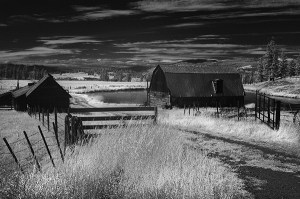
Black and white makes me think about the subject first and then the light, or how a subject looks in a particular light. Infrared, on the other hand, makes me think about the light first and then includes the subject. Of course the subject, and how it is composed and framed is important, but some things don’t look any different with a camera converted to infrared than a colour image converted to black and white. Those of us using infrared always must be thinking about the light first and then choose subjects that we think will look like they are photographed with infrared.

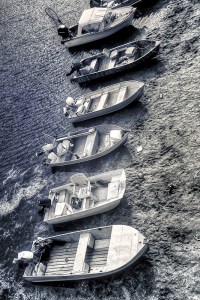
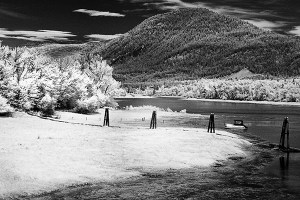
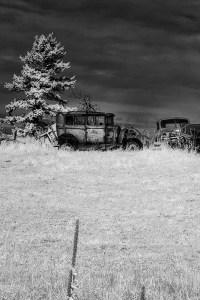
I stopped to photograph a landscape around a neighbour’s barn, and then hiked up the road a ways for a shot of an old car that has been rusting on a hill for a lot longer than I have lived in British Columbia. Then drove down to the river. The far bank was lined with campers and boats for the annual Salmon run and Pritchard is a favourite fishing location.

I drove across the bridge, got out and walked along the beach then back over the bridge. I won’t begin to count the number of times in the last 40 years that I have stood on that bridge and pointed my camera at the scenery along the Thompson River. I always find something worth photographing.

Using infrared gives me images that are a fun change from sharp colourful pictures I get with my DSLR. The glowing white foliage and black sky create an otherworldly mood.

I’ll finish this with what I wrote about infrared last May. “Shooting infrared is always an exploration, a discovery and moves a photographer far from the usual.”