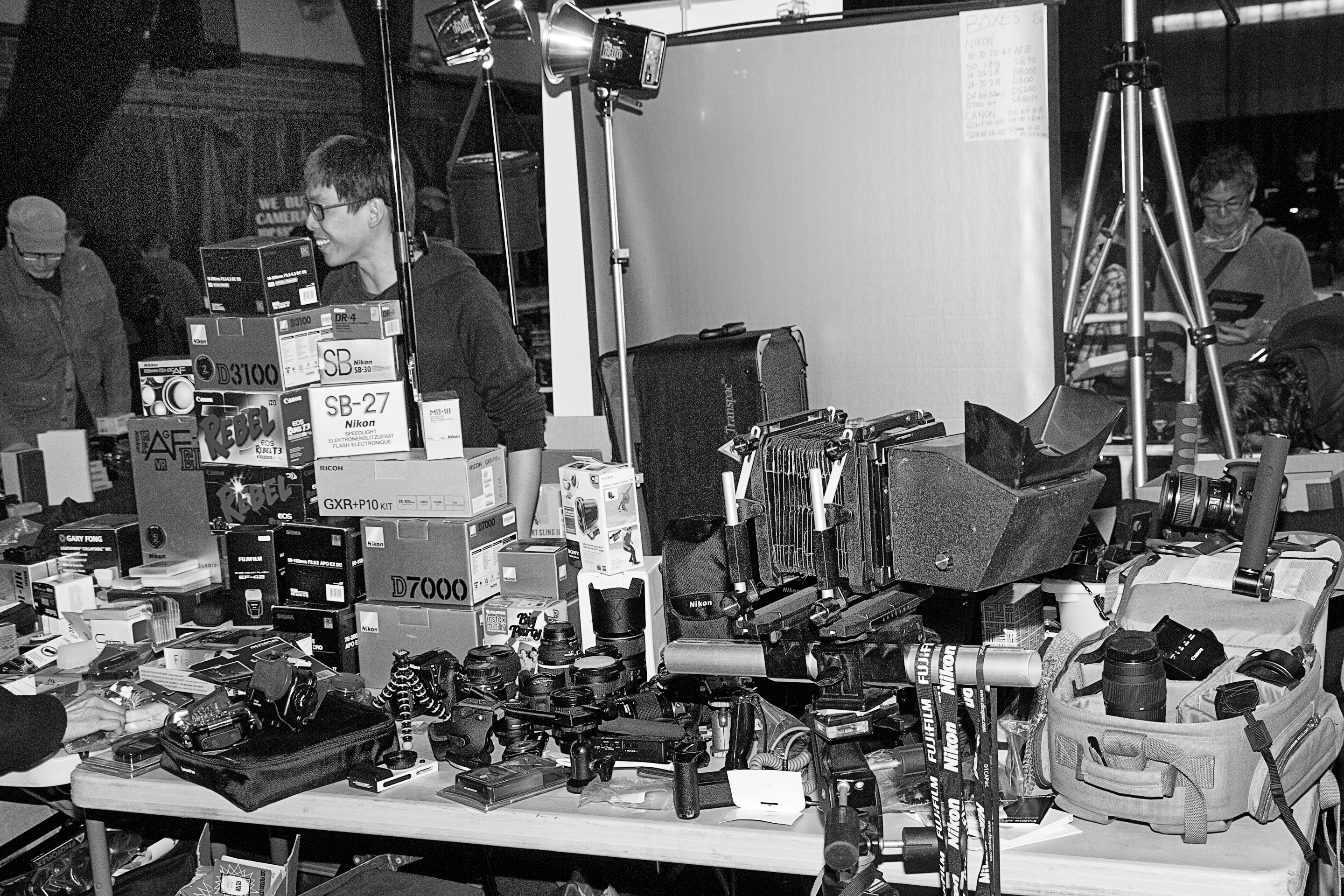
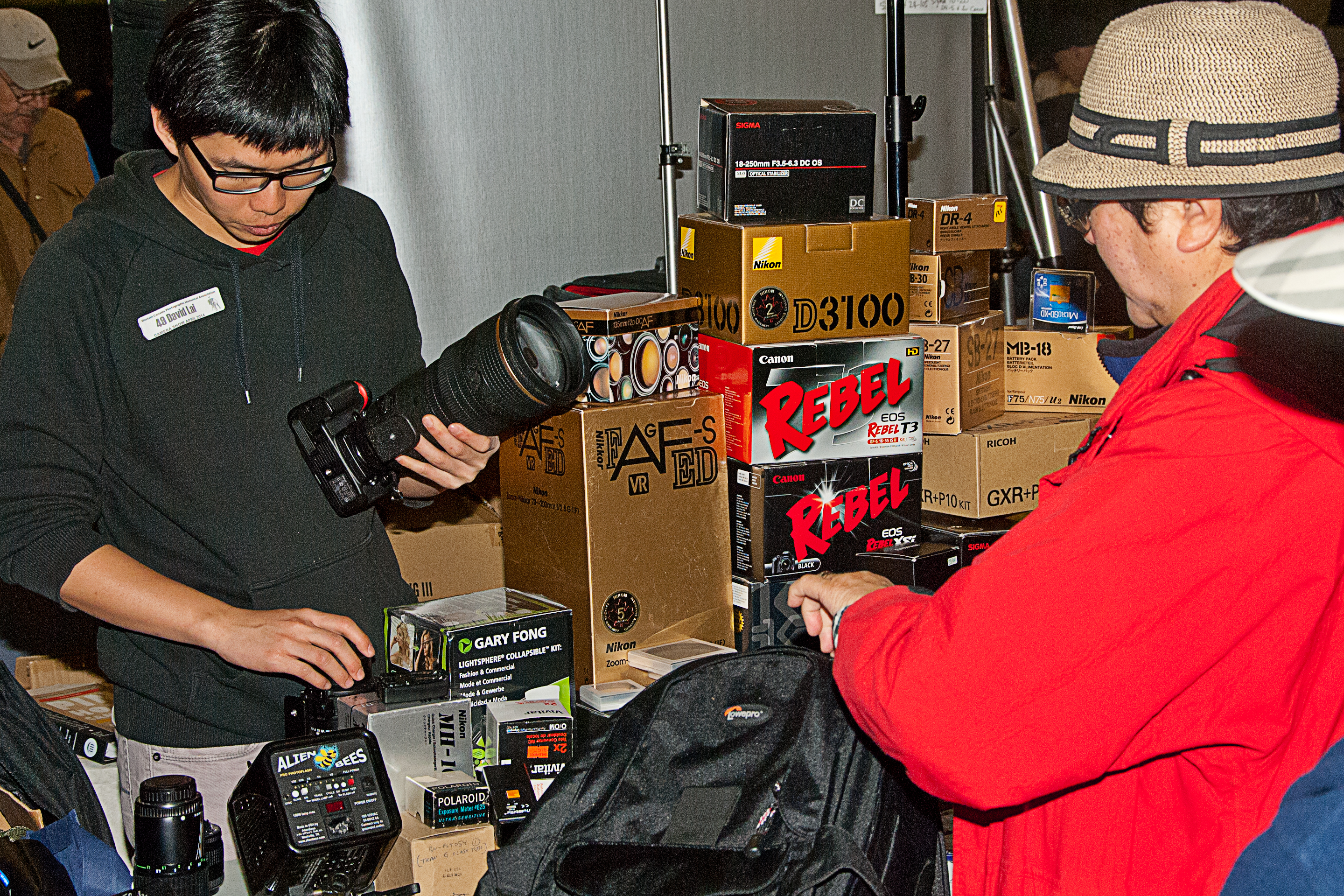
Vancouver Canada, Camera Show and Swap Meet

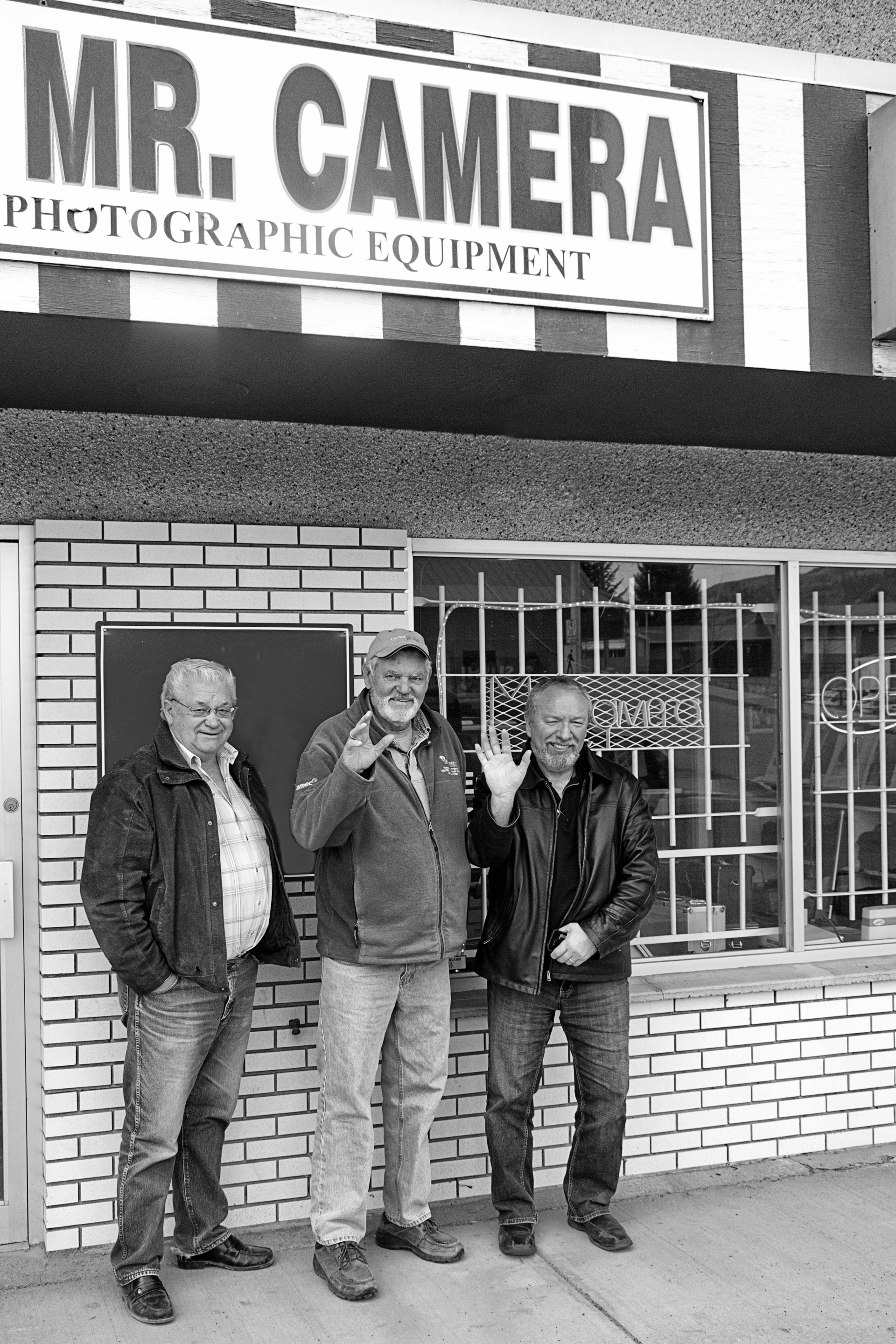
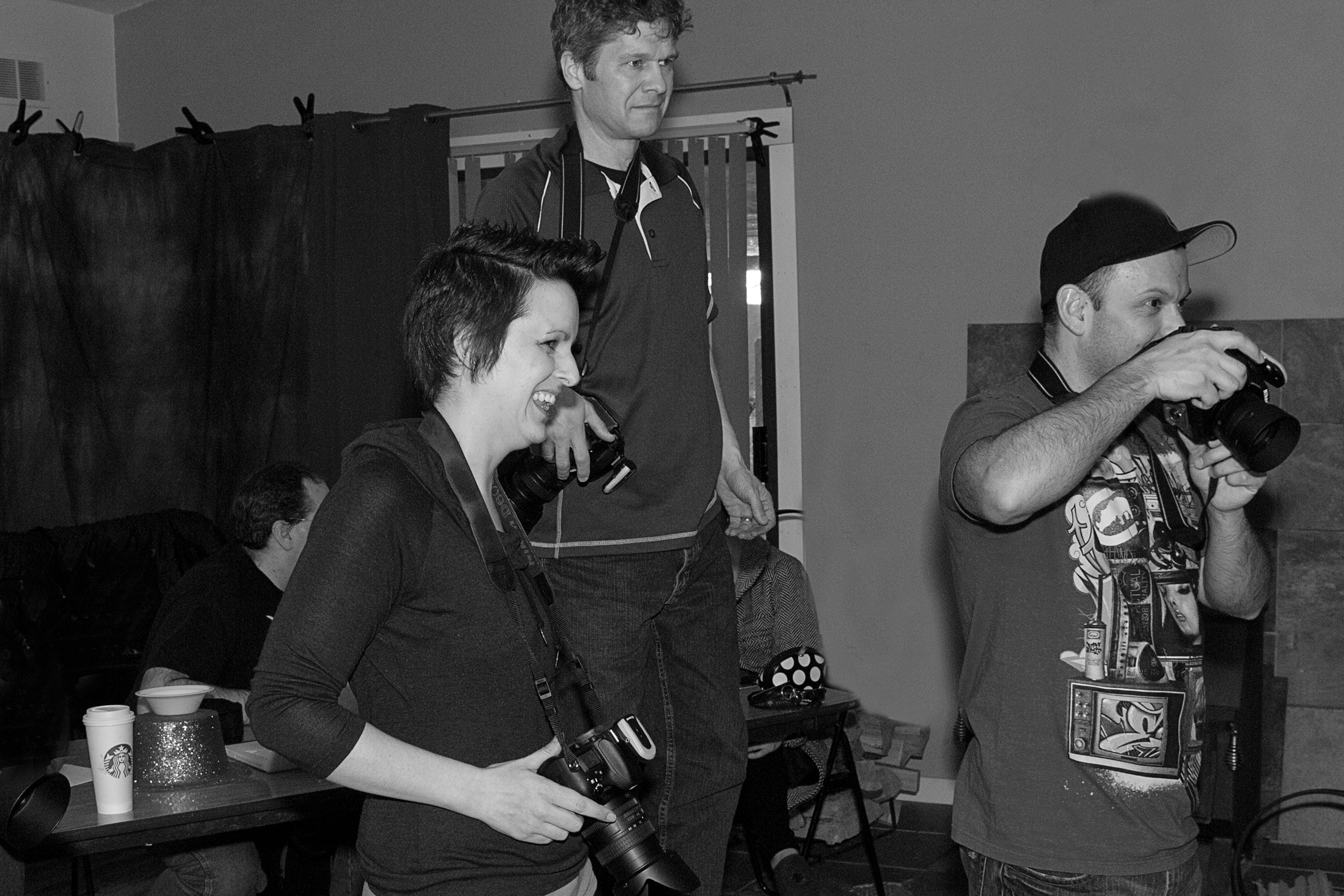
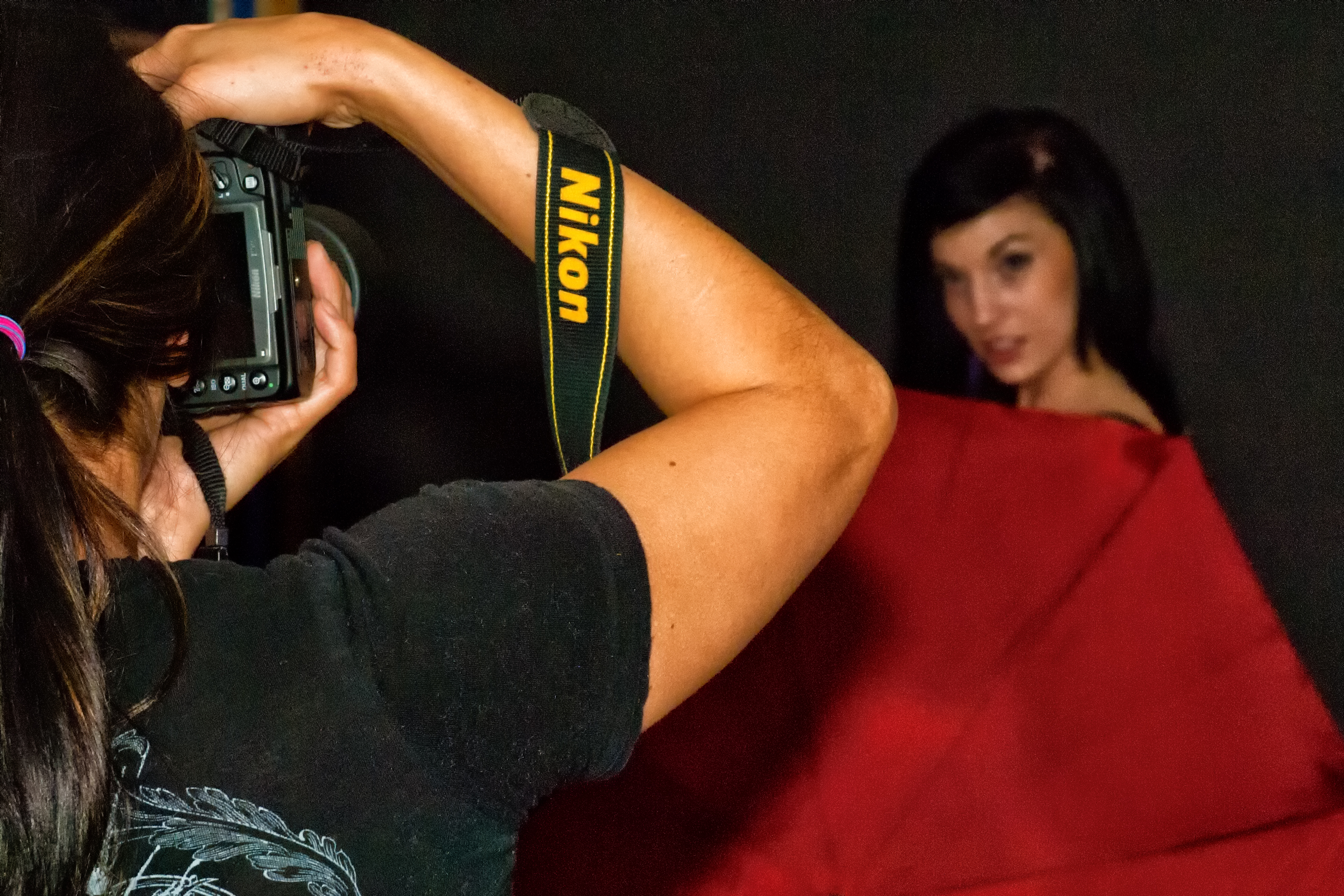
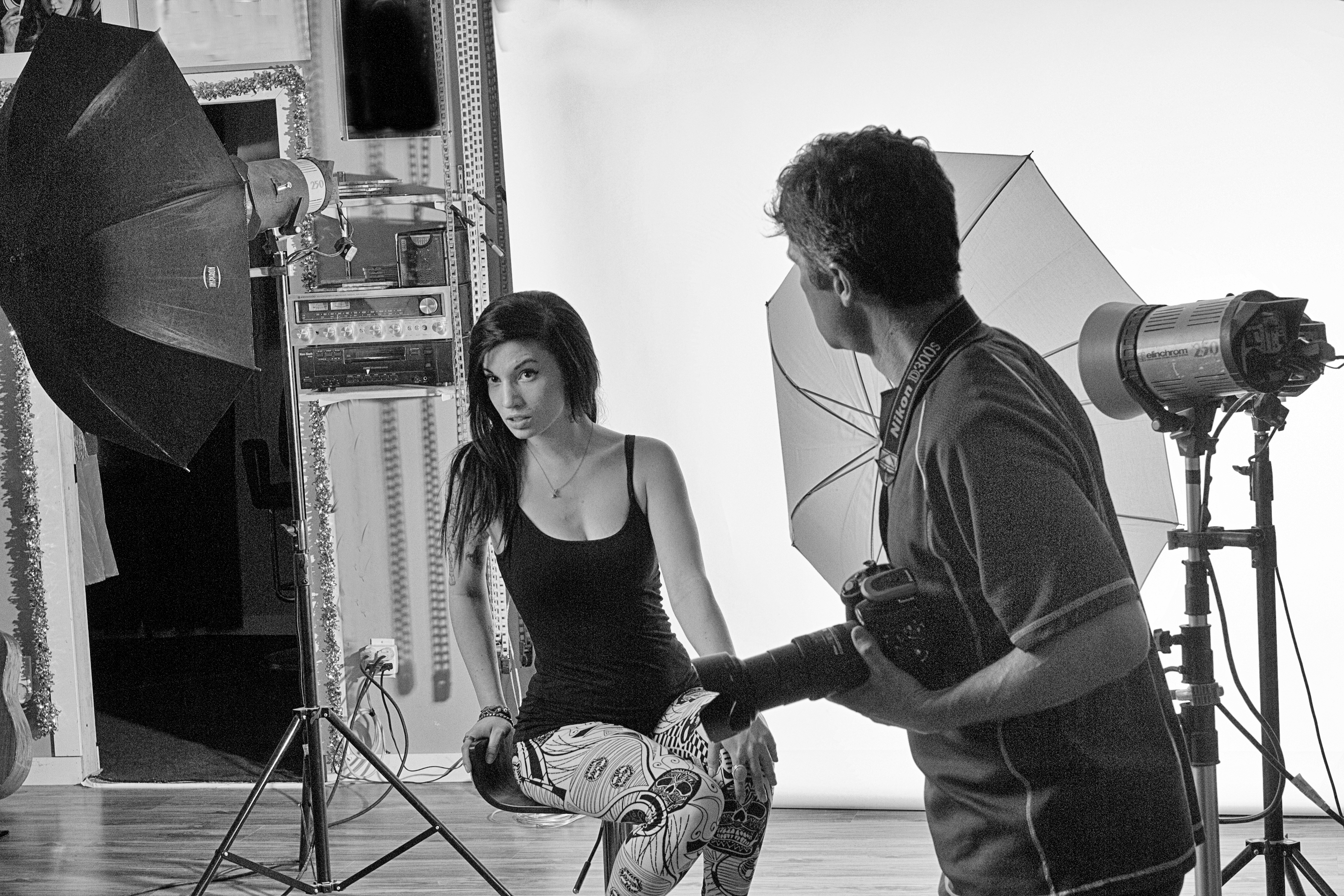
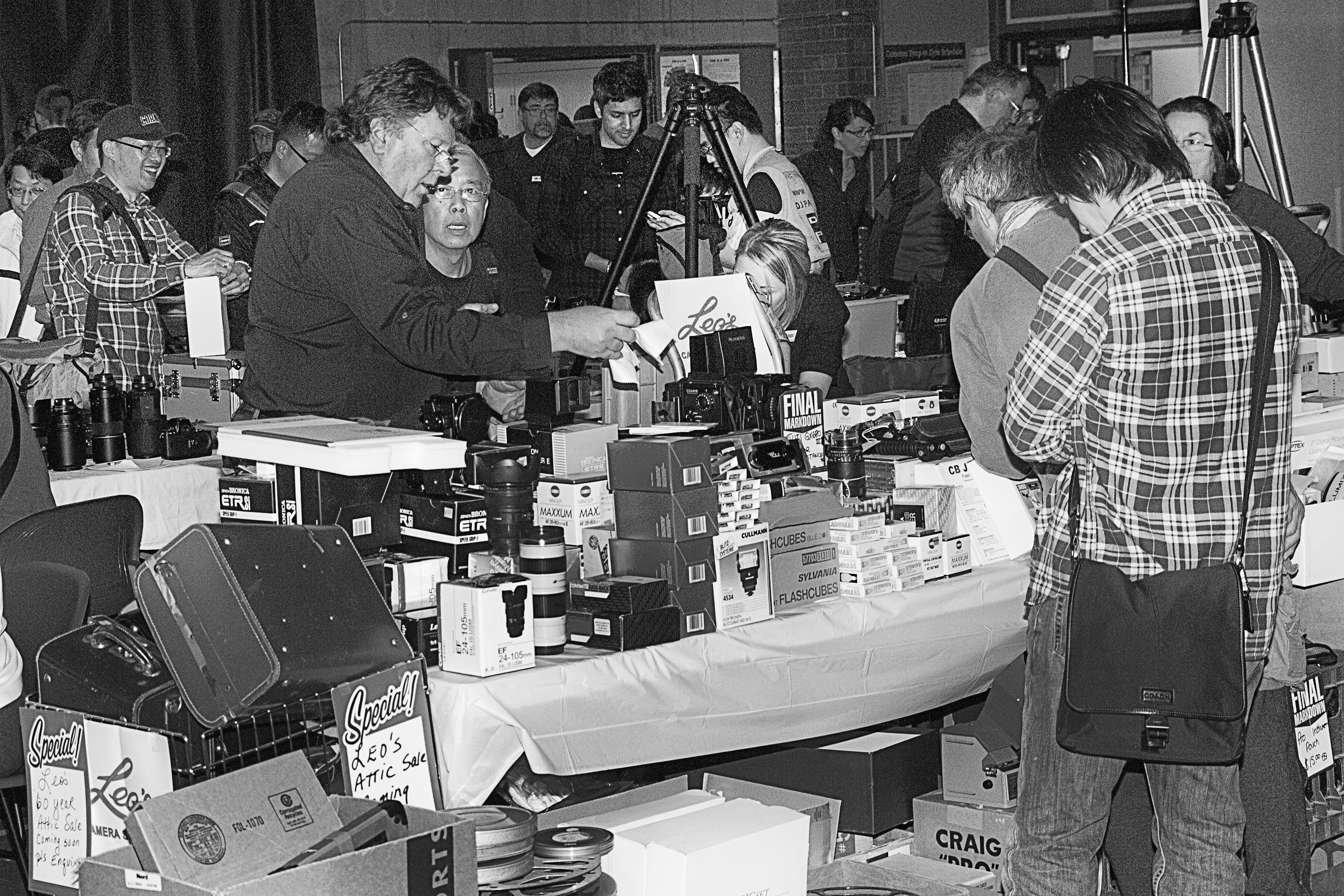
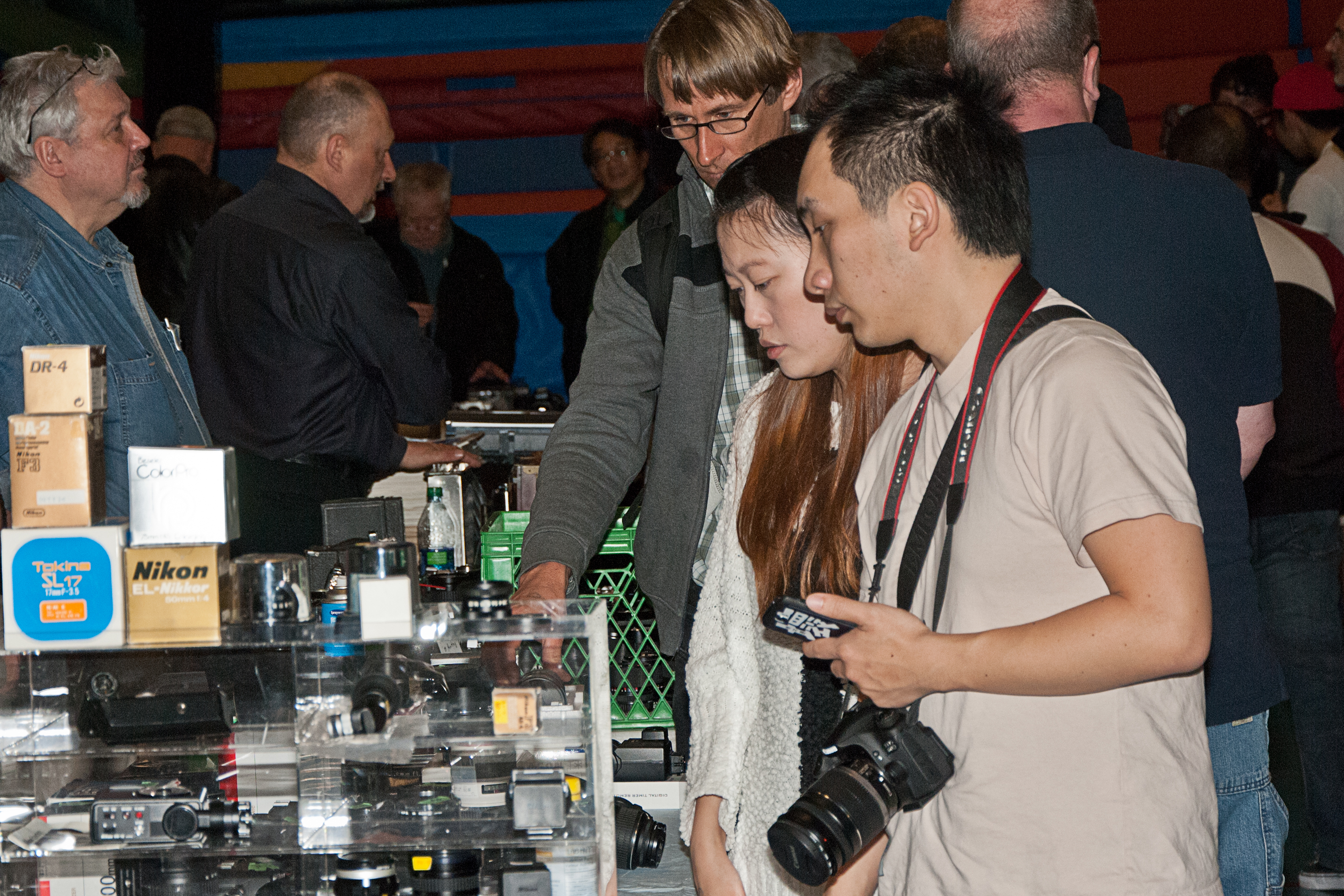
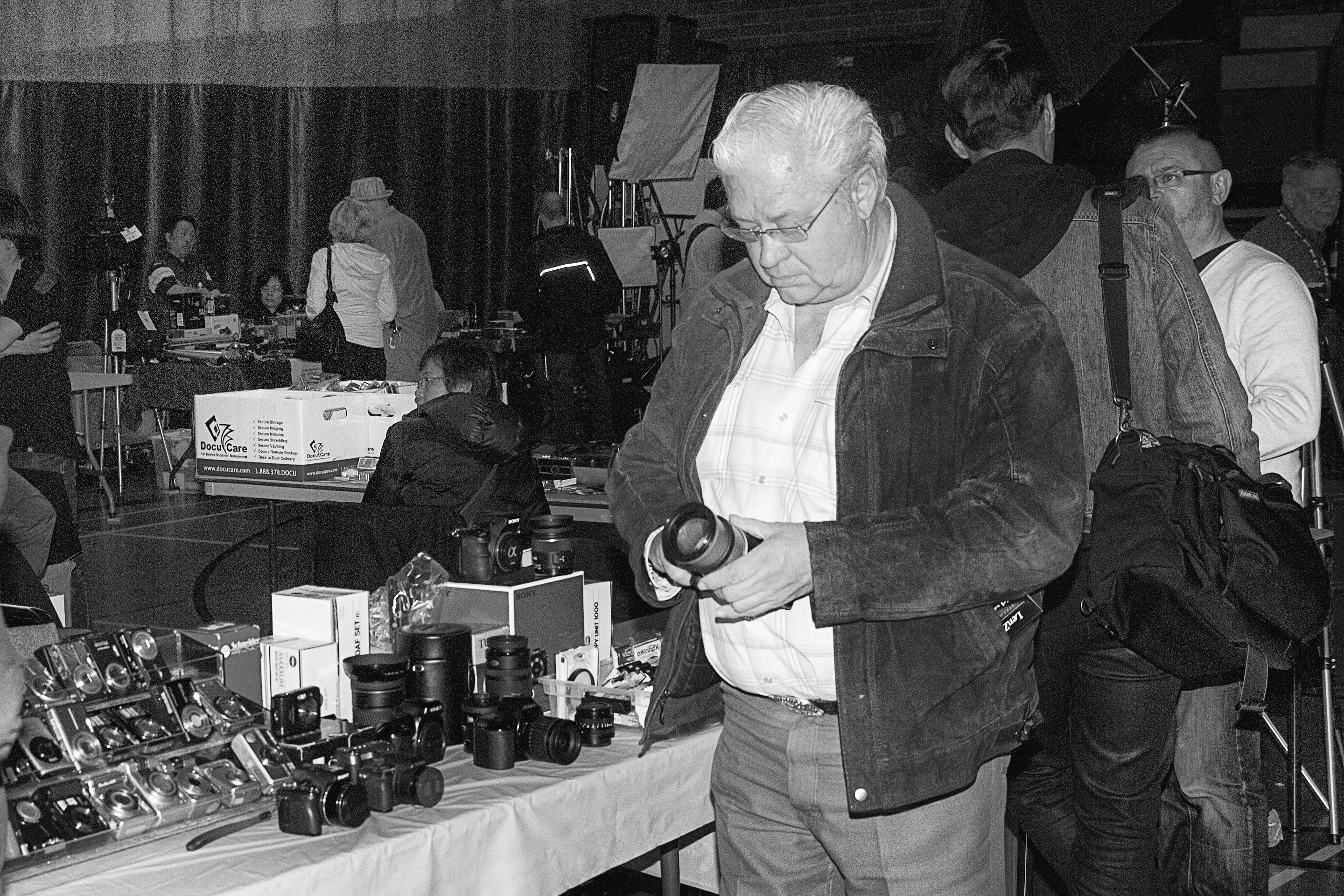
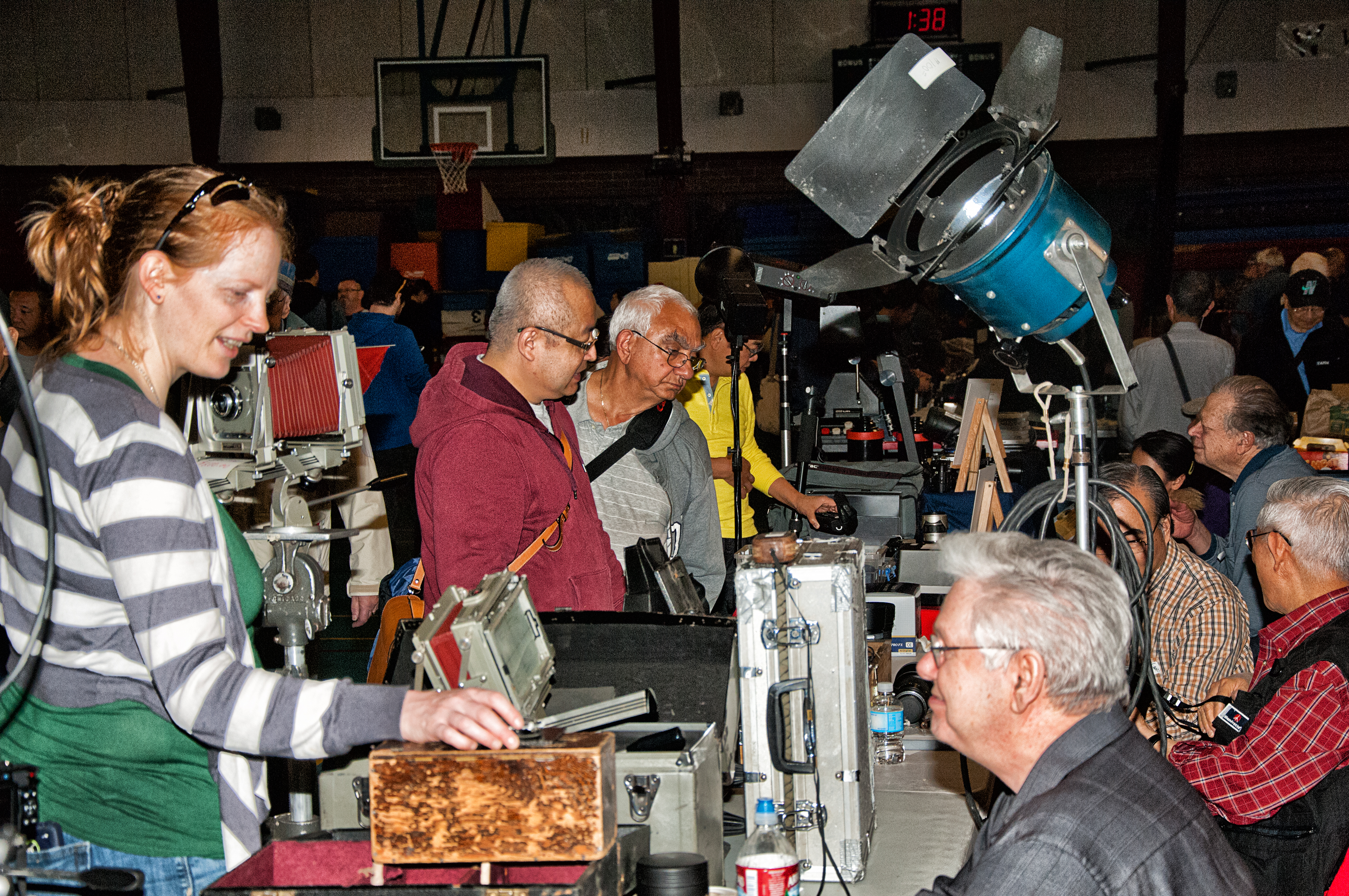
At the swap meet  Swap meet deals  Dave at swap  Another good deal  Photo equipemtn for sale  Check a camera

The clock on the stove signaled 7am and I heard the sound of my friend, Peter getting out of his truck in front of the house. I had my car ready as it was idling on the cold morning, and we jumped in and left for the hour-long drive to meet up with two more photographer friends, Dave and Pat at Dave’s place.

A bit over three hours later we had stopped for coffee in Merritt, driven across the scenic, mountainous and snow lined Coquihalla summit, driven through rain as we passed Hope, crossed the Fraser river into the warm coastal city of Burnaby and were parking across the street from the Cameron Recreation Center that was hosting one of my favorite events each year, The Vancouver Camera Show & Swap meet.

I will say the four of us were pretty excited. We had talked about the trip for weeks and had just driven for three hours talking about photography the whole way and now were walking into a large hall filled with photography equipment, all for sale.

Put on by the Western Canada Photographic Historic Association, and organized by Siggi and Brigitte Rohde, this long-running show has now reached its 38th show and makes the claim of being the largest in Canada with, I think, about 120 tables. And when I talked to the fellow at the door later that day, he thought well over 1,000 people had walked through the doors.

Yes, we were excited as we gazed at the crush of people. Hmm, maybe it was a congregation and we were entering some chapel filled with the faithful. Anyway, as soon as we walked in, Peter yelled, “see ya later” and headed off disappearing into the crowd and Pat and I started looking in earnest for a 60mm macro lens that he could mount on his new camera. I noticed Dave in deep discussion with a couple of photographers he had just met at a table packed with Canon gear.

The event was, as usual, well attended with all types of photographers from all walks of life. Photography, after all, is enjoyed and practiced by men and women of all ages and all cultures and I can safely say every demographic was there.

I have been attending The Vancouver Canada Camera Show and Swap for over twenty years and that was evident with all the familiar faces and constant catching up with people I only knew from this occasion each year. I even stopped to talk and congratulate the organizer, Siggi Rohde on another successful show. He mentioned how some people had wondered as far back as 1992 when the first one was held if a camera swap meet could be successful.

Well, the proof this year was in all the smiling photographers cradling gear in their arms as they wandered to the next table to purchase that one more “must have” item. I have always found the secret is to buy a camera bag in which to put stuff. And what about my friends, Dave, Pat and Peter? Dave decided against the lens he had checked out, but grabbed a neat photography vest, Pat found the 60mm macro lens he wanted, and Peter ended up with a Fuji 6×9 film camera. Oh, and although I wasn’t looking for anything in particular, I did find a great deal on a manual Yongnuo flash that will fit in perfectly in my off-camera flash kit and just for fun, bought an almost new camera bag with “Nikon” boldly sewn on the top. However, Pat talked me out of it on the drive home.

Now another Vancouver Camera Swap meet has come and gone and I am left with memories of how much I enjoyed myself. Truth be known, I could go without a cent in my pocket and still have a great time, but who wants to do that? I really enjoy all comments. Thanks, John My website is at www.enmanscamera.com
Critiquing Photography at the Kamloops Photo Arts Club

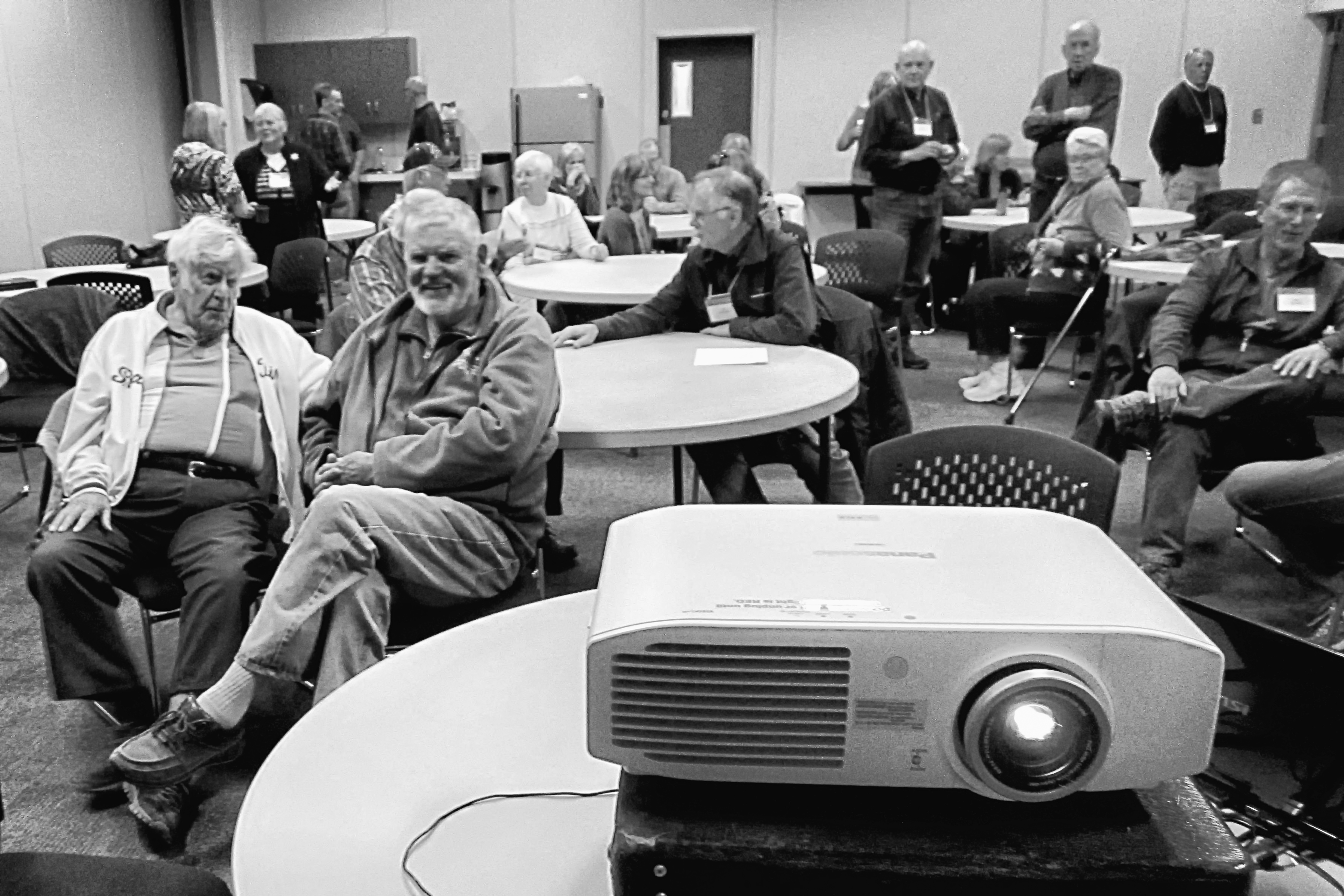
At the club critique

This past week I was invited to be the guest critic at the Kamloops Photo Arts Club.

Although I like discussing photographs, I was at first hesitant with that request. Organized photography clubs in Canada are accustomed to using specific competition rules of The Canadian Association for Photographic Art. Those rules are, of course, specific and must be very stringent.

Unlike that credible and important organization, my critiques of photographs tend to be filled with feedback, I am not selecting the best of the crowd, and I am more interested with what works than what doesn’t. However, the request came from photographer and club member, Linda Davidson, who wrote in the clubs newsletter about having me as a photography instructor in university, “The thing that Linda remembers from her classes with John were his critiques. He had the ability to see things that you may not see in your own work, look at images from a different perspective, not the usual point of view. He was always helpful and inspiring.” So with kind words like that I had no choice.

I remember a quote from the book “Impact – Photography For Advertising” by William Reedy, that puts into words how I view those photographers that are making good photography when he wrote, “To stop the eye, to set the mood, to make the sale.”  I believe that successful photographs must be interesting and thought provoking.

There is a general perception that “critique” means “to find fault with.” When I discuss a photograph I am not seeking to find fault. To me, the word critique means to respond to something, either positively or negatively, or both. The success of an image is how is works for the viewer.

Personally I prefer to use the word “Feedback”. Feedback is information-specific and based on opinion and observation. I have found that the best way to turn someone off is to find fault with their photograph. When I give feedback on a photograph I prefer to discuss what I like, or would like.

When a photographer seeks to make themselves better at their craft they, of course, need input from others about technical control like Exposure, Depth-of-Field and Composition. All those are important in creating a technically correct image. However, things like the mood the photographer set, and the story within the image, are what makes the viewer pay attention, and may not be so technically significant, but those are important all the same. Yet many critics fail to respond to those aspects.

Regarding the critique I provided for the Kamloops Photo Arts Club; I walked into a large meeting room with lots of people sitting around tables in conversation (catching up on each other’s photography I’m sure). The hall was set up with screen and digital projector, and after the club’s president quickly covered business and some announcements about future events I was introduced, handed a remote, the room darkened and I began to scroll through member’s images.

As I began I got a flashback of the years I spent teaching photography. I remember the slow growth as learners struggled with not only the concepts of photography and getting used to their cameras, but the long hours in the busy, darkened and sometimes smelly developing and printing labs. And I mentioned to those in attendance how much more I liked the shorter learning curve of digital image making and the amazing creativity one has with modern photographic post-production.

As I expected, the photography I was to discuss was a top-notch selection of quality images that crossed into all interests of photography. I felt like I should just sit back and clap as I scrolled through the selections and thank those present for the invitation. What a nice way to spend an evening.

I did discuss each image as it was presented on the large screen, and suggested a tighter crop on several, gave my perspective on what I liked about each, and asked questions about several. I think it would have been hard indeed to give negative feed on most of the photography I was fortunate enough to view.

I like to look at pictures. After all the dialogue about photographic equipment and where and what to take on that next photo excursion, what is really left is the final product of everything, the image. Whether in print form, on the computer monitor or, like that evening with the Photo Arts Club, on a large screen, everything comes down to that photograph “stopping the eye, setting the mood, and making the sale.”

I welcome readers comments. Thanks, John

My website is at www.enmanscamera.com


Happy Easter day to everyone.

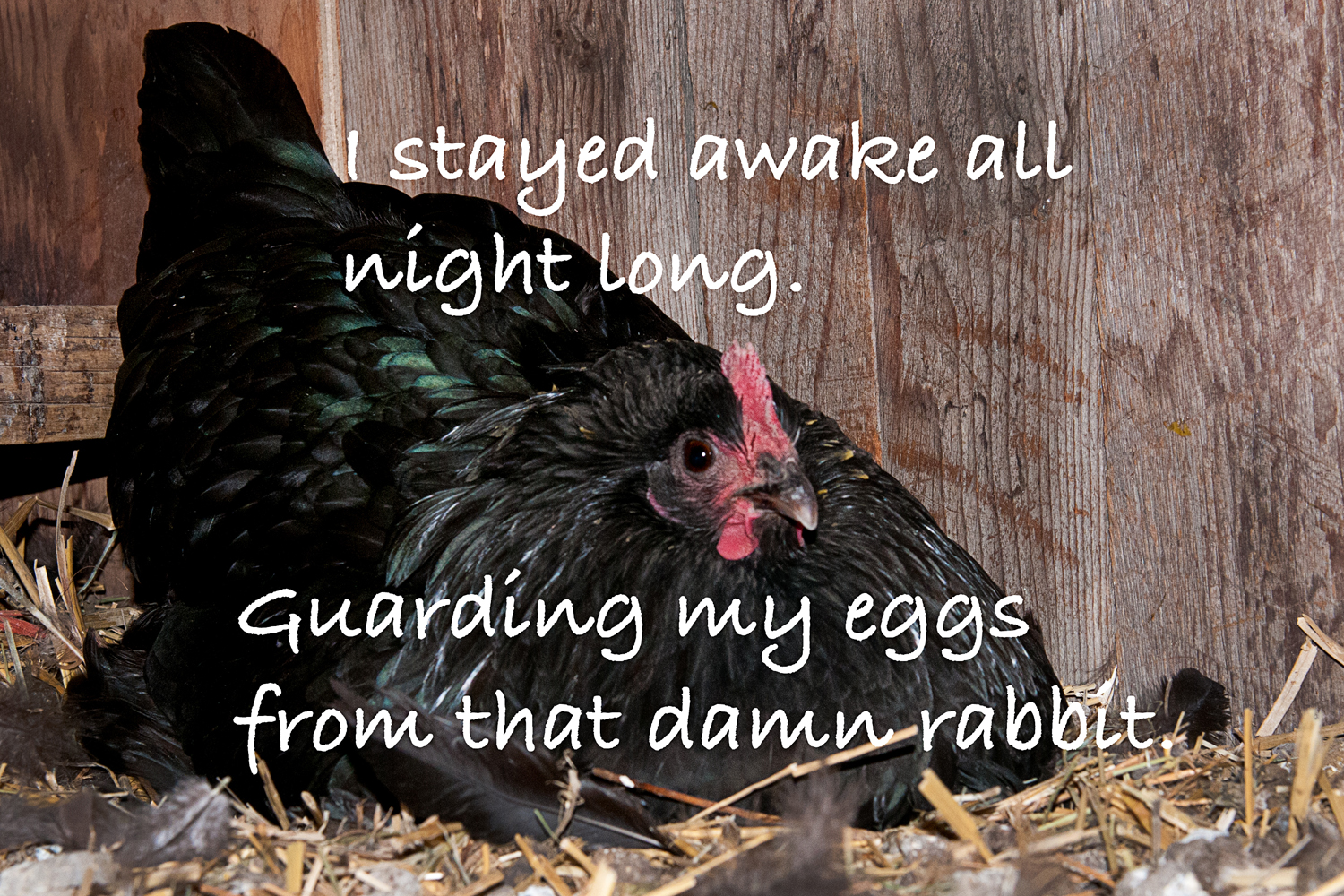
Chicken

Another roadside photographer, again.

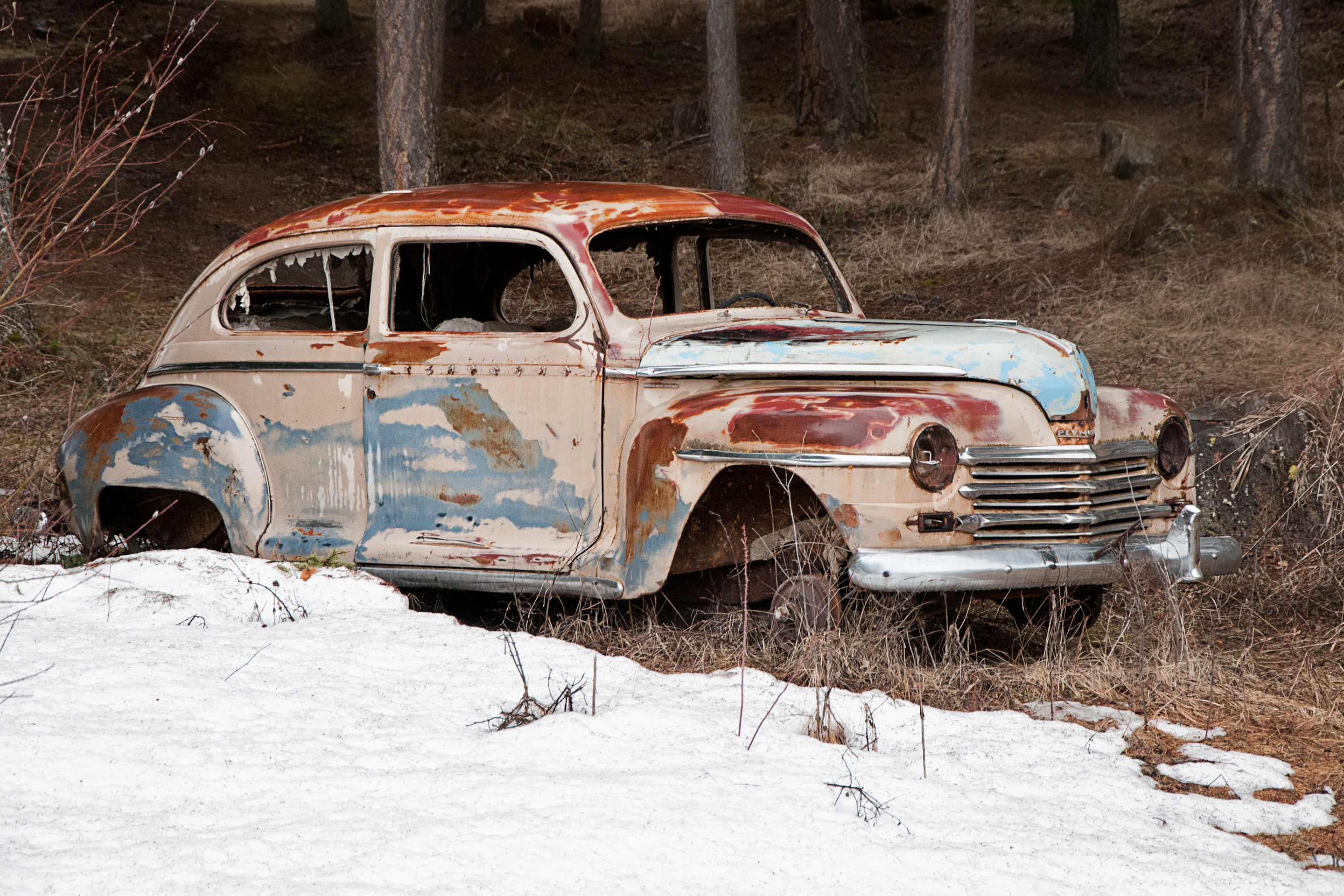
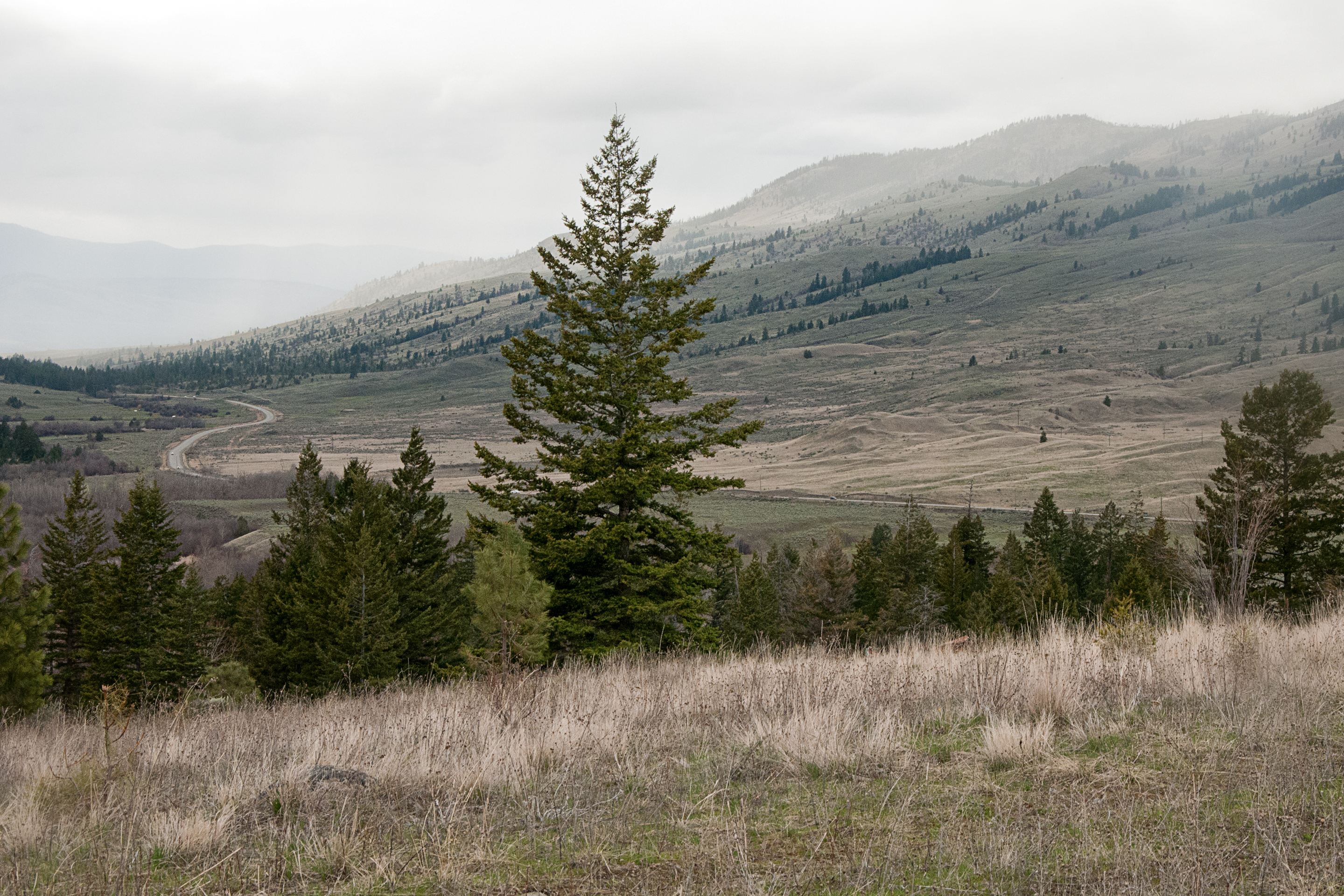
Thompson Valley  abandoned in the rain  Wet goat 1  wet goats 2  Forgotten in the rain  Rusting in the rain  Roadside in spring  Forgotten car  cows waiting in the rain  A wet road to Kamloops

Sometimes I just like to go for a drive. Rain or shine, it is always nice to just go out and look around.

We had been lazing around all day. I had put up one of those portable, collapsible canopies on the front porch hoping the day would be nice enough for us to sit outside for lunch, but the rain and cooling wind moved in. So I thought, what the heck, let’s get in the car and drive up the dirt road towards the forest ringed Hyas Lake and if the rain lets up a bit there might be a photo or two waiting to be made.

We packed our cameras in the car and set off. The day had a heavy overcast, but no low hanging clouds and the rain was, hmm…intermittent. Ya, that’s a good word for when its nice and dry till one gets about fifty feet from the car, then the rain comes down. And I forgot my hat. But I didn’t forget to bring a small kitchen towel and I kept wiping the camera down to stop water from pooling I places that might leak into the camera’s electronics.

Overcast days always make things looks much more colourful than bright sunny days. Not the sky, of course, but the trees, shrubs and grass do have a deeper color and I always add just a bit of contrast in Photoshop to bring out the damp colourful tones.

The dirt road was surprisingly dry till we started up the turn-off to Hyas Lake. Then it quickly became a snow covered, muddy rutted mess and we turned around.

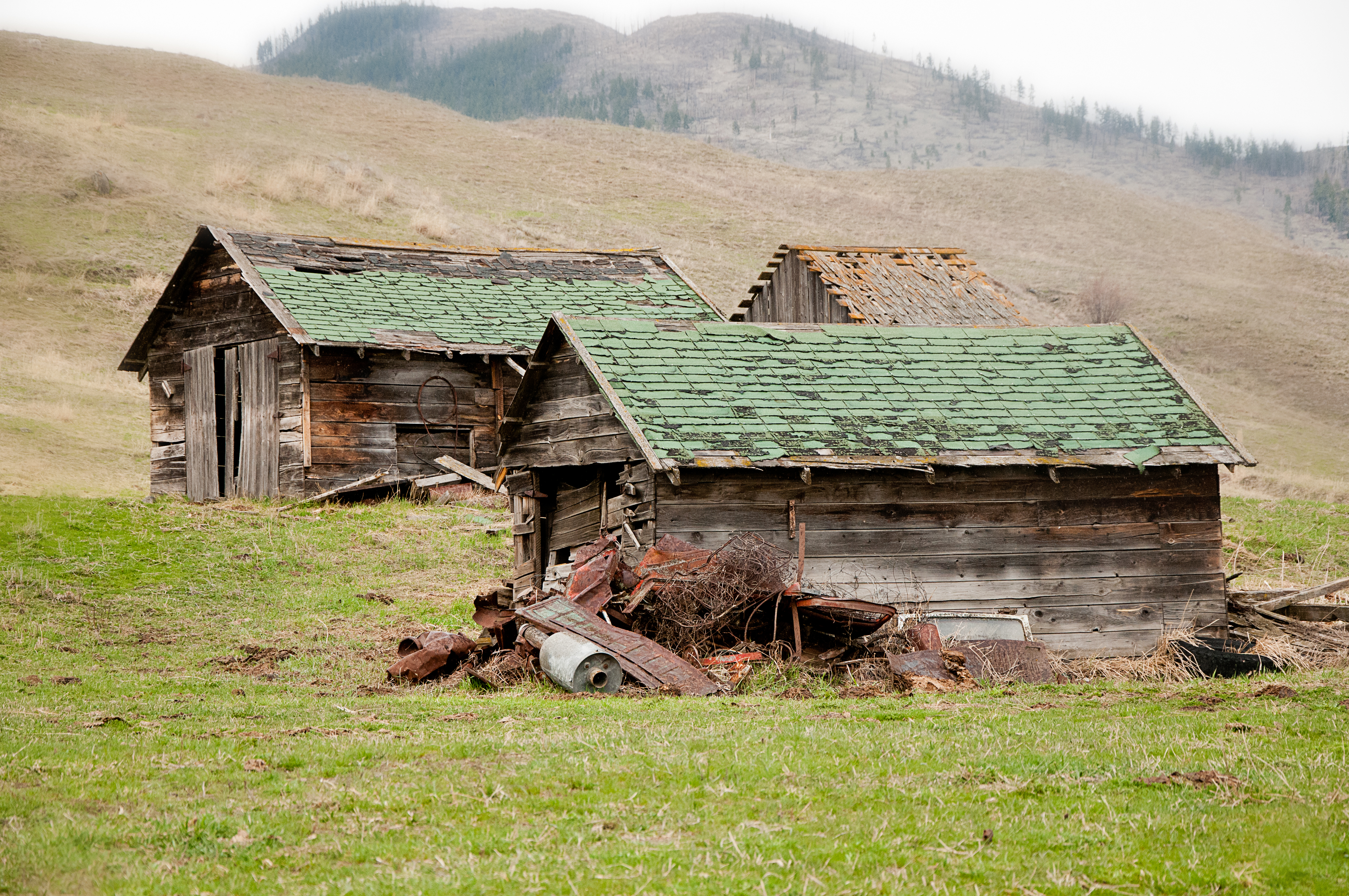
There are some old abandoned buildings along that road that are fun to photograph, although for years I have expected to see them gone. Old buildings have a habit of disappearing. Sometimes because of vandals, sometimes the landowners take ‘em down and sometime they just get tired of many years of standing.

I remember when I first moved to the Kamloops area. I spent months photographing crumbling wood and log buildings. The next year I engaged a local printer to make calendars for me that I easily sold that December. Within two or three years every one of the old abandoned buildings in that calendar was gone.

I am of the belief that the most successful pictures come about when one has a plan, but a slow drive is enjoyable whether one points a camera at something or not. I could say the plan was to look at the long valley, find out if those old building survived the winter, see how far we go before the road was impassable, and if the time was right make a picture or two.

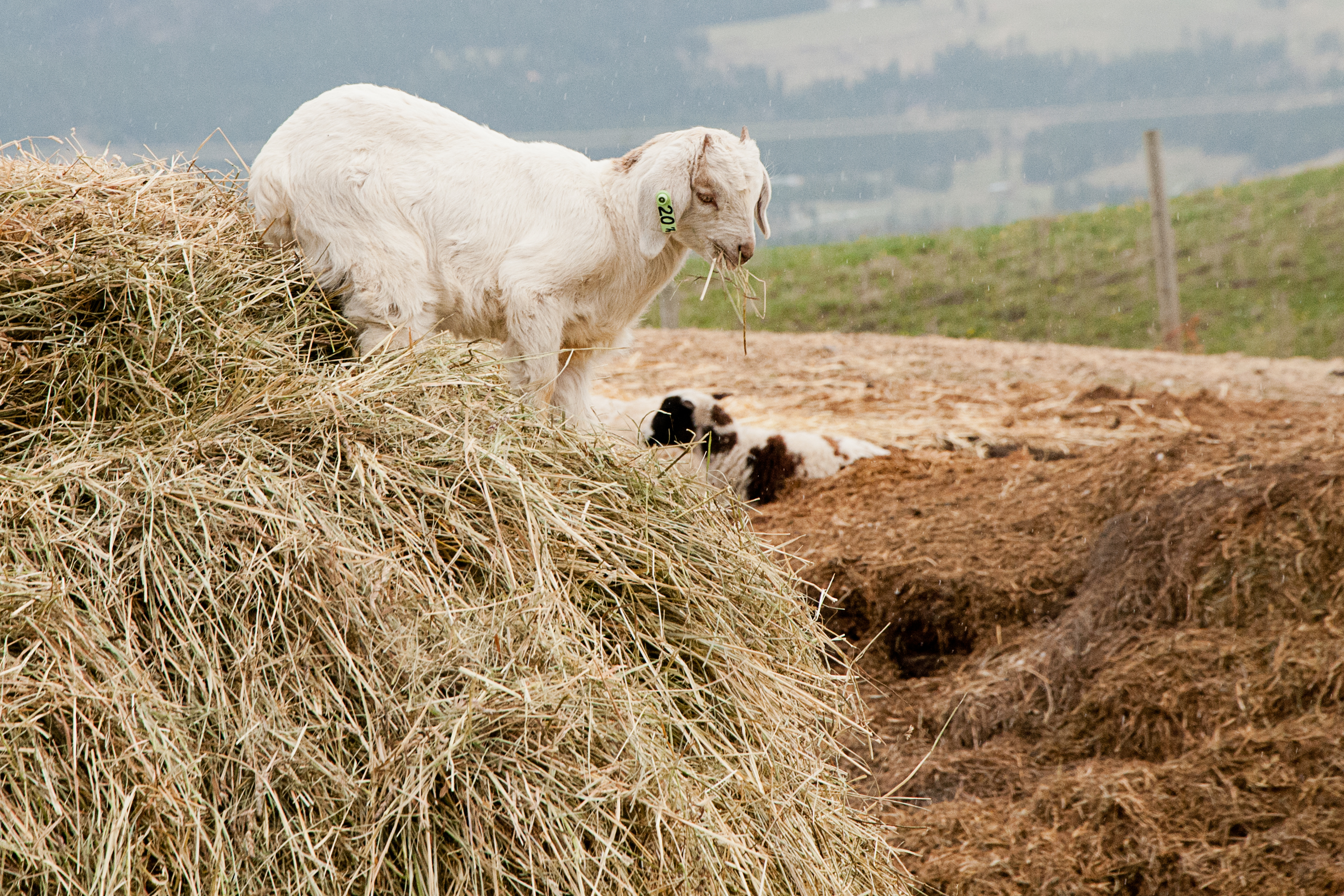
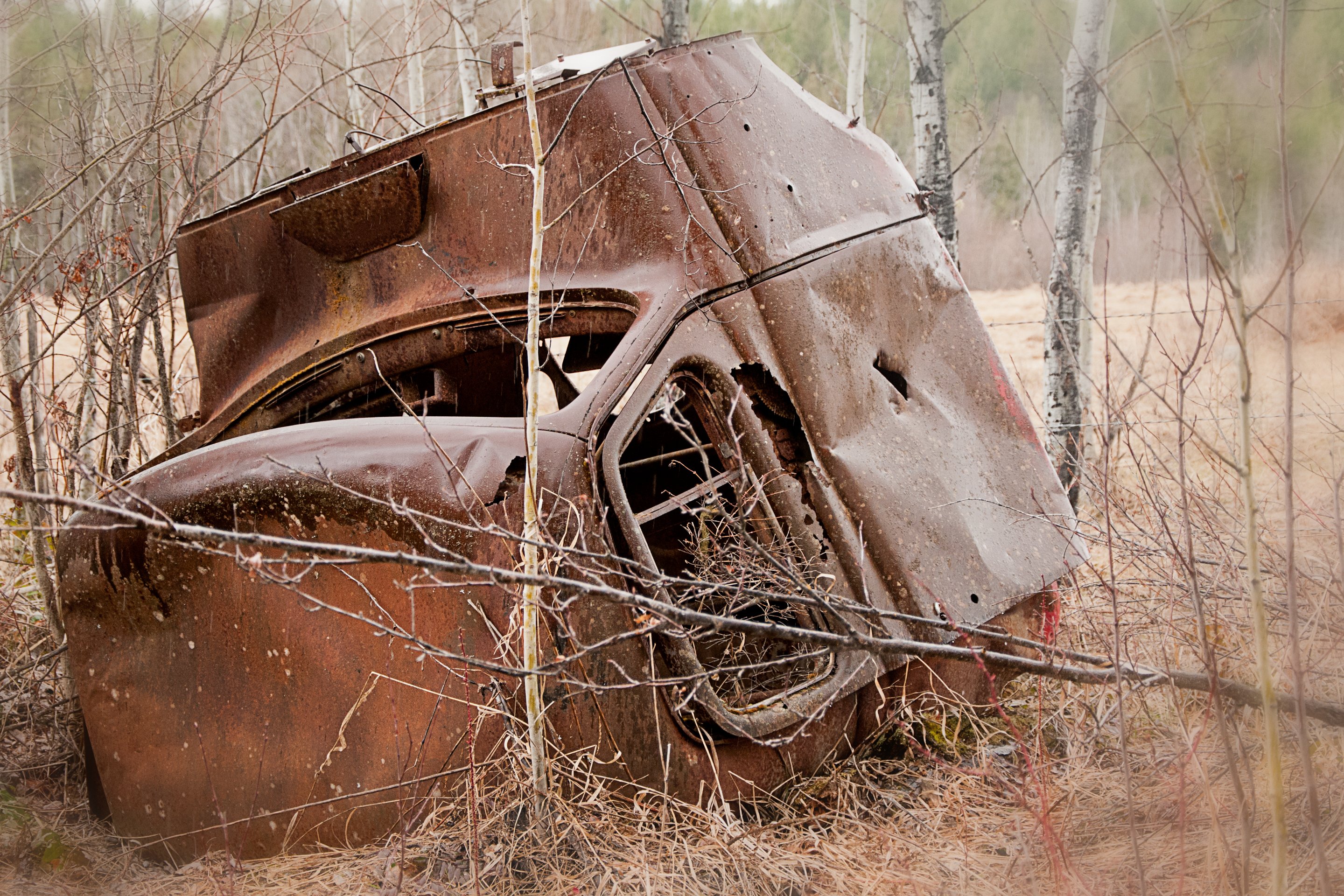
As it was I photographed a view of the snow capped Martin Mountain above my home, some goats playing on a mound of wet hay, a couple of rusting vehicles, some soaked cows in a field and another valley view. Not the most exciting day of photography I have ever had, but good enough for a lazy, rainy day I supposed.

Roadside photography is opportunistic and enjoyable, we talk, stop and look at things, make a few pictures. As we drove along the wet dirt road I thought of the many photographers I have known or read about that just pointed that camera and anything for the pure fun of it.

And I think many readers will agree with famous French photographer Jacques-Henri Lartigue when he said, “It’s marvelous, marvelous! Nothing will ever be as much fun. I’m going to photograph everything, everything?”

As always, I look forward to any comments. Thanks, John

My website is at www.enmanscamera.com


Having Fun Lighting Flowers With Off Camera Flash

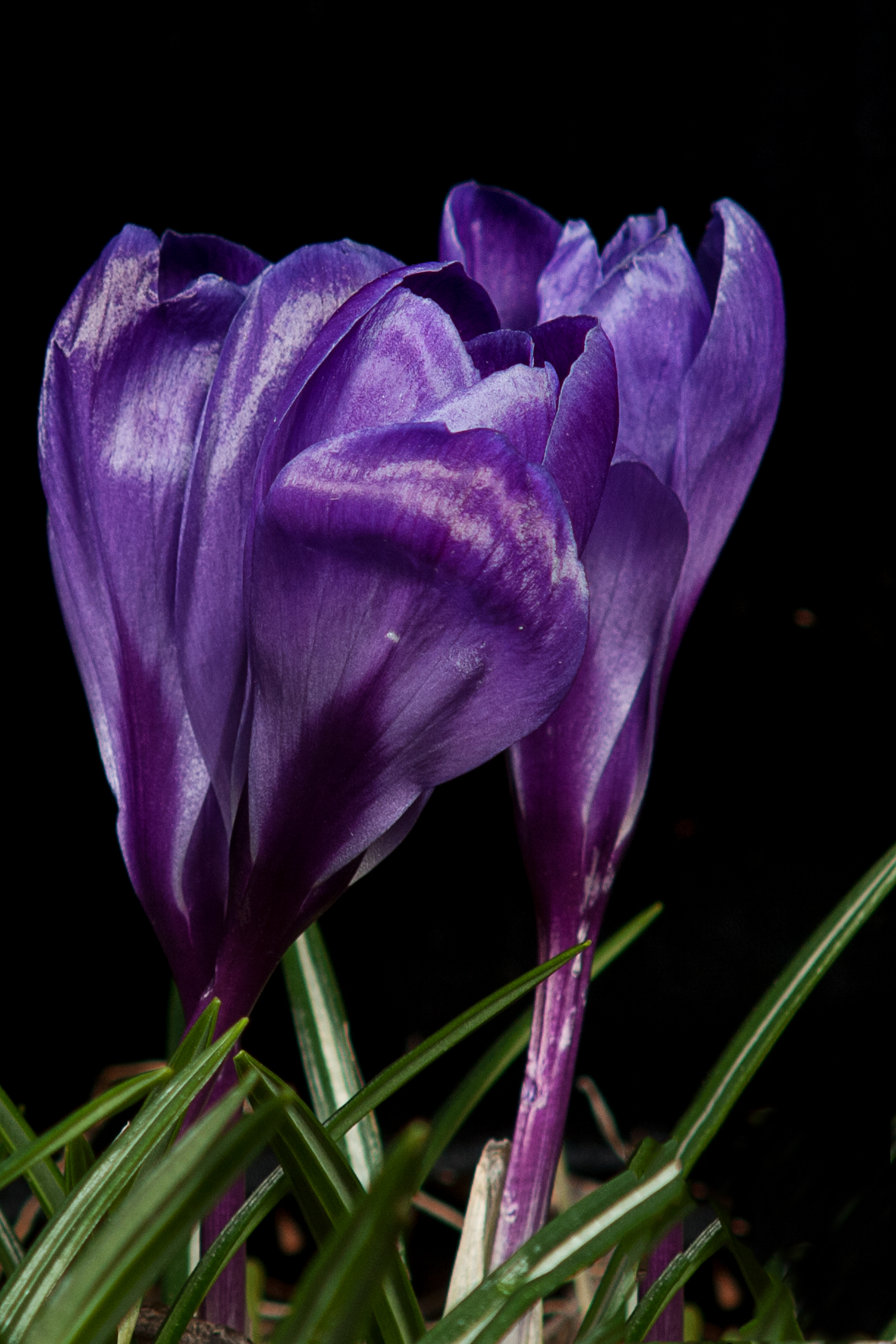
Spring Crocus    Crokus5

The snow has finally, and at last, left the north side of our house. It’s barely been gone about two weeks, however, that means two weeks of new growth in my wife’s garden.

I had been making notes in preparation for a workshop on using flash outdoors that I will be leading the first two Sundays in May, when my wife mentioned the crocuses were coming up everywhere, and I thought I would take a look to see if there were any left after a weekend visit from our two granddaughters who like to pick flowers, and I thought it might be nice to walk around her garden.

As it turned out the girls hadn’t got them all, and, anyway, there were many more coming up thru the ground every day. Discovering there were lots remaining I decided I should select a couple plants to photograph before the bloom was over.

Keeping in mind that I have been thinking about the upcoming outdoor lighting class I thought why not photograph the flowers just as I would do a portrait of a person.

I got out my small 2’x2’ backdrop and placed it behind some of the flowers. That small backdrop, especially constructed for flowers and other small items, is made of black velvet material attached to sharpened dowels that easily poke into the ground.

I mounted two Nikon wireless flashes on light stands, and put a 40-inch umbrella on one that I placed shoulder height to my right, and a 30-inch on the other positioned low to the ground and to the left.

Needing to shoot low, I used my favorite garden tripod, the uniquely flexible Benbo. The Benbo tripod allows each leg to be independently positioned, and instead of a vertical center column configuration most tripods have, the Benbo has a column that fits off center and when the legs, that go in almost any direction, are splayed out flat, the camera can be positioned just off the ground.

I mounted my 200mm macro lens on my camera. That focal length let me situate the camera several feet away from my subject crocuses, and I wouldn’t have to put an end to the new growth coming up everywhere in my wife’s garden while still letting me have a close focus.

The exposure was made exactly the same way I would have made it as if photographing a person in an outdoor studio; slightly underexpose the ambient light, reposition the flashes for the best light direction, and continue to make tests until I got the lighting that would flatter the subject.

Lighting a subject with off-camera flash is fun, and putting up a backdrop ensures that it is even more so. It doesn’t matter who, or what, the subject is. There isn’t really a choice when I have a chance to use a flash because I use a flash always. For me it is all about adding light. It was also really nice to spend some time outdoors in the garden and see it coming to life in the spring.

I always appreciate your comments. Thanks, John

My website is at www.enmanscamera.com


Waiting for the Best Light.

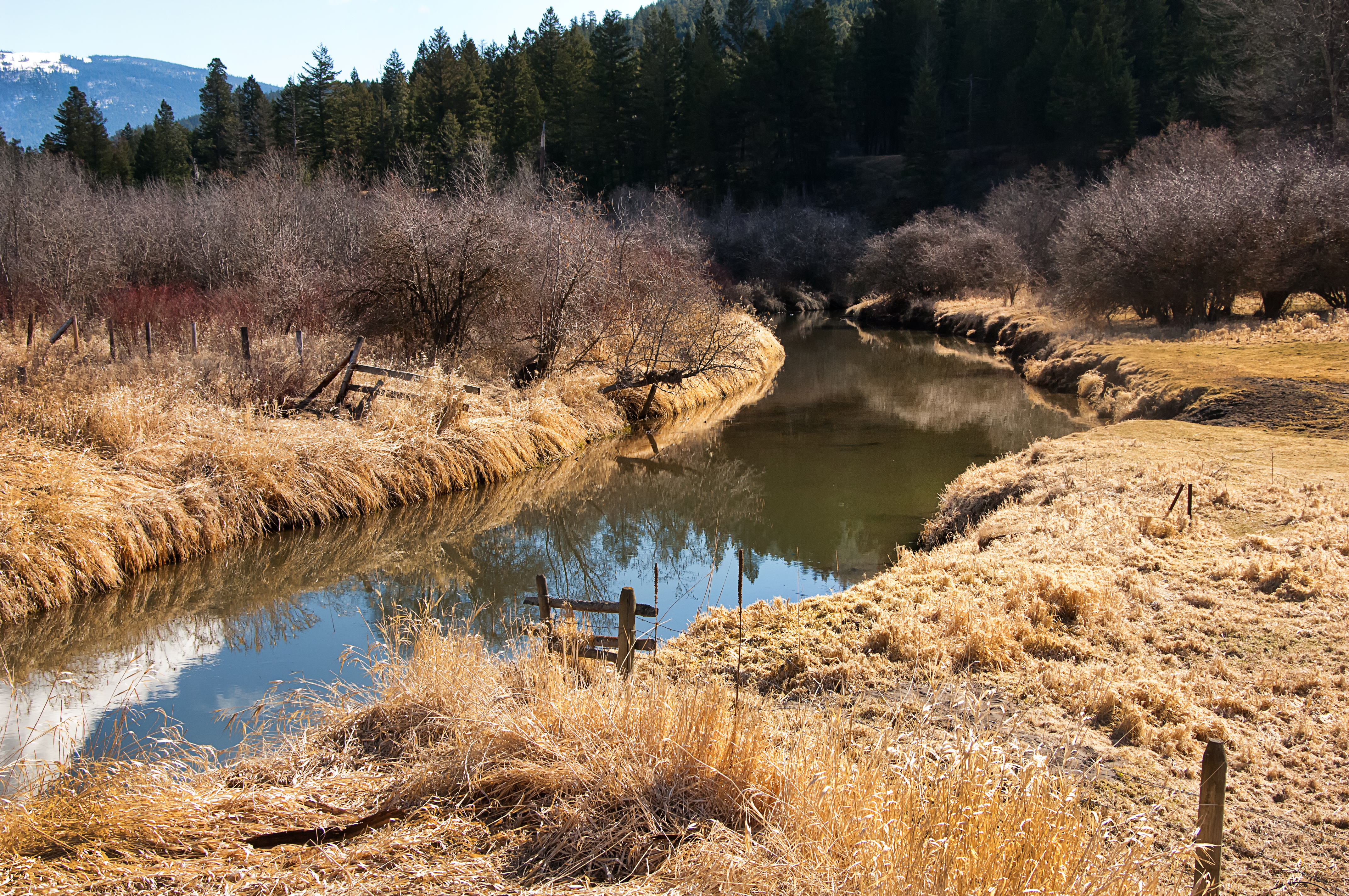
Early spring stream

I am sure there are lots of photographers that have discovered a special location, or scenic spot, that looks good, but when the photograph just isn’t working out and the day just isn’t making things look good, photographers return again and again, hoping for the light to be just right. That bridge on the way to work or the gnarled tree outside of town bent from the wind, that never looks the way we want it. That was always the problem with a location that my wife and I regularly drive past along Highway 97 south of our home. We always, winter, summer, spring, or fall, slow down at a bridge crossing a drainage stream that flows out and onto wide lush hayfields. The stream turns a corner as it flows past bushy native shrubs and out of a pine forest.

The image I mention is a grass and foliage lined stream that for the past six years is usually  a shady, dark, flat, and poorly illuminated possibility. The elusive landscape is perfect with a fence in the foreground that creates three-dimensionality. Depth is easily achieved as a viewer’s eye easily moves from the objects in the fore, middle and background.

I always want a center of interest and the reflective meandering stream becomes that. The composition follows the rule of thirds without any effort. Walk off the road, stand in the deep grass and put a shoulder to the bridge-post to steady the shot, and the rest just comes natural. All that is required is interesting light (that has not been cooperating) to bring everything together to create interest.

At last, this week on a clear spring morning about 9:30am, the light was working. There are times when that open space along the road actually has had an all-illuminating bright light , but that defuses detail, or sometimes it’s cloudy and overcast with everything to be lost in shadow. However, to my great pleasure, this time the light was cool, and without glare, and the shadows weren’t dark and deep. I couldn’t have asked for a better morning to stop and make an exposure or two.

As I wrote earlier, we always slow down, and cast a glance up the stream (the constant traffic willing) as we cross the bridge in hopes that the light is working. I have even parked on a sunny day, got out and walked across the road, only to have some large cloud move in.

This location has been frustrating, but I just add it to the many other landscapes that I refuse to waste my time with unless the conditions are what I want. I recall the concrete bridge on the Thompson River that I watched every morning and evening for years as I drove to work. Everything has changed now, but once there was a young tree and a grass edged road leading to that bridge. I wanted to stand in the middle of the small road and make a low-angled photograph of that grey bridge. When the light was perfect I didn’t have my camera, when I had my camera there was no light. I struggled for five or six years with that picture. Film ruled photography in those days and I was determined that when I made the picture it would be with my medium format Hasselblad camera.

When the day finally came about 7am one foggy morning the low-angled light thinned at the bridge entrance and gave the young tree a golden glow and I was, for once, ready.   I originally called that image “six years” because that’s how long it took me to take the picture. However, when I sold several copies to an organization that gave them as gifts to visiting NASA scientists from the United States, they renamed it “Pathway to the Future”.

Well here I am again at another six-year point and thanks to my wife demanding that I stop the car and pull over, I finally have the image I have been after for all those years.

Photography can be a patient thing and I like having the time to think about my subject. Six years might be a long time for some, but I have always liked the process, and there are a few more landscape scenes out there waiting for the light and me to come together in agreement in the next few years.

As always, I remind readers that I really enjoy your comments. Thanks, John

My website is at www.enmanscamera.com

Not the Camera Store One Usually Expects

Dave, Pat and Sam at Enman's Camera shop

Photographer Edward Weston said, “Photography suits the temper of this age – of active bodies and minds. It is a perfect medium for one whose mind is teeming with ideas, imagery, for a prolific worker who would be slowed down by painting or sculpting, for one who sees quickly and acts decisively, accurately.”

I included that quote because the words “temper of this age” to me seem perfect for both the time we are living in and, if you looked at the accompanying image, long time photographers enjoying a rebirth in this exciting medium.

There is not much that I enjoy more than spending time with other photographers. Whether it is pointing my camera at some subject, or just hanging out talking about any and all things photography, it is always a good time.

I don’t remember when it started exactly, but some years ago several photographers started hanging out Thursday mornings at my shop. The discussions, over coffee and doughnuts and are usually about photography, are more often then not lively and heated disagreements are not at all unusual.

After all, like the medium of photography itself, photographers each come with their own personal views of how and what should be photographed and which camera best accomplishes those personal views.

It’s that diversification of opinion that keeps me interested and, I guess, entertained, and I admit I really look forward to Thursday mornings, with the sometimes filled with talk and sometimes photography sessions with a makeshift studio in the large meeting area behind the space I rent.

The numbers change. There are days with only two or three, like the accompanying picture, while other times the only room left for anyone is to stand behind the equipment counters.

I only open on Thursday, Friday and for a half-day on Saturday, except for when I host my Saturday morning mini-sessions, and my store sells anything photographic I can find. The term “used” is my preference, but with the interest in studio type photography in the last few years, I have been searching out off-camera lighting equipment distributors more and more.

I meet lots of photographers that claim to be passionate about photography. I don’t know if passionate is a word I would easily use for myself.  I guess I could say the words of Master photographer, Wynn Bullock, best describe my feelings about photography when he said, “I decided to become a photographer because it offered a means of creative thought and action. I didn’t rationalize this, I just felt it intuitively and followed my intuition, which I have never regretted.”

I could easily hide away in a studio and did for years let clients take up all my time. But now I prefer to keep my options and interest open regarding my subjects and photograph everything, no matter what, with the same intensity.

As I wrote in the beginning, there is not much that I enjoy than spending time with other photographers. And my shop certainly isn’t the usual kind of camera store. Yes, there are glass counters filled with all sorts of used photography equipment and some shelves with bags and unusual items. There are tripods and light stands blocking the window and sometimes a box or two marked “free stuff” and pictures are hanging on the walls or standing on shelves.

Things change; I never am sure what I have for customers used to those big stores that always stock their shelves with the same items. But one entering will, of course, find chairs for sitting on and talking from. People asking me questions about anything photo-related will find their time well spent, and if they see something interesting I’ll actually go behind the counter, but usually my favourite location is sitting on the other side talking with other photographers about photography.


I always welcome comments. Thank you, John

My website is at www.enmanscamera.com
 

Photographer’s Lighting Workshop

    Sarah, Bart & Ronny

  Ronny & Candice

Sarah & Dave

Candice & Bailey

Bailey & Bart

I have just finished my first day of leading another Photographer’s Lighting Workshop. I will admit that a day spent guiding excited and, I must remark of this session, very talented photographers, does tire me out.

Participants that are willing to express opinions and aren’t shy about getting shoulder to shoulder in a process of experimenting, exploring, and learning are hard to keep up with, and their enthusiasm is infectious. I try to stand back and watch analytically, but every animated smile draws me in.  Multiply times seven each fired up photographer I was working with and there is quite an energy drain.

After over 40 years as a photographer I do have a pretty large chest of experiences in just about every aspect of this exciting medium and I was employed as a photography teacher for nearly half that time. I can easily sit a group of learners down and lecture about pretty much anything photographic and, particularly the lighting workshops that are currently all the rage for photography keeners.  My knowledge is on par with most experienced portrait professionals, and I teach so that beginners and intermediate learners can keep up with the jargon and the concepts.

I enjoy the enlivened interaction that happens when a student of photography makes the decision to participate. My job is to present information on the subject at hand and keep things going. I don’t like to be a demonstrator on a stage, and rarely pick up a camera. That’s left to participants.

Sure, they tired me out, but in the recent daylong workshop on Lighting and Posing I was fortunate to be leading a group of surprisingly skilled and very energetic photographers, and I must add, two lovely and creative young models that in my opinion were willing to work hard in a demanding environment for modeling.

The workshop was held in a rural studio minutes outside of Kamloops, British Columbia. I like this studio because it owner, Dave Monsees, has filled it with quite an assortment of lighting gear. I think there are at least eight studio strobes to choose from, all setup for wireless connection with a drawer full of senders. There are soft boxes, umbrellas, diffusion screens, reflectors and a great selection of wall-mounted backdrops.

There was even a fully equipped kitchen at the back that we made good use of, with fresh brewed coffee, pastries, and a large pot of chili for lunch. It can’t get much better than good food, great people, and photography.

Monsees is regularly adding props and stools to sit and pose on, as well as a growing selection of light modifiers.

The large, well-equipped space is a great rental studio and a perfect environment for an instructional session like mine. We started the session with one light behind a reflective umbrella, and moved on from there adding a large softbox, a shoot through umbrella, and a rim light to give depth to our subject when we used a black background.  We changed backdrops and light positions regularly. And those creative photographers really kept our models active and, heck, made my day.

Regarding portrait photography, Famous portrait photographer, Yousuf Karsh, once said, “I try to photograph people’s spirits and thoughts. As to the soul taking by the photographer, I don’t feel I take away, but rather that the sitter and I give to each other. It becomes an act of mutual participation.”

The first of our two-day workshop is over. I prefer two days because on the second we can review and reinforce what happened on the first. Now I am looking forward to spending another day and preparing to lead workshop participants into new territory.

I appreciate any comments. Thanks, John

My website is at www.enmanscamera.com
A road trip to Peachland.

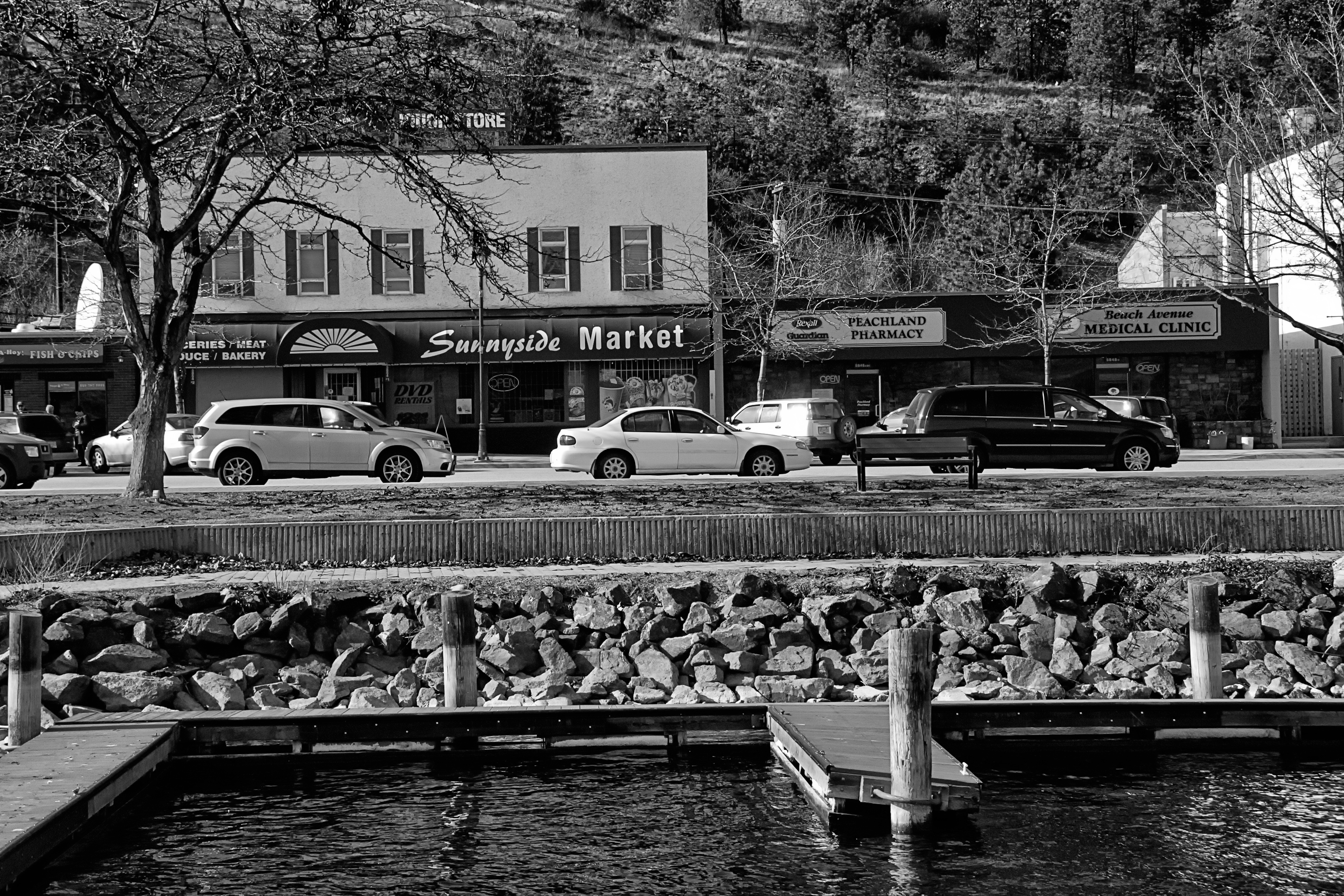
      Lakefront view

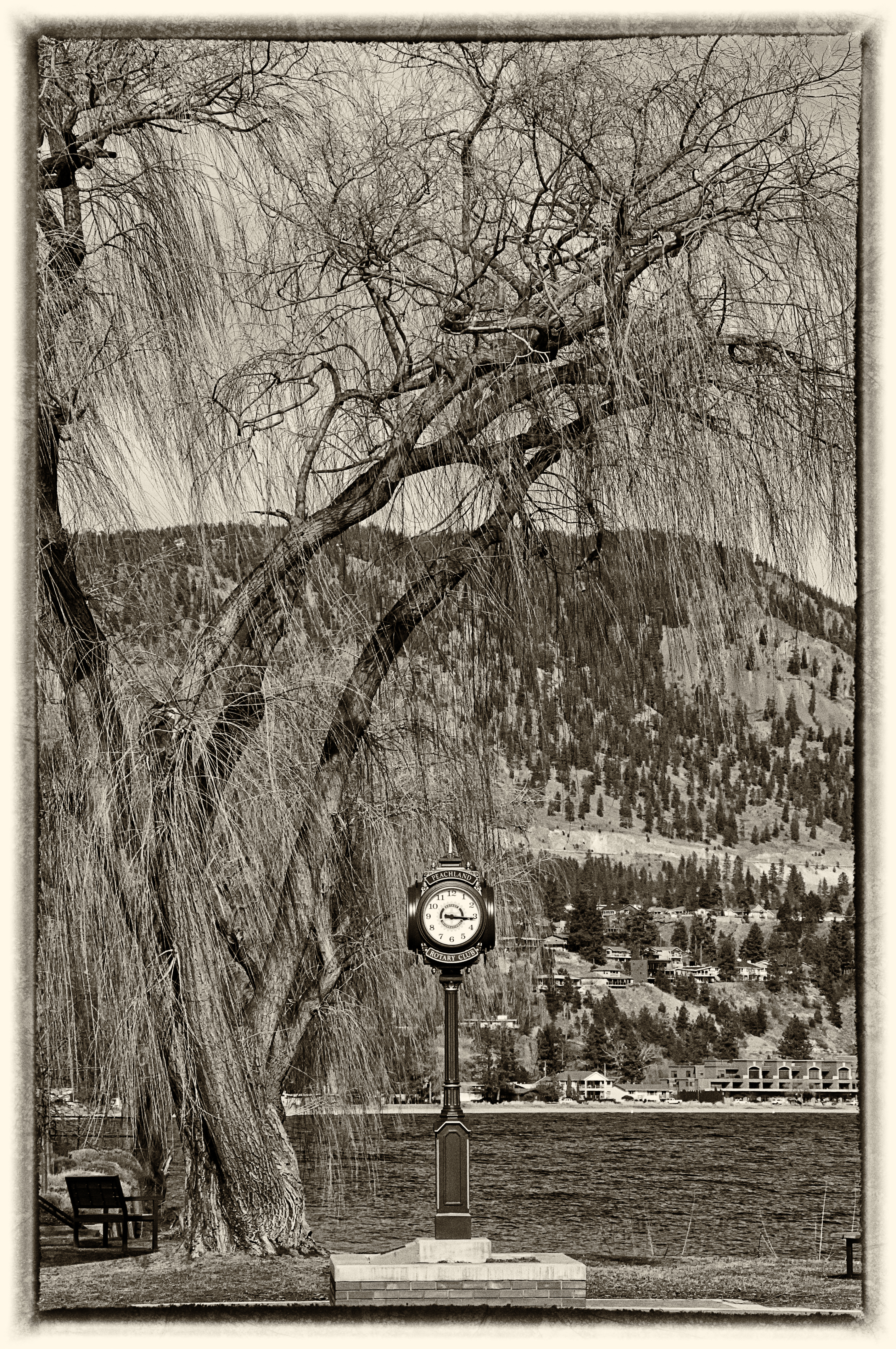
Peachland town clock

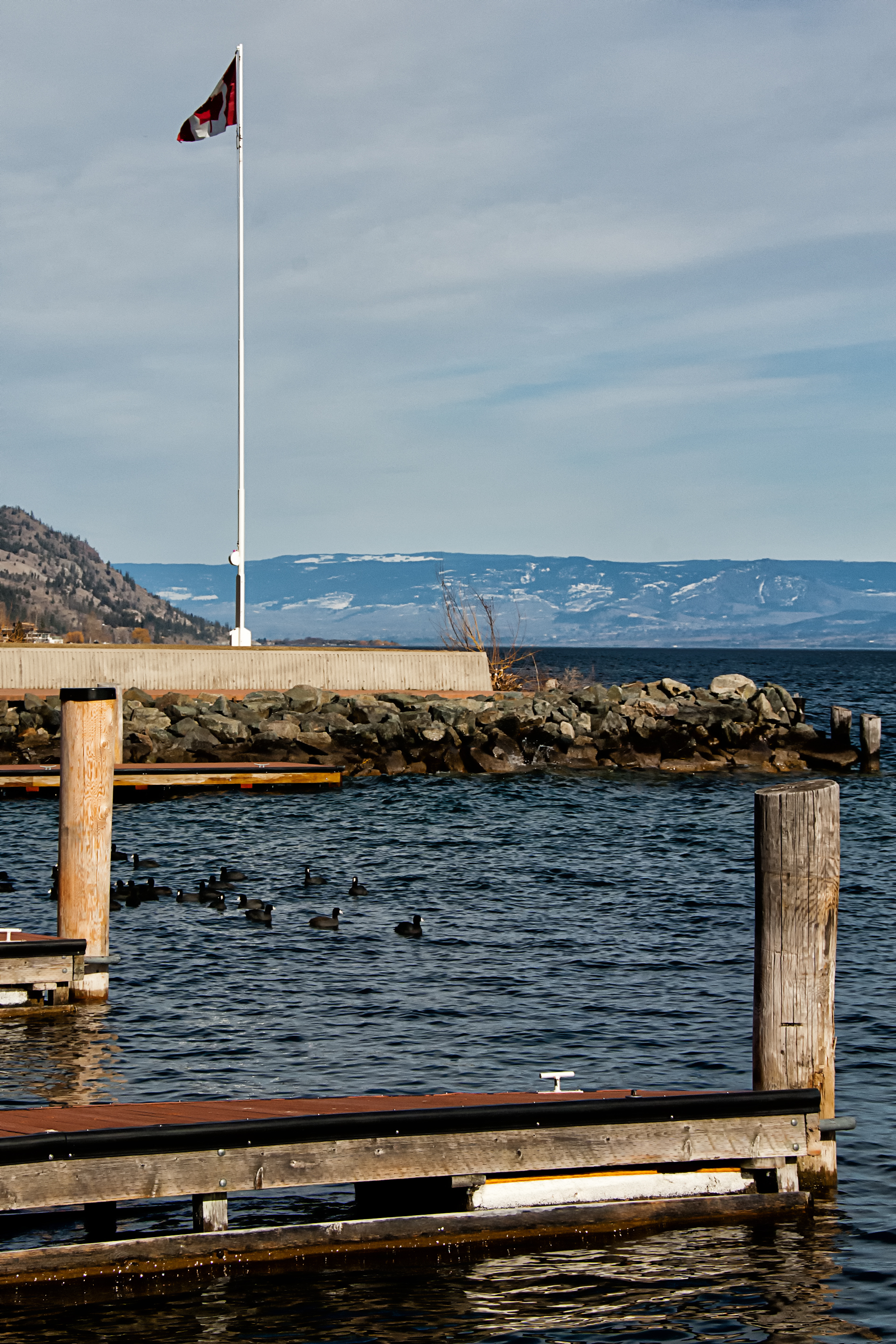
Boat dock flag

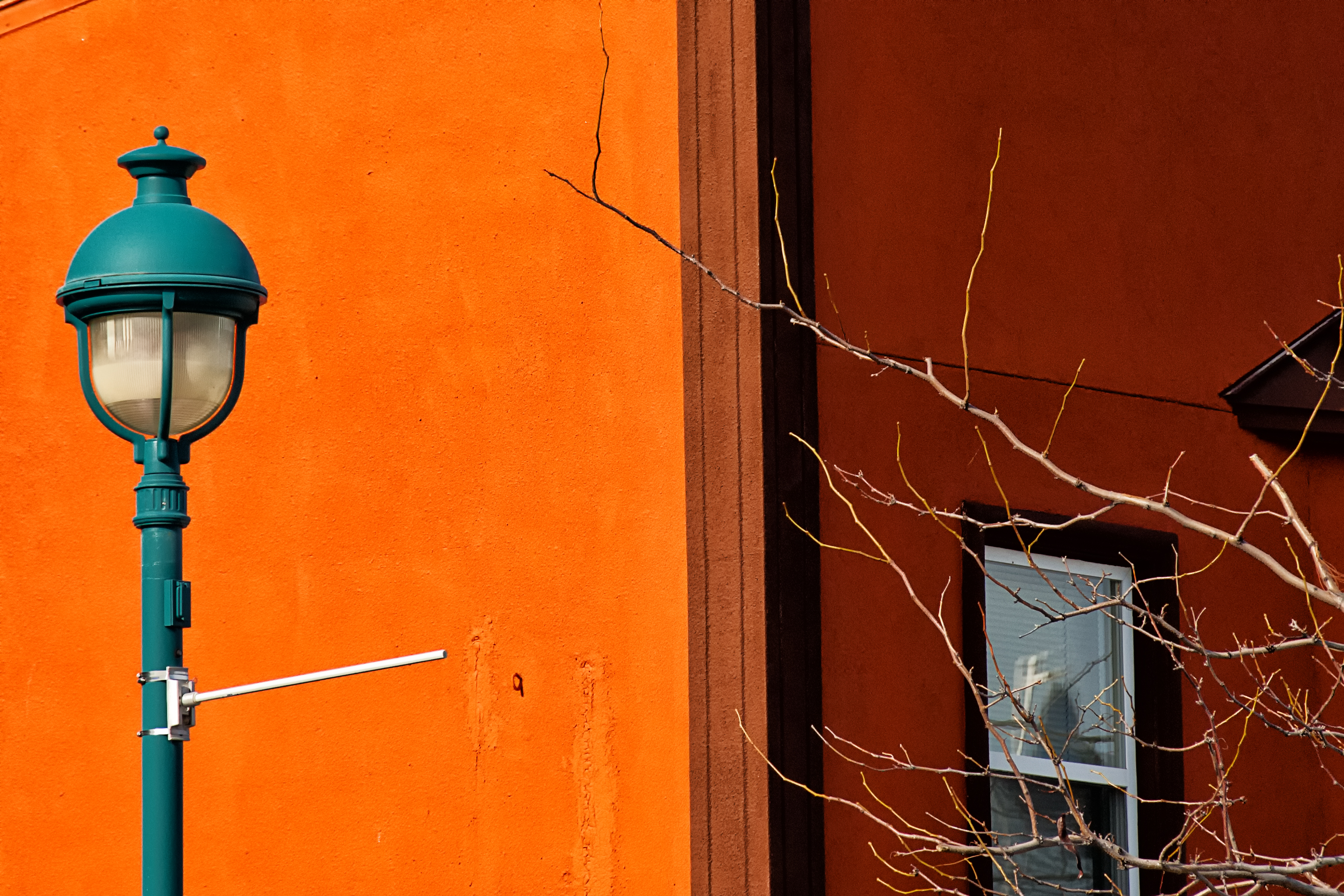
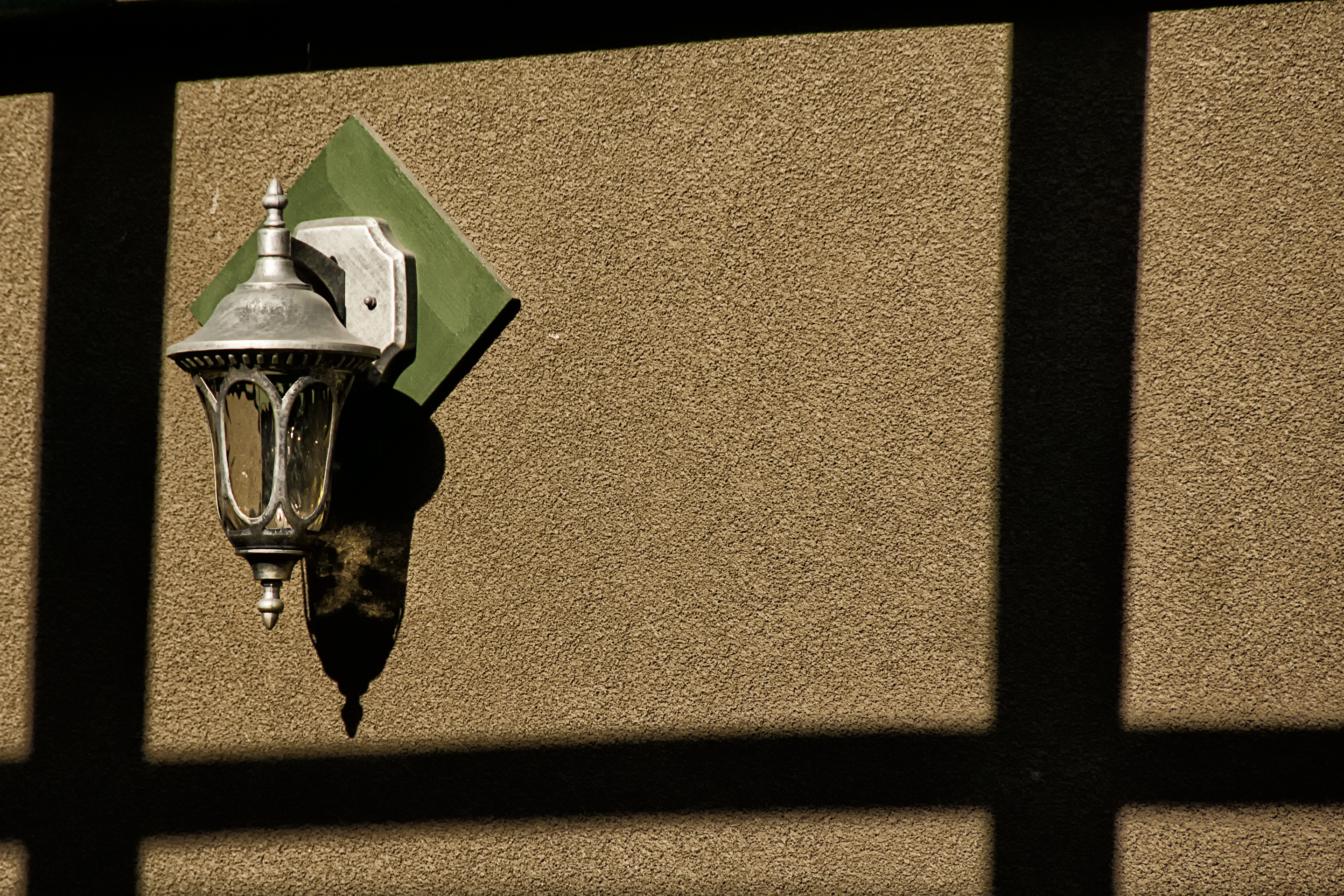
Orange wall with green lamp   Wall lamp

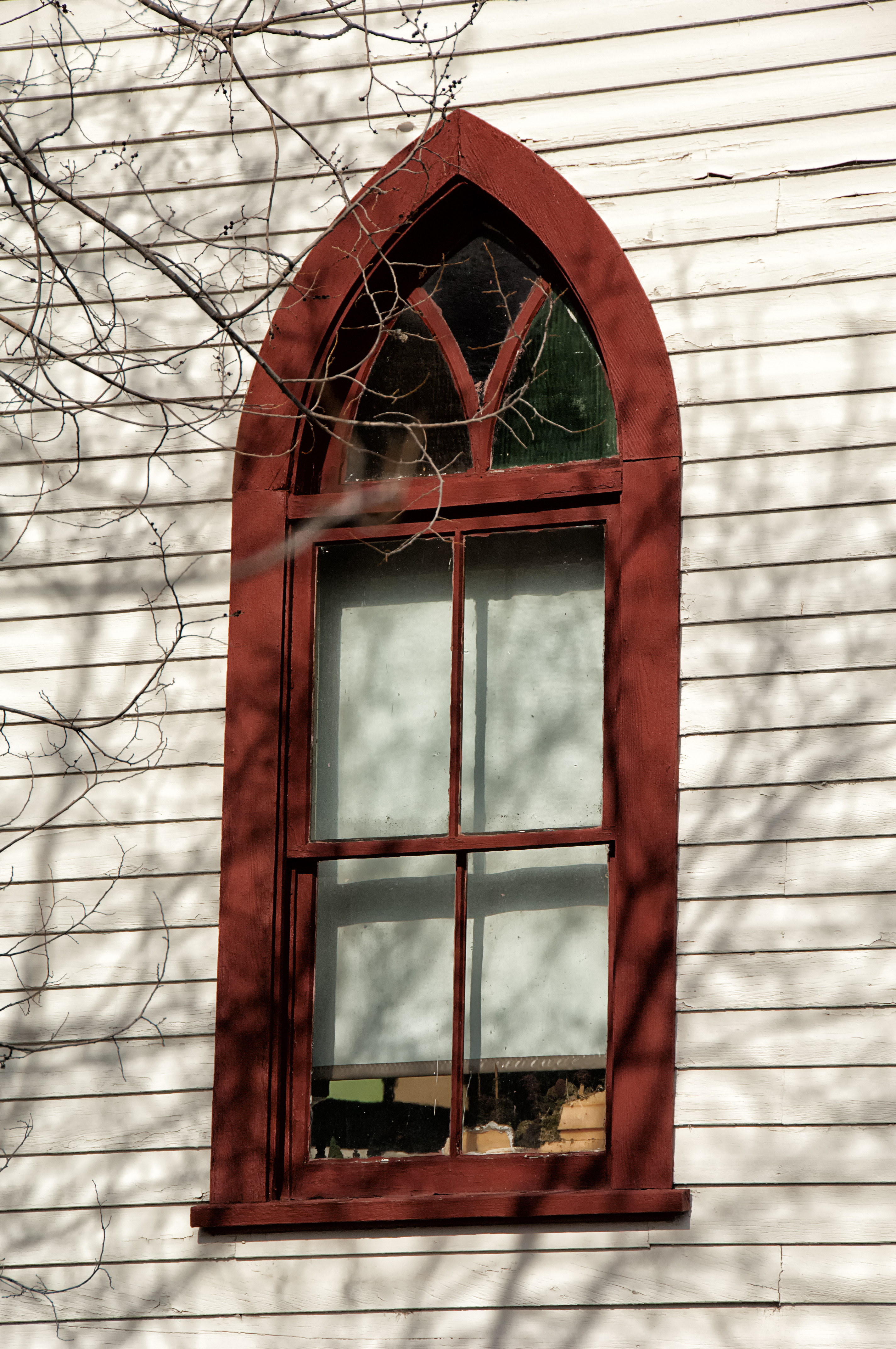
Church window

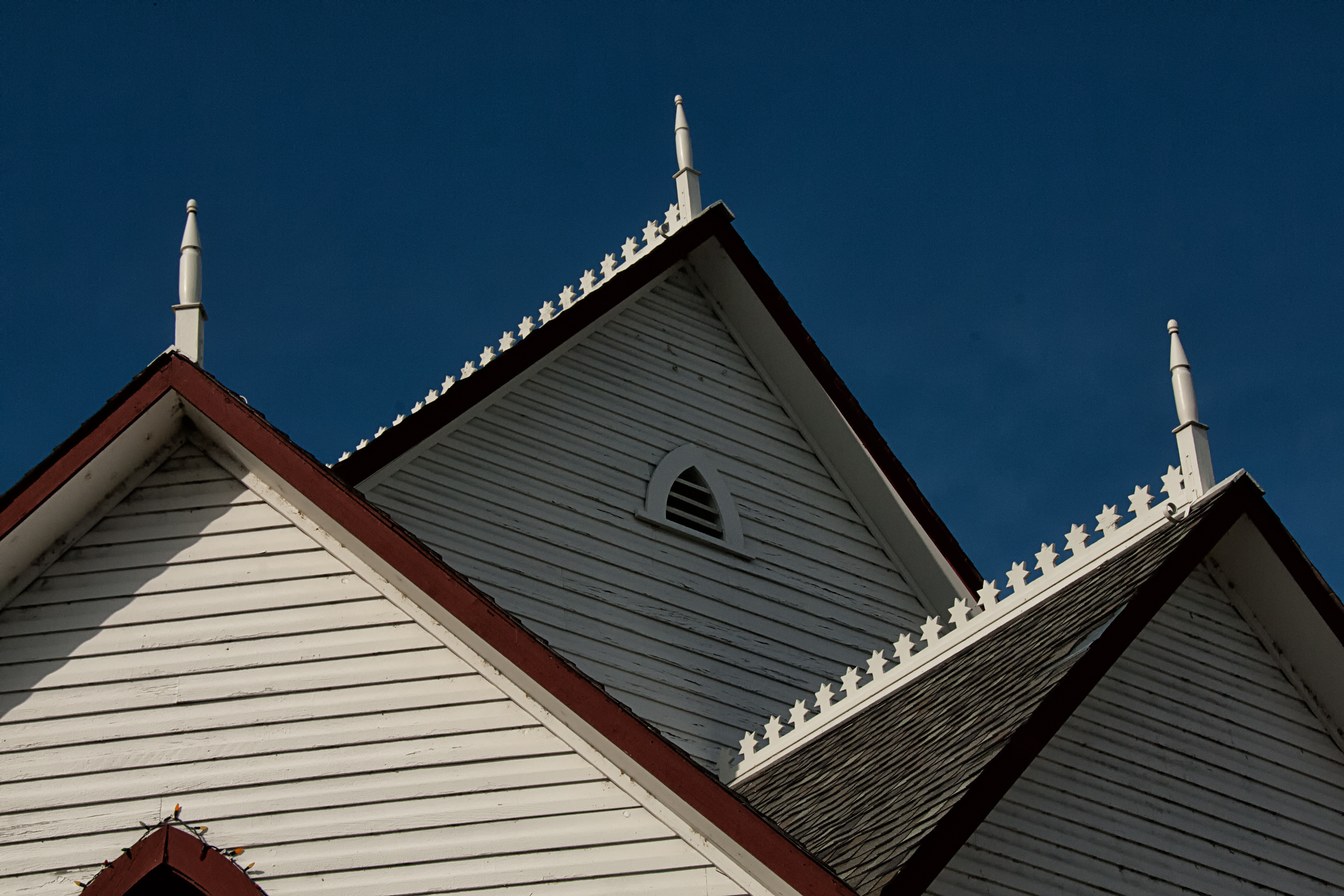
Roof stars

My friend Dave called and said, “Want to go on a road trip to Peachland tomorrow?”

Peachland is an easy two and a half hour drive south from my home in Pritchard along highway 97 and although the elevation of both Pritchard and Peachland is the same at 1,180 feet, it is still quite cold at my house with lots of snow, while Peachland was a balmy +13c with slowly greening grass along the road and the lakefront.

So without hesitation I agreed, and when Dave parked his truck in my snow packed driveway at 9am the next morning, I was ready with a 18-200mm lens mounted on my camera and we drove south through the wide Okanagan valleys toward Peachland.

I like the small community that is mostly located on a hillside beside the 135 km long Okanagan Lake and always enjoy wandering its lake front street with my camera. In the summer the restaurants, shops and park are filled with people, but this time of year it is easy to get photographs without anyone getting in the way and I walked back and forth across the street while photographing interesting features on the buildings without worrying about cars.

Dave had his 150-500mm Sigma and began photographing some ducks and fifty or so American Coots (I think some them Mud ducks) swimming in the small boat harbor.

As we stood talking in the warm sun I looked across the lake trying to see the infamous Rattlesnake Island, where the legendary Ogopogo is said to have it’s home.

Ogopogo is the name given to a 40 to 50 foot long sea monster allegedly seen in Okanagan Lake since the 19th century. However, because the evidence is limited to blurry photographs, unbelievers suggest that the sightings are misidentifications of common animals like big otters or floating logs.

I like mysteries and I thought how nice it would be to get a nice sharp picture of that elusive beast with my 18-200mm.  Heck, I’d even share he moment with my friend Dave. After all, he had a 150-500mm lens and surely get a closer picture than me. But the Ogopogo monster wasn’t interested in getting it’s picture taken and was most likely hiding out of site in the lake depths. So, with a disappointed sigh, I left my friend to photograph the cute little Coots and walked down the street to get a picture of the town clock.

I have mentioned before that I like photographing buildings, and strolling along sidewalks with my camera, in cities, large or small is exhilarating. Whether the architecture is low and flat, skyscraping, old bricked, wooden or shiny metal and glass, I always find something different to photograph.

This time I was a bit hurried, we wanted get home before dark and Dave had almost another hour to go after dropping me off. So I ran back and forth trying to limit my photos to shadows, roof ledges and windows. Ok, I strayed from that goal a bit, oh well. Anyway I expect to be back soon.

Summer is on its way and wife and I expect to do some driving around British Columbia. My short trips will always include architectural photography opportunities in the towns and cities I visit and I think its fun to change the visual story by picking out intimate features or only a small part of a scene instead of making a photograph of the whole structure.

I always enjoy comments. Thanks, John

My website is at www.enmanscamera.com
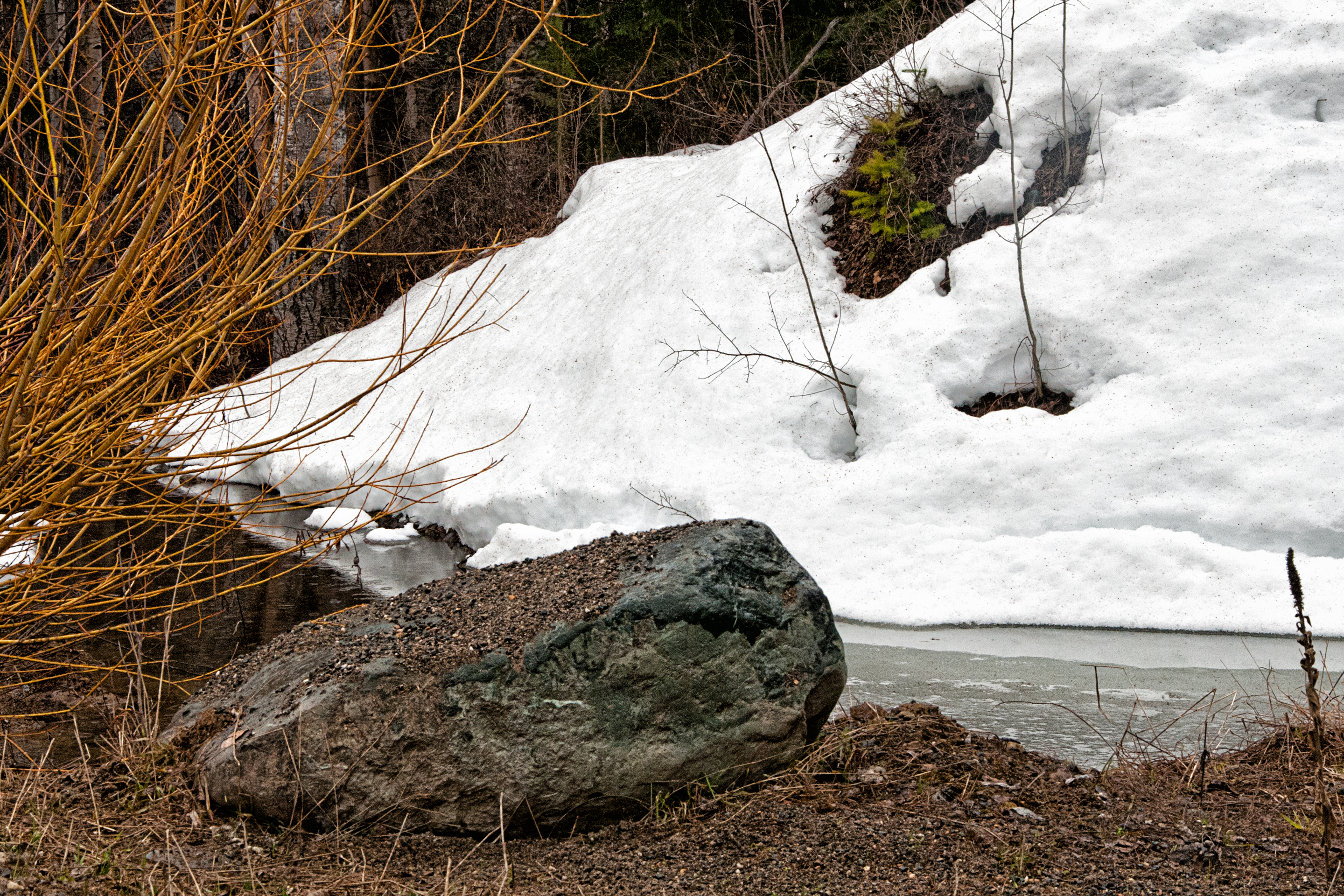
March is a month of considerable frustration.

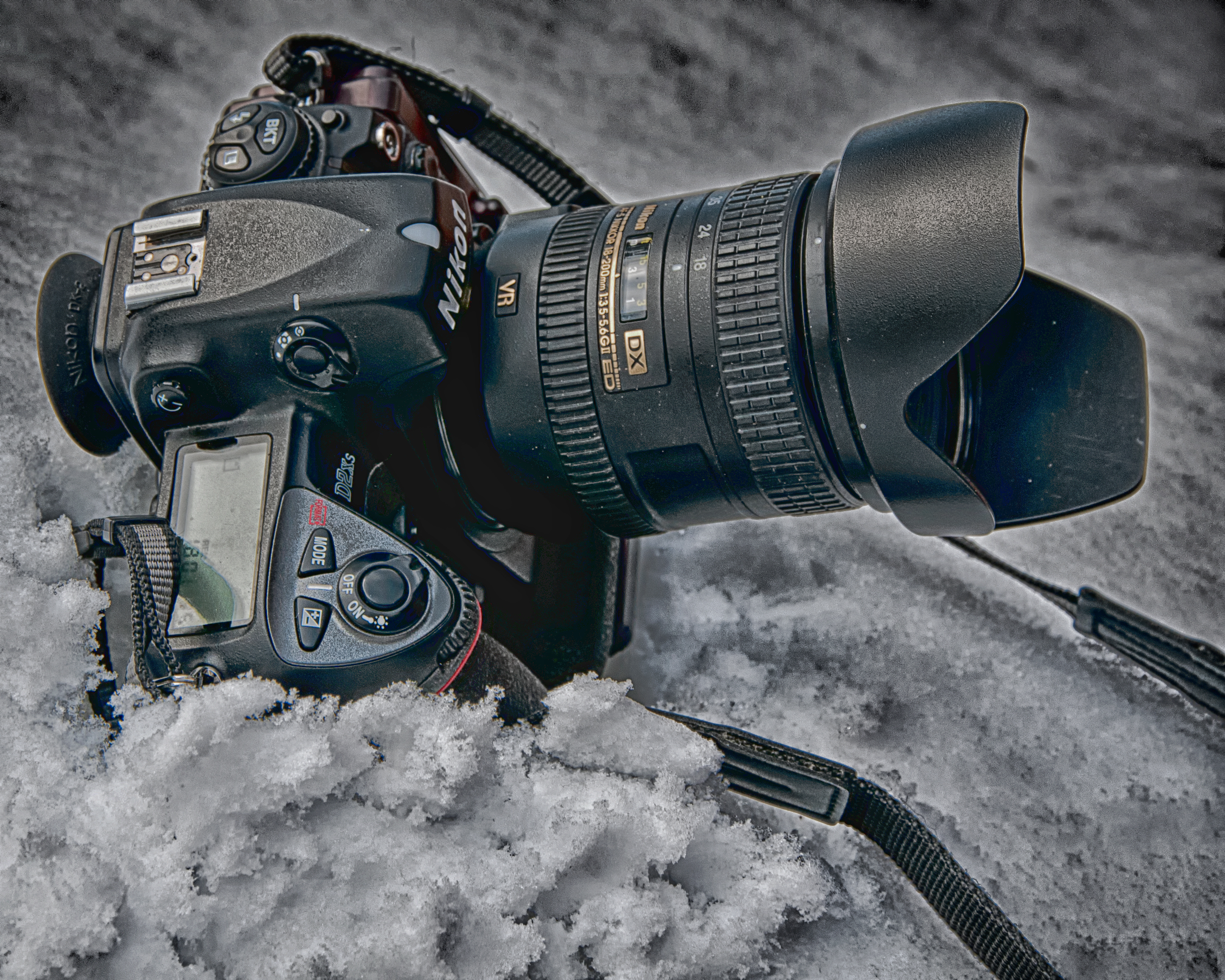
March camera

Gosh, March is here again.

I don’t have a problem with January. January is filled with optimism for a new year with new things and, for someone like me that really likes Christmas; there is still a cheery residue from that festive time. February is a hopeful month. Snow or shine I get outside with my camera and wander the low hills and icy riverside. I don’t expect much out of February and enjoy the days with their promise of warmer weather.

Then comes March. March is a transition period. Most photographers I know are ready, really ready, for something to photograph other than falling snow and icy roads. March is not a month that photographers embrace. Well, maybe a foray or two to photograph some hungry coyote, or deer, wandering the countryside. Or birds that hung about through the winter. But even for those subjects one has to hunt in an uninspiring landscape.

I would like to go out and search for some subject that demands to be photographed, but I can’t rouse any creativity as I stand staring out the window at the falling snow.

I have written before that my foreboding for March began when as a child I read “Moby Dick” by Herman Melville. I do remember that until my teacher made us delve into the imagery of the novel, line by line, I had just enjoyed it as another adventure story. “Beware of the ides of March,” said the soothsayer, and poor ole Captain Ahab gets himself pinned to a whale and dies in the end. Even at that young age I wondered, why March? Then to my dismay came the same words when I read Shakespeare’s Julius Caesar, and there is was again, he was told to beware of the ides of March. And to make things worse there is, “In like a lion and out like a lamb.” Does it never end, these disturbing warnings of March? I just want to wander around in a photogenic landscape taking pictures. I don’t care if there is lots of snow, or lots of grass; I just want one or the other and an end to the cold temperatures that have been plaguing this country.

The “ides of March” is just a way of saying March 15 in Roman times, but this month always frustrates me and I want it to be over soon. March doesn’t give much it just makes me wait.

The host of the British public television program “Making Things Grow,” Thalassa Cruso, once quipped, “March is a month of considerable frustration – it is so near spring, and yet across a great deal of the country the weather is still so violent and changeable that outdoor activity in our yards seems light years away.”
 And prolific writer Ogden Nash said “Indoors or out, no one relaxes in March, that month of wind and taxes, the wind will presently disappear, the taxes last us all the year.”

I suppose we could put our heads down and get up earlier because of the time change (one more problem with this month), in anticipation of a better season and friendlier months, and just march onward, (ya, March) awaiting a time to do photography again. But for me, I just think about poor Caesar and poor Ahab. March doesn’t work for me either.

I enjoy all comments. Thanks, John

My website is at www.enmanscamera.com