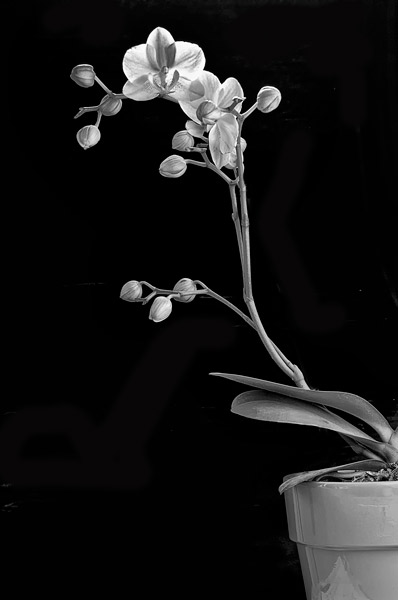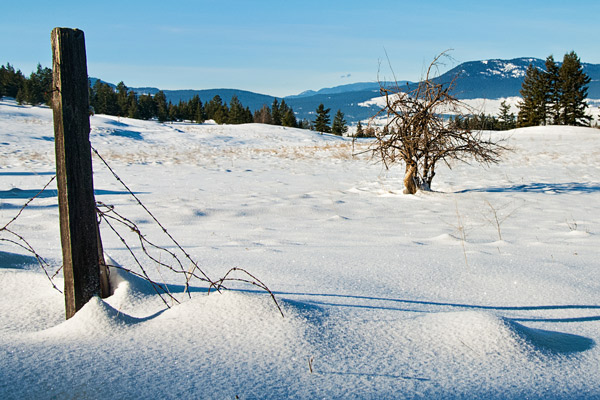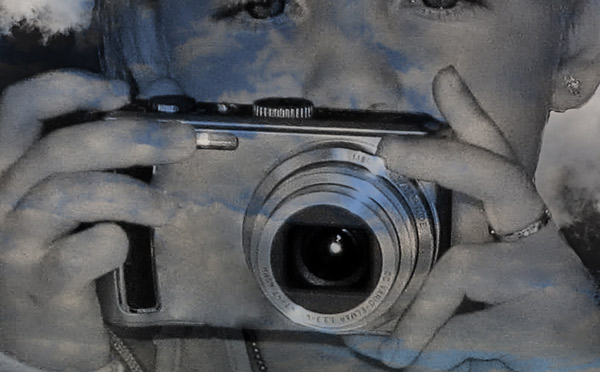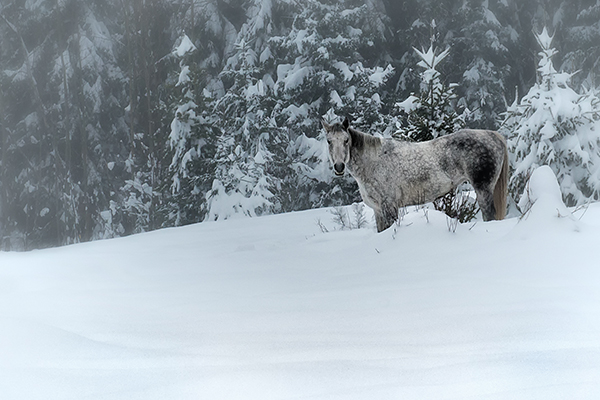
Does Film Lend Itself Better to Creativity Than Digital?

Digital VS Film

Where does a photographer’s creativity come from?


This past week I received the following question, “is film a better creative format than digital?”

I admit that the discussion regarding film vs. digital isn’t really that common anymore. Yes, I talk with high school students that are using film in photography classes. Those discussions are mostly about how film works, about processing, and printing, or using different chemicals.

Sometimes an older person who stopped taking pictures in the 1980s will loudly tell me digital is unnatural, doesn’t look good, and is cheating. Cheating? That conversation is always humorous. However, it is one-sided and not really worth getting into because any opinion but theirs is going to be ignored.

However, this question wasn’t about which is better as a way of making photographs, it was about creativity, and that intrigued me. Creativity is about imagination, originality, and art.

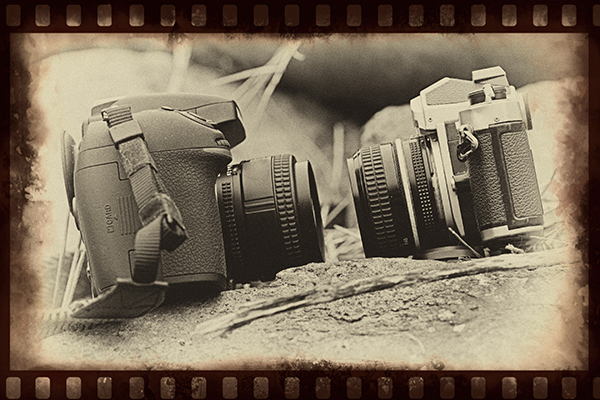
My quick answer to that was that I liked both film and digital images. To me, film is a more “tactile” medium than a digital image, and I like the extreme tonality that a good photographer can achieve. I believe digital image files can have more sharpness and a lot more detail. Sometimes that is good, sometimes not. That also depends on the photographer.

In my opinion creating an image is what the photographer does. It involves deciding upon the kind of camera and medium one might use, but the camera and medium is just the vehicle for a photographer’s creativity. It is really all about the final image, and how one decides to produce that image for the best visual effect.

I think some times that too much is made about the process. The process is just that, a series of actions or steps that one takes to achieve a particular end. I guess what a photographer does to create that show-stopping photograph is truly interesting, but in the end it is really only about the photograph.

The idea that there might be something more creative in making an image with film than with digital doesn’t make much sense.

I remember all the possibilities we had with film. Imaginative photographers would select different types of film and change the way they exposed and process it. Photographers probably had shelves of different chemicals for both developing film and making prints, as well as cabinets filled with photographic papers, and all as part of their process to bring out personal creative vision.

Now photographers can shoot with cropped or full frame cameras, and instead of dedicated rooms filled with equipment, they load their computers with software programs to help them with their personal creative project.

When using film one would previsualize (a term coined by Minor White) how one wanted to produce the final image before releasing the shutter. And I think many still do that to reach their vision, except now photographers are thinking of programs like Photoshop or Lightroom instead of the chemical processes required with film.

There are some photographers that only know film, there are some photographers that only know digital, and there are those that are competent in both. And although they might use film, digital, or both, to produce an image, creativity comes from the photographer and not the process.

Maybe I should have just replied to that question about creativity with photographer Ansel Adams’ words, “You don’t make a photograph just with a camera. You bring to the act of photography all the pictures you have seen, the books you have read, the music you have heard, the people you have loved.”

I look forward to any comments readers have. Thank you, John

My website is at www.enmanscamera.com
 

March is Here Again

The train goes by

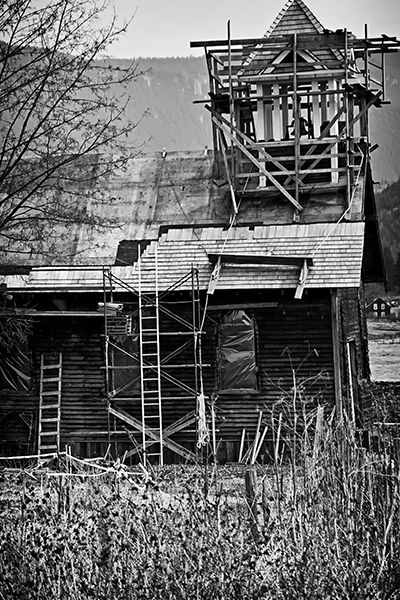
Notch Hill Church


From winter's storm

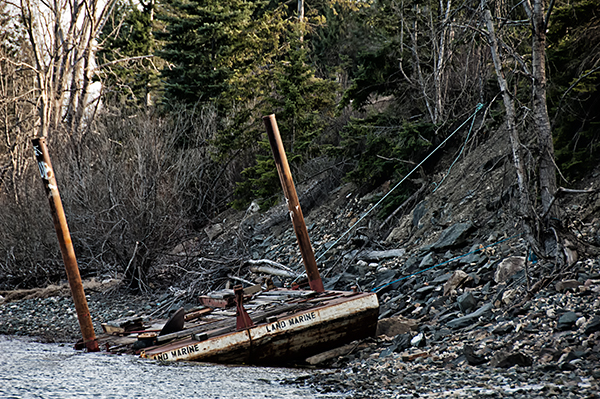
Lost during winter’s storm


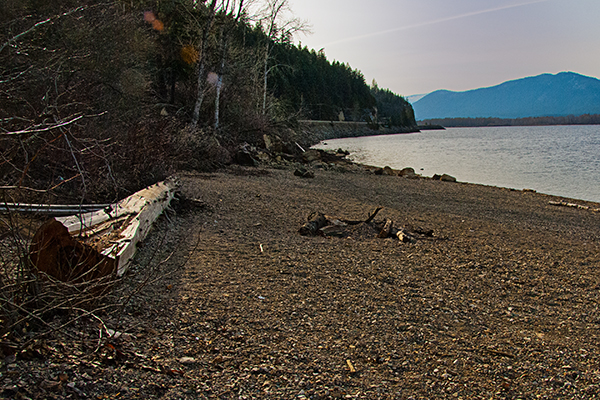
Lakeshore in spring

Desolate beach


Just before spring

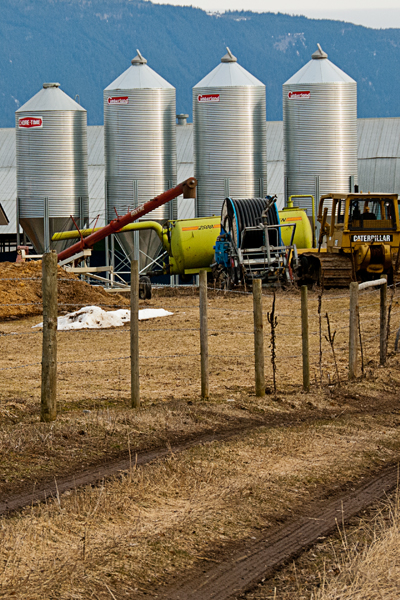
Waiting for planting season


ReConstruction

Reconstruction


Winter tree in spring

Winter tree waiting for spring


Yes, March is here again. Those who have been reading my posts for a while know that I approach this month with a foreboding feeling. The optimism of January and the hopefulness of February have now passed.

Last year I wrote about the uninspiring landscape of this month and the frustration of photographers who are ready for something other than falling snow and icy roads. I quipped about useless forays into the countryside to photograph hungry coyotes, wandering deer, or sad little birds that hung about through the winter.

However, just when I was ready to be moody and join others gloomily complaining about the weather, Mother Nature has thrown a wrench in the spokes with spring-like weather.

I traditionally expect March to come “In like a lion and out like a lamb”, but not so this year. February 2015 is being heralded as the second warmest ever recorded here in British Columbia. What is a guy to do? I wasn’t ready for spring.

The landscape is mostly snow-less, but I know there is green growth beneath that drab, lifeless end of winter brown. So with that in mind, my wife, Linda, and I decided in spite of that lingering pale hue that we would pack our cameras and take a drive along the ice free Thompson River to see if we could find something worth pointing our cameras at.

I had decided to mount my trusty 18-200mm lens on my camera. I like that easy to use lens. It may not be the sharpest lens in many collections, but it is versatile, lightweight, and doesn’t take up much room. Besides that I can always tweak its slight lack of sharpness in Photoshop.

As we drove up the river valley I wondered if I would find anything in the lifeless landscape to photograph. We are so conditioned to search for colour when we set out to do scenics that we forget to look at the structure as the scene unfolds in front of us.

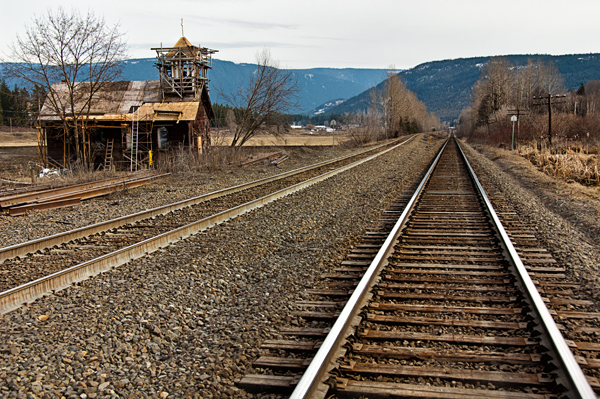
We talked and drove without finding anything to photograph and eventually stopped for lunch in the small lakeside town of Sorrento. I just couldn’t get motivated and after that big meal was about to resign myself to just returning home to sleep it off. But as I paid for our lunch, Linda talked to some local people who suggested we check out the old church at Notch Hill. I was surprised when they said that decrepit 1920s church was still there. Well, it was just barely there, and under some slow restoration.

As I selected different angles to photograph that decaying building I realized I should be photographing its transition in the landscape. I was seeing things wrong and falling prey to words of Shakespeare’s Julius Caesar who said, “beware of the ides of March”. It’s what is changing and emerging that I should capture, not try to photograph the bloom of spring when it isn’t here yet.

I began to look for the story that happens between one season and the next, the shoulder season. I realized my photographic goal should be to select subjects that visually talk about that moment just after winter and just before spring.

I am sure one could still wander up into the mountains and continue photographing winter or search for some hot location in the city with early growth. But for those that are always creating photography challenges for themselves, I suggest that as with that old Notch Hill church, this year’s March photography challenge should be about something between the seasons.

I look forward to your comments. Thanks, John

My website is at www.enmanscamera.com
Photographing Falkland in the afternoon

Falkland afternoon

Falkland, British Columbia


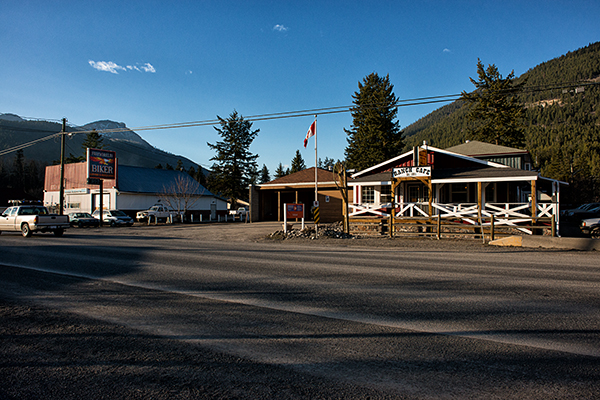
Ranch cafe

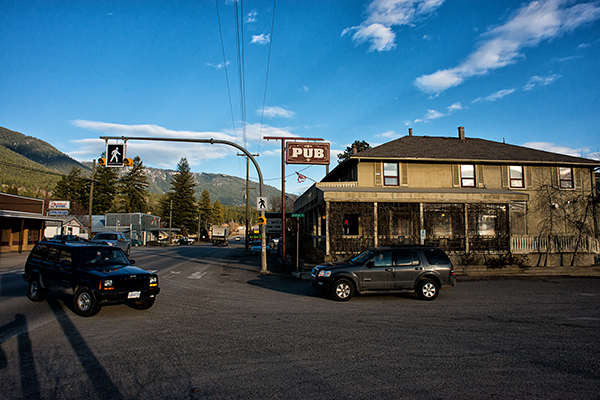
afternoon pub

street shadow

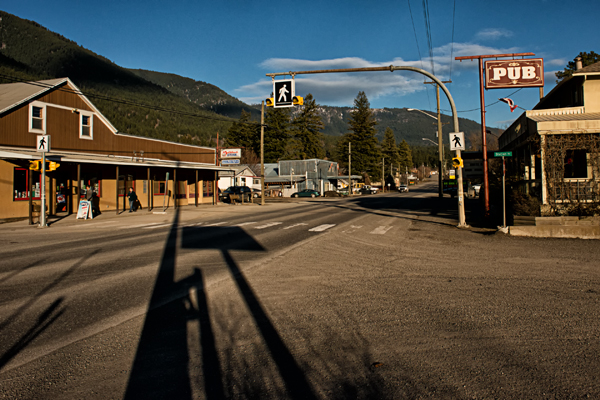
Falkland is one of the many small towns nestled along winding highway 97 that drivers almost miss if there weren’t signs posted at both ends of the village requiring them to slow down. Although I pass through there regularly, the only time I stop is when locals hold their roadside market during the summer. Usually I just reduce my speed to 50 km, watch for pedestrians and approaching vehicles from covered side streets, then resume speed without even thinking.   Falkland has about 600 residents, and is notable because each year on Victoria Day they host the Falkland Stampede (one of Canada’s oldest rodeos); and they also claim to have the biggest Canadian flag in western Canada.

My wife recently purchased a 24mm wide-angle lens and we were looking forward to checking it out. We had spent the day in Kelowna, about an hour south of Falkland and I thought that with the drive there would be lots of opportunity to see how her new lens would perform. I had read mixed reviews online, and I was anxious for my own results. I had made a few shots of the fence in front of our home, and allowed some side-lighted images to catch sunlight to check lens flare, but I hadn’t made any practical images.

I know reviewers can be very strict with their lens testing and even go so far to include charts and exaggerated enlargements when they evaluate a lens. However, in my opinion, all that most users care about is if a new lens is reasonably sharp and consistent in how it reproduces a subject; and regarding wide angles, if there is any unflattering distortion.

The day had been long and I wasn’t thinking about much of anything except getting home and out of that car before we lost daylight. I don’t mind winter very much, but I do mind driving that narrow, slippery, winding road after dark. However, traffic had been light and we hadn’t got stuck behind any big trucks. So we were making good time when we approached Falkland.

Photographers talk about that “Golden Hour” just before sunset when the light is warmer and softer than when the sun is higher in the sky. I doubt there is much of a golden “hour” in canyon towns like Falkland, but the light certainly was inviting at the moment and we had my wife’s camera and 24mm lens waiting for testing.

Linda was tired from our long day and was only willing to make a couple of shots of an old shop before handing me her camera. She said, “You walk around”. So I did. In Falkland it doesn’t take much time to see everything on the main street.

I like buildings, shop signs and afternoon deep shadows and the narrow street was perfect for testing that lens and anyway, I was happy to finally make a few pictures while the light was exciting in that interesting little town.

I only walked around for about ten minutes and had so much fun that I forgot I was supposed to be testing that lens. I have lived in this part of British Columbia for over 30 years, and as I walked around I wondered why the only pictures I have ever seen of Falkland were a few of cowboys being bucked off at the rodeo. I guess it is hard to stop and look. And some photographers might feel locals would be uncomfortable with outsiders intruding. I doubt that unless someone stuck a lens in a local’s face they wouldn’t even notice a person standing along the street, like I was, taking a few pictures in that neat little town.

Oh, and that Nikon 24mm was just fine. For those that wanted a review, I think my aperture was mostly at f8, f11 and f16 because I was interested in getting as much depth of field as I could get. So I can’t comment on how well it performs wide open.

I always appreciate your comments. Thanks, John

My website is at www.enmanscamera.com
 

Judging Photography

Ben-&-Dave-judging

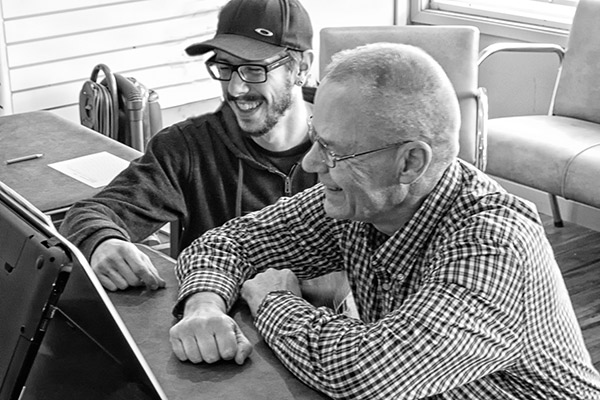
Exhibition judges Ben and Dave.


I have written about judging photography previously, and I have also used the following quote by John Loengard, who worked as a photographer for Life, for Time, and for People magazines.                         “It is not important if photographs are “good.” It’s important that they are interesting”.

I agree with that statement and when I was asked to be part of the jury committee for a local exhibition by members of the Kamloops Photo Arts Club it was Loengard’s words that I first thought of.   I looked forward to a firsthand look at submissions and wasn’t let down by the interesting and creative work.

They entitled the upcoming juried exhibit of photographs taken within British Columbia as “Wild and Wet” and described it as displaying the impact of water on the environment and residents of this region.

To me, the poorest photographs are those that don’t speak to us, it’s those photographs appear boring. I think the viewer should feel something, should feel a level of emotion when they look at the images. A good photograph is one that creates an emotional response.

As I looked at the photographs I asked myself the following five questions that I think are questions any serious photographer should think about, as they are about to press the shutter.

  1. Is there a clear center of interest? In a successful photo, the viewer can immediately identify the subject.
  1. Is the image composed well? There should be a sense of overall organization.
  1. Is the focus tack sharp and is the exposure appropriate? With the exception of photos that intentionally show motion or soft-focus images (both should be obvious), tack-sharp focus is the first thing viewers’ notice about an image.
  1. Does the photo tell a story? The difference between a photograph one remembers and one that is easily forgotten depends on whether the photo tells a story.
  1. Is the approach creative? Creativity in an image involves more than predictable techniques and perspective. The creative photographer handles the subject in extraordinary ways that the viewer normally would not have seen.

I joined photographers Dave Snyder and Ben Verwey in an interesting discussion of the images as we reviewed the photographs. All the show’s photographs are worth taking the time to view and I look forward to the exhibition that will be held from March 12 until April 1, 2015. As this was to be a juried show, we ranked each submission and selected those that, in our opinion, stood out from the rest.

Whether readers attend this exhibition or any other, my suggestion to take along my guidelines and see how they apply. Then think about how the photographs appeal you. Are the photographs interesting and engaging? Do they capture a moment in time and what do they communicate to you the viewer.

I look forward to your comments. Thanks, John

My website is at www.enmanscamera.com
Photographing the Winter Garden

Outdoor lighting kit  Clematis

Erigron  Erigron b

Winter blown bullrush

Step Ladder


Sunday was one of those “let’s see how many small jobs I can do” days. One would think there is no chance of being bored on a day like that, but I finally decided it was time to relax and sat down with a glass of wine, and enjoyed lunch with my wife and listened to some jazz.

As I made my way from one chore to another I kept looking at the snow in the garden and wondering if there was an opportunity waiting to make a photo or two, but I pushed along thinking “maybe later”.   However, as I started on my second glass of wine I complained that the outside light was gray and flat and that maybe I should just forget it. Could that have been the wine talking, or that I am just lazy?

Ever one to keep me on my toes, my wife, Linda, reminded me of a lecture we once attended by Canadian photographer, and author, Sherman Hines. (I recommend readers check him out) As she remembered Hines had said something like; “there is always something to photograph when the weather is poor, look for the small stuff”. There was the challenge. I left the room to get my camera.

The snow was getting wet on the plus 1 degree C afternoon so I decide to leave my tripod behind and mounted my wife’s 70-180mm AF macro on my camera. That unique, fun to use lens is the only true zoom Micro (macro) lens ever made by Nikon. And I get to borrow it anytime, well, almost anytime.

I got my camera and put together my lighting for what would be an excursion to search out the intimate features poking through the snow in my wife’s garden.

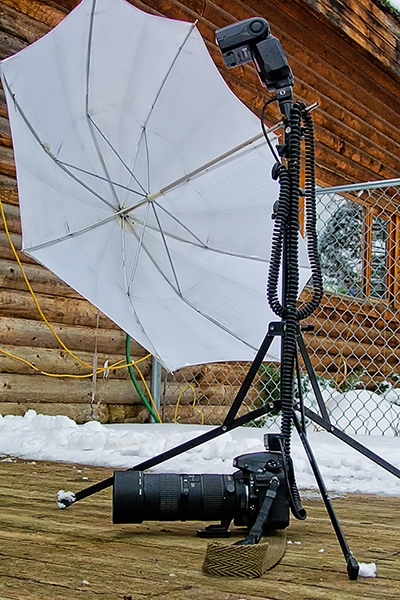
I attached a flash on a stand and chose a shoot-through umbrella. I could have connected a wireless sender and receiver, but I decided to use a TTL camera-to-flash cord that would allow the camera’s computer to direct the flash to provide the correct exposure for the close-up kind of subjects I would be photographing.

Although I had complained about the limited light on the heavy overcast day, I knew it would be perfect for my sojourn through the garden. I could easily meter the ambient light, then under expose slightly so the flash would become the main light instead of the hazy sun. The modified light from a shoot-through umbrella is even across the image with a gradual transition from highlights to midtones to shadows, or a soft light.

I stuck the stand through the snow and easily positioned the flash. And unlike a snowless landscape, the snow kept the stand steady no matter the angle. All I had to do was choose an angle and release the shutter. That particular zoom lens allows for a constant macro at every focal length. It was pretty neat and easy.

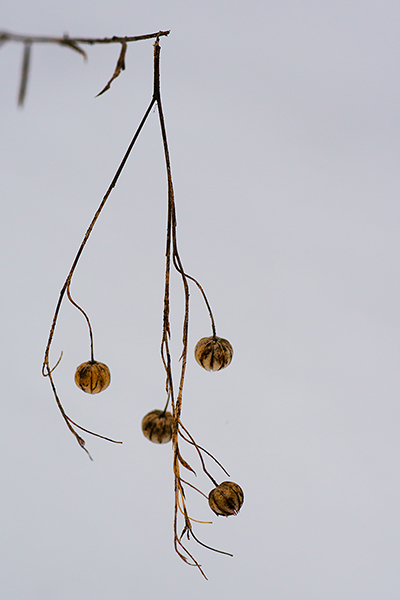
I choose to photograph that garden in every season. I know there are many photographers that only take pictures of plants when they are in bloom and prefer colourful representations. However, spring, summer, fall, winter, snow, rain, sunny, or overcast, I find that our garden is filled with ever changing subjects that always offer something new and I expect that Sherman Hines surely would approve. My advise to photographers that think they must wait for inspiring weather before their next garden safari, is to take Mr. Hines’ advice, because there is always something to photograph when the weather is poor, just get up close and look for the small stuff.

I enjoy everyone’s comments. Thanks, John

My website is at www.enmanscamera.com


Photography as a Fine Art

Orchid-2

I have discussed this topic before, but after a conversation I had about an upcoming photography exhibition in Kamloops with one of the judges and, of course, the heated debate now raging about that $6.5M photo of a canyon, I thought I would revisit it.

Wikipedia’s on-line encyclopedia says, “Fine art photography is photography created in accordance with the vision of the artist as photographer. Fine art photography stands in contrast to representational photography, such as photojournalism, which provides a documentary visual account of specific subjects and events, literally re-presenting objective reality rather than the subjective intent of the photographer; and commercial photography, the primary focus of which is to advertise products or services”.

Photography as art has changed since its beginnings in the mid 1800s, and, in my opinion, with the increased interest in photography because of the ease of making photographs since digital technology became the mainstay, photography as an art interests more and more people.

That art may be nothing more than a screensaver on one’s computer display. Some photographers go further and it is not unusual to see a personal photograph, or one of a friend, framed and hanging on the walls in someone’s home.

I have been interested in photography as an artistic medium for a very long time and have attended many exhibitions of artistic world-renowned photographers. And I think Wikipedia’s definition is worth noting because it separates what it declares as fine art photography from photojournalism and commercial photography, classifications that could divide those photographers in new ways for me.

By the middle of the nineteenth century photographers felt their art should be held in the same exalted status that painters claimed for theirs. Their contention was that it’s the photographer, not the camera that makes the picture. The goal was, and still may be, to convince not only the art community, but also those interested in creative arts that photography is art. Then, as now, the discussion was about whether the different aspects of photography, commercial, photojournalistic, or those created only as personal creative vision should be considered art.

The question photographers can ask is, whether the photograph’s goal is as “visual support”, to “sell a product”, as a “documentary”, or as a creative vision?

I have come to think that definitions like those of Wikipedia’s have changed. Maybe it is the way modern viewers see and use photography. That quickly-snapped portrait of a favorite pet displayed in the owner’s home probably needs an explanation to go along with it, but is cherished enough to be included with the rest of the owner’s art even though art scholars would disagree.

Remember, photographers are still contending with those critics that hold that only painting and sculpture are art and that photography is but a technology. For me the lines have become blurred, and I see photography as an artistic medium equal to others, although I am not altogether secure in categorizing any photographer’s work.

Debates like those in The Guardian newspaper, http://petapixel.com/2014/12/11/columnists-guardian-debate-whether-not-photography-art/ are fun, but in the end forget that the camera is just a tool, absolutely a high technology tool for sure, but a tool just the same, that helps any person to be creative and photographers only need to decide on their own particular style, and what, as Wikipedia states, is “created to fulfill the creative vision of the artist”. What that vision is should be entirely up to the photographer and the audience for whom the image is produced.


I always look forward to readers comments. Thanks, John

My website is at www.enmanscamera.com


A Photographer’s Walk on Snowshoes

Snoeshoeing-2

Wind-swept-field-2


forgotten-barn-2

Tracks-2-


Almost a year ago to the day I wrote that I looked forward to enough snow-pack on the hills to snowshoe in, and as then, after a morning of shoveling a deep path to my chicken coops, clearing the driveway, and another path to the front porch, I was again taking my first winter hike up to the high meadow above my home.

Last year my January walk up into the meadow’s deep snow was on a sunless, stormy day. And I recall setting a high ISO so I could get a shutterspeed that would let me handhold my camera, and then returning home in a snowstorm.

This time I mounted a light-weight, 18-105mm lens on my camera, stuck an old tea towel in my pocket in case I got my camera wet from the snow, and headed out in the balmy minus 3C day under a bright, almost-cloudless, blue sky. And instead of struggling with low, flat light, my ISO was set at 400; and I added a polarizing filter to darken the skies, increase the contrast in the scene, and suppress glare from the surface of the bright white snow.

I trekked up the hill, and as I had so many times before photographed everything. When I stroll up into that long meadow I rarely see animals, however, they are surely there hiding, and I did hear a snort from something as it moved through the trees, and when I began to cross the meadow a crow cried a warning to hidden watchers, then everything quieted, and the only sound was from my snowshoes and my camera shutter as I photographed the Thompson River valley far below and the tracks I made through the meadow.

My last article was entitled, “What Makes Photographers Happy?” Photographers wrote me noting that, “there is nothing like a new lens” or “fun day with my clients”, and I can’t agree more. I must include the words of three bloggers that sent their comments to me: Northern Desert photography, Nature Photography by Martin Ryer and Jane Lurie Photography.

The first from blogger Northern Desert says that happiness is “The process of being out in nature searching for the shot, be it landscape or wildlife. I love the post processing, editing job. So fun to see what you can do with software. Love talking with and interacting with other photographers about photography.”

I also had to pause and think a moment about the words of blogger Martin Ryer who wrote about when he has“…results that exceed or even completely differ from any preconceptions I may have had. It’s when this happens that I feel myself entranced by all of the possibilities that photography offers.”

Blogger Jane Lurie’s comment is delightful, “…I’m very happy when my final result is actually what I conceived in my head when I saw the shot. Capturing that small moment in time is a beautiful thing.”

What great thoughts on photographic happiness and I agree with everyone.  As for me, I will include the following from philosopher and theologian, Paul Tillich, who wrote, ” Language…has created the word ‘loneliness’ to express the pain of being alone. And it has created the word ‘solitude ‘ to express the glory of being alone.”   To those words I will add that my quiet, solitary walk and photo excursion on snowshoes made me happy.

As always, I look forward to your comments. Thanks, John

My website is at www.enmanscamera.com

What Makes Photographers Happy?

Jada-2

I have read that there are 12 states of happiness. What they are, or how “happiness” is determined and is then defined, is beyond me, but I did find a short article that said to be happy people need to “anticipate with pleasure, savor the moment, express happiness, and reflect on happy memories”.

I know there are times and things that make me happy. Nevertheless, there are moments that no matter what my surroundings are, or the circumstances, I am just not happy. And I am sure I am not the only one that gets in a bad mood (or good mood for that matter) without knowing why.

I doubt one can find any studies on the states of happiness for photographers. So while readers think about what makes them happy I’m going to delve into that mysterious state.  Is it happiness about how things like camera equipment make them feel, or about how circumstances such as creating a good photograph make them feel? Most photographers are devastated when they receive a poor review on a picture, so there is lots of ego involved in their happiness. And I know that sitting around with other photographers talking about anything photographic is just plain blissful for me.

I don’t know any social scientists that I can call up, and I haven’t discussed happiness with any philosophers. However, I have always felt that photographers have a culture of their own. There are those who might argue that concept, but I am absolutely convinced that it is so. I constantly interact with other photographers in online forums, blogs, or talk to them personally, and those photographers are always ready and willing to tell me when they are happy or not.

Some are actually more interested in the technology of photography then the actual process of making pictures. I recall a guy that was happiest when he found a problem with a piece of photography equipment. He delighted in making test after test to find if a particular camera matched what the manufacturer or other photographers claimed. I’m disappointed when something doesn’t work as described, but this fellow would actually be down right cheery.

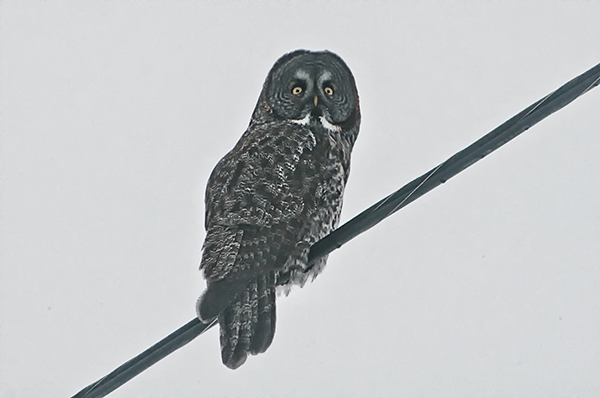
I had a friend that spent all his spare time wandering back roads. He’d show up at my shop with a grin as wide as all outdoors and stick his ipad or ipone on the counter for me to scroll through and happily describe how he photographed that hawk on the wire, the owl on a fence post or that eagle fishing on the river bank. What made him happy weren’t his pictures as much as his process of making pictures.

I know photographers that are continually changing equipment. Not because they find problems with what they own, or because their equipment is limiting, but because they read something, or talked to someone, about a new addition from their manufacturer of choice, and can’t live with out it. They excitedly talk about how wonderful that new piece of equipment is. I know their choices don’t so much meet a practical need as an emotional one, but they make it easy for me, and anyone else they talk to, to observe how darned happy they are with their new camera, or lens, and with, for that matter, everything they own.

This exciting medium has many levels and outlets to make one happy. There are portrait photographers, wildlife photographers, scenic and landscape photographers, sports photographers, baby photographers, those that specialize in plant photography and, of course, many more, each with differing sets of skills, and, to my mind, their own states of happiness. I don’t know if photographers have twelve states of happiness, or only the four I found in that short article, but I will say that I meet lots of people that are happy to be doing photography, and being involved with it in their own, very personal, way.

Care to comment on what makes ya happy?

My website is at www.enmanscamera.com
Photography in the Fog

Farm & Pond in fog 2

Moving cows in fog 2

Horse in Snow 2

Owl on wire 2


Pritchard above the fog 2

The past snowfall gave us a grand depth of a bit over two feet. That exciting event included hours of shoveling and roads that were pretty much closed to driving for a while. I wonder why we “dig” dirt and “shovel” snow? Hmm…I remove the dirt from the hole and remove the snow from the walk. Yep, it’s the same thing as far as I can tell.  Both activities use the same tool and make my back tired.

Our yard now has deep three-foot deep trenches dug out and shoveled clear by me that lead to all the important locations. Basement door to chicken coops, front door to the car, and car to the road; however, I also made trails for the feral cats so they can come to the door for the food we leave them.

When the days of soft, cold snow finally ended, everything quickly warmed up and a suddenly a thick, damp fog settled in.

My first thought was to get out my snowshoes and head up into the hills surrounding our home. I mentioned that to my wife, but not in the mood for trudging through the snow she suggested we get our cameras and go for a drive around the now foggy neighborhood in Pritchard instead. So we bundled up, grabbed our cameras and took off.

Our car is perfectly equipped for photography with beanbags. Just set them in the window and nestle the lens on them to reduce camera shake when using our long lenses. However, on this day my wife set aside her 150-500mm, and decided her light weight 70-300mm would be better suited for the foggy landscape, and I chose my 24-70mm. But it’s good to always have the beanbags in our car even if we don’t need them.

Fog is a tricky business because contrast is all but lost and the moving mist reduces sharpness. Everything is so flat that it’s hard to get definition.

I enjoy fog and recall the imagery of a poem from Carl Sandburg.

“The fog comes

on little cat feet.

It sits looking

over harbor and city

on silent haunches

and then moves on.”

I think that description is pretty good and I enjoyed how the fog obscured my view of things in the distance and created a mystical looking world as I drove along our snow covered rural road.

Years ago when photographers were making exposures of foggy landscapes with film the best way to increase contrast was to use yellow, orange, or sometimes red filters. We could also over-develop the film, or as a last resort process it in hot chemicals. There were also filters that could be used while printing to reduce the tonal values, and some specialized chemicals would help also increase the contrast. All that was lots of work and if you screwed up the negative…well, you were screwed.

Today we have software like Photoshop (and lots of other programs available that are just as good) to help us out in those flat, foggy conditions, and when Linda and I drove off into the whispering fog I knew I would be spending a short time sitting at my computer increasing the contrast and reducing the grey tonal values.

It is now all so easy and it doesn’t take much time. As I sat manipulating the hazy images I thought about all the hours I used to put into producing our photographs. We have it pretty good these days.

Fog is fun in which to shoot. All one has to do is find subjects that are distinctive enough to be understood through the quietly creeping and silent fog. My suggestion is instead of drinking your chocolate and staring out the window on the next foggy morning waiting for the sun to come out, get your camera, go out, and see what you can do.

As always, I really appreciate your comments. Thanks, John

My website is at www.enmanscamera.com


Photographer’s 2015 New Years Resolutions


Auld-lang-sine


Marmot-b


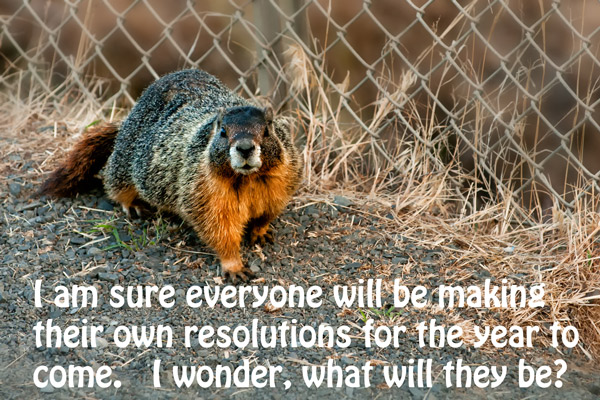
It is time for me to write about New Year’s resolutions. The prospect of new opportunities is always exciting and jotting down a personal list of goals (resolutions) at the beginning of each year is a good idea if one wants personal growth.

This past month I have been asking people that come into my shop what their resolutions for the New Year would be. Here are a few from the many I heard that, in my opinion, are good solid resolutions.

Use a tripod more.

Turn off Auto mode.

Buy a new camera or lens.

Try shooting RAW.

Learn more about lighting.

Take more photos.

Learn about Composition and the Rule of Thirds

Learn to use Photoshop or Lightroom.

However, as good as those are I am adding seven that are a bit more inspirational (is philosophical a better word?) New Year Resolutions that I have put together (seven is a lucky number after all) this past year from all the long, coffee fueled discussions on ways to make improvements in the future with this exciting medium.

  1. Pay more attention to creative ideas. Without creativity a photographer doesn’t have a chance at moving forward. “This could be the year to begin evolving creatively”.
  1. There is too much focus on what is the best camera. When we spend too much time worrying and making everything about the camera we forget about the story. How about this year being more concerned with making images that tell a story”.
  1. Take risks photographically and move away from always trying to please. Make this the year to push-the-envelope beyond the comfort zone without being concerned with other’s opinions. Maybe this will be the year to put “me” in the photograph.
  1. Learn a New Technique. I think it’s as simple as experimenting, and definitely taking the time to “read up on some technique and then give it a try”. Photographers should always make the effort to learn new techniques, maybe by taking a class, or at least buying some books, or CDs, written or taught by experienced, educated photographers.
  1. Choosing new subjects to “get out of the rut of shooting the same thing over and over”. While practicing portraiture or landscapes is good, photographing the same thing the same way over and over can result in a lack of inventiveness and creativity. Sure it’s nice to stay in a comfortable rut, but as with Resolution #4, “Maybe this will be the year to put “me” in the photograph”.
  1. Make every shot count and stay away from the “spray and pray” shooting style. It should be about making each image a quality photograph, not massive picture snapping sessions hoping that a few to turn out.
  1. Become more ruthless with one’s photography and what is done in post-production; conditioning oneself to throw out the crap is the only way to keep improving.

Finally, I’ll wish everyone a great 2015, and end with a quote by award winning English author, Neil Gaiman. “I hope that in this year to come, you make mistakes. Because if you are making mistakes, then you are making new things, trying new things, learning, living, pushing yourself, changing yourself, changing your world. You’re doing things you’ve never done before, and more importantly, you’re doing something.”

Do you have any to add? I will be happy to read them.

My website is at www.enmanscamera.com. Thanks, John