What is Your Favourite Photographic Accessory?

Accesories

Thursday mornings at my shop, I always have coffee with several friends. The conversation is always good, lively and is, of course, usually about photography.

Last week we ended our morning conversation discussing how off-camera flash technology was advancing, and I had mentioned how amazing it was to be able to synchronize a camera’s flash at 1/8000th of a second, and how I liked the versatility of positioning a speedlight with the off-camera flash bracket that I use.

Later that day as I thought about what my friends had talked about that morning, I got to thinking about how some accessories make our experience as photographers easier. There is always lots of discussion about cameras and lenses, but photographers only seem to mention occasionally the accessories that they use.

I decided to post the question, “What is your favourite photographic accessory?” on a couple on-line photography forums, but I received very few replies. I suspect “What is your favourite camera or lens” would have gained more attention. Nevertheless, here are some responses that I selected.

This first from someone called Hawaiiboy says, “I would have to say my tripod combined with my wired timer/remote.”

Then Merlin from British Columbia wrote, “My iphone.  I use maps to find my way around and play birdcalls when needed.  It acts as a flashlight at night.  Oh yeah I can even make phone calls with it.”

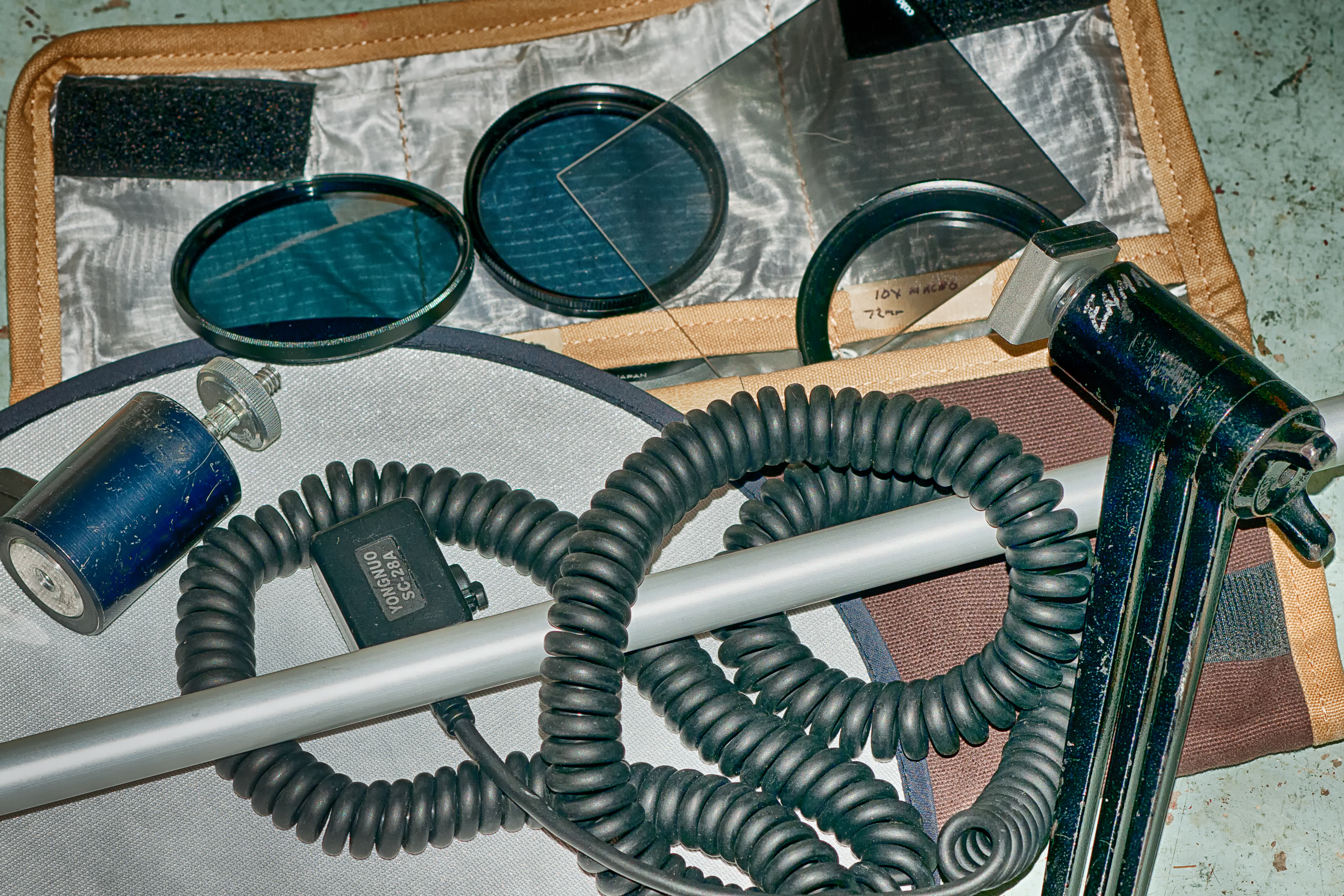
The third I’ll include is from a Toronto, Ontario photographer, “My 10 stop Neutral Density filter is right up there.”

Another photographer called Cicopo in Ontario posted, “My cable release and tripod because that allows me to shoot from a higher perspective and steadies my camera.”

Dave from Alberta included, “I would have to go with the obvious ones like an air bulb blower, and micro-fibre cleaning cloth. I photograph mainly out side so I use them a lot.

A photographer named Matt that shoots in Manitoba wrote, “My monopod, the next best way to stabilize my camera after a tripod. I also use it like a walking stick during my weekend hikes.”

My wife Linda leaned back over her chair, after I interrupted her reading with the question, and said, “My polarizing and graduated ND filters. I shoot mostly scenics and those filters help me control the sky.”

From Saskatchewan, Gary wrote, I’d include my 5 in One reflector as my favourite accessory. I shoot portraits and always use a reflector.

I think my favourite commentator was Hendrik, from Alberta who wrote, “My bean bag. It gives me the best stability I can ask for; it enables me to shoot from the safety of my car and lets me use my car as a blind. When I am out a whole day and stop for lunch, I can use it as a super comfy pillow to lay down in the grass and look at the clouds flying by.”

I’ll add one of my personal favourite accessories. I have written many times in the past that I almost never photograph people, indoors or out, without adding light from a flash. My favourite accessory that makes that all so easy is a flash bracket that I use to lift my flash way up off my camera.

I am sure readers will have their own, even if they never think about it, that is there in the camera bag, always waiting and ready to be used. These favourites that I listed from my responses aren’t that special, they are just those accessories that, as I wrote earlier, make our experience as photographers easier.

I like comments. Let me know what you think.

My website is at www.enmanscamera.com
Photographing Victoria’s Harbour


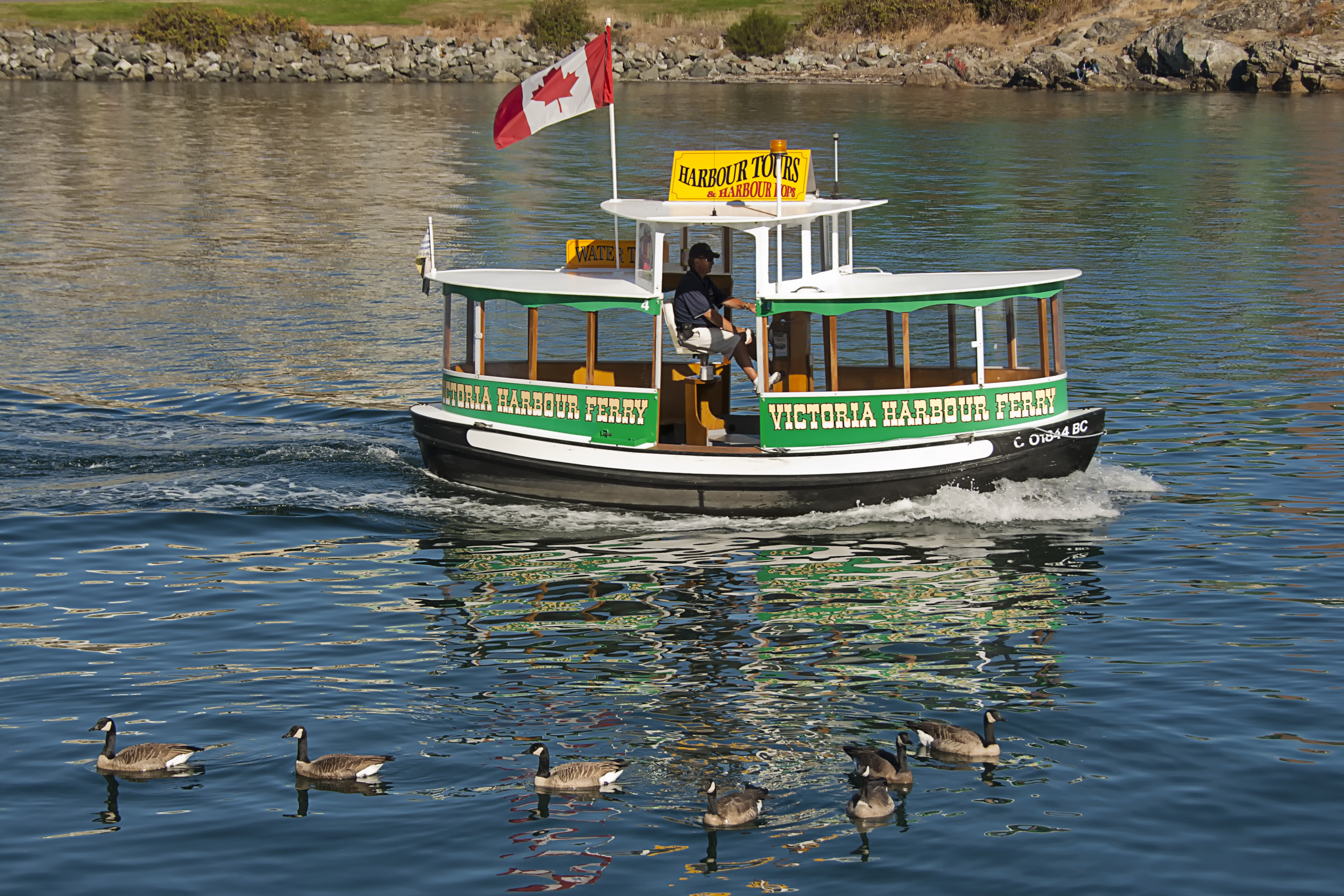
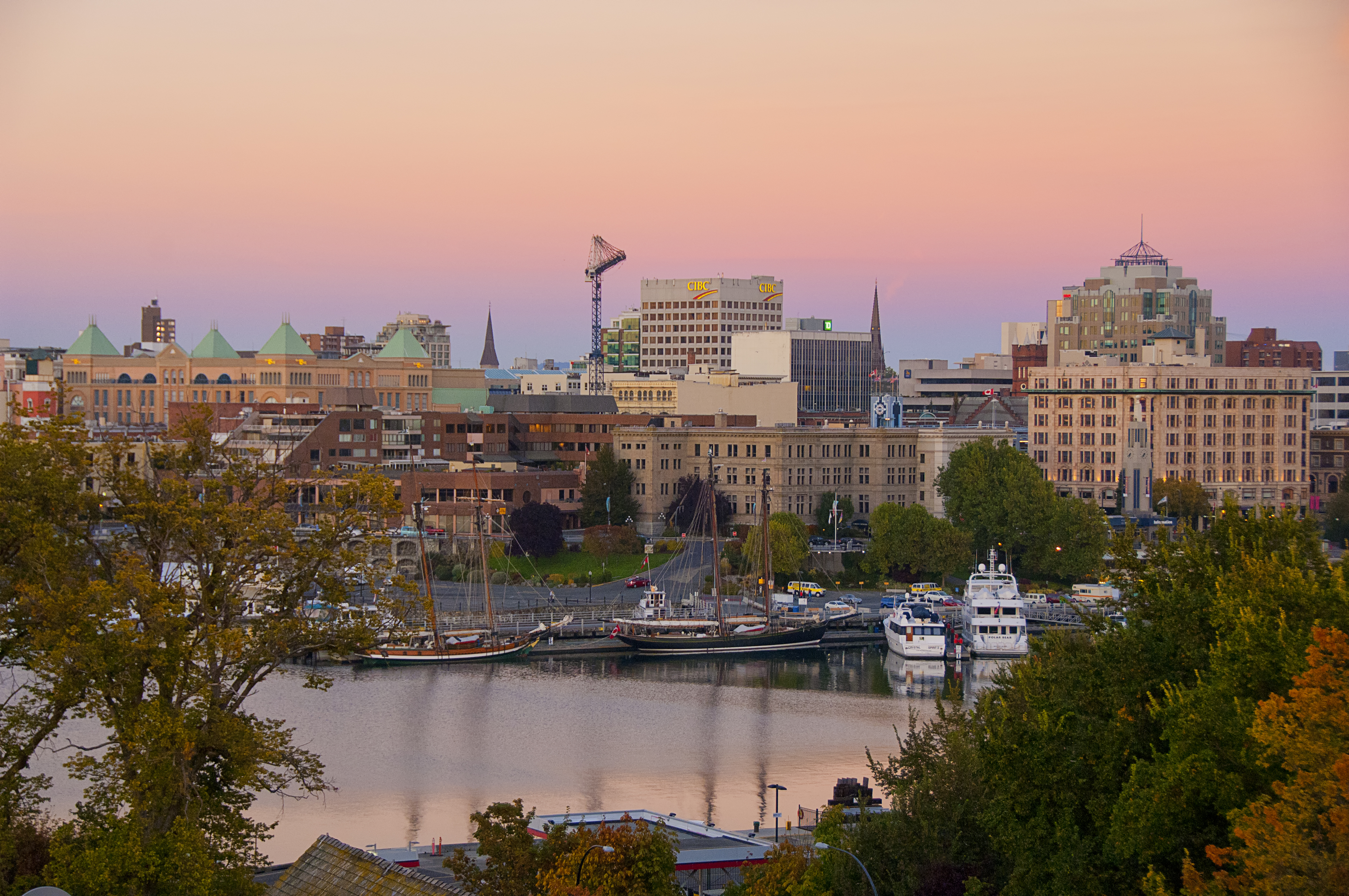
We had decided to escape for a few days to Victoria, British Columbia, over the Thanksgiving weekend. The ferry docked at Schwartz bay, we disembarked, and made the scenic drive into Victoria. This is a bustling, picturesque city surrounded by water that is, in this photographer’s opinion, a perfect place for a photographer to wander around looking for photographic opportunities.

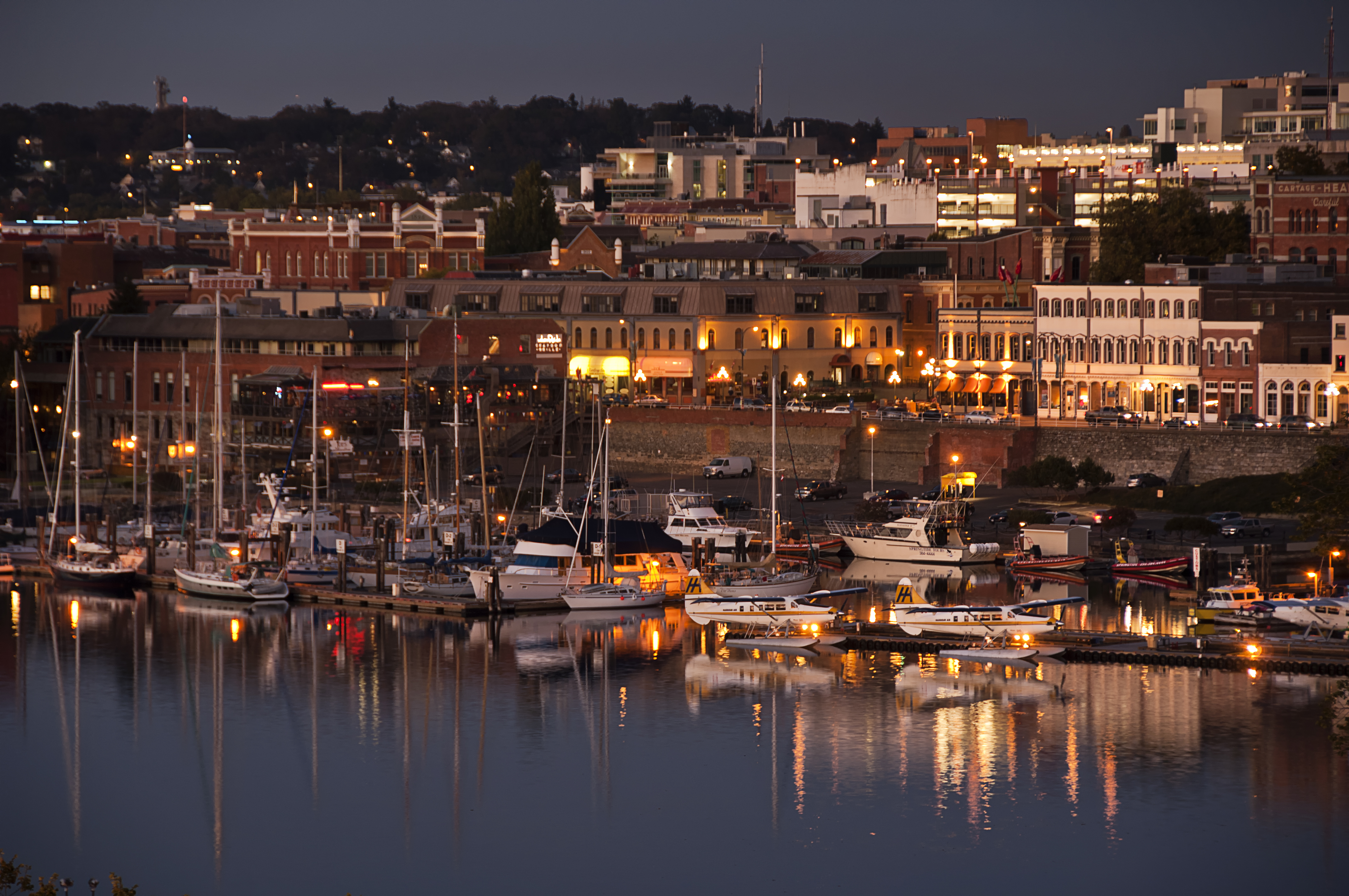
We were lucky in that our hotel room was on the ninth floor with a beautiful view overlooking a panoramic harbour only a block away. It was perfect setting for a photographer. Upon reaching our room, the first thing I did was set up my tripod on the balcony, attach the camera, and start taking pictures of the view. I wanted photos that showed the warm afternoon light, and later on more photos displaying the early evening sky as the city lights began turning on, and finally as the sun vanished, I made lots of long exposures with the only illumination coming from the harbor and the city.

Our first morning had a beautiful blue sky with only a slight breeze and as my wife got together with her long time friend and left for a day of site-seeing and some shopping, I got out my camera and made my way to down to the water front on foot.

My wife and I live in the very dry interior of the Province with rolling hills, lots of lakes, and a large river, however the ocean and everything connected to that environment there is unfamiliar and exciting and I couldn’t wait to start taking pictures.

I chose to bring my 18-200mm lens. The 18-200mm is a lightweight, multifocal length lens with an aperture range of f/3.5 – f/5.6. I know that many photographers these days are favoring wider apertures like f/2.8, but I would be using smaller apertures because I wanted scenics with a sharp focus from foreground to background. Using a wide aperture would reduce that depth of field. And for those readers that would say, “what about those lowlight evening images from the balcony?” My answer is that those were the images that especially needed all the depth of field I could get and most were f/8 or more.  Besides I was using a tripod and a cable release. Anyway, there wasn’t anything in my pictures of that lowlight cityscape that would be moving and I could use as slow a shutter speed as was necessary to get an exposure that worked.

I call lenses like that 18-200mm “vacation” lenses because they are so versatile. I have never been one for carrying lots of equipment and a lens that gives me both wide and telephoto capabilities saving me from carrying a bag full of lenses. My plan was to spend as much time as possible walking along the waterfront. I meandered back and forth thinking nothing of retracing my path when there might be another subject angle I wanted to consider, and the added weight of a heavy wide aperture lens, or additional lenses, would have slowed me down. Exposures change with how the sun reflects off a subject and returning to a place previously photographed several blocks away seemed worth the effort.

I had to get used to how the reflection off the water tricked my camera’s light meter. I don’t know if all cameras are the same, but in my experience relying on the camera’s meter in many cases will result in an over exposure. So I always underexpose around large bodies of water. That’s easy. I just make a few exposures and check my histogram until I am satisfied.

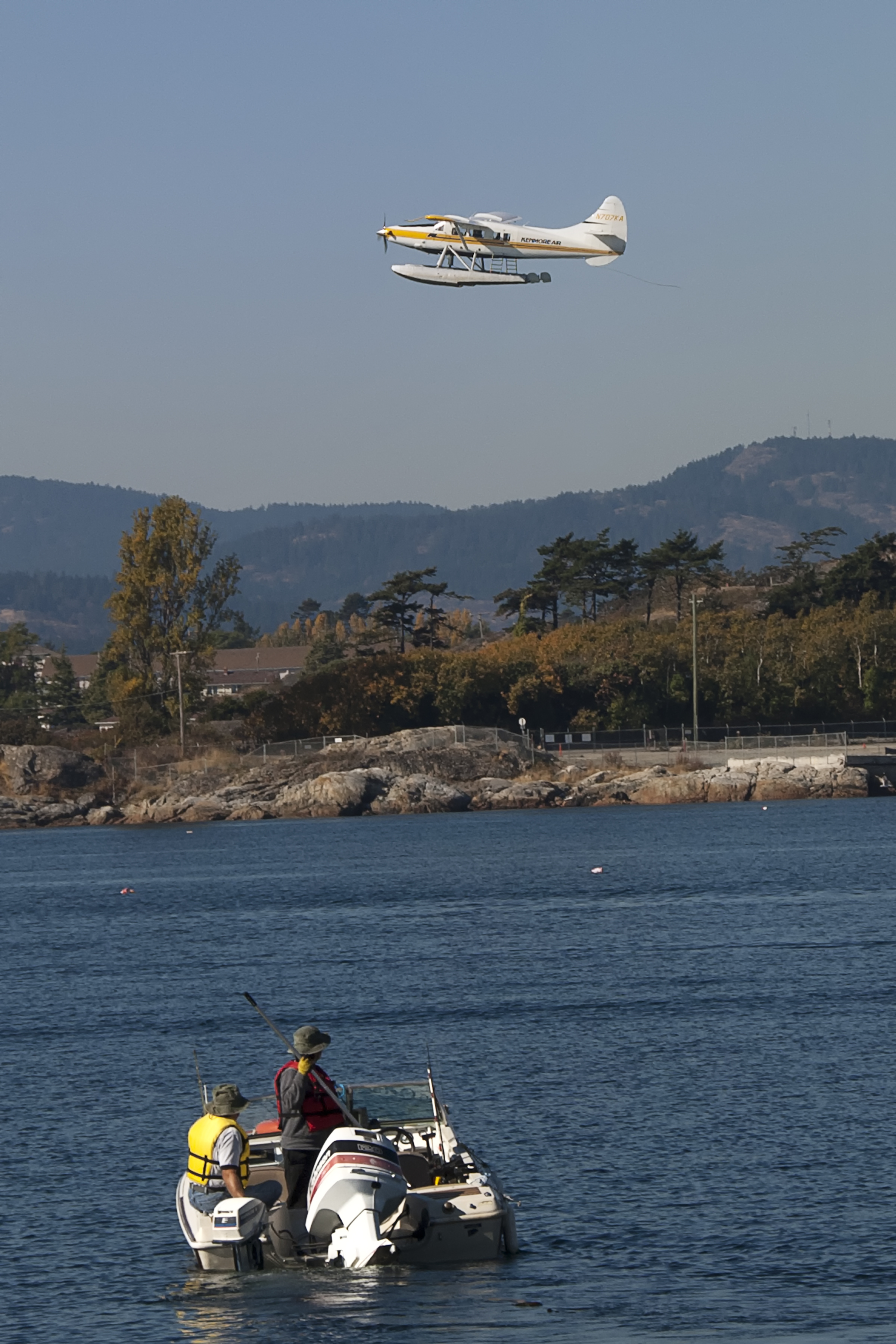
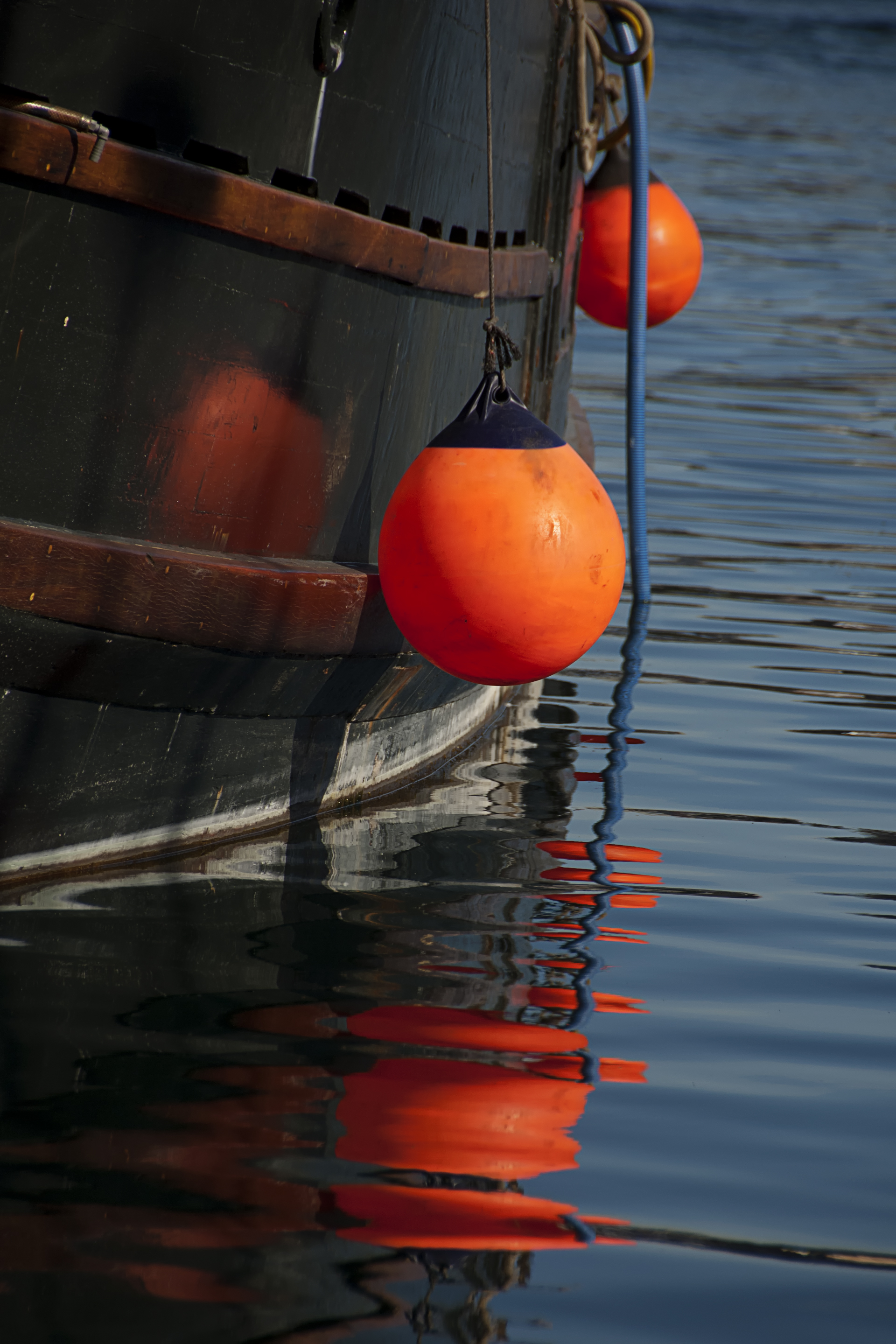
I had a great time photographing boats, planes, birds, and pretty much anything else on, off, and around the water that caught my eye as I roamed Victoria’s waterfront. I found new subjects, met interesting people, and even spent time with other photographers. I really enjoyed the change of photographic scenery and highly recommend any photographer to change things up to refresh their perspective.

I appreciate your comments.

My website is at www.enmanscamera.com
The Autumn Garden for Photographers


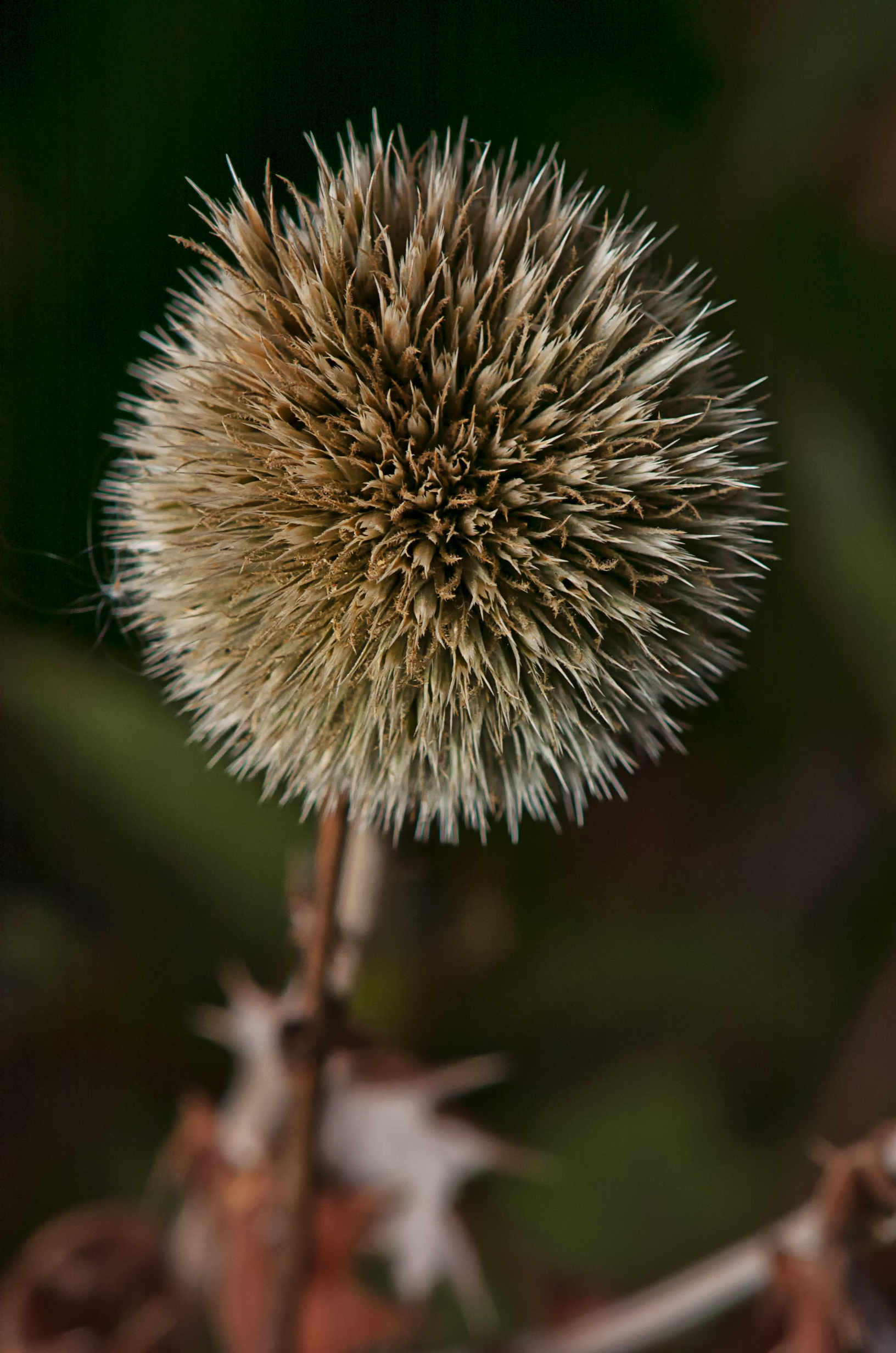
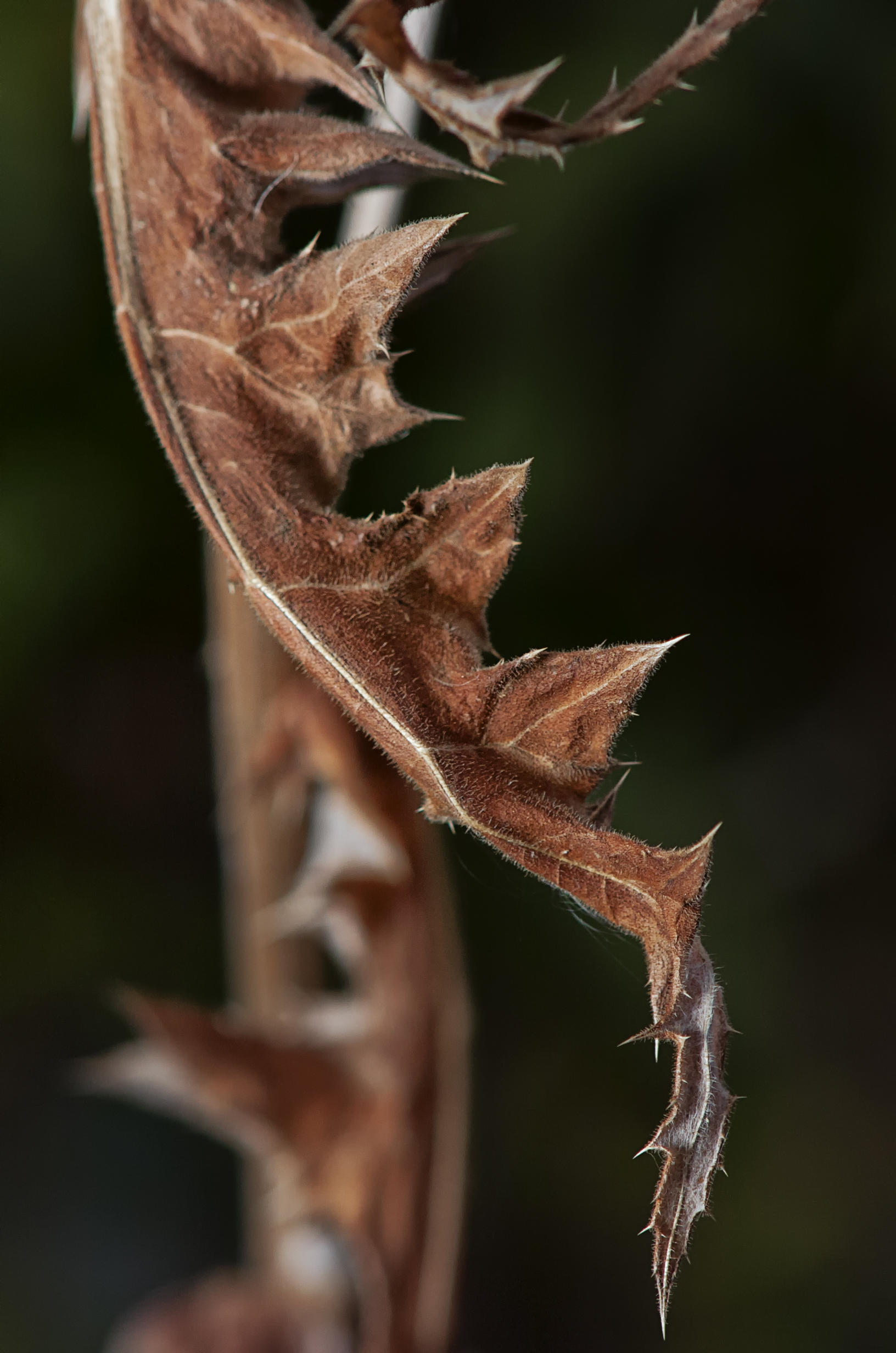
For the past week I have been looking at my wife’s garden as I walk the path from our front door to the car on my way out.  Her garden plants are dry; actually, crackling dry might be a better way to describe the plant life here in British Columbia’s interior after another summer season with very little precipitation.  She explains that she has a “dry garden,” and that she doesn’t water the garden, only for new plants when necessary.  Plants are selected that have the best chance of survival given the conditions. Parts of the garden are crispy dry, or have gone dormant, and offer a unique opportunity for photography before fall rains soften the landscape.

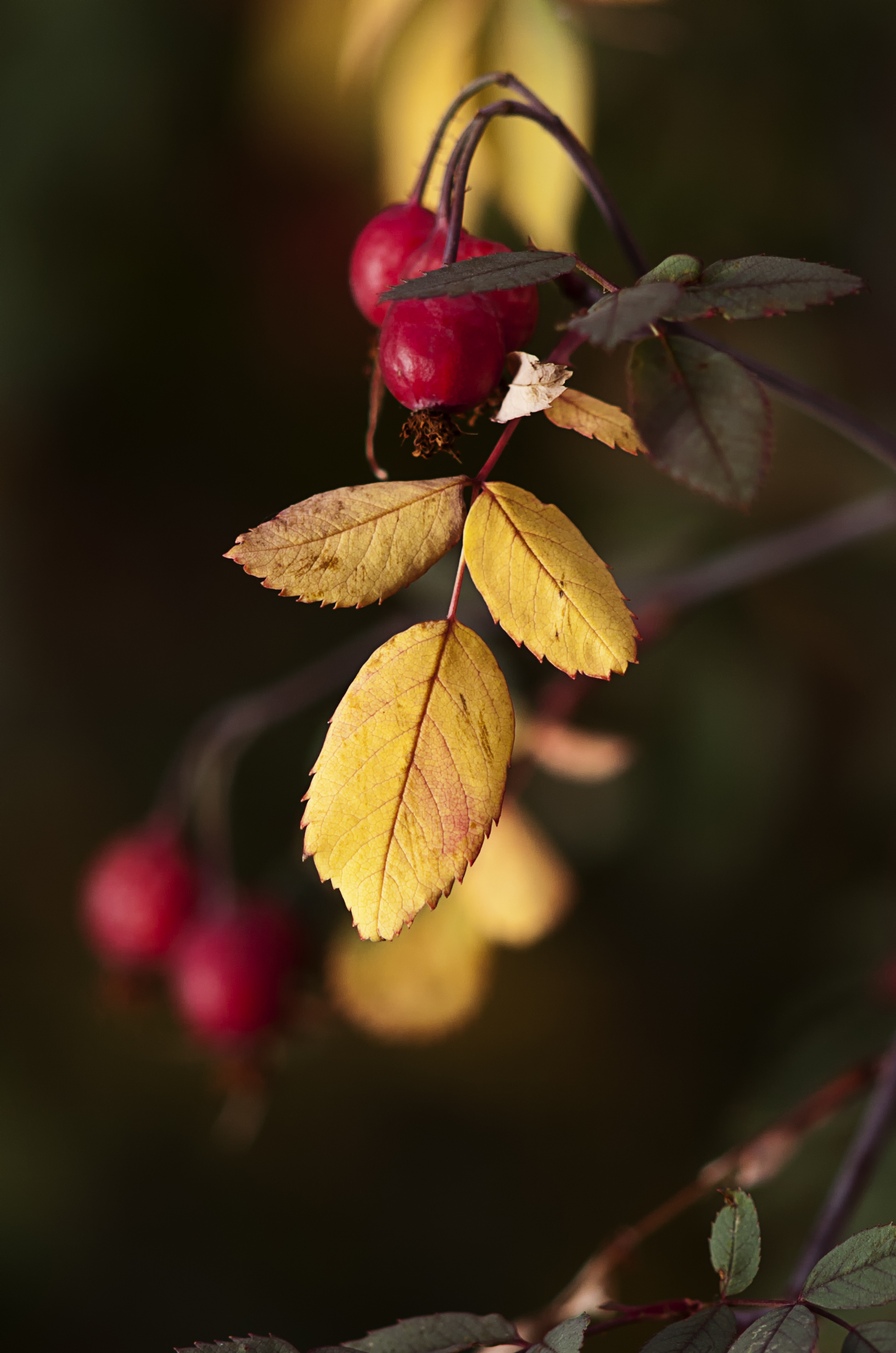
The nights are now getting cooler and the days aren’t as blistering hot as they have been for the past month and the plants that still have leaves that haven’t shriveled and fallen to the ground are beginning to change colour.

Most of the books that discuss garden photography recommend photographing plants in the morning when everything is fresh. Of course, spring is the most popular season for flower photography; and, I doubt those presenting their photographs to garden or photography clubs include photographs of lifeless plants. However, for this dedicated photographer, the combination of very dry, withered leaves and those with just enough life left to change colour are intriguing. As I have in the past I’ll admit that, unlike my wife, I can name few of the many of the flowers growing in our garden. To me, I look for colour and shape and how they fit in the environment.

My regular readers are already aware that I venture into our garden on rainy days and when it’s snowing. I enjoy photographing our garden in any season, and its dry condition is an invitation not a deterrent. So, this morning when I got up to a bright, clear, 9 degree autumn day, I thought I shouldn’t wait any longer and walked around our garden slowly looking for the flowers I would photograph later when the sun began to drop in the sky.

I waited for what I’ll call the “quiet light” at days end. I like that light that lasts for a very short time before dark when there is still light enough to see details, but not bright enough create highlights. As much as I like to use it, I can’t claim the term “quiet light”. That goes to photographer John Sexton and is described in his wonderful book of black and white photographs titled, “Quiet Light”. A protégé of Ansel Adams, Sexton and his collection of black and white photographs that he calls “an exploration of the natural environment” is inspiring; and it’s him, and photographers like him, that make me want to search out the unusual in the natural environment that would normally be ignored.

I wandered around with my tripod, a stand-mounted wireless flash pushed into a 30-inch diffuser, and a 200mm macro lens on my camera, and worked at picking out interesting shapes to photograph. The subdued light was perfect. I could place the camera on the tripod, focus on some intriguing-shaped plant, then direct the diffused flash from different positions to open up the flat-light conditions.

It’s easy to move the flash closer or further away to change the way the light effects a subject, or release the shutter several times while opening or closing the aperture.  The outcome would be different versions. Some would have shadows depending on the position of the light while others would or wouldn’t have a dark background depending on the exposure.

I didn’t spend a long time because the light didn’t last long, but I released my shutter at least a hundred times photographing different plants, trying to be as creative as possible and get the exposure and the angle just right. I had a good time and expect I’ll be at it again before everything changes again.

I appreciate all your comments, Thanks

My website is at www.enmanscamera.com
Photographing a Waterfall

The week had been a busy one for me. Unfortunately none of what occupied me had anything to do with photography.  It is said that life gets in the way of having fun.  So when I finally was able to chisel out some time for myself this last weekend I decided to travel the short distance up the road from my home to a stream with waterfall.  The falls are just off the Trans Canada Highway as it winds past Chase, BC.

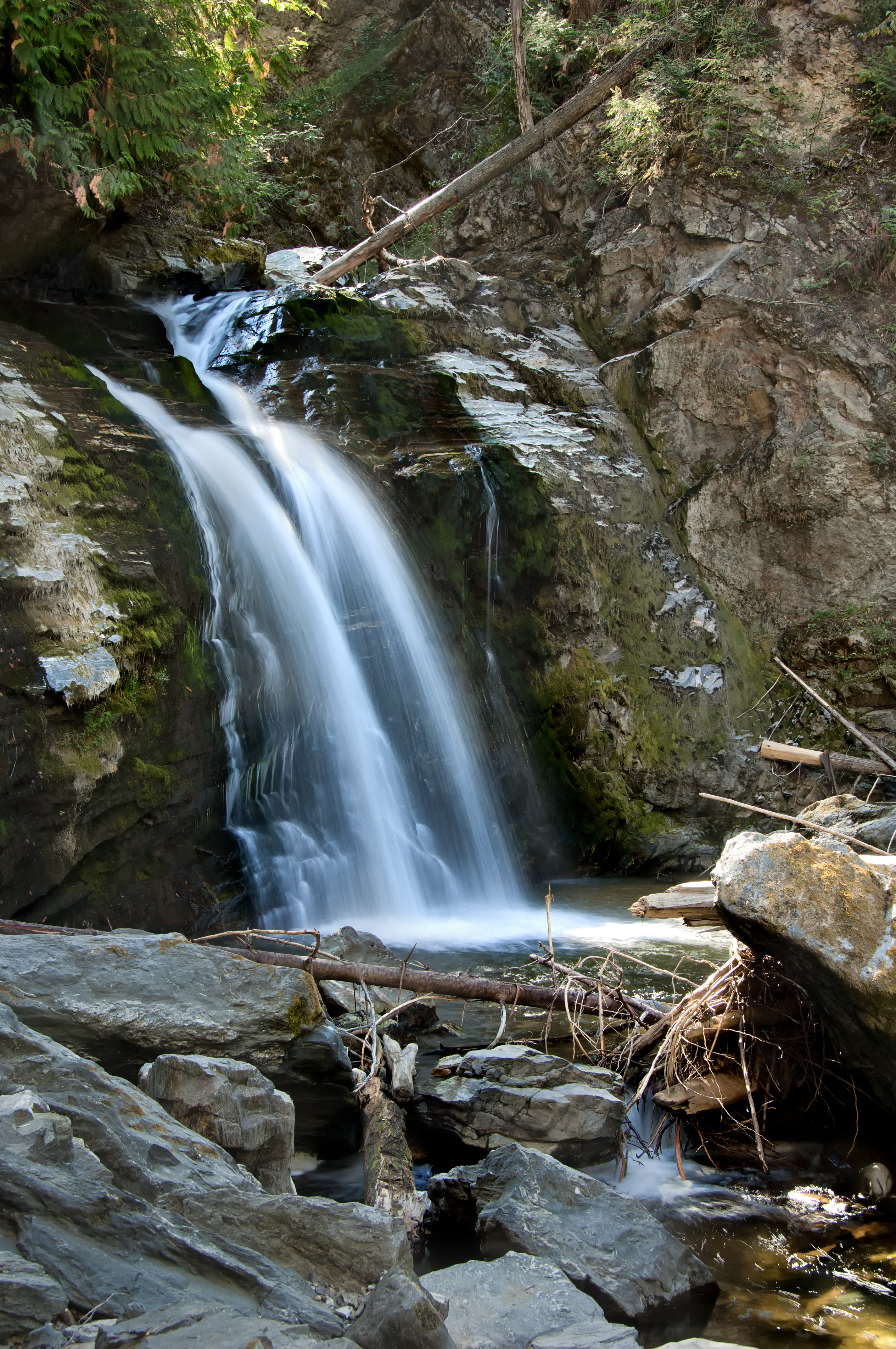
I brought along my tripod, selected my versatile 18-200mm lens, a polarizing filter, and a neutral density filter just in case there was lots of bright light, and headed out. When I arrived at the creek and walked along the well-worn path beside the rock-strewn creek up to the waterfall I found there was open shade everywhere. It was just before noon, and the sun’s direction against the large flat rocks that lined the narrow canyon was providing lots of soft, reflective light on the cliffs, the water, and the pile of logs that surrounded the falls left over from the flooding of waterways that occurred in British Columbia this spring. I don’t think I could have asked for better light. There was very little of the harsh sunlight I had anticipated so I didn’t have to use the neutral density filter, and because of all the soft reflected light I didn’t have deep shadows to contend with either.

I climbed down the large rocks to the stream just below the falls, set up my tripod and started shooting. I like the soft look of water that a long shutterspeed creates so I began by putting the polarizer on the lens, which reduced the light by about two stops. Then I set the ISO to 100 and stopped the lens down to F/11. That gave me a shutterspeed of three seconds.

Photographing water is fun. I enjoy waterfalls, but rushing streams or rivers, plant covered ponds, and mountain lakes are just as enticing. I think it’s how the water sculpts everything that surrounds it.

Waterfalls usually demand a wide-angle lens and a tripod. A wide angle allows photographers to capture the landscape that contains a waterfall and the tripod means there won’t be camera shake. The lens doesn’t need to have a wide aperture because in landscape photography, and that include a landscape with a water feature like a waterfall, one should be stopping the aperture down to create as much depth of field as possible. The important thing, if one wants that glowing, soft looking water is a slow shutterspeed.  And when the shutter is slowed the aperture must be closed, and with a smaller aperture comes more depth of field. I will also mention that a cable release is a good idea to reduce camera shake, but I seem to always forget mine, and so I use the camera’s self-timer instead.

For those who live in the British Columbia there is no shortage of waterfalls that are easy to photograph, and for many like me the waterfalls are only minutes away. Small falls like the one I go to certainly don’t match some of the spectacular waterfalls from around the world, but even tiny falls make good pictures if the photographer gets creative enough. I even have a picture hanging on a wall in my home that shows a waterfall of only four feet high. I put my camera on one of those little pocket tripods and got a very wet knee, shoulder, and hair taking that picture, and remember laughing at the contortions I was assuming to keep from getting too wet in that cold water. Now that would have been a good picture. But, as I wrote, water is fun to photograph and getting wet on occasion is worth the final picture I suppose. Someday I might get the chance to travel around British Columbia, or North America to photograph some of the magnificent waterfalls, but until then I’ll just make the ten-minute drive up the road.

And I always appreciate your comments.

My website is at www.enmanscamera.com
Connecting with other photographers


Connecting with other photographers, especially those with skill and experience, is a very satisfying and worthwhile experience. Some months ago, while reading my favorite online forum, http://www.Canadian-Digital.com, I came across a request from Jeff, a Manitoba photographer, who mentioned that he would be visiting relatives in Kelowna and inquired if any local members could point him in the direction of good scenic locations in the area. I posted that I couldn’t really help him with Kelowna, but if he was interested I would gladly spend a day introducing him to Wells Gray Park, and added a link to the park’s website.

He sent an enthusiastic return email and we made plans to spend a day wandering my favourite roadside locations in Wells Gray Provincial Park. Photographers that haven’t been able to visit the fourth largest park in British Columbia are missing a visual treat.

Wells Gray is a spectacular, almost pure, wilderness area that is easily accessible by car. Although the website advertises it as a world-class destination for canoeing, kayaking, hiking, and camping, photographers can enjoy a photo-packed day trip wandering along the pleasantly-winding, park road and will return home with memory cards filled with quality wilderness images.

I anticipated that photographer Jeff, my new friend from Manitoba, had no idea what to expect other than the picture postcard images from the website, and I was pleased when he remarked that he would like to look for more creative opportunities than those most would make from the dedicated tourist lookouts.

The experience of meeting a stranger, and then spending the day driving, talking, and site seeing might be uncomfortable for some, but for photographers, I think they only need photography in common to have an enjoyable time. At any time, if the other person’s opinion causes unease, just change the subject to cameras, lenses, or any other thing photographic.

In order to get to Wells Gray early, Jeff had to get up before the sun for a two-hour drive from Kelowna to Kamloops to meet me at my shop at 6am. (I wasn’t being mean! It was his choice.) We bought coffee and departed for Clearwater, an hour and a half drive away, because we had decided to be in the park taking pictures for 8am. From Clearwater we then roamed into the park with our cameras at the ready.

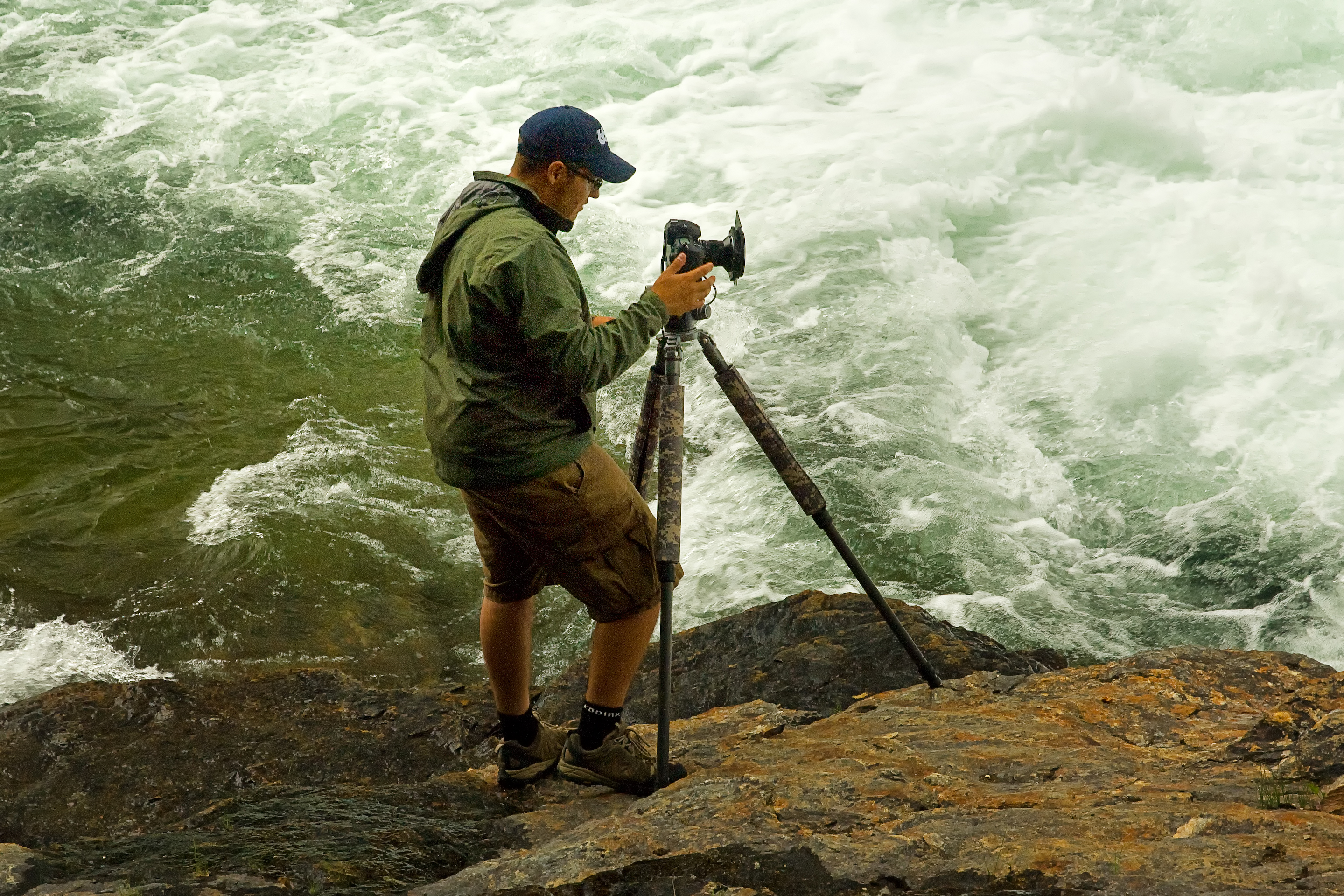
When I put my camera gear on the backseat of his car I had to move his tripod, and remarked that I liked the ball head he had attached to it. He said, “I always use a tripod”, and I thought to myself, “I think I’m going to like this guy.” There’s nothing like a tripod to let one know they are with a serious landscape photographer.

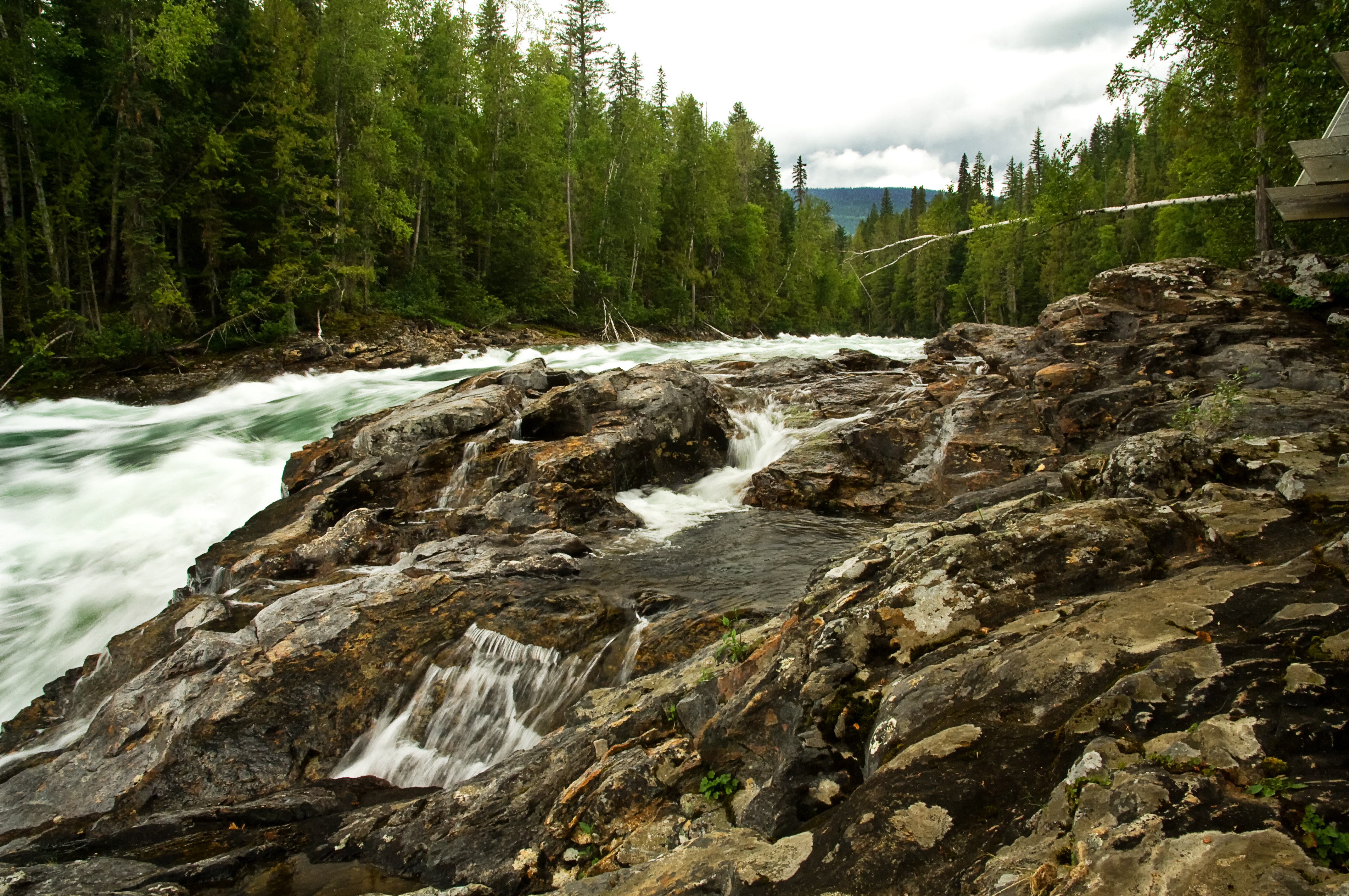
Wells Gray is a great park for roadside photographers with many places to stop, to photograph the spectacular waterfalls, old homesteads and the river’s many geological features tucked only a short walk away, and that is just what we did. Unfortunately, the wildlife was timid and we only briefly saw one black bear.

The comfortably cool day was excellent for photography with a slight overcast and high moving clouds. Jeff changed lenses and filters regularly as he worked the new environment, but for me Wells Gray has been a regular location for years and I was content to stay with my well-used, 24-120mm lens as I photographed the familiar landscape.

The internet is a wonderful way of bringing people together and I know I would really appreciate photographers extending hospitality to me when I travel to some far off place. In the event of any concern, checking up on other forum members is easy. I reviewed Jeff’s online posts (as he had mine), and when he wrote he was visiting BC I was sure he’d be fun to know and to stand beside as we made pictures. One doesn’t always have to participate as a host, but I am sure suggesting locations for photography would be appreciated. For local photographers who have never made the expedition to Wells Gray, it is well worthwhile.

Contact me at http://www.enmanscamera.com