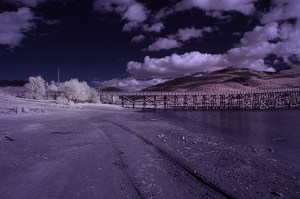
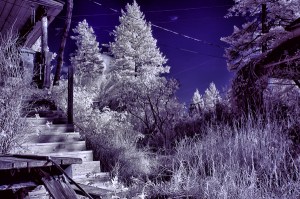
Infrared, A Completely Different Feeling….

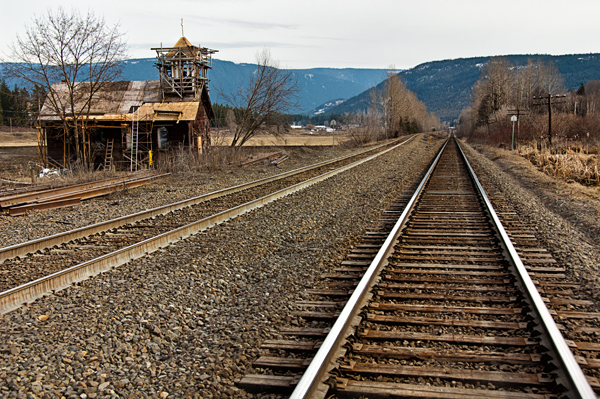
Pritchard Station

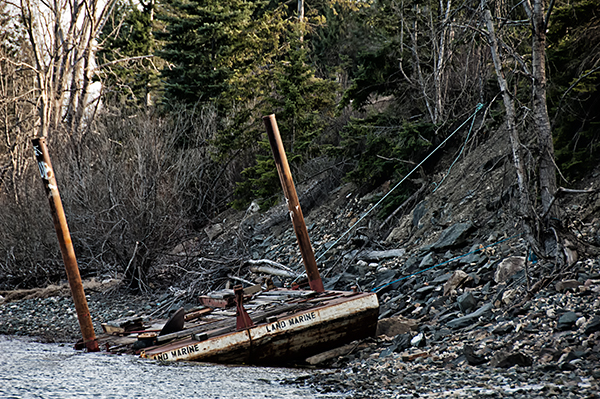
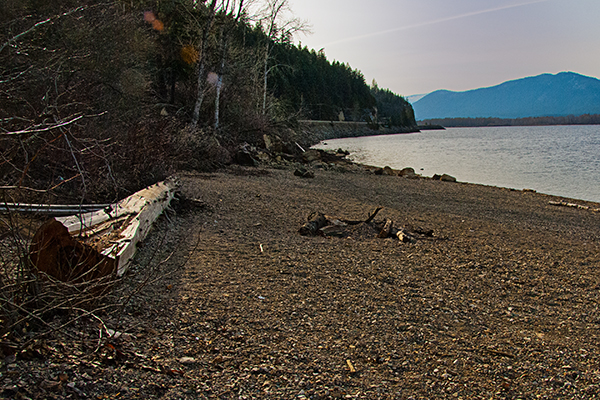
Riverside

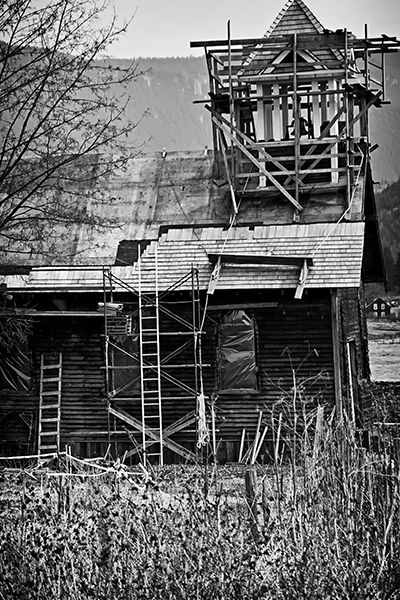
Monty Creek church

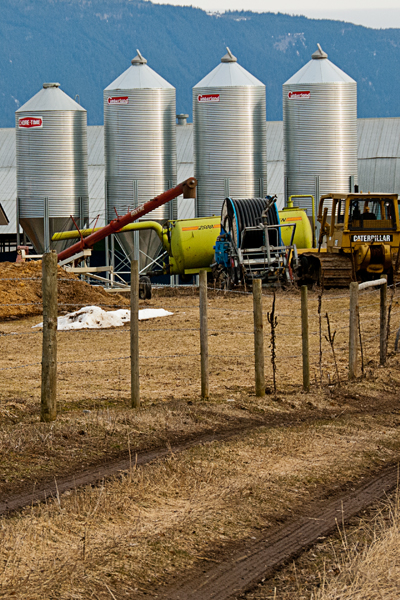
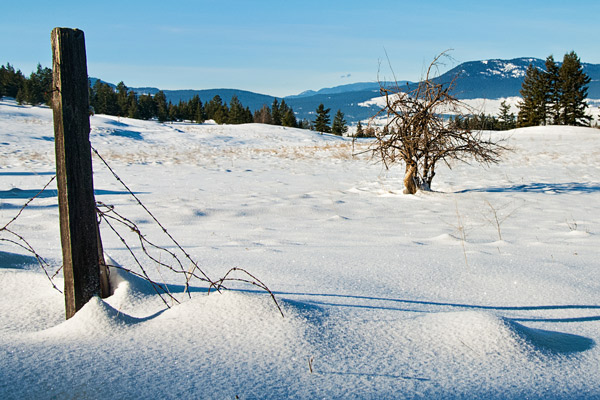
Fence along a dirt road

Pritchard Bridge

Back Porch

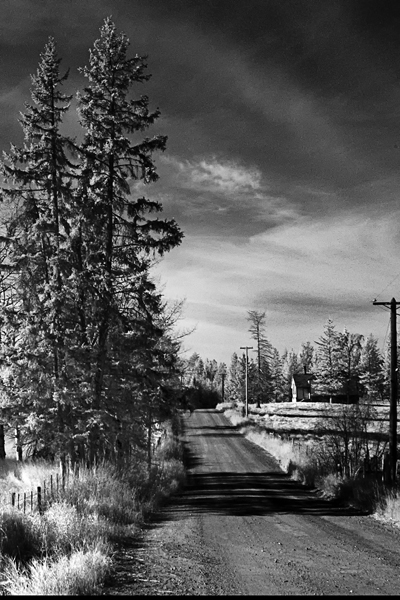
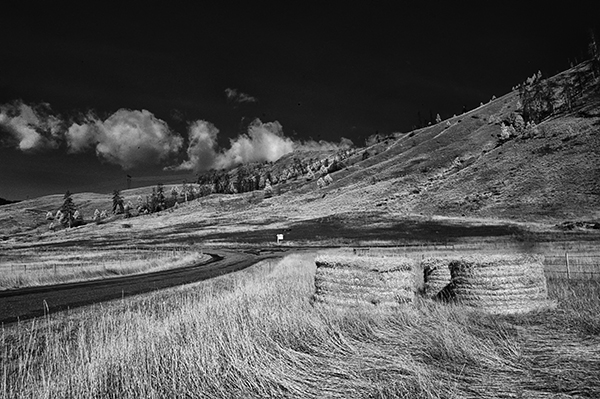
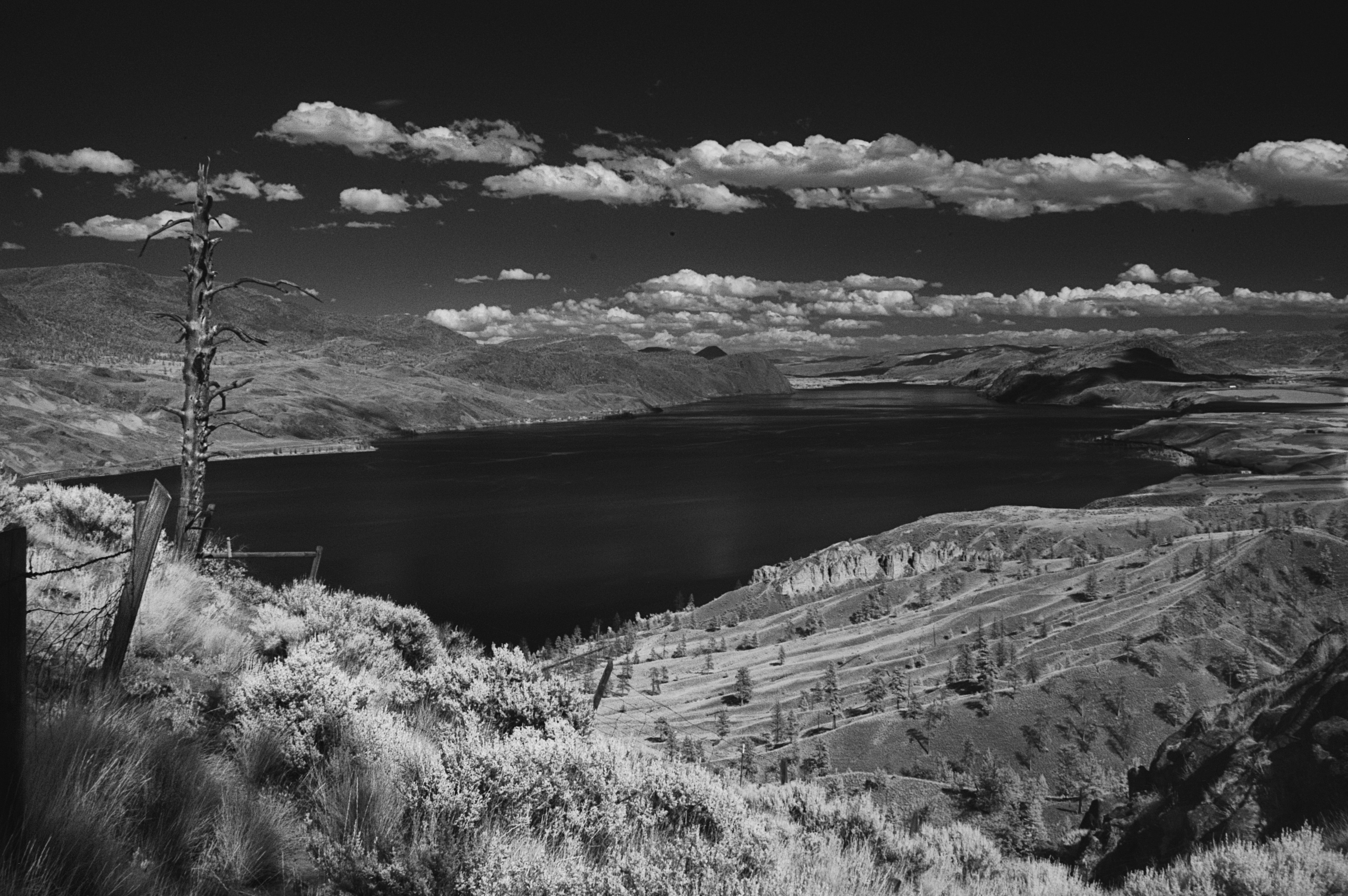
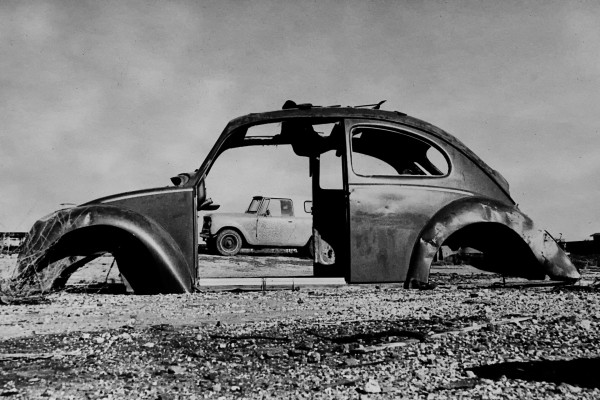
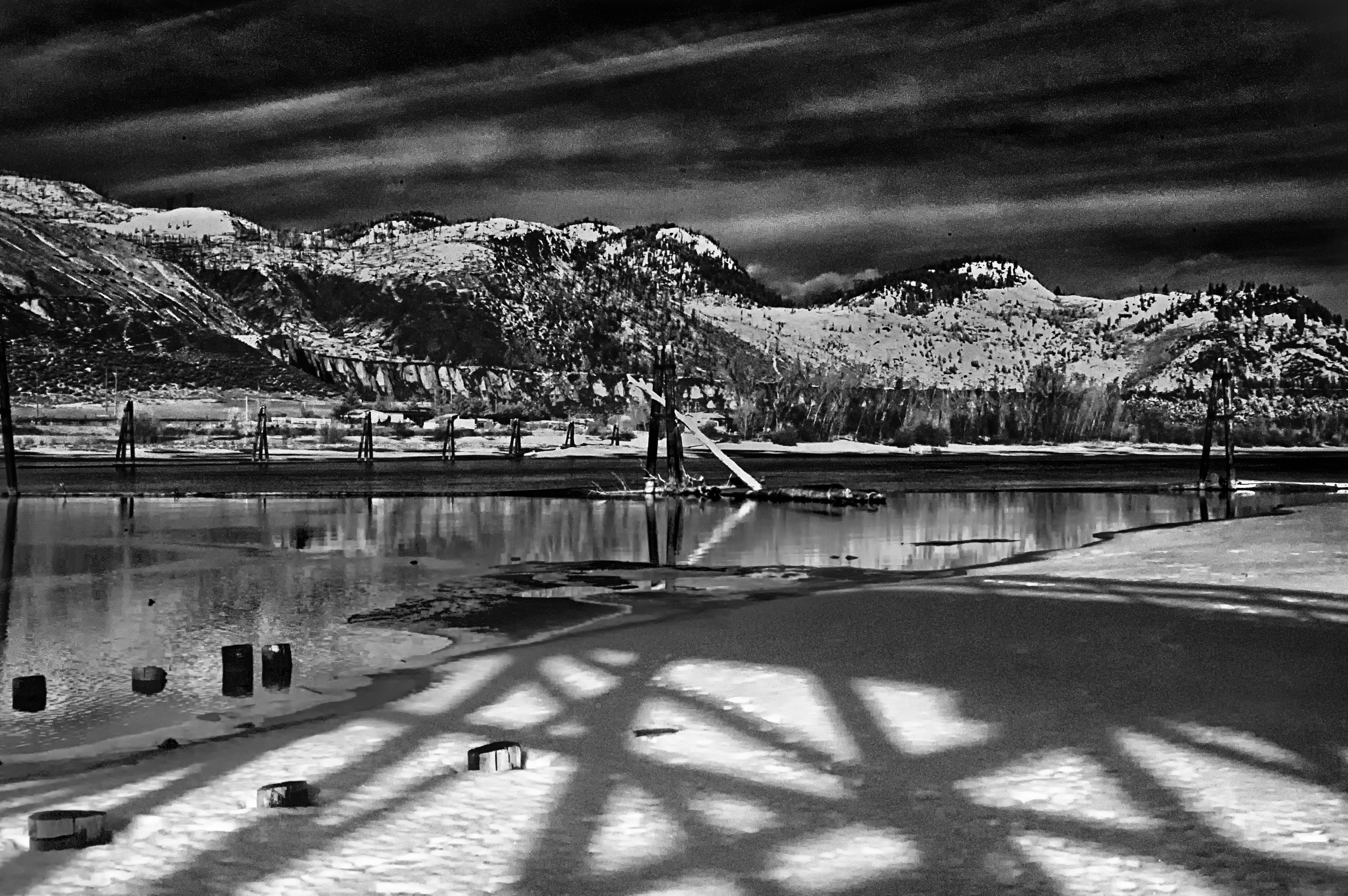
Infrared, A Completely Different Feeling

In my last article I discussed how easy it is to make creative changes in one’s photography by using a camera converted to infrared. I wrote that photographers have the option to creatively challenge themselves by selecting different lenses, choosing to produce black and white images, electing to use highly manipulative post-production techniques, etc., or any combination just to mention a few. Then I added one more creative tool to the list that I use, a camera converted to only capture images of the world around me in infrared.

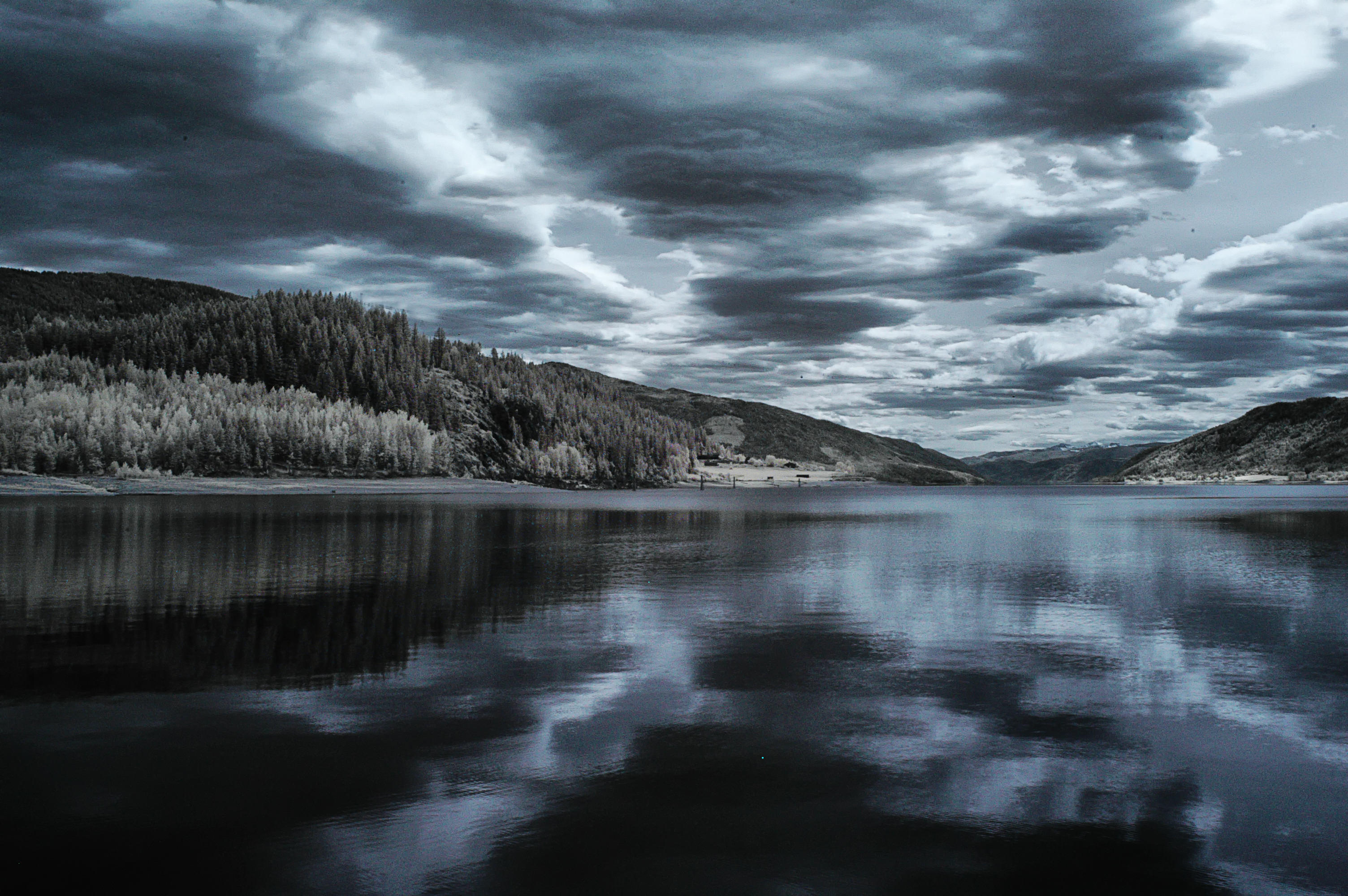
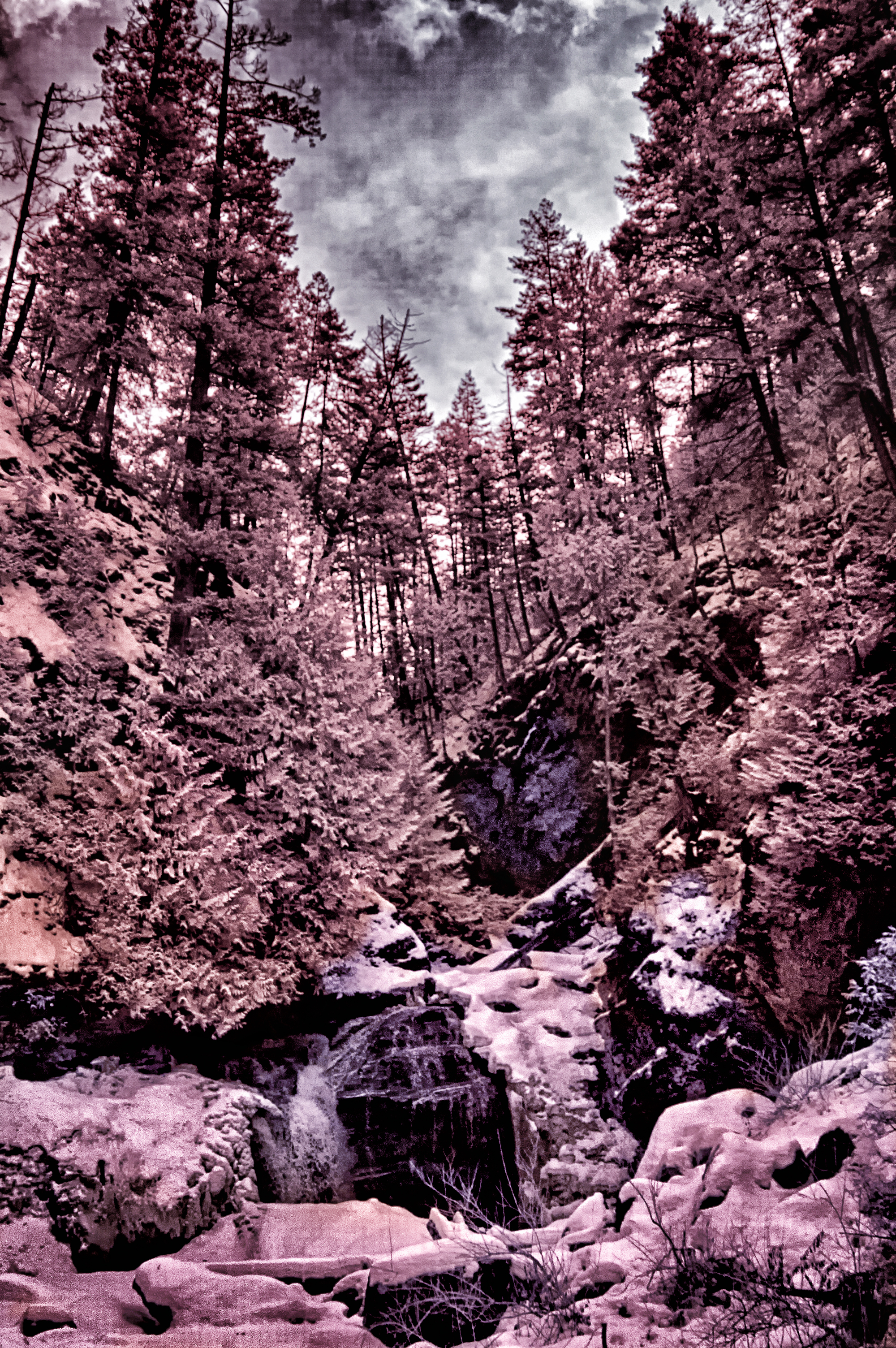
Infrared allows a photographer, and gives the viewer, a completely different feeling of a subject. Making an image with a modified camera is an exploration and a discovery that moves a photographer far from the usual. I like the sometimes-surprising tones that I can obtain when I convert the image to black and white. Like any form of photography, or art, it’s all a matter of taste.

Reflected IR light produces an array of surreal effects, vegetation sometimes appears white or near white. Black surfaces can appear gray or almost white depending on the angle of reflected light, and if the sky (my favourite part of the infrared image) is photographed from the right direction it becomes black. The bluer the sky, the greater the likelihood of an unworldly effect; and white surfaces can glow with an ethereal brightness.

The response I received from readers got me thinking about how much I like shooting infrared. That’s been a long relationship. My first forays with infrared during the 1970’s were began with infrared colour transparency film and then with infrared black and white film.

Now that I have set film aside I am more than content to use a converted digital camera. Besides it’s much easier with digital than the arduous process we had to contend with when we used film. Infrared film had to be loaded and unloaded in complete darkness, then processed in metal tanks that kept the film from getting fogged. We attached a deep red filter to the lens. The deeper the red the better the effect, and because of the dark red filter things become very hard to see. Oh, and the exposures were long if the sun wasn’t bright.

In spite of that infrared photography has had a strong following of creative photographers for as long as I have been involved in photography. And now with the light gathering ability of modern sensors I think that following is stronger than ever.

In an article I wrote about using infrared film titled “Photographing a Different Kind of Light” I said, “There are those who believe a fine art photograph must represent reality, but reality doesn’t necessarily take into account that there are differences between what one sees, what the photographer’s camera produces, and what the photographer was trying to capture.” I think a photograph is only a representation of a particular vision of reality.

Infrared allows us to photograph a world illuminated by infrared light, that part of the colour spectrum we can’t normally see, and produces intriguing, exquisite and sometimes unearthly photographs that can’t be captured in any other way.
Photographing Eagles along the Highway       

Eagle of all atitudes

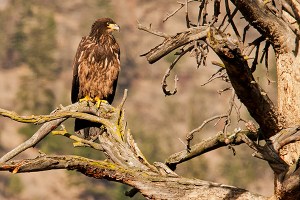
Young eagles

Young eagle

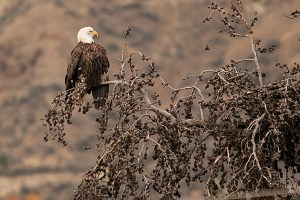
Waiting eagle

In the warm sun

Watching young ones

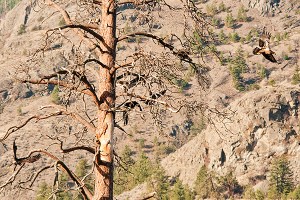
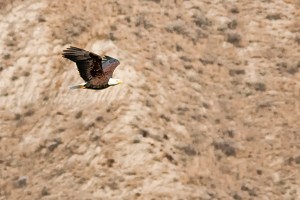
Fly, there's a photographer

Fly away


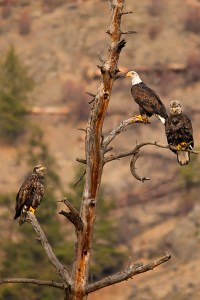
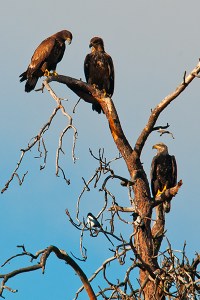
Eagles come in all shapes and sizes, but you will recognize them chiefly by their attitudes.” I don’t think British economist, E. F. Schumacher was really discussing the kind of eagles my wife and I saw perched in trees along the river, but his quote perfectly describes a picture Linda took of three eagles

Winter is on its way and eagles have been moving west along the South Thompson River towards the warmer feeding grounds on the pacific coast.

My commute to Kamloops from my home in Pritchard is on the Trans Canada highway that runs parallel with that wide river and this year it has been fun to see how many eagles we can count before reaching Kamloops.

After counting 35 eagles on our way to town the previous week Linda mentioned that she’d like to try taking some pictures. So after waiting until the sun was high to the south last Wednesday we made the drive to see what we could find.

The traffic on the Trans Canada is constant and fast moving with lots of big, transport trucks. But with some preparation it isn’t that big of a deal to quickly pull a safe distance off the road to photograph eagles in the tall, dead trees along the river in which the eagles like to perch to watch for fish. In one tree alone we counted fourteen eagles, some mature but mostly adolescent.

My job is to drive and my wife’s is to photograph eagles. I pull over, stop and turn off the car to reduce vibration caused by the engine, and Linda rolls the window down, plops a beanbag on the frame and positions her heavy 150-500mm Sigma lens out the window and starts shooting.

It would have been nicer if we had a way to get closer. However, even if one got out of the car, struggled through a deep ditch, crossed the railroad tracks and climbed over farmers’ wire fences, I am sure the skittish eagles would just fly off anyway.
Linda had a pretty easy time of photographing those eagles from the car anyway. She had selected Shutter Priority on her camera with a shutter speed of 1/650th of a second and 650 ISO. Yes, there were some shots that didn’t turn out, the car would shake when big trucks passed by and every so often clouds would block the sun. But she got some great keepers.
As exciting as it is for those of us here in the BC Interior to see 40 or 50 eagles in the trees along the river, in a few days lots of those big birds will be making their way down the river to join many, many more eagles congregating on the Harrison River to feast on spawning salmon.

The Fraser Valley Bald Eagle Festival began 20 years ago and this year it will begin on November 28th at Harrison, British Columbia. This is an annual event with the migration of thousands of Bald Eagles returning to the Harrison Mills area to take advantage of the spawning salmon.

For photographers the place to be is where the Harrison River widens with shallow gravel bars for the returning salmon to spawn. Organizers say it is possible to see up to 10,000 Bald Eagles feasting on salmon.

What Influenced My Photography of Landscapes?  


Along the back road 2

Bales along the road 2

River view

Lake view

Scout

Memories of roadside photography.
 

My interest in photography began in the early 1970s. I had grown up with cameras, but until that time they were no more than a simple boxy device with which to document family and friends. When I look at my tattered old albums packed with fading pictures taped to construction paper pages, I see lots of poorly composed and poorly exposed images, partly due to the inadequate technology of the day and my ignorance in using it.
When I did decide the medium of photography was worth using for more than documenting friends and family my first progression was into arty, creative images. I have mentioned before that the great photographer, Man Ray, was my first inspiration, but now thinking about my photography of those days I am amused at my youth, and contemplate how far I have progressed and of course how far the technology has come.

I think my influence with the photography of landscapes and other subjects in nature may have begun with the early advertisements by the American Automobile Association. That organization was the best place to get maps for road trips in North America. They sent their employees out, with cameras and mapping instruments, across the continent finding the best and most scenic routes. I remember seeing pictures of big, four-door International vehicles with people poised on platforms on top with camera and binoculars in hand on a dirt road in the middle of “no-where North America”. It all looked very exciting.

Then I was introduced to the writings and photography of Ansel Adams, and saw pictures of him standing on a platform on top of a vehicle very much like those used by the American Automobile Association with his large format camera making wonderful photographs any scenic photographer would admire. So, I saved my dollars, sold my jaunty little MG Midget, that was so easy to get around in on the streets of Los Angeles, and bought a bright yellow International Scout 4×4. Underpowered, poor turning capability, uncomfortable on long trips with back seats that were only accessed by climbing over a metal barrier behind the front seats; it was perfect in my young mind and meant that I, like Ansel Adams and the folks from the AAA, could travel the back roads in a cool looking vehicle with my camera gleefully capturing the natural world on film.

Years have passed and technology has changed and so have I. There are still lots of back roads to explore and photograph, but the days of climbing on my car roof are long gone. The American Automobile Association no longer explores the country and today I check maps on my iPhone. I don’t need a large 8×10 view camera like Ansel Adams used with the accompanying long hours working in a chemical darkroom to make good enlargements and certainly don’t want to drive around in that uncomfortable, gas guzzling International anymore.

I thought about all this as I was heading towards the city of Kelowna last week. My wife and I left early so we could stop for some pictures and still be there for a 5PM appointment. My car of choice is now a Honda Accord. Comfortable, fuel-efficient and if I drop the back seat down I can carry lots of equipment. As I drove I mentally made photographic compositions of the countryside and thought about how nice the day was for photography.

I reminisced about the many times I have made this same drive over the years, and the different photographic equipment I have used to photograph many of the subjects and scenes I was driving past, and the different vehicles I have used, and we talked about how easy it is to make pictures today. As the cameras get better and better, and equipment like tripods and lenses get lighter, and our vehicles are more fuel efficient, the life of roadside photographers like me is just great.


March is Here Again

The train goes by

Notch Hill Church


From winter's storm

Lost during winter’s storm


Lakeshore in spring

Desolate beach


Just before spring

Waiting for planting season


ReConstruction

Reconstruction


Winter tree in spring

Winter tree waiting for spring


Yes, March is here again. Those who have been reading my posts for a while know that I approach this month with a foreboding feeling. The optimism of January and the hopefulness of February have now passed.

Last year I wrote about the uninspiring landscape of this month and the frustration of photographers who are ready for something other than falling snow and icy roads. I quipped about useless forays into the countryside to photograph hungry coyotes, wandering deer, or sad little birds that hung about through the winter.

However, just when I was ready to be moody and join others gloomily complaining about the weather, Mother Nature has thrown a wrench in the spokes with spring-like weather.

I traditionally expect March to come “In like a lion and out like a lamb”, but not so this year. February 2015 is being heralded as the second warmest ever recorded here in British Columbia. What is a guy to do? I wasn’t ready for spring.

The landscape is mostly snow-less, but I know there is green growth beneath that drab, lifeless end of winter brown. So with that in mind, my wife, Linda, and I decided in spite of that lingering pale hue that we would pack our cameras and take a drive along the ice free Thompson River to see if we could find something worth pointing our cameras at.

I had decided to mount my trusty 18-200mm lens on my camera. I like that easy to use lens. It may not be the sharpest lens in many collections, but it is versatile, lightweight, and doesn’t take up much room. Besides that I can always tweak its slight lack of sharpness in Photoshop.

As we drove up the river valley I wondered if I would find anything in the lifeless landscape to photograph. We are so conditioned to search for colour when we set out to do scenics that we forget to look at the structure as the scene unfolds in front of us.

We talked and drove without finding anything to photograph and eventually stopped for lunch in the small lakeside town of Sorrento. I just couldn’t get motivated and after that big meal was about to resign myself to just returning home to sleep it off. But as I paid for our lunch, Linda talked to some local people who suggested we check out the old church at Notch Hill. I was surprised when they said that decrepit 1920s church was still there. Well, it was just barely there, and under some slow restoration.

As I selected different angles to photograph that decaying building I realized I should be photographing its transition in the landscape. I was seeing things wrong and falling prey to words of Shakespeare’s Julius Caesar who said, “beware of the ides of March”. It’s what is changing and emerging that I should capture, not try to photograph the bloom of spring when it isn’t here yet.

I began to look for the story that happens between one season and the next, the shoulder season. I realized my photographic goal should be to select subjects that visually talk about that moment just after winter and just before spring.

I am sure one could still wander up into the mountains and continue photographing winter or search for some hot location in the city with early growth. But for those that are always creating photography challenges for themselves, I suggest that as with that old Notch Hill church, this year’s March photography challenge should be about something between the seasons.

I look forward to your comments. Thanks, John

My website is at www.enmanscamera.com

A Photographer’s Walk on Snowshoes

Snoeshoeing-2

Wind-swept-field-2


forgotten-barn-2

Tracks-2-


Almost a year ago to the day I wrote that I looked forward to enough snow-pack on the hills to snowshoe in, and as then, after a morning of shoveling a deep path to my chicken coops, clearing the driveway, and another path to the front porch, I was again taking my first winter hike up to the high meadow above my home.

Last year my January walk up into the meadow’s deep snow was on a sunless, stormy day. And I recall setting a high ISO so I could get a shutterspeed that would let me handhold my camera, and then returning home in a snowstorm.

This time I mounted a light-weight, 18-105mm lens on my camera, stuck an old tea towel in my pocket in case I got my camera wet from the snow, and headed out in the balmy minus 3C day under a bright, almost-cloudless, blue sky. And instead of struggling with low, flat light, my ISO was set at 400; and I added a polarizing filter to darken the skies, increase the contrast in the scene, and suppress glare from the surface of the bright white snow.

I trekked up the hill, and as I had so many times before photographed everything. When I stroll up into that long meadow I rarely see animals, however, they are surely there hiding, and I did hear a snort from something as it moved through the trees, and when I began to cross the meadow a crow cried a warning to hidden watchers, then everything quieted, and the only sound was from my snowshoes and my camera shutter as I photographed the Thompson River valley far below and the tracks I made through the meadow.

My last article was entitled, “What Makes Photographers Happy?” Photographers wrote me noting that, “there is nothing like a new lens” or “fun day with my clients”, and I can’t agree more. I must include the words of three bloggers that sent their comments to me: Northern Desert photography, Nature Photography by Martin Ryer and Jane Lurie Photography.

The first from blogger Northern Desert says that happiness is “The process of being out in nature searching for the shot, be it landscape or wildlife. I love the post processing, editing job. So fun to see what you can do with software. Love talking with and interacting with other photographers about photography.”

I also had to pause and think a moment about the words of blogger Martin Ryer who wrote about when he has“…results that exceed or even completely differ from any preconceptions I may have had. It’s when this happens that I feel myself entranced by all of the possibilities that photography offers.”

Blogger Jane Lurie’s comment is delightful, “…I’m very happy when my final result is actually what I conceived in my head when I saw the shot. Capturing that small moment in time is a beautiful thing.”

What great thoughts on photographic happiness and I agree with everyone.  As for me, I will include the following from philosopher and theologian, Paul Tillich, who wrote, ” Language…has created the word ‘loneliness’ to express the pain of being alone. And it has created the word ‘solitude ‘ to express the glory of being alone.”   To those words I will add that my quiet, solitary walk and photo excursion on snowshoes made me happy.

As always, I look forward to your comments. Thanks, John

My website is at www.enmanscamera.com

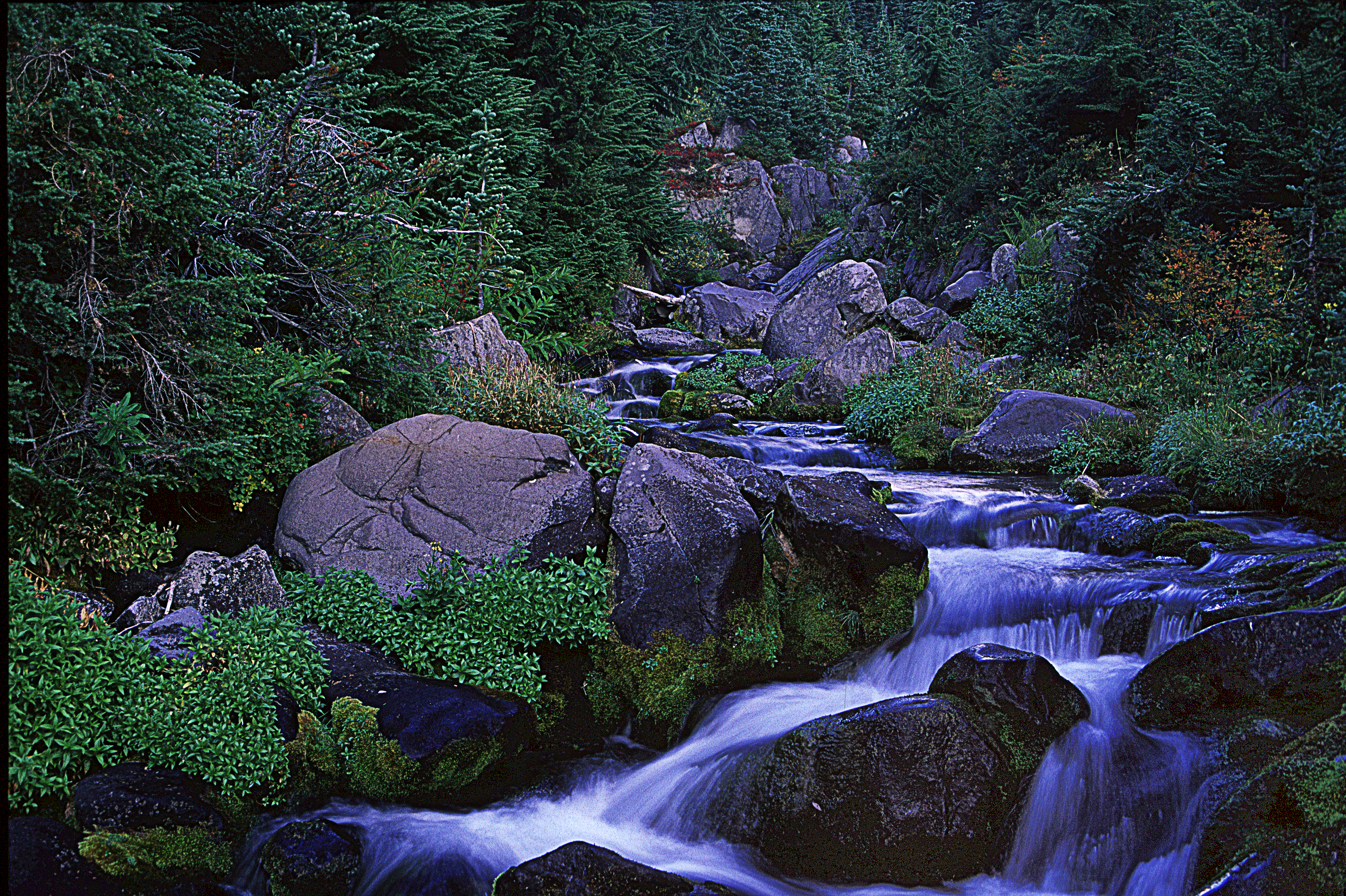
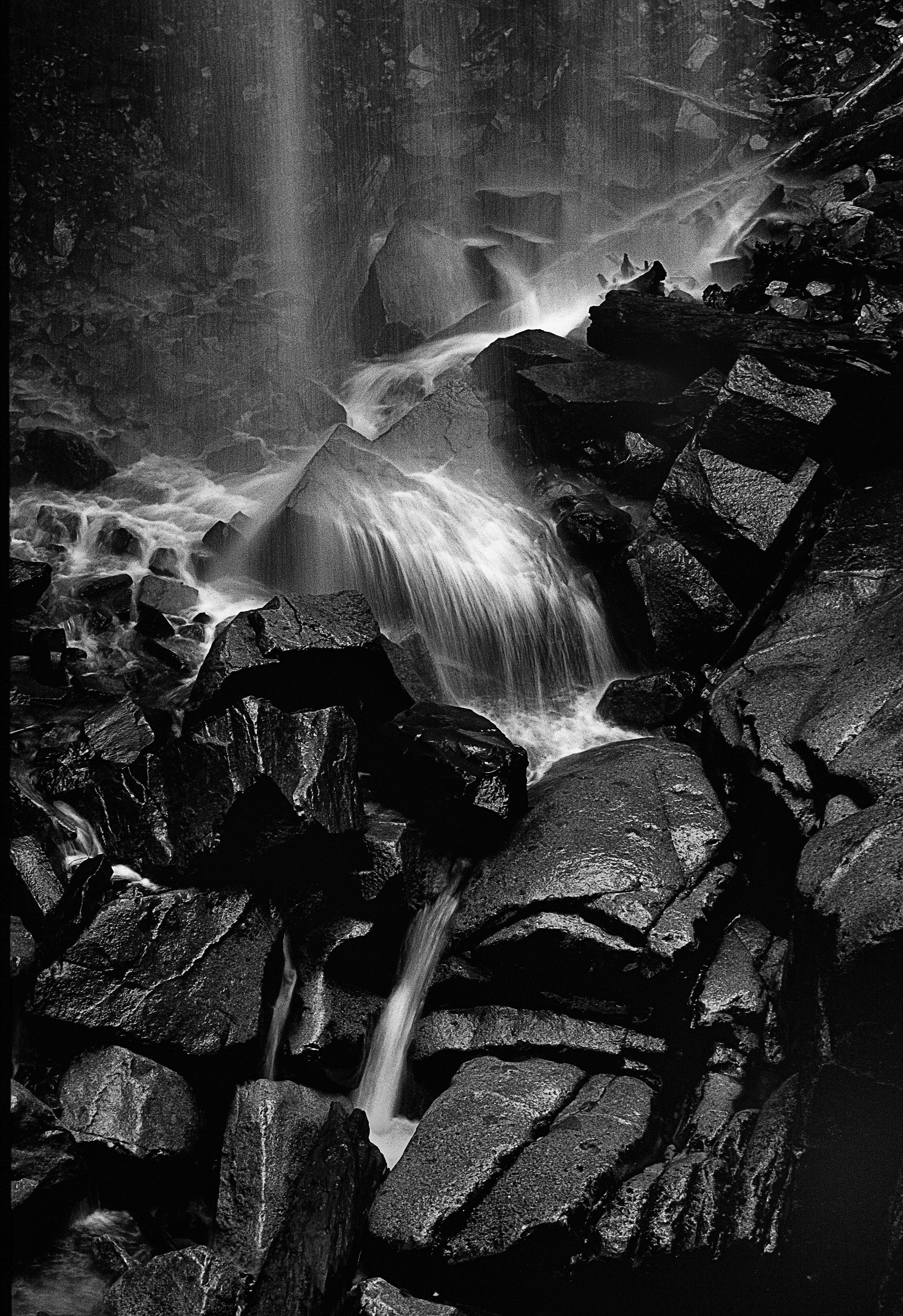
Water as a Photographer’s Subject.

Arrow lake crossing

Ocean ready

Gig Harbor waterfront

Valley stream

Under the falls

Framed in Green

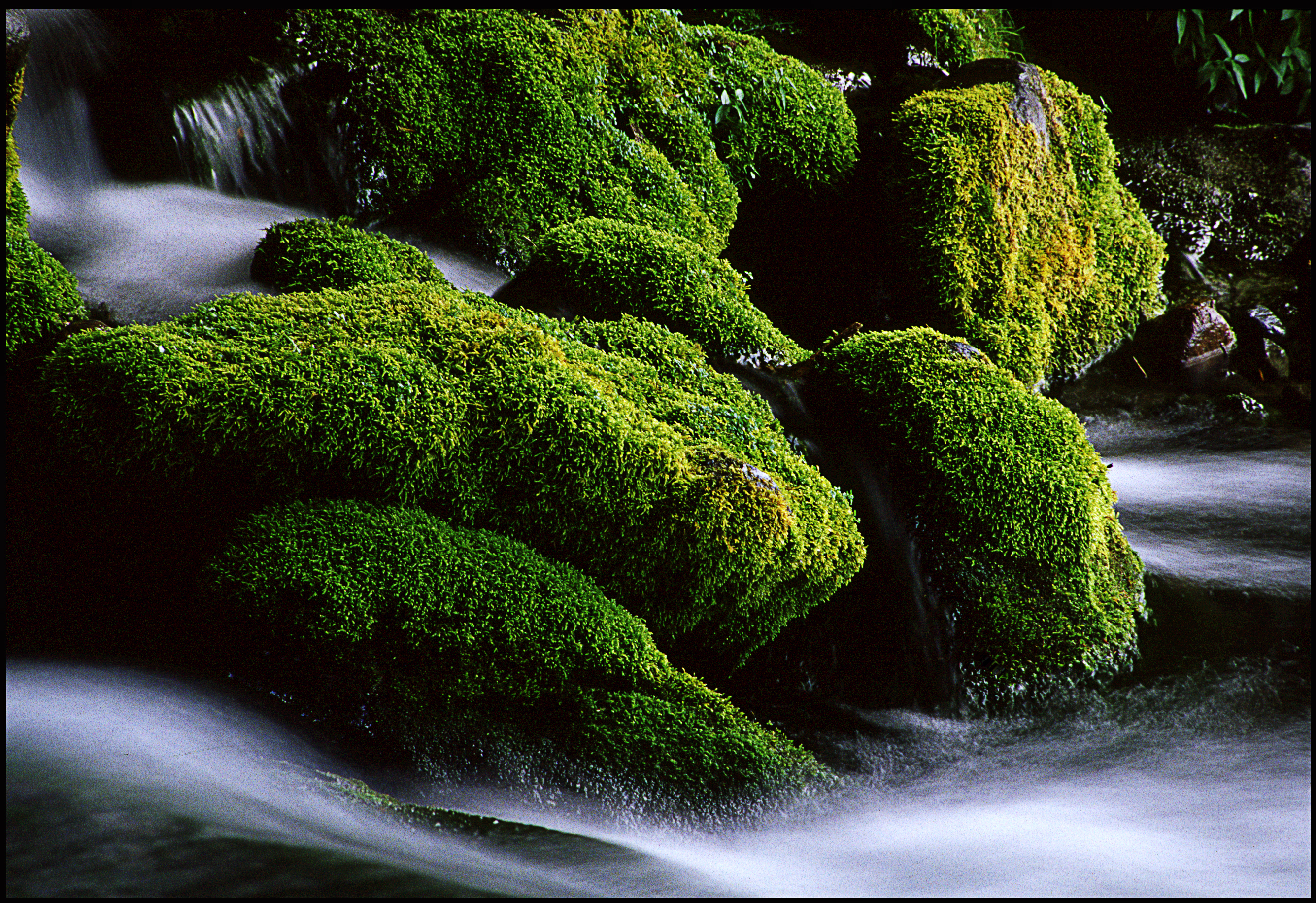
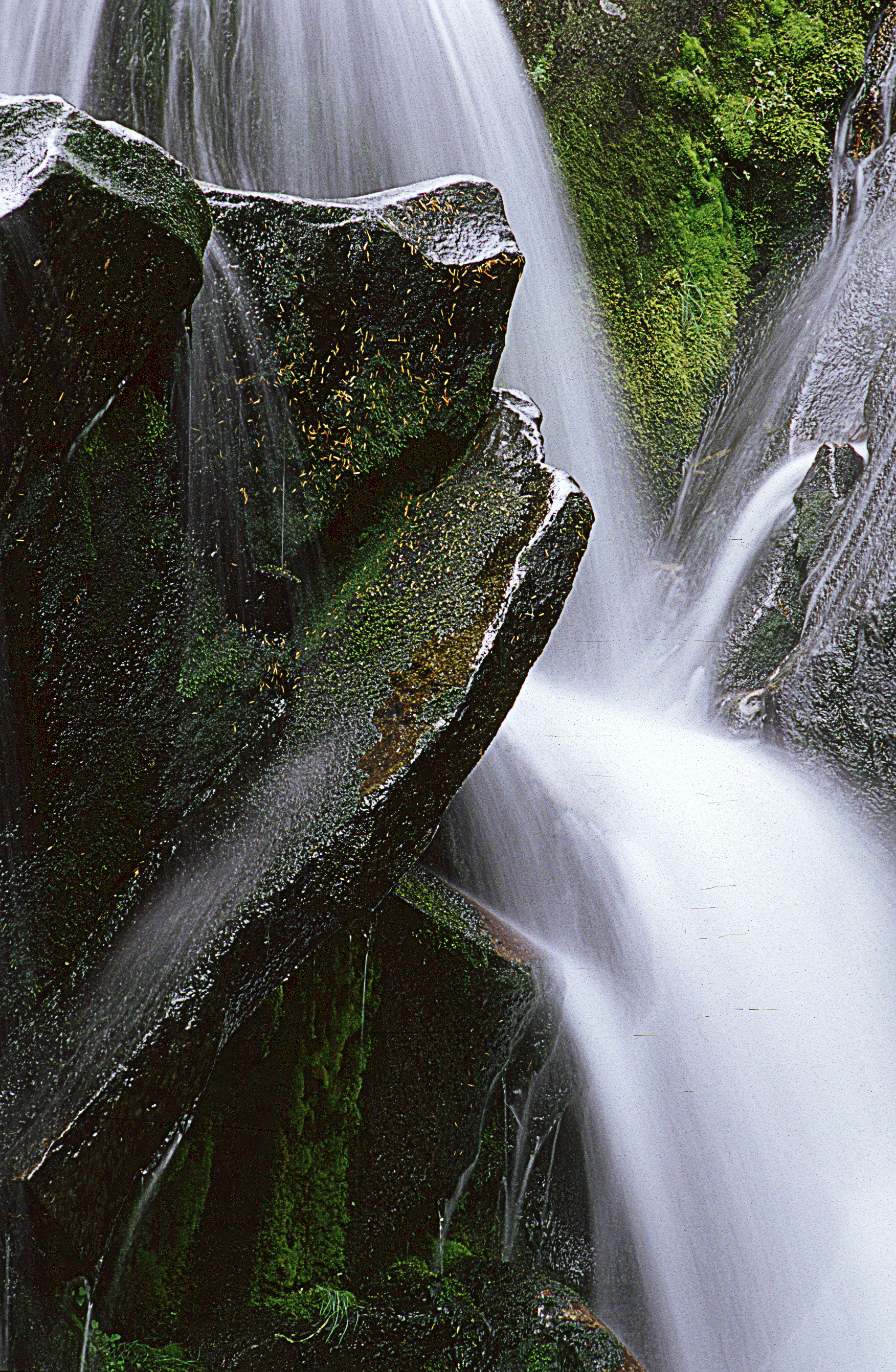
Water sculpture

What it is about water that has such a magnetic effect on photographers who wander ocean shores, the watersides of lakes and ponds, and river and stream edges in spite of slippery footing, and the occasional splash of water as they search of the perfect mood?

Whether crashing waves or clear reflections, water always adds interest to one’s images, and including a view of a flowing stream in a mountain landscape adds a great feeling of movement and mood.

The other night was one of those times that sleep would not come. I was tired, but thoughts just kept poking into my head and no matter what I tried, sleep evaded me.

I got up, turned on the computer, and manipulated a few images beyond recognition. That’s my usual recipe for putting myself back to sleep. However, this time that wasn’t working and after the fourth of fifth image I was bored, but not sleepy. So I decided I would start going through the list of photographer-bloggers I am connected to on WordPress. There are very few things I enjoy more than looking at other photographers’ work and the diverse circle of bloggers I regularly interact with are, if anything, entertaining and inspiring.

Street scenes, landscapes, cityscapes, wildlife, archaeology, and so many other genres, I read and viewed so many excellent photographs.

As happens to many of us when wandering the seemingly endless galaxy of the internet, I started searching “photographing water”, not so much for information, but to find the Google page that I knew would be filled with creative images of water.

There were photographs of water dropping into water, droplets on plants, or glass, and all sorts of surfaces, and wonderful images of waterfalls, streams, seashores, lakes and much, much more. I viewed page after page of excellent images, read lots of how-to advice and pondered many experienced photographers’ personal thoughts on pretty much everything related to photographing water.

Fall is coming fast here in British Columbia and with that the colours of the landscape will change. This is probably my favorite time to mount my camera on a tripod and wander to the waterside and start creating pictures.

I am really looking forward to doing lots of scenic/landscape photography in the upcoming months, and water will be playing a major part in what we will be photographing, I will be visiting nearby waterfalls and streams. There is the South Thompson River that flows along the valley I live in, and my wife and I are hopeful of a driving trip on the Washington/Oregon coast in October.

Regarding water, I found this quote by American novelist , “All water has a perfect memory and is forever trying to get back to where it was.”


As always I look forward to reader’s opinions. Thanks, John

My website is at www.enmanscamera.com


Waiting for the Best Light.

Early spring stream

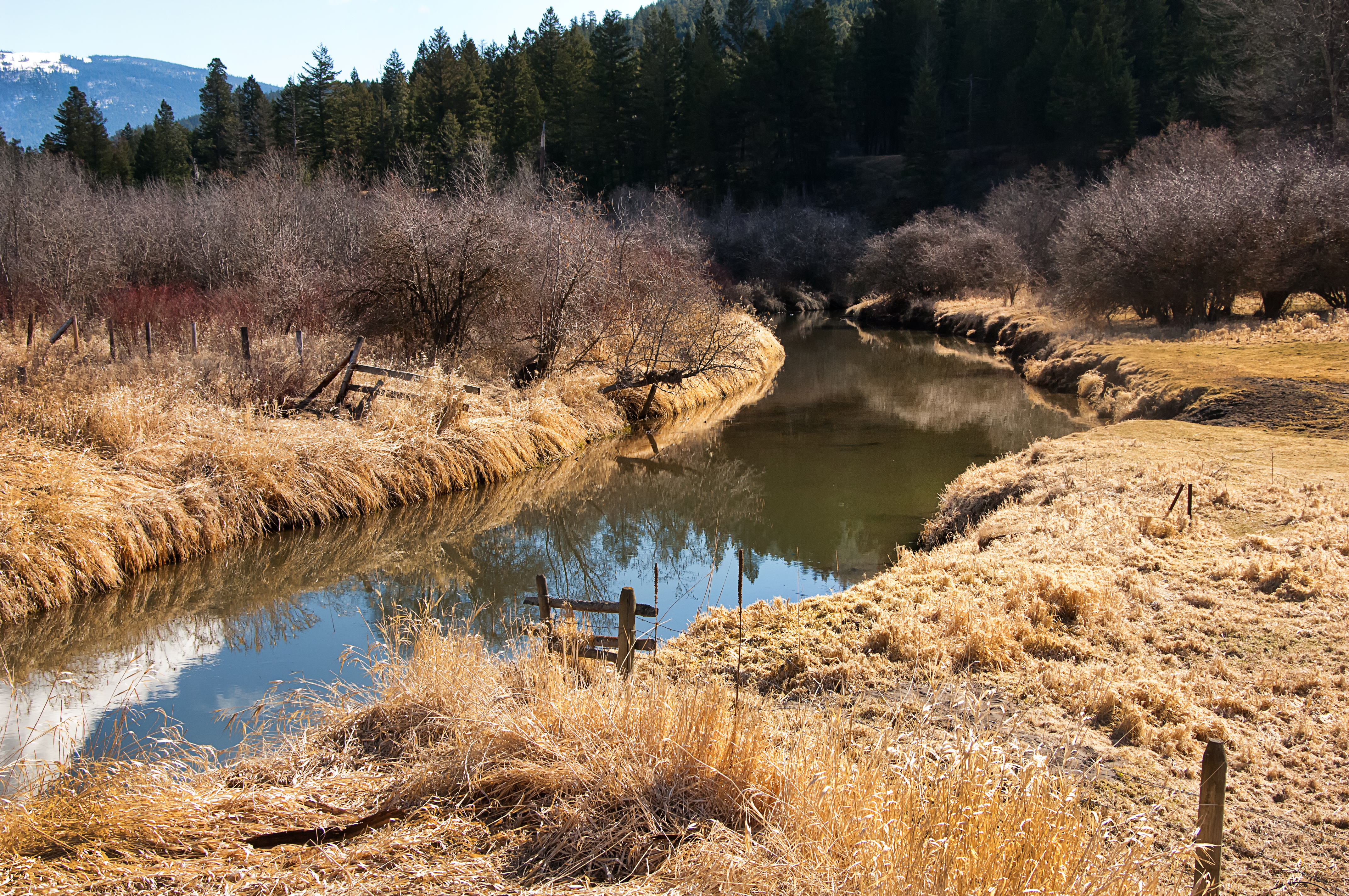
I am sure there are lots of photographers that have discovered a special location, or scenic spot, that looks good, but when the photograph just isn’t working out and the day just isn’t making things look good, photographers return again and again, hoping for the light to be just right. That bridge on the way to work or the gnarled tree outside of town bent from the wind, that never looks the way we want it. That was always the problem with a location that my wife and I regularly drive past along Highway 97 south of our home. We always, winter, summer, spring, or fall, slow down at a bridge crossing a drainage stream that flows out and onto wide lush hayfields. The stream turns a corner as it flows past bushy native shrubs and out of a pine forest.

The image I mention is a grass and foliage lined stream that for the past six years is usually  a shady, dark, flat, and poorly illuminated possibility. The elusive landscape is perfect with a fence in the foreground that creates three-dimensionality. Depth is easily achieved as a viewer’s eye easily moves from the objects in the fore, middle and background.

I always want a center of interest and the reflective meandering stream becomes that. The composition follows the rule of thirds without any effort. Walk off the road, stand in the deep grass and put a shoulder to the bridge-post to steady the shot, and the rest just comes natural. All that is required is interesting light (that has not been cooperating) to bring everything together to create interest.

At last, this week on a clear spring morning about 9:30am, the light was working. There are times when that open space along the road actually has had an all-illuminating bright light , but that defuses detail, or sometimes it’s cloudy and overcast with everything to be lost in shadow. However, to my great pleasure, this time the light was cool, and without glare, and the shadows weren’t dark and deep. I couldn’t have asked for a better morning to stop and make an exposure or two.

As I wrote earlier, we always slow down, and cast a glance up the stream (the constant traffic willing) as we cross the bridge in hopes that the light is working. I have even parked on a sunny day, got out and walked across the road, only to have some large cloud move in.

This location has been frustrating, but I just add it to the many other landscapes that I refuse to waste my time with unless the conditions are what I want. I recall the concrete bridge on the Thompson River that I watched every morning and evening for years as I drove to work. Everything has changed now, but once there was a young tree and a grass edged road leading to that bridge. I wanted to stand in the middle of the small road and make a low-angled photograph of that grey bridge. When the light was perfect I didn’t have my camera, when I had my camera there was no light. I struggled for five or six years with that picture. Film ruled photography in those days and I was determined that when I made the picture it would be with my medium format Hasselblad camera.

When the day finally came about 7am one foggy morning the low-angled light thinned at the bridge entrance and gave the young tree a golden glow and I was, for once, ready.   I originally called that image “six years” because that’s how long it took me to take the picture. However, when I sold several copies to an organization that gave them as gifts to visiting NASA scientists from the United States, they renamed it “Pathway to the Future”.

Well here I am again at another six-year point and thanks to my wife demanding that I stop the car and pull over, I finally have the image I have been after for all those years.

Photography can be a patient thing and I like having the time to think about my subject. Six years might be a long time for some, but I have always liked the process, and there are a few more landscape scenes out there waiting for the light and me to come together in agreement in the next few years.

As always, I remind readers that I really enjoy your comments. Thanks, John

My website is at www.enmanscamera.com

A photographer walks along the frozen riverside.

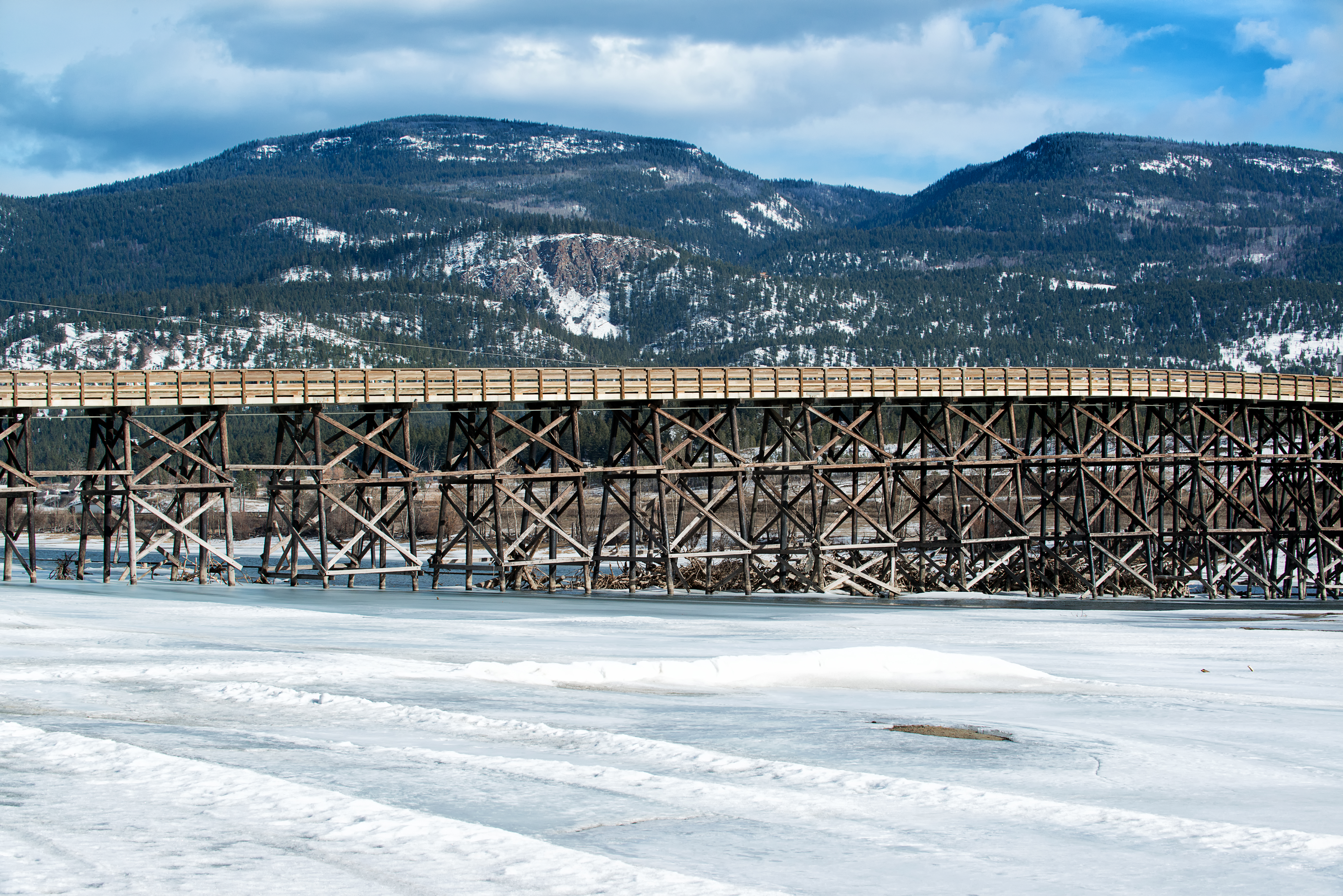
Ice & Pritchad bridge 1

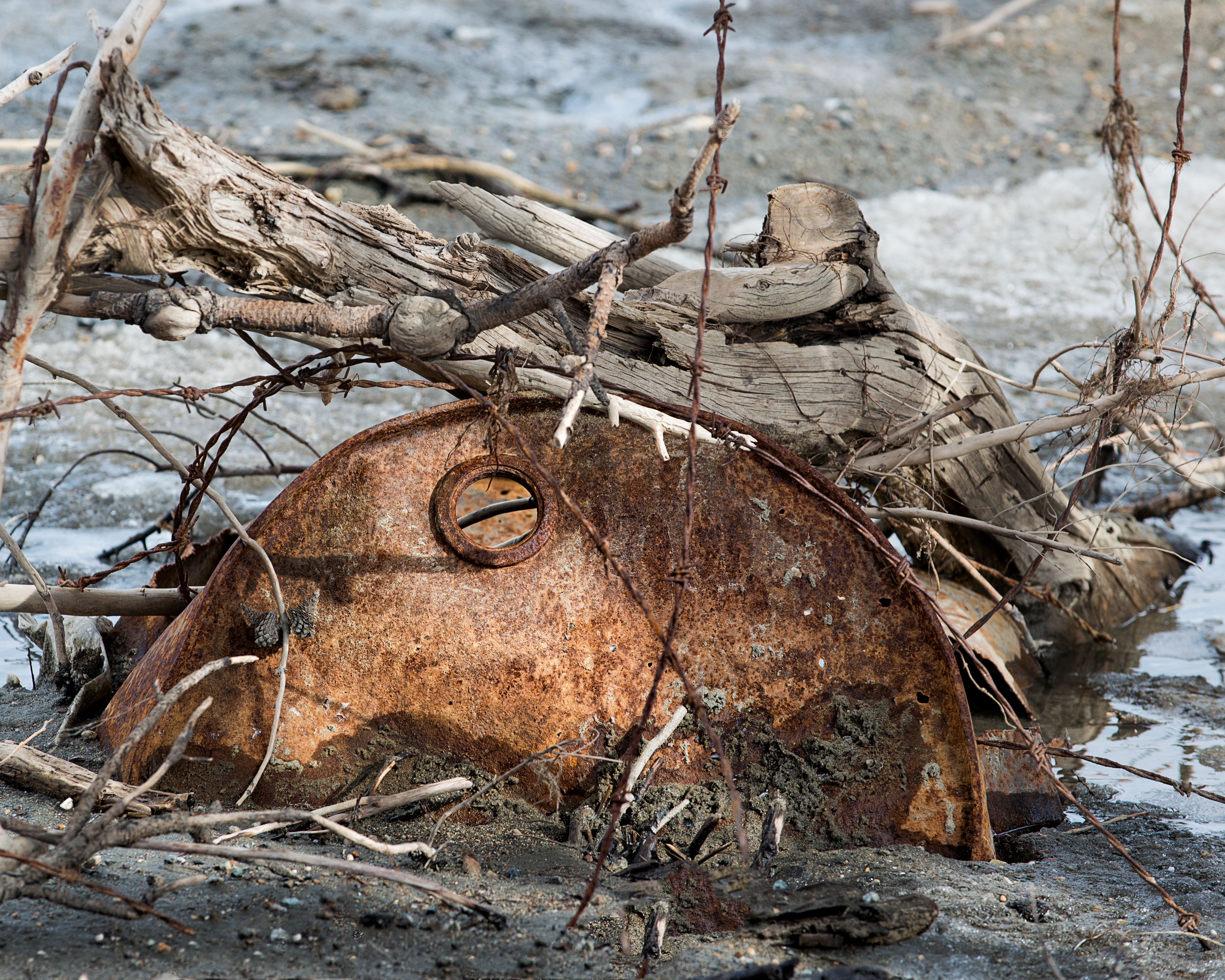
  Oil can 2

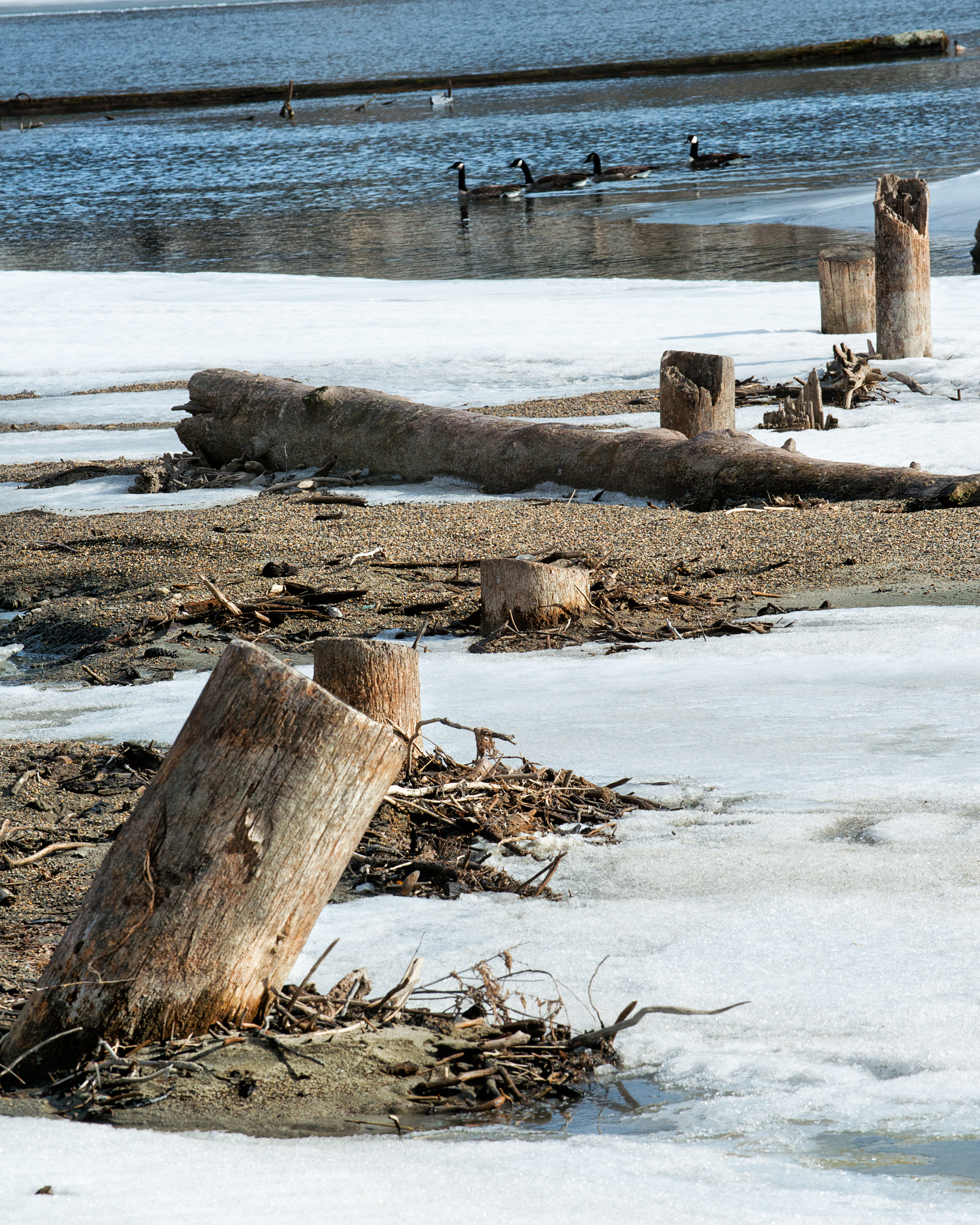
Pier studs 3

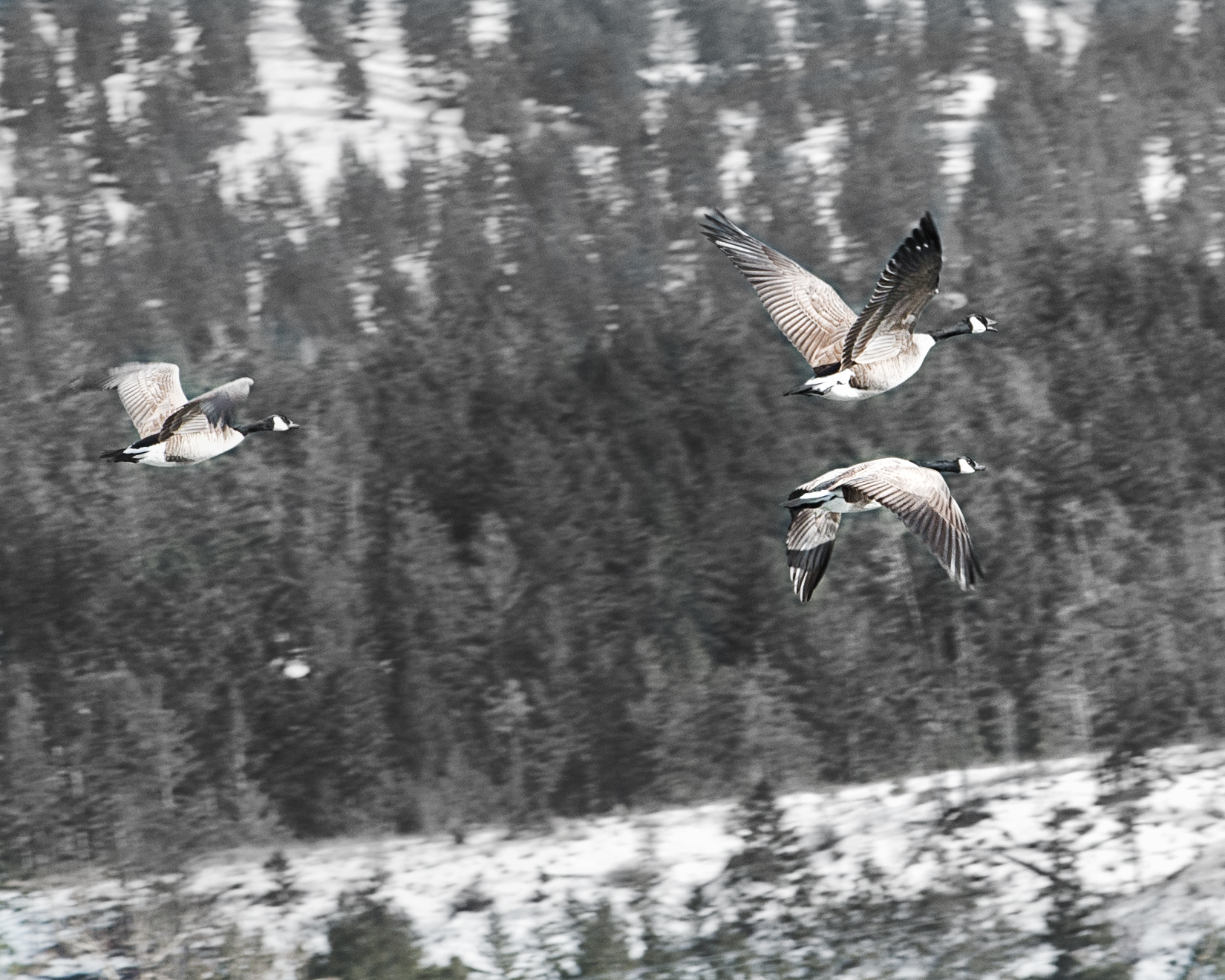
Noisey Geese 4

Ice art 5

Clamshell 6

Goose down 7

Last breath 8

 Henri Cartier-Bresson wrote, “Photography is not like painting. There is a creative fraction of a second when you are taking a picture. Your eye must see a composition or an expression that life itself offers you, and you must know with intuition when to click the camera. That is the moment the photographer is creative.”

      Walking along the frozen riverside.

There is something mysterious about the end of winter when the weather climbs to just around freezing. The snow is only just there. We can’t see the whole story, but it is letting us know that something waits beneath.

The Thompson River meanders along the valley basin not far from my woodland home and it’s on days like I just described that call me to wander the ice-covered shore. I like the solitude and although I carry my camera and I suppose I should be searching for something important to photograph, I usually don’t have much of a plan. I look for, as Cartier-Bresson said, ”a composition or an expression” that is interests me at that moment.

I would like to say it’s a quiet walk along the river side, but there is the constant din from the Trans-Canada high way that runs along one side of the river. However, this time, as I walked across the snow-covered ice and slogged through the emerging mud, an urgent alarm went up from several (actually, a lot more than several) sentinels stationed along the river’s beach up where the sand had dried. I had been so intent on looking along the ice edge that I hadn’t noticed all the resting geese, but they saw me and weren’t very happy at my intrusion and their honking was so loud that I no longer could hear the road noise.

I have friends that would have quickly moved into action and captured image after image of the geese loudly taking off and flying overhead. They also would have photographed the splashing of those heavy feathered birds coming back down in smooth backwater under the bridge. I did raise my camera to release the shutter a couple times, but I enjoyed watching them and liked the honking sound, so I turned away so as not to disturb them more. Besides, I am sure they appreciated that warm sand on the cold winter’s day and there will always be another opportunity to photograph geese.

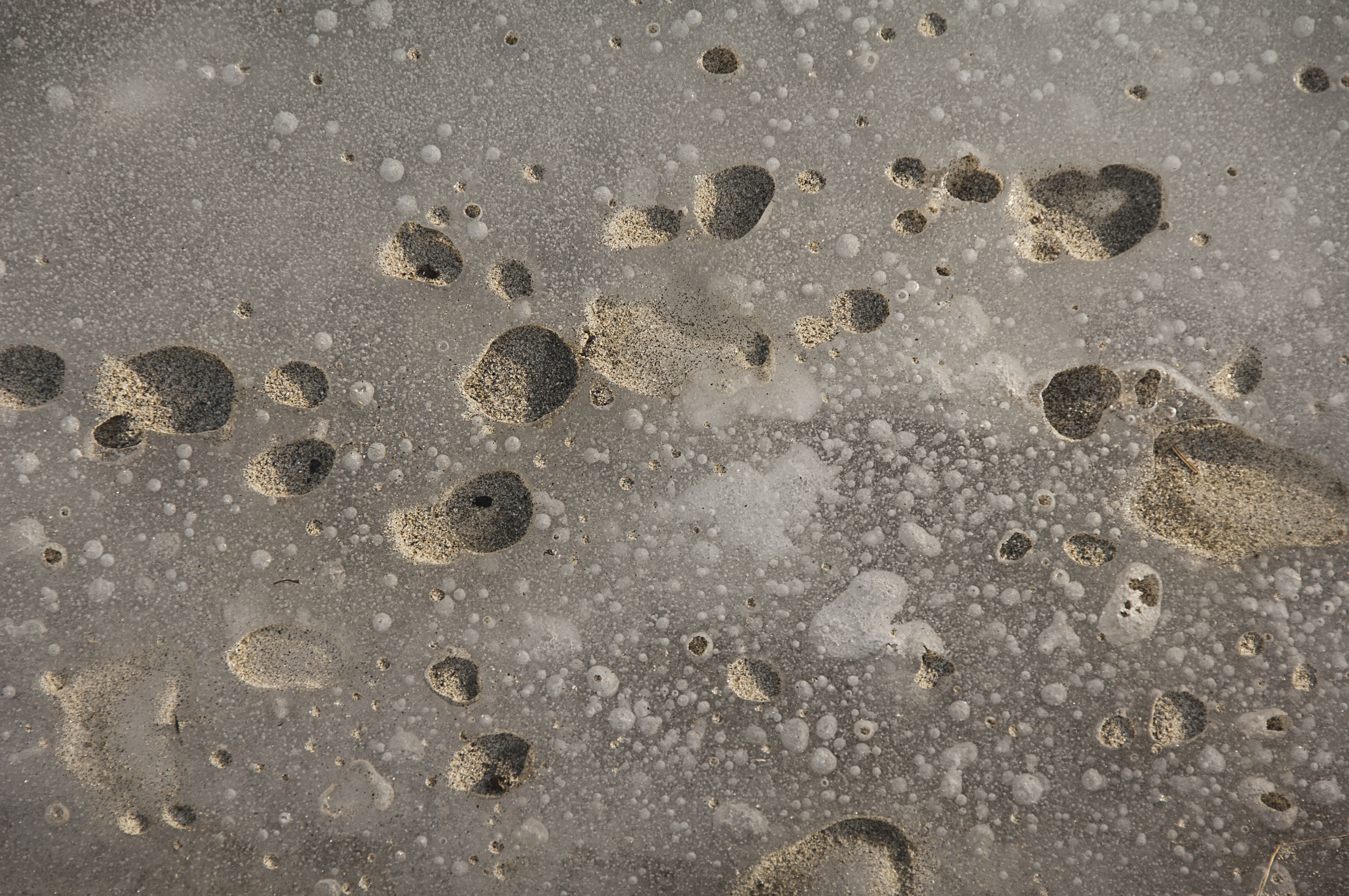
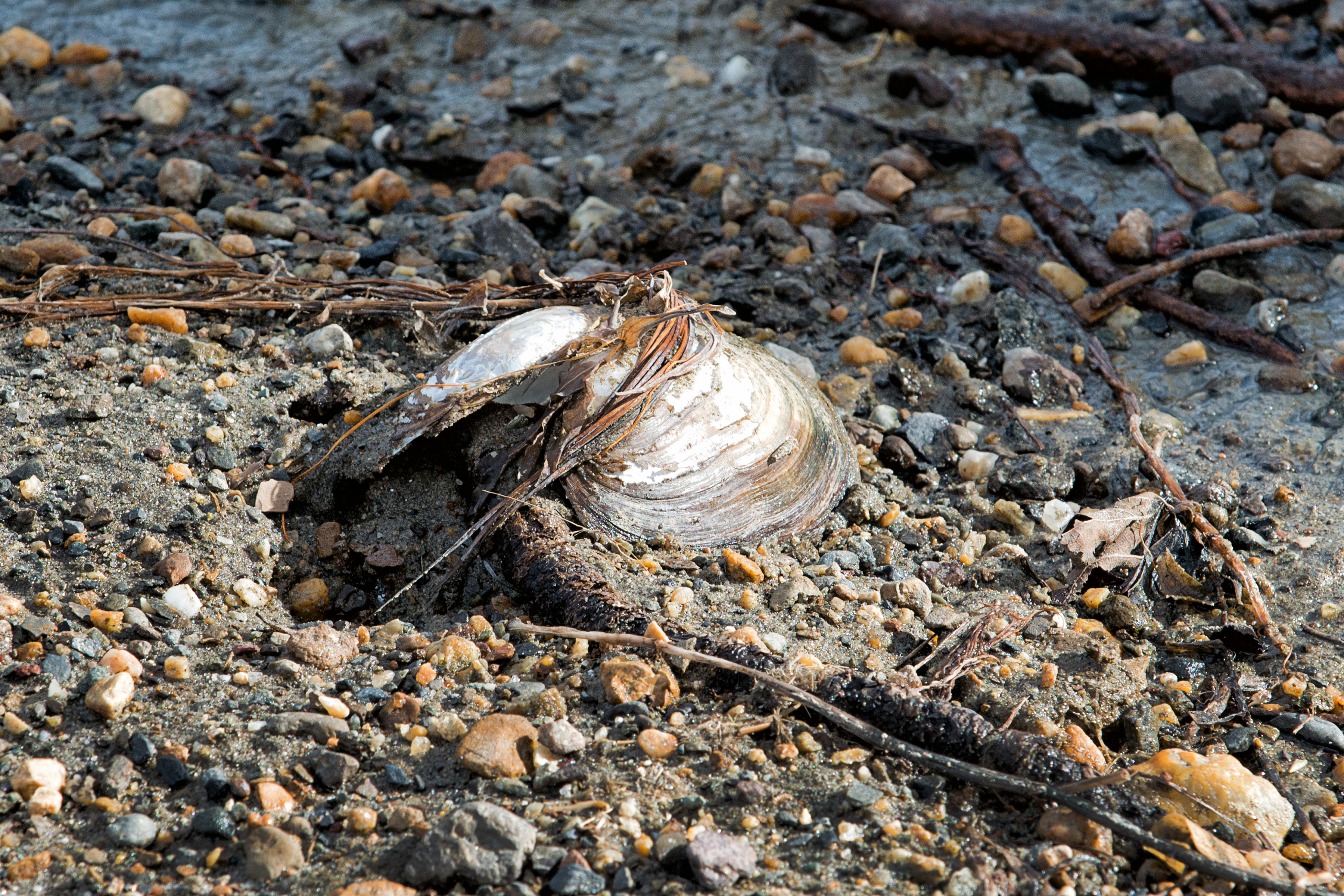
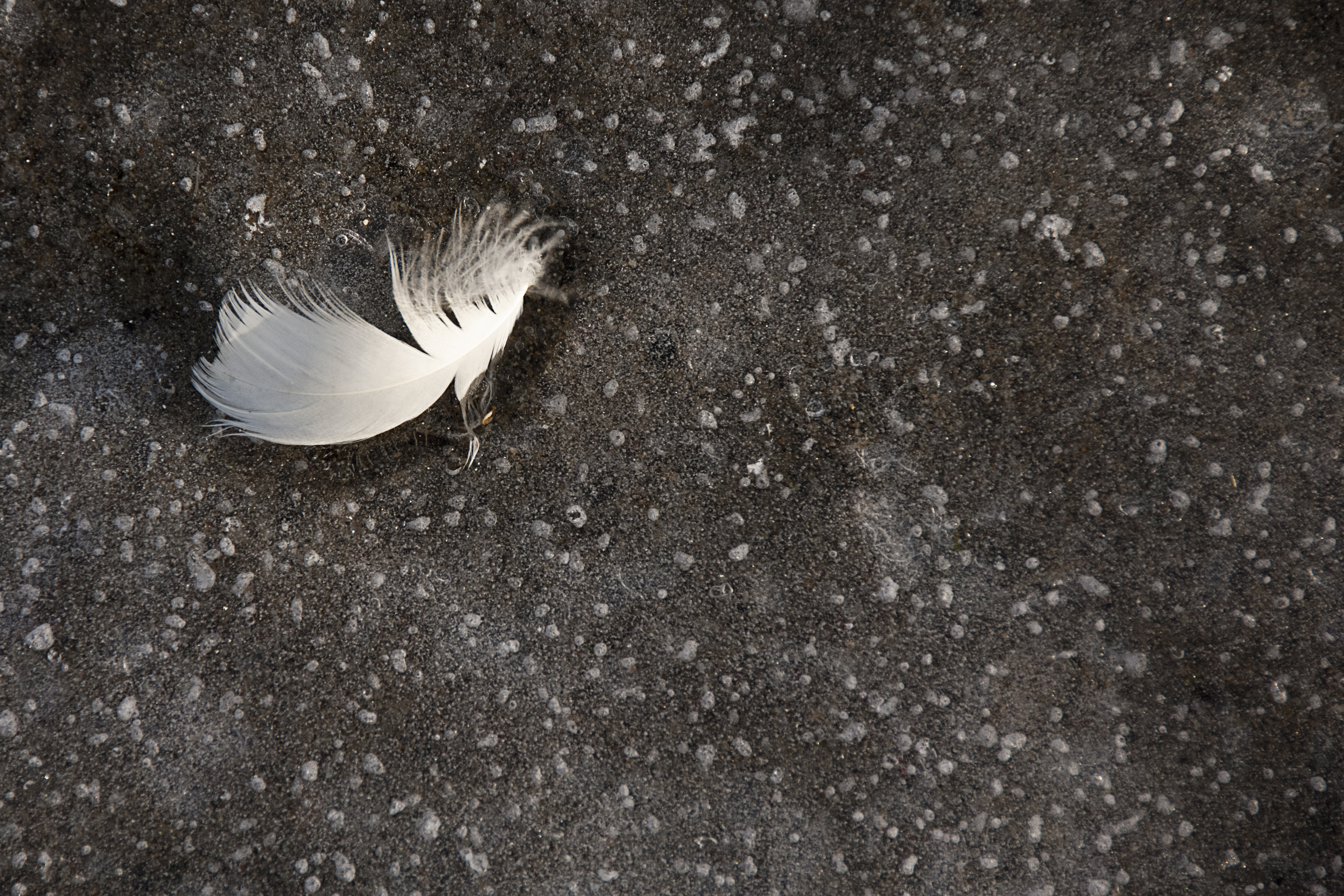
I regularly see people prowling the river shoreline during the summer in search of treasures and I guess that is what I sort of do too, although I rarely do it in summer. Unlike them, I don’t touch the treasures. I just point my camera at something I am curious about and take the picture. I don’t move or change anything. My camera and I do the moving instead, as I choose the appropriate angle for each subject poking out of the sand and ice.

I never have seen another camera-equipped person walking that shoreline in the winter. I guess most find the place boring. The traffic keeps larger animals away, the low angles aren’t that favorable for grand landscape shots, there are no bridge lights that would encourage anyone to plant a tripod after dark, the sand and river water aren’t that inviting and this time of year the river is lined with stark, leafless trees.

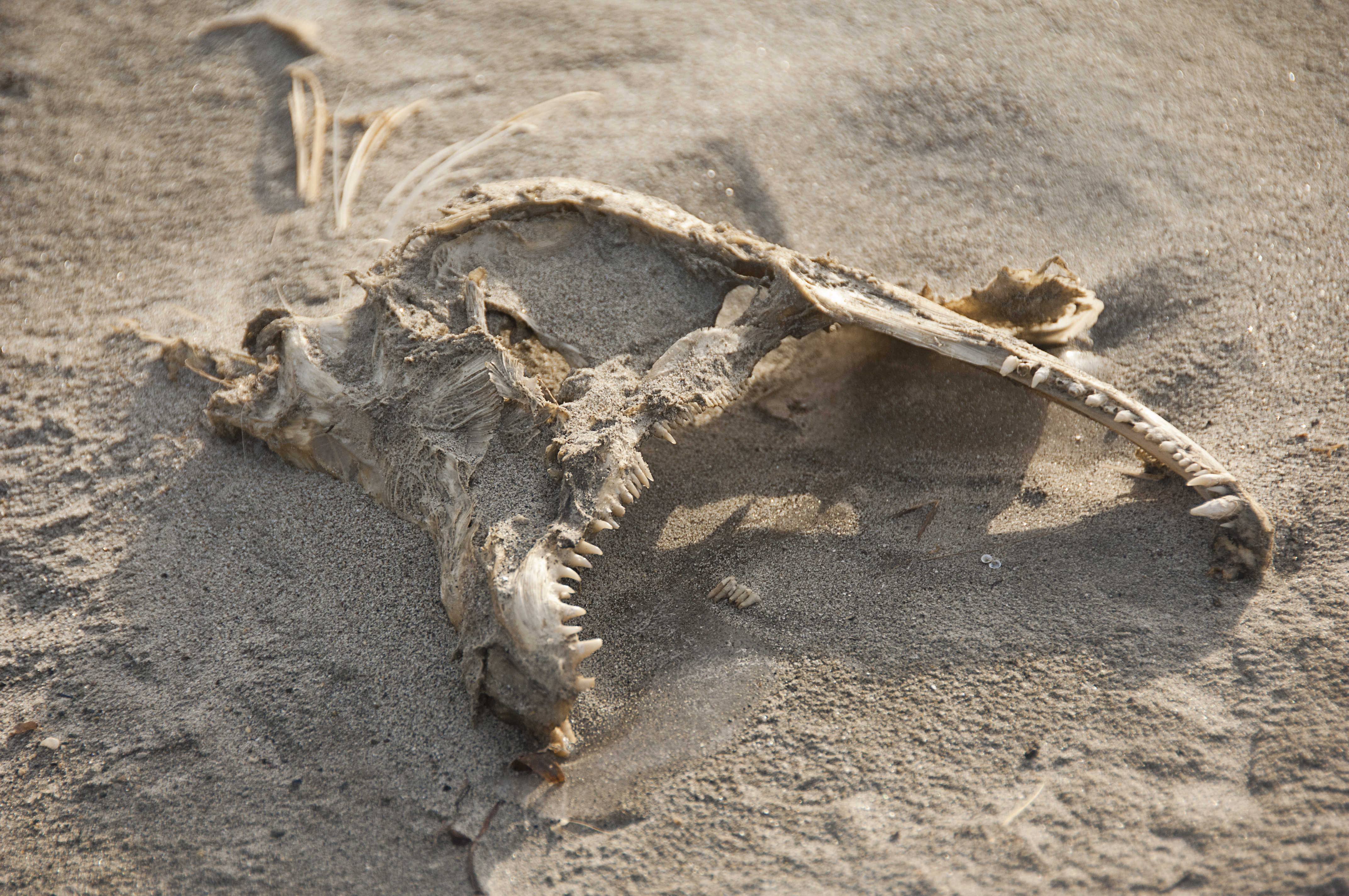
For me it is perfect. I’ve walked along the frozen sand many times and I am sure many of my photographs over the many years look a lot alike. I expect someday I’ll get a really unique picture of a neat boot, a carcass of a really big fish or even some broken and discarded boat. Who knows?

As always, I really appreciate your comments. Thanks, John

My website is at www.enmanscamera.com

The In Camera or Post-Processing debate

I wonder at going to far, but with low, flat, grey lifeless light anything helps.

I wonder at going to far, but with low, flat, grey lifeless light anything helps.

Infrared camera with edited contrast.

Infrared camera with edited contrast.

I removed the dim, flat, busy background.

I removed the dim, flat, busy background.

The discussion about manipulating an image, or altering it, from the original capture has been going on ever since I began working as a photographer for the Los Angeles Office of Education in the 1970s.  Nowadays its called “post-processing”, and in the past we just called it “working in the dark room” when the majority of photographers were handing their undeveloped film over to a film lab and hoped the results would be worth keeping.

At that time, and as exists now, there were those who that claimed straight from the camera was the only true photography. I recall being accused of being unfair at a local exhibition around 30 years ago, because I used exotic photographic papers, hand retouched my prints, and mixed my own chemicals.

As I said, the discussion on right out of the camera vs. alteration of the original is still going strong, however, the beauty of this exciting medium is that there is no one-way to capture an image.

Photojournalists and street photographers like Margaret Bourke-White, Henri Cartier-Bresson, Robert Capa and Dorothea Lange documented events and life as it was at a particular time. As photojournalists and street photographers still are. And as to that type of photography, I absolutely agree, any type of alteration is sacrilege. But I need to introduce those righteous photographers that decry alteration of the negative, print, or digital file, to icons of photography like Andy Warhol, Jerry Uelsmann, and Duane Michals, to name only a few that pioneered different techniques in this ever-changing medium of photography.

Documentary, representational, or candid photography is used to chronicle significant and historical events attempting to capture reality.  Fine art photography is the vision of the photographer or artist. And restrictions as to how the image is finally produced do not, and should not, apply.

Modern technology allows much easier creativity for those who wish to use it. That might be nothing more that purchasing the camera with the best sensor, and mounting the sharpest lens on it, and with patience and practice learning to make exposures that are as close as possible to reality. Or it might be using that same camera is nothing more than the first stage of many in an extended and manipulative process.

As to the debate, should image-editing software be used to alter the image, or should the image be left as an unaltered record of the scene?  I think that depends on the goals of each photographer.

As always, I really appreciate any comments. Thanks, John

My website is at www.enmanscamera.com

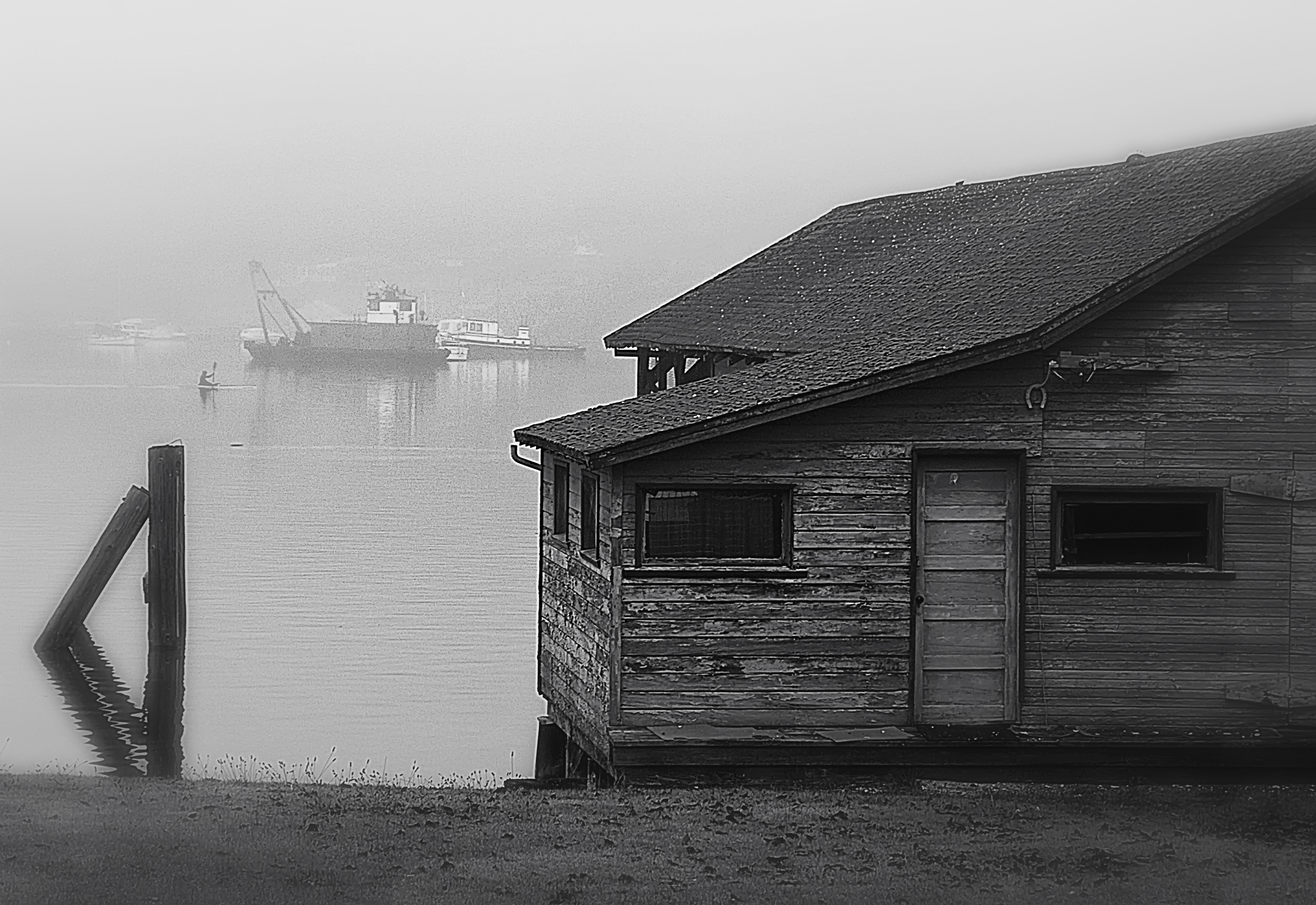
Photography on a Foggy Day


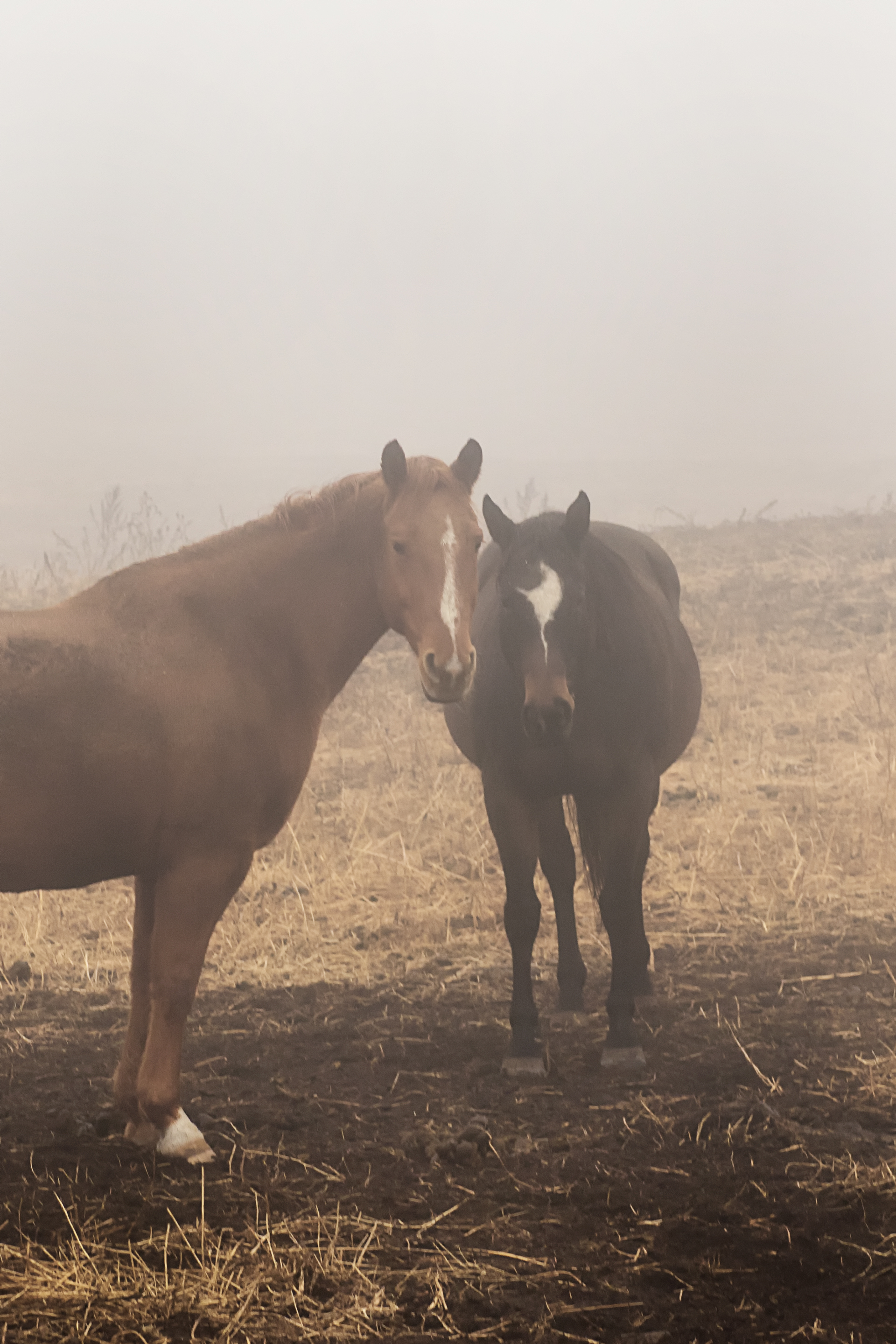
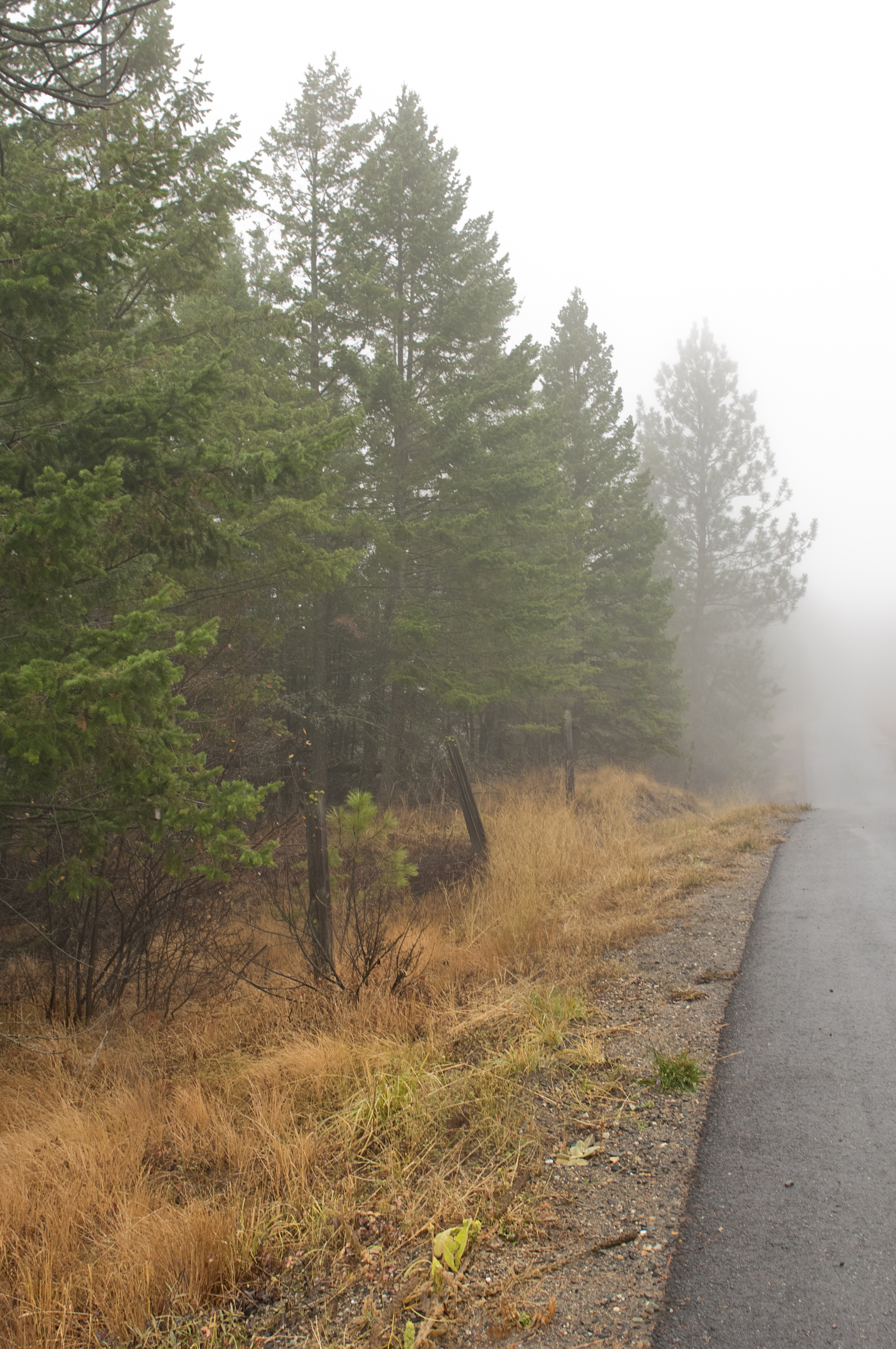
I like taking pictures on foggy days. I suppose I could have stayed inside and watched TV or read a book. I know that many photographers would have done just that as they complained about the damp, flat, lifeless-looking fog, but I like foggy, windy, snowy, and even rainy days. Inclement weather makes for unusual and interesting photographs, so when I woke on a morning with thick fog I knew I was going to have a fun day. Fog can conjure up feelings of mystery and awe, and of the many different conditions we encounter in landscape photography fog is one of my favorites.

Yes, the light was low, but October fields here in the British Columbia interior are mostly shades of gold, so there really is lots of colour. All a photographer has to do is select a subject angle carefully. I began by wandering through the wooded area across the road from my house, but I didn’t really get very far, the fog was so thick in the pines that there wasn’t much that I liked. I jumped in my car and I made the short, five-minute trip down to the Thompson River, and was happy to be just a bit under the fog, and that made for lots of great opportunities.

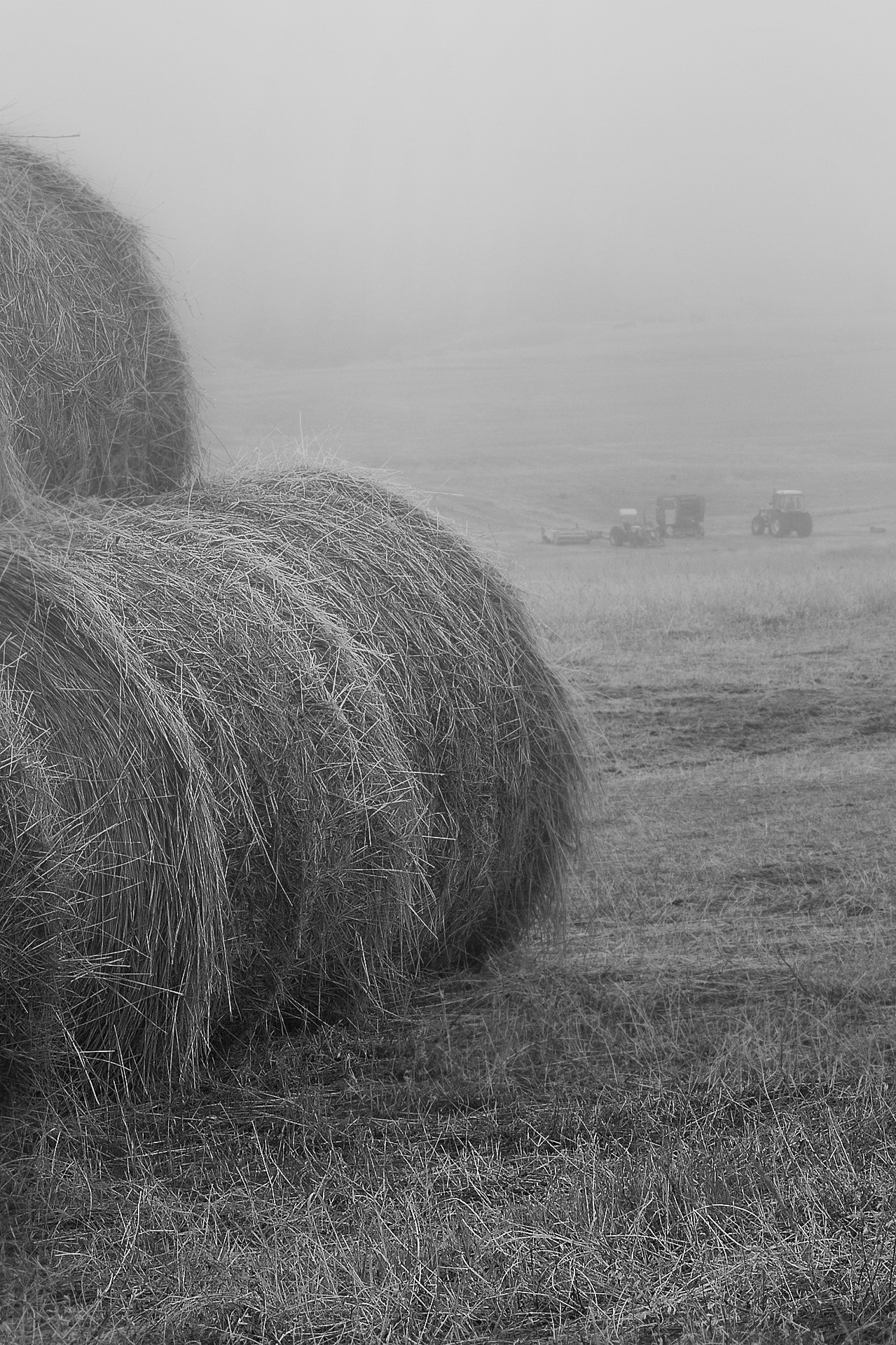
I really didn’t have any particular subject in mind. I had hoped the bridge that crossed the river would be embraced in fog, but there was a strong, wet, breeze in the river valley that had pushed the clouds and the fog away. I wanted fog or at least low clouds, so I lingered higher up, along the valley rim, searching out and photographing fences, stacks of hay, and abandoned buildings. And I even took a few pictures of cows and horses, as they looked for food in the damp foggy conditions.

I always meter for the mid tone in my composition. The foggy flat light can easily trick the meter and I prefer manual exposure where I personally can determine my aperture and shutter speed. I had remembered to bring my tripod, so even when the light was low and required a slow shutter speed I could still keep an acceptable depth of field using an aperture of f8 or smaller.

Outdoor photographs taken in fog often look flat and dull. The fog and the low light decreases image contrast and colour saturation significantly. However, for modern photographers this isn’t much of a problem since the contrast and saturation of a digital photo can easily be adjusted.  Fortunately, we can turn the problem into an advantage because an image with low contrast is easier to manipulate than an image taken in harsh light with strong shadows and highlights.

With most digital cameras the contrast can be adjusted before the photo is taken. But in my opinion, it is better to do a rough adjustment during post-production in the RAW converter, and a fine adjustment in Photoshop. In-camera adjustment is not always the best since we don’t know in advance what the right amount is, and clipping of shadows/highlights can occur.

Modern technology gives us a hand up on the flat, contrast less light even if some elements in a picture are improperly exposed they are easily corrected during post-production, and increasing the contrast on important subjects in flat light is easy.

I have always liked my photographs to be about my personal vision of a scene and not to be limited by what a particular film or camera sensor can record.  Even Ansel Adams said, “You don’t take a photograph, you make it.”

Fog forms when a humid, cool air mass moves under a warm air mass and those conditions seem to be recurring for a second day. I know that might cause problems for drivers, but I am hoping to see some in Kamloops when I go to my shop today. And if so, I will be out on the street with my camera.

I enjoy your comments, Thanks.

My website is at www.enmanscamera.com