A Happy New Year with Lots of Photography     

Happy New Year

Horse in NewYear Snow

Home for New years

Happy New Year

Another year has gone by, and with that I want to wish all that take the time to read my blog a very Happy New Year. I am sure it’s going to be a year filled with fun photography.

I do try to keep my articles interesting. When I first began to write weekly about photography my goal was to write articles that were a bit different from those I saw in magazines and on-line.

I knew I could easily post a couple of pictures each week, and discuss them as I did for my students in my years as a photography teacher; or I could join with those that provided reviews on their favourite equipment, but I thought that would be easily forgotten.

There were so many people writing about photography that I wondered if I had anything to add, so I decided to use a technique that worked during the many years I taught photography and that is to tell a story that included photo information I wanted to discuss.

Something else that I learned during my years teaching was to keep the subject fresh. That meant introducing something new each class and that is how I choose my topics, something different each week.

I admit that changing the subject each week does get hard. Like most readers there are those who acknowledge that there are other things in life than photography (I wish I could say it isn’t so) and it isn’t unusual for me to say to my wife, “Ok, what am I going to write about this week?”

Fortunately, with Linda’s help it usually works out and I come up with something to say each week.

This year I reviewed by work and the following were among my favourites articles and included “Which Button is for the Composition Mode?”, “What Makes Photographers Happy?”, “There is Nothing Like Photography”, “Interesting and Unconventional Photography”, and “Two Photographers Are More Fun Than One”.

My wife suggested I mention those subjects that I enjoyed photographing most but to that I will quote famous photographer, Imogen Cunningham, who replied, “Which of my photographs is my favorite? The one I’m going to take tomorrow.”

I’ll keep this short and again wish all photographers out there a grand New Year filled with lots of photography.

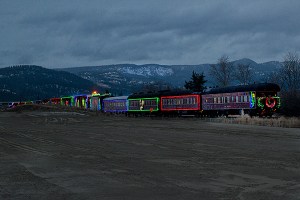
Photographing the Holiday Train   

Here come the train

Train 2

Holiday Train 3

Passing Train


Last week I wrote about how I enjoy everything about the Christmas holidays; the bright colours, the gaudy decorations, the sentimental music, the silly TV programs, and especially the festive city lights.

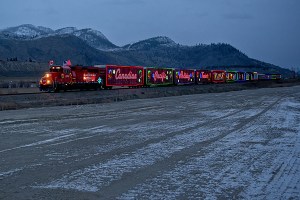
To that fun list I must add the Canadian Pacific Holiday Train. Each December, for the past 17 years, the CP Holiday train has travelled east to west across Canada. And fortunately for my wife, Linda, and I the Canadian Pacific Holiday Train rolls along the railroad tracks that follow the wide South Thompson River a short distance from our home in Pritchard, British Columbia.

As with last year, the train passes by just as the light begins fading around 4PM. The timing could not be better. There is still some illumination in the sky, but not enough to ruin the bright coloured Christmas lights on the train’s engine and cars.

Last year we positioned ourselves across the river for a wide panorama of the train. However, this year because of the construction and repositioning of the highway, we were able to choose a location very near the tracks that gave us plenty of time to prepare when the train first came into view and an interesting three-quarter perspective as it rushed towards us.

When we were across the river last year the long focal length lenses worked best, but this because we were so close this year we chose wide-angle lenses. Linda had her 24mm and I used my 24-70mm. Both were perfect.

We arrived about ten minutes early, made some test shots to check the fading late afternoon light, then waited with our hot chocolate to keep warm.

With the train’s movement I knew we would need fast shutterspeeds. I selected ISO 3200, which let us both use 1/350th of a second.

Linda said, “There it is!” When the train roared into sight, we jumped out of the car into the cold wind that was coming at us off the river and took pictures as it passed. The engineer tooted the horn at us but we didn’t have time to wave back and take pictures too. The whole event was over in about 40 seconds. Ha, what a rush! Then we got back in the car and ten minutes later we were sitting in our warm home finishing up our hot chocolate.

Well, one more holiday photographic occasion is over, but I know there will be more opportunities between now and January 1st. This is such a grand time of the year.


There is Nothing Like Photography  

White church

Fraser River view

Anacortis Oil Refinery

Lilloet

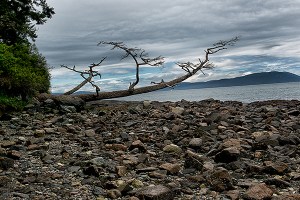
Coastal tree view

Hay Field


“In visual terms there has been nothing like photography in the history of the world. There is no vocabulary for it. Photography literally stops something dead. It’s the death of the moment. The second a picture is taken that life is held, stopped and over. That moment is over.”

I found this quote by photographer Richard Avedon that I had tucked away years ago into the pages of a book of photography by Eliot Porter entitled, “Intimate Landscapes”.

Photography is powerful that way. There has never been a medium that has captured the interest of so many people like photography. When it became popular in the 1800s, no one could have envisioned how important to the world and to our personal lives photography would become.

For those of us in Canada the first known photograph was by an Englishman named Pattinson, here on a business trip in 1840. He was a student of an early form of photography perfected by Louis Jacques Mande Daguerre and had stopped at Niagara Falls to produce the now cherished historical Daguerreotype photograph.

The Daguerreotype would have taken more than 20 minutes for the scene to expose on a silver-coated plate inside his camera. Later he would surround the plate with warm mercury fumes that would slowly make the image visible.

I begin to think about photographing the landscape near my home this morning and I almost headed out, but the flat light and icy cold rain made me change my mind.

To keep myself in the mood I decided Eliot Porter’s book of photographs from northwestern New Mexico and southeastern Utah would be perfect to review with a cup of coffee. I find Porter’s photography stimulating.

Porter wrote, “The natural world has always attracted my eye: associations of living and inanimate phenomena, from the tropics to the poles and from rain forests to deserts, have been favourite photographic subjects for almost half a century. Grasses and sedges, especially, appeal to me – an appeal like disordered hair across a face, or a windblown field of hay before the mowing…”

Reading his or any other book on photography for that matter, helps me examine the way I make photographs and try to photograph things differently.

I do think photographic ideas and opportunities sometimes happen in a moment that once passed will never be the same. Many times I just want to make a photograph for no other reason than it is fun to make.

Here is another quote from Porter’s book that I endorse as well. Porter says, “I do not photograph for ulterior purposes. I photograph for the thing itself – for the photograph…” I like that. Sometimes just the process of making a photograph for no other reason than doing it is enough.

Photography in this digital age has become so very easy, but I think good photography can be as time consuming as it ever has been, requiring practice and education by those that take it seriously.

As I turned the pages of Porter’s book I thought about how nice it would be if the hills above my home get lots of snow in the coming winter. If you have a moment check out landscape photographer Eliot Porter in your local library, or on-line, and hopefully his photographs will inspire you as he does me. You might also look up Richard Avedon.


Infrared, A Completely Different Feeling….

Pritchard Station

Riverside

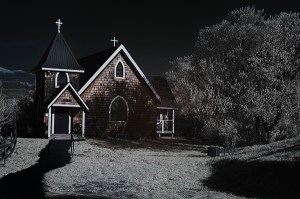
Monty Creek church

Fence along a dirt road

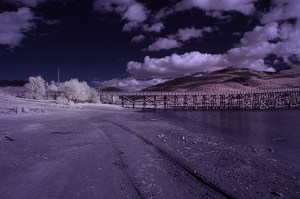
Pritchard Bridge

Back Porch

Infrared, A Completely Different Feeling

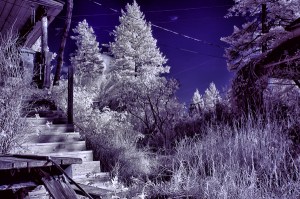
In my last article I discussed how easy it is to make creative changes in one’s photography by using a camera converted to infrared. I wrote that photographers have the option to creatively challenge themselves by selecting different lenses, choosing to produce black and white images, electing to use highly manipulative post-production techniques, etc., or any combination just to mention a few. Then I added one more creative tool to the list that I use, a camera converted to only capture images of the world around me in infrared.

Infrared allows a photographer, and gives the viewer, a completely different feeling of a subject. Making an image with a modified camera is an exploration and a discovery that moves a photographer far from the usual. I like the sometimes-surprising tones that I can obtain when I convert the image to black and white. Like any form of photography, or art, it’s all a matter of taste.

Reflected IR light produces an array of surreal effects, vegetation sometimes appears white or near white. Black surfaces can appear gray or almost white depending on the angle of reflected light, and if the sky (my favourite part of the infrared image) is photographed from the right direction it becomes black. The bluer the sky, the greater the likelihood of an unworldly effect; and white surfaces can glow with an ethereal brightness.

The response I received from readers got me thinking about how much I like shooting infrared. That’s been a long relationship. My first forays with infrared during the 1970’s were began with infrared colour transparency film and then with infrared black and white film.

Now that I have set film aside I am more than content to use a converted digital camera. Besides it’s much easier with digital than the arduous process we had to contend with when we used film. Infrared film had to be loaded and unloaded in complete darkness, then processed in metal tanks that kept the film from getting fogged. We attached a deep red filter to the lens. The deeper the red the better the effect, and because of the dark red filter things become very hard to see. Oh, and the exposures were long if the sun wasn’t bright.

In spite of that infrared photography has had a strong following of creative photographers for as long as I have been involved in photography. And now with the light gathering ability of modern sensors I think that following is stronger than ever.

In an article I wrote about using infrared film titled “Photographing a Different Kind of Light” I said, “There are those who believe a fine art photograph must represent reality, but reality doesn’t necessarily take into account that there are differences between what one sees, what the photographer’s camera produces, and what the photographer was trying to capture.” I think a photograph is only a representation of a particular vision of reality.

Infrared allows us to photograph a world illuminated by infrared light, that part of the colour spectrum we can’t normally see, and produces intriguing, exquisite and sometimes unearthly photographs that can’t be captured in any other way.

Infrared is a good way for me to change the way I make photographs.

Cattleguard 1

Martin Mountain 1

Fence 1

One of the things I like about the exciting medium of photography is how easy it is to change the tools with which we use to create photographs.

I suppose painters can change their brush to a different size, or use a pallet knife to apply paint on their canvas. They can step away from a canvas surface altogether and apply paint to any number of other materials. I guess photographers aren’t alone in the ability to change tools in pursuit of making an interesting picture.

However, photographers have the option to creatively challenge themselves by selecting different lenses, choosing black and white images, electing to use highly manipulative post-production techniques, etc., or any combination just to mention a few.

For myself, I’ll add one more item to that list: using a camera converted to only capture images of the world around me in infrared.

I have mentioned before the old Nikon that I had converted to infrared many years ago. I enjoyed using that old 6 mega pixel camera, it served me well. I purchased it in 2001 and it was my first DSLR, however, when the time came to move to a camera with a newer and better sensor, instead of selling it off like I have with many cameras since, I opted to have it converted to a dedicated infrared camera.

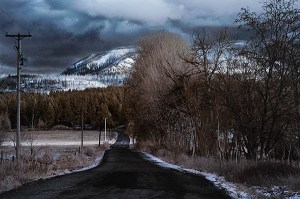
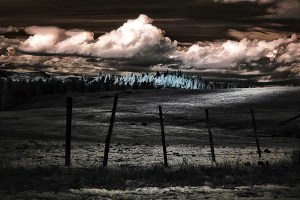
Infrared cameras like blue cloudless sky, and I think many of my most successful images have been late in the afternoon on sunny days. Nevertheless, this week I decided to wander the roads near my rural home in hope of getting some dramatic skies on the heavily clouded afternoon.

My experience on cloudy days has been that one has to pick subjects carefully. There are some objects that, in spite of a sensor that only sees infrared, look pretty much the same as they would if photographed with a roll of black and white film. Instead of taking on a light coloured, or white glow, trees might go black and meadows look normal.

With that in mind, my goal, as I drove along the snowy dirt roads was to find a camera angle that would do the most for the vegetation and still give me lots of dramatic sky.

Life Pixel, http://www.lifepixel.com/ writes on their website, “Are you tired of shooting the same stuff everyone else is shooting? Then be different & shoot infrared instead!”
I don’t think I care whether I’m shooting the same subjects as photographers, but I sure do like to change how other photographers see the stuff I do shoot, and infrared works perfectly for that.

The infrared camera allows me to change my tools and way of visualizing and capturing the world around me. It makes me think about my photographs in a different and challenging way.

Road Trip to Penticton  

SS Sicamous

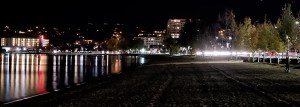
Walking the beach at night

SS Sicamous Penticton

StearnWheeler

Penticton Waterfront


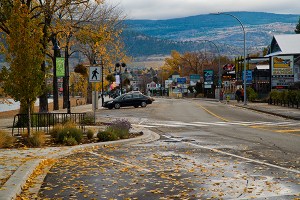
The month of November has began and my wife, Linda, and I thought it might be a good idea to take a drive south before the cold winds blow the last leaves of fall from the trees. Sometimes it’s just nice to go for a drive. So we decided on Penticton; a scenic three-hour drive from our home for a fun, fall, overnight getaway. Any pictures we could get would be a bonus.

During the summer the city of Penticton, situated at the southern tip of British Columbia’s Okanagan Lake, is a thriving tourist destination. And I didn’t doubt a friend’s statement when he suggested that Penticton, a city of 30,000 plus population easily doubles in the summer. However, everything changes in the lull between summer and winter. When I called a motel the clerk told me, “You don’t need to bother with a reservation as there are plenty of rooms.”

I like cities at night. The lights sparkle and beckon to those of us that have our camera and tripod ready. Arriving after dark and settling in to our room it was no time at all before we had bundled up against the cold lake breeze and rushed out into the dark to wander along the wide sandy beach.

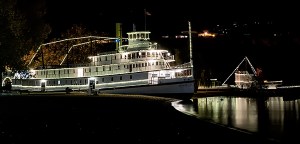
It’s easy to get sharp, colourful night pictures. I was out to photograph the SS Sicamous, said to be the largest surviving sternwheeler in British Columbia. The SS Sicamous, now a museum, prowled Okanagan Lake until 1936, servicing the lakeside fruit growing communities of Penticton, Kelowna and Vernon.

The big stern wheeler had strings of lights that illuminated and outlined it bow to stern, and the lights were perfect for some night shots. As I mentioned, it is so easy. I selected Aperture priority, and chose a small aperture that would give me lots of depth of field, and with the camera securely mounted on my tripod, set it on self-timer to reduce camera shake, and released the shutter.

Then after four or five shots I turned around and shot down the beach toward the brightly lit, big casino hotel in the distance and walked back to our room to stow our gear so that Linda and I could go out for dinner. Even in the off-season the charming Italian style restaurant was filled with happy patrons.

In the morning I returned to the now sun-lit beach to photograph the SS Sicamous again.

I think fall is a great time to go for a two-day drive. We called it our end-of-summer, mini vacation. Most people are more interested in getting ready for winter, which leaves plenty of accommodation available and reasonable prices.

I expect Penticton will fill up again when the snows arrives, and vacationers that spent the summer boating, wind-surfing, playing golf, hiking and cycling will return for downhill skiing, snowboarding and cross-country skiing adventures in the winter.

For my wife and I the cool autumn stay in that lakeside city was perfect. And I couldn’t ask for a nicer time to take pictures.

Bridge Lake Workshop Wireless Off-Camera Flash              

OffCamera Workshop 1

OffCamera Workshop 2

OffCamera Workshop3

OffCamera Workshop4

OffCamera Workshop5

OffCamera Workshop7

OffCamera Workshop8

OffCamera Workshop9

OffCamera Workshop10

OffCamera Workshop11


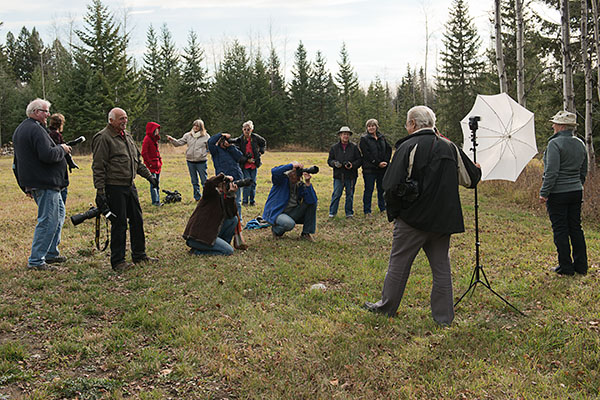
Last Sunday saw me making the scenic two-hour drive north to join the Bridge Lake Photography Group. I have been following that creative and talented group of photographers, (www.bridgelakephotogroup.com) since a long time friend, Derek Chambers, got in touch with me about a year ago. On Sunday I led a full day workshop for them about using off-camera speedlights indoors and out-of-doors.

There is so much that I want to tell photographers when they first attempt to use flash as a tool to create better photos instead of the flash being an uncontrollable device photographers perch on the top of the camera when it’s too dark in a room to take a photo.

In my opening presentation I had to hold myself back as I sometimes realize I am talking too fast. But I get excited and I really want to move from lecturing in front of students, and go to the studio setup where the learners, not me, are center stage. That’s where my fun, and, assuredly, the participants’ fun begin.

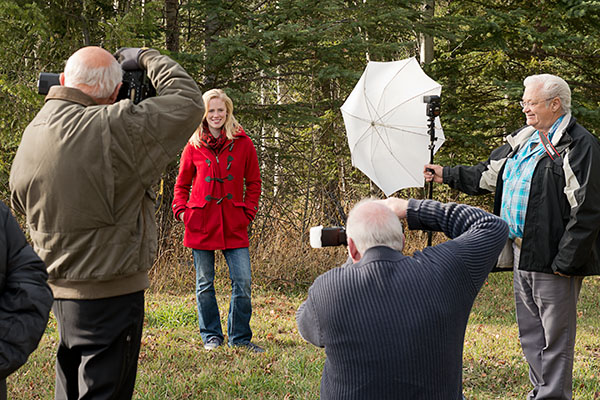
I always enjoy the enlivened interaction that occurs when a student of flash photography takes that first shot with one of the flash set ups. Usually, no one ever wants to be first. Everything is strange. The flash that usually is attached to their camera is now attached to a softbox or an umbrella. I always have to prod and coax the students to begin, but I can hardly wait for the first “oohs and aahs” that happen when they see the results of their first photos.

My job is to present information on the subject, and keep things going. I don’t like to be a demonstrator on stage and rarely pick up a camera during the workshops I lead. That is left to the participants, and watching them learn is the fun part for me. After everyone crowds around that first volunteer’s camera and sees the picture it is all I can do to hold them back.

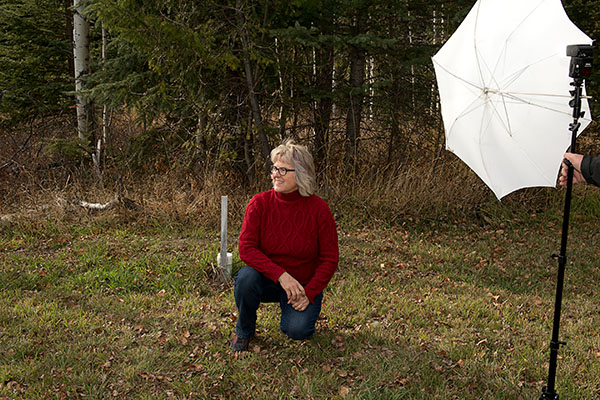
Our ever-patient model was overwhelmed as she tried to pose for everyone at the same time. She pleaded, “Where do I look?”   I laughed and loudly said to that excited scrum of photographers, “If you want her to look at you yell, ’Me! Me! Me!’”

We spent the morning shooting in the inside studio. For that session I had the flashes set to manual mode so their output would always have the same power. That is the easiest way. If more light is wanted on the subject move the flash forward. Less? Move the flash away.

After lunch we moved outside and I set up one flash with a shoot-through umbrella, however, this time the flash was set to TTL mode. When using flash in an indoor studio one synchronizes the camera’s shutterspeed to the studio flash, and uses the aperture to determine the exposure of the light reflecting off a subject. Progressing, however, to an out-of-doors situation with TTL a photographer must balance the natural, ambient light with the off-camera flash; and using flash effectively is more about creating and controlling shadows than about filling them.

We walked out into the bright day and our model had barely reached a location in the meadow before 15 excited photographers got down to business. By then they weren’t at all shy about getting shoulder to shoulder in the process of experimenting, exploring, and learning about outdoor lighting.

I just received an email from Chambers saying, “You’ve definitely added a whole new dimension to our photographic adventures. Thanks a lot.” Gosh, a whole new dimension to their photographic adventures. That is one of the best “thank you’s” I have ever received.

I Like Calendars     


Calendars

I remember a life drawing class in which we would all have to hang our assignment for each week on the classroom wall. Then we would all noisily sit around and wait for our colourful instructor, Mario, to make his grand entry. Mario was a tall, dark, flamboyant Italian that always talked loudly while waving his hands around in the air for effect.

As we held our breath he would slowly walk along the exhibition of our talent and skill. Then he would suddenly stop and with a wide sweep of his arm gesture to someone’s drawing and in his thickest accent declare, “This, this, this, belongs on a Los Vegas Hotel room wall!” I remember more than once watching a fragile classmate moved to despair or with a bowed head rush from the room in disgrace. As cold hearted as that life drawing coach was I did get his point regarding art.

We rarely look at the artwork that is always hanging in the hotel room. It is just there to fill space on the otherwise blank wall, and if we did notice, that framed art was quickly forgotten when we left. I can honestly say that although my friends or family might have remarked at the cleanliness of a room, it’s location or the softness of the bed. I can’t remember anyone ever saying, “Gosh, the artwork in our room was marvellous.”

Good art is enduring. We live with it, cherish it, and the longer we do the more we take pleasure in it.

Now comes my delight with calendars. It is not that I need to know what day it is; that is a utilitarian benefit. I like those with pictures.

Calendar pictures must immediately have an impact. A successful calendar picture grabs our attention and quickly tells a simple story. However, unlike the art my instructor was demanding, calendars only have to endure for about thirty days at the most. Each picture only has to artfully work to capture our attention and give us the proper date for one month. Then we get to start all over, and we get to enjoy a different picture with more information on important dates for another month. Hmm…functional art, what could be better.

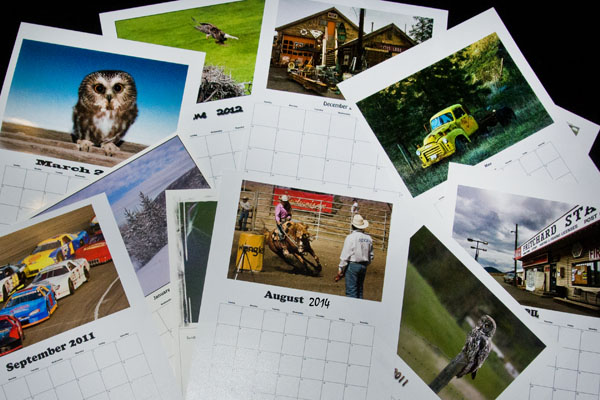
November is my month to start seeking calendars. I hate searching for calendars in January. There is something wrong in hanging a calendar mid-month. My wife and I have the perfect approach for photographers. We each choose from the photos we have taken during the month and I print a new calendar each month. No rules, no themes. We select a picture we each like and I make an 11×14 print that is half picture and half calendar – side by side, or up and down.

That’s not to say that I don’t get other calendars. If one grabs our fancy while shopping we’ll get that also. Then there are those we receive as gifts. I can’t have too many calendars. Getting to view lots of new pictures each month, it doesn’t get much better than that. We also choose images and have calendars made for us that we give away at Christmas.

My advice to readers like me, that enjoy having their pictures hanging on their walls, is to start putting your own calendar for 2016 together now. Stop by the local business supply store or look online. And remember calendars make great Christmas gifts.

Photographing Chase Creek Falls  

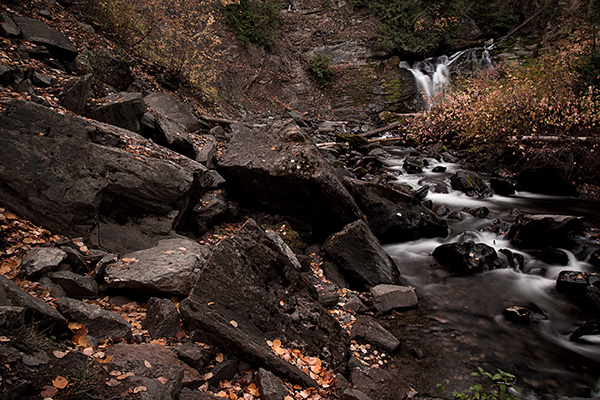
Chase Falls 1

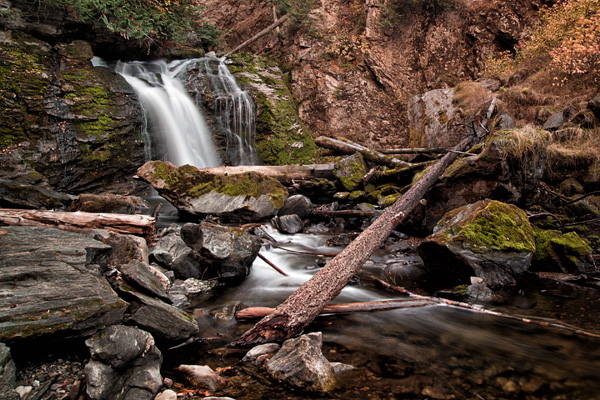
Chase Falls 2

Chase Falls 3

Chase Falls 4

The third season of the year is here, and it is my favourite season of the year for photography. Fall or autumn, it doesn’t matter which word is used, is so darn colourful here in British Columbia; and I really enjoy the cooler air, a welcome relief from the heat of summer.
This week I drove the short distance down the road to Chase Creek Falls. I was in April just after the spring runoff when the high water began to subside. April is the second best time to go there, October the best. October has low water that makes scrambling along the colourful creek side easy, and lets photographers position their tripod and cameras close to the falls without getting wet.

In my April article I wrote that I have been photographing Chase Creek Falls since sometime in 1976. I have used 35mm, medium format, large format, film, and digital to photograph those falls every season of the year in every type of weather using black and white, colour, and even polaroid film.

I have gotten wet, walked away muddy after sliding down the steep bank, and bumped into the large river rocks a bit to hard. I’ve lost lens caps, a lens hood and even a polarizing filter on my visits. I have used the Chase Creek Falls once as a background for a large family reunion and another time for wedding portraits.

Photographing waterfalls is very easy and almost as relaxing as wandering around a garden. Modern digital cameras have improved the ease of taking photos by removing the requirement of much of the technical information that photographers once needed to know.

The equipment doesn’t need to be expensive or special. Select your favourite DSLR, a lens that has a wide enough focal length to see the falls, a tripod, and a neutral density filter. When I remember, I also like to use a cable release; but if forgotten the cable release isn’t a big deal, just use the camera’s self-timer instead.

Setting up the camera to get that soft looking water coming over the falls is very easy. Just choose a low ISO and a small aperture. The low ISO allows a slow shutter speed, and the small aperture gives lots of depth of field.
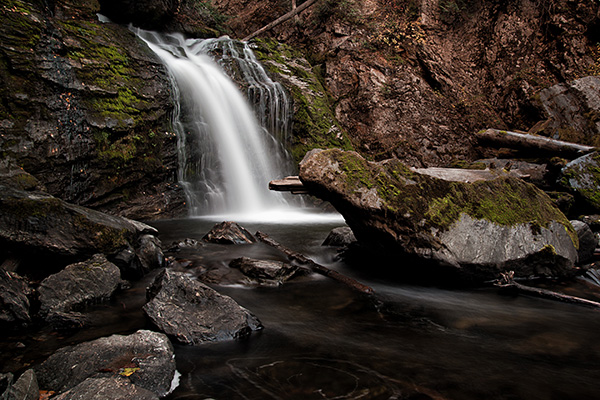
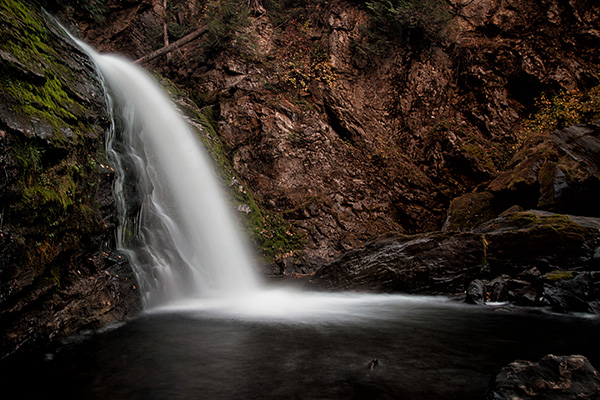
An ND, or neutral density, filter reduces the light going through the lens to the sensor and is the most trouble free filter for making long exposures. I prefer the square or rectangle ones that I can hold in front of my lens. I don’t use the fancy filter holder as that just gets in my way when I want to add additional ND filters to reduce the light.

I prefer shutter speeds of three or more seconds, and adjust the ISO, aperture and ND filters to accommodate that. Next, point the camera and start making pictures decreasing the shutter speed and checking the LCD as one goes along. It is all so easy.

This is a perfect time of year (here in British Columbia anyway) to spend some time photographing local waterfalls. They don’t have to be large and exotic, just have a bit of water going over them. And like me, after a dozen or so shots, put the camera back in it’s bag and sit quietly in the sand and lean back on a big smooth river rock so you can enjoy the sound of the water. Life is good.


Photography in the October Garden       


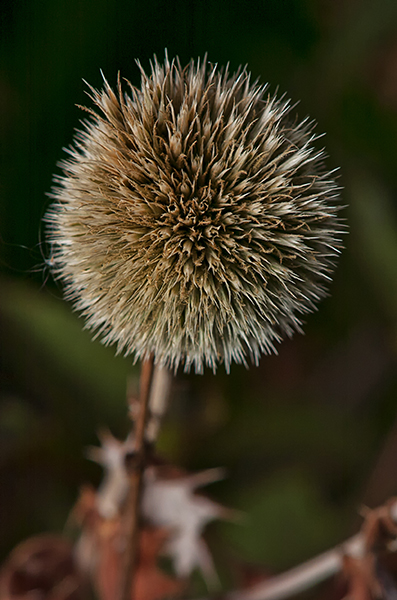
Echinops 2

grass 3

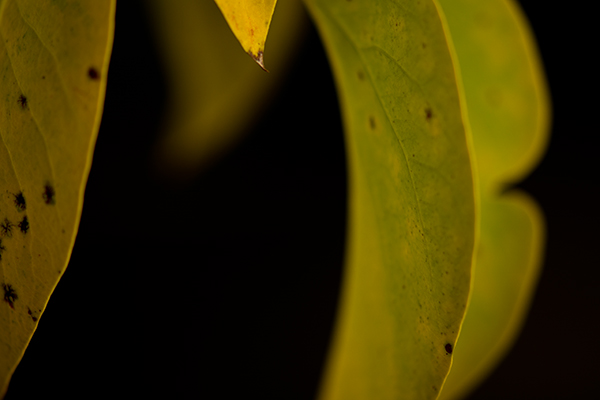
Yellow leaf 4

Oregon grape 5

Pink leaf 6

Salvia 1

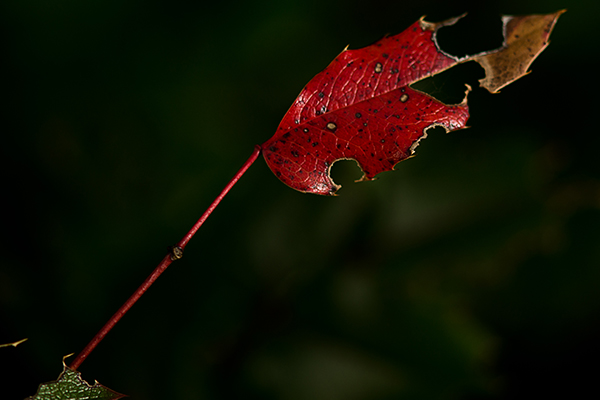
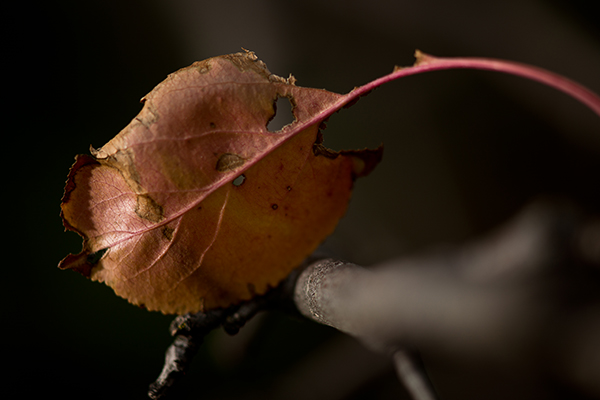
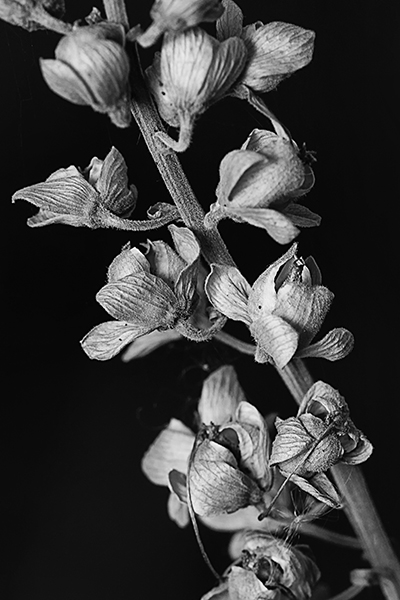
I have written before that I find wandering around our home garden with my camera relaxing. Unlike photographing people, animals, scenics, sports, or almost any other subject, garden plants are just waiting to be looked at, and it’s not necessary to pack the car with equipment to search for some secluded or exotic location. Most of us can find an easily accessible and welcoming garden close by.

I know that spring’s brightly coloured plants, or the mature flowers bathed in light on a damp morning in early summer are what most photographers are interested in. I admit that I am not very savvy when it comes to the names of flowers. Plants are more my wife’s interest than mine. Her time is spent designing, planting, and coaxing her sprawling garden. Sure, I do much of the heavy lifting, but my time in her garden is mostly with a camera and unlike those photographers that I mentioned that do most of their gardens’ photography in the spring and early summer, I don’t really care about the season, weather, or the condition of the flowers for that matter.

My intention is to find something unexpected in the familiar plants. When I’ve chosen my subject, I look at it from all angles paying attention to the background so that whatever is behind won’t interfere, and I want the shadows, colours, and other plants to add interest to my composition.

I think some people get all tied up with a need to have inspiring subjects, and ignore the commonplace subjects just outside the door. I just walk out in my yard and make pictures of anything and everything. I guess the difference is between making and taking pictures.

My sojourn into the October garden was a bit about the colour and a whole lot about the shapes. I waited for late afternoon and lucked out when the sky clouded over just a bit. I like what photographer, John Sexton calls, “quiet light”, that as he says, “fades toward the darkness of evening.”

The light at day’s end allows me to underexpose the background and to add a “pop” of light on a specific subject from an off-camera flash.

I don’t really have a plan or a specific subject that I want to work on. I just wander and look. Figuring out the exposure and balancing the fading light with my flash only takes a moment as I choose an interesting plant and search for a creative angle.

It is that quiet and calming time on an October afternoon that welcomes me to the garden, and to quote Sexton again, “I feel quiet, yet intense energy in the natural elements of our habitat. A sense of magic prevails. A sense of mystery – It is a time for contemplation, for listening – a time for making photographs.”