Viewing Scenic Photographs   


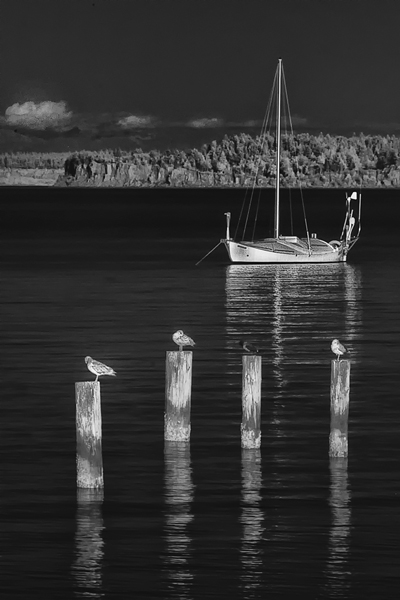
seagulls and boat 2

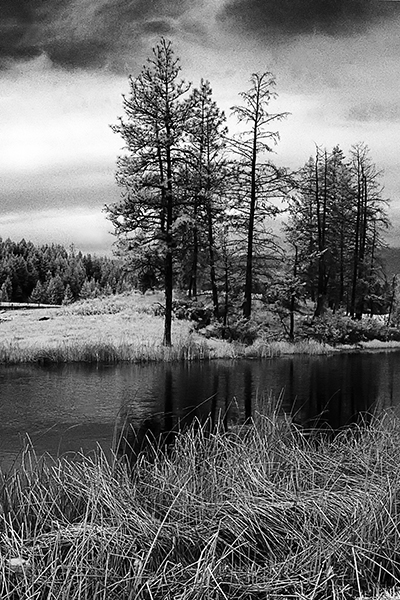
Falis Pond 2

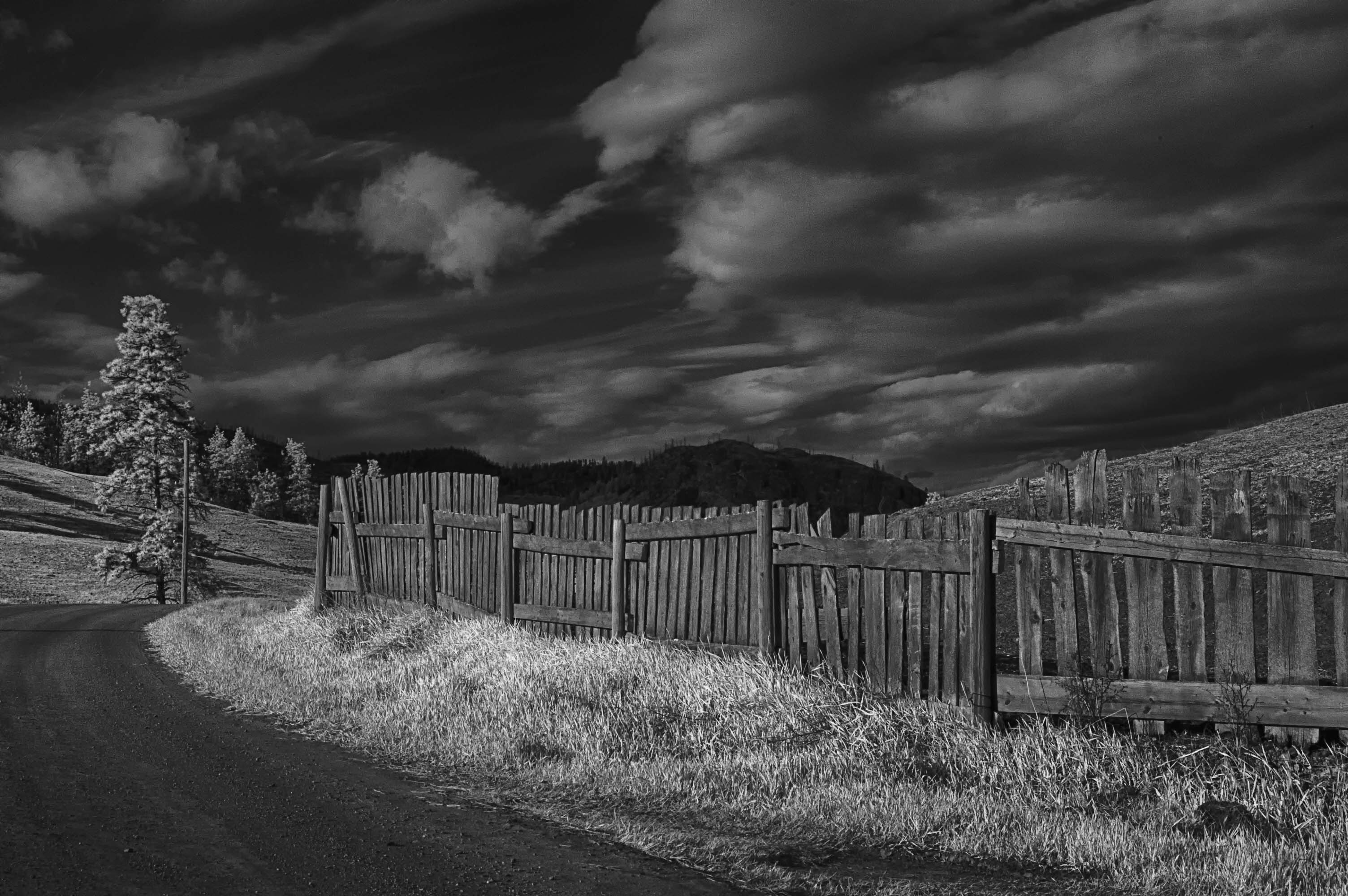
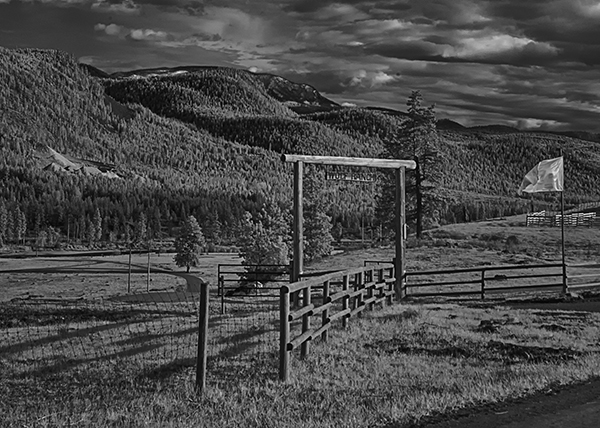
Wolf ranch

I enjoy looking at photographs that seem to have been made with the goal of saying something about a moment in time or place. Sometimes I even get a sense of the struggle the photographer had while trying capture a particular mood and how hard it was to convey that mood to the viewer. I think creativity takes a lot of effort.

This week I thumbed through a hard cover book I have had for years by one of my favorite landscape photographers, Eliot Porter. The book, entitled Intimate Landscapes, is from an exhibition of fifty-five color photographs by Eliot Porter, at The Metropolitan Museum of Art.

I enjoy how he eliminates those elements that add nothing to the composition and selects those that add meaning to his visual statement. He had an amazing awareness of how colors create mood. A review I read went on to say that his photographs, “reflect the standards of excellence that are Eliot Porter’s greatest contribution to the field of color photography. Upon seeing these photographs, the viewer is immediately struck by the artist’s distinctly individual and intimate interpretation of the natural world.” His photographs are different and specific, and have a personality that I think come from the experiences of the photographer.

When I finally put down the book I thought about how many of the scenic photographs that populate photography forums I currently read are mostly documentary type photographs, and I wonder if the photographers believe that any vista with lots of space and colour is worthy of photographing. They might be of the opinion that all it takes is a wide-angle lens to miraculously convey the feeling and emotional reaction they personally felt at that moment. Perhaps that is why the viewers’ responses they get are sometimes limited to, “nice sky and good composition”.

My long-time friend, Bob Clark, used to critically suggest that all one needs for people to like your landscape or scenic photo was to have a “National-Geographic-sky”, a magazine that was filled with pretty pictures of places from around the world with blue skies and billowy white clouds.

I prefer scenics that make an impression on me and convey a mood. I want to look at a photograph that allows me to find a story in it; or at least be able to search for one, and hope for a photograph that I can respond to on some level. A photograph should try to accomplish something, and should have a strong sense of self-expression. Photographers should look for something in the landscape that is unique, and that will set their photograph apart. As photographers we should try to express our personal viewpoints and hope to summon an emotional response from those who view our photographs.

Using a Camera Modified for Infrared on vacation.

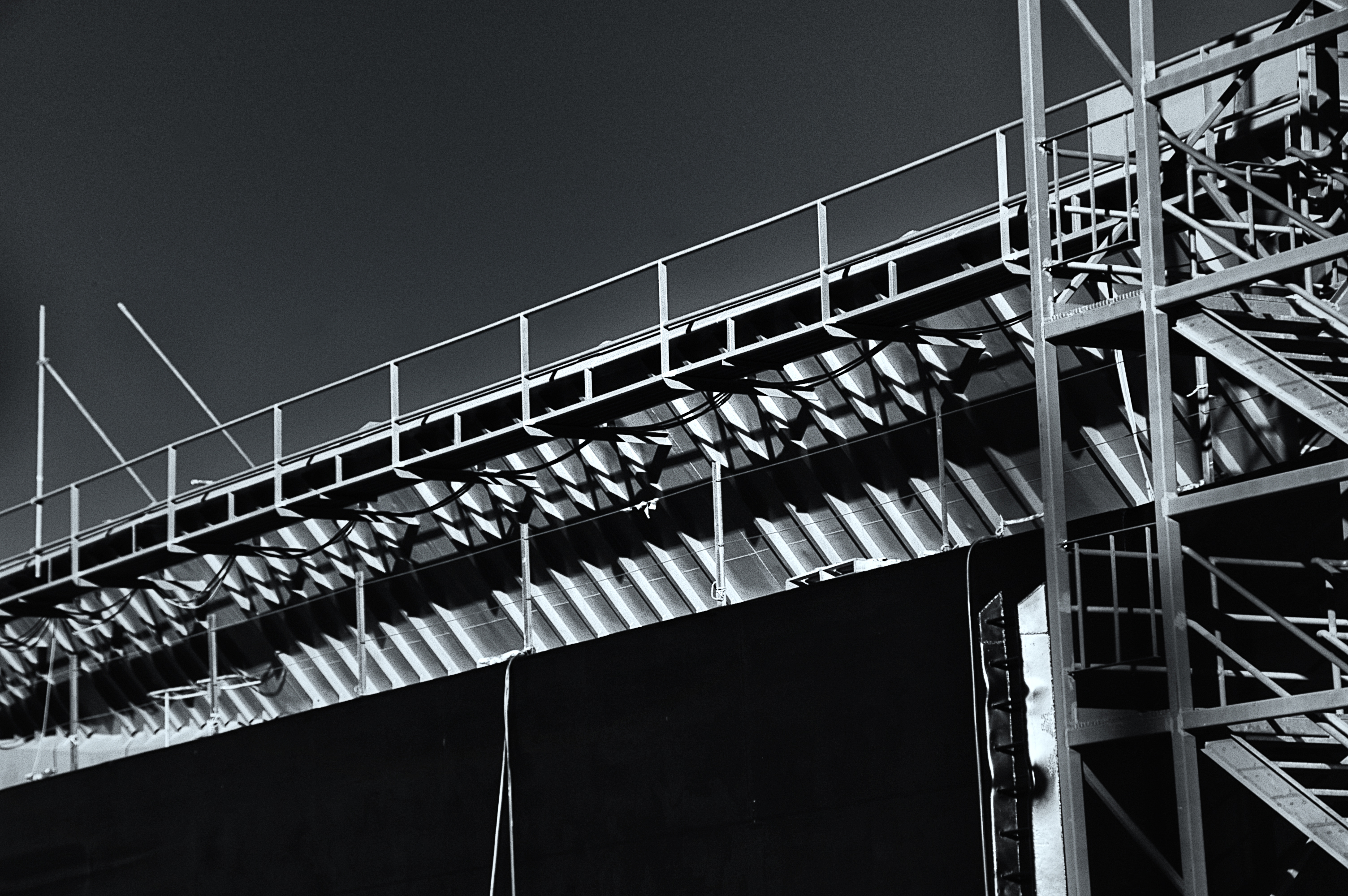
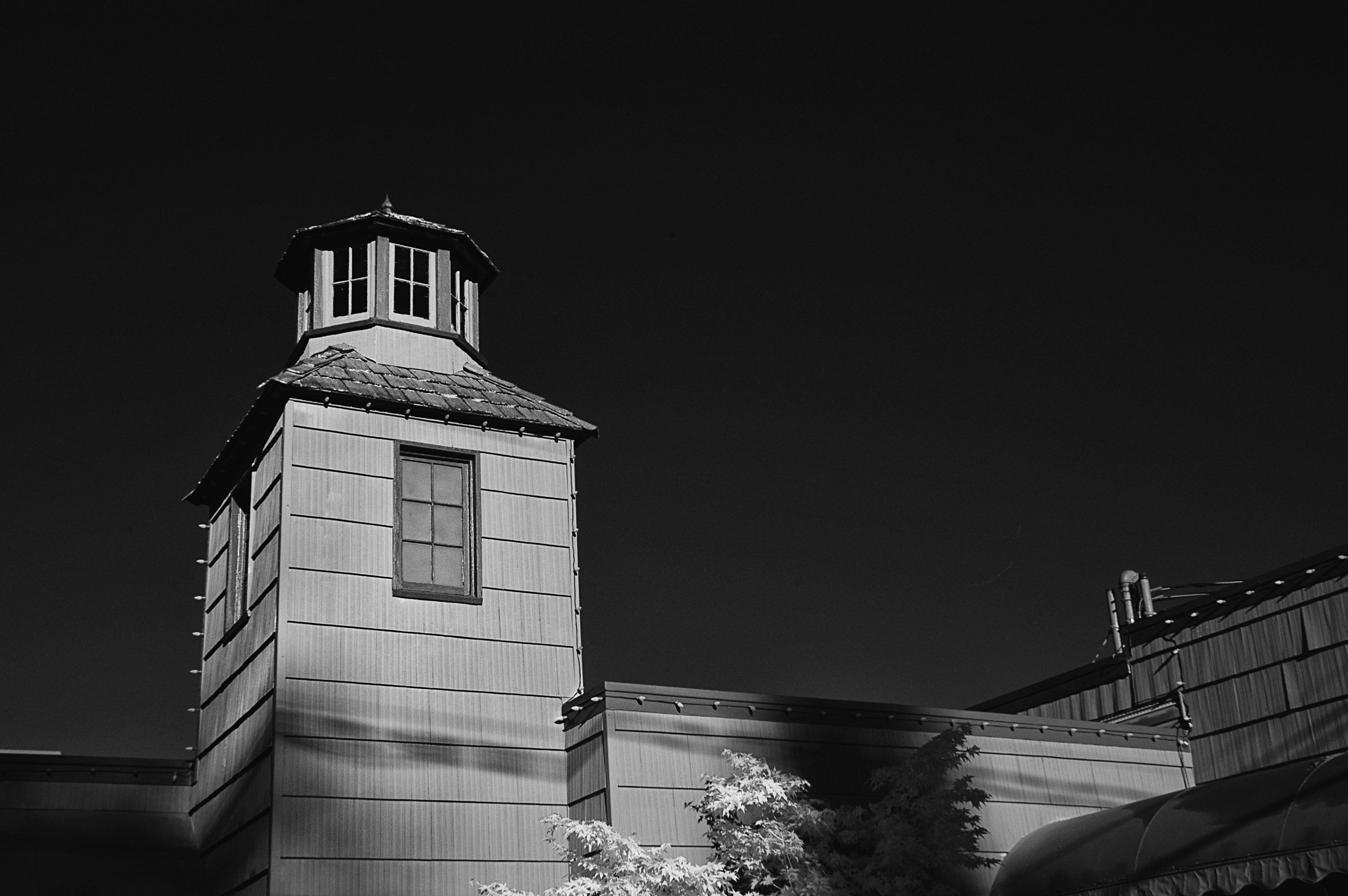
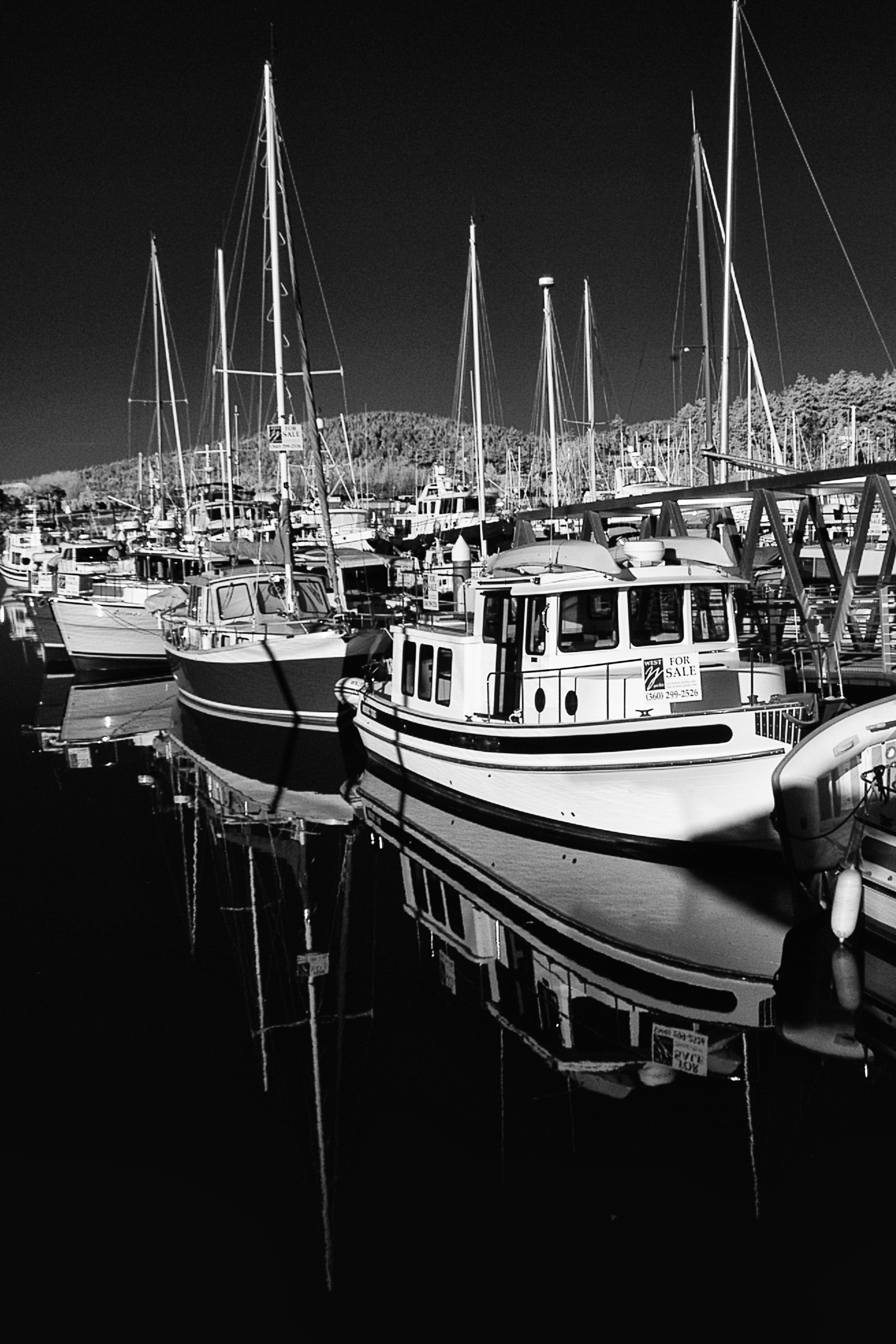
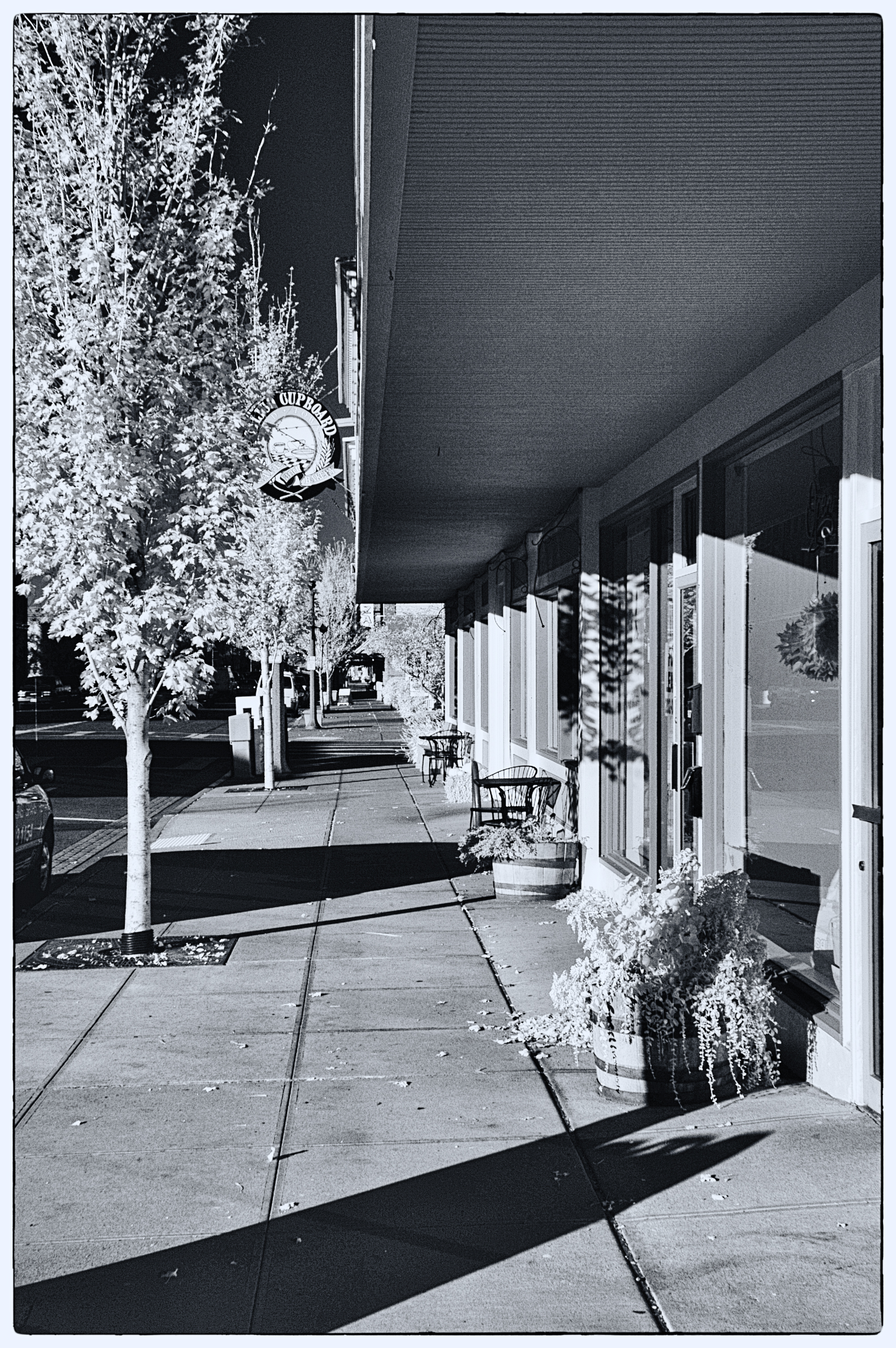
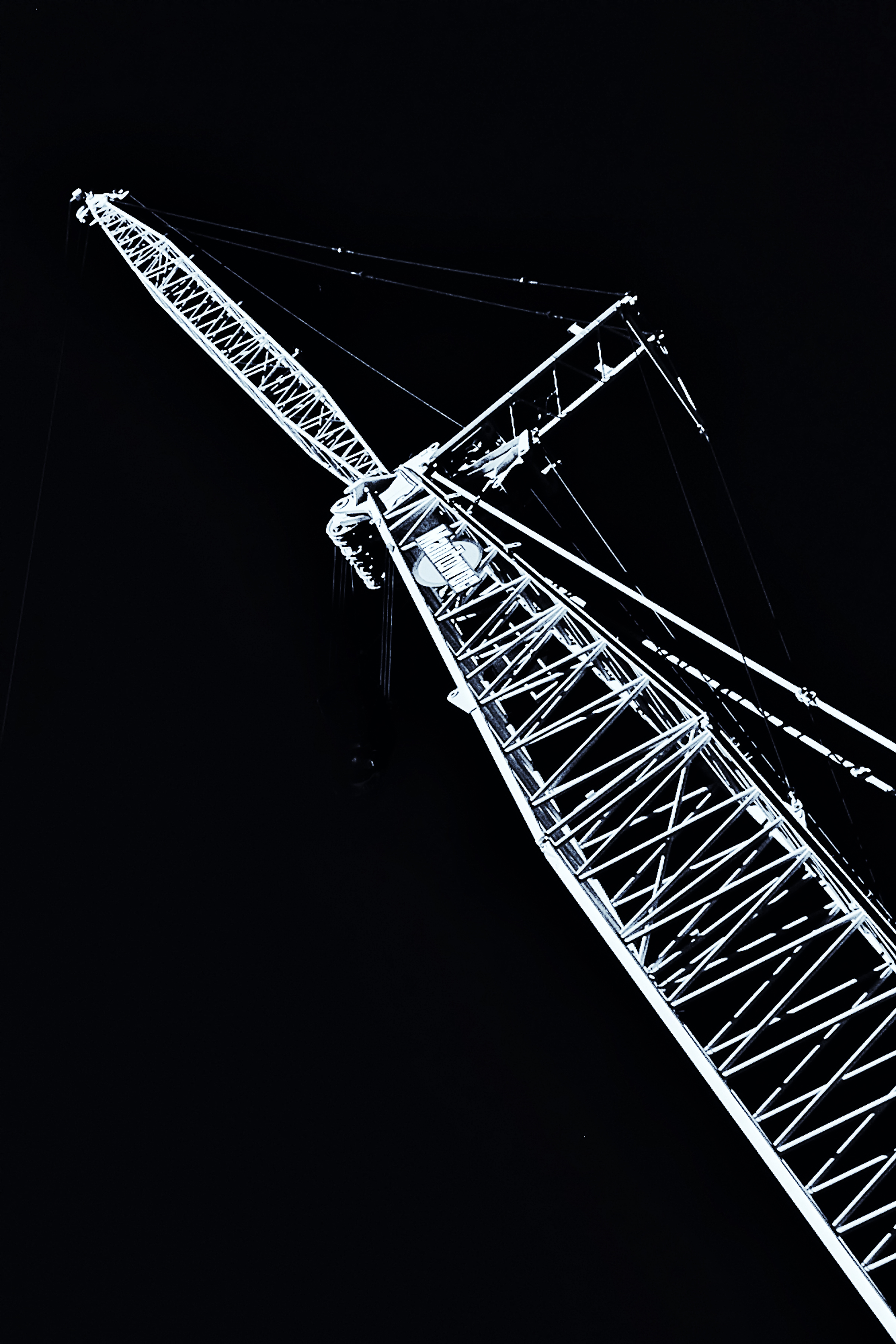
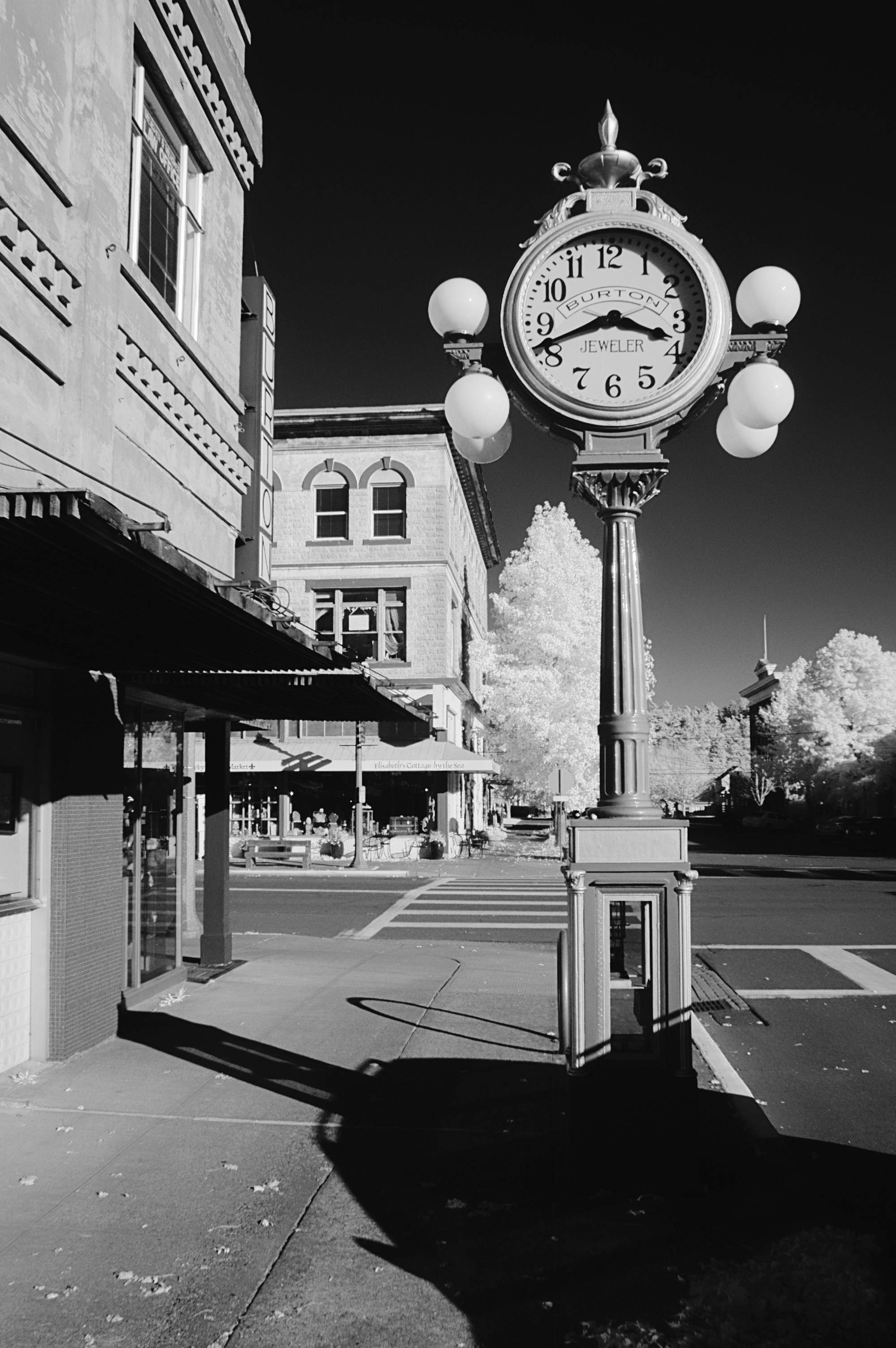
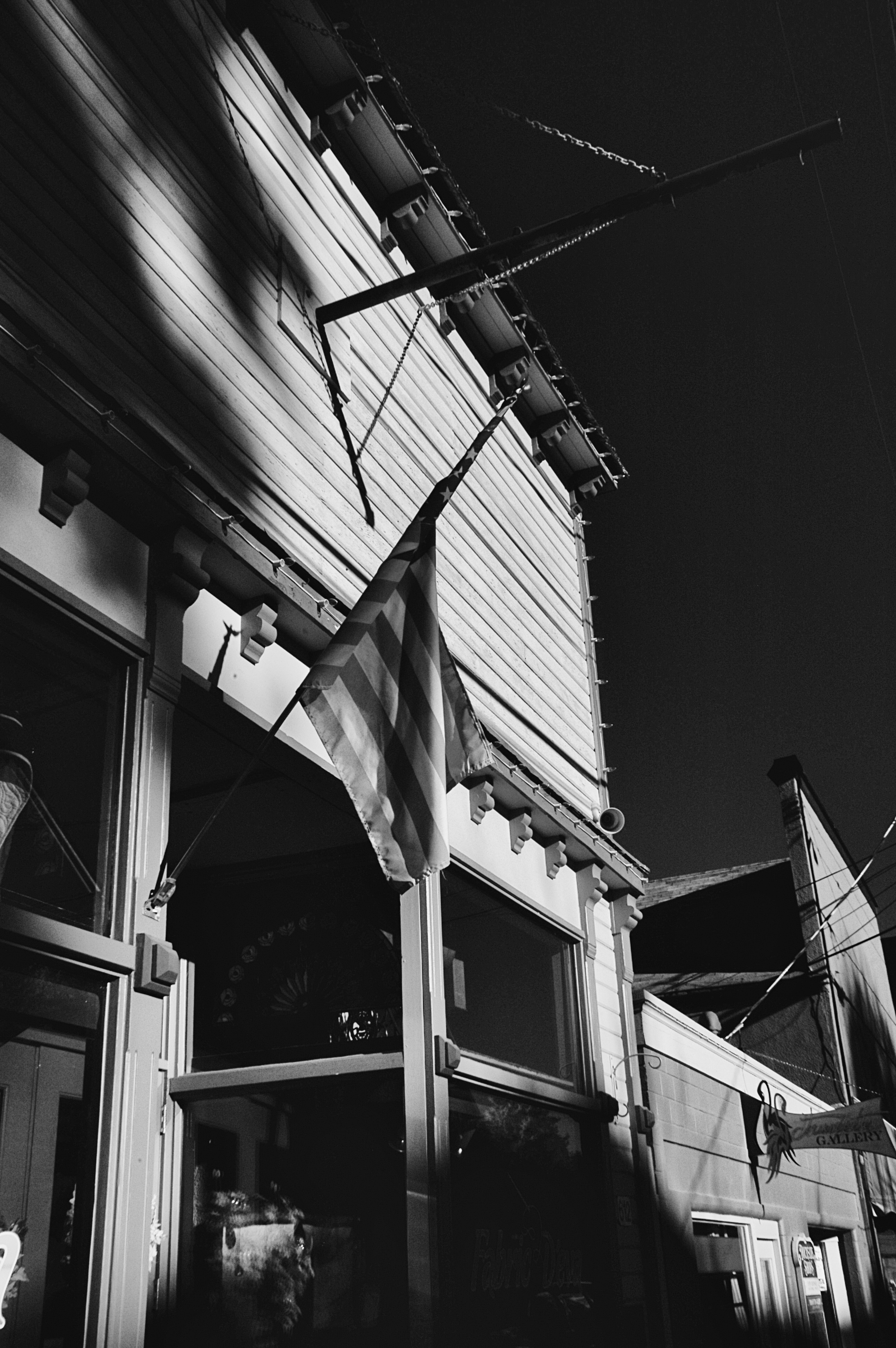
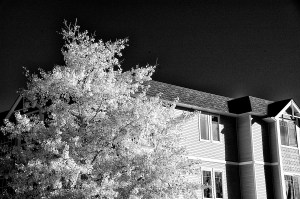
Infrared lightInfrared tree  construction IR  Cupola IR  Waterfront IR  Infrared and brick  Marina in IR    Infrared in street  Tower IR  IR light on clock  Flag & Building in IR

When on vacation I always bring along my camera. Actually most of the trips I take are for the purpose of relaxing and making pictures. If I couldn’t bring a camera I would suffer because I would see shots I wanted to take and wouldn’t be able to do it.

I enjoy wandering about with my camera wherever I go and for the short vacation my wife and I took to the coast of Washington state at La Conner.  For this trip I wanted to make a real change from my everyday shooting, and decided to spend each late afternoon making exposures with the well-worn Nikon D100 I had modified many years ago to only “see” infrared light.

Digital camera sensors are as sensitive to infrared light as to visible light. In order to stop infrared light from contaminating images manufacturers placed in front of the sensor what they call “a hot filter” to block the infrared part of the spectrum and still allow the visible light to pass through. My infrared modified D100 has had that filter removed and replaced with a custom filter for infrared only.

The first day we had lodging in the town of La Conner.  I began walking the town in the morning with my Nikon D800e, and then returned in the late afternoon walking the streets and waterfront with my Modified D100 for infrared images.

On the second day, after a leisurely drive sight-seeing unsuccessfully trying to get close to the annual snow geese migration, we went a bit further to some big stores at an outlet mall near Seattle my wife wanted to check out.  Next day we moved about 20 miles down the road to a motel in Anacortes and again I roamed the streets, alleyways, and oceanfront with my infrared camera in a new location.

There is nothing quite like infrared (IR) Photography. Making an image with a modified camera is an exploration.  I like the contrasty tones that I can obtain when I convert the image to black and white. I suppose, like any form of photography, or art, it’s all a matter of taste.

Reflected IR light produces an array of surreal effects. Vegetation appears white or near white. Black surfaces can appear gray or almost white depending on the angle of reflected light. And the sky is my favorite part; it will be black if photographed from the right direction. The bluer the sky, the more the chance there is for a dramatic appearance.

Get everything right and there will be a “crispness” that’s rarely seen in regular photography, with everything looking very different from a normal black and white conversion.

The low-angled, late afternoon coastal light created lots of deep shadows on the buildings and trees, and it was that light and the contrasting effects that I was able to capture.

I like photographing architecture and other human-made structures. Well, actually, I like photographing just about anything. But on a trip when my goal is to photographically discover, or in this case, rediscover a small town or city, I let myself be as creative as possible with the many architectural structures, and a camera that sees only infrared does help. In addition, the colourful coastal architecture is very different from what one finds in the usually very dry, forested interior of British Columbia where I live.

I walked and walked. I photographed and re-photographed. I talked to people I met in the alleyways, along the street, and on the waterfront. My only goal was to capture the way the infrared light touched things and to be back at the motel before dark.

Life Pixel, http://www.lifepixel.com/ writes on their website, “Are you tired of shooting the same stuff everyone else is shooting?  Then be different & shoot infrared instead!”

I don’t think I care whether I’m shooting the same stuff as others, but I sure do like to change how other photographers sees the stuff I do shoot, and infrared works perfectly for that.

Of cours….I am always happy when someone comments. Thanks, John

Visit my website at www.enmanscamera.com

Photography Excursion in the Garden – After the Rain

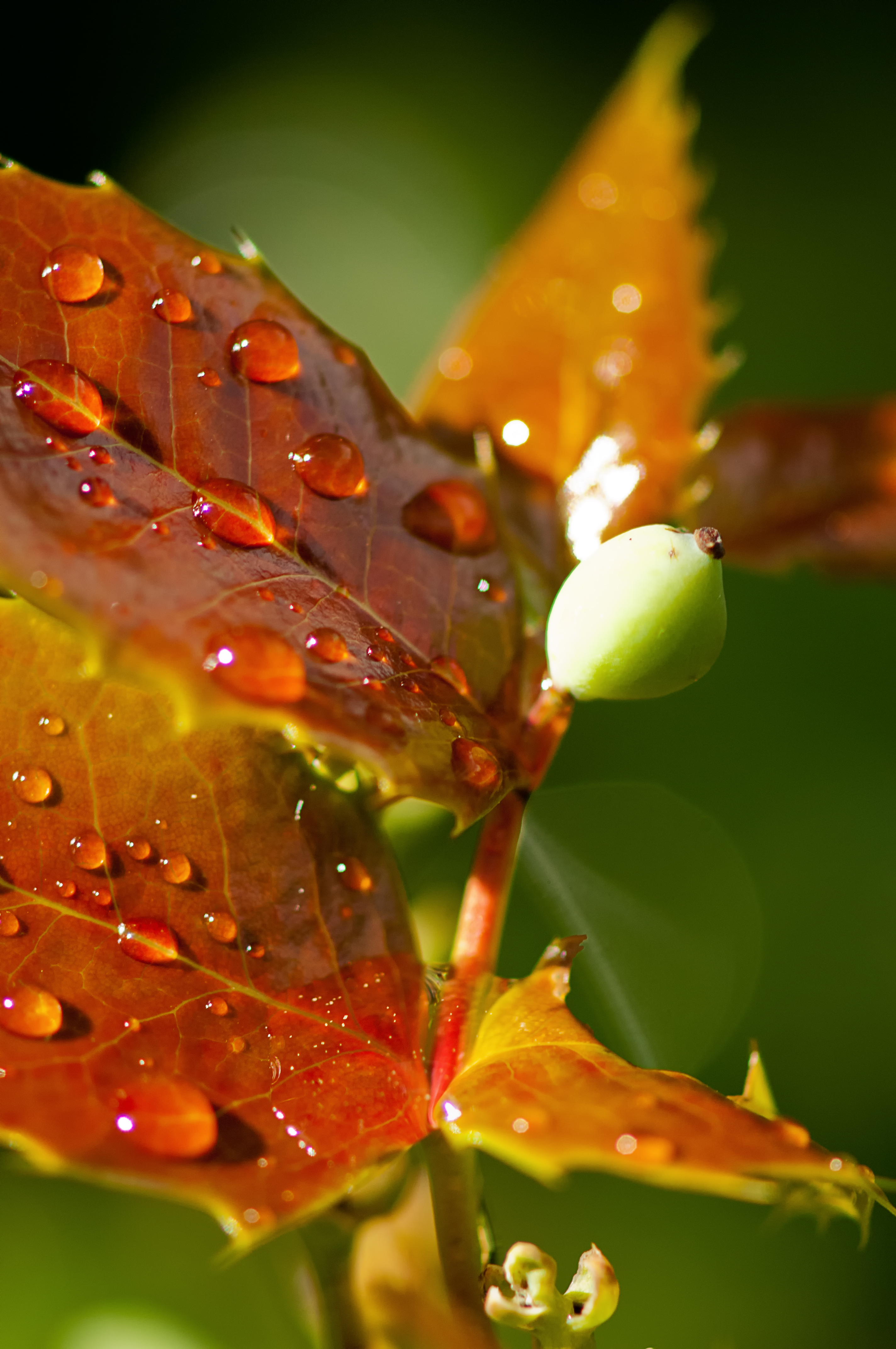
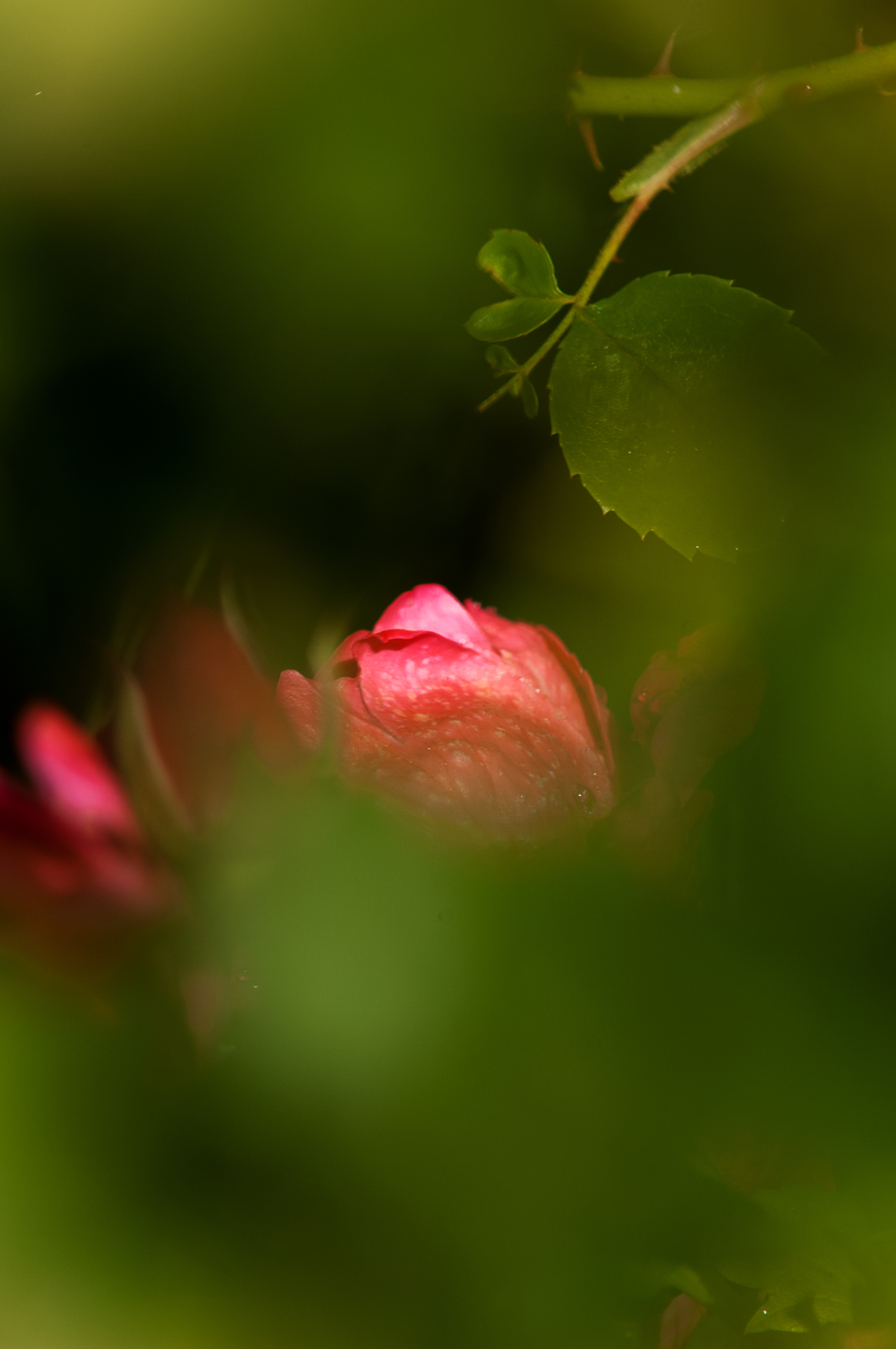
Red Mahonia/ Oregon grape  Rose bloom

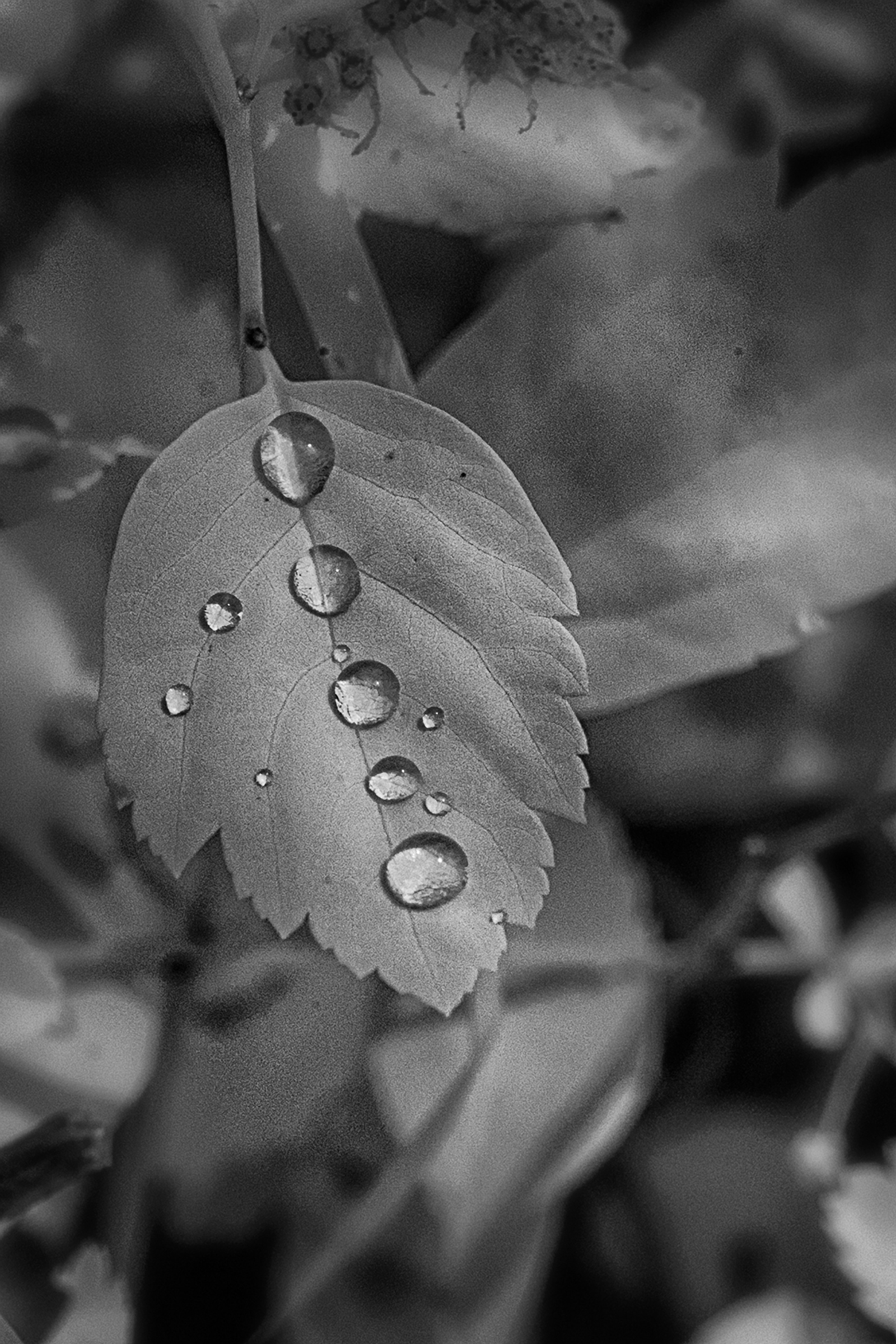
Crab apple tree after the rain

Crab apple tree after the rain – Infrared.

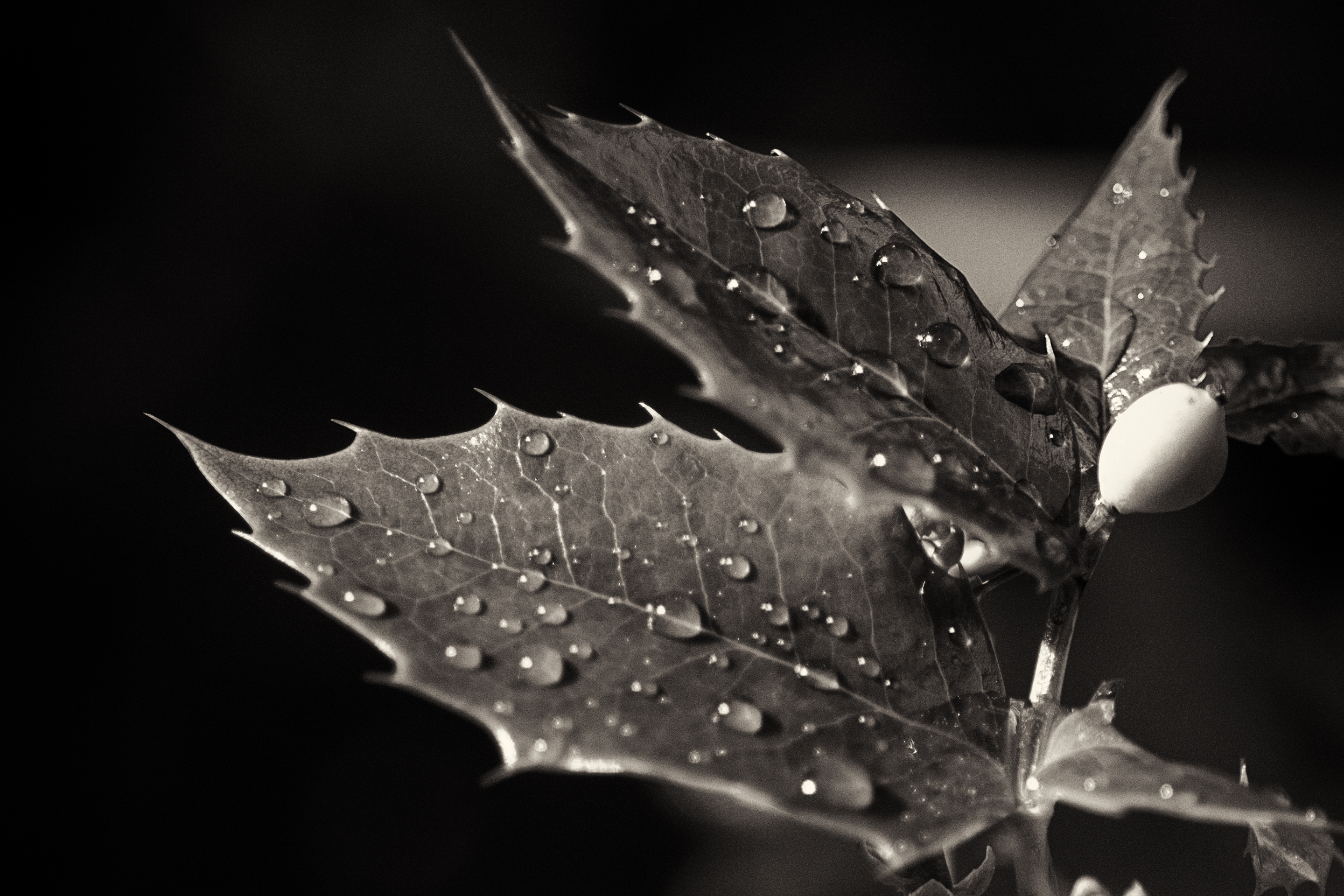
Oregon grape on a rainy day

Oregon grape on a rainy day

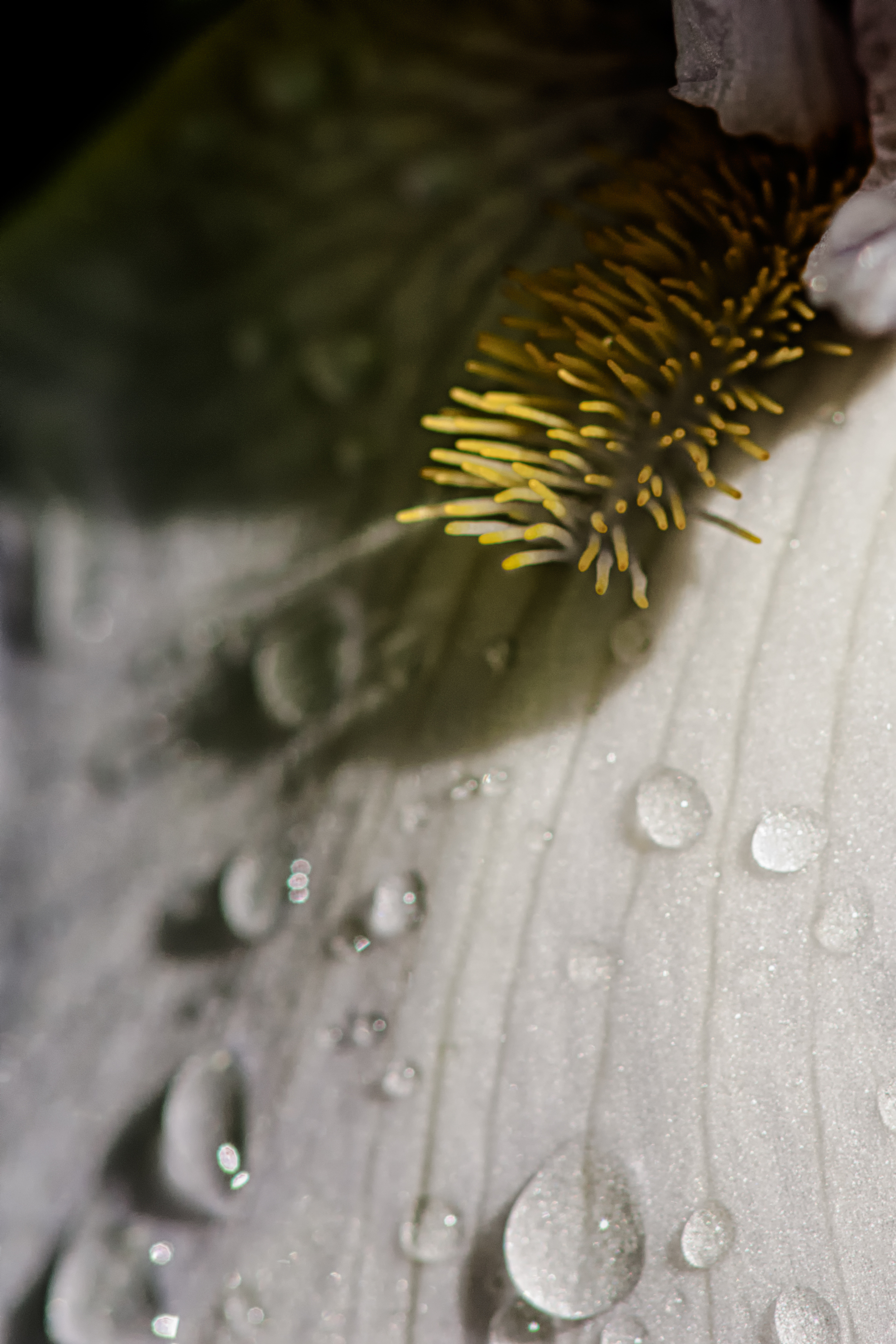
Close up of an Iris on a rainy day

Close up of an Iris on a rainy day

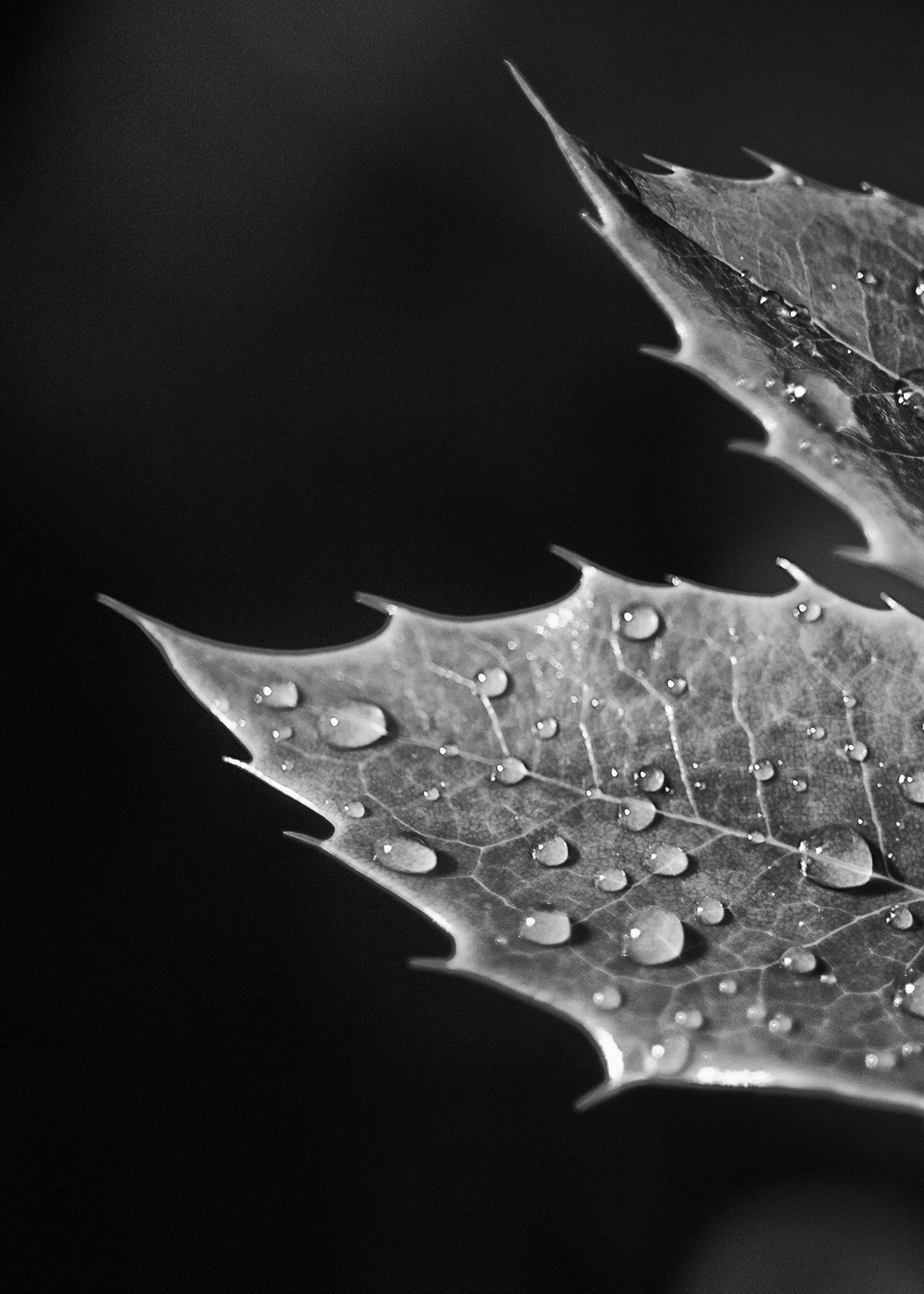
Mahonia in black and white

I have heard complaints recently from photographers that they haven’t been able to get away from the wet weather this month and have only been offered a few rain free days to plan photography events.

The last three days has seen rain, sun, and shortly thereafter, rain again; nevertheless that needn’t be a reason to be depressed about the weather. Of course, the rain meant delaying a trip to the mountain waterfalls; and landscape photography might not be as dramatic unless one is willing to wait for the clouds to part. But, in my opinion, one doesn’t need to stray far from the back door to pursue that insatiable need to make pictures.

I have heard of groups having photographic challenges and I suggest that because of the rain that they have a challenge in their own back yard.  My goal this week was to get out during the rain to make pictures of the wet plants in my wife’s garden. I had planned to attach two small umbrellas to light stands, one for a flash and one for my camera and me. However, when the rain came down the last three days it really came down hard. So even though I don’t mind getting wet, there was no way I could be successful in the kind of deluge I faced each day.

The rain would come fast and hard, then abruptly stop. Next would come a strong breeze and bright hot sun that quickly dried the leaves. All perfect if one wanted to go for a walk, but I wanted wet leaves and water drops that I could add sparkle to by using a flash.

After waiting three days I put my umbrellas, light stands and flash away, slipped on rubber boots, and dashed out into the still wet garden as soon as the rain began to ease up.

As had been the pattern for the past few days, the sun came out quickly, hot and bright, and, as usual, the breeze began. Fortunately, the bright sun allowed shutterspeeds of 1/600th of a second and above, and, in most cases, made up for the plants moving with the light wind.

I used two cameras; one converted to infrared with a 70-180mm macro lens and the other shooting normal with a manual focus 200mm macro.  Some plants looked as though they might be perfect for infrared while others were so colourful that I knew I wanted the image to end up as close as possible to natural, although some would be converted to black and white. As I mentioned I wanted something unexpected and that also meant I photographed some plants taking into consideration that I might do some altering in post-production.

Wandering around the home garden is relaxing. My intention is to find something unexpected in the familiar plants. When I’ve chosen my subject, I look at it from all angles paying attention to the background so that whatever is behind won’t interfere, and I want the shadows, colours, and other plants to add interest to my composition.

I know many photographers may be content with aiming their programmed, little point and shoot cameras straight forward at some particular flower or foliage, and that is acceptable if all one wants is a life-like representation for a club’s plant catalogue, however, I find much more interesting photographs are from photographers with their DSLRs who are more intent in creating artistic representations of the flowers and other plants.

I think photographers get themselves all tied up with a need to have inspiring subjects, and ignore the commonplace subjects just outside the door.  When I want to try out some new piece of equipment, or software, I don’t wait for an excursion; I just walk out in my yard and make pictures of anything and everything. I can easily return to the computer to test some recent exposure, then go out again; and on days like I just wrote about it is easy to change out of wet cloths immediately at home, instead of driving home uncomfortably for several miles.

I always appreciate your comments. Thanks, John

My website is at www.enmanscamera.com

Wandering my Neighborhood with Infrared

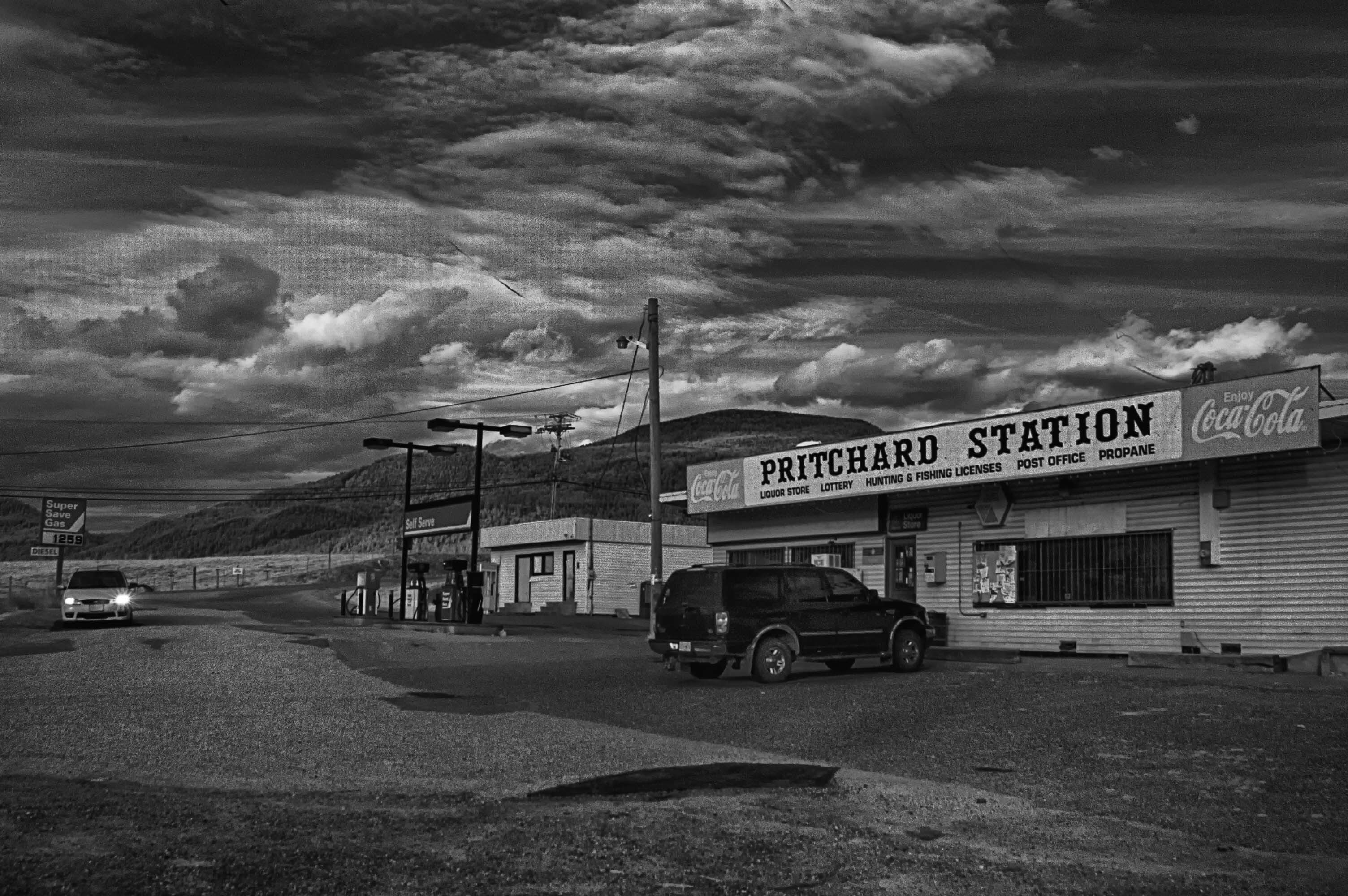
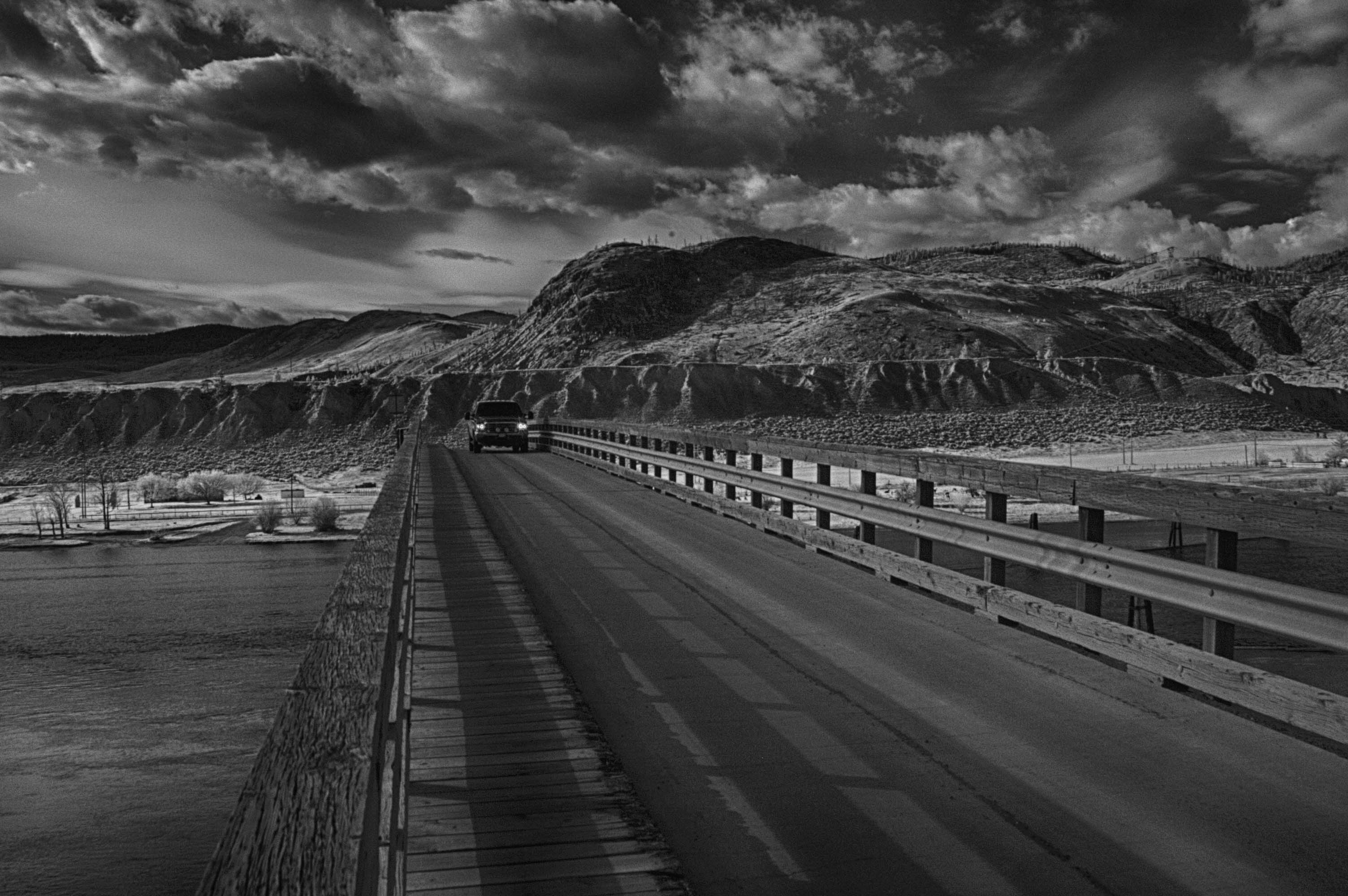
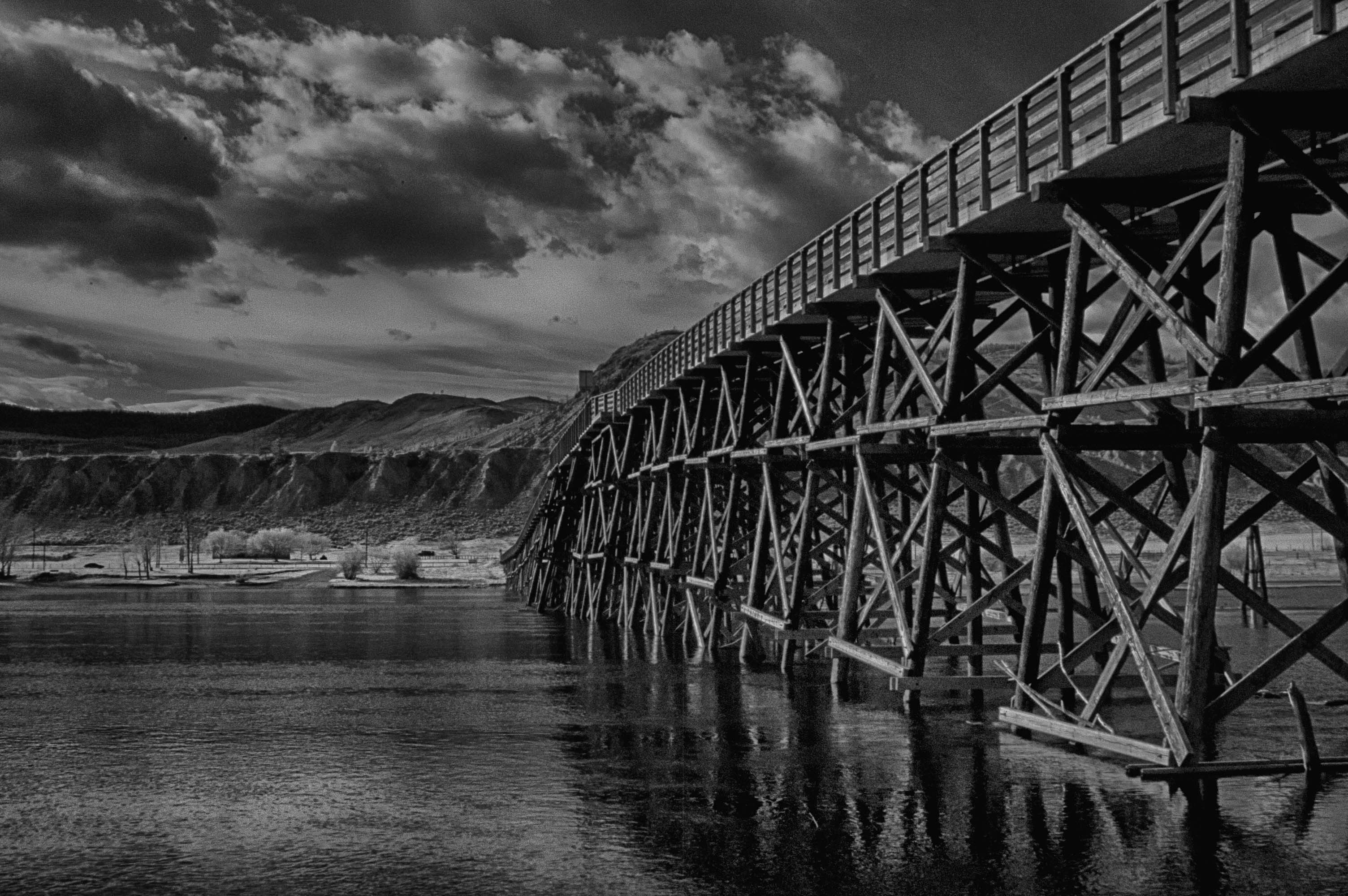
Pritchard store infrared  Crossing infrared Riverside infrared Bridge infrared Wolf ranch infrared Tree & fence infrared

Spring is here with cool nights and warm days. The snow has finally disappeared in my neighborhood, except on the mountaintops that surround the river valley in which I live, and everything is starting to get green.

I had decided this should be the week to wander the roads near my home. I selected my camera that I had converted to infrared some years ago, attached a 24-120mm lens, and headed out.  Over the past 37 years I have photographed everything in my nearby landscape again and again, and I won’t try to guess at the number of different cameras, films, and film formats and, of course digital cameras, I have used.

My goal this time (I always like to have some type of goal or plan), was to wait for a cloudy day and make use of the low, dramatic, and directional light at day’s end. I wanted to use my infrared camera as I have many times in the past.

Using infrared is always fun. The resulting images are always different and interesting. Before the days when I had invested in an infrared camera conversion, I had used Kodak infrared film. There wasn’t an exact ISO rating or even very consistent settings for that film. One would make test exposures for the filter density one used and the developing times. Good results would finally be obtained, but always after exposing several rolls of that expensive infrared film.

Nowadays my camera no longer requires a specialized infrared filter, and I don’t have to spend time in a lightless room developing the film. Yes, there was a cost to having my DSLR camera modified so that the image sensor is only sensitive to infrared light, but it has since paid back generously, because it is well worth the expense to be able to create unique images.

Most experts say infrared radiation peaks around noon, however, in my experience morning or evening is better, and the accompanying long shadows makes great pictures in infrared. So I waited a bit after 5pm before stepping out.

I went along the road searching out features I knew well, and that I thought might be perfect in the late afternoon light. My main interest was the sky. I wanted the very dark, hazy skies one obtains with infrared that are so dramatic, compared to those with visible light. As I stood alongside the road I thought about how the pictures I was making would be nice as colour images, but infrared and the black and white conversion I intended to apply would create more impressive, or as one writer called them, “otherworldly” scenes.

All my images from that day received some post-production using PhotoShop and Niksoftware. I shoot RAW so the original files from my camera are red and white. I convert each photograph to black and white, increase the contrast, and sharpen and strengthen the highlights and shadows. The final vision isn’t supposed to be a pretty, scenic document as much as it is my personal artistic vision.

It is possible for photographers who want “infrared-like” pictures to manipulate their normal captures using Photoshop, or any of several other programs that emulate the effects of infrared. However, those photographers like me that are interested in something different can find an older DSLR and send it out to be modified. Since I had my camera modified, there are several companies that have appeared, like www.lifepixel.com. These folks’ webpage begins with the question, “Are you tired of shooting the same stuff everyone else is shooting?”   So I suggest, if you would like to do something completely different, try infrared like me.

I look forward to your comments, John

My website is at www.enmanscamera.com