

Pictures Shot in the Bright Hot Sun


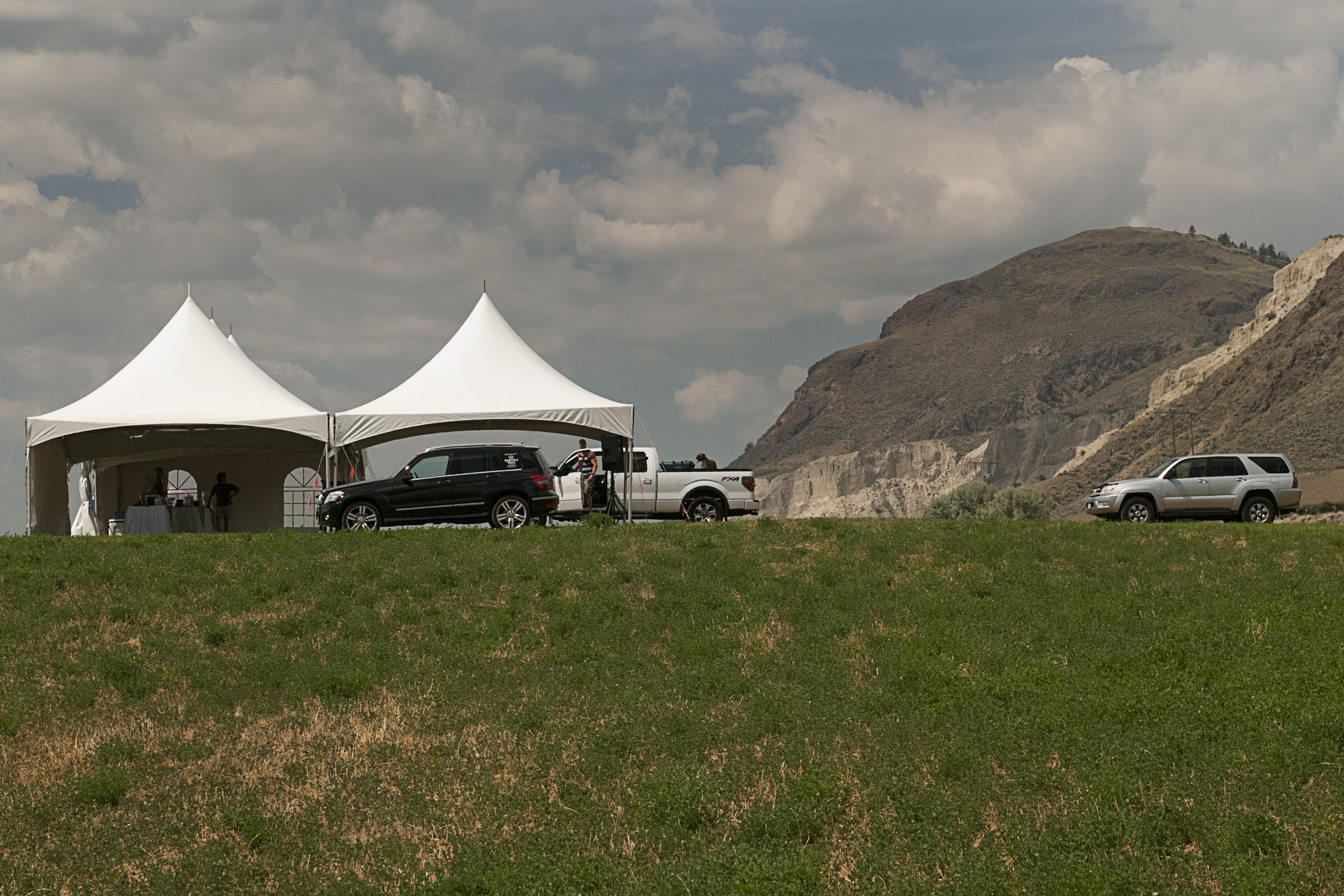
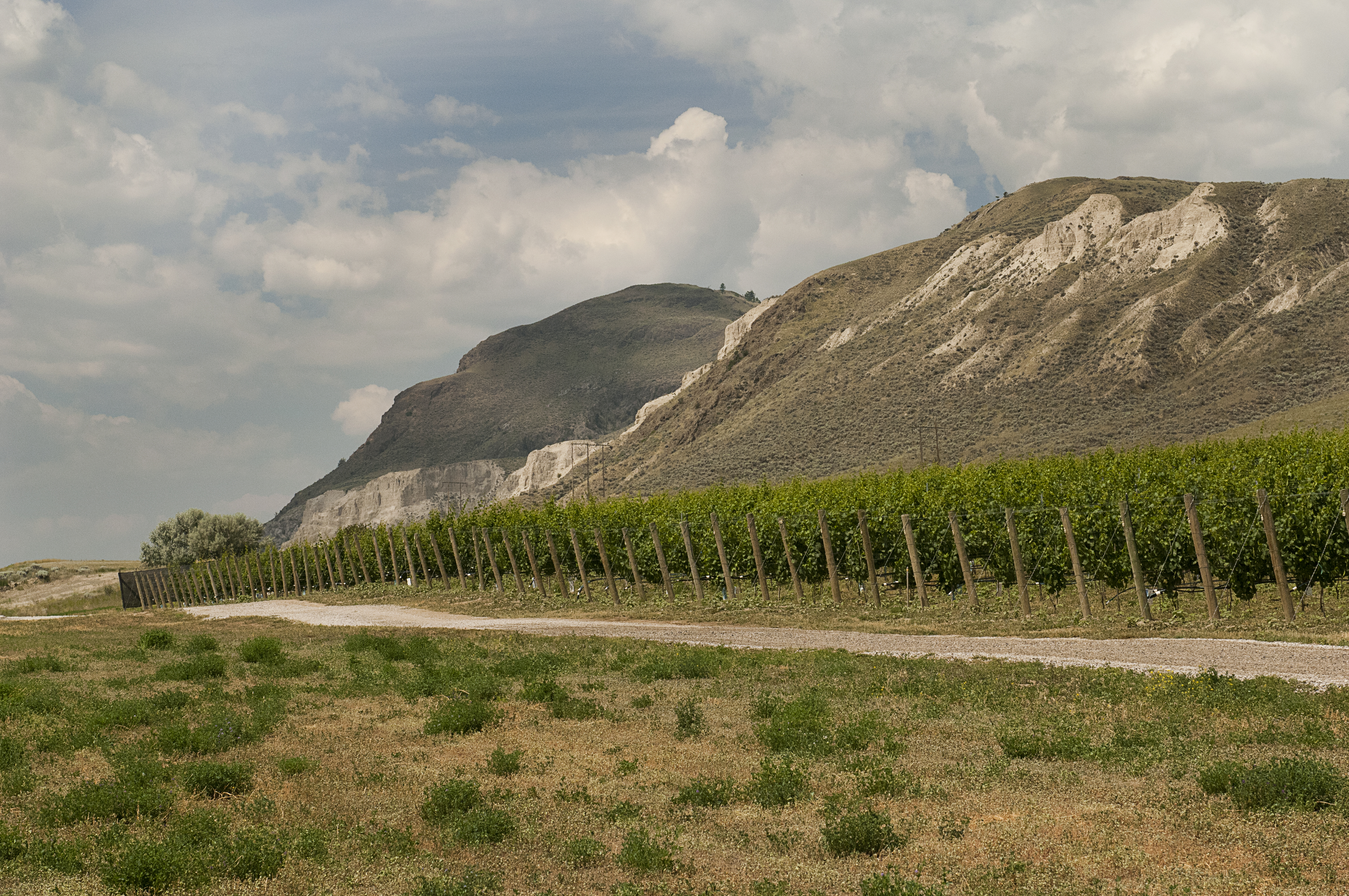
Bright sun and clear sky might be great for some scenic photographers, but it can cause many problems when photographing people.  My assignment this week was to photograph an event that began at 2:30 under almost clear skies, and where even in the shade the temperature hovered in the mid-30 degrees celsius. The location was on a south-facing, treeless, hill top with a sprawling vineyard in the background.

The event, other than a large group shot of all the guests, was held under five large, white tents, and my goal was to balance my flash and exposure to lighten up my subjects without glare, or shadows, and properly expose the field’s sun-drenched background.

The contrast in light from shadows to highlights on a very sunny day can be too extreme for a camera’s sensor to capture. I always look for open shade, or place the sun behind my subjects and use a flash.

I meter for the mid tones like the grass, or, in this case, large open field, and underexpose about two stops, then balance the overall image using my flash. My flash sits on a bracket and the flash is attached to my camera with a wire so I can remove the flash and hold it at different angles if I need to. I did notice people wielding point and shoot digital and a couple photographers with DSLRs trying to use their pop-up flashes, but I am sure they were disappointed with their results on that sunny day as the extremes from black to white are just too much for digital sensors.

Fortunately, photographers can load images into PhotoShop and no matter if they are JPG or RAW files can be optimized using Adobe RAW – an amazing application that gives additional control over exposure, shadow, and highlight detail. Adobe RAW can even help with those not-so-well focused images.  I use that program to polish my images and make them all that they can be which is much better than settling for photographs mass corrected at a big box lab.

After selecting the best images I correct the white balance and colour using Photoshop.  I make the photo look pretty much the way they appear through the camera and the images taken in the bright sun now have lots of detail.

Another program I regularly use (and think is amazing) is by Nik Software Inc. and is called Viveza.   Viveza allows selective control of light and colour. With that program I can maintain the colour and tonality while changing the background and blending the effect exactly.  All this isn’t much different than I used to do in my old film darkroom except now it is more precise, the process can be duplicated, and overall everything is easier.   Between the two programs I am able, without spending too much time in post-production, to provide my clients with polished and balanced images that do not show the harsh environmental realities of that day.

Sure, sunny clear days please us all and when planning an outdoor event we prefer that to rain, but for photographers the sun and harsh unflattering shadows on people’s faces isn’t the best outcome. My advice is not to approach this type of photography the same way as a scenic and to begin with test shots and constantly pay attention to the exposure and absolutely use a fill flash for the best outcome.

My website at www.enmanscamera.com

The photographer said, “I have never used a flash”.

“I have never used a flash.” That was a statement from a young photographer just starting to photograph weddings of her friends. She had stopped by to purchase a lens hood (very good idea for any lens) and while we talked she wondered about how I dealt with contrasting shadows on sunny days and if a polarizing filter might help her get rid of them.

Polarizing light with a polarizing filter will reduce glare in the sky and on reflective surfaces like water and windows, but it doesn’t reduce shadows or contrast. It will decrease the amount of overall light coming through a lens. If a lens is fitted with a polarizing filter light is polarized if it reaches the lens from any angle, but if the sun is directly in front or behind the photographer the light will not be polarized. For this young photographer using a polarizer won’t noticeably affect her wedding photographs in any way other than to maybe darken the sky behind the wedding couple.

I told her that I always use a flash indoors and outdoors when photographing people and she said “even in bright sunlight?” I use the flash to fill or reduce the shadows caused by bright sunlight. Modern TTL (through the lens) flash technology is easy to use and almost fool proof and the days of calculating distance and flash power are long gone.

Many photographers think the only time to use a flash is in a darkened room and because they haven’t learned how to use flash effectively are now relying on high ISO camera settings that will let them shoot in low light interiors. ISO stands for International Standards Organization and determines the sensitivity to light for which sensor is set.

I think relying on high ISO settings is great for those long shots inside the gym during basketball games or when capturing wide church interiors, however, closer pictures of people with mixed lighting coming from overhead leave unflattering shadows and colours crossing their face.

My camera is fitted with a flash bracket that lifts the flash about six inches above the lens. Most camera hotshoes place the flash close and directly over the lens and that close proximity usually causes an effect called “red eye” – the appearance of red pupils in the eyes. Moving the flash away from the lens helps to reduce that effect, and when I move in close for photographs I always place a diffuser over my flash head to spread and soften the light.

Using my flash like that gives me broad, even lighting on people and I set my shutter, aperture, ISO, and flash output so those individuals are slightly brighter than the surrounding area and the background. My flash bracket can be positioned for best effect whether I use my camera horizontally or vertical. The flash is connected to the camera with a power cord that fires it when the shutter is released. I can remove it (and much of the time do) from the bracket and point the flash in any direction I want; bouncing the light off walls, the floor and, if I want, higher than the people sitting in front of me. I can leave them in low light while I point the flash at arms length, from an angle to the side or from above the individuals I am photographing.

Just as there are photographers that leave their cameras’ setting on “program” or “auto mode” and expect good results, there are also those photographers that are unaware how important a good quality flash is. However, in the last few years more photographers that are concerned with their images are using a flash, and not the tiny popup flash that many cameras have, but a flash with the power to illuminate spaces much larger than a family dining room. There are many informational sites on the Internet dedicated to using and controlling flash and probably the most visited is http://www.strobist.blogspot.com.

When I learned to use a flash many years ago it changed the quality of my photography. I no longer had to rely only on ambient light and I began to notice my subjects had more “pop” than those without the flash as I learned to add light to a subjects face instead of only using it to illuminate or make that person brighter in a dim room. Just like the control I gained by using different focal length lenses, using the flash allowed me to add light when I needed it, improving the quality of my photographs and separating my photography from who do not to use flash.

http://www.enmanscamera.com