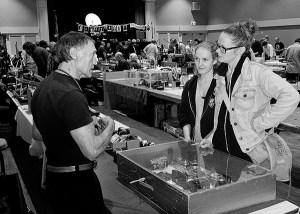
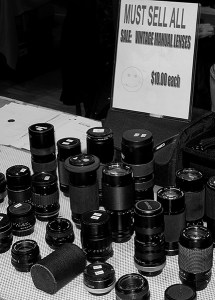
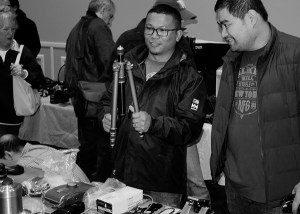
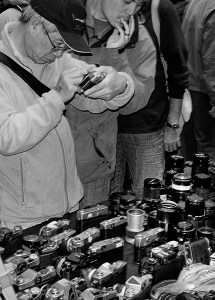
November 2016 Vancouver Camera Swap meet  

helpful

must-sell

neat-tripod

great-find

filters

nice-camera

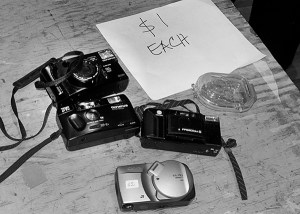
a-dollar-each

i-like-this-camera

vintage-cameras

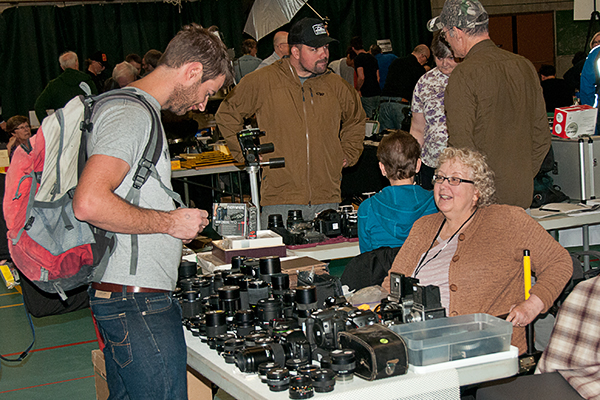
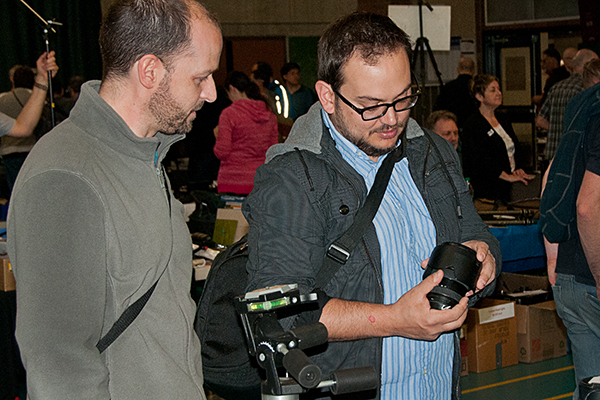
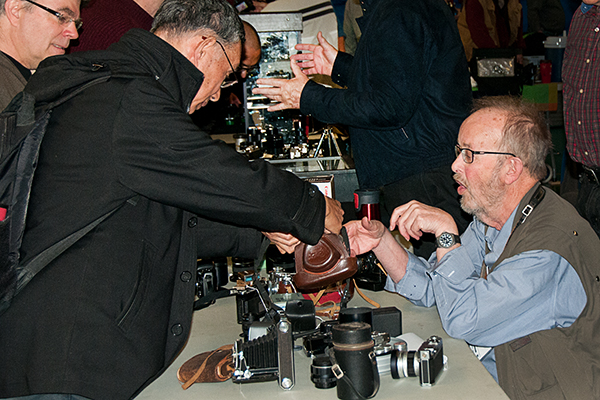
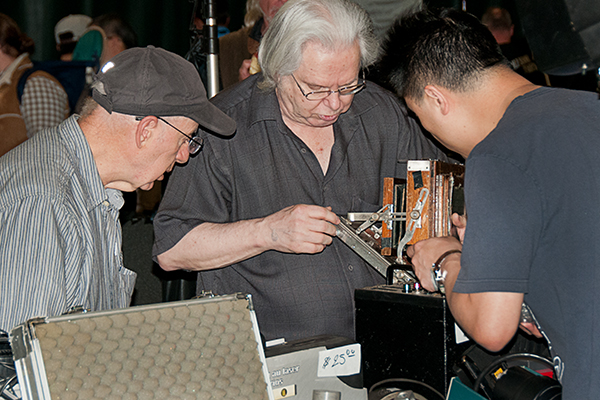
Last weekend my wife and I again ventured over British Columbia’s coastal mountains, this time to attend a camera swap meet. This was the last camera swap meet of the year. And I had a blast!

The event has been taken over by a new coordinator and moved closer to a more central location for photographers that live in Vancouver. There was more parking available for the swap meet, and we were able to find a reasonably priced hotel that was located nearby (only about five minutes drive away.) And for folks like us from out-of-town, the new location offered better access to a variety of restaurants.

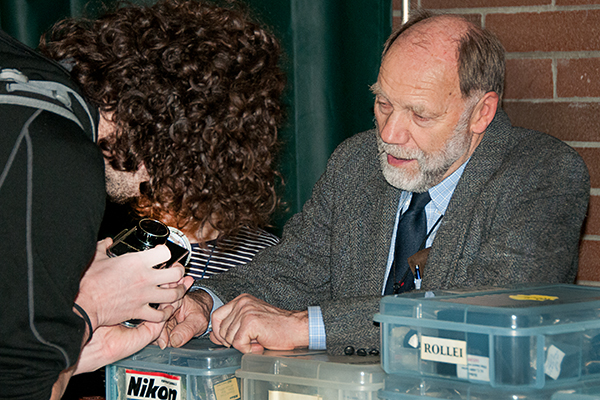
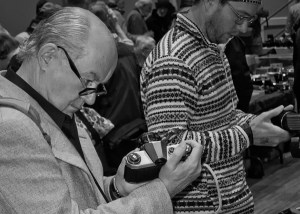
The new venue was smaller, but the tables were less spread out and had an intimate atmosphere that I really enjoyed. Our day started at 9am with the long line-up of photography enthusiasts rushing in as fast as they could.

Vancouver is a large multicultural city and for those of us living in smaller communities in the BC interior, the sudden barrage of dialects and different languages being spoken takes a moment to get used to. However, everyone there spoke “Photography”, and that made for a fun and friendly day of showing, demonstrating, explaining, and, of course, bargaining with savvy photographers of all kinds.

I was pleased to find that I had a table next to my long time friend Brian Wilson. That was a treat, Brian is the guy that got me into this business 20 plus years ago and there is no doubt his knowledge on cameras and their history is second to none.

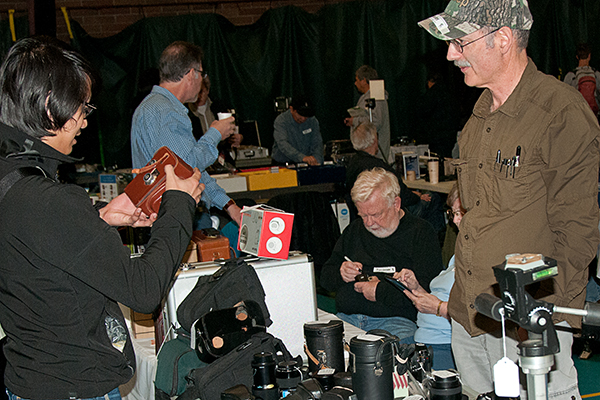
The place was packed and there were many bargains, and I doubt anyone that had rented a table had much time to themselves until things slowed down for a short time around lunch. After splitting a great big deli sandwich with Brian I decided to take advantage of the lull to have a quick walk around to see what was for sale and take a few pictures for this article.

I’ll sum up my walk-about in one word, Wow!   The variety of equipment was exciting. I felt like the little kids I sometime see safely tucked in a shopping cart going down the grocery store candy or cookie aisle, hands reaching out pleading with their mother for the goodies on the shelves. It was all I could do to keep myself from reaching in my pocket for the proceeds of the morning sales ready to buy. Nevertheless I touched everything I could before safely returning to my table to be out of temptation’s grip.

I talked to lots of people, renewed some long-time friendships, made new friends, sold a few cameras and lenses, and had a good time. Oh, and like icing on the cake, I was able to find a neat 1960s Twin Lens Yashica camera for myself.

As usual, the Vancouver Swap meet was exhilarating, and even though the day was tiring and after packing up what I had left from the show, Linda and I ignored the comfort of our quite hotel room and headed to downtown Vancouver to spend the evening in a pleasant Broadway bar for a meal of fish and chips with locally crafted beer, all in all, a perfect way to end the day.


The Final Photographic Performance   

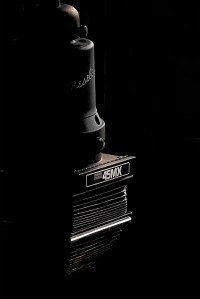
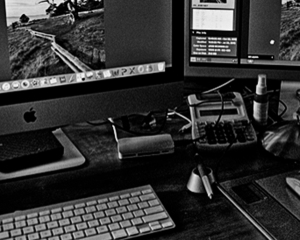
enlarger-2workstation-2

This week I wrote to photographer and blogger David Lockwood (https://davidalockwoodphotography.com) about why he seemed to be returning to film. His replied, “The whole process of using film, gives me a feeling of accomplishment; probably like the painter putting on the last brush stroke. Film gives me a feeling of control over the final image.” And regarding film vs. digital he wrote, “The question of film or digital shouldn’t really be asked, it’s a bit like asking why does one paint with oils, and the other watercolours. Both can produce an image, but both give a totally different sensation to the mind eye.”

During the time I taught photography in the 1980s and 1990s for the University College of the Cariboo (now Thompson River University) my students used film. In my initial lectures I would tell them that as well as learning to acquire skills using a camera, they would need to learn how to become proficient in negative development and printing. I would emphasize that those serious enough to strive for a perfect final photograph would come to realize that what they did with the camera was only the beginning, and that their final print would set them apart as photographers. I would quote famous photographer Ansel Adams who said, “The negative is comparable to the composer’s score and the print to its performance…”

Film has now been set aside by many of those serious about photography, although I expect artists will use film creatively for years, nevertheless, even with advancing photographic digital technology Adams’ words from the past are still significant.

I intend to spend time discussing Mr. Lockwood’s insightful thoughts about film photography later, but first I want to say a few words about digital image making.

The digital camera doesn’t make a picture in the sense of light permanently imprinting itself with different intensities on a chemically sensitized surface like film. Instead there are sensors and in-camera computers processing light from thousands of photosites that we transfer to our computers as data files for conversion into countless pictorial possibilities.

I once attended a photography workshop during which one of the speakers said in the past he would get up early and drive to some scenic location hoping to capture an exotic sunrise, after which he would package up his film and send it to the lab and leave all decisions to some technician’s personal vision. However, now he transfers his image files to his computer and he alone controls how his photograph will be processed for viewing and finally printing.

As in the days when I processed negatives in special chemicals and manipulated prints by adding and subtracting light, I now use computer programs to process my RAW images in my quest to perfect my vision.

I say the same thing to modern photographers as I did to my students, that what they do with the camera is only the beginning,

The image on exposed on film, although now a RAW image file, is only the “score” to the “final performance” – the photographic print.

A young photographer came into my shop announcing, with some kind of misplaced pride, that he would never use PhotoShop on any of his pictures because he was only into true reality. Although I didn’t comment, I thought about the manufacturer presets that were applied in-camera to his image files and the limited colour spaces his inadequate JPG files gave him, and his confused notion of photographic reality.

If he really wanted to step away from the unreality of computerized image making he should talk to David Lockwood who wrote, “The camera, light meter, film, paper and chemicals all go towards producing a single and unique image. That does not happen with digital; from the moment the shutter is pressed, the whole thing becomes a cloning process from which endless exact copies can be produced.” However, as Lockwood also says, “The question of film or digital shouldn’t really be asked… Both can produce an image…that give a totally different sensation to the mind eye.”


My First Cameras   


Kodak 1

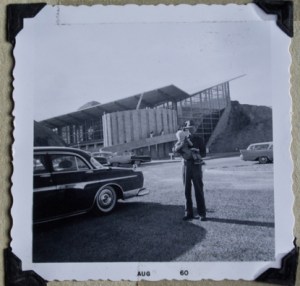
One of my first little 127 camera’s pictures secured in albums.

Instamatic 1

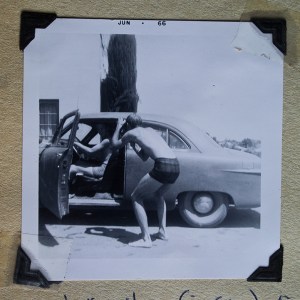
Even after swimming my little Kodak Brownie camera worked for a picture of a friend photographing a wet model in my car.

Taped 'em down 1

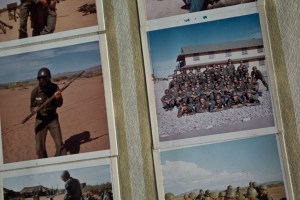
The sticky corners failed so I just taped the pictures from my Kodak Instamatic to the pages.     Note my early “selfie” wearing a gas mask.

Tape didn't work 1

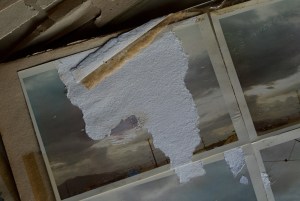
I tried glue, but it wasn’t that successful.

Petri V6

Masking tap sort of worked, but my early attempts in the darkrooom processing film from my Petri V6 weren’t always very successful.

Spotmatic ii

A favourable outcome using the Spotmatic and processing the film at the “Free Venice” festival.  The pictures still fell out of the self-adhesive album.


This week a photographer stopped by to talk about the article I wrote last week about the popularity of 1970s cameras. We discussed cameras we had used over the years and eventually got around to the question, “What was your first camera?”

The very first cameras that I likely used to make snapshots of family and friends were probably 127 Kodak cameras made of dark brown Bakelite plastic and I remember little (I think 3×6) prints with wavy edges coming back from the department store lab.

My father had the more serious 120 format folding bellows camera and usually posed us with the sun behind his back with the resulting squinting and pained smiles on our young faces.

I snapped pictures for years with cameras that had little or no control over exposure or focal length. I glued the pictures into photograph albums with little sticky corners. Of course, the self stick holders didn’t last long, and the pictures fell out, so I glued the pictures directly to the pages, but the glue’s chemical reaction discoloured the images and eventually those that weren’t lost by falling off and out of the album just faded away.

My first serious camera was purchased in 1967 while I was in the US Army. I purchased it from the Army PX (post exchange) while stationed overseas. The location was visually spectacular and different from anything I had ever experienced and I wanted to have photographs for memories.

I looked at the limited selection in my price range and purchased a Petri V6 with two lenses, a 58mm and a 135mm.

When I got the Petri, I was so excited because it had an attachable light meter, used slide film and I purchased the 135mm lens because I was advised it was the perfect lens to take portraits of people.

My next camera was a loaner from a friend’s father so I could take a photography class in 1969 at Santa Monica College; the previous Petri had seen better days.  That neat Pentax H3V camera had a clip-on meter and came with only a 55mm lens, but my instructor said it would be perfect for his class.

Shortly there after, in 1971, a fellow student who worked for United Airlines purchased a camera for me during a trip he took to Japan. The photo magazines were talking about a new camera with “multi-coated” lenses, and an amazing through-the-lens spot meter. I then became the proud owner of a SLR Pentax Spotmatic II.

Although I used colour film for events like parties and Christmas I absolutely believed serious photographers only used black and white film. I added another lens, a Vivitar 35mm. Wow, a wide-angle lens! Then I got a 200mm. Gosh, I had everything I needed.

Those first three SLR cameras wetted my interest in photography. They were complex enough that I read magazines, books, and took classes to learn how to operate them effectively. In addition, I searched for opportunities to meet other photographers and talk about cameras, lenses, enlargers, photographic paper, and all sorts of picture making.

Before the Petri and two Pentax cameras, photography was only about documenting events around me, not creating a personal vision of the things that interested me. If I hadn’t had the opportunity to start making images with those three SLRs I expect my photography would never have advanced from anything more than just snap shots.

I am sure readers that used cameras before the digital onslaught remember their first camera(s) that helped their enthusiasm for photography grow and might even have great memories on prints or slides packed away in boxes.

I made fun of those old film camera wondering about the nostalgia some feel for them. I remarked that I personally wouldn’t want to return to film. But gosh, it was nice it was to hold those old metal cameras that were constructed so tight with shutters that clunked solidly instead of the high-pitched clatter most make today.


Searching For that First DSLR 

Film then Digital

Digital technology has been around long enough that I occasionally overlook that there still are people who have never used anything but film cameras. I recently talked to a photographer who is finally ready to discard his old film camera and wondered which DSLR he should select.

He even sent me an email saying that regarding a camera; he would “need the whole meal deal.” I admit that I am not sure what he actually meant by that. I said to him that today’s modern technology cameras offer choices that are very different from his old film camera. As readers know, he is about to take a huge, creative step as he moves to digital.

He told me he has enjoyed photographing local rodeos. So what should be my advice to an aspiring rodeo photographer? Manufacturers like Nikon, Canon, Pentax, Sony, Fuji, and many more, all make cameras that will probably work fine for sports like rodeos.

I could start by suggesting he to go online and search out sport photographer sites for recommendations. Photographing sports is very technology driven and manufacturers are aggressively marketing to those photographers. He should begin by choosing a camera that is durable, and capable of taking some abuse, sturdy enough to be bumped around, because I think that’s a pretty rough and tumble (and dusty) world he’s participating in.

Both Canon and Nikon make professional cameras specifically designed for sports and the accompanying high ISO needed for low light, interior locations, that will focus almost any lens extremely fast, and are easily capable of high quality, excellent enlargements.

For fun I read up on professional rodeo photographer, Rick Madsen, who wrote, “Remember the camera is just a tool. When a hammer is used, it is the operator who makes it strike the nail. The same concept applies to a camera. It is just a tool and it’s what the photographer does with that tool that makes the difference between a good and a mediocre image. You must take the time to learn the camera’s operation and then utilize that acquired knowledge through practice to become proficient. You have to pay your dues.”

I personally would save my money on the camera and spend it on the lens, as my real concern would be to get a quality lens. A saying I have heard over and over in the many years I have been in this medium is that, “it’s all about the glass,” referring to the lens. And from my readings, most rodeo photographers recommend 70-200mm lenses, and I also think a 70-300mmm would fit the job also.

I hope he can find a good, well priced, used camera and a couple of quality lenses for it. He will be faced with so many choices and will receive many, many well meaning recommendations from other photographers that he’ll stay awake nights wondering what he’s got himself into. Nevertheless, I know he will be excited when he finally gets that first DSLR and embarks on the exciting journey as he learns how to use it.


Digital isn’t Real Photography!   

What about Film

The medium of photography has become very accessible for everyone. There was a time when photographers had to be an engineer, a chemist, and to be successful, serious practitioners needed to spend time educating themselves. Photographers actually had to understand the combinations of shutter and aperture for a properly exposed image, and worried about camera shake and, of course, film choice.

With modern technology, today’s supercharged cameras with their machine-gun-like shutters, and seemingly speed of light focusing, and amazing low light capability, many photographers are able to make great photos without any knowledge whatsoever of photography.

This week I talked to a woman that pulled her 1980’s film camera out of a well-worn canvas bag saying, “Digital isn’t real photography!” (I remember writing about another person upset with digital almost exactly a year ago.)

I let her rant for a while about how inferior digital is, and how one can’t get a good picture unless they used film. However, because I wasn’t in a mood to get into an argument I knew wouldn’t win, I just nodded and said that I do like the tactile quality one can get with a properly printed picture. And to smooth things out I mentioned that I have several enlargements hanging on the wall in my shop that I took with film years ago.

That conversation is becoming rather infrequent these days, but it still is kind of humorous when someone wants to complain about modern photographers and the high tech equipment available. Unfortunately, the argument is one-sided and not really worth getting into because any opinion but theirs is going to be ignored.

There are still a few people intent on complaining that with the end of film comes the end of photography. That’s just silly. Personally, I don’t think film is going away any time soon. Film is just one of many ways to make a photograph.

The big box outlets here in Canada may not carry it much longer, but there are lots of specialty items artists use that are only available in specialty stores, and I think there are still plenty of camera shops that handle film. And going to a store that specializes in photography makes the chances of getting the correct advice from the person behind the counter more likely.

It seems like everyone is taking pictures nowadays. (Another thing that lady complained about) But I think that’s a good thing and not something to complain about.

There are lots of excellent photographs being taken. People just want visual memories and the multitude of cameras that are available these days are perfect for that. Who cares what kind of camera or how the image is captured.

I think I might stop by and talk to that woman again. She has a small store down the street from mine. My conversation won’t really be to talk her out of film and into digital, She hasn’t used her camera in a while and I’d like her to start taking pictures again instead of complaining about young people with their digital cameras.

I hope she will start having fun with that old 35mm film camera. It doesn’t matter what camera she uses, film or digital, as long as she is happy with the photographs she makes. I’ll be sure to help her out, and with a bit of subversive work, I might get her using a digital camera after all.

Your comments? Thanks, John


Infrared, A Completely Different Feeling….

Pritchard Station

Riverside

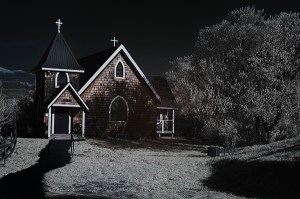
Monty Creek church

Fence along a dirt road

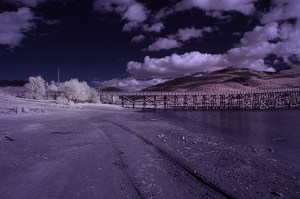
Pritchard Bridge

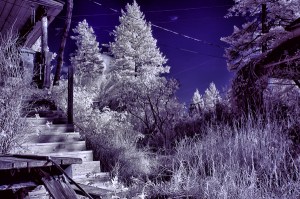
Back Porch

Infrared, A Completely Different Feeling

In my last article I discussed how easy it is to make creative changes in one’s photography by using a camera converted to infrared. I wrote that photographers have the option to creatively challenge themselves by selecting different lenses, choosing to produce black and white images, electing to use highly manipulative post-production techniques, etc., or any combination just to mention a few. Then I added one more creative tool to the list that I use, a camera converted to only capture images of the world around me in infrared.

Infrared allows a photographer, and gives the viewer, a completely different feeling of a subject. Making an image with a modified camera is an exploration and a discovery that moves a photographer far from the usual. I like the sometimes-surprising tones that I can obtain when I convert the image to black and white. Like any form of photography, or art, it’s all a matter of taste.

Reflected IR light produces an array of surreal effects, vegetation sometimes appears white or near white. Black surfaces can appear gray or almost white depending on the angle of reflected light, and if the sky (my favourite part of the infrared image) is photographed from the right direction it becomes black. The bluer the sky, the greater the likelihood of an unworldly effect; and white surfaces can glow with an ethereal brightness.

The response I received from readers got me thinking about how much I like shooting infrared. That’s been a long relationship. My first forays with infrared during the 1970’s were began with infrared colour transparency film and then with infrared black and white film.

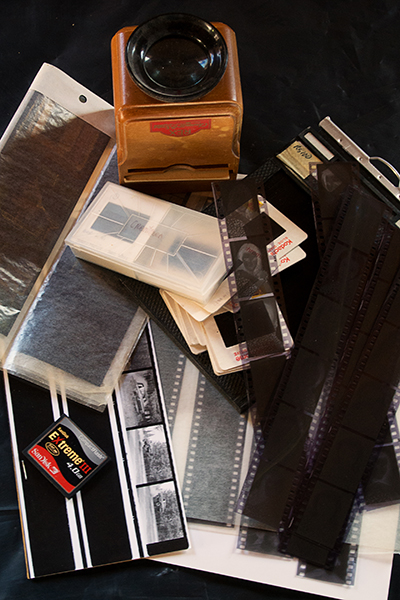
Now that I have set film aside I am more than content to use a converted digital camera. Besides it’s much easier with digital than the arduous process we had to contend with when we used film. Infrared film had to be loaded and unloaded in complete darkness, then processed in metal tanks that kept the film from getting fogged. We attached a deep red filter to the lens. The deeper the red the better the effect, and because of the dark red filter things become very hard to see. Oh, and the exposures were long if the sun wasn’t bright.

In spite of that infrared photography has had a strong following of creative photographers for as long as I have been involved in photography. And now with the light gathering ability of modern sensors I think that following is stronger than ever.

In an article I wrote about using infrared film titled “Photographing a Different Kind of Light” I said, “There are those who believe a fine art photograph must represent reality, but reality doesn’t necessarily take into account that there are differences between what one sees, what the photographer’s camera produces, and what the photographer was trying to capture.” I think a photograph is only a representation of a particular vision of reality.

Infrared allows us to photograph a world illuminated by infrared light, that part of the colour spectrum we can’t normally see, and produces intriguing, exquisite and sometimes unearthly photographs that can’t be captured in any other way.

Film Cameras     

Film Photography

I was a bit surprised this past week when a couple loudly told me they preferred using film and doubted they would ever bother with digital. They smiled knowingly while pronouncing digital as an in inferior way of doing photography, and that those that used digital cameras couldn’t make good pictures without a computer. Of course, I told them I disagreed, but I also had to say that they should use whatever makes them comfortable. I like black and white film and mentioned that also.

I find that many photographers who use film cameras instead of digital constantly make sure others know their choice, and like to offer a rationale for using film with statements as they did, and saying, “This camera has always taken very good pictures why would I change”. I can’t argue with what seems to me a reasonable statement, however, in my opinion, the difference between digital and film is like driving a 1970’s car and the latest 2015 model car across Canada.

As with film, I really liked those old fuel-guzzling, muscle cars, but the smooth, inexpensive performance, the stylish comfort and the myriad of options available for the operator of the 2015 model car will make the experience safer and more relaxing and than the 1970 version, just like using a digital camera does.

This couple were so emphatic about how great the pictures were that their film cameras produced pictures that I naturally assumed they do their own darkroom work. But no, they take their film into a lab that processes it, then scans it to a computer, then with predetermined settings determined by a computer set up by some technician they get their prints. Hmmm…., not much photographer input there, and a lot more “digital technology” then I cared to mention. Oh well, at least they are taking pictures.

Later I as I contemplated about when I used to shoot film I thought, there was something to be said about the permanence, and how it demanded we get it right the first time. There were no second chances, and if more than 36 exposures of some subject were needed there was that “dead in the water” moment while changing film unless I had a second camera hanging around my neck. Forethought was a required option; and with regard to multiple cameras I can remember packing a bag with one body loaded with black and white film, another with colour film, and a third with slide film.

When referring to the time when we both earned a living as photographers using film, my friend Alex commented, “Oh, the days of click and pray.” As I wrote, there are no second chances. Especially for a photographer that relies on a lab for processing and printing that roll of film.

I will say that shooting film certainly slows one down. Shooting a roll of film every now and then might be a good idea. One can easily pick up an old film camera and put a roll of film in it for less than a $100. Relying on a lab for colour processing might lift the cost much, but I have no doubt with a bit of searching we all could find someone with a home dark room to process a roll of black and white film. I don’t know if that is getting back to basics, as a photographer that I met called shooting film, nevertheless, it would be fun to use one of those heavy, old, shiny, metal cameras again. And who knows, using film might become a regular way to, hmmm….get back to the basics of a time gone by.

The Vancouver Camera Show and Swap meet 2015

Linda at the SwapMeet

Linda at our table

Camera Swap find

A good find at the Swap meet

Camera Swap Meet

Check out this Leica

Vancouver Swap meet 2

Lets assemble this 4X5 camera 

Ziggy Rhode

The Swap Meet organizer, Ziggy Rhode selling a Hasselblad

Vancouver Swap Meet 1

Wow, a nice twin lens at the Vancouver swap.


The Western Canada Photographic Historic Association hosts Vancouver, British Columbia’s, original camera show and swap meet each year. This long-running show has now reached its 39th year, and makes the claim of being the largest in Canada with I believe approximately 120 tables, and I have no doubt well over 1,000 people walked through the doors this year.

I can’t remember exactly when we (my wife and I) had our first table there, maybe some time late 1990s. Since then each year we join an always-interesting diversity of photographers in a large, photographic equipment packed hall in Burnaby, BC, who are eager to exchange information and ideas, and, of course, are looking for great deals on all kinds of camera equipment.

Each year we make the three and a half hour drive from Kamloops the day before and lodge overnight and eagerly join other vendors the next day at 7:30AM to setup. The early morning scene is so much fun as we interact with others busily arranging equipment on tables before the show even begins. When I arrived I was happy to see people I have known for years. Better put, I was happy to see people I have known for only one day a year for about 20 years.

For me it is always a rush to organize my table quickly so I am ready for the swap meet’s early bird shoppers who pay a premium to begin shopping at 9am. That group of shoppers isn’t so much into browsing as they are searching for specific pieces, and they will walk quickly by a vendor’s table unless they spy that item.

At the 10am regular admission I always am glad to get a chance to sit for a moment (only a moment) after the hour of non-stop showing, demonstrating, explaining, and, of course, bargaining with savvy photographers.

Spending a day surrounded by a huge selection of cameras and other photography equipment is exhilarating, and getting a chance to talk with other photographers about their different interests is invigorating. Even after all these years I always learn something.

As I have mentioned before when I have written about this exciting event, one will find photographers of every age, from experienced elders to young people accompanied by patient parents. This congregation includes all kinds of lifestyles, interests, and photographic specialties. There are those that are dedicated to film, historic cameras, and processes of the past, walking alongside others that carry the latest and brightest in modern technology.

Other than actually pointing a camera at some inspiring subject, a gathering like the Vancouver Swap is a superb way to meet and exchange information with other photographers, and look at and check out the many kinds of photographic equipment that would not be so easily available anywhere else.

I had a great time with the photographers I met this year and the depending on who joined me at my table, the conversations always changed. My day of selling was a success, as it was for most of the dealers I talked to at the end of the day. And I even had some time to purchase another lens for myself, which is always nice.

I always look forward to any comments. Thank you, John


Does Film Lend Itself Better to Creativity Than Digital?

Digital VS Film

Where does a photographer’s creativity come from?


This past week I received the following question, “is film a better creative format than digital?”

I admit that the discussion regarding film vs. digital isn’t really that common anymore. Yes, I talk with high school students that are using film in photography classes. Those discussions are mostly about how film works, about processing, and printing, or using different chemicals.

Sometimes an older person who stopped taking pictures in the 1980s will loudly tell me digital is unnatural, doesn’t look good, and is cheating. Cheating? That conversation is always humorous. However, it is one-sided and not really worth getting into because any opinion but theirs is going to be ignored.

However, this question wasn’t about which is better as a way of making photographs, it was about creativity, and that intrigued me. Creativity is about imagination, originality, and art.

My quick answer to that was that I liked both film and digital images. To me, film is a more “tactile” medium than a digital image, and I like the extreme tonality that a good photographer can achieve. I believe digital image files can have more sharpness and a lot more detail. Sometimes that is good, sometimes not. That also depends on the photographer.

In my opinion creating an image is what the photographer does. It involves deciding upon the kind of camera and medium one might use, but the camera and medium is just the vehicle for a photographer’s creativity. It is really all about the final image, and how one decides to produce that image for the best visual effect.

I think some times that too much is made about the process. The process is just that, a series of actions or steps that one takes to achieve a particular end. I guess what a photographer does to create that show-stopping photograph is truly interesting, but in the end it is really only about the photograph.

The idea that there might be something more creative in making an image with film than with digital doesn’t make much sense.

I remember all the possibilities we had with film. Imaginative photographers would select different types of film and change the way they exposed and process it. Photographers probably had shelves of different chemicals for both developing film and making prints, as well as cabinets filled with photographic papers, and all as part of their process to bring out personal creative vision.

Now photographers can shoot with cropped or full frame cameras, and instead of dedicated rooms filled with equipment, they load their computers with software programs to help them with their personal creative project.

When using film one would previsualize (a term coined by Minor White) how one wanted to produce the final image before releasing the shutter. And I think many still do that to reach their vision, except now photographers are thinking of programs like Photoshop or Lightroom instead of the chemical processes required with film.

There are some photographers that only know film, there are some photographers that only know digital, and there are those that are competent in both. And although they might use film, digital, or both, to produce an image, creativity comes from the photographer and not the process.

Maybe I should have just replied to that question about creativity with photographer Ansel Adams’ words, “You don’t make a photograph just with a camera. You bring to the act of photography all the pictures you have seen, the books you have read, the music you have heard, the people you have loved.”

I look forward to any comments readers have. Thank you, John

My website is at www.enmanscamera.com


The Photographic Composer’s Score and Performance

Spring storm

A storm o the prairie


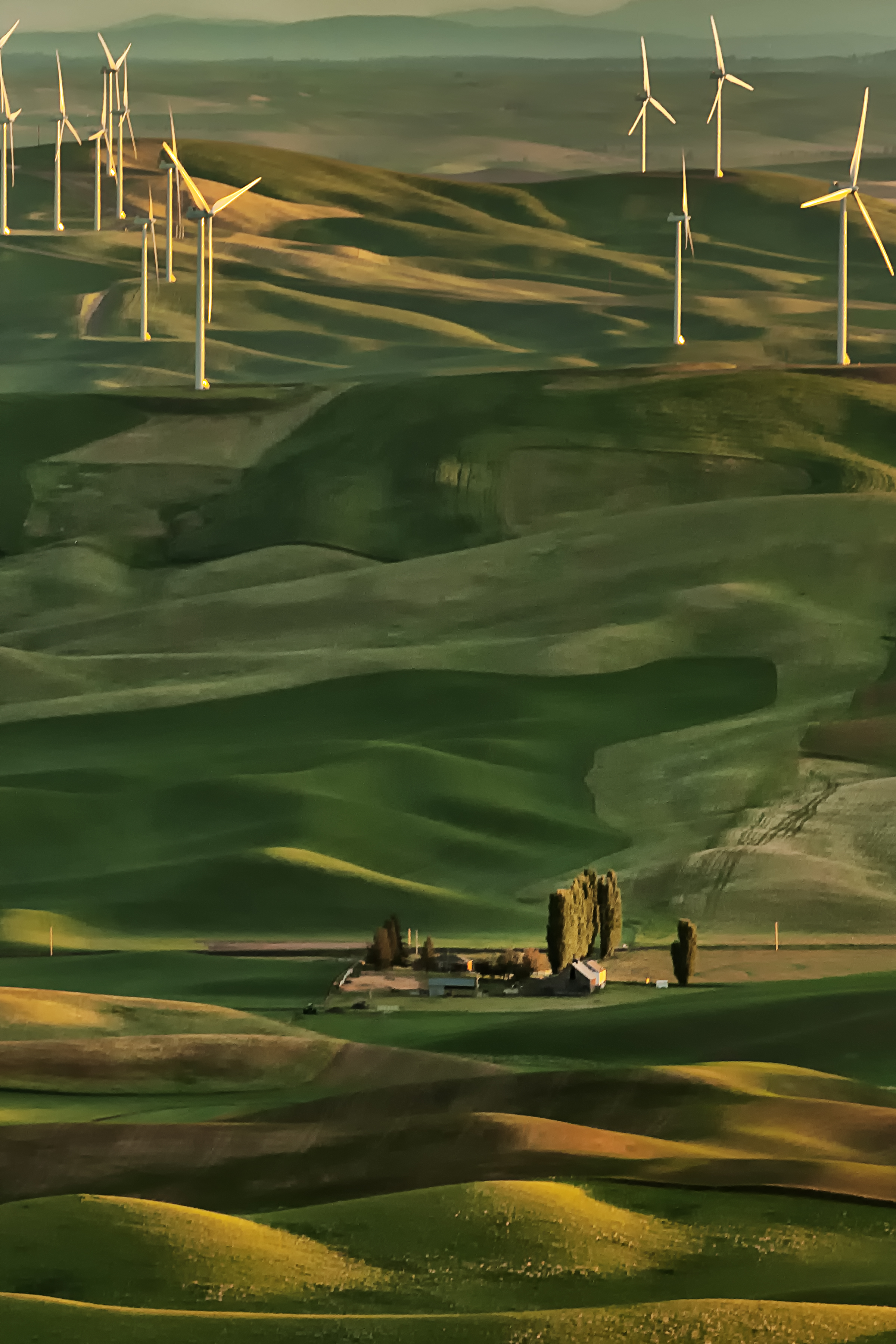
Wind power

Windpower

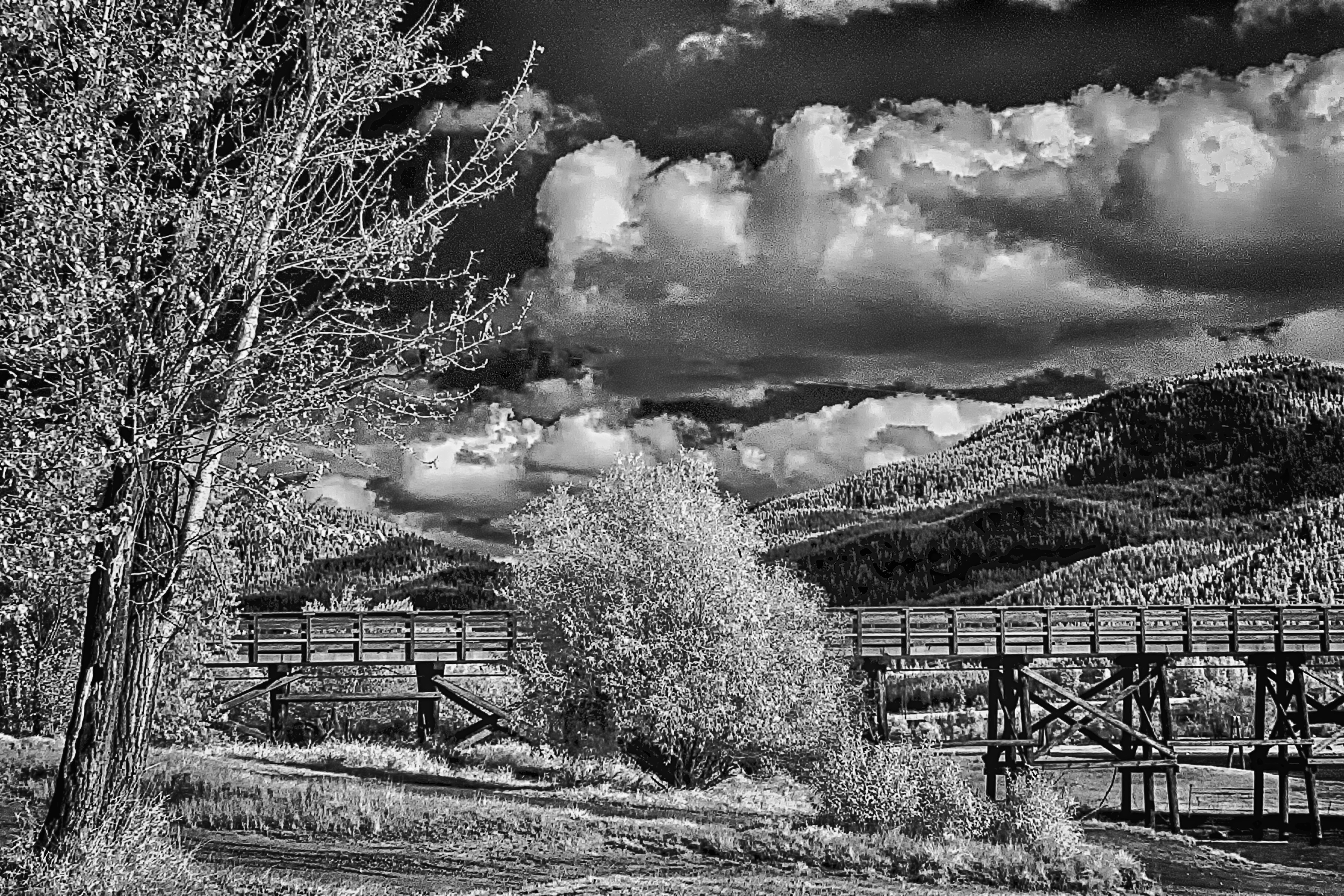
October Infrared

October walk in Infrared

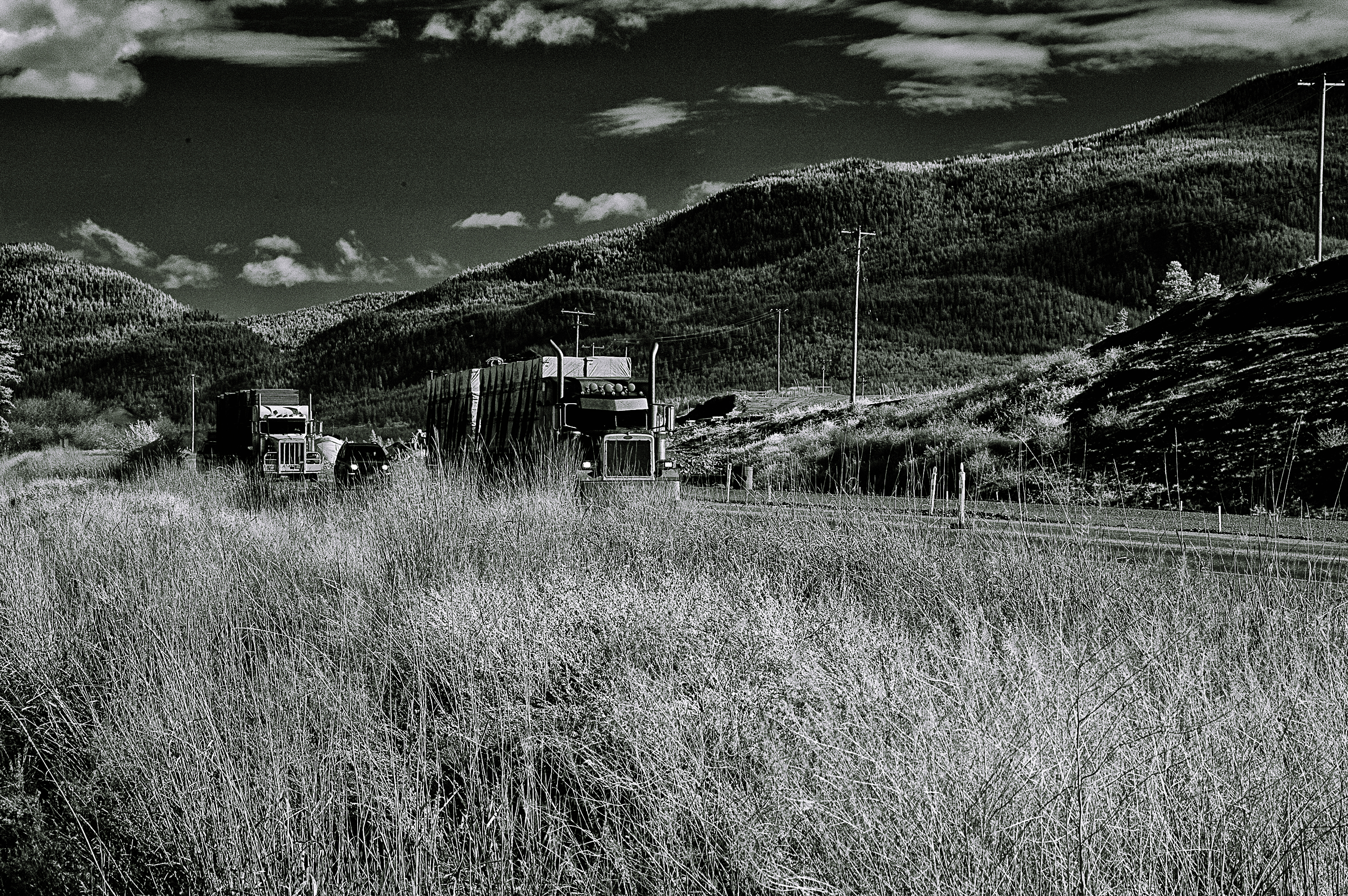
Trans Canada trucking

Trans Canada Highway – Infrared

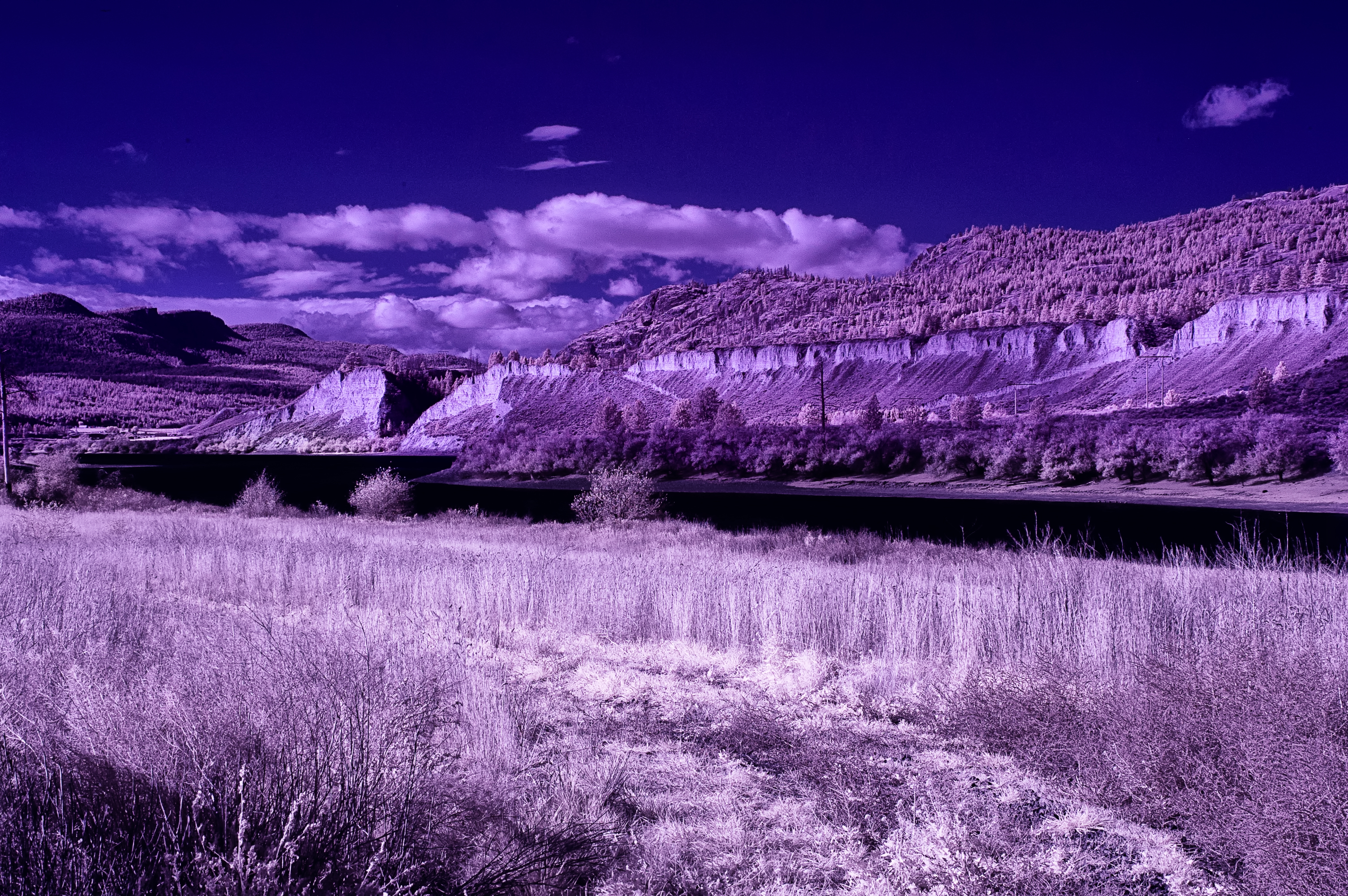
River bluffs

Infrared of Thompson River


I taught photography in the 1980s and 90s for the University College of the Cariboo (now Thompson River University) when the only way to make a photograph was using film.

In my lectures I informed students that as well as learning about their cameras, they must become proficient in negative development and printmaking. I would emphasize that those serious about the medium of photography would come to realize that what they did with the camera and the negative it produced was only the beginning, and that it was their final print that would set them apart as a photographer. And I would quote famous photographer Ansel Adams, “The negative is comparable to the composer’s score and the print…its performance…”

Film has now been discarded by most serious photographers, although I expect artists will use film creatively for years to come, nevertheless, even with advancing photographic digital technology Adams’ words from the past are still significant.

The digital camera isn’t making a picture in the sense of light permanently imprinting itself with different intensities on a chemically sensitized surface like film. Instead there are sensors and in-camera computers processing light from thousands of photosites that are transferred to computers as data files for conversion into countless pictorial possibilities. I have become, more than ever, of the opinion that like the negative, the RAW image file, is now the “score” to Ansel Adams – the photographic print.

I know there are those that haven’t bothered to move their camera selector off JPG (Joint Photographic Group). However, choosing JPG files means those images are pre-processed in-camera and the photographer loses control. I prefer shooting RAW (not an acronym like JPG, RAW is unprocessed data) and choosing RAW is like having the negative Mr. Adams discussed, affording us total control over those data files or, more importantly, allowing a personal vision of how the final photograph will look.

A young photographer that came into my shop last week got me thinking about this when, with some kind of misplaced pride, he announced he would never use PhotoShop on any of his pictures because he was only into true reality. Although I didn’t comment, I thought about the manufacturer’s presets that were applied in-camera to his image files, the sensor’s dynamic range of only about five stops from black to white and the very limited number of colour spaces his tiny JPG files gave him.

Some years ago I attended a print-making lecture during which one of the speakers said in the past he would get up early and drive to some scenic location hoping to capture an impressive sunrise, after which he would package up his film and send it to the lab and leave all decisions to an unknown technician’s personal vision. However, now he shoots RAW and transfers his image files to his computer and the decision has become his to control how his photograph will be processed for viewing.

As in the days when I processed and altered negatives in special chemicals and manipulated prints by adding and subtracting light, I now use computer programs to process my RAW images in my quest to perfect my vision of each. And I expect the same thing is true now as it was with my students all those years ago, that what they do with the camera is only the beginning, and to repeat Ansel Adams, “The negative is comparable to the composer’s score and the print (is) its performance…”

I look forward to all comments. Thanks, John

My website is at www.enmanscamera.com