Leading a Photography Lighting Workshop   

getting-ready

photographers

reflector

modeling

having-fun

checking

American photographer David Hobby, author of the lighting blog Strobist that promotes lighting techniques, wrote about learning to use flash, “You may not realize it yet, but you have just stepped through a door that may change your photography forever…Photography is literally writing with light.” And he continues, “…you’ll learn how to take control of your electronic flash. If you can imagine it, you’ll be able to create it.”

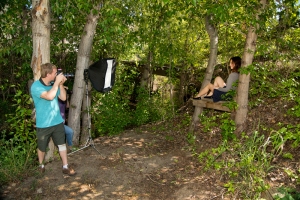
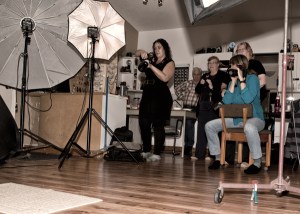
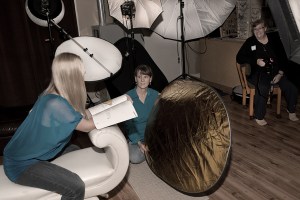
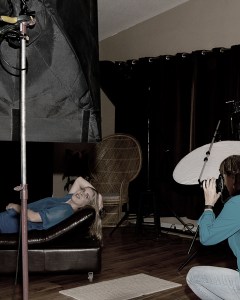
I like using flash, and in my many years as a working photographer I rarely photographed people indoors or out without using a flash; and last Sunday with Hobby’s words in mind I led yet another interactive lighting workshop.

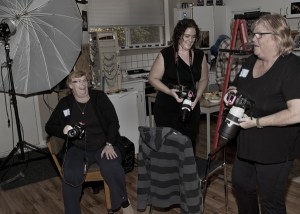
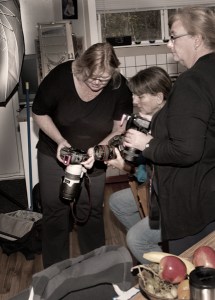
Actually I wonder if “study group” might be a better description of what happens when several photographers get together to experiment with flash. Nevertheless, these sessions are always an enjoyable whirlwind session for me as I try to present as much information as I can without reaching information-overload for the participants.

As photographers in the workshop begin to realize how much better, and more creative, their portraits are when they begin taking control of electronic flash they get excited. That excitement is contagious. So much so that I have to remind myself to slow down and explain what I am doing and why I am doing it when I add lights to a portrait setup.

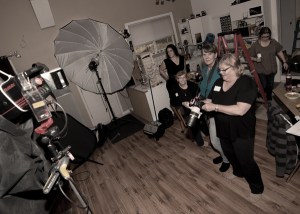
Sunday’s group of photographers were quick learners and were demanding as they pushed limits and exhausted the model, then without skipping a beat, when our ever-so-patient model needed a break, one of the photographers took her place and the group kept on going.

I remember reading a book entitled, Teaching as a Subversive Activity, about student-centered learning over teacher-centered teaching. Sometimes one has to step back from being the center of attention and let people learn by themselves.

When I realized those photographers had reached the point where they were beginning to understand where I was leading them, I just got out of their way and let them be, besides that gave me some time to wander a bit and take some pictures of what was happening.

This first of two sessions, Modeling with Lighting in the Studio is now over.

Next Sunday we’ll be braving British Columbia’s cool October weather as we take our model outdoors to pose in several different locations with different lighting conditions in each. I entitled that, Balancing Lighting Out-Of-Doors.

In the studio we used large and powerful studio lights that recycled instantly. Next Sunday we will use much less powerful, small wireless speedlights that require waiting for batteries to recycle. The quick recycling studio lights are grand, but I like the slower speedlights because they force photographers to think about and plan their next shot.

Last weekend was a lot a fun. It is great being with other photographers and watching them get excited about learning something new. Saying that, I will add a quote by French photographerJacques-Henri Lartigue that I have used several times before, “It’s marvellous, marvellous! Nothing will ever be as much fun. I’m going to photograph everything, everything!”


Shooting Infrared on a Colourful October Day      

canyon

blue-falls

pool

stream-bed

driveby

chase-pier

fisheye

Fisheye is so much fun


Fall snuck up on me this year. I guess I wasn’t paying attention. Maybe that sharp and very quick transition from season to season will become the norm.

I had an appointment that meant a drive down and along the river valley to the village of Chase.  As I walked out the door not thinking about anything but the 20 minute drive that would probably turn into 30+ minutes if I got caught in the extensive road construction going on between my home in Pritchard and my appointment in Chase, Linda called “take your camera”.

Oh, right. Taking my camera is always a good idea.

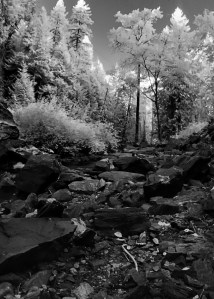
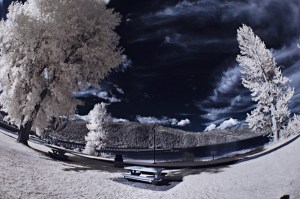
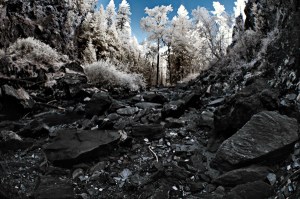
As I drove along looking at the changing colours I thought about the constant submissions of fall pictures I have been seeing on the local photographer’s facebook group, however, I had decided I would have more fun being different and instead chose my infrared converted camera and added a 10.5mm fisheye lens I had just got into my shop.

I pulled onto the Trans Canada and turned into Chase 20 minutes later. The traffic was fast and I had driven through the construction without a stop. I made my appointment in plenty of time, but the receptionist informed me they had decided to close early and I would have to come back another time.

In frustration I walked back to my car, but fortunately I had my camera. So instead of returning home I decided to wander around Chase.

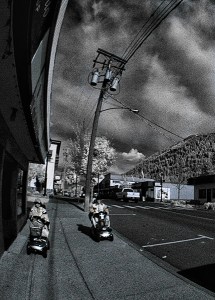
The fisheye was fun. I could take pictures of people on the sidewalk without pointing the camera at them. Admittedly the pictures were pretty weird with everything on the edges bending inward and I got bored with the town’s limitations. Fortunately Chase has a neat waterfall on one side and a big lake on the other. I left downtown and began with Chase Falls.

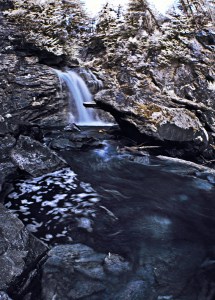
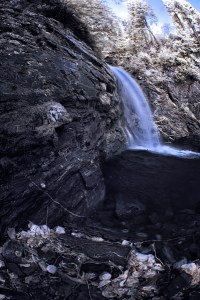
I photograph Chase Falls quite often, but this was the first time I was shooting in infrared and the first time I used a fisheye.   One can set up a tripod and capture the wonderful October colours that surround that inviting waterfall anytime, but capturing Chase Falls in infrared and with a fisheye is great fun, and a long ways off from what most photographers would every think of doing.

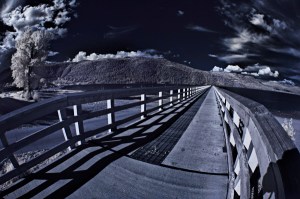
After an interesting time manipulating that environment I headed over to the lake for a complete change of scenery. Instead of large rocks, overhanging trees and falling water, there is a long pier jutting out into Shuswap Lake, large trees on the edges of a small park, and a wide sandy beach.

Infrared turned the trees to white, the sky a strange shade of blue and everything else a slight magenta. And what about the fisheye lens? Well, the fisheye lens just added to the already unreal quality of the image.

Camera Care On Wet Days    

linda-shooting-in-the-rain

Barriere, British Columbia Star Journal newspaper Editor, Jill Hayward, asked me to discuss the use, care of, and protection of cameras, lenses, and other photographic equipment during wet conditions. She worried about people carrying and using their cameras under the wet conditions at the North Thompson Fall Fair this past weekend. She also mentioned that she meets many local photographers that have scratched lenses.

I rarely let wet days limit my photography. Nevertheless, with the exception of those expensive pro level DSLRs and, of course, a few small waterproof cameras, most of the cameras photographers use don’t have much resistance to water.

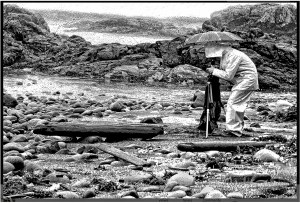
Several years ago my wife, Linda, and I took a photography vacation on Vancouver Island. The weather was forecast to be completely rainy, so we prepared with plastic bags to cover our cameras, umbrellas to deflect water off our viewfinders, hairdryers to dry out cameras and tripods every evening, and wet weather attire because we didn’t want wet clothing. The trip was a bit uncomfortable, but the coastal downpour didn’t stop us from doing photography, and we didn’t waste a day of that trip huddled indoors. We were outside, cameras in hand, every day of that excursion and returned with great pictures, and a fun experience of shooting in the rain.

We had a good experience because we were prepared. That’s the secret. I always carry an old towel in my camera bag. And when water (or soon snow) begins to gather on my camera I continually wipe it off. Those areas I worry about are around the pop-up flash, where the lens mounts, the LCD, and the info window, and anywhere else that I think water might find a way into my camera.

I keep a lens cap on my lens. But what about when one is taking pictures? I know there will be those that advise putting a UV filter on every lens.

UV filters are from a time when we had a necessity to colour balance our film and in the spring we would use (U)ltra (V)iolet filters to warm the colours. Using an old UV filter is fine, as are any of the many different clear filters manufactures are selling for lens protection, but digital sensors no longer need colour correction filters and many photographers worry that inexpensive filters placed in front of their expensive lens glass might degrade the image.

Whether you agree with that notion or not, I think that using a lens hood is much better insurance than clear protection lenses. My advice is to get a plastic lens hood for every lens. Plastic lens hoods protect our lenses by bending, bouncing, and sometimes even breaking in the process of absorbing the impact and saving the lens. Personally I feel safer with a lens hood than a tight fitting glass filter. Anyway, we should always be using lens hoods to keep glare off the lens front.

When I return home after a day of photography I remove the lens and check my equipment. I remove the memory card for downloading to my computer, recharge the battery and, especially after rain, wipe my camera and lenses.

As I already wrote, I don’t let rain limit my photography. And there are times when the rain adds something to a picture.

Country singer Roger Miller wrote, “Some people walk in the rain, others just get wet.” Those are good word for creative photographers. And for those afraid of taking pictures in the rain, another singer, Cher made me laugh when she said, “Don’t take your toys inside just because it’s raining.”


Two Photographers Are More Fun 

TwoPhotogs 1

It is always fun to do photography with someone else. This past week I have been talking to a friend who would really like his wife to get involved with photography, and I’ve told him how much enjoyment I get from this exciting medium of photography would be missing if my wife, Linda, were not also a photographer.

I have written about this in the past, but I am going to bring back a previous article for those readers that might have missed the original and would like their spouse to take up photography.

When we first got together 40 years ago Linda didn’t do photography, but that quickly changed.

I suppose she didn’t have any other option. Then and in all the years she has known me I have been I am either doing, teaching, talking or writing about photography.

My advice to any photographer that is actually interested in getting their spouse involved is as follows.

Match the equipment. I mean that with regard to cameras, both DSLRs should operate the same way. The models can be a year or so apart, but should be the same brand and the controls should operate similarly and if two of the latest models are affordable, so much the better.

Don’t be cheap with lenses or cameras for your spouse. If it isn’t good enough for you, it isn’t good enough for the most important person in your life. Just as you would select a lens for the subject and the way you like to shoot, your photo partner should select lenses for his or her preferences.

I know your mother told you to share, but my recommendation is don’t share. That just leaves someone behind. If you both like long telephoto lenses, get two.

I can remember the exact moment I thought about the concept of equality. I was in Yellowstone National Park in Wyoming waiting for Old Faithful Geyser to erupt. While I waited I noticed a man and woman with their tripods setting up closer than me. I was obvious they were both serious about getting good photos of the geyser, but I could see that his was larger and feature packed, while hers was just a tiny, toy-like, point-and-shoot camera.

In my mind, it didn’t matter who was the better photographer or had the better eye. That point-and-shoot reduced her chances, and I wondered why she would even try, or how long she would keep it up when her equipment kept her behind.

I had a friend who tried getting his wife interested in photography. He bought her a cheap, entry-level camera and while he would make 16×20 prints of his images, hers were rarely over 8×10. She lost interest.

Shop for accessories together. Each photographer has his or her own preferences and should make equipment choices for the subjects they like to shoot.

Education is always a good idea. Attend a photography class or workshop. Search for them online or check local camera shops. Take turns going to photography classes or better yet take part in the same workshop.

One of our most memorable vacations was when we both attended a weeklong wilderness photography workshop on Mt. Rainier.

In my opinion we may have gotten more out of that class than the other participants because we were able to share information and experiences during and after.

Gently critique each other’s photography. Don’t just store pictures away on the computer. Sit in front to the computer display together and decide which photographs work and which that don’t, and then delete all the failures. We make large prints and calendars of our pictures.

One photographer in the family is cool, but two photographers, in my opinion, are much better. If you want your partner to have the same excitement about photography as you do, don’t be stingy with the compliments. And on that occasion when your spouse makes a better picture of the waterfall or the running deer than you, be sure to tell them.

Oh, and I never have the worry or guilt about getting new equipment.


Why do photography?

No Loitering

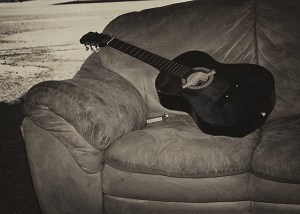
Guitar

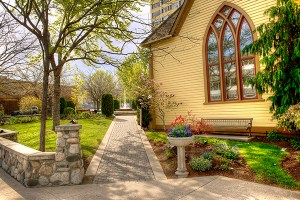
St. Andrews

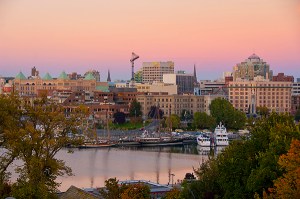
Tall ships Victoria

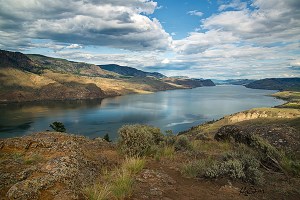
Kamloops Lake 2

Sternwheel

Coca-Cola

Forgotten shops

Yellow & Red

Just Waiting

After a discussion with a fellow who told me he has become bored with photography I thought I’d revisit the following from an earlier post.

I once asked “Why do photography” to members of an online forum and received some unremarkable responses like, “because I can” and “because I have a camera”.  Well, I suppose it is all about the camera to lots of people. However, there were two responses that I really liked, the first from someone called Soenda who eloquently wrote,

“ Because taking pictures has helped me see better. Before, I was less aware or the way light strikes leaves. I didn’t notice the symmetry of birds on a wire. Sunsets were masses of agreeable colour; now they are gold, pink, lavender and blue”.

The second from someone named Laura who philosophically said,

“Because when I look at my life, I cannot say I have done nothing. The proof exists that I have seen at least a wee bit of the world. I take pictures because it is artistic expression, and I think when we repress our artistic nature, we do ourselves no good, no good at all. I take pictures because it is fun. I can spend the entire day taking pictures, and it could not be a day better spent…”

For me, photography changes. There are times when I just want to play and am interested in nothing more than experimenting, my goal just seeing how something works.   I enjoy photographing my friends, family and pets. Pictures that have meaning only to me, but might never go anywhere other than on my computer’s screen saver.  And of course, until I retired, photography was the way I earned my living.

There are those times when I try to visually create an image that says something to others about how I see and feel about something. I can’t really say that the medium of photography is a passion for me, but I am enthusiastic. It’s just something I think about a lot and do.

Many use photography as a way to express themselves artistically, of which I heartily agree. Expressing oneself through photography is easy, as it doesn’t require the trapping of other mediums like painting or sculpture, and merely requires a camera.

Photography, for those who first wanted to make photographs, became accessible during the 1800s. The first surviving image made by Jacques Daguerre was of some artistically arranged plaster casts resting on a window ledge in 1837, and a short 20 years later photographers were wandering the North American wilderness and newly constructed cities creating photographs with the same intensity, all though not in the same numbers, as we are today.

Why take pictures? For some it is to document history, we know about the civil war in the 1860s through the photographs of Mathew Brady and the Vietnam War in the 1970s by David Kennerly.   Timothy O’Sullivan, William Henry Jackson, Ansel Adams, Elliott Porter, Imogene Cunningham, Bret Weston and others gave us their visual opinions of an early American landscapes.

There were those like Dorothea Lang and Walker Evens that during the great depression of the 1930s told us about the human condition. While Photographers Arnold Newman, Richard Avedon and Canadian Yousuf Karsh, celebrated the beauty of the human expression”  paving the way for modern portrait photographers.

For some the question “Why do photography?” may be very philosophical and for others practical. Soenda commented, “ Because taking pictures has helped me see better.” And Laura wrote, “I take pictures because, when I look at my life, I cannot say I have done nothing.”

I wonder what readers would answer.

A process of observation.       

Salmon Arm

Street rest art

Town sculpture

Shuswap Lake

Pier view

Dragon boat

Lakeside residents

Smugglers love

My wife, Linda, has been wanting to really put her new 135mm lens to the test.   Even though the 135mm focal length is normally used for portraitures, she wanted to give it a roadside work out and suggested we take a short drive. We decided a morning drive along the meandering South Thompson River ending in Salmon Arm, just short of an hour away, for coffee and some photographs.

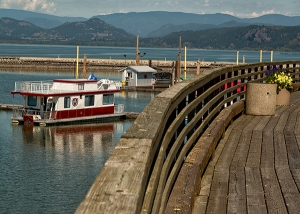
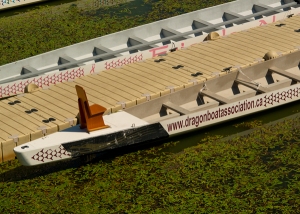
The British Columbia city of Salmon Arm with it’s unique, picturesque downtown and what residents claim to be the longest, curved wooden wharf in North America is located on the Shuswap Lake, midway between Calgary and Vancouver on the Trans-Canada Highway. The lakeside city also became infamous in August of 1982 when then Canadian Premier Pierre Trudeau raised his middle finger at protesters from his seat inside a private rail car.

When I’m not making portraits I prefer zoom lenses. Using a multi-focal length lens when photographing buildings and other features that one finds along a busy city street makes photography easy to do because it’s simple to crop out people, cars and other unwanted elements. Nevertheless, Linda wanted to use her 135mm and I decided to follow suit and brought my 105mm.

We wandered the downtown photographing anything that caught our attention. It was Sunday and most shops were closed and the streets, other than a couple of people walking to the grocery store or, like us, driving to Tim Horton’s for coffee, were almost empty.

It was a perfect day to walk around, and there was plenty of room to step backwards on to the street or move around in front of shops with our prime lenses. We spent a leisurely hour or so just taking pictures in town before driving to the lakeside park to sit in the shade, take in the view, and talk about our pictures.

My preference would have been to use my 24-86mm and although Linda really liked the 135mm, she wished I had brought along her 70-300mm. However, we both thought using the long prime lenses was a good exercise. Placing a subject and composing the final image took longer than just zooming the lens length forwards or back. Our fixed focal length lenses required that we had to physically move about to get the image we desired. There was also a change in perspective because of the mid-range of our lenses.

I have been trying to think of some words that would sum up our experience. Maybe American documentary photographer and author, Elliott Erwitt, got the closest to what I was experiencing when he wrote, “To me, photography is an art of observation. It’s about finding something interesting in an ordinary place… I’ve found it has little to do with the things you see and everything to do with the way you see them.” Perhaps our exercise wasn’t so much, “an art of observation” as it was an “act of observation”.

Searching For that First DSLR 

Film then Digital

Digital technology has been around long enough that I occasionally overlook that there still are people who have never used anything but film cameras. I recently talked to a photographer who is finally ready to discard his old film camera and wondered which DSLR he should select.

He even sent me an email saying that regarding a camera; he would “need the whole meal deal.” I admit that I am not sure what he actually meant by that. I said to him that today’s modern technology cameras offer choices that are very different from his old film camera. As readers know, he is about to take a huge, creative step as he moves to digital.

He told me he has enjoyed photographing local rodeos. So what should be my advice to an aspiring rodeo photographer? Manufacturers like Nikon, Canon, Pentax, Sony, Fuji, and many more, all make cameras that will probably work fine for sports like rodeos.

I could start by suggesting he to go online and search out sport photographer sites for recommendations. Photographing sports is very technology driven and manufacturers are aggressively marketing to those photographers. He should begin by choosing a camera that is durable, and capable of taking some abuse, sturdy enough to be bumped around, because I think that’s a pretty rough and tumble (and dusty) world he’s participating in.

Both Canon and Nikon make professional cameras specifically designed for sports and the accompanying high ISO needed for low light, interior locations, that will focus almost any lens extremely fast, and are easily capable of high quality, excellent enlargements.

For fun I read up on professional rodeo photographer, Rick Madsen, who wrote, “Remember the camera is just a tool. When a hammer is used, it is the operator who makes it strike the nail. The same concept applies to a camera. It is just a tool and it’s what the photographer does with that tool that makes the difference between a good and a mediocre image. You must take the time to learn the camera’s operation and then utilize that acquired knowledge through practice to become proficient. You have to pay your dues.”

I personally would save my money on the camera and spend it on the lens, as my real concern would be to get a quality lens. A saying I have heard over and over in the many years I have been in this medium is that, “it’s all about the glass,” referring to the lens. And from my readings, most rodeo photographers recommend 70-200mm lenses, and I also think a 70-300mmm would fit the job also.

I hope he can find a good, well priced, used camera and a couple of quality lenses for it. He will be faced with so many choices and will receive many, many well meaning recommendations from other photographers that he’ll stay awake nights wondering what he’s got himself into. Nevertheless, I know he will be excited when he finally gets that first DSLR and embarks on the exciting journey as he learns how to use it.


Selecting a Tripod


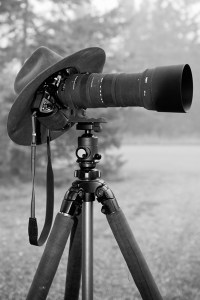
Tripod & Hat        In his book, “Backcountry Journal, Reminiscences of a Wilderness Photographer”   Dave Bohn writes, “The trouble with photographers, and anyone else attempting anything creative, and in fact doing anything, is that they get addicted…(and)…I was addicted to the tripod as a necessity for the photography of large landscapes.”

I remembered (and liked) that quote from an article I wrote in October 2013 and thought I should post it again. I can’t say that I am addicted like Mr. Bohn, but I, too, really enjoy using a tripod when I shoot landscapes.

I reread my 2013 article on tripods and decided to repost some of my discussion after talking with a friend about tripods. He is planning on getting a new one as a gift for his wife, and we were discussing what might be the best for her.

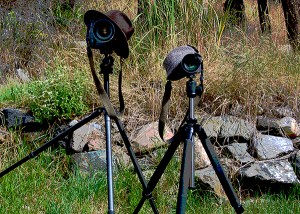
When I select a tripod I want one that extends above my head so I can use it on hills. I don’t like bending over to peer through my camera’s viewfinder. I also prefer tripod legs that can be extended out horizontally when the ground is uneven.

I don’t want a crank to raise the center column as that is just added weight, and becomes one more thing to get caught on things. I like a column lock that turns to lock and unlock so I can easily adjust it up or down.

An important feature on the tripod I select is a strong and easily available quick release on the tripod head. The tripod head is another subject completely and my advice is get one that has a reasonable size ball surface and that is lightweight.

A tripod shouldn’t be so heavy that it’s a bother to carry. Nevertheless, it must be sturdy and capable of supporting my camera without shaking. I am always amazed when a photographer uses a cheap, little tripod to hold their camera and lens that are worth well over the thousand dollars plus mark.

I am pragmatic in my approach to photography. Sometimes the conditions are fine for just pointing and shooting, but if I really care about the picture I know I will have better success getting a quality enlargement if I return to the car and get my tripod. That’s just good sense.

I know there are many modern photographers are of the belief that the difference between a blurry and a sharp enlargement is megapixels or vibration reduction features. I can’t disagree with that altogether, but I do think a good, stable tripod is just as important and in some cases more.

Using a good tripod that allows one to stand up straight, take time to analyze the scene, problem solve, compose, and contemplate is an excellent experience. In addition, it keeps the camera from moving.

I suggest buying from people that have used, or at least can discuss, the tripods they sell.  The department stores will allow you to bring it back if you aren’t satisfied, but I am sure they are not interested in paying for the damages to your camera and lens that crashed to the ground while using their bargain tripod.

In recent years more and more quality tripods have become available and are worth owning and using. All one needs to do is spend some time researching and checking reviews.

Photographers spend lots of effort selecting that DSLR and lenses for each purpose they want to use it for. My advice is to take the same amount of effort with that purchase a really good tripod.


Off-Camera Flash in Daylight  

Whatcha Got?

Perfect lighting

A little to the left

Teamwork

The right light

Ya gotta get wet

Who cares about the water

Lets see

Flash the Cadillac


This past weekend I lead another workshop for photographers about using off-camera flash when photographing portraits outside in bright light. As with past lighting workshops my goal was to help participants understand how to use flash in different environments during daylight, and gain techniques that I hoped would help them transform the harsh daylight of outdoor portraits into beautiful light.

I was fortunate to have a great rural location where participants began in the morning photographing our model using a speedlight and a diffusion panel in a bright meadow, then moved to a large, well lit, open barn with two-flash lighting using a shoot-through umbrella and softbox until lunchtime.

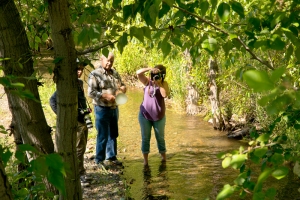
After a healthy lunch provided by Versatile Studio we set up by a small tree covered stream, getting both our feet and our model’s feet wet. We finally finished the day photographing the model posing beside an old 1970s Cadillac in a nearby field.

I enjoy guiding serious photographers through their first attempts to use flash as a tool to create better photos, I want them to think of the flash being more than an uncontrollable device perched on top of the camera when it’s too dark in a room to take the photo.

I have been offering off-camera flash courses since the early 1980’s, and still believe they are an important segment of a portrait photographer’s education.

So much has changed in photography, and yet here I am 35 years later, still helping photographers learn how to use off-camera flash. Modern cameras are amazing with sensors that are so much better at capturing light than film was. But just as 30 years ago, serious photographers realize how much more flattering off-camera flash is on someone’s face than just harsh daylight.

Off-camera flash gives a photographer the ability to choose the best direction of light.

There are times when I am forced to photograph a person without using a flash. I think “forced” is the best word, because I will always use flash if I can, and as those that have taken my advice have learned, in most instances using flash for portrait photography indoors or outdoors is better than not using a flash.

Those attending last weekend’s workshop began to get comfortable using flash.

David Hobby, lighting guru and founder of the blog, http://strobist.blogspot.ca, wrote,

“Learning how to light is incremental, creative and fun. There is almost no math involved, nor any difficult technical know-how. In fact, good lighting is less like math and more like cooking. It’s like, you taste the soup and if it needs more salt you add some salt. You’ll see that when we learn to balance a flash with the existing, ambient light.”

“Controlling harsh natural light – one of the most important things to know as a shooter is how to use bad light well. Taking hard, nasty daylight and turning it into beautiful light is actually pretty easy.”

The Vancouver Camera Show and Swap Meet       


Lots to buy

Wow a 4X5

Sales tecnique

What about this tripod?

Try this one

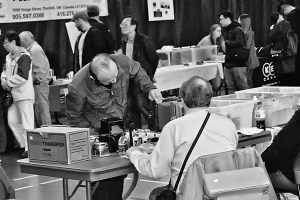
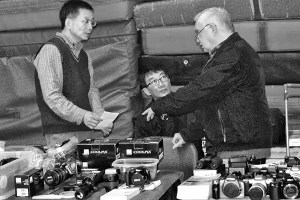
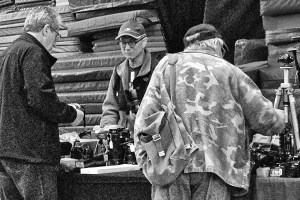
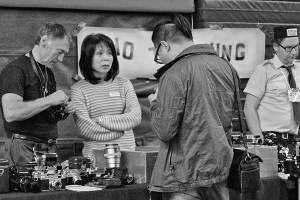
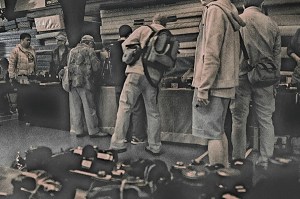
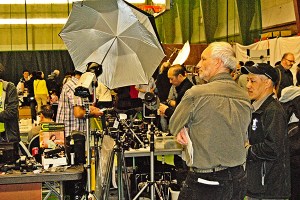
One of my favorite photography events, the The Vancouver Camera Show and Swap Meet, has come and gone again this year. For over 20 years I have spent the weeks prior to this long-running event, that has now reached it’s 40th year, looking forward to the day I get to attend this ever-so-fun photographer’s gathering put on by the Western Canada Photographic Historic Association, and organized by Siggi and Brigitte Rohde.

There cannot be a better way to spending a rainy spring day than being surrounded by a vast array of cameras and photography equipment, all the while getting a chance to talk with other photographers.

Again this year I made the journey from Kamloops the day before and lodged overnight so I could arrive bright eyed and eager to join the other vendors setting up at early the next morning.

I go wondering what the latest trends will be, or what is popular with the photographers that attend. And, of course, keeping my fingers crossed that the equipment I have on my table is what they are looking for.

The last few years there’s been a major change in the venders being replaced by a much younger crowd. The stuff they have on their tables is much the same, but the vendors’ faces are younger, and there are a lot more women standing behind the tables discussing and selling photography equipment than there was when I first started attending.

As I have said before, the word “diversity” is the best way to describe the mixture of photographic types coming to this camera swap meet. There were all kinds of lifestyles and interests, and specialties in photography, film, digital, past and present technology. However, what they all had in common was that they all were excited, searching for sweet deals that I am certain they got.

This year was no different than last, in that I spent an exhilarating day talking non-stop with other photographers about their different interests in photography and, as always, it was invigorating.

The Vancouver Camera Swap Meet is a splendid way to meet and exchange information with other photographers, and to look at and check out a grand selection of photographic equipment that would not be so accessible anywhere else in Canada.

I write this every year, but I’ll say it again anyway. I had a great time with the photographers I met this year and the depending on who joined me at my table, the conversations always changed. My day of selling was a success, as it was for most of the dealers and very happy bargain hunters I talked to at the end of the day.

Camera's Shot

And…when the camera decides to take a picture by it’s self….