Some thoughts on Post-Production and photography

During the time period of film photography people rarely commented on the fact that professional images were manipulated or retouched.  Photographers used oils, dyes, special pencils, small paintbrushes, and airbrushes.  These tools were used to open eyes that were closed, to whiten discoloured teeth, to improve hair and clothing colours, to remove and replace backgrounds, and to turn black and white images into colour photographs. To increase the contrast one could select special filters, paper, or chemicals. However, in all my years of using film to make photographs I do not recall anyone being critical of that post-processing by saying that the work done by photographers to original images, after shutter release and processing negatives, removed that image from the realm of photography.

I bring this up because last week a friend stopped by and told me that after showing some of his work to a local camera club, that he was criticized soundly because he advised members that when he made the original exposures he always kept in mind how he would finish the photos using PhotoShop. He said that he always “tweaked” his studio photography and was surprised that it bothered some people.  Personally, I think it is that “tweaking” that help make his images so good, and they are very good photographs in my opinion.

Since the introduction of digital many photography contests and exhibitions exclude images that have been post-processed. I do understand that those organizations want to show the photographer’s talents at capturing an image and not retouching skills. However, it must be very hard to apply that restriction when many of the latest cameras can post-process (reprocess might be a better word) the original images in-camera using computer software supplied by the manufacturer.

There are those that consider themselves purists and loudly denounce programs like PhotoShop, although I don’t know what a purist really is in this technological time, because most images are no longer made on light sensitized material and are now computer generated image data files.

Photojournalists are expected to capture the truth about some event or subject and should not be altering the original image in any way.  But artists?  The work in question was studio photographs of custom motorcycles, which in my view easily fits in the realm of photographic fine art, and, certainly, not photojournalism. I suppose it depends upon whom the photograph is for and who the viewing audience will be.

I do not usually work as a photojournalist, and those that do get my respect when they are able to pull interesting photographs out of what are sometimes are pretty crappy conditions for a photographer.  In my opinion, those photographers that don’t work for magazines or newspapers should include post-processing as part of photographic methodology. It’s all about making the best possible photograph for others to see.

My portrait clients expect that I will post-process, and I usually tell them I intend to. I try to light in a way that not only looks good at the moment the shutter clicks, but makes it easy for me to enhance in post-production. I employ not only PhotoShop, but I also use other programs made by NIKsoftware.com and OnOnesoftware.com. And personally, I would never let anyone see images of mine that were not post-processed, because I know I can improve and enhance them in post-production.

My point is that photographers have been retouching their photographs for years, perhaps since photographers started making pictures for the pleasure of others. Now it is just easier than ever before, and so is taking a photograph for that matter.  There may be instances where the way an image is produced should be limited to how the camera’s sensor captured it, but I think something must be left to the photographer’s vision, and producing that vision might need a little help from post-production programs like PhotoShop. There is nothing like a well-executed photograph hanging on a wall for the enjoyment of all to see.

My website: www.enmanscamera.com
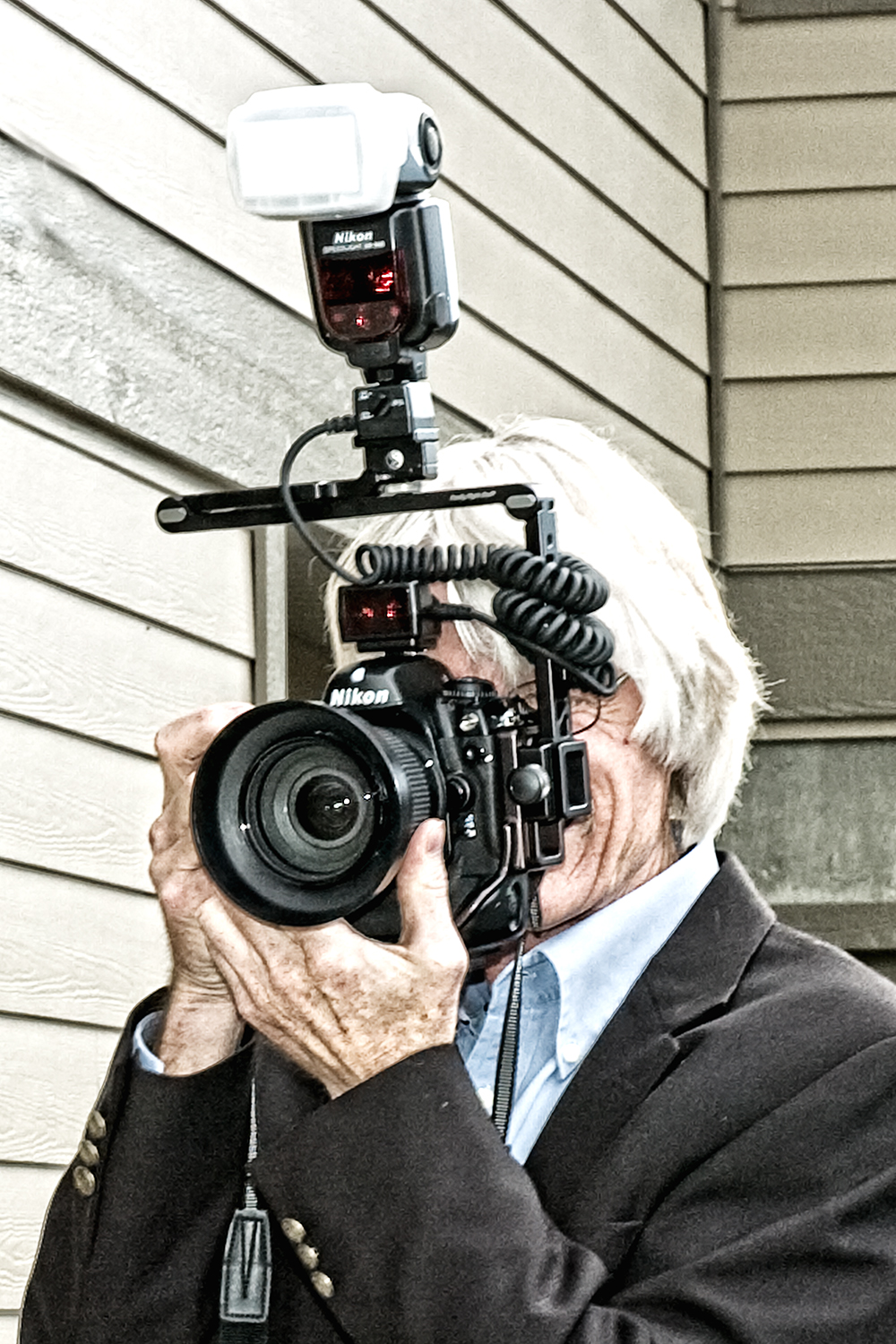


This photographer was challenged about always using flash.

I recently had an email conversation with photojournalist Ted Grant regarding my blog entitled, “I Have Never Used a Flash”.

In it I wrote that I like adding light using a flash under all conditions from dimly lit rooms to sunny days. My column began with a statement from a photographer just starting to photograph weddings of her friends who says, “I have never used a flash,” and to that I had responded, “I always use a flash indoors and outdoors when photographing people”, but she was surprised and said “even in bright sunlight?” 


I use the flash to reduce the shadows caused by bright sunlight. TTL (through the lens) flash technology is easy to use, almost fool proof, and the days of calculating distance and flash power are long gone. I also wrote, “When I learned to use a flash many years ago it changed the quality of my photography.  I no longer had to rely on ambient light and I began to notice my subjects had more “pop” than those without the flash.  Just like the control I gained by using different focal length lenses, using the flash allowed me to add light when I needed it, improving the quality of my photographs and separating my photography from who do not to use flash.” 

I believe it was that last line that piqued the interest of Mr. Grant who wrote to me, “If I were to suggest… “If you can see it? You can shoot it!” That means without any flash…. period.”

However, as photographers, we have different goals and my response to him was, “Many just getting into photography have not had the opportunity to spend years honing their skills, and, in my opinion, modern flash technology makes opening and preserving shadow details, and balancing ambient light conditions so easy that I am disappointed when I see over-exposed features or detail-less shadows.  A great number of photographers are currently embracing flash as a tool similar to using different focal length lenses for perspective control and tripods for camera stability, etc.  I’m sure that photographer’s camera would record anything she “can see”, but with the limited exposure range of digital I believe her images would be less that what you and I would categorize as acceptable.”

On a sunny day the dynamic range between the darkest and the brightest areas might mean a person wearing a dark shirt could have an exposure of f4 and 1/250th second whereas the surrounding landscape might be as bright as f22 @ 1/250th or brighter.


A photojournalist selects what is most important and only exposes for that, but for those of us photographing a family or a couple in their back yard, or a youngster posing beside the family pool, that isn’t an option. Our clients are probably proud of the work they put into their back yard and an over-exposed, washed out background would wreck the picture in my opinion.

For me that picture would be easy. I’d quickly meter and make an exposure of the back yard, check my LCD to make sure it was a good then put a flash on my camera, have someone stand in, make a couple of test exposures, and reduce or increase the flash output if needed, and I am ready with subjects and background all evenly exposed.

However, Mr. Grant is absolutely right. “If you can see it? You can shoot it!” I believe his quote came from his work on a book about women in medicine shot using a Leica 35mm and exposed on black and white film. He also likely didn’t have the luxury of fast auto focusing image stabilizing lenses, or being able to check the image and exposure history as he shot, and he likely was restrained from using TTL flash technology in his many endeavours.  There are, of course, differences between photographers and how they want their subjects to look. I suppose it is really about what in the final picture is important to them.

The photojournalist’s job is to capture the action as it happens, using a flash might not be possible, or even allowed in some circumstances. Whereas the type of photography I do is all about the subject who in all instances must be photographed in the most flattering way possible and in most cases that means including using a flash.

 www.enmanscamera.com