Printing Your Own Digital Photographs    

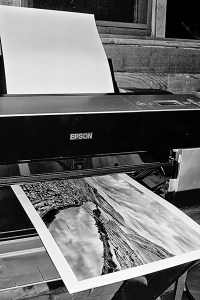
Printing Photos

I had a good time this past week talking with a couple of long time photographers about printing photographs. It was a walk down memory lane as we talked about using film, and how we would spend hours in darkened rooms printing black and white photographs, and about the exciting, and enjoyable, shift to digital images and modern printmaking.

Just like those days when commercial photo labs struggled to match what, with a little practice, a photographer could produce in his or her basement darkroom, I have no doubt that today’s affordable high tech home printers allow us to produce fine art prints that can surpass what most big box commercial labs will give us.

In my opinion it comes down to a battle between visions: The Lab’s or ours. For example, imagine packing your camera equipment off to some isolated location, waiting for hours for the light to reach a colour and effect that matched the artistic vision you desire. Then setting your cameras’ controls with all the experience and skill that you have, and finally releasing the shutter.

Until recently when photographers shot in colour they had to rely on the skill of lab technicians who would hopefully process the images the way they wanted.

Lab technicians, even though well skilled, could only guess at what the conditions were like when the photographer released the shutter, and I suspect much of the time found it rather difficult to recreate and could only guess at the shooting conditions.

Sometimes a slight change in exposure or shift in color will make our photograph stand out, and only we can determine that. For example, those photographers that have bracketed the exposure values of an image know what I am referring to when they are frustrated because they got back several differently exposed prints all printed exactly the same from the lab. The vision in that case becomes the Lab’s; not theirs.

Yes, if we are unsatisfied we would return the film and prints to the lab for a redo. However, more often that not, we just give up and accept the best the lab can do, or try other labs till we get close to what we remembered trying to capture on our film.

I am not going to get into a discussion of printers and papers right now – I’ll save that for another time. I want to go back to where I talked about what happens after we have captured that image we took at that isolated location.

We look on our digital camera’s LCD screen, and check the Histogram to make sure we have captures from which we can work. Now, instead of leaving our vision to the choices of an unknown technician and waiting for the photographs, we download our memory card into our computer, enjoy immediate visual feedback on our photographs, and by using whatever post production software we have we can follow our vision with precision to the final outcome: a photograph that shows exactly what we want it to show; our personal vision. How exciting is that?

With today’s digital technology we can follow our photographic vision from start to finish, from idea to finished print in a way that is far better that ever before possible. And, by using quality photographic printer equipment, photographers can make spectacular enlargements that will give their photography another dimension of control and creativity.


Snowshoes Are Perfect For Winter Photography         

Passing the shed

Afternoon sun

Melting snow

Barn View

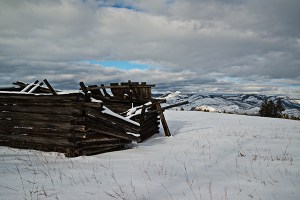
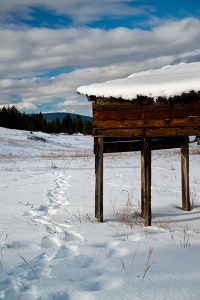
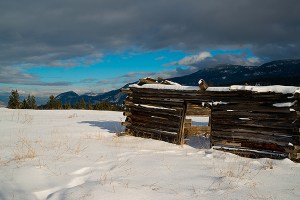
Winter is here and there is enough snow for me to put on my snowshoes and make my first winter hike to the high meadow above my home. Last January my walk up into that meadow’s deep snow was on a cold, -3C day, under a bright, almost-cloudless, blue sky, and I remember I was shooting with a lightweight, 18-105mm lens on my cropped-frame camera.

Yesterday I had chosen to mount a lightweight 24-85mm on my full-frame camera. Both this year and last I incorporated a polarizer to darken the skies, increase the contrast in the scene, and suppress glare from the surface of the bright white snow, on the partly cloudy +1C day that had me wishing I didn’t wear the extra undershirt.

I trekked up the hill, and as I had so many times before, I photographed everything. There are rarely any animals in sight in that long meadow. If so they can hear my snowshoes crunching through the snow on the long hill and stay hidden just out of sight. As there usually is when I begin to cross the meadow, a crow cries out a warning to the silent watchers. Then it got quiet with only the sounds from my snowshoes and camera’s shutter as I tramped around photographing the hilltop meadow above the Thompson River Valley.

As I have done so in the past, and too many times to count, I wandered around the snow-covered grassland photographing the two remaining structures from an old homestead under the looming Martin Mountain. I don’t know how long ago that area was farmed, or how old the buildings are, but there is what’s left of an old car that appears to have been wrecked and left behind some time in the 1930s or 1940s. There is an abandoned cellar, a barn, a shed, a fruit tree, a garbage dump, the detritus of a family’s life, a family who shut down their farm and left.

I like the solitary walk. I closed the front gate to our yard and started out on the road following tracks a lonely coyote made during the early morning hours. The tracks led up the road to a lower field and headed uphill following snowshoe tracks that one of my other neighbor’s must have made. I always expect to be the only human making tracks up there, however, this time I followed someone that took much shorter strides than me, eventually crossing the creek at the far end of the meadow and to keep going out of sight through the trees without returning.

I like snowshoeing. When I was a youngster snowshoes were the perfect winter accessory. We’d snowshoe up the hill, change to our skis that had been strapped to our backs and ski back down. I remember a trip with my younger brother Rodger, and a friend named Alan. We traveled for three days sleeping in snow caves we made by digging into snowdrifts. Snowshoes got us up hills and skis got us down.

All these years later I am still wandering the winter backwoods, only now I always carry my camera. Snowshoes are perfect for the winter photographer. I have also skied with a camera, but there is always the chance of falling and covering the camera with wet snow. At my age snowshoes are safer and besides it’s easier to position and reposition oneself while composing a photograph. Skis would not work as well.

Photographer’s New Year’s Resolutions for 2016    

2016 approaching

This month is half over already and I am thinking with all that’s happening in photography that 2016 is going to rush past like a freight train. The prospect of all the new opportunities for this year is exciting, and it may be worth jotting down a list of personal photography goals for this year, or a list of resolutions, as a good idea.

Every New Year I am interested in what plans other photographers will make for the year ahead and most respond with a usual list, for example, use a tripod more, turn off Auto mode, shoot RAW, make a photo-a-day challenge, and so forth. This year, however, I wanted more inspirational ideas for the year to come.

I revisited ideas from January 2015 that seemed to say a lot about ways to improve with this exciting medium and pulled these out. So for the future, for 2016 here is my “Lucky Seven” .

  1. Pay more attention to creative ideas. “This could be the year to begin evolving  creatively”.
  1. There is too much focus on what is the best camera. When we spend too much time worrying about the camera we forget about the story. “We should be concerned with making images that tell a story”.
  1. Take risks photographically and move away from always trying to please, to fit in with what everyone else is doing. Make this the year to push beyond the comfort zone without being concerned with other’s opinions, to be pleased first for oneself. Maybe this will be the year to put “me” in the photograph.
  1. Learn a new technique. Wonder about how the technique will impact your work and whether you will revert or continue to follow up in that direction. I think it’s as simple as experimenting, and definitely taking the time to “read up on something and then give it a try”. Photographers should always make the effort to learn new techniques. Maybe by taking a class, or at least buying some books, or CDs, written by accomplished photographic writers.
  1. Select new subjects to “get out of the rut of shooting the same thing over and over”. While practicing portraiture or landscapes is good, doing the same thing the same way over and over can result in a lack of inventiveness and creativity in our work.
  1. Make every shot count and stay away from the spray-and-pray shooting style. “It’s about quality photographs, not about the volume of pictures snapped during sessions”.
  1. Become viciously ruthless with one’s own photography and what is done in post-production, to be more critical, to keep “conditioning oneself to throw out the crap is the only way to keep improving.”

I’ll finish with a quote by award winning English author, Neil Gaiman.

I hope that in this year to come, you make mistakes. Because if you are making mistakes, then you are making new things, trying new things, learning, living, pushing yourself, changing yourself, changing your world. You’re doing things you’ve never done before, and more importantly, you’re doing something.


A Happy New Year with Lots of Photography     

Happy New Year

Horse in NewYear Snow

Home for New years

Happy New Year

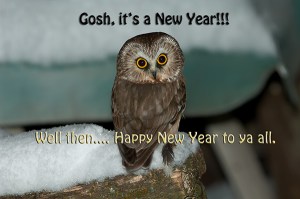
Another year has gone by, and with that I want to wish all that take the time to read my blog a very Happy New Year. I am sure it’s going to be a year filled with fun photography.

I do try to keep my articles interesting. When I first began to write weekly about photography my goal was to write articles that were a bit different from those I saw in magazines and on-line.

I knew I could easily post a couple of pictures each week, and discuss them as I did for my students in my years as a photography teacher; or I could join with those that provided reviews on their favourite equipment, but I thought that would be easily forgotten.

There were so many people writing about photography that I wondered if I had anything to add, so I decided to use a technique that worked during the many years I taught photography and that is to tell a story that included photo information I wanted to discuss.

Something else that I learned during my years teaching was to keep the subject fresh. That meant introducing something new each class and that is how I choose my topics, something different each week.

I admit that changing the subject each week does get hard. Like most readers there are those who acknowledge that there are other things in life than photography (I wish I could say it isn’t so) and it isn’t unusual for me to say to my wife, “Ok, what am I going to write about this week?”

Fortunately, with Linda’s help it usually works out and I come up with something to say each week.

This year I reviewed by work and the following were among my favourites articles and included “Which Button is for the Composition Mode?”, “What Makes Photographers Happy?”, “There is Nothing Like Photography”, “Interesting and Unconventional Photography”, and “Two Photographers Are More Fun Than One”.

My wife suggested I mention those subjects that I enjoyed photographing most but to that I will quote famous photographer, Imogen Cunningham, who replied, “Which of my photographs is my favorite? The one I’m going to take tomorrow.”

I’ll keep this short and again wish all photographers out there a grand New Year filled with lots of photography.

There is Nothing Like Photography  

White church

Fraser River view

Anacortis Oil Refinery

Lilloet

Coastal tree view

Hay Field


“In visual terms there has been nothing like photography in the history of the world. There is no vocabulary for it. Photography literally stops something dead. It’s the death of the moment. The second a picture is taken that life is held, stopped and over. That moment is over.”

I found this quote by photographer Richard Avedon that I had tucked away years ago into the pages of a book of photography by Eliot Porter entitled, “Intimate Landscapes”.

Photography is powerful that way. There has never been a medium that has captured the interest of so many people like photography. When it became popular in the 1800s, no one could have envisioned how important to the world and to our personal lives photography would become.

For those of us in Canada the first known photograph was by an Englishman named Pattinson, here on a business trip in 1840. He was a student of an early form of photography perfected by Louis Jacques Mande Daguerre and had stopped at Niagara Falls to produce the now cherished historical Daguerreotype photograph.

The Daguerreotype would have taken more than 20 minutes for the scene to expose on a silver-coated plate inside his camera. Later he would surround the plate with warm mercury fumes that would slowly make the image visible.

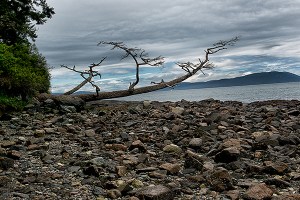
I begin to think about photographing the landscape near my home this morning and I almost headed out, but the flat light and icy cold rain made me change my mind.

To keep myself in the mood I decided Eliot Porter’s book of photographs from northwestern New Mexico and southeastern Utah would be perfect to review with a cup of coffee. I find Porter’s photography stimulating.

Porter wrote, “The natural world has always attracted my eye: associations of living and inanimate phenomena, from the tropics to the poles and from rain forests to deserts, have been favourite photographic subjects for almost half a century. Grasses and sedges, especially, appeal to me – an appeal like disordered hair across a face, or a windblown field of hay before the mowing…”

Reading his or any other book on photography for that matter, helps me examine the way I make photographs and try to photograph things differently.

I do think photographic ideas and opportunities sometimes happen in a moment that once passed will never be the same. Many times I just want to make a photograph for no other reason than it is fun to make.

Here is another quote from Porter’s book that I endorse as well. Porter says, “I do not photograph for ulterior purposes. I photograph for the thing itself – for the photograph…” I like that. Sometimes just the process of making a photograph for no other reason than doing it is enough.

Photography in this digital age has become so very easy, but I think good photography can be as time consuming as it ever has been, requiring practice and education by those that take it seriously.

As I turned the pages of Porter’s book I thought about how nice it would be if the hills above my home get lots of snow in the coming winter. If you have a moment check out landscape photographer Eliot Porter in your local library, or on-line, and hopefully his photographs will inspire you as he does me. You might also look up Richard Avedon.


Christmas Lights are Here Again         

Street Lights

PalmTree Decor

Tree of Hope

Xmas bear

SKating rink

Beach walk

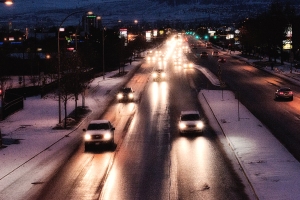
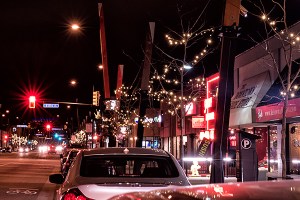
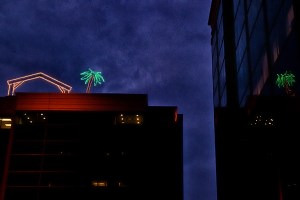
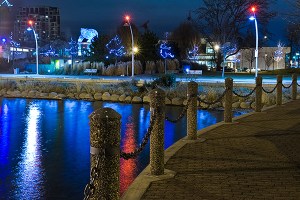
December is upon us again and the visual presentation of bright, festive lights has begun. Yes, the Christmas holidays are coming. The bright colours, the gaudy decorations, the sentimental music, the silly TV programs, and, for me especially, the Christmas lights in the city.
This past week my wife and I had to journey for a late afternoon meeting to Kelowna, which is two hours south from our home, however, that winding country road can be treacherous on dark, snowy nights and so we decided to stay overnight in Kelowna.

For some that means dinner out and just waiting the night out in a motel, but for me it’s an opportunity to have fun experimenting and photographing the season’s sparkling lights. In anticipation I had packed my camera with a 24-70mm lens and, of course, my tripod.

My preference for evening photography is to select a location before it gets dark, and to begin shooting when the lights are first turned on, when there is still some light in the sky, yet dark enough for the lights to be bright. However, our meeting lasted until after dark and I had lost the light.

I have been fascinated by Christmas lights since before I picked up my first camera, and remember family outings this time of year when my parents would pack us up in the old 1954 Ford station wagon for after dark drives along the high roads above the Salt Lake City valley. We would drink chocolate milk and look down on the colourful city lights. At that time my father was in charge of the awkward, accordion-like Kodak camera, that I doubt ever used anything but black and white film.

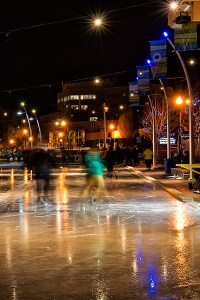
In spite of the late hour we drove by the downtown Kelowna lakeshore past the Yacht Club. I was sure the city would have lights along the sidewalk and hoped that some of the boats might be lit up. I had also heard that a public skating rink was opening and I wanted to experiment with a slow shutterspeed.

During the time when ISO ratings were limited, photographers who shot after dark ended up exposing for only the lights, and the resulting photographs would show lots of colours, but didn’t say anything about the location, or environment. Nowadays most modern cameras have no trouble with ISO 800 or 1600, with some even 3200, and don’t show the random speckles, which indicate degraded image quality.
Making some test shots I quickly found that the city lights were bright enough to allow me to use ISO 800. I also tried 1600, but I lost Christmas lights detail, and the buildings and walkways didn’t look like they were photographed after dark.

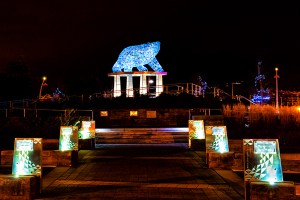
As usual Kelowna had lit up its tall “Tree of Hope”. I photographed that very tall electric tree last year and knew from experience that the best time to get pictures of it was early in the morning. When I left my hotel room at 6am the next morning I was greeted by a couple inches a fresh wet snow. Perfect. More light reflection.

I shot with my camera set to “aperture” priority. When I use aperture priority for this kind of photography I also employ the camera’s exposure compensation feature. If one just used the aperture priority mode the camera will, as it is programed to do, try to correct the lighting and that makes the sky too bright. This time I think I used -1.7 to darken the sky.
A drive this time of year through any town or city neighbourhood is an exciting visual presentation of bright, festive lights, and an opportunity for at least a few weeks, to have fun experimenting and photographing the season’s sparkling subjects.

Photographing Eagles along the Highway       

Eagle of all atitudes

Young eagles

Young eagle

Waiting eagle

In the warm sun

Watching young ones

Fly, there's a photographer

Fly away


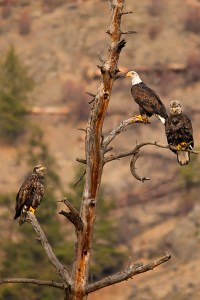
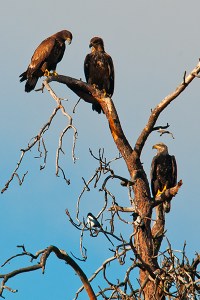
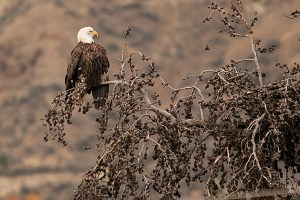
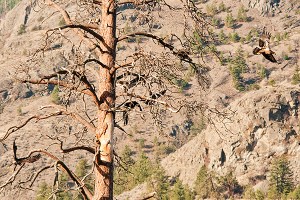
Eagles come in all shapes and sizes, but you will recognize them chiefly by their attitudes.” I don’t think British economist, E. F. Schumacher was really discussing the kind of eagles my wife and I saw perched in trees along the river, but his quote perfectly describes a picture Linda took of three eagles

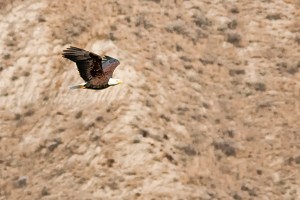
Winter is on its way and eagles have been moving west along the South Thompson River towards the warmer feeding grounds on the pacific coast.

My commute to Kamloops from my home in Pritchard is on the Trans Canada highway that runs parallel with that wide river and this year it has been fun to see how many eagles we can count before reaching Kamloops.

After counting 35 eagles on our way to town the previous week Linda mentioned that she’d like to try taking some pictures. So after waiting until the sun was high to the south last Wednesday we made the drive to see what we could find.

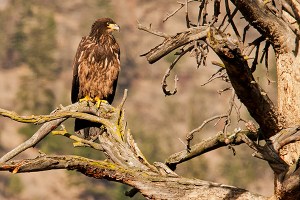
The traffic on the Trans Canada is constant and fast moving with lots of big, transport trucks. But with some preparation it isn’t that big of a deal to quickly pull a safe distance off the road to photograph eagles in the tall, dead trees along the river in which the eagles like to perch to watch for fish. In one tree alone we counted fourteen eagles, some mature but mostly adolescent.

My job is to drive and my wife’s is to photograph eagles. I pull over, stop and turn off the car to reduce vibration caused by the engine, and Linda rolls the window down, plops a beanbag on the frame and positions her heavy 150-500mm Sigma lens out the window and starts shooting.

It would have been nicer if we had a way to get closer. However, even if one got out of the car, struggled through a deep ditch, crossed the railroad tracks and climbed over farmers’ wire fences, I am sure the skittish eagles would just fly off anyway.

Linda had a pretty easy time of photographing those eagles from the car anyway. She had selected Shutter Priority on her camera with a shutter speed of 1/650th of a second and 650 ISO. Yes, there were some shots that didn’t turn out, the car would shake when big trucks passed by and every so often clouds would block the sun. But she got some great keepers.

As exciting as it is for those of us here in the BC Interior to see 40 or 50 eagles in the trees along the river, in a few days lots of those big birds will be making their way down the river to join many, many more eagles congregating on the Harrison River to feast on spawning salmon.

The Fraser Valley Bald Eagle Festival began 20 years ago and this year it will begin on November 28th at Harrison, British Columbia. This is an annual event with the migration of thousands of Bald Eagles returning to the Harrison Mills area to take advantage of the spawning salmon.

For photographers the place to be is where the Harrison River widens with shallow gravel bars for the returning salmon to spawn. Organizers say it is possible to see up to 10,000 Bald Eagles feasting on salmon.

Bridge Lake Workshop Wireless Off-Camera Flash              

OffCamera Workshop 1

OffCamera Workshop 2

OffCamera Workshop3

OffCamera Workshop4

OffCamera Workshop5

OffCamera Workshop7

OffCamera Workshop8

OffCamera Workshop9

OffCamera Workshop10

OffCamera Workshop11


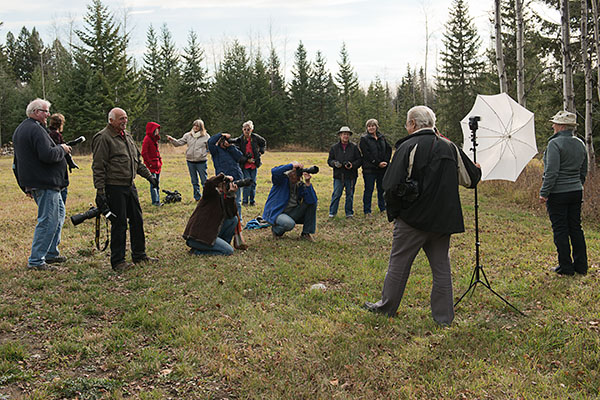
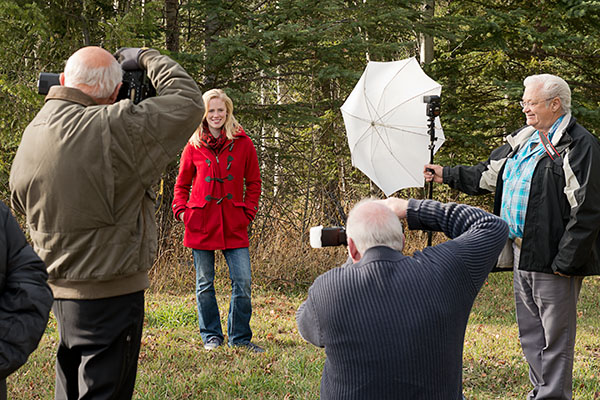
Last Sunday saw me making the scenic two-hour drive north to join the Bridge Lake Photography Group. I have been following that creative and talented group of photographers, (www.bridgelakephotogroup.com) since a long time friend, Derek Chambers, got in touch with me about a year ago. On Sunday I led a full day workshop for them about using off-camera speedlights indoors and out-of-doors.

There is so much that I want to tell photographers when they first attempt to use flash as a tool to create better photos instead of the flash being an uncontrollable device photographers perch on the top of the camera when it’s too dark in a room to take a photo.

In my opening presentation I had to hold myself back as I sometimes realize I am talking too fast. But I get excited and I really want to move from lecturing in front of students, and go to the studio setup where the learners, not me, are center stage. That’s where my fun, and, assuredly, the participants’ fun begin.

I always enjoy the enlivened interaction that occurs when a student of flash photography takes that first shot with one of the flash set ups. Usually, no one ever wants to be first. Everything is strange. The flash that usually is attached to their camera is now attached to a softbox or an umbrella. I always have to prod and coax the students to begin, but I can hardly wait for the first “oohs and aahs” that happen when they see the results of their first photos.

My job is to present information on the subject, and keep things going. I don’t like to be a demonstrator on stage and rarely pick up a camera during the workshops I lead. That is left to the participants, and watching them learn is the fun part for me. After everyone crowds around that first volunteer’s camera and sees the picture it is all I can do to hold them back.

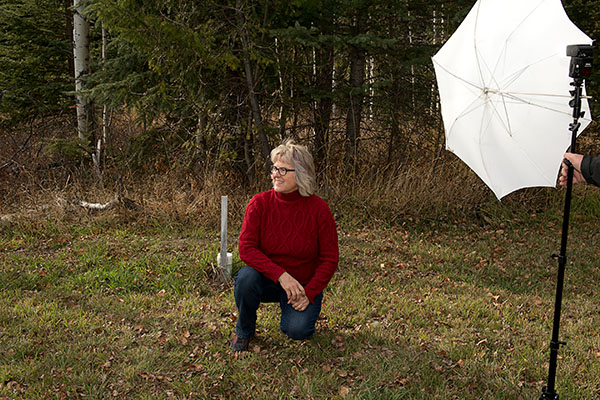
Our ever-patient model was overwhelmed as she tried to pose for everyone at the same time. She pleaded, “Where do I look?”   I laughed and loudly said to that excited scrum of photographers, “If you want her to look at you yell, ’Me! Me! Me!’”

We spent the morning shooting in the inside studio. For that session I had the flashes set to manual mode so their output would always have the same power. That is the easiest way. If more light is wanted on the subject move the flash forward. Less? Move the flash away.

After lunch we moved outside and I set up one flash with a shoot-through umbrella, however, this time the flash was set to TTL mode. When using flash in an indoor studio one synchronizes the camera’s shutterspeed to the studio flash, and uses the aperture to determine the exposure of the light reflecting off a subject. Progressing, however, to an out-of-doors situation with TTL a photographer must balance the natural, ambient light with the off-camera flash; and using flash effectively is more about creating and controlling shadows than about filling them.

We walked out into the bright day and our model had barely reached a location in the meadow before 15 excited photographers got down to business. By then they weren’t at all shy about getting shoulder to shoulder in the process of experimenting, exploring, and learning about outdoor lighting.

I just received an email from Chambers saying, “You’ve definitely added a whole new dimension to our photographic adventures. Thanks a lot.” Gosh, a whole new dimension to their photographic adventures. That is one of the best “thank you’s” I have ever received.

I Like Calendars     


Calendars

I remember a life drawing class in which we would all have to hang our assignment for each week on the classroom wall. Then we would all noisily sit around and wait for our colourful instructor, Mario, to make his grand entry. Mario was a tall, dark, flamboyant Italian that always talked loudly while waving his hands around in the air for effect.

As we held our breath he would slowly walk along the exhibition of our talent and skill. Then he would suddenly stop and with a wide sweep of his arm gesture to someone’s drawing and in his thickest accent declare, “This, this, this, belongs on a Los Vegas Hotel room wall!” I remember more than once watching a fragile classmate moved to despair or with a bowed head rush from the room in disgrace. As cold hearted as that life drawing coach was I did get his point regarding art.

We rarely look at the artwork that is always hanging in the hotel room. It is just there to fill space on the otherwise blank wall, and if we did notice, that framed art was quickly forgotten when we left. I can honestly say that although my friends or family might have remarked at the cleanliness of a room, it’s location or the softness of the bed. I can’t remember anyone ever saying, “Gosh, the artwork in our room was marvellous.”

Good art is enduring. We live with it, cherish it, and the longer we do the more we take pleasure in it.

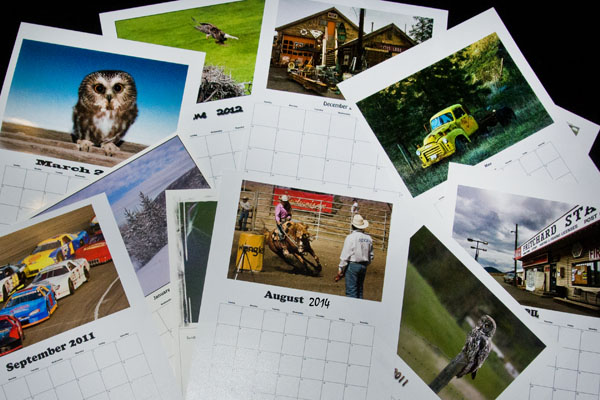
Now comes my delight with calendars. It is not that I need to know what day it is; that is a utilitarian benefit. I like those with pictures.

Calendar pictures must immediately have an impact. A successful calendar picture grabs our attention and quickly tells a simple story. However, unlike the art my instructor was demanding, calendars only have to endure for about thirty days at the most. Each picture only has to artfully work to capture our attention and give us the proper date for one month. Then we get to start all over, and we get to enjoy a different picture with more information on important dates for another month. Hmm…functional art, what could be better.

November is my month to start seeking calendars. I hate searching for calendars in January. There is something wrong in hanging a calendar mid-month. My wife and I have the perfect approach for photographers. We each choose from the photos we have taken during the month and I print a new calendar each month. No rules, no themes. We select a picture we each like and I make an 11×14 print that is half picture and half calendar – side by side, or up and down.

That’s not to say that I don’t get other calendars. If one grabs our fancy while shopping we’ll get that also. Then there are those we receive as gifts. I can’t have too many calendars. Getting to view lots of new pictures each month, it doesn’t get much better than that. We also choose images and have calendars made for us that we give away at Christmas.

My advice to readers like me, that enjoy having their pictures hanging on their walls, is to start putting your own calendar for 2016 together now. Stop by the local business supply store or look online. And remember calendars make great Christmas gifts.

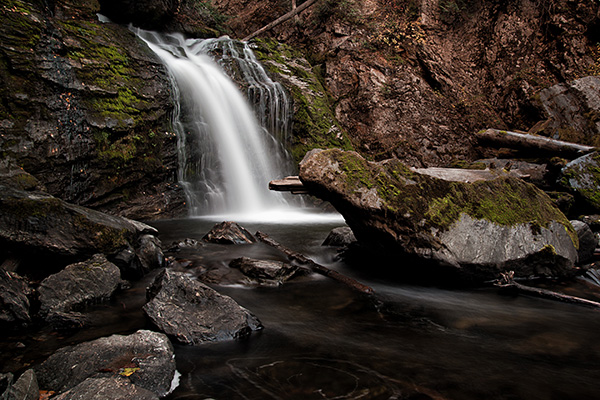
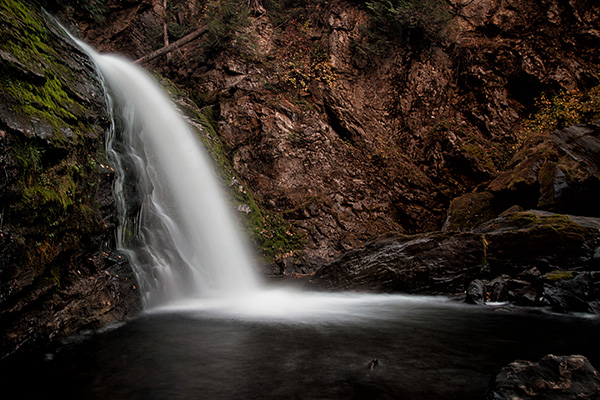
Photographing Chase Creek Falls  

Chase Falls 1

Chase Falls 2

Chase Falls 3

Chase Falls 4

The third season of the year is here, and it is my favourite season of the year for photography. Fall or autumn, it doesn’t matter which word is used, is so darn colourful here in British Columbia; and I really enjoy the cooler air, a welcome relief from the heat of summer.

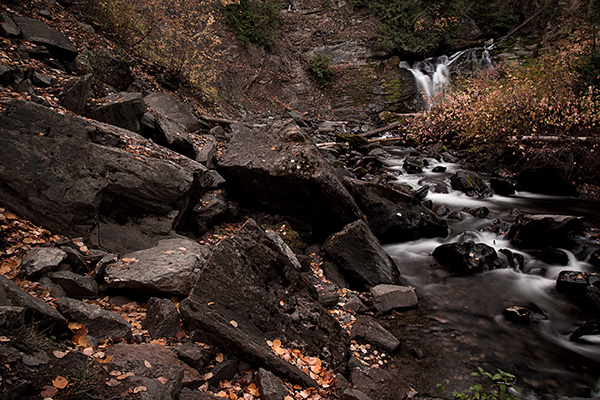
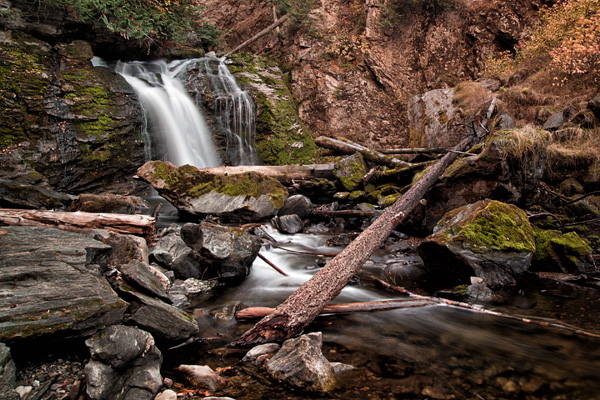
This week I drove the short distance down the road to Chase Creek Falls. I was in April just after the spring runoff when the high water began to subside. April is the second best time to go there, October the best. October has low water that makes scrambling along the colourful creek side easy, and lets photographers position their tripod and cameras close to the falls without getting wet.

In my April article I wrote that I have been photographing Chase Creek Falls since sometime in 1976. I have used 35mm, medium format, large format, film, and digital to photograph those falls every season of the year in every type of weather using black and white, colour, and even polaroid film.

I have gotten wet, walked away muddy after sliding down the steep bank, and bumped into the large river rocks a bit to hard. I’ve lost lens caps, a lens hood and even a polarizing filter on my visits. I have used the Chase Creek Falls once as a background for a large family reunion and another time for wedding portraits.

Photographing waterfalls is very easy and almost as relaxing as wandering around a garden. Modern digital cameras have improved the ease of taking photos by removing the requirement of much of the technical information that photographers once needed to know.

The equipment doesn’t need to be expensive or special. Select your favourite DSLR, a lens that has a wide enough focal length to see the falls, a tripod, and a neutral density filter. When I remember, I also like to use a cable release; but if forgotten the cable release isn’t a big deal, just use the camera’s self-timer instead.

Setting up the camera to get that soft looking water coming over the falls is very easy. Just choose a low ISO and a small aperture. The low ISO allows a slow shutter speed, and the small aperture gives lots of depth of field.

An ND, or neutral density, filter reduces the light going through the lens to the sensor and is the most trouble free filter for making long exposures. I prefer the square or rectangle ones that I can hold in front of my lens. I don’t use the fancy filter holder as that just gets in my way when I want to add additional ND filters to reduce the light.

I prefer shutter speeds of three or more seconds, and adjust the ISO, aperture and ND filters to accommodate that. Next, point the camera and start making pictures decreasing the shutter speed and checking the LCD as one goes along. It is all so easy.

This is a perfect time of year (here in British Columbia anyway) to spend some time photographing local waterfalls. They don’t have to be large and exotic, just have a bit of water going over them. And like me, after a dozen or so shots, put the camera back in it’s bag and sit quietly in the sand and lean back on a big smooth river rock so you can enjoy the sound of the water. Life is good.