Liking Black and White Photographs


My last article entitled, “Wandering City Streets with my Camera” included both colour and black and white images and elicited the following remark from reader, Timothy Schultz, who said, “I don’t usually like black and white photos, but they were used very effectively here.”

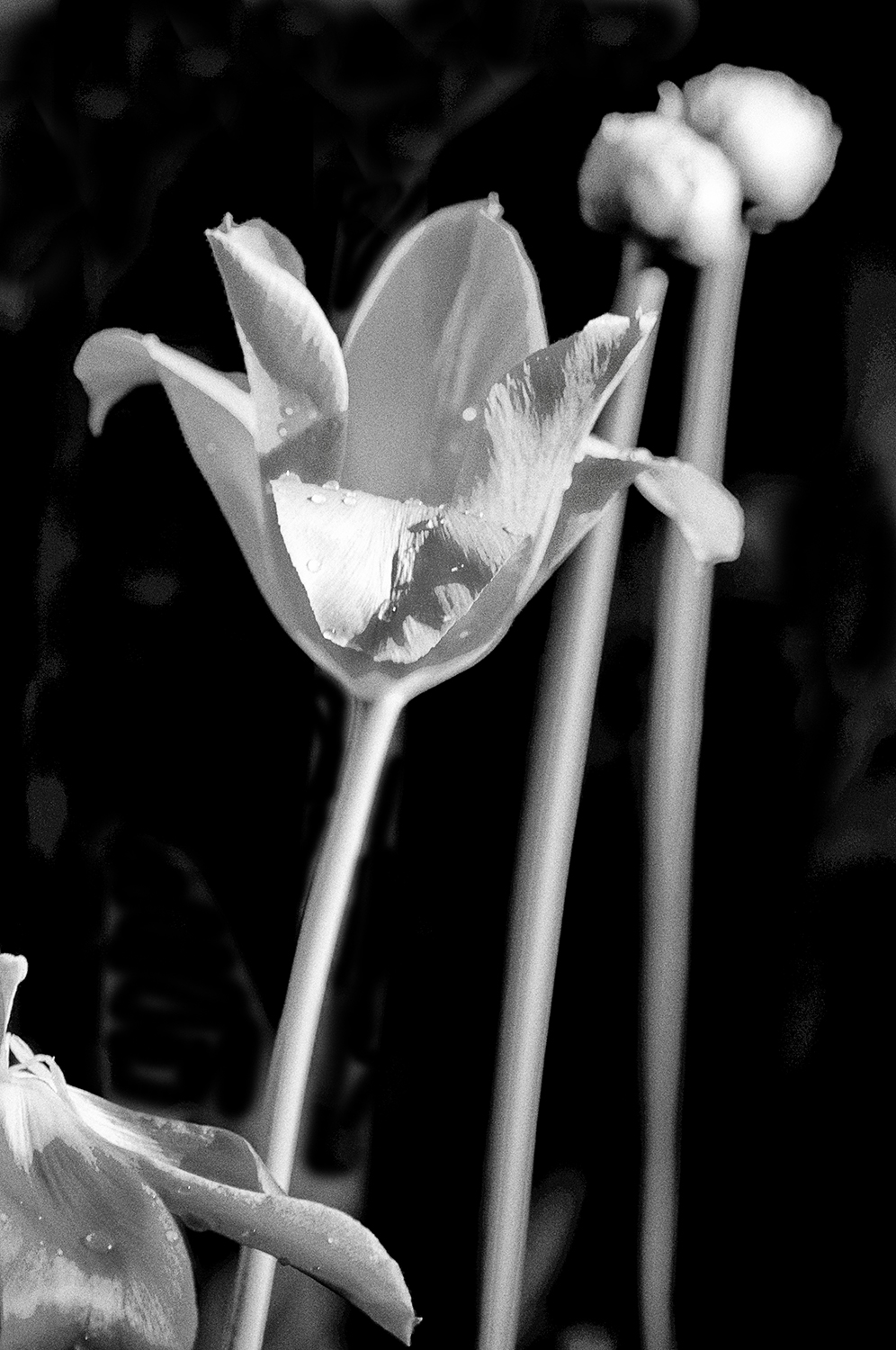
Black and white photography has always been a favorite of mine, and I am pleased that some readers agree that sometimes the use of black and white is effective.

During my years of involvement with photography I have seen changes in the kind of photography people are doing. When I first started making pictures as a child it was all about economics – B&W prints were cheaper than colour prints.  After that one-hour photo labs appeared in shopping center parking lots, department stores, and finally in malls, and colour prints became inexpensive and the mainstay for photographers.

I have always liked black and white and much of the time prefer the mood it evokes.  Since the introduction of digital image making and programs like PhotoShop and NIK software’s Silver Efex the need to carry a dedicated camera and to commit space for a custom-built lab has disappeared.  Now all that is necessary is learning how to effectively use the correct program.

Colour is reality, and black and white seems a bit “arty”, or as I wrote, “mood evoking”.  I have never produced an album of wedding photographs without including some black and white prints and when I ask the couple if they are OK with that, I always hear, “Oh, we love black and white. Yes, please”.

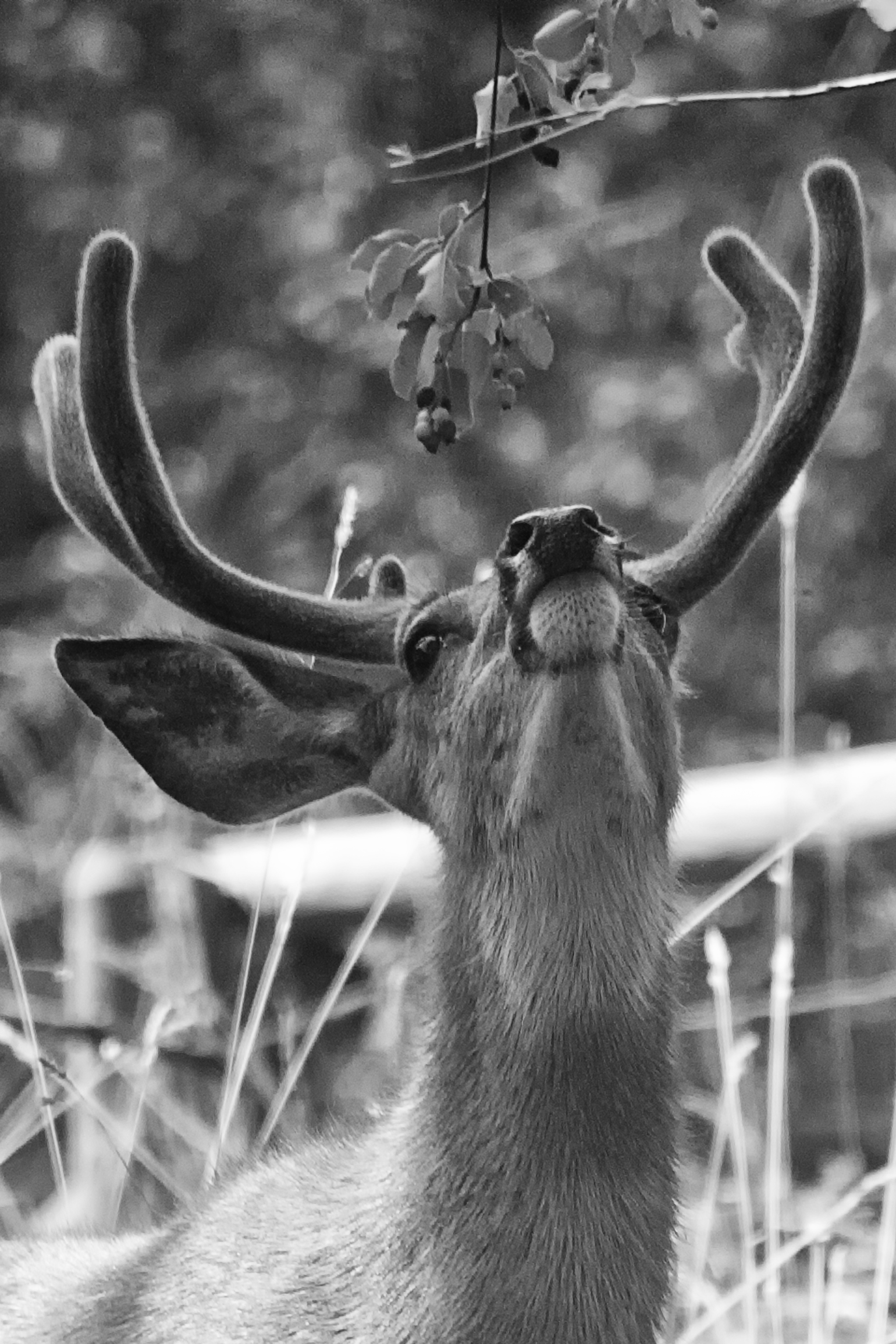
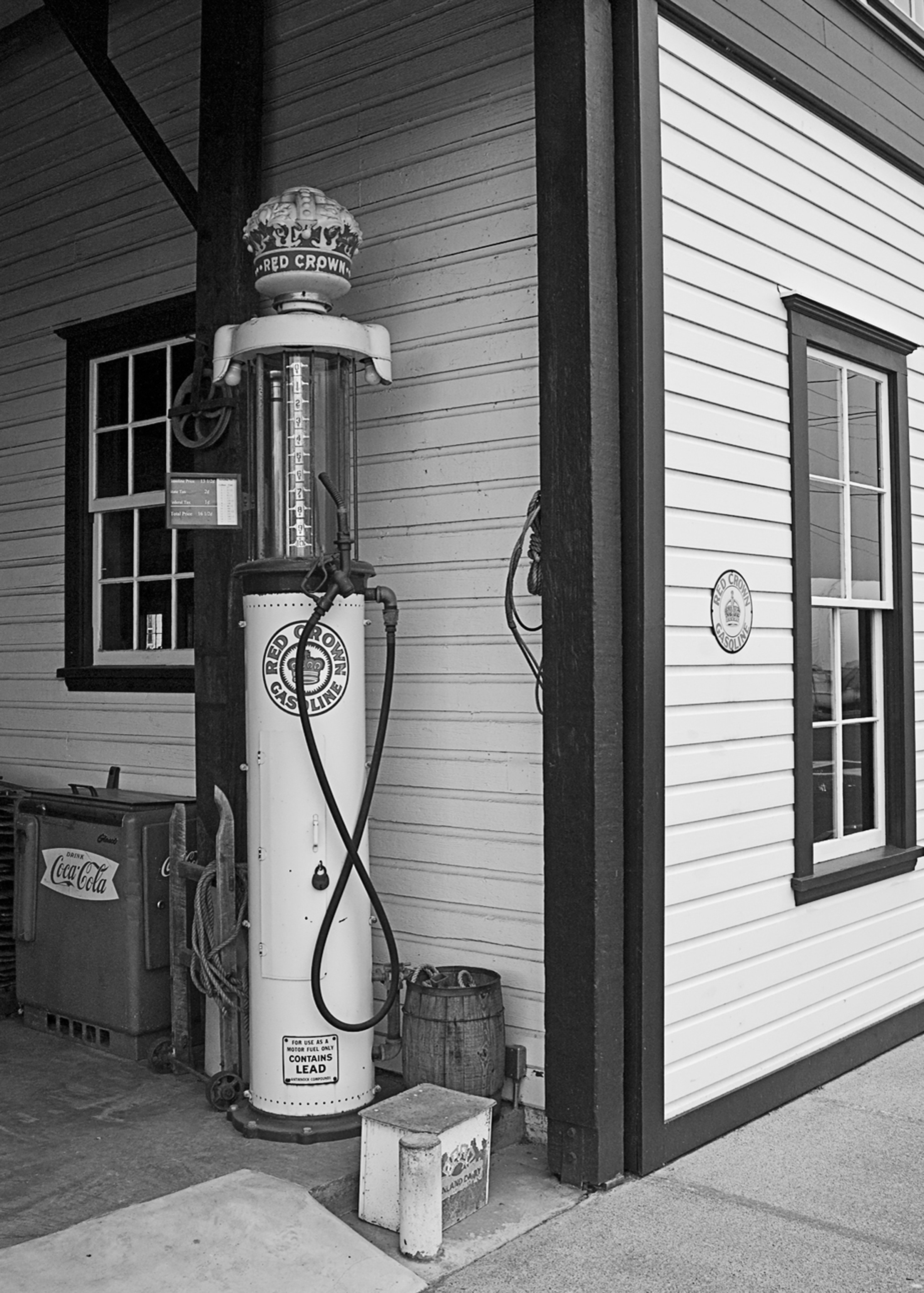
People comment that a black and white portrait speaks about a person’s personality.  I am not sure about that, but I do like, and sometimes prefer, black and white, depending on whether the subject is a person, an animal, or a building, and what I am trying to illustrate with the photograph.  And, I “previsualize” how those colours are going to work as shades of gray while I am composing the photograph.

I’ll mention here that famous photographer Ansel Adams introduced the idea of, and the word, previsualization. It is a term he used to describe the importance of imagining, in one’s mind’s eye, what the final print reveals about a subject.

We see everything in colour, and in the modern world of digital photographic technology that’s what is captured.  Then, we visualize and translate those images into black and white images using post-production technology.  I really do like B&W pictures and sometimes miss those singular times in my darkened room, where I would produce my B&W photos by hand in open trays of chemicals.  However, technology has changed and there are many options that now allow photographers to produce higher quality B&Ws.

I read an on-line discussion entitled, “Why Black and White Photography” by Robert Bruce Duncan. In it he wrote, “black and white has an inherent dignity”.  His opinion is thought provoking.  Perhaps we do see and interpret more in a B&W photograph. Duncan goes on to say that he thinks few colour landscape photographers have matched the black and white work of photography greats like Ansel Adams, Edward Weston, Paul Strand, Margaret Bourke-White, and Imogene Cunningham, for example. And on portraiture he says, “it’s more than arguable that black and white is at it’s best for people photography…From early portraits by Julia Margaret Cameron, and later, Steiglitz and Steichen….(and) the photographers who documented America during the depression, to a whole slew of great Hollywood glamour photographers…and all the masters that made Life magazine perhaps the best periodical of its era.”

I am intrigued with Duncan’s words, I could mention some famous colour landscape photographers, but I’ll leave them to readers to search out. I believe both colour and B&W has its place.  As I wrote, sometimes I prefer black and white depending on the person, animal, or building, and what I am trying to say with the photograph. I pick and choose what image I think will work best in black and white and that depends upon the subject, the circumstance, the light, and, of course, the colour.

My website is at www.enmanscamera.com

How far we have come since photographer Margaret Bourke-White

The other night I was rummaging through my collection of old photo magazines and I came across the 1964 issue of “US Camera”. As I casually thumbed through it amused by the ads on equipment and how-to tutorials on printmaking I came across a very interesting story by the famous photographer Margaret Bourke-White about her beginnings as a photographer in the 1920’s. 

The short story was an excerpt from her book “Portrait of Myself”. Specifically, I enjoyed the part about her trials and successes photographing the Otis Steel Mill in Cleveland. She talked about how hard it was to capture the interior of the mill that to the eye was more than illuminated by the molten metal, but was extremely underexposed and unrecognizable on her film. In those days film and photographic paper had little latitude and the film emulsions were very slow, probably 50 ISO at most. She further talked about how excited she was when she was able to borrow a “fast” f/3.5 lens. And even then her exposures were inconsistent, sometimes over exposed, sometimes under exposed. Her success finally came first by using big magnesium flares for illumination, then with new photographic print technology for that time that contained very heavy deposits of silver therefore giving it a “long gray scale”. Her amazing photographs in 1928 were probably the first pictures of those kind ever made.

All this got me thinking about how far we have come since those days of heavy view cameras accompanied by large, unwieldy tripods, Sheet film was barely light sensitive and had to be carried in special holders, and lenses normally had their widest apertures at f/6 and were thought to be wide opening if they had apertures of f/3.5. The lighting equipment was extremely dangerous, inconsistent and consisted of either magnesium flairs or flash powder.  And after all that a photographer needed to have extra processing skills when using crude printmaking equipment that more than likely was a combination of home made enlargers and shelves of chemistry to mix different developers.

Today depending on how large a print we want to make we can either select a camera with a large sensor or upsize our image in programs like PhotoShop and Genuine Fractals. Tripods have become lightweight, durable and strong. We select the best tripod head for the camera and lens combination we are using and install that.  Many of the super telephoto lenses have apertures of f/6, but lenses at 200mm or shorter with apertures of f/2.8 are common. And remember using that 200mm on a digital camera may give a crop that is effectively 300mm.  Lighting equipment has  become amazing and we have just as much choice with electronic flash as we have with digital cameras, maybe more. I am amazed at the process Bourke-White had to go through to get a clear, well-exposed image in those steel mills. 

As I read that article I thought about how far we have come since those days and how easily it would be to photograph those scenes with today’s equipment.

We could first select a camera that allowed a high ISO and a lens with an f/2.8 aperture. Wait, many of us have f/2 and f/1.4 lenses, so they would allow even more light gain.  Heavy cameras and tripods are no longer an issue. Together the average DSLR (digital single lens reflex) camera with a “heavy” f/2 lens and tripod probably weighs less than four pounds. Lastly there is lighting that is now easier with light meters and digital cameras. Some photographers may use powerful studio equipment while others could make do with several small flashes positioned around an interior using slaves to fire them off.

This is a very exciting time for photographers. Photography has become so accessible and the advancements in technology can free beginners from the tedious mathematics, expensive film testing, and dark chemical filled rooms. Yes, I think this is a very exciting time for photographers.

 Margaret Bourke-White spent close to 30 years as a staff photographer for Life magazine and had her photography published in numerous books and magazines. If interested check her out, there have been several books written about her and much about her is easily accessed on the internet.

http://www.enmanscamera.com