Photographing a yard of old cars

Red hood 1Sentinal 1 Gunshot Fading away Gunshotsnowed in 1

This week my wife and I decided we were long overdue a visit to friends Mike and Leslie. Like us, they have a rural home tucked up and near a forest not far from Kamloops.  It’s always fun sitting around the kitchen table in their woodstove warmed home talking and catching up on each other’s lives. Mike makes his living as a rock scaler and blasting contractor helping to keep British Columbia roads clear of impending rock slides and Leslie is one of those artistic people that will amaze you whether singing, drawing or aiming a camera. Leslie also operates a good size organic farm that gives them most of the food they eat.

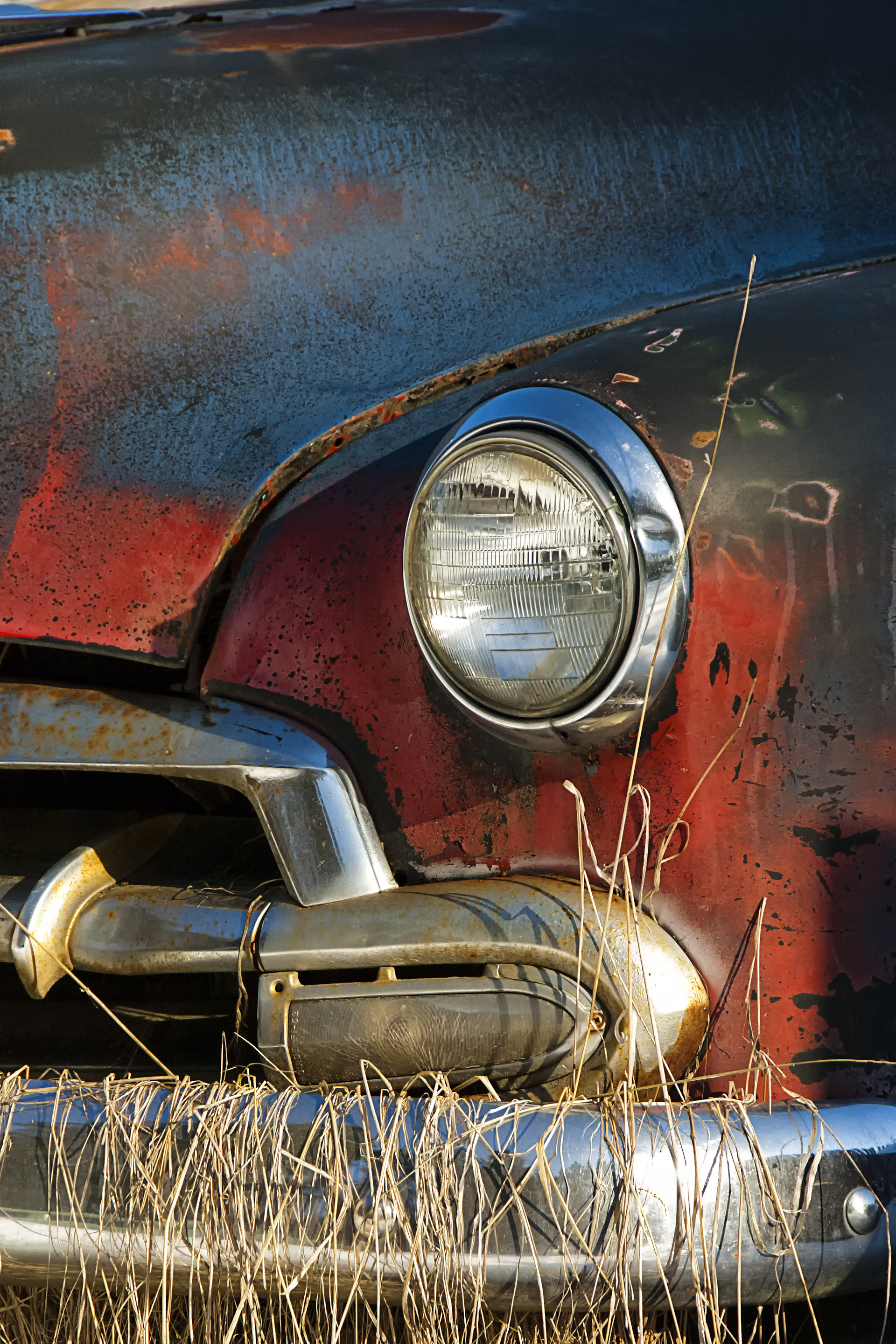
On this visit I hoped the snow was melted enough that I could wander around in Mike’s car yard. Mike is a collector of old cars of all years and models and has created a wonderful metalscape that becomes a photographer’s paradise if you like cars like I do.  Rust, paint, dents on cars of all years and parts of cars are everywhere.  I could spend the day there just making pictures.  Each time I get the chance to wander in Mike’s car yard I discover something different.

We arrived mid afternoon and after a good while of yawing and discussing our lives I realized the sun was getting low and beginning to create shadows on the cars. Perfect for prowling the diverse collection of car bodies looking for sculptural details. I remember the first time Mike showed me his cars. I only had a little Olympus point and shoot with me that day, nevertheless, I almost filled the camera’s small memory card, and since then I have been back many times with better cameras.

On this day I mounted my trusty 18-200mm lens on my camera that was set to manual mode as usual. The slightly wide to slightly long lens was perfect for those shots of hard-to-get-to cars. I knew I’d be climbing around, so I set an ISO of 200 in the bright clear afternoon light that also gave me lots of depth of field when I wanted and could be I easily reduced when I softened focus in front of and behind some features.

Some cars have lost fenders, hoods, and windows as they are dismantled and sold. Others seem to be loosing a battle with the elements and there are always newer cars added, so the landscape changes each time I roam the yard.

This time I began with shots that showed car after car resting in the melting snow. Then I started tightening my view, eventually working the light reflecting of the changing colours of the metal, and narrowed my visual search to small features.

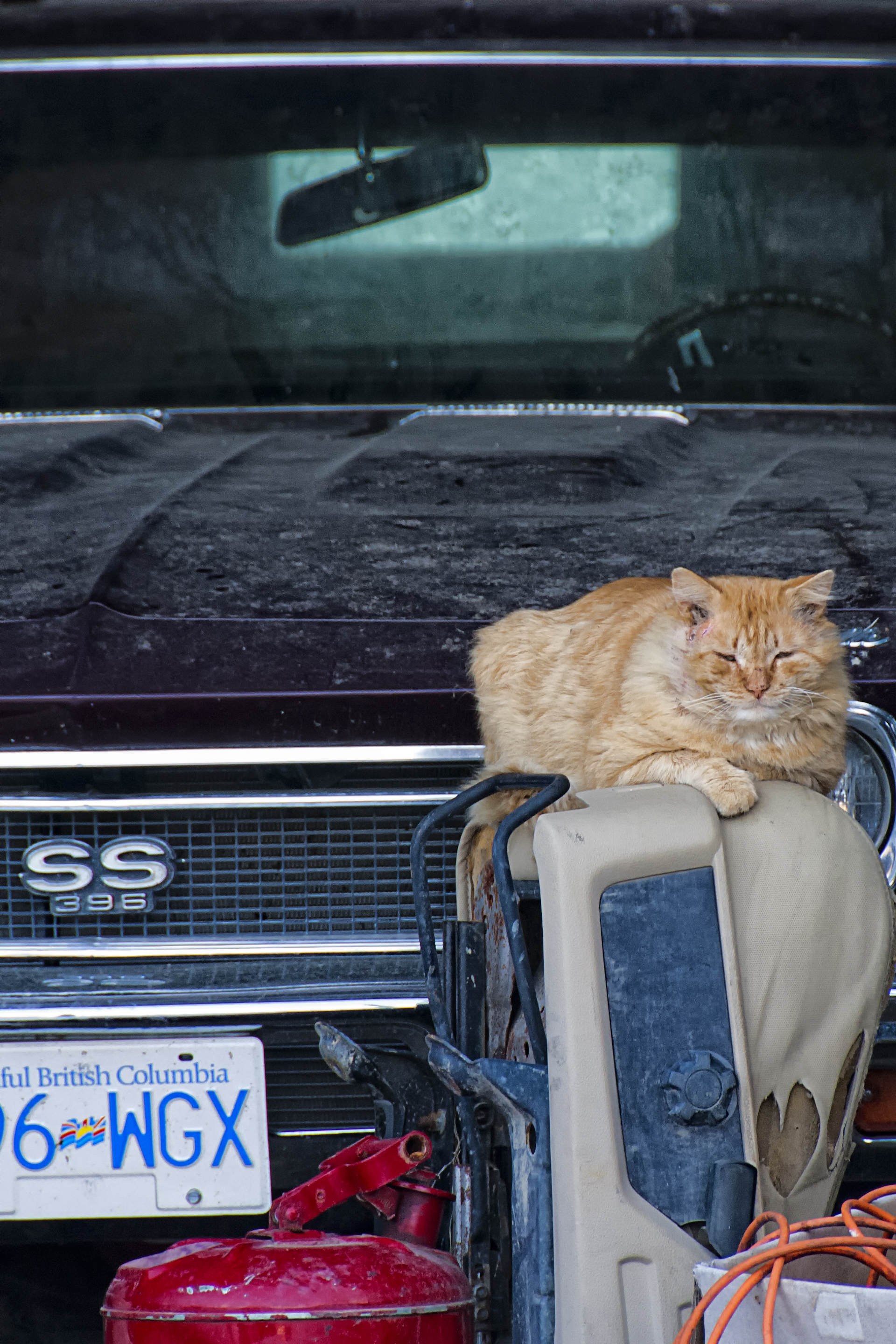
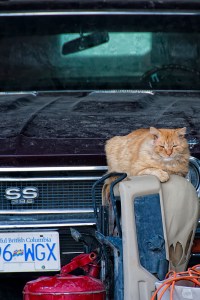
I could have spent several hours, but reluctantly wove my way out remembering I was ignoring my hosts. Yes, they are used to me being preoccupied when I have a camera, but all the same I shouldn’t be neglecting them.  Still, I had to make one more stop when I saw their scrappy old tomcat resting on an upturned car seat in front of a 1969 Camaro super sport. I was happy enough just to get a photo of that classic car, but that cat was the frosting on the cake for me.

As I sat writing I thought about how I enjoyed the day that began with a drive along a winding country road, then a long visit with good friends, and finally a really good time making pictures. Can it get much better than that?

I always enjoy your comments. Thanks, John

www.enmanscamera.com

What is Bokeh?

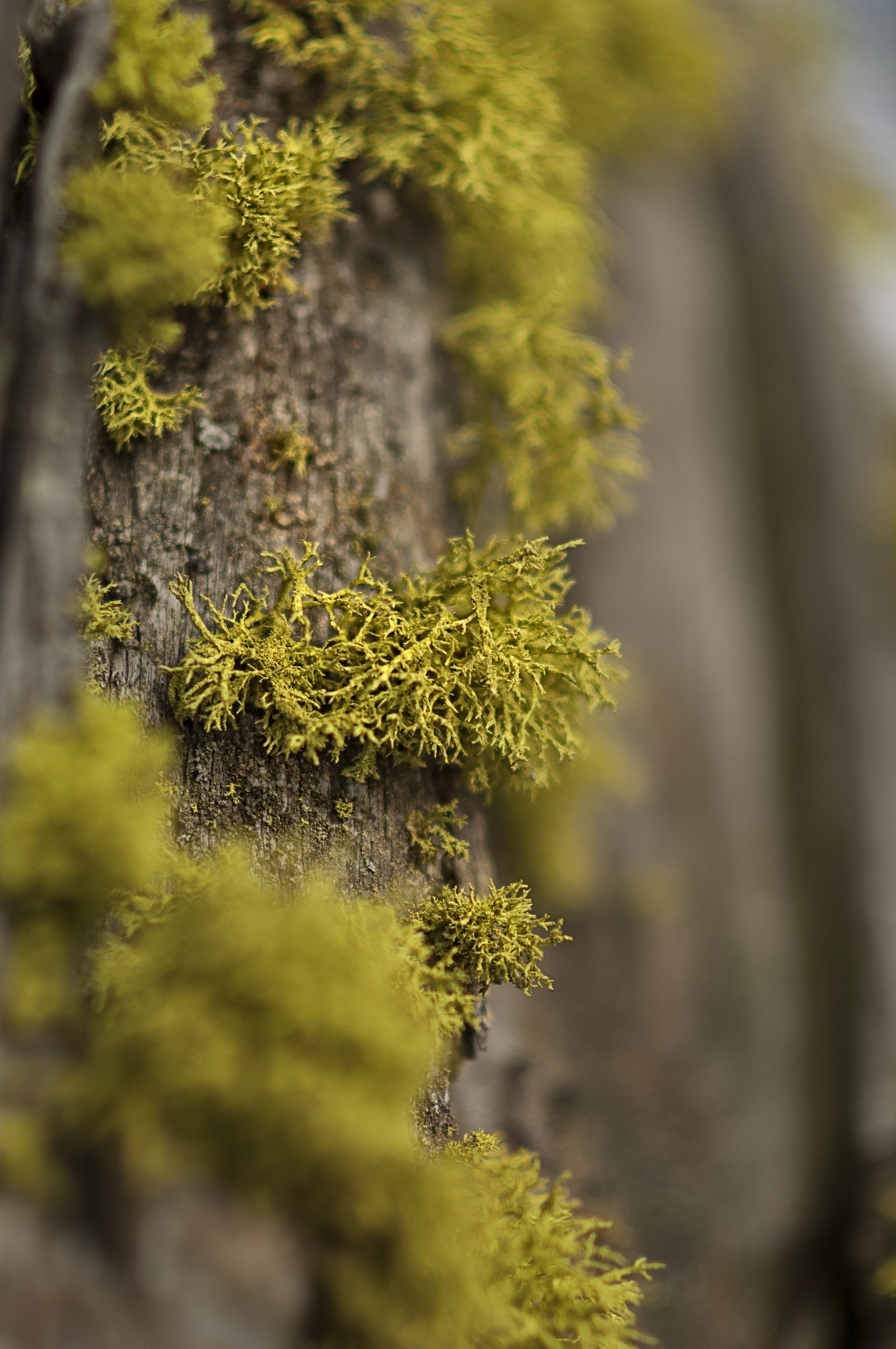
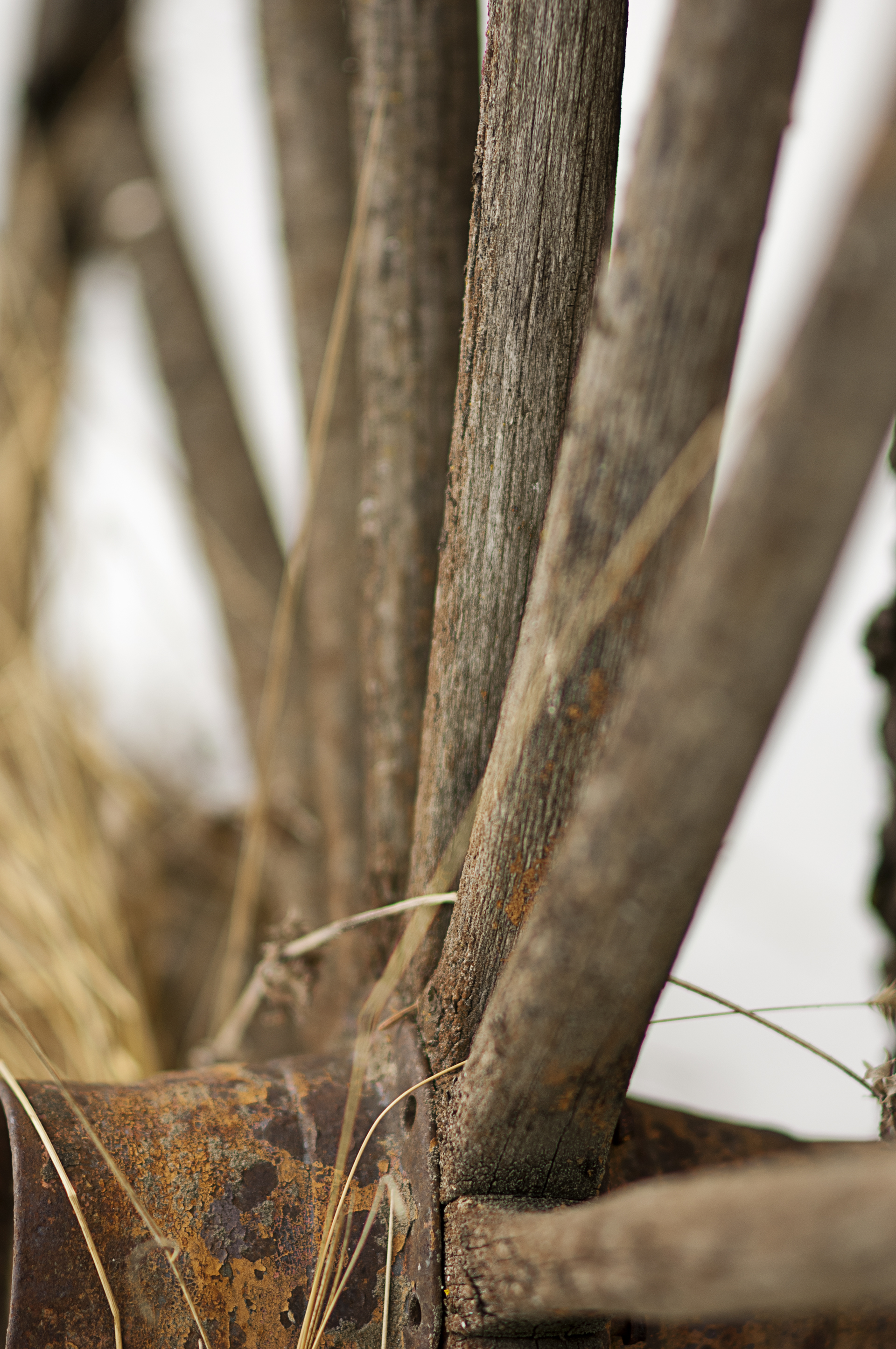
Window Pane bokeh Sedum bokeh Wooden wheel bokeh

Wikipedia defines bokeh as “the way the lens renders out-of-focus points of light”. And my dictionary states; “bokeh, bōˈkā. “The visual quality of the out-of-focus areas of a photographic image, especially as rendered by a particular lens.”

Bokeh has become another one of those not-so-well-understood terms that has become over used, and in many cases misused, by photographers since recent technological advances in cameras have made the medium of photography so accessible and popular.

A young photographer walked into my shop last week and asked the question, “Do you have one of those depth of field lenses?” I knew what the answer was because that was not the first time I have been asked the same question.

The first time I was asked I thought there might be some new piece of equipment on the market and inquired if that meant a wide aperture that controls depth of field. That’s where the word bokeh came up. The response was, “Ya, depth of field, bokeh.”

In my classes I include a tutorial on depth of field and more than once participants have interrupted me saying, “Oh, so that’s what bokeh is.”

Actually, the word bokeh comes from the Japanese word boke, which means “blur” or “haze”, or boke-aji, the “blur quality”.  That’s right, not blur, but blur quality.

Wikipedia carries on stating, “However, differences inlens aberrations and aperture shape cause some lens designs to blur the image in a way that is pleasing to the eye, while others produce blurring that is unpleasant or distracting—”good” and “bad” bokeh, respectively. Bokeh occurs for parts of the scene that lie outside the depth of field”.

One of the problems with that word might be that photographers are applying it when trying to describe not only control over depth of field, but selective soft focus. Those new to these effects are searching for a quick term to define effects that they don’t understand.

The authors of www.picturecorrect.com write that there are, “fundamental differences between soft focus and bokeh. In soft focus photography there is an intentional blurriness added to the subject while the actual edges are retained in sharp focus, but in bokeh it is only an element of the image that is intentionally blurred. Additionally, bokeh tends to emphasize certain points of light in the image as well.”

Bokeh appears in the areas of an image that remains outside the focal region. Because of this the most common technique used to add it is a shallow depth of field created through a wide open aperture”.

Depth of field is, “That area, in front of, and, behind the subject, that is in acceptable sharpness.” In my experience depth of field is one concept that eludes many photographers.

I suggest photographers think of it as selective focus. Thinking that way will help one make decisions about how much should be in focus around the subject, and, of course, allowing bokeh to appear.

In my opinion, one need not be surprised or critical when someone says they want a “depth of field lens…ya know, a Bokeh lens”. Every medium has its slang or jargon, and. unless one has enough interest and energy to study a fast changing technologically like photography, I can understand the confusion using many of the new words.

As always, I do appreciate your comments. Thanks, John
My website is at www.enmanscamera.com

Photographers and Christmas Pictures

tree 2  presents Xmas Cat

Christmas is only a couple days away. Gosh, that was fast! Oh well, I like Christmas with all its trappings. I’ve been listening to Xmas music, watching plenty of not-so-great Xmas TV shows, attending both my granddaughters’ Christmas concerts, decorated our tree and most of our house and I have already been eating candy and lots of holiday snacks.  It’s Christmas.

This time of year is filled with photo opportunities. Yes, pictures of our home and the landscape covered in snow are great, and I have been having a great time wandering around in the fresh snow, but the unique opportunity I am writing about is the pictorial story of everything that happens around us during this holiday season. I have years of film slideshows and digital CDs of my Christmas’ and plan on continuing for many years to come.

Photographers might try to tell a story and take pictures of everything.  For example, the decorated Xmas tree and house, even that Christmas Eve dinner table, and maybe the morning breakfast with the family on Christmas. Then get the camera ready for the gift opening. Yep, photograph it all and approach every photograph as if it’s the most important you’ll make. It doesn’t matter whether it’s for a client or for family archives, all pictures should be printable and viewable. I prefer a DSLR camera and every image gets post-post processed before anyone sees it.

Not one for the point and shoot style, I usually think a bit about how I want to make each picture and I take lots of pictures while things like opening presents are happening. I always use a flash and shoot wide with the intention of cropping for the most dramatic effect later. I sometimes think setting up a couple lights on stands would be great, but my family will only put up with so much, and anyway a stand might get knocked over in all the excitement.

Always use a flash for family stuff and go for as much depth of field as possible. My lens of choice for the past few years has been either my 18-200mm or 18-70mm, either one works fine in the confines of my house. They both focus fast and close and that’s all I need.

My family is used to my photographic demands as I expect most photographer’s families are. When we are at the table there isn’t a bit of hesitation when I get up and move in with my camera, everyone knows what to do. Even my son’s young daughters pose. Please don’t embarrass people with pictures. Good photographers shouldn’t be the kind of picture taker that crouches down in everyone’s face as they eat.

My family and friends know that I’ll delete those that don’t live up to my personal expectations. Well, I think they know. Maybe my family and friends think I only take good pictures. Yes, lets go with that. They don’t need to know how long I spend editing in post-production.

As I began, Christmas is only a couple days away. Give that camera’s sensor and lenses another cleaning and make sure flash and camera batteries are charged up.  Yes, I am already having a good Christmas and that’s going to continue with lots of holiday picture taking that I’ll extend into the New Year.

From my wife, Linda and me, have a great Christmas and take lots of pictures.

My website is at www.enmanscamera.com

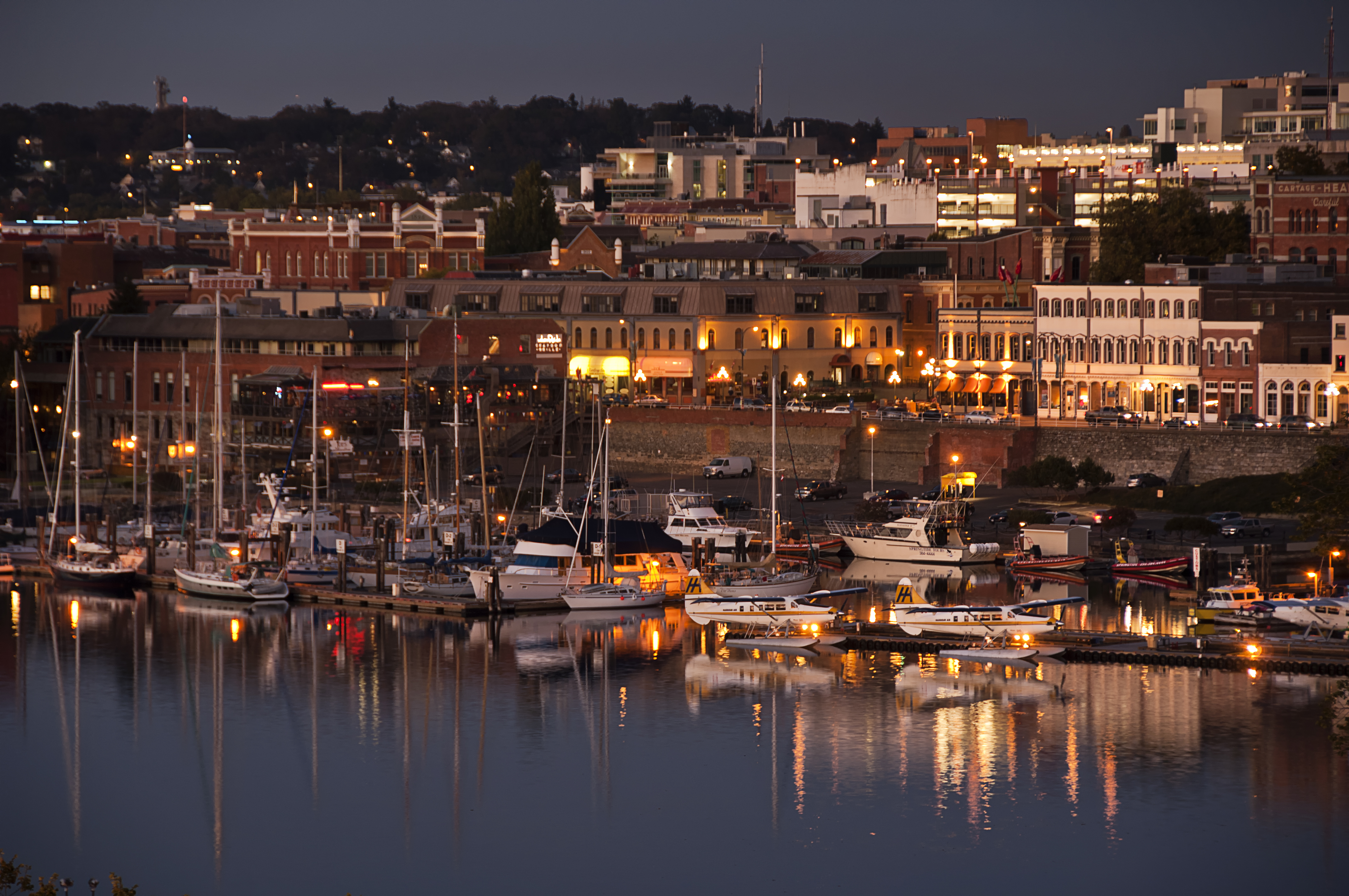
Photographing Victoria’s Harbour


We had decided to escape for a few days to Victoria, British Columbia, over the Thanksgiving weekend. The ferry docked at Schwartz bay, we disembarked, and made the scenic drive into Victoria. This is a bustling, picturesque city surrounded by water that is, in this photographer’s opinion, a perfect place for a photographer to wander around looking for photographic opportunities.

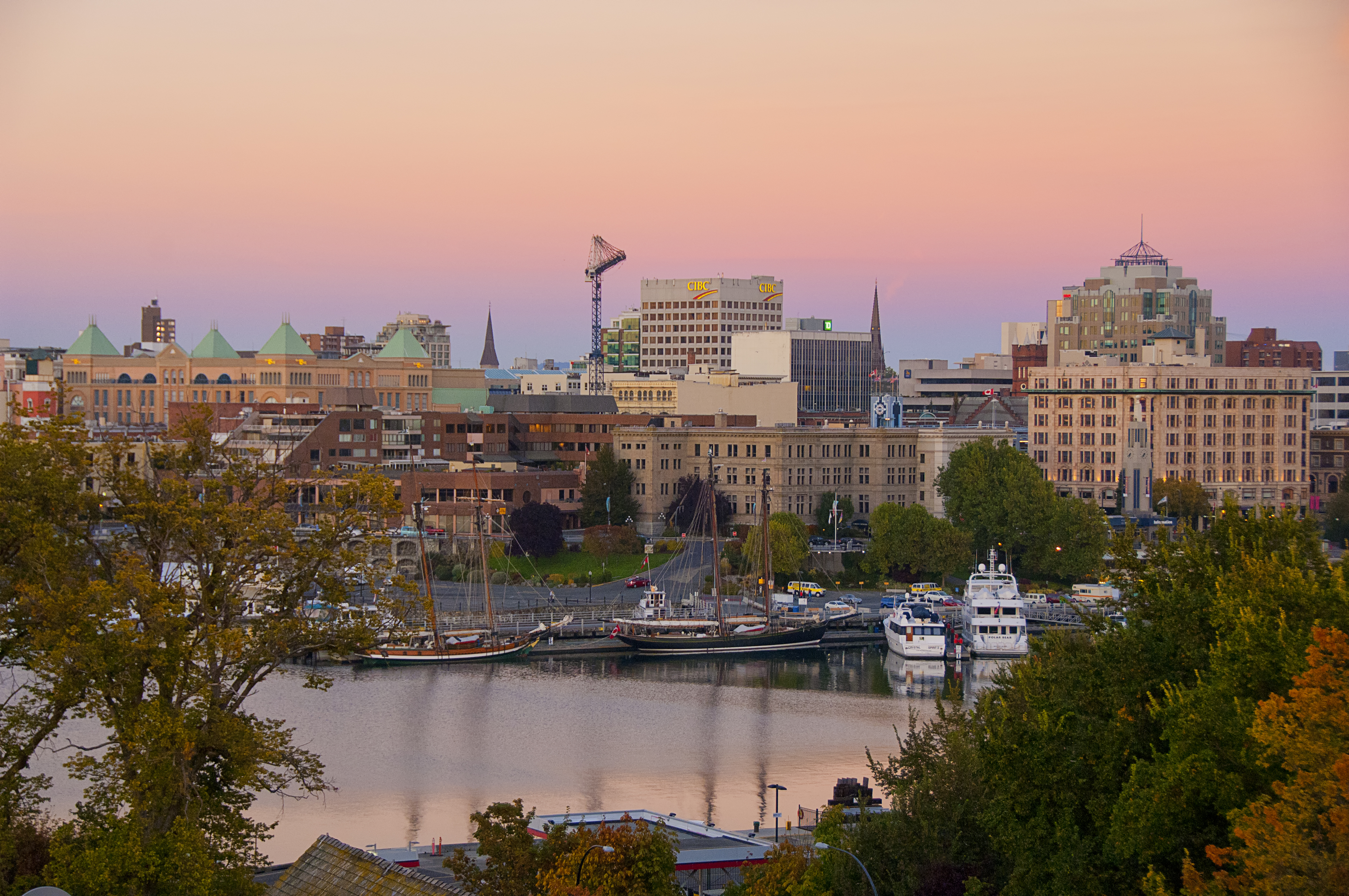
We were lucky in that our hotel room was on the ninth floor with a beautiful view overlooking a panoramic harbour only a block away. It was perfect setting for a photographer. Upon reaching our room, the first thing I did was set up my tripod on the balcony, attach the camera, and start taking pictures of the view. I wanted photos that showed the warm afternoon light, and later on more photos displaying the early evening sky as the city lights began turning on, and finally as the sun vanished, I made lots of long exposures with the only illumination coming from the harbor and the city.

Our first morning had a beautiful blue sky with only a slight breeze and as my wife got together with her long time friend and left for a day of site-seeing and some shopping, I got out my camera and made my way to down to the water front on foot.

My wife and I live in the very dry interior of the Province with rolling hills, lots of lakes, and a large river, however the ocean and everything connected to that environment there is unfamiliar and exciting and I couldn’t wait to start taking pictures.

I chose to bring my 18-200mm lens. The 18-200mm is a lightweight, multifocal length lens with an aperture range of f/3.5 – f/5.6. I know that many photographers these days are favoring wider apertures like f/2.8, but I would be using smaller apertures because I wanted scenics with a sharp focus from foreground to background. Using a wide aperture would reduce that depth of field. And for those readers that would say, “what about those lowlight evening images from the balcony?” My answer is that those were the images that especially needed all the depth of field I could get and most were f/8 or more.  Besides I was using a tripod and a cable release. Anyway, there wasn’t anything in my pictures of that lowlight cityscape that would be moving and I could use as slow a shutter speed as was necessary to get an exposure that worked.

I call lenses like that 18-200mm “vacation” lenses because they are so versatile. I have never been one for carrying lots of equipment and a lens that gives me both wide and telephoto capabilities saving me from carrying a bag full of lenses. My plan was to spend as much time as possible walking along the waterfront. I meandered back and forth thinking nothing of retracing my path when there might be another subject angle I wanted to consider, and the added weight of a heavy wide aperture lens, or additional lenses, would have slowed me down. Exposures change with how the sun reflects off a subject and returning to a place previously photographed several blocks away seemed worth the effort.

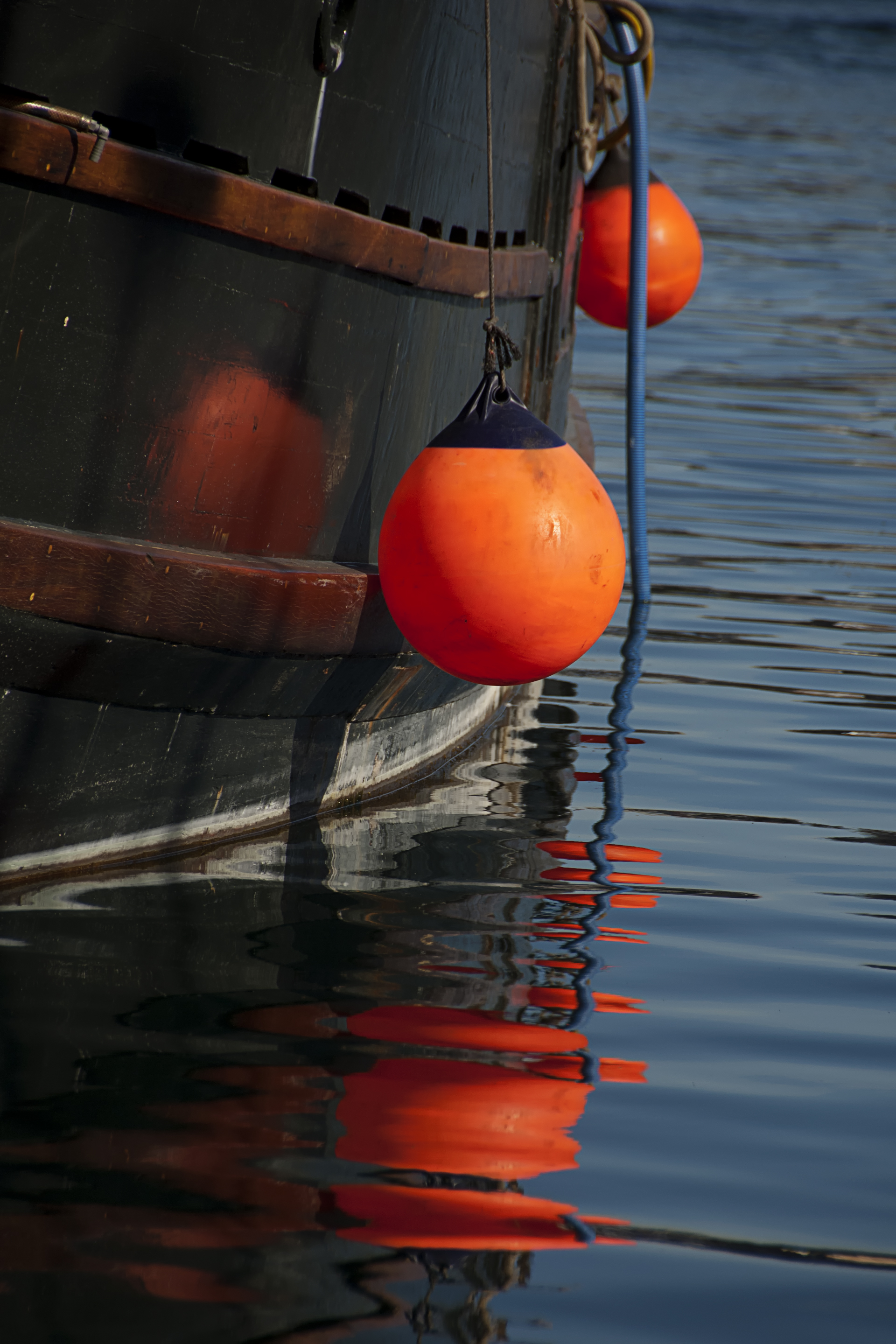
I had to get used to how the reflection off the water tricked my camera’s light meter. I don’t know if all cameras are the same, but in my experience relying on the camera’s meter in many cases will result in an over exposure. So I always underexpose around large bodies of water. That’s easy. I just make a few exposures and check my histogram until I am satisfied.

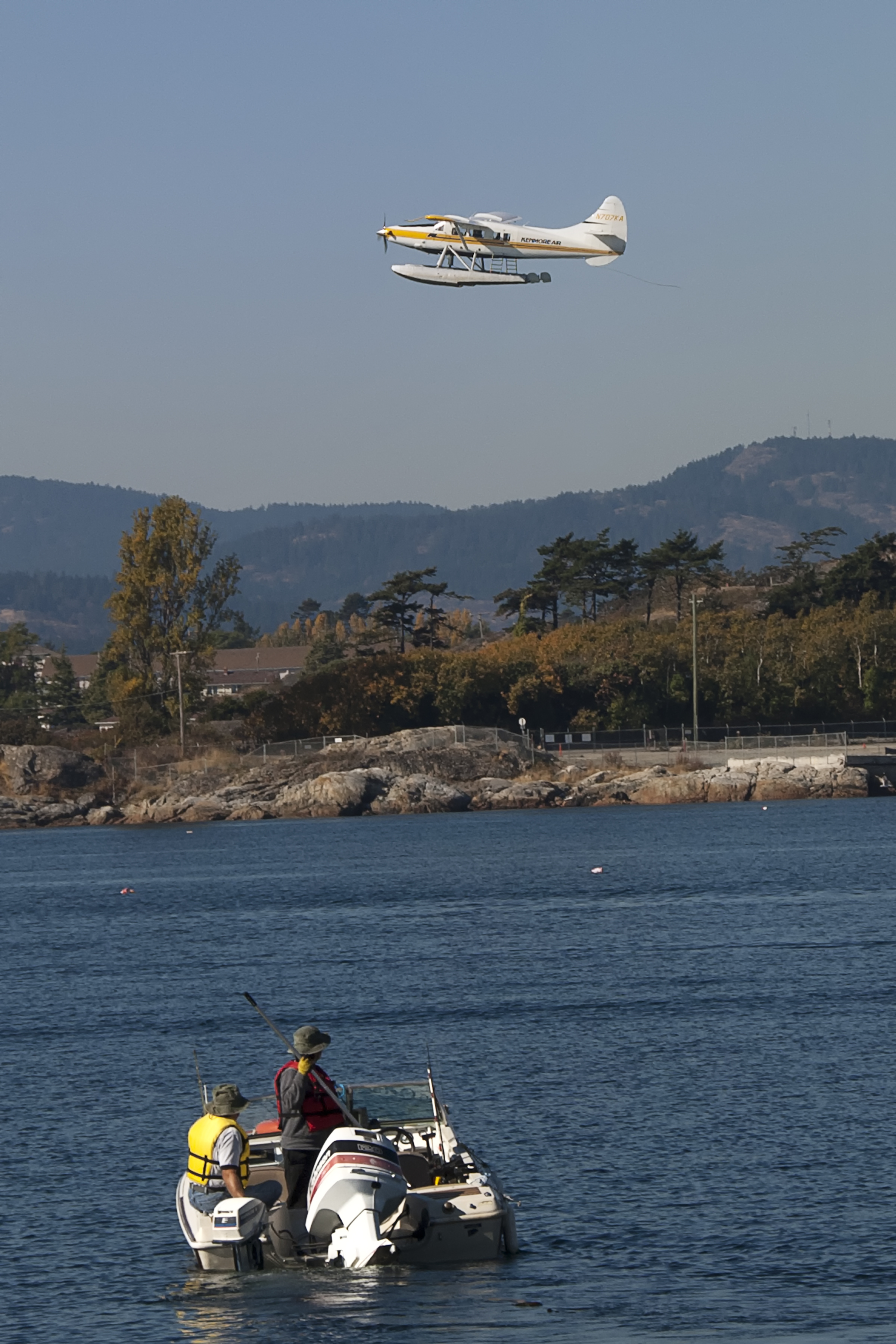
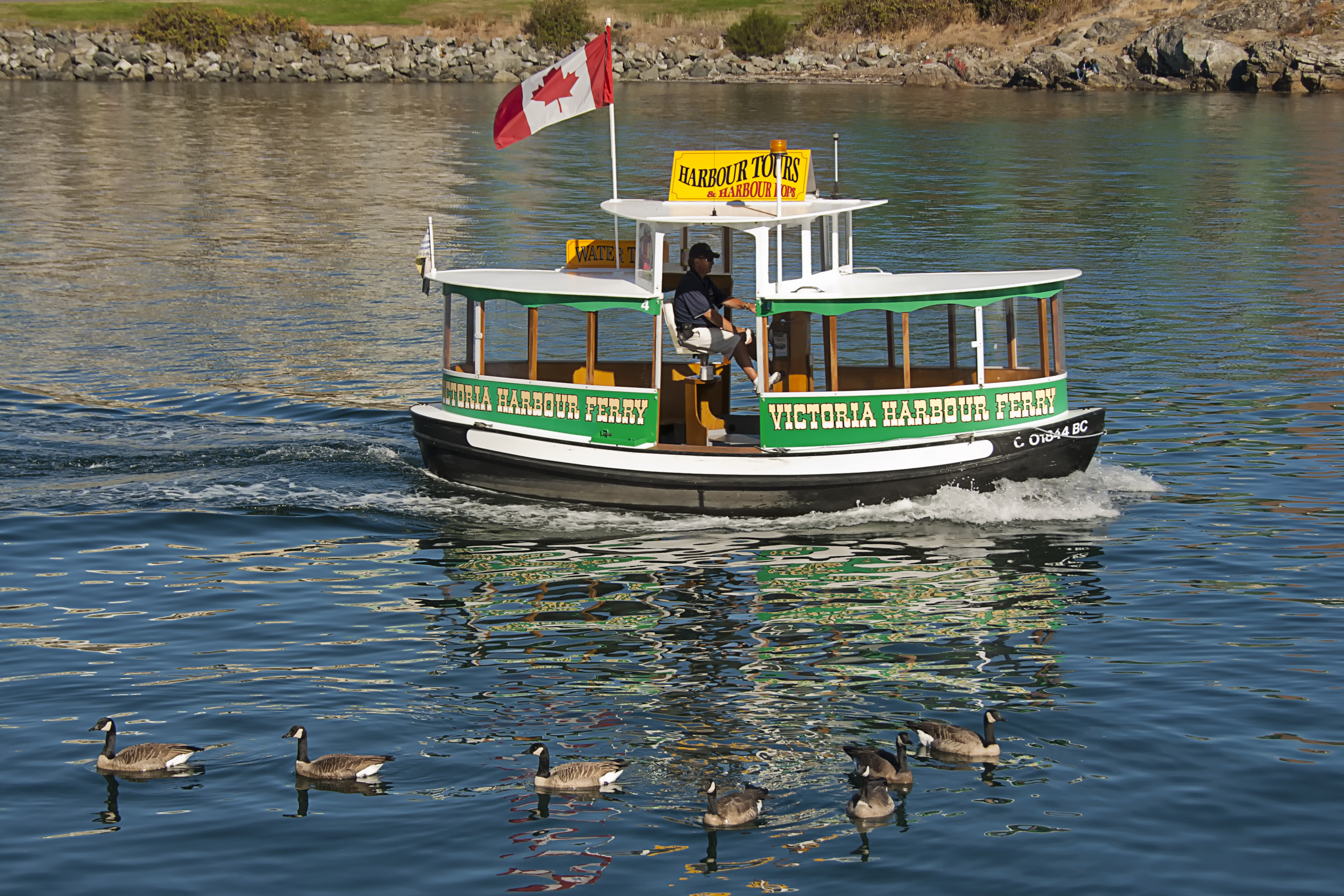
I had a great time photographing boats, planes, birds, and pretty much anything else on, off, and around the water that caught my eye as I roamed Victoria’s waterfront. I found new subjects, met interesting people, and even spent time with other photographers. I really enjoyed the change of photographic scenery and highly recommend any photographer to change things up to refresh their perspective.

I appreciate your comments.

My website is at www.enmanscamera.com

Photographing a Waterfall

The week had been a busy one for me. Unfortunately none of what occupied me had anything to do with photography.  It is said that life gets in the way of having fun.  So when I finally was able to chisel out some time for myself this last weekend I decided to travel the short distance up the road from my home to a stream with waterfall.  The falls are just off the Trans Canada Highway as it winds past Chase, BC.

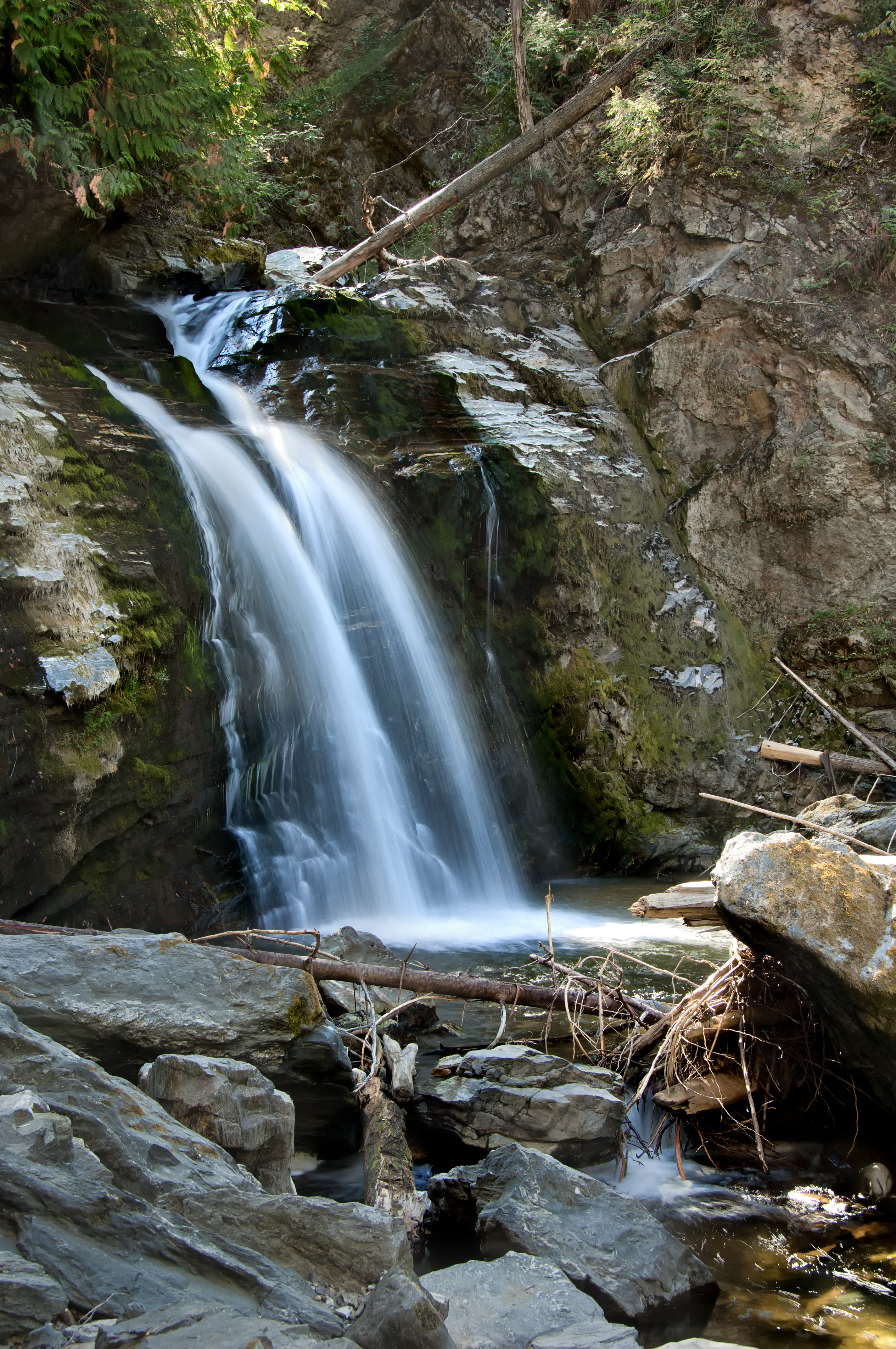
I brought along my tripod, selected my versatile 18-200mm lens, a polarizing filter, and a neutral density filter just in case there was lots of bright light, and headed out. When I arrived at the creek and walked along the well-worn path beside the rock-strewn creek up to the waterfall I found there was open shade everywhere. It was just before noon, and the sun’s direction against the large flat rocks that lined the narrow canyon was providing lots of soft, reflective light on the cliffs, the water, and the pile of logs that surrounded the falls left over from the flooding of waterways that occurred in British Columbia this spring. I don’t think I could have asked for better light. There was very little of the harsh sunlight I had anticipated so I didn’t have to use the neutral density filter, and because of all the soft reflected light I didn’t have deep shadows to contend with either.

I climbed down the large rocks to the stream just below the falls, set up my tripod and started shooting. I like the soft look of water that a long shutterspeed creates so I began by putting the polarizer on the lens, which reduced the light by about two stops. Then I set the ISO to 100 and stopped the lens down to F/11. That gave me a shutterspeed of three seconds.

Photographing water is fun. I enjoy waterfalls, but rushing streams or rivers, plant covered ponds, and mountain lakes are just as enticing. I think it’s how the water sculpts everything that surrounds it.

Waterfalls usually demand a wide-angle lens and a tripod. A wide angle allows photographers to capture the landscape that contains a waterfall and the tripod means there won’t be camera shake. The lens doesn’t need to have a wide aperture because in landscape photography, and that include a landscape with a water feature like a waterfall, one should be stopping the aperture down to create as much depth of field as possible. The important thing, if one wants that glowing, soft looking water is a slow shutterspeed.  And when the shutter is slowed the aperture must be closed, and with a smaller aperture comes more depth of field. I will also mention that a cable release is a good idea to reduce camera shake, but I seem to always forget mine, and so I use the camera’s self-timer instead.

For those who live in the British Columbia there is no shortage of waterfalls that are easy to photograph, and for many like me the waterfalls are only minutes away. Small falls like the one I go to certainly don’t match some of the spectacular waterfalls from around the world, but even tiny falls make good pictures if the photographer gets creative enough. I even have a picture hanging on a wall in my home that shows a waterfall of only four feet high. I put my camera on one of those little pocket tripods and got a very wet knee, shoulder, and hair taking that picture, and remember laughing at the contortions I was assuming to keep from getting too wet in that cold water. Now that would have been a good picture. But, as I wrote, water is fun to photograph and getting wet on occasion is worth the final picture I suppose. Someday I might get the chance to travel around British Columbia, or North America to photograph some of the magnificent waterfalls, but until then I’ll just make the ten-minute drive up the road.

And I always appreciate your comments.

My website is at www.enmanscamera.com

Camera Manual and the Basics of Photography.

I was photographing an outdoor event on a hot, bright day a short time ago when another photographer walked up to me complaining that most shots were not turning out as hoped. This happened again at a wedding I was photographing last weekend. The guest had a perfectly good camera, but criticized it, and said he wished he had a better one because the backlighted couple we were photographing were being recorded as silhouettes.

Ending up with faulty photographs from time to time isn’t unusual, although not as much nowadays as when film was used. However, I think most faults occur because photographers haven’t taken the time to learn how their cameras work, and have a poor basic understanding of photography and techniques.

With digital technology it’s easy to determine what is going wrong by checking the camera’s LCD and the histogram. I doubt that either of those complaining photographers I talked to used the LCD for anything but reviewing pictures. They probably hadn’t gone through the camera’s menu and set it for the conditions under which they would shoot. Both had selected the auto, or program mode, and to add light to the bright, backlit environment were only using the camera’s tiny pop-up flash. They would have been much more successful if they had a mounted a hotshoe flash on their cameras and selected the “M” mode. I expect they will be relying on their images being saved by technicians at the local photo lab or hoping for some friend with PhotoShop wizardry.

I continually meet photographers that complain about how various big photo labs are failing to make their prints the way they think they should be. They rely on their camera’s preset programs, and I expect are of the belief that if the camera they have been using doesn’t make good pictures then they should change and upgrade to the manufacturer’s latest offering to make it so.

When I arrive at a location to photograph I immediately start making tests. I keep my camera in the manual exposure mode so I can quickly change the ISO, shutter, or the aperture to suit my shooting.  I continue to do that throughout the entire session, checking the histogram frequently, and leaving nothing to chance by lazily relying on the camera’s pre-programmed modes.

I begin by contemplating about the subject and its environment.  What is the background and how will that affect the subject? What is in the foreground that will interfere with that subject?   If one considers depth of field a decision must be made about how much will be “in focus”.  Sometimes in a portrait that includes a landscape, I’ll want everything from the foreground to the far-off distance to be crystal clear, and at other times I’ll want the background to be “out of focus”; whichever I select requires its own aperture setting.

What is the lighting like and will its direction be flattering on the subject? The sun and its direction are always very important when photographing people. I prefer to have it coming from behind my subject and like to use a flash for “fill” lighting to remove shadows and silhouettes.

I can do all this because I have taken the time to learn the basics of photography, and I have also taken the time to learn how my camera works. I don’t think either of those photographers that complained to me had done that. I expect they just got themselves ready for the event, grabbed their camera on the way out the door without reviewing their manual beforehand, recalled that the digital camera has a “P”, or auto mode, and believed the camera would make everything they photographed perfect.

Photographers using film used to say that it was all in the negative; that a properly exposed and developed negative gave the best possibilities of a fine quality print.  I still agree with that principle, only now it isn’t an image about to be developed on the negative, but an image about to be processed on the sensor.

I always appreciate comments, Thanks in advance.

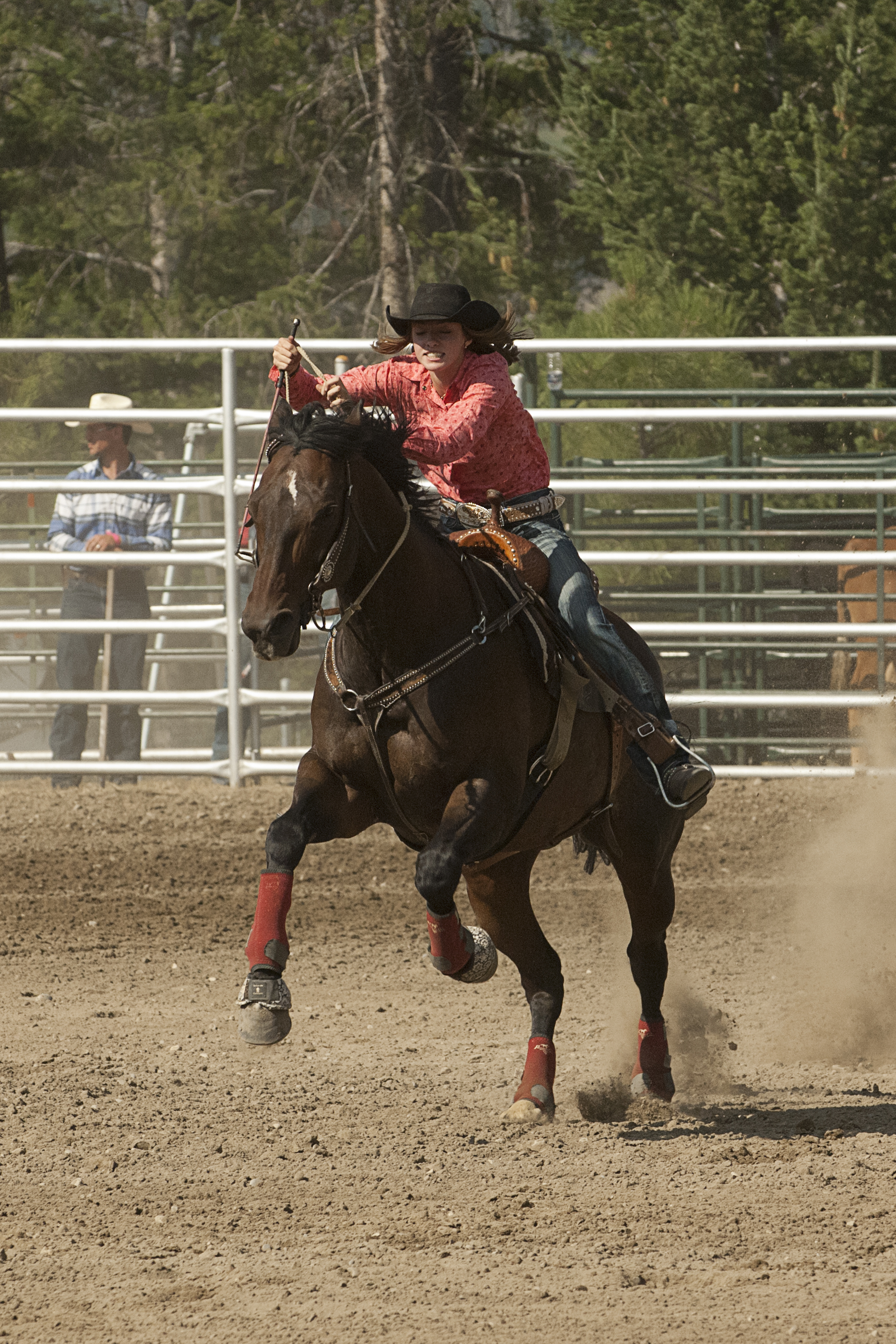
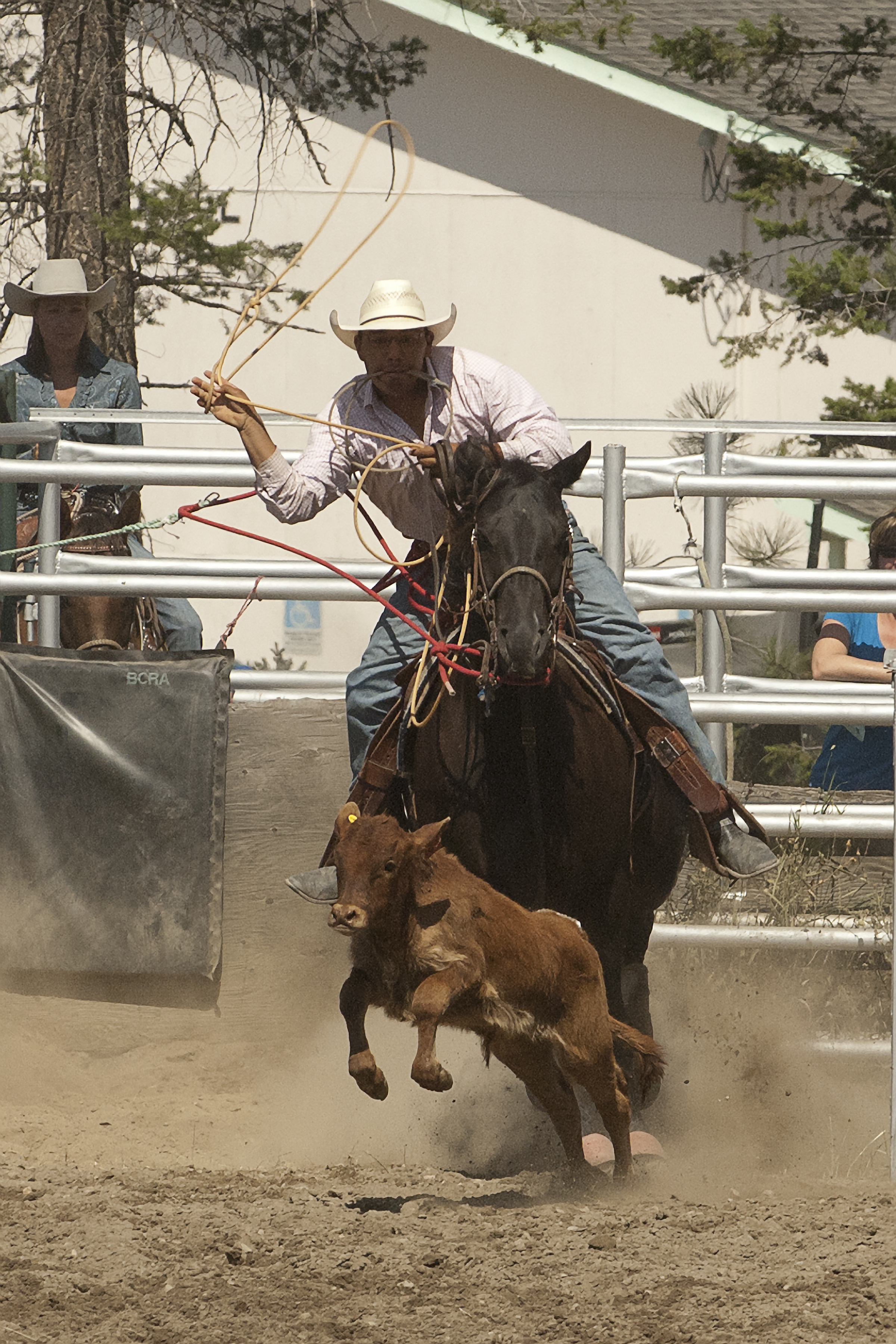
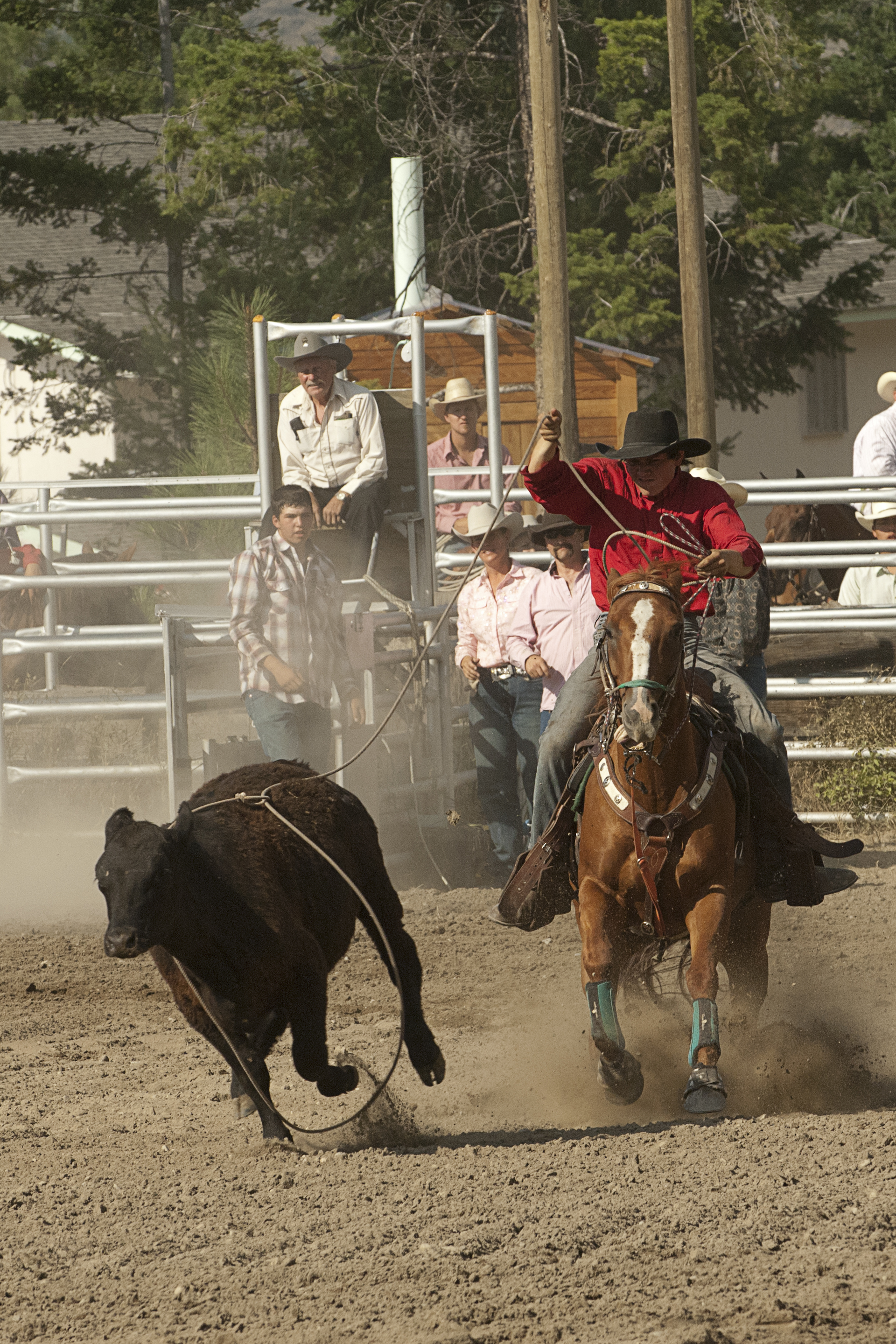
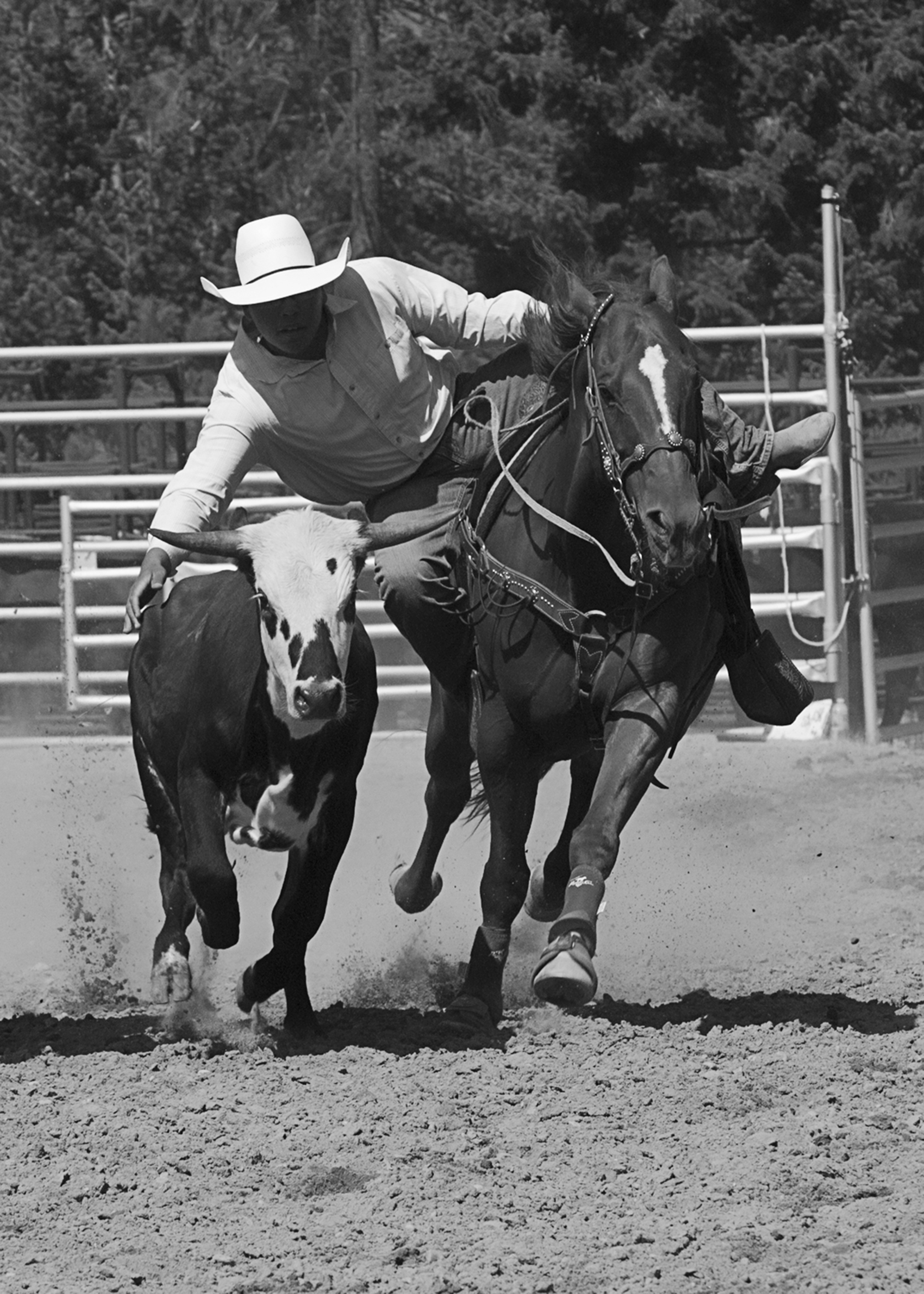
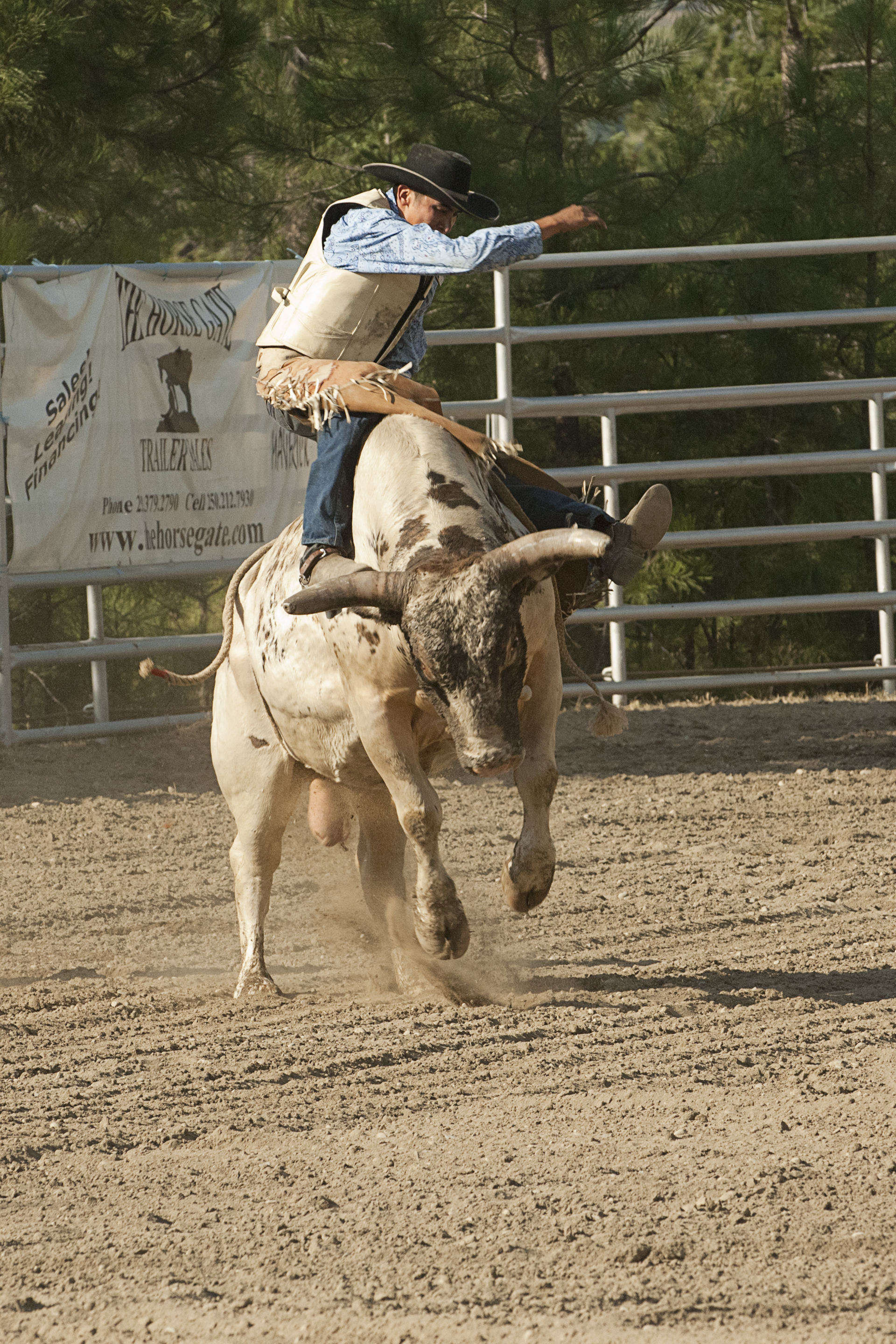
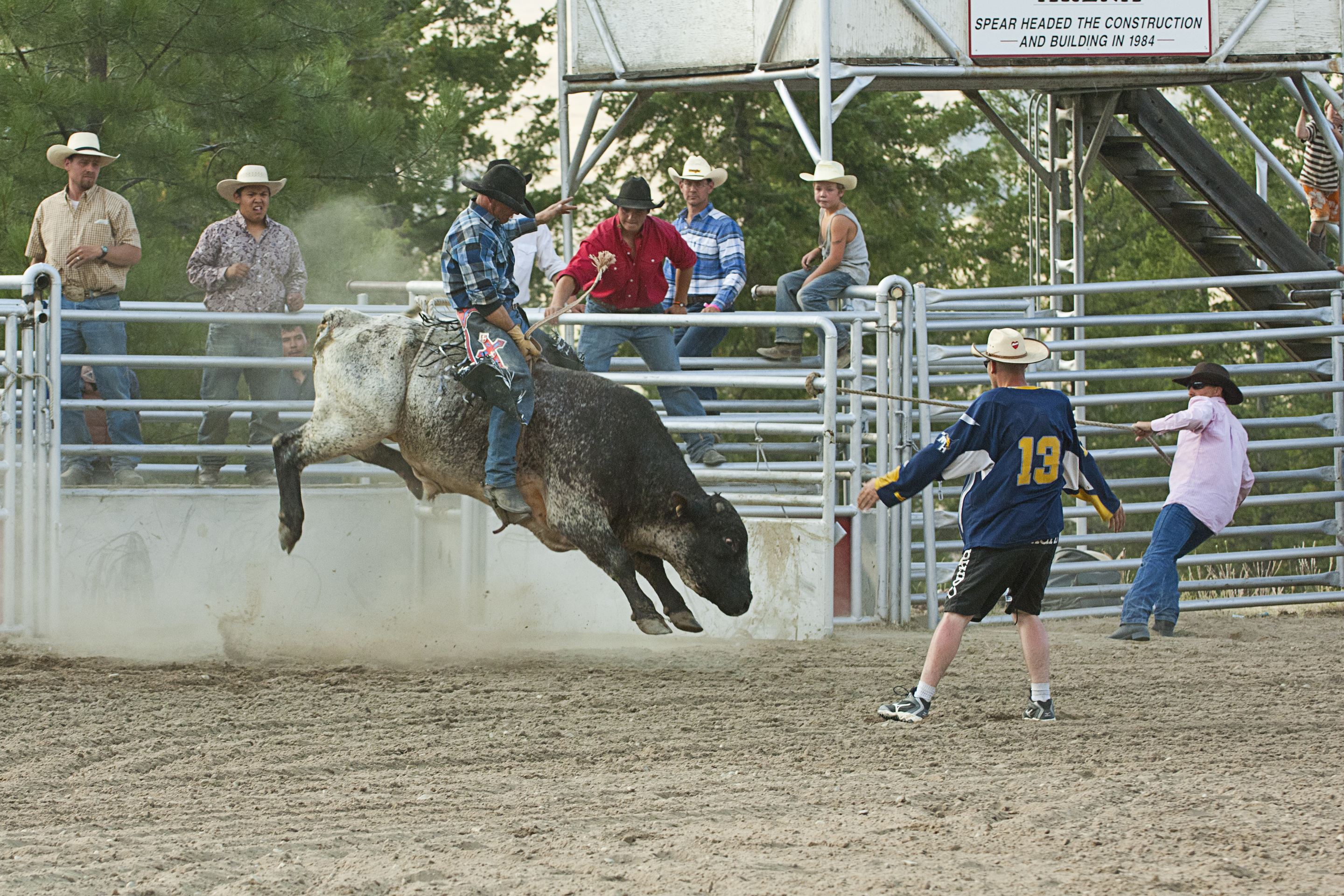
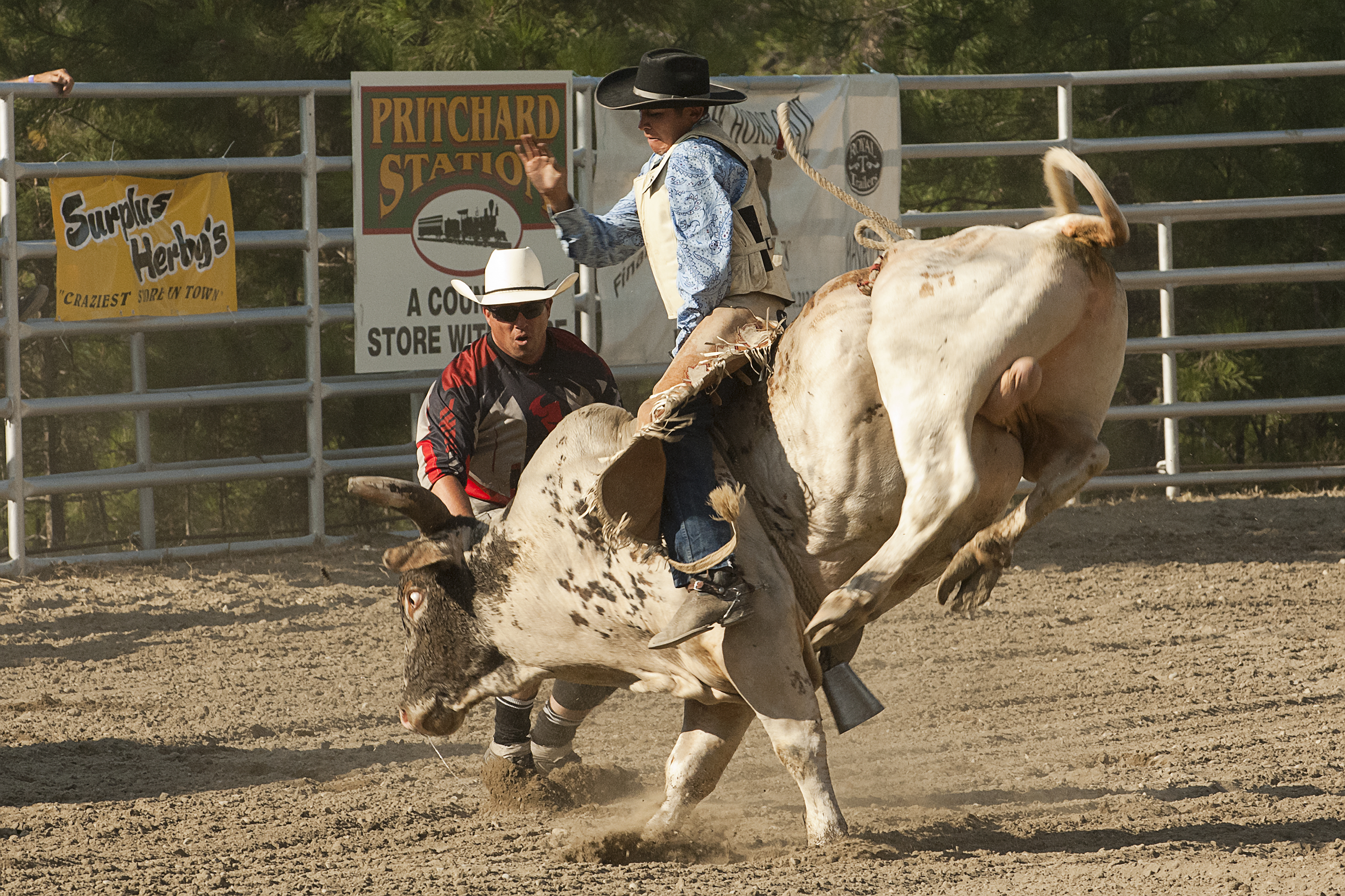
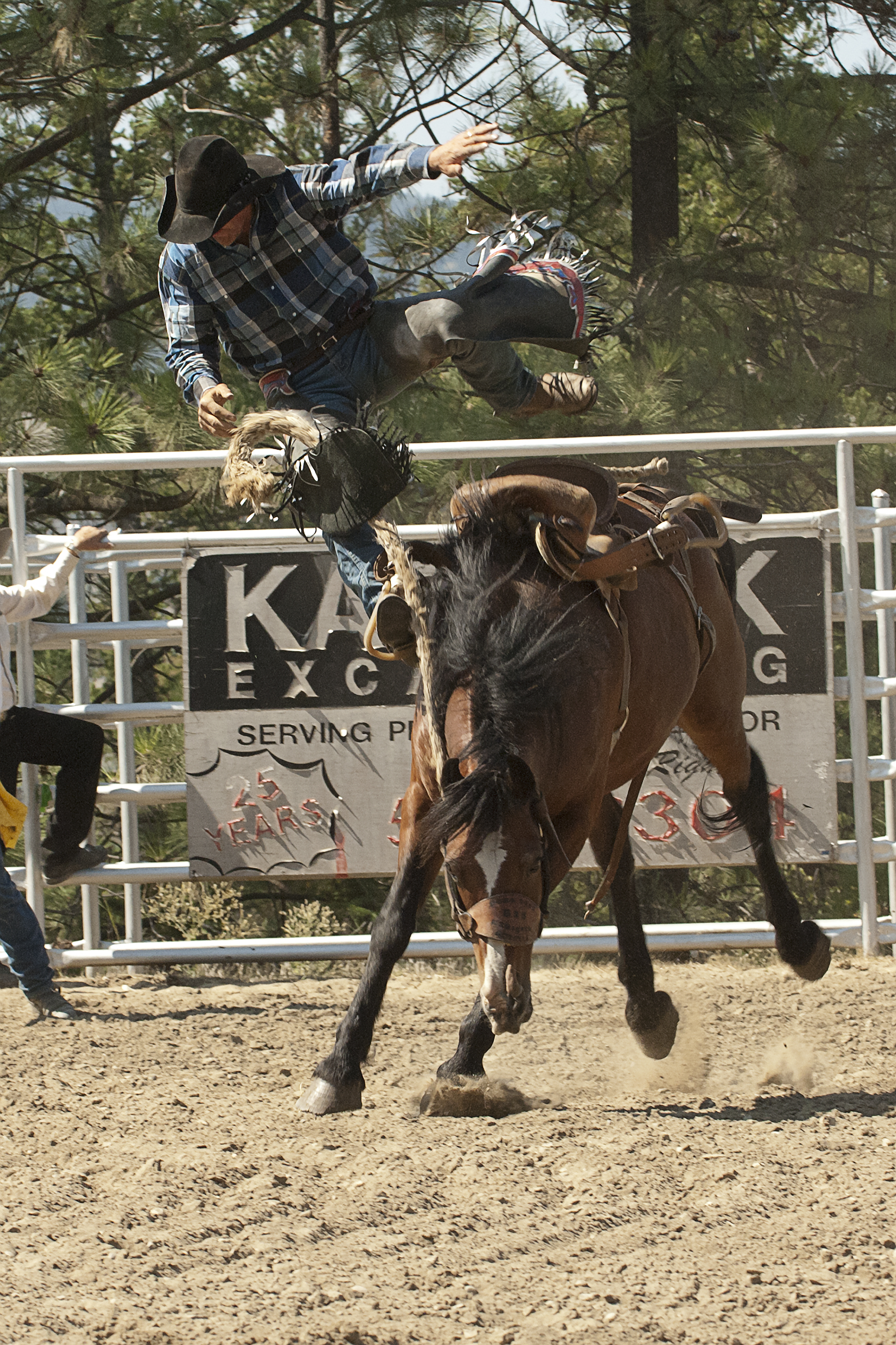
Grab your camera and go to the Rodeo

                                                                                                    I had finally reached Olympic games overdose. I enjoyed watching the Olympics, but in British Columbia, Olympics coverage was everywhere. Every radio station, television network, newspaper, and conversation had something about what was happening and I couldn’t get away from it. However, now they are over and I expect many (ok, I guess I’m included in this) might be going through some sort of withdrawal.


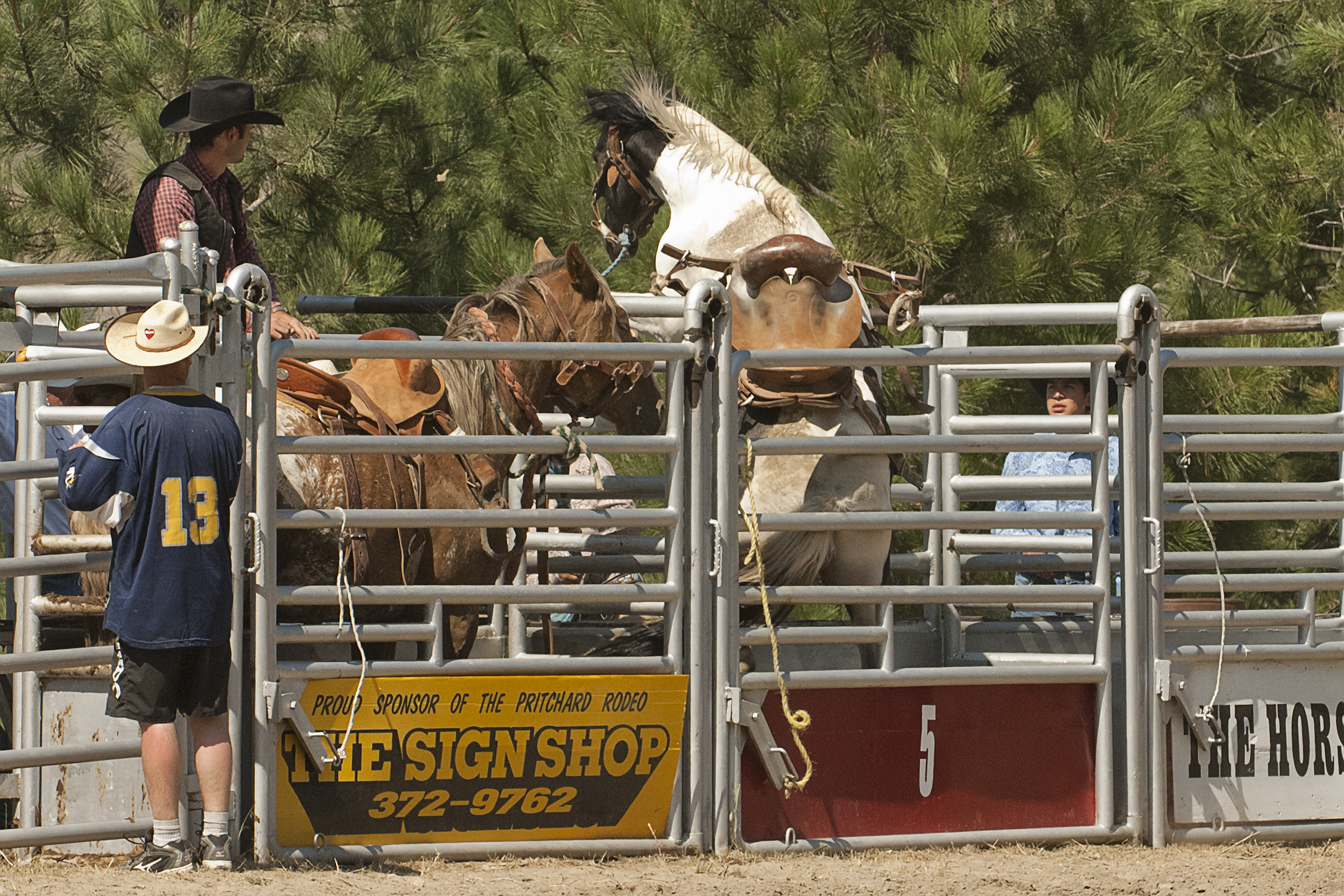
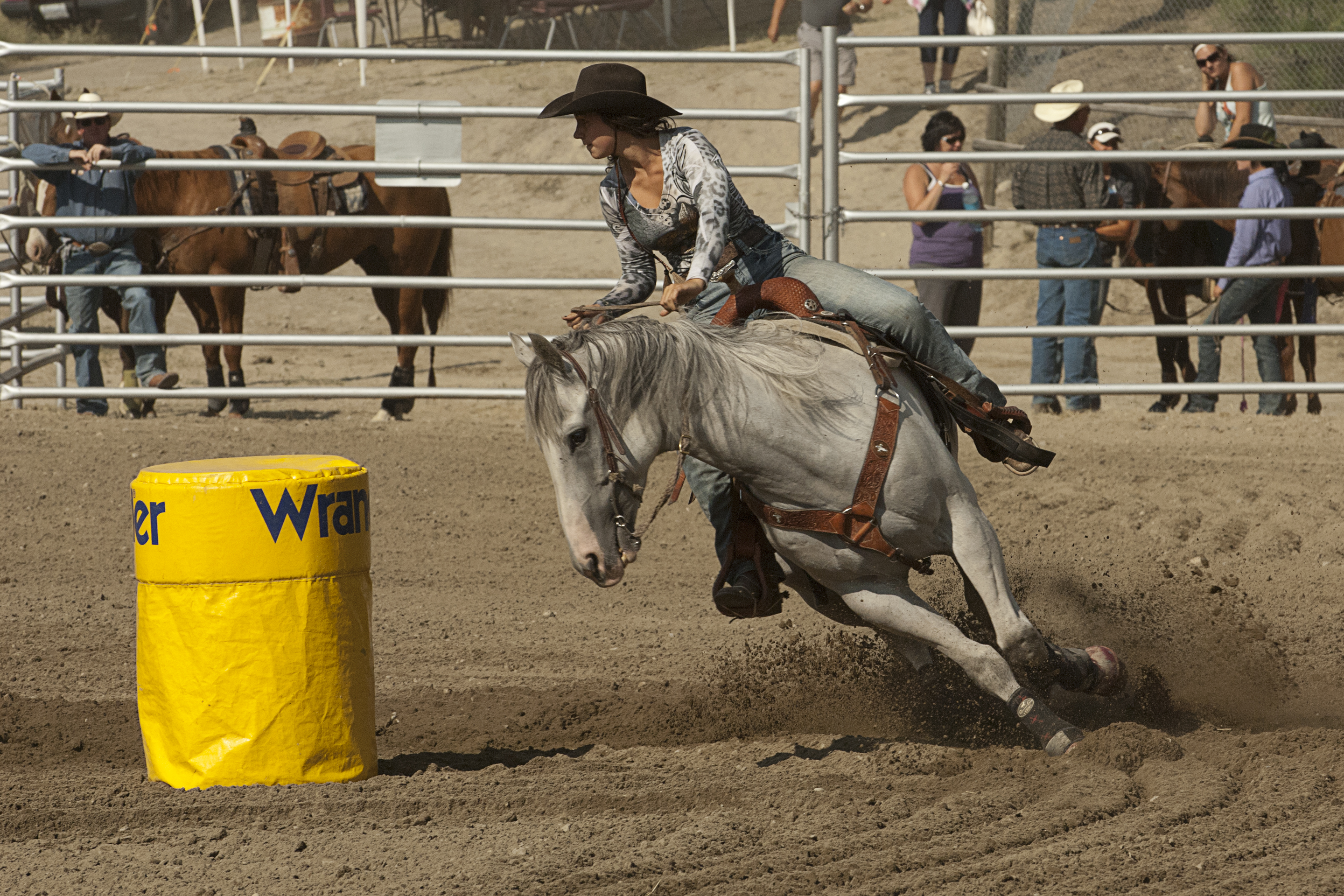
Well, for those who enjoyed watching and applauding athletes at their best I found a great way to get out of that withdrawal, however, they just need to be willing to get up off the couch and leave the comfort of their air-conditioned home.  Happening right now all over North America there is that time-honored tradition of the western Rodeo. Each year I look forward to the annual Prichard Rodeo. There are others all over BC that are worth attending, but I’m lucky because, “just down the road apiece” from my country home is the Pritchard Rodeo grounds.

As I strolled down the dirt lane to the bleachers, concessions, and rodeo arena, I looked around and could see some of my neighbors lounging in the fenced off beer garden, and others with their children waiting in the shaded bleachers. Then, of course, I checked out the photographers standing at the railing readying their equipment.  The first friendly face was local news photojournalist Hugo Yuen; we exchanged greetings, talked a bit before he left to get some of the participant names. He had a list to cover for his paper, so he was shooting fast and leaving.

I wandered on, watching photographers positioning themselves along the railing, I wanted to see what cameras they were using, and waved at the arena manager, Don Swift, as he readied participants and turned to see professional rodeo photographer Bernie Hudyma striding towards me. I knew I would see him there. He’s a good photographer and I always like to hear what he has to say. I’m sure many of the rodeo participants were also glad to see him arena side because of the pictures he will have waiting for them.


For those that haven’t yet photographed a rodeo, I’ll begin with the words, “Grab your hat and camera and do it!” You will have fun and get enjoyable pictures to share with friends and relatives.

Here one can see drama, explosive action, anticipation, heartbreak, defeat, excitement, athletic prowess, both male and female physical excellence, teamwork, sportsmanship and, of course, triumph. Then there isn’t, in my opinion, anything much better than attending a rodeo. And for those of us that are dedicated photographers, the action of a rodeo is the perfect way to spend the day.

My advice for first-timers is to get a DSLR. Little point and shoot cameras are great for taking pictures of family groups, and subjects moving slowly in one direction, but you won’t find much of that at the rodeo. When you shoot with the DSLR take the camera off the “P” mode and select  “A”, or  “S” mode if you own a Nikon, or on a Canon select AV or TV. Aperture priority means the photographer selects the aperture and the camera chooses the shutter speed. In shutter priority, it is the other way around, the photographer selects the shutter speed and the camera controls the aperture.

Fast moving, quick changing, rodeo subjects jump into the sky, quickly increase or close the distance from where the action began and, of course, constantly change the exposure by bouncing in and out of bright sun and deep shade.  While following the constantly changing scenarios it all happens very fast, and all one really needs is to control one part of the exposure equation.  Whether that is the shutter or the aperture really depends on what is important.

For example, when I am photographing the directional motion of horse racing or drag racing I prefer shutter priority. When at the rodeo I want more depth of field. That’s the field of focus in front of and behind my subject. Those horses and bulls move fast and I don’t want one moving out of my area of sharpness before I can refocus.

I suggest a zoom lens that goes to at least 200mm. Most modern lenses focus fast enough, following the action, and setting the focus takes a bit of practice, but there is lots of time to experiment at a rodeo, so just shoot and shoot and shoot. As I wrote, if you haven’t yet photographed a rodeo, grab your hat and camera and do it! Find a rodeo near your home and have fun.

My website is at www.enmanscamera.com

Do I Need Another Lens?

In my experience, any image can be altered (sometimes dramatically) when one changes lenses.  A subject can be isolated and the perspective in front of, and behind, the subject flattened with a telephoto lens; while landscapes in many cases look better with a wide-angle lens as the field of focus increases and the view around the subject widens.

I select my lenses depending on what I want to photograph and say about the subject. Because control over my image is important to me I question two items.  What am I photographing? And what result do I want?

For close up photography, one will be more successful with a macro lens that is designed to move in close to a subject than a mid range zoom that only focuses ‘sort of’ close, but is really designed for distance work.  For those wide expanse landscapes in the interior of British Columbia one may want a lens with wide-angle capabilities. For example, I might select my 18-70mm or 16-85mm as I search for a focal length that helps me include important features.

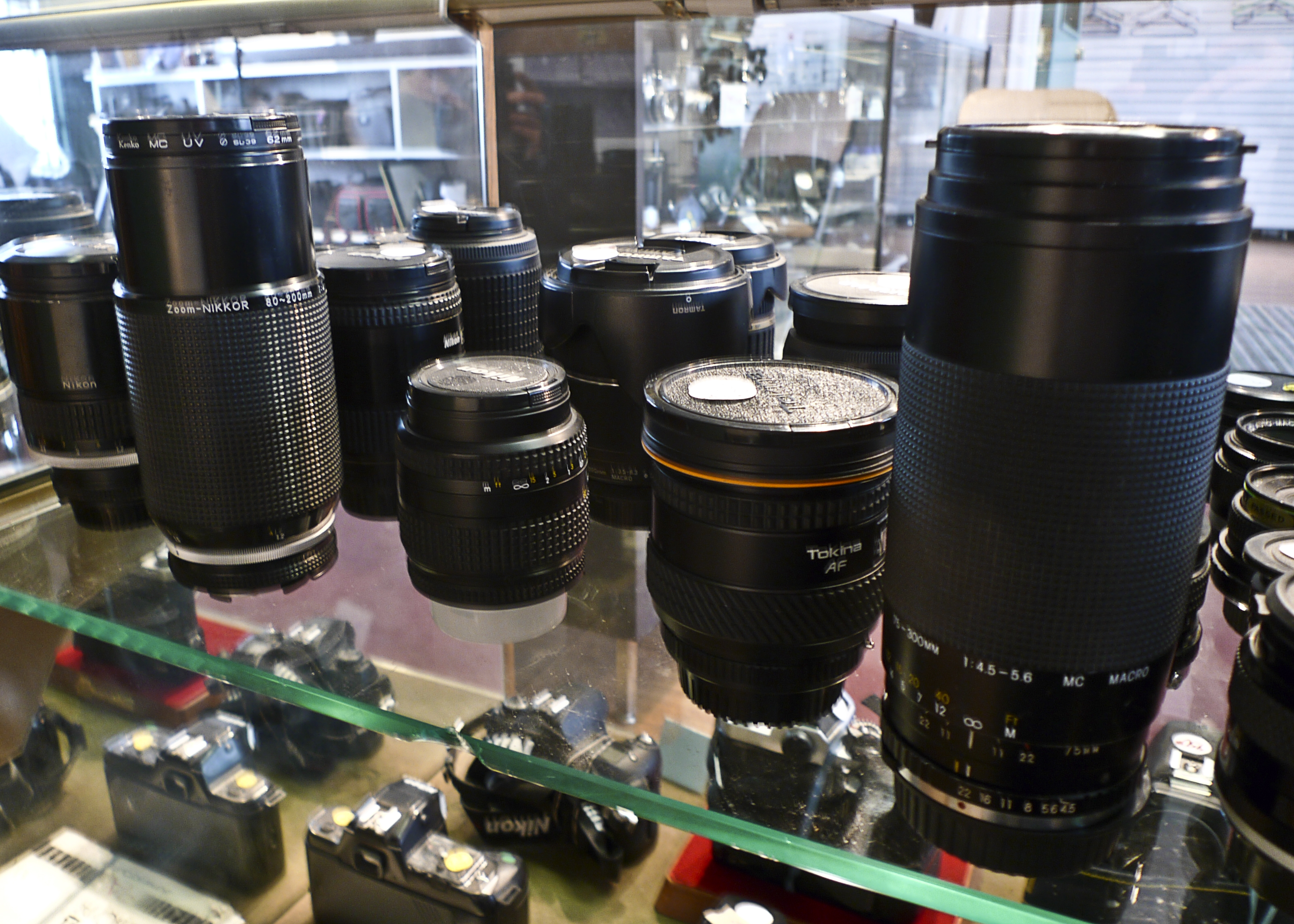
Last week I discussed lenses with a photographer who wants to get serious about photographing the abundance of wildlife here in the interior of British Columbia.  I suggested starting with a 70-300mm and then a longer telephoto in the future. Those lenses have a narrow angle of view, but plenty of magnification for wildlife photography.  Most of the 70-300mm lenses available today are lightweight and easily hand held. One can dig into their piggy bank and purchase some of the super telephotos like a 500 or 600mm, but until then moderately priced lenses like the 70-300mm should do.

There are interesting lenses like the 18-200mm that are just great. These multifocal length lenses are lightweight, and excellent for vacations or just walking around.   However, for serious enthusiasts there are wide aperture lenses with maximum apertures like f/2.8 that allow much more light in than lenses with f/3.5 or f/4 that are most common. These large aperture lenses give the user lots of light gathering capability and the ability to use higher shutter speeds for reducing camera shake, and help stop fast moving subjects.

To explain that, there is an optimum amount of light that reaches the camera’s sensor for a correct exposure. When the aperture is closed down it lets in less light and one must slow the shutter speed.  With large aperture lenses the shutter opening can be increased and let in a lot more light, therefore one has the ability to increase the shutter speed and still get a proper exposure.

All this also affects “depth of field”.  Depth of field is best defined as that area around the main subject, in front of and behind, that is acceptably sharp.  Photographers like to blur non-essential elements in the background by reducing the depth of field, and do that by increasing the size of the lens aperture.  In addition, letting in more light makes shooting in low light conditions less difficult.

So we get back to my earlier question:  Do I need another lens?  Even though I like the wide range focal length lenses like the 18-200mm for everyday use there are lots of other choices that will better help me visually say what I want when I make a picture.  A brief summary might be as follows; a macro for close-ups, a wide angle for landscapes, a telephoto for wildlife and, of course, some lenses with wide aperture for low light and for more control of depth of field.

Each year manufacturers introduce more lenses with different technology, which improves imaging capabilities, and naturally, increases the price.  Now you understand why one of the favourite sayings in photography is “it’s all about the glass” as I’ve explained to readers in this short discussion.  So, go ahead, check out the many offerings and ask yourself “Do I need another lens?”.

www.enmanscamera.com


This photographer isn’t sure about an advertisement television.

Currently, there is an advertisement being shown on television with the goal of convincing new camera owners to purchase more another lens for their new DSLR camera.   The ad begins with a picture of little girl in a playground.  Viewers see the child in the foreground with lots of stuff behind her. Then as viewers are told to purchase a better lens the picture changes to a sharp portrait of the child with a soft out-of-focus background. The subject much remains the same, but, because the clutter in the background is diminished, now the portrait is more pleasing.

Viewers are given the impression that there is a special type of lens made specifically for portrait photography and to buy it if we want good portraits. I agree that buying the best quality lenses will give photographers the highest quality image, however, the difference between the two pictures viewers are shown doesn’t really have anything to do with good quality lenses.  Any photographer can easily create the effect of a blurry background by using the same lens (or any lens) by choosing a wider aperture to reduce the depth of field.

Depth of field is defined as the area around the main subject, in front of, and behind, that is in acceptably sharp focus. The smaller the aperture the greater the field of focus is, and the larger the aperture the less the field of focus, thus by focusing on the subject and reducing the field of focus, much of the area in front of, and behind, the subject looses sharpness.

In my opinion learning to use a camera effectively is more important than falling for the hype put forward in ads like that. All photographers should learn about depth of field, composition, and metering. They should have an understanding of perspective, and why at times subjects in the foreground seem uncomfortably larger than those standing only a few feet behind. Fast action is easily controlled by increasing the shutterspeed, and if the elements in the picture aren’t bright enough, by increasing the camera’s ISO.  Sharpening the landscape on a bright sunny day only takes the additions of a lens hood to reduce lens flare; and, as always, in my opinion, the best scenics are those where the photographer uses a good sturdy tripod.

I advise saving some money and purchasing a book on portraiture, or, at least basic photography instead, and there are lots of online forums where photographers show, discuss, and exchange advice on their pictures. Or, readers could take a class.

The voice in the advertisement advises that photographers can change from a good shot to an amazing shot if a better lens was purchased. I regularly talk to photographers that believe the only way to make better pictures is to buy a new camera, and I expect because of that advertisement they will go out and purchase new lenses in the misguided belief that they will suddenly become better at photography.

What I actually like about the ad, in spite of the not so truthful claim that a good portrait is only accomplished when one buys another lens, is that it gets photographers thinking about adding to their collection of lenses. All camera manufacturers (just like auto manufacturers) have various levels of quality and one type of lens isn’t necessarily the best for all subjects.  As long as I have been involved with photography the catch phrase “it’s all in the glass” has been around. And I regularly tell those new to photography that they should be changing lenses before changing cameras. Nevertheless, I also tell them that they should know what they expect from a lens before purchasing it; and after researching it to match their expectations with what they can afford to acquire.  There isn’t necessarily any lens that might be called a portrait lens and the selection of which lens to use is really up to the photographer.  I think an in depth discussion of lenses is best left to another time.

www.enmanscamera.com

The Importance of Depth of Field

Depth of field is defined as, “that area around the subject that is in acceptably clear focus”.   

I chanced upon a copy of a local magazine and took the time to look through its pages. I always go through magazines by first glancing at all the pictures then go back and review select articles. This particular magazine interested me because some articles were accompanied by photographs that were not in focus.  At first, I put it to poor printing, but this particular issue had a cover and several photographs in it by a friend of mine and they were sharp.

So why were some images “soft” and others as good as those we regularly get from the lab when we take our memory cards in for printing?  Modern cameras do the focusing for us and it is fairly difficult to get several images of stationary subjects that aren’t sharp.

Now I’ll go back to why I opened this column with the definition of depth of field; and why I think there are lots of photographers that are either spending time adding sharpness using PhotoShop or printing images that lack that overall sharpness. 

The problem I see happening all too much is that many photographers forget that basic concept of how depth of field works with a given lens and think “a wider aperture gives me more light therefore I can shoot with a faster shutter speed” and therefore, “I don’t need a flash or a tripod”.  Well, they are right to a point and (I’m not going to discuss at this time why I think most photos of people benefit from camera flash.) I think that photographers need to be reminded that limited depth of field comes with problems.

When I looked at those images in the magazine I thought about depth of field and how, although the lens may have been very capable of producing sharp images at F2.8, it couldn’t overcome the basic rules of depth of field.  I found there were sharp elements in the pictures, but so much was just out of the “limited area of focus” around the subject that the “softness” affected how the entire image was viewed. 

If one reads the internet forums or asks photographers what lens would be their favourite, of course they would come up with many different choices of focal length, but more often than not they would also indicate they wanted an aperture of F2.8.  The reasons given for that small aperture are either so that the photographer can “shoot in low light or so they can soften the background”.  That’s good, however, one of the purposes of the aperture is to control depth of field. The smaller the aperture the wider is that in-focus area around the subject, and the larger the aperture the narrower that in-focus area around the subject is.  Remember that means that a smaller aperture has a higher number like F16, and a larger aperture has a lower number like F4.   

I think it is a good idea for photographers to have equipment that allows different perspective. I own lenses that have apertures of F2.8 and larger, but I do not take them for granted. I select lenses and use their different apertures to create the effect on my subjects that I want. My advice? One should think about the picture about to be taken and select an aperture that works for and not against the subject.

http://www.enmanscamera.com