A Photographer’s Anniversary –

(This week’s article is by my friend Jo McAvany.)


Last weekend was my husband Shaun’s and my 12th anniversary.

My in-laws had asked to take our kids for a few nights over spring break. (We have a 5-year-old son and a 4-year-old daughter)

Early Saturday morning we loaded up the car and headed out to meet my husband’s brother in the nearby town of Clinton. Shaun and I planned on a nice slow drive home after dropping our children off, stopping for photos along the way. However, the weather had other plans, it was so windy there was absolutely no way I could set a tripod up with out it shaking or blowing over.

I had my Nikon D800 and borrowed John’s 28-300mm lens. The 28-300mm lens is my favourite adventure lens and I’ll admit that I am not even sure John has gotten the chance to use it since he bought it over a year ago, ha-ha.

I always prefer to use my D800 for landscapes. The 36 megapixels allow me to crop without loosing data and if I wanted to enlarge my image past 16×20 I could do so without loosing any quality.

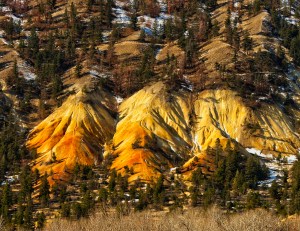
We stopped just outside of the town of 16 mile at a little rest stop. With my camera around my neck I quickly hoped out of the car to take a photo of the mountainside. The sun was hitting it just perfectly and despite freezing cold wind I couldn’t resist.

I am from the small nearby town of Cache Creek. Yes, born and raised and lived there for 20 years, so I am very familiar with the area. Just North of Cache Creek is a little ranch called Horstings Farm that has been there since I was a little girl and they sell locally made pies, jams, home made bread, potato buns and honey among many other things. They farm their own fruits and veggies and come season they sell those as well. It’s a family owned wonderful little place and if you ever get the chance to stop in I highly recommend you do so, go get a sandwich on a potato bun. We always get a package of potato buns when we stop they are so good.

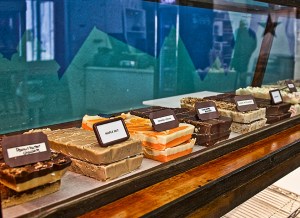
Of course I brought my camera in with me. It was to cold to wander outside so I thought, I wonder what can I find inside to photograph? FUDGE.

It was our anniversary! My husband looked at me and said, “What kind do you want? ”  (I chose Score).

I walked around the store and photographed some pies, jams, a display case filled with fudge and on the way back to the car I took a quick shot of the already budding apple orchard.

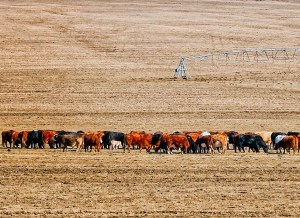
After our stop at Horstings farm we drove back to Kamloops. I saw baby cows and we pulled over for some photos. Just outside Cache Creek there was field with all breeds of cows. That made me think about the eggs my chickens lay with all the different colours there were out there. It’s not often you see that, most farmers I know in that area tend to stick to one breed, so to see five or more different breeds in one field was neat.

We made it back to Kamloops, did a little shopping then went out for a really nice dinner at Red Beard Café just down from John’s shop. They have these big fries called “Thrice Cooked Fries” that come with a blue berry BBQ sauce that is so good.

We had those and chicken tandoori. If you have never been I highly recommend going and checking them out once this whole Corvid-19 virus outbreak is over.

To my Husband Shaun, thank you. It was the perfect Anniversary.
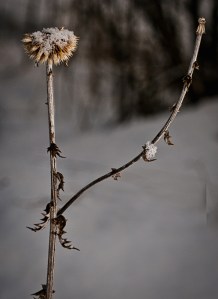
Another morning photographing the garden in March  

Early in the morning I got a text message from my friend Jo that said, “Good morning, it’s snowing down here.” I told her it was up at my place too with big flakes.

Her reply was, “ if I come up when its light can I borrow your macro lens? I want to take some pictures of the snow in the garden”

I said of course, and an hour later when Jo and her daughter showed up it had stopped snowing but there was still some left on the plants.

I got my 70-180mm macro lens out, mounted a flash on a light stand, and gave her my TTL flash trigger so she could use the same High Speed Sync technique I wrote about in my last article. We then set up a video game for her daughter because she said it was “to cold for me” and went out in the snowy morning looking for some interesting subjects for Jo to photograph.

The sky had cleared up and the snow was melting fast.

Whenever Jo found something to photograph I would position the flash to one side. After the first few tests we knew how far away I needed to locate the flash so as not to under or over expose her subjects. Then as the day got brighter all she had to do was decide how bright she wanted the background and increase or decrease the shutterspeed to achieve it.

I had my camera just in case, but Jo had some good ideas and I enjoyed being the “lighting guy” moving the flash around to see what kind of effect she could get so I didn’t bother using it.

The snow was deep and more than once we filled our boots. However, there was lots to photograph and although we both complained we didn’t really care. And for me it is always interesting to watch how and what another photographer does in a location that I have photographed.

I just remembered that I wrote about Jo and I photographing the March garden snow a couple years ago and at that time I said, “I know there are many photographers that only take pictures of plants when they are in bloom and prefer colourful representations. However, spring, summer, fall, winter, snow, rain, sunny, or overcast, my garden is filled with ever changing subjects that always offer something new.”

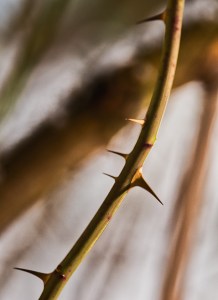
My advise to photographers was then and still is, if they wait for inspiring weather before that next garden safari they are missing a good opportunity. There’s always something to photograph no matter the weather or the season, just get up close and look for the small stuff.

Photographing the waterfront on a snowy February morning    

Last weekend was my close friend and photography companion Jo McAvany’s birthday.

Remembering how much fun we had in December photographing the waterfront in Kelowna I suggested that for her birthday present we should make the two-hour drive to Kelowna, have dinner, stay overnight, and then spend the morning photographing the snow covered lakefront.

Of course Jo said yes and I booked some rooms, and Saturday’s cold overcast afternoon saw us packing our cameras and driving the wet, winding road to Kelowna.

I like how the snow-covered waterfront looks and if Vancouver was closer I would have suggested we go there to photograph an ocean harbour, but the weather report said the mountain road between Kamloops and Vancouver might see icy conditions and possibly snow, so Kelowna it was.

We lucked out and had a balcony at our downtown hotel and braved the cold to spend some of the first afternoon taking pictures there and walking around. Then after dark we went out to my favourite Greek restaurant in Kelowna, watched the belly dancer and had way too much to eat.

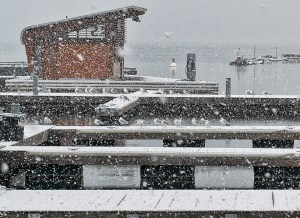
The next morning we awoke to snow on the balcony. I know some photographers might have been displeased, but Jo and I couldn’t have been happier, and after a leisurely (complimentary hotel) breakfast we grabbed our coats and cameras and headed for Okanagan Lake.

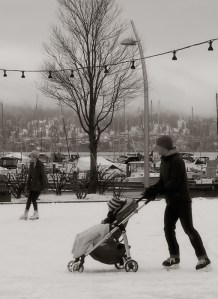
The snow was beginning to come down in huge flakes by the time we got there, but here were a people walking along the waterfront and a few were skating on the snow coverer ice skating rink.

I began by to photographing people on the skating rink and then moved down to photo a bonfire where people sat in it’s warmth drinking hot chocolate and getting their skates on.

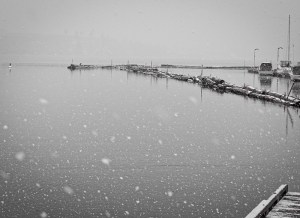
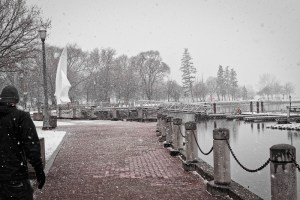
I was using my 24-70mm and wanted to stop the action as well as see the snowflakes. For those that haven’t shot in a snowstorm, the trick is simply to use a flash. The purpose of the flash was to stop the snowflakes.

The popup flash on my camera was perfect. I didn’t need to illuminate my subjects; anyway they were to far away.   I was using an ISO of 800, so I could keep my shutterspeed 1/250 and my aperture at f8 or f11 for lots of depth of field.

We wandered the shoreline photographing people, boats, ducks and anything else that caught our attention on that snowy morning. Jo was using her favourite 28-300mm travel lens. Gosh, we had a fun time and got some great photos.

We could have spent the day there, but the snow stopped, and the cold damp breeze coming off the lake was getting uncomfortable . I noticed that most of the people that had been ice-skating were now huddled around the big fire. It was time to go home.

The weekend was a perfect photo adventure and Jo said it was a very good birthday present.

Other than a few bundled up people strolling along the waterfront and those ice-skating or sitting by the fire we had the waterfront to ourselves. We saw no other photographers enjoying the photogenic lakeshore while we were there.

I expect local photographers must get their fill of photographing the lake and marina in the summer and fall when everything is so beautiful along the water and might not be interested enough to look for things to photograph on a cold snowy February morning. However, I like to remember the words of the famous Photojournalist, Robert Capa when he said, “the pictures are there you just take them.”

Black and White Photos with Infrared  


My last two articles discussed using black and white photography and I’d like carry on with that topic this week.

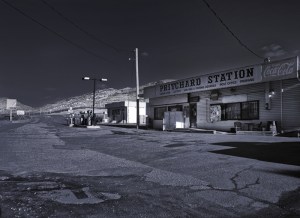
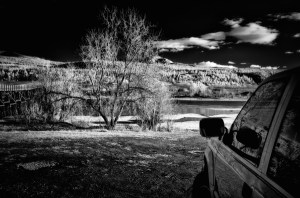
This past week when there was one of those almost rare sunny clear blue sky February days I decided take a drive around my neighbourhood to make some pictures with my infrared camera.

That camera gives me scenes of colourfully altered reality when the light is right with results that are often unusually deep blue skies, and trees that are yellow or white instead of green. However, continuing on with what I have been writing and thinking about when and loaded the day’s files on my computer I converted the colourful images to black and white.

I like the striking effects I can sometimes get that are contrasty with dark skies and white vegetation when I make a black and white infrared photographs. They seem to have what some photographers call an “otherworldly” look.

I like converting my digital files to black and white and I enjoy the creative manipulation available to me.

Scenic photographer Nathan Wirth explains that creativity, “I wanted something different to experiment with, and I saw the potential to experiment with those infrared whites that come from the greens and the infrared blacks that come from the blues…and manipulate them until I found the stark contrasts that I was interested in.”

Infrared is a different way to visually discuss a subject, and a black & white photograph communicates in a subtle way. To me the combination of those two allows a photographer to stretch his or her creativity and show our world in different terms.

Digital and infrared gets me involved in the complete process from picking up the camera, the fun of doing photography, to completing the image on the computer. I enjoy the creativity of the infrared process that includes the computer. And wandering the neighbourhood on a sunny winter day with any kind of camera is so darned fun

Photographing Christmas lights    

I have always liked Christmas. I won’t go as far as saying that it’s my favourite time for year. Gosh, anytime time of year that I get to point my camera at something is my favourite time.

Christmas is special. I like the music. (Don’t ride in my car or visit me at my home if you expect any other kind of music till January 2nd) I also like the festive spirit of those people that remember this is a time of caring, giving and friendship. And, of course, I really like Christmas lights.

My last article was about using my ultra-wide lens Saturday morning to photograph the Tree of Hope, but the night before found Jo and I wandering in the cold photographing the city lights.

Jo used a 28-300mm and I used my 24-70mm and we both carried tripods. I think the lowest ISO I used was 800. Jo said she kept hers set at 100 ISO most of the time.

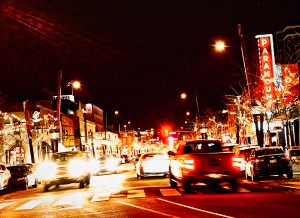
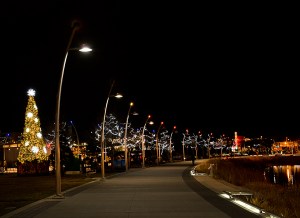
There were the usual strings of lights along the city streets, but it was the cheerful holiday lit Okanagan Lake waterfront that we wanted to photograph.

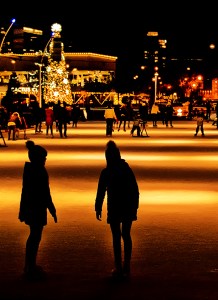
Kelowna goes all out and even has a skating rink that is open till 11PM and this year there was a big fire at one end for people to gather around.

Everything was perfect for two prowling photographers hunting for interesting and creative photos. I was hoping for snow. I like how the white covering reflects light at night.

We were ready for the cold and the snow and we even went shopping when we first arrived in Kelowna for a pair of insulated boots that Jo got for an early Christmas present.

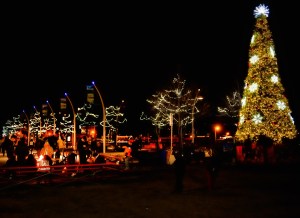
What a fun overnight trip we had. We checked in to our downtown hotel, went Xmas shopping, had dinner at my favourite Kelowna restaurant (That plays blues music as you eat) were out till 9:30ish photographing the lights and got up early the next morning to photograph the 250,000 bulb Christmas tree.

As Jo and I drove home after that exhilarating time we talked about how we each found our own personal views of the lights. Would that be Perspective?

Photographing in low light or after dark helps to slow us down. One employs a tripod and most of the shutterspeeds are slow.

I think those photos that visually work usually take some forethought.

I’ll end this with a quote by American photographer Elliott Erwitt that I have used many times before because it fits so well, “To me, photography is an art of observation. It’s about finding something interesting in an ordinary place… I’ve found it has little to do with the things you see and everything to do with the way you see them.”


Long exposure workshop at Chase Falls                               

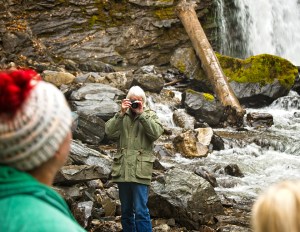
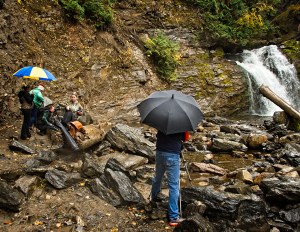
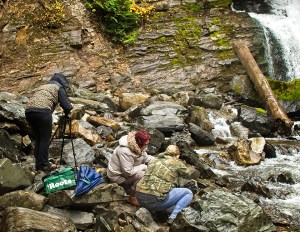
Two weekends ago Jo and I hosted a long exposure workshop at the nearby Chase Falls.                  In the rain I might add.

After returning from Vancouver my photo partner Jo McAvany posted some of the long exposure night photographs she took of the Vancouver lights. Those images garnered quite a bit of interest and Jo was fielding questions from more than one local photographer about how she made them.

We decided to pick a date and offer a workshop that would allow participants to try long shutterspeed photography and also to use neutral density filters.

I like my classes to be strong learning experiences and as with all that teach I included handouts, and this time I also included a set of six ND filters for each photographer to use. All they had to bring was their camera with a fully charged battery, their favourite lens, and a tripod.

We chose the Chase waterfall because it was close, easy to get to and, this time of year, extremely safe if one has good enough balance to climb through and over the big rocks.

What we weren’t expecting was a rainy day… fortunately some of the photographers in attendance had the forethought to bring umbrellas. I also had two that I always keep in the trunk of my car and I brought a few towels that I handed out to wipe the rain off cameras.

Jo began the day when everyone was gathered at the parking lot, while I was passing out filters and handouts, by telling people that after our trip to Vancouver she has absolutely become hooked on long exposures, and I have no doubt that we now have a few more dedicated converts.

Most photographers understand their shutter, but using shutterpeeds longer than 1/30th of a second, and adding ND filters is often new territory.
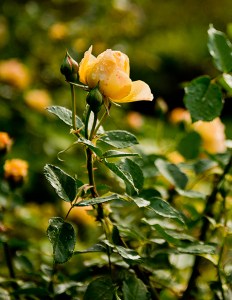
The rain was only a slight inconvenience as the excited group started seeing their results of the waterfall. The light on that wet rainy day was, as I had hoped, perfect at the falls. Rainy days are usually like that.

We worked as teams in the rain. With one partner holding the umbrella keeping the camera, lens and filter dry as the other set up the tripod and camera at each location.

It was a great day for learning something new. Yep, I am sure there are now a few more photographers that have Jo’s passion for long exposures.

I am looking forward to the trip we are planning to Kelowna in December to photograph the Christmas lights. I think we may go a bit early so we can do some long exposures near the marina along Okanagan Lake. I’ll finish with this great quote I found by German artist Dieter Appelt.

“A snapshot steals life that it cannot return. A long exposure creates a form that never existed.”


A Vancouver photography Adventure  


Our “Vancouver Adventure” is weeks in the past and Jo and I are still talking about the fun we had.

In last week’s article I said that my dictionary defines Adventure as “excitement, thrill, and stimulation”

Two weeks ago I wrote about the great time we had photographing the Bloedel conservatory and the birds in the aviary on our first morning. And last week my article was about the exciting time we had doing long exposures from Stanley Park across the water of the city lights after dark.

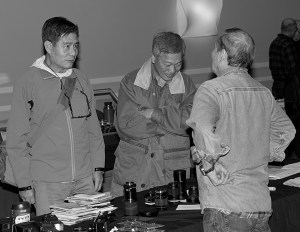
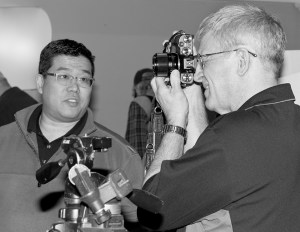
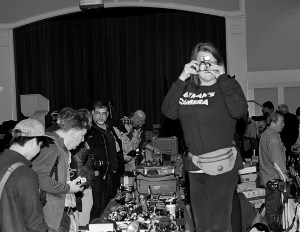
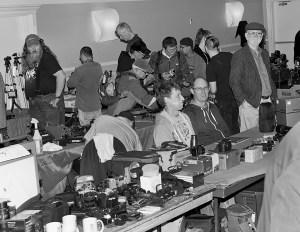
What an enjoyable way to spend the day before the Vancouver Used Camera Sale and Swap Meet.

That first night Laurie, Jo and I knew had to get up early to set up our tables in the morning, but we were having too much fun and instead were up late talking about photography. Nevertheless, we did get up to the sound of the early morning seagulls, ate breakfast, and after packing everything into our vehicles were off to the Croatian Community center for the third part of our adventure. We carried equipment through a light Vancouver rain to have our tables ready for the onslaught of excited photographers when they entered the large hall and started searching for great deals.
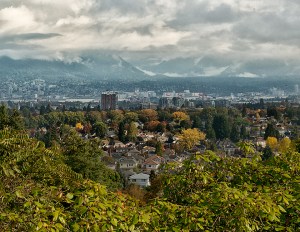
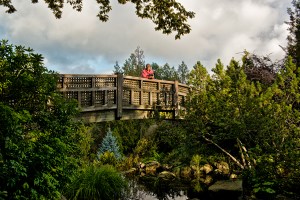
That event was, as always, a hodgepodge of different people with different interests. The crowd seemed to have grown a lot younger, but that might be my personal impression. After all, I have been attending the Vancouver Camera Sale and Swap since the 1980s and I’ve gotten a bit older.

Actually, the people attending are photographers of every age group; from experienced elders to teenagers accompanied by their patient parents. It is a diverse fellowship that includes all kinds of lifestyles, interests, and photographic specialties. There are those that are dedicated to film, vintage cameras, and processes of the past, walking alongside others carrying and looking for the latest in modern photographic technology.

Jo and I had a grand weekend photographing inspiring subjects, and the frosting on the cake was attending a gathering like the Vancouver Camera Sale and Swap where we got to meet and exchange information with other photographers and check out the many kinds of photographic equipment that would not be so available anywhere else. 

We spent the day selling the camera equipment I had gathered, had fun wandering the sale and, of course, talking with other photographers.

This was Jo’s second Vancouver camera show. When I turned to her and said, “Hey I just sold that neat old camera you bought last summer. What are you going to do with the $40.00 I got for it?”   I realized just how silly that question was when she said, “I’ll be right back” and about fifteen minutes later she returned with three little digital Canon Powershot cameras. A black one for her Husband, a blue one for her 5 year old son and a red one for her 4 year old daughter.

In my opinion it doesn’t get much better than spending the day surrounded by a huge selection of cameras and other photography equipment. Gosh, it is just invigorating and even after all these years I always learn something. We are already planning for next spring’s sale. Hmmm, I wonder if we can go two days early and search out more fun locations to photograph.

Night photography from Stanley Park  


After the great time we had at the Bloedel Conservatory and the aviary we wandered the city for a fun place to eat and then spent the rest of the day photographing the crowds of people on Vancouver’s Granville Island.

We then drove around Stanley Park to make sure the place we wanted to set up to photograph the lights across the Burrard Inlet after dark would still be ok.  Stanley Park is a 405-hectare public park that borders downtown Vancouver and is mostly surrounded by water.

We returned to our motel to pickup my friend Laurie that had just arrived from Kamloops, and our tripods and drove back through the city to Stanley Park as the light was going down. We took a meandering coastal route in case there were other opportunities – that had me continually getting lost as I drove the darkened streets.

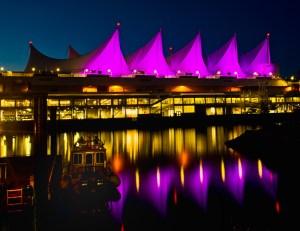
However, as luck would have it we happened on an empty parking lot directly across from the iconic Canada Place with it’s brilliantly lit fabric roof that resembled five sails.

During the day that location would be packed with cars and, I have no doubt, securely guarded against those without an expensive parking pass. But except for a lonely pickup the lot was empty and there wasn’t even the usual chain link fence to block our view of Canada place.

We jumped out with our tripods and excitedly started taking long exposures. Both Jo and I had 10 stop ND filters on our cameras.

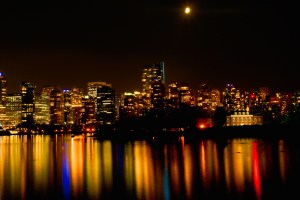
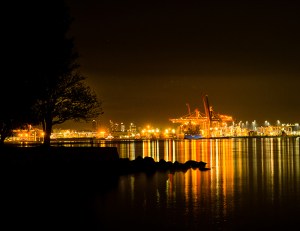
After making as many exposures as we wanted of that colourful building we turned our cameras on the skyscrapers across the street then jumped back in the car and drove on to Stanley Park where we would be looking across the water from the other side of Canada place at the city and shipping terminals.

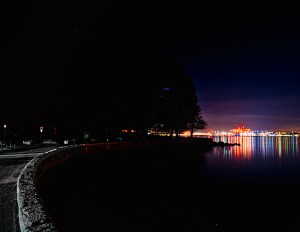
Our chosen location was across from a dark parking lot along the ocean. There was only occasional lights were from cars quickly passing on the park’s ring road and bicyclists that had to be watched out for as they zoomed out of the unlit forest with only tiny lights warning us to stay out of their way.

We wandered along the dark sea wall taking pictures across the inlet of the many bright city lights. I think both Jo and I were making mostly 30 second exposures of the bright lights, calm ocean and the moon high in the black night sky.

What a great way to end the day. We began in the bright morning light at the highest location in the city and ended in the dark night at it’s lowest location, and today as I write over a week later we are still talking about the fun photography adventure we had in Vancouver.

I suppose many might use the words, “trip to Vancouver” instead of a “Vancouver photography adventure”. But my dictionary defines adventure as “excitement, thrill, and stimulation”. So Adventure is the description the fits the best for that day and the next at the exhilarating Vancouver Camera sale and swap meet.

Photography at the Bloedel conservatory


The Vancouver used camera sale was last weekend and I always attend.

This time I thought it would be fun to go a day early to do some night photos of the city.

We had chosen the locations that we wanted to go at day’s end. But we would have a whole day to do photography and the first daunting question we faced was, what to do with our morning?

Jo was looking at “places to visit” as we sat at a seafood restaurant the evening we arrived. It was overcast and raining so we decided stay out of the weather. She found an advertisement for the Bloedel Floral Conservatory. The info said that the conservatory is “a lush, domed tropical paradise at the top of Queen Elizabeth Park — the highest point in the city of Vancouver”.

The next morning we ate breakfast at our hotel, (I always try to find hotels that include breakfast) jumped in my car and followed the GPS through Vancouver’s busy traffic to what I assumed would be just a big garden overlooking the city.

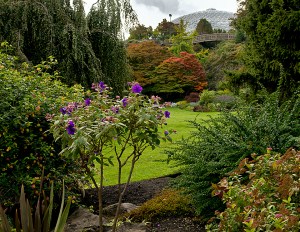
We arrived at Queen Elisabeth Park, that park was so much more than what I thought, wandered around the photographing the city below, the narrow winding paths, the beautiful ponds, fountains, and rock bridges that were spread out around the grounds. What a photogenic place.

What I had missed reading in the advert was, “Bloedel Floral Conservatory is a conservatory and aviary at the top of Queen Elizabeth Park.” So after nearly an hour wandering the grounds we walked over to the large dome that sat at the top of the park, paid the admission and entered into “the lush, domed tropical paradise” described in the advertisement.

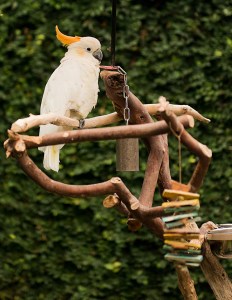
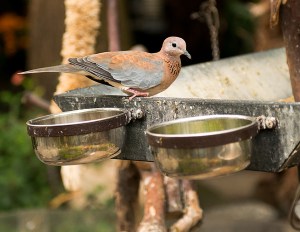
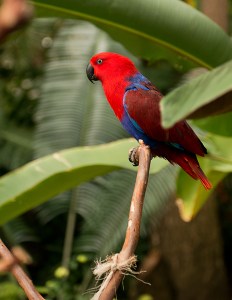
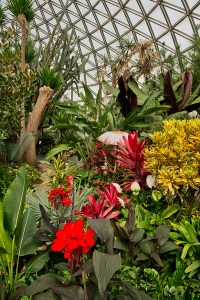
There were birds everywhere in the exotic greenhouse. Flying high in the air, zooming past our heads and hopping everywhere at our feet. Then I saw a colourful parrot, and then another and another and another.

We photographed the plants, colourful small birds, and big parrots in the humid dome.

I had fun talking with other photographers and people sitting with their dogs as we roamed around the park. I am pretty sure we were at the park for over three hours.

How had I missed that place in all my visits to Vancouver? It seemed to be made for those of us that like to carrying cameras.

That was part one of our October Vancouver adventure. We were yet to photograph the crowds of Granville Island, take long night exposures of the lights across the bay and spend Sunday at the Vancouver Camera Sale and Swap.

Photographing the 2019 Pritchard Rodeo  


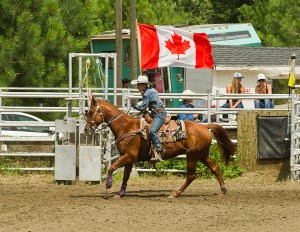
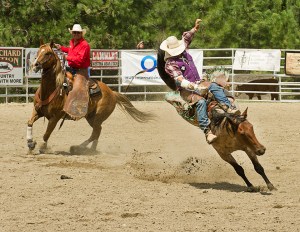
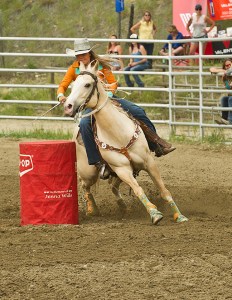
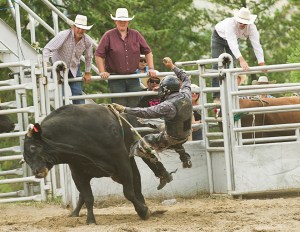
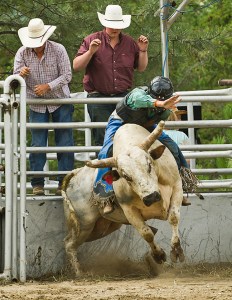
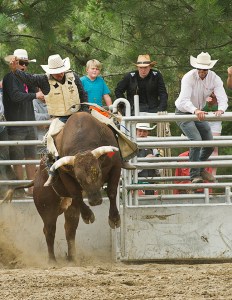
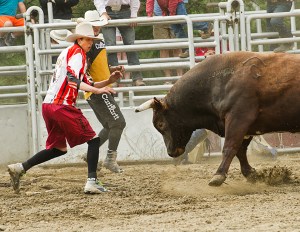
Jo and I were comfortably positioned along the rail at 1PM ready for the first bronco-riding event. I had my camera set at ISO400 so I could get reasonable depth of field and be able to use the Shutter Priority Mode with a 1/500th of a second to stop the action.

Both of us were using 70-200mm lenses. There are longer focal lengths available and I was asked this week if I ever tried my 150-600mm. I haven’t used that lens at a rodeo, but I did shoot some years ago with a 150-500. It was pretty good and brought the action so darned close. But the rodeo grounds aren’t that big and I like the 70-200mm. It’s light, not that big, handholdable and delivers great quality.

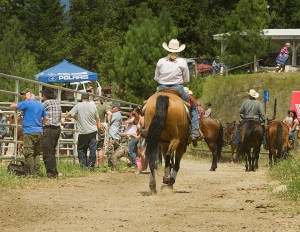
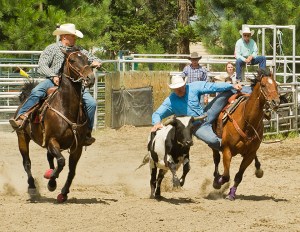
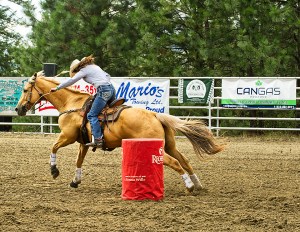
I have mentioned before that I like photographing any kind of action and especially the rodeo that is only a few minutes drive from my home in Pritchard. I always look forward to standing there along side other photographers that, like me, enjoy capturing the fast moving test of wills between animals and riders. Photographing any action filled competition is fun and there’s always lots of action at a rodeo.

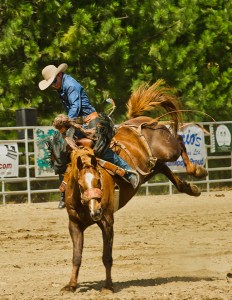
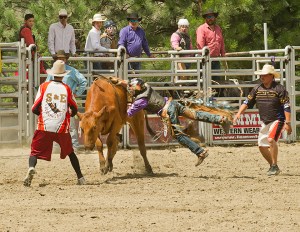
My favourite events are the bronc and bull riders. I like the fast moving explosive action that moves uncontrollably across the arena.

I always try to get that first moment, especially with the bull riders. There is so much happening when the gate is opened and bull, rider, and all the faces behind those two show the excitement. I continue to follow the activity to capture that perfect moment that shows the athletic prowess of the rider. However, I must admit my favourite photos are those that show the rider getting thrown through the air. Sure I feel for them and never like it when someone looses or gets hurt, but it’s that explosive moment when everything in moving at it’s own speed, in its own direction, that tells the exciting and dangerous story for me.

This hometown rodeo is darned convenient and really accessible without restrictions placed on ringside photographers, and it’s easy for participants to get quality photographs of themselves that can be made into wall prints just by asking any one of the many people with a camera standing along the rail.

For those new to rodeos or even photographing action, put a rodeo on your bucket list to attend, it’s a friendly and an easy place to practice and experiment.