Photographers: Take the camera off “P” mode and read the instructions.

I am sure some inspired individuals who have purchased a DSLR (digital single lens reflex) camera might say, “Why did they waste all that paper on an instruction manual? They could have saved the trees, and I don’t need to read it anyway because the pictures are just fine with the camera set on program mode, and if some pictures don’t work, I’ll just delete and try again till everything looks good.”

I have written about this very topic in the past, but I am continually disappointed that it still comes up while talking to amateur photographers and sometimes even with those who make claims like “I shoot weddings”.

After removing their new camera they likely toss the box with the instructions aside, fumble around looking for someplace to stick in the memory card, spy a dial, select the letter P or A, turn on the camera, and start making pictures. If lucky, the on-camera flash is default programmed to pop up and flashes in low light environments and the magical technology produces usable pictures with factory settings in spite of the photographer’s lack of knowledge.

These new DSLR-toting photographers never move that dial off the P mode, and wonder what all the fuss is about for confusing modes like “aperture” priority, or “shutter” priority, and/or “manual” mode, and rationalize their opinion by saying, “I am not a professional and my pictures are mostly for me, my family and friends, and, anyway, the instructions are confusing.”

I hear stories about photographers that complained loudly that their new cameras aren’t working as they think they should, and angrily return their camera to the store they purchased it from, only to be shown by a patient sales clerk the section in the manual that solves the problem. Again as I wrote, it’s disappointing that they hadn’t taken the time to read their manual.

When a photographer comes to me asking for help with their new DSLR I begin with the suggestion, put the camera on P and shoot away, but only for one week. That’s right .…. only one week! And while that week passes my advice is to start reading the instruction manual that came with the camera, it is the best way to change that new camera from an expensive point-and-shoot into an amazing tool, and will help those interested in transforming their personal photography.

The instruction manual will have a chapter on “exposure Modes” with details regarding Aperture priority – a good place to start. Do more reading, and select aperture priority on the camera, focus on something and make the numbers change that appear in the viewfinder or LCD screen. The aperture controls the amount of light the lens is letting into the camera.

Practice with the new DSLR, get used to it, and experiment with everything in its menu, learning to use not only Aperture priority, but also Shutter priority and Manual modes. I have to emphasize that new owners should read their instruction manuals, re-read, and read again, and then try using another mode.

Photographers that own a DSLR need to understand when and why to use different exposure modes and reading the manual that came with that new camera allows them to set the menu to their personal shooting priorities. My camera manuals are all dog-eared, full of post-its and notations. That should be the norm for photographers that are serious enough about photography to learn about their camera.
http://www.enmanscamera.com

The basics of photography and depth of field

One topic that I have discussed during many classes that I instruct, and defined to many people that have come to my shop when they think they have are lens or focus problems, and more than once written about is “depth of field”, but it still seems to be an elusive concept for many. 

 I pondered about this last Thursday when a local photographer showed me an 8×10 print from photographs he had made inside a church during a wedding the previous weekend.  He showed it to me proudly, but commented he wished that his lens was sharper at its wide-angle focal length.

 The print displayed a view down the central isle with church pews left and right, leading to a pulpit in the distant centre, likely about 30 feet from where the photographer was standing.  The overall exposure was fairly good, and he told me he had shot at an aperture of f/2.8.  However, the fact that his photograph wasn’t in focus, except for the pulpit, had very little to do with using his zoom lens at its wide-angle focal length.

 The definition of depth of field is “that area around the main subject, in front of and behind, that is in acceptably sharp focus”.  In application the wider the lens’ aperture is the less the depth of field, or that area of sharp focus, around the main subject will be.

 Wide aperture lenses are very popular these days and using a lens at a wide aperture like f/2.8 when making a portrait isolates the main subject and produces a soft, out-of-focus background by reducing the depth of field.

 Using a wide aperture can increase the exposure in limited lighting conditions, but along with the benefit of additional light reaching the camera’s sensor the resulting effect is reduced depth of field.  Creating a field of focus behind the subject of twelve inches or so might look really good when making a portrait, but in that photograph of the church isle with pews on both sides and the distant pulpit, everything in the foreground, from the photographer to the pulpit, looked out-of-focus.

 Many photographers unwittingly rely too much on their photography equipment to (magically?) make good images and blame faults in their photographs on that same equipment. Understanding the basic concept of depth of field would have made that photograph work easily. 

 I have photographed weddings in that same church and instead of relying on a wide aperture to bring the necessary light into the dim environment, I use a flash and an aperture opening that will give me lots of depth of field so the foreground as well as the background will have reasonable sharpness.

 Yes, subjects closer to the flash will be brighter and those further away will be darker, but I use an off-camera flash cord and hold the flash at arms-length above my head, and direct the light over and above the closer pews and onto more distant subjects. With film this technique is more hit and miss, but with digital technology I just check the camera’s LCD (liquid crystal display) and make any light intensity corrections on the flash menu. I can also make further corrections to the image in seconds in postproduction using PhotoShop.

 The smaller the lenses aperture is the more the area of focus, or depth of field, will be.  I prefer using a small aperture for scenic photography and, as in this instance, interiors.  In both types of photographs I am concerned with all elements in the photograph, front to back, of being sharp and in “acceptably sharp focus”.

 Assuming the lens isn’t sharp when the real problem is with photographic technique can get expensive if the photographer goes so far as replacing a lens. My recommendation is to spend time learning the basics of photography like depth of field instead of blaming equipment when problems occur.

 http://enmanscamera.com

Trends in photography

Many photographers (me included) generally discuss their photographic journey in terms of the equipment they have used. Much of the time those that I talk to are mostly interested in telling me about the camera they used, not the photographs, and rarely print the images they made with their cameras.

Popular trends in photography, in many cases, direct many photographers’ choices of photographic equipment. However, what about trends in photography? By that I mean the images we produce and the trends in picture making in which we engage.

I think many photographers are content with unedited colour, however, there are those that enjoy making black and white prints, and, of course, many creative photographers are producing images that don’t fit squarely into the categories of straight black and white, or colour.

During the height of film processing there was a procedure called “cross-processing”, that is, deliberately processing film using chemicals intended for a different film, for example, developing colour negative film in colour slide film chemicals. Today the cross-processing effect is just as popular and achieved using PhotoShop by altering colour channels, switching the red with blue channel or the blue with green channel and so on.

Many photographers, and I include myself in this group, have had their digital cameras altered so they only “see” infrared light and find the resulting pictures thought provoking and exciting. The resulting enlargements are usually crowd pleasers at exhibitions. Kodak used to make an infrared film that produced wonderful grainy images, but I think now that it is among the many films, like Kodachrome, that have been discontinued. I should mention that there are many computer programs (like PhotoShop) that will convert digital files to infrared-like images without a costly camera alteration.

Films and photographic papers that produced other worldly, final images were once the “in-thing” for artistic photographers, and I used to have photographic papers with different coloured base coats like gold, blue, red, brown and so on. I remember a film that when processed would always have a sepia colour and there were also chemicals that toned photographic papers. For years I enjoyed making paper negatives, solarizing my prints and producing bas-relief images. Bas-relief involved using lithographic film and produced line drawing-like prints.

Many, or all of these effects can easily be done with programs like PhotoShop. When I deliver the album to my wedding customers I always include many sample photographs converted to black and white, and I add some that are toned differently, and include “posterized” and “soft-focused” photographs. When I used film, I would make soft-focused images by holding a gold fish net over my lens, or I sprayed glass with hair spray and placed that in front on my lens for a soft ethereal effect. Now I have computer programs that I regularly use for those and other creative effects that my clients enjoy and might even anticipate.

I wonder if any of the trends that I have mentioned or any others, past and present, will continue into the future. I have always liked manipulating my images, but will any of those photographs, or the popularity of the process used to produce them, stand the test of the time?

That’s a question posted to me by Chris, a reporter and photographer from a local newspaper. “Do people want certain styles? Are there any dangers of getting a wedding shoot that’s really stylistic versus something more traditional?” He wondered at the staying power of manipulated images and if “looking at those in the future will be appreciated as much as they are now?”

I suspect images that are altered from the original will always interest and amuse us. Some dependent because of whom the photographer is, others because of what was being said visually about the subject, and I guess some because that moment in time might make the images classics. I am thinking about the images of past photographers like Man Ray, and years later by Jerry Usellman.

I expect I could add another page philosophizing about which images will have staying power into the future. The simple answer is “it’s up to the owners and viewers of photography”. Photographers each approach photography, and those photographs that are enjoyed, differently depending on our experiences. With this in mind I pose that question: In this world of easily manipulated images what trends will go forward into the future? Or will it only be the traditional, “straight” colour, or black and white photographs that will endure and provide meaning and value to viewers in the future?

http://www.enmanscamera.com

Photographing competitive events

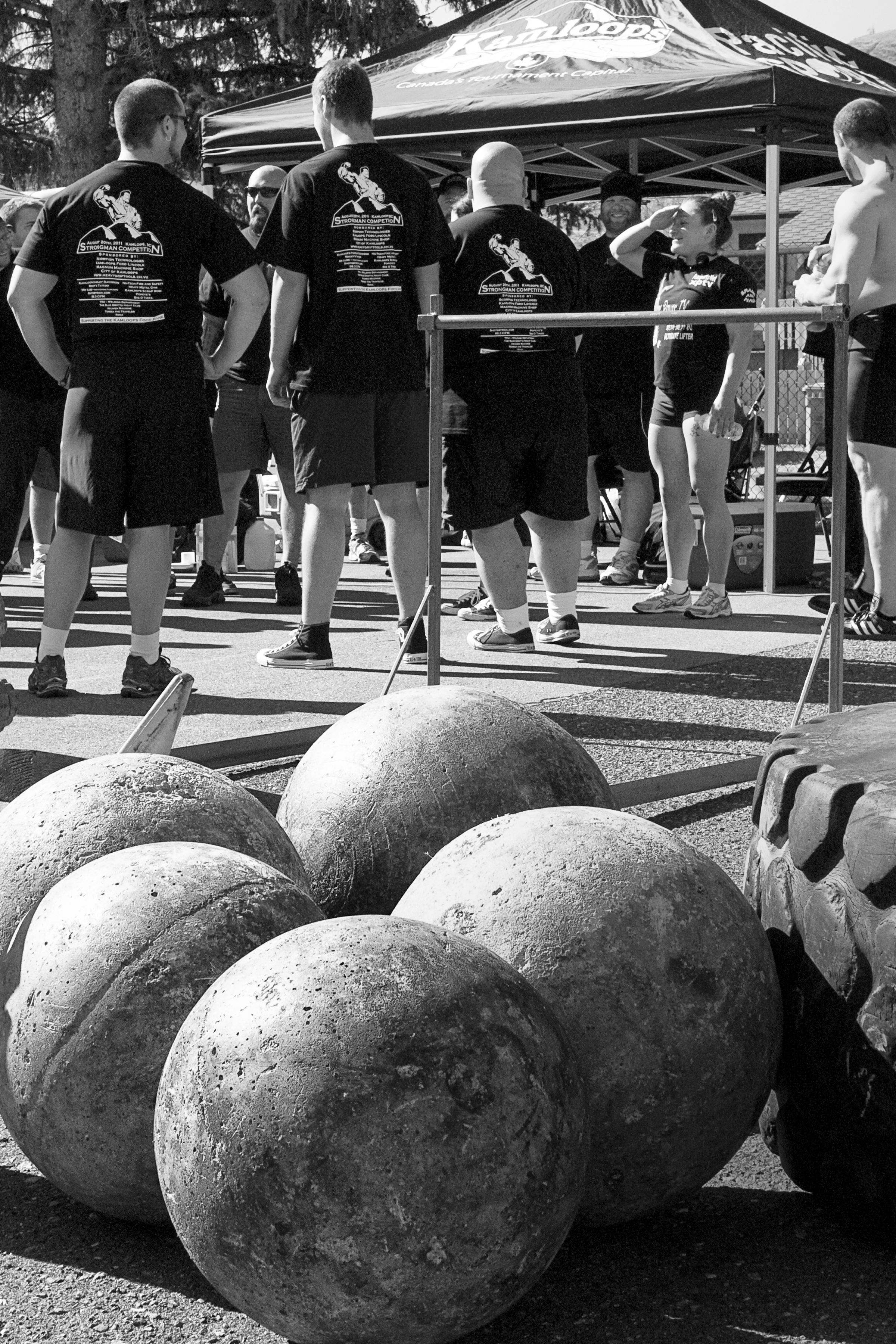
On August 20th I was one of the photographers hired to produce images from this year’s BC 2011 Strongest Man Competition held at McDonald Park in Kamloops.

The day was hot and sunny with a clear blue sky, conditions that made it uncomfortable for the weight lifters and difficult for the photographers. For the athletes I think the heat made the competition more challenging, and for me the sharp contrast between subject and background on such a bright day meant camera metering changed constantly. Selecting Auto program modes would have drastically reduced the number of keepers under those quickly changing conditions, and as it was I constantly altering my settings depending on whether the contestants were facing the sun or not. Sun and shadows on moving subjects can be a problem and photographers have to pay attention, otherwise they will end up with both over-exposed and under-exposed images of their subjects depending on the action. My technical advice in this case would be to select the Manual mode, staying away from Auto Program modes, and keep checking the camera’s histogram, and to be prepared to use a flash when needed. The Manual mode allows one to meter for what is important, for example, a participants face in shadow (or in the bright light just seconds later). Then the histogram can be quickly checked to make sure that the exposure is what the photographer wants.

I know organizers for these types of sporting events always give photographers wide latitude and leave what is to be photographed almost entirely up to the photographers. For newcomers this might bring an immediate response of relief with thoughts that all they need to do is wander around happily snapping candids as they please, however, that is far from the truth. Organizers usually don’t put into words what they want, and trust that their photographers know what to photograph and will deliver usable images, but some random candid photographs that do not tell a story are not what they want, otherwise a photographer wouldn’t be included in their budget.

I am sure that the images of most value to clients will be the ones that aren’t just a document of a guy lifting some heavy weight, and I try to find camera angles that tell a bit of a story, and, hopefully, can stand alone if needed in some future advertisement. My opinion is that photographers need to work hard on this project, to think about their subjects, and be creative as they search for the decisive moment when everything comes together.

In this kind of work it is more than wandering the park with a camera, and creating a photograph that is strong enough to stand on it’s own goes beyond just being a picture filled with nice colors, as it needs to provide the viewers with information that they can make into a story. I think a good photograph is one that makes us have a connection with, or to think about, the subject.

An event photographer’s first goal is to successfully document everything important that happens. The second is to compile enough images to be a narrative of the occasion, then third and lastly, and maybe most importantly, to create photographs that by themselves tell individual stories of those that attended or are the main focus of the function.

I was there the entire day and enjoyed photographing that competition and liked the opportunities to make many excellent photographs of the many participants that I am sure everyone involved will appreciate and be able to use. I came home tired and a little rosy from too much sun, but overall it was a most enjoyable way to spend a Saturday, and by the time the day was over my memory card was just about full.

http://www.enmanscamera.com

The photographer said, “I have never used a flash”.

“I have never used a flash.” That was a statement from a young photographer just starting to photograph weddings of her friends. She had stopped by to purchase a lens hood (very good idea for any lens) and while we talked she wondered about how I dealt with contrasting shadows on sunny days and if a polarizing filter might help her get rid of them.

Polarizing light with a polarizing filter will reduce glare in the sky and on reflective surfaces like water and windows, but it doesn’t reduce shadows or contrast. It will decrease the amount of overall light coming through a lens. If a lens is fitted with a polarizing filter light is polarized if it reaches the lens from any angle, but if the sun is directly in front or behind the photographer the light will not be polarized. For this young photographer using a polarizer won’t noticeably affect her wedding photographs in any way other than to maybe darken the sky behind the wedding couple.

I told her that I always use a flash indoors and outdoors when photographing people and she said “even in bright sunlight?” I use the flash to fill or reduce the shadows caused by bright sunlight. Modern TTL (through the lens) flash technology is easy to use and almost fool proof and the days of calculating distance and flash power are long gone.

Many photographers think the only time to use a flash is in a darkened room and because they haven’t learned how to use flash effectively are now relying on high ISO camera settings that will let them shoot in low light interiors. ISO stands for International Standards Organization and determines the sensitivity to light for which sensor is set.

I think relying on high ISO settings is great for those long shots inside the gym during basketball games or when capturing wide church interiors, however, closer pictures of people with mixed lighting coming from overhead leave unflattering shadows and colours crossing their face.

My camera is fitted with a flash bracket that lifts the flash about six inches above the lens. Most camera hotshoes place the flash close and directly over the lens and that close proximity usually causes an effect called “red eye” – the appearance of red pupils in the eyes. Moving the flash away from the lens helps to reduce that effect, and when I move in close for photographs I always place a diffuser over my flash head to spread and soften the light.

Using my flash like that gives me broad, even lighting on people and I set my shutter, aperture, ISO, and flash output so those individuals are slightly brighter than the surrounding area and the background. My flash bracket can be positioned for best effect whether I use my camera horizontally or vertical. The flash is connected to the camera with a power cord that fires it when the shutter is released. I can remove it (and much of the time do) from the bracket and point the flash in any direction I want; bouncing the light off walls, the floor and, if I want, higher than the people sitting in front of me. I can leave them in low light while I point the flash at arms length, from an angle to the side or from above the individuals I am photographing.

Just as there are photographers that leave their cameras’ setting on “program” or “auto mode” and expect good results, there are also those photographers that are unaware how important a good quality flash is. However, in the last few years more photographers that are concerned with their images are using a flash, and not the tiny popup flash that many cameras have, but a flash with the power to illuminate spaces much larger than a family dining room. There are many informational sites on the Internet dedicated to using and controlling flash and probably the most visited is http://www.strobist.blogspot.com.

When I learned to use a flash many years ago it changed the quality of my photography. I no longer had to rely only on ambient light and I began to notice my subjects had more “pop” than those without the flash as I learned to add light to a subjects face instead of only using it to illuminate or make that person brighter in a dim room. Just like the control I gained by using different focal length lenses, using the flash allowed me to add light when I needed it, improving the quality of my photographs and separating my photography from who do not to use flash.

http://www.enmanscamera.com

Is free Photography is a good idea?

I recently had the pleasure of photographing a dog’s play-day at St. Andrew’s on the Square in Kamloops. They had an obstacle course, a bucketful of doggy treats, lots of toys, and even a (yuck) dog food cake. Dogs and their owners showed up throughout the morning and I photographed them jumping over gates, running through tunnels and having fun with their people. My friend, Melody Formanski, director of St. Andrews and dedicated dog lover, sent me the advertisement when she organized the event and was surprised when I told her I would be there to photograph the dogs. But I like dogs and I like photography and looked forward to the opportunity.

My favorite location was at the end of one tunnel. Some dogs came through nose down following other’s scents, some were puzzled and seemed to wonder why their owners wanted them to wander though a meaningless opening. Others had to be coaxed from the far end, but there were those that loved to run and obstacles like the gates and tunnels made the experience more fun. However, I admit I ruined some pictures because I was laughing or getting licked instead of concentrating on being a photographer.

I will be providing Formanski with the pictures I made. I hope she will use them for the club and give pictures to the people that attended that otherwise would only have low quality point and shoot pictures of their dogs. That’s my gift to them for the entertaining morning.

That “gift” brings up an opinion that is flourishing on some websites and photography organizations. I recently read an online forum post that condemned a photographer for giving her photographs away to an organization in which she participitated. The writer stated that, because a photographer spends time and money developing skills as a photographer, their work should always be paid for. I think that is an interesting topic and my opinion is, it depends.

The contention by those that believe all photographs should be paid for is that giving one’s work away drives the price down and reduces the value of photography of all those in the profession, plus it makes it hard to earn a living as a photographer.

Many individuals or community organizations take advantage of beginning photographers by recruiting them to photograph an event for free and saying, “this will be good for your portfolio”, or “ this is a good way to advertise yourself”. I emphatically say that doesn’t work. People will not say, “Thanks for the free wedding, I will tell everyone to hire you”. The organization you worked for will not say “those photographs you spent hours taking for our expensive advertising campaign (for which everyone else was paid but you) are so good that we will recommend you and hire you for the next job”. As I said, that does not work to the advantage of the photographer and won’t further their career.

After writing that, I still don’t agree with the opinion that photographers should only make photographs for money, and will continue to believe that giving away photography, as a gift is a good idea. I have hobbyist friends that are good photographers and I think their photography deserves to be seen in more places then just on their home desktops. All those great pictures make good gifts and its fun to have your work hanging on relative’s and friend’s walls. When to charge and when not to charge really depends on the circumstances. I suggest readers consider carefully, and politely pass on those, “this will be good advertising for you,” requests. I will, by choice, continue giving away photographs to those people I like (without any expectations of anything back) and hope there will be those that had as much fun as I did at the doggy day that enjoy my freely given photographs of their dogs.

http://www.enmanscamera.com.

Using the wrong photographic tool

Using the wrong tool usually leads to unacceptable results in one way or another, for example, when a butter knife is substituted for a screwdriver. That was what came to mind when a local artist group asked me if I could save any of the photographs taken of a member’s winning painting. They required a good 8×10 print and a JPG that could be inserted into their on-line newsletter.

The painting was initially photographed straight on, but that resulted in a bright white reflection in the middle from the flash that obscured the painting. The photographer then tried several shots from the side to reduce the glare, but produced unusable foreshortened pictures, by that I mean the closest frame edge was large and distorted and the far frame edge was small.

The photographer tried several shots, always with unacceptable results. That is what I mean by using the wrong tool. A camera with an on-camera flash will produce glare on reflective surfaces and angled shots don’t make for a good documentation of flat artwork because things close to the camera lens appear larger and those farther away become smaller.

The right tool would have been a camera attached to an off camera flash (or better yet, flashes) set away from the painting at a 45 degree angle. Personally, I would have diffused the flash in some way, either by placing some translucent material in front of it or bouncing the light off a large white card or wall. In any case, the light needs to softly and broadly, not sharply, expose the painting surface. The beauty of digital technology is how quickly one can review the image and retake the photo if needed. I also recommend taking several shots at different apertures. For that, the right tool is a camera that one is able set to manual exposure.

When photographing oil paintings or other uneven reflective surfaces I prefer working with slightly under exposed image files. That way I can bring the detail up using PhotoShop without loosing the highlights.

If the next question is “What kind of camera?” my answer will be that it depends on what is the desired outcome. If it is a printed enlargement of the painting, or for reproduction in a book, or the like, the image file needs to be large and for that one must use at least a DSLR (digital single lens reflex), but for a small newspaper or website image a digicam will do just fine.

If there isn’t access to an off-camera flash wait until the painting can be placed in “flat” daylight. Today, as I write, I see out my window that it’s cloudy and overcast. Today would be a good day to have photographed that painting. Place the painting on any support that will allow tilting right, left, up, and down. Then as exposures are made and checked for reflection the painting can be moved around until there is no reflection.

Within PhotoShop there is the means to realign the diagonals of a painting photographed from it’s side, not perfectly, but good enough for the small website picture. The 8×10 enlargement took a bit more effort for fear of distorting the painting’s subject matter. Again, that’s not perfect either as the outside frame looks a bit wonky, but the painting looks proper. The best outcome would have been to use the right tool and make a good photograph at the beginning.

http://www.enmanscamera.com

Photographing car races

For some time now I have been trying to find the time to spend photographing race cars at the Motoplex Speedway nestled conveniently only minutes north of Vernon, B.C., in the lush, green, valley location just off Highway 97.

I have always enjoyed looking at racing pictures of high performance cars and wanted to try photographing them myself, and so I thought, what is better than a short drive to a local track to photograph the cars there. I looked at their website’s race day schedules and contacted track officials to ask what would be the best race to attend. I introduced myself in an email and included a couple columns I had written as reference. The response was limited and direct with only the words, “23 July, NASCAR”. “Great!” I thought, “Of all the days that was the only one I was not available”. I then decided I would go to the next race advertised as the West Coast Sportsman Series, A&W Street Stocks, and Okanagan Dwarf Cars, on Sat, 13 Aug 2011.

The trials began at 5pm with the actual racing at 6pm. The day had drifting clouds and by the late afternoon I knew I would have low, strong lighting, and expected there would be enough light for me to use a high shutterspeed until approximately 7pm. However, on my arrival at the gate a sign saying no cameras, no food, and no drinks confronted me. I understood the no food or drinks; like theatres, the raceway deserved their concession money, but no cameras? I was concerned and offered that I had driven all the way and had been invited. Shortly a track official arrived and after asking my name said, “He’s OK”. I paid my entrance fee and walked in. All I could discern from their comments was that the car owners’ and their sponsors’ were worried that photographers would sell pictures they took of the racecars.

From then on I was given freedom to wander the spectator part of the track. Bob Newcombe, the facility manager, even took time out of his hectic schedule to personally say a few things about track safety, and then directed me to a super location for photographing the race on the roof of the main speedway building.

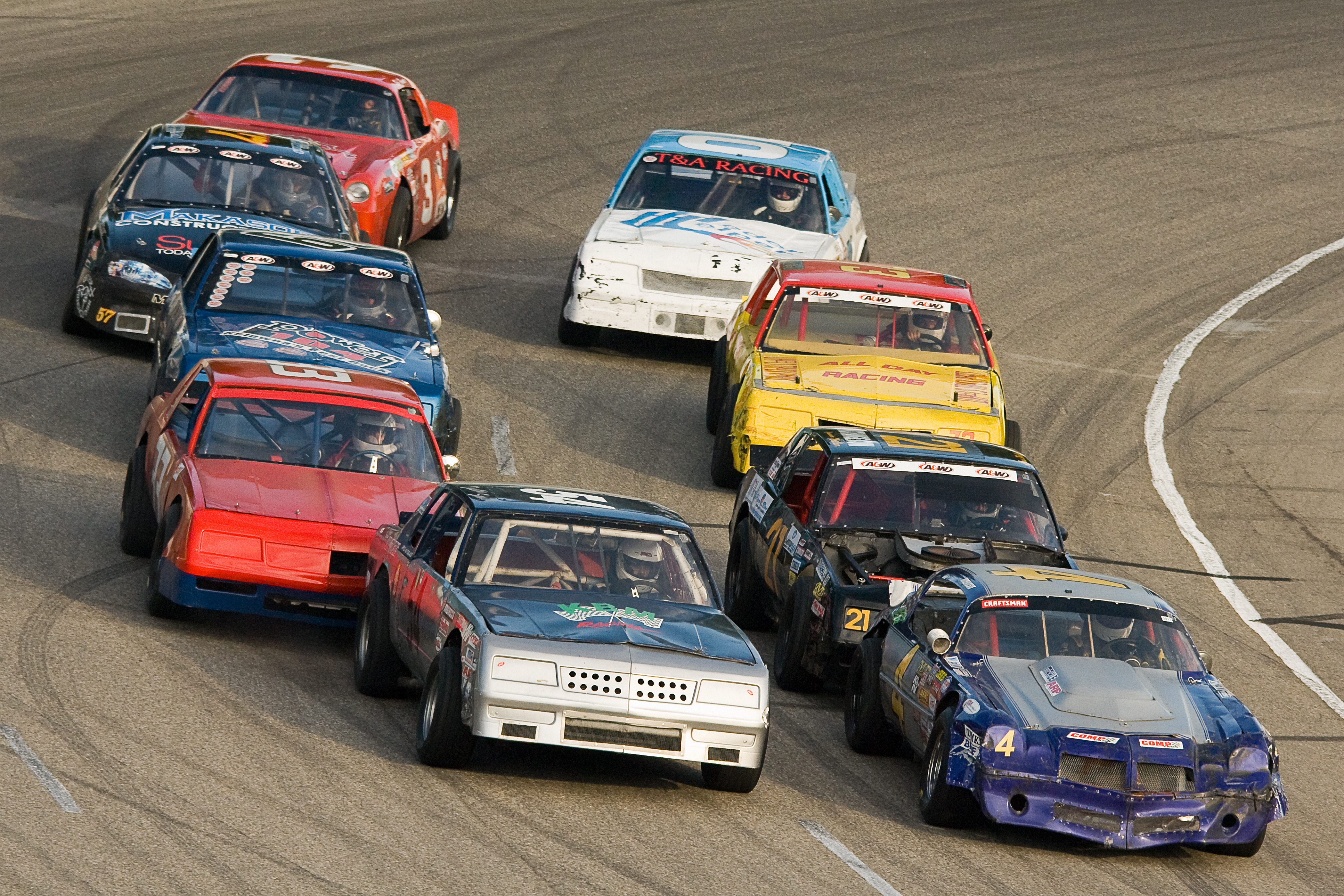
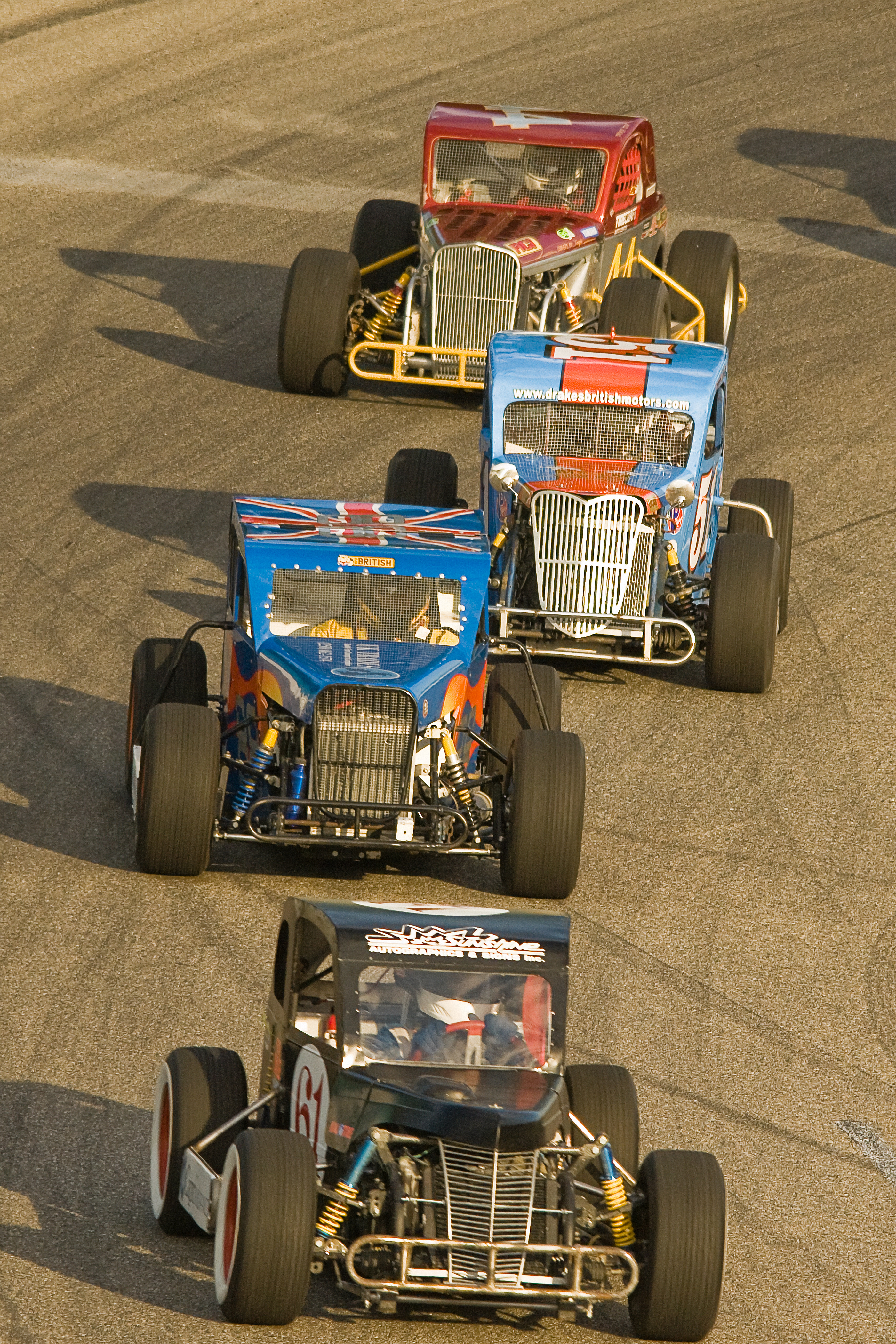
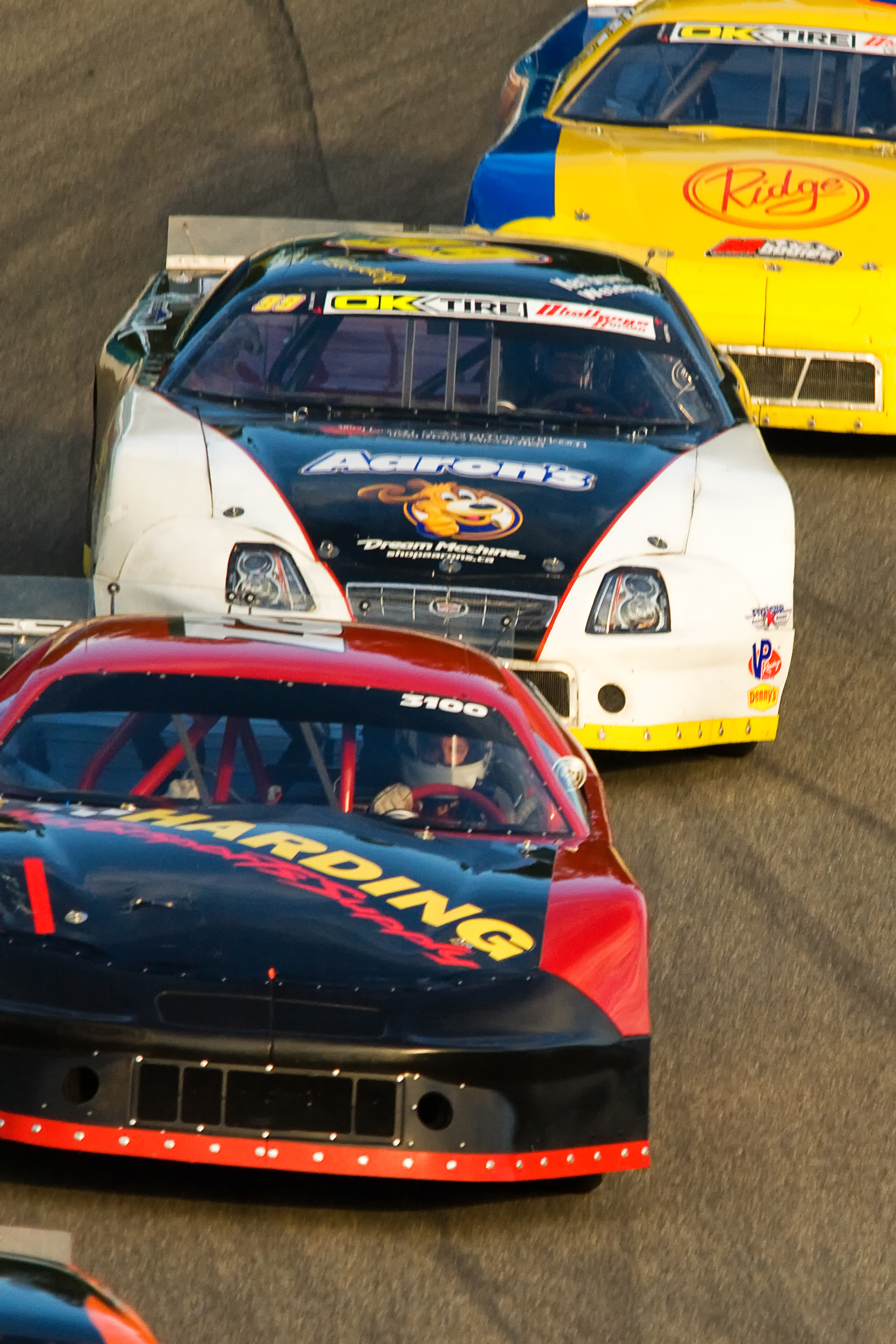
I selected a perch that would give me a free view of the cars as they turned before the final straightaway, and could follow them from the end of the far straightaway around the curve as they all moved to the inside lane, and then vied for position after the turn.

I mounted my 70-210mm on my camera. I also had my wife’s 150-500mmm and worrying about possible camera shake with that long lens, I had also brought a monopod. I quickly realized that my 70-210 was just a bit short and changed to the 150-500mm lens, zooming it between 250mm to 400mm for closer images of the action. I then attached my monopod, but had to make another change. Even though the monopod reduced the possibility of camera shake it hampered my movement, and I couldn’t angle the lens down fast enough as the cars raced towards me after the turn. I wasn’t happy about hand holding the big telephoto lens, nevertheless, I knew that the rule for handholding a telephoto lens is to select a shutterspeed that’s the same as the lenses focal length. I chose shutter priority at 1/400th and 1/500th of a second while handholding that big lens, and will admit I was surprised at the number of keepers.

Photographing the race cars was all about timing, and predicting their path was easier than photographing birds; but one has to pay attention, being aware of how shutter priority would expose the cars, and selecting continuous shooting mode helped.

I had intended to write this column suggesting the Motoplex Raceway as a good place for photographers, however, the result wasn’t as planned because of the “no cameras” requirement. I would like to support the raceway, and I did enjoy my opportunity to photograph the racing, and would like to try again. With the no-camera rule I can’t recommend it for photographers unless one gets get special permission, however, I will say, for those that like car racing, attending without a camera would still be enjoyable. They even had an event called “King of the Hill” when anyone could race their family car on the track.
http://www.enmanscamera.com

Connecting with other photographers


Connecting with other photographers, especially those with skill and experience, is a very satisfying and worthwhile experience. Some months ago, while reading my favorite online forum, http://www.Canadian-Digital.com, I came across a request from Jeff, a Manitoba photographer, who mentioned that he would be visiting relatives in Kelowna and inquired if any local members could point him in the direction of good scenic locations in the area. I posted that I couldn’t really help him with Kelowna, but if he was interested I would gladly spend a day introducing him to Wells Gray Park, and added a link to the park’s website.

He sent an enthusiastic return email and we made plans to spend a day wandering my favourite roadside locations in Wells Gray Provincial Park. Photographers that haven’t been able to visit the fourth largest park in British Columbia are missing a visual treat.

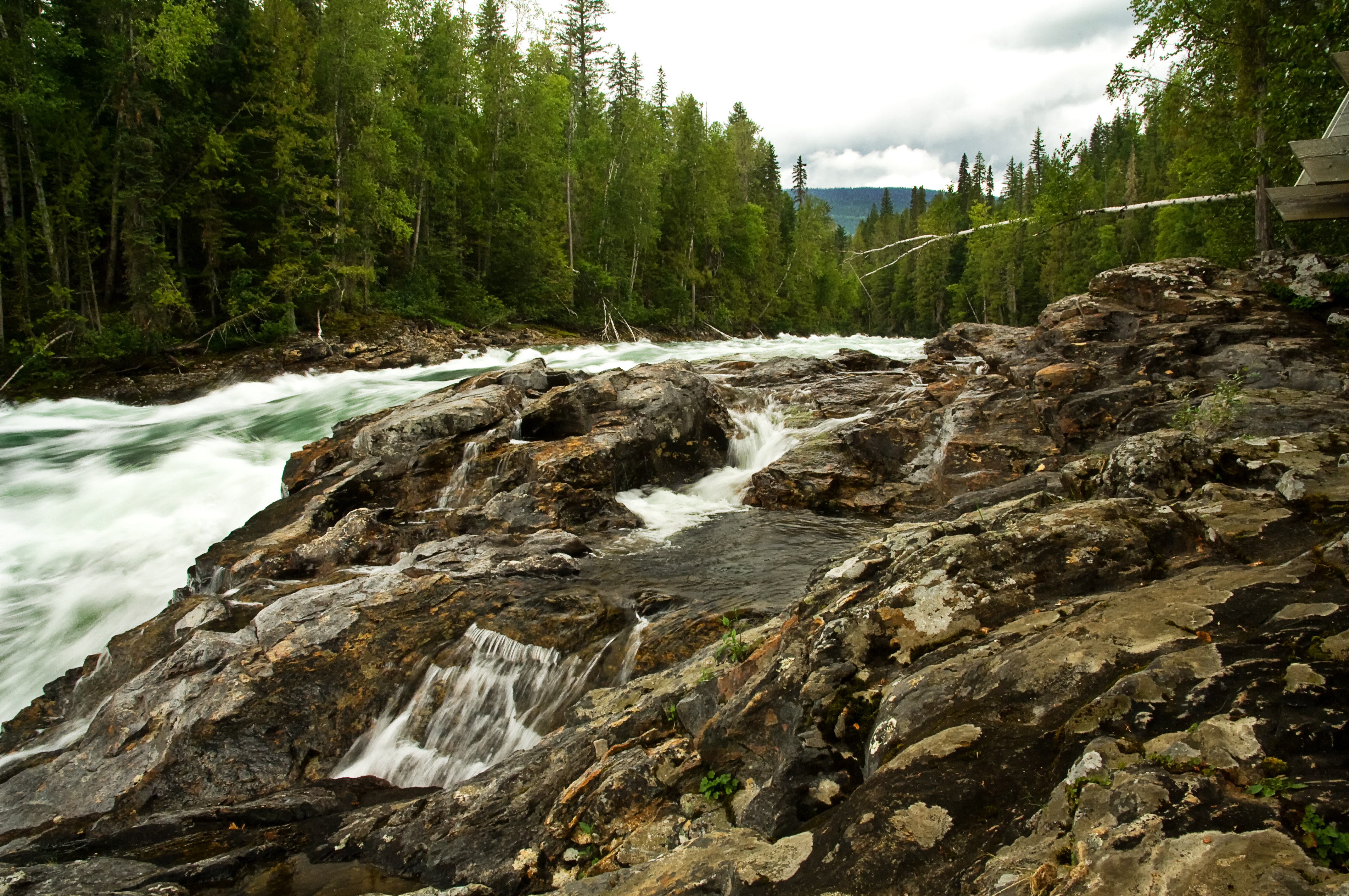
Wells Gray is a spectacular, almost pure, wilderness area that is easily accessible by car. Although the website advertises it as a world-class destination for canoeing, kayaking, hiking, and camping, photographers can enjoy a photo-packed day trip wandering along the pleasantly-winding, park road and will return home with memory cards filled with quality wilderness images.

I anticipated that photographer Jeff, my new friend from Manitoba, had no idea what to expect other than the picture postcard images from the website, and I was pleased when he remarked that he would like to look for more creative opportunities than those most would make from the dedicated tourist lookouts.

The experience of meeting a stranger, and then spending the day driving, talking, and site seeing might be uncomfortable for some, but for photographers, I think they only need photography in common to have an enjoyable time. At any time, if the other person’s opinion causes unease, just change the subject to cameras, lenses, or any other thing photographic.

In order to get to Wells Gray early, Jeff had to get up before the sun for a two-hour drive from Kelowna to Kamloops to meet me at my shop at 6am. (I wasn’t being mean! It was his choice.) We bought coffee and departed for Clearwater, an hour and a half drive away, because we had decided to be in the park taking pictures for 8am. From Clearwater we then roamed into the park with our cameras at the ready.

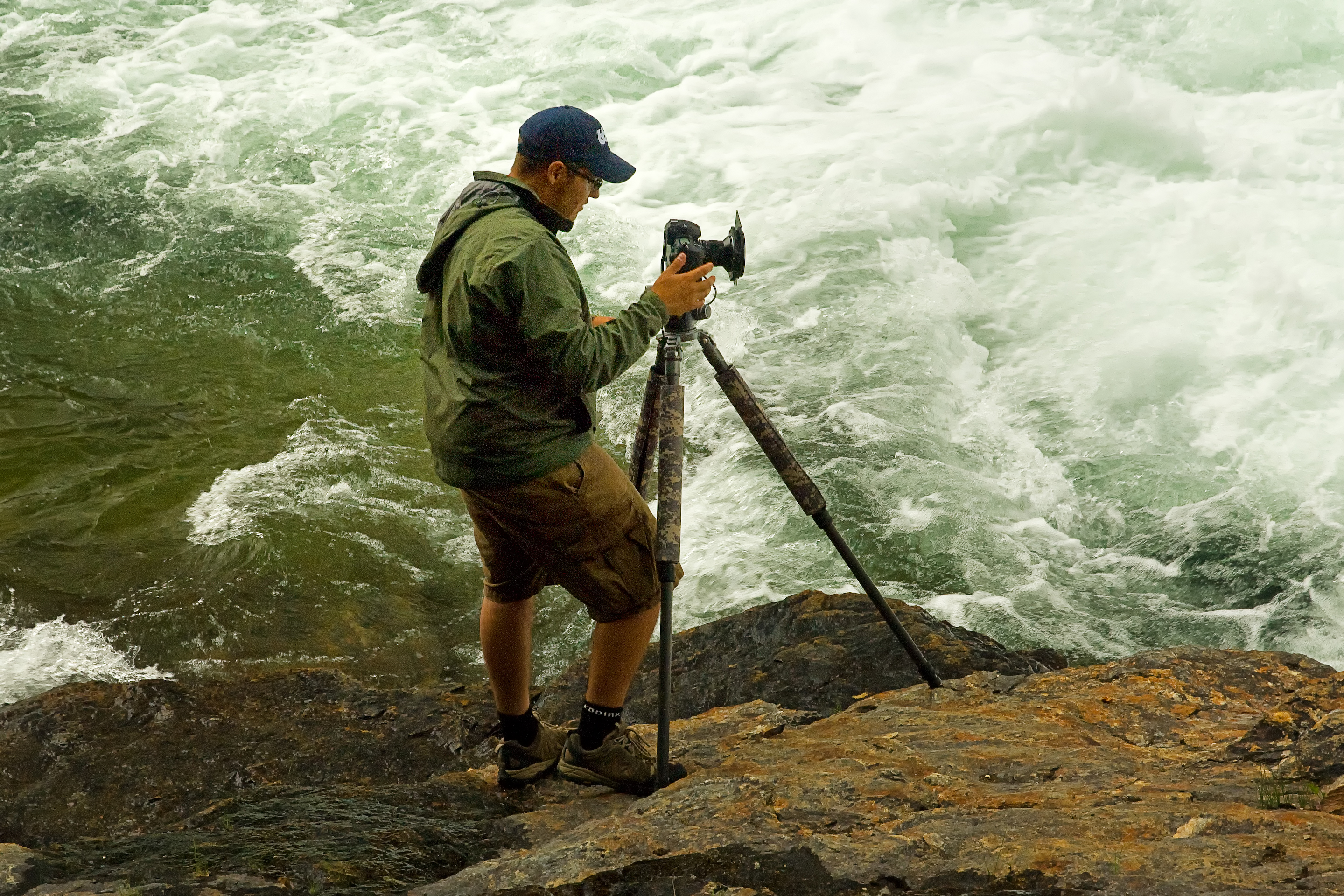
When I put my camera gear on the backseat of his car I had to move his tripod, and remarked that I liked the ball head he had attached to it. He said, “I always use a tripod”, and I thought to myself, “I think I’m going to like this guy.” There’s nothing like a tripod to let one know they are with a serious landscape photographer.

Wells Gray is a great park for roadside photographers with many places to stop, to photograph the spectacular waterfalls, old homesteads and the river’s many geological features tucked only a short walk away, and that is just what we did. Unfortunately, the wildlife was timid and we only briefly saw one black bear.

The comfortably cool day was excellent for photography with a slight overcast and high moving clouds. Jeff changed lenses and filters regularly as he worked the new environment, but for me Wells Gray has been a regular location for years and I was content to stay with my well-used, 24-120mm lens as I photographed the familiar landscape.

The internet is a wonderful way of bringing people together and I know I would really appreciate photographers extending hospitality to me when I travel to some far off place. In the event of any concern, checking up on other forum members is easy. I reviewed Jeff’s online posts (as he had mine), and when he wrote he was visiting BC I was sure he’d be fun to know and to stand beside as we made pictures. One doesn’t always have to participate as a host, but I am sure suggesting locations for photography would be appreciated. For local photographers who have never made the expedition to Wells Gray, it is well worthwhile.

Contact me at http://www.enmanscamera.com

Eliminate the Irrelevant from your Photographs

Years ago the Hasselblad camera company put out a series of photography pamphlets. While I had my Hasselblad I collected and studied the information contained in the pamphlets. Last week I thumbed through one of them entitled “The Eye, The Camera, The Image”. Although meant for medium format film cameras its filled with information that is still appropriate for digital camera users.

I skimmed over topics like Using the focusing hood magnifier, Colour film and light colour, Types of exposure measurement, X synchronization, Double exposure and Polaroid film, all an interesting read if one is concerned with photographic history, however, not practical or useful for those searching to be a better photographer in the 21st century.

One topic entitled “We see far to much” says, “The eye is our organ of sight. It’s lens has a focal length of about 17mm and covers a 150-degree vertical and 120 degree horizontal field; the binocular vision provided by our two eyes gives a 180-degree angular field. We seldom have any need for images encompassing so wide a field. The wealth of detail in such a field would be rendered small and insignificant when reduced to images formed in a camera when composing a photograph outdoors or elsewhere. We always need to crop our field of view.”

That paragraph is valuable in my opinion. Most successful photographers “tighten up” on their composition, and by that, I mean they only include those elements that add to the visual statement of a photograph. Beginners, however, and especially those using point and shoot cameras (and certainly, not only confined to them) aim with only the excitement of their subject in mind and don’t pay attention to other additional elements captured by the sensor.

Photographers are surprised when they look at their final image and find a picture filled with irrelevant and disruptive items needing to be cropped out. If they just took their time, moved closer or zoomed-in the lens they would have had an attractive composition in-camera.

Hasselblad continues, “This elimination of irrelevance is vital. The trick often involves excluding most of what you see. Making a selection is a basic feature of all art, whether it is painting, drawing or photography. Art consists of picking out the most interesting, most illustrative, most instructive, the loveliest or most emotional components among a myriad of components in a subject.”

Photographers must train themselves to be specific with a subject, only showing the viewer what is important. How do we slow down to do this in an age of auto focus, auto aperture and rapid-fire shutter release? I have an easy answer – get a good tripod!

I know many photographers have never owned or used a tripod and some have only used rickety, inexpensive models. My comment to anyone that says they don’t like tripods is they never have used a good one. Using a sturdy, well-made tripod makes one slow down and pay attention to the subject in the viewfinder or LCD. In addition, the process of setting up the tripod and attaching a camera gives photographers time to think about the composition. I accept Hasselblad’s contention that “we see far to much” and need to eliminate irrelevant items in our compositions.

When a neat and interesting subject is seen, stop the car and get out. Don’t be lazy and merely hunker down against the window and take the shot. Get that sturdy tripod out of the trunk; and as you do that think about, or “previsualize”, the photograph about to be made. Set up the tripod, attach the camera and look through the viewfinder or LCD. I suggest making several shots starting from a narrow, limited view and zooming the lens out to a wide-angle view. That way there will be several choices for that picture.

To sum up, eliminate those elements inconsequential to the picture and compose for only those items important to the final photograph, not by looking at the subject and snapping away in a hurried fashion to include everything seen in the viewfinder or LCD; and take my advice, use a tripod.