Photography on a Foggy Day


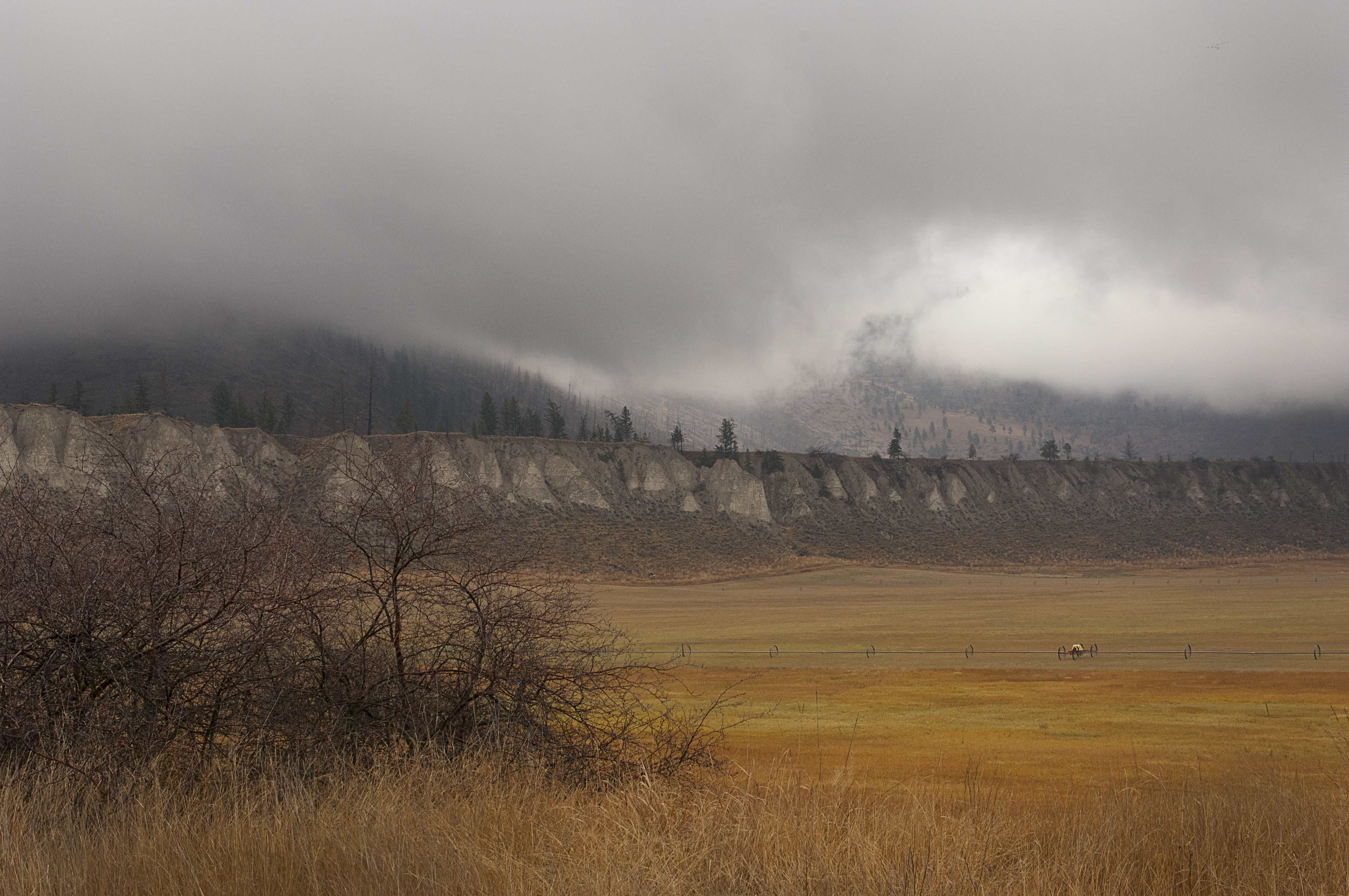
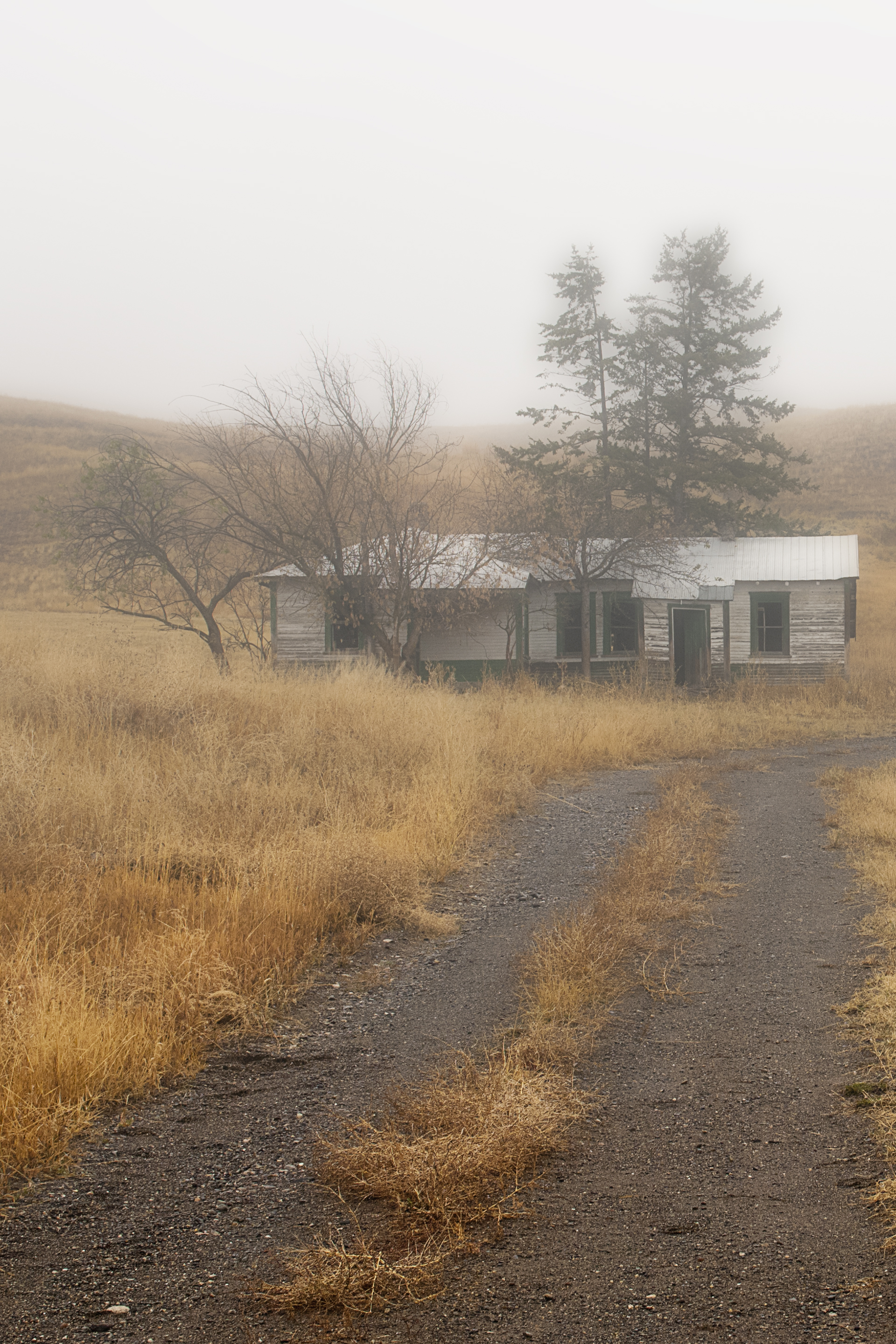
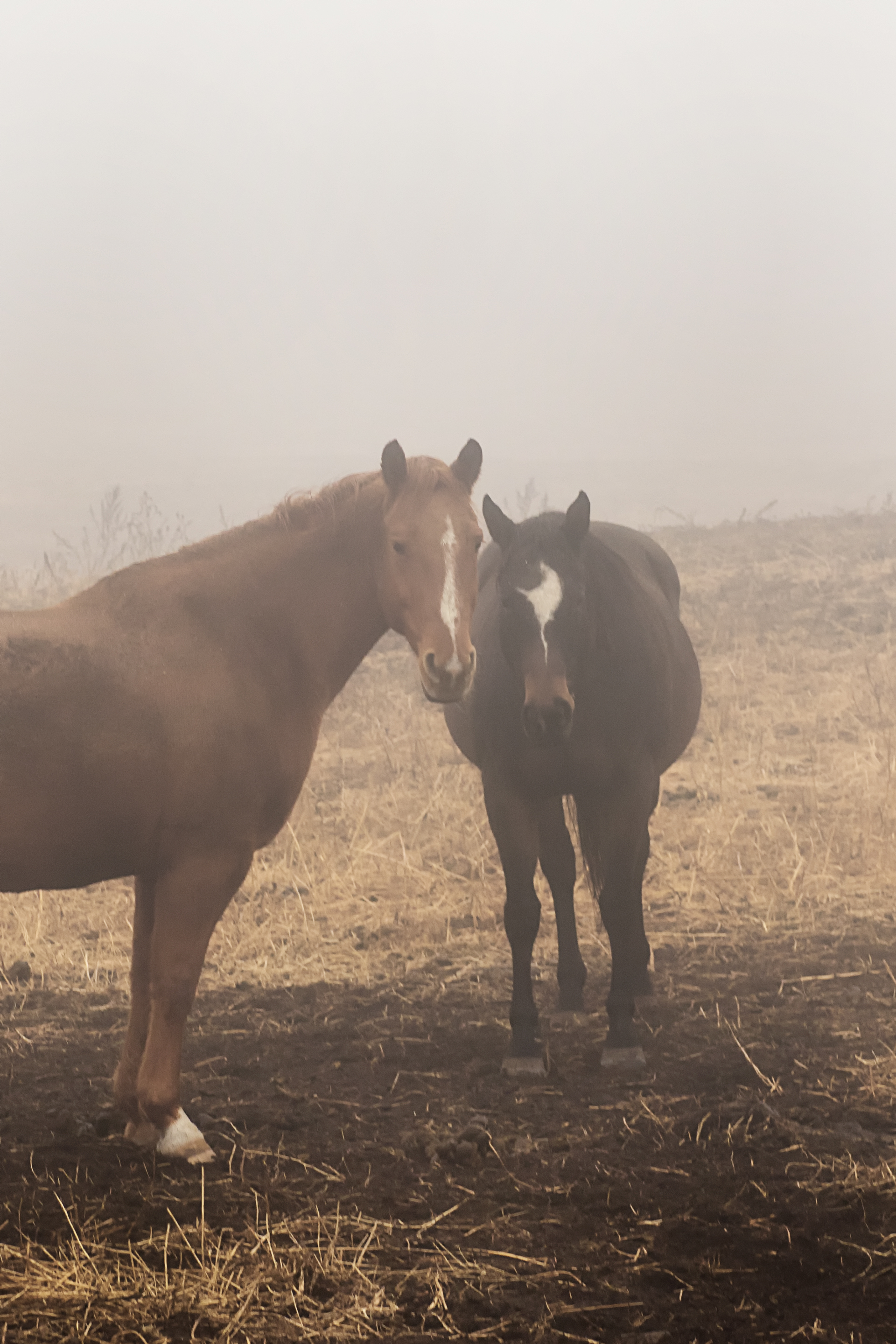
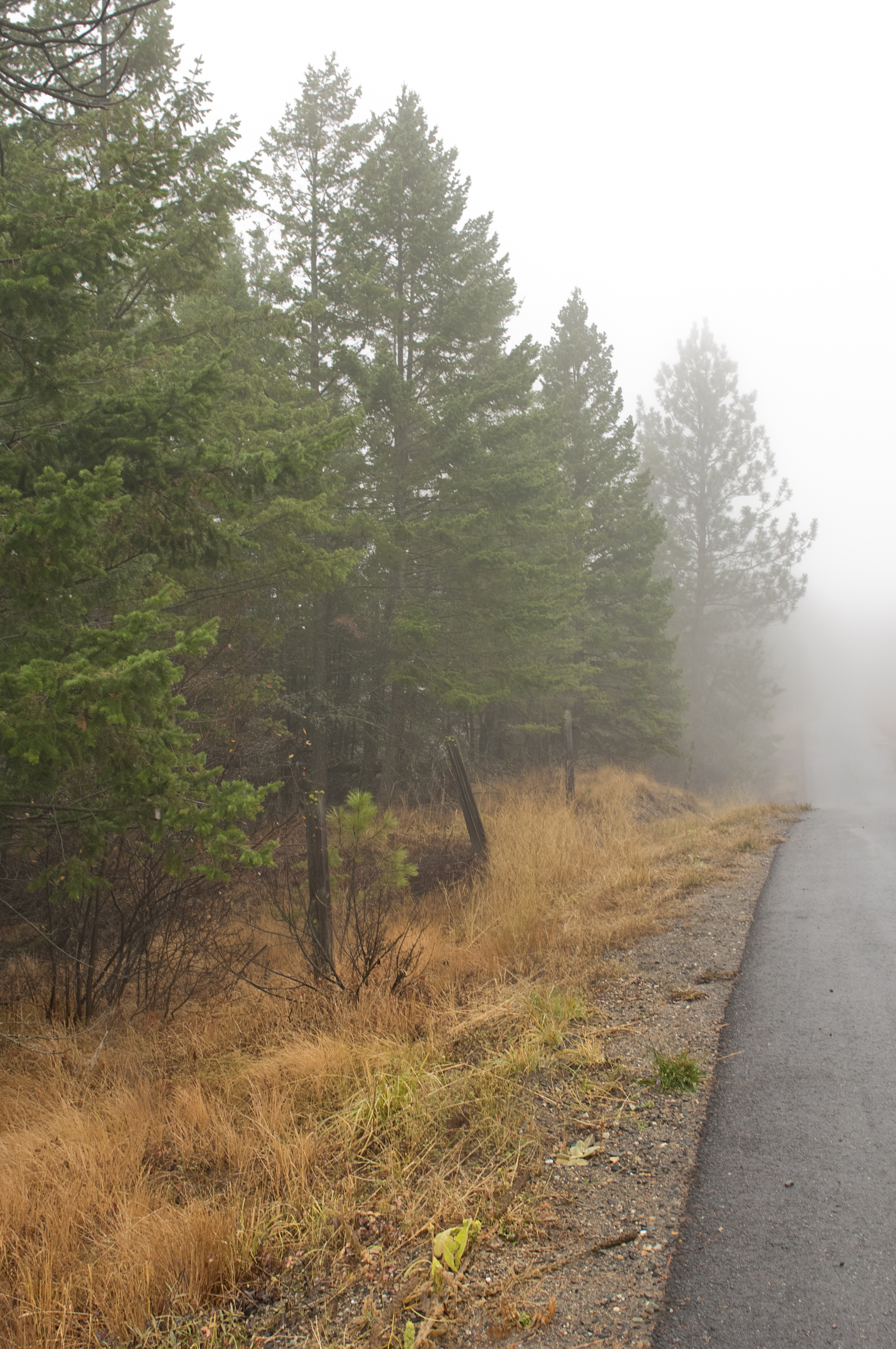
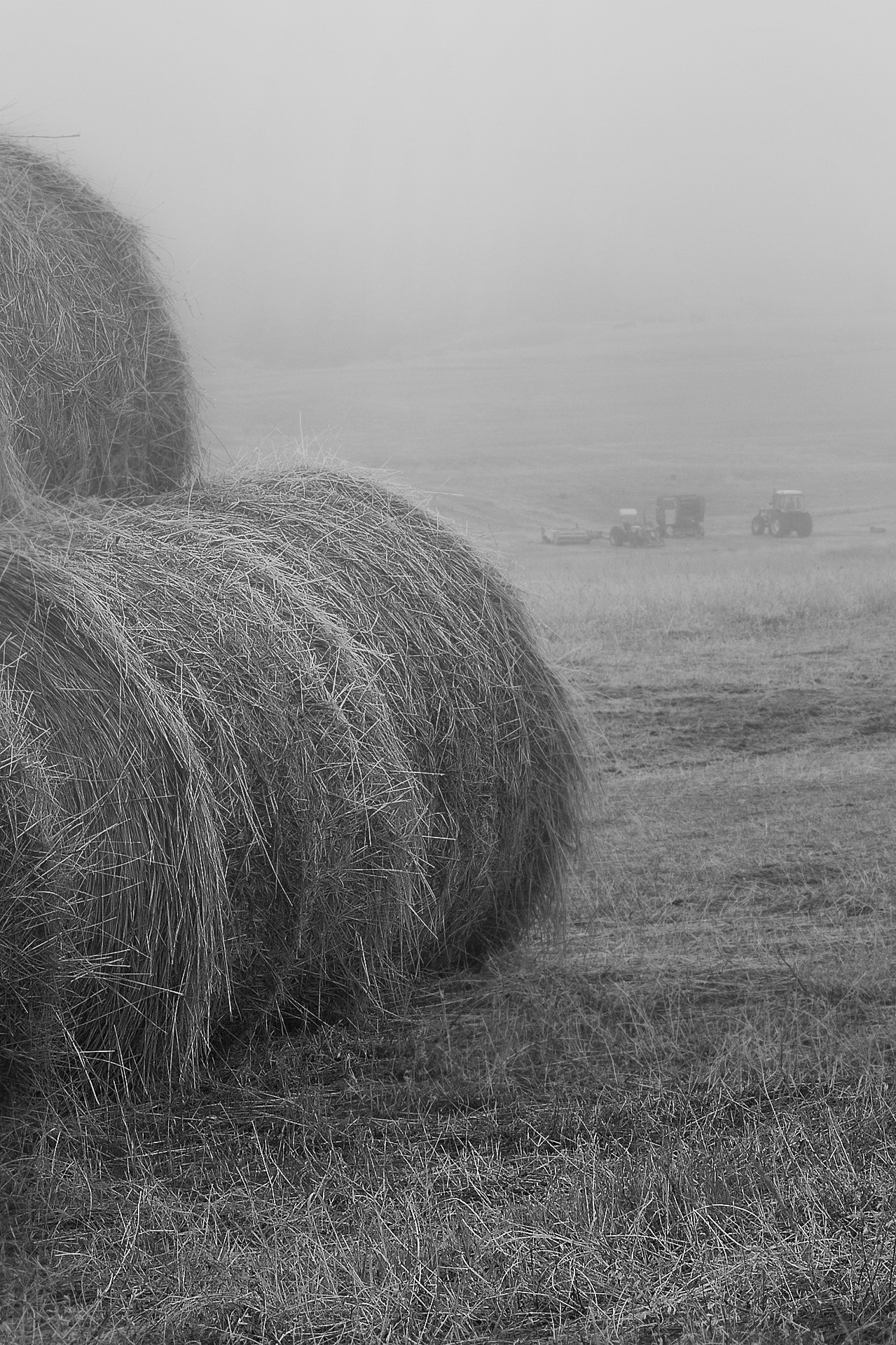
I like taking pictures on foggy days. I suppose I could have stayed inside and watched TV or read a book. I know that many photographers would have done just that as they complained about the damp, flat, lifeless-looking fog, but I like foggy, windy, snowy, and even rainy days. Inclement weather makes for unusual and interesting photographs, so when I woke on a morning with thick fog I knew I was going to have a fun day. Fog can conjure up feelings of mystery and awe, and of the many different conditions we encounter in landscape photography fog is one of my favorites.

Yes, the light was low, but October fields here in the British Columbia interior are mostly shades of gold, so there really is lots of colour. All a photographer has to do is select a subject angle carefully. I began by wandering through the wooded area across the road from my house, but I didn’t really get very far, the fog was so thick in the pines that there wasn’t much that I liked. I jumped in my car and I made the short, five-minute trip down to the Thompson River, and was happy to be just a bit under the fog, and that made for lots of great opportunities.

I really didn’t have any particular subject in mind. I had hoped the bridge that crossed the river would be embraced in fog, but there was a strong, wet, breeze in the river valley that had pushed the clouds and the fog away. I wanted fog or at least low clouds, so I lingered higher up, along the valley rim, searching out and photographing fences, stacks of hay, and abandoned buildings. And I even took a few pictures of cows and horses, as they looked for food in the damp foggy conditions.

I always meter for the mid tone in my composition. The foggy flat light can easily trick the meter and I prefer manual exposure where I personally can determine my aperture and shutter speed. I had remembered to bring my tripod, so even when the light was low and required a slow shutter speed I could still keep an acceptable depth of field using an aperture of f8 or smaller.

Outdoor photographs taken in fog often look flat and dull. The fog and the low light decreases image contrast and colour saturation significantly. However, for modern photographers this isn’t much of a problem since the contrast and saturation of a digital photo can easily be adjusted.  Fortunately, we can turn the problem into an advantage because an image with low contrast is easier to manipulate than an image taken in harsh light with strong shadows and highlights.

With most digital cameras the contrast can be adjusted before the photo is taken. But in my opinion, it is better to do a rough adjustment during post-production in the RAW converter, and a fine adjustment in Photoshop. In-camera adjustment is not always the best since we don’t know in advance what the right amount is, and clipping of shadows/highlights can occur.

Modern technology gives us a hand up on the flat, contrast less light even if some elements in a picture are improperly exposed they are easily corrected during post-production, and increasing the contrast on important subjects in flat light is easy.

I have always liked my photographs to be about my personal vision of a scene and not to be limited by what a particular film or camera sensor can record.  Even Ansel Adams said, “You don’t take a photograph, you make it.”

Fog forms when a humid, cool air mass moves under a warm air mass and those conditions seem to be recurring for a second day. I know that might cause problems for drivers, but I am hoping to see some in Kamloops when I go to my shop today. And if so, I will be out on the street with my camera.

I enjoy your comments, Thanks.

My website is at www.enmanscamera.com
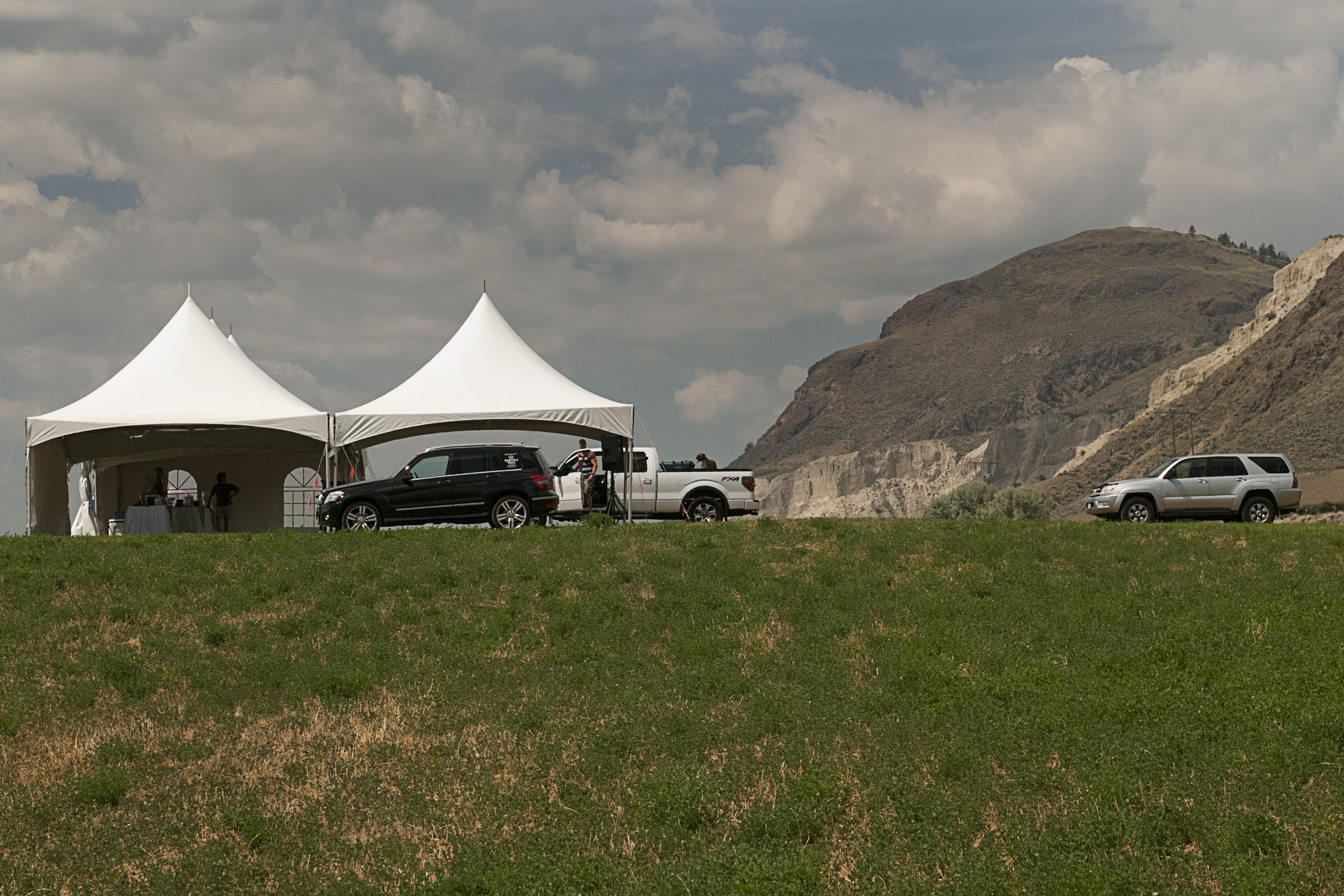
Pictures Shot in the Bright Hot Sun


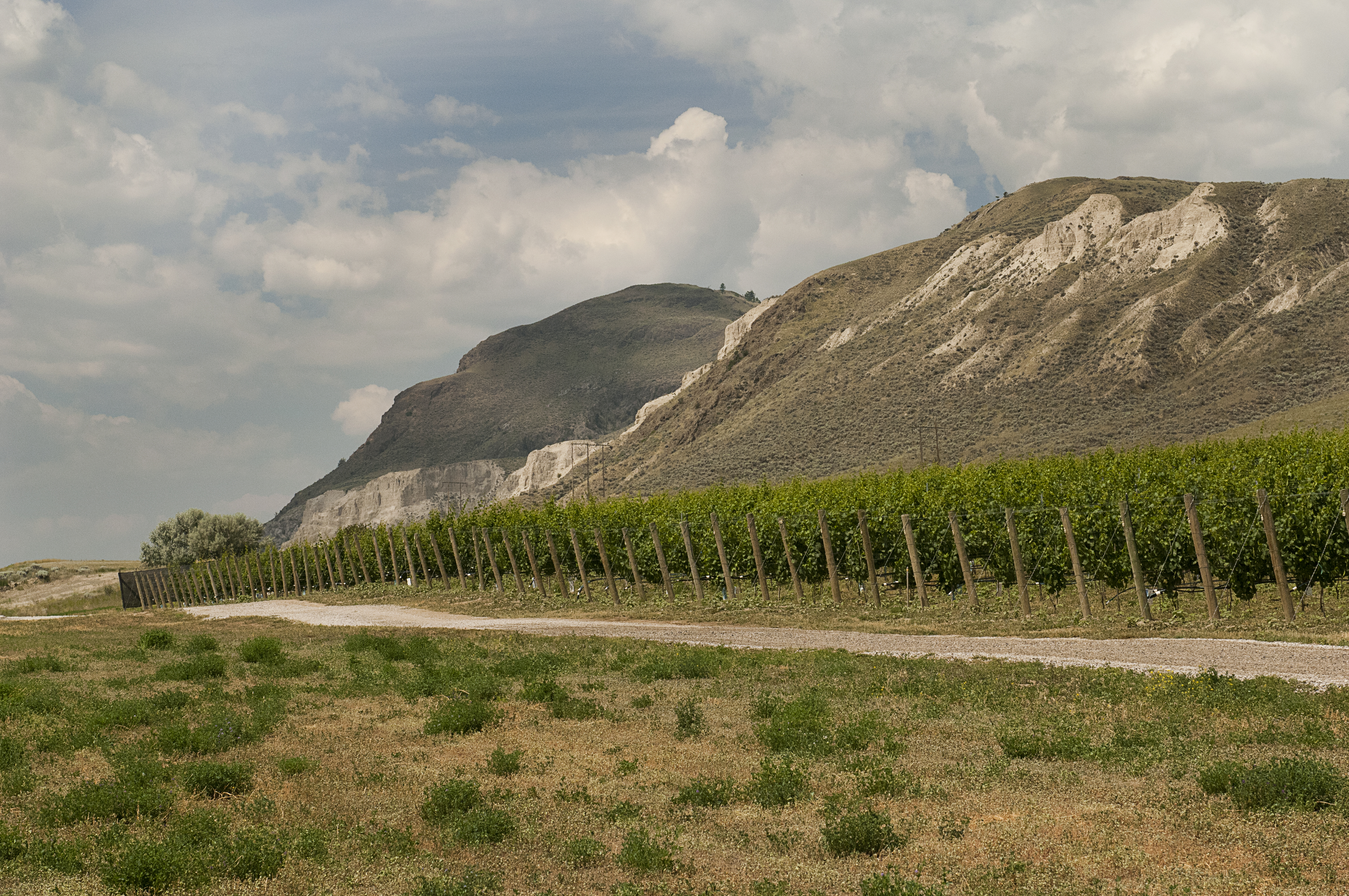
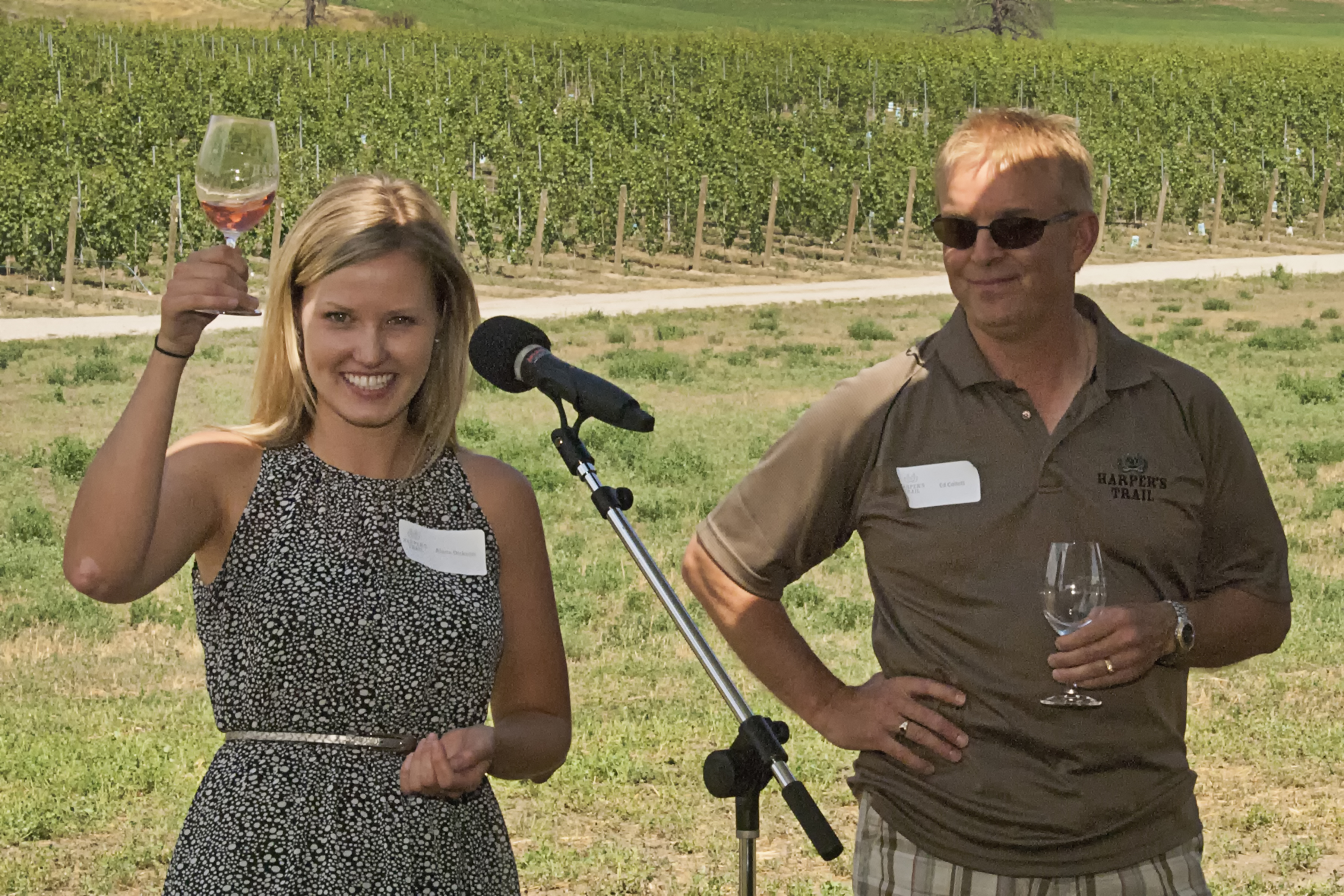
Bright sun and clear sky might be great for some scenic photographers, but it can cause many problems when photographing people.  My assignment this week was to photograph an event that began at 2:30 under almost clear skies, and where even in the shade the temperature hovered in the mid-30 degrees celsius. The location was on a south-facing, treeless, hill top with a sprawling vineyard in the background.

The event, other than a large group shot of all the guests, was held under five large, white tents, and my goal was to balance my flash and exposure to lighten up my subjects without glare, or shadows, and properly expose the field’s sun-drenched background.

The contrast in light from shadows to highlights on a very sunny day can be too extreme for a camera’s sensor to capture. I always look for open shade, or place the sun behind my subjects and use a flash.

I meter for the mid tones like the grass, or, in this case, large open field, and underexpose about two stops, then balance the overall image using my flash. My flash sits on a bracket and the flash is attached to my camera with a wire so I can remove the flash and hold it at different angles if I need to. I did notice people wielding point and shoot digital and a couple photographers with DSLRs trying to use their pop-up flashes, but I am sure they were disappointed with their results on that sunny day as the extremes from black to white are just too much for digital sensors.

Fortunately, photographers can load images into PhotoShop and no matter if they are JPG or RAW files can be optimized using Adobe RAW – an amazing application that gives additional control over exposure, shadow, and highlight detail. Adobe RAW can even help with those not-so-well focused images.  I use that program to polish my images and make them all that they can be which is much better than settling for photographs mass corrected at a big box lab.

After selecting the best images I correct the white balance and colour using Photoshop.  I make the photo look pretty much the way they appear through the camera and the images taken in the bright sun now have lots of detail.

Another program I regularly use (and think is amazing) is by Nik Software Inc. and is called Viveza.   Viveza allows selective control of light and colour. With that program I can maintain the colour and tonality while changing the background and blending the effect exactly.  All this isn’t much different than I used to do in my old film darkroom except now it is more precise, the process can be duplicated, and overall everything is easier.   Between the two programs I am able, without spending too much time in post-production, to provide my clients with polished and balanced images that do not show the harsh environmental realities of that day.

Sure, sunny clear days please us all and when planning an outdoor event we prefer that to rain, but for photographers the sun and harsh unflattering shadows on people’s faces isn’t the best outcome. My advice is not to approach this type of photography the same way as a scenic and to begin with test shots and constantly pay attention to the exposure and absolutely use a fill flash for the best outcome.

My website at www.enmanscamera.com

Some thoughts on Post-Production and photography

During the time period of film photography people rarely commented on the fact that professional images were manipulated or retouched.  Photographers used oils, dyes, special pencils, small paintbrushes, and airbrushes.  These tools were used to open eyes that were closed, to whiten discoloured teeth, to improve hair and clothing colours, to remove and replace backgrounds, and to turn black and white images into colour photographs. To increase the contrast one could select special filters, paper, or chemicals. However, in all my years of using film to make photographs I do not recall anyone being critical of that post-processing by saying that the work done by photographers to original images, after shutter release and processing negatives, removed that image from the realm of photography.

I bring this up because last week a friend stopped by and told me that after showing some of his work to a local camera club, that he was criticized soundly because he advised members that when he made the original exposures he always kept in mind how he would finish the photos using PhotoShop. He said that he always “tweaked” his studio photography and was surprised that it bothered some people.  Personally, I think it is that “tweaking” that help make his images so good, and they are very good photographs in my opinion.

Since the introduction of digital many photography contests and exhibitions exclude images that have been post-processed. I do understand that those organizations want to show the photographer’s talents at capturing an image and not retouching skills. However, it must be very hard to apply that restriction when many of the latest cameras can post-process (reprocess might be a better word) the original images in-camera using computer software supplied by the manufacturer.

There are those that consider themselves purists and loudly denounce programs like PhotoShop, although I don’t know what a purist really is in this technological time, because most images are no longer made on light sensitized material and are now computer generated image data files.

Photojournalists are expected to capture the truth about some event or subject and should not be altering the original image in any way.  But artists?  The work in question was studio photographs of custom motorcycles, which in my view easily fits in the realm of photographic fine art, and, certainly, not photojournalism. I suppose it depends upon whom the photograph is for and who the viewing audience will be.

I do not usually work as a photojournalist, and those that do get my respect when they are able to pull interesting photographs out of what are sometimes are pretty crappy conditions for a photographer.  In my opinion, those photographers that don’t work for magazines or newspapers should include post-processing as part of photographic methodology. It’s all about making the best possible photograph for others to see.

My portrait clients expect that I will post-process, and I usually tell them I intend to. I try to light in a way that not only looks good at the moment the shutter clicks, but makes it easy for me to enhance in post-production. I employ not only PhotoShop, but I also use other programs made by NIKsoftware.com and OnOnesoftware.com. And personally, I would never let anyone see images of mine that were not post-processed, because I know I can improve and enhance them in post-production.

My point is that photographers have been retouching their photographs for years, perhaps since photographers started making pictures for the pleasure of others. Now it is just easier than ever before, and so is taking a photograph for that matter.  There may be instances where the way an image is produced should be limited to how the camera’s sensor captured it, but I think something must be left to the photographer’s vision, and producing that vision might need a little help from post-production programs like PhotoShop. There is nothing like a well-executed photograph hanging on a wall for the enjoyment of all to see.

My website: www.enmanscamera.com