50.690662
-120.358794
Tag Archives: photography
Reflections on the Medium of Photography

This morning as I sat on our front deck I could feel a warm summer like breeze. I drank my coffee, I was reading, and I mused on how much fun spring photography is. I like to take scenic pictures anytime, whether winter, spring, summer or fall and I feel that with each season’s change comes excitement.
The night before I had been moving some books around in my overflowing photographic library, and I came across an older stack of little booklets distributed by the Hasselblad camera company, and thought I’d review one in particular entitled “Black and White Photography” by Ansel Adams. I enjoy looking at his photography and especially reading his essays and thoughts on photography.
So as I sat enjoying my coffee it was from that booklet that I chose to read about what Ansel Adams had to say about photography, and I began to reflect on the exciting medium of photography so many of us are passionately involved in.
I don’t know about my regular readers, but I am continually composing pictures of everything, whether I have my camera or not. I see light and shadow and put subjects together mentally in a photograph thinking about what would work in my composition and what wouldn’t. I also enjoy looking at other photographers’ work, and I thumb through books and choose websites that have photographers’ galleries. Of course that is a great way to learn, but I like looking at photographs and reading what other photographers have to say about photography.
Here is a quote I borrowed from Hasselblad’s “ Black and White Photography” booklet printed in 1980. While discussing the Art of Photography, Adams explains, “Photography is an analytic medium. Painting is a synthetic medium (in the best sense of the term). Photography is primarily an act of discovery and recognition (based on intention, experience, function, and ego). The photographer cannot escape the world around him. The image of the lens is a dominant factor. His viewpoint, his visualization of the final image and the particular technical procedures necessary to make this visualization valid and effective – these are the essential elements of photography.”
Currently, it is an exciting time period with continual leaps being made in camera technology and both Nikon and Canon have just released spectacular new models. However, I have concern that so many photographers spend so much time talking about equipment and the acquisition of it and that they often forget to think about the photograph. A friend that I hadn’t seen in months stopped by the other day and all he could talk about was the latest cameras and hoped he had the money to get the newest Nikon. When I asked him if he had been out doing any interesting photography all he said was “I haven’t really had the time,” and turned the discussion back to camera equipment. I was disappointed that he was more interested in the equipment than about photography.
The latest cameras and lenses are really fun to talk about, but one needs to leave some time to talk about personal photographs made with their cameras and also find more time to actually make those photographs.
In the Hasselblad booklet Adams also discussed black and white photography, but the information on black and white printmaking isn’t applicable to current digital technology. Personally, I really enjoy converting images to black and white, and so for those that are also interested in converting their images to black and white I recommend readers try the computer program Silver EFX pro by http://www.niksoftware.com.
For those who don’t know who Ansel Adams was they should go to http://www.anseladams.com and http://en.wikipedia.org/wiki/Ansel_Adams. Those readers curious about Hasselblad cameras should go to http://en.wikipedia.org/wiki/Hasselblad.
I enjoy almost anything about photography. Talking about it, reading about it, looking at other photographer’s work, and of course, pointing my own camera and releasing the shutter to make my own pictures. In closing here are the words of one of Adam’s contemporaries, Edward Weston. “Photography suits the temper of this age – of active bodies and minds. It is a perfect medium for one whose mind is teeming with ideas, imagery, for a prolific worker who would be slowed down by painting or sculpting, for one who sees quickly and acts decisively, accurately.”
Thanks for following me.
Planning a Photography Excursion to the tulip festival.
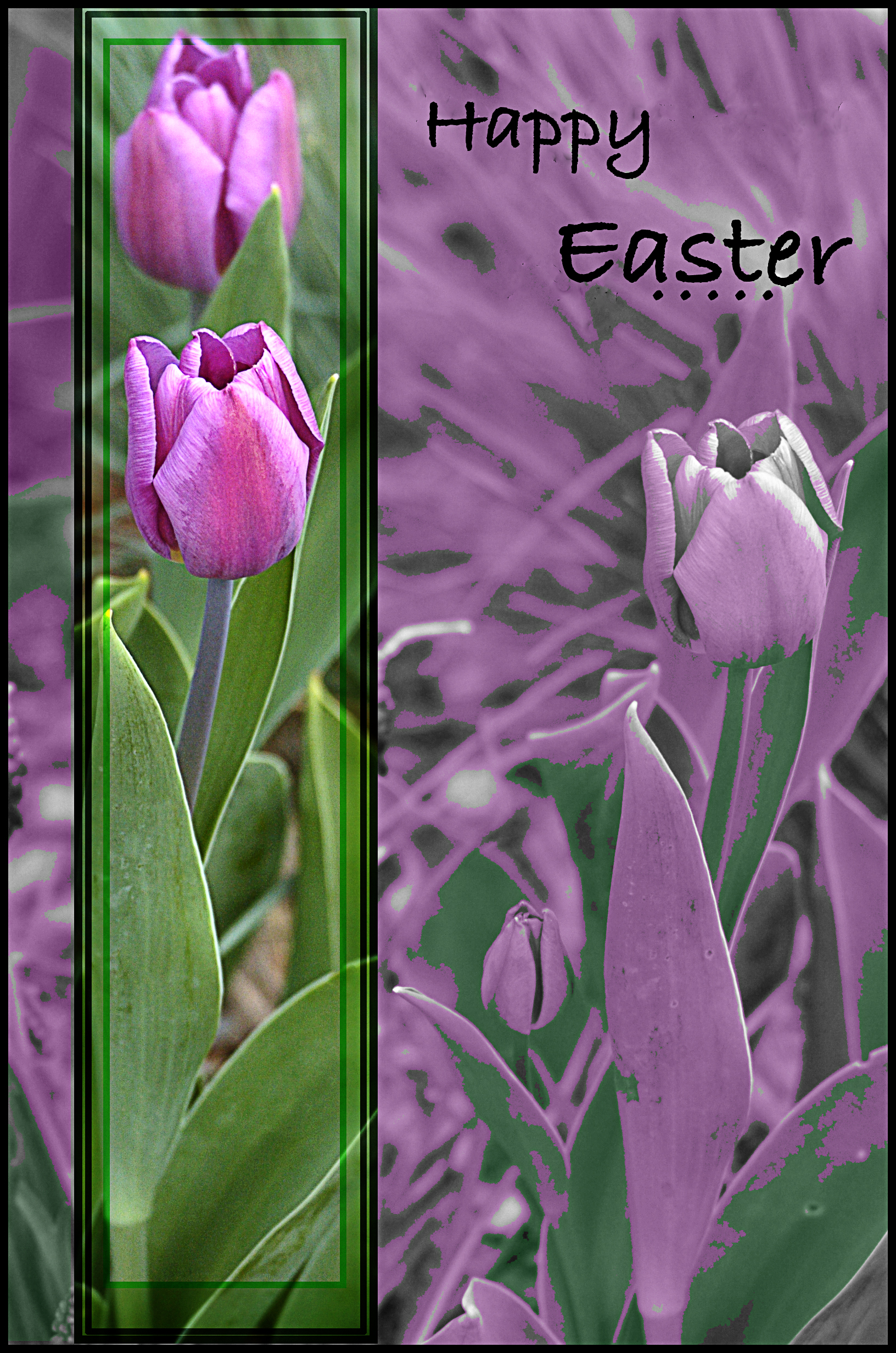
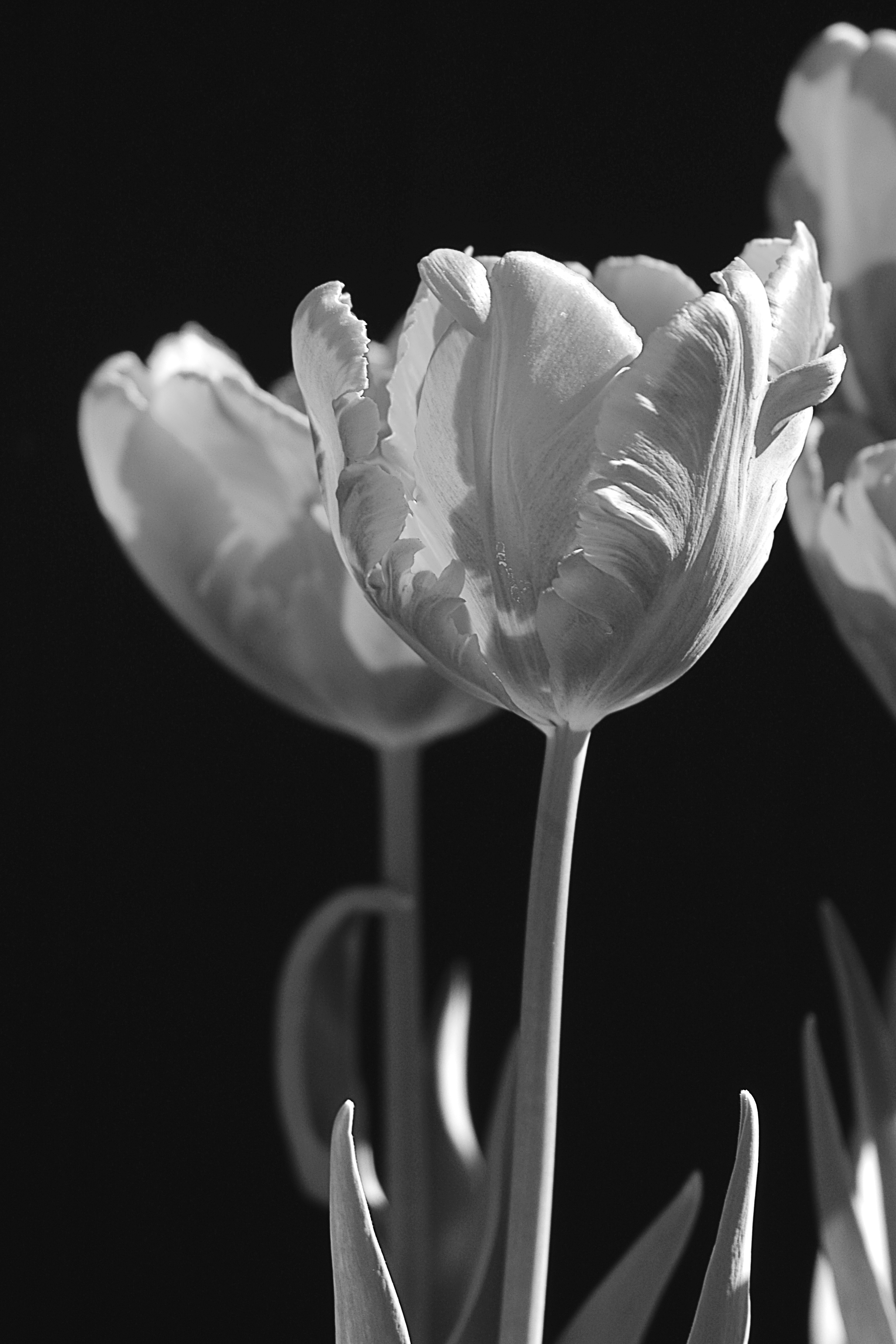
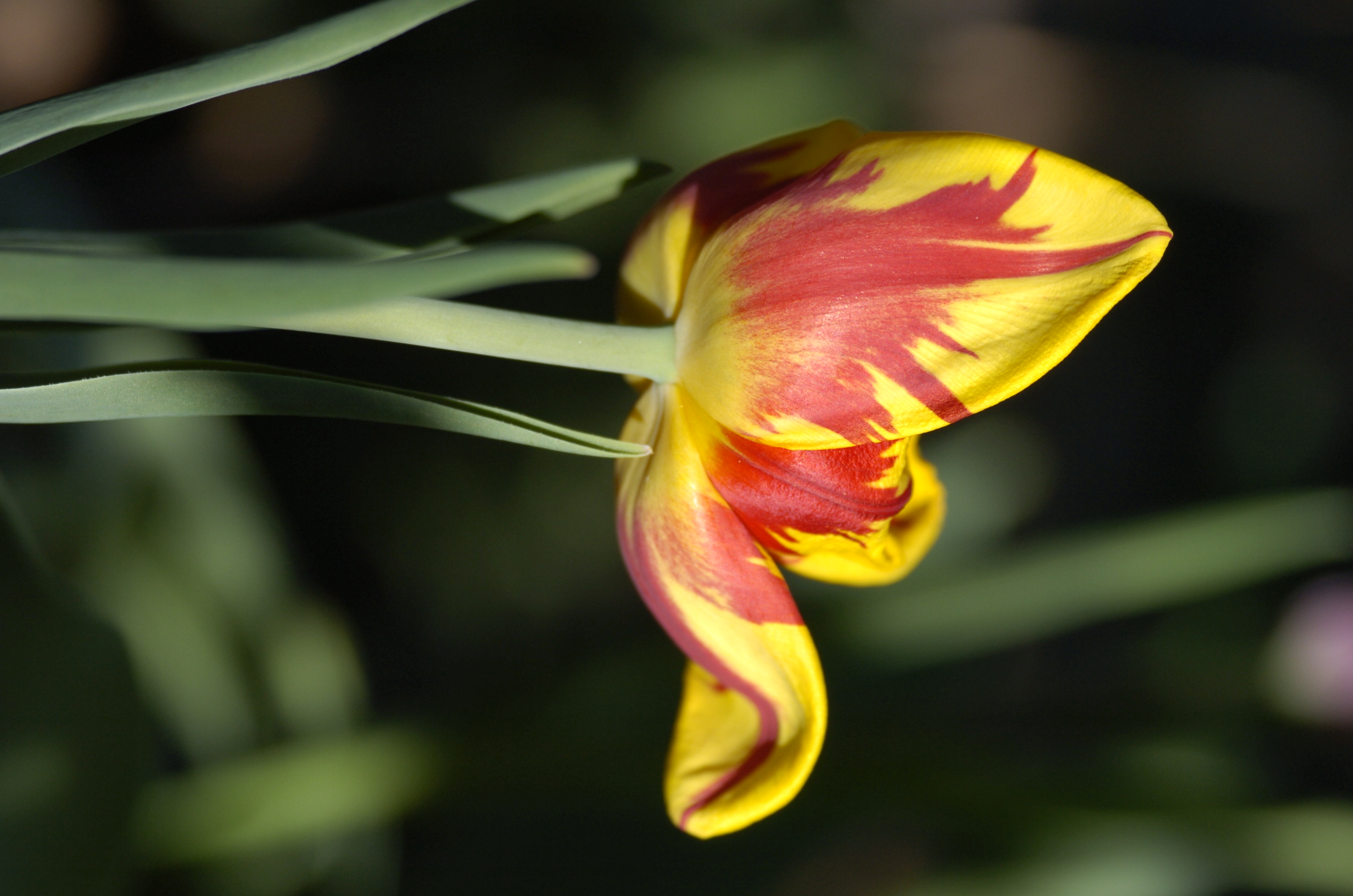
Now that the February blahs are over, and March has come and gone bringing warmer days (regular readers know how I feel about March, “Ides of March. 15 March 2012”), I am thinking about planning a spring photography excursion. I am hoping the weather will be cooperative as I don’t enjoy photography in the rain, and don’t want to get my camera equipment wet. I think I should include some protective rain gear in the event of bad weather.
I would like to go on spring excursion heading west and south and that should give me the best opportunity for photography that will not include snow or cold temperatures. I want to go somewhere along the coast I think, as spring comes earlier along the west coast and I should have my choice of flowers, landscapes, or any possible wildlife. A friend phoned last night from Vancouver saying there was green grass, and flowers, and the temperature was 12 degrees, and expected to get warmer.
I just received an email reminding me of the spectacular blooming events along Washington State’s northern coast. I could attend the 29th Annual Skagit Valley Tulip Festival from the 1st to 30th of April. I know I could link up with other photographers going there from BC, or I could just head to LaConner or some other town on the coast of Washington, find a place to sleep, and join the festivities. I am not so much a flower person, but like so many other subjects I photograph, I think multicolored fields of tulips would be an interesting photographic challenge. Choices ranging from extreme close-ups to landscapes would be just plain fun.
I don’t tent or RV so I will start browsing the internet for reasonable lodging. I have found fun places to stay in the past by checking out lodging websites, however, I have also ended up by chance in neat places just by going where I want to be and looking around.
If this brings up the question, “Have you ever had bad luck finding a place without advance reservations?” Oh, yes! I remember pulling our tiny Suzuki Sidekick off the highway at a roadside rest stop late at night because every hotel and motel was full. My wife, Linda, and I tried unsuccessfully to spend the night sleeping in that cramped car. Morning came early (4am) and because nothing in the nearby small town was open we drove off tired and hungry. We finally ended up gobbling donuts and coffee hours later at a Tim Horton’s, then later collapsed on a sandy beach beside a lake and slept much of the day away. Oh well, we will never forget that excursion!
I like to plan and organize such events to include preparing the vehicle, so when the time comes I will ensure the car is tuned up, and the winter tires are changed. I like lists because I always forget stuff, and so I’ll begin making several brightly colored checklists of the items I will bring, and then I will start looking forward to the photography excursion, and have fun just thinking about the pictures I want to take.
That brings up the best part of planning. What camera equipment do I bring? I could bring every lens and camera I have, but that’s just silly as I wouldn’t have any room for a change of clothes. Too much of the time I over pack my camera gear and end up stashing equipment in the car because it isn’t being used, so I will make an effort to minimize this year.
I don’t like to venture very far with only one camera, so I always carry a backup camera. Cameras can malfunction and I don’t want to take the chance of reaching my distant destination and not being able to do the photography I went there to do.
Next on the list are the lenses I think I’ll need. If I attend the tulip festival I’ll need a macro lens for close-up photography and a wide-angle lens for those colourful, flowered landscapes. There will be other opportunities and I’ll bring my 70-200mm and for wide low light opportunities will include a 24-70mm f2.8. And very important, I will pack lots of memory cards. By now the camera pack is getting full. That’s three lenses, two camera bodies, and I haven’t yet included my infrared camera that I think I’ll also bring. Oops, there is also my wife’s camera gear. Add her camera, macro lens, and favorite zoom lens, a 70-300mm.
Of course we will take our tripods, that’s a given. Ahh, the decisions we must make. I just think it is so much fun. The planning and anticipation of any photographic excursion is as much fun as the actual trip. Whether I make it to the Washington coast or have to pull back my plans and stay closer to home, I will soon be venturing out camera in hand.
Photography in Peace River Country

 My wife and I were called away by unfortunate circumstances on a rush trip. The kind where one just points the car, accelerates to 120kpms, selects cruise, and settles in for a long, non-stop drive; in our case, 11 hours from Pritchard to Grimshaw.
In spite of the long hard hours of driving, for a photographer the changing scenery was nothing short of great. We were heading for the northern community of Grimshaw, Alberta. Although I prefer the changing mountains and exotic coast of British Columbia, Alberta is just great. To my eye Alberta seems wide, flat, and pretty much endless without many “bumps” in it’s vast landscape. I remember hearing a joke that “ya can watch your dog run away for a day”. However, my wife informed me that due to the curvature of the earth that we can actually only view 18 miles to the edge of the horizon, so I’ll change that to watching the dog run away for 18 miles. As I was driving along, watching the western sun slowly going down, it seemed to be in much the same way as I saw it many times while sitting on a sandy pacific ocean beach, I realized that old joke could sometimes be true.
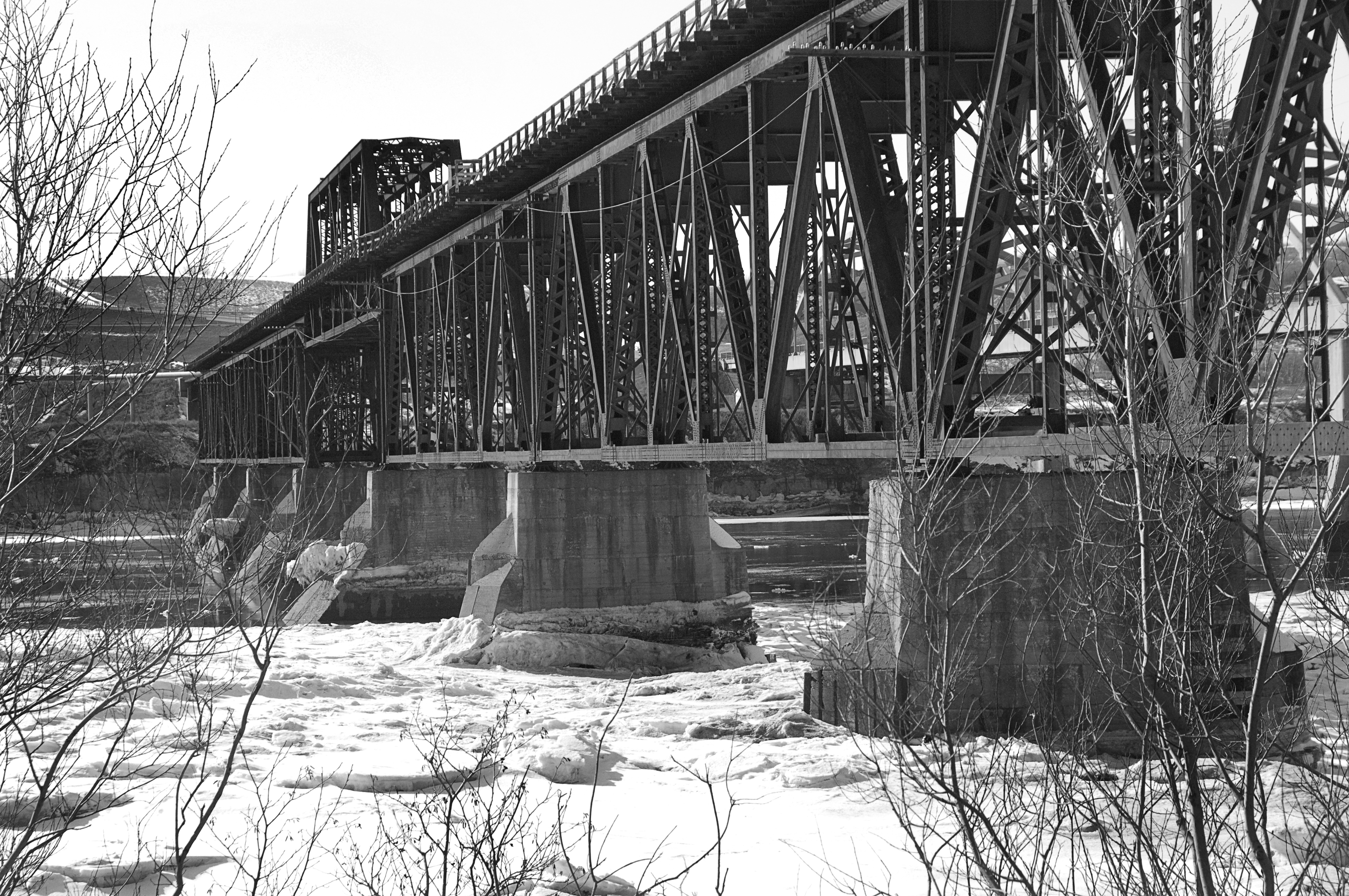
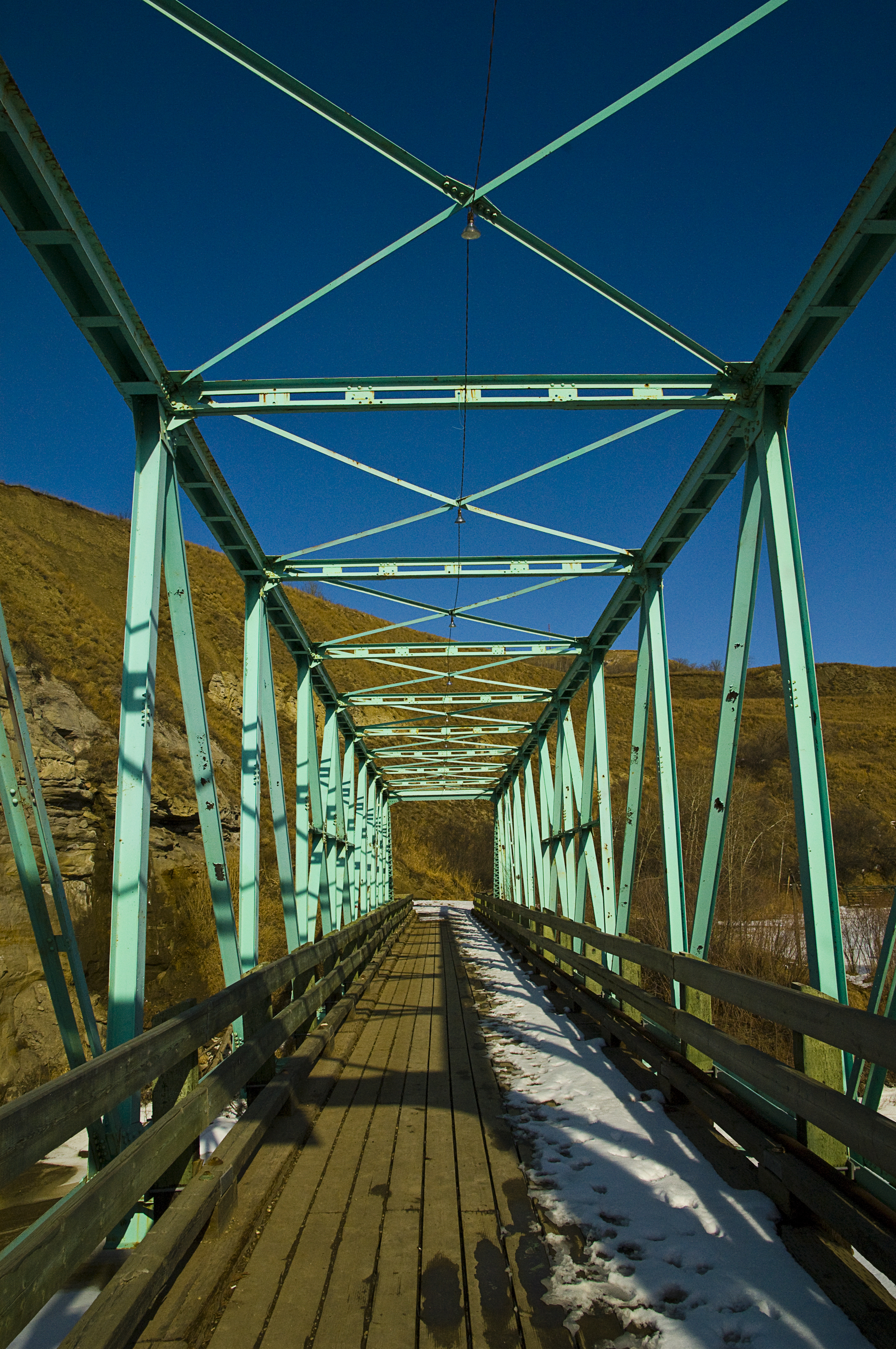
Peace River, which is the major community before Grimshaw, is different. The flat plains suddenly drops and the road leads into a lush, large river valley with lots of bridges. This was the place that would be a perfect to resume my project of photographing bridges.
After all the family welcomes, and catching up with relatives, people had to get away from the food and drink for a while. Some went skeet shooting, some to visit friends, there was last minute shopping, or in my case a cruise around Peace River. Fortunately my niece’s boyfriend, Logan, volunteered to drive me everywhere and anywhere I wanted to go. He had lived in the region all his life and he said “I’ll take you to some cool bridges”, so we bundled into his big pickup. Those that are familiar with Albertans know that they don’t like the price of gas but won’t give up owning a big four-wheel drive pickup, which is standard operating procedure.
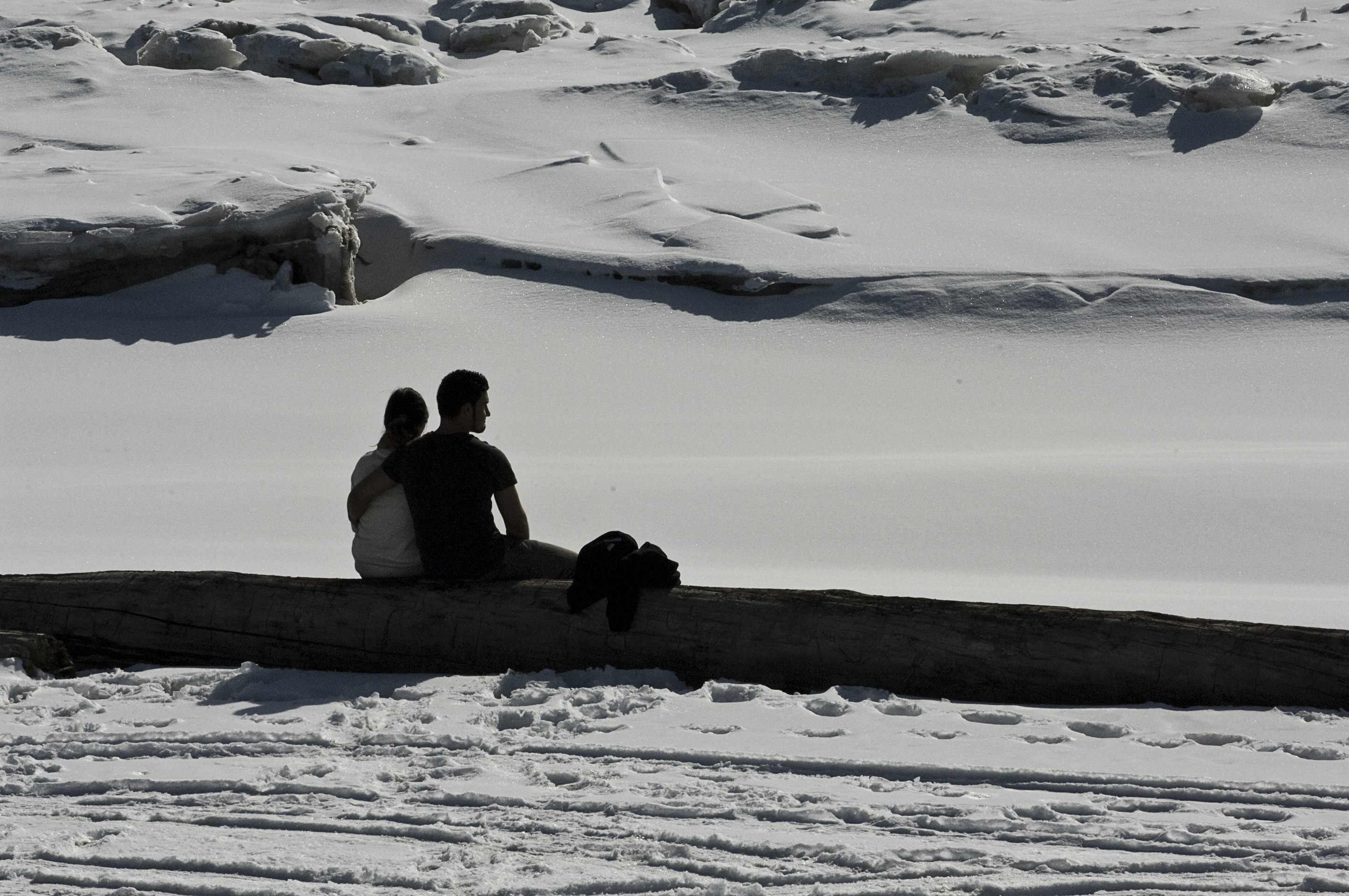
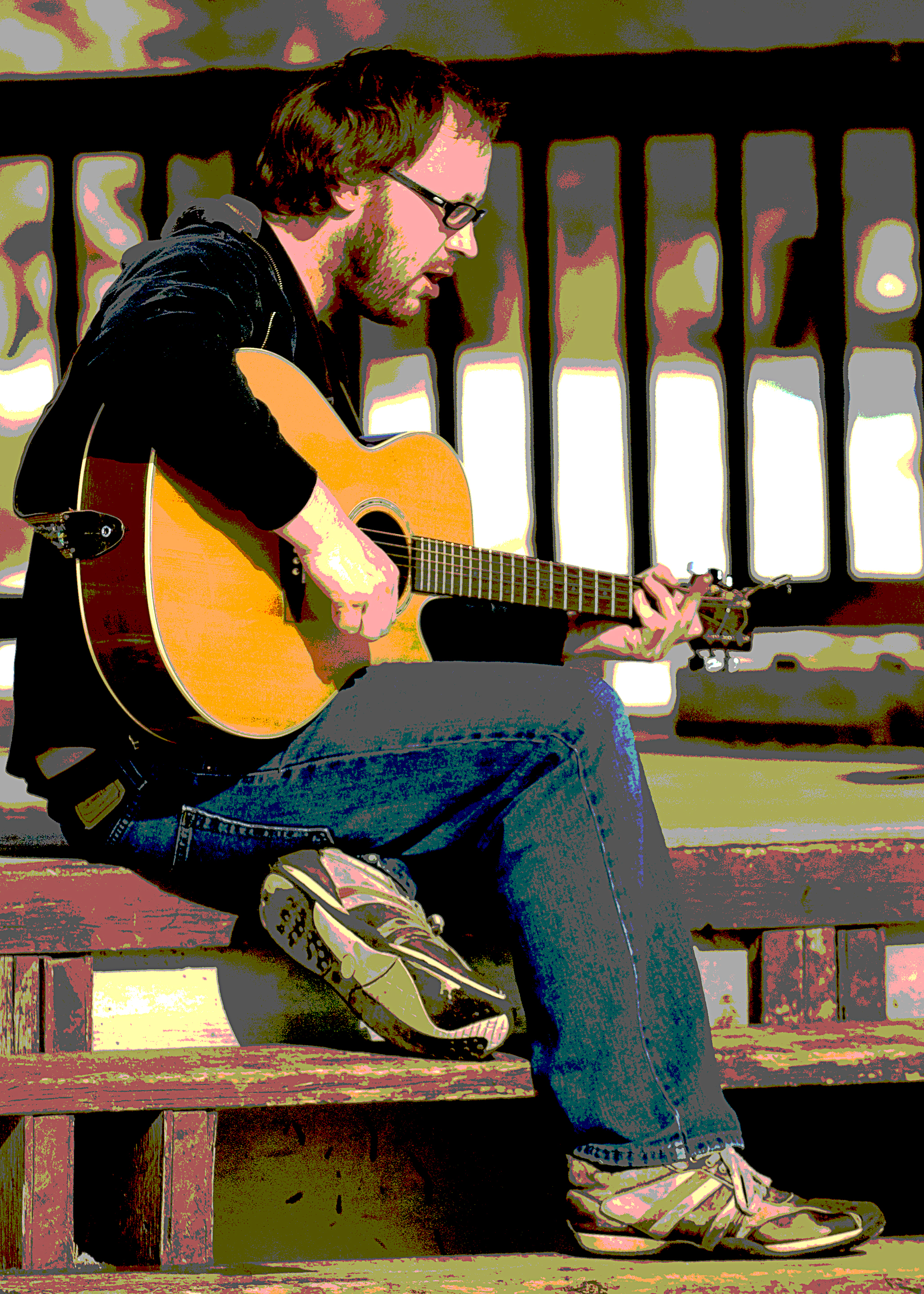
Photographers and non-photographers seem to deal with their worlds differently. Logan was sure all we would do is stop at some viewpoint and I would hang a little camera out the window and snap a picture, however, I loaded my 30lb camera bag containing two DSLR bodies, five lenses and two flashes into his truck. Then when we stopped I got out and told him to leave me, do the chores he had mentioned he needed to do and come back in an hour. “What? You want to be left?” Yes, photographers and non-photographers do deal with the world differently. I am a wanderer that has a hard time concentrating on one subject. Sure there was the bridge and I photographed that with both my 16-85mm and 18-200mm, but there was the ice on the river, some old buildings, a boy and girl sitting on a log, a guy sitting in a gazebo playing his guitar, more large chunks of ice, and lots of other stuff that beckoned to me. About 30 minutes after I was dropped off I got a call, and I told them they could find me at a snow-covered park about a mile away. I was having fun.
Reminding me we were out to photograph the bridges of Peace River, Logan hustled me back to his truck as we headed off, and I thought about how fortunate I was to have such a patient guide. And he had his own stories about every bridge we visited. At this writing I am sure, even with his help I would need several more days to photograph all the bridges. And to do it properly, I would need to take into account that some look better with early morning fog, some with late afternoon light, some in the winter and many deserve the summer.
The next morning I sat my laptop on my in-law’s kitchen table and showed the people the images I had worked on the previous night. I expect there is a lot more to photograph in Peace River than just bridges but that’s what I focused on this time. Next time who knows? I am easily distracted.
I will say this for those photographers that are looking for a unique experience, northern Alberta certainly has its own distinct charm, and if hospitality is important then this definitely is an area, as one old photographer friend puts it, to put on your “bucket list”. The 11-hour drive was painful, and next time I think I’ll stop more and overnight at some scenic location. I talked to a family friend that said there’s been an increase in the wolf population in recent years and on my next trip I hope to convince him to help me find some to photograph. I am easily distracted.
Contact me at www.enmanscamera.com
Some thoughts on Post-Production and photography
During the time period of film photography people rarely commented on the fact that professional images were manipulated or retouched. Photographers used oils, dyes, special pencils, small paintbrushes, and airbrushes. These tools were used to open eyes that were closed, to whiten discoloured teeth, to improve hair and clothing colours, to remove and replace backgrounds, and to turn black and white images into colour photographs. To increase the contrast one could select special filters, paper, or chemicals. However, in all my years of using film to make photographs I do not recall anyone being critical of that post-processing by saying that the work done by photographers to original images, after shutter release and processing negatives, removed that image from the realm of photography.
I bring this up because last week a friend stopped by and told me that after showing some of his work to a local camera club, that he was criticized soundly because he advised members that when he made the original exposures he always kept in mind how he would finish the photos using PhotoShop. He said that he always “tweaked” his studio photography and was surprised that it bothered some people. Personally, I think it is that “tweaking” that help make his images so good, and they are very good photographs in my opinion.
Since the introduction of digital many photography contests and exhibitions exclude images that have been post-processed. I do understand that those organizations want to show the photographer’s talents at capturing an image and not retouching skills. However, it must be very hard to apply that restriction when many of the latest cameras can post-process (reprocess might be a better word) the original images in-camera using computer software supplied by the manufacturer.
There are those that consider themselves purists and loudly denounce programs like PhotoShop, although I don’t know what a purist really is in this technological time, because most images are no longer made on light sensitized material and are now computer generated image data files.
Photojournalists are expected to capture the truth about some event or subject and should not be altering the original image in any way. But artists? The work in question was studio photographs of custom motorcycles, which in my view easily fits in the realm of photographic fine art, and, certainly, not photojournalism. I suppose it depends upon whom the photograph is for and who the viewing audience will be.
I do not usually work as a photojournalist, and those that do get my respect when they are able to pull interesting photographs out of what are sometimes are pretty crappy conditions for a photographer. In my opinion, those photographers that don’t work for magazines or newspapers should include post-processing as part of photographic methodology. It’s all about making the best possible photograph for others to see.
My portrait clients expect that I will post-process, and I usually tell them I intend to. I try to light in a way that not only looks good at the moment the shutter clicks, but makes it easy for me to enhance in post-production. I employ not only PhotoShop, but I also use other programs made by NIKsoftware.com and OnOnesoftware.com. And personally, I would never let anyone see images of mine that were not post-processed, because I know I can improve and enhance them in post-production.
My point is that photographers have been retouching their photographs for years, perhaps since photographers started making pictures for the pleasure of others. Now it is just easier than ever before, and so is taking a photograph for that matter. There may be instances where the way an image is produced should be limited to how the camera’s sensor captured it, but I think something must be left to the photographer’s vision, and producing that vision might need a little help from post-production programs like PhotoShop. There is nothing like a well-executed photograph hanging on a wall for the enjoyment of all to see.
My website: www.enmanscamera.com
Looking into the Landscape
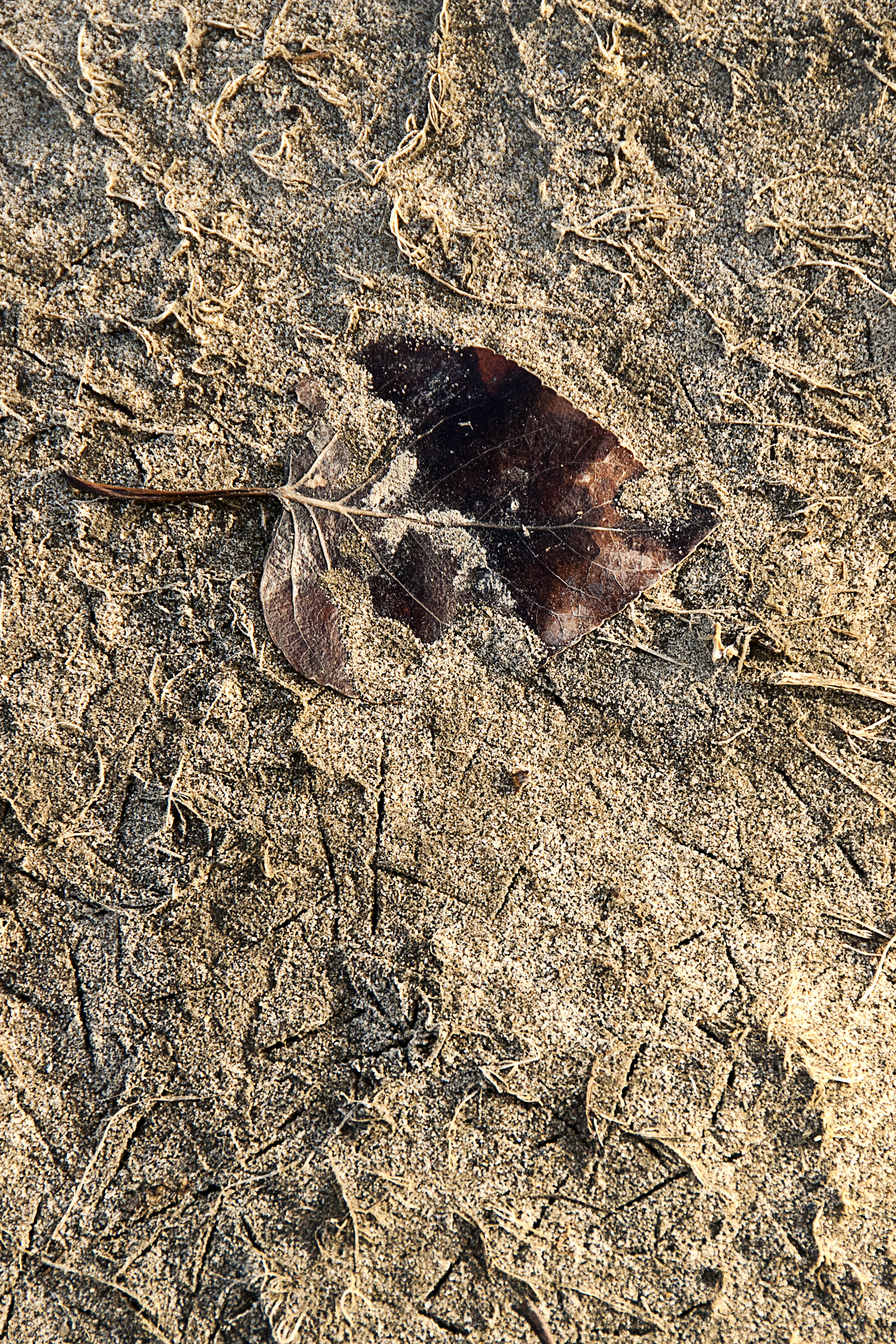
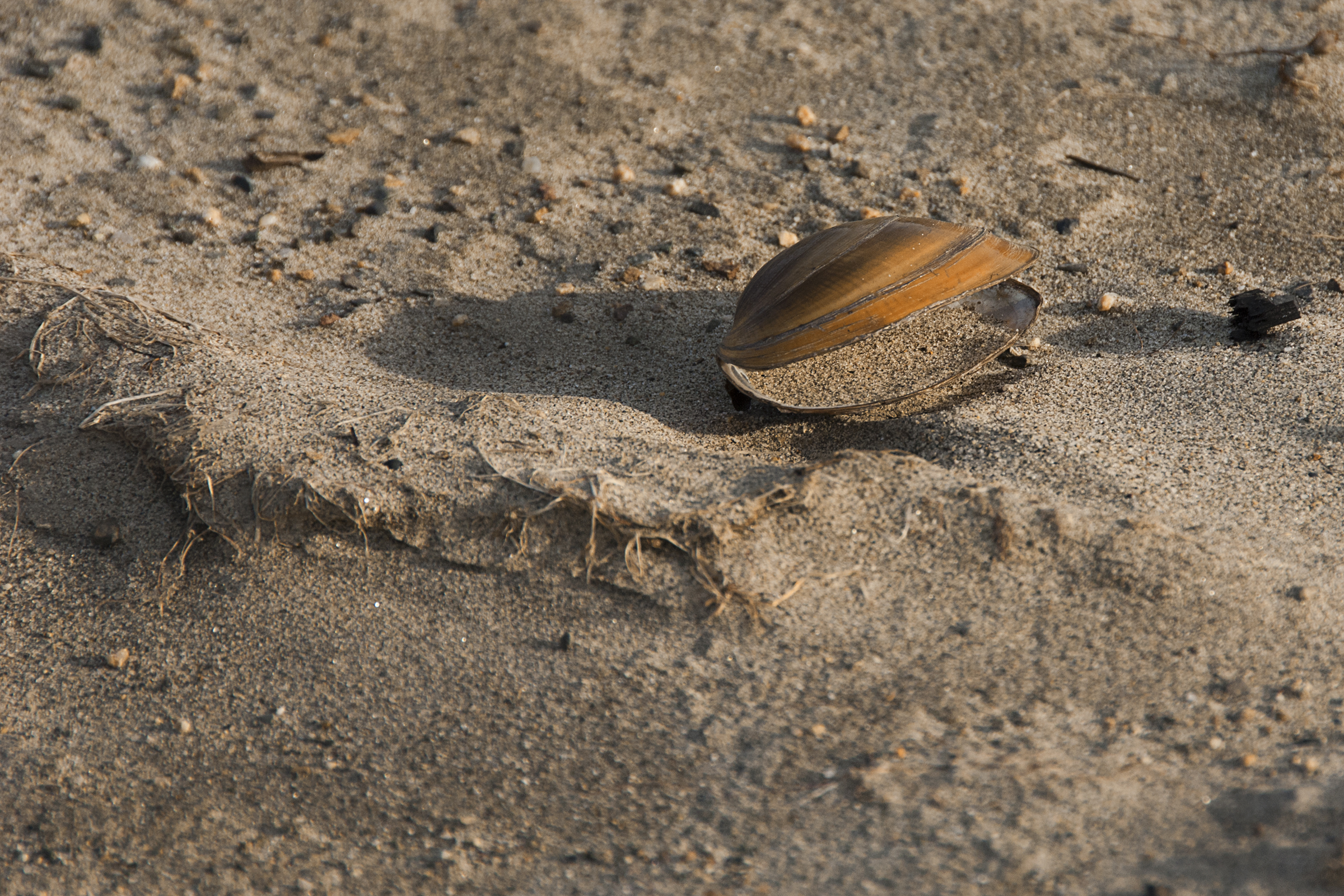
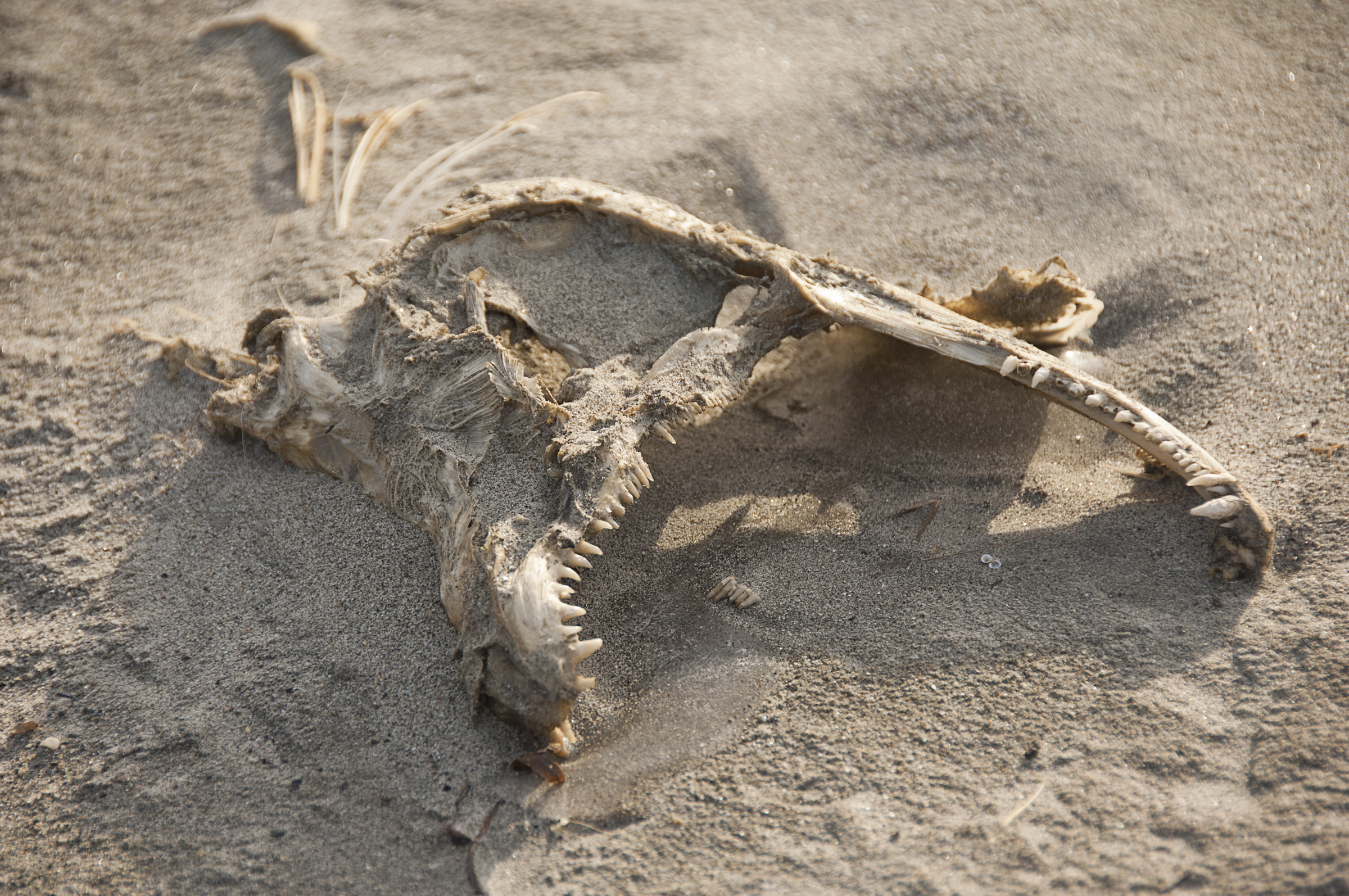

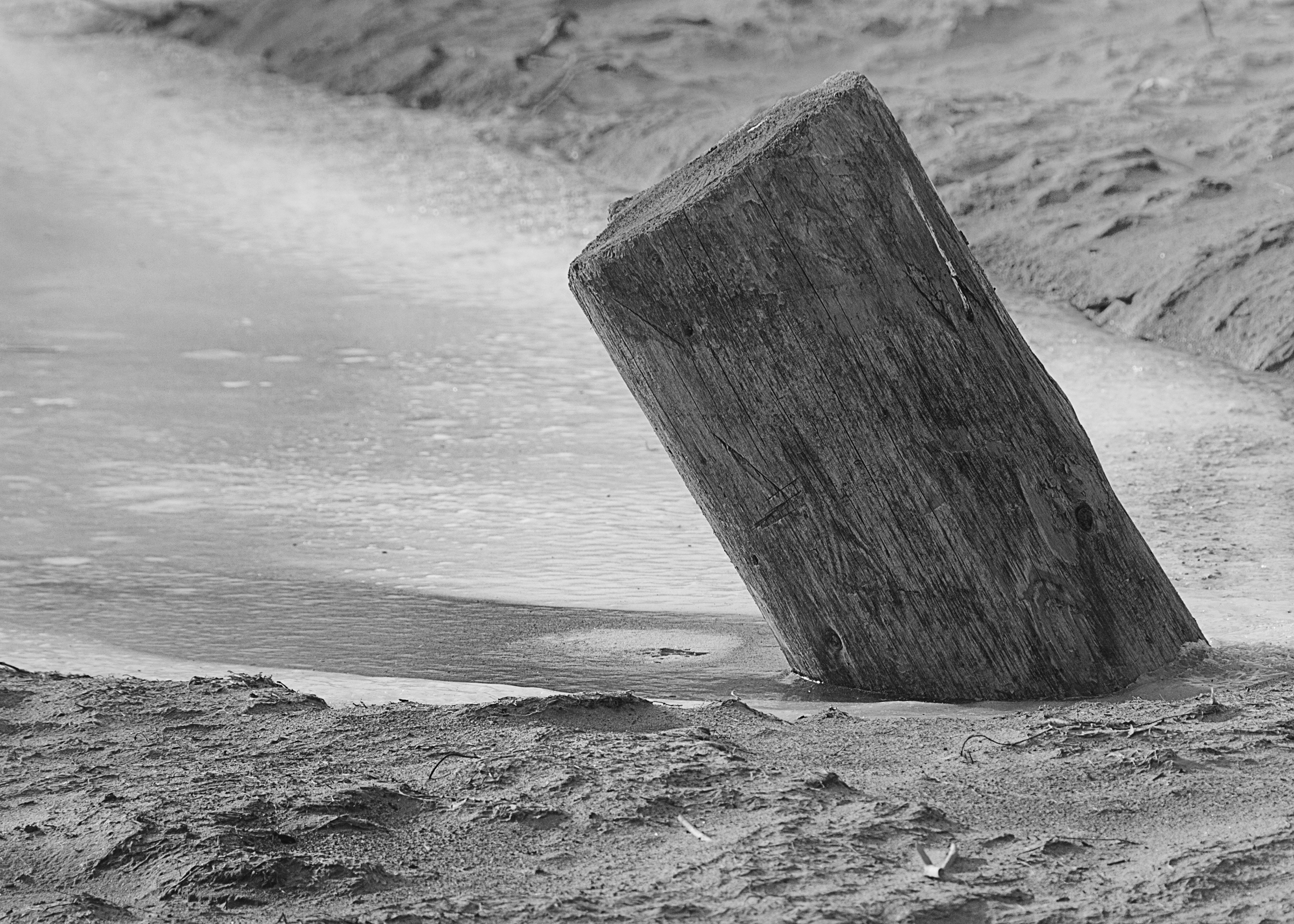
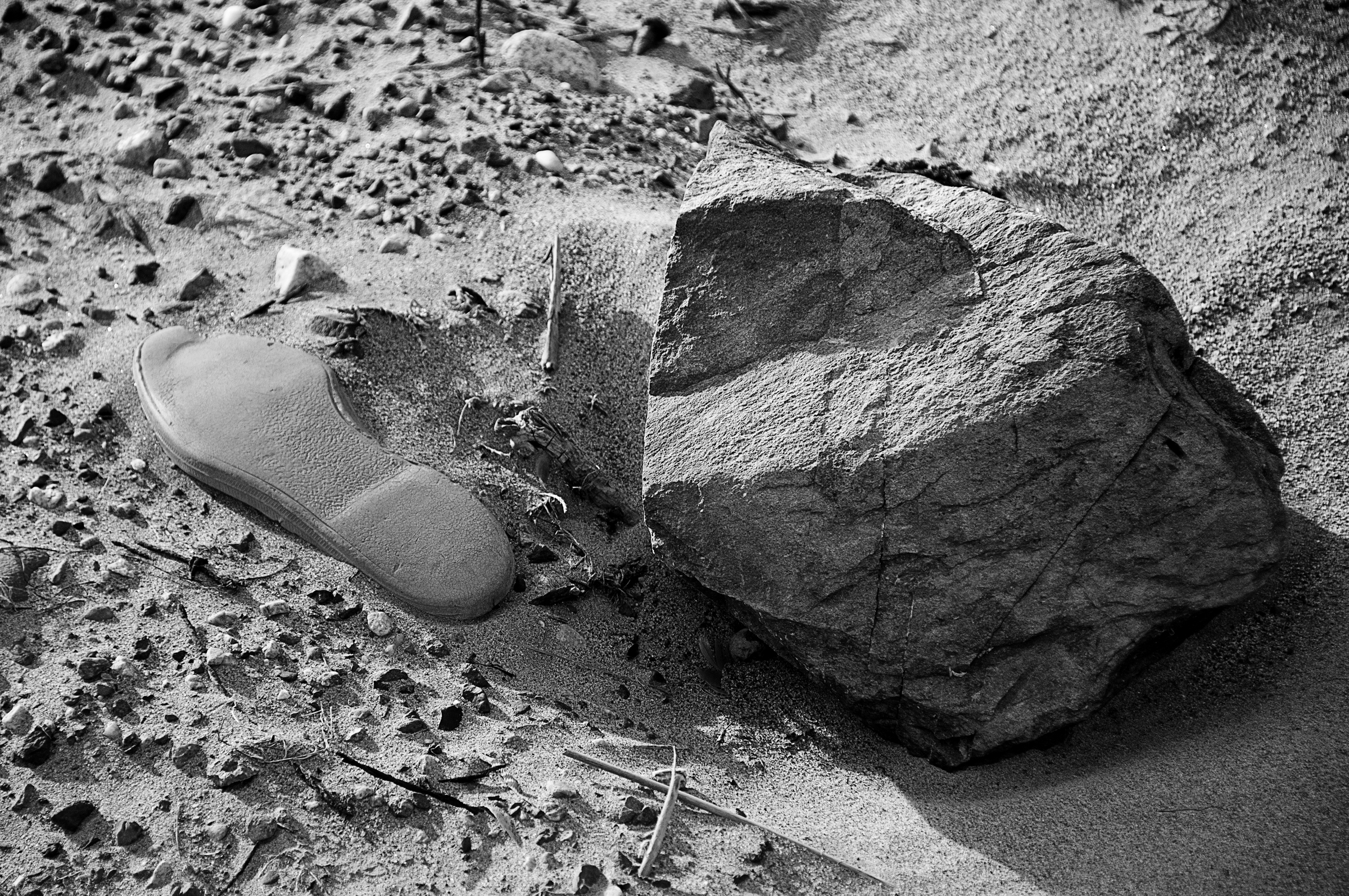
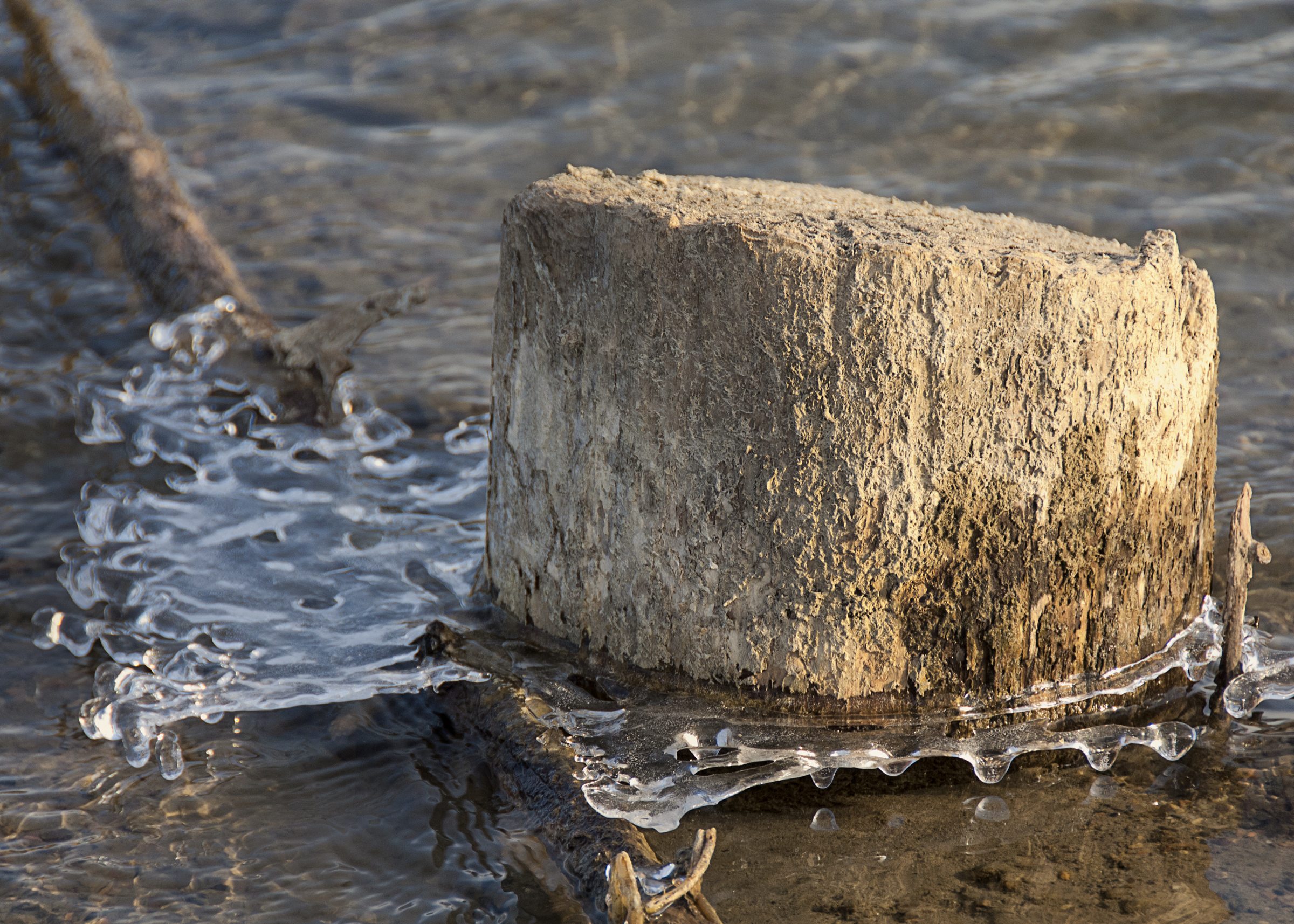
Landscape photographer Elliot Porter once said, “Sometimes you can tell a large story with a tiny subject”.
On the weekend I bundled up against the damp, windy cold and headed down to the frozen shore along the South Thompson River not far from my home. My intention was to photograph the Pritchard Bridge that spanned the river and I had hoped to see large chunks of ice jammed against the pillars.
I like photographing architecture, and any kind of structure, whether it is buildings, fences, and yes, bridges, is just plain fun for me. I look for how the light plays on stone, wood, metal, glass, and any other building material and how it creates shadows and features, like ice, that interact with the structure. However, to my disappointment, the large chunks of ice I had noticed a few days earlier were gone. The strong wind that constantly blew along the river valley must have cleared all the ice from around the bridge pillars.
I wandered along under the bridge looking for interesting angles. I had mounted my camera with a 16-85mm lens thinking that its wide view would give me an interesting perspective. My intention was to photograph the bridge in a fashion that would look good when converted to black and white. I looked for shadows and highlights that would create enough contrast to give depth and dimensionality to black and white images. Much of the time I see black and white images that have been changed to monotone without regard to the tonality of the subject. All I see are flat tones of black and white with no relationship to the actual colour quality of the full colour original. There are several programs that convert image files to black and white while keeping that tonality, PhotoShop among them, but my preference because of the control and finality is Silver Efex Pro from www.niksoftware.com.
I walked along the shore and crossed under the bridge looking for creative opportunities and trying to find interesting perspectives of the bridge. Eventually, however, what caught my eye were features protruding from the sand like posts and branches, and I began looking down and along the shore instead of up and that’s when I really started to take pictures that were working for me. There were shells, small bits of water worn wood, a half-buried rusty oil drum, fish skeletons and much more, like an overturned shoe in the sand. I changed lenses to an 18-200mm to have more focal length and a narrower view for ground level shots of posts and other revealed objects sticking up from the sand.
The light was perfect and its low angle created intriguing shadows that added definition to each of the subjects I selected as I walked along the sandy beach. Each small object, in Eliot Porter’s words, had its own “story” and I tried to show something in each that was more than just a snap shot of an object on the beach.
Often we forget that there is more in the landscape than majestic peaks and expanses of fields. I began by ignoring the “tiny subjects” thinking only the bridge would be worth photographing. If this was a garden, then I would immediately contemplate close-up photography and grab my macro lens, but it took me a while to realise how much more there was to photograph on that frozen river beach. Soon, I will be walking through the sand with my camera again, this time keeping my eye on the ground, and I will be dressed even warmer.
Photography on a snowy day
After days of overcast weather, British Columbia’s February skies dropped lots and lots of snow of light, fluffy, wet snow. Who would have guessed? Certainly not the celebrities that read the news to us. Nevertheless, there were several inches of fresh snow in the morning that wasn’t there the day before and the white landscape was a grand opportunity for photography. The foggy, white, crystallized, hoarfrost-decorated vegetation I wrote about two weeks ago was gone and replaced with soft billowy snow. Everything was white, and with the increase in temperature I didn’t even need to wear gloves. It’s hard to turn the dials on my camera with padded fingers, and not fogging up my LCD was nice also.
I wrote about the previous week’s damp, bothersome cold, however, this day it was comfortable wandering through the snow covered woods and fields. I was quickly reminded that I had to be careful not to get covered with that snow while I trudged through that landscape, I didn’t even get past our garden path before both my camera and I was covered with snow. However, I had a hat, and my camera was easily wiped off with the old dishrag I stuck in my pocket. As always, I also had a lens hood and clear filter on the lens. A lens hood is good under any condition. Not only will a lens hood shade the front lens element from image softening cross light, and protect the lens from front impact, it shelters the lens from snow. And a filter can always be removed after bumping a lens into a snow-covered branch.
Unlike my last cold day session when I used a flash and saw no need for a tripod, this time I opted to use a tripod. In my excitement I tried some handheld photographs, but the close, low-lit macro images weren’t very sharp. I expect photographers with image stabilizing lenses might have been more successful, but the combination of a long, manual-focusing lens, and my not so sharp eyesight left much to be desired. So I lugged along my tripod. I’m not complaining, as I like using a tripod and those that know me have surely heard me say, “If you don’t like using a tripod, it’s because you have never used a good one.”
I was in no hurry and didn’t know what to expect, so I took two lenses with me. I hoped for some good landscape shots and stuck a 20mm in my pocket and mounted my 200mm macro on the camera. As it was I quickly exchanged lenses and took pictures of our house, the view down the street and photographed the somewhat bushy wooded area across the road from my place.
Although I initially began with landscapes, it was the intimate snow covered vegetation that demanded my photographer’s attention and having a telephoto lens designed for very close photography helped with that. Put a wide angle lens on a camera and we tend to miss what is happening up close, but a telephoto narrows our view and the 200mmm macro kept me looking closer and closer as I isolated parts of plants or drops of water on a wire fence.
I wandered around for quite a while and took lots of pictures as the light changed. But, when I got back and loaded the image files into my computer I quickly realized those I liked best were from my wife’s garden, but I had enjoyed the long walk in the deep snow anyway. It’s always fun taking pictures even if all you do is delete them in the end.
I know that snowy overcast days, or cold foggy mornings, like we have had recently put many photographers off going out and taking pictures, and they wait for the sun thinking there can’t possibly be anything worth photographing in flat light. Obviously, I don’t agree.
My wife reminded me about a lecture we once attended given by internationally renowned Canadian photographer Sherman Hines. Hines said, “ I don’t force myself on the environment, I let it manipulate me. There’s no confrontation with nature because I give in to it. I let myself be seduced completely.”
I am embarrassed to write that I did not fill my obligation with regards to a previous Versatile Blogger nomination. I do have lots of excuses, but I hope readers accept my apology.
I have again been nominated and will begin with thanks for the nomination by compellingphotography.wordpress.com
I understand that I now should make 10 nominations, so here are bloggers I have began to read and enjoy – the following are my nominations:
RL Photography rebeccaplotnick.wordpress.com
Pilot-Light photoammon.wordpress.com
Shutter bug travellingartist.wordpress.com
Clumsily Kathy clumsilykathy.wordpress.com
I Go My Way igomy.wordpress.com/about/
Indian Wedding Photographer indianweddingphotographylosangeles.blogspot.com/
Claire Atkinson clairejatkinson.wordpress.com
Mike Moruzi insearchofstyle.wordpress.com/
Tim Cash oregonfilmmaker.wordpress.com
Sheila shecall.wordpress.com/
I also read that being nominated I must say seven things about myself……..Hmmm….Ok:
1. I have been an active photographer since the 1970’s.
2. I taught college photography credit courses for about 20 years.
3. Writing isn’t so much a struggle – the struggle is choosing and placing the words in a coherent fashion.
4. I am one of those that having learned photography using film – will never ever return to using it.
5. I earn my living photographing people. However, in spite of being very good making pictures of people, given the choice, I would photograph plants and buildings.
6. I have a small shop that on most Thursdays is filled with other photographers drinking coffee and talking photography. I don’t get much done on Thursdays.
7. My wife says I pay rent on my small shop so I can have a place to talk to other photographers.
Photography on a Frosty Morning
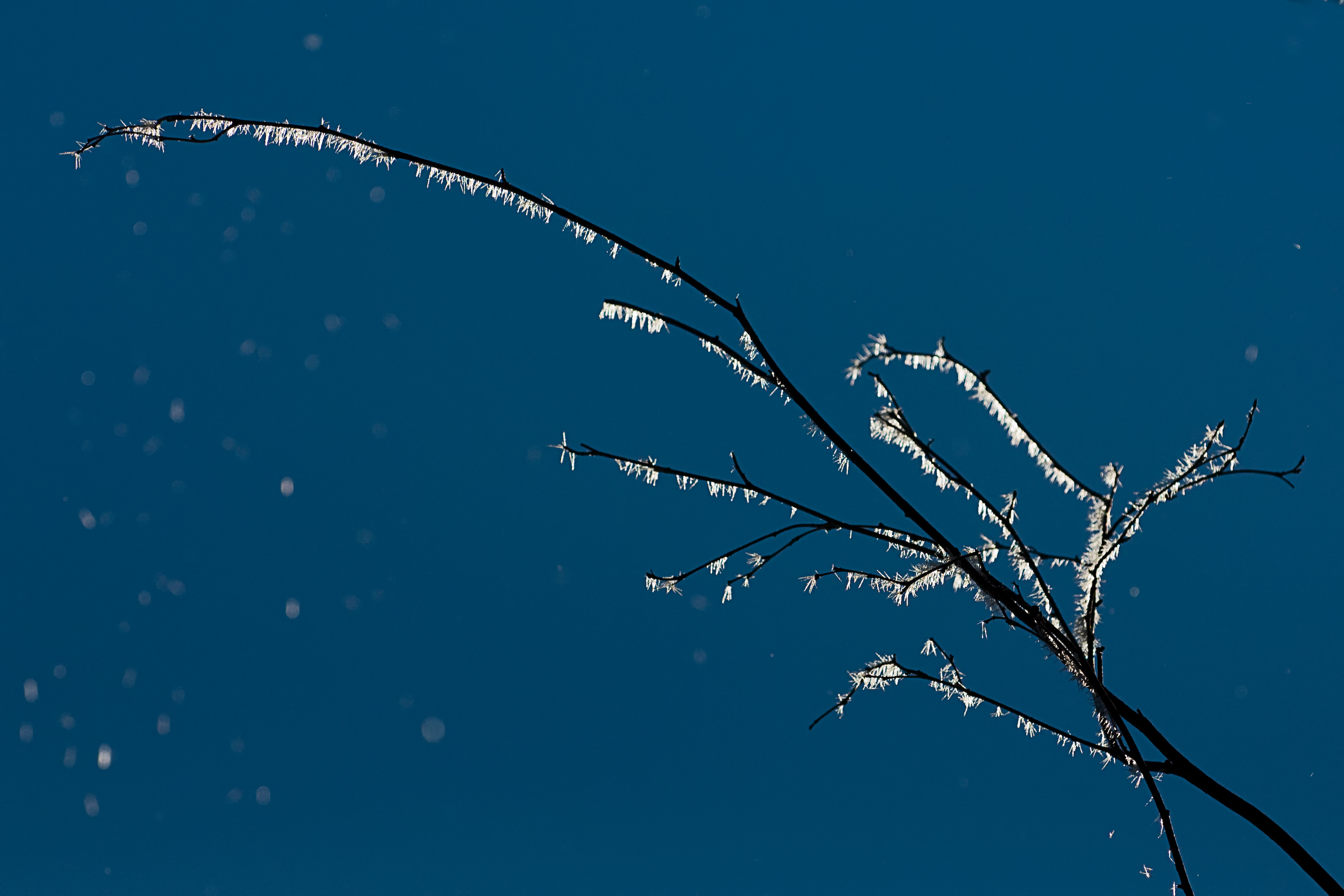
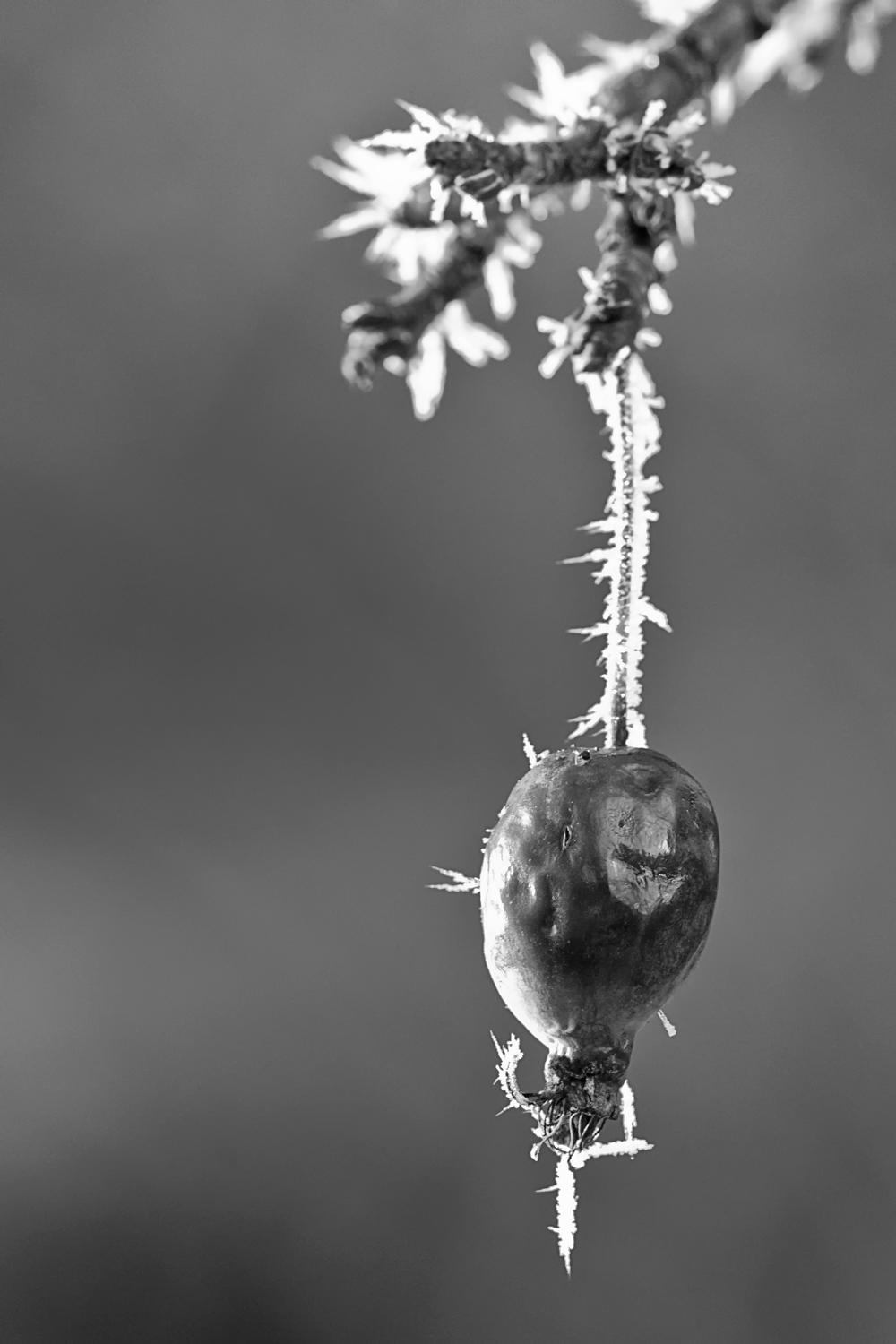
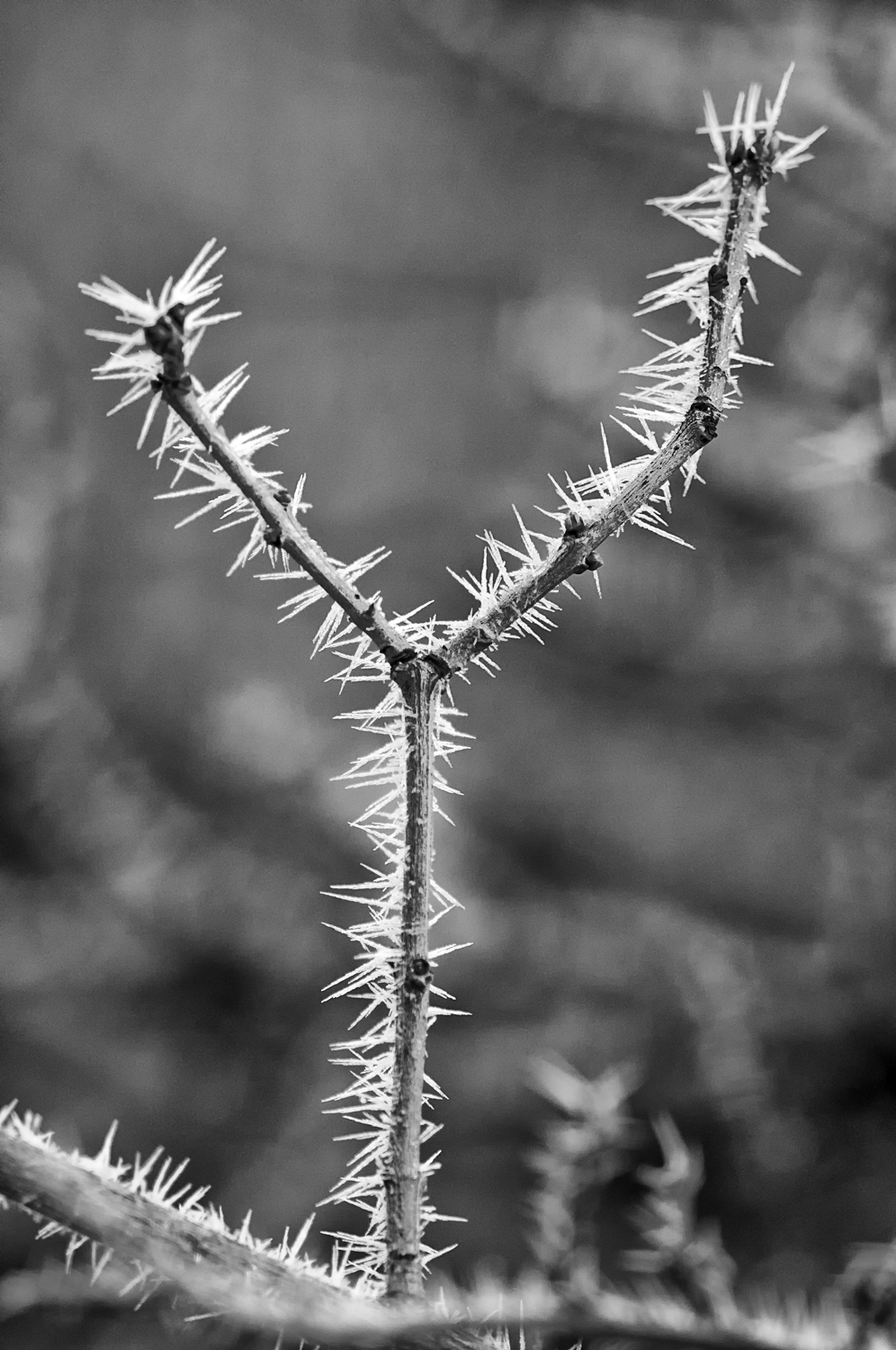
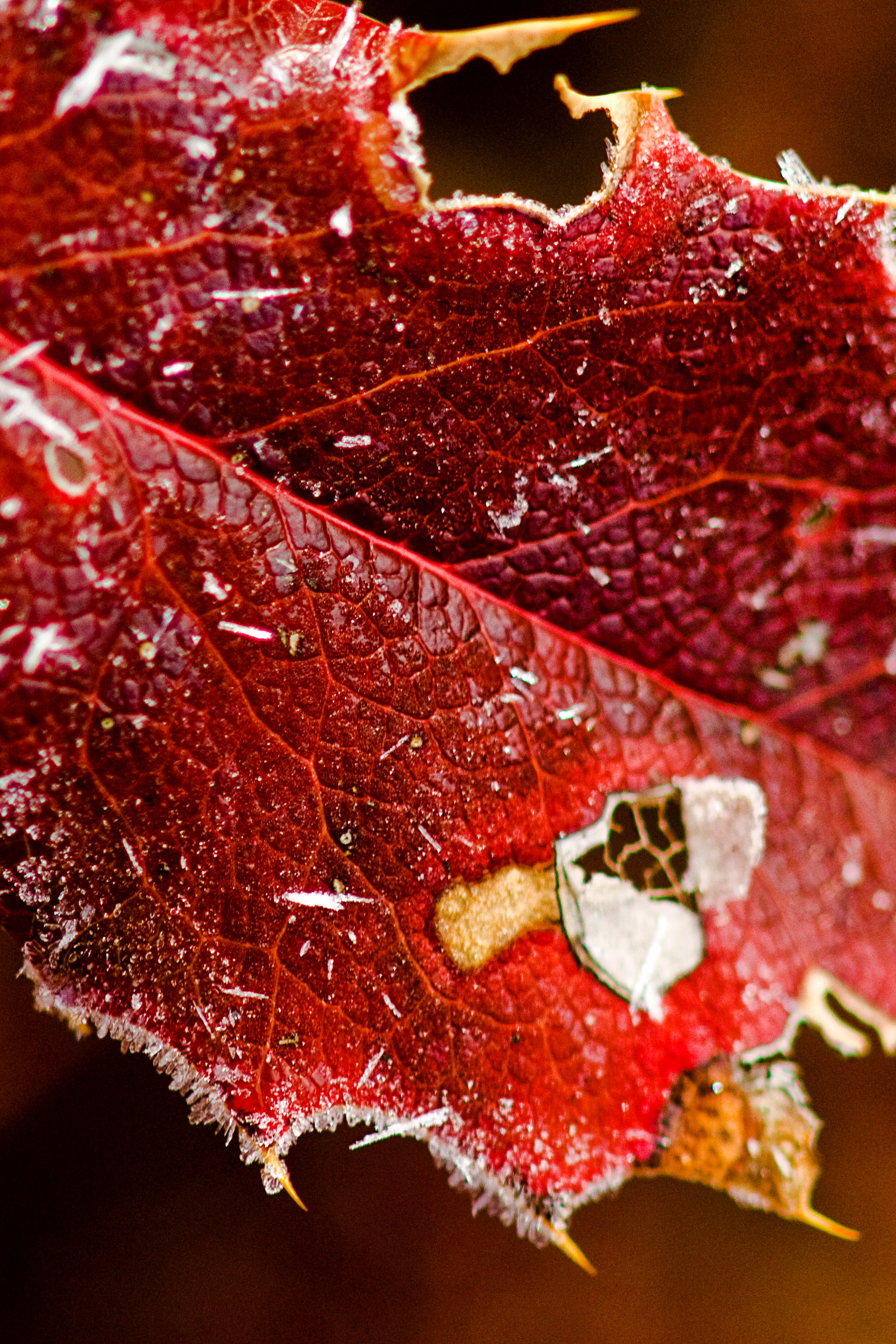
 Daybreak was foggy within a white, crystallized wonderland of hoarfrost-decorated trees and vegetation. That scene is what I have been waking up to every day this past week. The damp cold has been bothersome, but what photographer could pass up such a creative opportunity to wander through frosty woods and fields trying out different lenses and locations. I like the search and the discovery.
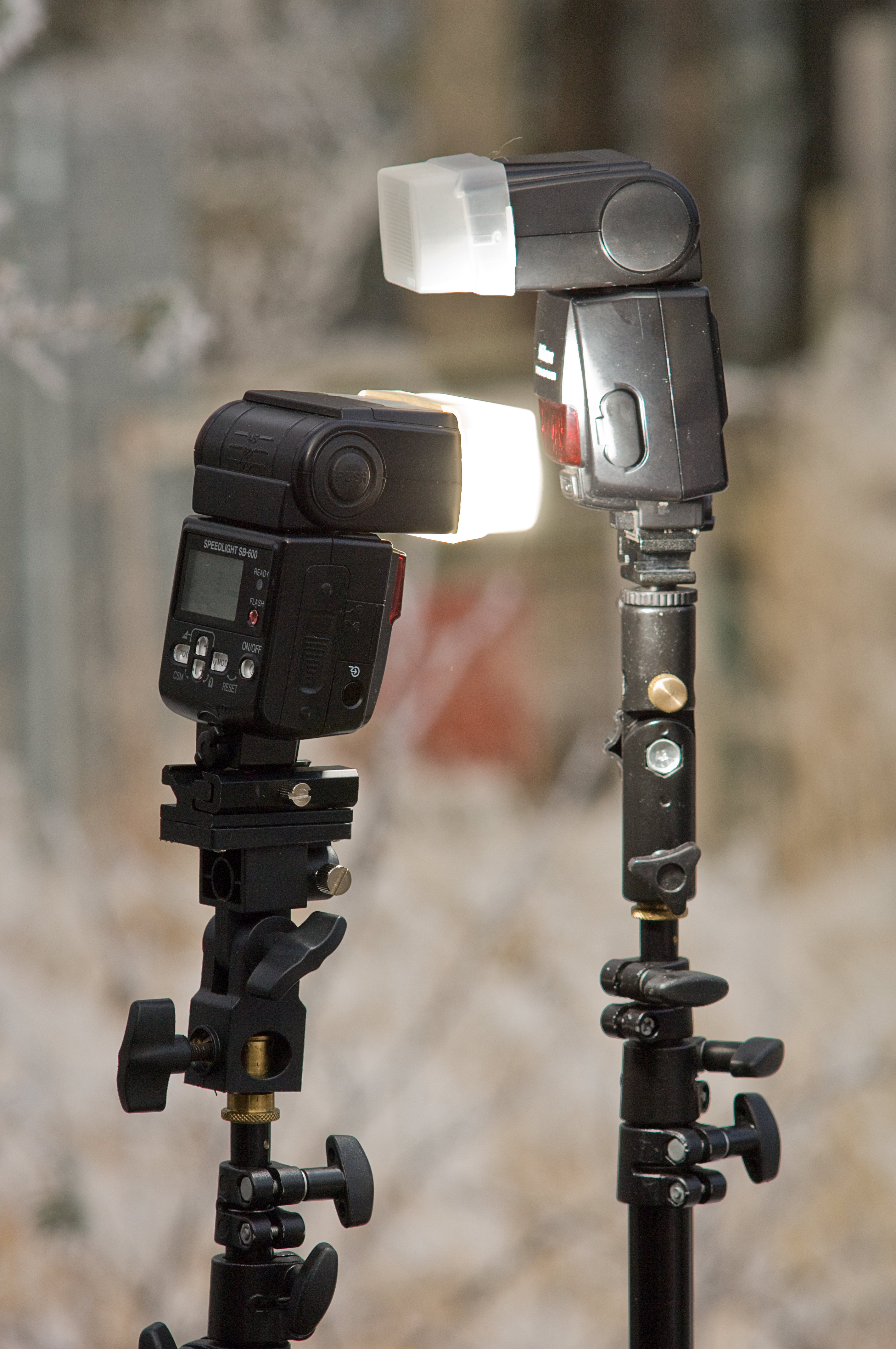
This morning I talked my wife, Linda, into venturing out into the cold to photograph the hoarfrost in her garden. For that we each mounted macro lenses on our cameras and I included a flash mounted on a light stand for both of us. There was a time when we would have been burdened with wires running from the flash to camera, but those days have passed now that wireless flash technology has become the standard.
The morning was overcast and foggy, so the addition of flash was a must in the dim light. I have a ring flash that I like to use when I photograph plants, but the white crystalline hoarfrost would have been easily over exposed with the direct light from a flash mounted around my lens and I wanted to preserve as much of the delicate details as possible. All we had to do was position our flashes for the best light angle.
Our cameras allowed us to sync the shutterspeed above 1/250th of a second. Many modern cameras have a feature in their menus called “Hi-Sync” or something close to it and I recommend readers check their manuals on how to select and use a high flash synchronizing speed so they won’t be limited to 1/250th of a second shutterspeed.
Handholding at 1/500th of a second (or greater) reduces camera shake and with the addition of flash it is easy to stop any plant movement. Whenever I use a flash outside I like to reduce the ambient light by a stop or two so that if I didn’t use a flash the scene and subject would have been under exposed, consequently, I add the flash to illuminate the main subject, and those elements that the flash doesn’t affect are under exposed, and that flash is off camera sending light from the side or the rear, not limiting us to the on camera flash directly in front of the subject, or forcing us to position ourselves dependent on the sun.
We had a lazy morning and got out late, so although we both prefer to use tripods for close-up photography, we needed to working fast as the temperature rose. We could hear and see the crystals falling with the morning breeze. I suppose if we had a warm outside couch and been bundled up, just sitting on the porch would have been nice. Nevertheless, we got right into photographing our frosty subjects only stopping when we had to reposition our flash.
I approach and light a plant the same way I would a person. I begin by checking the exposure with my camera meter. I always use manual mode so in today’s foggy low light and because I was using hi-sync I could keep my shutterspeed at 1/650th and sometimes higher. Next I chose the best angle of view for my subject, and as always pay attention to what’s in the background. Lastly, I move the light around making exposures until I am satisfied with the highlights and shadows on my subject just as I would if I were doing portraiture of an individual.
I like foggy, frosty mornings and the last few days have been a great time to wander around with my camera. Soon everything is going to change. The frosty vegetation will be replaced with green buds and the cold, foggy, overcast days will be filled with sunny days and blue sky. Yes, I am looking forward to that, but for now winter is a creative challenge and I wouldn’t change it.

And thanks to 96arley (www.shootabout.com) for the nomination.
Class was about Demystifying the digital camera.
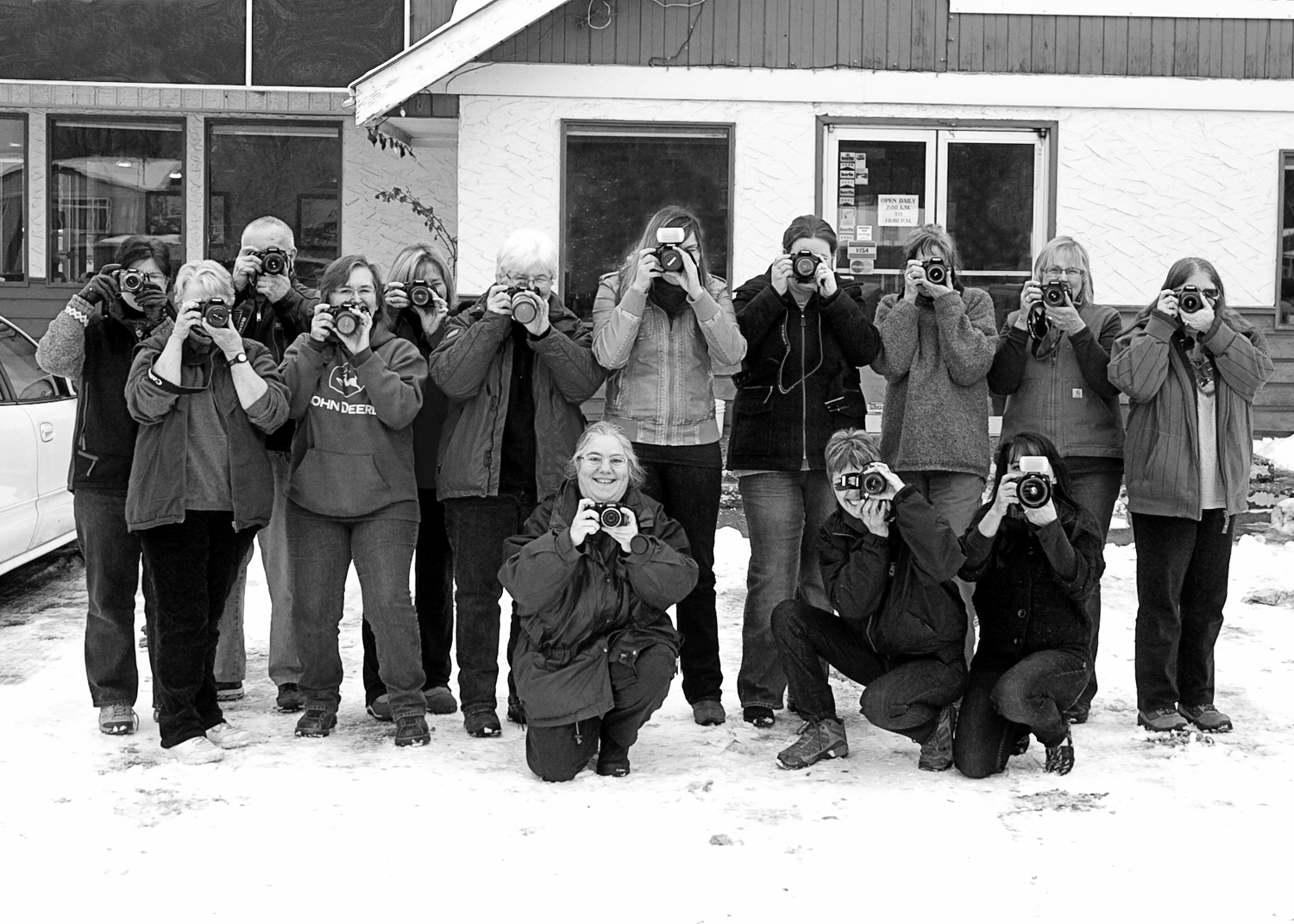 The scenic hour-long drive from Kamloops to Barriere always has me wanting to pull off the road and take pictures, but for the two previous Sunday mornings stopping would have made me late for the two-session class I was leading and 18 enthusiastic photographers who would have been left wondering. I remembered being told, “Once photography enters your bloodstream, it is like a disease”, and I am sure they would have patiently smiled if I loaded my morning’s images into the projector and said, “I couldn’t help my self”, after all they had “photography in their bloodstream” too.
The class wasn’t so much about photography as it was about “demystifying” the digital camera. My goal for the two-day session was to help participants become comfortable and familiar with their cameras. I wanted them not to be afraid to push all the buttons, scroll through menus and change default settings as they explored each function.
We discussed controlling exposure, understanding the histogram, and manual metering. Then we talked about the relationship between the aperture and the shutter to better understand depth of field. For those interested in scenic photography I included a section on photographic composition, and finally there was time set aside to consider selecting lenses, tripods and presenting information about other accessories that enhance the photographic experience.
I know that some felt overwhelmed as we examined the myriad of features available on their modern cameras. As camera technology advances and more options are added new users will certainly feel intimidated, but as they use their cameras and become more familiar with the possibilities they realize the added options give more and more control over picture making.
Interactive lecture classes like this one are more demanding than the usual photography classes that assume participants already know how their camera functions. In my opinion that assumption often has participants going home without understanding camera basics, and although they can read their notes on panorama, portraiture and scenic photography most revert to using the camera in it’s point and shoot Program modes. What a waste!
I always enjoy these types of sessions where eager learners ask lots of questions and are demanding of information that will help them to pursue their particular interest in photography and I get to really delve into the mechanics of this amazing pastime. To me there is more than just aiming the camera at some subject, and, depending on technology, to magically transform that passive action into a photograph. And that was what I wanted the two sessions to be about.
In this study group I was fortunate enough to have active photographers Jill Hayward and Shelly Lampreau sitting in. They were not only were responsible for organizing and advertising the two-day class, but jumped to help when I wasn’t able to get to someone right away. It’s people like Hayward and Lampreau that make an interactive workshop all the more valuable to learners and I extend my appreciation to them.
The class was filled with serious people that really wanted to learn about photography. I had a great time and I thank everyone for inviting me, and there is a plan to get together again in the spring and do a day of scenic photography in Wells Gray Park.
During the class there was an announcement that Barriere photographers will shortly be starting their own photography club. Those interested can now connect with others on the Barriere photography club’s Facebook page.
Photographers Resolutions (or goals) for a New Year
For me New Year’s resolutions aren’t so much resolutions for the next year, made on January 1st, but things I’ve been thinking about for some time. These could be more accurately called photography goals for 2012. Here are some of my goals as well as my thoughts for each for this year. There are not very many goals, but too many doesn’t seem to work for me.
1. Plan a trip or photographer’s vacation this year. I want my time to be about photography, not one of those trips where I bring along a camera and hope for a snap shot or two, but a real photographer’s excursion that makes me use the equipment, knowledge, and talent I have.
2. I want to make the effort to learn new techniques by taking a class, or at least buying some books or CDs written by accomplished photographic writers. Educating oneself is always fun.
3. I will continue my ongoing quest to organize my old prints and slides. I want to place as many as possible on archival CDs. There are many ways to copy photographs and slides. For prints I use my camera, a tripod, and a level, to make a digital photograph. For slides a scanner works best. My scanner, although capable of producing high-resolution scans only produces one film image at a time and is slow. There are scanners that will do multiple slides and several formats at a time and the price for them is under $1000. Maybe this is my year for a new purchase.
4. Like many long time photographers, I have old film camera equipment whose time of service has long past. The pictures they produced were great, but modern camera technology has progressed far beyond those old film cameras, and individuals like me, who have embraced the high quality digital world, will never return to film. Fortunately, there are high school classes that are still are using chemical darkrooms and black and white film that has students looking for inexpensive old manual cameras and that is a much better place than gathering dust in my basement.
5. I am planning to do a systematic photographic inventory of our household goods. I have to admit I am as lax as anyone when it came to a photographic home inventory. Then I was faced a couple of summers ago with a forest fire approaching my door and needed to do it in a hurry. I have that quick and haphazard photo-inventory, but now it’s time to do it right. It’s not very hard if one does it one room at a time, and I think worth the effort.
6. For me, my store is a great place to interact with others interested in photography, and I have a few chairs available, and it is just fun to just talk about photography. My advice for those that don’t have my convenience, is make the time to get together with other photographers with no other goal then to talk about or do photography, and if you already have been occasionally participating in a club how about searching out photographers specifically interested in the kind of subjects you like to photograph, for example, collaborate with like minded enthusiasts in a macro, scenic or birding group and start planning an outing or just get together for refreshments and talk at some local spot.
7. I could add a lens and make it one of my goals for this year, but because of my shop camera equipment just happens; and because I prefer to purchase used equipment, I am always on the look out for bargains that fit the kind of photography I do. So my goal this year is to sell something that I am not using and buy something (at a good price) that I will use.
I am sure readers easily can make their own photography resolutions (or goals) for the year we have just begun. What could they be? I can only imagine.
 Enmanscamera's Blog - Kamloops