This photographer’s thoughts on Composition

Much of the time the photographers I meet and talk to really have only one interest in photography and that is to discuss equipment.  Nowadays, especially, they are very excited about the newest products.  Photographers should be building a selection of equipment that will allow them to do photography the way they like and that works effectively for the subject they want to photograph.

As much as I do like talking about cameras, lenses, and other assorted equipment, what I really like to talk about is photographs.  So, last week, when a photographer stopped by with some nice enlargements, I was pleased to say the least.  We talked about how successful her photographs were at capturing the viewer’s attention, where the photos were taken, her objectives for each, the colors, and why she cropped them the way she had.  They were good photographs and looking at good photos sometimes lets you know a bit about the person who took them.  We started talking about photographic composition; not so much of the photos we were looking at, but just a general discussion.  So today I thought I’d put some thoughts down that people could think about when composing a photograph.

A person painting or drawing can truly compose an image; they have total freedom to place, arrange and alter the appearance of visual elements.  Photographers are limited by the actual physical appearance of the subject being photographed and depend on using camera position, point of view or the perspective created by different focal lengths of their lenses.  With photography we try to produce exciting, well balanced images, depending on the subject and how we want to communicate with those elements in the photograph.

What is your photograph about?  Instead of shooting right away, stop to decide which part of the scene you really want to show. Let the content determine the size and importance of the objects.   Try what I call the apple technique:  You are driving along and see an inspiring scene. Don’t just point your camera out the car window!

1. Stop the car.

2. Get out.

3. Leave the camera in your bag.

4. Get an apple and eat it as you are looking at that inspiring scene.   Think about what you like about it. Make some choices. What would you like to say to the viewer?

5. Then get your camera and make the picture.

As you are making your basic choices and deciding on what visual elements are important think about what the famous War photographer Robert Capra, known for the intensity and immediacy of his images, said, “If your pictures aren’t good enough, you aren’t close enough.”  Getting closer eliminates distracting objects and simplifies the contents of a picture. It reduces busy backgrounds and focuses attention to the main subject or center of interest.

Another consideration is whether to photograph horizontal or vertical.  I listened to a discussion by successful magazine photographer, Scott Bourne.  He asked the question, “When do you take the horizontal?”  His answer was, “After you take the vertical.”

A final thought is to think about important visual elements and how best to arrange them in your photograph. The Rule of Thirds – Draw imaginary lines dividing the picture area into thirds horizontally, than vertically. Important subject areas should fall on the intersections of the lines.  For example, a photograph of an old barn in a field; move your viewfinder around to see how it would look placed in the upper right intersection the each other after that. If you take the time to decide and compose, your photographs will be much more successful.
www.enmanscamera.com

my fan page

This photographer isn’t sure about an advertisement television.

Currently, there is an advertisement being shown on television with the goal of convincing new camera owners to purchase more another lens for their new DSLR camera.   The ad begins with a picture of little girl in a playground.  Viewers see the child in the foreground with lots of stuff behind her. Then as viewers are told to purchase a better lens the picture changes to a sharp portrait of the child with a soft out-of-focus background. The subject much remains the same, but, because the clutter in the background is diminished, now the portrait is more pleasing.

Viewers are given the impression that there is a special type of lens made specifically for portrait photography and to buy it if we want good portraits. I agree that buying the best quality lenses will give photographers the highest quality image, however, the difference between the two pictures viewers are shown doesn’t really have anything to do with good quality lenses.  Any photographer can easily create the effect of a blurry background by using the same lens (or any lens) by choosing a wider aperture to reduce the depth of field.

Depth of field is defined as the area around the main subject, in front of, and behind, that is in acceptably sharp focus. The smaller the aperture the greater the field of focus is, and the larger the aperture the less the field of focus, thus by focusing on the subject and reducing the field of focus, much of the area in front of, and behind, the subject looses sharpness.

In my opinion learning to use a camera effectively is more important than falling for the hype put forward in ads like that. All photographers should learn about depth of field, composition, and metering. They should have an understanding of perspective, and why at times subjects in the foreground seem uncomfortably larger than those standing only a few feet behind. Fast action is easily controlled by increasing the shutterspeed, and if the elements in the picture aren’t bright enough, by increasing the camera’s ISO.  Sharpening the landscape on a bright sunny day only takes the additions of a lens hood to reduce lens flare; and, as always, in my opinion, the best scenics are those where the photographer uses a good sturdy tripod.

I advise saving some money and purchasing a book on portraiture, or, at least basic photography instead, and there are lots of online forums where photographers show, discuss, and exchange advice on their pictures. Or, readers could take a class.

The voice in the advertisement advises that photographers can change from a good shot to an amazing shot if a better lens was purchased. I regularly talk to photographers that believe the only way to make better pictures is to buy a new camera, and I expect because of that advertisement they will go out and purchase new lenses in the misguided belief that they will suddenly become better at photography.

What I actually like about the ad, in spite of the not so truthful claim that a good portrait is only accomplished when one buys another lens, is that it gets photographers thinking about adding to their collection of lenses. All camera manufacturers (just like auto manufacturers) have various levels of quality and one type of lens isn’t necessarily the best for all subjects.  As long as I have been involved with photography the catch phrase “it’s all in the glass” has been around. And I regularly tell those new to photography that they should be changing lenses before changing cameras. Nevertheless, I also tell them that they should know what they expect from a lens before purchasing it; and after researching it to match their expectations with what they can afford to acquire.  There isn’t necessarily any lens that might be called a portrait lens and the selection of which lens to use is really up to the photographer.  I think an in depth discussion of lenses is best left to another time.

www.enmanscamera.com

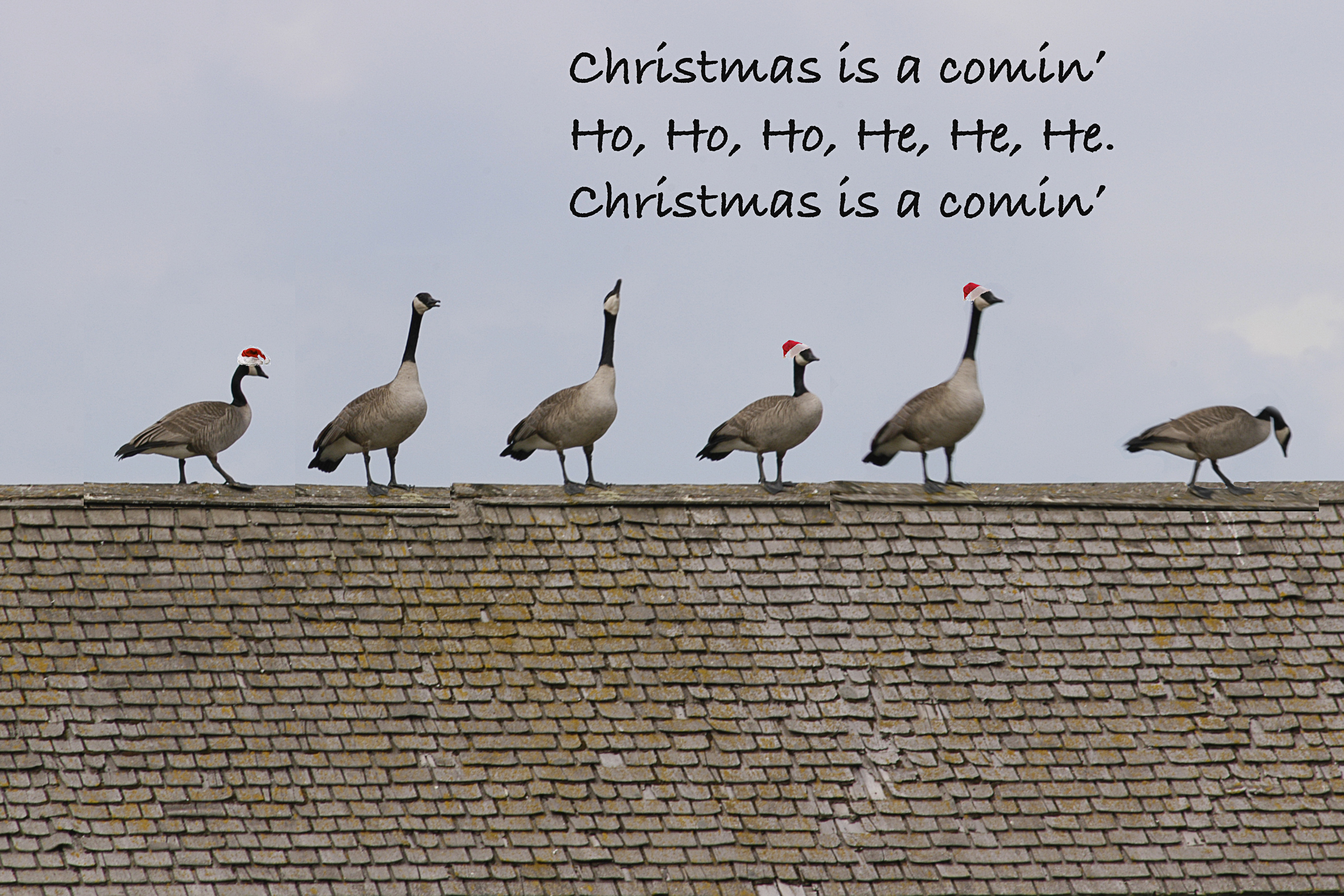
A photographer’s Twelve Day of Christmas

I like Christmas. I like the music, the bright festive lights and decorations, and all those people, like me, that are in a Christmas mood. Yes, I like this time of year.

I have a friend that I call a rabid photographer; no, not avid, as rabid better describes his lust for picture taking. I never see him without a camera in his hand or a bag over his shoulder.  And yes, he creates lots of pictures, but more than that he is constantly buying camera equipment. He likes purchasing new photography gear as much as he likes using it. So, here is a made up version of what this year’s “Twelve Days of Christmas” might be for him.

On the first day of Christmas he bought himself another digital camera that will shoot with a high ISO for situations when the light is low, and that has a video mode that will be great for his family’s Christmas celebrations.

On the second day of Christmas he purchased a couple of 16GB memory cards so he’ll have lots of image space to hold picture files of “everything” during the holidays.

On the third day of Christmas he acquired an 18–200mm zoom lens.  This popular lens is neat and advantageous for when he’s on the move and it converts to approximately a 28-300mm lens when taking digital format into context.

On the fourth day of Christmas he obtained a roller camera pack.  Shoulder packs and backpacks are common for carrying equipment, but the new packs on wheels are super convenient for those times when he wants extra stuff.

On the fifth day of Christmas he purchased a big telephoto lens.  Yahoo!  I know he has wanted a super telephoto lens for years. Long telephotos are heavy and demand a good tripod, but now he’ll be out photographing wildlife with the rising sun.

On the sixth day of Christmas he obtained a compact point-and-shoot camera.   Sometimes a DSLR (digital single lens reflex) is too big and a small pocket camera is better. His only criterion for the little camera is that it has a viewfinder. A viewfinder lets him hold it close to his eye instead of shakily extending arms and squinting to see the image as the sun reflects off the LCD.

On the seventh day of Christmas he bought himself a carbon fiber tripod.  He wanted a strong lightweight tripod for hiking with his new telephoto lens.  A lightweight, carbon fiber tripod that weighs less than his old aluminum one is just right.

On the eighth day of Christmas he procured a set of wireless senders and receivers to use as a portable studio. The days of only using heavy, bulky studio lighting are gone, and anyone with three or four hotshoe type flashes can set up a multi-light studio anywhere.

On the ninth day of Christmas he bought a battery grip for the camera from the first day of Christmas. The grip increased the camera size and makes it more comfortable to hold horizontally or vertically.

On the tenth day of Christmas he got himself a new computer loaded with the latest image enhancing programs.  Although today’s cameras are amazing, he knows that to make his pictures all they can be, he will need to spend time in postproduction and what better way to do that than with a new computer.

On the eleventh day of Christmas he purchased himself a computer tablet so he can easily show everyone his excellent scenic and wildlife photographs.

On the twelfth day of Christmas he registered for a photography seminar and expedition to be held in Iceland next April. My friend knows one of the best ways to improve his photographic skills is to join a seminar or workshop. The Iceland itinerary includes the Fjallabak Nature Reserve and Sveinstindur by the Vatnajokull glacier. He is unfamiliar with those locations, but will come back with a new understanding of photography, lots of great pictures, and several new friends interested in photography.

That’s my imaginary list for him of the Twelve Days of Christmas. It has been fun and who knows how close I have been?

A photographer’s impression of a Scott Kelby Photography Workshop

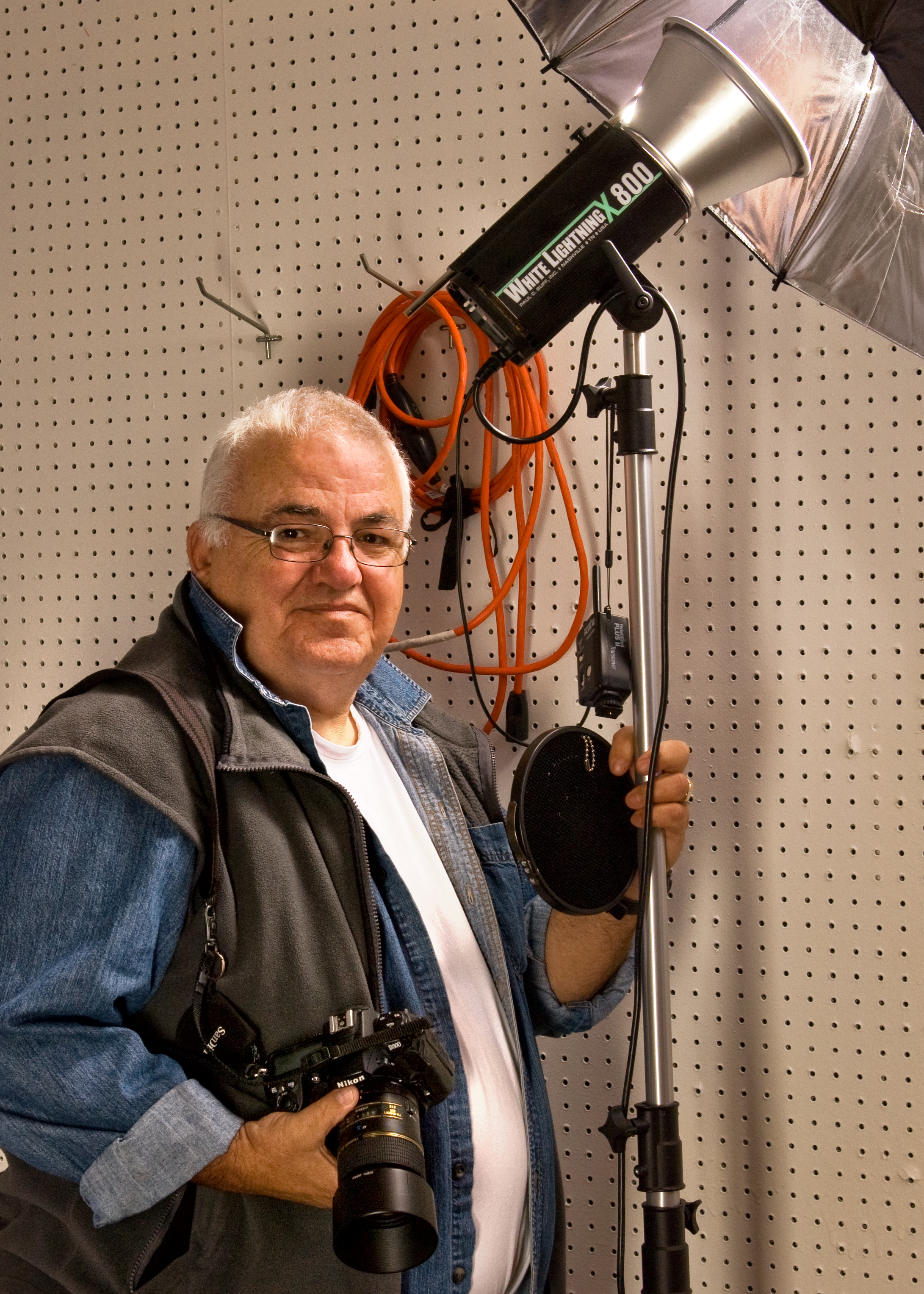
My friend Bob Clark (pictured) was fortunate to be able to attend photographer, and award-winning author, Scott Kelby’s, Light it, Shoot it, Retouch it seminar last month.   In his fact-filled tutorial Kelby showed participants how he produces a portrait; taking participants through an entire “live portrait” shoot – start to finish – controlling studio lighting with different lighting set-ups, a how-to on working with models, and his very latest PhotoShop portrait retouching techniques for finishing.

I have known Clark since my time at the University College of the Cariboo, (now Thompson Rivers University). He recently retired and opened a small photo studio located in a back space of the Public’s Own Market building at 970 Victoria Street. Bob’s clients are dancers, actors, and models looking for portfolios and in his own words “people that normally would not go to a traditional photographer”.

I would have liked to attend it, however my schedule didn’t work that day. I knew Clark was going and that I would be able to sit with him for a review of Kelby’s photographic discussion, so when he invited me over to check his studio out, of course, I made the time. We have always had fun bouncing ideas about photography off each other, and I wanted to see his new space, and knew I’d have the chance to quiz him on Kelby’s class.

I asked him about Scott Kelby and he said he was delighted with his lecture style. “He didn’t talk down to anyone no matter their experience, and it was obvious he could relate to everyone equally”. I asked Clark why he decided to take the class. He said he “had been reading and researching portrait lighting and photo retouching for some time, and Scot Kelby’s name came up continually, so when I saw that he was giving a workshop in Vancouver I knew I wanted to attend. I wanted to be surrounded by people of the same interest. This was not a social occasion for me, I wanted to be nothing more than a photo geek for one solid day.”

Clark told me he joined 500+ photographers in a spacious conference center fitted with two large video screens and equipment filled stage with many different portrait lighting set-ups. There was actually a full working studio on stage exhibiting moderately priced lighting equipment that the average photographer could afford, not the fancy out of reach, high priced stuff that he expected at a workshop of that caliber.

Kelby began with a basic one light setup, photographed his models using different backgrounds, showed how he would use PhotoShop for those subjects; then moved to a two light setup, photographed the models again changing backdrops a few times and took that subject to finish demonstrating PhotoShop techniques; then repeated the complete process using a three light setup.

I asked Bob if there was a high point or something that really got him excited during the class and he said definitely the part when Kelby photographed a model and in less than thirty minutes was able to change the background using PhotoShop. He had used a plain background then seamlessly placed the model on an album cover, and reminded participants that step-by-step instructions for that process were in the handbook provided.

Clark commented that one could easily reach information overload with all the information that was being shown and discussed, but Kelby reminded all the participants that everything in the workshop would be in the techniques book handed out at the beginning of the session and that if he had strayed a bit there would be additions available by going to his website.

Clark mentioned several times how much he enjoyed that class and highly recommended it to my readers. He said the class also comes in three distinct parts if one is reluctant to go for the whole package. And he emphasized that anyone will get something from Kelby’s Light it, Shoot it, Retouch it seminar, no matter his or her experience. I am hopeful the Scott Kelby road show will make the trip to British Columbia again next year and plan on attending if it does. This type of event features one of my ongoing bits of advice to aspiring photographers, and that is to continually upgrade photographic skills by attending appropriate educational seminars.

www.enmanscamera.com

Photographers: Take the camera off “P” mode and read the instructions.

I am sure some inspired individuals who have purchased a DSLR (digital single lens reflex) camera might say, “Why did they waste all that paper on an instruction manual? They could have saved the trees, and I don’t need to read it anyway because the pictures are just fine with the camera set on program mode, and if some pictures don’t work, I’ll just delete and try again till everything looks good.”

I have written about this very topic in the past, but I am continually disappointed that it still comes up while talking to amateur photographers and sometimes even with those who make claims like “I shoot weddings”.

After removing their new camera they likely toss the box with the instructions aside, fumble around looking for someplace to stick in the memory card, spy a dial, select the letter P or A, turn on the camera, and start making pictures. If lucky, the on-camera flash is default programmed to pop up and flashes in low light environments and the magical technology produces usable pictures with factory settings in spite of the photographer’s lack of knowledge.

These new DSLR-toting photographers never move that dial off the P mode, and wonder what all the fuss is about for confusing modes like “aperture” priority, or “shutter” priority, and/or “manual” mode, and rationalize their opinion by saying, “I am not a professional and my pictures are mostly for me, my family and friends, and, anyway, the instructions are confusing.”

I hear stories about photographers that complained loudly that their new cameras aren’t working as they think they should, and angrily return their camera to the store they purchased it from, only to be shown by a patient sales clerk the section in the manual that solves the problem. Again as I wrote, it’s disappointing that they hadn’t taken the time to read their manual.

When a photographer comes to me asking for help with their new DSLR I begin with the suggestion, put the camera on P and shoot away, but only for one week. That’s right .…. only one week! And while that week passes my advice is to start reading the instruction manual that came with the camera, it is the best way to change that new camera from an expensive point-and-shoot into an amazing tool, and will help those interested in transforming their personal photography.

The instruction manual will have a chapter on “exposure Modes” with details regarding Aperture priority – a good place to start. Do more reading, and select aperture priority on the camera, focus on something and make the numbers change that appear in the viewfinder or LCD screen. The aperture controls the amount of light the lens is letting into the camera.

Practice with the new DSLR, get used to it, and experiment with everything in its menu, learning to use not only Aperture priority, but also Shutter priority and Manual modes. I have to emphasize that new owners should read their instruction manuals, re-read, and read again, and then try using another mode.

Photographers that own a DSLR need to understand when and why to use different exposure modes and reading the manual that came with that new camera allows them to set the menu to their personal shooting priorities. My camera manuals are all dog-eared, full of post-its and notations. That should be the norm for photographers that are serious enough about photography to learn about their camera.

http://www.enmanscamera.com

Connecting with other photographers


Connecting with other photographers, especially those with skill and experience, is a very satisfying and worthwhile experience. Some months ago, while reading my favorite online forum, http://www.Canadian-Digital.com, I came across a request from Jeff, a Manitoba photographer, who mentioned that he would be visiting relatives in Kelowna and inquired if any local members could point him in the direction of good scenic locations in the area. I posted that I couldn’t really help him with Kelowna, but if he was interested I would gladly spend a day introducing him to Wells Gray Park, and added a link to the park’s website.

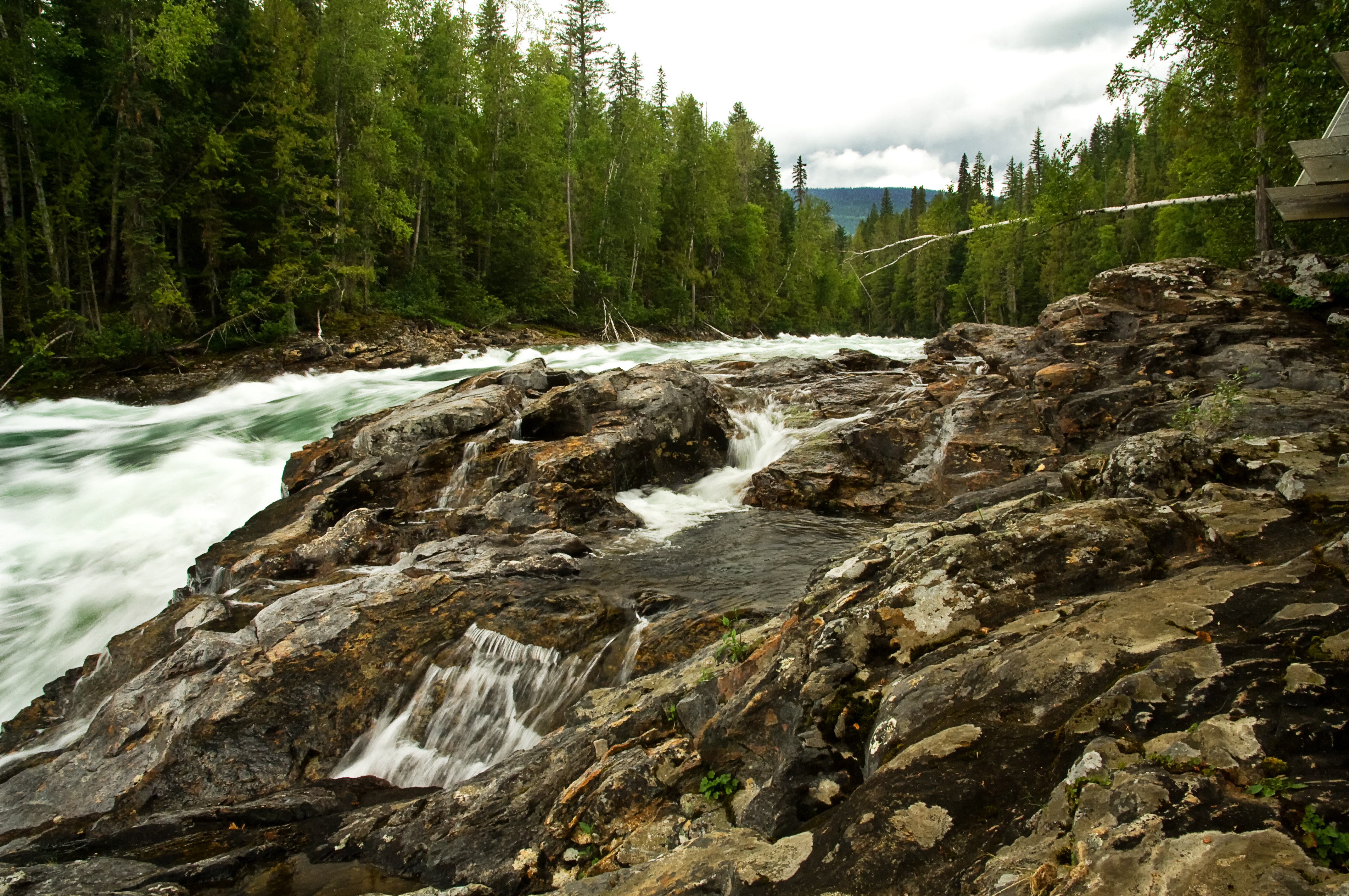
He sent an enthusiastic return email and we made plans to spend a day wandering my favourite roadside locations in Wells Gray Provincial Park. Photographers that haven’t been able to visit the fourth largest park in British Columbia are missing a visual treat.

Wells Gray is a spectacular, almost pure, wilderness area that is easily accessible by car. Although the website advertises it as a world-class destination for canoeing, kayaking, hiking, and camping, photographers can enjoy a photo-packed day trip wandering along the pleasantly-winding, park road and will return home with memory cards filled with quality wilderness images.

I anticipated that photographer Jeff, my new friend from Manitoba, had no idea what to expect other than the picture postcard images from the website, and I was pleased when he remarked that he would like to look for more creative opportunities than those most would make from the dedicated tourist lookouts.

The experience of meeting a stranger, and then spending the day driving, talking, and site seeing might be uncomfortable for some, but for photographers, I think they only need photography in common to have an enjoyable time. At any time, if the other person’s opinion causes unease, just change the subject to cameras, lenses, or any other thing photographic.

In order to get to Wells Gray early, Jeff had to get up before the sun for a two-hour drive from Kelowna to Kamloops to meet me at my shop at 6am. (I wasn’t being mean! It was his choice.) We bought coffee and departed for Clearwater, an hour and a half drive away, because we had decided to be in the park taking pictures for 8am. From Clearwater we then roamed into the park with our cameras at the ready.

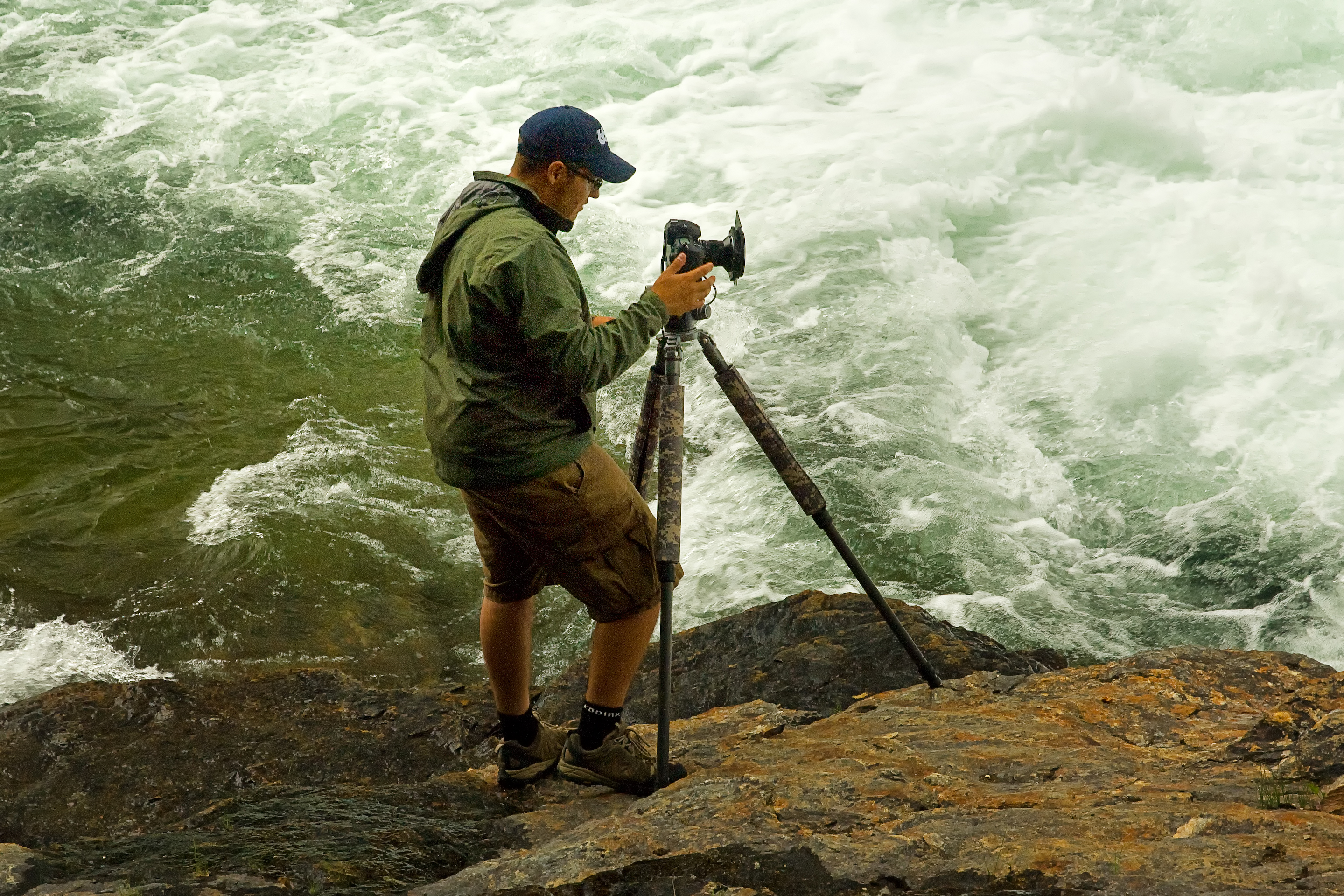
When I put my camera gear on the backseat of his car I had to move his tripod, and remarked that I liked the ball head he had attached to it. He said, “I always use a tripod”, and I thought to myself, “I think I’m going to like this guy.” There’s nothing like a tripod to let one know they are with a serious landscape photographer.

Wells Gray is a great park for roadside photographers with many places to stop, to photograph the spectacular waterfalls, old homesteads and the river’s many geological features tucked only a short walk away, and that is just what we did. Unfortunately, the wildlife was timid and we only briefly saw one black bear.

The comfortably cool day was excellent for photography with a slight overcast and high moving clouds. Jeff changed lenses and filters regularly as he worked the new environment, but for me Wells Gray has been a regular location for years and I was content to stay with my well-used, 24-120mm lens as I photographed the familiar landscape.

The internet is a wonderful way of bringing people together and I know I would really appreciate photographers extending hospitality to me when I travel to some far off place. In the event of any concern, checking up on other forum members is easy. I reviewed Jeff’s online posts (as he had mine), and when he wrote he was visiting BC I was sure he’d be fun to know and to stand beside as we made pictures. One doesn’t always have to participate as a host, but I am sure suggesting locations for photography would be appreciated. For local photographers who have never made the expedition to Wells Gray, it is well worthwhile.

Contact me at http://www.enmanscamera.com