Connecting with other photographers


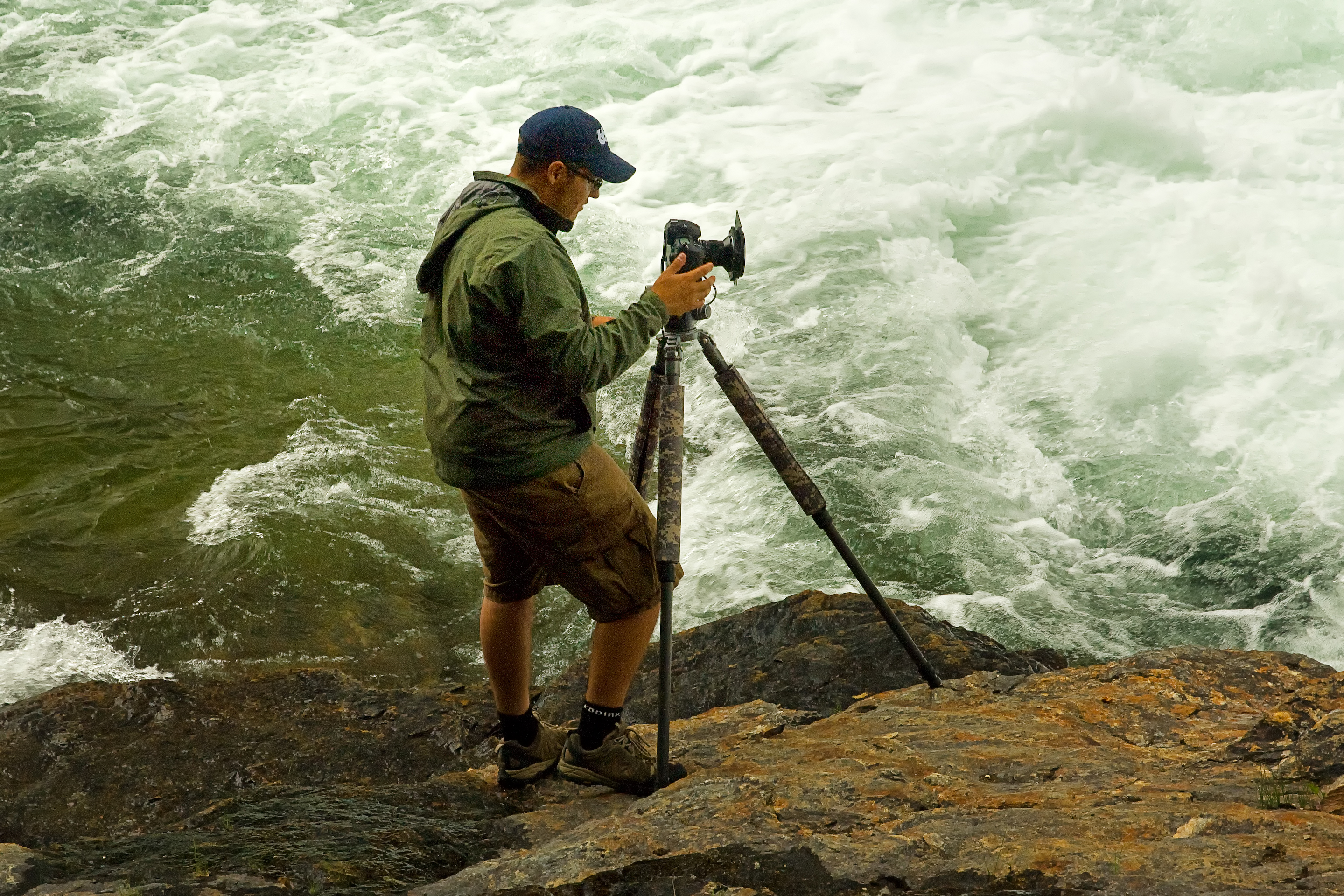
Connecting with other photographers, especially those with skill and experience, is a very satisfying and worthwhile experience. Some months ago, while reading my favorite online forum, http://www.Canadian-Digital.com, I came across a request from Jeff, a Manitoba photographer, who mentioned that he would be visiting relatives in Kelowna and inquired if any local members could point him in the direction of good scenic locations in the area. I posted that I couldn’t really help him with Kelowna, but if he was interested I would gladly spend a day introducing him to Wells Gray Park, and added a link to the park’s website.

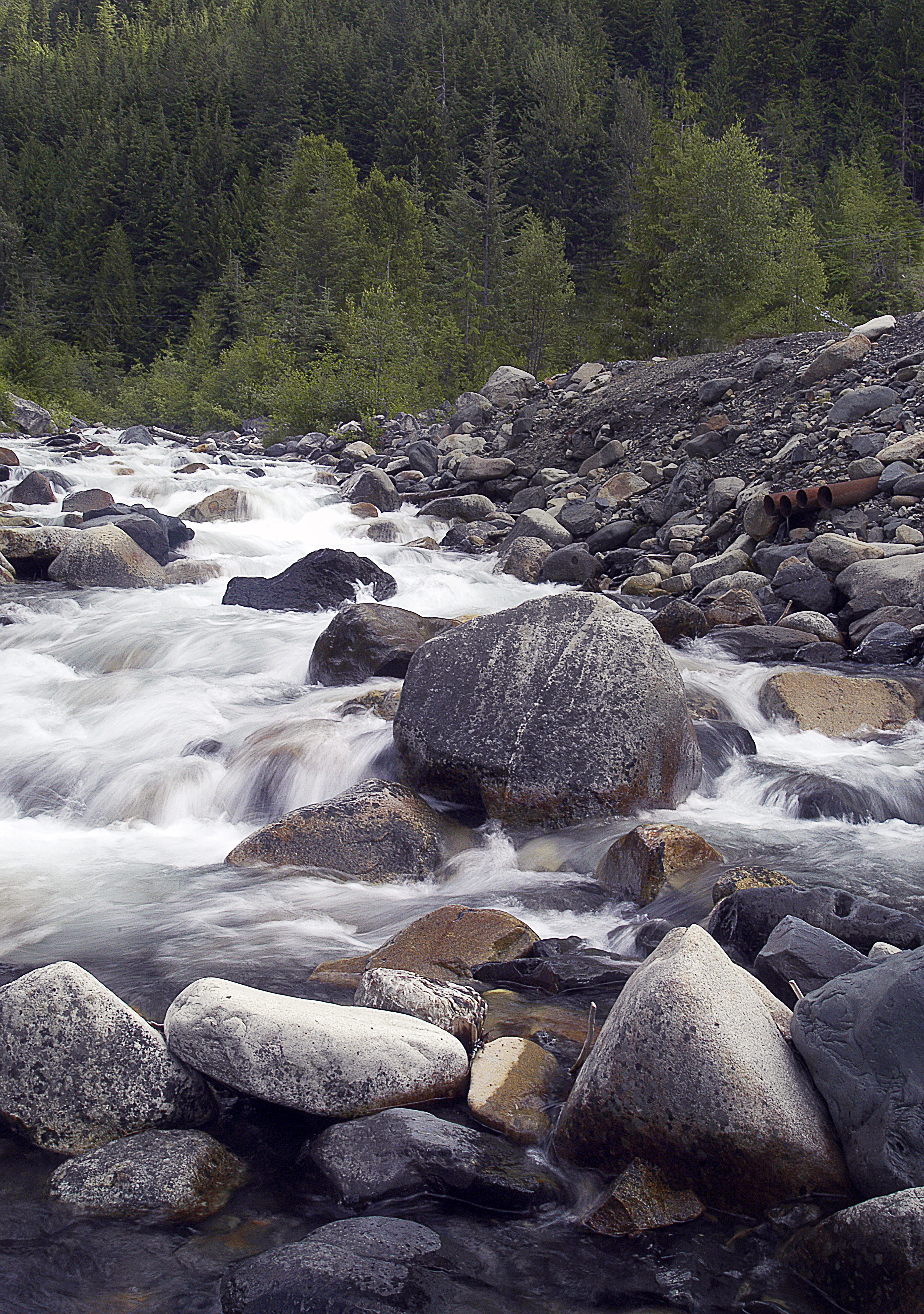
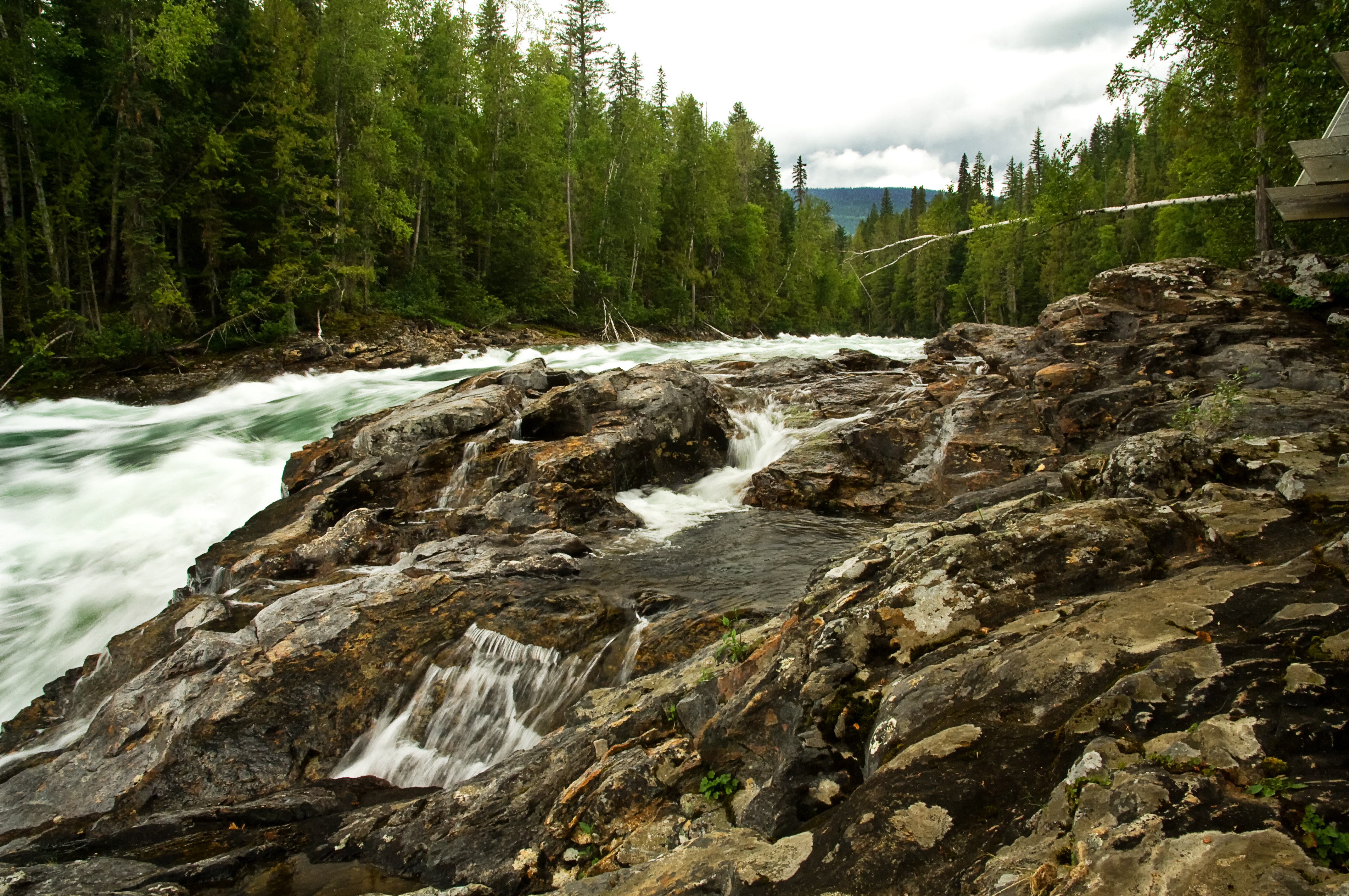
He sent an enthusiastic return email and we made plans to spend a day wandering my favourite roadside locations in Wells Gray Provincial Park. Photographers that haven’t been able to visit the fourth largest park in British Columbia are missing a visual treat.

Wells Gray is a spectacular, almost pure, wilderness area that is easily accessible by car. Although the website advertises it as a world-class destination for canoeing, kayaking, hiking, and camping, photographers can enjoy a photo-packed day trip wandering along the pleasantly-winding, park road and will return home with memory cards filled with quality wilderness images.

I anticipated that photographer Jeff, my new friend from Manitoba, had no idea what to expect other than the picture postcard images from the website, and I was pleased when he remarked that he would like to look for more creative opportunities than those most would make from the dedicated tourist lookouts.

The experience of meeting a stranger, and then spending the day driving, talking, and site seeing might be uncomfortable for some, but for photographers, I think they only need photography in common to have an enjoyable time. At any time, if the other person’s opinion causes unease, just change the subject to cameras, lenses, or any other thing photographic.

In order to get to Wells Gray early, Jeff had to get up before the sun for a two-hour drive from Kelowna to Kamloops to meet me at my shop at 6am. (I wasn’t being mean! It was his choice.) We bought coffee and departed for Clearwater, an hour and a half drive away, because we had decided to be in the park taking pictures for 8am. From Clearwater we then roamed into the park with our cameras at the ready.

When I put my camera gear on the backseat of his car I had to move his tripod, and remarked that I liked the ball head he had attached to it. He said, “I always use a tripod”, and I thought to myself, “I think I’m going to like this guy.” There’s nothing like a tripod to let one know they are with a serious landscape photographer.

Wells Gray is a great park for roadside photographers with many places to stop, to photograph the spectacular waterfalls, old homesteads and the river’s many geological features tucked only a short walk away, and that is just what we did. Unfortunately, the wildlife was timid and we only briefly saw one black bear.

The comfortably cool day was excellent for photography with a slight overcast and high moving clouds. Jeff changed lenses and filters regularly as he worked the new environment, but for me Wells Gray has been a regular location for years and I was content to stay with my well-used, 24-120mm lens as I photographed the familiar landscape.

The internet is a wonderful way of bringing people together and I know I would really appreciate photographers extending hospitality to me when I travel to some far off place. In the event of any concern, checking up on other forum members is easy. I reviewed Jeff’s online posts (as he had mine), and when he wrote he was visiting BC I was sure he’d be fun to know and to stand beside as we made pictures. One doesn’t always have to participate as a host, but I am sure suggesting locations for photography would be appreciated. For local photographers who have never made the expedition to Wells Gray, it is well worthwhile.

Contact me at http://www.enmanscamera.com
Eliminate the Irrelevant from your Photographs

Years ago the Hasselblad camera company put out a series of photography pamphlets. While I had my Hasselblad I collected and studied the information contained in the pamphlets. Last week I thumbed through one of them entitled “The Eye, The Camera, The Image”. Although meant for medium format film cameras its filled with information that is still appropriate for digital camera users.

I skimmed over topics like Using the focusing hood magnifier, Colour film and light colour, Types of exposure measurement, X synchronization, Double exposure and Polaroid film, all an interesting read if one is concerned with photographic history, however, not practical or useful for those searching to be a better photographer in the 21st century.

One topic entitled “We see far to much” says, “The eye is our organ of sight. It’s lens has a focal length of about 17mm and covers a 150-degree vertical and 120 degree horizontal field; the binocular vision provided by our two eyes gives a 180-degree angular field. We seldom have any need for images encompassing so wide a field. The wealth of detail in such a field would be rendered small and insignificant when reduced to images formed in a camera when composing a photograph outdoors or elsewhere. We always need to crop our field of view.”

That paragraph is valuable in my opinion. Most successful photographers “tighten up” on their composition, and by that, I mean they only include those elements that add to the visual statement of a photograph. Beginners, however, and especially those using point and shoot cameras (and certainly, not only confined to them) aim with only the excitement of their subject in mind and don’t pay attention to other additional elements captured by the sensor.

Photographers are surprised when they look at their final image and find a picture filled with irrelevant and disruptive items needing to be cropped out. If they just took their time, moved closer or zoomed-in the lens they would have had an attractive composition in-camera.

Hasselblad continues, “This elimination of irrelevance is vital. The trick often involves excluding most of what you see. Making a selection is a basic feature of all art, whether it is painting, drawing or photography. Art consists of picking out the most interesting, most illustrative, most instructive, the loveliest or most emotional components among a myriad of components in a subject.”

Photographers must train themselves to be specific with a subject, only showing the viewer what is important. How do we slow down to do this in an age of auto focus, auto aperture and rapid-fire shutter release? I have an easy answer – get a good tripod!

I know many photographers have never owned or used a tripod and some have only used rickety, inexpensive models. My comment to anyone that says they don’t like tripods is they never have used a good one. Using a sturdy, well-made tripod makes one slow down and pay attention to the subject in the viewfinder or LCD. In addition, the process of setting up the tripod and attaching a camera gives photographers time to think about the composition. I accept Hasselblad’s contention that “we see far to much” and need to eliminate irrelevant items in our compositions.

When a neat and interesting subject is seen, stop the car and get out. Don’t be lazy and merely hunker down against the window and take the shot. Get that sturdy tripod out of the trunk; and as you do that think about, or “previsualize”, the photograph about to be made. Set up the tripod, attach the camera and look through the viewfinder or LCD. I suggest making several shots starting from a narrow, limited view and zooming the lens out to a wide-angle view. That way there will be several choices for that picture.

To sum up, eliminate those elements inconsequential to the picture and compose for only those items important to the final photograph, not by looking at the subject and snapping away in a hurried fashion to include everything seen in the viewfinder or LCD; and take my advice, use a tripod.

Photographing a Rodeo

There is something about a rodeo that changes the visible culture, or, at least, what seems to be the normal dress code for many folks. Baseball caps are traded for cowboy hats, beige slacks and cargo pants are changed to blue jeans, and footwear for a day out with the family changes from running shoes or toeless sandals to cowboy boots. It could be that a sporting event like a rodeo is more a celebration of a lifestyle than others that are attended by fans donning a team jersey and cheering for their favourite team.

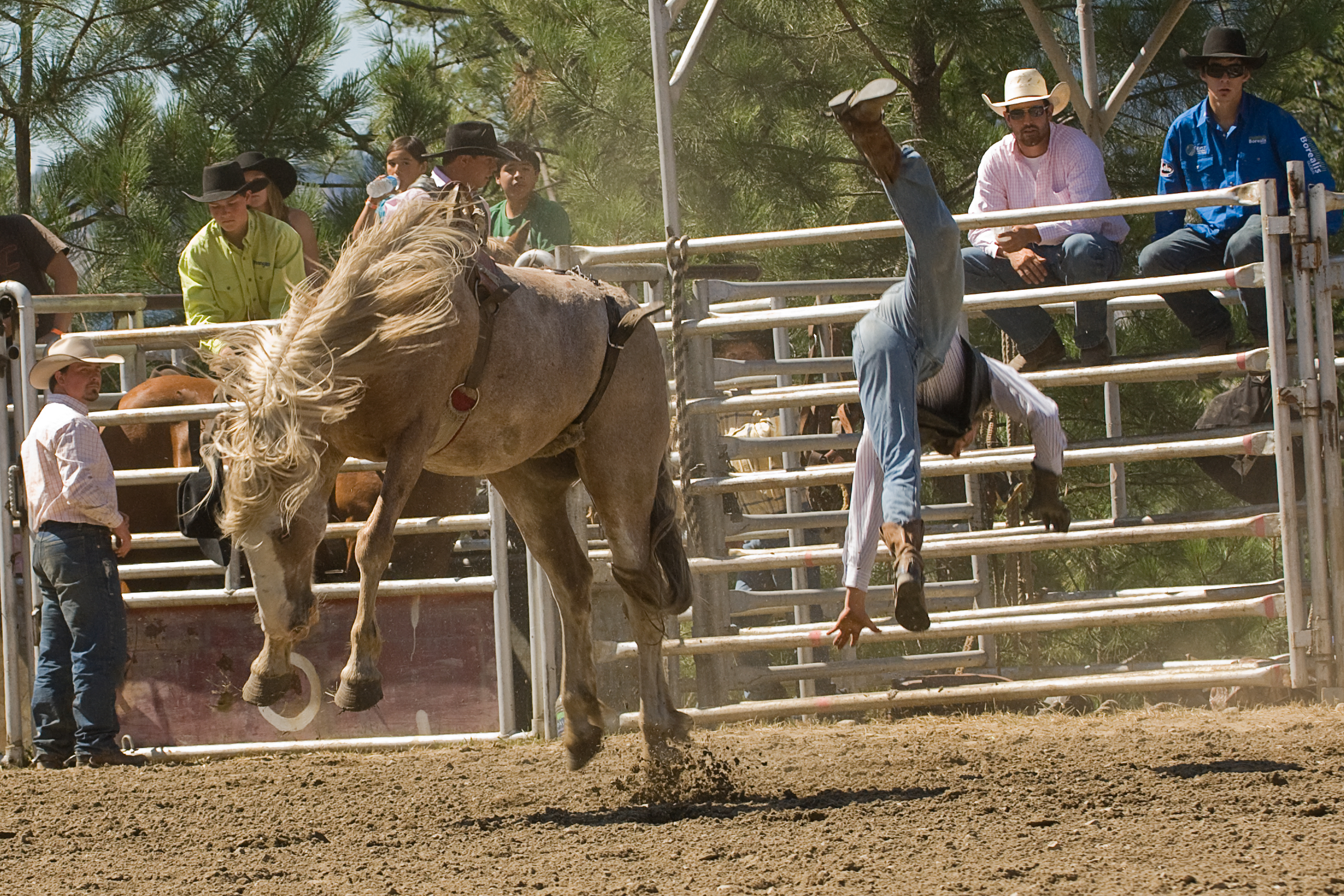
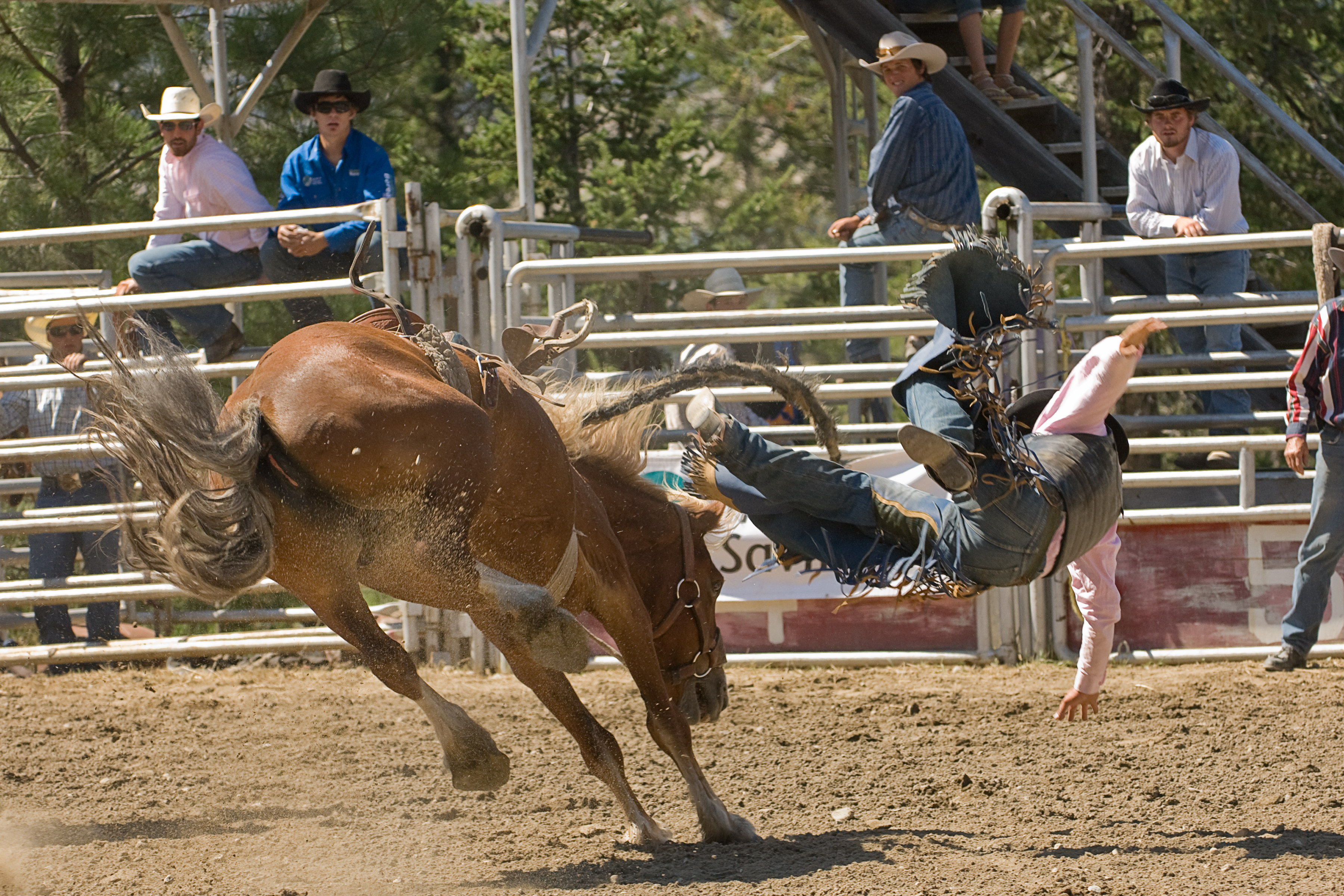
The 17th Annual Pritchard Rodeo was the first I have attended just for the sole purpose of photographing the fast-paced, explosive action, and I thought about the words of professional rodeo photographer Rick Madsen as I walked down the dusty road to the arena, “Each event in a rodeo involves more than one player. It is the interaction between man and animal, or in many cases man and beast, which makes the technical and creative aspects of rodeo photography so exciting and rewarding.”

I was late and the saddle bronc riding had started, but that gave me the opportunity to watch the photographers and I easily figured out who were the first-timers, the dedicated amateurs, and the experienced rodeo photographers. Anytime I am faced with a new photographic adventure I look to those with experience, and don’t mind asking questions if given the chance. I also realized there was time between riders so I would have time to check my metering and get myself in the best position for the action.

It was hot under the midday sun and a bright blue sky with riders starting from a location that was under deep shade, which was fine for them, but I knew that no camera sensor could handle that much contrast; and I knew I would have to make exposures before the participants reached the sunny area, wait, change settings, then start making exposures again when they were in the bright light. I missed the first, and then nailed the rest when I figured out the timing. I quickly learned how important it was to listen to the announcer, not only because he was expressive and fun to listen to, but also because he gave all sorts of important information a photographer could use about the horse and rider.

I am experienced at photographing sporting events, so other than the time it took me to know where to stand for each event, I was ready. My camera was mounted with a 70-210mm lens and I selected shutter priority mode, with 1/500th second shutter speed. The bright day let me get away with ISO200. I also selected the continuous shooting mode so I could get bursts of up to eight frames a second if I wanted.

I photographed from several locations then moved to one end of the arena where five photographers were working. There was a husband and wife team who said they were “just enthusiasts” that liked to photograph rodeos in their spare time. One fellow said photographing rodeos was a hobby, and he had just returned from photographing one in Arizona. I also met a vacationing photographer from France, and while travelling through Kamloops she had heard about the Pritchard rodeo and decided to spend an extra day to photograph the rodeo before continuing south to the Okanagan. We talked about photography and her trip, and, of course, I reminded her about the wonderful BC wineries she would be soon be driving by.

All those people were great to meet and added another dimension to an already great day of photography. Along with them, I met Bernie Hudyma (http://www.berniehudyma.com), an experienced and well-known photographer whose images regularly appear in magazines. In my opinion it doesn’t get much better than that when one is trying to learn about photographing a subject. He gave me tips on where to shoot, and once reminded me I had to take care as a massive bull charged the fence where I was and I quickly pulled back. (Just how heavy are those animals?) Nevertheless, it was a fun day of shooting and I ended up with lots of great photographs.

For those photographers that want to try something new and exciting, I recommend finding a local rodeo. Photographing those explosive moments, as Madsen puts it, “the interaction between man and animal… makes the technical and creative aspects of rodeo photography so exciting and rewarding,” which corresponds to how I found the experience – very exhilarating and satisfying.

http://www.enmanscamera.com

A pleasant photography trip to Southern British Columbia

My wife, Linda, and I decided to make a short getaway to sunny Osoyoos. The drive, about four hours from Kamloops, constantly changes making the journey fun. And what can be better than new opportunities for photography?

On the way we stopped in Kelowna and swapped lenses with a photographer I had met online, and made my wife the happy owner of a Nikon 70-300mm lens. Then we were off, stopping along the way for snacks to eat, and quick photos of the changing countryside.

Osoyoos, for those unfamiliar with this British Columbia border city, is nestled around what is described as Canada’s warmest lake, great for swimming, boating and packed with orchards and vineyards. I recommend lots of available trunk space for fruit and wine.

We booked ourselves into a lakeside motel upon arrival and after a short rest and a cooling dip in the water, took off to picnic at a lakeside park. I like picnics because I get to wander around with my camera. I have to admit my travel photos always show people relaxing and eating, and yes, I know it isn’t art, but sometimes I just want the memories of that moment. The day was quite contrasty with a bright sky and deep shadows so I used the on camera flash, moving closer with each shot until the limited flash power was bright enough to illuminate Linda setting out supper. A larger flash or even a reflector would have been more effective, but I didn’t bring either, although our car had plenty of trunk space and I would have made much better pictures if I had.

The next morning after sitting around drinking coffee, eating breakfast, and snapping pictures at the motel’s lakeside patio, we struck out to visit some nearby vineyards. In wandering the back roads looking for our designated winery we discovered great photo opportunities and a vineyard or two.

North of town we encountered a route that took us along the valley’s edge and through orchards and vineyards, and it was on that drive we accidentally found the first historic building built in the Osoyoos area, and of course stopped for pictures. In 1861 John Haynes, a policeman from Victoria was sent there and the structure we found was a combination customs house and living quarters. The visitors guide says, “As the representative of justice in the South Okanagan and Kootenay regions, Haynes tried to bring law and order to mining towns that had sprung up with the arrival of the gold-seekers.” And on the construction of the building we spent our time photographing, the guide went on to say, “one of Haynes’ duties as customs officer was to levy taxes on the cattle that were being herded across the U.S. border to the Cariboo gold fields.” The cattlemen would sometimes substitute cattle for cash; and I suppose that’s why the structure was called the Haynes Ranch.

The shadows were harsh so I decided to let them stay deep and under exposed and kept my metering for the bright mid tones as I worked on the buildings themselves, trying to photograph them as part of the surrounding landscape. I had brought other lenses, but I stayed with an 18-70mm and made most of my shots at the shorter focal length. The board building, a rock filled cement wall, and the multi-coloured sage became a perfect foreground for the deep blue, cloudless sky and distant green orchards. Linda used her new 70-300 lens to photograph interesting features of the decrepit building and its location with the tight, compressed perspective the longer lens allowed. I didn’t ask her if she had more fun photographing that building, or when she was photographing sailboats and seadoos from the lakeshore later that day.

Our Osoyoos trip offered a perfect photographer’s getaway and, as I wrote earlier, the drive down was pleasant and filled with photo opportunities, and splashing around in the warm lake was fun also.

Photography in the rain.

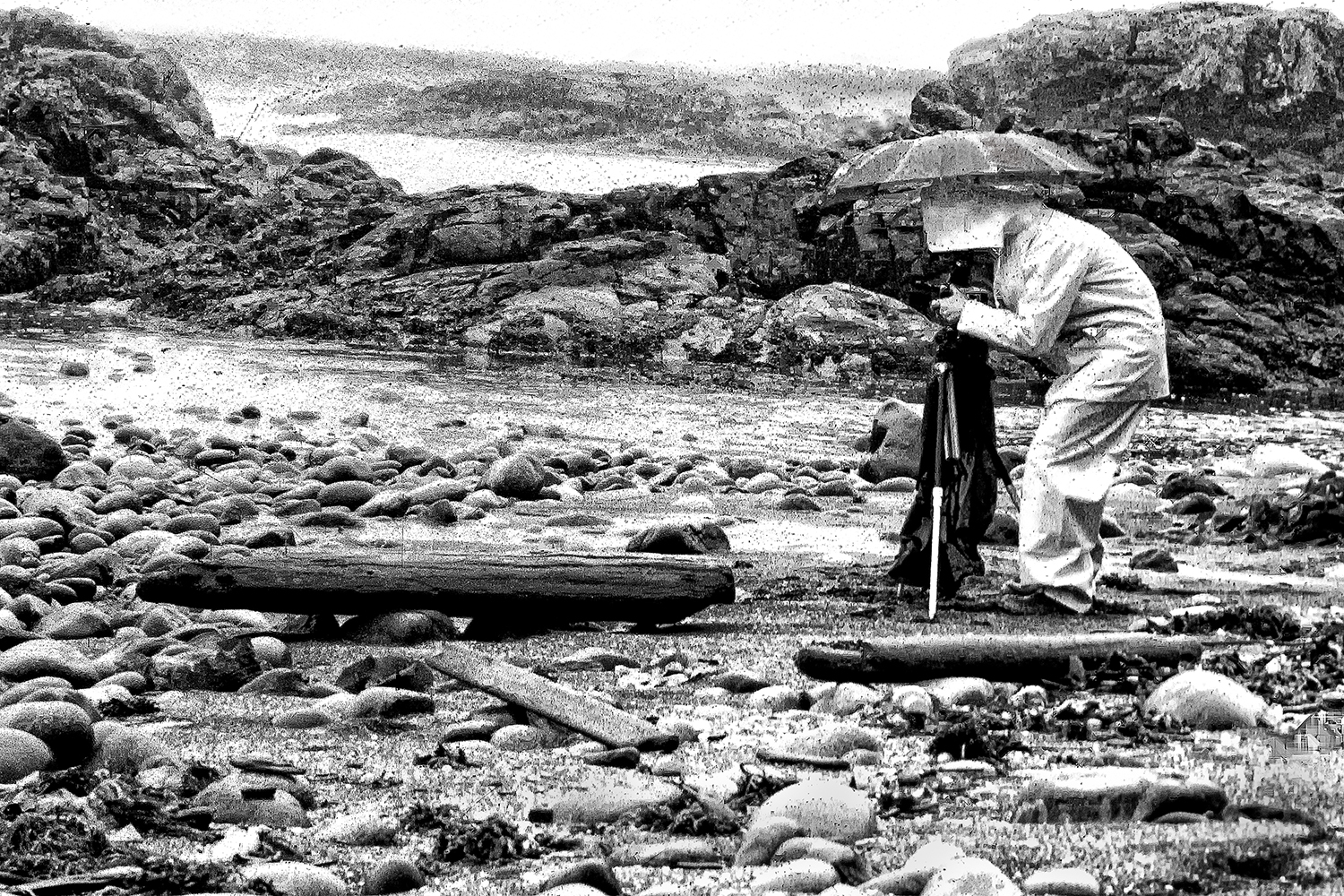
Several years ago my wife, Linda, and I took a photography vacation on Vancouver Island and the weather was forecast to be completely rainy. We knew before we left that we would get wet, so we prepared with plastic bags to cover our cameras, umbrellas to deflect water off our viewfinders, hairdryers to dry cameras and tripods off every evening, and wet weather attire because we didn’t want to spend our days in wet clothing. The trip was a bit uncomfortable, but the coastal downpour didn’t stop us from doing photography, and we didn’t waste a day of that trip huddled indoors. We were outside, cameras in hand, every day of that trip and returned with great pictures, and a fun experience of shooting in the rain.

I do a lot of commercial photography work and more than once that has meant getting wet while I produced pictures for clients. Wet hair, a soaked shirt, and driving home after the session sitting in a puddle of water isn’t pleasant, but I am there to make photographs rain or shine and I do think that those wet subjects sometimes lend interest to a visual story.

This summer has been pretty wet in the interior of British Columbia and I’m sure there are photographers that have kept cameras packed away as they waited for dry sunny weather. However, there are some that aren’t going to let wet skies ruin their photographic pursuits. I received a call from my friend Sam last week on a day that was experiencing a constant, light rain, but in spite of that, he was about to drive to a wide-open meadow location where he always found hawks, barn owls, or the occasional eagle watching for quarry from fence posts, power poles, or the few small trees that are left standing. I commented that he was going to get wet, but he said he had purchased a wet weather cover for his telephoto lens and had camouflage, rainproof clothes for himself.

The camera model and lenses he uses are weather sealed and can take the rain, so all he needed was to keep water droplets off the front element and viewfinder. But that kind of rain proofing isn’t available on all cameras, so my advice is do some research to find out how well sealed your camera is against water before venturing out when it’s raining.

Rain photography is exciting and creative. Falling raindrops, raindrops pooling on a surface, and wet reflections, can offer a creative and colourful environment for passionate photographers. Reflections during a downpour can have amazing patterns if one looks carefully, and light from the sun coming from in-between and under the clouds creates a beautiful environment. And the effect of rain combined with the gloom of an overcast day will make colours more saturated. I like to tweak the contrast a little in PhotoShop, after the fact, for more dramatic final images.

Mount the camera on a tripod and use a very slow shutterspeed for a long exposure to capture the rain or use a flash to stop the drops as they fall. I like using a flash, but I stand under a porch or awning when I use it because a flash has high power electronics that might short out. Rain becomes more visible when it is backlit. Try focusing on rain running inside a window instead of the scene outside for interesting compositions. The light coming through the raindrops is slightly brighter than the rest of the scene. Beware, that the light source can overpower the camera’s exposure meter so shoot on an angle, and make several exposures, and check the histogram regularly.

Watch for rain droplets on flowers, spider webs, wire fences, metal surfaces like a car hood, or even pools of oil on the street. Sometimes the small drops of water will act as mirrors with a multitude of reflections.

Rain transforms everything no matter if one specializes in scenics, architectural, wildlife, or people photography. I think the words of singer/songwriter Roger Miller are perfect when he says, “Some people walk in the rain, others just get wet,” and easily relate to photographers. And for those afraid of taking pictures in the rain, actor and singer Cher made me laugh when she says, “Don’t take your toys inside just because it’s raining.”

Some photographers belive in magic

I sometimes wonder what it is about digital cameras that makes new photographers believe in magic? Well, maybe that’s not exactly right, but when I am approached by photographers with troubled questions about why some aspect of their photography isn’t working, I do wonder just what they expect.

A photographer with his new digital camera came to me with the question as to why the labs were making better pictures then he was with his personal home printer. Was there a problem with how his camera connected to his computer? Was it his computer’s out-of-date programs? Or was it because the printer wasn’t very good? Unlike the photo lab he was taking his memory card to, he hadn’t calibrated his monitor, hadn’t done any postproduction sharpening on his image, and hadn’t profiled his printer to the paper type he was using. I guess he thought all his equipment should know what he wanted the print to look like, just like magic.

A photographer I met last weekend, admired the lens I was using and said, “I think I need to get a better lens”. He said he couldn’t focus very fast, and sometimes when he pushed the shutter it took a long time before the camera took a picture, and thought that it must be a lens problem.

When I looked over at the lens he had mounted on his camera I noticed it was a newer motorized, electronically focusing, vibration-reducing model, while mine was over ten years old with none of those modern features. I asked him if he was using his camera on its Program Mode, even though I knew he would say, “yes”. I guess he, like the photographer that was unhappy with his home printing, thought his equipment should magically know how he wanted his photograph to be. Computers must be told what to do, whether on one’s desk, or in a camera. Home computers are set up by the manufacturer to print, I expect, on the paper they sell and the computer screen doesn’t have any way of understanding colour unless it’s programmed, and that’s why there are controls for light, dark, contrast and so on.

I have written about camera modes before. I like Shutter Priority mode when photographing fast moving subjects like horseracing. I might select a fast 1/500th of a second shutterspeed that is capable of stopping fast movement and leave the aperture selection to the camera. For scenics I might choose Aperture Priority where I select the aperture and leave the shutterspeeed to the camera. I want to control depth of field; a wider aperture means less depth of focus and a small aperture gives me more. When I am photographing people, as at a wedding or a portrait session, I use Manual Mode. I also prefer Manual if lighting conditions are very bright or when the light is fading. Manual gives me complete control over both the shutter and the aperture.

Cameras also give a point and shoot option, or Program Mode. I do use that mode at parties or Christmas in small, bright rooms when I am using the camera’s popup flash. I would never use Program for anything serious. I wouldn’t use it for sports or scenics, and I would never use a mode as unpredictable as Program for weddings.

Cameras have had auto or program features added for years and I recall requiring students to turn their camera to manual exposure for all assignments. Program Mode is usually chosen by new photographers (that believe in magic), and when their pictures aren’t like they imagined they start blaming equipment malfunction, instead of themselves.

Equipment, of course, should be state of the art if a photographer requires high quality. I don’t think brands, or operating systems, matter much as long as they are used properly. However, magic shouldn’t be part of the equation. Purchasing what some experts says “is the best” will only be successful if education on how it works comes next. Photographers need to take some time and learn how the cameras, computers, and printers they purchase work, then do some reading on how photographers that specialize set their systems up, use them, and lastly, make some time, and take a class. When I talk to professional photographers they do just that, they read, they discuss, they attend workshops. Professionals are always second-guessing their equipment, relying first on knowledge gained from study and second on their cameras and computers. However, when I ask new photographers if they read their camera manuals, or any books on the photography they like to do, or if they have ever taken a class they usually say, “no”. And I expect that is because they believe in magic.

Check out my website http://www.enmanscamera.com.

Getting your spouse involved in photography

I received a most encouraging email from a client as follows: “In talking to you I noted that you and your wife both are into photography, so I proposed giving my wife my Sony a350 and get her into shooting her own pictures. She was a little hesitant to the idea saying she did not have the “artist’s eye”. I printed out one of you columns on ‘What Makes a Good Photograph’. She read it and realized that each person has their own take on what makes a good picture, and the short of it is, she is willing to take up photography with me”.
Personally, I think much of my enjoyment of photography would be missing if my wife, Linda, was not also a photographer, and it is great that we both enjoy this exciting medium and can share the experience of making photographs.
My advice to the photographer that sent the email and any other photographer interested in getting their spouse involved in photography follows.

Match the equipment. I mean with regard to cameras, both DSLR (digital single lens reflex) cameras should operate in much the same way. The models can be a few years apart, but should be the same brand and the controls should operate similarly and if two of the latest models are affordable, so much the better.

Don’t be cheap with lenses for your spouse. If it isn’t good enough for you, it isn’t good enough for the most important person in your life. Just as you would select a lens for the subject and the way you like to shoot, your spouse should select lenses for his or her preferences. I know your mother told you to share, but my recommendation is don’t share. That just leaves someone behind. If you both like long telephoto lenses, get two.

I can remember the exact moment I thought about the concept of equality. I was in Yellowstone National Park in Wyoming waiting for Old Faithful geyser to erupt. While I waited I noticed a man and woman with their tripods setting up closer than me. I could see that he had a large, professional looking camera and she had a tiny, almost toy like camera. I knew that his photographs would be good and hers not so good. It didn’t matter if she was the better photographer or had the better eye, his pictures would be better, and I wondered why would she even try.
I have written about tripods many times in the past and regularly say it to photographers, “If you say you don’t like using a tripod, it is because you have never used a good one”. I can’t emphasize that enough! Purchase quality tripods for each of you and attach good ball heads on each of them.

Shop for accessories together. Each photographer has his or her preferences and should make equipment choices for the subjects they like to shoot.

Education is always a good idea. Attend a photography class or workshop. Search for them on line or check local camera shops. Take turns going to photography classes or take part in the same workshop. One of my wife’s and my most memorable vacations was when we both attended a weeklong wilderness photography workshop on Mt. Rainier. In my opinion we may have got more out of that class than the other participants because we were able to share information and experiences.

Gently critique each other’s photography. Don’t just store pictures away on the computer. Sit in front to the computer display together and decide which photographs work and which that don’t, delete all the failures, and make a combined presentation of all the successful images to show your friends and family.

One photographer in the family is cool, but two photographers, in my opinion, are much better. If you want your partner to have the same excitement about photography as you do, don’t be stingy with the compliments. And if your spouse is fortunate enough to make a better picture of that waterfall or running deer than you, be sure to tell them.

Using flash helps

Many photographers think the only time to use a flash is in a darkened room and there are even those that are so uncomfortable using flash that they totally depend on high ISO camera settings to take pictures in low light interiors. ISO stands for International Standards Organization and determines the sensitivity to light for which the sensor is set.

I think relying on high ISO settings instead of adding light from a flash is ok for long shots inside the gym during basketball games, or auditorium photos of children’s concerts, but close-ups of people with mixed lighting coming from overhead light leaves unflattering shadows and colours crossing their face.

I have fitted my camera with a bracket that lifts the flash about six inches above the lens or can be quickly removed for off camera lighting. Most camera hotshoes place the flash close and directly over the lens and that close proximity usually causes an effect called “red eye” which is the appearance of red pupils in the eyes. Moving the flash some distance from the lens using a bracket or off camera flash cord helps to reduce that effect.

Many people leave their camera’s setting on “program” or “auto mode” and hope for good results. Many of those same people are unaware how important a good quality flash is. However, photographers that are concerned with their images and want their photographs of people to be enduring, and more than just unattractive snapshots, are using a flash, and not the tiny popup flash that many cameras have, but a controllable flash with the power to illuminate spaces larger than a family dining room or be placed pleasingly for appealing portraits.

In last weeks column “Using a Flash in the Midday Sun” I wrote that I prefer to leave my camera set to manual exposure mode which allows me, and not the camera, to choose the overall ambient exposure, and to add flash to those areas that are underexposed by shadows. Although my discussion was about daylight photography, I approach my photography in much the same way indoors or out. I meter the existing light, set the exposure, turn on the flash, and make tests using the flash, and increase or decrease the output level. Then I look at the camera LCD, check the histogram and look to see if there are blinking borders around any white areas indicating over exposure. If I observe them I dial the flash down, or change my aperture, testing again till the flashing borders disappear. (That highlight-warning feature is usually found in the camera’s menu). And when I move in close for photographs I always place a diffuser over my flash head to spread and soften the light.

Using my flash like that gives me broad, even lighting on people and when out of doors I sometimes even set my camera and flash output so those individuals are slightly brighter than the surrounding area and the background. As I just wrote, I can remove the flash from the bracket which allows it to be pointed it in any direction I want; bouncing the light off building walls, concrete sidewalks and, if I want, hold it higher than people sitting in front of me.

When I learned to use a flash many years ago it changed the quality of my photography. I no longer had to rely on inconsistent, and, in many cases, unappealing ambient light, and I began to notice that my subjects had more “pop” and dimension than those without the flash. Just like the control I gained by using different focal length lenses, using the flash allowed me to add light when I needed it, improving the quality of my photographs and separating my photography from those who do not to use flash. My advice for those interested in portrait photography is to get a flash and start using it every time a person is in front of their cameras.

These are my thoughts this week. Contact me at http://www.enmanscamera.com
Using your flash under the midday sun.

Using a hot shoe or auxiliary flash is confusing for many photographers, and when I casually remark that I like adding flash to all my portraits whether inside or outside, overcast or bright sunny days, I often get quizzical and disbelieving looks.

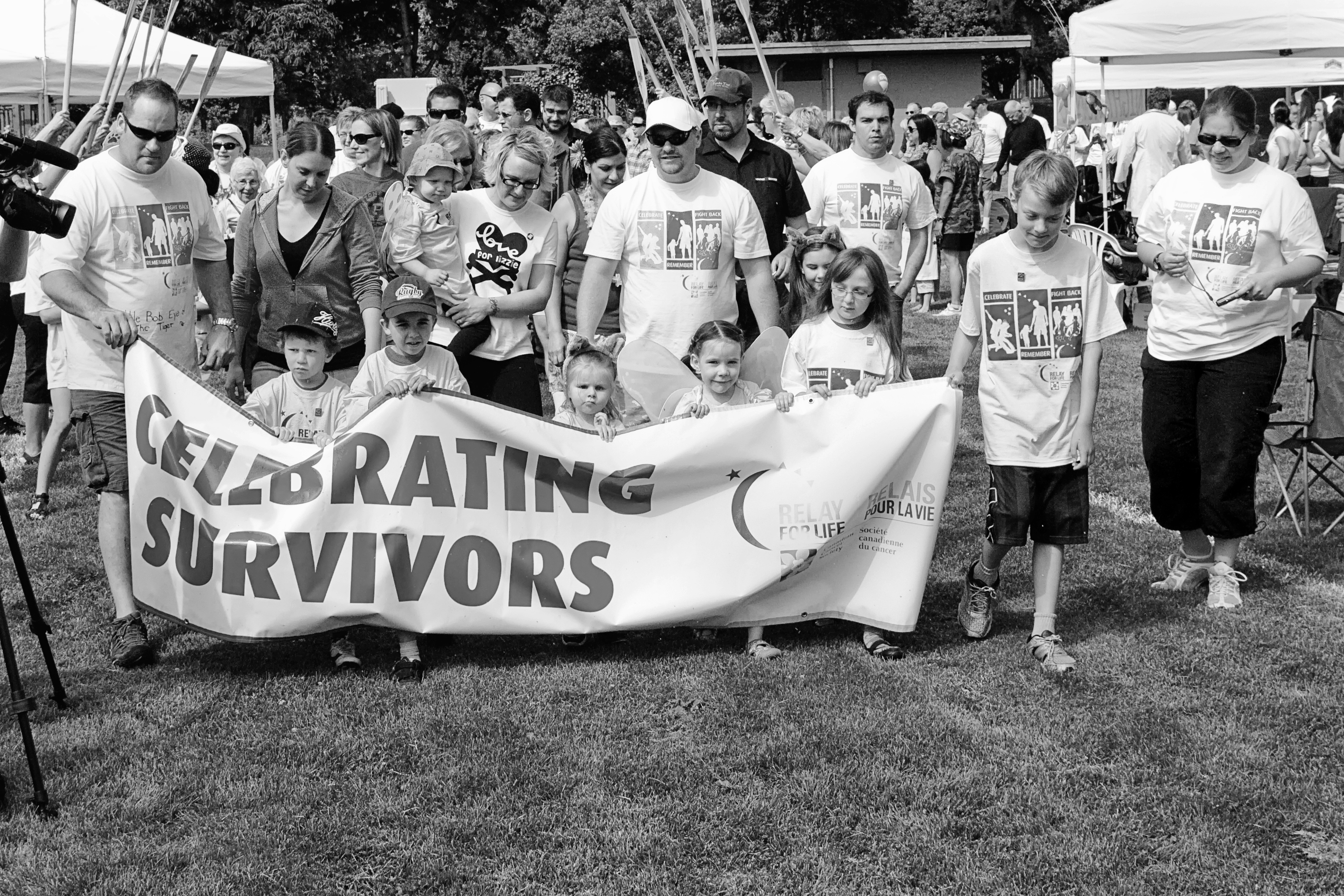
This was the case while I was photographing last weekend’s Walk for Life Relay in Kamloops. The day was sunny and bright with participants’ faces constantly affected by strong shadows. Another photographer inquired about my bracket-mounted flash, politely listened when I said I always used flash, and even put flashes onto her camera for a time. When I later viewed images on her camera’s LCD screen I could see she removed or turned the flash off resulting in unflattering shadows across subject’s faces.

Coincidentally, later that evening I read the following query in an online photographer’s forum, “I’ve been shooting headshots recently and it got me thinking a lot about metering. How do I meter for flash portrait photography on location? I know that without a flash, I would just spot meter their face, zero the meter, and snap. What happens when I have an off camera flash? Do I just meter normally then shoot? Because when I do this, once the flash goes off, the exposure would be completely different than what I’ve just metered, which would usually mean overexposed. This is so very confusing. Please shed some light on this (no pun intended).”

I recall an assignment from a photography class taken early in the 1970s. That assignment, given by our sometimes-flamboyant instructor, was to photograph someone wearing a wide brimmed hat under the midday sun. (My apologies to those that adhere to the words from Noel Coward’s words that “only mad dogs and Englishmen go out in the midday sun”).

Our assignment was to light the shadowed face under the hat and still have properly exposed surroundings. At that time flash technology produced constant light and photographers didn’t have TTL (through the lens) flash, digital cameras, or PhotoShop. The solution to the assignment was to diffuse and reduce the light in stages by placing a white handkerchief folded twice, folded once, or not at all, over the flash head until the correct amount of light “filled or opened up the deep shadow”.

Fortunately, modern cameras with TTL flash are almost foolproof, and the days of calculating restricting flash power are long gone, and only a modicum of thought is required on the photographer’s part as to how much light should be added for the subject’s exposure.

I leave my camera set to manual exposure mode. That allows me, not the camera, to choose the overall ambient exposure and to add flash to those areas that are underexposed by shadows. Given the choice of subject placement I photograph the subject with the sun at their back. I meter the existing light, set the exposure, turn on the flash, and make tests using the flash’s exposure compensation feature to increase or decrease the output level. Then I look at the camera LCD, check the histogram and look to see if there are blinking borders around any white areas indicating over exposure. If I observe them I dial the exposure compensation down, testing again till the flashing borders disappear. (That highlight-warning feature is usually found in the camera’s menu). All one needs to do is take the time to experiment, as the subject is getting ready.

My photographs from that day are evenly exposed with attractive, open shadows, and using a flash really didn’t take much more time than if I didn’t use one.

Because many readers have indicated they are uncomfortable using flash, on Sunday, July 10th I will be offering a workshop in Kamloops on flash photography for portrait lighting indoors and outdoors, and I urge DSLR photographers to enrol and overcome their hesitancy to use flash. Participants will gain the skill and confidence to create great images using wireless lighting techniques for portraits in virtually any situation by augmenting existing light with flash. I will limit participation so please contact me if you are interested.
Contact me at http://www.enmanscamera.com

What is the best lens for scenics?

With all its colours spring has blossomed in the interior of British Columbia and photographers are grabbing their cameras and tripods and heading out to record that beauty.

Visitors to my Kamloops shop ask what is the best lens to take along on their excursion to photograph those inspiring landscapes? That’s a good question, especially from those new to photography that are spending hard earned money on pricy modern lenses. There are great zoom lenses available giving us excellent versatility. I prefer lenses like 16-85mm, 18-70mm, or 18-200mm, and there are many more in that range that are light weight and easy to carry that give lots of focal length choices. But, instead of just recommending a particular lens for scenic photography, I want to begin by thinking about perspective.

A wide-angle lens has a curved front surface allowing for a wider view. The distance between the foreground and background subjects will seem extended; objects closer to the lens will look much bigger in relation to all other objects.

For example, using a 18mm focal length lens photographing along a fence will make the first post big and the succeeding posts smaller and smaller. Whereas, a 200mm focal length will give a tightly compressed view, and distances between the first fence post in the foreground and those further back will not look as distant as with the wider 18mm focal length.

In a more practical example, I’m photographing a lake with mountains in the background and a boat on the shore in the foreground. If I use a long focal length like the 200mm all the elements will be compressed in the final image with no subject gaining significance over another. However, if I fitted my camera with a 18mm lens the boat will be large, and those features in the background small and distant. Both are good photographs of that scene, just different interpretations.

The most appropriate lens depends on the perspective the photographer wants to interpret in the final image, and because the focal length adjusts the visual relationships of the objects within the picture, one must think about the image front to back and how much of the scenic is important as a wide, or narrow, aspect. It comes down to the personal vision of the photographer and what he or she wants to say about the landscape being captured. Famous photographer, Ansel Adams said, “problem solve for the final photograph”.

Like Adams states, photographers should be thinking about how the final photograph will be used and how to accomplish that. If one thinks of a photograph as a series of problems to be solved there will be a smooth transition from initial idea to final print. For example one could begin by thinking about the subject and its environment. What is the background and how will that affect the subject? What is in the foreground that will interfere with that subject? If one considers depth of field a decision must be made as to how much is to be “in focus”. In a landscape photograph, photographers might want everything from the foreground to the far off distance to be crystal clear.

There is no one lens that can be termed a “scenic or landscape” lens. Any lens might be used as long as it meets the photographer’s vision. That might be to include a wide vista with a wide-angle lens, or on the other hand, a tighter cropped image created with a telephoto lens might be visually more powerful. The choice of lens for scenics comes down to what the photographer wants the viewer to feel and see.